

Clinical applications of stem cell-derived exosomes
Open accessThe DOI matches its Crossref record; 351 of the 352 references it cites were found in a registry or an index.
Abstract
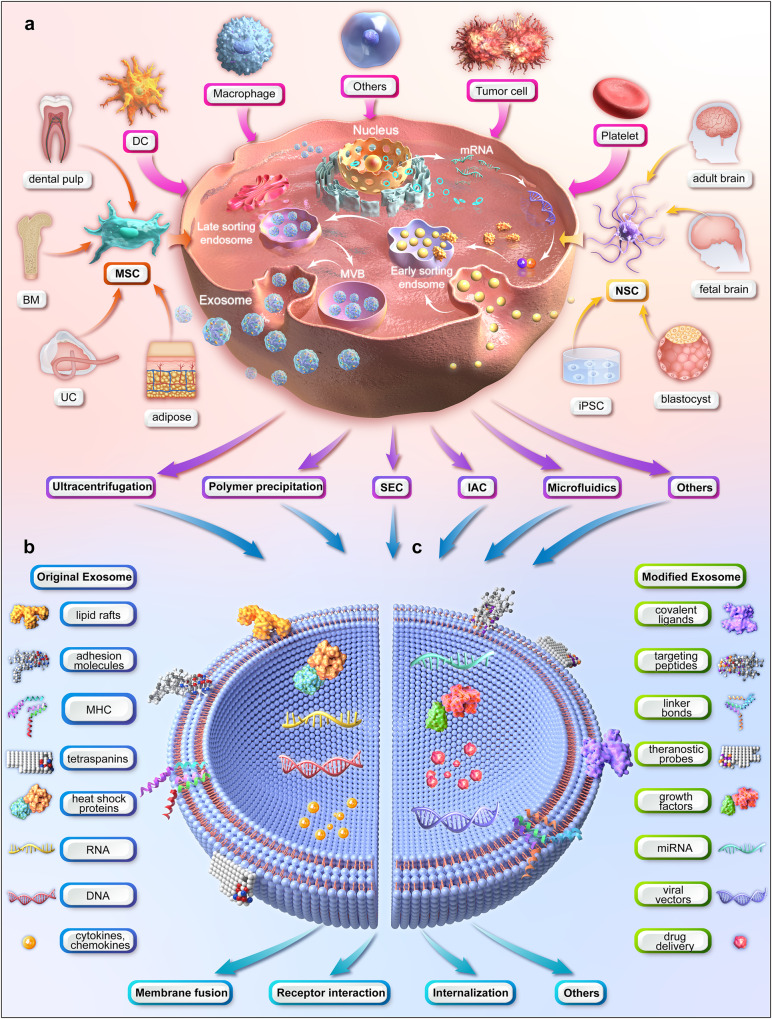
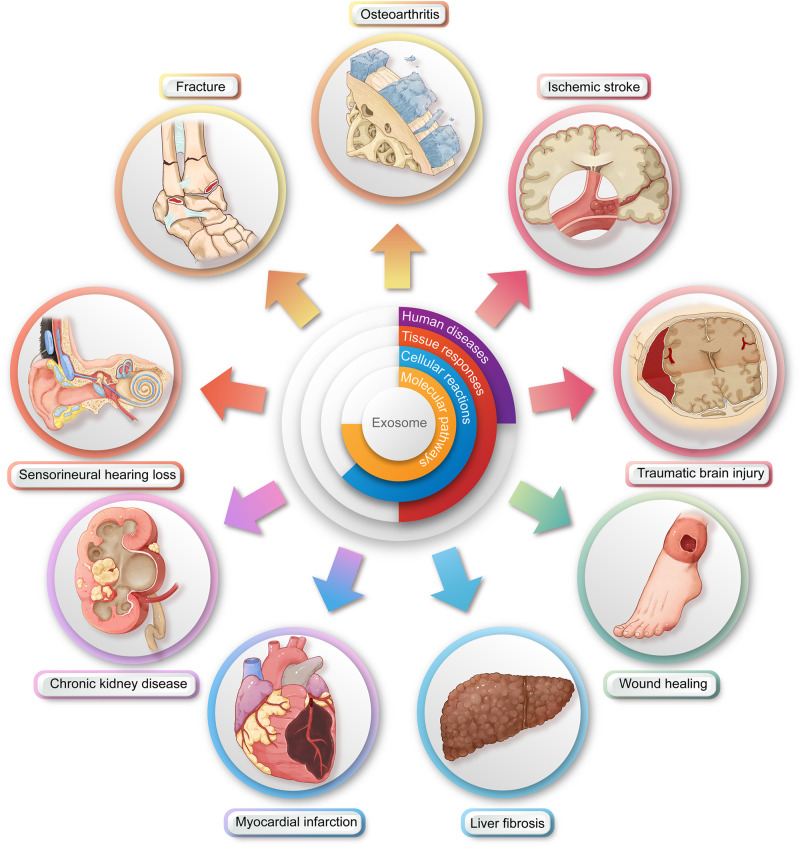
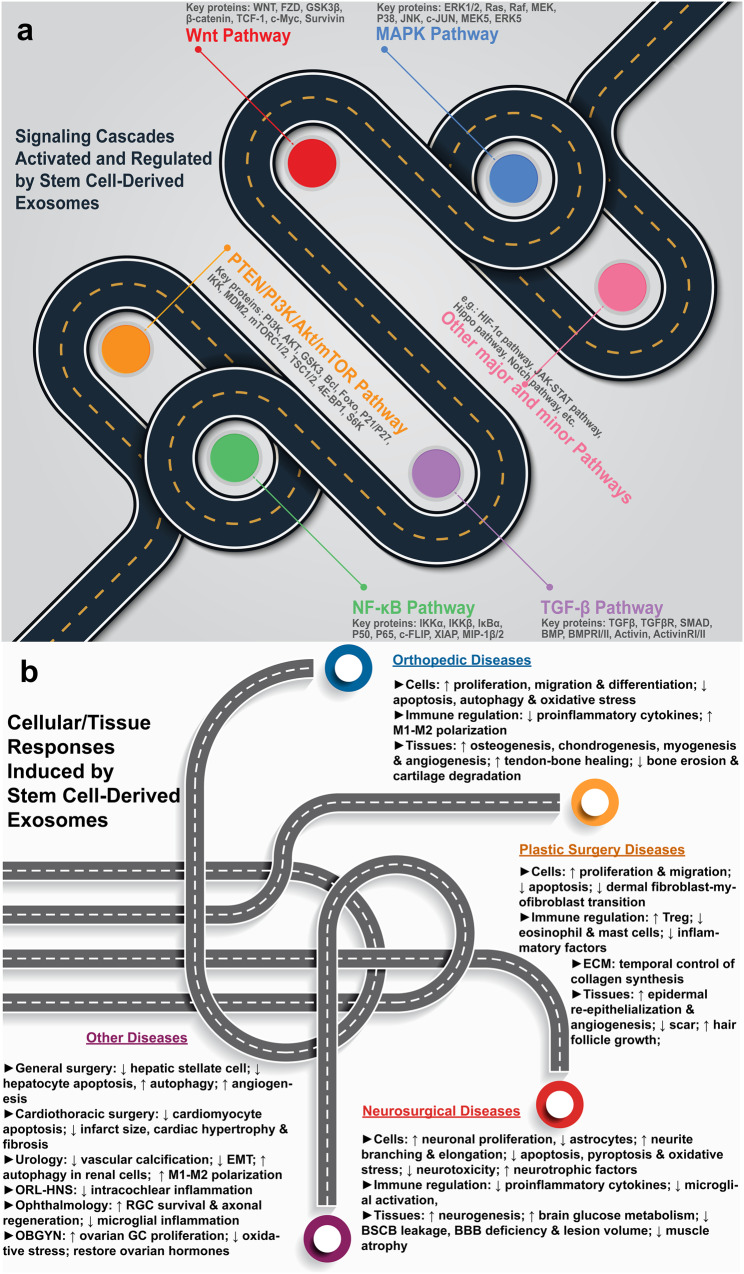
Although stem cell-based therapy has demonstrated considerable potential to manage certain diseases more successfully than conventional surgery, it nevertheless comes with inescapable drawbacks that might limit its clinical translation. Compared to stem cells, stem cell-derived exosomes possess numerous advantages, such as non-immunogenicity, non-infusion toxicity, easy access, effortless preservation, and freedom from tumorigenic potential and ethical issues. Exosomes can inherit similar therapeutic effects from their parental cells such as embryonic stem cells and adult stem cells through vertical delivery of their pluripotency or multipotency. After a thorough search and meticulous dissection of relevant literature from the last five years, we present this comprehensive, up-to-date, specialty-specific and disease-oriented review to highlight the surgical application and potential of stem cell-derived exosomes. Exosomes derived from stem cells (e.g., embryonic, induced pluripotent, hematopoietic, mesenchymal, neural, and endothelial stem cells) are capable of treating numerous diseases encountered in orthopedic surgery, neurosurgery, plastic surgery, general surgery, cardiothoracic surgery, urology, head and neck surgery, ophthalmology, and obstetrics and gynecology. The diverse therapeutic effects of stem cells-derived exosomes are a hierarchical translation through tissue-specific responses, and cell-specific molecular signaling pathways. In this review, we highlight stem cell-derived exosomes as a viable and potent alternative to stem cell-based therapy in managing various surgical conditions. We recommend that future research combines wisdoms from surgeons, nanomedicine practitioners, and stem cell researchers in this relevant and intriguing research area.
Overview
The claims and statistics of this paper haven’t been checked yet.
Free: it reads the open-access text and checks the first 5 claims that cite a source we can check. Create a free account to check every claim.
Integrity signals
Registry
Cites
Statistics
Figures
Verification
Claims the paper makes
The claims and statistics of this paper haven’t been checked yet.
Free: it reads the open-access text and checks the first 5 claims that cite a source we can check. Create a free account to check every claim.
Claims other papers make about this one
Each is checked against this paper’s own text: does it say what the citing paper says it does?
The cited source says what the claim attributes to it.
In the citing paper
“Despite their strong therapeutic promise in AD, the production of stem cell-derived exosomes remains challenging. Their yield from cultured media is extremely low, posing a major challenge for large-scale manufacturing and clinical translation [231].”
From The Impact of Neurotoxin Proteins Trafficked by Primary Cilia and Extracellular Vesicles in Neurodegenerative Diseases (2025) · cites this paper as [231]
Experimental — accuracy not yet measured
Self-check
Percentages, sums and reported differences re-computed from the paper’s own numbers.
The self-check needs the paper’s full text.
Citations
Cites
2 retracted
Ding, J., Wang, X., Chen, B., Zhang, J., & Xu, J. (2019) · BioMed Research International · doi:10.1155/2019/9742765 · Cited by 184 · cited 1×
“215 218 EPC-derived exosomes could accelerate cutaneous wound healing by promoting angiogenesis 219 through the Erk1/2 pathway 220 and p53 pathway.”
BackgroundRetractedJiang, Y., Zhang, J., Li, Z., & Jia, G. (2020) · Frontiers in Medicine · doi:10.3389/fmed.2020.577578 · Cited by 55 · cited 1×
“71 From a lncRNA perspective, especially the bone-speci fi c lncRNA H19, a Chinese group revealed that although a high-fat diet reduced osteogenic differentiation and weakened fracture healing, this could be reversed by MSC-derived exosomal lncRNA H19 via miR-467/ HoxA10 axis in an obesity-induced…”
BackgroundRetractedThéry, C., Witwer, K. W., Aikawa, E., Alcaraz, M. J., Anderson, J. D., Andriantsitohaina, R., Antoniou, A., Arab, T., Archer, F., Atkin‐Smith, G. K., et al. (2018) · Journal of Extracellular Vesicles · doi:10.1080/20013078.2018.1535750 · Cited by 11,099 · cited 1×
“55,56 Storage of exosomes The currently used preservation methods for long-term storage of exosomes mainly include cryopreservation, lyophilization, and spray-drying.”
MethodThe biology , function , and biomedical applications of exosomes
Kalluri, R., & LeBleu, V. S. (2020) · Science · doi:10.1126/science.aau6977 · Cited by 10,770
Poewe, W., Seppi, K., Tanner, C. M., Halliday, G. M., Brundin, P., Volkmann, J., Schrag, A.-E., & Lang, A. E. (2017) · Nature Reviews Disease Primers · doi:10.1038/nrdp.2017.13 · Cited by 5,415
Delivery of siRNA to the mouse brain by systemic injection of targeted exosomes
Alvarez-Erviti, L., Seow, Y., Yin, H., Betts, C., Lakhal, S., & Wood, M. J. A. (2011) · Nature Biotechnology · doi:10.1038/nbt.1807 · Cited by 4,930 · cited 1×
“50 Zhu et al. inserted tumor-targeting peptides, c(RGDyK), into the exosome surface using a chemical reaction to target glioblastoma.”
BackgroundDoyle, L., & Wang, M. (2019) · Cells · doi:10.3390/cells8070727 · Cited by 3,236 · cited 3×
“19 In addition, cargo pro fi ling is further subdivided into proteomic, lipidomic, and genomic analyses including western blotting, ELISA, fl ow cytometry, mass spectroscopy, and PCR. 36 Since each of the above characterization methods has advantages and disadvantages, it is a universal practice to…”
BackgroundMethodInfluentialBlood–brain barrier breakdown in Alzheimer disease and other neurodegenerative disorders
Sweeney, M. D., Sagare, A. P., & Zlokovic, B. V. (2018) · Nature Reviews Neurology · doi:10.1038/nrneurol.2017.188 · Cited by 3,076
Wound Healing: A Cellular Perspective
Rodrigues, M., Kosaric, N., Bonham, C. A., & Gurtner, G. C. (2019) · Physiological Reviews · doi:10.1152/physrev.00067.2017 · Cited by 3,013
Comprehensive Review on Alzheimer’s Disease: Causes and Treatment
Breijyeh, Z., & Karaman, R. (2020) · Molecules · doi:10.3390/molecules25245789 · Cited by 2,789
Research works printed but not linked: 1
- Carr NJ The pathology of healing and repair Surgery 2022 40 13 19
Cited by
Items 601–700 of 841
Exosomes in Benign Urological Disorders: From Molecular Biology to Clinical Perspectives
Hrkać, A., Bulić, L., Brlek, P., Nikles, S., Bokarica, P., Madžar, T., & Primorac, D. (2026) · International Journal of Molecular Sciences · doi:10.3390/ijms27146441 · Cited by 1
“These selectively loaded, endosome-derived vesicles traffic RNAs, proteins, and lipids that reprogram recipient cells and thereby encode inflammation, matrix remodeling, neurovascular plasticity, immune set-points, and drug resistance [2,3,5,7].”
InfluentialWang, K., Xu, H., Ji, X., Zhu, S., Lin, Y., Chen, H. Z., Chen, X., Xc, J., Zhou, H., Ye, J., et al. (2026) · Frontiers in Cellular Neuroscience · doi:10.3389/fncel.2026.1809758 · Cited by 1
“Within these exosomes, microRNAs (miRNAs) serve as critical mediators of neuroprotection by modulating post-transcriptional gene expression (Mendt et al., 2019; Tan et al., 2024).”
Abolhasani, S., Ahmadi, Y., & Jalizih, A. (2026) · Clinical and Translational Discovery · doi:10.1002/ctd2.70185 · Cited by 1
Shi, S., Liu, R., Liu, C., Chen, Y., Pan, Y., & Wang, C. (2026) · Brain Research · doi:10.1016/j.brainres.2026.150487 · Cited by 1
Wan, Y., Gao, C., Li, J., Luan, M., Lu, Y., Wang, J., Yang, B., Zheng, J., Yuan, Y., Wei, J., et al. (2026) · Journal of Neuropathology & Experimental Neurology · doi:10.1093/jnen/nlag013 · Cited by 1
Self-citationClinical potential and challenges of extracellular vesicles in myocardial infarction therapy
Zhu, K., Bai, J., Xu, L., Guo, W., Gao, Y., Dong, C., & Rao, L. (2026) · Journal of Controlled Release · doi:10.1016/j.jconrel.2026.115255 · Cited by 1
Kuo, Y.-C., Luo, R. G.-J., Tsai, C.-H., Huang, C.-J., Chen, K.-F., Chen, C., Chen, C.-T., & Mao, S.-H. (2026) · Stem Cell Research & Therapy · doi:10.1186/s13287-026-05237-5 · Cited by 1
Advances in Extracellular Vesicle-Based Surface-Enhanced Raman Spectroscopy for Cancer Diagnosis
Zhao, S., Lei, W., Li, J., & Xia, J. (2026) · Biosensors · doi:10.3390/bios16090464 · Cited by 1
“SERS-based EV research on exosomes in non-coding RNA [48,49], stem cells [50,51], immunity [52–54], targeted drug delivery [55], and cancer diagnosis and treatment [56–59].”
Self-citationADSCs-Exo ameliorates UVB-induced skin DNA damage via p62-RNF168-dependent histone ubiquitination
Gao, W., Ai, C., Song, P., Li, S., Han, X., Lv, M., Gao, F., Huang, F., Chen, W., Li, Z., et al. (2026) · Photochemical & Photobiological Sciences · doi:10.1007/s43630-026-00992-z · Cited by 1
Adelipour, M., Gab-Allah, M. A., Kim, M., Lee, S., Kim, K. K., Lee, G. S., Moon, J. H., Lubman, D. M., & Kim, J. (2026) · Biochimie · doi:10.1016/j.biochi.2026.10.003 · Cited by 1
Habibi, S., Mohammadi, T., Hossein, K. J., & Asadi, A. A. (2024) · BioNanoScience · doi:10.1007/s12668-024-01748-8 · Cited by 1
Feasibility of Cord Blood Application in Cell Therapy for Central Nervous System Pathologies
Shcheniavskyi, I. J., Сальников, Д., Chub, O. V., & Prokopyuk, O. S. (2024) · Problems of Cryobiology and Cryomedicine · doi:10.15407/cryo34.03.165 · Cited by 1
Alshawkani, H. A. A., Albar, N. H. M., Daghrery, A., & mansy, M. I. A. (2025) · Multidisciplinary Science Journal · doi:10.31893/multiscience.2025502 · Cited by 1
Park, N., Choi, J. H., Kim, S. H., Ahn, M., & Na, K. (2025) · ACS Applied Materials & Interfaces · doi:10.1021/acsami.5c06996 · Cited by 1
iPSC-derived extracellular vesicles rescue deficits in human and mouse models of Parkinson’s diseasePreprint
Rike, W. A., Tripathi, U., Hussien, Y., Choudhary, A., Rajkovic, A., Sharma, O., Rosh, I., Manole, A., Gage, F. H., Houlden, H., et al. (2026) · bioRxiv (Cold Spring Harbor Laboratory) · doi:10.64898/2026.05.19.726142 · Cited by 1
“EVs carry proteins, lipids, and regulatory RNAs that can modify the state of recipient cells (31) .”
The Impact of Using Stem Cells on Human Rights
Al-Btoosh, A. M. A. A. H., Hamad, A., Ahmad, S., & Al-Ramahi, N. (2024) · Revista de Gestão Social e Ambiental · doi:10.24857/rgsa.v18n9-118
Lee, S. H. (2024) · Obstetrics & Gynecology Science · doi:10.5468/ogs.24084
“…are necessary for appropriate cell differentiation during early embryonic development and play an important role in stem cell development by transporting bioactive mediators that regulate cell fate, help maintain pluripotency, and trigger differentiation processes in embryonic stem cells [41,42].”
BackgroundRetractedWang, N., Zhang, Y., Zhang, S., Chen, C., Wu, H., Liao, P., Liu, S., Chen, S., Zhang, X., Xie, J., et al. (2024) · Chemical Engineering Journal · doi:10.1016/j.cej.2024.158068
Self-citationAVANÇOS NA RECONSTRUÇÃO PÓS-TRAUMA: USO DE CÉLULAS TRONCO E LIPOENXERTIA
MAGALHÃES, G. M., MARIN, A. T., Carvalho, C. V. D., DANIEL, M. H. B., ALMEIDA, L. S. A. M. D., RODRIGUES, G. B., SILVA, G. A. D., & BARBOSA, T. H. F. (2024) · doi:10.59290/978-65-6029-184-3.12
Hong, W., Xiang, Y., & Yuan, H. (2024) · Highlights in Science Engineering and Technology · doi:10.54097/kjqwed61
Advances on the role of stem cells in liver cancer
Wang, Y., & Wang, J.-P. (2024) · New cell · doi:10.61958/ncst5135
Rakhmetov, M., Zhusupkalieva, G., Салтанова, Ғ. А., & Kuanbayeva, B. (2024) · Журнал серии «Педагогические науки» · doi:10.48371/peds.2024.75.4.020
Fundamentals of Stem Cells and Application in Complex Disorders
Verma, G., & Ravichandran, S. (2025) · Biochemistry · doi:10.5772/intechopen.1008567
Wang, C., Meng, Y., & Zhu, Y.-P. (2025) · SSRN Electronic Journal · doi:10.2139/ssrn.5132844
Yan, W., Meng, X., & Li, X. (2025) · Journal of Aging and Rehabilitation · doi:10.1097/jagr.0000000000000024
Self-citationAlrokayan, S., Mouffouk, F., Khan, H. A., Hussain, T., Alamery, S. F., & Abu–Salah, K. M. (2025) · Current Nanoscience · doi:10.2174/0115734137341067241231110858
Finelli, C., & Sasso, S. D. (2025) · International Journal of Clinical Endocrinology and Metabolism · doi:10.17352/ijcem.000064
Clinical Applications of Exosomes
Huang, C. F. (2025) · Springer eBooks · doi:10.1007/978-981-96-1261-1_23
Stem Cell Treatment for Cosmetic Surgery
Farhan, B. A., Farooq, W., Fatima, G., Khan, G. N., Ahmad, A., & Javed, S. (2025) · Springer eBooks · doi:10.1007/978-3-031-86087-4_13
Clinical Potential of Extracellular Vesicles in Central Nervous System Pathologies
Tota, M., Blagaić, A., & Bonifačić, D. (2025) · Medicina Fluminensis · doi:10.21860/medflum2025_330052
An introduction of adult stem cells
Wet, E. D., Saeinasab, M., & Sefat, F. (2025) · Elsevier eBooks · doi:10.1016/b978-0-443-34152-6.00002-0
Medicina regenerativa y celular en oftalmología: 25 años de historia desde el Litoral argentino
Vercesi, A. (2025) · Oftalmología clínica y experimental. · doi:10.70313/2718.7446.v18.n2.417
Desafios e perspectivas da diferenciação de ADSCs em células nervosas: uma revisão
da Cunha, A. C. F., Benites, M. L., & Catelan-Mainardes, S. C. (2025) · Revista Sociedade Científica · doi:10.61411/rsc2025107718
Li, R., Xiong, W., & Sun, C. (2025) · International Journal of Neuroscience · doi:10.1080/00207454.2025.2540989
“…cell-derived exosomes represent a promising therapeutic avenue for AD, offering advantages over the use of neural stem cells themselves. exosomes exhibit reduced immunogenicity and toxicity, are easy to handle and store, and circumvent the ethical concerns associated with stem cell therapies [197].”
Ahmadi, H., Zahiri, M., Mohebbi, G. H., & Esmaeilzade, B. (2025) · Bulletin de la Banque Méllié Iran. · doi:10.61186/ismj.27.6.409
Exosomes in hematological disorders: Unlocking diagnostics and therapeutic frontiers
Venkatesan, G., Rahman, W. S. W. A., Shahidan, W. N. S., Edinur, H. A., & Ghazali, N. (2025) · Elsevier eBooks · doi:10.1016/b978-0-443-33351-4.00026-x
The Exosome: A Review on Isolation, Characterization and Future Aspects in Drug Delivery
Abinaya, S., Ramesh Kumar, K., Praveen Kumar, N., Sandhiya, M., & Sowmiya, P. (2025) · International Journal of Pharmacy and Pharmaceutical Research · doi:10.25166/ijppr.2025.31.1.22
Moura, J. S. P., Godoy, I. M. M., Mendes, P. H. D. O., Lima, W. R. D. S., ÁVILA, T. C., de Oliveira, T. G. F., Brandão, M., de Souza, A. P. R., de Andrade, L. M. M., Martins, I. S., et al. (2025) · International Journal of Health Science · doi:10.22533/at.ed.15952925150810
(2025) · Acta Scientific Medical Sciences · doi:10.31080/asms.2025.09.2150
Stem cells for therapy of neurodegeneration
Полтавцева, Р. А., Svirshchevskaya, E. V., Tchikov, V. M., Bobkova, N. V., & Sukhikh, G. T. (2025) · Регенерация органов и тканей. · doi:10.60043/2949-5938-2024-3-14-32
Fusion Protein-Collagen Scaffolds: A New Potential Therapy for Thin Endometrium
Xi, Y., & Hu, P. (2025) · Fertility & Reproduction · doi:10.1142/s2661318225500124
Gunawan, E. T., Gunadi, J. W., Widowati, W., & Wargasetia, T. L. (2025) · Cell Biochemistry and Biophysics · doi:10.1007/s12013-025-01913-0
Abbaspanah, B., Sotoodehnejadnematalahi, F., Mousavi, S. H., & Alizadeh, S. (2025) · Current Stem Cell Research & Therapy · doi:10.2174/011574888x393600250825163956
Exosomes as a Double-Edged Sword in Neurodegenerative Diseases: Roles and Engineering Strategies
Liu, R. (2025) · Theoretical and Natural Science · doi:10.54254/2753-8818/2025.au27718
Combination of drug therapy and membrane-modified exosomes for the treatment of rheumatoid arthritis
Shen, Z., Li, X., Zheng, J., & Li, N. (2025) · Next research. · doi:10.1016/j.nexres.2025.100944
Self-citationWang, Y., Xu, T., & Li, D. (2025) · Applied Biochemistry and Biotechnology · doi:10.1007/s12010-025-05405-y
“MSC EXO have emerged as promising therapeutic agents in multiple diseases, including pneumonia, due to their ability to modulate inflammation, regulate immune responses, and promote tissue repair [32, 33].”
Omar, W. E., Tolba, A. M., El-Bestawy, E. M., Ibrahim, A. A., & Ibrahim, B. A. (2025) · Anatomy & Cell Biology · doi:10.5115/acb.25.159
“As cell-free therapeutics, MSCs-derived exosomes replicate the benefits of MSCs while avoiding risks like tumorigenicity [16].”
Lai, H., Hsieh, M., Wu, H.-H., Lee, C., Liu, S.-H., Lin, H.-Y., Chen, Y., Chiang, C.-C., Hsieh, Y.-C., Wu, Y.-H., et al. (2025) · Life · doi:10.3390/life15111780
“In recent years, clinical trials utilizing extracellular vesicles secreted by stem cells are emerging for regenerative medicine, disease diagnosis, or drug delivery and have been widely addressed [5].”
The mechanism of lncRNA LINC01446 in delayed fracture healing and its clinical significance
He, D., Zhao, S., Wang, Y., Liu, C., Ding, X., Li, H., Ren, B., Li, B., & Chen, Y. (2025) · Journal of Orthopaedic Surgery and Research · doi:10.1186/s13018-025-06512-6
“For instance, in nude mouse models with impaired immune function, exosome-derived lncRNA H19 can not only promote osteogenesis but also improve angiogenesis via the angiopoietin 1/Tie2-NO signaling pathway [41].”
Sousa, T. N., Soares, S. D. S., Belo, M. D. L. R. D. S., de Jesus, B. L. D. N., da Silva, L. P. N., Marthos, A. L., Giacomim, G. S. P., Moreira, J. S., Pereira, D., Pereira, J. M. C., et al. (2026) · Journal of Medical and Biosciences Research. · doi:10.70164/jmbr.v3i1.1076
Potencialna terapevtska uporaba zunajceličnih veziklov mezenhimskih matičnih celic
Požun, N., Kolenc, A., & Maličev, E. (2025) · Slovenian Medical Journal · doi:10.6016/zdravvestn.3627
Treatment of inhalation injury by nebulization of mesenchymal stem cell-derived exosomes
Wang, Z., Jin, Y., Zhou, C., Du, X., Wang, J., & Tang, H. (2026) · International Journal of Surgery · doi:10.1097/js9.0000000000004700
Self-citationZhao, W., Hao, Q., Gan, Y., Tong, J., Chen, X., Tan, S., Ruan, R., Huang, Y., Cao, M., Deng, J., et al. (2026) · Advanced Science · doi:10.1002/advs.202513369
“Exosomes, acting as intercellular messengers with great natural biocompatibility and low immunogenicity, can be engineered to display specific surface ligands for selective targeting of diseased cells [ 45–47 ].”
Abbaspanah, B., Sotoodehnejadnematalahi, F., Mousavi, S. H., & Alizadeh, S. (2026) · Current Stem Cell Research & Therapy · doi:10.2174/011574888x426015251128064616
Fotouhi, F., Nokhbedehghan, Z., Khajavi, M., Taghizadeh‐Hesary, F., Alizadeh, R., Asghari, A., Daneshmehr, M. A., Warnecke, A., Rohde, E., Gimona, M., et al. (2026) · International Journal of Pharmaceutics · doi:10.1016/j.ijpharm.2026.126634 · Cited by 1
Yang, Z., Liu, Y., Cui, J., Chen, Z., Shi, H., Tao, H., Ma, R., He, W., Sun, L., Li, Y., et al. (2026) · International Journal of Nanomedicine · doi:10.2147/ijn.s572708
Self-citationSun, Y., Wang, Y., Zheng, C., Han, L., & Zhang, Y. (2026) · FEMS Microbiology Letters · doi:10.1093/femsle/fnag017
Yang, X., Xing, Y., Xing, S., Jin, J., Li, D., Ren, X., & Liu, L. (2026) · Talanta · doi:10.1016/j.talanta.2026.129547
Liu, Y., Gong, S., Luo, X., Hu, Y., Yan, Q., Yang, Z., Mohsin, A., Zheng, S., & Guo, M. (2026) · Chemical Engineering Journal · doi:10.1016/j.cej.2026.174376
Mayangsari, C. P., Salimo, H., Dewi, Y. L. R., Putra, A. B., Suryawati, B., & Moelyo, A. G. (2026) · Medicinski Glasnik · doi:10.17392/1992-23-01
“…3-kinase/protein kinase B (PI3K/AKT), janus kinase/signal transducer and activator of transcription (JAK/STAT), and mitogen-activated protein kinase (MAPK) signalling pathways in HSCs treated with MSC secretome, all of which are critical for hematopoietic cell survival and proliferation (12–14).”
Wong, L. C., Wong, C. J. K., Wu, K. Y., Chong, S. M. E., Tai, Y. K., Rufaihah, A. J., Nelson, A. Z., & Franco‐Obregón, A. (2026) · Research Square · doi:10.21203/rs.3.rs-9015333/v1
Gurcan, F., Özen, D., Işık, G., & Uyanıkgil, Y. (2026) · Ege Tıp Dergisi · doi:10.19161/etd.1759166
Therapeutic small extracellular vesicles from key human stem and immune cellular sources: A review
Goh, W. X., Wong, C.-Y., & Kok, Y.-Y. (2026) · Journal of Biomedical Research · doi:10.7555/jbr.39.20250424
Assefa, F., & Daba, A. K. (2026) · Cell and Tissue Biology · doi:10.1134/s1990519x26600110
Yang, K., Cao, W., Fan, A., Ma, X., Fan, G., & Li, L. (2026) · Pharmacological Research - Modern Chinese Medicine · doi:10.1016/j.prmcm.2026.100795
Cell-Laden Gel Biomimetic Skin Promotes Full-Thickness Skin Wound Regeneration
Zhang, P., Chen, Q., Pu, Y., Liu, M., Ma, M., Wu, Y., Zhang, Y., & Yang, X. (2026) · Gels · doi:10.3390/gels12030258
“Due to their self-renewal and multi-lineage differentiation capabilities, as well as their ability to secrete bioactive factors like growth factors, cytokines, and exosomes, stem cells have become highly promising candidates for skin regeneration [11,12].”
Bjurling, R., Végh, H., Hetherington, C. J. D., Yang, J., Olsson, R., & Hjort, M. (2026) · ACS Omega · doi:10.1021/acsomega.5c11592
Jia, Z., Luan, F., Shi, J., Tao, Y., & Tian, Y. (2026) · Extracellular Vesicles and Circulating Nucleic Acids · doi:10.20517/evcna.2025.159
Bae, W., Kim, S., Kim, H.-S., Kang, S., & Ban, J. (2026) · Molecular Medicine Reports · doi:10.3892/mmr.2026.13860
Advancements in stem cell therapy facilitated by exosomes
Ojha, A., Banerjee, A., Singh, A. K., & Singh, R. K. (2026) · Elsevier eBooks · doi:10.1016/b978-0-443-36390-0.00003-8
Yu, S., Liu, J., & Chen, S. (2026) · European Journal of Obstetrics & Gynecology and Reproductive Biology · doi:10.1016/j.ejogrb.2026.115090
Stem Cells for the Therapy of Neurodegeneration
Полтавцева, Р. А., Svirshchevskaya, E. V., Tchikov, V. M., Bobkova, N. V., & Sukhikh, G. T. (2026) · Cell and Tissue Biology · doi:10.1134/s1990519x2603003x
Ciarrochi, E., & Ciarrochi, J. B. (2026) · Journal of Ophthalmology and Advance Research · doi:10.46889/joar.2026.7113
Luo, T., Liu, Q., Jiang, X., Zhou, T., Jiang, S., Liu, G., & Lan, X. (2026) · International Immunopharmacology · doi:10.1016/j.intimp.2026.116563
Palma, I. M., Castro, C. A., Escobar, C. H., Segura, C. R., & Gómez, D. (2026) · Revista Multidisciplinaria Investigación Contemporánea · doi:10.58995/redlic.rmic.v4.n2.a188
Development of Anti‐Inflammatory Extracellular Vesicles by Surface Expression of Syndecan‐4
Yu, L., Bergqvist, M., Park, K., Lässer, C., & Lötvall, J. O. (2026) · Journal of Extracellular Vesicles · doi:10.1002/jev2.70266
Zuo, M., Xu, H., Yang, Y., Wang, W., Zhou, J., Li, G., Zhao, J., Liu, R., Chen, H. J., & Wang, H. (2026) · Communications Biology · doi:10.1038/s42003-026-09960-w
“They serve as essential mediators in cellular communication by facilitating the transfer of key proteins 13 .”
Wang, Z., Shi, Q. W., Zhai, P., Xu, L., & Yan, H. (2026) · ACS Applied Materials & Interfaces · doi:10.1021/acsami.6c01478
Self-citationAdvances in engineered exosome-loaded hydrogels for bone and cartilage regeneration
Gopalakrishnan, M., & Jayaprakash, N. (2026) · Nanomedicine Nanotechnology Biology and Medicine · doi:10.1016/j.nano.2026.102939
Serhal, N. (2024) · theses.fr (ABES) · doi:10.70675/5db20f03z9603z4abcz8a73z3a59190b9f3c
Cheng, N., Li, J., Huang, C., & Wang, Y. (2026) · Journal of Radiation Research and Applied Sciences · doi:10.1016/j.jrras.2026.102375
Self-citationStem Cells and Their Derivatives in Cardiac Fibrosis Therapy: Challenges and Perspectives
Piwowar, A., Zolbach, Z., Rydzek, J., Skonieczna, N., Rojek, K., Żołyniak, M., Soczyńska, J., & Woźniak, S. (2026) · Cells · doi:10.3390/cells15080656
Utilisation de la bio-impression pour développer un patch cardiaque de grade clinique
Guesdon, R. (2025) · theses.fr (ABES) · doi:10.70675/21e73bb2zfd6dz43bbzb011z57a833c676a1
The role of gene therapy in neural injury repair
Liu, J., Yuan, A., Tang, Z.-L., & Ning, K. (2026) · Chinese Journal of Traumatology · doi:10.1016/j.cjtee.2025.11.003
Exosome Engineering for Targeted Therapy: Tools and Techniques
Sharma, S., Mishra, A. C., Debnath, A., & Singh, R. K. (2026) · Current Drug Delivery · doi:10.2174/0115672018399550251030075217
Isolation and Characterization of Dental Pulp Stem Cell-Derived Exosomes Across Cell Passages
Hou, D., Feng, T., Wang, S., Zhuang, D., Wang, Y., Xu, Q., Guo, J., & Wu, X. (2026) · Journal of Visualized Experiments · doi:10.3791/70977
Li, N., Xiao, R., Zhu, L., Cai, L., Zhang, Z., Sun, L., Shi, H., Ye, H., Shao, G., & Gao, J. (2026) · International Journal of Pharmaceutics · doi:10.1016/j.ijpharm.2026.126877
The Longevity Handymen: Short-Term Fixes and Patch-Ups
Cramer, J. G. (2026) · Copernicus books · doi:10.1007/978-3-032-17741-4_6
Knee Injectables in Young Athletes: Evidence, Recommendations, and Clinical Application
Hantouly, A. T., Bedi, A., & Khan, M. Z. (2026) · Journal of Bone and Joint Surgery · doi:10.2106/jbjs.26.00267
REGENERATIVE STRATEGIES FOR SPORTS-RELATED MUSCULOSKELETAL INJURIES: FROM PRP TO 3D BIOPRINTING
Szlachetka, K., Gralec, A., & Helbin, P. (2026) · International Journal of Innovative Technologies in Social Science · doi:10.31435/ijitss.1(49).2026.5330
Erçelen, N., Badakal, E. Z. D., & Boyraz, G. (2026) · Springer eBooks · doi:10.1007/978-3-032-12122-6_26
Liu, Y., Li, S., Cai, A., Li, W., Zhang, W., Li, T., Zhang, M., Liu, C., Ma, W., Lin, Y., et al. (2026) · Acta Pharmaceutica Sinica B · doi:10.1016/j.apsb.2026.04.015
“EVs derived from stem cells have demonstrated considerable therapeutic properties with fewer safety concerns and “off-the-shelf” convenience 11,12 .”
Tan, T. T., Tan, K. H., & Lim, S. K. (2026) · Extracellular Vesicles and Circulating Nucleic Acids · doi:10.20517/evcna.2025.150
Current Perspectives on the Biological Effects of Exosomes in Ophthalmic Diseases
Weng1, G. L. Q. (2026) · International Journal of Frontiers in Medicine · doi:10.25236/ijfm.2026.080105
Yang, Q., Tang, H. X., Liu, X. X., Chen, Y., & Bai, L. (2026) · PubMed · doi:10.3760/cma.j.cn501113-20250610-00227
CD44+ and CD133+ Extracellular Vesicles as Future Potential Targets in Gastrointestinal Tumor
Pizzulli, C., Menicacci, B., Parrini, M., Tonelli, E., Bartolini, C., Curto, A., Petroni, G., Pillozzi, S., & Galli, A. (2026) · Frontiers in Bioscience-Landmark · doi:10.31083/fbl46312
Protective effects of skin-derived precursor cell exosomes against UVB-induced skin photodamage
Xian, K., Liu, L., Huang, X., Tang, Q., Xu, J., & Liu, Z. (2026) · Scientific Reports · doi:10.1038/s41598-026-48604-1
“The characteristics of above vesicles coincided with those of exosomes reported in documents from Tan and Doyle et al. 29,30 .”
Wang, J., Wang, C., Yuan, X., Yan, J., Huang, H., Li, F., You, Y., & Qi, Z. (2026) · Molecular Neurobiology · doi:10.1007/s12035-026-05887-9
Liu, C., & Yang, H. (2026) · International Journal of Biology and Life Sciences · doi:10.54097/n4syh248
“MSC-EVs can carry proteins, lipids, mRNA, miRNA, and other non-coding RNAs, participate in intercellular communication, and play roles in immunomodulation, anti-inflammatory responses, and tissue repair [6,7].”
Metadata
- Authors
- Tan, F., Li, X., Wang, Z., Li, J., Shahzad, K., & Zheng, J.
- Affiliations
- Tongji University (CN)
- Corresponding author
- Tan, Fei
- Venue
- Signal Transduction and Targeted Therapy
- Published
- 2024-01-12
- Volume
- 9
- Issue
- 1
- Pages
- 17-17
- ISSN
- 2059-3635 (ISSN-L)
- PMC
- PMC10784577
- OpenAlex
- W4390765704
- Cited by
- 708
- References
- 352
- Citations by year
- 2026: 267 · 2025: 313 · 2024: 128
- FWCI
- 28.81
- Type
- journal article
- Language
- en
- Open access
- gold
- doi.org
- Licence
- cc-by
- creativecommons.org/licenses/by/4.0 (tdm)
- creativecommons.org/licenses/by/4.0 (vor)
- Locations
- Signal Transduction and Targeted Therapy (publishedVersion, cc-by)
- PubMed Central (publishedVersion, cc-by)
- PubMed (publishedVersion)
- DOAJ (DOAJ: Directory of Open Access Journals) (submittedVersion, cc-by-sa)
- Funders
- National Natural Science Foundation of China (82271192)
- Topics
- Life Sciences › Biochemistry, Genetics and Molecular Biology › Molecular Biology › Extracellular vesicles in disease
- Life Sciences › Biochemistry, Genetics and Molecular Biology › Cell Biology › Mesenchymal stem cell research
- Health Sciences › Dentistry › Periodontics › Periodontal Regeneration and Treatments
- Keywords
- stem cell-derived exosomes, exosome therapy, orthopedic surgery, neurosurgery, plastic surgery, cardiothoracic surgery, urology, head and neck surgery, ophthalmology, obstetrics and gynecology, tissue-specific responses, clinical translation
- MeSH terms
- Embryonic Stem Cells, Exosomes, Induced Pluripotent Stem Cells, Mesenchymal Stem Cells
About these checks
Registry, retraction, Cites and statistics results are computed, not judged, with one exception: a printed reference that no index lists is read once by a model before it counts as a citation error. Claims are extracted by a model and kept only when their quote appears verbatim in the text; each cited source is then checked, with a model’s help, for whether it says what the claim relies on. Those verdicts can be wrong — read the claim’s quote and the cited source before relying on one.
Statistics and arithmetic are recomputed, not judged.
Confidence bands are shown only for fields calibrated on our annotated test set. None is calibrated yet, so no band is shown.
What counts as a claim ›How we measure confidence ›How we check this ›
Are you an author, or do you see a problem with this page? Request a review
Data sources
Bibliographic data: Semantic Scholar, OpenAlex, Crossref.
Contains information from the Semantic Scholar Academic Graph Datasets, made available under the ODC Attribution License (ODC-BY 1.0).
Semantic Scholar’s data is described in: Kinney, R., et al. (2023). The Semantic Scholar Open Data Platform. arXiv:2301.10140.
