

Clinical applications of stem cell-derived exosomes
Open accessThe DOI matches its Crossref record; 351 of the 352 references it cites were found in a registry or an index.
Abstract
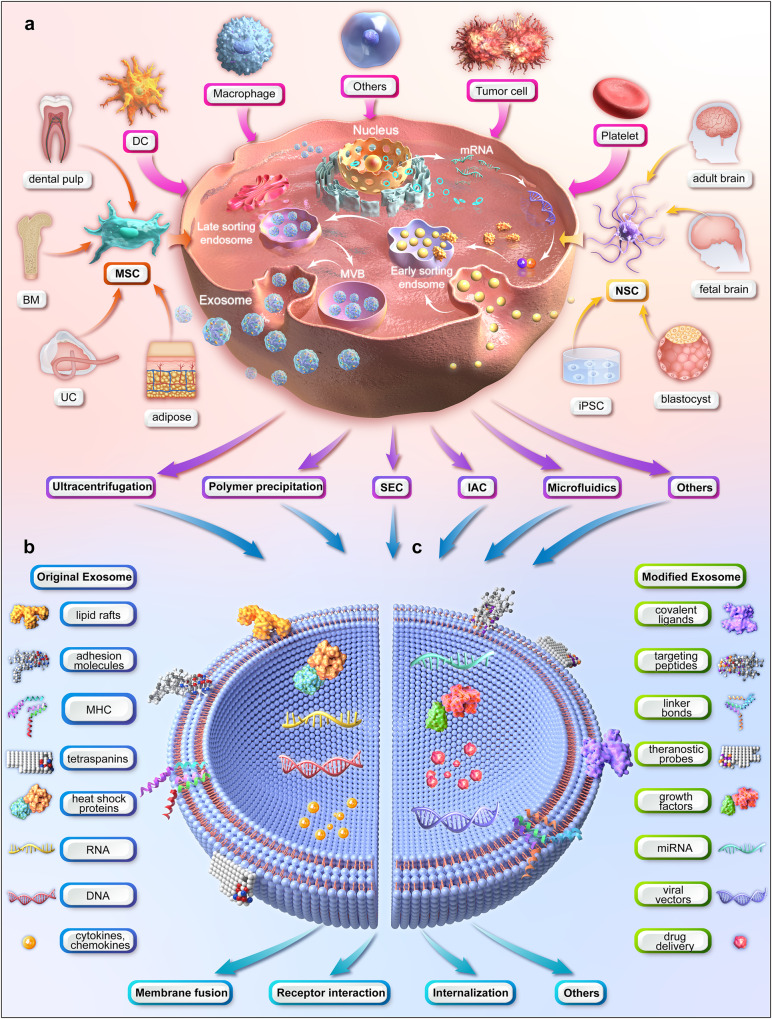
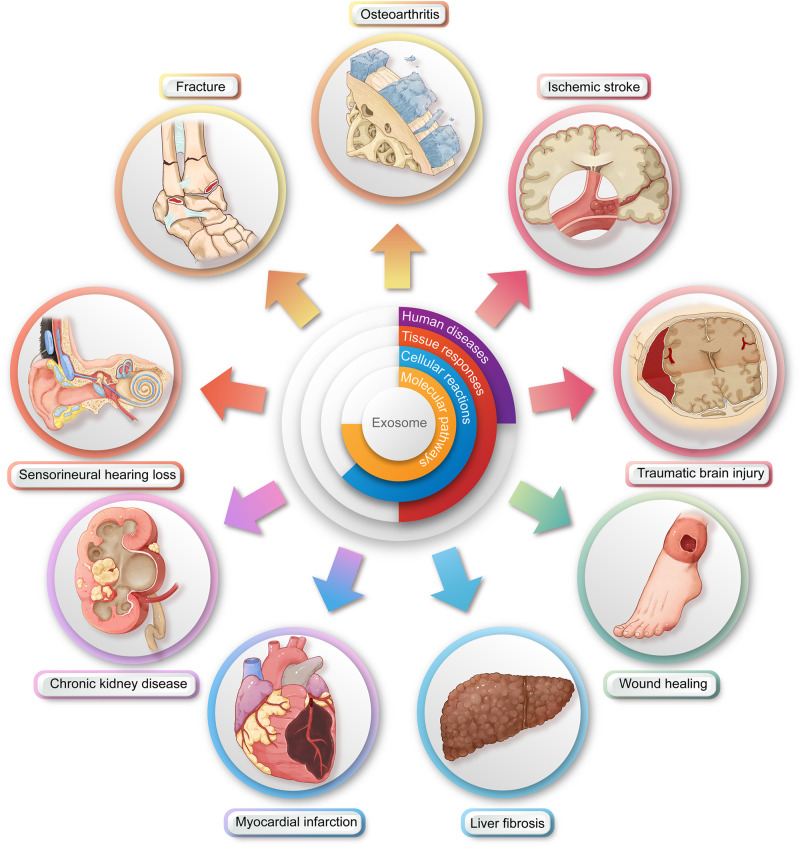
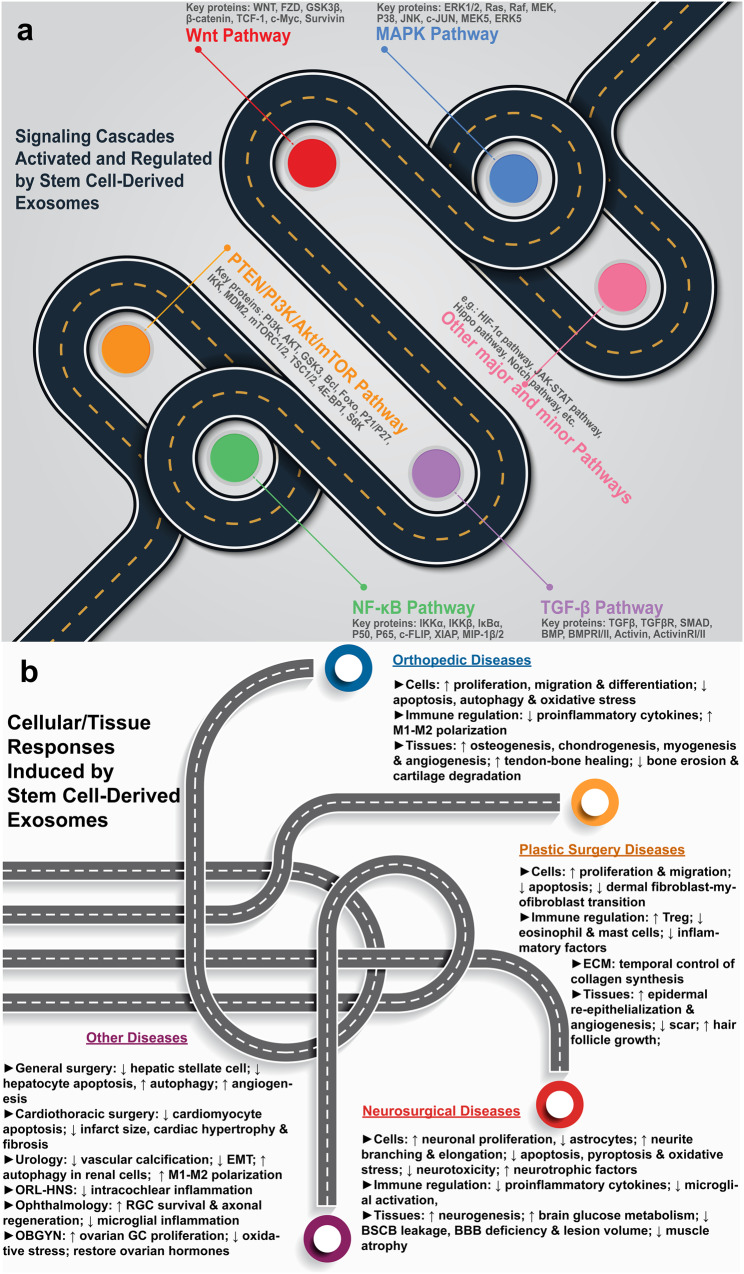
Although stem cell-based therapy has demonstrated considerable potential to manage certain diseases more successfully than conventional surgery, it nevertheless comes with inescapable drawbacks that might limit its clinical translation. Compared to stem cells, stem cell-derived exosomes possess numerous advantages, such as non-immunogenicity, non-infusion toxicity, easy access, effortless preservation, and freedom from tumorigenic potential and ethical issues. Exosomes can inherit similar therapeutic effects from their parental cells such as embryonic stem cells and adult stem cells through vertical delivery of their pluripotency or multipotency. After a thorough search and meticulous dissection of relevant literature from the last five years, we present this comprehensive, up-to-date, specialty-specific and disease-oriented review to highlight the surgical application and potential of stem cell-derived exosomes. Exosomes derived from stem cells (e.g., embryonic, induced pluripotent, hematopoietic, mesenchymal, neural, and endothelial stem cells) are capable of treating numerous diseases encountered in orthopedic surgery, neurosurgery, plastic surgery, general surgery, cardiothoracic surgery, urology, head and neck surgery, ophthalmology, and obstetrics and gynecology. The diverse therapeutic effects of stem cells-derived exosomes are a hierarchical translation through tissue-specific responses, and cell-specific molecular signaling pathways. In this review, we highlight stem cell-derived exosomes as a viable and potent alternative to stem cell-based therapy in managing various surgical conditions. We recommend that future research combines wisdoms from surgeons, nanomedicine practitioners, and stem cell researchers in this relevant and intriguing research area.
Overview
The claims and statistics of this paper haven’t been checked yet.
Free: it reads the open-access text and checks the first 5 claims that cite a source we can check. Create a free account to check every claim.
Integrity signals
Registry
Cites
Statistics
Figures
Verification
Claims the paper makes
The claims and statistics of this paper haven’t been checked yet.
Free: it reads the open-access text and checks the first 5 claims that cite a source we can check. Create a free account to check every claim.
Claims other papers make about this one
Each is checked against this paper’s own text: does it say what the citing paper says it does?
The cited source says what the claim attributes to it.
In the citing paper
“Despite their strong therapeutic promise in AD, the production of stem cell-derived exosomes remains challenging. Their yield from cultured media is extremely low, posing a major challenge for large-scale manufacturing and clinical translation [231].”
From The Impact of Neurotoxin Proteins Trafficked by Primary Cilia and Extracellular Vesicles in Neurodegenerative Diseases (2025) · cites this paper as [231]
Experimental — accuracy not yet measured
Self-check
Percentages, sums and reported differences re-computed from the paper’s own numbers.
The self-check needs the paper’s full text.
Citations
Cites
2 retracted
Ding, J., Wang, X., Chen, B., Zhang, J., & Xu, J. (2019) · BioMed Research International · doi:10.1155/2019/9742765 · Cited by 184 · cited 1×
“215 218 EPC-derived exosomes could accelerate cutaneous wound healing by promoting angiogenesis 219 through the Erk1/2 pathway 220 and p53 pathway.”
BackgroundRetractedJiang, Y., Zhang, J., Li, Z., & Jia, G. (2020) · Frontiers in Medicine · doi:10.3389/fmed.2020.577578 · Cited by 55 · cited 1×
“71 From a lncRNA perspective, especially the bone-speci fi c lncRNA H19, a Chinese group revealed that although a high-fat diet reduced osteogenic differentiation and weakened fracture healing, this could be reversed by MSC-derived exosomal lncRNA H19 via miR-467/ HoxA10 axis in an obesity-induced…”
BackgroundRetractedThéry, C., Witwer, K. W., Aikawa, E., Alcaraz, M. J., Anderson, J. D., Andriantsitohaina, R., Antoniou, A., Arab, T., Archer, F., Atkin‐Smith, G. K., et al. (2018) · Journal of Extracellular Vesicles · doi:10.1080/20013078.2018.1535750 · Cited by 11,099 · cited 1×
“55,56 Storage of exosomes The currently used preservation methods for long-term storage of exosomes mainly include cryopreservation, lyophilization, and spray-drying.”
MethodThe biology , function , and biomedical applications of exosomes
Kalluri, R., & LeBleu, V. S. (2020) · Science · doi:10.1126/science.aau6977 · Cited by 10,770
Poewe, W., Seppi, K., Tanner, C. M., Halliday, G. M., Brundin, P., Volkmann, J., Schrag, A.-E., & Lang, A. E. (2017) · Nature Reviews Disease Primers · doi:10.1038/nrdp.2017.13 · Cited by 5,415
Delivery of siRNA to the mouse brain by systemic injection of targeted exosomes
Alvarez-Erviti, L., Seow, Y., Yin, H., Betts, C., Lakhal, S., & Wood, M. J. A. (2011) · Nature Biotechnology · doi:10.1038/nbt.1807 · Cited by 4,930 · cited 1×
“50 Zhu et al. inserted tumor-targeting peptides, c(RGDyK), into the exosome surface using a chemical reaction to target glioblastoma.”
BackgroundDoyle, L., & Wang, M. (2019) · Cells · doi:10.3390/cells8070727 · Cited by 3,236 · cited 3×
“19 In addition, cargo pro fi ling is further subdivided into proteomic, lipidomic, and genomic analyses including western blotting, ELISA, fl ow cytometry, mass spectroscopy, and PCR. 36 Since each of the above characterization methods has advantages and disadvantages, it is a universal practice to…”
BackgroundMethodInfluentialBlood–brain barrier breakdown in Alzheimer disease and other neurodegenerative disorders
Sweeney, M. D., Sagare, A. P., & Zlokovic, B. V. (2018) · Nature Reviews Neurology · doi:10.1038/nrneurol.2017.188 · Cited by 3,076
Wound Healing: A Cellular Perspective
Rodrigues, M., Kosaric, N., Bonham, C. A., & Gurtner, G. C. (2019) · Physiological Reviews · doi:10.1152/physrev.00067.2017 · Cited by 3,013
Comprehensive Review on Alzheimer’s Disease: Causes and Treatment
Breijyeh, Z., & Karaman, R. (2020) · Molecules · doi:10.3390/molecules25245789 · Cited by 2,789
Research works printed but not linked: 1
- Carr NJ The pathology of healing and repair Surgery 2022 40 13 19
Cited by
Items 501–600 of 841
Dai, M., Lu, T., Li, J., & Yu, H. (2026) · APOPTOSIS · doi:10.1007/s10495-026-02291-5 · Cited by 2
Self-citationLi, Y., Li, X., Qiu, M., Zhang, Z., Dong, L., Wei, Z., Meng, L., Zheng, Y., Wang, Y., Liu, Y., et al. (2026) · Advanced Materials · doi:10.1002/adma.202523658 · Cited by 2
“…suggests that the regenerative effects of MSCs are largely mediated through the secretion of extracellular vesicles, particularly exosomes, which carry bioactive cargo, such as microRNAs (miRNAs) and proteins that regulate osteogenic differentiation, angiogenesis, and immune modulation [ 10–14 ].”
Self-citationChen, Z., Wu, M., Wang, X., & Liang, W. (2026) · International Journal of Biological Macromolecules · doi:10.1016/j.ijbiomac.2026.151033 · Cited by 2
Extracellular Vesicles‐Functionalized Biomaterials for Oral Disease Theragnostics
Zhao, Z., Zeng, Y., Liu, R., & Qiu, X. (2026) · MedComm – Biomaterials and Applications · doi:10.1002/mba2.70048 · Cited by 2
Nguyen, T. H., Huynh, N. T., Niego, B., Hagemeyer, C. E., & Xu, R. (2026) · Small Structures · doi:10.1002/sstr.202500709 · Cited by 2
Jahng, S., Palomar-Alonso, N., Moon, J., Yang, B. G., Lee, M., & Kim, M. (2026) · Biomedicine & Pharmacotherapy · doi:10.1016/j.biopha.2026.119217 · Cited by 2
HUMSCs repair CCl₄-induced chronic liver injury in rats via metabolic regulation
Xie, C., Dong, Y., Yin, X., Zeng, J., Su, Z., Wang, H., Zhao, J., Wu, Q., Wei, P., Wang, Z., et al. (2026) · Cell Regeneration · doi:10.1186/s13619-026-00282-0 · Cited by 2
Self-citationExtracellular vesicle-based therapeutic strategies for spinal cord injury
Liu, J., Gong, X., Sun, Y., Wang, Y., & Wang, Y. (2026) · Extracellular Vesicles and Circulating Nucleic Acids · doi:10.20517/evcna.2025.142 · Cited by 2
Luo, D., Feng, E., Chen, L., Ni, K., Luo, S., Ma, L., Wu, Y., Hu, Z., Lin, D., Zhang, B., et al. (2026) · CNS Neuroscience & Therapeutics · doi:10.1002/cns.70834 · Cited by 2
Self-citationGottipamula, S., Seetharam, R. N., & Venkataramana, N. K. (2026) · Stem Cell Reviews and Reports · doi:10.1007/s12015-026-11114-8 · Cited by 2
Zayed, M., Massoud, A., Al-Haddad, R. H., Al-Kubaisi, A. A., Said, W., Atiaa, A. G., & Jeong, B.-H. (2026) · Stem Cell Reviews and Reports · doi:10.1007/s12015-026-11116-6 · Cited by 2
Qi, S., Shao, Y., Fan, R., Zhang, X., Hao, P., Wan, Y., & Luo, J. (2026) · Journal of Membrane Science · doi:10.1016/j.memsci.2026.125513 · Cited by 2
Farzi, F., Soltanmohammadi, F., Mohammadi, S. A., Zarghami, N., & Alizadeh, E. (2026) · Biochemistry and Biophysics Reports · doi:10.1016/j.bbrep.2026.102578 · Cited by 2
“Various types of GFs, such as platelet-derived GF, epidermal GF, fibroblast GF, and transforming GF-beta, are extensively utilized in regenerative medicine and therapeutic applications [26,50,51].”
A nanobody against CD63 for non-destructive exosome labeling
Chen, S., Wang, F., Chen, C., Cheng, Y., Chen, M., Li, Z., & Tang, X. (2026) · Biology Direct · doi:10.1186/s13062-026-00795-3 · Cited by 2
“As natural mediators of intercellular communication, they play increasingly important roles in diagnostics, therapeutics, and biomedical research [2].”
Hung, C. Z.-C., Chung, T.-H., & Lin, W.-H. (2026) · Cureus · doi:10.7759/cureus.107198 · Cited by 2
Regenerative Medicine Approaches to Craniofacial and Corneal Neuropathic Pain
Liongson, F. A. Z., Yoo, J., Swett, B. J., Falowski, S. M., Pope, J., Sayed, D., Deer, T., Hasoon, J. J., Keith, D. A., Guastaldi, F. P. S., et al. (2026) · Pharmaceuticals · doi:10.3390/ph19050692 · Cited by 2
“Preclinical data in peripheral nerve injury models suggest that exosomes promote Schwann cell proliferation, myelin repair, and reduction in neuropathic pain behaviors [29,30,62].”
InfluentialZhou, T., Huang, X., Tan, Y., Shen, J., Zhou, X., 李贵刚, & Wang, W. (2026) · Experimental Eye Research · doi:10.1016/j.exer.2026.111049 · Cited by 2
Bucha, K., Molugulu, Y., Talawar, S. P., Shetty, N. V., & Bhat, S. (2026) · Materials Today Advances · doi:10.1016/j.mtadv.2026.100816 · Cited by 2
Ye, M., Bian, Y., Lin, Y., Li, S., Jiang, L., Wu, J., Xie, Y., Ning, S., Liu, Y., Huang, J., et al. (2026) · Journal of Translational Medicine · doi:10.1186/s12967-026-07859-y · Cited by 2
“Exosomes are a type of extracellular vesicles (EVs) surrounded by a lipid bilayer with a diameter of 30–150 nm [11].”
Recent advances in the use of stem cell-derived exosomes for joint regeneration
Jalise, S. Z., Poondla, N., Al-Musawi, S., & Sheykhhasan, M. (2026) · Molecular Biology Reports · doi:10.1007/s11033-026-11992-8 · Cited by 2
Zhong, X., & Wu, G. (2026) · Frontiers in Endocrinology · doi:10.3389/fendo.2026.1795114 · Cited by 2
“Consequently, mesenchymal stem cell-derived exosomes effectively recapitulate the regenerative capabilities of their parent cells while safely circumventing the viability and oncogenic concerns associated with live-cell administration (23).”
Elumar, F., Ünlü, E., Çelik, K., Özmen, Ö., Yıldırım, İ. H., & Erol, A. (2026) · Tissue and Cell · doi:10.1016/j.tice.2026.103642 · Cited by 2
DNA hydrogel-delivered hypoxic exosomes alleviate radiation-induced skin injury by stabilizing AKT
Yin, Q., Deng, S., Liu, Y., Luo, H., Yuan, S., Fei, Y., Xu, G., Liu, T., Zhang, T., Jiang, Z., et al. (2026) · Journal of Nanobiotechnology · doi:10.1186/s12951-026-04653-2 · Cited by 2
“Exosomes exhibit superior biosafety, lower immunogenicity, and greater clinical translational potential than cell-based therapies [5].”
Han, Y., Chen, N., Song, P., Chen, Y., & Tang, W. (2026) · BioScience Trends · doi:10.5582/bst.2026.01150 · Cited by 2
Zhang, C., Liu, X., Zhao, B., Luo, J., Liu, W., Hao, Y., 胡付恒, Li, S., Jin, L., Huang, W., et al. (2026) · Journal of Materials Chemistry B · doi:10.1039/d6tb01356b · Cited by 2
Systemic health impact of cancer-associated extracellular vesicles and particles
Wang, G., Lucotti, S., Bojmar, L., Tobias, G. C., Piszczatowski, R. T., Dror, S., Zhang, H., & Lyden, D. C. (2026) · Nature reviews. Cancer · doi:10.1038/s41568-026-00952-w · Cited by 2
“For example, correcting fatty liver disease, especially by limiting tumour exomere production, uptake and downstream effects, may restore drug metabolism, improve T cell fitness and reduce lipid accumulation that contributes to cardiovascular risk.”
Gao, Z., Lyu, G., Zhou, Q., Yang, S., Cao, Z., Li, S., Lyu, T., Xq, L., Sun, S. Y., Huang, Y., et al. (2026) · Advanced Materials · doi:10.1002/adma.74189 · Cited by 3
Gordiienko, I. M., Petryk, N., Kushka, I. M., Nesenyuk, O. D., Lukasevych, M., Novikova, S. N., Zlatskiy, I. A., & Zlatska, A. V. (2026) · Frontiers in Bioengineering and Biotechnology · doi:10.3389/fbioe.2026.1829175 · Cited by 2
“Increasing evidence suggests that MSC-derived EVs may contribute to tissue repair, immunomodulation, and regulation of inflammatory processes, making them attractive candidates for regenerative medicine applications (Gurung et al., 2021; Hade et al., 2021; Gordiienko et al., 2023; Tan et al., 2024).”
Hakam, M., mostafa, I., Hassanen, E. I., Rizk, H., Ibrahim, M. A., & Ali, G. E. (2026) · Naunyn-Schmiedeberg s Archives of Pharmacology · doi:10.1007/s00210-026-05750-7 · Cited by 2
Dyanitha, Y. S., Haryanto, A. T., Budipitojo, T., Anggoro, D., Sawangmake, C., Nantavisai, S., & Purwaningrum, M. (2026) · Veterinary World · doi:10.14202/vetworld.2026.3755-3773 · Cited by 2
“This enables scalable storage and distribution, as exosomes do not contain viable cells and exhibit lower expression of immunogenic surface molecules [12, 14].”
InfluentialKlimová, D., Pastorakova, A., Tomka, M., Altaner, Č., & Repiská, V. (2024) · Journal of Drug Delivery Science and Technology · doi:10.1016/j.jddst.2024.105999 · Cited by 2
Oh, S. W., Han, J., & Park, S. (2024) · Rare Disease and Orphan Drugs Journal · doi:10.20517/rdodj.2024.16 · Cited by 2
Hotspots and trends in stem cell therapy for liver fibrosis and cirrhosis: A bibliometric analysis
Zhu, W., Li, X., Xie, J.-L., Lu, Q., Ma, Y., Zhu, Z., & Liu, J. (2025) · World Journal of Hepatology · doi:10.4254/wjh.v17.i1.96105 · Cited by 2
Self-citationEXOSOMES AS MEDIATORS OF NEUROINFLAMMATION IN PARKINSON'S DISEASE: A REVIEW
Sheikh, M., Saiyyad, A., & Jirvankar, P. (2025) · International Journal of Applied Pharmaceutics · doi:10.22159/ijap.2025v17i3.53756 · Cited by 2
“Harvesting less than 1 µg of exosomal protein from 1 ml of culture medium is a substantial barrier to scale-up for therapeutic use [126].”
C57BL/6 Peritoneal Macrophage Exosomes Improve Antileishmanial Functions of the RAW264.7 Cells
Gandomkar, H., Changaei, M., Hosseini, M. M., Soudi, S., & Hosseini, A. Z. (2024) · Parasite Immunology · doi:10.1111/pim.13069 · Cited by 2
Jiang, W., LIU, C., CHEN, E., Tang, H., Wu, D., You, Y., HU, Y., CHEN, J., LEE, Y., Xu, Y., et al. (2025) · Biocell · doi:10.32604/biocell.2024.057259 · Cited by 2
Yang, H.-B., Lu, D.-C., Shu, M., Li, J., & Ma, Z. (2025) · International Immunopharmacology · doi:10.1016/j.intimp.2025.114049 · Cited by 2
Self-citationMa, J., Wang, L.-X., Yu, H., Zhu, Z.-K., Xu, J.-H., Lou, J.-Q., & Wang, S. (2025) · Hepatobiliary & pancreatic diseases international · doi:10.1016/j.hbpd.2025.05.005 · Cited by 2
Zhang, J., Zhang, J., Kang, L., Wang, F., Hao, H., Jiao, M., Liang, X., & Liu, D. (2025) · Advanced Healthcare Materials · doi:10.1002/adhm.202500778 · Cited by 2
Mesenchymal Stem Cell-Derived Exosomes: Mechanisms and Applications in Chronic Wound Repair
Amiri, Z., Hashemi, S. A., Oroojalian, F., Molavi, A. M., Rahdar, A., & Pandey, S. (2025) · Nano LIFE · doi:10.1142/s1793984425420048 · Cited by 2
Galow, A.-M., & Agriesti, F. (2024) · International Journal of Molecular Sciences · doi:10.3390/ijms252413364 · Cited by 2
Ahmadi, H., Zahiri, M., Mohebbi, G. H., & Esmaeilzade, B. (2025) · South Medical Journal · doi:10.61882/ismj.27.6.409 · Cited by 1
Hasan, M. T., Hossain, M. B., Rahman, M. M., Hasan, M. S., Hasan, M., & Mithu, M. M. (2026) · New medicine. · doi:10.1097/nm9.0000000000000004 · Cited by 1
Bordoni, V., Guarracino, F., Lorusso, A., Merli, P., Ippolito, G., Locatelli, F., & Agrati, C. (2025) · International review of cytology · doi:10.1016/bs.ircmb.2025.03.004 · Cited by 1
Iswarya, R., Jayapal, J. M., Krishnadas, S. R., Vanniarajan, A., Dharmalingam, K., & Priya, C. G. (2025) · Molecular Biology Reports · doi:10.1007/s11033-025-10663-4 · Cited by 1
Current Progress in Mesenchymal Stromal Cell Therapies
Al‐Anazi, K. A. (2025) · Journal of Regenerative Medicine and Biology Research · doi:10.46889/jrmbr.2025.6202 · Cited by 1
Characterization of Small Extracellular Vesicles Isolated from Aurelia aurita
Dobrzycka-Krahel, A., Steć, A., Czyrski, G. S., Heinz, A., & Dziomba, S. (2025) · Biology · doi:10.3390/biology14080922 · Cited by 1
“While research on EVs has predominantly focused on mammalian sources, such as mesenchymal stem cells [14], there is growing interest in exploring alternative, non-mammalian, aquatic invertebrate EV sources with unique regenerative properties [15].”
Cheng, S. S., Cheung, S., Ko, T., Lee, T. P., Yam, J. C. S., & Luk, H. (2025) · Hong Kong Medical Journal · doi:10.12809/hkmj2412298 · Cited by 1
Jin, F., Zhan, Y., Xu, S., Pan, L., Chu, B., Yu, J., Wang, Y., Xu, W., & Lu, Z. (2025) · Journal of drug targeting · doi:10.1080/1061186x.2025.2546492 · Cited by 1
Chen, H.-J., & Chang, H. (2025) · Biochemistry · doi:10.5772/intechopen.1011925 · Cited by 1
Alternative Therapies for Hair Loss: Stem Cells, Oils, and Laser Treatment
Shahla, W. A., Daou, R., & Saade, D. S. (2025) · Dermatological Reviews · doi:10.1002/der2.70050 · Cited by 1
“In contrast, most non ‐ oncologic uses, such as alopecia, have not yet incorporated these safety modifications [26].”
He, J., Hu, Z., Gao, Z., Liu, R., Kang, Z., Lan, S., Wang, Y., He, S., Xian, H., Diallo, F., et al. (2025) · Ecotoxicology and Environmental Safety · doi:10.1016/j.ecoenv.2025.119006 · Cited by 1
Siriarchavatana, P., Oontawee, S., Rodprasert, W., Thongsit, A., Somparn, P., Nan, D. N., Nedumpun, T., Osathanon, T., Egusa, H., Srisuwatanasagul, S., et al. (2025) · BMC Veterinary Research · doi:10.1186/s12917-025-05042-x · Cited by 1
“Moreover, sEVs are low-immunogenic, making them suitable for allogeneic administration without the risk of severe immune reactions [22–26].”
Tissue origin dictates functional diversity of BMSC-derived EVs in bone regeneration
Wang, J. H., Hong, J., Tian, C., Zhao, X., Xie, Q., Li, N., Zhang, Y., Liu, M., Zhang, P., Xing, H., et al. (2025) · Frontiers in Cell and Developmental Biology · doi:10.3389/fcell.2025.1675425 · Cited by 1
“MSCs-derived EVs have low immunogenicity and are more safe to use (Hojun, et al., 2022; Fei, et al., 2024; Jafar, et al., 2017).”
Miao, C., Xiao, L., Xu, X., Miao, J., Liu, J., & Zhao, H. (2025) · Microvascular Research · doi:10.1016/j.mvr.2025.104895 · Cited by 2
Advances in the use of exosomes for the diagnosis and treatment of ovarian cancer
Chen, J., & Tan, Q. (2025) · World Journal of Surgical Oncology · doi:10.1186/s12957-025-04135-z · Cited by 1
“Ethical considerations, particularly concerning certain biological sources, also require careful attention [145].”
Zhang, J., Yao, T., Han, Q., Mo, Y. J., Li, D., Zhang, Z., Cui, L.-H., Geng, Z., He, W., Chen, J. J., et al. (2025) · Frontiers in Bioengineering and Biotechnology · doi:10.3389/fbioe.2025.1676777 · Cited by 1
Stem cells derived suicide gene exosomes: a promising platform for innovative cancer therapy
Vanova, D., Andrezal, M., Altanerova, U., Matúšková, M., & Altaner, Č. (2025) · Neoplasma · doi:10.4149/neo_2025_251119n487 · Cited by 1
The Application and Challenges of Stem Cell-Derived Extracellular Vesicles in Inhalation Lung Injury
Ling, D., Wang, R., Liu, J., Zhai, J., Chen, J., Li, Y., Liu, H., Tai, Z., & Wei, H. (2026) · International Journal of Nanomedicine · doi:10.2147/ijn.s564787 · Cited by 1
“10,11 12–15 Research indicates that the therapeutic effects of stem cells are largely mediated by their secreted EVs, particularly exosomes.”
Jiang, G., Sun, X., Wang, F., Li, Y., Liu, X., & Sun, P. (2026) · American Journal of Cancer Research · doi:10.62347/xfyk6059 · Cited by 1
Sayed, U., Yaseen, B. M., Malathi, H., Ray, S., Thyagarajan, R., Shankhyan, A., Eshmetov, R., Ataullaev, Z., & Kumar-Mishra, M. (2026) · Molecular Biology Reports · doi:10.1007/s11033-026-11549-9 · Cited by 1
Huang, Y., Xing, H., Osouli, A., Guay‐Woodford, L. M., & Chung, E. J. (2026) · Journal of Biomedical Materials Research Part A · doi:10.1002/jbma.70047 · Cited by 1
Wan, R., Nishimura, K., Behfar, A., Zhao, C., & Moran, S. L. (2026) · Pharmaceutics · doi:10.3390/pharmaceutics18020222 · Cited by 1
“…[17,28–30]; • Stimulation of ECM remodeling and re-epithelialization through stimulating the proliferation and migration of keratinocytes and fibroblasts [17,27,28,31]; Improve tissue energy homeostasis and cell survival through enhancing cellular metabolism and mitochondrial transfer [31,32].”
Zhang, Z., Meng, J., Chen, Z., Yun, X., Li, N., Li, Q., Tian, J., Sun, H., Li, Z., Li, F., et al. (2026) · Journal of Hazardous Materials · doi:10.1016/j.jhazmat.2026.141466 · Cited by 1
Li, W., Li, X., Liu, J., Xu, H., & Zhao, X. (2026) · Journal of Photochemistry and Photobiology B Biology · doi:10.1016/j.jphotobiol.2026.113390 · Cited by 1
Self-citationMulti-lineage hepatic organoids reveal toxic exosome mediated indirect hepatotoxicity
Sun, L., Zhang, Y., Niu, Y., Yang, H., Zhou, L., Jia, X., Chen, Y., Liu, Z., Wang, T., Liang, K., et al. (2026) · Nature Communications · doi:10.1038/s41467-026-69548-0 · Cited by 2
“The TRKB – miR-34 – XIAP axis identi fi ed here offers therapeutic implications, as interventions targeting exosome formation (GW4869), uptake (anti-CD9), or cargo (antagomiR-34) effectively mitigated HEPs injury in vivo 56 .”
Glia‐to‐Axon Transfer of Ribosomes and miRNAs : A Novel Paradigm in Neural Repair
Marín‐Venegas, F., & Court, F. A. (2026) · Journal of Neurochemistry · doi:10.1111/jnc.70386 · Cited by 1
Decoding induced mesenchymal stem cells functionality: why differentiation protocols matter
Gangadaran, P., Rajendran, R. L., Muthu, S., & Ahn, B. (2026) · Frontiers in Cell and Developmental Biology · doi:10.3389/fcell.2026.1792744 · Cited by 1
“Additionally, regulatory classification under Advanced Therapy Medicinal Product (ATMP) frameworks remains unclear, and standardized potency assays for exosomes are still lacking—posing a major translational challenge (Tan et al., 2024; Wang C-K. et al., 2024).”
Belali, R., & Sameri, M. J. (2026) · Biochemical and Biophysical Research Communications · doi:10.1016/j.bbrc.2026.153533 · Cited by 1
Валерьевич, С. М., Николаевна, Н. Г., Perova, N. V., Platonova, A. A., Zinchenko, I. A., Serejnikova, N. B., & Свистушкин, В. М. (2025) · Folia Otorhinolaryngologiae et Pathologiae Respiratoriae · doi:10.17816/fopr696333 · Cited by 1
Janivarad, T., Kumbar, V. M., Marakatti, R., Kotabagi, S., Kambi, M. I., Lolsure, K., & Paranjape, R. (2026) · Archives of Oral Biology · doi:10.1016/j.archoralbio.2026.106562 · Cited by 1
Stem Cells and their Key Derivatives in Degenerative Musculoskeletal Diseases
Khan, N., Ahmadova, Z., Zeng, B., Ahmed, W., Shafiq, T., Zhang, Z., Su, A., Muhammad, N., Khan, S., Liang, Y., et al. (2026) · Stem Cell Reviews and Reports · doi:10.1007/s12015-026-11080-1 · Cited by 1
Wu, Y., Wang, L., Deng, Z., Chen, Y., Xu, J., Feng, M., Yao, Y., & Kang, H. (2026) · Journal of Nanobiotechnology · doi:10.1186/s12951-026-04270-z · Cited by 1
“Concurrently, mounting evidence has positioned mesenchymal stem cells-derived exosomes (MSCs-Exo) as a promising paradigm in cell-free therapeutic interventions [16, 17].”
The Effect of Stemcell Treatment on Nephrotoxicity Developing After Cyclophosphamide Treatment
Çaydere, M., Jafarzade, A., Çağlayan, F. B., Anadol, E., Burgucu, D., Yılmaz, C., Ergişi, S., & Mungan, T. (2026) · Dose-Response · doi:10.1177/15593258261437450 · Cited by 1
“31 It is also known that stem cells have the potential to replace damaged mitochondria in damaged cells and increase cell quality, 32 therefore their healing effects on damaged tissues were examined in our study.”
Sarkowi, W. K., Chiuvan, S. I., Amaanullah, R. K., Lofriman, D. K., Salsabila, K. G., Aryasena, P., & Akbar, A. (2026) · Muscles Ligaments and Tendons Journal · doi:10.32098/mltj_2026_6611 · Cited by 1
“Several in vitro and in vivo studies have explored the potential of exosomes and EVs regarding their application in rotator cuff injury [8] .”
shi, S., ma, X., Huang, K., Ma, L., & Zhang, W. (2026) · Scientific Reports · doi:10.1038/s41598-026-48004-5 · Cited by 1
Wash-Free Digital Detection of Tumor Extracellular Vesicles via Plasmonic Droplet Microfluidics
Jung, N. K., Karmacharya, M., Choi, H., Ha, H. K., Oh, I., Kim, M.-H., Ryu, J., Lim, C. T., Kumar, S., & Cho, Y. (2026) · ACS Sensors · doi:10.1021/acssensors.5c03705 · Cited by 1
From Adipose Tissue to Cardiac Repair: Extracellular Vesicles in Cardiovascular Regeneration
Ignaczak, K., Ochocka, P., Sadowski, K., Ploch, W., Tomkiel, D., Tomaniak, M., & Olejarz, W. (2026) · Journal of Cellular and Molecular Medicine · doi:10.1111/jcmm.71148 · Cited by 1
“For example, bone marrow mesenchymal stem cells-derived EVs (MSC-EVs) are enriched in osteogenesis and haematopoiesis-related miRNAs (e.g., miR-196a, miR-223) [40, 41], while umbilical cord-derived EVs contain angiogenic and immunomodulatory miRNAs [42].”
He, L., Ji, H., Huang, J., Yan, J., Tian, S., Liu, S., Chen, S., Hao, Y., 康园超, Yang, H., et al. (2026) · ACS Nano · doi:10.1021/acsnano.6c02520 · Cited by 1
Putri, G. F. T., Widyawati, D., Husna, F. A., Hanifah, R., & Tsaqifah, N. A. (2026) · International Journal of Cell and Biomedical Science · doi:10.59278/cbs.v5i13.85 · Cited by 1
Recent advances in engineered exosomes for targeted microRNA delivery to reverse liver fibrosis
Miyanroodan, S. M., & Sohail, M. (2026) · Journal of Drug Delivery Science and Technology · doi:10.1016/j.jddst.2026.108447 · Cited by 1
Liu, Y., Zhang, H., Dai, D., Yu, K., Cao, X., Ding, R., Wang, B., Zhao, Z., Wang, Y., Gao, X., et al. (2026) · Biomaterials Advances · doi:10.1016/j.bioadv.2026.214939 · Cited by 1
Self-citationXie, B., Kang, Y., Zhao, S., Wu, Z., Wu, Z., Kuang, X., Jiang, J., Xu, N., Lin, X., Wu, J., et al. (2026) · Biomaterials Science · doi:10.1039/d6bm00274a · Cited by 3
Exosomal CNP and CNP-Related microRNAs: An Open Window into Brugada Syndrome?
Cabiati, M., Vozzi, F., Persiani, E., Piacenti, M., Rossi, A., Sgalippa, A., Cecchettini, A., Solarino, G., Zucchelli, G., Mazzocchetti, L., et al. (2026) · Biomedicines · doi:10.3390/biomedicines14051094 · Cited by 1
Mesoporous polydopamine-based biomimetic nanodelivery systems: recent advances in precision therapy
Tao, C., 路尚书, Wang, K., Chen, W., Li, R., Mao, S., Zhou, M., Shang, J., & Luo, H. (2026) · International Journal of Pharmaceutics · doi:10.1016/j.ijpharm.2026.126984 · Cited by 1
Zhu, M., Xu, Q., Tang, Z., Wang, Z., Zhu, H., & Sun, L. (2026) · Theranostics · doi:10.7150/thno.130906 · Cited by 1
“Their inherent cargo of regulatory cytokines can attenuate pathogenic immune responses in LN [23-27].”
Self-citationChen, K., Mei, S., & Zhang, P. (2026) · PubMed · doi:10.14670/hh-25-098 · Cited by 1
“Due to key advantages such as reduced immunogenicity and lack of tumorigenicity, EVs are emerging as a favorable alternative to stem cell-based therapies (Tan et al., 2024).”
Perkasa-Hendropriyono, A. A. W., Perdanakusuma, D. S., Utomo, D. N., Budiman, B., Lajevardi, S. S., Hussain, G., & Deva, A. K. (2026) · JPRAS Open · doi:10.1016/j.jpra.2026.05.042 · Cited by 1
“1 , 4–6 , 13–18 This multi-pathway capacity is theoretically advantageous in surgical settings where ischemic tissues face simultaneous hypoxia, inflammation, apoptosis, and oxidative damage.”
Therapeutic exosomes in cancer: efficacy and safety perspectives
Dhar, R., Wong, L. S., & Subramaniyan, V. (2026) · RSC Advances · doi:10.1039/d6ra00373g · Cited by 1
Meng, J., Wang, J., Li, Z., Li, F., Yun, X., Jin, Y., & Zhang, L. (2026) · Molecular Pharmaceutics · doi:10.1021/acs.molpharmaceut.6c00656 · Cited by 1
Emami, A., & Oskouie, I. M. (2026) · Biotechnology Journal · doi:10.1002/biot.70257 · Cited by 1
Exosomes in celiac disease: From pathogenesis to diagnostic and therapeutic potential
Lahouty, M., Mobayen, G., Ghasemian-Irani, M., Lameh, E. A., Ojaroodi, A. F., Dastbaz, M., Fathzadeh, S., Shoaran, M., Alizadeh, F., Oskouie, S. A., et al. (2026) · Molecular and Cellular Probes · doi:10.1016/j.mcp.2026.102077 · Cited by 1
The investigation of human cerebrospinal fluid exosome in spinal cord injury
Sheinberg, D., Wei, H., Withrow, J. S., Moghadam, F. H., Lu, C.-C., Rakshit, J., Zaragoza, J., Williams, J. R., Li, W., Morcos, J. J., et al. (2026) · JCI Insight · doi:10.1172/jci.insight.205134 · Cited by 1
“They can be engineered to deliver therapeutic miRNAs (42, 43) and have shown potential in SCI treatment (44–46).”
Xiong, L., Chai, B., Kuang, G., Kaneko, Y., Zhang, G., & Ji, Y. (2026) · Materials Today Bio · doi:10.1016/j.mtbio.2026.103350 · Cited by 1
Song, Q., Liu, C., Lin, L., Zhou, A., Tao, L., Zhang, P., Zeng, Y., & Chen, P. (2026) · Stem Cell Research & Therapy · doi:10.1186/s13287-026-05118-x · Cited by 1
“In addition, exosomes can inherit similar therapeutic effects from their parental cells [10].”
Mesenchymal Stem Cells and Their Exosomes in Cardiac Repair: Advances and Future Directions
Wang, Z., Gao, N., Zhang, J., & Guo, B. (2026) · International Journal of Drug Discovery and Pharmacology · doi:10.53941/ijddp.2026.100014 · Cited by 1
“Recent studies suggest that the therapeutic benefits of MSCs in cardiac repair are mediated predominantly by paracrine signaling rather than direct differentiation into cardiomyocytes, with exosomes serving as key effectors of these mechanisms [31–34].”
Self-citationMesenchymal stem cells and extracellular vesicles in space medicine
Kasoju, N., Mohanty, S., & Bhonde, R. (2026) · Elsevier eBooks · doi:10.1016/b978-0-443-45056-3.00025-x · Cited by 1
Multiscale biomimetic design for peripheral nerve repair: Beyond passive bridging
Sun, M., He, Z. Y., Luo, Y., Qin, L., Jin, B., Li, S., Fan, X., Zhang, J., Feng, X. X., Peng, L., et al. (2026) · Materials Today Bio · doi:10.1016/j.mtbio.2026.103433 · Cited by 1
“…modules that partially conserve the paracrine secretome of their parent cells while obviating the perils of live-cell implantation, including aberrant proliferation, microvascular occlusion, and tumorigenesis [129]; they also impart superior cryo-preservability and standardization potential [117].”
Nabeta, E., Wang, A., Zhao, J., & Hao, D. (2026) · International Journal of Molecular Sciences · doi:10.3390/ijms27146121 · Cited by 1
Electrical Stimulation-Induced Modulation of Small Extracellular Vesicles in Regenerative Therapy
Kim, J. H., & Yoon, J.-K. (2026) · Tissue Engineering and Regenerative Medicine · doi:10.1007/s13770-026-00828-y · Cited by 1
“These properties position sEVs as a promising cell-free alternative to cell-based therapies, with growing interest in regenerative medicine, immunomodulation, and tissue engineering [7]. sEV biogenesis is primarily regulated by intracellular membrane trafficking and cargo-sorting mechanisms.”
Metadata
- Authors
- Tan, F., Li, X., Wang, Z., Li, J., Shahzad, K., & Zheng, J.
- Affiliations
- Tongji University (CN)
- Corresponding author
- Tan, Fei
- Venue
- Signal Transduction and Targeted Therapy
- Published
- 2024-01-12
- Volume
- 9
- Issue
- 1
- Pages
- 17-17
- ISSN
- 2059-3635 (ISSN-L)
- PMC
- PMC10784577
- OpenAlex
- W4390765704
- Cited by
- 708
- References
- 352
- Citations by year
- 2026: 267 · 2025: 313 · 2024: 128
- FWCI
- 28.81
- Type
- journal article
- Language
- en
- Open access
- gold
- doi.org
- Licence
- cc-by
- creativecommons.org/licenses/by/4.0 (tdm)
- creativecommons.org/licenses/by/4.0 (vor)
- Locations
- Signal Transduction and Targeted Therapy (publishedVersion, cc-by)
- PubMed Central (publishedVersion, cc-by)
- PubMed (publishedVersion)
- DOAJ (DOAJ: Directory of Open Access Journals) (submittedVersion, cc-by-sa)
- Funders
- National Natural Science Foundation of China (82271192)
- Topics
- Life Sciences › Biochemistry, Genetics and Molecular Biology › Molecular Biology › Extracellular vesicles in disease
- Life Sciences › Biochemistry, Genetics and Molecular Biology › Cell Biology › Mesenchymal stem cell research
- Health Sciences › Dentistry › Periodontics › Periodontal Regeneration and Treatments
- Keywords
- stem cell-derived exosomes, exosome therapy, orthopedic surgery, neurosurgery, plastic surgery, cardiothoracic surgery, urology, head and neck surgery, ophthalmology, obstetrics and gynecology, tissue-specific responses, clinical translation
- MeSH terms
- Embryonic Stem Cells, Exosomes, Induced Pluripotent Stem Cells, Mesenchymal Stem Cells
About these checks
Registry, retraction, Cites and statistics results are computed, not judged, with one exception: a printed reference that no index lists is read once by a model before it counts as a citation error. Claims are extracted by a model and kept only when their quote appears verbatim in the text; each cited source is then checked, with a model’s help, for whether it says what the claim relies on. Those verdicts can be wrong — read the claim’s quote and the cited source before relying on one.
Statistics and arithmetic are recomputed, not judged.
Confidence bands are shown only for fields calibrated on our annotated test set. None is calibrated yet, so no band is shown.
What counts as a claim ›How we measure confidence ›How we check this ›
Are you an author, or do you see a problem with this page? Request a review
Data sources
Bibliographic data: Semantic Scholar, OpenAlex, Crossref.
Contains information from the Semantic Scholar Academic Graph Datasets, made available under the ODC Attribution License (ODC-BY 1.0).
Semantic Scholar’s data is described in: Kinney, R., et al. (2023). The Semantic Scholar Open Data Platform. arXiv:2301.10140.
