

Maternal depressive symptoms, neonatal white matter, and toddler social-emotional development
Open accessPublished version of a preprint
The DOI matches its Crossref record; 114 of the 114 references it cites were found in a registry or an index.
Abstract
Maternal prenatal depression is associated with increased likelihood of neurodevelopmental and psychiatric conditions in offspring. The relationship between maternal depression and offspring outcome may be mediated by in-utero changes in brain development. Recent advances in magnetic resonance imaging (MRI) have enabled in vivo investigations of neonatal brains, minimising the effect of postnatal influences. The aim of this study was to examine associations between maternal prenatal depressive symptoms, infant white matter, and toddler behaviour. 413 mother-infant dyads enrolled in the developing Human Connectome Project. Mothers completed the Edinburgh Postnatal Depression Scale (median = 5, range = 0–28, n = 52 scores ≥ 11). Infants ( n = 223 male) (median gestational age at birth = 40 weeks, range 32.14–42.29) underwent MRI (median postmenstrual age at scan = 41.29 weeks, range 36.57–44.71). Fixel-based fibre metrics (mean fibre density, fibre cross-section, and fibre density modulated by cross-section) were calculated from diffusion imaging data in the left and right uncinate fasciculi and cingulum bundle. For n = 311, internalising and externalising behaviour, and social-emotional abilities were reported at a median corrected age of 18 months (range 17–24). Statistical analysis used multiple linear regression and mediation analysis with bootstrapping. Maternal depressive symptoms were positively associated with infant fibre density in the left (B = 0.0005, p = 0.003, q = 0.027) and right (B = 0.0006, p = 0.003, q = 0.027) uncinate fasciculus, with left uncinate fasciculus fibre density, in turn, positively associated with social-emotional abilities in toddlerhood (B = 105.70, p = 0.0007, q = 0.004). In a mediation analysis, higher maternal depressive symptoms predicted toddler social-emotional difficulties (B = 0.342, t(307) = 3.003, p = 0.003), but this relationship was not mediated by fibre density in the left uncinate fasciculus (Sobel test p = 0.143, bootstrapped indirect effect = 0.035, SE = 0.02, 95% CI: [−0.01, 0.08]). There was no evidence of an association between maternal depressive and cingulum fibre properties. These findings suggest that maternal perinatal depressive symptoms are associated with neonatal uncinate fasciculi microstructure, but not fibre bundle size, and toddler behaviour.
Overview
The claims and statistics of this paper haven’t been checked yet.
Free: it reads the open-access text and checks the first 5 claims that cite a source we can check. Create a free account to check every claim.
Integrity signals
Registry
Cites
Statistics
Figures
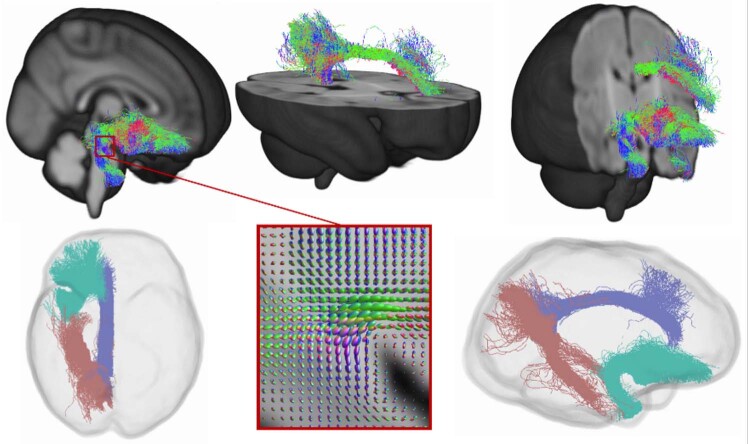
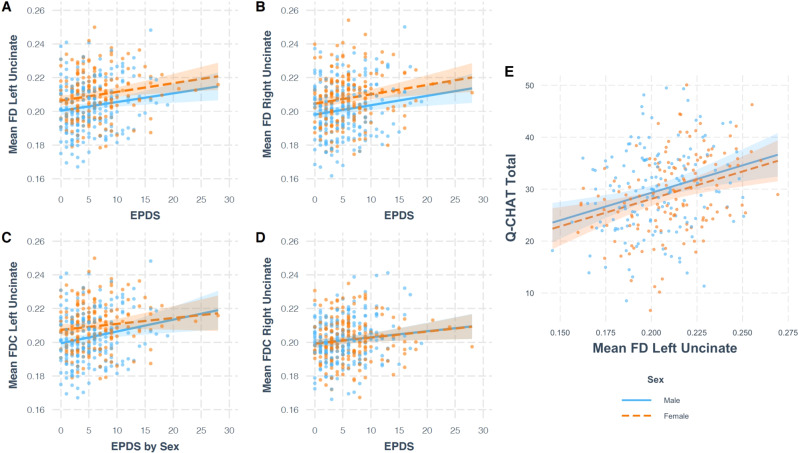
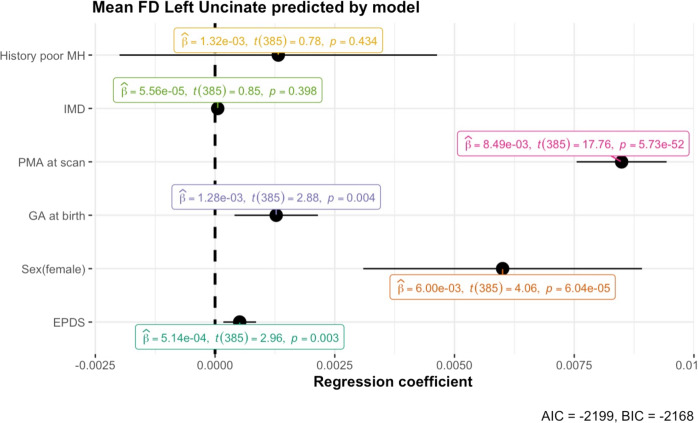
Verification
Claims the paper makes
The claims and statistics of this paper haven’t been checked yet.
Free: it reads the open-access text and checks the first 5 claims that cite a source we can check. Create a free account to check every claim.
Claims other papers make about this one
Each is checked against this paper’s own text: does it say what the citing paper says it does?
The cited source says what the claim attributes to it.
In the citing paper
“Altered white matter microstructures after prenatal stress exposure are also reported in the newborn, where maternal depression is positively associated with fiber density in the neonatal uncinate fasciculus [92].”
From Brain structural and functional outcomes in the offspring of women experiencing psychological distress during pregnancy (2024) · cites this paper as [92]
In the citing paper
“In contrast, in an analysis in the developing Human Connectome Project (dHCP), only positive associations between prenatal depression and uncinate fiber density survived correction for multiple comparisons, despite an array of other effects with small effect sizes.83”
From Prenatal Social Determinants of Health: Narrative review of maternal environments and neonatal brain development (2024) · cites this paper as [83]
Self-check
Percentages, sums and reported differences re-computed from the paper’s own numbers.
The self-check needs the paper’s full text.
Citations
Cites
Baron, R. M., & Kenny, D. A. (1986) · Journal of Personality and Social Psychology · doi:10.1037/0022-3514.51.6.1173 · Cited by 91,532 · cited 1×
“This has been argued to be more powerful than the original causal steps mediation approach [77].”
BackgroundTzourio-Mazoyer, N., Landeau, B., Papathanassiou, D., Crivello, F., Etard, O., Delcroix, N., Mazoyer, B., & Joliot, M. (2002) · NeuroImage · doi:10.1006/nimg.2001.0978 · Cited by 16,319 · cited 1×
“Regions of interest for tractography of the left and right uncinate fasciculus and dorsal and ventral cingulum (Table S1) were obtained from a neonatal version [63] of the anatomical automatic labelling (AAL) atlas [56, 64] adapted to the dHCP template.”
MethodDetection of Postnatal Depression: Development of the 10-item Edinburgh Postnatal Depression Scale
Cox, J. L., Holden, J. M., & Sagovsky, R. (1987) · British Journal of Psychiatry · doi:10.1192/bjp.150.6.782 · Cited by 14,183
Fast robust automated brain extraction
Smith, S. M. (2002) · Human Brain Mapping · doi:10.1002/hbm.10062 · Cited by 10,496 · cited 6×
“The estimated FODs were intensity normalised [52, 53] and conservative brain masks generated by intersecting masks generated in MRtrix3 [54] and by the brain extraction tool in FSL [55].”
MethodInfluentialAVANTS, B., EPSTEIN, C., GROSSMAN, M., & GEE, J. (2008) · Medical Image Analysis · doi:10.1016/j.media.2007.06.004 · Cited by 5,669 · cited 3×
“These transformations are composite warps consisting of transformations released as part of the dHCP data release 3: a rigid-body subject-dMRI to subject-T2w (estimated with FSL flirt using a normalised mutual information metric), subject-T2w to age-matched T2-weighted template (estimated with nonlinear diffeomorphic…”
MethodMRtrix3: A fast, flexible and open software framework for medical image processing and visualisation
Tournier, J.-D., Smith, R., Raffelt, D., Tabbara, R., Dhollander, T., Pietsch, M., Christiaens, D., Jeurissen, B., Yeh, C.-H., & Connelly, A. (2019) · NeuroImage · doi:10.1016/j.neuroimage.2019.116137 · Cited by 3,687
Self-citationDiffusion tensor MR imaging of the human brain
Pierpaoli, C., Jezzard, P., Basser, P. J., Barnett, A., & Di Chiro, G. (1996) · Radiology · doi:10.1148/radiology.201.3.8939209 · Cited by 2,664 · cited 1×
“It is important to note that the majority of these studies are based on the diffusion tensor model [29] which is limited by its inability to describe more than one dominant fibre orientation and to provide accurate information in voxels that contain crossing and kissing fibres [30].”
BackgroundReproducible brain-wide association studies require thousands of individuals
Marek, S., Tervo-Clemmens, B., Calabro, F. J., Montez, D. F., Kay, B. P., Hatoum, A. S., Donohue, M. R., Foran, W., Miller, R. L., Hendrickson, T. J., et al. (2022) · Nature · doi:10.1038/s41586-022-04492-9 · Cited by 1,928
The Parenting Scale: A measure of dysfunctional parenting in discipline situations.
Arnold, D. S., O'Ĺeary, S. G., Wolff, L. S., & Acker, M. M. (1993) · Psychological Assessment · doi:10.1037//1040-3590.5.2.137 · Cited by 1,513 · cited 2×
“Cognitive development was assessed using the Bayley Scales of Infant and Toddler Development, 3rd Edition, 2006 (BSID-III, [71]), home environment was assessed with the Stimulating Parenting Scale [72] and dysfunctional parenting was assessed with the Parenting Scale [73] (Table 2).”
MethodGibbs-ringing artifact removal based on local subvoxel-shifts
Kellner, E., Dhital, B., Kiselev, V. G., & Reisert, M. (2016) · Magnetic Resonance in Medicine · doi:10.1002/mrm.26054 · Cited by 1,478 · cited 1×
“Images were processed with denoising [45], Gibbs ringing suppression [46], motion and image distortion correction using slice-to-volume reconstruction to a 1.”
MethodJeurissen, B., Tournier, J.-D., Dhollander, T., Connelly, A., & Sijbers, J. (2014) · NeuroImage · doi:10.1016/j.neuroimage.2014.07.061 · Cited by 1,454 · cited 4×
“T-score, median (range) 43 (29-72) 49 (29-70) 43 (29-72)”
MethodInfluentialSelf-citationSmith, R. E., Tournier, J.-D., Calamante, F., & Connelly, A. (2012) · NeuroImage · doi:10.1016/j.neuroimage.2012.06.005 · Cited by 1,216 · cited 6×
“ACT [62] was performed in template space using the draw-EM parcellation of the dHCP 40-week extended atlas template.”
MethodInfluentialSelf-citationBayley Scales of Infant and Toddler Development, Third Edition
Bayley, N. (2012) · PsycTESTS Dataset · doi:10.1037/t14978-000 · Cited by 1,175
Jeurissen, B., Leemans, A., Tournier, J., Jones, D. K., & Sijbers, J. (2013) · Human Brain Mapping · doi:10.1002/hbm.22099 · Cited by 1,088 · cited 5×
“Age, years, median (range) 34 (17-46) 34 (24-42) 34 (17-46)”
BackgroundInfluentialSelf-citationTime to give up on a single explanation for autism
Happé, F., Ronald, A., & Plomin, R. (2006) · Nature Neuroscience · doi:10.1038/nn1770 · Cited by 987 · cited 1×
“Firstly, it is likely that the biological mechanisms mediating the development of social-emotional traits are more complex than captured in our study design [106].”
BackgroundLevis, B., Negeri, Z., Sun, Y., Benedetti, A., & Thombs, B. D. (2020) · BMJ · doi:10.1136/bmj.m4022 · Cited by 922 · cited 1×
“A cut-off of 11 or more has been shown to maximise the sensitivity and specificity of screening for depressive symptoms [39], while a score of 13 or more can be used to indicate high-level symptoms.”
MethodThe cingulum bundle: Anatomy, function, and dysfunction
Bubb, E. J., Metzler-Baddeley, C., & Aggleton, J. P. (2018) · Neuroscience & Biobehavioral Reviews · doi:10.1016/j.neubiorev.2018.05.008 · Cited by 830 · cited 5×
“Age, years, median (range) 34 (17-46) 34 (24-42) 34 (17-46)”
InfluentialDawson, G., Jones, E. J. H., Merkle, K., Venema, K., Lowy, R., Faja, S., Kamara, D., Murias, M., Greenson, J., Winter, J., et al. (2012) · Journal of the American Academy of Child & Adolescent Psychiatry · doi:10.1016/j.jaac.2012.08.018 · Cited by 799 · cited 1×
“Early interventions have been suggested to improve outcomes for children at increased likelihood for autism [93, 94] and infants exposed to prenatal stress [95].”
BackgroundWolff, J. J., Gu, H., Gerig, G., Elison, J. T., Styner, M., Gouttard, S., Botteron, K. N., Dager, S. R., Dawson, G., Estes, A. M., et al. (2012) · American Journal of Psychiatry · doi:10.1176/appi.ajp.2011.11091447 · Cited by 671 · cited 1×
“, median (range) 100 (70-125) 100 (70-120) 100 (70-125)”
Investigating white matter fibre density and morphology using fixel-based analysis.
Raffelt, D. A., Tournier, J.-D., Smith, R. E., Vaughan, D. N., Jackson, G., Ridgway, G. R., & Connelly, A. (2017) · NeuroImage · doi:10.1016/j.neuroimage.2016.09.029 · Cited by 620 · cited 2×
“FBA provides information regarding white matter structure for fibre bundles within a voxel through estimates of microstructure via local fibre density (FD), and morphometry via the fibre cross-section (FC) metric; their product, the fibre density and cross section (FDC), serves as a proxy of a fibre bundle’s capacity…”
BackgroundSelf-citationRaffelt, D., Tournier, J.-D., Rose, S., Ridgway, G. R., Henderson, R., Crozier, S., Salvado, O., & Connelly, A. (2012) · NeuroImage · doi:10.1016/j.neuroimage.2011.10.045 · Cited by 594 · cited 4×
“Apparent FD is, at high diffusion-weightings and subject to certain conditions (65), approximately proportional to the volume of the intra-axonal compartment.”
BackgroundInfluentialSelf-citationTournier, J.-D., Yeh, C.-H., Calamante, F., Cho, K.-H., Connelly, A., & Lin, C.-P. (2008) · NeuroImage · doi:10.1016/j.neuroimage.2008.05.002 · Cited by 593 · cited 4×
“T-score, median (range) 43 (29-72) 49 (29-70) 43 (29-72)”
MethodInfluentialSelf-citationThe stress acceleration hypothesis: effects of early-life adversity on emotion circuits and behavior
Callaghan, B. L., & Tottenham, N. (2016) · Current Opinion in Behavioral Sciences · doi:10.1016/j.cobeha.2015.11.018 · Cited by 585 · cited 4×
“However, our findings may provide support for the Translational Psychiatry (2022) 12:323 Stress Acceleration Hypothesis [82] which suggests that early adversity reprioritises developmental goals and leads to an accelerated developmental trajectory.”
ResultInfluentialMakropoulos, A., Robinson, E. C., Schuh, A., Wright, R., Fitzgibbon, S., Bozek, J., Counsell, S. J., Steinweg, J., Vecchiato, K., Passerat-Palmbach, J., et al. (2018) · NeuroImage · doi:10.1016/j.neuroimage.2018.01.054 · Cited by 554
Self-citationInfant Brain Atlases from Neonates to 1- and 2-Year-Olds
Shi, F., Yap, P.-T., Wu, G., Jia, H., Gilmore, J. H., Lin, W., & Shen, D. (2011) · PLoS ONE · doi:10.1371/journal.pone.0018746 · Cited by 546 · cited 4×
“Regions of interest for tractography of the left and right uncinate fasciculus and dorsal and ventral cingulum (Table S1) were obtained from a neonatal version (63) of the anatomical automatic labelling (AAL) atlas (56,64) adapted to the dHCP template.”
MethodInfluentialThe persisting effect of maternal mood in pregnancy on childhood psychopathology
O'Donnell, K. J., Glover, V., Barker, E. D., & O'Connor, T. G. (2014) · Development and Psychopathology · doi:10.1017/s0954579414000029 · Cited by 425 · cited 2×
“Maternal depression is one of the most common prenatal complications and is related to poor neurodevelopmental and psychiatric outcomes in offspring (1).”
BackgroundAutomatic Whole Brain MRI Segmentation of the Developing Neonatal Brain
Makropoulos, A., Gousias, I. S., Ledig, C., Aljabar, P., Serag, A., Hajnal, J. V., Edwards, A. D., Counsell, S. J., & Rueckert, D. (2014) · IEEE Transactions on Medical Imaging · doi:10.1109/tmi.2014.2322280 · Cited by 380 · cited 4×
“T-score, median (range) 43 (29-72) 49 (29-70) 43 (29-72)”
MethodInfluentialSelf-citationComplex diffusion-weighted image estimation via matrix recovery under general noise models
Cordero-Grande, L., Christiaens, D., Hutter, J., Price, A. N., & Hajnal, J. V. (2019) · NeuroImage · doi:10.1016/j.neuroimage.2019.06.039 · Cited by 354 · cited 1×
“Images were processed with denoising [45], Gibbs ringing suppression [46], motion and image distortion correction using slice-to-volume reconstruction to a 1.”
MethodSelf-citationGreen, J., Pickles, A., Pasco, G., Bedford, R., Wan, M. W., Elsabbagh, M., Slonims, V., Gliga, T., Jones, E., Cheung, C., et al. (2017) · Journal of Child Psychology and Psychiatry · doi:10.1111/jcpp.12728 · Cited by 328 · cited 1×
“Early interventions have been suggested to improve outcomes for children at increased likelihood for autism [93, 94] and infants exposed to prenatal stress [95].”
BackgroundAllison, C., Baron-Cohen, S., Wheelwright, S., Charman, T., Richler, J., Pasco, G., & Brayne, C. (2008) · Journal of Autism and Developmental Disorders · doi:10.1007/s10803-007-0509-7 · Cited by 327
Prenatal stress: Effects on fetal and child brain development
(2020) · International Review of Neurobiology · doi:10.1016/bs.irn.2019.11.002 · Cited by 326 · cited 4×
“These outcomes may be explained, at least in part, by changes in the developing brain during intrauterine life (2,3).”
BackgroundInfluentialSelf-citationA dedicated neonatal brain imaging system
Hughes, E. J., Winchman, T., Padormo, F., Teixeira, R., Wurie, J., Sharma, M., Fox, M., Hutter, J., Cordero-Grande, L., Price, A. N., et al. (2017) · Magnetic Resonance in Medicine · doi:10.1002/mrm.26462 · Cited by 324 · cited 4×
“Age, years, median (range) 34 (17-46) 34 (24-42) 34 (17-46)”
MethodInfluentialSelf-citationAmeis, S. H., & Catani, M. (2015) · Cortex · doi:10.1016/j.cortex.2014.10.014 · Cited by 301 · cited 1×
“Although overall there is variability with regards to the direction of effect [99], there is evidence suggesting that white matter development in autism may be characterised by abnormal early and/or accelerated maturation followed by decreased FA later on [100–102].”
BackgroundAccelerated maturation of white matter in young children with autism: A high b value DWI study
Ben Bashat, D., Kronfeld-Duenias, V., Zachor, D. A., Ekstein, P. M., Hendler, T., Tarrasch, R., Even, A., Levy, Y., & Ben Sira, L. (2007) · NeuroImage · doi:10.1016/j.neuroimage.2007.04.060 · Cited by 300 · cited 1×
“, median (range) 100 (70-125) 100 (70-120) 100 (70-125)”
Symmetric diffeomorphic registration of fibre orientation distributions
Raffelt, D., Tournier, J.-D., Fripp, J., Crozier, S., Connelly, A., & Salvado, O. (2011) · NeuroImage · doi:10.1016/j.neuroimage.2011.02.014 · Cited by 284 · cited 1×
“Each subject’s normalised white matter FOD and fluid density images were jointly coregistered to the study specific template based on [58] using a normalised cross correlation metric, maximum spherical harmonics order lmax= 2 and a multi-resolution pyramid with 66 stages from 3.”
MethodSelf-citationGraham, A. M., Rasmussen, J. M., Rudolph, M. D., Heim, C. M., Gilmore, J. H., Styner, M., Potkin, S. G., Entringer, S., Wadhwa, P. D., Fair, D. A., et al. (2018) · Biological Psychiatry · doi:10.1016/j.biopsych.2017.05.027 · Cited by 282 · cited 1×
“Prior mediation and moderation studies have mainly focused on biological indicators of stress [25, 26], with only a few studies investigating self-reported psychological wellbeing [27, 28].”
BackgroundParental Recognition of Developmental Problems in Toddlers with Autism Spectrum Disorders
Chawarska, K., Paul, R., Klin, A., Hannigen, S., Dichtel, L. E., & Volkmar, F. (2007) · Journal of Autism and Developmental Disorders · doi:10.1007/s10803-006-0330-8 · Cited by 279 · cited 1×
“With regards to the Q-CHAT, reports from parents of autistic children often mention concerns around the first year of life [111, 112].”
MethodFixel-based Analysis of Diffusion MRI: Methods, Applications, Challenges and Opportunities
Dhollander, T., Clemente, A., Singh, M., Boonstra, F., Civier, O., Duque, J. D., Egorova, N., Enticott, P., Fuelscher, I., Gajamange, S., et al. (2021) · NeuroImage · doi:10.1016/j.neuroimage.2021.118417 · Cited by 276
Prenatal maternal depression associates with microstructure of right amygdala in neonates at birth.
Rifkin-Graboi, A., Bai, J., Chen, H., Hameed, W. B., Sim, L. W., Tint, M. T., Leutscher-Broekman, B., Chong, Y.-S., Gluckman, P. D., Fortier, M. V., et al. (2013) · Biological Psychiatry · doi:10.1016/j.biopsych.2013.06.019 · Cited by 258 · cited 1×
“EPDS-3A, median (range) 3 (0-9); n=410 6 (2-9); n=51 2 (0-7); n=359”
Delineation of early brain development from fetuses to infants with diffusion MRI and beyond
Ouyang, M., Dubois, J., Yu, Q., Mukherjee, P., & Huang, H. (2019) · NeuroImage · doi:10.1016/j.neuroimage.2018.04.017 · Cited by 258 · cited 4×
“Age, years, median (range) 34 (17-46) 34 (24-42) 34 (17-46)”
InfluentialUsing the Edinburgh Postnatal Depression Scale to screen for anxiety disorders
Matthey, S. (2008) · Depression and Anxiety · doi:10.1002/da.20415 · Cited by 256 · cited 1×
“EPDS-3A scores were also calculated and reported, with a threshold of 6 or more suggesting anxiety symptoms [40].”
MethodGur, R. E., Moore, T. M., Rosen, A. F. G., Barzilay, R., Roalf, D. R., Calkins, M. E., Ruparel, K., Scott, J. C., Almasy, L., Satterthwaite, T. D., et al. (2019) · JAMA Psychiatry · doi:10.1001/jamapsychiatry.2019.0943 · Cited by 239 · cited 1×
“Higher FA of the uncinate fasciculus in children has also been related to maternal unpredictability during infancy [88], and adolescents who had experienced increased early life trauma were more likely to be misclassified as adults based on their fronto-limbic microstructure [89].”
BackgroundEarly life stress accelerates behavioral and neural maturation of the hippocampus in male mice
Bath, K. G., Manzano-Nieves, G., & Goodwill, H. (2016) · Hormones and Behavior · doi:10.1016/j.yhbeh.2016.04.010 · Cited by 212 · cited 1×
“The switch from growth to maturation [83] may offer a short-term survival advantage in a high-stress extrauterine environment (e.”
BackgroundGraham, A. M., Rasmussen, J. M., Entringer, S., Ben Ward, E., Rudolph, M. D., Gilmore, J. H., Styner, M., Wadhwa, P. D., Fair, D. A., & Buss, C. (2019) · Biological Psychiatry · doi:10.1016/j.biopsych.2018.06.023 · Cited by 203 · cited 1×
“Prior mediation and moderation studies have mainly focused on biological indicators of stress [25, 26], with only a few studies investigating self-reported psychological wellbeing [27, 28].”
BackgroundA review of white matter microstructure alterations of pathways of the reward circuit in depression
Bracht, T., Linden, D., & Keedwell, P. (2015) · Journal of Affective Disorders · doi:10.1016/j.jad.2015.06.041 · Cited by 173 · cited 3×
“Mother EPDS, median (range) 5 (0-28) 13 (11-28) 4 (0-10)”
Solso, S., Xu, R., Proudfoot, J., Hagler, D. J., Campbell, K., Venkatraman, V., Carter Barnes, C., Ahrens-Barbeau, C., Pierce, K., Dale, A., et al. (2016) · Biological Psychiatry · doi:10.1016/j.biopsych.2015.06.029 · Cited by 160
Ono, M., Kikusui, T., Sasaki, N., Ichikawa, M., Mori, Y., & Murakami-Murofushi, K. (2008) · Neuroscience · doi:10.1016/j.neuroscience.2008.07.078 · Cited by 149 · cited 2×
“For example, in male juvenile rats, exposure to early stress leads to accelerated myelination in the basolateral amygdala [81].”
BackgroundResultDoes prenatal stress alter the developing connectome?
Scheinost, D., Sinha, R., Cross, S. N., Kwon, S. H., Sze, G., Constable, R. T., & Ment, L. R. (2017) · Pediatric Research · doi:10.1038/pr.2016.197 · Cited by 142 · cited 3×
“These outcomes may be explained, at least in part, by changes in the developing brain during intrauterine life (2,3).”
BackgroundCordero‐Grande, L., Hughes, E. J., Hutter, J., Price, A. N., & Hajnal, J. V. (2018) · Magnetic Resonance in Medicine · doi:10.1002/mrm.26796 · Cited by 141 · cited 1×
“8 mm isotropic resolution [59], images were processed and segmented using the dHCP structural pipeline [60, 61] (see Supplementary).”
MethodSelf-citationRifkin-Graboi, A., Meaney, M. J., Chen, H., Bai, J., Hameed, W. B., Tint, M. T., Broekman, B. F. P., Chong, Y.-S., Gluckman, P. D., Fortier, M. V., et al. (2015) · Journal of the American Academy of Child & Adolescent Psychiatry · doi:10.1016/j.jaac.2015.01.013 · Cited by 139 · cited 3×
“79 F(7,384)=214 UF-L = left uncinate fasciculus, UF-R = right uncinate fasciculus, CD-L = left dorsal cingulum, CD-R = right dorsal cingulum, CV-L = left ventral cingulum, CV-R = right ventral cingulum, B=unstandardized coefficients, q=p values after FDR correction.”
Gerardin, P., Wendland, J., Bodeau, N., Galin, A., Bialobos, S., Tordjman, S., Mazet, P., Darbois, Y., Nizard, J., Dommergues, M., et al. (2011) · The Journal of Clinical Psychiatry · doi:10.4088/jcp.09m05724blu · Cited by 133 · cited 4×
“Age, years, median (range) 34 (17-46) 34 (24-42) 34 (17-46)”
InfluentialDevelopment of human white matter pathways in utero over the second and third trimester
Wilson, S., Pietsch, M., Cordero‐Grande, L., Price, A. N., Hutter, J. M., Xiao, J., McCabe, L., Rutherford, M., Hughes, E., Counsell, S. J., et al. (2021) · Proceedings of the National Academy of Sciences · doi:10.1073/pnas.2023598118 · Cited by 133 · cited 4×
“Age, years, median (range) 34 (17-46) 34 (24-42) 34 (17-46)”
InfluentialSelf-citationWolke, D., Jaekel, J., Hall, J., & Baumann, N. (2013) · Journal of Adolescent Health · doi:10.1016/j.jadohealth.2013.06.014 · Cited by 127 · cited 1×
“Cognitive development was assessed using the Bayley Scales of Infant and Toddler Development, 3rd Edition, 2006 (BSID-III, [71]), home environment was assessed with the Stimulating Parenting Scale [72] and dysfunctional parenting was assessed with the Parenting Scale [73] (Table 2).”
MethodXiao, Z., Qiu, T., Ke, X., Xiao, X., Xiao, T., Liang, F., Zou, B., Huang, H., Fang, H., Chu, K., et al. (2014) · Journal of Autism and Developmental Disorders · doi:10.1007/s10803-014-2033-x · Cited by 126 · cited 1×
“, median (range) 100 (70-125) 100 (70-120) 100 (70-125)”
Park, M., Brain, U., Grunau, R., Diamond, A., & Oberlander, T. (2018) · Archives of Women's Mental Health · doi:10.1007/s00737-017-0803-0 · Cited by 124
Lugo-Candelas, C., Cha, J., Hong, S., Bastidas, V., Weissman, M., Fifer, W. P., Myers, M., Talati, A., Bansal, R., Peterson, B. S., et al. (2018) · JAMA Pediatrics · doi:10.1001/jamapediatrics.2017.5227 · Cited by 119 · cited 1×
“, median (range) 100 (70-125) 100 (70-120) 100 (70-125)”
Qiu, A., Shen, M., Buss, C., Chong, Y.-S., Kwek, K., Saw, S.-M., Gluckman, P. D., Wadhwa, P. D., Entringer, S., Styner, M., et al. (2017) · Cerebral Cortex · doi:10.1093/cercor/bhx065 · Cited by 114 · cited 1×
“, median (range) 100 (70-125) 100 (70-120) 100 (70-125)”
Terrible ones? Assessment of externalizing behaviors in infancy with the Child Behavior Checklist
Van Zeijl, J., Mesman, J., Stolk, M. N., Alink, L. R. A., Van IJzendoorn, M. H., Bakermans‐Kranenburg, M. J., Juffer, F., & Koot, H. M. (2006) · Journal of Child Psychology and Psychiatry · doi:10.1111/j.1469-7610.2006.01616.x · Cited by 110 · cited 2×
“However, the CBCL has good validity in infancy and toddlerhood and satisfactory predictive validity (69,110).”
BackgroundBerghänel, A., Heistermann, M., Schülke, O., & Ostner, J. (2017) · Proceedings of the National Academy of Sciences · doi:10.1073/pnas.1707152114 · Cited by 94 · cited 1×
“It has been proposed that accelerated maturation in response to prenatal stress aims to compensate for reduced maternal investment [90].”
BackgroundTime‐efficient and flexible design of optimized multishell HARDI diffusion
Hutter, J., Tournier, J. D., Price, A. N., Cordero‐Grande, L., Hughes, E. J., Malik, S., Steinweg, J., Bastiani, M., Sotiropoulos, S. N., Jbabdi, S., et al. (2018) · Magnetic Resonance in Medicine · doi:10.1002/mrm.26765 · Cited by 93 · cited 1×
“Multi-shell High Angular Resolution Diffusion Imaging was acquired over 20min using a protocol optimised for the neonatal brain [43, 44].”
MethodSelf-citationUnbiased construction of a temporally consistent morphological atlas of neonatal brain development
Schuh, A., Makropoulos, A., Robinson, E. C., Cordero-Grande, L., Hughes, E., Hutter, J., Price, A. N., Murgasova, M., Teixeira, R. P. A. G., Tusor, N., et al. (2018) · bioRxiv (Cold Spring Harbor Laboratory) · doi:10.1101/251512 · Cited by 92 · cited 5×
“For group-analysis, a representative template was generated from the average of all subjects’ normalised white matter FOD and free water density images transformed from native to the “Schuh dHCP extended atlas” 40-week anatomical template space (56).”
MethodInfluentialSelf-citationHannigan, L. J., Eilertsen, E. M., Gjerde, L. C., Reichborn-Kjennerud, T., Eley, T. C., Rijsdijk, F. V., Ystrom, E., & McAdams, T. A. (2018) · The Lancet Psychiatry · doi:10.1016/s2215-0366(18)30225-6 · Cited by 78
Lautarescu, A., Pecheva, D., Nosarti, C., Nihouarn, J., Zhang, H., Victor, S., Craig, M., Edwards, A. D., & Counsell, S. J. (2020) · Biological Psychiatry · doi:10.1016/j.biopsych.2019.08.010 · Cited by 74 · cited 3×
“We have previously reported altered diffusivity in the uncinate fasciculus in infants born prematurely is associated with maternal stressful life events [11].”
BackgroundResultInfluentialSelf-citationScheinost, D., Spann, M. N., McDonough, L., Peterson, B. S., & Monk, C. (2020) · Neuropsychopharmacology · doi:10.1038/s41386-020-0677-0 · Cited by 73 · cited 5×
“Prior mediation and moderation studies have mainly focused on biological indicators of stress (25,26), with only a few studies investigating self-reported psychological wellbeing (27,28).”
InfluentialSarkar, S., Craig, M. C., Dell’Acqua, F., O’Connor, T. G., Catani, M., Deeley, Q., Glover, V., & Murphy, D. G. M. (2014) · The World Journal of Biological Psychiatry · doi:10.3109/15622975.2014.903336 · Cited by 70 · cited 3×
“Mother EPDS, median (range) 5 (0-28) 13 (11-28) 4 (0-10)”
Self-citationPrenatal Stress as a Risk—and an Opportunity—Factor
Hartman, S., Freeman, S. M., Bales, K. L., & Belsky, J. (2018) · Psychological Science · doi:10.1177/0956797617739983 · Cited by 69 · cited 1×
“, leading to increased FD, while higher levels of stress lead to decreased FD, in line with arguments that prenatal stress can be “both a risk and an opportunity factor” [98].”
BackgroundCoad, B. M., Postans, M., Hodgetts, C. J., Muhlert, N., Graham, K. S., & Lawrence, A. D. (2020) · Neuropsychologia · doi:10.1016/j.neuropsychologia.2017.11.006 · Cited by 66 · cited 5×
“Age, years, median (range) 34 (17-46) 34 (24-42) 34 (17-46)”
InfluentialA framework for multi-component analysis of diffusion MRI data over the neonatal period
Pietsch, M., Christiaens, D., Hutter, J., Cordero-Grande, L., Price, A. N., Hughes, E., Edwards, A. D., Hajnal, J. V., Counsell, S. J., & Tournier, J.-D. (2019) · NeuroImage · doi:10.1016/j.neuroimage.2018.10.060 · Cited by 66 · cited 1×
“The processing pipeline of the dMRI data follows that of the FBA framework but was adapted to account for the properties of neonatal tissue [34].”
MethodSelf-citationMoog, N. K., Nolvi, S., Kleih, T. S., Styner, M., Gilmore, J. H., Rasmussen, J. M., Heim, C. M., Entringer, S., Wadhwa, P. D., & Buss, C. (2021) · Neurobiology of Stress · doi:10.1016/j.ynstr.2021.100368 · Cited by 65 · cited 2×
“Moog and colleagues [28] reported that variations in hippocampal volume may mediate the association between maternal perceived stress and infant social-emotional function.”
BackgroundMüller, J. M., Romer, G., & Achtergarde, S. (2013) · Psychiatry Research · doi:10.1016/j.psychres.2013.10.035 · Cited by 64 · cited 1×
“Further, it is possible that maternal postnatal depressive symptoms may affect the reporting of offspring behaviour, in line with the depression-distortion hypothesis [108, 109].”
ResultSpann, M. N., Bansal, R., Hao, X., Rosen, T. S., & Peterson, B. S. (2020) · Child Neuropsychology · doi:10.1080/09297049.2019.1648641 · Cited by 64 · cited 1×
“, median (range) 100 (70-125) 100 (70-120) 100 (70-125)”
Robust linear regression methods in association studies
Lourenço, V., Pires, A. M., & Kirst, M. (2011) · Bioinformatics · doi:10.1093/bioinformatics/btr006 · Cited by 62 · cited 1×
“Robust regression is designed to be resistant to outlying observations and non-normality [75].”
BackgroundStoye, D. Q., Blesa, M., Sullivan, G., Galdi, P., Lamb, G. J., Black, G. S., Quigley, A. J., Thrippleton, M. J., Bastin, M. E., Reynolds, R. M., et al. (2020) · eLife · doi:10.7554/elife.60729 · Cited by 62 · cited 2×
“Our results are consistent with several previous dMRI studies which found increased FA and/or decreased diffusivity following exposure to maternal depression (8,15), SSRI use (9,78), cortisol (79) and paternal early life stress (80).”
ResultAllison, C. L., Matthews, F. E., Ruta, L., Pasco, G., Soufer, R., Brayne, C., Charman, T., & Baron‐Cohen, S. (2021) · BMJ Paediatrics Open · doi:10.1136/bmjpo-2020-000700 · Cited by 61 · cited 1×
“However, it is important to note that the Q-CHAT has been suggested to have low predictive validity and the appearance of early social-emotional difficulties does not imply a later autism diagnosis [113], highlighting the importance of longitudinal study designs.”
BackgroundModelling brain development to detect white matter injury in term and preterm born neonates
O’Muircheartaigh, J., Robinson, E. C., Pietsch, M., Wolfers, T., Aljabar, P., Cordero‐Grande, L., Teixeira, R. P. A. G., Božek, J., Schuh, A., Makropoulos, A., et al. (2020) · Brain · doi:10.1093/brain/awz412 · Cited by 60
Self-citationGranger, S. J., Glynn, L. M., Sandman, C. A., Small, S. L., Obenaus, A., Keator, D. B., Baram, T. Z., Stern, H., Yassa, M. A., & Davis, E. P. (2021) · The Journal of Neuroscience · doi:10.1523/jneurosci.0374-20.2020 · Cited by 60 · cited 2×
“, median (range) 100 (70-125) 100 (70-120) 100 (70-125)”
Background(2014) · PubMed · Cited by 55
Pardini, M., Elia, M., Garaci, F. G., Guida, S., Coniglione, F., Krüeger, F., Benassi, F., & Gialloreti, L. E. (2011) · Journal of Autism and Developmental Disorders · doi:10.1007/s10803-011-1281-2 · Cited by 52
Prenatal Stress, Mood, and Gray Matter Volume in Young Adulthood
Marečková, K., Klasnja, A., Bencurova, P., Andrýsková, L., Brázdil, M., & Paus, T. (2019) · Cerebral Cortex · doi:10.1093/cercor/bhy030 · Cited by 52 · cited 3×
“Mother EPDS, median (range) 5 (0-28) 13 (11-28) 4 (0-10)”
Maternal Anxiety and Depression during Late Pregnancy and Newborn Brain White Matter Development
Graham, R. M., Jiang, L., McCorkle, G., Bellando, B. J., Sorensen, S. T., Glasier, C. M., Ramakrishnaiah, R. H., Rowell, A. C., Coker, J. L., & Ou, X. (2020) · American Journal of Neuroradiology · doi:10.3174/ajnr.a6759 · Cited by 52 · cited 1×
“EPDS-3A, median (range) 3 (0-9); n=410 6 (2-9); n=51 2 (0-7); n=359”
Hay, R. E., Reynolds, J. E., Grohs, M. N., Paniukov, D., Giesbrecht, G. F., Letourneau, N., Dewey, D., & Lebel, C. (2020) · The Journal of Neuroscience · doi:10.1523/jneurosci.0481-20.2020 · Cited by 48 · cited 7×
“Q-CHAT Total, median (range) 29 (8-59) 32 (20-52) 28 (8-59)”
BackgroundMethodInfluentialCoplan, J. D., Fathy, H. M., Jackowski, A. P., Tang, C. Y., Perera, T. D., Mathew, S. J., Martinez, J., Abdallah, C. G., Dwork, A. J., Pantol, G., et al. (2014) · Frontiers in Behavioral Neuroscience · doi:10.3389/fnbeh.2014.00342 · Cited by 47 · cited 1×
“This theory is also supported by animal studies showing that early stress is associated with precocious myelination [81] and enlarged volumes [91].”
ResultSamson, A. C., Dougherty, R. F., Lee, I. A., Phillips, J. M., Gross, J. J., & Hardan, A. Y. (2016) · Psychiatry Research Neuroimaging · doi:10.1016/j.pscychresns.2016.08.004 · Cited by 42
Genc, S., Malpas, C. B., Gülenç, A., Sciberras, E., Efron, D., Silk, T. J., & Seal, M. L. (2020) · Developmental Cognitive Neuroscience · doi:10.1016/j.dcn.2020.100853 · Cited by 41 · cited 2×
“, increased axonal density) and are associated with positive outcomes [36, 68].”
BackgroundMethodTournier, J., Christiaens, D., Hutter, J. M., Price, A. N., Cordero‐Grande, L., Hughes, E., Bastiani, M., Sotiropoulos, S. N., Smith, S. M., Rueckert, D., et al. (2020) · NMR in Biomedicine · doi:10.1002/nbm.4348 · Cited by 36
Self-citationTalbott, M. R., Nelson, C. A., & Tager-Flusberg, H. B. (2015) · Journal of Autism and Developmental Disorders · doi:10.1007/s10803-015-2383-z · Cited by 35 · cited 1×
“With regards to the Q-CHAT, reports from parents of autistic children often mention concerns around the first year of life [111, 112].”
MethodPodrebarac, S. K., Duerden, E. G., Chau, V., GRUNAU, R. E., Synnes, A. R., Oberlander, T. F., & Miller, S. P. (2016) · Neuroscience · doi:10.1016/j.neuroscience.2016.11.025 · Cited by 35 · cited 5×
“EPDS-3A, median (range) 3 (0-9); n=410 6 (2-9); n=51 2 (0-7); n=359”
BackgroundResultInfluentialChahal, R., Kirshenbaum, J. S., Ho, T. C., Mastrovito, D., & Gotlib, I. H. (2020) · Developmental Cognitive Neuroscience · doi:10.1016/j.dcn.2020.100899 · Cited by 33 · cited 2×
“In a recent FBA study in children and adolescents [92], severity of early life stress was associated with more mature-appearing white matter structure (i.”
BackgroundKanel, D., Vanes, L. D., Pecheva, D., Hadaya, L., Falconer, S., Counsell, S. J., Edwards, A. D., & Nosarti, C. (2021) · eNeuro · doi:10.1523/eneuro.0546-20.2021 · Cited by 33 · cited 5×
“Age, years, median (range) 34 (17-46) 34 (24-42) 34 (17-46)”
InfluentialSelf-citationPecheva, D., Tournier, J., Pietsch, M., Christiaens, D., Batallé, D., Alexander, D. C., Hajnal, J. V., Edwards, A. D., Zhang, H. G., & Counsell, S. J. (2019) · NeuroImage Clinical · doi:10.1016/j.nicl.2019.101820 · Cited by 32 · cited 1×
“Sensitivity of apparent fibre density (AFD) to the tissue microstructure of individual fibre populations within a voxel (“fixels”) can be achieved by segmenting the FOD lobes [66] and numerical integration over directions corresponding to the fixels.”
BackgroundSelf-citationBrenner, R., Smyser, C. D., Lean, R. E., Kenley, J. K., Smyser, T. A., Cyr, P. E. P., Shimony, J. S., Barch, D. M., & Rogers, C. E. (2020) · Biological Psychiatry · doi:10.1016/j.biopsych.2020.06.015 · Cited by 31 · cited 1×
“Neonatal microstructure of the right anterior cingulum bundle is associated with increased internalising symptoms, inattention and impaired social cognition at age 5 in children born prematurely [21].”
BackgroundAssociation of Cumulative Paternal Early Life Stress With White Matter Maturation in Newborns
Karlsson, H., Merisaari, H., Karlsson, L., Scheinin, N. M., Parkkola, R. K., Saunavaara, J. P., Lähdesmäki, T., Lehtola, S. J., Keskinen, M., Pelto, J., et al. (2020) · JAMA Network Open · doi:10.1001/jamanetworkopen.2020.24832 · Cited by 30 · cited 2×
“Our results are consistent with several previous dMRI studies which found increased FA and/or decreased diffusivity following exposure to maternal depression (8,15), SSRI use (9,78), cortisol (79) and paternal early life stress (80).”
ResultLi, Y., Zhou, Z.-B., Chang, C., Qian, L., Li, C., Xiao, T., Xiao, X., Chu, K., Fang, H., & Ke, X. (2019) · BMC Psychiatry · doi:10.1186/s12888-019-2391-1 · Cited by 29 · cited 2×
“In a longitudinal study [19], young autistic children showed accelerated maturation of the uncinate fasciculus, which was associated with progression of social deficits.”
BackgroundNolvi, S., Tuulari, J. J., Lavonius, T. I., Scheinin, N. M., Lehtola, S. J., Lavonius, M., Merisaari, H., Saunavaara, J. P., Korja, R., Kataja, E., et al. (2020) · Social Cognitive and Affective Neuroscience · doi:10.1093/scan/nsaa081 · Cited by 28 · cited 5×
“Our results contrast reports that prenatal EPDS scores are associated altered cingulum microstructure in preschoolers [13] and that cingulum bundle FA in the neonatal period moderates the relationship between postpartum depression and infant reactivity at 6 months [15].”
BackgroundMethodResultInfluentialNeonatal multi-modal cortical profiles predict 18-month developmental outcomes
Fenchel, D., Dimitrova, R., Robinson, E. C., Batallé, D., Chew, A. T. M., Falconer, S., Kyriakopoulou, V., Nosarti, C., Hutter, J. M., Christiaens, D., et al. (2022) · Developmental Cognitive Neuroscience · doi:10.1016/j.dcn.2022.101103 · Cited by 28 · cited 1×
“In a recent study in an overlapping sample [103], multi-modal cortical profiles in neonates predicted socialemotional performance at 18 months.”
BackgroundSelf-citationWesselhoeft, R. T., Davidsen, K. A., Sibbersen, C., Kyhl, H. B., Talati, A., Andersen, M., & Bilenberg, N. (2020) · Social Psychiatry and Psychiatric Epidemiology · doi:10.1007/s00127-020-01964-z · Cited by 25 · cited 1×
“Further, it is possible that maternal postnatal depressive symptoms may affect the reporting of offspring behaviour, in line with the depression-distortion hypothesis [108, 109].”
ResultKleine, I., Vamvakas, G., Lautarescu, A., Falconer, S., Chew, A. T. M., Counsell, S. J., Pickles, A. R., Edwards, A. D., & Nosarti, C. (2022) · BMJ Open · doi:10.1136/bmjopen-2021-058540 · Cited by 25
Self-citationEarly Biomarkers and Intervention Programs for the Infant Exposed to Prenatal Stress
Antonelli, M. C., Frasch, M. G., Rumi, M. M., Sharma, R., Zimmermann, P., Molinet, M. S., & Lobmaier, S. M. (2021) · Current Neuropharmacology · doi:10.2174/1570159x19666210125150955 · Cited by 24 · cited 2×
“, median (range) 100 (70-125) 100 (70-120) 100 (70-125)”
BackgroundPrenatal antidepressant exposure and sex differences in neonatal corpus callosum microstructure
Campbell, K. S. J., Williams, L. J., Björnson, B., Weik, E., Brain, U. M., GRUNAU, R. E., Miller, S. P., & Oberlander, T. F. (2021) · Developmental Psychobiology · doi:10.1002/dev.22125 · Cited by 20 · cited 2×
“Our results are consistent with several previous dMRI studies which found increased FA and/or decreased diffusivity following exposure to maternal depression [8, 15], SSRI use [9, 78], cortisol [79] and paternal early life stress [80].”
BackgroundResultAcosta, H., Kantojärvi, K., Tuulari, J. J., Lewis, J. D., Hashempour, N., Scheinin, N. M., Lehtola, S. J., Fonov, V., Collins, D. L., Evans, A. C., et al. (2020) · Journal of Neuroscience Research · doi:10.1002/jnr.24722 · Cited by 19 · cited 1×
“, median (range) 100 (70-125) 100 (70-120) 100 (70-125)”
dStripe: Slice artefact correction in diffusion MRI via constrained neural network
Pietsch, M., Christiaens, D., Hajnal, J. V., & Tournier, J. (2021) · Medical Image Analysis · doi:10.1016/j.media.2021.102255 · Cited by 19
Self-citationGoh, D. A., Gan, D. Z. Q., Kung, J., Baron‐Cohen, S., Allison, C. L., Chen, H., Saw, S., Chong, Y. S., Rajadurai, V. S., Tan, K. H., et al. (2018) · Journal of Autism and Developmental Disorders · doi:10.1007/s10803-018-3471-7 · Cited by 17 · cited 1×
“In addition, Goh and colleagues [114] reported that higher maternal depressive symptoms were associated with a small but significant increase in maternalreported QCHAT socio-communicative, but not behavioural, traits in healthy toddlers.”
BackgroundAdvances in neonatal MRI of the brain: from research to practice
Kelly, C. J., Hughes, E., Rutherford, M., & Counsell, S. J. (2018) · Archives of Disease in Childhood Education & Practice · doi:10.1136/archdischild-2018-314778 · Cited by 17 · cited 2×
“Recent advances in magnetic resonance imaging (MRI) have enabled in vivo investigations of neonatal brains (4).”
BackgroundSelf-citationAgostini, F., Matthey, S., Minelli, M., Dellabartola, S., & Bonapace, S. (2019) · Journal of Reproductive and Infant Psychology · doi:10.1080/02646838.2019.1610730 · Cited by 14 · cited 1×
“However, the EPDS only measures depressive symptoms over the previous 7 days, which means that elevated scores could have been transient in some women [104].”
BackgroundBleker, L. S., Milgrom, J., Parker, D., Gemmill, A. W., Holt, C. J., Connelly, A., Burger, H., Roseboom, T. J., & de Rooij, S. R. (2019) · International Journal of Environmental Research and Public Health · doi:10.3390/ijerph16101816 · Cited by 13
Childhood conduct problems are associated with reduced white matter fibre density and morphology
Burley, D. T., Genc, S., & Silk, T. J. (2020) · Journal of Affective Disorders · doi:10.1016/j.jad.2020.11.098 · Cited by 11 · cited 1×
“FDC is a composite metric reflecting both microstructural and morphological differences; it was calculated by multiplying FD and FC [67, 68].”
MethodAssociations Between Maternal Depression and Infant Fronto-Limbic Connectivity
Dennis, E. L., Singh, A., Corbin, C. K., Jahanshad, N., Ho, T. C., King, L. S., Borchers, L. R., Humphreys, K. L., Thompson, P. M., & Gotlib, I. H. (2019) · IEEE International Symposium on Biomedical Imaging (ISBI) · doi:10.1109/isbi.2019.8759513 · Cited by 8 · cited 2×
“Home environment, median (range) 21 (7-28); n=305 20 (12-28) 21 (7-28); n=270”
Hay, R. E., Reynolds, J. E., Grohs, M., Paniukov, D., Giesbrecht, G. F., Letourneau, N., Dewey, D., & Lebel, C. (2019) · doi:10.1101/692335 · Cited by 7
Stoye, D. Q., Blesa, M., Sullivan, G., et al. (2020) · bioRxiv (Cold Spring Harbor Laboratory) · doi:10.1101/2020.06.16.154922 · Cited by 6
Postnatal maternal depressive symptoms and behavioural outcomes in term- and preterm-born toddlersPreprint
Kleine, I., Vamvakas, G., Lautarescu, A., et al. (2021) · medRxiv · doi:10.1101/2021.09.21.21263881 · Cited by 5 · cited 4×
“Age, years, median (range) 34 (17-46) 34 (24-42) 34 (17-46)”
ResultInfluentialSelf-citationScattered slice shard reconstruction for motion correction in multi-shell diffusion MRI
Christiaens, D., Cordero-Grande, L., Pietsch, M., Hutter, J., Price, A. N., Hughes, E. J., Vecchiato, K., Deprez, M., Edwards, A. D., Hajnal, J. V., et al. (2021) · NeuroImage · doi:10.1016/j.neuroimage.2020.117437 · Cited by 4 · cited 1×
“5mm isotropic resolution [47], and inter-slice intensity inconsistency correction [48].”
BackgroundSelf-citationBorchers, L. R., Dennis, E. L., King, L. S., Humphreys, K. L., & Gotlib, I. H. (2020) · Biological Psychiatry · doi:10.1016/j.biopsych.2020.02.291 · Cited by 3 · cited 2×
“A growing number of diffusion MRI studies suggest that maternal depression and anxiety are associated with changes in the infant brain, with reports of lower Fractional Anisotropy (FA) [5–7] and higher FA [8, 9] in widespread regions.”
BackgroundResultdStripe: slice artefact correction in diffusion MRI via constrained neural networkPreprint
Pietsch, M., Christiaens, D., Hajnal, J. V., et al. (2020) · bioRxiv (Cold Spring Harbor Laboratory) · doi:10.1101/2020.10.20.347518 · Cited by 3 · cited 4×
“5mm isotropic resolution (47), and inter-slice intensity inconsistency correction (48).”
BackgroundInfluentialSelf-citationEarly Biomarkers and Intervention Programs for the Infant Exposed to Prenatal Stress
Antonelli, M. C., Frasch, M. G., Rumi, M. M., Sharma, R., Zimmermann, P., Molinet, M. S., & Lobmaier, S. M. (2020) · CONICET Digital (CONICET) · doi:10.48550/arxiv.2005.05787
Research works printed but not linked: 5
- Lanyon LJ Diffusion tensor imaging: Structural connectivity insights, limitations and future directions Neuroimaging Methods 2012 1 137 62
- Dhollander T Mito R Raffelt D Connelly A Improved white matter response function estimation for 3-tissue constrained spherical deconvolution Proceeds Int Soc Magn Reson Med 2019 27 555
- Dhollander T Tabarra R Rosnarho-Tornstrand J Tournier J-D Raffelt D Connelly A Multi-tissue log-domain intensity and inhomogeneity normalisation for quantitative apparent fibre density Proceeds Int Soc Magn Reson Med 2021 29 2472
- Raffelt D Dhollander T Tournier J-D Tabbara R Smith R Pierre E Bias field correction and intensity normalisation for quantitative analysis of apparent fibre density In Proc Intl Soc Mag Reson Med 2017 25 541
- Achenbach T, Rescorla LA. Manual for the ASEBA Preschool Forms and Profiles, vol. 30. Burlington, VT: University of Vermont, Research centre for children, youth and families.2000.
Cited by
Wu, Y., De Asis-Cruz, J., & Limperopoulos, C. (2024) · Molecular Psychiatry · doi:10.1038/s41380-024-02449-0 · Cited by 124
“Altered white matter microstructures after prenatal stress exposure are also reported in the newborn, where maternal depression is positively associated with fi ber density in the neonatal uncinate fasciculus [92].”
BackgroundSevero, M., Ventriglio, A., Bellomo, A., Iuso, S., & Petito, A. (2023) · Frontiers in Psychiatry · doi:10.3389/fpsyt.2023.1151897 · Cited by 71
“Alterations in white matter of 2-3-year-old children with prenatal exposure to depression could explain functional impact on cognitive development (54), moreover other structural and microstructural changes have also been described in the neonatal period (55).”
BackgroundThe effect of prenatal maternal distress on offspring brain development: A systematic review
Mandl, S., Alexopoulos, J., Doering, S., Wildner, B., Seidl, R., & Bartha, L. (2024) · Early Human Development · doi:10.1016/j.earlhumdev.2024.106009 · Cited by 48
Applications of advanced diffusion MRI in early brain development: a comprehensive review
DiPiero, M. A., Rodrigues, P. G., Gromala, A., & Dean, D. (2022) · Brain Structure and Function · doi:10.1007/s00429-022-02605-8 · Cited by 40
Sanders, A. F. P., Tirado, B. A., Seider, N. A., Triplett, R. L., Lean, R. E., Neil, J. J., Miller, J. P., Tillman, R., Smyser, T. A., Barch, D. M., et al. (2024) · Translational Psychiatry · doi:10.1038/s41398-024-02782-6 · Cited by 28
“During infancy, increased FA and lower MD suggests greater white matter maturation [50].”
Background
Metadata
- Authors
- Lautarescu, A., Bonthrone, A. F., Pietsch, M., Batalle, D., Cordero-Grande, L., Tournier, J.-D., Christiaens, D., Hajnal, J. V., Chew, A., Falconer, S., Nosarti, C., Victor, S., Craig, M. C., Edwards, A. D., & Counsell, S. J.
- Affiliations
- St Thomas' Hospital (GB)
- National Health Service (GB)
- Corresponding author
- Lautarescu, Alexandra
- ORCID
- Venue
- Translational Psychiatry
- Published
- 2022-08-09
- Volume
- 12
- Issue
- 1
- Pages
- 323-323
- ISSN
- 2158-3188 (ISSN-L)
- PMC
- PMC9363426
- OpenAlex
- W4291021238
- Cited by
- 29
- References
- 111
- Citations by year
- 2026: 8 · 2025: 6 · 2024: 9 · 2023: 5 · 2022: 1
- FWCI
- 4.62
- Type
- journal article
- Language
- en
- Open access
- gold
- doi.org
- Licence
- cc-by
- creativecommons.org/licenses/by/4.0 (tdm)
- creativecommons.org/licenses/by/4.0 (vor)
- Locations
- Translational Psychiatry (publishedVersion, cc-by)
- medRxiv (acceptedVersion, cc-by)
- PubMed Central (publishedVersion, cc-by)
- PubMed (publishedVersion)
- Research Portal (King's College London) (submittedVersion, cc-by)
- Lirias (KU Leuven) (submittedVersion, cc-by)
- DOAJ (DOAJ: Directory of Open Access Journals) (submittedVersion, cc-by-sa)
- OSF Preprints (OSF Preprints) (submittedVersion)
- Funders
- South London and Maudsley NHS Foundation Trust
- Wellcome Trust (217316/Z/19/Z, WT 203148/Z/16, WT 203148/Z/16/Z), WT203148, 217316)
- National Institute for Health and Care Research
- Department of Health and Social Care (WT 203148/Z/16/Z)
- King's College London (WT203148/Z/16/Z)
- European Commission (FP7 2007-2013, 319456)
- Fonds Wetenschappelijk Onderzoek (12ZV420N)
- Medical Research Council Centre for Neurodevelopmental Disorders
- Medical Research Council (FP7/20072013, WT203148/Z/16/Z, MR/V002465/1, 217316/Z/19/Z, MR/K006355/1, MR/N026063/1, 1931779, 319456)
- Engineering and Physical Sciences Research Council ([WT203148/Z/16/Z])
- Centre For Medical Engineering, King’s College London (WT 203148/Z/16/Z)
- Topics
- Health Sciences › Medicine › Public Health, Environmental and Occupational Health › Maternal Mental Health During Pregnancy and Postpartum
- Health Sciences › Medicine › Pediatrics, Perinatology and Child Health › Prenatal Substance Exposure Effects
- Health Sciences › Medicine › Pediatrics, Perinatology and Child Health › Infant Development and Preterm Care
- Keywords
- uncinate fasciculus, cingulum, fiber density, social-emotional development, mediation, fetal brain development, mother-infant dyads, Human Connectome Project, Edinburgh Postnatal Depression Scale, diffusion MRI, neurodevelopmental outcomes, social-emotional problems
- MeSH terms
- Brain, Child, Preschool, Depression, Female, Humans, Infant, Infant, Newborn, Male, Mothers, Pregnancy, Prenatal Exposure Delayed Effects, White Matter
About these checks
Registry, retraction, Cites and statistics results are computed, not judged, with one exception: a printed reference that no index lists is read once by a model before it counts as a citation error. Claims are extracted by a model and kept only when their quote appears verbatim in the text; each cited source is then checked, with a model’s help, for whether it says what the claim relies on. Those verdicts can be wrong — read the claim’s quote and the cited source before relying on one.
Statistics and arithmetic are recomputed, not judged.
Confidence bands are shown only for fields calibrated on our annotated test set. None is calibrated yet, so no band is shown.
What counts as a claim ›How we measure confidence ›How we check this ›
Are you an author, or do you see a problem with this page? Request a review
Data sources
Bibliographic data: Semantic Scholar, OpenAlex, Crossref.
Contains information from the Semantic Scholar Academic Graph Datasets, made available under the ODC Attribution License (ODC-BY 1.0).
Semantic Scholar’s data is described in: Kinney, R., et al. (2023). The Semantic Scholar Open Data Platform. arXiv:2301.10140.
