

Engineering nanomedicines through boosting immunogenic cell death for improved cancer immunotherapy
Open accessThe DOI matches its Crossref record; 96 of the 96 references it cites were found in a registry or an index.
Abstract
Current cancer immunotherapy has limited response rates in a large variety of solid tumors partly due to the low immunogenicity of the tumor cells and the immunosuppressive tumor microenvironment (ITM). A number of clinical cancer treatment modalities, including radiotherapy, chemotherapy, photothermal and photodynamic therapy, have been shown to elicit immunogenicity by inducing immunogenic cell death (ICD). However, ICD-based immunotherapy is restricted by the ITM limiting its efficacy in eliciting a long-term antitumor immune response, and by severe systemic toxicity. To address these challenges, nanomedicine-based drug delivery strategies have been exploited for improving cancer immunotherapy by boosting ICD of the tumor cells. Nanosized drug delivery systems are promising for increasing drug accumulation at the tumor site and codelivering ICD inducers and immune inhibitors to simultaneously elicit the immune response and relieve the ITM. This review highlights the recent advances in nanomedicine-based immunotherapy utilizing ICD-based approaches. A perspective on the clinical translation of nanomedicine-based cancer immunotherapy is also provided.
Overview
The claims and statistics of this paper haven’t been checked yet.
Free: it reads the open-access text and checks the first 5 claims that cite a source we can check. Create a free account to check every claim.
Integrity signals
Registry
Cites
Statistics
Figures
Verification
Claims the paper makes
The claims and statistics of this paper haven’t been checked yet.
Free: it reads the open-access text and checks the first 5 claims that cite a source we can check. Create a free account to check every claim.
Self-check
Percentages, sums and reported differences re-computed from the paper’s own numbers.
The self-check needs the paper’s full text.
Citations
Cites
PD-1 and PD-L1 Immune Checkpoint Blockade to Treat Breast Cancer
Hartkopf, A. D., Taran, F.-A., Wallwiener, M., Walter, C. B., Krämer, B., Grischke, E.-M., & Brucker, S. Y. (2016) · Breast Care · doi:10.1159/000453569 · Cited by 30,845
The blockade of immune checkpoints in cancer immunotherapy
Pardoll, D. M. (2012) · Nature Reviews Cancer · doi:10.1038/nrc3239 · Cited by 13,838
Nanocarriers as an emerging platform for cancer therapy
Peer, D., Karp, J. M., Hong, S., Farokhzad, O. C., Margalit, R., & Langer, R. (2007) · Nature Nanotechnology · doi:10.1038/nnano.2007.387 · Cited by 8,710
Oncology meets immunology: the cancer-immunity cycle.
Chen, D. S., & Mellman, I. (2013) · Immunity · doi:10.1016/j.immuni.2013.07.012 · Cited by 6,929
Cancer immunotherapy using checkpoint blockade
Ribas, A., & Wolchok, J. D. (2018) · Science · doi:10.1126/science.aar4060 · Cited by 6,791
Understanding the tumor immune microenvironment (TIME) for effective therapy
Binnewies, M., Roberts, E. W., Kersten, K., Chan, V., Fearon, D. F., Merad, M., Coussens, L. M., Gabrilovich, D. I., Ostrand-Rosenberg, S., Hedrick, C. C., et al. (2018) · Nature Medicine · doi:10.1038/s41591-018-0014-x · Cited by 6,145
Photodynamic therapy of cancer: An update
Agostinis, P., Berg, K., Cengel, K. A., Foster, T. H., Girotti, A. W., Gollnick, S. O., Hahn, S. M., Hamblin, M. R., Juzeniene, A., Kessel, D., et al. (2011) · CA: A Cancer Journal for Clinicians · doi:10.3322/caac.20114 · Cited by 5,145
Tolerance, Danger, and the Extended Family
Matzinger, P. (1994) · Annual Review of Immunology · doi:10.1146/annurev.iy.12.040194.005015 · Cited by 4,820
Minotti, G., Menna, P., Salvatorelli, E., Cairo, G., & Gianni, L. (2004) · Pharmacological Reviews · doi:10.1124/pr.56.2.6 · Cited by 3,778
Approaches to treat immune hot, altered and cold tumours with combination immunotherapies
Galon, J., & Bruni, D. (2019) · Nature Reviews Drug Discovery · doi:10.1038/s41573-018-0007-y · Cited by 3,409
Immunogenic cell death and DAMPs in cancer therapy
Krysko, D. V., Garg, A. D., Kaczmarek, A., Krysko, O., Agostinis, P., & Vandenabeele, P. (2012) · Nature Reviews Cancer · doi:10.1038/nrc3380 · Cited by 3,223
Calreticulin exposure dictates the immunogenicity of cancer cell death
Obeid, M., Tesniere, A., Ghiringhelli, F., Fimia, G. M., Apetoh, L., Perfettini, J.-L., Castedo, M., Mignot, G., Panaretakis, T., Casares, N., et al. (2007) · Nature Medicine · doi:10.1038/nm1523 · Cited by 3,216
Apetoh, L., Ghiringhelli, F., Tesniere, A., Obeid, M., Ortiz, C., Criollo, A., Mignot, G., Maiuri, M. C., Ullrich, E., Saulnier, P., et al. (2007) · Nature Medicine · doi:10.1038/nm1622 · Cited by 3,056
Nanoparticles in Photodynamic Therapy
Lucky, S. S., Soo, K. C., & Zhang, Y. (2015) · Chemical Reviews · doi:10.1021/cr5004198 · Cited by 2,980
Photodynamic therapy and anti-tumour immunity
Castano, A. P., Mroz, P., & Hamblin, M. R. (2006) · Nature Reviews Cancer · doi:10.1038/nrc1894 · Cited by 2,676
Delivery technologies for cancer immunotherapy
Riley, R. S., June, C. H., Langer, R., & Mitchell, M. J. (2019) · Nature Reviews Drug Discovery · doi:10.1038/s41573-018-0006-z · Cited by 2,607
CpG Motifs in Bacterial DNA and Their Immune Effects
Krieg, A. M. (2002) · Annual Review of Immunology · doi:10.1146/annurev.immunol.20.100301.064842 · Cited by 2,573
Cancer immunotherapy via dendritic cells
Palucka, K., & Banchereau, J. (2012) · Nature Reviews Cancer · doi:10.1038/nrc3258 · Cited by 2,049
New photosensitizers for photodynamic therapy
Abrahamse, H., & Hamblin, M. R. (2016) · Biochemical Journal · doi:10.1042/bj20150942 · Cited by 2,033
Checkpoint blockade cancer immunotherapy targets tumour-specific mutant antigens
Gubin, M. M., Zhang, X., Schuster, H., Caron, E., Ward, J. P., Noguchi, T., Ivanova, Y., Hundal, J., Arthur, C. D., Krebber, W.-J., et al. (2014) · Nature · doi:10.1038/nature13988 · Cited by 1,974
DNA exonuclease Trex1 regulates radiotherapy-induced tumour immunogenicity
Vanpouille-Box, C., Alard, A., Aryankalayil, M. J., Sarfraz, Y., Diamond, J. M., Schneider, R. J., Inghirami, G., Coleman, C. N., Formenti, S. C., & Demaria, S. (2017) · Nature Communications · doi:10.1038/ncomms15618 · Cited by 1,834
The cellular and molecular basis of hyperthermia
Hildebrandt, B. (2002) · Critical Reviews in Oncology/Hematology · doi:10.1016/s1040-8428(01)00179-2 · Cited by 1,718
Adoptive immunotherapy for cancer: harnessing the T cell response
Restifo, N. P., Dudley, M. E., & Rosenberg, S. A. (2012) · Nature Reviews Immunology · doi:10.1038/nri3191 · Cited by 1,688
IL-2: The First Effective Immunotherapy for Human Cancer
Rosenberg, S. A. (2014) · The Journal of Immunology · doi:10.4049/jimmunol.1490019 · Cited by 1,289
A dendritic cell vaccine increases the breadth and diversity of melanoma neoantigen-specific T cells
Carreno, B. M., Magrini, V., Becker-Hapak, M., Kaabinejadian, S., Hundal, J., Petti, A. A., Ly, A., Lie, W.-R., Hildebrand, W. H., Mardis, E. R., et al. (2015) · Science · doi:10.1126/science.aaa3828 · Cited by 1,285
Fever and the thermal regulation of immunity: the immune system feels the heat
Evans, S. S., Repasky, E. A., & Fisher, D. T. (2015) · Nature Reviews Immunology · doi:10.1038/nri3843 · Cited by 1,257
Nanoparticles in photodynamic therapy: An emerging paradigm
Chatterjee, D. K., Fong, L. S., & Zhang, Y. (2008) · Advanced Drug Delivery Reviews · doi:10.1016/j.addr.2008.08.003 · Cited by 1,184
Immunological hallmarks of stromal cells in the tumour microenvironment
Turley, S. J., Cremasco, V., & Astarita, J. L. (2015) · Nature Reviews Immunology · doi:10.1038/nri3902 · Cited by 1,140
Li, W., Yang, J., Luo, L., Jiang, M., Qin, B., Yin, H., Zhu, C., Yuan, X., Zhang, J., Luo, Z., et al. (2019) · Nature Communications · doi:10.1038/s41467-019-11269-8 · Cited by 1,120 · cited 1×
“Gold nanospheres containing ERtargeting pardaxin (FAL) peptides and indocyanine green (ICG) (FAL-ICG-HAuNSs) were explored for both PDT- and PTT-mediated tumor therapy [76].”
BackgroundStrategies to improve radiotherapy with targeted drugs
Begg, A. C., Stewart, F. A., & Vens, C. (2011) · Nature Reviews Cancer · doi:10.1038/nrc3007 · Cited by 1,118
Rational Design of Cancer Nanomedicine: Nanoproperty Integration and Synchronization
Sun, Q., Zhou, Z., Qiu, N., & Shen, Y. (2017) · Advanced Materials · doi:10.1002/adma.201606628 · Cited by 1,058
Nanoparticle‐Mediated Immunogenic Cell Death Enables and Potentiates Cancer Immunotherapy
Duan, X., Chan, C., & Lin, W. (2019) · Angewandte Chemie International Edition · doi:10.1002/anie.201804882 · Cited by 1,033
Combination cancer immunotherapies tailored to the tumour microenvironment
Smyth, M. J., Ngiow, S. F., Ribas, A., & Teng, M. W. L. (2016) · Nature Reviews Clinical Oncology · doi:10.1038/nrclinonc.2015.209 · Cited by 944
Cancer nanomedicine for combination cancer immunotherapy
Nam, J., Son, S., Park, K. S., Zou, W., Shea, L. D., & Moon, J. J. (2019) · Nature Reviews Materials · doi:10.1038/s41578-019-0108-1 · Cited by 940
Mechanisms of pre‐apoptotic calreticulin exposure in immunogenic cell death
Panaretakis, T., Kepp, O., Brockmeier, U., Tesniere, A., Bjorklund, A., Chapman, D. C., Durchschlag, M., Joza, N., Pierron, G., van Endert, P., et al. (2009) · The EMBO Journal · doi:10.1038/emboj.2009.1 · Cited by 848
A novel pathway combining calreticulin exposure and ATP secretion in immunogenic cancer cell death
Garg, A. D., Krysko, D. V., Verfaillie, T., Kaczmarek, A., Ferreira, G. B., Marysael, T., Rubio, N., Firczuk, M., Mathieu, C., Roebroek, A. J. M., et al. (2012) · The EMBO Journal · doi:10.1038/emboj.2011.497 · Cited by 800
Nanoparticle‐Enhanced Radiotherapy to Trigger Robust Cancer Immunotherapy
Chen, Q., Chen, J., Yang, Z., Xu, J., Xu, L., Liang, C., Han, X., & Liu, Z. (2019) · Advanced Materials · doi:10.1002/adma.201802228 · Cited by 661
Zhou, F., Feng, B., Yu, H., Wang, D., Wang, T., Ma, Y., Wang, S., & Li, Y. (2019) · Advanced Materials · doi:10.1002/adma.201805888 · Cited by 507
Self-citationDumitriu, I. E., Baruah, P., Valentinis, B., Voll, R. E., Herrmann, M., Nawroth, P. P., Arnold, B., Bianchi, M. E., Manfredi, A. A., & Rovere-Querini, P. (2005) · The Journal of Immunology · doi:10.4049/jimmunol.174.12.7506 · Cited by 503
Immunogenic cell death, DAMPs and anticancer therapeutics: An emerging amalgamation
Garg, A. D., Nowis, D., Golab, J., Vandenabeele, P., Krysko, D. V., & Agostinis, P. (2010) · Biochimica et Biophysica Acta (BBA) - Reviews on Cancer · doi:10.1016/j.bbcan.2009.08.003 · Cited by 496
Acute doxorubicin cardiotoxicity involves cardiomyocyte apoptosis.
Arola, O., Saraste, A., Pulkki, K. J., Kallajoki, M. A., Parvinen, M., & Voipio-Pulkki, L. M. (2000) · PubMed · Cited by 494
Tumor-Expressed IDO Recruits and Activates MDSCs in a Treg-Dependent Manner
Holmgaard, R. B., Zamarin, D., Li, Y., Gasmi, B., Munn, D. H., Allison, J. P., Merghoub, T., & Wolchok, J. D. (2015) · Cell Reports · doi:10.1016/j.celrep.2015.08.077 · Cited by 482
Big opportunities for small molecules in immuno-oncology
Adams, J. L., Smothers, J., Srinivasan, R., & Hoos, A. (2015) · Nature Reviews Drug Discovery · doi:10.1038/nrd4596 · Cited by 471
Duan, X., Chan, C., Guo, N., Han, W., Weichselbaum, R. R., & Lin, W. (2016) · Journal of the American Chemical Society · doi:10.1021/jacs.6b09538 · Cited by 458
Feng, B., Zhou, F., Hou, B., Wang, D., Wang, T., Fu, Y., Ma, Y., Yu, H., & Li, Y. (2018) · Advanced Materials · doi:10.1002/adma.201803001 · Cited by 451
Self-citationLu, J., Liu, X., Liao, Y.-P., Salazar, F., Sun, B., Jiang, W., Chang, C. H., Jiang, J., Wang, X., Wu, A. M., et al. (2017) · Nature Communications · doi:10.1038/s41467-017-01651-9 · Cited by 440 · cited 1×
“BCPN released OXA and NLG919 in the acidic and reductant tumor microenvironment to promote ICD induction and IDO-1 inactivation [84, 85].”
BackgroundCardiac Glycosides Exert Anticancer Effects by Inducing Immunogenic Cell Death
Menger, L., Vacchelli, E., Adjemian, S., Martins, I., Ma, Y., Shen, S., Yamazaki, T., Sukkurwala, A. Q., Michaud, M., Mignot, G., et al. (2012) · Science Translational Medicine · doi:10.1126/scitranslmed.3003807 · Cited by 423
ER stress-induced inflammation: does it aid or impede disease progression?
Garg, A. D., Kaczmarek, A., Krysko, O., Vandenabeele, P., Krysko, D. V., & Agostinis, P. (2012) · Trends in Molecular Medicine · doi:10.1016/j.molmed.2012.06.010 · Cited by 420
Deng, G., Sun, Z., Li, S., Peng, X., Li, W., Zhou, L., Ma, Y., Gong, P., & Cai, L. (2018) · ACS Nano · doi:10.1021/acsnano.8b05292 · Cited by 416
Targeting ER stress induced apoptosis and inflammation in cancer
Verfaillie, T., Garg, A. D., & Agostinis, P. (2013) · Cancer Letters · doi:10.1016/j.canlet.2010.07.016 · Cited by 396
Immunogenic Tumor Cell Death for Optimal Anticancer Therapy: The Calreticulin Exposure Pathway
Zitvogel, L., Kepp, O., Senovilla, L., Menger, L., Chaput, N., & Kroemer, G. (2010) · Clinical Cancer Research · doi:10.1158/1078-0432.ccr-09-2891 · Cited by 387
Chen, Z., Liu, L., Liang, R., Luo, Z., He, H., Wu, Z., Tian, H., Zheng, M., Ma, Y., & Cai, L. (2018) · ACS Nano · doi:10.1021/acsnano.8b04371 · Cited by 363 · cited 1×
“Thus, some approaches have explored oxygen nanocarriers, such as hemoglobin (Hb), hybridized with human serum albumin via disulfide bonds and loaded with the PS chlorine e6 (C@HPOC) [72].”
Ma, Y., Zhang, Y., Li, X., Zhao, Y., Li, M., Jiang, W., Tang, X., Dou, J., Lu, L., Wang, F., et al. (2019) · ACS Nano · doi:10.1021/acsnano.9b06040 · Cited by 355
Elimination of established tumors with nanodisc-based combination chemoimmunotherapy
Kuai, R., Yuan, W., Son, S., Nam, J., Xu, Y., Fan, Y., Schwendeman, A., & Moon, J. J. (2018) · Science Advances · doi:10.1126/sciadv.aao1736 · Cited by 352
Barriers to drug delivery in solid tumors
Sriraman, S. K., Aryasomayajula, B., & Torchilin, V. P. (2014) · Tissue Barriers · doi:10.4161/tisb.29528 · Cited by 338
Manipulating tumor hypoxia toward enhanced photodynamic therapy (PDT)
Dang, J., He, H., Chen, D., & Yin, L. (2017) · Biomaterials Science · doi:10.1039/c7bm00392g · Cited by 317
Song, W., Kuang, J., Li, C.-X., Zhang, M., Zheng, D., Zeng, X., Liu, C., & Zhang, X.-Z. (2018) · ACS Nano · doi:10.1021/acsnano.7b09112 · Cited by 314
Crizotinib-induced immunogenic cell death in non-small cell lung cancer
Liu, P., Zhao, L., Pol, J., Levesque, S., Petrazzuolo, A., Pfirschke, C., Engblom, C., Rickelt, S., Yamazaki, T., Iribarren, K., et al. (2019) · Nature Communications · doi:10.1038/s41467-019-09415-3 · Cited by 302
Liang, R., Liu, L., He, H., Chen, Z., Han, Z., Luo, Z., Wu, Z., Zheng, M., Ma, Y., & Cai, L. (2018) · Biomaterials · doi:10.1016/j.biomaterials.2018.05.051 · Cited by 300 · cited 1×
“Similarly, core-shell gold nanocages coated with manganese dioxide (MnO2) nanoparticles were found to degrade in acidic tumor environments and produce oxygen that promoted the antitumor immunity response, while nanoparticles without the ability to produce oxygen did not elicit a similar antitumor immune response [73].”
BackgroundWang, M., Song, J., Zhou, F., Hoover, A. R., Murray, C., Zhou, B., Wang, L., Qu, J., & Chen, W. R. (2019) · Advanced Science · doi:10.1002/advs.201802157 · Cited by 294
Stimuli-responsive cross-linked micelles for on-demand drug delivery against cancers
Li, Y., Xiao, K., Zhu, W., Deng, W., & Lam, K. S. (2014) · Advanced Drug Delivery Reviews · doi:10.1016/j.addr.2013.09.008 · Cited by 292
Gold Nanoparticle-Mediated Photothermal Therapy: Current Status and Future Perspective
Hwang, S., Nam, J., Jung, S., Song, J., Doh, H., & Kim, S. (2014) · Nanomedicine · doi:10.2217/nnm.14.147 · Cited by 283
Duan, X., Chan, C., Han, W., Guo, N., Weichselbaum, R. R., & Lin, W. (2019) · Nature Communications · doi:10.1038/s41467-019-09221-x · Cited by 256
Zhao, X., Yang, K., Zhao, R., Ji, T., Wang, X., Yang, X., Zhang, Y., Cheng, K., Liu, S., Hao, J., et al. (2016) · Biomaterials · doi:10.1016/j.biomaterials.2016.06.032 · Cited by 256
Self‐Amplified Drug Delivery with Light‐Inducible Nanocargoes to Enhance Cancer Immunotherapy
Feng, B., Hou, B., Xu, Z., Saeed, M., Yu, H., & Li, Y. (2019) · Advanced Materials · doi:10.1002/adma.201902960 · Cited by 245 · cited 1×
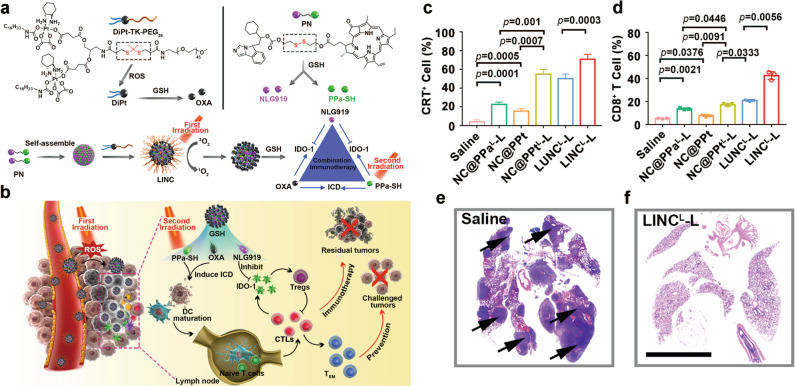
“To precisely control drug release at the tumor site to promote antitumor immunogenicity and minimize systemic adverse effects, a light-inducible nanocargo (LINC) was designed for use in combination cancer immunotherapy [88].”
MethodSelf-citationPhotothermal Therapy Generates a Thermal Window of Immunogenic Cell Death in Neuroblastoma
Sweeney, E. E., Cano‐Mejia, J., & Fernandes, R. (2018) · Small · doi:10.1002/smll.201800678 · Cited by 238
In Situ Dendritic Cell Vaccine for Effective Cancer Immunotherapy
Yang, W., Zhu, G., Wang, S., Yu, G., Yang, Z., Lin, L., Zhou, Z., Liu, Y., Dai, Y., Zhang, F., et al. (2019) · ACS Nano · doi:10.1021/acsnano.8b08346 · Cited by 233
McCracken, M. N., Cha, A. C., & Weissman, I. L. (2015) · Clinical Cancer Research · doi:10.1158/1078-0432.ccr-14-2520 · Cited by 224
Immunogenic Cell Death Amplified by Co-localized Adjuvant Delivery for Cancer Immunotherapy
Fan, Y., Kuai, R., Xu, Y., Ochyl, L. J., Irvine, D. J., & Moon, J. J. (2017) · Nano Letters · doi:10.1021/acs.nanolett.7b03218 · Cited by 220
Immunogenic Cell Death and Immunotherapy of Multiple Myeloma
Serrano-del Valle, A., Anel, A., Naval, J., & Marzo, I. (2019) · Frontiers in Cell and Developmental Biology · doi:10.3389/fcell.2019.00050 · Cited by 198 · cited 1×
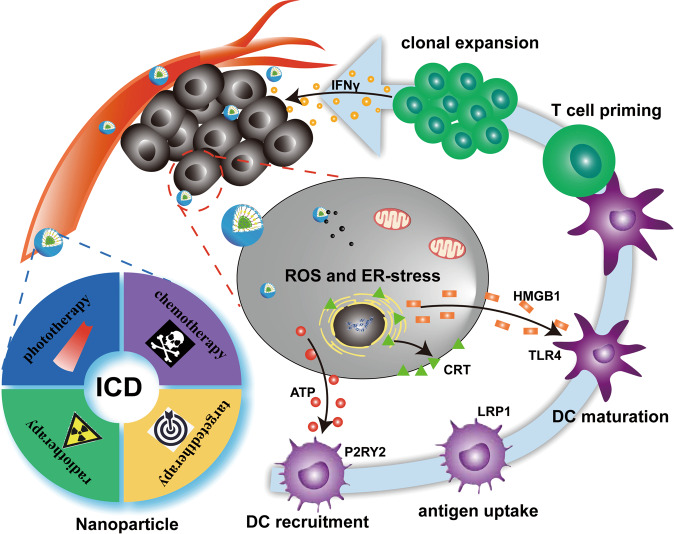
“For instance, the presentation of CRT, an endoplasmic reticulum (ER) chaperone, on the tumor cell surface, along with ATP release, induce antigen presenting cells (APCs), including dendritic cells (DCs), to phagocytose tumor cells [15].”
BackgroundGao, A., Chen, B., Gao, J., Zhou, F., Saeed, M., Hou, B., Li, Y., & Yu, H. (2020) · Nano Letters · doi:10.1021/acs.nanolett.9b04012 · Cited by 197
Self-citationRuan, S., Xie, R., Qin, L., Yu, M., Xiao, W., Hu, C., Yu, W., Qian, Z., Ouyang, L., He, Q., et al. (2019) · Nano Letters · doi:10.1021/acs.nanolett.9b03968 · Cited by 191
Yu, W., He, X., Yang, Z., Yang, X., Xiao, W., Liu, R., Xie, R., Qin, L., & Gao, H. (2019) · Biomaterials · doi:10.1016/j.biomaterials.2019.119309 · Cited by 189
Yu, G., Rao, L., Wu, H., Yang, L., Bu, L., Deng, W., Wu, L., Nan, X., Zhang, W., Zhao, X., et al. (2018) · Advanced Functional Materials · doi:10.1002/adfm.201801389 · Cited by 189
Identification of Stromal Cells in Spleen Which Support Myelopoiesis
Lim, H. K., & O’Neill, H. C. (2019) · Frontiers in Cell and Developmental Biology · doi:10.3389/fcell.2019.00001 · Cited by 161
Saeed, M., Gao, J., Shi, Y., Lammers, T., & Yu, H. (2019) · Theranostics · doi:10.7150/thno.37568 · Cited by 156
Self-citationHou, B., Zhou, L., Wang, H., Saeed, M., Wang, D., Xu, Z., Li, Y., & Yu, H. (2020) · Advanced Materials · doi:10.1002/adma.201907210 · Cited by 151
Self-citationTLR-2 and TLR-9 are sensors of apoptosis in a mouse model of doxorubicin-induced acute inflammation
Krysko, D. V., Kaczmarek, A., Krysko, O., Heyndrickx, L., Woznicki, J., Bogaert, P., Cauwels, A., Takahashi, N., Magez, S., Bachert, C., et al. (2011) · Cell Death and Differentiation · doi:10.1038/cdd.2011.4 · Cited by 139
Indocyanine green (ICG) and laser irradiation induce photooxidation
Abels, C., Fickweiler, S., Weiderer, P., Bäumler, W., Hofstädter, F., Landthaler, M., & Szeimies, R. (2000) · Archives of Dermatological Research · doi:10.1007/s004030000147 · Cited by 137
CD47 blockade as another immune checkpoint therapy for cancer
Vonderheide, R. H. (2015) · Nature Medicine · doi:10.1038/nm.3965 · Cited by 135
Chen, Q., Liu, L., Lu, Y., Chen, X., Zhang, Y., Zhou, W., Guo, Q., Li, C., Zhang, Y., Zhang, Y., et al. (2019) · Advanced Science · doi:10.1002/advs.201802134 · Cited by 126
TLR4-dependent activation of dendritic cells by an HMGB1-derived peptide adjuvant
Saenz, R., Futalan, D., Leutenez, L., Eekhout, F., Fecteau, J. F., Sundelius, S., Sundqvist, S., Larsson, M., Hayashi, T., Minev, B., et al. (2014) · Journal of Translational Medicine · doi:10.1186/1479-5876-12-211 · Cited by 113
Huang, H., Jiang, C.-T., Shen, S., Liu, A., Gan, Y.-J., Tong, Q.-S., Chen, S.-B., Gao, Z.-X., Du, J.-Z., Cao, J., et al. (2019) · Nano Letters · doi:10.1021/acs.nanolett.9b01807 · Cited by 111 · cited 1×
“BCPN released OXA and NLG919 in the acidic and reductant tumor microenvironment to promote ICD induction and IDO-1 inactivation [84, 85].”
BackgroundYang, X., Hu, C., Tong, F., Liu, R., Zhou, Y., Qin, L., Ouyang, L., & Gao, H. (2019) · Advanced Functional Materials · doi:10.1002/adfm.201901896 · Cited by 111
Qian, M., Chen, L., Du, Y., Jiang, H., Huo, T., Yang, Y., Guo, W., Wang, Y., & Huang, R. (2019) · Nano Letters · doi:10.1021/acs.nanolett.9b02448 · Cited by 107
How Does Ionizing Irradiation Contribute to the Induction of Anti-Tumor Immunity?
Rubner, Y., Wunderlich, R., Rühle, P.-F., Kulzer, L., Werthmöller, N., Frey, B., Weiss, E.-M., Keilholz, L., Fietkau, R., & Gaipl, U. S. (2012) · Frontiers in Oncology · doi:10.3389/fonc.2012.00075 · Cited by 81 · cited 1×
“Moreover, several studies have demonstrated that radiotherapy induces the release of tumor-associated antigens (TAAs) that trigger antitumor immune responses [53, 54].”
BackgroundStimuli‐activatable nanomedicines for chemodynamic therapy of cancer
Wang, W., Jin, Y., Xu, Z., Liu, X., Bajwa, S. Z., Khan, W. S., & Yu, H. (2020) · WIREs Nanomedicine and Nanobiotechnology · doi:10.1002/wnan.1614 · Cited by 79
Self-citationLee, E. J., Nam, G., Lee, N. K., Kih, M., Koh, E., Kim, Y. K., Hong, Y., Kim, S., Park, S., Jeong, C., et al. (2018) · Advanced Materials · doi:10.1002/adma.201705581 · Cited by 77
Nanoparticle formulation improves doxorubicin efficacy by enhancing host antitumor immunity
Mastria, E. M., Cai, L. Y., Kan, M. J., Li, X., Schaal, J. L., Fiering, S., Gunn, M. D., Dewhirst, M. W., Nair, S. K., & Chilkoti, A. (2017) · Journal of Controlled Release · doi:10.1016/j.jconrel.2017.11.021 · Cited by 65
Lesterhuis, W. J., de Vries, I. J. M., Aarntzen, E. A., de Boer, A., Scharenborg, N. M., van de Rakt, M., van Spronsen, D.-J., Preijers, F. W., Figdor, C. G., Adema, G. J., et al. (2010) · British Journal of Cancer · doi:10.1038/sj.bjc.6605935 · Cited by 64
Immunochemotherapy mediated by thermosponge nanoparticles for synergistic anti-tumor effects
Zhao, Y., Song, Q., Yin, Y., Wu, T., Hu, X., Gao, X., Gao, L., Tan, S., & Zhang, Z. (2017) · Journal of Controlled Release · doi:10.1016/j.jconrel.2017.11.037 · Cited by 59
Transcellular transfer of nanomedicine
Jang, H. L., & Sengupta, S. (2019) · Nature Nanotechnology · doi:10.1038/s41565-019-0494-y · Cited by 35
Alev, M., Egenberger, L., Mühleisen, L., Weigel, B., Frey, B., Friedrich, R. P., Pöttler, M., Alexiou, C., & Janko, C. (2018) · Journal of Controlled Release · doi:10.1016/j.jconrel.2018.07.007 · Cited by 25
Dunn, D. M., & Goodnight, L. J. (2019) · Routledge eBooks · doi:10.4324/9781351054706 · Cited by 15
IL-2: Change Structure … Change Function
Bluestone, J. A., Crellin, N. K., & Trotta, E. (2015) · Immunity · doi:10.1016/j.immuni.2015.05.002 · Cited by 10
Tarasiuk, J., Mazerski, J., Tkaczyk-Gobis, K., & Borowski, E. (2004) · European Journal of Medicinal Chemistry · doi:10.1016/j.ejmech.2004.10.005 · Cited by 9
Research works printed but not linked: 2
- Obeid M Tesniere A Ghiringhelli F Fimia GM Apetoh L Perfettini JL Calreticulin exposure dictates the immunogenicity of cancer cell death Nat Med. 2007 13 54 61 17187072 · DOI · Paper page
- Gao J Wang WQ Yu HJ Acid-activatable polymeric drug delivery systems for cancer therapy Acta Pharm Sin 2019 50 1156 66
Cited by
Li, Z., Lai, X., Fu, S., Ren, L., Cai, H., Zhang, H., Gu, Z., Ma, X., & Luo, K. (2022) · Advanced Science · doi:10.1002/advs.202201734 · Cited by 680
Cheng, L., Zhang, X., Tang, J., Lv, Q., & Liu, J. (2021) · Biomaterials · doi:10.1016/j.biomaterials.2021.120964 · Cited by 303
Metal-based anticancer agents as immunogenic cell death inducers: the past, present, and future
Sen, S., Won, M., Levine, M. S., Noh, Y., Sedgwick, A. C., Kim, J. S., Sessler, J. L., & Arambula, J. F. (2022) · Chemical Society Reviews · doi:10.1039/d1cs00417d · Cited by 297
Immunogenic Cell Death Induction by Ionizing Radiation
Zhu, M., Yang, M., Zhang, J., Yin, Y., Fan, X., Zhang, Y., Qin, S., Zhang, H., & Yu, F. (2021) · Frontiers in Immunology · doi:10.3389/fimmu.2021.705361 · Cited by 291
Smart drug delivery systems for precise cancer therapy
Wang, X., Li, C., Wang, Y., Chen, H., Zhang, X., Luo, C., Zhou, W., Li, L., Teng, L., Yu, H., et al. (2022) · Acta Pharmaceutica Sinica B · doi:10.1016/j.apsb.2022.08.013 · Cited by 233
Self-citation
Metadata
- Authors
- Gao, J., Wang, W.-Q., Pei, Q., Lord, M. S., & Yu, H.-J.
- Affiliations
- Chinese Academy of Sciences (CN)
- UNSW Sydney (AU)
- Venue
- Acta Pharmacologica Sinica
- Published
- 2020-04-21
- Volume
- 41
- Issue
- 7
- Pages
- 986-994
- ISSN
- 0253-9756 (ISSN-L)
- 1671-4083
- 1745-7254
- PMC
- PMC7470797
- OpenAlex
- W3016713923
- Cited by
- 203
- References
- 96
- Citations by year
- 2026: 65 · 2025: 25 · 2024: 25 · 2023: 28 · 2022: 29 · 2021: 22 · 2020: 8
- FWCI
- 1.82
- Type
- journal article
- Language
- en
- Update notices
- correction (2020-08-03)
- Open access
- hybrid
- doi.org
- Licence
- cc-by
- creativecommons.org/licenses/by/4.0 (tdm)
- creativecommons.org/licenses/by/4.0 (vor)
- Locations
- Acta Pharmacologica Sinica (publishedVersion, cc-by)
- PubMed Central (publishedVersion, cc-by)
- PubMed (publishedVersion)
- UNSWorks (UNSW Sydney) (submittedVersion, cc-by-nc-nd)
- Funders
- University of New South Wales
- National Natural Science Foundation of China (31900990, 51873228, 81521005, 31671024)
- Chinese Academy of Sciences (2014218)
- Youth Innovation Promotion Association of the Chinese Academy of Sciences (2014218)
- Youth Innovation Promotion Association
- Topics
- Physical Sciences › Engineering › Biomedical Engineering › Nanoplatforms for cancer theranostics
- Health Sciences › Medicine › Oncology › Cancer Immunotherapy and Biomarkers
- Life Sciences › Immunology and Microbiology › Immunology › Immunotherapy and Immune Responses
- Keywords
- immunogenic cell death, cancer immunotherapy, nanomedicine, tumor microenvironment, immunosuppression, immune checkpoint inhibitors, solid tumors, clinical translation
- MeSH terms
- Immunogenic Cell Death, Antineoplastic Agents, Humans, Immunotherapy, Neoplasms, Photochemotherapy, Drug Delivery Systems, Nanomedicine, Tumor Microenvironment
About these checks
Registry, retraction, Cites and statistics results are computed, not judged, with one exception: a printed reference that no index lists is read once by a model before it counts as a citation error. Claims are extracted by a model and kept only when their quote appears verbatim in the text; each cited source is then checked, with a model’s help, for whether it says what the claim relies on. Those verdicts can be wrong — read the claim’s quote and the cited source before relying on one.
Statistics and arithmetic are recomputed, not judged.
Confidence bands are shown only for fields calibrated on our annotated test set. None is calibrated yet, so no band is shown.
What counts as a claim ›How we measure confidence ›How we check this ›
Are you an author, or do you see a problem with this page? Request a review
Data sources
Bibliographic data: Semantic Scholar, OpenAlex, Crossref.
Contains information from the Semantic Scholar Academic Graph Datasets, made available under the ODC Attribution License (ODC-BY 1.0).
Semantic Scholar’s data is described in: Kinney, R., et al. (2023). The Semantic Scholar Open Data Platform. arXiv:2301.10140.
