

Sodium oligomannate therapeutically remodels gut microbiota and suppresses gut bacterial amino acids-shaped neuroinflammation to inhibit Alzheimer’s disease progression
Open accessThe DOI matches its Crossref record; 61 of the 61 references it cites were found in a registry or an index.
Abstract
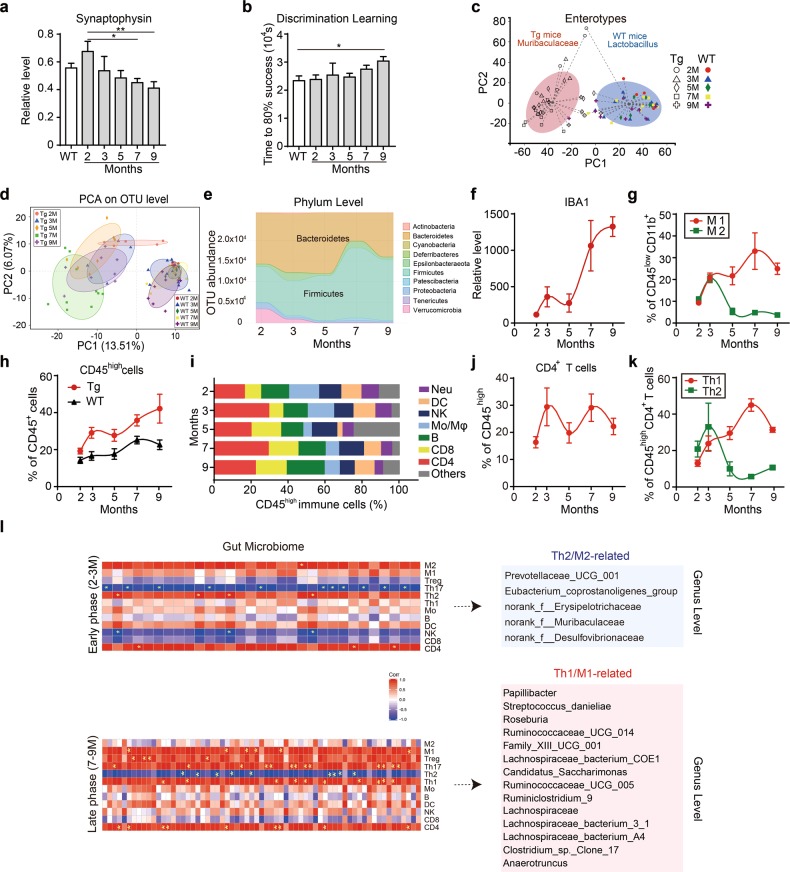
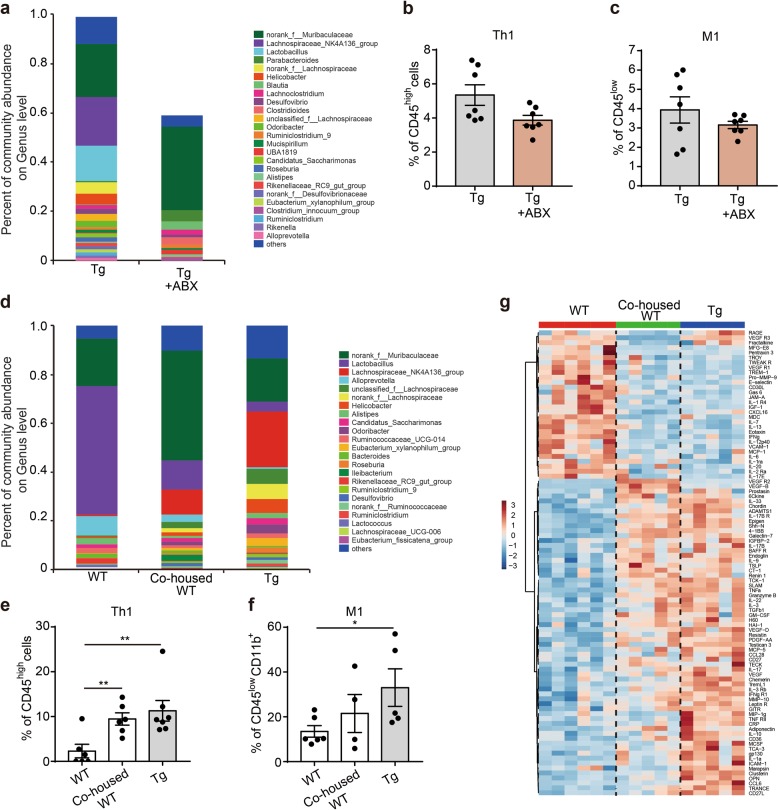
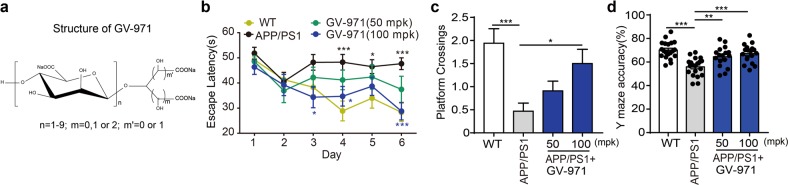
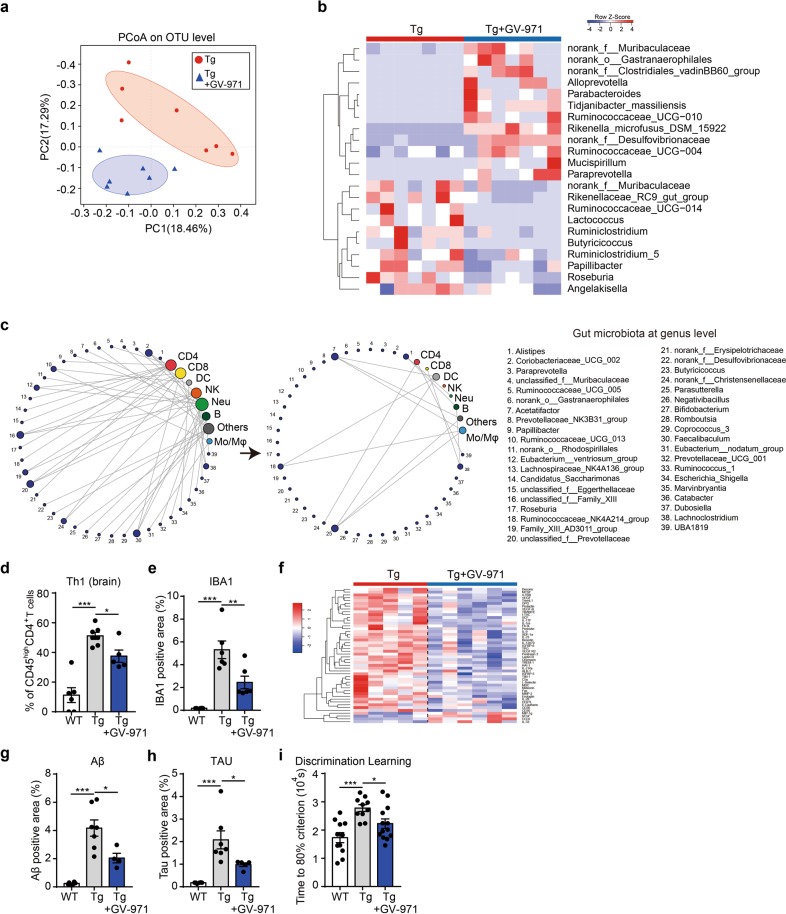
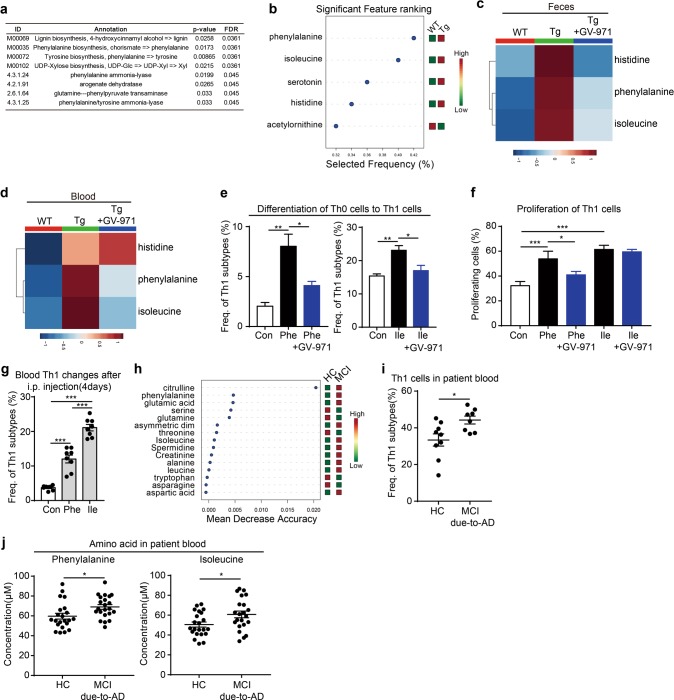
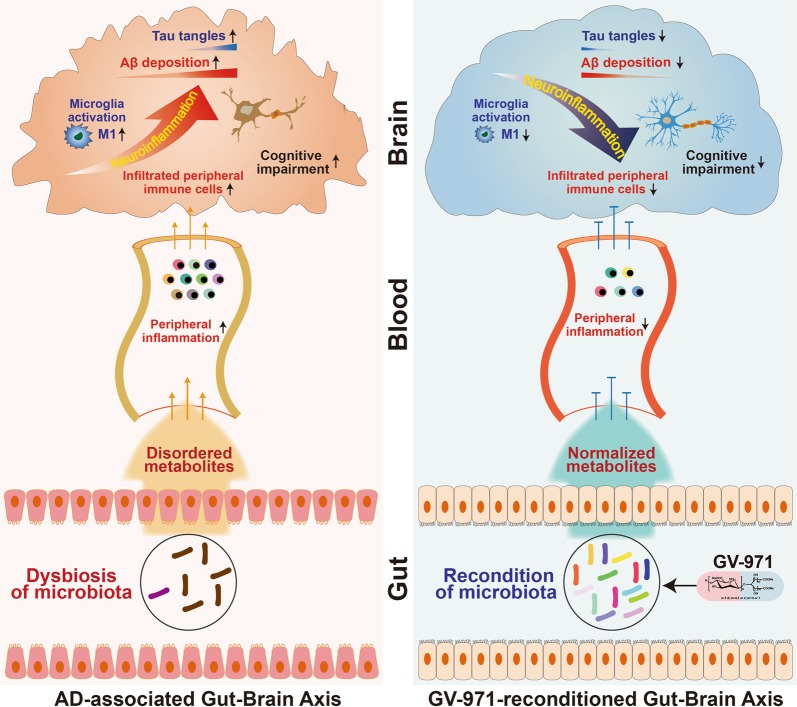
Recently, increasing evidence has suggested the association between gut dysbiosis and Alzheimer's disease (AD) progression, yet the role of gut microbiota in AD pathogenesis remains obscure. Herein, we provide a potential mechanistic link between gut microbiota dysbiosis and neuroinflammation in AD progression. Using AD mouse models, we discovered that, during AD progression, the alteration of gut microbiota composition leads to the peripheral accumulation of phenylalanine and isoleucine, which stimulates the differentiation and proliferation of pro-inflammatory T helper 1 (Th1) cells. The brain-infiltrated peripheral Th1 immune cells are associated with the M1 microglia activation, contributing to AD-associated neuroinflammation. Importantly, the elevation of phenylalanine and isoleucine concentrations and the increase of Th1 cell frequency in the blood were also observed in two small independent cohorts of patients with mild cognitive impairment (MCI) due to AD. Furthermore, GV-971, a sodium oligomannate that has demonstrated solid and consistent cognition improvement in a phase 3 clinical trial in China, suppresses gut dysbiosis and the associated phenylalanine/isoleucine accumulation, harnesses neuroinflammation and reverses the cognition impairment. Together, our findings highlight the role of gut dysbiosis-promoted neuroinflammation in AD progression and suggest a novel strategy for AD therapy by remodelling the gut microbiota.
Overview
The claims and statistics of this paper haven’t been checked yet.
Free: it reads the open-access text and checks the first 5 claims that cite a source we can check. Create a free account to check every claim.
Integrity signals
Registry
Cites
Statistics
Figures
Verification
Claims the paper makes
The claims and statistics of this paper haven’t been checked yet.
Free: it reads the open-access text and checks the first 5 claims that cite a source we can check. Create a free account to check every claim.
Claims other papers make about this one
Each is checked against this paper’s own text: does it say what the citing paper says it does?
The source backs part of the claim, not all of it — or backs it for a different population, condition or comparison.
In the citing paper
“Targeting the intestinal microbiota for the treatment of AD opens up a new way to treat other neurological diseases [11].”
From Neuroprotective Effect of Ceftriaxone on MPTP‐Induced Parkinson’s Disease Mouse Model by Regulating Inflammation and Intestinal Microbiota (2021) · cites this paper as [11]
Experimental — accuracy not yet measuredThe source backs part of the claim, not all of it — or backs it for a different population, condition or comparison.
In the citing paper
“Metabolomic analyses on the feces of these animals revealed significant changes in amino acid–related metabolism, in particular for the phenylalanine- and isoleucine-related pathways.”
From The gut-brain axis: how microbiota and host inflammasome influence brain physiology and pathology (2020) · cites this paper as [163]
Experimental — accuracy not yet measuredThe source backs part of the claim, not all of it — or backs it for a different population, condition or comparison.
In the citing paper
“The effects of GV-971 on mild to severe form of AD were tested in a phase 3 study that started in April 2014 and the results of this study highlighted the fact that GV-971 has significant cognitive benefits.”
From An update on the novel and approved drugs for Alzheimer disease (2022) · cites this paper as Wang et al., 2019
Experimental — accuracy not yet measuredThe source backs part of the claim, not all of it — or backs it for a different population, condition or comparison.
In the citing paper
“it plays a major role in the bidirectional communication between the GI tract and the central nervous system (CNS).”
From The Role of Short-Chain Fatty Acids From Gut Microbiota in Gut-Brain Communication (2020) · cites this paper as [11]
Experimental — accuracy not yet measuredThe cited source says what the claim attributes to it.
In the citing paper
“Sodium oligomannate (9, GV-971) was postulated to counteract AD by inhibiting neuroinflammation triggered by gut dysbiosis and disrupting the formation of Aβ fibrils.56,414”
From Recent advances in Alzheimer's disease: Mechanisms, clinical trials and new drug development strategies. (2024) · cites this paper as [414]
15 more claims about this paper
Create a free account to see every claim other papers make about this one.
Self-check
Percentages, sums and reported differences re-computed from the paper’s own numbers.
The self-check needs the paper’s full text.
Citations
Cites
Classification and Regression by randomForest
Liaw, A. I., & Wiener, M. C. (2007) · Cited by 18,594
Morris water maze: procedures for assessing spatial and related forms of learning and memory
Vorhees, C. V., & Williams, M. T. (2006) · Nature Protocols · doi:10.1038/nprot.2006.116 · Cited by 4,629
Oakley, H., Cole, S. L., Logan, S., Maus, E., Shao, P., Craft, J., Guillozet-Bongaarts, A., Ohno, M., Disterhoft, J., Van Eldik, L., et al. (2006) · The Journal of Neuroscience · doi:10.1523/jneurosci.1202-06.2006 · Cited by 3,530
Gut microbiota, metabolites and host immunity
Rooks, M. G., & Garrett, W. S. (2016) · Nature reviews. Immunology · doi:10.1038/nri.2016.42 · Cited by 3,409
Krasemann, S., Madore, C., Cialic, R., Baufeld, C., Calcagno, N., El Fatimy, R., Beckers, L., O’Loughlin, E., Xu, Y., Fanek, Z., et al. (2017) · Immunity · doi:10.1016/j.immuni.2017.08.008 · Cited by 2,979
NLRP3 is activated in Alzheimer’s disease and contributes to pathology in APP/PS1 mice
Heneka, M. T., Kummer, M. P., Stutz, A., Delekate, A., Schwartz, S., Vieira-Saecker, A., Griep, A., Axt, D., Remus, A., Tzeng, T.-C., et al. (2013) · Nature · doi:10.1038/nature11729 · Cited by 2,898
Differential Roles of M1 and M2 Microglia in Neurodegenerative Diseases
Tang, Y., & Le, W. (2016) · Molecular Neurobiology · doi:10.1007/s12035-014-9070-5 · Cited by 2,190
Gut microbiome alterations in Alzheimer’s disease
Vogt, N. M., Kerby, R. L., Dill-McFarland, K. A., Harding, S. J., Merluzzi, A. P., Johnson, S. C., Carlsson, C. M., Asthana, S., Zetterberg, H., Blennow, K., et al. (2017) · Scientific Reports · doi:10.1038/s41598-017-13601-y · Cited by 2,137
The microbiome and innate immunity
Thaiss, C. A., Zmora, N., Levy, M., & Elinav, E. (2016) · Nature · doi:10.1038/nature18847 · Cited by 2,012
The microbiota in adaptive immune homeostasis and disease
Honda, K., & Littman, D. R. (2016) · Nature · doi:10.1038/nature18848 · Cited by 1,846
Cited by
Items 901–1,000 of 1,000
Li, X., Chen, K., Liu, X., Wang, S., Ma, J., Jiang, J., Mao, X., Fang, M., & Jin, W. L. (2025) · European Journal of Pharmacology · doi:10.1016/j.ejphar.2025.178283 · Cited by 3
From Lipids to Mitochondria: Shared Metabolic Alterations in Obesity and Alzheimer’s Disease
Uranga, R. M., & Allani, S. K. (2026) · Cells · doi:10.3390/cells15080672 · Cited by 3
“For example, oligosaccharides from brown algae can reshape gut microbiota, reduce CNS immune cell infiltration, attenuate neuroinflammation, and improve behavioral deficits in experimental models [159,171].”
Smid, S. D. (2026) · Food & Function · doi:10.1039/d5fo05231a · Cited by 3
Gao, P.-P., Zhou, F.-L., Zheng, G.-B., Liu, Y., Cheng, S., Ye, Z., Liang, Y.-T., Liu, L., Guo, L., & Lin, J. (2026) · Frontiers in Nutrition · doi:10.3389/fnut.2026.1835714 · Cited by 3
Luo, S., Guo, J., Xu, J., Song, J., Dai, Y., & Xu, S. (2026) · Phytomedicine · doi:10.1016/j.phymed.2026.158585 · Cited by 3
Gong, M., Lan, J. X., & Miao, J. (2026) · Frontiers in Aging Neuroscience · doi:10.3389/fnagi.2026.1908574 · Cited by 3
“…in a phase 3 clinical trial in China, suppresses gut dysbiosis and the associated phenylalanine/isoleucine accumulation, harnesses neuroinflammation and reverses the cognition impairment (Wang et al., 2019), offering a partial clinical precedent for the Trp– microbiota–AHR framework advanced here.”
Pharmacological drug strategies in Alzheimer's Disease
Dantas, R. L. M., Baracho, N. C., Camins, A., & Ettcheto, M. (2021) · Revista Neurociências · doi:10.34024/rnc.2021.v29.12413 · Cited by 3
Hayat, K., Nixon, G. L., Zhang, Q., & Matziari, M. (2024) · ACS Omega · doi:10.1021/acsomega.4c05988 · Cited by 3
Self-citationXu, Y., Feng, J., Hu, Y., Chen, L., Qin, W., Chen, C., Yan, M., & Guo, H. (2024) · Microbial Physiology · doi:10.1159/000542892 · Cited by 3
Advances in Alzheimer's Disease Biomarkers
Li, K., Gao, Y., Liu, M., & Chen, Y. (2024) · Current Alzheimer Research · doi:10.2174/0115672050366767241223050957 · Cited by 3
He, J., Sun, S., Wang, H., Ying, Z., & Tam, K. Y. (2025) · Neuroscience Bulletin · doi:10.1007/s12264-025-01354-y · Cited by 3
“Recently, some newly-approved disease-modifying drugs, namely sodium oligomannate for neuro-inflammation [6] and antibodies for the elimination of amyloid plaques like aducanumab, lecanemab, and donanemab have been developed [7–9].”
Self-citationKumari, M., Sadhu, P., Shah, N., & Talele, C. (2025) · Wiley eBooks · doi:10.1002/9781394203680.ch19 · Cited by 3
The efficacy and pharmacological mechanism of Guilingji to prevent Alzheimer’s disease
Hu, F., Lei, Y., Han, R., Yang, B., Liang, Y., Luan, J., Zhang, B., Wang, S., & Gou, X. (2025) · Alzheimer s Research & Therapy · doi:10.1186/s13195-025-01790-y · Cited by 3
Zhan, C., Chen, L., Guo, D., Sun, J. Y., Yunbin, D., Zhang, P., Li, P., Ma, L., Xu, M., Wang, Y., et al. (2022) · International Journal of Molecular Sciences · doi:10.3390/ijms232314692 · Cited by 3
ADVANCEMENT IN THE TREATMENT OF ALZHEIMER'S DISEASE, 2023
Safdar, A., Ghani, M. U., Sabar, M. F., Khan, M. U., Hussain, M., aziz, K., & Hussain, T. (2024) · International Journal of Pharmacy & Integrated Health Sciences · doi:10.56536/ijpihs.v5i1.114 · Cited by 3
Zou, C., Cai, R., Li, Y., Yu, X., Zhang, G., Alitongbieke, G., Pan, Y., & Zhang, S. Q. (2024) · iScience · doi:10.1016/j.isci.2024.110766 · Cited by 3
“56 Increasing evidences showed that microbiota dysbiosis and barrier damage in the intestinal tract will lead to cognitive decline, 57,58 and immune cells and inflammatory factors transferred from the spleen cause brain dysfunction.”
Self-citationShen, Z., Yin, H., Sun, L., Chen, L., Li, J., Zhang, X., Zeng, M., Jiang, X., & Yu, J. (2024) · Carbohydrate Polymer Technologies and Applications · doi:10.1016/j.carpta.2024.100604 · Cited by 3
Li, S., Chen, H., Zhao, R., Wang, T., & Ye, J. (2024) · European Journal of Nutrition · doi:10.1007/s00394-024-03555-z · Cited by 3
“This association may be due to the lower level of inflammatory response [50], which has been considered as pathogenesis beneath BGA [51].”
Self-citationZhang, X., Zhang, D., Liang, J., Wang, L., Cui, Y., Feng, D., & Ye, S. (2025) · Food Chemistry · doi:10.1016/j.foodchem.2025.145098 · Cited by 3
Oxidative Stress and Antioxidant Strategies in Human Diseases
Yuan, K., & Zhang, Y. (2021) · Springer eBooks · doi:10.1007/978-981-16-0522-2_1 · Cited by 3
Dorman, G. S., Flores, I., Gutiérrez, C., Castaño, R. F., Aldecoa, M., & Kim, L. M. (2021) · CNS & Neurological Disorders - Drug Targets · doi:10.2174/1871527320666210809121230 · Cited by 3
Alzheimer Hastalığı ve Anti-Alzheimer Etkili Bileşiklerin Yapılarının Araştırılması
Tari, O., & YAĞMURTAŞAN, R. (2023) · Hacettepe University Journal of the Faculty of Pharmacy · doi:10.52794/hujpharm.1175099 · Cited by 3
Gut Microbiota and Altered Behaviour: Target on Neuroimmune Interplays
Jayaraman, S., & Paul, S. (2024) · Springer eBooks · doi:10.1007/978-981-99-8803-7_9 · Cited by 3
Gut-Brain Axis: A Medium for Immune Interaction
Misal, P., Verma, S., Singh, A. K., & Kar, S. K. (2024) · Integrated science · doi:10.1007/978-3-031-73061-0_19 · Cited by 2
Chen, K., Yao, X., Yu, Y., Sun, J., Zhang, Y., Ma, H., Zheng, H., Qiu, B., Li, H., Zhao, W., et al. (2025) · Journal of Applied Toxicology · doi:10.1002/jat.4791 · Cited by 2
“In China, sodium oligomannate (GV-971), approved by the National Medical Products Administration (NMPA), has demonstrated potential in improving the gut microbiota for the treatment of AD (Syed 2020; Wang et al. 2019).”
Price, R., Moreno, M. R., Cooper, A. S., Singh, R., Khaw, Y. M., Mhaka, A. M., Sivanantharajah, L., & Mudher, A. K. (2025) · Expert Opinion on Drug Discovery · doi:10.1080/17460441.2025.2498675 · Cited by 2
“Studies have shown that alterations in gut microbiota composition are associated with AD, and modulation of the microbiome can impact neuroinflammation and cognitive function [73,74].”
Lu, M., Wang, S., Zhou, Y., Wang, X., Su, H., Gong, Y., & De, J. (2025) · BMC Plant Biology · doi:10.1186/s12870-025-07153-x · Cited by 2
Self-citationXin, X., Zong, T., Hu, Z., Jin, L., Zhou, W., Sun, J., & Gao, L. (2025) · Bioorganic Chemistry · doi:10.1016/j.bioorg.2025.108934 · Cited by 2
Targeting neurodegenerative diseases with bioactive oligosaccharides: Mechanisms and prospects
Ni, Q., Zhang, S., Jia, G., Wang, Y., Guo, Y., & Liu, Y. (2025) · International Immunopharmacology · doi:10.1016/j.intimp.2025.115560 · Cited by 2
Alginate Lyase and Its Applications in Alginate Oligosaccharides Production
Zhang, W., Yang, J., Liu, X., Zhu, Y., Xu, W., Ni, D., Petrova, P. M., Petrov, K. K., & Mu, W. (2025) · Food Reviews International · doi:10.1080/87559129.2025.2563180 · Cited by 2
“[102] Chang et al. found that the AOS prepared from Sargassum fusiforme showed significant anti-photoaging activity.”
Self-citationTuft Cells in the Gut Limit Cognitive Disorders by Regulating Gut Homeostasis
Chen, L., Yang, Y., Zhang, Y., Yang, X., Zhang, X., Chen, L., Li, W., Zhang, S. L., Xiong, R., Wang, J., et al. (2026) · Cellular and Molecular Gastroenterology and Hepatology · doi:10.1016/j.jcmgh.2026.101747 · Cited by 2
Zhou, S., Xu, L., Dong, J., Zhang, X., Gao, W., Luo, H., & Fang, X. (2026) · Phytotherapy Research · doi:10.1002/ptr.70249 · Cited by 2
“This constitutes another positive feedback pathway that exacerbates inflammation (Wang, Sun, et al. 2019).”
Joshi, D., Chauhan, K., Oberoi, H. S., Kumar, D., & Taneja, N. K. (2026) · Discover Biotechnology · doi:10.1007/s44340-026-00053-2 · Cited by 2
The Gut-Brain-Cardiac Axis: How Microbiota Influence Cognitive and Cardiovascular Health
Kumar, V., Singh, B., Ayyagari, A., Chaudhari, D. N., & Ahire, J. J. (2026) · Current Microbiology · doi:10.1007/s00284-026-04857-7 · Cited by 2
Liu, C., Zhu, Z., Lin, H., Bush, W. S., Jenq, R. R., Cominelli, F., Pillai, J. A., Haines, J. L., Zhu, X., Xu, R., et al. (2026) · Frontiers in Molecular Biosciences · doi:10.3389/fmolb.2026.1735332 · Cited by 2
“Peripheral accumulation of these metabolites also may be linked to expansion of pro-inflammatory T helper 1 (Th1) cells, which can infiltrate the brain and activate microglia (Wang et al., 2019).”
Peng, H., Du, Y., Ding, Q., Du, D., Dong, R., Ran, C., Zhang, Z., Yao, Y., Liang, H., Li, M., et al. (2026) · Reviews in Aquaculture · doi:10.1111/raq.70202 · Cited by 2
Role of the gut microbiome in the pathophysiology of brain disorders
Mayer, E. A., Horn, J. V., Mayer, E. D., & Chen, S. J. (2022) · Elsevier eBooks · doi:10.1016/b978-0-323-85654-6.00058-7 · Cited by 2
Gut-Brain Axis and a Systematic Approach to Alzheimer’s Disease Therapies
Li, J., Mou, H., & Yao, R. (2025) · Brain Science Advances · doi:10.26599/bsa.2024.9050031 · Cited by 2
“In 2019, Meiyu Geng and her team at the Shanghai Institute of Materia Medica achieved a groundbreaking milestone in Alzheimer’s disease (AD) research with the discovery of sodium oligomannate (GV ‐ 971), a compound that targets the gut–brain axis to treat AD [1].”
InfluentialThe search for novel targets in Alzheimer's disease—The 90s redux
Behl, C. (2020) · Progress in molecular biology and translational science · doi:10.1016/bs.pmbts.2020.08.002 · Cited by 2
Pharmacotherapy for Alzheimer’s disease: what’s new on the horizon?
Khoury, R., Gallop, A., Roberts, K., Grysman, N., Lu, J., & Grossberg, G. T. (2022) · Expert Opinion on Pharmacotherapy · doi:10.1080/14656566.2022.2097868 · Cited by 2
Interaction of Intestinal Microbiota with Medications
Liu, M., Xu, J., Jin, Q., & Li, Y. (2023) · Current Drug Metabolism · doi:10.2174/1389200224666230418104540 · Cited by 2
Alzheimer's disease therapeutics
Sang, Z., & Huang, L. (2023) · Elsevier eBooks · doi:10.1016/b978-0-443-18611-0.00031-0 · Cited by 2
Bai, C., El-Badri, A. M., Batool, M., Lei, Y., Gu, R., He, Y., Kuai, J., Wang, J., Wang, B., Xu, Z., et al. (2024) · European Journal of Agronomy · doi:10.1016/j.eja.2024.127260 · Cited by 2
Зв’язок між мікробіомом кишечника та розвитком нейродегенеративних захворювань (огляд)
Широбоков, В. П., & Димент, Г. С. (2024) · Visnik Nacional noi academii nauk Ukrai ni · doi:10.15407/visn2024.07.077 · Cited by 2
Infection, Neuroinflammation and Interventions for Healthy Brain and Longevity
Fülöp, T., Ramassamy, C., Lacombe, G., Frost, E. H., Cohen, A. A., Rodrigues, S., Desroches, M., Hirokawa, K., Laurent, B., & Witkowski, J. M. (2024) · Healthy ageing and longevity · doi:10.1007/978-3-031-68513-2_12 · Cited by 2
One-Pot Stereospecific Synthesis of 1,4-Oligosaccharides by Glycal-Derived Vinyl Epoxides Assembly
Santangelo, M. C., Iacopini, D., Favero, L., Zecchi, R., Pieraccini, G., Pietro, S. D., & Bussolo, V. D. (2024) · ACS Omega · doi:10.1021/acsomega.4c05247 · Cited by 2
Wang, X., Sun, G., Feng, T., Zhang, J., Huang, X., Wang, T., Xie, Z., Chu, X., Yang, J., Wang, H., et al. (2020) · Cell Research · doi:10.1038/s41422-020-0377-7 · Cited by 2
Self-citationSex Bias in Preclinical Studies: The Case of Gut Microbiota on Alzheimer’s Disease
Vinardell, M. P. (2021) · Archives in Neurology & Neuroscience · doi:10.33552/ann.2021.11.000752 · Cited by 2
“Only one study (3%) did not indicate the sex of the animals employed (Figure 2) [41-62].”
BackgroundXie, J., Zhong, C., Wang, T., He, D., Lu, L., Yang, J., Yuan, Z., & Zhang, J. (2022) · Frontiers in Pharmacology · doi:10.3389/fphar.2022.937075 · Cited by 2
Self-citationNove terapije u liječenju Alzheimerove bolesti
Perković, R., Tomić, S., Jurić, S., Gudelj, E., & Hrvoić, L. (2023) · Medicina Fluminensis · doi:10.21860/medflum2023_292445 · Cited by 2
Wei, R., He, J., Chen, W., & Tam, K. Y. (2023) · Neuroscience Letters · doi:10.1016/j.neulet.2023.137166 · Cited by 2
Castro, M. P. V., Sánchez, J. C. O., & Aucay, J. E. O. (2023) · Salud Ciencia y Tecnología · doi:10.56294/saludcyt2023310 · Cited by 2
The evolution of Alzheimer’s disease therapies: A comprehensive review
Paul, P., Bhattacharjee, A., Bordoloi, S. K., & Paul, U. K. (2024) · Annals of Medical Science and Research · doi:10.4103/amsr.amsr_37_23 · Cited by 2
The Role of the Gut-Brain Axis in Alzheimer's Disease: A Narrative Review
Karout, L. (2022) · PDXScholar (Portland State University) · doi:10.15760/honors.1271 · Cited by 2
Microbial-Derived Exerkines Prevent Skeletal Muscle AtrophyPreprint
Valentino, T. R., Burke, B. I., Kang, G., Goh, J. Z., Dungan, C. M., Ismaeel, A., Mobley, C. B., Flythe, M. D. D., Wen, Y., & McCarthy, J. J. (2024) · bioRxiv (Cold Spring Harbor Laboratory) · doi:10.1101/2024.05.29.596432 · Cited by 2
Correction to “Unlocking the Therapeutic Potential of Natural Products for Alzheimer’s Disease”
Li, Z., Zhang, Z., & Yu, B. (2025) · Journal of Medicinal Chemistry · doi:10.1021/acs.jmedchem.5c00926 · Cited by 2
Lai, H., & Shen, T. (2023) · Healthy ageing and longevity · doi:10.1007/978-3-031-14023-5_14 · Cited by 1
Zhang, Z., Yang, X. H., Zhang, L., Zhu, H., Huang, B., Chen, Q., Wang, Y., Chen, Y., Bi, L., Geng, M., et al. (2023) · Bioanalysis · doi:10.4155/bio-2023-0026 · Cited by 1
Self-citationElevated BACE1 and IFNγ+ T Cells in Patients with Cognitive Impairment and the 5xFAD Mouse Model
Zhan, Y., Chen, Z., Zheng, S., Dai, L., Zhang, W., Dai, Y., Gao, F., Shen, Y., & Zhang, W. (2025) · ACS Chemical Neuroscience · doi:10.1021/acschemneuro.4c00565 · Cited by 1
The Enigmatic Gut-Brain-Immune Trio in Brain and Behavior Disorders
Mythri, R. B. (2025) · Advances in medical diagnosis, treatment, and care (AMDTC) book series · doi:10.4018/979-8-3693-7432-0.ch019 · Cited by 1
Lei, S., Wang, M., Pan, J., Wang, D., Ge, P., & Zhang, D. (2025) · Frontiers in Neurology · doi:10.3389/fneur.2025.1554697 · Cited by 1
Feng, R., Chen, Z., Chen, L., Wei, W., Wen, J., & Zheng, J. (2025) · NeuroToxicology · doi:10.1016/j.neuro.2025.04.012 · Cited by 1
Yang, J., Chen, Z., Zhu, Y., Chen, T., Zhou, Y., & Wang, Z. (2025) · Biology · doi:10.3390/biology14060731 · Cited by 1
Self-citationHe, J., Ran, M., & Tam, K. Y. (2025) · Brain Research · doi:10.1016/j.brainres.2025.149804 · Cited by 1
Introduction to Gut Microbiota and Its Role in Health and Diseases
Sharma, S., Hussain, M. S., Khan, Y., & Maqbool, M. (2025) · Cancer drug discovery and develogment/Cancer drug discovery and development · doi:10.1007/978-3-031-86065-2_2 · Cited by 1
Ozone-induced Neurotoxicity: Mechanistic Insights and Implications for Neurodegenerative Diseases
Bjørklund, G., Gurgas, L., & Hangan, T. (2026) · Current Medicinal Chemistry · doi:10.2174/0109298673375058250624070823 · Cited by 1
Shi, C., Fan, D., Liu, K., Hu, X., Gao, Y., Liu, Q.-R., Wu, X., & Ji, M. (2025) · Journal of Psychiatric Research · doi:10.1016/j.jpsychires.2025.09.078 · Cited by 1
Zou, Z., Yin, Y., Liao, B., Zhou, L., Su, M., & Li, X. (2025) · Current Clinical Microbiology Reports · doi:10.1007/s40588-025-00244-1 · Cited by 1
“Subsequently, the blood–brain barrier (BBB) may be impaired, resulting in neuroinflammation, neuronal injury, and ultimately leading to neurodegenerative diseases [14, 15].”
From the hive to the brain: synergistic potential of honeybee products with alzheimer’s drugs
El-Seedi, H. R., Salama, S. M., Shetaia, A. A., Elashal, M. H., El‐Wahed, A. A. A., Karav, S., Saeed, A., Alzahrani, M. A., Zou, X., Hriţcu, L., et al. (2025) · Metabolic Brain Disease · doi:10.1007/s11011-025-01727-2 · Cited by 1
“The anti-neuroinflammatory therapy includes microglia modulators, i.e., apolipoprotein E (APOE) or triggering receptor expressed on myeloid cells 2 (TREM2) (Wolfe et al. 2018), astrocyte modulators, for example, P2Y1 puri-noreceptors (P2Y1R) inhibitors (Reichenbach &Delekate, 2018), via insulin resistance management,…”
Green drug repurposing using seaweed bioactives beyond a sustainable future
Kang, B.-S., Ali, M. S., Jeon, S.-B., Lee, H.-J., Kim, C. W., & Lee, E. (2025) · Aquaculture International · doi:10.1007/s10499-025-02270-8 · Cited by 1
Gao, H., Cheng, F., Zhang, Z., Yan, B., Liao, P., Zhang, S., Li, D., Chen, F., & Lei, P. (2025) · Molecular Neurobiology · doi:10.1007/s12035-025-05320-7 · Cited by 1
“This therapy modulates the microbiota–gut–brain axis by regulating gut flora and reducing neuroinflammation [147].”
Wang, H. Y., Li, C., Hu, Z., Feng, H., Chen, L., Ding, K., Nan, J., Wu, Y., Sheng, J., & Xiong, X. (2025) · Molecular Systems Biology · doi:10.1038/s44320-025-00173-7 · Cited by 1
“…disorders associated with development such as autism (Morais et al, 2021; Su et al, 2024), mood (Bravo et al, 2011; Kelly et al, 2016), and various neurodegenerative disorders including Parkinson ’ s disease and Alzheimer ’ s disease (Tan et al, 2022; Wang et al, 2019b; Morais et al, 2021).”
Self-citationA Landscape of Dementia Care: Politics, Practices, and Morality in Shanghai, China
Zhang, Y. (2020) · OhioLink ETD Center (Ohio Library and Information Network) · Cited by 1
Microbiota and Alzheimer's disease: Toward new clinical approaches
Đokić, J., & Dinić, M. (2025) · Medicinski podmladak · doi:10.5937/mp76-60520 · Cited by 1
Can bacteria control the human brain?
Berdichevskiy, G. M., Ермоленко, Е. И., Suvorov, A. N., & Didur, M. D. (2025) · Communicative & Integrative Biology · doi:10.1080/19420889.2025.2603138 · Cited by 1
“This cascade ultimately contributes to neuroinflammation and cognitive dysfunction associated with conditions such as Alzheimer’s disease [58].”
Li, Z., Wang, H., Yuan, H., Zhang, Y., Yang, B., Ji, G., Yao, Z., Kuang, M., Wu, X., Wang, S., et al. (2026) · Pharmaceuticals · doi:10.3390/ph19010123 · Cited by 1
Self-citationWu, H., He, L., & Li, D. (2026) · Mini-Reviews in Medicinal Chemistry · doi:10.2174/0113895575414424251128113543 · Cited by 1
Radiofrequency electromagnetic fields in Alzheimer’s therapy: emerging evidence and future prospects
Liu, W., Rao, X., Sun, W., Chen, X., Yu, L., & Zhang, J. (2026) · Electromagnetic Biology and Medicine · doi:10.1080/15368378.2026.2627962 · Cited by 1
“Another approved drug, Sodium oligomannate, acts through the gut-brain axis to modulate gut microbiota, yet still fails to achieve curative outcomes (Wang et al. 2019).”
Self-citationGut Lachnospiraceae improves white matter injury-related cognitive decline by increasing L-arginine
Xu, Y., Huang, L., Sun, L., Li, C., Zhou, C., Liu, P., Zhang, Z., Deng, S., Mao, C., Hu, Z., et al. (2026) · Cellular & Molecular Biology Letters · doi:10.1186/s11658-026-00866-3 · Cited by 1
Wu, G., Wang, M., Si, Y., Wang, X., Li, H. L., Wang, L., Wang, R., & Zhang, L. (2026) · PeerJ · doi:10.7717/peerj.20812 · Cited by 1
“…levels may increase intestinal permeability and the risk of psychiatric disorders, adequate amounts enhance the gut barrier, reduce LPS-driven inflammation, and exert anti-inflammatory effects by lowering TNF-α -induced cytokine and monocyte adhesion ( Wang et al., 2019 ; Ahrens et al., 2021 ).”
Self-citationFan, J., Xue, X., Zhang, H., Wang, F., Chao, Z., Wei, L., Liu, H., Ren, Y., & Sun, R. (2026) · Animals · doi:10.3390/ani16060976 · Cited by 1
Self-citationZhao, Y., Luo, G., Huang, C., Chen, Z., Wei, Y., Chen, Q., Wang, F., Gan, Y., & Yin, X. (2026) · The Journal of Prevention of Alzheimer s Disease · doi:10.1016/j.tjpad.2026.100564 · Cited by 1
“Sodium oligomannate can reshape the intestinal flora and reduce abnormal amino acid levels [5].”
Multi-omics analysis of changes in the microbiota–gut–spinal cord axis in spinal cord injury
Jing, Y., Bai, F., Li, Z., Wang, Q., Li, Y., Liu, W., Zhang, S., Gao, C., & Yu, Y. (2026) · Neural Regeneration Research · doi:10.4103/nrr.nrr-d-25-00739 · Cited by 1
Gonçalves, L. V. P., Holanda, P. F. D. G., Cabral, A. V. D. S., Nunes, R. G. D. S., Lira, Y. V. D. S., Costa, M. R., Mendonça, I. P., de lima, A. A., de Oliveira, Ê. A. G., Peixoto, C. A., et al. (2026) · Nutritional Neuroscience · doi:10.1080/1028415x.2026.2649604 · Cited by 1
“Furthermore, this prebiotic suppressed neuroinflammation induced by activated microglia of M1 phenotype in the brains of 5XFAD transgenic (Tg) mice, an AD animal model [43].”
EtCBN-associated olfactory dysfunction involves Irf7 signaling and a microbiota-metabolite axis
Duan, L., Liang, J., Zhang, W., Liu, Z., Kang, H., Huang, D., Wang, Z., Jiang, G., & Gao, A. (2026) · Chemico-Biological Interactions · doi:10.1016/j.cbi.2026.112109 · Cited by 1
Mechanisms and Therapeutic Targeting of the Gut Microbiota-Immune-Brain Axis in Alzheimer’s Disease
Wang, S., Yuan, X., Wang, T., Yang, M., Dong, P., & Han, H. (2026) · Immunological Investigations · doi:10.1080/08820139.2026.2669375 · Cited by 1
“These cells subsequently infiltrated the brain and enhanced microglial activation and neuroinflammation, whereas remodeling the gut microbiota suppressed this amino acid-driven immune response and ameliorated AD-related pathology (Wang et al., 2019).”
InfluentialSelf-citationZhang, H., Yu, J., Sheng, R., Zhang, S., Chen, L., & Wang, H. Y. (2026) · Frontiers in Marine Science · doi:10.3389/fmars.2026.1832655 · Cited by 1
Self-citationNanoparticles that target nonamyloid and nontau pathways in Alzheimer’s disease
Alavian, F., & Hajimohammadi, A. (2026) · Discover Nano · doi:10.1186/s11671-026-04747-8 · Cited by 1
“A notable exception within the broader landscape of NANT therapeutics is sodium oligomannate (GV-971), a seaweed-derived oligosaccharide that received conditional approval from China’s National Medical Products Administration in 2019 for mild-to-moderate AD [168].”
Lv, Y., Shao, M., Fu, Z., Lv, D., Shang, Q., Yang, Y., Wang, C. P., Guo, P., Lin, S., Zhang, X., et al. (2026) · Food & Function · doi:10.1039/d6fo01790h · Cited by 1
Yang, Q., Yu, H., Zhao, Z., & Ju, Z. (2026) · Frontiers in Sustainable Food Systems · doi:10.3389/fsufs.2026.1735398 · Cited by 1
Li, J. M., Cheng, S., Zhang, W., Qiao, S., Zhang, L., Yao, M., Zhang, Y., Wang, B., & Wu, C. (2026) · Biology · doi:10.3390/biology15131030 · Cited by 1
“Although the Bacteroidota/Firmicutes (B/F) ratio is a broad ecological indicator, its restoration often reflects a transition from a pro-inflammatory “dys-biotic” state to a metabolic “homeostatic” state in AD models [38,39].”
Zhao, X., Zhang, G., Wang, Z., Zhang, D. J., Xia, Z., & Huo, C. (2026) · Frontiers in Immunology · doi:10.3389/fimmu.2026.1893167 · Cited by 1
Self-citationLi, Q., Fan, B., Xiao, Y., Zhang, Z., Zhao, S., Liao, B., Zeng, J., Shan, X., Ye, H., Wen, Y., et al. (2026) · Gut Microbes · doi:10.1080/19490976.2026.2698204 · Cited by 1
“231 However, a prospective study demonstrated that lower serum Val levels are associated with a higher risk of AD, greater impairment of cognitive function, and faster cognitive decline.”
Wang, Y., Cao, Z., Zhang, C., Ying, Y., Zhu, G., Wang, J., Hou, X., Zhang, D., Zhiyong, Z., Shao, H., et al. (2026) · International Journal of Molecular Sciences · doi:10.3390/ijms27156573 · Cited by 1
Cui, X., Wei, Z., Wang, Q., Du, S., Lin, Z., Chen, Z., Zhang, J., Li, C., Tang, L., Dai, X., et al. (2026) · Frontiers in Pharmacology · doi:10.3389/fphar.2026.1830927 · Cited by 1
“These findings are consistent with the growing recognition of gut microbiota as a modifiable target in AD and suggest that APS can counteract AD-associated dysbiosis (Liu et al., 2019; Wang et al., 2019).”
Self-citationBi, Y., Song, W., Glymenaki, M., Hu, J., Li, X., Huang, H., Peng, Y., Ni, S., Haonon, O., Liu, Z., et al. (2026) · iMeta · doi:10.1002/imt2.70144 · Cited by 2
Ren, Z., Yue, Q., Gao, N., Hao, Q.-L., Huo, Y., Li, C., Leng, X., Sun, L., Hoi, M. P. M., Han, H., et al. (2026) · Advanced Science · doi:10.1002/advs.77545 · Cited by 1
“Current etiological hypotheses of AD mainly include amyloid plaques, neurofibrillary tangles (NFTs), and intestinal microbes [ 5–10 ].”
Lee, J. Y., Lim, L. W. C., Wong, C.-Y., Koh, R. Y., Lim, C. L., Kok, Y.-Y., & Chye, S. M. (2026) · CNS & Neurological Disorders - Drug Targets · doi:10.2174/0118715273403412251202093934 · Cited by 1
Analysis of binding modes of biopanning heptapeptides with specific affinity to chitosan wrapped MSN
Wang, Y., Yu, Y.-M., Yao, W., Li, M., & Wang, P. (2021) · Biochemical and Biophysical Research Communications · doi:10.1016/j.bbrc.2020.12.020 · Cited by 1
In situ neuroregeneration: frontiers and therapeutic prospects
Wang, Q., Li, W., Lei, W., Chen, W., Zheng, J., Xiang, Z., MinHui, L. I. U., He, Q., Xu, L., Li, Z., et al. (2021) · Scientia Sinica Vitae · doi:10.1360/ssv-2021-0024 · Cited by 1
Self-citation
Metadata
- Authors
- Wang, X., Sun, G., Feng, T., Zhang, J., Huang, X., Wang, T., Xie, Z., Chu, X., Yang, J., Wang, H., Chang, S., Gong, Y., Ruan, L., Zhang, G., Yan, S., Lian, W., Du, C., Yang, D., Zhang, Q., Lin, F., Liu, J., Zhang, H., Ge, C., Xiao, S., Ding, J., & Geng, M.
- Affiliations
- Chinese Academy of Sciences (CN)
- Shanghai Jiao Tong University (CN)
- Corresponding author
- Geng, Meiyu
- ORCID
- Venue
- Cell Research
- Published
- 2019-09-06
- Volume
- 29
- Issue
- 10
- Pages
- 787-803
- ISSN
- 1001-0602 (ISSN-L)
- 1748-7838
- PMC
- PMC6796854
- OpenAlex
- W2972007077
- Semantic Scholar
- e9a935dc76000829ceb45994c1cb5eb9842e7e5a
- Cited by
- 1,144
- References
- 61
- Citations by year
- 2026: 104 · 2025: 146 · 2024: 179 · 2023: 196 · 2022: 200 · 2021: 175 · 2020: 132 · 2019: 11
- FWCI
- 89.30
- Type
- journal article
- Language
- en
- Open access
- hybrid
- doi.org
- Licence
- cc-by
- creativecommons.org/licenses/by/4.0 (tdm)
- creativecommons.org/licenses/by/4.0 (vor)
- Locations
- Cell Research (publishedVersion, cc-by)
- PubMed Central (publishedVersion, cc-by)
- PubMed (publishedVersion)
- Funders
- Chinese Academy of Sciences (XDA12040101)
- National Key New Drug Creation and Manufacturing Program, Ministry of Science and Technology
- Topics
- Life Sciences › Neuroscience › Cellular and Molecular Neuroscience › Alzheimer's disease research and treatments
- Life Sciences › Biochemistry, Genetics and Molecular Biology › Molecular Biology › Gut microbiota and health
- Life Sciences › Neuroscience › Neurology › Neuroinflammation and Neurodegeneration Mechanisms
- Keywords
- Alzheimer's disease, gut microbiota, gut dysbiosis, neuroinflammation, phenylalanine, isoleucine, Th1 cells, mild cognitive impairment, gut-brain axis, cognitive impairment
- MeSH terms
- Gastrointestinal Microbiome, Alzheimer Disease, Amino Acids, Animals, Anti-Bacterial Agents, Bacteria, Disease Models, Animal, Humans, Isoleucine, Mannose, Mice, Inbred C57BL, Mice, Transgenic, Oligosaccharides, Phenylalanine, Clinical Trials, Phase III as Topic, Microglia, Th1 Cells, Disease Progression, Maze Learning, Mice, Cognitive Dysfunction
About these checks
Registry, retraction, Cites and statistics results are computed, not judged, with one exception: a printed reference that no index lists is read once by a model before it counts as a citation error. Claims are extracted by a model and kept only when their quote appears verbatim in the text; each cited source is then checked, with a model’s help, for whether it says what the claim relies on. Those verdicts can be wrong — read the claim’s quote and the cited source before relying on one.
Statistics and arithmetic are recomputed, not judged.
Confidence bands are shown only for fields calibrated on our annotated test set. None is calibrated yet, so no band is shown.
What counts as a claim ›How we measure confidence ›How we check this ›
Are you an author, or do you see a problem with this page? Request a review
Data sources
Bibliographic data: Semantic Scholar, OpenAlex, Crossref.
Contains information from the Semantic Scholar Academic Graph Datasets, made available under the ODC Attribution License (ODC-BY 1.0).
Semantic Scholar’s data is described in: Kinney, R., et al. (2023). The Semantic Scholar Open Data Platform. arXiv:2301.10140.
