

Sodium oligomannate therapeutically remodels gut microbiota and suppresses gut bacterial amino acids-shaped neuroinflammation to inhibit Alzheimer’s disease progression
Open accessThe DOI matches its Crossref record; 61 of the 61 references it cites were found in a registry or an index.
Abstract
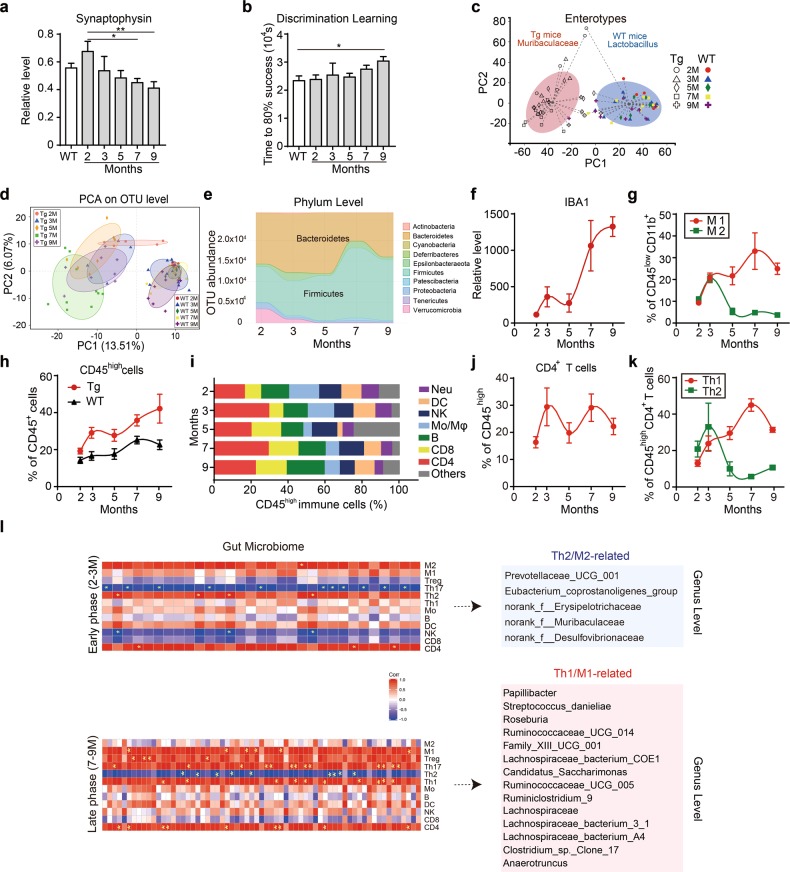
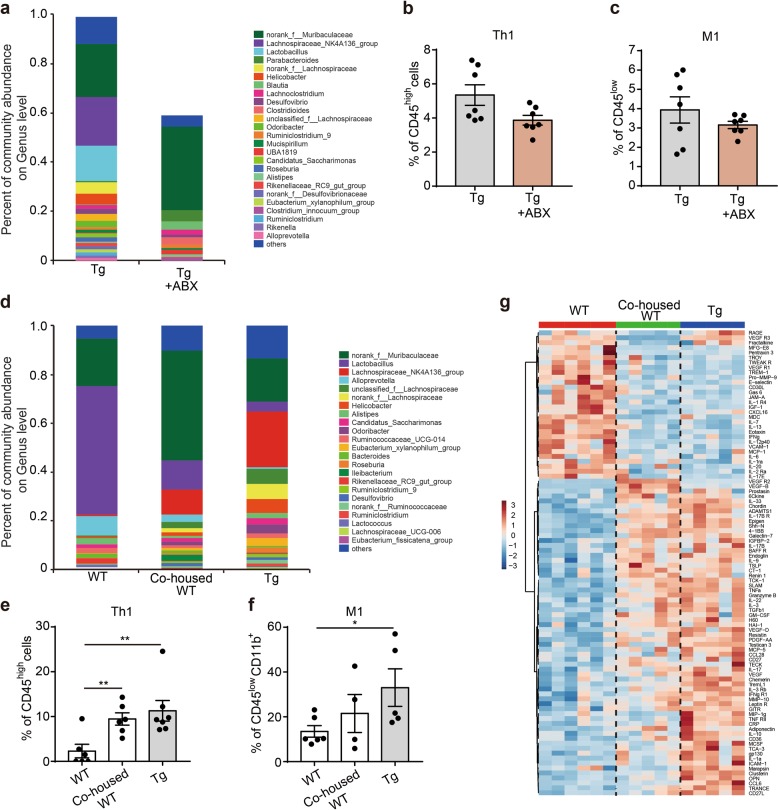
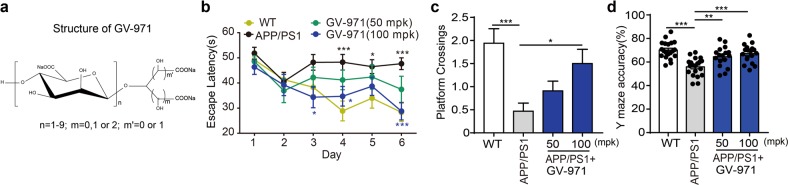
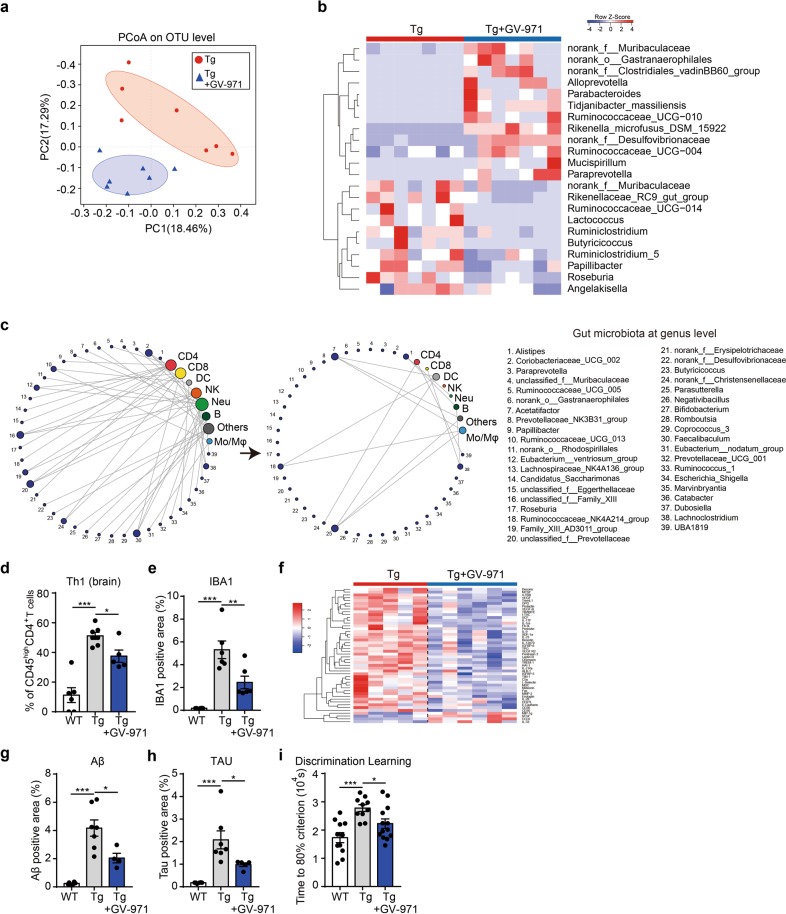
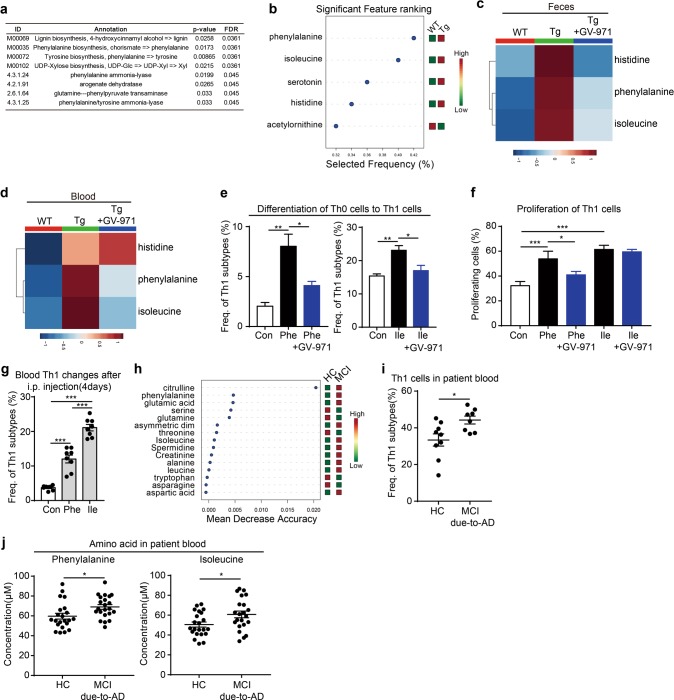
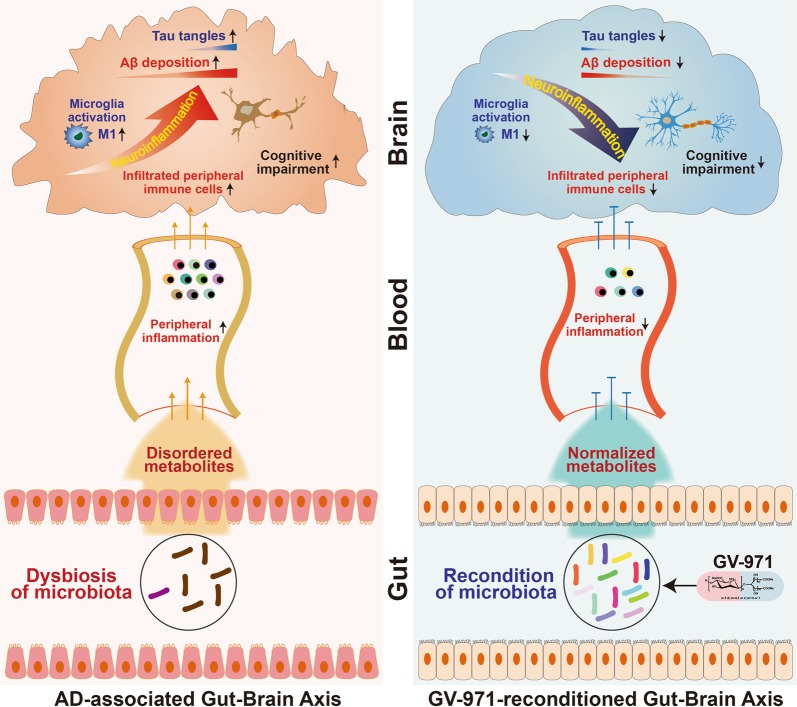
Recently, increasing evidence has suggested the association between gut dysbiosis and Alzheimer's disease (AD) progression, yet the role of gut microbiota in AD pathogenesis remains obscure. Herein, we provide a potential mechanistic link between gut microbiota dysbiosis and neuroinflammation in AD progression. Using AD mouse models, we discovered that, during AD progression, the alteration of gut microbiota composition leads to the peripheral accumulation of phenylalanine and isoleucine, which stimulates the differentiation and proliferation of pro-inflammatory T helper 1 (Th1) cells. The brain-infiltrated peripheral Th1 immune cells are associated with the M1 microglia activation, contributing to AD-associated neuroinflammation. Importantly, the elevation of phenylalanine and isoleucine concentrations and the increase of Th1 cell frequency in the blood were also observed in two small independent cohorts of patients with mild cognitive impairment (MCI) due to AD. Furthermore, GV-971, a sodium oligomannate that has demonstrated solid and consistent cognition improvement in a phase 3 clinical trial in China, suppresses gut dysbiosis and the associated phenylalanine/isoleucine accumulation, harnesses neuroinflammation and reverses the cognition impairment. Together, our findings highlight the role of gut dysbiosis-promoted neuroinflammation in AD progression and suggest a novel strategy for AD therapy by remodelling the gut microbiota.
Overview
The claims and statistics of this paper haven’t been checked yet.
Free: it reads the open-access text and checks the first 5 claims that cite a source we can check. Create a free account to check every claim.
Integrity signals
Registry
Cites
Statistics
Figures
Verification
Claims the paper makes
The claims and statistics of this paper haven’t been checked yet.
Free: it reads the open-access text and checks the first 5 claims that cite a source we can check. Create a free account to check every claim.
Claims other papers make about this one
Each is checked against this paper’s own text: does it say what the citing paper says it does?
The source backs part of the claim, not all of it — or backs it for a different population, condition or comparison.
In the citing paper
“Targeting the intestinal microbiota for the treatment of AD opens up a new way to treat other neurological diseases [11].”
From Neuroprotective Effect of Ceftriaxone on MPTP‐Induced Parkinson’s Disease Mouse Model by Regulating Inflammation and Intestinal Microbiota (2021) · cites this paper as [11]
Experimental — accuracy not yet measuredThe source backs part of the claim, not all of it — or backs it for a different population, condition or comparison.
In the citing paper
“Metabolomic analyses on the feces of these animals revealed significant changes in amino acid–related metabolism, in particular for the phenylalanine- and isoleucine-related pathways.”
From The gut-brain axis: how microbiota and host inflammasome influence brain physiology and pathology (2020) · cites this paper as [163]
Experimental — accuracy not yet measuredThe source backs part of the claim, not all of it — or backs it for a different population, condition or comparison.
In the citing paper
“The effects of GV-971 on mild to severe form of AD were tested in a phase 3 study that started in April 2014 and the results of this study highlighted the fact that GV-971 has significant cognitive benefits.”
From An update on the novel and approved drugs for Alzheimer disease (2022) · cites this paper as Wang et al., 2019
Experimental — accuracy not yet measuredThe source backs part of the claim, not all of it — or backs it for a different population, condition or comparison.
In the citing paper
“it plays a major role in the bidirectional communication between the GI tract and the central nervous system (CNS).”
From The Role of Short-Chain Fatty Acids From Gut Microbiota in Gut-Brain Communication (2020) · cites this paper as [11]
Experimental — accuracy not yet measuredThe cited source says what the claim attributes to it.
In the citing paper
“Sodium oligomannate (9, GV-971) was postulated to counteract AD by inhibiting neuroinflammation triggered by gut dysbiosis and disrupting the formation of Aβ fibrils.56,414”
From Recent advances in Alzheimer's disease: Mechanisms, clinical trials and new drug development strategies. (2024) · cites this paper as [414]
15 more claims about this paper
Create a free account to see every claim other papers make about this one.
Self-check
Percentages, sums and reported differences re-computed from the paper’s own numbers.
The self-check needs the paper’s full text.
Citations
Cites
Classification and Regression by randomForest
Liaw, A. I., & Wiener, M. C. (2007) · Cited by 18,594
Morris water maze: procedures for assessing spatial and related forms of learning and memory
Vorhees, C. V., & Williams, M. T. (2006) · Nature Protocols · doi:10.1038/nprot.2006.116 · Cited by 4,629
Oakley, H., Cole, S. L., Logan, S., Maus, E., Shao, P., Craft, J., Guillozet-Bongaarts, A., Ohno, M., Disterhoft, J., Van Eldik, L., et al. (2006) · The Journal of Neuroscience · doi:10.1523/jneurosci.1202-06.2006 · Cited by 3,530
Gut microbiota, metabolites and host immunity
Rooks, M. G., & Garrett, W. S. (2016) · Nature reviews. Immunology · doi:10.1038/nri.2016.42 · Cited by 3,409
Krasemann, S., Madore, C., Cialic, R., Baufeld, C., Calcagno, N., El Fatimy, R., Beckers, L., O’Loughlin, E., Xu, Y., Fanek, Z., et al. (2017) · Immunity · doi:10.1016/j.immuni.2017.08.008 · Cited by 2,979
NLRP3 is activated in Alzheimer’s disease and contributes to pathology in APP/PS1 mice
Heneka, M. T., Kummer, M. P., Stutz, A., Delekate, A., Schwartz, S., Vieira-Saecker, A., Griep, A., Axt, D., Remus, A., Tzeng, T.-C., et al. (2013) · Nature · doi:10.1038/nature11729 · Cited by 2,898
Differential Roles of M1 and M2 Microglia in Neurodegenerative Diseases
Tang, Y., & Le, W. (2016) · Molecular Neurobiology · doi:10.1007/s12035-014-9070-5 · Cited by 2,190
Gut microbiome alterations in Alzheimer’s disease
Vogt, N. M., Kerby, R. L., Dill-McFarland, K. A., Harding, S. J., Merluzzi, A. P., Johnson, S. C., Carlsson, C. M., Asthana, S., Zetterberg, H., Blennow, K., et al. (2017) · Scientific Reports · doi:10.1038/s41598-017-13601-y · Cited by 2,137
The microbiome and innate immunity
Thaiss, C. A., Zmora, N., Levy, M., & Elinav, E. (2016) · Nature · doi:10.1038/nature18847 · Cited by 2,012
The microbiota in adaptive immune homeostasis and disease
Honda, K., & Littman, D. R. (2016) · Nature · doi:10.1038/nature18848 · Cited by 1,846
Cited by
Items 801–900 of 1,000
Bi, T., Feng, R., Ren, W., Hang, T., Zhao, T., & Zhan, L. (2024) · Journal of Ethnopharmacology · doi:10.1016/j.jep.2024.118808 · Cited by 6
Lee, W., Song, G., & Bae, H. (2024) · Molecular & Cellular Toxicology · doi:10.1007/s13273-024-00483-1 · Cited by 6
“…a comparatively unexplored water-soluble polysaccharide extracted from brown algae, is progressively being investigated for its versatile bio-medical benefits as a potential addition for functional diets and nutraceutical foods (Gabbia and Martin 2020; Wang et al. 2019; Balboa et al. 2013).”
The microbiome’s influence on the neurobiology of opioid addiction and brain connectivity
Iriah, S. C., Rodriguez, N., Febo, M., Morrissette, M., Strandwitz, P., Kulkarni, P., & Ferris, C. F. (2024) · Brain Research Bulletin · doi:10.1016/j.brainresbull.2024.111159 · Cited by 6
“Preclinical and clinical studies have focused on the GBA as a target for therapeutics aimed at neurodegenerative disorders like Alzheimer ’ s disease (Wang et al., 2019) and psychiatric disorders including addiction (Peterson et al., 2020).”
SMOC2 promotes microglia activity and neuroinflammation in Alzheimer's disease
Wan, T., & Wang, C. (2025) · Journal of Alzheimer s Disease · doi:10.1177/13872877241307337 · Cited by 6
“18,19 Excessive polarization of M1-type microglia and the de fi ciency of M2-type microglia might be crucial mechanisms in neuroin fl ammation and neurodegenerative changes.”
Aging and neurodegeneration: when systemic dysregulations affect brain macrophage heterogeneity
Joly, P., Labsy, R., & Silvin, A. (2025) · The Journal of Immunology · doi:10.1093/jimmun/vkae034 · Cited by 6
Ma, X., Zhu, K., Wang, K., Liao, W., Yang, X., Yu, W., Wang, W., & Han, F. (2025) · Marine Drugs · doi:10.3390/md23050198 · Cited by 6
Zhao, Y., Niu, X., Zhang, Y., Zhao, L., Zhang, L., He, J., Zhang, Q., Mao, Y., Wang, F., Zhao, X., et al. (2025) · Nutrition Journal · doi:10.1186/s12937-025-01124-6 · Cited by 6
“Metagenomic sequencing was conducted as previously described [16].”
Self-citationThe rise of probiotics as adjuvant therapeutics in Alzheimer’s disease
Noreña, C. P. Z., & Brandelli, A. (2025) · Discover Food · doi:10.1007/s44187-025-00523-2 · Cited by 6
“Sodium oligomannate allows for enhancing cognitive function, restoring GM dysbiosis, and can diffuse through BBB, binding to Aβ and hindering Aβ fibril formation into plaques [223].”
Wang, Q. M., Wang, D., Zhang, X.-C., Jiang, X., Jiang, H.-N., Yang, X., Zhang, T., Lv, Y.-Y., & Li, Q. (2025) · Frontiers in Neurology · doi:10.3389/fneur.2025.1607945 · Cited by 6
Ren, Y., Sun, Y., Liu, Q., Chen, J.-L., Chen, Y.-H., Sun, L., Cui, Z., Yan, S.-Y., Cheng, L., Li, N., et al. (2025) · Phytomedicine · doi:10.1016/j.phymed.2025.157297 · Cited by 6
Self-citationXu, F., Yang, Y., & Sun, D. (2025) · The International Journal of Neuropsychopharmacology · doi:10.1093/ijnp/pyaf066 · Cited by 6
“38,39 Furthermore, neuroinflammation and behaviors are influenced by FMT. 40,41 Through FMT, the gut microbiota associated with post-stroke cognitive impairment is responsible for the disruption of the intestinal barrier and the aggravation of inflammation, which exacerbates BBB damage, activates…”
Fu, G., Pan, M., Sun, Q., Yue, G., & Lei, T. (2025) · Journal of Pharmaceutical Analysis · doi:10.1016/j.jpha.2025.101535 · Cited by 6
Zheng, M., Su, W., Tian, L., & Gao, W. (2026) · Brain Research · doi:10.1016/j.brainres.2026.150221 · Cited by 7
Wang, K., Na, L., & Duan, M. (2020) · Current Topics in Medicinal Chemistry · doi:10.2174/1568026620666200916123000 · Cited by 6
Lu, M., Zhang, Y., Wang, S., Wang, X., Zhang, S., & De, J. (2023) · PLoS ONE · doi:10.1371/journal.pone.0290696 · Cited by 6
“PLOS ONE | https://doi.org/10.1371/journal.pone.0290696 August 25, 2023 1 / 15 a1111111111 a1111111111 a1111111111 OPEN ACCESS Citation: Lu M, Zhang Y, Wang S, Wang X, Zhang S, De J (2023) Ephedrine and pseudoephedrine in Ephedra saxatilis on the vertical altitude gradient changed in southern Tibet Plateau, China.”
InfluentialSelf-citationLi, J., Sun, M., Liu, G., Zhou, J., Chang, Y., & Xue, C. (2024) · International Journal of Biological Macromolecules · doi:10.1016/j.ijbiomac.2024.133972 · Cited by 6
Haghshenas, L., Banihashemi, S., Malekzadegan, Y., Catanzaro, R., Ahmadi, A. M., & Marotta, F. (2024) · World Journal of Gastrointestinal Pathophysiology · doi:10.4291/wjgp.v15.i5.96446 · Cited by 6
Dong, X., Hao, X., Jian, W., Yan, Q., Ma, K., Liu, Q., Li, J., & Zhang, L. (2024) · Frontiers in Neuroscience · doi:10.3389/fnins.2024.1495384 · Cited by 6
Liang, P., Wang, C. Y. Y., Liu, J., Huang, H., Li, Y., Kang, J., Li, G., & Wu, H. (2025) · Immunity Inflammation and Disease · doi:10.1002/iid3.70166 · Cited by 6
Self-citationFaysal, M. F., Zehravi, M., Amin, M. A., Rab, S. O., Jahnavi, P., Arjun, U. V. N. V., Gupta, J. K., Billah, A. A. M., Vodeti, R., Prasad, P. D., et al. (2025) · Pathology - Research and Practice · doi:10.1016/j.prp.2025.156090 · Cited by 7
Shi, H., & Xu, J. (2021) · Scientia Sinica Vitae · doi:10.1360/ssv-2021-0196 · Cited by 6
Individualized Dosage of Tacrolimus for Renal Transplantation Patients Based on Pharmacometabonomics
He, X., Yang, X., Yan, X., Huang, M., Xiang, Z., & Lou, Y. (2022) · Molecules · doi:10.3390/molecules27113517 · Cited by 6
“In a study of Alzheimer’s disease, it was found that increased concentrations of phenylalanine and isoleucine in the blood could stimulate the differentiation and proliferation of T cells [25].”
BackgroundWang, Y., Zhang, Y., & Xu, J. L. (2022) · Frontiers in Oncology · doi:10.3389/fonc.2022.902301 · Cited by 6
“Sodium oligomannate could reduce the concentration of phenylalanine and alleviate Th1-related neuroinflammation and cognitive decline by effectively modulating the gut microbiota (12).”
BackgroundSodium Oligomannate Electrostatically Binds to Aβ and Blocks Its Aggregation
Zhou, C., Zhang, J., Luo, X., Lian, F., Zeng, Y., Zhang, Z., Zhang, H., & Zhang, N. (2023) · The Journal of Physical Chemistry B · doi:10.1021/acs.jpcb.3c00280 · Cited by 7
Self-citationGut microbiota and metabolome in sporadic Creutzfeldt–Jakob disease
Kong, Y., Chen, Z., Feng, X., Zuo, Y., & Zhang, J. (2023) · Journal of Neurology · doi:10.1007/s00415-023-11961-2 · Cited by 6
Self-citationYanJie, P., Chen, J., Long, W., He, P., Zhou, Q., Hu, X., Zhou, Y., & Zheng, Y. (2023) · Horticulturae · doi:10.3390/horticulturae9090980 · Cited by 6
Yin, C., Sun, J., Wang, H., Yu, W., & Han, F. (2022) · Marine Drugs · doi:10.3390/md21010006 · Cited by 6
“confusum (SCO) [15] and the neuroprotective activity of GV-971 (a sodium oligomannate) as mentioned above [9].”
Self-citationHuang, Y., Zhang, H., Ma, B., Yu, Z., Dai, S., Cheng, L., Su, L., Yang, G., & Ma, Q. (2026) · NeuroImage · doi:10.1016/j.neuroimage.2026.121754 · Cited by 5
Self-citationPolymers for the treatment of Alzheimer’s disease
Zhu, Y., Xu, H., Yu, C., Jiang, W., Hou, X., Ma, M., & Wu, J. (2025) · Frontiers in Pharmacology · doi:10.3389/fphar.2025.1512941 · Cited by 5
Chen, J., Xie, J., Deng, F., Cai, J., Chen, S., Song, X., Xia, S., Shen, Q., Guo, X., & Tang, Y. (2024) · Genomics · doi:10.1016/j.ygeno.2024.110976 · Cited by 5
Fecal fermentation of lentinan and its effect on gut microbiota and metabolites
Yang, Y., Zhou, X., Wang, B., Li, W., Zhang, Y., Wang, X., Bai, J., & Suo, H. (2025) · International Journal of Food Science & Technology · doi:10.1093/ijfood/vvae004 · Cited by 5
Self-citationWang, X., Lu, Y. W., Li, X., Wang, M., Liu, X., Huang, H., Cao, W., Liu, Y., Ren, L., & Xu, Y. (2025) · Journal of Hazardous Materials · doi:10.1016/j.jhazmat.2025.137616 · Cited by 5
Self-citationAfsharnia, A., Cai, Y., Nauta, A., Groeneveld, A., Folkerts, G., Wösten, M. M. S. M., & Braber, S. (2025) · Nutrients · doi:10.3390/nu17061068 · Cited by 5
Luo, X., Dong, J., & Li, T. (2025) · Inflammation · doi:10.1007/s10753-025-02344-y · Cited by 6
“Recent studies have high-lighted the critical role of peripheral immune cells that migrate to the central nervous system (CNS) in regulating neurogenesis [2], cognitive impairment [3], and behavioral changes [4 ].”
Cai, Q., Wu, J., Xu, M., Yang, G. L., Amils, R., Martínez, J. M., & Ma, J. (2025) · Environmental Technology & Innovation · doi:10.1016/j.eti.2025.104444 · Cited by 5
The Janus face of CaMKII: from memory consolidation to neurotoxic switch in Alzheimer’s disease
Tang, L., Liu, F., Sun, X., Yang, J., Liu, Y., Pan, X., Hao, L., Lou, F., & Su, J. (2025) · Archives of Toxicology · doi:10.1007/s00204-025-04160-7 · Cited by 6
“Sodium (GV-971) is a novel prebiotic agent that mitigates neuroinflammation by inhibiting gut microbiota dysbiosis and disrupts the stability of Aβ aggregates (Wang et al. 2019b; Xiao et al. 2021; Yu et al. 2021).”
Self-citationProgress and Perspectives on the Estrogen–Microbiota–Brain Axis in Alzheimer’s Disease
Wang, M., Zeng, Y., Jin, Y., Wu, J., & Li, J. (2025) · Neurochemical Research · doi:10.1007/s11064-025-04613-6 · Cited by 5
“Sodium oligomannate, an acidic oligosaccharide derived from brown algae, was shown to restore gut microbiota composition, prevent peripheral immune cell infiltration into the brain, suppress neuroinflammation, and reverse cognitive deficits in amyloidogenic models [102, 103 ].”
Wang, X., Luo, Y., Ren, J., Xie, H., Rausch, M. A., Rausch‐Fan, X., Hu, F., & Zhang, X. (2025) · Frontiers in Cellular and Infection Microbiology · doi:10.3389/fcimb.2025.1684362 · Cited by 5
Self-citationLin, P., Zhao, J., Cai, C., & Yu, G. (2026) · Glycoscience & Therapy · doi:10.1016/j.glycos.2026.100047 · Cited by 5
Li, E., Zhang, P., & Feng, W. (2026) · Frontiers in Immunology · doi:10.3389/fimmu.2026.1783786 · Cited by 6
Nowe strategie terapeutyczne choroby Alzheimera
Nowak, D., Słupski, W., & Rutkowska, M. (2021) · Postępy Higieny i Medycyny Doświadczalnej · doi:10.5604/01.3001.0014.9532 · Cited by 5
Zhang, T., Wu, J., Wang, Y., Zhang, H., & Zhan, X. (2024) · International Journal of Biological Macromolecules · doi:10.1016/j.ijbiomac.2024.133862 · Cited by 5
Self-citationMeng, Q., Tang, Z., Yang, F., Shi, J., Liu, T., & Cheng, S. (2024) · Frontiers in Microbiology · doi:10.3389/fmicb.2024.1437250 · Cited by 6
Potential benefits of marine-derived compounds for slowing the advancement of Alzheimer’s disease
Malan, A., Choudhary, M., Bamrah, P. K., & kumari, D. (2024) · Journal of Asian Natural Products Research · doi:10.1080/10286020.2024.2409869 · Cited by 5
Dağdeviren, M., & Bozçal, E. (2025) · Current Topics in Medicinal Chemistry · doi:10.2174/0115680266342624241127071044 · Cited by 5
“GV-971, a sodium oligomannate, mitigates gut dysbiosis and associated neuroinflammation, restoring behavioral abilities, suggesting a novel AD therapy via gut microbiota remodeling [81].”
Delrieu, J. (2022) · Wiley eBooks · doi:10.1002/9781119484288.ch63 · Cited by 5
Photosensitive Fluorous Tag-Assisted Convergent Synthesis of β-1,4-Mannuronates
Feng, Y., Yang, J., Fan, X., Zhang, Q., & Chai, Y. (2023) · Organic Letters · doi:10.1021/acs.orglett.3c01179 · Cited by 5
Self-citationThe Role of the Gut Microbiome in Bipolar Disorder and its Common Medical Comorbidities
Jones, G. H., Pinjari, O. F., Vecera, C. M., Smith, K., Barrera, A., & Machado‐Vieira, R. (2023) · Frontiers in Neuroendocrinology · doi:10.1016/j.yfrne.2023.101078 · Cited by 5
Zhu, Y., Mei, Y., Baby, N., Teo, H. Y., Hanafi, Z. B., Salleh, S. N. M., Sajikumar, S., & Liu, H. (2023) · Communications Biology · doi:10.1038/s42003-023-05036-1 · Cited by 5
“…Wang et al. reported that during Alzheimer ’ s disease progression, the altered gut microbiota composition induced pro-in fl ammatory Th1 cells differentiation and proliferation, which subsequently activated the M1 microglia, contributing to Alz-heimer ’ s disease-associated neuroin fl ammation 67 .”
Recent Advancements in the Early Diagnosis and Treatment of Alzheimer's Disease
Wu, Y., Fu, L., Li, Q., Gao, X., Zhang, Y., Jin, C., Ding, F., Hong, S. C., Cai, H., & Li, Y. (2023) · Advanced Therapeutics · doi:10.1002/adtp.202300181 · Cited by 5
Zhai, Z., Kong, F., Zhu, Z., Dai, J., Cai, J., Xie, D., Shen, Y., Xu, Y., & Sun, T. (2023) · American Journal of Geriatric Psychiatry · doi:10.1016/j.jagp.2023.11.011 · Cited by 5
Zhu, Y., Wang, X., Lu, S., Zheng, J., Liang, Y., Zhang, L., Fang, P., Xu, P. H., Yu, B., & Yang, Y. (2024) · Organic & Biomolecular Chemistry · doi:10.1039/d4ob00466c · Cited by 5
Self-citationBai, J., Zeng, Q., Den, W., Huang, L., Wu, Z., Li, X., Tong, P., Chen, H., & Yang, A. (2025) · Foods · doi:10.3390/foods14010109 · Cited by 5
Tan, Y. L., Zhang, J., Yang, K., Xu, Z., Zhang, H., Chen, W., Peng, T., Wang, X., Liu, Z., Wei, P., et al. (2021) · Journal of Alzheimer s Disease · doi:10.3233/jad-210652 · Cited by 5
“With an anti-A (cid:2) agent officially approved by the FDA [57–61], drug development is focusing on the generation and clearance of A (cid:2) once again.”
Self-citationChemical glycobiology drives the discovery of carbohydrate-based drugs
Yin, J. (2020) · Chinese Journal of Natural Medicines · doi:10.1016/s1875-5364(20)60011-5 · Cited by 5
Targeting the gut microbiome for non-communicable diseases: present and future
Shivani, S., Chattopadhyay, A. S., & Chuang, E. Y.-Y. (2021) · Annals of Translational Medicine · doi:10.21037/atm-21-144 · Cited by 5
“showed how a gut microbiota imbalance facilitates infiltration of the brain by peripheral immune cells, contributing to cognitive impairment by enhancing microglial activation (24).”
BackgroundChemical Synthesis of β‐(1,4)‐ d ‐Oligomannurarates with Purported Anti‐Alzheimer Activity
Shao, X., Xu, P. H., & Yu, B. (2024) · European Journal of Organic Chemistry · doi:10.1002/ejoc.202401125 · Cited by 4
In-Silico Screening-Based Discovery of New Natural eEF2K Inhibitors with Neuritogenic Activity
Wang, S., Wang, X., Guo, L., Chen, X., Huang, X., Zhang, S., Ye, W., Zhang, X., Shi, L., Wang, Y., et al. (2025) · ACS Medicinal Chemistry Letters · doi:10.1021/acsmedchemlett.4c00635 · Cited by 4
Self-citationThree-dimensional organotypic mouse brain slices to study Alzheimer’s disease pathologies: a review
Humpel, C. (2025) · Frontiers in Dementia · doi:10.3389/frdem.2025.1585124 · Cited by 4
Progress in the study of fucoidan degradation
Lv, H., Su, M., Hao, X., Li, K., Zhang, X., Wang, Y., Tian, X., Wang, Z., Qiao, Z., Li, X., et al. (2025) · Carbohydrate Research · doi:10.1016/j.carres.2025.109640 · Cited by 4
Mathew, J., Maroky, A. S., SINDURAJ, S., & Chandrababu, A. (2025) · International Journal of Applied Pharmaceutics · doi:10.22159/ijap.2025v17i5.54564 · Cited by 4
Immune dysregulation and gut microbiota: Connection to health and disease development
Boleti, A. P. D. A., Cardoso, P. H. D. O., Frihling, B. E. F., de Moraes, L. F. R. N., Nunes, E. A. C., Mukoyama, L. T. H., Biembengute, M. E. F., Melo, V. F., Morales, M., de Castro, A. P., et al. (2025) · Neural Regeneration Research · doi:10.4103/nrr.nrr-d-25-00244 · Cited by 4
2′-Fucosyllactose Ameliorates Cognitive Impairment and Neuroinflammation in AD Mice
Ma, Y., Zhang, M., Jin, Y., Wang, Y., Ji, T., Wu, F., Li, Y., Wang, R., Guo, H., Ren, F., et al. (2025) · Journal of Agricultural and Food Chemistry · doi:10.1021/acs.jafc.5c06137 · Cited by 4
Zhang, W., Zeng, X., Dong, J., Su, Y., Jeppesen, E., Wang, L., & Yin, S. (2025) · Journal of Environmental Sciences · doi:10.1016/j.jes.2025.08.043 · Cited by 4
Cai, Y., Sun, J., 陈思铭, Wang, D., Jing, Y., Jin, X., Li, Z., Li, C., & Ban, X. (2026) · Journal of Agricultural and Food Chemistry · doi:10.1021/acs.jafc.5c16297 · Cited by 4
Zhou, J., Zheng, L., Zheng, Z., Ding, K., Fu, Z., & Ni, Y. (2026) · The Journal of Nutritional Biochemistry · doi:10.1016/j.jnutbio.2026.110351 · Cited by 4
Park, I., Lee, D., Hong, R. S., Kim, H. R., & Kim, Y. (2026) · Experimental Neurobiology · doi:10.5607/en25040 · Cited by 4
“Collectively, these effects support restoration of immune homeostasis and may indirectly facilitate amyloid clearance [128].”
Barnwal, N., Dubey, S., & Tiwari, P. K. (2026) · ChemMedChem · doi:10.1002/cmdc.202500869 · Cited by 4
Habtemariam, S. (2026) · Molecules · doi:10.3390/molecules31091489 · Cited by 5
The Gut microbiota and Alzheimer's disease
Morales, M., Cuervo-Zanatta, D., Hernández-Acosta, J., Chacón, M., Sánchez-Valle, V., & Perez‐Cruz, C. (2023) · Elsevier eBooks · doi:10.1016/b978-0-323-89834-8.00050-7 · Cited by 4
Yang, H., Wang, Y., Liu, H., Wang, J., Fan, D., Sun, Y., Lv, H., Fu, W., & Wang, S. (2025) · Food Bioscience · doi:10.1016/j.fbio.2025.105977 · Cited by 4
Sönmez, G., Yazarkan, Y., Aki, Ö. E., & Bodur, E. (2025) · Eurasian Journal of Medicine · doi:10.5152/eurasianjmed.2025.24592 · Cited by 4
Ye, Z., Cao, D., Ao, W., Li, T., Xian, M., & Wang, S. (2025) · Journal of Holistic Integrative Pharmacy · doi:10.1016/j.jhip.2025.05.002 · Cited by 4
Piame, L. T. (2025) · Novel Research in Microbiology Journal · doi:10.17582/journal.nrmj/2025/9.3.198.213 · Cited by 4
Li, Y., Lin, H. T., Liu, K., & Kan, X. (2025) · Food Science & Nutrition · doi:10.1002/fsn3.70706 · Cited by 4
“Additionally, growing evidence from studies on the gut–brain axis has found that the role of gut microbiota in the pathogenesis of metabolic disorders and AD (Wang et al. 2019; Zhu et al. 2022).”
Jiang, Y., Guo, Z., Liu, X., Wang, Y., Li, J., & Wang, B. (2021) · American Journal of Translational Research · Cited by 4
Drug Discovery from Medicinal Plants against Alzheimer's Disease
Marzouk, M. M., Farid, M. M., Hegazi, N. M., & Ezzat, S. M. (2023) · Wiley eBooks · doi:10.1002/9781119794127.ch3 · Cited by 4
Xu, W., Lv, Z., Guo, Q., Deng, Z., Yang, C., Cao, Z., Li, Y., Huang, C., Wu, Z., Chen, S., et al. (2023) · Microbiology Spectrum · doi:10.1128/spectrum.00533-23 · Cited by 4
“(Shanghai, China) according to the protocols described by Wang and colleagues (89).”
MethodNew insights into the role of nanotechnology in Bifidobacterium biomedical applications
Ghaznavi, G., Hashemi, S., Abolhosseini, M. M., Vosough, P., Lohrasbi, P., Taghizadeh, S., & Savardashtaki, A. (2024) · Advances in Natural Sciences Nanoscience and Nanotechnology · doi:10.1088/2043-6262/ad3b7c · Cited by 4
Review of Alzheimer’s Disease’s Animal Model with it’s Pathophysiology and Drug Discovery
Pal, T., & Das, M. (2024) · Asian Journal of Research in Pharmaceutical Sciences · doi:10.52711/2231-5659.2024.00006 · Cited by 4
Wang, H., Wen, J., Ablimit, N., Deng, K., Wang, W., & Jiang, W. Z. (2024) · Marine Drugs · doi:10.3390/md22100453 · Cited by 4
Self-citationThe Effect of Probiotic Lactic Acid Bacteria on the Symptoms of Mental Disorders
Novikova, V. A., Bondarenko, K. D., Сазонов, А. Э., & Розанов, А. С. (2024) · Nanobiotechnology Reports · doi:10.1134/s2635167624602092 · Cited by 4
Hu, S., Li, L., Zhou, C., Zhang, Y., & Yu, X. (2025) · Nutrients · doi:10.3390/nu17121955 · Cited by 5
A concise synthesis of l-gulose and its C-6 derivatives
Teng, K.-C., Tseng, K.-Y., Tzeng, Z., & Hung, S. (2022) · Bioorganic & Medicinal Chemistry · doi:10.1016/j.bmc.2022.117029 · Cited by 4
MedZIM: Mediation analysis for Zero-Inflated Mediators with applications to microbiome dataPreprint
Li, Z., Liyanage, J. S. S., O’Malley, A. J., Datta, S., Gharaibeh, R. Z., Jobin, C., Wu, Q., Coker, M. O., Hoen, A. G., Christensen, B. C., et al. (2019) · arXiv (Cornell University) · Cited by 4
The use of GV-971 induces liver injury in an Alzheimer's disease patientPreprint
Cheng, H. R., Wen, C. Y., Zhang, C., Kwapong, W. R., & Wang, Z. (2020) · doi:10.22541/au.159407155.51059312 · Cited by 4
Liu, Y., Echeverría, V., & Xu, Y. (2020) · Frontiers in Pharmacology · doi:10.3389/fphar.2020.585155 · Cited by 4
“In November 2019, Sodium oligomannate received its first approval in China for the treatment of mild to moderate AD to improve cognitive function (Syed Yahiya, 2020), therapeutically remodels gut microbiota and suppresses gut bacterial amino acids-shaped neuroinflammation to inhibit AD progression (Wang et al., 2019),…”
BackgroundAntivirals Against SARS-CoV2: Relevance to the Treatment of Alzheimer’s Disease
Itzhaki, R. F. (2020) · Journal of Alzheimer s Disease · doi:10.3233/jad-200986 · Cited by 4
“It was recently suggested that the apparent success of another compound related to fucoidans, GV971, an unsulphated polysaccharide, which was used in a trial for treating AD patients [5], might be the result of its having antiviral activity, and that if sulphated to make its structure similar to a fucoidan, its postul…”
BackgroundLi, Z., Liu, Y., Wang, Y., Cai, Q., Wang, Y., Bai, Y., Liu, H., Xu, C., & Zhang, F. (2024) · Biology of Reproduction · doi:10.1093/biolre/ioae058 · Cited by 3
“Researchers believe that the drug reduces neuroinflammation in the brain and prevents the progression of Alzheimer’s disease by targeting the unique mechanism of the “brain–gut axis” [18].”
Liu, D., Cao, M. L., Wu, S., Li, B., Jiang, Y., Lin, T., Li, F., Cao, W. J., Yuan, J. Q., Sha, F., et al. (2025) · PubMed · doi:10.3967/bes2024.149 · Cited by 3
Liu, M., Yang, X., Zhang, F., & Meng, X. (2025) · Food Chemistry · doi:10.1016/j.foodchem.2025.143523 · Cited by 3
Wang, T., Ju, M., Zhang, X., Feng, W., Wang, L., Hao, L. Y., Yu, H., & Xiao, R. (2025) · GeroScience · doi:10.1007/s11357-025-01628-3 · Cited by 4
Self-citationHu, S., Zhou, C., Zhang, Y., Li, L., & Yu, X. (2025) · International Journal of Molecular Sciences · doi:10.3390/ijms26104760 · Cited by 3
Li, H., Li, J., Kou, Y., Luo, S., Wang, S., & Zhang, L. (2025) · Industrial Crops and Products · doi:10.1016/j.indcrop.2025.121257 · Cited by 3
Zhuang, L., Feng, X., Jiang, Y., Li, X., Chen, L., Tang, S., Zhong, F., Zhū, L., & Luo, X. (2025) · Carbohydrate Polymer Technologies and Applications · doi:10.1016/j.carpta.2025.100868 · Cited by 3
Leal, M. F. C., Duarte, R. J. G., Cardoso, I. L., Catarino, R. I. L., Pimenta, A. M., & Souto, M. R. S. (2023) · Neurophysiology · doi:10.1007/s11062-025-09953-1 · Cited by 4
McCarthy, J., Avagyan, M., & Martirosyan, D. M. (2025) · Agriculture and Food Bioactive Compounds · doi:10.31989/afbc.v2i7.1678 · Cited by 3
Hu, C., Zhang, Y., Wu, Y., Tu, J., Yi, M., Mao, Y., Chen, Y., Sun, X., Song, Z., Huang, S., et al. (2025) · Frontiers in Endocrinology · doi:10.3389/fendo.2025.1623933 · Cited by 3
Microglia-Neuron Interactions in Alzheimer’s Disease
Ma, Y., Wang, X., Gao, M., Lin, Y., Chen, Q., Yang, H., Yang, C., & Wang, Q. (2025) · Current Neuropharmacology · doi:10.2174/011570159x379539250807114252 · Cited by 3
Self-citationBacterial infection hypothesis-based therapies for Alzheimer's disease
Teng, M., Ma, R., Liu, S., Zhang, G., Zou, J., & Fu, Q. (2025) · Chemical Engineering Journal · doi:10.1016/j.cej.2025.169535 · Cited by 3
Self-citation
Metadata
- Authors
- Wang, X., Sun, G., Feng, T., Zhang, J., Huang, X., Wang, T., Xie, Z., Chu, X., Yang, J., Wang, H., Chang, S., Gong, Y., Ruan, L., Zhang, G., Yan, S., Lian, W., Du, C., Yang, D., Zhang, Q., Lin, F., Liu, J., Zhang, H., Ge, C., Xiao, S., Ding, J., & Geng, M.
- Affiliations
- Chinese Academy of Sciences (CN)
- Shanghai Jiao Tong University (CN)
- Corresponding author
- Geng, Meiyu
- ORCID
- Venue
- Cell Research
- Published
- 2019-09-06
- Volume
- 29
- Issue
- 10
- Pages
- 787-803
- ISSN
- 1001-0602 (ISSN-L)
- 1748-7838
- PMC
- PMC6796854
- OpenAlex
- W2972007077
- Semantic Scholar
- e9a935dc76000829ceb45994c1cb5eb9842e7e5a
- Cited by
- 1,144
- References
- 61
- Citations by year
- 2026: 104 · 2025: 146 · 2024: 179 · 2023: 196 · 2022: 200 · 2021: 175 · 2020: 132 · 2019: 11
- FWCI
- 89.30
- Type
- journal article
- Language
- en
- Open access
- hybrid
- doi.org
- Licence
- cc-by
- creativecommons.org/licenses/by/4.0 (tdm)
- creativecommons.org/licenses/by/4.0 (vor)
- Locations
- Cell Research (publishedVersion, cc-by)
- PubMed Central (publishedVersion, cc-by)
- PubMed (publishedVersion)
- Funders
- Chinese Academy of Sciences (XDA12040101)
- National Key New Drug Creation and Manufacturing Program, Ministry of Science and Technology
- Topics
- Life Sciences › Neuroscience › Cellular and Molecular Neuroscience › Alzheimer's disease research and treatments
- Life Sciences › Biochemistry, Genetics and Molecular Biology › Molecular Biology › Gut microbiota and health
- Life Sciences › Neuroscience › Neurology › Neuroinflammation and Neurodegeneration Mechanisms
- Keywords
- Alzheimer's disease, gut microbiota, gut dysbiosis, neuroinflammation, phenylalanine, isoleucine, Th1 cells, mild cognitive impairment, gut-brain axis, cognitive impairment
- MeSH terms
- Gastrointestinal Microbiome, Alzheimer Disease, Amino Acids, Animals, Anti-Bacterial Agents, Bacteria, Disease Models, Animal, Humans, Isoleucine, Mannose, Mice, Inbred C57BL, Mice, Transgenic, Oligosaccharides, Phenylalanine, Clinical Trials, Phase III as Topic, Microglia, Th1 Cells, Disease Progression, Maze Learning, Mice, Cognitive Dysfunction
About these checks
Registry, retraction, Cites and statistics results are computed, not judged, with one exception: a printed reference that no index lists is read once by a model before it counts as a citation error. Claims are extracted by a model and kept only when their quote appears verbatim in the text; each cited source is then checked, with a model’s help, for whether it says what the claim relies on. Those verdicts can be wrong — read the claim’s quote and the cited source before relying on one.
Statistics and arithmetic are recomputed, not judged.
Confidence bands are shown only for fields calibrated on our annotated test set. None is calibrated yet, so no band is shown.
What counts as a claim ›How we measure confidence ›How we check this ›
Are you an author, or do you see a problem with this page? Request a review
Data sources
Bibliographic data: Semantic Scholar, OpenAlex, Crossref.
Contains information from the Semantic Scholar Academic Graph Datasets, made available under the ODC Attribution License (ODC-BY 1.0).
Semantic Scholar’s data is described in: Kinney, R., et al. (2023). The Semantic Scholar Open Data Platform. arXiv:2301.10140.
