

Sodium oligomannate therapeutically remodels gut microbiota and suppresses gut bacterial amino acids-shaped neuroinflammation to inhibit Alzheimer’s disease progression
Open accessThe DOI matches its Crossref record; 61 of the 61 references it cites were found in a registry or an index.
Abstract
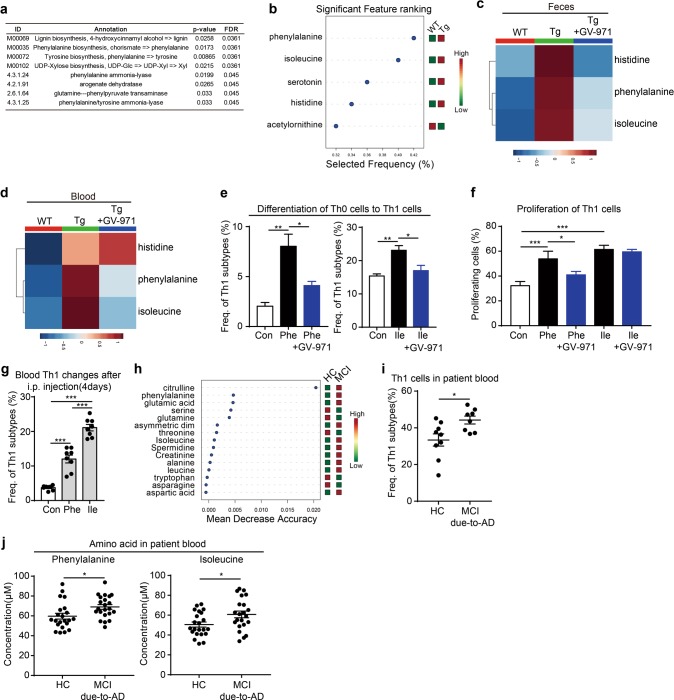
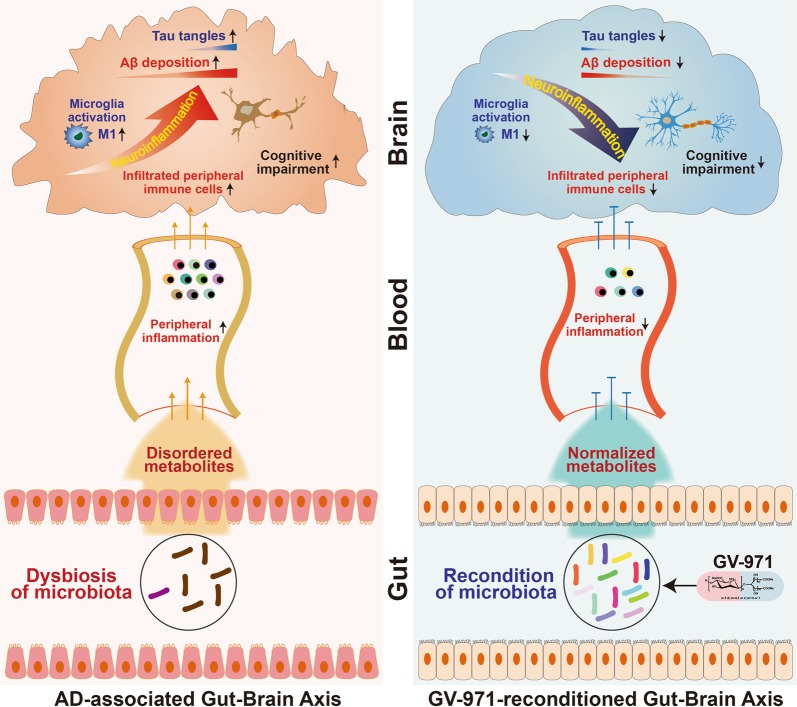
Recently, increasing evidence has suggested the association between gut dysbiosis and Alzheimer's disease (AD) progression, yet the role of gut microbiota in AD pathogenesis remains obscure. Herein, we provide a potential mechanistic link between gut microbiota dysbiosis and neuroinflammation in AD progression. Using AD mouse models, we discovered that, during AD progression, the alteration of gut microbiota composition leads to the peripheral accumulation of phenylalanine and isoleucine, which stimulates the differentiation and proliferation of pro-inflammatory T helper 1 (Th1) cells. The brain-infiltrated peripheral Th1 immune cells are associated with the M1 microglia activation, contributing to AD-associated neuroinflammation. Importantly, the elevation of phenylalanine and isoleucine concentrations and the increase of Th1 cell frequency in the blood were also observed in two small independent cohorts of patients with mild cognitive impairment (MCI) due to AD. Furthermore, GV-971, a sodium oligomannate that has demonstrated solid and consistent cognition improvement in a phase 3 clinical trial in China, suppresses gut dysbiosis and the associated phenylalanine/isoleucine accumulation, harnesses neuroinflammation and reverses the cognition impairment. Together, our findings highlight the role of gut dysbiosis-promoted neuroinflammation in AD progression and suggest a novel strategy for AD therapy by remodelling the gut microbiota.
Overview
The claims and statistics of this paper haven’t been checked yet.
Free: it reads the open-access text and checks the first 5 claims that cite a source we can check. Create a free account to check every claim.
Integrity signals
Registry
Cites
Statistics
Figures
Verification
Claims the paper makes
The claims and statistics of this paper haven’t been checked yet.
Free: it reads the open-access text and checks the first 5 claims that cite a source we can check. Create a free account to check every claim.
Claims other papers make about this one
Each is checked against this paper’s own text: does it say what the citing paper says it does?
The source backs part of the claim, not all of it — or backs it for a different population, condition or comparison.
In the citing paper
“Targeting the intestinal microbiota for the treatment of AD opens up a new way to treat other neurological diseases [11].”
From Neuroprotective Effect of Ceftriaxone on MPTP‐Induced Parkinson’s Disease Mouse Model by Regulating Inflammation and Intestinal Microbiota (2021) · cites this paper as [11]
Experimental — accuracy not yet measuredThe source backs part of the claim, not all of it — or backs it for a different population, condition or comparison.
In the citing paper
“Metabolomic analyses on the feces of these animals revealed significant changes in amino acid–related metabolism, in particular for the phenylalanine- and isoleucine-related pathways.”
From The gut-brain axis: how microbiota and host inflammasome influence brain physiology and pathology (2020) · cites this paper as [163]
Experimental — accuracy not yet measuredThe source backs part of the claim, not all of it — or backs it for a different population, condition or comparison.
In the citing paper
“The effects of GV-971 on mild to severe form of AD were tested in a phase 3 study that started in April 2014 and the results of this study highlighted the fact that GV-971 has significant cognitive benefits.”
From An update on the novel and approved drugs for Alzheimer disease (2022) · cites this paper as Wang et al., 2019
Experimental — accuracy not yet measuredThe source backs part of the claim, not all of it — or backs it for a different population, condition or comparison.
In the citing paper
“it plays a major role in the bidirectional communication between the GI tract and the central nervous system (CNS).”
From The Role of Short-Chain Fatty Acids From Gut Microbiota in Gut-Brain Communication (2020) · cites this paper as [11]
Experimental — accuracy not yet measuredThe cited source says what the claim attributes to it.
In the citing paper
“Sodium oligomannate (9, GV-971) was postulated to counteract AD by inhibiting neuroinflammation triggered by gut dysbiosis and disrupting the formation of Aβ fibrils.56,414”
From Recent advances in Alzheimer's disease: Mechanisms, clinical trials and new drug development strategies. (2024) · cites this paper as [414]
15 more claims about this paper
Create a free account to see every claim other papers make about this one.
Self-check
Percentages, sums and reported differences re-computed from the paper’s own numbers.
The self-check needs the paper’s full text.
Citations
Cites
Classification and Regression by randomForest
Liaw, A. I., & Wiener, M. C. (2007) · Cited by 18,594
Morris water maze: procedures for assessing spatial and related forms of learning and memory
Vorhees, C. V., & Williams, M. T. (2006) · Nature Protocols · doi:10.1038/nprot.2006.116 · Cited by 4,629
Oakley, H., Cole, S. L., Logan, S., Maus, E., Shao, P., Craft, J., Guillozet-Bongaarts, A., Ohno, M., Disterhoft, J., Van Eldik, L., et al. (2006) · The Journal of Neuroscience · doi:10.1523/jneurosci.1202-06.2006 · Cited by 3,530
Gut microbiota, metabolites and host immunity
Rooks, M. G., & Garrett, W. S. (2016) · Nature reviews. Immunology · doi:10.1038/nri.2016.42 · Cited by 3,409
Krasemann, S., Madore, C., Cialic, R., Baufeld, C., Calcagno, N., El Fatimy, R., Beckers, L., O’Loughlin, E., Xu, Y., Fanek, Z., et al. (2017) · Immunity · doi:10.1016/j.immuni.2017.08.008 · Cited by 2,979
NLRP3 is activated in Alzheimer’s disease and contributes to pathology in APP/PS1 mice
Heneka, M. T., Kummer, M. P., Stutz, A., Delekate, A., Schwartz, S., Vieira-Saecker, A., Griep, A., Axt, D., Remus, A., Tzeng, T.-C., et al. (2013) · Nature · doi:10.1038/nature11729 · Cited by 2,898
Differential Roles of M1 and M2 Microglia in Neurodegenerative Diseases
Tang, Y., & Le, W. (2016) · Molecular Neurobiology · doi:10.1007/s12035-014-9070-5 · Cited by 2,190
Gut microbiome alterations in Alzheimer’s disease
Vogt, N. M., Kerby, R. L., Dill-McFarland, K. A., Harding, S. J., Merluzzi, A. P., Johnson, S. C., Carlsson, C. M., Asthana, S., Zetterberg, H., Blennow, K., et al. (2017) · Scientific Reports · doi:10.1038/s41598-017-13601-y · Cited by 2,137
The microbiome and innate immunity
Thaiss, C. A., Zmora, N., Levy, M., & Elinav, E. (2016) · Nature · doi:10.1038/nature18847 · Cited by 2,012
The microbiota in adaptive immune homeostasis and disease
Honda, K., & Littman, D. R. (2016) · Nature · doi:10.1038/nature18848 · Cited by 1,846
Cited by
Items 401–500 of 1,000
Huo, J.-Y., Jiang, W., Yin, T., Xu, H., Lyu, Y.-T., Chen, Y., Chen, M., Geng, J., Jiang, Z., & Shan, Q. (2021) · Frontiers in Physiology · doi:10.3389/fphys.2021.712338 · Cited by 30
Ruan, S., Zhai, L., Wu, S., Zhang, C., & Guan, Q. (2021) · Aging · doi:10.18632/aging.203487 · Cited by 30
“However, the regulation mechanism of SCFAs on intestinal immunity has not yet been reported [5].”
BackgroundRen, R., Huang, Q., Xu, G., Gu, K., Dammer, E. B., Wang, C., Xie, X., Chen, W., Shao, Z., Chen, S., et al. (2021) · Alzheimer s & Dementia · doi:10.1002/alz.12436 · Cited by 30
Jia, X., Wu, B., Chen, B.-D., Li, K., Liu, Y., Xu, Y., Wang, J., & Zhang, X. (2023) · Journal of Autoimmunity · doi:10.1016/j.jaut.2023.103050 · Cited by 30
Recent advances in anti-inflammatory active components and action mechanisms of natural medicines
Wu, Z., Zhang, T., Ma, X., Guo, S., Zhou, Q., Zahoor, A., & Deng, G. (2023) · Inflammopharmacology · doi:10.1007/s10787-023-01369-9 · Cited by 31
“PPs possess remarkable anti-inflammatory, anticancer, antioxidant, antimicrobial, and immunosuppressive properties (Abreu et al. 2020; Wang et al. 2019a, b).”
BackgroundLana, D., Traini, C., Bulli, I., Sarti, G., Magni, G., Attorre, S., Giovannini, M. G., & Vannucchi, M. G. (2024) · Frontiers in Pharmacology · doi:10.3389/fphar.2024.1451114 · Cited by 30
Mechanisms by which microbiome-derived metabolites exert their impacts on neurodegeneration
Kern, L., Mastandrea, I., Melekhova, A., & Elinav, E. (2024) · Cell chemical biology · doi:10.1016/j.chembiol.2024.08.014 · Cited by 29
Microbiome Therapeutics: A Path Toward Sustainable Healthcare
Kumar, T., & Chauhan, N. S. (2020) · Elsevier eBooks · doi:10.1016/b978-0-12-819265-8.00010-3 · Cited by 30
Zhang, E., Shang, C., Ma, M., Zhang, X., Liu, Y., Song, S., & Li, X. (2023) · Carbohydrate Polymers · doi:10.1016/j.carbpol.2023.121334 · Cited by 29
Liang, J., Liu, B., Dong, X., Wang, Y., Cai, W., Zhang, N., & Zhang, H. (2023) · Frontiers in Neuroscience · doi:10.3389/fnins.2023.1242254 · Cited by 29
Self-citationCD4+ T-Cell Senescence in Neurodegenerative Disease: Pathogenesis and Potential Therapeutic Targets
Gao, Y., Lu, Y., Liang, X., Zhao, M., Yu, X., Fu, H., & Yang, W. (2024) · Cells · doi:10.3390/cells13090749 · Cited by 29
Jy, L., Wong, C.-Y., Koh, R. Y., Lim, C. L., Kok, Y.-Y., & Chye, S. M. (2024) · The Yale Journal of Biology and Medicine · doi:10.59249/jnkb9714 · Cited by 29
“Evidently, treatment with sodium oligo - mannate significantly reduced Aβ plaque aggregation and tau phosphorylation, and enhanced spatial learning and memory in AD mice [99].”
BackgroundInfluentialCritical thinking on amyloid-beta-targeted therapy: challenges and perspectives
Sun, B., Chen, Y., Fan, D., Zhu, C., Zeng, F., & Wang, Y. (2020) · Science China Life Sciences · doi:10.1007/s11427-020-1810-y · Cited by 29
Early detection and personalized medicine: Future strategies against Alzheimer's disease
Meco, A. D., & Vassar, R. J. (2020) · Progress in molecular biology and translational science · doi:10.1016/bs.pmbts.2020.10.002 · Cited by 29
Hammond, T. C., & Lin, A. (2022) · Journal of Cellular Immunology · doi:10.33696/immunology.4.128 · Cited by 29
“Changes of the gut microbiome can lead to neuroinflammation in AD through an increase of phenylalanine and isoleucine, which help to stimulate pro-inflammatory T helper 1 (Th1) cells, leading to M1 microglia activation [40].”
BackgroundYeo-Teh, N. S. L., & Tang, B. L. (2023) · Science and Engineering Ethics · doi:10.1007/s11948-022-00422-0 · Cited by 28
Kulkarni, R., Kumari, S., Dhapola, R., Sharma, P., Singh, S. K., Medhi, B., & HariKrishnaReddy, D. (2024) · Molecular Neurobiology · doi:10.1007/s12035-024-04545-2 · Cited by 29
“Sodium oligomannate is also thought to reverse cognitive impairment and neuroinflammation by inhibiting gut dysbiosis and associated phenylalanine/isoleucine accumulation [35].”
Pharmacological Strategies to Improve Dendritic Spines in Alzheimer’s Disease
Ettcheto, M., Busquets, O., Cano, A. C., Sánchez‐López, E., Manzine, P. R., Espinosa-Jiménez, T., Verdaguer, E., Sureda, F. X., Olloquequi, J., Castro-Torres, R. D., et al. (2020) · Journal of Alzheimer s Disease · doi:10.3233/jad-201106 · Cited by 28
Su, Y., Li, X., Li, D., & Sun, J. (2021) · Frontiers in Microbiology · doi:10.3389/fmicb.2021.619460 · Cited by 28
Li, Y., Liu, A., Chen, L., Xiang, Y., Huang, D., Huang, W., Chen, Z., Fan, H., & Meng, X. (2022) · Food and Chemical Toxicology · doi:10.1016/j.fct.2022.113308 · Cited by 28
Advances in green bioproduction of marine and glycosaminoglycan oligosaccharides
Deng, C., Zhao, M., Zhao, Q., & Zhao, L. (2022) · Carbohydrate Polymers · doi:10.1016/j.carbpol.2022.120254 · Cited by 28
Gut Microbiome and Serum Metabolome Profiles of Capsaicin with Cognitive Benefits in APP/PS1 Mice
Li, J., Liao, X., Yin, X., Deng, Z., Hu, G., Zhang, W., Jiang, F., & Zhao, L. (2022) · Nutrients · doi:10.3390/nu15010118 · Cited by 28
“Remodeling the gut microbiota via sodium oligomannate (GV-971) led to the peripheral accumulation of phenylalanine and isoleucine and inhibited AD progression [9].”
BackgroundLi, X., Deng, R., Li, J., Li, H., Xu, Z., Zhang, L., Feng, L., Shu, C., Zhen, M., & Wang, C. (2023) · Theranostics · doi:10.7150/thno.85711 · Cited by 28
“The increasing studies highlighted that the gut microbiota is closely involved in regulating neuroinflammation [10, 11].”
BackgroundGut Microbiome in Alzheimer’s Disease: from Mice to Humans
Liang, C., Pereira, R., Zhang, Y., & Rojas, O. L. (2024) · Current Neuropharmacology · doi:10.2174/1570159x22666240308090741 · Cited by 28
Liu, N., Haziyihan, A., Zhao, W. G., Chen, Y., & Chao, H. (2024) · Translational Neurodegeneration · doi:10.1186/s40035-024-00434-9 · Cited by 28
“In the process of AD, the imbalance of gut microbiota leads to an abnormal increase in phenylalanine and isoleucine in peripheral blood, which in turn induces the differentiation and proliferation of peripheral pro-inflammatory Th1 cells and promotes their brain invasion [74].”
BackgroundInfluentialExpression and Characterization of an Alginate Lyase and Its Thermostable Mutant in Pichia pastoris
Yang, S., Liu, Z., Fu, X., Zhu, C., Kong, Q., Yang, M., & Mou, H. (2020) · Marine Drugs · doi:10.3390/md18060305 · Cited by 28
“Oligomannuronic acid with two carboxyl groups at the reducing end (GV-971) reportedly improves cognition in patients with Alzheimer’s disease (AD) [10].”
BackgroundChen, Z., Maqbool, J., Sajid, F., Hussain, G., & Sun, T. (2020) · Microbial Pathogenesis · doi:10.1016/j.micpath.2020.104675 · Cited by 28
Recent Advances of Bioactive Marine Natural Products in Drug Discovery
Zhang, Q., Lv, L.-X., Wang, W., Wei, M., Gu, Y., & Shao, C. (2024) · Journal of Ocean University of China · doi:10.1007/s11802-024-5975-4 · Cited by 27
“GV-971 is the first target β -amyloid protein oligosaccharide drug used for the treatment of Alzheimer’s disease (AD) (Wang et al. , 2019).”
Self-citationChen, R., Chai, X., Zhang, Y., Zhou, T., Xia, Y., Jiang, X., Lv, B., Zhang, J., Zhou, L., Tian, X., et al. (2025) · Gut Microbes · doi:10.1080/19490976.2024.2438471 · Cited by 27
Self-citationGut microbiota from mice with cerebral ischemia-reperfusion injury affects the brain in healthy mice
Wang, H., Ren, S., Lv, H., & Cao, L. (2021) · Aging · doi:10.18632/aging.202763 · Cited by 27
Self-citationRen, B., Guo, C., Liu, R., Bian, Z.-Y., Liu, R.-C., Huang, L.-F., & Tang, J. (2021) · European Journal of Medicinal Chemistry · doi:10.1016/j.ejmech.2021.114031 · Cited by 27
Gao, Y., Xu, Y., & Yin, J. (2022) · Antioxidants · doi:10.3390/antiox11010111 · Cited by 27
“Sodium oligoarginine (GV-971), a new AD drug approved by China FDA which targeted the gut microbiota to improve cognitive function of mild to moderate AD patients, showed the enrichment of Desulfovibrionaceae [60].”
BackgroundLiu, W., He, K., Wu, D., Zhou, L. N., Li, G., Lin, Z., Yang, X., Liu, J., & Hoi, M. P. M. (2022) · Molecules · doi:10.3390/molecules27041281 · Cited by 28
“With the preliminary success in AD therapy of oral treatment with the marine algae-derived oral oligosaccharide sodium oligomannate (GV-971), increasing attention has been paid to the possibility that other natural compounds may have efficacy in the prevention and treatment of AD [22,23].”
BackgroundSelf-citationGut Microbiome and Metabolome Changes in Mice With Acute Vestibular Deficit
Li, F., Feng, Y., Liu, H., Kong, D., Hsueh, C., Shi, X., Wu, Q., Li, W., Wang, J., Zhang, Y., et al. (2022) · Frontiers in Cellular and Infection Microbiology · doi:10.3389/fcimb.2022.821780 · Cited by 27
“Moreover, the gut microbiome has been implicated in manyneurological disorders, including anxiety, depression, autism, Parkinson’s disease, and Alzheimer’s disease (Luna and Foster, 2015; Sampson et al., 2016; Sharon et al., 2019; Wang et al., 2019).”
BackgroundImpact of New Drugs for Therapeutic Intervention in Alzheimer’s Disease
Olloquequi, J., Ettcheto, M., Cano, A. C., Sánchez‐López, E., Carrasco, M., Espinosa-Jiménez, T., Beas‐Zárate, C., Gudiño‐Cabrera, G., Ureña‐Guerrero, M. E., Verdaguer, E., et al. (2022) · Frontiers in Bioscience-Landmark · doi:10.31083/j.fbl2705146 · Cited by 28
“A preclinical study showed that oral administration of GV-971 for one month markedly altered the composition of the microbiota and reduced the concentrations of phenylalanine and isoleucine in a murine model of AD [113].”
BackgroundMulti-omics studies reveal ameliorating effects of physical exercise on neurodegenerative diseases
Guo, Y., Wang, S., Chao, X., Li, D., Wang, Y., Guo, Q., & Chen, T. (2022) · Frontiers in Aging Neuroscience · doi:10.3389/fnagi.2022.1026688 · Cited by 27
Gut microbiota links with cognitive impairment in amyotrophic lateral sclerosis: A multi-omics study
Gong, Z., Ba, L., Tang, J., Yang, Y., Li, Z., Liu, M., Yang, C., Ding, F., & Zhang, M. (2022) · Journal of Biomedical Research · doi:10.7555/jbr.36.20220198 · Cited by 27
Sugita, S., Tahir, P., & Kinjo, S. (2023) · PLoS ONE · doi:10.1371/journal.pone.0281049 · Cited by 27
“Except for one study which showed "low risk" in all categories, [34] all studies included “unclear" in at least one of the domains due to lack of information.”
Qian, X., Liu, X., Zhang, B., Lin, Y., Xu, J., Ding, G.-Y., & Tang, H. (2023) · Frontiers in Nutrition · doi:10.3389/fnut.2023.1103303 · Cited by 27
Intermittent Fasting on Neurologic Diseases: Potential Role of Gut Microbiota
Guo, M., Wang, X., Li, Y., Luo, A., Zhao, Y., Luo, X., & Li, S. (2023) · Nutrients · doi:10.3390/nu15234915 · Cited by 29
Self-citationZou, Y., Ro, K.-S., Jiang, C., Yin, D., Zhao, L., Zhang, D., Du, L., & Xie, J. (2023) · European Journal of Nutrition · doi:10.1007/s00394-023-03291-w · Cited by 27
Correlation between Alzheimer’s Disease and Gastrointestinal Tract Disorders
Kuźniar, J., Kozubek, P., Czaja, M., & Leszek, J. (2024) · Nutrients · doi:10.3390/nu16142366 · Cited by 27
“Th1 cells activate M1 microglia, leading to microglia di ff erentiation Partners of AD patients have been shown to have an increased risk of developing a spontaneous form of dementia. towards a pro-in fl ammatory state and increasing nervous system in fl ammation [47].”
BackgroundInfluentialTargeting Impaired Antimicrobial Immunity in the Brain for the Treatment of Alzheimer’s Disease
Fülöp, T., Tripathi, S., Rodrigues, S., Desroches, M., Bunt, T., Eiser, A. R., Bernier, F., Beauregard, P. B., Barron, A. E., Khalil, A., et al. (2021) · Neuropsychiatric Disease and Treatment · doi:10.2147/ndt.s264910 · Cited by 28
Zhang, Z., Guo, P., Huang, S., Jia, Z., Chen, T., Liu, X. B., Feng, H., & Chen, Y. (2022) · Oxidative Medicine and Cellular Longevity · doi:10.1155/2022/4177317 · Cited by 27
“directly attacking neurons, the polarized microglia could also indirectly damage the neurons by changing the microenvironment via releasing neurotoxicity factors such as IL1beta or recruiting other neurotoxicity cells such as macrophages to amplify inflammatory response [38].”
BackgroundCao, Y., Yu, F., Lyu, Y., & Lu, X. (2022) · Frontiers in Neurology · doi:10.3389/fneur.2022.1034243 · Cited by 26
“In sodium oligomannatetreated mice, there was a reduction in brain Th1 cells, microglial activation, and various brain cytokines, as well as a reduction in Aβ plaque aggregation and tau phosphorylation, as well as an improvement in discrimination learning (52).”
BackgroundSun, C., Yin, Z., Chen, J., Wang, W., Zheng, G., Li, J., Chen, L., & Zhang, Q. (2021) · Molecular Nutrition & Food Research · doi:10.1002/mnfr.202101002 · Cited by 26
Self-citationWei, Y.-D., Chen, X.-X., Yang, L., Gao, X., Xia, Q., Qi, C., & Ge, J. (2022) · Neurochemistry International · doi:10.1016/j.neuint.2022.105385 · Cited by 28
Khan, I., Khan, I., Usman, M., Jianye, Z., Wei, Z. X., Ping, X., Li, Z., & An, L. (2022) · Frontiers in Cellular and Infection Microbiology · doi:10.3389/fcimb.2022.943808 · Cited by 26
“Desulfobacterota is a phylum of bacteria that uses the DsrAB-dissimilatory sulfate reduction pathway to reduce sulfur compounds (Wang et al., 2019), Desulfobacterota also participates in butyrate breakdown via the butyrate betaoxidation pathway, indicating that they are involved in the catabolic reaction’s equilibrium…”
BackgroundTrimethylamine N-oxide: role in cell senescence and age-related diseases
Zhang, L., Yu, F., & Xia, J. (2022) · European Journal of Nutrition · doi:10.1007/s00394-022-03011-w · Cited by 21
Ngu, E.-L., Tan, C.-Y., Lai, N. J.-Y., Wong, K.-H., Lim, S., Ming, L. C., Tan, K. O., Phang, S., & Yow, Y. (2022) · Metabolites · doi:10.3390/metabo12111147 · Cited by 26
Zheng, R., Shi, S., Zhang, Q., Yuan, S., Guo, T., Guo, J., & Jiang, P. (2023) · Frontiers in Cellular and Infection Microbiology · doi:10.3389/fcimb.2023.1140945 · Cited by 26
“We screened the active ingredients that meet both oral bioavailability (OB) ≥ 30% and drug-like (DL) ≥ 0.18 by pharmacodynamics (Wang and Wang, 2017; Wang et al., 2019a).”
InfluentialSelf-citationShao, L., Li, X., Xiao, T., Lu, T., Li, J., Deng, J., & Xiao, E. (2023) · Applied and Environmental Microbiology · doi:10.1128/aem.00960-23 · Cited by 26
“The mobile phases and elution gradient were used following the procedure proposed by Wang et al. (46) and Xie et al. (47).”
BackgroundMethodPeripheral Routes to Neurodegeneration: Passing Through the Blood–Brain Barrier
Giannoni, P., Claeysen, S., Noè, F. M., & Marchi, N. (2020) · Frontiers in Aging Neuroscience · doi:10.3389/fnagi.2020.00003 · Cited by 28
Treatment with Bifidobacteria can suppress Aβ accumulation and neuroinflammation in APP/PS1 mice
Wu, Q., Li, Q., Zhang, X., Ntim, M., Wu, X., Li, M., Wang, L., Zhao, J., & Li, S. (2020) · PeerJ · doi:10.7717/peerj.10262 · Cited by 26
“Previous AD studies have focused on brain-related aspects such as the production and degradation of Aβ and abnormal phosphorylation of tau (Wang et al., 2019a; Wang et al., 2019b).”
BackgroundZhu, Z., Liao, L., & Qiao, H. (2022) · Acupuncture and Herbal Medicine · doi:10.1097/hm9.0000000000000039 · Cited by 26
“In 2019, GV-971 received conditional marketing approval in China to improve cognitive function in mild to moderate AD by restoring the gut microbial profile to normal and reducing brain immune cell infiltration and inflammation[23].”
BackgroundZhao, Y., Ma, S., Liang, L., Cao, S., Fan, Z., He, D., Shi, X., Zhang, Y., Liu, B., Zhai, M., et al. (2024) · Research · doi:10.34133/research.0482 · Cited by 25
“There is a lot of evidence that imbalances in the gut microbiota are related to the pathogenesis of several nervous system abnormalities [43,44], including anesthetic neurotoxicity [45].”
BackgroundSelf-citationThe gut–brain axis in Alzheimer’s disease: how gut microbiota modulate microglial function
Wang, H., Yang, F., Gao, Z., Cheng, Z.-D., & Liang, X. (2025) · Frontiers in Aging · doi:10.3389/fragi.2025.1704047 · Cited by 25
“Peripheral Th1 (CD4 + IFN-γ +) cells are associated with M1 microglia activation, suggesting that Pg may affect the brain by inducing glial cell proliferation and promoting the production of pro-inflammatory cytokines through immune cells (Wang et al., 2019).”
Self-citationCummings, J. L. (2020) · Journal of Neuropsychiatry · doi:10.1176/appi.neuropsych.20060152 · Cited by 26
Fang, X., Wu, H., Wang, X., Lian, F., Li, M., Miao, R., Wei, J., & Tian, J. (2022) · Frontiers in Pharmacology · doi:10.3389/fphar.2022.870407 · Cited by 27
“Recent studies have found that in the process of Alzheimer’s disease, dysbiosis of gut microbiota (such as an increase in the abundance of Firmicutes and Verrucomicrobia) can lead to an abnormal increase in phenylalanine and isoleucine in peripheral blood (Wang et al., 2019).”
BackgroundSelf-citationTenets in Microbial Endocrinology: A New Vista in Teleost Reproduction
Haque, R., Das, I. I., Sawant, P. B., Chadha, N. K., Sahoo, L., Kumar, R., & Sundaray, J. K. (2022) · Frontiers in Physiology · doi:10.3389/fphys.2022.871045 · Cited by 25
“Although the processes driving gut-brain connections remain unknown, the gut microbiota has a substantial impact on the central nervous system and the idea to understand interaction of the gut-brain axis is becomingmore crucial (Wang et al., 2019).”
BackgroundGan, L., Zheng, J.-W., Xu, W., Lin, J., Liu, J., Zhang, Y., Wu, Z., Lv, Z., Jia, Y., Guo, Q., et al. (2022) · Scientific Reports · doi:10.1038/s41598-022-20565-1 · Cited by 25
Self-citationSun, F., Zhao, J. J., Zhang, H., Shi, Q., Liu, Y., Robert, A., Liu, Q., & Meunier, B. (2022) · ACS Chemical Neuroscience · doi:10.1021/acschemneuro.2c00455 · Cited by 25
Self-citationThe emerging role of the microbiome in Alzheimer's disease
Wasén, C., Simonsen, E., Ekwudo, M. N., Profant, M. R., & Cox, L. M. (2022) · International review of neurobiology · doi:10.1016/bs.irn.2022.09.001 · Cited by 25
Navalon-Monllor, V., Soriano-Romaní, L., Silva, M., Hazas, M. L. D. L., Hernando-Quintana, N., Suárez-Diéguez, T., Morell, P., & Nieto, J. A. (2023) · Food & Function · doi:10.1039/d3fo01257c · Cited by 25
Yu, C.-C., Wang, J., Ye, S.-S., Gao, S., Li, J., Wang, L., Jiang, T., Wang, X., Li, B., Shu, Q., et al. (2020) · Evidence-based Complementary and Alternative Medicine · doi:10.1155/2020/1428752 · Cited by 26
“Although China has recently approved sodium oligomannate (GV-971), a marine algae-derived oral oligosaccharide able to recondition gut microbiota and alleviate neuroinflammation [5], for the treatment of mild to moderate AD patients [6], more experimental and clinical evidence for its mechanism of action, long-term ef…”
BackgroundSelf-citationBrandon-Mong, G.-J., Shaw, G. T.-W., Chen, W.-H., Chen, C., & Wang, D. (2020) · BMC Microbiology · doi:10.1186/s12866-020-01981-7 · Cited by 25
Zhang, L., Bai, Y., Hong, Z.-S., Xie, J. C., & Tian, Y. (2023) · Nutrients · doi:10.3390/nu15184085 · Cited by 24
Microbiota-Gut-Brain Axis in Age-Related Neurodegenerative Diseases
Nie, T., Li, Y., Tang, F., Duan, Y., Nepovimová, E., Kuča, K., Wu, Q., & Wei, W. (2024) · Current Neuropharmacology · doi:10.2174/1570159x23666241101093436 · Cited by 25
Czaj, P. V., Szewczyk‐Golec, K., Nuszkiewicz, J., & Wozniak, A. A. (2026) · Molecules · doi:10.3390/molecules31030490 · Cited by 24
“A breakthrough in mechanistic understanding was reported by Wang et al. [109], who demonstrated that gut dysbiosis in AD models promotes peripheral accumulation of phenylalanine and isoleucine.”
Xu, Z., Yang, H., Poolsawat, L., Rahman, M. M., Xu, X., Jiang, X., Li, X., Tan, H., & Leng, X. (2021) · Aquaculture Nutrition · doi:10.1111/anu.13381 · Cited by 24
He, S., Zhang, R., Wang, R., Wu, D., Dai, S., Wang, Z., Chen, T., Mao, H., & Li, Q. (2024) · BMC Microbiology · doi:10.1186/s12866-024-03342-0 · Cited by 24
“Using UPARSE [18] algorithm to perform OTU clustering at 97% consistency level.”
MethodJia, C., Chai, J., Zhang, S., Sun, Y., He, L., Sang, Z., Chen, D., & Zheng, X. (2025) · Marine Drugs · doi:10.3390/md23030091 · Cited by 24
“It also diminishes T-helper cell 1 (Th1)-related neuroinflammation and mitigates β deposition as well as tau protein hyperphosphorylation [127].”
Gut Microbiota as a Hidden Player in the Pathogenesis of Alzheimer’s Disease
Choi, H., Lee, D., & Mook‐Jung, I. (2022) · Journal of Alzheimer s Disease · doi:10.3233/jad-215235 · Cited by 24
Ding, X., Liu, Z., Liu, Y., Xu, B., Chen, J., Pu, J., Wu, D., Yu, H. N., Jin, C., & Wang, X. (2022) · Frontiers in Cellular and Infection Microbiology · doi:10.3389/fcimb.2022.1026627 · Cited by 24
“An imbalance in intestinal flora can lead to increased phenylalanine and isoleucine in the peripheral accumulation, which can promote inflammation (Wang et al., 2019).”
BackgroundSelf-citationGut Microbiota and Immunotherapy for Alzheimer’s Disease
Dai, C., Liu, F., Iqbal, K., & Gong, C. (2022) · International Journal of Molecular Sciences · doi:10.3390/ijms232315230 · Cited by 25
“A new drug GV−971, which was recently approved by China FDA for treating AD, might work through modulation of the gut microbiota in patients [71,72].”
BackgroundBreakthroughs in Medicinal Chemistry: New Targets and Mechanisms, New Drugs, New Hopes–6
Eynde, J. J. V., Mangoni, A. A., Rautio, J., Leprince, J., Azuma, Y., García‐Sosa, A. T., Hulme, C., Jampílek, J., Karaman, R., Li, W., et al. (2019) · Molecules · doi:10.3390/molecules25010119 · Cited by 24
Natural Products from Plants and Algae for Treatment of Alzheimer’s Disease: A Review
Klose, J., Griehl, C., Roßner, S., & Schilling, S. (2022) · Biomolecules · doi:10.3390/biom12050694 · Cited by 23
“Studies in mice suggest that oligomannate might act via decreasing neuroinflammation by remodeling gut microbiota and balancing the amino acid metabolism, especially phenylalanine and isoleucine [124].”
BackgroundInfluentialImmune Modulation in Alzheimer’s Disease: From Pathogenesis to Immunotherapy
Balkhi, S., Spirito, A. D., Poggi, A. D., & Mortara, L. (2025) · Cells · doi:10.3390/cells14040264 · Cited by 24
Bridging two worlds: Host Microbiota crosstalk in health and dysregulation
Sanam, M., Hossain, C. F. T. Z., Hyder, T. B., Tarannum, R., Oishi, J. F., Rahman, K. A., Islam, S., Bulbul, N., Jime, J. S., Shishir, M. A., et al. (2025) · Innate Immunity · doi:10.1177/17534259251392993 · Cited by 24
Role of the gut microbiome in Alzheimer’s disease
Chok, K. C., Ng, K. Y., Koh, R. Y., & Chye, S. M. (2021) · Reviews in the Neurosciences · doi:10.1515/revneuro-2020-0122 · Cited by 23
Gao, D., Li, P., Gao, F., Feng, Y., Li, X., Li, D., Li, Y., & Xiao, Y. (2022) · Oxidative Medicine and Cellular Longevity · doi:10.1155/2022/9466166 · Cited by 23
“neuroinflammation reduction, and Aβ fibril formation inhibition [9].”
RetractedThe Gut Microbiome and Alzheimer’s Disease: A Growing Relationship
Zerdan, M. B., Hebbo, E., Hijazi, A., Gemayel, M. E., Nasr, J., Nasr, D., Yaghi, M., Bouferraa, Y., & Nagarajan, A. (2022) · Current Alzheimer Research · doi:10.2174/1567205020666221227090125 · Cited by 24
The Neuropharmacological Evaluation of Seaweed: A Potential Therapeutic Source
Jannat, K., Balakrishnan, R., Han, J., Yu, Y.-J., Kim, G.-W., & Choi, D. (2023) · Cells · doi:10.3390/cells12222652 · Cited by 23
“During the study, changes in the gut microbiota upon treatment were also observed [204–207].”
The chemical basis of seawater therapies: a review
Costanzo, M., Giglio, M. A. R. D., Gilhen-Baker, M., & Roviello, G. N. (2024) · Environmental Chemistry Letters · doi:10.1007/s10311-024-01720-8 · Cited by 23
“…remodel gut microbiota and destroy gut bacterial amino acids-shaped neuroinflammation in order to prevent Alzheimer’s disease progression (Wang et al. 2019), suggesting that these findings, in conjunction with other approaches such as combination therapy and multitar-geting ligand…”
Research Progress on the Pathogenesis, Diagnosis, and Drug Therapy of Alzheimer’s Disease
Yang, Y., & Qiu, L. (2024) · Brain Sciences · doi:10.3390/brainsci14060590 · Cited by 23
“Sodium Oligomannate (GV-971): Sodium Oligomannate is extracted from seaweed and is usually taken orally in capsules [167]. and was approved for marketing in China [168].”
BackgroundZhang, G., Shen, Y., Phipps, J., Sun, L., & Ma, S. (2024) · Coordination Chemistry Reviews · doi:10.1016/j.ccr.2024.216059 · Cited by 23
Self-citationHou, J., Wang, X., Zhang, J., Shen, Z., Li, X., & Yang, Y. (2024) · Drug Design Development and Therapy · doi:10.2147/dddt.s462266 · Cited by 23
Self-citationMarine Natural Products in Inflammation‐Related Diseases: Opportunities and Challenges
Zhang, T., Ouyang, Z., Zhang, Y., Sun, H., Kong, L., Xu, Q., Qu, J., & Sun, Y. (2025) · Medicinal Research Reviews · doi:10.1002/med.22109 · Cited by 23
A Perspective on Roles Played by Immunosenescence in the Pathobiology of Alzheimer's Disease
Zhao, Y. G., Zhan, J., & Liu, Y. (2020) · Aging and Disease · doi:10.14336/ad.2020.0205 · Cited by 23
“GV-971 Regulate gut flora imbalance and reshape immune homeostasis [124]”
BackgroundShen, J., Wang, H., Huang, H., Li, H., Li, C., Yan, C., Yu, T., Guo, H., Hu, K., Du, Y., et al. (2021) · Journal of Chromatography A · doi:10.1016/j.chroma.2020.461867 · Cited by 23
Self-citationLei, K., Zhou, L., Dan, M., Yang, F., Jian, T., Xin, J., Yu, Z., & Wang, Y. (2025) · Pharmaceutics · doi:10.3390/pharmaceutics17030280 · Cited by 22
Gao, J., Zhou, N., Wu, Y., Lu, M., Wang, Q., Xia, C., Zhou, M., & Xu, Y. (2021) · Journal of Translational Medicine · doi:10.1186/s12967-021-03032-9 · Cited by 22
Wang, X., Li, J., Wang, Y.-S., Yu, C.-C., He, C., Huang, Z., Jiang, T., Hao, Q., & Kong, L.-H. (2021) · Iranian Journal of Public Health · doi:10.18502/ijph.v50i12.7924 · Cited by 22
“Although the National Medical Drugs Administration of China has conditionally approved the marketing of the mild to moderate AD drug Oligomannate (GV-971), the existing evidence does not fully demonstrate the pharmacological mechanism, long-term safety and efficacy of GV-971, and further experimental and clinical rese…”
BackgroundSelf-citationJiedu-Yizhi Formula Alleviates Neuroinflammation in AD Rats by Modulating the Gut Microbiota
Wang, J., Zhu, X., Li, Y., Guo, W., & Li, M. (2022) · Evidence-based Complementary and Alternative Medicine · doi:10.1155/2022/4023006 · Cited by 23
Liu, X., Qiu, X., Yang, Y., Wang, J., Wang, Q., Liu, J., Yang, F., Liu, Z., & Qi, R. (2022) · iScience · doi:10.1016/j.isci.2023.106190 · Cited by 22
Self-citationNutrition in Alzheimer’s disease: a review of an underappreciated pathophysiological mechanism
Jiang, J., Shi, H., Jiang, S., Wang, A., Zou, X., Wang, Y., Li, W., Zhang, Y., Sun, M., Ren, Q., et al. (2023) · Science China Life Sciences · doi:10.1007/s11427-022-2276-6 · Cited by 22
“In November 2019, sodium oligo-mannate was approved in China to treat mild-to-moderate AD in hopes to improve cognitive function in these population (Wang et al., 2019).”
BackgroundZarini-Gakiye, E., Amini, J., Sanadgol, N., Vaezi, G., & Kazem, P. (2020) · Current Molecular Pharmacology · doi:10.2174/1874467213666200422090135 · Cited by 22
Shrestha, S., Zhang, W. Y., Begbie, A. J., Pukala, T. L., & Smid, S. D. (2020) · Food & Function · doi:10.1039/d0fo01438a · Cited by 22
Absorbability of Astaxanthin Was Much Lower in Obese Mice Than in Normal Mice
Gao, Y., Yuan, S., Zhang, L., Yang, L., Liu, F., Li, R. W., Li, C., Xue, C., Xu, J., & Tang, Q. (2020) · Journal of Agricultural and Food Chemistry · doi:10.1021/acs.jafc.0c03486 · Cited by 22
Vuong, H. E., Coley, E. J. L., Kazantsev, M., Cooke, M. E., Rendon, T. K., Paramo, J., & Hsiao, E. Y. (2021) · Behavioural Brain Research · doi:10.1016/j.bbr.2021.113353 · Cited by 22
Metadata
- Authors
- Wang, X., Sun, G., Feng, T., Zhang, J., Huang, X., Wang, T., Xie, Z., Chu, X., Yang, J., Wang, H., Chang, S., Gong, Y., Ruan, L., Zhang, G., Yan, S., Lian, W., Du, C., Yang, D., Zhang, Q., Lin, F., Liu, J., Zhang, H., Ge, C., Xiao, S., Ding, J., & Geng, M.
- Affiliations
- Chinese Academy of Sciences (CN)
- Shanghai Jiao Tong University (CN)
- Corresponding author
- Geng, Meiyu
- ORCID
- Venue
- Cell Research
- Published
- 2019-09-06
- Volume
- 29
- Issue
- 10
- Pages
- 787-803
- ISSN
- 1001-0602 (ISSN-L)
- 1748-7838
- PMC
- PMC6796854
- OpenAlex
- W2972007077
- Semantic Scholar
- e9a935dc76000829ceb45994c1cb5eb9842e7e5a
- Cited by
- 1,144
- References
- 61
- Citations by year
- 2026: 104 · 2025: 146 · 2024: 179 · 2023: 196 · 2022: 200 · 2021: 175 · 2020: 132 · 2019: 11
- FWCI
- 89.30
- Type
- journal article
- Language
- en
- Open access
- hybrid
- doi.org
- Licence
- cc-by
- creativecommons.org/licenses/by/4.0 (tdm)
- creativecommons.org/licenses/by/4.0 (vor)
- Locations
- Cell Research (publishedVersion, cc-by)
- PubMed Central (publishedVersion, cc-by)
- PubMed (publishedVersion)
- Funders
- Chinese Academy of Sciences (XDA12040101)
- National Key New Drug Creation and Manufacturing Program, Ministry of Science and Technology
- Topics
- Life Sciences › Neuroscience › Cellular and Molecular Neuroscience › Alzheimer's disease research and treatments
- Life Sciences › Biochemistry, Genetics and Molecular Biology › Molecular Biology › Gut microbiota and health
- Life Sciences › Neuroscience › Neurology › Neuroinflammation and Neurodegeneration Mechanisms
- Keywords
- Alzheimer's disease, gut microbiota, gut dysbiosis, neuroinflammation, phenylalanine, isoleucine, Th1 cells, mild cognitive impairment, gut-brain axis, cognitive impairment
- MeSH terms
- Gastrointestinal Microbiome, Alzheimer Disease, Amino Acids, Animals, Anti-Bacterial Agents, Bacteria, Disease Models, Animal, Humans, Isoleucine, Mannose, Mice, Inbred C57BL, Mice, Transgenic, Oligosaccharides, Phenylalanine, Clinical Trials, Phase III as Topic, Microglia, Th1 Cells, Disease Progression, Maze Learning, Mice, Cognitive Dysfunction
About these checks
Registry, retraction, Cites and statistics results are computed, not judged, with one exception: a printed reference that no index lists is read once by a model before it counts as a citation error. Claims are extracted by a model and kept only when their quote appears verbatim in the text; each cited source is then checked, with a model’s help, for whether it says what the claim relies on. Those verdicts can be wrong — read the claim’s quote and the cited source before relying on one.
Statistics and arithmetic are recomputed, not judged.
Confidence bands are shown only for fields calibrated on our annotated test set. None is calibrated yet, so no band is shown.
What counts as a claim ›How we measure confidence ›How we check this ›
Are you an author, or do you see a problem with this page? Request a review
Data sources
Bibliographic data: Semantic Scholar, OpenAlex, Crossref.
Contains information from the Semantic Scholar Academic Graph Datasets, made available under the ODC Attribution License (ODC-BY 1.0).
Semantic Scholar’s data is described in: Kinney, R., et al. (2023). The Semantic Scholar Open Data Platform. arXiv:2301.10140.
