

Sodium oligomannate therapeutically remodels gut microbiota and suppresses gut bacterial amino acids-shaped neuroinflammation to inhibit Alzheimer’s disease progression
Open accessThe DOI matches its Crossref record; 61 of the 61 references it cites were found in a registry or an index.
Abstract
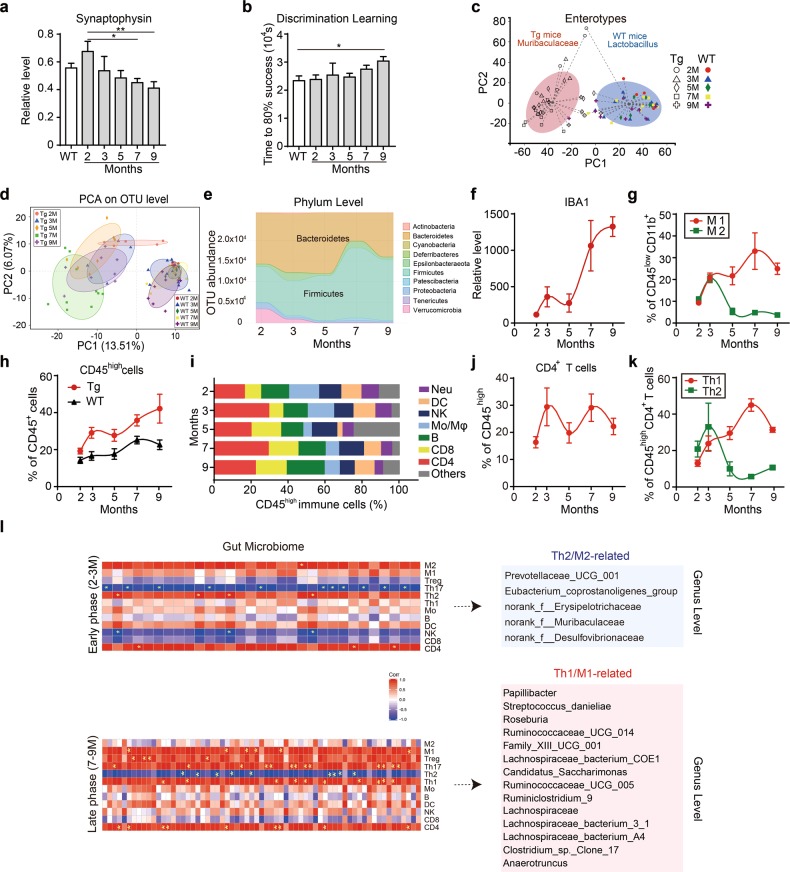
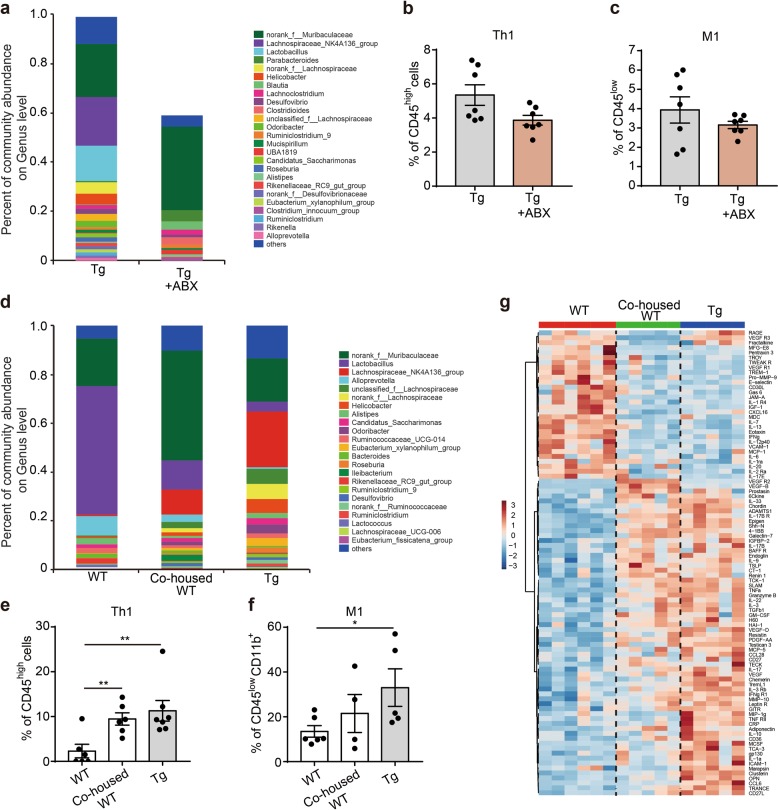
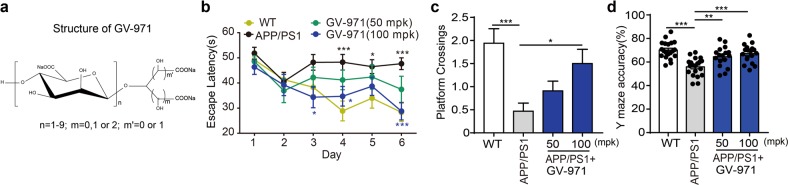
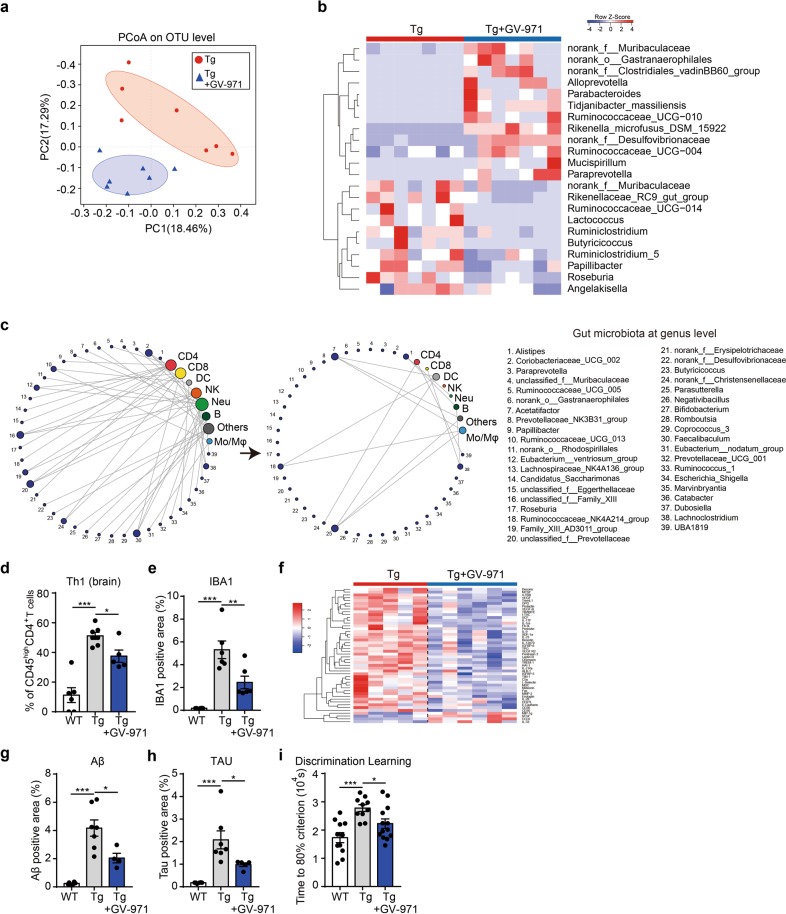
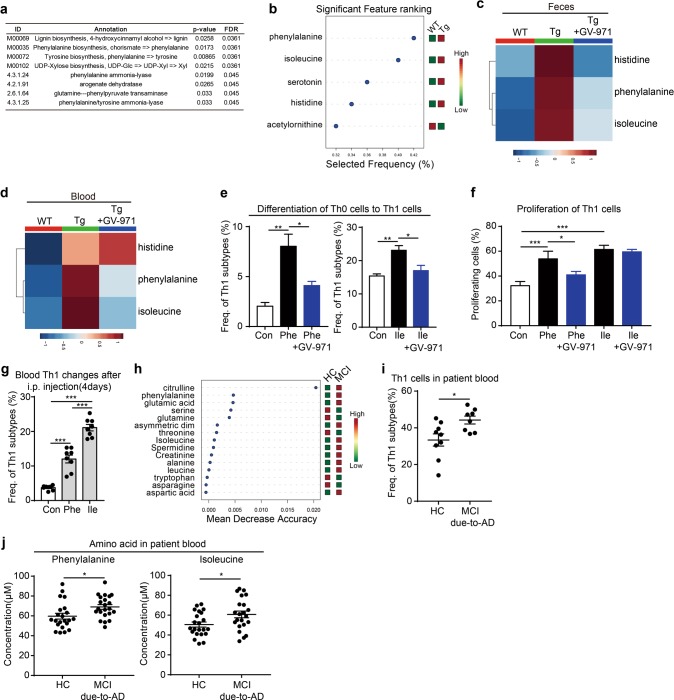
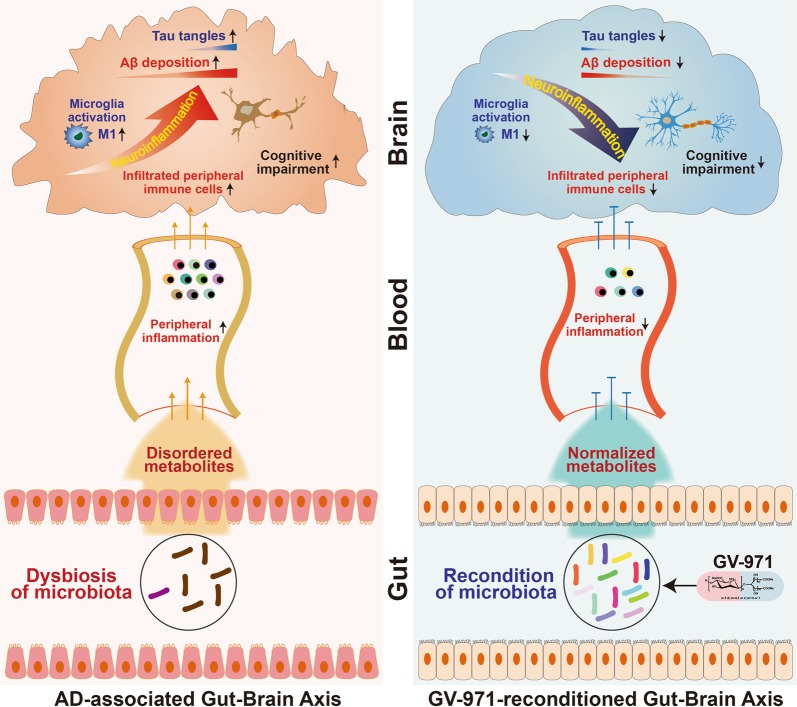
Recently, increasing evidence has suggested the association between gut dysbiosis and Alzheimer's disease (AD) progression, yet the role of gut microbiota in AD pathogenesis remains obscure. Herein, we provide a potential mechanistic link between gut microbiota dysbiosis and neuroinflammation in AD progression. Using AD mouse models, we discovered that, during AD progression, the alteration of gut microbiota composition leads to the peripheral accumulation of phenylalanine and isoleucine, which stimulates the differentiation and proliferation of pro-inflammatory T helper 1 (Th1) cells. The brain-infiltrated peripheral Th1 immune cells are associated with the M1 microglia activation, contributing to AD-associated neuroinflammation. Importantly, the elevation of phenylalanine and isoleucine concentrations and the increase of Th1 cell frequency in the blood were also observed in two small independent cohorts of patients with mild cognitive impairment (MCI) due to AD. Furthermore, GV-971, a sodium oligomannate that has demonstrated solid and consistent cognition improvement in a phase 3 clinical trial in China, suppresses gut dysbiosis and the associated phenylalanine/isoleucine accumulation, harnesses neuroinflammation and reverses the cognition impairment. Together, our findings highlight the role of gut dysbiosis-promoted neuroinflammation in AD progression and suggest a novel strategy for AD therapy by remodelling the gut microbiota.
Overview
The claims and statistics of this paper haven’t been checked yet.
Free: it reads the open-access text and checks the first 5 claims that cite a source we can check. Create a free account to check every claim.
Integrity signals
Registry
Cites
Statistics
Figures
Verification
Claims the paper makes
The claims and statistics of this paper haven’t been checked yet.
Free: it reads the open-access text and checks the first 5 claims that cite a source we can check. Create a free account to check every claim.
Claims other papers make about this one
Each is checked against this paper’s own text: does it say what the citing paper says it does?
The source backs part of the claim, not all of it — or backs it for a different population, condition or comparison.
In the citing paper
“Targeting the intestinal microbiota for the treatment of AD opens up a new way to treat other neurological diseases [11].”
From Neuroprotective Effect of Ceftriaxone on MPTP‐Induced Parkinson’s Disease Mouse Model by Regulating Inflammation and Intestinal Microbiota (2021) · cites this paper as [11]
Experimental — accuracy not yet measuredThe source backs part of the claim, not all of it — or backs it for a different population, condition or comparison.
In the citing paper
“Metabolomic analyses on the feces of these animals revealed significant changes in amino acid–related metabolism, in particular for the phenylalanine- and isoleucine-related pathways.”
From The gut-brain axis: how microbiota and host inflammasome influence brain physiology and pathology (2020) · cites this paper as [163]
Experimental — accuracy not yet measuredThe source backs part of the claim, not all of it — or backs it for a different population, condition or comparison.
In the citing paper
“The effects of GV-971 on mild to severe form of AD were tested in a phase 3 study that started in April 2014 and the results of this study highlighted the fact that GV-971 has significant cognitive benefits.”
From An update on the novel and approved drugs for Alzheimer disease (2022) · cites this paper as Wang et al., 2019
Experimental — accuracy not yet measuredThe source backs part of the claim, not all of it — or backs it for a different population, condition or comparison.
In the citing paper
“it plays a major role in the bidirectional communication between the GI tract and the central nervous system (CNS).”
From The Role of Short-Chain Fatty Acids From Gut Microbiota in Gut-Brain Communication (2020) · cites this paper as [11]
Experimental — accuracy not yet measuredThe cited source says what the claim attributes to it.
In the citing paper
“Sodium oligomannate (9, GV-971) was postulated to counteract AD by inhibiting neuroinflammation triggered by gut dysbiosis and disrupting the formation of Aβ fibrils.56,414”
From Recent advances in Alzheimer's disease: Mechanisms, clinical trials and new drug development strategies. (2024) · cites this paper as [414]
15 more claims about this paper
Create a free account to see every claim other papers make about this one.
Self-check
Percentages, sums and reported differences re-computed from the paper’s own numbers.
The self-check needs the paper’s full text.
Citations
Cites
Classification and Regression by randomForest
Liaw, A. I., & Wiener, M. C. (2007) · Cited by 18,594
Morris water maze: procedures for assessing spatial and related forms of learning and memory
Vorhees, C. V., & Williams, M. T. (2006) · Nature Protocols · doi:10.1038/nprot.2006.116 · Cited by 4,629
Oakley, H., Cole, S. L., Logan, S., Maus, E., Shao, P., Craft, J., Guillozet-Bongaarts, A., Ohno, M., Disterhoft, J., Van Eldik, L., et al. (2006) · The Journal of Neuroscience · doi:10.1523/jneurosci.1202-06.2006 · Cited by 3,530
Gut microbiota, metabolites and host immunity
Rooks, M. G., & Garrett, W. S. (2016) · Nature reviews. Immunology · doi:10.1038/nri.2016.42 · Cited by 3,409
Krasemann, S., Madore, C., Cialic, R., Baufeld, C., Calcagno, N., El Fatimy, R., Beckers, L., O’Loughlin, E., Xu, Y., Fanek, Z., et al. (2017) · Immunity · doi:10.1016/j.immuni.2017.08.008 · Cited by 2,979
NLRP3 is activated in Alzheimer’s disease and contributes to pathology in APP/PS1 mice
Heneka, M. T., Kummer, M. P., Stutz, A., Delekate, A., Schwartz, S., Vieira-Saecker, A., Griep, A., Axt, D., Remus, A., Tzeng, T.-C., et al. (2013) · Nature · doi:10.1038/nature11729 · Cited by 2,898
Differential Roles of M1 and M2 Microglia in Neurodegenerative Diseases
Tang, Y., & Le, W. (2016) · Molecular Neurobiology · doi:10.1007/s12035-014-9070-5 · Cited by 2,190
Gut microbiome alterations in Alzheimer’s disease
Vogt, N. M., Kerby, R. L., Dill-McFarland, K. A., Harding, S. J., Merluzzi, A. P., Johnson, S. C., Carlsson, C. M., Asthana, S., Zetterberg, H., Blennow, K., et al. (2017) · Scientific Reports · doi:10.1038/s41598-017-13601-y · Cited by 2,137
The microbiome and innate immunity
Thaiss, C. A., Zmora, N., Levy, M., & Elinav, E. (2016) · Nature · doi:10.1038/nature18847 · Cited by 2,012
The microbiota in adaptive immune homeostasis and disease
Honda, K., & Littman, D. R. (2016) · Nature · doi:10.1038/nature18848 · Cited by 1,846
Cited by
Items 701–800 of 1,000
Babygirija, R., Green, C. L., Sonsalla, M. M., Le, I. M. F., Xiao, F., Yandell, S., Calubag, M. F., Trautman, M. E., Tobon, A., Matoska, R., et al. (2026) · Advanced Science · doi:10.1002/advs.202515220 · Cited by 10
Yang, D., Wei, X., Zhang, B., Zhu, R., Hu, H., Fan, X., Du, H., Chen, X., Zhang, Z., Zhao, M., et al. (2022) · Food and Chemical Toxicology · doi:10.1016/j.fct.2022.113440 · Cited by 10
Self-citationSun, Z., Zhang, Y., Zhang, M., Zhou, S., Cheng, W., Xue, L., Zhou, P., Li, X., Zhang, Z., & Zuo, L. (2023) · PLoS ONE · doi:10.1371/journal.pone.0285401 · Cited by 10
“One study found that the activity of PLA2 was decreased by 35–53% in the parietal and temporal cortices of AD patients; on the contrary, the activities of glycerophosphocholine phosphodiesterase and lysophospholipid acyltransferase, which can promote the synthesis of phospholipids, increased by about 50–70% in AD brai…”
BackgroundMulti-Target-Directed Ligand Approach in Anti-Alzheimer’s Drug Discovery
Patil, V. M., Masand, N., Gautam, V., Kaushik, S., & Wu, D. H. (2023) · Springer eBooks · doi:10.1007/978-981-99-2657-2_13 · Cited by 10
Liang, S., Lu, M., Yu, D., Xing, G., Ji, Z., Guo, Z., Zhang, Q., Huang, W., Xie, M., & Hou, S. (2024) · Computational and Structural Biotechnology Journal · doi:10.1016/j.csbj.2024.01.005 · Cited by 10
“The intestinal flora influences the ability of host animals to digest and absorb nutrients [8], the immune response [9], the synthesis of amino acids and vitamins [10], and the proliferation of pathogenic microbes [11].”
BackgroundSelf-citationMa, Y., Zhang, F., Xie, Y., An, L., Zhang, B., Yu, B., & Li, R. (2024) · Food & Function · doi:10.1039/d3fo05628g · Cited by 10
Bipolar disorder and the gut microbiota: a bibliometric analysis
Lin, X., Huang, J., Wang, S., & Zhang, K. (2024) · Frontiers in Neuroscience · doi:10.3389/fnins.2024.1290826 · Cited by 10
“…with inflammation (Yuan et al., 2019; Jones et al., 2021; Lai et al., 2021), tryptophan metabolism (Barbuti et al., 2017; Wang and Miller, 2018; Wang et al., 2019), microglia (Cenit et al., 2017; Morais et al., 2021), the aryl hydrocarbon receptor (Reiter et al., 2018; Neamah et al., 2020;…”
BackgroundYao, T., Fu, L., Wu, Y., & Li, L. (2024) · Nutrients · doi:10.3390/nu16142314 · Cited by 10
Emerging Roles of Adaptive Immune Response in Alzheimer's Disease
Li, C., Zhao, Q., Feng, L., & Li, M. (2024) · Aging and Disease · doi:10.14336/ad.2024.0564 · Cited by 10
Conference report: dementia research and care and its impact in Switzerland
Leyhe, T., Jucker, M., Nef, T., Sollberger, M. A., Riese, F., Haba‐Rubio, J., Verloo, H., Lüthi, R., Becker, S., & Popp, J. (2020) · Swiss Medical Weekly · doi:10.4414/smw.2020.20376 · Cited by 10
Jiang, L., Sun, Q., Li, L., Lu, F., & Liu, F. (2021) · ACS Chemical Neuroscience · doi:10.1021/acschemneuro.1c00555 · Cited by 10
Breakthroughs in Medicinal Chemistry: New Targets and Mechanisms, New Drugs, New Hopes–7
Gütschow, M., Eynde, J. J. V., Jampílek, J., Kang, C., Mangoni, A. A., Fossa, P., Karaman, R., Trabocchi, A., Scott, P. J. H., Reynisson, J., et al. (2020) · Molecules · doi:10.3390/molecules25132968 · Cited by 10
Transplantation of feces from mice with Alzheimer's disease promoted lung cancer growth
Bi, W., Cai, S., Hang, Z., Lei, T., Wang, D., Wang, L., & Du, H. (2022) · Biochemical and Biophysical Research Communications · doi:10.1016/j.bbrc.2022.01.078 · Cited by 10
Alzheimer's Disease Drug Development: Research and Development Ecosystem
(2022) · Cambridge University Press eBooks · doi:10.1017/9781108975759 · Cited by 10
Alzheimer’s Disease Drug Development: A Research and Development Ecosystem
Cummings, J. L., Kinney, J. W., & Fillit, H. M. (2022) · Cambridge University Press eBooks · doi:10.1017/9781108975759.002 · Cited by 10
Yan, L., Li, H., Qian, Y., Liu, Q., Cong, S., Dou, B., Wang, Y., Wang, M., & Yu, T. (2024) · Frontiers in Neuroscience · doi:10.3389/fnins.2024.1334735 · Cited by 10
Ni, J., & Wu, Z. (2021) · Frontiers in Cellular Neuroscience · doi:10.3389/fncel.2021.638686 · Cited by 10
“GV971 was reported to restore the gut microbial profile to normal and to lessen brain immune cell infiltration and inflammation in AD mice (Wang et al., 2019), and was demonstrated to improve the cognitive function in patients with mild-to-moderate Alzheimer’s disease as early as week 4 in a phase III trial.”
BackgroundMetaproteomics Reveals Growth Phase-Dependent Responses of an In Vitro Gut Microbiota to Metformin
Hao, Z., Li, L., Ning, Z., Zhang, X., Mayne, J., Cheng, K., Walker, K., Liu, H., & Figeys, D. (2020) · Journal of the American Society for Mass Spectrometry · doi:10.1021/jasms.0c00054 · Cited by 10
Evolving Technologies in Gastrointestinal Microbiome Era and Their Potential Clinical Applications
Ajayi, A., Jolaiya, T. F., & Smith, S. I. (2020) · Journal of Clinical Medicine · doi:10.3390/jcm9082565 · Cited by 10
Special issue on the human microbiome: from symbiosis to therapy
Sharma, A., & Im, S. (2020) · Experimental & Molecular Medicine · doi:10.1038/s12276-020-00488-5 · Cited by 10
Navigating the treatment landscape of Alzheimer's disease: Current strategies and future directions
Mohapatra, T. K., Nayak, R. R., Ganeshpurkar, A., Tiwari, P. K., & Kumar, D. (2025) · Ibrain · doi:10.1002/ibra.12197 · Cited by 9
Qi, W., Kong, M., Meng, X., Sun, Z., Mei, Z., Pu, Y., Zhou, X., Wang, Q., Qiu, J., Jiang, B., et al. (2025) · Environmental Health Perspectives · doi:10.1021/ehp.6c00026 · Cited by 9
Self-citationBertarini, L., Imbeni, F., Brighenti, V., Martusciello, I., Pellati, F., & Alboni, S. (2025) · ACS Pharmacology & Translational Science · doi:10.1021/acsptsci.5c00289 · Cited by 9
Tian, C., Yang, M., Chen, K., Luo, D., Yue, N.-N., Zhao, H., Zhang, Y., Lu, J., Liang, Y.-J., Song, Y., et al. (2025) · Journal of Inflammation Research · doi:10.2147/jir.s514838 · Cited by 9
Papiri, G., Luzzi, S., Marcucci, M., & Vignini, A. (2021) · Journal of Integrative Neuroscience · doi:10.31083/j.jin2004107 · Cited by 9
Butenolide derivatives from Aspergillus terreus selectively inhibit butyrylcholinesterase
Cui, X., Deng, S., Li, G., Zhang, Y., Wang, L., Wu, C., & Deng, Y. (2022) · Frontiers in Chemistry · doi:10.3389/fchem.2022.1063284 · Cited by 9
“, 2021), one N-methyl-D-aspartate (NMDA) receptor antagonist, and one sodium oligomannate that remodels the gut microbiota and suppresses neuroinflammation (Wang et al., 2019).”
BackgroundOrchestration of a blood-derived and ADARB1-centred network in Alzheimer's and Parkinson's disease
Song, Z., Ding, Q., & Yang, Y. X. (2023) · Cellular Signalling · doi:10.1016/j.cellsig.2023.110845 · Cited by 9
Liu, Y., Song, J., Liu, S., Nan, Y., Zheng, W., Pang, X., Chen, X., Liang, H., Zhang, J., & Ma, B. (2024) · Journal of Pharmaceutical and Biomedical Analysis · doi:10.1016/j.jpba.2024.116129 · Cited by 9
Self-citationZhang, A., Wang, H., Zheng, Y., Yin, W., Cai, X., Zhou, G., Liang, Y., & Liang, Y. (2024) · Aquaculture Reports · doi:10.1016/j.aqrep.2024.102232 · Cited by 9
Self-citationDeciphering the microbial map and its implications in the therapeutics of neurodegenerative disorder
Vashishth, S., Ambasta, R. K., & Kumar, P. (2024) · Ageing Research Reviews · doi:10.1016/j.arr.2024.102466 · Cited by 9
Hu, J., Li, Q., Jiang, S., Deng, Y., Yang, L., Du, M., He, S., Xu, F., Yan, C., Gao, W., et al. (2025) · Brain Research Bulletin · doi:10.1016/j.brainresbull.2025.111245 · Cited by 9
Xu, W., Wang, Q., Yang, Y., Sun, S., Hui, Q., He, J., Jin, T., Yao, P., Wang, J., & Lin, F. (2025) · Journal of Endocrinological Investigation · doi:10.1007/s40618-025-02640-2 · Cited by 9
Self-citationOmission of previous publications by an author should be corrected
Rao, Y. (2020) · Cell Research · doi:10.1038/s41422-020-0344-3 · Cited by 9
Hernandez, A. R., Hoffman, J. M., Hernandez, C. M., Cortés, C. J., Jumbo-Lucioni, P., Baxter, M. G., Esser, K. A., Liu, A. C., McMahon, L. L., Bizon, J. L., et al. (2021) · The Journals of Gerontology Series A · doi:10.1093/gerona/glab215 · Cited by 9
Doenyas, C. (2021) · Cellular and Molecular Neurobiology · doi:10.1007/s10571-021-01167-3 · Cited by 9
“2019), and cognitive impairments in AD (Wang et al. 2019).”
Wu, J., Wu, M., Zhang, H., Zhan, X., & Wu, N. (2021) · International Journal of Molecular Sciences · doi:10.3390/ijms222212338 · Cited by 9
“Among them, the terminal oxidized derivative, GV-971, has been approved as a treatment for mild to moderate AD patients [14].”
BackgroundSelf-citationNovel investigations in retinoic-acid-induced cleft palate about the gut microbiome of pregnant mice
Wang, Y., Chen, J., Wang, X., Guo, C., Peng, X., Liu, Y., Li, T., & Du, J. (2022) · Frontiers in Cellular and Infection Microbiology · doi:10.3389/fcimb.2022.1042779 · Cited by 9
Self-citationJing, L., Wei, W., Meng, B., Chantegreil, F., Nachon, F., Martínez, A., Wu, G., Zhao, H., Song, Y., Kang, D., et al. (2023) · Bioorganic Chemistry · doi:10.1016/j.bioorg.2023.106465 · Cited by 9
Wu, Y., Guo, S., Wang, K., & Kang, J. (2023) · Frontiers in Aging Neuroscience · doi:10.3389/fnagi.2023.1139418 · Cited by 9
Flores-Cuadra, J. A., Madrid, A., Fernández, P. L., Perez-Lao, A. R., Oviedo, D. C., Britton, G. B., & Carreira, M. B. (2020) · Journal of Alzheimer s Disease · doi:10.3233/jad-200870 · Cited by 10
Lu, S., Tao, Z., Gan, W., Na, K., Wu, L., Zhang, L., Li, X., & Guo, X. (2025) · Journal of Agricultural and Food Chemistry · doi:10.1021/acs.jafc.4c10378 · Cited by 8
Bostick, J. W., Connerly, T. J., Thron, T., Needham, B. D., Fonseca, M. D. C., Kaddurah‐Daouk, R., Knight, R. D., & Mazmanian, S. K. (2025) · Brain Behavior and Immunity · doi:10.1016/j.bbi.2025.07.028 · Cited by 8
“Recent research has implicated lifestyle and environmental factors, including diet and the microbiome: the collection of microorganisms that colonize the human body (Minter et al., 2017; Minter et al., 2016; Harach et al., 2017; Seo and Holtzman, 2024; Wang et al., 2019; Walker et al., 2017).”
Huang, H., Fang, C., Niu, H., Yin, X., Ruan, J., Wei, M., & Zhou, Y. (2023) · Journal of Chromatography B · doi:10.1016/j.jchromb.2023.123766 · Cited by 8
Li, J., Shan, W., & Zuo, Z. (2023) · CNS Neuroscience & Therapeutics · doi:10.1111/cns.14491 · Cited by 8
“8 Replacing gut microbiota of AD-like mice with that of healthy mice attenuates AD-like brain and behavior changes.”
BackgroundZhou, Y., Meng, H., Ding, N., Hong, H., Luo, Y., Wu, C., & Tan, Y. (2024) · Food Frontiers · doi:10.1002/fft2.448 · Cited by 9
Xiaojuan, L., Hongmei, L., Zhu-xin, W., Xiaoqin, L., Lanbing, D., Luo, D., & Zhou, Y. (2024) · Heliyon · doi:10.1016/j.heliyon.2024.e35394 · Cited by 8
“Currently, it is mainly used to delay the occurrence and development of AD by enhancing cognitive ability [27], alleviating neuropsychiatric symptoms [28], improving neuroinflammation [29], and targeting nerve protection; development of AD, no cure has been found [30].”
BackgroundDissecting the immune response of CD4+ T cells in Alzheimer’s disease
Kostić, M. S., Živković, N., Cvetanović, A., Bašić, J., & Stojanović, I. R. (2024) · Reviews in the Neurosciences · doi:10.1515/revneuro-2024-0090 · Cited by 8
Zhang, W., Lin, H., He, X., Gu, Q., Ma, Y., Fu, X., & Fan, L. (2025) · Journal of Stroke and Cerebrovascular Diseases · doi:10.1016/j.jstrokecerebrovasdis.2025.108357 · Cited by 8
Comprehending Alzheimer's Disease: Molecular Mechanisms and Treatment Strategies
Rathee, S., Pandey, V., Soni, S., Sen, D., & Jain, S. (2025) · Current Alzheimer Research · doi:10.2174/0115672050368798250626075628 · Cited by 8
Alzheimer’s Disease Pharmacology
Plascencia‐Villa, G., & Perry, G. L. (2021) · Elsevier eBooks · doi:10.1016/b978-0-12-820472-6.00018-9 · Cited by 8
Shrestha, S., Choi, J. S., Zhang, W. Y., & Smid, S. D. (2022) · International Journal of Food Science & Technology · doi:10.1111/ijfs.15753 · Cited by 8
Asbjornsdottir, B., Miranda-Ribera, A., Fiorentino, M. R., Konno, T., Çetinbaş, M., Lan, J., Sadreyev, R. I., Gudmundsson, L. S., Gottfreðsson, M., Lauth, B., et al. (2022) · Biomedicines · doi:10.3390/biomedicines11010091 · Cited by 8
Khezri, M. R., Esmaeili, A., & Ghasemnejad‐Berenji, M. (2023) · ACS Chemical Neuroscience · doi:10.1021/acschemneuro.3c00418 · Cited by 8
Coupling of Alzheimer’s Disease Genetic Risk Factors with Viral Susceptibility and Inflammation
Cao, C., Fu, G., Xu, R., & Li, N. (2023) · Aging and Disease · doi:10.14336/ad.2023.1017 · Cited by 8
“Furthermore, it can effectively reduce neuroinflammation and rescue the AD-related cognitive impairment [182].”
BackgroundKim, N., Ju, I. G., Jeon, S. H., Lee, Y., Jung, M., Gee, M. S., Cho, J. S., Inn, K., Garrett‐Sinha, L. A., Oh, M. S., et al. (2023) · Journal of Neuroinflammation · doi:10.1186/s12974-023-02966-9 · Cited by 8
[Correlation between Gut Microbiota and Lung Cancer].
Teng, J., Zhao, Y.-F., Jiang, Y., Wang, Q., & Zhang, Y. (2020) · PubMed Central · doi:10.3779/j.issn.1009-3419.2020.101.39 · Cited by 8
Probiotics: their action against pathogens can be turned around
Gan, L., Xu, W., Xiong, Y., Lv, Z., Zheng, J.-W., Zhang, Y., Lin, J., Liu, J., Chen, S., Chen, M., et al. (2021) · Scientific Reports · doi:10.1038/s41598-021-91542-3 · Cited by 8
Self-citationZhu, X., Wang, X., Zhang, S., Li, X., Li, Z., Chen, X., Liu, X., Li, H., & Zhang, J. (2021) · Applied Sciences · doi:10.3390/app11178155 · Cited by 8
“Besides, multiple amino acid-derived intermediates were critical for the Alzheimer’s disease pathological progression through immune cells infiltration-derived neuroinflammation [30].”
BackgroundSelf-citationAngiotensin II is a crucial factor in retinal aneurysm formation
Chen, H., Zhao, X., Chen, Y., & Deng, T. (2021) · Experimental Eye Research · doi:10.1016/j.exer.2021.108810 · Cited by 8
Xu, Z., Yang, H., Li, X., Xu, X., Tan, H., & Leng, X. (2022) · Journal of Animal Science · doi:10.1093/jas/skac273 · Cited by 8
Huang, K., Tang, X., Li, Y., Zhang, Z., Ye, K. X., Shen, Q.-F., Wang, X., Zhu, X., Huang, X., Lu, G., et al. (2020) · Aging · doi:10.18632/aging.103674 · Cited by 8
“Very recently, GV-971 (a sodium oligomannate) was found to be effective in relieving neuroinflammation and preventing cognitive impairments in a mouse AD model [19].”
BackgroundSelf-citationEffects of long-term antibiotic treatment on mice urinary aromatic amino acid profiles
Zhu, X., Fu, B., Dong, M., Guo, Y., Cao, Z., & Wu, J. (2021) · Bioscience Reports · doi:10.1042/bsr20203498 · Cited by 8
Xu, G., An, Y., Du, Y., Cao, Z., Zheng, J., Wang, J., Li, T., Lei, X. G., & Lu, Y. (2025) · iMetaOmics. · doi:10.1002/imo2.70020 · Cited by 7
Li, J., Wu, C., Liu, Q., Liu, M., Liu, T., Li, A., Fu, G., Zou, Z., Guo, D., Chen, K., et al. (2025) · iScience · doi:10.1016/j.isci.2025.113168 · Cited by 7
“69,70 As anticipated, the positive intervention of musical rhythm significantly enhanced the abundance and richness of the gut microbiota in APP/PS1 mice, which indicated that the intestinal microbial composition of the APP/PS1+MRE group was changed.”
Cha, Q., Zhao, W., Ran, L., Wang, Y., Wang, X., Xu, F., Yu, Z., & Wu, Y. (2025) · Metabolism Open · doi:10.1016/j.metop.2025.100412 · Cited by 7
“These oligosaccharides possess favorable biochemical properties, including low molecular weight, high water solubility, low viscosity, and efficient intestinal absorption, making them highly promising for biomedical applications [7 – 9].”
Self-citationMohammad, S. I., Hammood, Y. M., Vasudevan, A., Uthirapathy, S., Ballal, S., Sabarivani, A., Mishra, S., Nathiya, D., Al‐qaim, Z. H., & KADHIM, A. J. (2025) · Molecular Neurobiology · doi:10.1007/s12035-025-05447-7 · Cited by 7
“Moreover, GV-971, a sodium oligomannate, demonstrated consistent cognitive improvement in a phase 3 clinical trial in China by suppressing gut dysbiosis and associated phenylalanine/ isoleucine accumulation, harnessing neuroinflammation, and reversing cognitive impairment [190].”
Niziński, P., Szalast, K., Makuch‐Kocka, A., Paruch, K., Ciechanowska, M. O., & Plech, T. (2026) · Molecules · doi:10.3390/molecules31020320 · Cited by 7
Elucidating the molecular targets in Alzheimer's disease: Advances and therapeutic implications
Soni, U., & Pujari, R. (2026) · Progress in Neuro-Psychopharmacology and Biological Psychiatry · doi:10.1016/j.pnpbp.2026.111660 · Cited by 7
Ji, S., Wu, Y., Zhu, R., Guo, D., Jiang, Y., Huang, L., Ma, X., & Yu, L. (2023) · Gerontology · doi:10.1159/000531194 · Cited by 7
Nourelden, A. Z., Kamal, I., Tawfik, A. G., Hagrass, A. I., Fathallah, A. H., & Zaazouee, M. S. (2023) · The Egyptian Journal of Neurology Psychiatry and Neurosurgery · doi:10.1186/s41983-023-00682-y · Cited by 7
“Second, it inhibits neuroinflammation by reconstituting gut microbiota and decreasing metabolite-driven peripheral immune cell influx into the nervous system [24].”
BackgroundWang, P., Cai, Y., Zhong, H., Chen, R., Yi, Y., Ye, Y., & Li, L. (2024) · Genes · doi:10.3390/genes15050598 · Cited by 7
“They exhibit various effects such as anti-tumor [4], anti-diabetes [5], anti-inflammatory [6], neuroprotection [7], immune regulation [8], and antioxi-dation [9] effects.”
BackgroundKelso, A. L. (2024) · Undergraduate Research in Natural and Clinical Science and Technology (URNCST) Journal · doi:10.26685/urncst.556 · Cited by 7
Ruan, Y.-N., Nong, C., Jintrawet, A., Fan, H., Libo, F., Zheng, S.-J., Li, S., & Wang, Z.-Y. (2024) · Frontiers in Plant Science · doi:10.3389/fpls.2024.1410197 · Cited by 7
Goel, N., Choudhary, P., Pattanaik, L., Padhi, S. K., & Chaudhary, P. (2024) · Springer eBooks · doi:10.1007/978-981-97-1912-9_22 · Cited by 7
Li, Z., Li, Y., Zhang, J., Liu, Q., Zhu, L., Mao, B., Ma, Y., & Liu, Y. (2024) · Journal of Pharmaceutical and Biomedical Analysis · doi:10.1016/j.jpba.2024.116442 · Cited by 7
Self-citationSymposium: What Does the Microbiome Tell Us about Prevention and Treatment of AD/ADRD?
Capocchi, J. K., Figueroa‐Romero, C., Dunham, S. J. B., Faraci, G., Rothman, J. A., Whiteson, K., Seo, D.-O., Holtzman, D. M., Grabrucker, S., Nolan, Y. M., et al. (2024) · Journal of Neuroscience · doi:10.1523/jneurosci.1295-24.2024 · Cited by 7
Tang, Z., Wei, C., Deng, X., Lin, Q., Hu, Q., Li, S., Wang, J., Wu, Y., Liu, D., Fang, M., et al. (2025) · Frontiers in Immunology · doi:10.3389/fimmu.2024.1489077 · Cited by 7
Zhang, Z., Wang, S., Rong, R., Zhang, G., Li, Z., Li, Y., Wang, R., Liu, Y., & Li, K. (2025) · Metabolic Brain Disease · doi:10.1007/s11011-025-01632-8 · Cited by 7
“Increasing evidence suggests that alterations in gut microbiota play an important role in the pathogenesis of AD (Pasupalak et al. 2024; Wang et al. 2019).”
Self-citationYou, L., Peng, H., Liu, J., Sai, N., Zhao, W. H., Li, X., Yang, C., Guo, P., & Ni, J. (2025) · Phytomedicine · doi:10.1016/j.phymed.2025.157007 · Cited by 7
Self-citationMarine Derived Strategies Against Neurodegeneration
Toulis, V., Marfany, G., & Mirra, S. (2025) · Marine Drugs · doi:10.3390/md23080315 · Cited by 8
Biomaterial‐Based Emergency Intervention for Secondary Spinal Cord Injury
Li, J., Zhang, Q., Liu, Z., Xu, W., Fu, C., & Ding, J. (2025) · Small Science · doi:10.1002/smsc.202500125 · Cited by 7
Self-citationZou, Z., Lei, D., Wang, X., Yin, Y., Li, H., Di, X., & Li, X. (2025) · Food Science & Nutrition · doi:10.1002/fsn3.71117 · Cited by 7
Self-citationAlzheimer’s Disease: Perspective on Therapeutic Options and Recent Hallmarks in Clinical Research
MOLLY, B. A., Seethamraju, S. M., & Nori, L. P. (2021) · International Journal Of Pharmaceutical Research And Allied Sciences · doi:10.51847/vic6sagcyq · Cited by 7
[Relationship between Oral Microbiota and Alzheimer's Disease].
Li, Y.-C., Liu, Y., Chen, F., Chu, M., & Chen, X.-C. (2022) · 四川大学学报:医学版 · doi:10.12182/20220360304 · Cited by 7
Shao, Y., Yi, L., Fu, M., Feng, Q., Mao, X., Mao, H., Yan, Y., & Ding, C. (2022) · Talanta · doi:10.1016/j.talanta.2022.124068 · Cited by 7
Guo, X., Gao, L., Liu, J., Lu, W., Wang, J., & Qu, Q. (2023) · PubMed Central · Cited by 7
Self-citationLi, C., Liu, K., Zhu, J., & Zhu, F. (2023) · Immunity & Ageing · doi:10.1186/s12979-023-00366-4 · Cited by 7
“In November of 2019, sodium oligomannate (GV-971), a marine algae-derived oral oligosaccharide, was approved for AD treatment by the Chinese Food and Drug Administration based on its ability to alleviate neuroinflammation by regulating gut microbiota and inhibiting the brain infiltration of peripheral T helper (Th) 1…”
BackgroundTranscriptomic-metabolomic analysis of magnesium-stimulated in peel coloration of Satsuma mandarin
Liu, X., Hu, C., Liu, X., Zhou, Y., Tan, Q., Sun, X., & Wu, S. (2023) · Postharvest Biology and Technology · doi:10.1016/j.postharvbio.2023.112553 · Cited by 7
Fecal microbial and metabolic characteristics of swine from birth to market
He, H., Yang, M., Li, W., Lu, Z., Wang, Y., & Jin, M. (2023) · Frontiers in Microbiology · doi:10.3389/fmicb.2023.1191392 · Cited by 7
Wu, W., Zeng, C., Wu, C., Wu, T., Pang, J., Zhou, P., & Cao, Y. (2024) · Biochemical and Biophysical Research Communications · doi:10.1016/j.bbrc.2024.150374 · Cited by 7
Novel strategies for the fight of Alzheimer’s disease targeting amyloid-β protein
Xie, Y., Wang, Y., Jiang, S., Xiang, X., Wang, J., & Ning, L. (2021) · Journal of drug targeting · doi:10.1080/1061186x.2021.1973482 · Cited by 7
“As an oligosaccharide with a complex molecular structure, GV-971 is isolated from seaweed by Geng Meiyu and colleagues [113].”
BackgroundUnique Features of the Gut Microbiome Characterized in Animal Models of Angelman Syndrome
Beitnere, U., Vilanova-Cuevas, B., Christian, S., Taylor, C., Berg, E. L., Copping, N. A., Dindot, S. V., Silverman, J. L., Gareau, M. G., & Segal, D. J. (2023) · mSystems · doi:10.1128/msystems.00608-22 · Cited by 7
“disorders (12, 13), Alzheimer's disease (14, 15), Parkinson's disease (16–18), depression (19), 76 amyotrophic lateral sclerosis (20–22), schizophrenia (23, 24), and attention-deficit/hyperactivity 77 disorder (25).”
BackgroundSynthesis of mannan oligosaccharide-sialic acid conjugates and its inhibition on Aβ42 aggregation
Wu, J., Wang, C., Zhang, T., Zhang, H., & Zhan, X. (2023) · Carbohydrate Research · doi:10.1016/j.carres.2023.108891 · Cited by 7
Self-citationGong, Y., Luo, H., Li, Z., Feng, Y., Liu, Z., & Chang, J. (2023) · Metabolites · doi:10.3390/metabo13080954 · Cited by 7
Self-citationShu, Z., Wang, G., Liu, F., Xu, Y., Sun, J., Hu, Y., Dong, H., & Zhang, J. (2023) · Marine Drugs · doi:10.3390/md21110564 · Cited by 7
Self-citationXu, Y., Liu, H., Han, D., Ren, L., Gong, X., Jiang, F., Cui, Y., Liu, X., Ren, C., Xue, J., et al. (2021) · Frontiers in Physiology · doi:10.3389/fphys.2021.706579 · Cited by 7
Designer Probiotics in Metabolic Disorders
Gupta, R. G., & Raghuwanshi, S. (2022) · Springer eBooks · doi:10.1007/978-981-16-8444-9_12 · Cited by 7
Facing the Complexity of Alzheimer's Disease
Dallemagne, P., & Rochais, C. (2019) · Future Medicinal Chemistry · doi:10.4155/fmc-2019-0310 · Cited by 7
Itzhaki, R. F. (2020) · Journal of Alzheimer s Disease · doi:10.3233/jad-200210 · Cited by 7
“have described the encouraging preliminary results of the GV971 clinical trial, which suggest that GV971 has a protective action against cognitive decline in Alzheimer’s disease (AD) [1].”
ResultDecoding psychosis: from national genome project to national brain project
Sun, L., Xu, M., Shi, Y., Xu, Y., Chen, J., & He, L. (2022) · General Psychiatry · doi:10.1136/gpsych-2022-100889 · Cited by 7
Metadata
- Authors
- Wang, X., Sun, G., Feng, T., Zhang, J., Huang, X., Wang, T., Xie, Z., Chu, X., Yang, J., Wang, H., Chang, S., Gong, Y., Ruan, L., Zhang, G., Yan, S., Lian, W., Du, C., Yang, D., Zhang, Q., Lin, F., Liu, J., Zhang, H., Ge, C., Xiao, S., Ding, J., & Geng, M.
- Affiliations
- Chinese Academy of Sciences (CN)
- Shanghai Jiao Tong University (CN)
- Corresponding author
- Geng, Meiyu
- ORCID
- Venue
- Cell Research
- Published
- 2019-09-06
- Volume
- 29
- Issue
- 10
- Pages
- 787-803
- ISSN
- 1001-0602 (ISSN-L)
- 1748-7838
- PMC
- PMC6796854
- OpenAlex
- W2972007077
- Semantic Scholar
- e9a935dc76000829ceb45994c1cb5eb9842e7e5a
- Cited by
- 1,144
- References
- 61
- Citations by year
- 2026: 104 · 2025: 146 · 2024: 179 · 2023: 196 · 2022: 200 · 2021: 175 · 2020: 132 · 2019: 11
- FWCI
- 89.30
- Type
- journal article
- Language
- en
- Open access
- hybrid
- doi.org
- Licence
- cc-by
- creativecommons.org/licenses/by/4.0 (tdm)
- creativecommons.org/licenses/by/4.0 (vor)
- Locations
- Cell Research (publishedVersion, cc-by)
- PubMed Central (publishedVersion, cc-by)
- PubMed (publishedVersion)
- Funders
- Chinese Academy of Sciences (XDA12040101)
- National Key New Drug Creation and Manufacturing Program, Ministry of Science and Technology
- Topics
- Life Sciences › Neuroscience › Cellular and Molecular Neuroscience › Alzheimer's disease research and treatments
- Life Sciences › Biochemistry, Genetics and Molecular Biology › Molecular Biology › Gut microbiota and health
- Life Sciences › Neuroscience › Neurology › Neuroinflammation and Neurodegeneration Mechanisms
- Keywords
- Alzheimer's disease, gut microbiota, gut dysbiosis, neuroinflammation, phenylalanine, isoleucine, Th1 cells, mild cognitive impairment, gut-brain axis, cognitive impairment
- MeSH terms
- Gastrointestinal Microbiome, Alzheimer Disease, Amino Acids, Animals, Anti-Bacterial Agents, Bacteria, Disease Models, Animal, Humans, Isoleucine, Mannose, Mice, Inbred C57BL, Mice, Transgenic, Oligosaccharides, Phenylalanine, Clinical Trials, Phase III as Topic, Microglia, Th1 Cells, Disease Progression, Maze Learning, Mice, Cognitive Dysfunction
About these checks
Registry, retraction, Cites and statistics results are computed, not judged, with one exception: a printed reference that no index lists is read once by a model before it counts as a citation error. Claims are extracted by a model and kept only when their quote appears verbatim in the text; each cited source is then checked, with a model’s help, for whether it says what the claim relies on. Those verdicts can be wrong — read the claim’s quote and the cited source before relying on one.
Statistics and arithmetic are recomputed, not judged.
Confidence bands are shown only for fields calibrated on our annotated test set. None is calibrated yet, so no band is shown.
What counts as a claim ›How we measure confidence ›How we check this ›
Are you an author, or do you see a problem with this page? Request a review
Data sources
Bibliographic data: Semantic Scholar, OpenAlex, Crossref.
Contains information from the Semantic Scholar Academic Graph Datasets, made available under the ODC Attribution License (ODC-BY 1.0).
Semantic Scholar’s data is described in: Kinney, R., et al. (2023). The Semantic Scholar Open Data Platform. arXiv:2301.10140.
