

Recent advances in high-entropy superconductors
Open accessThe DOI matches its Crossref record; 113 of the 114 references it cites were found in a registry or an index; 129 of the 206 sources its claims cite were checked for support.
Abstract
Abstract High-entropy materials (HEMs) exhibit significant potential for diverse applications owing to their tunable properties, which can be precisely engineered through the selection of specific elements and the modification of stoichiometric ratios. The discovery of superconductivity in HEMs has garnered considerable interest, leading to accelerated advancements in this field in recent years. This review provides an overview of various high-entropy superconductors, highlighting their distinct features, such as disordered crystal structure, factors affecting the critical temperature ( T c ), unconventional superconductivity, and topological bands. A perspective on this field is subsequently proposed, drawing upon insights from recently published academic literature. The objective is to provide researchers with a comprehensive and clear understanding of the newly developed high-entropy superconductivity, thereby catalyzing further advancements in this domain.
Overview
CoChat Summary
TL;DR
This review surveys recent high-entropy superconductors across many crystal types, emphasizing how composition, valence electron count, pressure, disorder, and structure shape superconducting behavior. It argues that high-entropy materials form a distinct superconducting class with notable robustness, large upper critical fields, and some unconventional/topological features.
Key findings
- The first high-entropy alloy superconductor, Ta\(_{34}\)Nb\(_{33}\)Hf\(_8\)Zr\(_{14}\)Ti\(_{11}\), had \(T_c = 7.3\) K, \(\mu_0H_{c1}(0)=32\) mT, \(\mu_0H_{c2}(0)=8.2\) T, and \(2\Delta = 2.2\) meV, and was described as close to phonon-mediated BCS weak-coupling superconductivity.
- Across BCC-type HEA superconductors, the review reports a typical \(T_c\) range of about 2–9 K and VEC range of about 3.2–5.2; the highest \(T_c\) in this family is around 10.2 K for the A15-type V\(_{1.4}\)Nb\(_{1.4}\)Mo\(_{0.2}\)Al\(_{0.5}\)Ga\(_{0.5}\) compound.
- For NaCl-type high-entropy carbides/carbonitrides, \(T_c\) values are reported up to 6.03 K for Ti\(_{0.2}\)Nb\(_{0.2}\)Ta\(_{0.2}\)Mo\(_{0.2}\)W\(_{0.2}\)C\(_{0.7}\)N\(_{0.3}\), with \(\mu_0H_{c2}(0)\) values between 0.5 and 5 T.
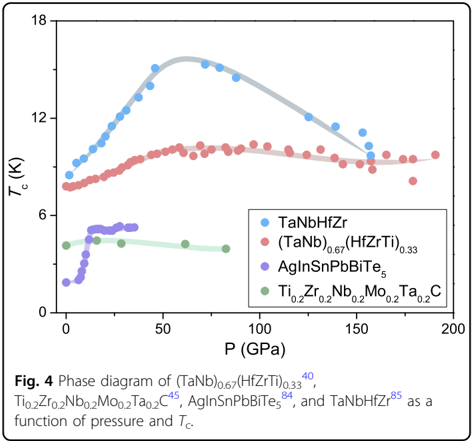
- The review highlights robustness under pressure and disorder, including (TaNb)\(_{0.67}\)(HfZrTi)\(_{0.33}\) with \(T_c\) rising from 7.7 K to 10 K near 60 GPa, and Ti\(_{0.2}\)Zr\(_{0.2}\)Nb\(_{0.2}\)Hf\(_{0.2}\)Ta\(_{0.2}\)C with \(T_c\) changing only from 2.67 K to 2.15 K over about 50 GPa.
Methods
- Review article: it synthesizes and compares previously published experimental and theoretical studies on high-entropy superconductors rather than reporting a new experiment.
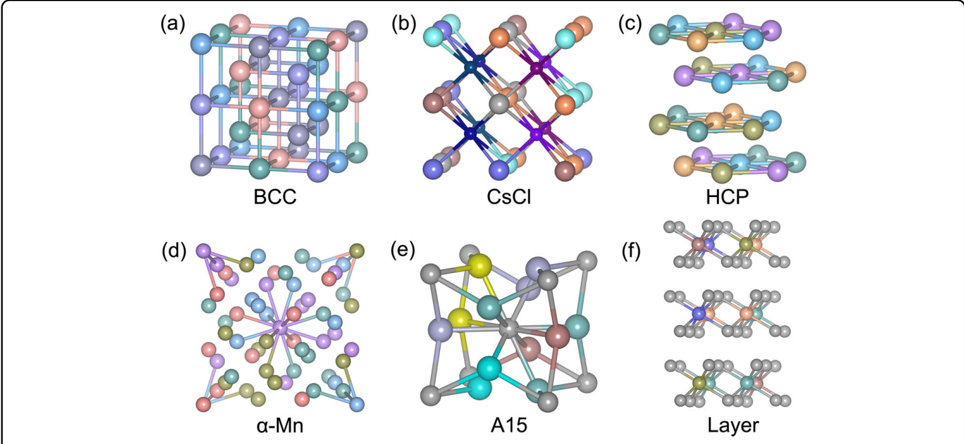
- It organizes the literature by crystal structure and material class (e.g., BCC, FCC, CsCl, HCP, \(\alpha\)-Mn, A15, layered, films) and by tuning factors such as VEC, elemental composition, pressure, disorder, and topology.
- The main analysis is qualitative comparative review, drawing on reported \(T_c\), \(\mu_0H_{c1}\), \(\mu_0H_{c2}\), specific-heat jumps, VEC ranges, pressure responses, and band-structure/DFT results from cited studies.
Limitations
- The paper states that many challenges still exist and that “relatively few theoretical investigations” have addressed phonon spectra and electronic structures in HEM superconductors.
- It also states that there are relatively few reports on high-entropy carbide superconductivity, so the field has “much room for exploration.”
- Evident from the text: because this is a review, its conclusions depend on heterogeneous results from different studies and material systems rather than a single controlled dataset.
Model-written summary. Check it against the paper before relying on it.
Integrity signals
Registry
Cites
Statistics
Figures
Verification
Claims the paper makes
84 Valid · 7 Not valid · 51 Not checked · 7 Own results and interpretations
Some cited sources support this claim and some don’t — read each source’s verdict below.
In the paper
“Currently, topological properties are reported in many high-entropy carbide superconductors 44 -46 .”
What the sources say
- Disputedcites [44] 44. Zeng, L. et al. Discovery of the high-entropy carbide ceramic topological superconductor candidate (Ti 0.2 Zr0.2 Nb0.2 Hf0.2 Ta0.2 )C. Adv. Funct. Mater. 33 , 2301929 (2023). sourceExperimental — accuracy not yet measured
The Abstract reports topological properties in one high-entropy carbide superconductor, (Ti₀.₂Zr₀.₂Nb₀.₂Hf₀.₂Ta₀.₂)C, and says they had not previously been observed in the investigated high-entropy carbide ceramics. The Introduction likewise says there were no prior reports of superconductivity in such ceramics; its examples of other topological carbides are binary compounds, not high-entropy carbides. (LLM, conf=0.88)
Checked by a reasoning model — may be wrong.
- Partly supportedcites [45] 45. Zeng, L. et al. Superconductivity in the high-entropy ceramics Ti 0.2 Zr0.2 Nb0.2 Mo0.2Ta0.2 C with possible nontrivial band topology. Adv. Sci. 11 , 2305054 (2024). sourceExperimental — accuracy not yet measured
The Abstract reports superconductivity in two compositions of one high-entropy carbide and a calculated Dirac-like point for the x = 1 composition, making it a potential topological superconductor. It does not establish topological properties in many high-entropy carbide superconductors; the Introduction says those properties remain worth exploring. (LLM, conf=0.88)
- Partly supportedcites [46] 46. Zeng, L. et al. Superconductivity and non-trivial band topology in highentropy carbonitride Ti 0.2 Nb0.2 Ta0.2 Mo0.2W0.2C1x N x . Innov. Mater. 1 , 100042 (2023). sourceExperimental — accuracy not yet measured
The Abstract (page unavailable) reports type-II Dirac points in a superconducting high-entropy carbonitride series, supporting a topological example. It does not establish that topological properties have been reported in many high-entropy carbide superconductors; the References (page unavailable) identify one additional carbide topological-superconductor candidate. (LLM, conf=0.86)
plainstates an association- Asserted: passes — The authors put it forward as true.
- Checkable: passes — It can be checked against evidence.
- Load-bearing: passes — The paper’s conclusions depend on it.
- Based: passes — The paper gives a reason why it holds.
- Disputed
Every source the paper cites for this claim was checked and supports it.
In the paper
“The BCC-type HEA superconductors predominantly consist of transition metals such as Nb, Ta, Zr, V, Hf, and Ti, which exhibit VECs of either 4 or 5 7,8 .”
What the sources say
- Supportedcites [7] 7. Sun, L. & Cava, R. J. High-entropy alloy superconductors: Status, opportunities, and challenges. Phys. Rev. Mater. 3 , 090301 (2019). source
Section 1 (p. 6) describes Ta-Nb-Hf-Zr-Ti superconductors as BCC and says they are the most frequently studied HEA superconductors. Section 1.2 (pp. 10–11) identifies V, Ta, and Nb as VEC 5 elements and Hf, Zr, and Ti as VEC 4 elements, and gives a BCC-type alloy containing V. (LLM, conf=0.91)
- Supportedcites [8] 8. Kitagawa, J., Hamamoto, S. & Ishizu, N. Cutting edge of high-entropy alloy superconductors from the perspective of materials research. Metals 10 , 1078 (2020). source
The Summary’s Figure 4 caption lists Ti, Zr, Nb, Ta, Hf, and V among the most frequently used elements in the 20 reported bcc HEA superconductors. Table 1 (reproduced in the Summary) lists alloys built predominantly from these elements; its VEC values for the (TaNb)–(HfZrTi) series are consistent with constituent VECs of 5 and 4, respectively, and its V-containing compositions are consistent with V having a VEC of 5. No page numbers are available in our copy. (LLM, conf=0.88)
plain- Asserted: passes — The authors put it forward as true.
- Checkable: passes — It can be checked against evidence.
- Load-bearing: unclear — It is unclear whether the paper’s conclusions depend on it.
- Based: passes — The paper gives a reason why it holds.
- Supported
The cited sources support only part of this claim — read each source’s verdict below.
In the paper
“Studies have revealed that the VEC of BCC-type HEA superconductors signi fi cantly in fl uences both their superconducting T c and material stability 7,23 .”
What the sources say
- Supportedcites [7] 7. Sun, L. & Cava, R. J. High-entropy alloy superconductors: Status, opportunities, and challenges. Phys. Rev. Mater. 3 , 090301 (2019). source
Section 1.1 (p. 8) states that VEC plays a crucial role in both the superconducting Tc and stability of HEA superconductors. It then describes the Tc trend and limits on stable VEC values for the type-A BCC family specifically. (LLM, conf=0.94)
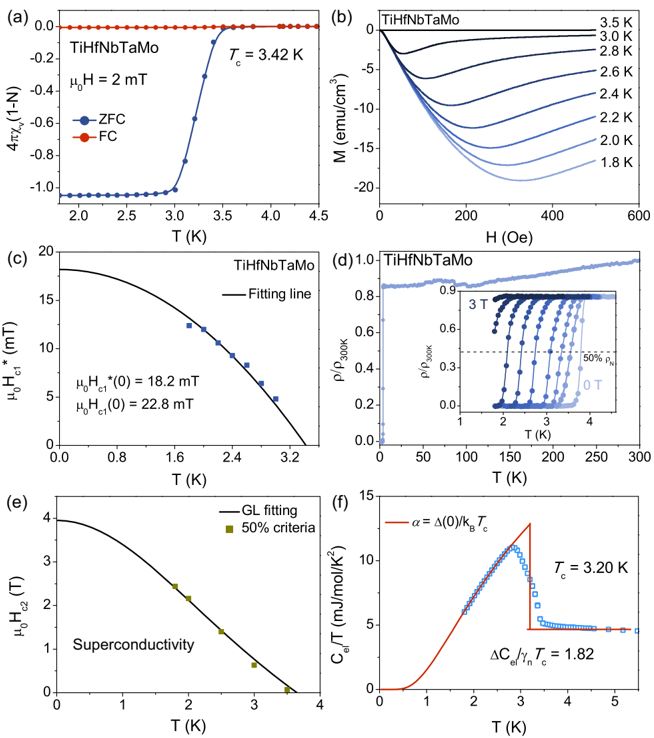
- Partly supportedcites [23] 23. Zeng, L. et al. Superconductivity in the bcc-type high-entropy alloy TiHfNbTaMo. Adv. Quantum Technol. 6 , 2300213 (2023). sourceExperimental — accuracy not yet measured
The Results and Discussion and Conclusion state that VEC, together with elemental composition, affects the Tc of bcc-type HEA superconductors. The Introduction mentions structural stability as a property of HEAs, but our copy does not link material stability to VEC; that part of the claim is unsupported. (LLM, conf=0.87)
plainstates an association- Asserted: passes — The authors put it forward as true.
- Checkable: passes — It can be checked against evidence.
- Load-bearing: passes — The paper’s conclusions depend on it.
- Based: passes — The paper gives a reason why it holds.
- Supported
The cited sources support only part of this claim — read each source’s verdict below.
In the paper
“The Ta-Hf-Nb-Zr-Ti system has emerged as the most extensively investigated BCC-type HEA superconductor 9 -17 .”
What the sources say
- Partly supportedcites [9] 9. von Rohr, F., Winiarski, M. J., Tao, J., Klimczuk, T. & Cava, R. J. Effect of electron count and chemical complexity in the Ta-Nb-Hf-Zr-Ti high-entropy alloy superconductor. P. Natl Acad. Sci. USA 113 , E7144 -e7150 (2016). sourceExperimental — accuracy not yet measured
The introduction (p. 2) identifies Ta-Nb-Hf-Zr-Ti as a BCC high-entropy-alloy superconductor, and the Summary and Conclusion (p. 7) report investigations of multiple compositions. The paper does not compare how extensively this system has been investigated with other BCC HEA superconductors, so it does not establish “most extensively investigated.” (LLM, conf=0.86)
- Partly supportedcites [10] 10. Guo, J. et al. Robust zero resistance in a superconducting high-entropy alloy at pressures up to 190 GPa. P. Natl Acad. Sci. USA 114 , 13144 -13147 (2017). sourceExperimental — accuracy not yet measured
The Discussion (page not available) identifies (TaNb)0.67(HfZrTi)0.33 as a BCC superconducting high-entropy alloy, and the paper investigates its behavior under pressure. Our copy does not establish the comparative claim that the Ta-Hf-Nb-Zr-Ti system is the most extensively investigated BCC-type HEA superconductor. (LLM, conf=0.85)
- Partly supportedcites [11] 11. Sobota, P. et al. Superconductivity in the high-entropy alloy (NbTa)0.67 (-MoHfW)0.33. Phys. Rev. B 106 , 184512 (2022). sourceExperimental — accuracy not yet measured
The introductory passage (page unavailable) identifies a Ta–Nb–Hf–Zr–Ti alloy as the first HEA superconductor and says its discovery sparked a search for others. It does not establish that the Ta–Hf–Nb–Zr–Ti system is the most extensively investigated BCC-type HEA superconductor. (LLM, conf=0.84)
- Not checked — no full text of the sourcecites [12] 12. Kim, G. et al. Strongly correlated and strongly coupled s-wave superconductivity of the high entropy alloy Ta1/6 Nb2/6Hf1/6 Zr1/6 Ti 1/6 compound. Acta Mater. 186 , 250 -256 (2020). source
- Not checked — no full text of the sourcecites [13] 13. Kim, J. H. et al. Enhancement of critical current density and strong vortex pinning in high entropy alloy superconductor Ta1/6Nb2/6Hf1/6Zr1/6 Ti 1/6 synthesized by spark plasma sintering. Acta Mater. 232 , 117971 (2022). source
- Not checked — no full text of the sourcecites [14] 14. Uporov, S. A. et al. Pressure effects on electronic structure and electrical conductivity of TiZrHfNb high-entropy alloy. Intermetallics 140 , 107394 (2022). source
- Not checked — no full text of the sourcecites [15] 15. Hidayati, R. et al. Enhancement of critical current density and critical magnetic fi eld of superconducting medium entropy alloy Nb2/5Hf1/5 Zr1/5 Ti 1/5 . Acta Mater. 261 , 119420 (2023). source
- Partly supportedcites [16] 16. Zeng, L. et al. Extremely strong coupling s-wave superconductivity in the medium-entropy alloy TiHfNbTa. Sci. China Phys. Mech. Astron. 66 , 277412 (2023). sourceExperimental — accuracy not yet measured
The introductory passage (indexed under Abstract; page unavailable) identifies Ti-Zr-Hf-Nb-Ta as the system in which the first HEA superconductor was reported and notes growing research on HEA superconductors. It does not say that this system is the most extensively investigated BCC-type HEA superconductor; that comparative claim is unsupported by our copy. (LLM, conf=0.82)
- Partly supportedcites [17] 17. Gao, L. et al. Fishtail effect and the vortex phase diagram of high-entropy alloy superconductor. Appl. Phys. Lett. 120 , 092602 (2022). sourceExperimental — accuracy not yet measured
The paper identifies the Ta–Nb–Hf–Zr–Ti system as an HEA superconductor (p. 1) and describes the composition it studies as bcc-type (p. 2). It does not say that this system is the most extensively investigated bcc-type HEA superconductor. (LLM, conf=0.85)
plain- Asserted: passes — The authors put it forward as true.
- Checkable: passes — It can be checked against evidence.
- Load-bearing: unclear — It is unclear whether the paper’s conclusions depend on it.
- Based: passes — The paper gives a reason why it holds.
- Partly supported
The cited sources support only part of this claim — read each source’s verdict below.
In the paper
“BCC-type HEA superconductors with VECs of 4.8 or more have been reported for (TiZrNbTa)1x W x 30 , Nb20Re20Zr20Hf20Ti20 19 , NbTaTiZrFe 31 , TiHfNbTaMo 23 , and Ti-Hf-Nb-Ta-Re systems 25 .”
What the sources say
- Supportedcites [30] 30. Shu, R., Zhang, X., Rao, S. G., le Febvrier, A. & Eklund, P. Effects of alloying and deposition temperature on phase formation and superconducting - properties of TiZrTaNb-based high entropy-alloy fi lms. Appl. Phys. Lett. 120 , 151901 (2022). source
Citation 30 is attached to the (TiZrNbTa)₁₋ₓWₓ system, not the other systems in the sentence. The paper reports superconducting W-alloyed films and identifies bcc phases at W fractions including x = 0.29 and 0.35; those compositions have nominal VECs above 4.8. The supplied copy labels these passages “Abstract” and gives no page number. (LLM, conf=0.86)
- Partly supportedcites [19] 19. Marik, S., Varghese, M., Sajilesh, K. P., Singh, D. & Singh, R. P. Superconductivity in equimolar Nb-Re-Hf-Zr-Ti high entropy alloy. J. Alloy. Compd. 769 , 1059 -1063 (2018). sourceExperimental — accuracy not yet measured
The Experimental Details identify Nb20Re20Zr20Hf20Ti20 as the nominal composition, and the Results and Discussion report a bcc structure and superconductivity for the resulting sample. Our copy does not state a VEC of 4.8 or more; it also reports a measured composition of Nb21Re16Zr20Hf23Ti20 rather than the nominal equimolar composition. (LLM, conf=0.83)
- Supportedcites [31] 31. Wu, K. Y., Chen, S. K. & Wu, J. M. Superconducting in equal molar NbTaTiZrbased high-entropy alloys. Nat. Sci. 10 , 110 -124 (2018). source
For the part this citation carries (NbTaTiZrFe), Table 2 in §4.1.2 lists NbTaTiZrFe with an overall e/a (VEC) of 5.20 and T c = 6.87 K, with every resolved phase at e/a ≥ 4.884 (white Nb-Ta rich 4.884, gray Zr-Fe rich 5.474, black Ti-Zr rich 4.905), so the 'VECs of 4.8 or more' and superconducting parts are stated. §2 THEORY independently reports 'Fe-containing NbTaTiZrFe has T c = 6.87 ± 0.03 K', and §4.1.1 confirms the Nb-Ta-rich white phase as the SC phase. The BCC/A2 characterisation is made generally for the equimolar HEAs of this study ('the main lattice structure herein is a pseudo-unitary A2 structure'; C4–C6 'pseudo-unitary A2 random BCC solid solutions'), rather than being separately indexed for NbTaTiZrFe, which is the only slight looseness; the other alloy systems in the sentence are credited to different references and are not judged here. (LLM, conf=0.82)
plain- Asserted: passes — The authors put it forward as true.
- Checkable: passes — It can be checked against evidence.
- Load-bearing: passes — The paper’s conclusions depend on it.
- Based: passes — The paper gives a reason why it holds.
- Supported
91 more claims · 58 with their cited sources checked
Create a free account to see all 149 claims and to verify the 4 references still open.
- It may state two separate claims as one. 46
- Probably not a substantial claim. 9
Citations
Cites
Yeh, J. ‐., Chen, S. ‐., Lin, S. ‐., Gan, J. ‐., Chin, T. ‐., Shun, T. ‐., Tsau, C. ‐., & Chang, S. ‐. (2004) · Advanced Engineering Materials · doi:10.1002/adem.200300567 · Cited by 15,281
Topological insulators and superconductors
Qi, X.-L., & Zhang, S.-C. (2011) · Reviews of Modern Physics · doi:10.1103/revmodphys.83.1057 · Cited by 14,394 · cited 1×
“The combination of superconductivity and topology is expected to display novel types of quasiparticles, including non-Abelian Majorana zero modes or fractional charge and spin currents 90 – 92 .”
George, E. P., Raabe, D., & Ritchie, R. O. (2019) · Nature Reviews Materials · doi:10.1038/s41578-019-0121-4 · Cited by 5,047 · cited 3×
“Since then, numerous other materials have been characterized, leading to the adoption of the term high-entropy materials (HEMs) to more comprehensively describe this novel class of inorganic solids 3,4 .”
Rost, C. M., Sachet, E., Borman, T., Moballegh, A., Dickey, E. C., Hou, D., Jones, J. L., Curtarolo, S., & Maria, J.-P. (2015) · Nature Communications · doi:10.1038/ncomms9485 · Cited by 3,525 · cited 1×
“The principle was subsequently extended to high-entropy ceramics (HECs), with the initial examples in powder form being high-entropy oxides published in 2015 2,3 .”
Effect of valence electron concentration on stability of fcc or bcc phase in high entropy alloys
Guo, S., Ng, C., Lu, J., & Liu, C. T. (2011) · Journal of Applied Physics · doi:10.1063/1.3587228 · Cited by 2,911 · cited 1×
“The intermediate VEC range of 6.87 – 8 corresponds to mixed phases of FCC and BCC 37 – 39 .”
InfluentialConventional superconductivity at 203 kelvin at high pressures in the sulfur hydride system
Drozdov, A. P., Eremets, M. I., Troyan, I. A., Ksenofontov, V., & Shylin, S. I. (2015) · Nature · doi:10.1038/nature14964 · Cited by 2,547
Theory of dirty superconductors
Anderson, P. W. (1959) · Journal of Physics and Chemistry of Solids · doi:10.1016/0022-3697(59)90036-8 · Cited by 2,267 · cited 5×
“A series of polycrystalline samples of the high-entropy telluride AgInSnPbBiTe 5 and (Ag, In, Pb, and Bi)Te 1-x Se x were synthesized via high-pressure synthesis 42,43 .”
InfluentialOses, C., Toher, C., & Curtarolo, S. (2020) · Nature Reviews Materials · doi:10.1038/s41578-019-0170-8 · Cited by 2,081 · cited 4×
“Since then, numerous other materials have been characterized, leading to the adoption of the term high-entropy materials (HEMs) to more comprehensively describe this novel class of inorganic solids 3,4 .”
InfluentialSuperconductivity at 43 K in an iron-based layered compound LaO1-xFxFeAs
Takahashi, H., Igawa, K., Arii, K., Kamihara, Y., Hirano, M., & Hosono, H. (2008) · Nature · doi:10.1038/nature06972 · Cited by 1,269
Signatures of superconductivity near 80 K in a nickelate under high pressure
Sun, H., Huo, M., Hu, X., Li, J., Liu, Z., Han, Y., Tang, L., Mao, Z., Yang, P., Wang, B., et al. (2023) · Nature · doi:10.1038/s41586-023-06408-7 · Cited by 746
Superconductivity above 150 K in HgBa2Ca2Cu3O8+δ at high pressures
Chu, C. W., Gao, L., Chen, F., Huang, Z. J., Meng, R. L., & Xue, Y. Y. (1993) · Nature · doi:10.1038/365323a0 · Cited by 607
Discovery of a Superconducting High-Entropy Alloy
Koželj, P., Vrtnik, S., Jelen, A., Jazbec, S., Jagličić, Z., Maiti, S., Feuerbacher, M., Steurer, W., & Dolinšek, J. (2014) · Physical Review Letters · doi:10.1103/physrevlett.113.107001 · Cited by 552 · cited 3×
“The Nb content in BCC-type HEAs is typically 25% or higher when the T c is > 7 K 6,9,12,13,23,71 .”
InfluentialA hexagonal close-packed high-entropy alloy: The effect of entropy
Zhao, Y. J., Qiao, J. W., Ma, S. G., Gao, M. C., Yang, H. J., Chen, M. W., & Zhang, Y. (2016) · Materials & Design · doi:10.1016/j.matdes.2016.01.149 · Cited by 446 · cited 1×
“In contrast to transition metal HEAs, these alloys lack solid solution strengthening effects, which is attributable to mismatches in the atomic size and electronic structure among the component elements 49,50 53 .”
Empirical Relation between Superconductivity and the Number of Valence Electrons per Atom
Matthias, B. T. (1955) · Physical Review · doi:10.1103/physrev.97.74 · Cited by 370 · cited 3×
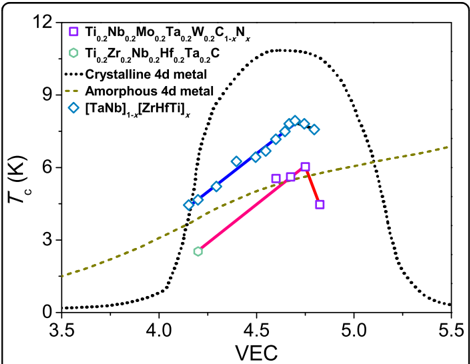
“3 VEC dependency of the T c for amorphous 4 d metal, crystalline 4 d metal, (NbTa) 1-x (TiHfZr) x , and high-entropy carbide systems 9,29,44,46 .”
InfluentialFeuerbacher, M., Heidelmann, M., & Thomas, C. (2015) · Materials Research Letters · doi:10.1080/21663831.2014.951493 · Cited by 308 · cited 1×
“In contrast to transition metal HEAs, these alloys lack solid solution strengthening effects, which is attributable to mismatches in the atomic size and electronic structure among the component elements 49,50 53 .”
Mechanically alloyed high entropy alloys: existing challenges and opportunities
Kumar, A., Singh, A., & Suhane, A. (2022) · Journal of Materials Research and Technology · doi:10.1016/j.jmrt.2022.01.141 · Cited by 294 · cited 1×
“The intermediate VEC range of 6.87 – 8 corresponds to mixed phases of FCC and BCC 37 – 39 .”
InfluentialFractional charge and quantized current in the quantum spin Hall state
Qi, X.-L., Hughes, T. L., & Zhang, S.-C. (2008) · Nature Physics · doi:10.1038/nphys913 · Cited by 214 · cited 1×
“The combination of superconductivity and topology is expected to display novel types of quasiparticles, including non-Abelian Majorana zero modes or fractional charge and spin currents 90 – 92 .”
High-entropy alloy superconductors: Status, opportunities, and challenges
Sun, L., & Cava, R. J. (2019) · Physical Review Materials · doi:10.1103/physrevmaterials.3.090301 · Cited by 213 · cited 3×
“Since then, numerous studies on high-entropy superconductors have been conducted, driven in part by their combined mechanical and electronic properties in various applications 7,8 .”
Robust zero resistance in a superconducting high-entropy alloy at pressures up to 190 GPa
Guo, J., Wang, H., von Rohr, F., Wang, Z., Cai, S., Zhou, Y., Yang, K., Li, A., Jiang, S., Wu, Q., et al. (2017) · Proceedings of the National Academy of Sciences · doi:10.1073/pnas.1716981114 · Cited by 212 · cited 1×
“4) 10 .”
von Rohr, F., Winiarski, M. J., Tao, J., Klimczuk, T., & Cava, R. J. (2016) · Proceedings of the National Academy of Sciences · doi:10.1073/pnas.1615926113 · Cited by 198 · cited 6×
“Experimental measurements have shown that several BCC-type alloy superconductors have different T c values with the same VEC = 4.7 9,69 .”
InfluentialSamal, R., Sanyal, G., Chakraborty, B., & Rout, C. S. (2021) · Journal of Materials Chemistry A · doi:10.1039/d0ta09752g · Cited by 185
Enhancement of superconductivity by pressure-driven competition in electronic order
Chen, X., Struzhkin, V. V., Yu, Y., Goncharov, A. F., Lin, C. T., Mao, H., & Hemley, R. J. (2010) · Nature · doi:10.1038/nature09293 · Cited by 126
Sc–Zr–Nb–Rh–Pd and Sc–Zr–Nb–Ta–Rh–Pd High-Entropy Alloy Superconductors on a CsCl-Type Lattice
Stolze, K., Tao, J., von Rohr, F. O., Kong, T., & Cava, R. J. (2018) · Chemistry of Materials · doi:10.1021/acs.chemmater.7b04578 · Cited by 122 · cited 2×
“The (NbZrSc) 0.65 (PdRh) 0.35 HEA has a maximum T c of approximately 9.3 K and has the largest μ 0 H c2 (0) of 10.7 T, which is similar to that of the NbTi super-conductor 47 .”
InfluentialA review of mechanical behaviour and stress effects in hard superconductors
Koch, C. C., & Easton, D. S. (1977) · Cryogenics · doi:10.1016/0011-2275(77)90288-0 · Cited by 119 · cited 1×
“Experimental measurements have shown that several BCC-type alloy superconductors have different T c values with the same VEC = 4.7 9,69 .”
InfluentialYing, T., Yu, T., Shiah, Y.-S., Li, C., Li, J., Qi, Y., & Hosono, H. (2021) · Journal of the American Chemical Society · doi:10.1021/jacs.1c01580 · Cited by 119
Superconductivity in a new hexagonal high-entropy alloy
Marik, S., Motla, K., Varghese, M., Sajilesh, K. P., Singh, D., Breard, Y., Boullay, P., & Singh, R. P. (2019) · Physical Review Materials · doi:10.1103/physrevmaterials.3.060602 · Cited by 113
Cutting Edge of High-Entropy Alloy Superconductors from the Perspective of Materials Research
Kitagawa, J., Hamamoto, S., & Ishizu, N. (2020) · Metals · doi:10.3390/met10081078 · Cited by 109 · cited 3×
“Since then, numerous studies on high-entropy superconductors have been conducted, driven in part by their combined mechanical and electronic properties in various applications 7,8 .”
High-entropy alloy superconductors on an α-Mn lattice
Stolze, K., Cevallos, F. A., Kong, T., & Cava, R. J. (2018) · Journal of Materials Chemistry C · doi:10.1039/c8tc03337d · Cited by 104
New high-entropy alloy superconductor Hf21Nb25Ti15V15Zr24
Ishizu, N., & Kitagawa, J. (2019) · Results in Physics · doi:10.1016/j.rinp.2019.102275 · Cited by 98
Superconductivity in the elements, alloys and simple compounds
Webb, G. W., Marsiglio, F., & Hirsch, J. E. (2015) · Physica C: Superconductivity and its Applications · doi:10.1016/j.physc.2015.02.037 · Cited by 94 · cited 1×
“This observation appears predictable because Nb has the highest T c of 9.2 K among all the elements at ambient pressure 72 .”
InfluentialHigh critical current density and high-tolerance superconductivity in high-entropy alloy thin films
Jung, S.-G., Han, Y., Kim, J. H., Hidayati, R., Rhyee, J.-S., Lee, J. M., Kang, W. N., Choi, W. S., Jeon, H.-R., Suk, J., et al. (2022) · Nature Communications · doi:10.1038/s41467-022-30912-5 · Cited by 92
von Rohr, F. O., & Cava, R. J. (2018) · Physical Review Materials · doi:10.1103/physrevmaterials.2.034801 · Cited by 85 · cited 2×
“…of (NbTa) 0.67 (TiZrHf) 0.33 is replaced by electron mixtures such as [Sc-Mo], [Y-Mo], and [Sc-Cr], and the T c in (NbTa) 0.67 (TiZrHf) 0.33 signi fi cantly decreases after Nb or Ta are replaced by isoelectronics, while the effects of Hf, Zr, and Ti substitution on T c are limited 71 .”
InfluentialSuperconductivity in equimolar Nb-Re-Hf-Zr-Ti high entropy alloy
Marik, S., Varghese, M., Sajilesh, K. P., Singh, D., & Singh, R. P. (2018) · Journal of Alloys and Compounds · doi:10.1016/j.jallcom.2018.08.039 · Cited by 83
Kim, G., Lee, M.-H., Yun, J. H., Rawat, P., Jung, S.-G., Choi, W., You, T.-S., Kim, S. J., & Rhyee, J.-S. (2020) · Acta Materialia · doi:10.1016/j.actamat.2020.01.007 · Cited by 79
von Rohr, F. O., & Cava, R. J. (2018) · Archive ouverte UNIGE (University of Geneva) · doi:10.5167/uzh-167496 · Cited by 73
Superconductivity in High-Entropy-Alloy Telluride AgInSnPbBiTe5
Mizuguchi, Y. (2019) · Journal of the Physical Society of Japan · doi:10.7566/jpsj.88.124708 · Cited by 66 · cited 2×
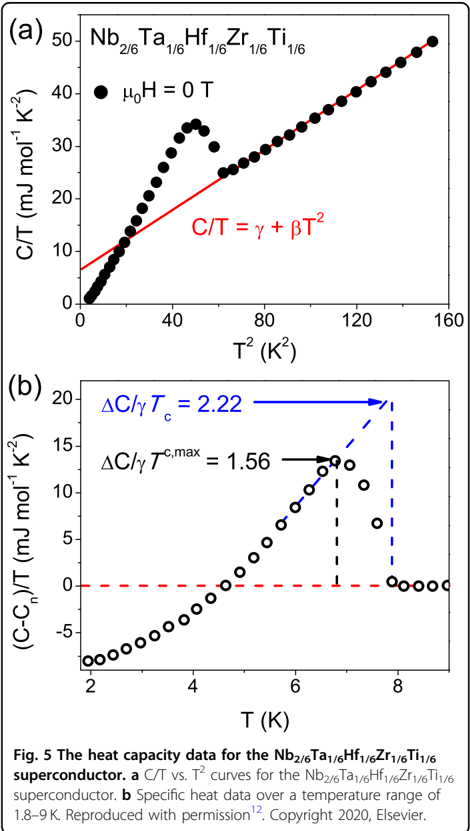
“The speci fi c heat jump value is close to the theoretical BCS value of 1.43.”
InfluentialSuperconductivity in hexagonal Nb-Mo-Ru-Rh-Pd high-entropy alloys
Liu, B., Wu, J., Cui, Y., Zhu, Q., Xiao, G., Wu, S., Cao, G., & Ren, Z. (2020) · Scripta Materialia · doi:10.1016/j.scriptamat.2020.03.004 · Cited by 62
Mizuguchi, Y., Kasem, M. R., & Matsuda, T. D. (2021) · Materials Research Letters · doi:10.1080/21663831.2020.1860147 · Cited by 62
Sogabe, R., Goto, Y., Abe, T., Moriyoshi, C., Kuroiwa, Y., Miura, A., Tadanaga, K., & Mizuguchi, Y. (2019) · Solid State Communications · doi:10.1016/j.ssc.2019.04.001 · Cited by 58
Shkodich, N., Sedegov, A., Kuskov, K., Busurin, S., Scheck, Y., Vadchenko, S., & Moskovskikh, D. (2020) · Metals · doi:10.3390/met10091268 · Cited by 57 · cited 1×
“FCC-type HEA superconductors were also reported in the M -Pt-Ir-Rh-W ( M = Re, Ta, Nb, and Mo) single-phase system, which was synthesized via splat cooling with a VEC between 7.87 and 8.38 41 .”
InfluentialLiu, B., Wu, J., Cui, Y., Zhu, Q., Xiao, G., Wu, S., Cao, G.-H., & Ren, Z. (2021) · Journal of Materials Science & Technology · doi:10.1016/j.jmst.2021.02.002 · Cited by 55 · cited 1×
“The VEC of HEA superconductors with α ‒ Mn structures ranges from 6.5 to 6.9 56 .”
InfluentialSuperconductivity and hardness of the equiatomic high-entropy alloy HfMoNbTiZr
Kitagawa, J., Hoshi, K., Kawasaki, Y., Koga, R., Mizuguchi, Y., & Nishizaki, T. (2022) · Journal of Alloys and Compounds · doi:10.1016/j.jallcom.2022.166473 · Cited by 54
Yamashita, A., Jha, R., Goto, Y., Matsuda, T. D., Aoki, Y., & Mizuguchi, Y. (2020) · Dalton Transactions · doi:10.1039/d0dt01880e · Cited by 52 · cited 1×
“A series of polycrystalline samples of the high-entropy telluride AgInSnPbBiTe 5 and (Ag, In, Pb, and Bi)Te 1-x Se x were synthesized via high-pressure synthesis 42,43 .”
High Entropy van der Waals Materials
Ying, T., Yu, T., Qi, Y., Chen, X., & Hosono, H. (2022) · Advanced Science · doi:10.1002/advs.202203219 · Cited by 51
Pressure effects on electronic structure and electrical conductivity of TiZrHfNb high-entropy alloy
Uporov, S. A., Ryltsev, R. E., Sidorov, V. A., Estemirova, S. K., Sterkhov, E. V., Balyakin, I. A., & Chtchelkatchev, N. M. (2022) · Intermetallics · doi:10.1016/j.intermet.2021.107394 · Cited by 50
Superconductivity in high and medium entropy alloys based on MoReRu
Lee, Y.-S., & Cava, R. J. (2019) · Physica C: Superconductivity and its Applications · doi:10.1016/j.physc.2019.1353520 · Cited by 49 · cited 1×
“In addition, studies have shown that an optimal VEC for an HCP-type MEA/HEA is close to 7.0 and that the T c is unlikely to exceed 10 K 54 .”
InfluentialRecord high Tc element superconductivity achieved in titanium
Zhang, C., He, X., Liu, C., et al. (2022) · Nature Communications · doi:10.1038/s41467-022-33077-3 · Cited by 49
Superconductivity in a uranium containing high entropy alloy
Nelson, W. L., Chemey, A. T., Hertz, M., Choi, E., Graf, D. E., Latturner, S., Albrecht-Schmitt, T. E., Wei, K., & Baumbach, R. E. (2020) · Scientific Reports · doi:10.1038/s41598-020-61666-z · Cited by 47
Polymorphism and superconductivity in the V-Nb-Mo-Al-Ga high-entropy alloys
Wu, J., Liu, B., Cui, Y., Zhu, Q., Xiao, G., Wang, H., Wu, S., Cao, G., & Ren, Z. (2020) · Science China Materials · doi:10.1007/s40843-019-1237-5 · Cited by 43
Superconductivity and Fermi-surface nesting in the candidate Dirac semimetal NbC
Yan, D., Geng, D., Gao, Q., Cui, Z., Yi, C., Feng, Y., Song, C., Luo, H., Yang, M., Arita, M., et al. (2020) · Physical Review B · doi:10.1103/physrevb.102.205117 · Cited by 43 · cited 1×
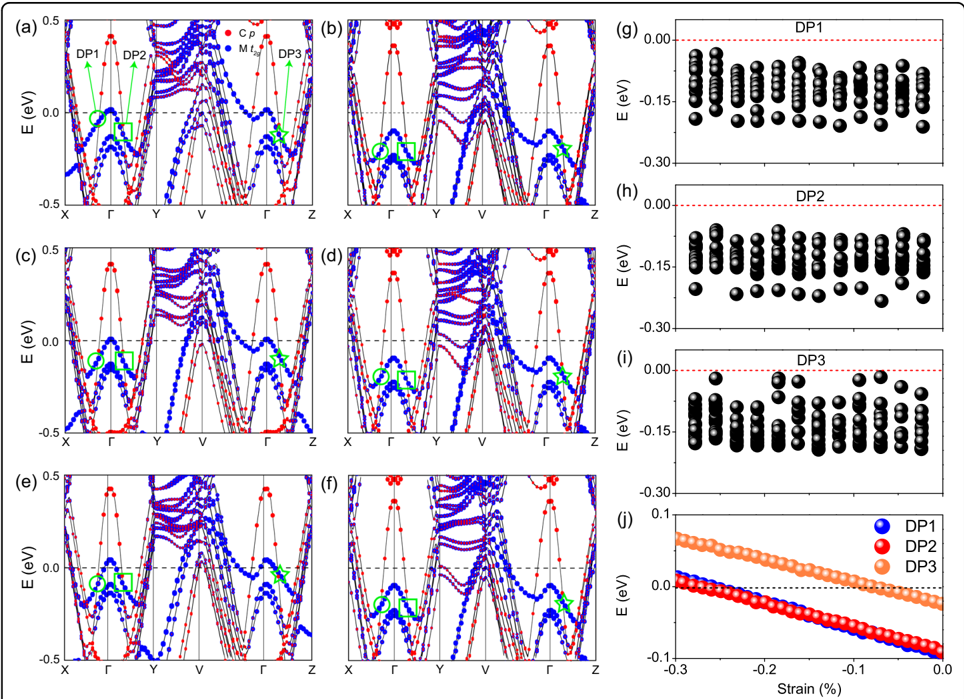
“Notably, the energies of the type II Dirac point away from the Fermi level are − 1.0 and − 1.3 eV in NbC and TaC 93,94 , respectively, which are much lower than those of Ti 0.2 Zr 0.2 Nb 0.2 Hf 0.2 Ta 0.2 C.”
InfluentialSelf-citationSynthesis of new high-entropy alloy-type Nb3 (Al, Sn, Ge, Ga, Si) superconductors
Yamashita, A., Matsuda, T. D., & Mizuguchi, Y. (2021) · Journal of Alloys and Compounds · doi:10.1016/j.jallcom.2021.159233 · Cited by 43
Zeng, L., Wang, Z., Song, J., Lin, G., Guo, R., Luo, S., Guo, S., Li, K., Yu, P., Zhang, C., et al. (2023) · Advanced Functional Materials · doi:10.1002/adfm.202301929 · Cited by 39
Self-citationKim, J. H., Hidayati, R., Jung, S.-G., Salawu, Y. A., Kim, H.-J., Yun, J. H., & Rhyee, J.-S. (2022) · Acta Materialia · doi:10.1016/j.actamat.2022.117971 · Cited by 38
(2022) · doi:10.1103/physrevb.106.184512 · Cited by 38
Superconductivity and paramagnetism in Cr-containing tetragonal high-entropy alloys
Liu, B., Wu, J., Cui, Y., Zhu, Q., Xiao, G., Wu, S., Cao, G.-H., & Ren, Z. (2021) · Journal of Alloys and Compounds · doi:10.1016/j.jallcom.2021.159293 · Cited by 36
Kasem, M. R., Nakahira, Y., Yamaoka, H., Matsumoto, R., Yamashita, A., Ishii, H., Hiraoka, N., Takano, Y., Goto, Y., & Mizuguchi, Y. (2022) · Scientific Reports · doi:10.1038/s41598-022-11862-w · Cited by 35
Superconductivity in the bcc‐Type High‐Entropy Alloy TiHfNbTaMo
Zeng, L., Zhan, J., Boubeche, M., Li, K., Li, L., Yu, P., Wang, K., Zhang, C., Jin, K., Sun, Y., et al. (2023) · Advanced Quantum Technologies · doi:10.1002/qute.202300213 · Cited by 34 · cited 3×
“Studies have revealed that the VEC of BCC-type HEA superconductors signi fi cantly in fl u-ences both their superconducting T c and material stability 7,23 .”
Self-citationA new quasi-one-dimensional compound Ba3TiTe5 and superconductivity induced by pressure
Zhang, J., Jia, Y., Wang, X., et al. (2019) · NPG Asia Materials · doi:10.1038/s41427-019-0158-2 · Cited by 33
Xiao, G., Yang, W., Zhu, Q., Song, S., Cao, G.-H., & Ren, Z. (2023) · Scripta Materialia · doi:10.1016/j.scriptamat.2022.115099 · Cited by 33
Chen, J., Huang, R., Zhou, X., Zhou, D., Li, M., Bai, C., Liu, Z., & Cai, C. (2023) · Journal of Rare Earths · doi:10.1016/j.jre.2022.06.006 · Cited by 31
Extremely strong coupling s-wave superconductivity in the medium-entropy alloy TiHfNbTa
Zeng, L., Hu, X., Boubeche, M., Li, K., Li, L., Yu, P., Wang, K., Zhang, C., Jin, K., Yao, D.-X., et al. (2023) · Science China Physics, Mechanics & Astronomy · doi:10.1007/s11433-023-2113-6 · Cited by 29 · cited 1×
“In addition, extremely strong coupling behavior was also observed in TiHfNbTa superconductors 16 .”
Self-citationKim, J., Jung, S.-G., Han, Y., Kim, J. H., Rhyee, J.-S., Yeo, S., & Park, T. (2024) · Journal of Materials Science & Technology · doi:10.1016/j.jmst.2023.11.040 · Cited by 29 · cited 1×
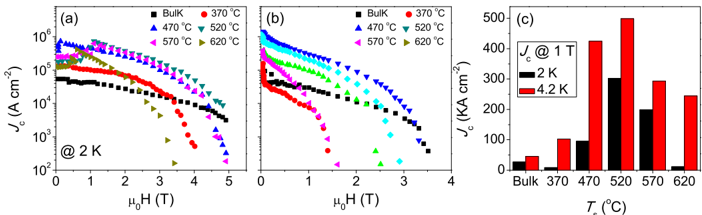
“The J c at 4.2 K of the annealed Nb 2/6 Ta 1/6 Hf 1/6 Zr 1/6 Ti 1/6 HEA at 550 °C for 24 h is improved signi fi cantly by approximately 1860% compared with that of the as-cast sample 36 .”
InfluentialGrowth and Characterization of ROBiS2 High-Entropy Superconducting Single Crystals
Fujita, Y., Kinami, K., Hanada, Y., Nagao, M., Miura, A., Hirai, S., Maruyama, Y., Watauchi, S., Takano, Y., & Tanaka, I. (2020) · ACS Omega · doi:10.1021/acsomega.0c01969 · Cited by 28
Superconducting properties of new hexagonal and noncentrosymmetric cubic high entropy alloys
Motla, K., Arushi, Jangid, S., Meena, P. K., Kushwaha, R. K., & Singh, R. P. (2023) · Superconductor Science and Technology · doi:10.1088/1361-6668/acfac5 · Cited by 28
Wu, L., Si, J., Guan, S., Zhang, H., Dou, J., Luo, J., Yang, J., Yu, H., Zhang, J., Ma, X., et al. (2024) · Physical Review Letters · doi:10.1103/physrevlett.132.166002 · Cited by 28 · cited 1×
“The T c of most HEA and MEA superconductors does not exceed 10 K. Recently, a new record T c was observed in a BCC-type TaNbHfZr MEA superconductor under pressure 85 .”
Fishtail effect and the vortex phase diagram of high-entropy alloy superconductor
Gao, L., Ying, T., Zhao, Y., Cao, W., Li, C., Xiong, L., Wang, Q., Pei, C., Ge, J.-Y., Hosono, H., et al. (2022) · Applied Physics Letters · doi:10.1063/5.0083365 · Cited by 27 · cited 2×
“Notably, F p reaches a maximum at a reduced fi eld value of 0.72, which markedly contrasts with the behavior observed in iron-based and cuprate high-T c superconductors 17 .”
InfluentialSuperconductivity with a high upper critical field in an equiatomic high-entropy alloy Sc–V–Ti–Hf–Nb
Jangid, S., Meena, P. K., Kushwaha, R. K., Srivastava, S., Manna, P., Mishra, P., Sharma, S., & Singh, R. P. (2024) · Applied Physics Letters · doi:10.1063/5.0200805 · Cited by 27
Structural and Physical Properties of High-Entropy REBa2Cu3O7-δ Oxide Superconductors
Wang, K., Hou, Q., Pal, A., Wu, H., Si, J., Chen, J., Yu, S., Chen, Y., Lv, W., Ge, J.-Y., et al. (2021) · Journal of Superconductivity and Novel Magnetism · doi:10.1007/s10948-021-05855-5 · Cited by 26
Investigations on superconductivity in an equi-atomic disordered Hf-Nb-Ta-Ti-V high entropy alloy
Sarkar, N. K., Prajapat, C. L., Ghosh, P. S., Garg, N., Babu, P. D., Wajhal, S., Krishna, P. S. R., Gonal, M. R., Tewari, R., & Mishra, P. K. (2022) · Intermetallics · doi:10.1016/j.intermet.2022.107503 · Cited by 26
Superconductivity in centrosymmetric topological superconductor candidate TaC
Yan, D. Y., Yang, M., Wang, C. X., Song, P. B., Yi, C. J., & Shi, Y. G. (2021) · Superconductor Science and Technology · doi:10.1088/1361-6668/abdcc3 · Cited by 25
Scaling laws for ion irradiation effects in iron-based superconductors
Torsello, D., Gozzelino, L., Gerbaldo, R., Tamegai, T., & Ghigo, G. (2021) · Scientific Reports · doi:10.1038/s41598-021-84699-4 · Cited by 24 · cited 1×
“Notably, these HEA fi lms exhibit resistance to displacement damage that is more than 1000 times greater than that of other promising superconductors with technological applications, such as Nb 3 Sn, MgB 2 , iron-based superconductors, and high-T c cuprate superconductors 99 – 102 .”
High-entropy silicide superconductors with W5Si3 -type structure
Liu, B., Yang, W., Xiao, G., Zhu, Q., Song, S., Cao, G.-H., & Ren, Z. (2023) · Physical Review Materials · doi:10.1103/physrevmaterials.7.014805 · Cited by 24
Structural transformation and superconductivity in carbon-added hexagonal high-entropy alloys
Zhu, Q., Xiao, G., Cui, Y., Yang, W., Song, S., Cao, G.-H., & Ren, Z. (2022) · Journal of Alloys and Compounds · doi:10.1016/j.jallcom.2022.164700 · Cited by 23
Boron based new high entropy alloy superconductor Mo0.11W0.11V0.11Re0.34B0.33
Motla, K., Soni, V, Meena, P. K., & Singh, R. P. (2022) · Superconductor Science and Technology · doi:10.1088/1361-6668/ac5bea · Cited by 23
Zhang, X., Shu, R., Liu, H., Elsukova, A., Persson, P. O. Å., Schilling, A., von Rohr, F. O., & Eklund, P. (2022) · Communications Physics · doi:10.1038/s42005-022-01059-y · Cited by 23 · cited 1×
“A crystal/glass phase is formed in the near equimolar region of (NbTa) 1-x (TiHfZr) x Mo y and (NbTa) 1-x (TiHfZr) x HEA fi lms deposited through magnetron sputtering 96 , which involves the coexistence of nanocrystalline granules and amorphous aggregations.”
Hattori, T., Watanabe, Y., Nishizaki, T., Hiraoka, K., Kakihara, M., Hoshi, K., Mizuguchi, Y., & Kitagawa, J. (2023) · Journal of Alloys and Metallurgical Systems · doi:10.1016/j.jalmes.2023.100020 · Cited by 23 · cited 1×
“The BCC-type HEA superconductors predominantly consist of transition metals such as Nb, Ta, Zr, V, Hf, and Ti, which exhibit VECs of either 4 or 5 7,8 , NbTaTiZrFe 31 , TiHfNbTaMo 23 , and Ti-Hf-Nb-Ta-Re systems 25 .”
Hidayati, R., Kim, J. H., Jung, S.-G., Cho, K.-S., Yun, J. H., & Rhyee, J.-S. (2023) · Acta Materialia · doi:10.1016/j.actamat.2023.119420 · Cited by 23
Zeng, L., Hu, X., Zhou, Y., Boubeche, M., Guo, R., Liu, Y., Luo, S., Guo, S., Li, K., Yu, P., et al. (2024) · Advanced Science · doi:10.1002/advs.202305054 · Cited by 22
Self-citationPreparation and characterization of high-entropy alloy (TaNb)(1-x)(ZrHfTi)(x) superconducting films
Zhang, X., Winter, N., Witteveen, C., Moehl, T., Xiao, Y., Krogh, F., Schilling, A., & von Rohr, F. O. (2020) · ETH Zurich · doi:10.3929/ethz-b-000467850 · Cited by 21
Shu, R., Zhang, X., Rao, S. G., le Febvrier, A., & Eklund, P. (2022) · Applied Physics Letters · doi:10.1063/5.0091777 · Cited by 20
Xu, C., Wang, J., Ying, T., Huang, D., Gou, H., Zhang, Q., Li, Y., Hosono, H., Guo, J., & Chen, X. (2022) · Physical review. B./Physical review. B · doi:10.1103/physrevb.106.184502 · Cited by 20
Superconductivity in high-entropy alloy system containing Th
Sobota, P., Topolnicki, R., Ossowski, T., Pikula, T., Gnida, D., Idczak, R., & Pikul, A. (2023) · Scientific Reports · doi:10.1038/s41598-023-43085-y · Cited by 20
Ion-beam induced metal insulator transition in YBCO films
Lesueur, J., Dumoulin, L., Quillet, S., & Radcliffe, J. (1993) · Journal of Alloys and Compounds · doi:10.1016/0925-8388(93)90792-l · Cited by 19
Superconductivity in the Medium-Entropy Alloy TiVNbTa with a Body-Centered Cubic Structure
Li, K., Hu, X., Guo, R., Jiang, W., Zeng, L., Li, L., Yu, P., Wang, K., Zhang, C., Guo, S. H., et al. (2023) · The Journal of Physical Chemistry C · doi:10.1021/acs.jpcc.3c04125 · Cited by 19
Self-citationStructural sequence and superconductivity in high-entropy Mo-W-Re-Ru-Pd alloys
Xu, X., Yang, W., Song, H., Wang, J., Yu, L., Ren, Z., & Liu, B. (2024) · Scripta Materialia · doi:10.1016/j.scriptamat.2024.115986 · Cited by 18 · cited 1×
“In contrast to transition metal HEAs, these alloys lack solid solution strengthening effects, which is attributable to mismatches in the atomic size and electronic structure among the component elements 49,50 53 .”
Gutowska, S., Kawala, A., & Wiendlocha, B. (2023) · Physical Review B · doi:10.1103/physrevb.108.064507 · Cited by 17
Search for superconductivity in hydrides of TiZrNb, TiZrNbHf and TiZrNbHfTa equimolar alloys
Gabáni, S., Cedervall, J., Ek, G., Pristáš, G., Orendáč, M., Bačkai, J., Onufriienko, O., Gažo, E., & Flachbart, K. (2023) · Physica B: Condensed Matter · doi:10.1016/j.physb.2022.414414 · Cited by 16 · cited 2×
“The impact of hydrogen on the superconducting characteristics of BCC-type HEAs and MEAs has also been reported.”
Pristáš, G., Gruber, G. C., Orendáč, M., Bačkai, J., Kačmarčík, J., Košuth, F., Gabáni, S., Szabó, P., Mitterer, C., & Flachbart, К. (2023) · Acta Materialia · doi:10.1016/j.actamat.2023.119428 · Cited by 16
Effect of Annealing in Eutectic High-Entropy Alloy Superconductor NbScTiZr
Seki, T., Arima, H., Kawasaki, Y., Nishizaki, T., Mizuguchi, Y., & Kitagawa, J. (2024) · Journal of Superconductivity and Novel Magnetism · doi:10.1007/s10948-023-06643-z · Cited by 16
Xiao, G., Zhu, Q., Yang, W., Cui, Y., Song, S., Cao, G.-H., & Ren, Z. (2023) · Science China Materials · doi:10.1007/s40843-022-2144-x · Cited by 15 · cited 1×
“High-entropy superconductivity is also found in layered structures 61 – 64 , σ -type structures 65,66 , and CuAl 2 -type structures 67 .”
Flükiger, R., Spina, T., Cerutti, F., Ballarino, A., Scheuerlein, C., Bottura, L., Zubavichus, Y., Ryazanov, A., Svetogovov, R. D., Shavkin, S., et al. (2017) · Superconductor Science and Technology · doi:10.1088/1361-6668/aa64ee · Cited by 14
Yuan, Y., Zhu, X., Zhou, Y., et al. (2021) · NPG Asia Materials · doi:10.1038/s41427-021-00285-0 · Cited by 14
Spectroscopic evidence for the superconductivity of elemental metal Y under pressure
Cao, Z.-Y., Jang, H., Choi, S., et al. (2023) · NPG Asia Materials · doi:10.1038/s41427-022-00457-6 · Cited by 14 · cited 1×
“In the context of quantum materials, the pressure-induced enhancement of T c in iron-pnictide and copper oxide superconductors 76 – 78 , and other elements 82,83 are examples.”
Zeng, L., Hu, X., Zhou, Y., Liu, Y., Boswell, M., Xie, W., Li, K., Li, L., Yu, P., Zhang, C., et al. (2023) · The Innovation Materials · doi:10.59717/j.xinn-mater.2023.100042 · Cited by 14
Self-citationRecent progress on non-Abelian anyons: from Majorana zero modes to topological Dirac fermionic modes
Wu, Y., Liu, J., & Xie, X. (2023) · Science China Physics, Mechanics & Astronomy · doi:10.1007/s11433-022-2015-y · Cited by 12
Superconductivity in the face-centered cubic W-M-Rh-Ir-Pt M = {Mo, Nb, Ta, Re} high-entropy alloy
Strong, D., & Cava, R. J. (2024) · Journal of Materials Science · doi:10.1007/s10853-024-09780-5 · Cited by 12
Superconductivity in (TaNb)1–x(ZrHfTi)x Moy high-entropy alloy films
Zhang, X., Eklund, P., & Shu, R. (2023) · Applied Physics Letters · doi:10.1063/5.0159276 · Cited by 11
Superconducting in Equal Molar NbTaTiZr-Based High-Entropy Alloys
Wu, K.-Y., Chen, S.-K., & Wu, J.-M. (2018) · Natural Science · doi:10.4236/ns.2018.103012 · Cited by 11
Superconductivity in the cobalt-doped V3Si A15 intermetallic compound
Zeng, L., Zhou, H., Du, H., Zhong, R., Guo, R., Guo, S., Su, W., Li, K., Zhang, C., Yu, P., et al. (2023) · Superconductor Science and Technology · doi:10.1088/1361-6668/acadb4 · Cited by 9
Self-citationSuperconductivity in High-Entropy Antimonide M1–xPtxSb (M = Equimolar Ru, Rh, Pd, and Ir)
Hirai, D., Uematsu, N., Saitoh, K., Katayama, N., & Takenaka, K. (2023) · Inorganic Chemistry · doi:10.1021/acs.inorgchem.3c01364 · Cited by 9
Srivastava, N., & Santra, S. (2024) · Journal of Materials Chemistry C · doi:10.1039/d4tc01500b · Cited by 9
Pressure-induced superconductivity in the nonsymmorphic topological insulator KHgAs
Dai, G., Jia, Y., Gao, B., Peng, Y., Zhao, J., Ma, Y., Chen, C., Zhu, J., Li, Q., Yu, R., et al. (2023) · NPG Asia Materials · doi:10.1038/s41427-023-00496-7 · Cited by 8
Near-room-temperature superconductivity in hydrogen sulfide
Ma, Y. (2016) · NPG Asia Materials · doi:10.1038/am.2015.147 · Cited by 7
Influence of disorder strength on the superconducting mechanism of MgB 2
Lee, J. M., Jung, S.-G., Han, Y., Park, T.-H., Jang, J., Jeon, H.-R., Yeo, S., Choi, H.-Y., Park, T., & Kang, W. N. (2022) · Superconductor Science and Technology · doi:10.1088/1361-6668/ac392a · Cited by 7
Shu, R., Zhang, X., Tasnádi, F., Olovsson, W., Rao, S. G., Greczynski, G., le Febvrier, A., Magnuson, M., & Eklund, P. (2024) · Annalen der Physik · doi:10.1002/andp.202300470 · Cited by 7
Dual-phase superconductivity in high-pressure high-temperature synthesized TaNbZrHfTi
Sereika, R., Iwan, S., Baker, P. A., Bi, W., & Vohra, Y. K. (2024) · AIP Advances · doi:10.1063/5.0214797 · Cited by 7
Superconductivity of the new medium-entropy alloy V4Ti2W with a body-centered cubic structure
Li, K., Lin, W., Guo, R., Guo, S. H., Zeng, L., Li, L., Yu, P., Wang, K., Zhang, C., & Luo, H. (2024) · Materials Today Communications · doi:10.1016/j.mtcomm.2024.108444 · Cited by 4
Self-citationHigh critical current density and high-tolerance superconductivity in high-entropy alloy thin filmsPreprint
Jung, S., Han, Y., Kim, J. H., et al. (2022) · Research Square · doi:10.21203/rs.3.rs-1220945/v1 · Cited by 3
Materials Research on High-Entropy Alloy Superconductors
Kitagawa, J., Ishizu, N., & Hamamoto, S. (2021) · IntechOpen eBooks · doi:10.5772/intechopen.99693 · Cited by 3
Mechanical behavior and stress effects in hard superconductors: a review
Koch, C. C., & Easton, D. S. (1977) · doi:10.2172/5378541 · Cited by 3
A New Quasi One-Dimensional Compound Ba3TiTe5 and Superconductivity Induced by PressurePreprint
Zhang, J., Jia, Y., Wang, X., et al. (2019) · arXiv (Cornell University) · doi:10.48550/arxiv.1910.11511 · Cited by 1
Mizuguchi, Y., Kasem, M. R., Nakahira, Y., Yamaoka, H., Matsumoto, R., Yamashita, A., Ishii, H., Hiraoka, N., Takano, Y., & Goto, Y. (2022) · Research Square · doi:10.21203/rs.3.rs-1319304/v1 · Cited by 1
Superconductivity in the cobalt-doped V3Si A15 intermetallic compound
Zeng, L., Zhou, H., Du, H. X., et al. (2023) · arXiv (Cornell University) · doi:10.48550/arxiv.2309.11055
Self-citationSuperconductivity in high-entropy alloy system containing Th
Sobota, P., Idczak, R., Topolnicki, R., Ossowski, T., Pikula, T., Gnida, D., & Pikul, A. (2023) · doi:10.21203/rs.3.rs-3062485/v1
Research works printed but not linked: 1
- 31. Wu, K. Y., Chen, S. K. & Wu, J. M. Superconducting in equal molar NbTaTiZrbased high-entropy alloys. Nat. Sci. 10 , 110 -124 (2018).
Cited by
Poulia, A., & Karantzalis, A. E. (2025) · Materials · doi:10.3390/ma18245616 · Cited by 55
Edalati, K., Bertrand, A., Edalati, P., Nguyen, T. T., Enikeev, N. A., & Mito, M. (2025) · Scripta Materialia · doi:10.1016/j.scriptamat.2025.116769 · Cited by 16
“Despite recent interests in high-entropy superconductors [10-15], the influence of microstructural and nanostructural features like grain refinement and defect generation on their superconducting properties remains underexplored in available publications [16-24].”
Kitagawa, J., Mizuguchi, Y., & Nishizaki, T. (2025) · The European Physical Journal B · doi:10.1140/epjb/s10051-025-00922-5 · Cited by 14
“Superconductivity has emerged as one of the intriguing functionalities explored in HEAs since the discovery of the body-centered cubic (bcc) Ta 34 Nb 33 Hf 8 Zr 14 Ti 11 superconductor in 2014 [17–21].”
Li, S., Sun, Y. H., Liu, Z., Zhou, L., Wu, T., & Bai, Y. (2025) · Journal of Materials Science · doi:10.1007/s10853-025-10695-y · Cited by 10
Artificial intelligence in high-entropy materials
Wang, J., & Zhang, Y. (2025) · Next Materials · doi:10.1016/j.nxmate.2025.100993 · Cited by 17
Metadata
- Authors
- Zeng, L., Li, L., Li, K., Chen, R., & Luo, H.
- Affiliations
- Sun Yat-sen University (CN)
- Corresponding author
- Luo, Huixia
- Venue
- NPG Asia Materials
- Published
- 2024-11-29
- Volume
- 16
- Issue
- 1
- ISSN
- 1884-4049 (ISSN-L)
- 1884-4057
- OpenAlex
- W4404798402
- Semantic Scholar
- 25c1c2781bc75300272a9b30c4a6bad7e822535a
- Cited by
- 38
- References
- 114
- Citations by year
- 2026: 17 · 2025: 21
- FWCI
- 5.07
- Type
- journal article
- Language
- en
- Open access
- gold
- doi.org
- Licence
- cc-by
- creativecommons.org/licenses/by/4.0 (tdm)
- creativecommons.org/licenses/by/4.0 (vor)
- Locations
- NPG Asia Materials (publishedVersion, cc-by)
- DOAJ (DOAJ: Directory of Open Access Journals) (submittedVersion, cc-by-sa)
- Funders
- National Natural Science Foundation of China (11922415, 12274471, 12404165)
- Topics
- Physical Sciences › Engineering › Mechanical Engineering › High Entropy Alloys Studies
- Physical Sciences › Physics and Astronomy › Condensed Matter Physics › Physics of Superconductivity and Magnetism
- Physical Sciences › Engineering › Electrical and Electronic Engineering › Superconducting Materials and Applications
- Keywords
- high-entropy materials, disordered crystal structure, critical temperature, unconventional superconductivity, topological bands
About these checks
Registry, retraction, Cites and statistics results are computed, not judged, with one exception: a printed reference that no index lists is read once by a model before it counts as a citation error. Claims are extracted by a model and kept only when their quote appears verbatim in the text; each cited source is then checked, with a model’s help, for whether it says what the claim relies on. Those verdicts can be wrong — read the claim’s quote and the cited source before relying on one.
The claim verdicts this report counts are experimental: their accuracy is not yet measured.
A language model drew the claims from the paper on 2026-10-10, under version 3 of the claim definition (model deepseek-v4.1-flash, prompt extract-v3).
A second model labelled each claim on 2026-10-10 (model jev-1.13-20260917, definition revision gold-guideline-v0.2).
Cited sources are checked with a language model’s help (gpt-6-sol and qwen3.8-omni-flash).
Statistics and arithmetic are recomputed, not judged.
Confidence bands are shown only for fields calibrated on our annotated test set. None is calibrated yet, so no band is shown.
What counts as a claim ›How we measure confidence ›How we check this ›
Are you an author, or do you see a problem with this page? Request a review
Data sources
Bibliographic data: Semantic Scholar, OpenAlex, Crossref.
Contains information from the Semantic Scholar Academic Graph Datasets, made available under the ODC Attribution License (ODC-BY 1.0).
Semantic Scholar’s data is described in: Kinney, R., et al. (2023). The Semantic Scholar Open Data Platform. arXiv:2301.10140.
