

Engineering circular RNA for potent and stable translation in eukaryotic cells
Open accessThe DOI matches its Crossref record; 28 of the 28 references it cites were found in a registry or an index; 16 of the 20 sources its claims cite were checked for support.
Abstract
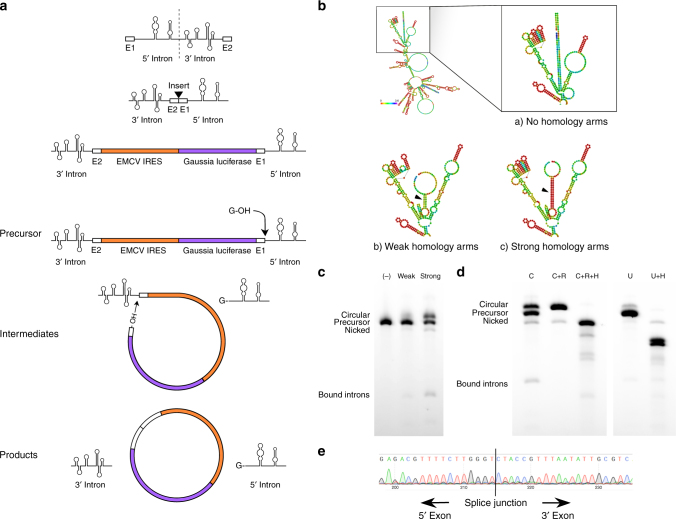
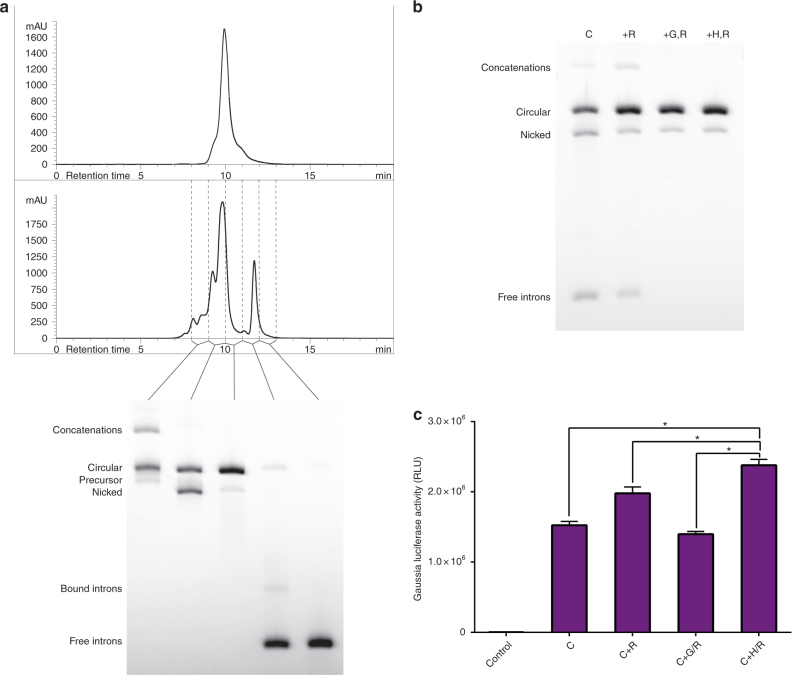
Messenger RNA (mRNA) has broad potential for application in biological systems. However, one fundamental limitation to its use is its relatively short half-life in biological systems. Here we develop exogenous circular RNA (circRNA) to extend the duration of protein expression from full-length RNA messages. First, we engineer a self-splicing intron to efficiently circularize a wide range of RNAs up to 5 kb in length in vitro by rationally designing ubiquitous accessory sequences that aid in splicing. We maximize translation of functional protein from these circRNAs in eukaryotic cells, and we find that engineered circRNA purified by high performance liquid chromatography displays exceptional protein production qualities in terms of both quantity of protein produced and stability of production. This study pioneers the use of exogenous circRNA for robust and stable protein expression in eukaryotic cells and demonstrates that circRNA is a promising alternative to linear mRNA.
Overview
CoChat Summary
## TL;DR
The paper engineers exogenous circular RNA (circRNA) systems that can circularize long RNAs up to 5 kb and drive robust protein expression in eukaryotic cells. Compared with linear mRNA, optimized circRNA showed longer-lasting protein production and, after HPLC purification, stronger protein output in the tested cell lines.
## Key findings
- Adding homology arms to the permuted intron-exon construct increased splicing efficiency from 0% to 16% with weak arms and to 48% with strong arms.
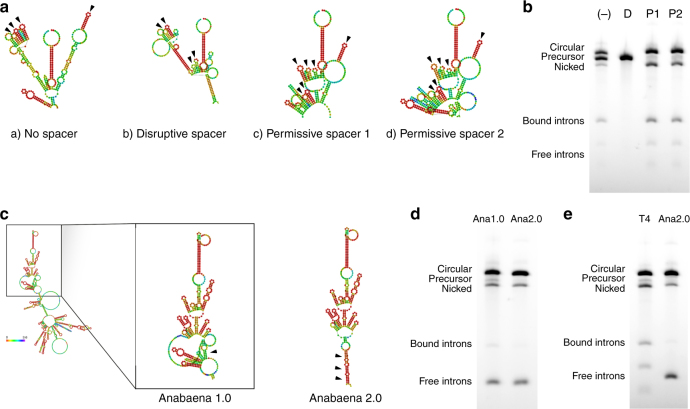
- Rationally designed spacer sequences improved splicing efficiency from 46% to 87%, and a disruptive spacer completely abrogated splicing.
- Using the engineered Anabaena catalytic intron increased splicing efficiency from 84% to 95% and reduced circRNA nicking by 37% relative to the T4 catalytic intron.
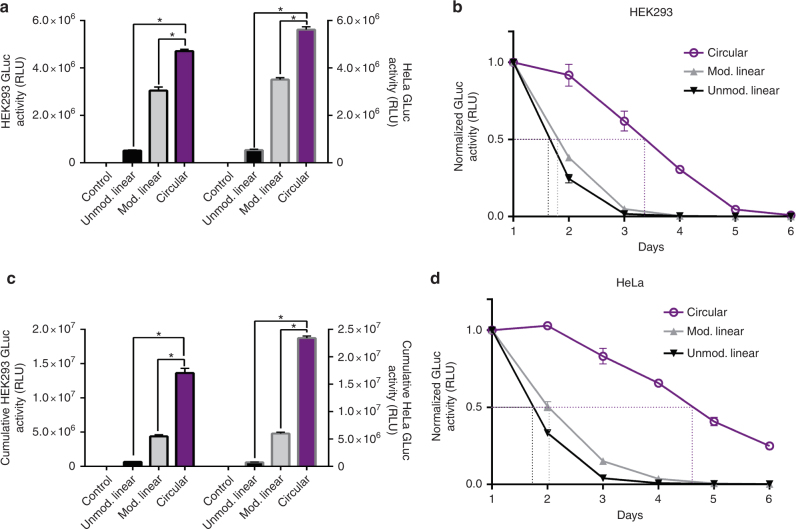
- In HEK293 cells, HPLC-purified circRNA produced 811.2% more protein than unmodified linear mRNA at 24 h and 54.5% more than modified linear mRNA; protein-production half-life was 80 h for circRNA versus approximately 43 h and 45 h for the unmodified and modified linear mRNAs, respectively.
- In HeLa cells, circRNA protein-production half-life was 116 h, compared with approximately 44 h and 49 h for the unmodified and modified linear mRNAs.
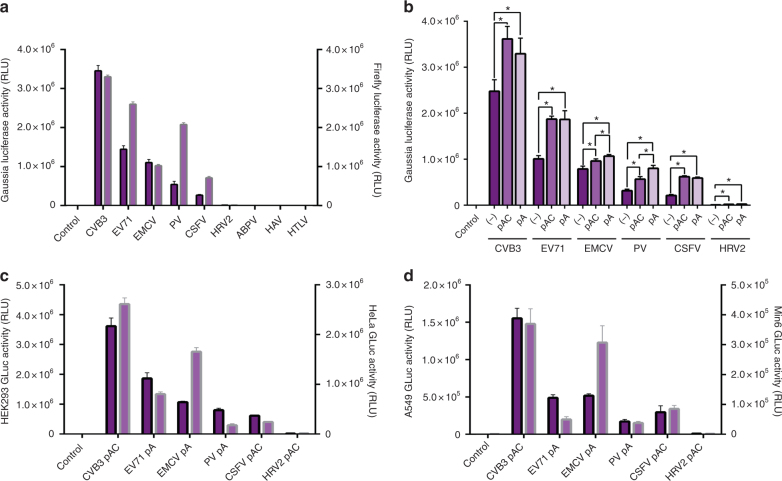
- The CVB3 IRES was 1.5-fold more effective than the EMCV IRES in HEK293 cells and remained superior across HeLa, A549, and Min6 cells tested.
## Methods
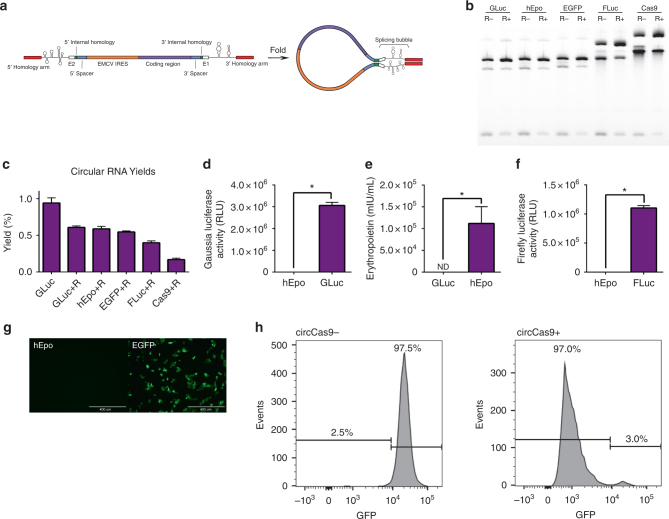
- Engineered circRNAs were built using permuted group I intron/PIE designs with homology arms, spacer sequences, and different IRES elements; constructs included coding regions for GLuc, Firefly luciferase, EGFP, human erythropoietin, and Cas9.
- RNAs were synthesized by in vitro transcription, circularized with GTP/Mg2+-dependent self-splicing, enriched with RNase R, and purified by gel extraction or size-exclusion HPLC; circularization was assessed by gel analysis, RNase H nicking analysis, and splice-junction sequencing.
- Functional testing used transfection into HEK293, HeLa, A549, HEK293-GFP, and Min6 cells, with readouts including luminescence, fluorescence, ELISA, flow cytometry, cytokine assays, and qPCR; statistics were by two-tailed unpaired Welch’s t-test.
## Limitations
- The paper states that longer circRNAs were more prone to nicking during production, which reduced yields and purity.
- The discussion says more work is needed to optimize translation from circRNA and to study translation efficiency and stability in other cell types and tissues.
- The paper notes that additional analysis of exogenous circRNA immunogenicity is required, and that suitable delivery vehicles in vitro and in vivo need thorough investigation.
Model-written summary. Check it against the paper before relying on it.
Integrity signals
Registry
Cites
Statistics
Figures
Verification
Claims the paper makes
9 Valid · 1 Not valid · 3 Not checked · 54 Own results and interpretations
Some cited sources support this claim and some don’t — read each source’s verdict below.
In the paper
“These strategies have yielded modest improvements in RNA stability10, 13–16, and thus alternative approaches to RNA stabilization, such as circularization, are desirable.”
§ Engineering circular RNA for potent and stable translation in eukaryotic cells > Introduction
What the sources say
- Disputedcites [10] Kaczmarek JC Kowalski PS Anderson DG Advances in the delivery of RNA therapeutics: from concept to clinical reality Genome Med. 2017 9 60 10.1186/s13073-017-0450-0 28655327 PMC5485616 sourceExperimental — accuracy not yet measured
In the “Protein overexpression—mRNA” section (page not provided), the paper says that cap analogs and poly(A) tails have markedly improved mRNA stability, contrary to the claim that previous strategies yielded only modest improvements. (LLM, conf=0.86)
Checked by a reasoning model — may be wrong.
- Disputedcites [13] Holtkamp S Modification of antigen-encoding RNA increases stability, translational efficacy, and T-cell stimulatory capacity of dendritic cells Blood 2006 108 4009 4017 10.1182/blood-2006-04-015024 16940422 sourceExperimental — accuracy not yet measured
In the section on combining poly(A)-tail and 3′ UTR modifications (page unavailable), the paper reports an approximately two-orders-of-magnitude improvement in RNA stability relative to standard IVT RNA. That result is contrary to describing the improvement reported by this source as modest. (LLM, conf=0.88)
Checked by a reasoning model — may be wrong.
- Supportedcites [14] Kuhn AN Phosphorothioate cap analogs increase stability and translational efficiency of RNA vaccines in immature dendritic cells and induce superior immune responses in vivo Gene Ther. 2010 17 961 971 10.1038/gt.2010.52 20410931 source
The RNA half-life results (Table 2) show a limited increase with the phosphorothioate cap in immature dendritic cells compared with conventional capping. The same results section explicitly says functional cap analogs had a modest effect on RNA stability in mature dendritic cells. (LLM, conf=0.84)
- Partly supportedcites [15] Presnyak V Codon optimality is a major determinant of mRNA stability Cell 2015 160 1111 1124 10.1016/j.cell.2015.02.029 25768907 PMC4359748 sourceExperimental — accuracy not yet measured
The Results section reports that reporters with optimal codons were about fourfold more stable than those with non-optimal codons, supporting an improvement in mRNA stability. The paper does not characterize that improvement as modest or establish that previous stabilization strategies generally yielded only modest gains. (LLM, conf=0.79)
- Could not verifycites [16] Kariko K Muramatsu H Ludwig J Weissman D Generating the optimal mRNA for therapy: HPLC purification eliminates immune activation and improves translation of nucleoside-modified, protein-encoding mRNA Nucleic Acids Res. 2011 39 e142 e142 10.1093/nar/gkr695 21890902 PMC3241667 sourceExperimental — accuracy not yet measured
The Introduction and Discussion describe reduced immune activation and improved translation with modified or HPLC-purified mRNA, but do not characterize improvements in RNA stability as modest. Searches for RNA stability, half-life, degradation, and circularization found no passage in our copy that establishes the claimed comparison. (LLM, conf=0.74)
plainstates a cause- Asserted: passes — The authors put it forward as true.
- Checkable: passes — It can be checked against evidence.
- Load-bearing: passes — The paper’s conclusions depend on it.
- Based: passes — The paper gives a reason why it holds.
- Disputed
The cited sources support only part of this claim — read each source’s verdict below.
In the paper
“Indeed, the intervening region between the 5′ and 3′ splice sites of native group I introns is on average 300–500 nucleotides long22, while the intervening region of the engineered RNA that we constructed was two to four-fold longer.”
§ Engineering circular RNA for potent and stable translation in eukaryotic cells > Results > Long RNA circularization is assisted by homology
What the sources say
- Partly supportedcites [22] Vicens Q Paukstelis PJ Westhof E Lambowitz AM Cech TR Toward predicting self-splicing and protein-facilitated splicing of group I introns RNA 2008 14 2013 2029 10.1261/rna.1027208 18768647 PMC2553746 sourceExperimental — accuracy not yet measured
The Results section reports that 12 group I introns tested were 183–421 nucleotides long, and Intron selection gives a range of 183–496 nucleotides for introns requested. Neither passage establishes a 300–500-nucleotide average for native group I introns generally. (LLM, conf=0.82)
plain- Asserted: passes — The authors put it forward as true.
- Checkable: passes — It can be checked against evidence.
- Load-bearing: passes — The paper’s conclusions depend on it.
- Based: passes — The paper gives a reason why it holds.
- Partly supported
A result the paper reports from its own data — it cites no other source for it, so there is none to check. The quote shows it is in the paper.
In the paper
“First, we engineer a self-splicing intron to efficiently circularize a wide range of RNAs up to 5 kb in length in vitro by rationally designing ubiquitous accessory sequences that aid in splicing.”
§ Engineering circular RNA for potent and stable translation in eukaryotic cells > Abstract
plainstates a cause- Asserted: passes — The authors put it forward as true.
- Checkable: passes — It can be checked against evidence.
- Load-bearing: passes — The paper’s conclusions depend on it.
- Based: passes — The paper gives a reason why it holds.
A result the paper reports from its own data — it cites no other source for it, so there is none to check. The quote shows it is in the paper.
In the paper
“In the case of EMCV and Poliovirus IRESs, polyA sequences improved expression beyond the improvement seen with an unstructured polyAC spacer.”
§ Engineering circular RNA for potent and stable translation in eukaryotic cells > Results > The CVB3 IRES is superior in the context of circRNA
plainstates a cause- Asserted: passes — The authors put it forward as true.
- Checkable: passes — It can be checked against evidence.
- Load-bearing: unclear — It is unclear whether the paper’s conclusions depend on it.
- Based: passes — The paper gives a reason why it holds.
A result the paper reports from its own data — it cites no other source for it, so there is none to check. The quote shows it is in the paper.
In the paper
“We found that the IRES from Coxsackievirus B3 (CVB3) was 1.5-fold more effective than the commonly adopted EMCV IRES in HEK293 cells (Fig. 4a).”
§ Engineering circular RNA for potent and stable translation in eukaryotic cells > Results > The CVB3 IRES is superior in the context of circRNA
plainstates a cause- Asserted: passes — The authors put it forward as true.
- Checkable: passes — It can be checked against evidence.
- Load-bearing: passes — The paper’s conclusions depend on it.
- Based: passes — The paper gives a reason why it holds.
34 more claims
Create a free account to see all 67 claims and every source verdict.
- It may state two separate claims as one. 25
- Probably not a substantial claim. 9
- The quote only partly states this claim. 2
Claims other papers make about this one
Each is checked against this paper’s own text: does it say what the citing paper says it does?
The source backs part of the claim, not all of it — or backs it for a different population, condition or comparison.
In the citing paper
“Similar to linear mRNA, the chemical modification of specific nucleotides and chromatographic purification can minimize immunogenicity of the RNA and increase translation.”
From Lipid nanoparticles for mRNA delivery (2021) · cites this paper as [245]
Experimental — accuracy not yet measuredThe cited source says what the claim attributes to it.
In the citing paper
“Circular RNA (circRNA) is a single-stranded RNA with a closed-loop structure.”
From Lipid nanoparticles for mRNA delivery (2021) · cites this paper as [245]
The cited source says what the claim attributes to it.
In the citing paper
“In addition, circular RNA (circRNA) can be synthesized to optimize mRNA properties245,246 (Box 2).”
From Lipid nanoparticles for mRNA delivery (2021) · cites this paper as [245]
In the citing paper
“Despite the lack of essential elements for cap-dependent translation, circRNA can be translated by adding the IRES element or m6A modification incorporated to its 5′ UTR region.223,224”
From Advances in COVID-19 mRNA vaccine development (2022) · cites this paper as [223]
In the citing paper
“Given its enhanced biostability compared with linear RNA due to the lack of terminals preventing degradation,49 circRNA could be a promising research avenue.”
From COVID-19 mRNA vaccines: Platforms and current developments (2022) · cites this paper as [49]
6 more claims about this paper
Create a free account to see every claim other papers make about this one.
Citations
Cites
Natural RNA circles function as efficient microRNA sponges
Hansen, T. B., Jensen, T. I., Clausen, B. H., Bramsen, J. B., Finsen, B., Damgaard, C. K., & Kjems, J. (2013) · Nature · doi:10.1038/nature11993 · Cited by 7,985
Exon-intron circular RNAs regulate transcription in the nucleus
Li, Z., Huang, C., Bao, C., Chen, L., Lin, M., Wang, X., Zhong, G., Yu, B., Hu, W., Dai, L., et al. (2015) · Nature Structural & Molecular Biology · doi:10.1038/nsmb.2959 · Cited by 2,905
Detecting and characterizing circular RNAs
Jeck, W. R., & Sharpless, N. E. (2014) · Nature Biotechnology · doi:10.1038/nbt.2890 · Cited by 2,702
Circ-ZNF609 is a circular RNA that can be translated and functions in myogenesis
Legnini, I., Di Timoteo, G., Rossi, F., Morlando, M., Briganti, F., Sthandier, O., Fatica, A., Santini, T., Andronache, A., Wade, M., et al. (2017) · Molecular Cell · doi:10.1016/j.molcel.2017.02.017 · Cited by 2,173
Regulation of circRNA biogenesis
Chen, L.-L., & Yang, L. (2015) · RNA Biology · doi:10.1080/15476286.2015.1020271 · Cited by 1,953
Pamudurti, N. R., Bartok, O., Jens, M., Ashwal-Fluss, R., Stottmeister, C., Ruhe, L., Hanan, M., Wyler, E., Perez-Hernandez, D., Ramberger, E., et al. (2017) · Molecular Cell · doi:10.1016/j.molcel.2017.02.021 · Cited by 1,810
Codon Optimality Is a Major Determinant of mRNA Stability
Presnyak, V., Alhusaini, N., Chen, Y.-H., Martin, S., Morris, N., Kline, N., Olson, S., Weinberg, D., Baker, K. E., Graveley, B. R., et al. (2015) · Cell · doi:10.1016/j.cell.2015.02.029 · Cited by 1,078
Karikó, K., Muramatsu, H., Ludwig, J., & Weissman, D. (2011) · Nucleic Acids Research · doi:10.1093/nar/gkr695 · Cited by 898
Circular RNAs: analysis, expression and potential functions
Barrett, S. P., & Salzman, J. (2016) · Development · doi:10.1242/dev.128074 · Cited by 859
Enuka, Y., Lauriola, M., Feldman, M. E., Sas-Chen, A., Ulitsky, I., & Yarden, Y. (2016) · Nucleic Acids Research · doi:10.1093/nar/gkv1367 · Cited by 757
Cited by
Items 201–300 of 804
Nanoscale delivery platforms for RNA therapeutics: Challenges and the current state of the art
Rhym, L. H., & Anderson, D. G. (2022) · Med · doi:10.1016/j.medj.2022.02.001 · Cited by 49
Self-citationcircRNA: A Promising All-Around Star in the Future
Li, H. (2023) · Epigenomics · doi:10.2217/epi-2023-0141 · Cited by 44
Breuer, J., & Roßbach, O. (2020) · Methods and Protocols · doi:10.3390/mps3020042 · Cited by 43
Lipid nanoparticle (LNP) mediated mRNA delivery in neurodegenerative diseases
Moosavi, S. G., Rahiman, N., Jaafari, M. R., & Arabi, L. (2025) · Journal of Controlled Release · doi:10.1016/j.jconrel.2025.113641 · Cited by 61
Engineered circular guide RNAs boost CRISPR/Cas12a- and CRISPR/Cas13d-based DNA and RNA editing
Zhang, X., Wang, X., Lv, J., Huang, H., Wang, J., Ma, Z., Tan, Z., Huang, G., Liu, J., Liu, Y., et al. (2023) · Genome biology · doi:10.1186/s13059-023-02992-z · Cited by 40
“We adopted adenine- and cytosine-rich (AC-rich) RNA linkers as they have been widely used as flexible RNA linkers [30, 32].”
MethodFeng, Z., Zheng, L., Teng, Y., Tao, S., Wei, X.-A., Zheng, Z., Zheng, B., Zhang, X., Huang, B. H., Liu, J., et al. (2021) · Cell Death and Disease · doi:10.1038/s41419-021-04339-7 · Cited by 42
Cui, J., Zhang, L., Zhang, Z., Luo, X., Liu, Y., Li, C., Huang, W., Zou, L., Yu, X. M., & Xiao, F. (2023) · Nucleic Acids Research · doi:10.1093/nar/gkad554 · Cited by 43
Intracellular Imaging with Genetically Encoded RNA-Based Molecular Sensors
Sun, Z., Nguyen, T., McAuliffe, K., & You, M. (2019) · Nanomaterials · doi:10.3390/nano9020233 · Cited by 40
Artificial Circular RNA Sponges Targeting MicroRNAs as a Novel Tool in Molecular Biology
Roßbach, O. (2019) · Molecular Therapy — Nucleic Acids · doi:10.1016/j.omtn.2019.06.021 · Cited by 39
A combined computational pipeline to detect circular RNAs in human cancer cells under hypoxic stress
Liddo, A. D., Machado, C. D. O. F., Fischer, S. E., Ebersberger, S., Heumüller, A. W., Weigand, J. E., Müller-McNicoll, M., & Zarnack, K. (2019) · Journal of Molecular Cell Biology · doi:10.1093/jmcb/mjz094 · Cited by 41
“In addition, circRNAs have been explored for protein expression (Wesselhoeft et al., 2018) and miRNA sequestration (Jost et al., 2018), which may open new therapeutic avenues in the future.”
CircRNAs and Fusion-circRNAs in cancer: New players in an old game
Visci, G., Tolomeo, D., Agostini, A., Traversa, D., Macchia, G., & Storlazzi, C. T. (2020) · Cellular Signalling · doi:10.1016/j.cellsig.2020.109747 · Cited by 42
In Vitro Transcribed RNA-Based Platform Vaccines: Past, Present, and Future
Perenkov, A. D., Sergeeva, A. D., Vedunova, M. V., & Krysko, D. V. (2023) · Vaccines · doi:10.3390/vaccines11101600 · Cited by 47
“The use of group I introns enables the generation of circRNA longer than 5 kb, which is a significant advantage [131,145].”
BackgroundMethodResultInfluentialEngineering circular RNA medicines
Cao, X., Cai, Z., Zhang, J., & Zhao, F. (2024) · Nature Reviews Bioengineering · doi:10.1038/s44222-024-00259-1 · Cited by 53
“Alternatively, size-dependent purification techniques such as polyacrylamide gel electrophoresis and high-performance liquid chromatography (HPLC) can be used to purify circRNA according to molecule size 23–25, 103, 115 .”
InfluentialRNA-based therapy for osteogenesis
Wang, P., Perche, F., Logeart‐Avramoglou, D., & Pichon, C. (2019) · International Journal of Pharmaceutics · doi:10.1016/j.ijpharm.2019.118594 · Cited by 38
Reinventing the Wheel: Synthetic Circular RNAs for Mammalian Cell Engineering
Costello, A., Lao, N. T., Barron, N., & CLYNES, M. M. (2019) · Trends in biotechnology · doi:10.1016/j.tibtech.2019.07.008 · Cited by 41
Luo, Z., Mao, X., & Cui, W. (2019) · Medical Oncology · doi:10.1007/s12032-019-1311-z · Cited by 41
Chemically synthesized circular RNAs with phosphoramidate linkages enable rolling circle translation
Nakamoto, K., Abe, N., Tsuji, G., Kimura, Y., Tomoike, F., Shimizu, Y., & Abe, H. (2020) · Chemical Communications · doi:10.1039/d0cc02140g · Cited by 39
eIF3j inhibits translation of a subset of circular RNAs in eukaryotic cells
Song, Z., Lin, J., Su, R. J., Ji, Y., Jia, R., Li, S., Shan, G., & Huang, C. (2022) · Nucleic Acids Research · doi:10.1093/nar/gkac980 · Cited by 37
“But these inserts also generate some side effects, such as forming unexpected structures with proximal sequences or even distal sequences through long-distance contacts (98,99).”
BackgroundALKBH5 ‐induced circular RNA NRIP1 promotes glycolysis in thyroid cancer cells by targeting PKM2
Ji, X., Lv, C., Huang, J., Dong, W., Sun, W., & Zhang, H. (2023) · Cancer Science · doi:10.1111/cas.15772 · Cited by 40
Continuous translation of circularized mRNA improves recombinant protein titer
Costello, A., Lao, N. T., Barron, N., & CLYNES, M. M. (2019) · Metabolic Engineering · doi:10.1016/j.ymben.2019.01.002 · Cited by 44
Demystifying mRNA vaccines: an emerging platform at the forefront of cryptic diseases
Rouf, N. Z., Biswas, S., Tarannum, N., Oishee, L. M., & Muna, M. M. (2022) · RNA Biology · doi:10.1080/15476286.2022.2055923 · Cited by 42
“Circularisation has been shown to enhance the stability and translation efficiency of the full-length mRNA in vitro in eukaryotic cells [72].”
BackgroundRole of circular RNA in myocardial ischemia and ageing-related diseases
Gao, X., Tian, X., Huang, Y., Fang, R., Wang, G., Li, D., Zhang, J., Li, T., & Yuan, R. (2022) · Cytokine & Growth Factor Reviews · doi:10.1016/j.cytogfr.2022.04.005 · Cited by 37
Synthetic circRNA therapeutics: innovations, strategies, and future horizons
Cai, J., Qiu, Z., Cho, W. C. S., Liu, Z., Chen, S., Li, H., Chen, K., Li, Y., Zuo, C., & Qiu, M. (2024) · MedComm · doi:10.1002/mco2.720 · Cited by 45
Huang, X., Chuang, L. I. U., Sharma, S. N., You, X., Chen, S., Li, Y., Liu, H.-J., Liu, B., Saiding, Q., Chen, W., et al. (2025) · Science Translational Medicine · doi:10.1126/scitranslmed.adu1493 · Cited by 44
Synergically enhanced anti-tumor immunity of in vivo panCAR by circRNA vaccine boosting
Wang, Y., Lin, L., Wang, X., Li, J., Pan, Q., Kou, H., Yin, J., Gao, F., Liao, X., Zhang, C., et al. (2025) · Cell Reports Medicine · doi:10.1016/j.xcrm.2025.102250 · Cited by 77
“16,23 We also generated control circRNA, termed circRNA Ctrl , which was an empty vector comprising circRNA circularization elements without the protein-encoding sequence.”
Circular RNA-based therapy provides sustained and robust neuroprotection for retinal ganglion cells
Jiang, W., Xiao, D., Wu, C., Yang, J., Peng, X., Chen, L., Zhang, J., Zha, G.-F., Li, W., Ju, R., et al. (2024) · Molecular Therapy — Nucleic Acids · doi:10.1016/j.omtn.2024.102258 · Cited by 44
“24,25 26 – 28 While mRNA therapy shows promise for sustained protein production, further research and development are required to establish mRNA-based approaches as effective treatments for neurodegenerative and ocular diseases.”
Coding potential of circRNAs: new discoveries and challenges
Miao, Q., Ni, B., & Tang, J. (2021) · PeerJ · doi:10.7717/peerj.10718 · Cited by 38
Aptamer Applications in Emerging Viral Diseases
Krüger, A., Santos, A. P. D. J., de Sá, V. K., Ulrich, H., & Wrenger, C. (2021) · Pharmaceuticals · doi:10.3390/ph14070622 · Cited by 36
“However, the removal of free ends by circulation of nucleotide sequences enhances their stability, as shown for mRNA [135].”
BackgroundWhat goes around comes around: Artificial circular RNAs bypass cellular antiviral responses
Breuer, J., Barth, P., Noe, Y., Shalamova, L. A., Goesmann, A., Weber, F., & Roßbach, O. (2022) · Molecular Therapy — Nucleic Acids · doi:10.1016/j.omtn.2022.04.017 · Cited by 36
“…transcription and circularization by either employing genetically engineered autocata-lytic group I introns (e.g., the PIE system) 42,44 – 46 or enzymatic intra-molecular ligation using recombinant RNA ligases 8,9,20,42 gained importance for further characterization of circRNA…”
CircRNAs in Lung Adenocarcinoma: Diagnosis and Therapy
Wang, Y., Su, L., Zhao, J.-Y., Su, H., Huang, W., Jiang, X., & Gao, S. (2021) · Current Gene Therapy · doi:10.2174/1566523221666211202095258 · Cited by 42
Application prospect of circular RNA-based neoantigen vaccine in tumor immunotherapy
Li, M., Wang, Y., Wu, P., Zhang, S., Gong, Z., Liao, Q., Guo, C., Wang, F., Li, Y., Zeng, Z., et al. (2023) · Cancer Letters · doi:10.1016/j.canlet.2023.216190 · Cited by 35
Circular RNAs in human diseases
Wang, Y., Zhang, J., Yang, Y. S. H., Liu, Z., Sun, S., Li, R. F., Zhu, H., Tian, L., Zheng, J., Li, J., et al. (2024) · MedComm · doi:10.1002/mco2.699 · Cited by 50
The coding potential of circRNAs
Das, A., Gorospe, M., & Panda, A. C. (2018) · Aging · doi:10.18632/aging.101554 · Cited by 34
Müller, S., Wedler, A., Breuer, J., Glaß, M., Bley, N., Lederer, M., Haase, J., Misiak, C., Fuchs, T., Ottmann, A., et al. (2020) · NAR Cancer · doi:10.1093/narcan/zcaa014 · Cited by 35
“This elevated stability resulted from a two-step decay of circular decoys with a relinearized intermediate (50).”
BackgroundThe infinite possibilities of RNA therapeutics
Lara, E. C. M., Ni, M., Agathos, S. N., & Gonzales-Zubiate, F. A. (2021) · Journal of Industrial Microbiology & Biotechnology · doi:10.1093/jimb/kuab063 · Cited by 36
Building Endogenous Gene Connections through RNA Self-Assembly Controlled CRISPR/Cas9 Function
Lin, J., Wang, W., Wang, Y., Liu, Y., & Xu, L. (2021) · Journal of the American Chemical Society · doi:10.1021/jacs.1c09041 · Cited by 34
Shen, L., Yang, J., Zuo, C., Xu, J., Ma, L., He, Q., Zhou, X., Ding, X., Wei, L., Jiang, S., et al. (2023) · Molecular Therapy · doi:10.1016/j.ymthe.2023.11.017 · Cited by 37
Regulation of Paneth Cell Function by RNA-Binding Proteins and Noncoding RNAs
Chung, H. K., Xiao, L., Jaladanki, K. C., & Wang, J. (2021) · Cells · doi:10.3390/cells10082107 · Cited by 33
“Many circRNAs harbor one or several binding locations for a single miRNA, and some harbor binding sites for multiple miRNAs [69,70].”
BackgroundHarnessing synthetic biology for advancing RNA therapeutics and vaccine design
Pfeifer, B. A., Beitelshees, M., Hill, A. B., Bassett, J., & Jones, C. H. (2023) · npj Systems Biology and Applications · doi:10.1038/s41540-023-00323-3 · Cited by 43
“For example, modi fi ed RNA (modRNA), in which the mRNA sequence has been subjected several modi fi cations (e.g., codon optimization, nucleic acid modi fi cation, and polyadenylation) to improve stability and expression following administration has been successfully implemented 102 .”
MethodResultCircRNA knockdown based on antisense strategies
Aquino‐Jarquín, G. (2024) · Drug Discovery Today · doi:10.1016/j.drudis.2024.104066 · Cited by 35
ZC3H14 facilitates backsplicing by binding to exon-intron boundary and 3′ UTR
Li, Q., Yang, G., Ren, B., Liu, X., Tang, L., Shi, Q., Shan, G., & Wang, X. (2024) · Molecular Cell · doi:10.1016/j.molcel.2024.10.001 · Cited by 38
Internal cap-initiated translation for efficient protein production from circular mRNA
Fukuchi, K., Nakashima, Y., Abe, N., Kimura, S., Hashiya, F., Shichino, Y., Liu, Y., Ogisu, R., Sugiyama, S., Kawaguchi, D., et al. (2025) · Nature Biotechnology · doi:10.1038/s41587-025-02561-8 · Cited by 51
“Circular mRNA needs other ribosome-binding sites, such as IRES sequence, to induce a translation initiation reaction as efficiently as linear mRNA 6,7,10,11 .”
The Landscape of Circular RNAs in Cardiovascular Diseases
Long, Q., Lv, B., Jiang, S., & Lin, J. (2023) · International Journal of Molecular Sciences · doi:10.3390/ijms24054571 · Cited by 33
“Although circRNAs were initially recognized as non-coding RNAs, studies conducted in recent years have demonstrated that circRNAs can serve as templates for protein translation via some modification [27].”
BackgroundChung, C. W., Kudchodkar, S. B., Chung, C. N., Park, Y. K., Xu, Z., Pardi, N., Abdel‐Mohsen, M., & Muthumani, K. (2023) · Antibodies · doi:10.3390/antib12030046 · Cited by 40
“Additionally, circular RNAs can increase the half-life of protein production up to threefold compared to linear mRNA in vitro [104].”
BackgroundDrag-and-drop genome insertion without DNA cleavage with CRISPR-directed integrasesPreprint
Ioannidi, E. I., Yarnall, M. T. N., Schmitt-Ulms, C., Krajeski, R. N., Lim, J., Villiger, L., Zhou, W., Jiang, K., Roberts, N., Zhang, L., et al. (2021) · bioRxiv (Cold Spring Harbor Laboratory) · doi:10.1101/2021.11.01.466786 · Cited by 35
“As we hypothesized more sustained BxbINT expression would allow for integration into newly placed AttB sites in the genome, we tested circular mRNA expression(48) and found that this boosted the efficiency of integration to ~30% (Fig.”
BackgroundMethodmiR-142: A Master Regulator in Hematological Malignancies and Therapeutic Opportunities
Huang, W., Paul, D., Călin, G. A., & Bayraktar, R. (2023) · Cells · doi:10.3390/cells13010084 · Cited by 37
“Finally, delivery of the RNA editing cargo to the specific cells of interest currently stands as the biggest challenge to in vivo validation studies and clinical translation for hematologic malignancies [305].”
Engineering Lipid Nanoparticles for mRNA Immunotherapy
Zwolsman, R. C., Darwish, Y. B., Kluza, E., & van der Meel, R. (2025) · Wiley Interdisciplinary Reviews Nanomedicine and Nanobiotechnology · doi:10.1002/wnan.70007 · Cited by 43
CircRNAs: functions and emerging roles in cancer and immunotherapy
Wang, Y., Cui, Y., Li, X., Jin, S., Wang, H., Gaipl, U. S., Ma, H., Wang, S., & Zhou, J. (2025) · BMC Medicine · doi:10.1186/s12916-025-04306-5 · Cited by 37
“CircRNA vaccines, due to their circular structure, are more stable and resistant to nuclease degradation, maintaining their activity for a longer period and enhancing immune durability [188, 189].”
CircRNAs: From anonymity to novel regulators of gene expression in cancer (Review)
Harper, K. L., McDonnell, E., & Whitehouse, A. (2019) · International Journal of Oncology · doi:10.3892/ijo.2019.4904 · Cited by 34
“Similar to the translated Mbl circRNA, circZNF609 contains the same start codon as its linear transcript and an in-frame stop codon; the transcript was reported to associate with ribosomes and be translated in a cap-independent manner using an IRES (79).”
BackgroundRNA therapeutics for cardiovascular disease
Boada, C., Sukhovershin, R. A., Pettigrew, R. I., & Cooke, J. P. (2021) · Current Opinion in Cardiology · doi:10.1097/hco.0000000000000850 · Cited by 33
“becomes resistant to degradation by ubiquitously present RNA exonucleases [29,30].”
BackgroundMethods to study circRNA-protein interactions
Ulshöfer, C. J., Pfafenrot, C., Bindereif, A., & Schneider, T. P. (2021) · Methods · doi:10.1016/j.ymeth.2021.04.014 · Cited by 32
Circular RNA regulatory role in pathological cardiac remodelling
Bibi, A., Barteková, M., Gandhi, S., Greco, S., Madè, A., Sarkar, M., Stopa, V., Tastsoglou, S., de Gonzalo‐Calvo, D., Devaux, Y., et al. (2024) · British Journal of Pharmacology · doi:10.1111/bph.16434 · Cited by 36
“Furthermore, they can be designed to contain IRES elements for protein translation, which could be a viable option for therapeutic protein expression, including vaccine therapy (Wesselhoeft et al., 2018).”
A cis-acting ligase ribozyme generates circular RNA in vitro for ectopic protein functioning
Su, C.-I., Chuang, Z.-S., Shie, C.-T., Wang, H.-I., Kao, Y.-T., & Yu, C.-Y. (2024) · Nature Communications · doi:10.1038/s41467-024-51044-y · Cited by 34
“The poR1 comprises a set of PIE sequences from Anabaena catalytic intron/exon 7 , whereas the poR2 series harbors a pair of RzL and substrate sequences 19 .”
InfluentialDynamic conformation: Marching toward circular RNA function and application
Liu, C., Yang, L. C., & Chen, L. (2024) · Molecular Cell · doi:10.1016/j.molcel.2024.08.020 · Cited by 32
A method to directly assay circRNA in real samples
Jiao, J., Gao, T., Shi, H., Sheng, A., Xiang, Y., Shu, Y., & Li, G. (2018) · Chemical Communications · doi:10.1039/c8cc08319c · Cited by 30
Robust genome and cell engineering via in vitro and in situ circularized RNAs
Tong, M., Palmer, N. D., Dailamy, A., Kumar, A., Khaliq, H., Han, S., Finburgh, E. N., Wing, M. K., Hong, C., Xiang, Y., et al. (2024) · Nature Biomedical Engineering · doi:10.1038/s41551-024-01245-z · Cited by 34
“As cRNA production commonly involves RNaseR enrichment and high performance liquid chromatography (HPLC) purification to reduce immune responses prompted by double-stranded RNA produced during in vitro transcription (IVT), resulting RNA yields are low (typically less than 1% of the input RNA 6 ).”
Engineered circular RNA-based DLL3-targeted CAR-T therapy for small cell lung cancer
Cai, J., Liu, Z., Chen, S., Zhang, J., Li, H., Wang, X., Feng, Y., Wang, S., Li, X., Li, Y., et al. (2025) · Experimental Hematology and Oncology · doi:10.1186/s40164-025-00625-8 · Cited by 41
“The circRNA was produced using the group I intron self-splicing system as previously reported [7].”
InfluentialAdvances in mRNA-based drug discovery in cancer immunotherapy
Trani, C. A. D., Fernández-Sendin, M., Cirella, A., Segués, A., Olivera, I., Bolaños, E., Melero, I., & Berraondo, P. (2021) · Expert Opinion on Drug Discovery · doi:10.1080/17460441.2021.1978972 · Cited by 30
“and highly pure circular RNA is not detected by pathogenassociated pattern receptors [8,9].”
BackgroundPros and Cons of In Vitro Methods for Circular RNA Preparation
Lee, K. H., Kim, S., & Lee, S. (2022) · International Journal of Molecular Sciences · doi:10.3390/ijms232113247 · Cited by 34
“For ribozyme-based methods, antisense and antisense binding sequences (homologous arms at the 5′ and 3′ ends) [17] can work like the DNA splint strategy in chemical or enzyme-based methods.”
BackgroundMethodInfluentialExosomal circular RNA: a signature for lung cancer progression
Hussen, B. M., Abdullah, S. R., Faraj, G. S. H., Rasul, M. F., Salihi, A. B., Ghafouri‐Fard, S., Taheri, M. N., & Mokhtari, M. (2022) · Cancer Cell International · doi:10.1186/s12935-022-02793-7 · Cited by 29
“N6-methyladenosine modifications can often be translated into peptides [66, 67].”
BackgroundLiu, L., Li, W., Li, J., Zhao, D., Li, S., Jiang, G., Wang, J., Chen, X., Bi, C., & Zhang, X. (2022) · ACS Synthetic Biology · doi:10.1021/acssynbio.2c00381 · Cited by 32
Zhao, N.-N., Li, F.-Z., Zhang, X., Liu, M., Cao, H., & Zhang, C. (2023) · Analytical Chemistry · doi:10.1021/acs.analchem.3c01624 · Cited by 29
Circular RNAs in Embryogenesis and Cell Differentiation With a Focus on Cancer Development
Agostino, S. D., Riccioli, A., Cesaris, P. D., Fontemaggi, G., Blandino, G., Filippini, A., & Fazi, F. (2020) · Frontiers in Cell and Developmental Biology · doi:10.3389/fcell.2020.00389 · Cited by 29
CXCL13 promotes broad immune responses induced by circular RNA vaccines
Wan, J., Wang, C., Wang, Z., Wang, L., Wang, H., Zhou, M., Fu, Z. F., & Zhao, L. (2024) · Proceedings of the National Academy of Sciences · doi:10.1073/pnas.2406434121 · Cited by 32
“The production of circRNAs was performed according to previous reports (27, 29).”
MethodZhang, Y., Song, X., Feng, Y., Qian, Y., Chen, B., Zhang, T., Wang, H., Chen, Y., Yu, X., Ding, H., et al. (2024) · Cancer Research · doi:10.1158/0008-5472.can-24-1484 · Cited by 35
Decoding the complexity of circular RNAs in cardiovascular disease
Kumar, A., Lee, B., Hebbard, C., Uchida, S., & Garikipati, V. N. S. (2021) · Pharmacological Research · doi:10.1016/j.phrs.2021.105766 · Cited by 29
Expanding the Potential of Circular RNA (CircRNA) Vaccines: A Promising Therapeutic Approach
Bu, T., Yang, W., Zhao, J., Gao, Y., Li, F., & Yang, R. (2025) · International Journal of Molecular Sciences · doi:10.3390/ijms26010379 · Cited by 34
“Compared to linear mRNA vaccines, circular RNA can provide prolonged antigen expression over time [46].”
Self-splicing RNA circularization facilitated by intact group I and II introns
Shen, Y. H., Li, B., Dong, L., Tang, W., Ren, J., Chen, F., Zheng, W., Yu, Y. F., Gao, L., & Wei, W. (2025) · Nature Communications · doi:10.1038/s41467-025-62607-y · Cited by 31
“Ef fi cient generation of large circRNAs — particularly those exceeding 9-kb — also remains a signi fi cant technical hurdle 28,39,51 .”
InfluentialAdvances in circular RNAs and their role in glioma (Review)
Zhang, Y., Lin, X., Geng, X., Shi, L., Li, Q., Liu, F., Fang, C., & Wang, H. (2020) · International Journal of Oncology · doi:10.3892/ijo.2020.5049 · Cited by 29
“The results revealed that exogenous circRNAs can produce high-quality and high-yield proteins, and indicated that circRNAs are good and efficient RNA molecules that can be used for protein expression in the future (69).”
BackgroundPathogenic mechanisms and the potential clinical value of circFoxo3 in cancers
Zhang, L., Wang, Y., Zhang, Y., Zhao, Y., & Li, P. (2021) · Molecular Therapy — Nucleic Acids · doi:10.1016/j.omtn.2021.01.010 · Cited by 26
Emergent Roles of Circular RNAs in Metabolism and Metabolic Disorders
Wu, Y.-L., Li, H.-F., Chen, H.-H., & Lin, H. (2022) · International Journal of Molecular Sciences · doi:10.3390/ijms23031032 · Cited by 28
Circular RNAs in and out of Cells: Therapeutic Usages of Circular RNAs
Ju, M., Kim, D., Son, G., & Han, J. (2023) · Molecules and Cells · doi:10.14348/molcells.2023.2170 · Cited by 28
“The same amounts of circular RNAs and linear mRNAs were assessed, and circular RNAs were found to produce more antigens than linear mRNAs (Wesselhoeft et al., 2018).”
InfluentialQiu, Z., Hou, Q., Zhao, Y., Zhu, J., Zhai, M., Li, D., Li, Y., Liu, C., Li, N., Cao, Y., et al. (2022) · bioRxiv (Cold Spring Harbor Laboratory) · doi:10.1101/2022.06.20.496777 · Cited by 34
RNA stability enhancers for durable base-modified mRNA therapeutics
Jung, S.-J., Seo, J. J., Lee, S., Hyun, S.-I., Lee, J.-E., Lee, S., Lee, Y., Chang, H., Lee, H., Kim, J.-H., et al. (2025) · Nature Biotechnology · doi:10.1038/s41587-025-02891-7 · Cited by 26
Design and development of mRNA and self-amplifying mRNA vaccine nanoformulations
Omidi, Y., Pourseif, M. M., Ansari, R. A., & Barar, J. (2024) · Nanomedicine · doi:10.1080/17435889.2024.2419815 · Cited by 33
Scarless circular mRNA-based CAR-T cell therapy elicits superior antitumor efficacy
Hu, Q., Zhao, H., Zhou, K., Tian, X., Wang, Q. Z., Hua, X., & Zhang, X. (2025) · Signal Transduction and Targeted Therapy · doi:10.1038/s41392-025-02512-4 · Cited by 45
“35 A recent study optimized the classical PIE system to shorten the scars to 27 nt while maintaining a comparable circularization yield.”
Disease‐Associated Circular RNAs: From Biology to Computational Identification
Tang, M., Kui, L., Lu, G., & Chen, W. (2020) · BioMed Research International · doi:10.1155/2020/6798590 · Cited by 26
“This feature has been utilized to a recent engineering study to generate exogenous circRNAs, thus obtaining more potent and durable proteins in eukaryotic cells [42].”
MethodXu, Y., & Chen, F. (2021) · Journal of Inflammation Research · doi:10.2147/jir.s302846 · Cited by 25
Ye, Y., Feng, W., Zhang, J., Zhu, K., Huang, X., Pan, L., Su, J., Zheng, Y., Li, R., Deng, S., et al. (2021) · Genome Medicine · doi:10.1186/s13073-021-01002-w · Cited by 26
Universal Flu mRNA Vaccine: Promises, Prospects, and Problems
Deviatkin, A. A., Simonov, R. A., Trutneva, K. A., Maznina, A. A., Khavina, E. M., & Volchkov, P. (2022) · Vaccines · doi:10.3390/vaccines10050709 · Cited by 28
“RNA circularization leads to enhanced stability of the mRNA and greater efficiency in the production of the target protein [55].”
BackgroundCircular RNAs in glioma: Molecular functions and pathological implications
Tang, C., He, X., Jia, L., & Zhang, X. (2023) · Non-coding RNA Research · doi:10.1016/j.ncrna.2023.10.007 · Cited by 25
“In addition, the excreted circRNAs could lead to cell-to-cell communication through the uptake of exosomes by other cells [35].”
BackgroundWei, S.-H., Hu, J., Sheng, Z., Zhang, Q., Zhang, J., Zhang, B., Liu, M., & Zhang, C. (2023) · Analytical Chemistry · doi:10.1021/acs.analchem.3c05116 · Cited by 26
Zhang, X., Li, M., Chen, K., Liu, Y., Liu, J., Wang, J., Huang, H., Zhang, Y., Huang, T., Ma, S., et al. (2025) · Nature Communications · doi:10.1038/s41467-025-58367-4 · Cited by 33
Lu, Y., Qian, C., Huang, Y., Ren, T., Xie, W., Xia, N., & Li, S. (2025) · International Journal of Biological Macromolecules · doi:10.1016/j.ijbiomac.2025.145501 · Cited by 31
Design principles of lipid nanoparticles for RNA delivery
Arral, M. L., & Whitehead, K. A. (2026) · Nature Reviews Bioengineering · doi:10.1038/s44222-026-00401-1 · Cited by 57
“Furthermore, the ratio of RNAs must be determined.”
InfluentialRecent advances in understanding circular RNAs
Ebermann, C., Schnarr, T., & Müller, S. (2020) · F1000Research · doi:10.12688/f1000research.25060.1 · Cited by 26
Jin, W., Zhao, Y., Zhai, B., Li, Y., Fan, S., Yuan, P., Sun, G., Jiang, R., Wang, Y., Liu, X., et al. (2021) · PLoS ONE · doi:10.1371/journal.pone.0249288 · Cited by 37
Insights into the Evolving Roles of Circular RNAs in Cancer
Harper, K. L., Mottram, T. J., & Whitehouse, A. (2021) · Cancers · doi:10.3390/cancers13164180 · Cited by 25
“However, just as the overall area of protein expression therapy requires further investigation, so does the use of circRNAs, with particular problems in guaranteeing circularisation efficiency [66].”
BackgroundLiu, F., Xiao, X.-L., Liu, Y.-J., Xu, R., Zhou, W., Xu, H.-C., Zhao, A., Xu, Y., Dang, Y., & Ji, G. (2021) · World Journal of Gastroenterology · doi:10.3748/wjg.v27.i36.6064 · Cited by 29
Functional Involvement of circRNAs in the Innate Immune Responses to Viral Infection
Maarouf, M., Wang, L., Wang, Y., Rai, K. R., Chen, Y., Fang, M., & Chen, J. (2023) · Viruses · doi:10.3390/v15081697 · Cited by 26
In Situ Reprogramming of Immune Cells Using Synthetic Nanomaterials
Nie, S., Qin, Y., Ou, L., Chen, X. S., & Li, L. (2024) · Advanced Materials · doi:10.1002/adma.202310168 · Cited by 25
Current Approaches to Epigenetic Therapy
Griazeva, E. D., Fedoseeva, D. M., Radion, E. I., Ershov, P. V., Meshkov, I. O., Semyanihina, A. V., Makarova, A. S., Makarov, V. V., Yudin, V. S., Keskinov, A. A., et al. (2023) · Epigenomes · doi:10.3390/epigenomes7040023 · Cited by 32
“Due to their structure, circRNAs are more resistant to RNase degradation than linear RNAs [128], which allows the use of lower doses of circRNA-based drugs.”
BackgroundEfficient circularization of protein-encoding RNAs via a novel cis -splicing system
Qi, S.-J., Wang, H., Liu, G., Qin, Q., Gao, P., & Ying, B. (2024) · Nucleic Acids Research · doi:10.1093/nar/gkae711 · Cited by 27
“The permuted intron and exon (PIE) method leverages modified group I introns to achieve efficient RNA circular-ization by facilitating transesterification reactions at defined splice sites ( 16 ).”
BackgroundMethodResultInfluentialHu, Y., Zhang, J., Shen, K., Shen, W., Lee, H. K., & Tang, S. N. (2025) · Chemical Science · doi:10.1039/d5sc06176h · Cited by 29
“116 However, while circular interactions are products of natural evolution, creating controllable linear – linear RNA interactions to enhance the dynamic range of riboregulators continues to pose challenges.”
Ortolá, B., Cordero, T., Hu, X., & Daròs, J. (2021) · RNA Biology · doi:10.1080/15476286.2021.1872962 · Cited by 24
“undergo the two transesterification reactions [35], even inserting between both halves very long 356 sequences [47] such as, in this case, the long inverted repeats plus the full-length separating 357”
BackgroundKe, Y., Jiang, Z., Miao, X., Zhou, Y. L., Du, X., Lai, K., Wang, Y., & Yang, G. (2022) · Molecular Therapy · doi:10.1016/j.ymthe.2022.05.020 · Cited by 23
Circular RNAs modulate Hippo-YAP signaling: functional mechanisms in cancer
Qadir, J., Li, F., & Yang, B. B. (2022) · Theranostics · doi:10.7150/thno.71708 · Cited by 22
“They are rather more stable in comparison with their linear counterparts due to their resistance to ribonuclease (RNase) activities [25].”
BackgroundDifferences in the immunogenicity of engineered circular RNAs
Tai, J., & Chen, Y. G. (2023) · Journal of Molecular Cell Biology · doi:10.1093/jmcb/mjad002 · Cited by 30
Advances in Engineering Circular RNA Vaccines
Zhang, Z., Fu, Y., Ju, X., Zhang, F., Zhang, P., & He, M. (2024) · Pathogens · doi:10.3390/pathogens13080692 · Cited by 29
“The length of commonly used IRESs such as EMCV or CVB3 is about 700 nt, and the circRNA length of even the least translated proteins is close to 1000 nt, which raises the pressure for cyclization and the development of secondary structures [8].”
BackgroundMethodInfluentialProgrammable trans-splicing riboregulators for complex cellular logic computation
Gao, Y., Mardian, R., Ma, J., Yang, L., French, C. E., & Wang, B. (2025) · Nature Chemical Biology · doi:10.1038/s41589-024-01781-4 · Cited by 32
“For example, the same pipeline could be applied in engineering the homology arms for RNA circularization 37,38 and increasing efficiencies for repairing or reprogramming host transcripts 39,40 .”
Metadata
- Authors
- Wesselhoeft, R. A., Kowalski, P. S., & Anderson, D. G.
- Affiliations
- Koch Institute for Integrative Cancer Research At MIT (US)
- Massachusetts Institute of Technology (US)
- Harvard University (US)
- Corresponding author
- Anderson, Daniel G.
- Venue
- Nature Communications
- Published
- 2018-07-06
- Volume
- 9
- Issue
- 1
- Pages
- 2629-2629
- ISSN
- 2041-1723 (ISSN-L)
- PMC
- PMC6035260
- OpenAlex
- W2811482166
- Semantic Scholar
- 1a4ee7ac0868ac371710e8c1019ff497f6d8b677
- Cited by
- 853
- References
- 28
- Citations by year
- 2026: 153 · 2025: 159 · 2024: 148 · 2023: 124 · 2022: 90 · 2021: 83 · 2020: 53 · 2019: 35 · 2018: 7
- FWCI
- 13.89
- Type
- journal article
- Language
- en
- Open access
- gold
- doi.org
- Licence
- cc-by
- creativecommons.org/licenses/by/4.0 (tdm)
- creativecommons.org/licenses/by/4.0 (vor)
- Locations
- Nature Communications (publishedVersion, cc-by)
- Europe PMC (PubMed Central) (publishedVersion, other-oa)
- PubMed Central (publishedVersion, cc-by)
- PubMed (publishedVersion)
- RePEc: Research Papers in Economics (submittedVersion)
- DOAJ (DOAJ: Directory of Open Access Journals) (submittedVersion, cc-by-sa)
- DOAJ (DOAJ: Directory of Open Access Journals) (submittedVersion)
- DSpace@MIT (Massachusetts Institute of Technology) (submittedVersion, cc-by-nc)
- Nature
- Funders
- DOD | Defense Advanced Research Projects Agency (W32P4Q-13-1-0011)
- Juvenile Diabetes Research Foundation (3-PDF-2017-383-A-N)
- Topics
- Life Sciences › Biochemistry, Genetics and Molecular Biology › Molecular Biology › Circular RNAs in diseases
- Life Sciences › Biochemistry, Genetics and Molecular Biology › Molecular Biology › RNA and protein synthesis mechanisms
- Life Sciences › Biochemistry, Genetics and Molecular Biology › Molecular Biology › RNA Research and Splicing
- Keywords
- circular RNA, self-splicing introns, mRNA stability, protein expression, eukaryotic translation, exogenous RNA
- MeSH terms
- Internal Ribosome Entry Sites, RNA, Circular, Base Sequence, Catalysis, Cell Line, Chromatography, High Pressure Liquid, Eukaryotic Cells, Exons, Genetic Engineering, Humans, Introns, RNA, RNA Splicing, RNA, Messenger, Sequence Homology, Nucleic Acid, Protein Biosynthesis, Open Reading Frames, Anabaena
About these checks
Registry, retraction, Cites and statistics results are computed, not judged, with one exception: a printed reference that no index lists is read once by a model before it counts as a citation error. Claims are extracted by a model and kept only when their quote appears verbatim in the text; each cited source is then checked, with a model’s help, for whether it says what the claim relies on. Those verdicts can be wrong — read the claim’s quote and the cited source before relying on one.
The claim verdicts this report counts are experimental: their accuracy is not yet measured.
A language model drew the claims from the paper on 2026-10-09, under version 3 of the claim definition (model deepseek-v4.1-flash, prompt extract-v3).
A second model labelled each claim on 2026-10-09 (model jev-1.13-20260917, definition revision gold-guideline-v0.2).
Cited sources are checked with a language model’s help (gpt-6-sol).
Statistics and arithmetic are recomputed, not judged.
Confidence bands are shown only for fields calibrated on our annotated test set. None is calibrated yet, so no band is shown.
What counts as a claim ›How we measure confidence ›How we check this ›
Are you an author, or do you see a problem with this page? Request a review
Data sources
Bibliographic data: Semantic Scholar, OpenAlex, Crossref.
Contains information from the Semantic Scholar Academic Graph Datasets, made available under the ODC Attribution License (ODC-BY 1.0).
Semantic Scholar’s data is described in: Kinney, R., et al. (2023). The Semantic Scholar Open Data Platform. arXiv:2301.10140.
