

Engineering circular RNA for potent and stable translation in eukaryotic cells
Open accessThe DOI matches its Crossref record; 28 of the 28 references it cites were found in a registry or an index; 16 of the 20 sources its claims cite were checked for support.
Abstract
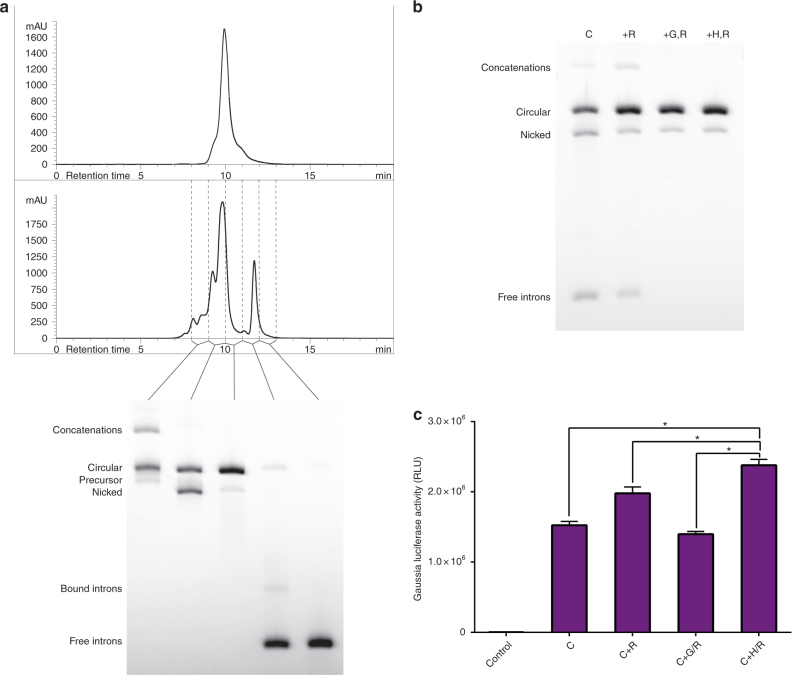
Messenger RNA (mRNA) has broad potential for application in biological systems. However, one fundamental limitation to its use is its relatively short half-life in biological systems. Here we develop exogenous circular RNA (circRNA) to extend the duration of protein expression from full-length RNA messages. First, we engineer a self-splicing intron to efficiently circularize a wide range of RNAs up to 5 kb in length in vitro by rationally designing ubiquitous accessory sequences that aid in splicing. We maximize translation of functional protein from these circRNAs in eukaryotic cells, and we find that engineered circRNA purified by high performance liquid chromatography displays exceptional protein production qualities in terms of both quantity of protein produced and stability of production. This study pioneers the use of exogenous circRNA for robust and stable protein expression in eukaryotic cells and demonstrates that circRNA is a promising alternative to linear mRNA.
Overview
CoChat Summary
## TL;DR
The paper engineers exogenous circular RNA (circRNA) systems that can circularize long RNAs up to 5 kb and drive robust protein expression in eukaryotic cells. Compared with linear mRNA, optimized circRNA showed longer-lasting protein production and, after HPLC purification, stronger protein output in the tested cell lines.
## Key findings
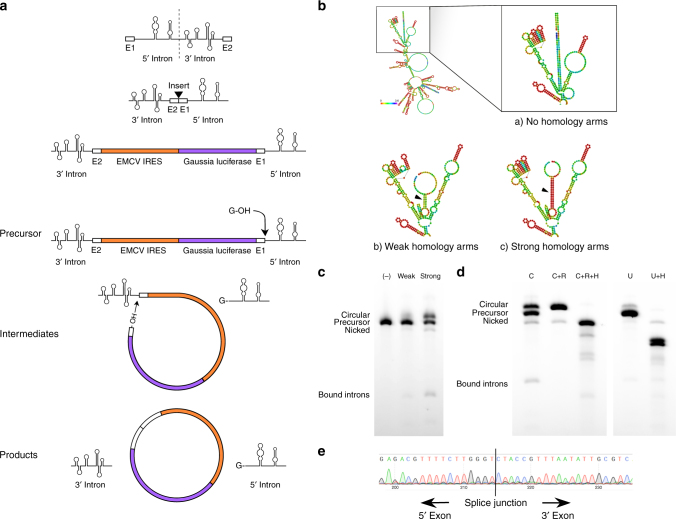
- Adding homology arms to the permuted intron-exon construct increased splicing efficiency from 0% to 16% with weak arms and to 48% with strong arms.
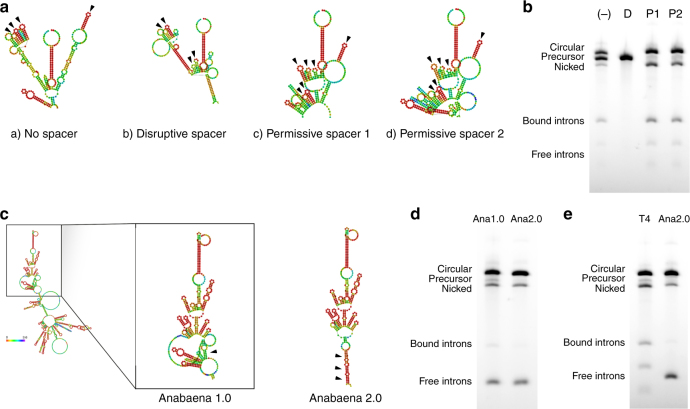
- Rationally designed spacer sequences improved splicing efficiency from 46% to 87%, and a disruptive spacer completely abrogated splicing.
- Using the engineered Anabaena catalytic intron increased splicing efficiency from 84% to 95% and reduced circRNA nicking by 37% relative to the T4 catalytic intron.
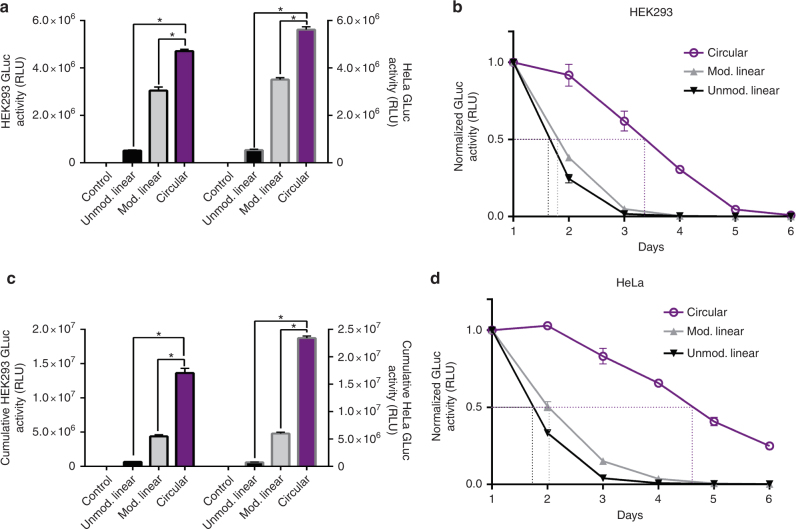
- In HEK293 cells, HPLC-purified circRNA produced 811.2% more protein than unmodified linear mRNA at 24 h and 54.5% more than modified linear mRNA; protein-production half-life was 80 h for circRNA versus approximately 43 h and 45 h for the unmodified and modified linear mRNAs, respectively.
- In HeLa cells, circRNA protein-production half-life was 116 h, compared with approximately 44 h and 49 h for the unmodified and modified linear mRNAs.
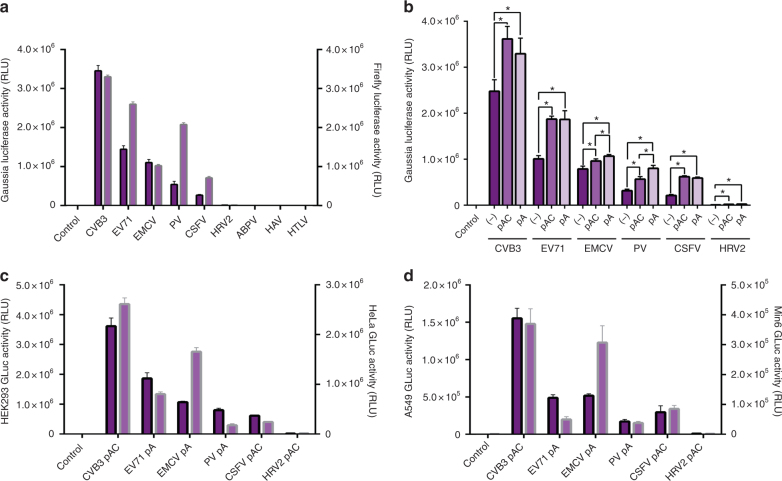
- The CVB3 IRES was 1.5-fold more effective than the EMCV IRES in HEK293 cells and remained superior across HeLa, A549, and Min6 cells tested.
## Methods
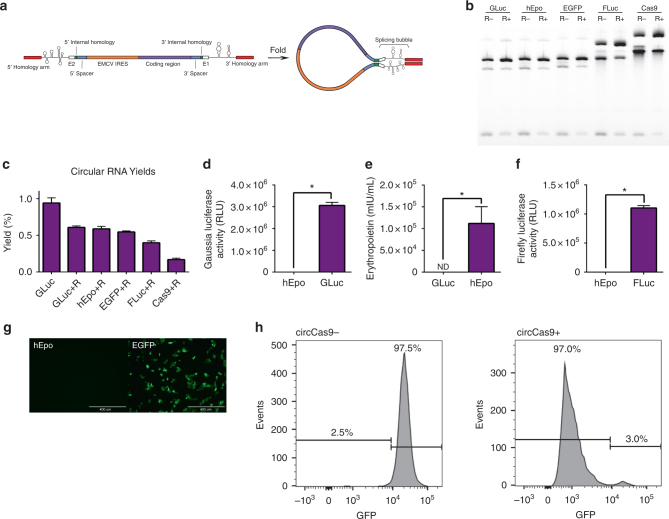
- Engineered circRNAs were built using permuted group I intron/PIE designs with homology arms, spacer sequences, and different IRES elements; constructs included coding regions for GLuc, Firefly luciferase, EGFP, human erythropoietin, and Cas9.
- RNAs were synthesized by in vitro transcription, circularized with GTP/Mg2+-dependent self-splicing, enriched with RNase R, and purified by gel extraction or size-exclusion HPLC; circularization was assessed by gel analysis, RNase H nicking analysis, and splice-junction sequencing.
- Functional testing used transfection into HEK293, HeLa, A549, HEK293-GFP, and Min6 cells, with readouts including luminescence, fluorescence, ELISA, flow cytometry, cytokine assays, and qPCR; statistics were by two-tailed unpaired Welch’s t-test.
## Limitations
- The paper states that longer circRNAs were more prone to nicking during production, which reduced yields and purity.
- The discussion says more work is needed to optimize translation from circRNA and to study translation efficiency and stability in other cell types and tissues.
- The paper notes that additional analysis of exogenous circRNA immunogenicity is required, and that suitable delivery vehicles in vitro and in vivo need thorough investigation.
Model-written summary. Check it against the paper before relying on it.
Integrity signals
Registry
Cites
Statistics
Figures
Verification
Claims the paper makes
9 Valid · 1 Not valid · 3 Not checked · 54 Own results and interpretations
Some cited sources support this claim and some don’t — read each source’s verdict below.
In the paper
“These strategies have yielded modest improvements in RNA stability10, 13–16, and thus alternative approaches to RNA stabilization, such as circularization, are desirable.”
§ Engineering circular RNA for potent and stable translation in eukaryotic cells > Introduction
What the sources say
- Disputedcites [10] Kaczmarek JC Kowalski PS Anderson DG Advances in the delivery of RNA therapeutics: from concept to clinical reality Genome Med. 2017 9 60 10.1186/s13073-017-0450-0 28655327 PMC5485616 sourceExperimental — accuracy not yet measured
In the “Protein overexpression—mRNA” section (page not provided), the paper says that cap analogs and poly(A) tails have markedly improved mRNA stability, contrary to the claim that previous strategies yielded only modest improvements. (LLM, conf=0.86)
Checked by a reasoning model — may be wrong.
- Disputedcites [13] Holtkamp S Modification of antigen-encoding RNA increases stability, translational efficacy, and T-cell stimulatory capacity of dendritic cells Blood 2006 108 4009 4017 10.1182/blood-2006-04-015024 16940422 sourceExperimental — accuracy not yet measured
In the section on combining poly(A)-tail and 3′ UTR modifications (page unavailable), the paper reports an approximately two-orders-of-magnitude improvement in RNA stability relative to standard IVT RNA. That result is contrary to describing the improvement reported by this source as modest. (LLM, conf=0.88)
Checked by a reasoning model — may be wrong.
- Supportedcites [14] Kuhn AN Phosphorothioate cap analogs increase stability and translational efficiency of RNA vaccines in immature dendritic cells and induce superior immune responses in vivo Gene Ther. 2010 17 961 971 10.1038/gt.2010.52 20410931 source
The RNA half-life results (Table 2) show a limited increase with the phosphorothioate cap in immature dendritic cells compared with conventional capping. The same results section explicitly says functional cap analogs had a modest effect on RNA stability in mature dendritic cells. (LLM, conf=0.84)
- Partly supportedcites [15] Presnyak V Codon optimality is a major determinant of mRNA stability Cell 2015 160 1111 1124 10.1016/j.cell.2015.02.029 25768907 PMC4359748 sourceExperimental — accuracy not yet measured
The Results section reports that reporters with optimal codons were about fourfold more stable than those with non-optimal codons, supporting an improvement in mRNA stability. The paper does not characterize that improvement as modest or establish that previous stabilization strategies generally yielded only modest gains. (LLM, conf=0.79)
- Could not verifycites [16] Kariko K Muramatsu H Ludwig J Weissman D Generating the optimal mRNA for therapy: HPLC purification eliminates immune activation and improves translation of nucleoside-modified, protein-encoding mRNA Nucleic Acids Res. 2011 39 e142 e142 10.1093/nar/gkr695 21890902 PMC3241667 sourceExperimental — accuracy not yet measured
The Introduction and Discussion describe reduced immune activation and improved translation with modified or HPLC-purified mRNA, but do not characterize improvements in RNA stability as modest. Searches for RNA stability, half-life, degradation, and circularization found no passage in our copy that establishes the claimed comparison. (LLM, conf=0.74)
plainstates a cause- Asserted: passes — The authors put it forward as true.
- Checkable: passes — It can be checked against evidence.
- Load-bearing: passes — The paper’s conclusions depend on it.
- Based: passes — The paper gives a reason why it holds.
- Disputed
The cited sources support only part of this claim — read each source’s verdict below.
In the paper
“Indeed, the intervening region between the 5′ and 3′ splice sites of native group I introns is on average 300–500 nucleotides long22, while the intervening region of the engineered RNA that we constructed was two to four-fold longer.”
§ Engineering circular RNA for potent and stable translation in eukaryotic cells > Results > Long RNA circularization is assisted by homology
What the sources say
- Partly supportedcites [22] Vicens Q Paukstelis PJ Westhof E Lambowitz AM Cech TR Toward predicting self-splicing and protein-facilitated splicing of group I introns RNA 2008 14 2013 2029 10.1261/rna.1027208 18768647 PMC2553746 sourceExperimental — accuracy not yet measured
The Results section reports that 12 group I introns tested were 183–421 nucleotides long, and Intron selection gives a range of 183–496 nucleotides for introns requested. Neither passage establishes a 300–500-nucleotide average for native group I introns generally. (LLM, conf=0.82)
plain- Asserted: passes — The authors put it forward as true.
- Checkable: passes — It can be checked against evidence.
- Load-bearing: passes — The paper’s conclusions depend on it.
- Based: passes — The paper gives a reason why it holds.
- Partly supported
A result the paper reports from its own data — it cites no other source for it, so there is none to check. The quote shows it is in the paper.
In the paper
“First, we engineer a self-splicing intron to efficiently circularize a wide range of RNAs up to 5 kb in length in vitro by rationally designing ubiquitous accessory sequences that aid in splicing.”
§ Engineering circular RNA for potent and stable translation in eukaryotic cells > Abstract
plainstates a cause- Asserted: passes — The authors put it forward as true.
- Checkable: passes — It can be checked against evidence.
- Load-bearing: passes — The paper’s conclusions depend on it.
- Based: passes — The paper gives a reason why it holds.
A result the paper reports from its own data — it cites no other source for it, so there is none to check. The quote shows it is in the paper.
In the paper
“In the case of EMCV and Poliovirus IRESs, polyA sequences improved expression beyond the improvement seen with an unstructured polyAC spacer.”
§ Engineering circular RNA for potent and stable translation in eukaryotic cells > Results > The CVB3 IRES is superior in the context of circRNA
plainstates a cause- Asserted: passes — The authors put it forward as true.
- Checkable: passes — It can be checked against evidence.
- Load-bearing: unclear — It is unclear whether the paper’s conclusions depend on it.
- Based: passes — The paper gives a reason why it holds.
A result the paper reports from its own data — it cites no other source for it, so there is none to check. The quote shows it is in the paper.
In the paper
“We found that the IRES from Coxsackievirus B3 (CVB3) was 1.5-fold more effective than the commonly adopted EMCV IRES in HEK293 cells (Fig. 4a).”
§ Engineering circular RNA for potent and stable translation in eukaryotic cells > Results > The CVB3 IRES is superior in the context of circRNA
plainstates a cause- Asserted: passes — The authors put it forward as true.
- Checkable: passes — It can be checked against evidence.
- Load-bearing: passes — The paper’s conclusions depend on it.
- Based: passes — The paper gives a reason why it holds.
34 more claims
Create a free account to see all 67 claims and every source verdict.
- It may state two separate claims as one. 25
- Probably not a substantial claim. 9
- The quote only partly states this claim. 2
Claims other papers make about this one
Each is checked against this paper’s own text: does it say what the citing paper says it does?
The source backs part of the claim, not all of it — or backs it for a different population, condition or comparison.
In the citing paper
“Similar to linear mRNA, the chemical modification of specific nucleotides and chromatographic purification can minimize immunogenicity of the RNA and increase translation.”
From Lipid nanoparticles for mRNA delivery (2021) · cites this paper as [245]
Experimental — accuracy not yet measuredThe cited source says what the claim attributes to it.
In the citing paper
“Circular RNA (circRNA) is a single-stranded RNA with a closed-loop structure.”
From Lipid nanoparticles for mRNA delivery (2021) · cites this paper as [245]
The cited source says what the claim attributes to it.
In the citing paper
“In addition, circular RNA (circRNA) can be synthesized to optimize mRNA properties245,246 (Box 2).”
From Lipid nanoparticles for mRNA delivery (2021) · cites this paper as [245]
In the citing paper
“Despite the lack of essential elements for cap-dependent translation, circRNA can be translated by adding the IRES element or m6A modification incorporated to its 5′ UTR region.223,224”
From Advances in COVID-19 mRNA vaccine development (2022) · cites this paper as [223]
In the citing paper
“Given its enhanced biostability compared with linear RNA due to the lack of terminals preventing degradation,49 circRNA could be a promising research avenue.”
From COVID-19 mRNA vaccines: Platforms and current developments (2022) · cites this paper as [49]
6 more claims about this paper
Create a free account to see every claim other papers make about this one.
Citations
Cites
Natural RNA circles function as efficient microRNA sponges
Hansen, T. B., Jensen, T. I., Clausen, B. H., Bramsen, J. B., Finsen, B., Damgaard, C. K., & Kjems, J. (2013) · Nature · doi:10.1038/nature11993 · Cited by 7,985
Exon-intron circular RNAs regulate transcription in the nucleus
Li, Z., Huang, C., Bao, C., Chen, L., Lin, M., Wang, X., Zhong, G., Yu, B., Hu, W., Dai, L., et al. (2015) · Nature Structural & Molecular Biology · doi:10.1038/nsmb.2959 · Cited by 2,905
Detecting and characterizing circular RNAs
Jeck, W. R., & Sharpless, N. E. (2014) · Nature Biotechnology · doi:10.1038/nbt.2890 · Cited by 2,702
Circ-ZNF609 is a circular RNA that can be translated and functions in myogenesis
Legnini, I., Di Timoteo, G., Rossi, F., Morlando, M., Briganti, F., Sthandier, O., Fatica, A., Santini, T., Andronache, A., Wade, M., et al. (2017) · Molecular Cell · doi:10.1016/j.molcel.2017.02.017 · Cited by 2,173
Regulation of circRNA biogenesis
Chen, L.-L., & Yang, L. (2015) · RNA Biology · doi:10.1080/15476286.2015.1020271 · Cited by 1,953
Pamudurti, N. R., Bartok, O., Jens, M., Ashwal-Fluss, R., Stottmeister, C., Ruhe, L., Hanan, M., Wyler, E., Perez-Hernandez, D., Ramberger, E., et al. (2017) · Molecular Cell · doi:10.1016/j.molcel.2017.02.021 · Cited by 1,810
Codon Optimality Is a Major Determinant of mRNA Stability
Presnyak, V., Alhusaini, N., Chen, Y.-H., Martin, S., Morris, N., Kline, N., Olson, S., Weinberg, D., Baker, K. E., Graveley, B. R., et al. (2015) · Cell · doi:10.1016/j.cell.2015.02.029 · Cited by 1,078
Karikó, K., Muramatsu, H., Ludwig, J., & Weissman, D. (2011) · Nucleic Acids Research · doi:10.1093/nar/gkr695 · Cited by 898
Circular RNAs: analysis, expression and potential functions
Barrett, S. P., & Salzman, J. (2016) · Development · doi:10.1242/dev.128074 · Cited by 859
Enuka, Y., Lauriola, M., Feldman, M. E., Sas-Chen, A., Ulitsky, I., & Yarden, Y. (2016) · Nucleic Acids Research · doi:10.1093/nar/gkv1367 · Cited by 757
Cited by
Items 501–600 of 804
Gao, X., Chen, K. G., & Wang, H. (2025) · Nucleic Acids Research · doi:10.1093/nar/gkaf310 · Cited by 7
“In this context, we address the issue of nicking that arises during group 1 intron-mediated circularization, as previously demonstrated by other researchers [ 3 , 15 ].”
RetractedCircular RNAs in Hematopoiesis with a Focus on Acute Myeloid Leukemia and Myelodysplastic Syndrome
Merkerová, M. D., Krejčík, Z., Szikszai, K., & Kundrát, D. (2020) · International Journal of Molecular Sciences · doi:10.3390/ijms21175972 · Cited by 7
“Further, exogenous circRNAs were also transfected into eukaryotic cells to induce the stable expression of a functional protein encoded by the exogenous circRNAs [71].”
BackgroundThe Role of Noncoding RNAs in Osteogenic Differentiation of Human Periodontal Ligament Stem Cells
Ahmad, P., Stoddart, M. J., & Bella, E. D. (2021) · Craniomaxillofacial Trauma & Reconstruction Open · doi:10.1177/2472751221999229 · Cited by 8
CircRNAs in Tumor Radioresistance
Gao, Y., Gao, J.-W., Lin, F., Wang, T., Huo, S. T., Wu, J., Zhou, Q., & Zhang, C. (2022) · Biomolecules · doi:10.3390/biom12111586 · Cited by 7
“Almost all circRNA-encoded proteins are found in metabolically active cells such as cancer cells or myogenic cells [50].”
BackgroundStudy of circular RNA translation using reporter systems in living cells
Chen, C., Yang, Y., & Wang, Z. (2021) · Methods · doi:10.1016/j.ymeth.2021.03.011 · Cited by 8
Circular sisRNA identification and characterisation
Ng, A. Y. E., & Pek, J. W. (2021) · Methods · doi:10.1016/j.ymeth.2021.04.002 · Cited by 7
Chen, Y., Ling, C., Xu, Y., Liu, J., & Tang, W. (2022) · International Journal of General Medicine · doi:10.2147/ijgm.s355043 · Cited by 7
“CircRNAs can be used as miRNA sponges,(7) protein sponges,(8) transcription regulators,(9) or even peptide coding sequences, indicating that they have the potential to be a target of cancer treatment drugs.(10,11) Therefore, circRNA is considered a potential biomarker, and some of them (such as circHIPK3 and circRNA00…”
MethodA foundation language model to decipher diverse regulation of RNAsPreprint
Zhou, H., Hu, Y., Zheng, Y., Li, J., Peng, J., Hu, J., Yang, Y., Zhang, G., & Wang, Z. (2024) · bioRxiv (Cold Spring Harbor Laboratory) · doi:10.1101/2024.10.12.617732 · Cited by 7
Zhang, S., Lu, H., Zhang, H., Ding, X., Wu, Q., Lei, A., Kong, N., & Zhang, J. (2024) · bioRxiv (Cold Spring Harbor Laboratory) · doi:10.1101/2024.11.06.621821 · Cited by 8
Wang, Y., Li, L., Sutton, A. T., Tu, Q., Zhao, K., Wen, E. P., Osborn, J., Singh, A. N., Gunsch, M. J., Rustandi, R. R., et al. (2024) · Analytical and Bioanalytical Chemistry · doi:10.1007/s00216-024-05242-8 · Cited by 6
“It is important to note that Mg ++ also serves as a co-factor within the intron self-splicing sys-tem, contributing to the formation of circular RNA [39, 40].”
Efficient circular RNA synthesis through Gap-DNA splint-mediated ligation
Kim, H., Kim, D., Moon, S., & Lee, J. B. (2024) · Nanoscale · doi:10.1039/d4nr01770f · Cited by 6
In Vitro Self-Circularization Methods Based on Self-Splicing Ribozyme
Lee, K. H., Lee, N., & Lee, S. (2024) · International Journal of Molecular Sciences · doi:10.3390/ijms25179437 · Cited by 6
Banda, O. A., Adams, S. E., Omer, L., Jung, S. K., Said, H., Phoka, T., Tam, Y. K., Weissman, D., Rivella, S., Alameh, M., et al. (2024) · Molecular Therapy — Nucleic Acids · doi:10.1016/j.omtn.2024.102423 · Cited by 7
“Consistent with previous reports demonstrating the increased expression lifetime of circular mRNA, 28 we achieved longer luciferase expression lifetimes with LNP CFLuc in both ex vivo expanded LT-HSCs and primary mouse embryonic fi broblasts (MEFs) compared to LNP LFLuc (Figures 5E and 5F).”
Roles of circRNAs in viral pathogenesis
Liu, J., Wang, Y., Zheng, M., Du, J., Maarouf, M., & Chen, J. (2025) · Frontiers in Cellular and Infection Microbiology · doi:10.3389/fcimb.2025.1564258 · Cited by 9
“For example, RNA cyclization in vitro can extend protein expression time in eukaryotic cells (Wesselhoeft et al., 2018).”
Karousi, P., Kontos, C. K., Nikou, S. T., Carell, T., Sideris, D. C., & Scorilas, A. (2025) · Functional & Integrative Genomics · doi:10.1007/s10142-025-01578-1 · Cited by 6
“This process contributes to the enrichment of the functional products derived from a single of their parental genes (Li et al. 2015; Wesselhoeft et al. 2018 ).”
Peptide nucleic acid-mediated circularization of target RNA as tool to inhibit translation
Chiara, A. D., Falanga, A. P., Froechlich, G., et al. (2025) · International Journal of Biological Macromolecules · doi:10.1016/j.ijbiomac.2025.142230 · Cited by 6
Research progress on immune mechanism and control strategy of dsRNA impurities in mRNA vaccine
Liu, X., Hu, C., He, Q., Bai, Y., Zhang, X., Fu, Z., Ma, X., Xu, M., Liang, Z., & Mao, Q. (2025) · Expert Review of Vaccines · doi:10.1080/14760584.2025.2510335 · Cited by 10
“Similarly, dsRNA formed from splice fragments during the cyclization process is distinct from dsRNA derived from the target mRNA sequence [18], and there are currently no research data on whether it can be detected by the present antibodies, thus demanding additional testing criteria for its…”
Liang, Q., Pan, Y., Zhou, Q., Yang, J., Shi, H., Ji, C., & Li, G. (2025) · Chemical Communications · doi:10.1039/d5cc03915k · Cited by 6
Circular RNA-mediated regulation of key signaling pathways in cardiovascular diseases: a review
You, Q., Zhang, W., Koo, C., Jia, C., Spanos, M., Liu, B., Xiao, J., & Guo, H. (2025) · Journal of Advanced Research · doi:10.1016/j.jare.2025.09.048 · Cited by 8
“While chemical/enzymatic methods are restricted to in vitro use, ribozymes are compatible with both in vitro and in vivo applications [21].”
Capirossi, G., Brasini, S., Tremoli, E., Binatti, A., & Roncarati, R. (2025) · International Journal of Molecular Sciences · doi:10.3390/ijms26199725 · Cited by 7
“While most linear mRNAs have a lifespan of only a few hours, circRNAs typically persist for much longer, with a median half-life exceeding ten hours [6,250].”
Structural insights and engineering of the T4 td intron for improved RNA circularization
An, L., Li, S., & Zhang, K. (2025) · Nature Catalysis · doi:10.1038/s41929-025-01445-z · Cited by 8
“Our identification of these circularization-promoting mutations expands on structural modification strategies previously explored to enhance the efficiency of circRNA production 23,26,70,71 .”
InfluentialRNA denaturation underlies circular RNA separation
Jiang, Y., & Kjems, J. (2025) · Nucleic Acids Research · doi:10.1093/nar/gkaf1160 · Cited by 10
“Among these three electrophoresis methods, both AGE and PAGE can serve for cir-cRNA purification [ 5 , 8 ], but the inefficiency of the down-stream gel extraction of the circRNA limits their application for large-quantity manufacturing.”
InfluentialDoustmihan, A., Akbari, M., Jaymand, M., Liu, G., & Jahanban‐Esfahlan, R. (2025) · Materials & Design · doi:10.1016/j.matdes.2025.115098 · Cited by 7
State‐of‐the‐Art Strategies for Circular RNA in Cancers: Opportunity and Challenge
Ding, Z., Luo, Z., Zhang, L., Zhang, S., Zhang, R., Qiu, Z., & Huang, C. (2026) · MedComm · doi:10.1002/mco2.70608 · Cited by 7
“Additionally, optimizing the secondary structures and codon usage in circRNA sequence design significantly enhances transcript stability while concurrently improving translational efficiency and antibody responses [ 246 ].”
Wei, Z., Li, H., Lv, S., & Yang, J. (2024) · Frontiers in Immunology · doi:10.3389/fimmu.2023.1301545 · Cited by 11
“Compared to mRNA, miRNA, or lncRNA, circRNAs exhibit higher stability in the cytoplasm as therapeutic targets (111, 112).”
BackgroundRNA-Based Vaccines and Therapeutics Against Intracellular Pathogens
Kola, N. S., Patel, D., & Thakur, A. (2024) · Methods in molecular biology · doi:10.1007/978-1-0716-3890-3_21 · Cited by 7
Gao, Y., Ji, T., Ji, T., Yu, K., & Gao, X. (2025) · Critical Reviews in Oncology/Hematology · doi:10.1016/j.critrevonc.2025.104828 · Cited by 6
MStoCIRC: A powerful tool for downstream analysis of MS/MS data to predict translatable circRNAs
Cao, Z., & Li, G. (2022) · Frontiers in Molecular Biosciences · doi:10.3389/fmolb.2022.791797 · Cited by 6
“As it is speculated, small amounts of circRNAs may be translatable (Abe et al., 2015; Wesselhoeft et al., 2018).”
BackgroundRNA-Based Therapeutic Technology
Mashima, R., Takada, S., & Miyamoto, Y. (2023) · International Journal of Molecular Sciences · doi:10.3390/ijms242015230 · Cited by 6
“Another method uses a self-splicing intron with a rationally designed accessary sequence [128].”
MethodCircular RNAs in childhood‐related diseases and cancers: A review
Mao, L., Guo, J., Hu, L., Li, L., Bennett, S., Xu, J., & Zou, J. (2020) · Cell Biochemistry and Function · doi:10.1002/cbf.3611 · Cited by 6
Antigen Delivery Platforms for Next-Generation Coronavirus Vaccines
Chentoufi, A. A., Ulmer, J. B., & BenMohamed, L. (2024) · Vaccines · doi:10.3390/vaccines13010030 · Cited by 7
Lipid nanoparticle-assisted mRNA therapy for cancer treatment
Kim, H.-J., Le, N. D., Oh, H.-J., Kim, B., Yoo, E., Kim, J., & Yim, H. (2025) · Applied Physics Reviews · doi:10.1063/5.0247029 · Cited by 6
Lv, B., Li, L., Liu, M., & Zou, S. (2025) · Translational Oncology · doi:10.1016/j.tranon.2025.102631 · Cited by 5
“CircRNAs represent a rapidly expanding frontier in cancer immunology, yet their biology and translational potential are only beginning to be understood [124 – 126].”
Splint-free circular RNA synthesis via RNA secondary structure–guided ligation
Kim, Y.-C., Kang, D. H., Choi, K., Yoo, Y.-J., Kim, H. J., Choi, S.-S., Kang, S.-H., & Kim, E.-S. (2025) · New Biotechnology · doi:10.1016/j.nbt.2025.12.004 · Cited by 6
IRES–cargo interplay structurally modulates circular RNA translation
Huang, Y., Chen, Y.-Q., Lou, S., Gao, X., Liu, Y.-X., Zhang, Y., Nan, F., Chen, L., & Yang, L. C. (2026) · Cell Research · doi:10.1038/s41422-026-01233-9 · Cited by 10
Beyond the Sequence: Chemical and Topological Design and Innovations in mRNA Therapeutics
Liu, D., Chen, H., Pan, A., & Wang, X. (2026) · Chemical Reviews · doi:10.1021/acs.chemrev.5c00347 · Cited by 11
Wu, P., Ge, J., Hou, X., Qu, H., Ouyang, J., Wang, D., Tong, T., Meng, Y., Yan, Q., Shi, L., et al. (2026) · Cancer Letters · doi:10.1016/j.canlet.2026.218459 · Cited by 6
Chien, K. R., Foo, K. S., & Witman, N. (2026) · Nature Reviews Drug Discovery · doi:10.1038/s41573-026-01459-7 · Cited by 16
“The circular structure of circRNAs potentially increases resistance to exonuclease activity, enhancing their stability 263 and thereby leading to sustained and enhanced expression levels compared with linear mRNAs.”
Kong, X., Wu, T., Cai, H., Chen, Z., Wang, Y., He, P., Liu, P., Li, L., Peng, S., Xu, F., et al. (2024) · Gene · doi:10.1016/j.gene.2024.148463 · Cited by 8
Kim, U., Hwang, S., Cho, S., Kim, H. Y., Ban, H., Park, J., Mun, J., Kim, N., Suh, J. H., Choi, J., et al. (2024) · Frontiers in Immunology · doi:10.3389/fimmu.2024.1454504 · Cited by 7
A Review on Circular RNA Translation and Its Implications in Disease
Wei, H. Y., Fan, X., & Mao, M. (2024) · Methods in molecular biology · doi:10.1007/978-1-0716-4290-0_5 · Cited by 6
Solodushko, V., Kim, J. H., & Fouty, B. (2025) · Gene Therapy · doi:10.1038/s41434-025-00521-0 · Cited by 6
“…can promote translation of cytoplasmic proteins like GFP and Gaussia luciferase by facilitating interactions with eukaryotic translation initiation factor eIF4G and polyA-binding protein (PABP) [40 – 42], such modi fi cations may not be as effective as the terminal polyadenylation of a linear mRNA.”
RNA-lipid nanoparticle therapeutics for women’s health
Nomani, A., Saraswat, A. L., Zhang, Y., Parenky, A. C., Kuo, C.-T. J., Brown, H., Hartford, S. A., Rayaprolu, B. M., Bhalla, A. S. B., & Shameem, M. (2025) · Frontiers in Nanotechnology · doi:10.3389/fnano.2025.1475969 · Cited by 7
CircRNP complexes: from nature to design
Nuthalapati, S. S., Ulshöfer, C. J., & Bindereif, A. (2023) · Journal of Molecular Cell Biology · doi:10.1093/jmcb/mjad006 · Cited by 5
“…enzymatic ligation by T4 RNA ligase ( mostly for short circRNAs of less than ∼ 150 nucleotides; see Breuer and Rossbach, 2020 ) , or by ribozyme-mediated circRNA expression ( short or long circRNAs; for the so-called PIE and Tornado systems, see Wesselhoeft et al., 2018 ; Litke and Jaffrey, 2019 ) .”
Circular RNAs Could Encode Unique Proteins and Affect Cancer Pathways
Crudele, F., Bianchi, N., Terrazzan, A., Ancona, P., Frassoldati, A., Gasparini, P., D’Adamo, P., Papaioannou, D., Garzon, R., Wójcicka, A., et al. (2023) · Biology · doi:10.3390/biology12040493 · Cited by 6
“In a different approach, other investigators considered IRES in the circRNA sequence as necessary for efficient circRNA translation [23,24].”
BackgroundFeng, R., Yu, S., Qian, Z., Wang, Y., Xie, G., Li, B., Chen, J., Wu, Y., & Tang, K. (2024) · The Analyst · doi:10.1039/d3an01803b · Cited by 6
Engineering an Escherichia coli based in vivo mRNA manufacturing platform
Curry, E., Muir, G., Qu, J., Kis, Z., Hulley, M. E., & Brown, A. J. (2024) · Biotechnology and Bioengineering · doi:10.1002/bit.28684 · Cited by 5
“Translational efficiency of SelfCirc ‐ GFP molecules would likely be further enhanced via determination and selection of optimal IRES elements (Wesselhoeft et al., 2018).”
BackgroundMethodQiaerxie, G., Jiang, Y., Li, G., Yang, Z., Long, F., Yu, Y., Lu, J. S., Du, P., & Cui, Y. (2024) · Human Vaccines & Immunotherapeutics · doi:10.1080/21645515.2024.2358570 · Cited by 7
“23,24 Prepared through the cyclization reaction in vitro, circular RNAs are less prone to degradation and more durable target protein expression.”
Use of synthetic circular RNA spike-ins (SynCRS) for normalization of circular RNA sequencing data
Conn, V. M., Liu, R., Gabryelska, M., & Conn, S. J. (2024) · Nature Protocols · doi:10.1038/s41596-024-01053-4 · Cited by 6
RNA technology and nanocarriers empowering in vivo chimeric antigen receptor therapy
Cai, J., Chen, S., Liu, Z., Li, H., Wang, P., Yang, F., Li, Y., Chen, K., Sun, M., & Qiu, M. (2024) · Immunology · doi:10.1111/imm.13861 · Cited by 7
“Furthermore, during the synthesis of circRNA, the occurrence of nicked RNA may be observed [97].”
InfluentialGao, Y., Zhang, R., Liu, Q., Sun, S.-G., Qi, M.-Y., Wang, Y., Geng, D., & Wang, L. (2021) · Aging · doi:10.18632/aging.202688 · Cited by 6
“CircRNAs and lncRNAs may share certain mechanisms of target gene regulation, including binding to miRNAs as competitive endogenous RNAs (ceRNAs) [20, 21], altering gene transcription, binding to proteins and encoding peptides/proteins [22].”
BackgroundEstablished and Emerging Methods for Protecting Linear DNA in Cell-Free Expression Systems
Fochtman, T. J., & Oza, J. P. (2023) · Methods and Protocols · doi:10.3390/mps6020036 · Cited by 6
RNAi Screening to Identify Factors That Control Circular RNA Localization
Tatomer, D. C., Liang, D., & Wilusz, J. E. (2020) · Methods in molecular biology · doi:10.1007/978-1-0716-0935-4_20 · Cited by 5
Li, J., & Foged, C. (2024) · Expert Opinion on Drug Delivery · doi:10.1080/17425247.2024.2409142 · Cited by 7
“[61] compared luciferase protein production efficiency between equimolar quantities of circRNA and mRNA.”
Chen, Y., Ye, Z., He, R., Chen, G., & Zhang, D. X. (2025) · Seminars in Cancer Biology · doi:10.1016/j.semcancer.2025.07.009 · Cited by 5
A Computationally Optimized Ribonucleic Acid Circularization Strategy without Byproducts
Chen, R.-T., Zhuang, Y., Zhang, L., Wu, Y., Luo, L., Pan, Y., Li, Y., Zhu, C., Xu, R. D., Jiang, Y., et al. (2025) · Journal of the American Chemical Society · doi:10.1021/jacs.5c09798 · Cited by 9
RNA vaccines for cancer: revolutionizing immunization strategies
Huang, D., Zhang, J., Zeng, X., Zhang, Y., & Song, E. (2025) · Trends in cancer · doi:10.1016/j.trecan.2025.09.003 · Cited by 6
Wu, J., Rou, W., Gao, Z., Ma, X., Ding, H., Zheng, T., Wang, L., Zhao, L., Yang, K., Li, X., et al. (2025) · Cell Reports · doi:10.1016/j.celrep.2025.116432 · Cited by 4
Tang, Y., Lu, S., Liang, W., He, Y., Hao, J., Xu, W., Sun, Y., & Zhan, C. (2025) · Journal of Controlled Release · doi:10.1016/j.jconrel.2025.114465 · Cited by 10
Zhang, J., Ju, X., Wang, Z., et al. (2025) · Chemical Communications · doi:10.1039/d5cc05842b · Cited by 4
Expression of nano-engineered RNA organelles in bacteria
Ng, B., Fan, C., Dordevic, M., Knirsch, A., Malouf, L., Fabrini, G., Nuccio, S. P., Rubio‐Sánchez, R., Christie, G., Takinoue, M., et al. (2026) · Nature Communications · doi:10.1038/s41467-026-69336-w · Cited by 11
“In addition, stability may be enhanced by circularising the constructs to prevent digestion by exonucleases 88 .”
Circular RNAs in metabolic health: bridging the gap between molecular biology and therapy
Huang, Y., He, T., Zheng, J., Chen, J., & Yang, Z. (2026) · Cell Death and Disease · doi:10.1038/s41419-026-08450-5 · Cited by 5
“Moreover, gene editing technologies can also facilitate the modi fi cation and regulation of circRNAs, such as altering circRNAs sequences through RNA editing techniques[48].”
Nucleic Acid Therapy for the Skin
Chai, A. C., Siegwart, D. J., & Wang, R. C. (2024) · Journal of Investigative Dermatology · doi:10.1016/j.jid.2024.07.029 · Cited by 4
Decoding the regulatory roles of circular RNAs in cardiac fibrosis
You, Q., Yu, J., Pan, R., Feng, J., Guo, H.-D., & Liu, B. (2024) · Non-coding RNA Research · doi:10.1016/j.ncrna.2024.11.007 · Cited by 6
“Researchers have investigated the possibility of circRNAs acting as translation templates in addition to their non-coding roles [183].”
The Role of Circular RNA Variants Generated from the NFIX Gene in Different Diseases
Zhang, L., Li, X., Gao, H., & Li, P. (2024) · Molecular Pharmaceutics · doi:10.1021/acs.molpharmaceut.3c00933 · Cited by 4
Introduction to RNA Vaccines Post COVID-19
Kramps, T. (2024) · Methods in molecular biology · doi:10.1007/978-1-0716-3770-8_1 · Cited by 6
CircRNA-based therapeutics: Current opinions and clinical potential
Liu, H., Yao, X., Zhou, Y. L., & Chen, L. (2024) · The Innovation Medicine · doi:10.59717/j.xinn-med.2024.100081 · Cited by 11
Analytical Methods to Evaluate RNA Circularization Efficiency
Sun, Y., Khimani, A. H., Tong, Y., & Lu, Z. (2024) · Electrophoresis · doi:10.1002/elps.202400067 · Cited by 4
Zeng, M., Lu, J., Li, Y., Lu, C., Kan, S., Guo, F., & Li, M. (2024) · IEEE Journal of Biomedical and Health Informatics · doi:10.1109/jbhi.2024.3491732 · Cited by 4
Li, R., Wu, X., Xue, K., Wu, S., Jiang, G., He, M., Xia, Y., Liu, H., Zhong, M., Li, J., et al. (2025) · Leukemia · doi:10.1038/s41375-025-02589-4 · Cited by 6
RNA-Protein Interactome at the Hepatitis E Virus Internal Ribosome Entry Site
Kumar, S., Verma, R., Saha, S., Agrahari, A. K., Shukla, S., Singh, O. N., Berry, U., Anurag, A., Maiti, T. K., Asthana, S., et al. (2023) · Microbiology Spectrum · doi:10.1128/spectrum.02827-22 · Cited by 5
“For generating the clone containing the HCV IRES element upstream of the Gaussia luciferase (G-Luc) coding region, a circular RNA (cRNA) vector backbone was used (77).”
MethodAbohassan, M., Khaleel, A. Q., Pallathadka, H., Kumar, A., Allela, O. Q. B., Hjazi, A. M., Pramanik, A., Mustafa, Y. F., Hamzah, H. F., & Mohammed, B. A. (2024) · Cell Biochemistry and Biophysics · doi:10.1007/s12013-024-01404-8 · Cited by 5
“Engineered circRNAs have shown that the translation of circRNAs is carried out with the help of N6-methyladenosine modi fi cation or internal ribosome entry site (IRES), which facilitates the binding of the initiation factor [31 – 33].”
Review: RNA-Based Diagnostic Markers Discovery and Therapeutic Targets Development in CancerPreprint
Wang, H., Meng, Q., Qian, J., et al. (2021) · SSRN Electronic Journal · doi:10.2139/ssrn.3975297 · Cited by 4
Mitigating Cellular Dysfunction by Addressing Contaminants in Synthetic circRNAPreprint
Zhang, Z., Li, W., Luo, D., Yuan, X., Yu, L., Wang, D., & Cao, Y. (2024) · bioRxiv (Cold Spring Harbor Laboratory) · doi:10.1101/2024.09.17.613157 · Cited by 4
Non-coding RNAs: Circular RNAs (circRNAs)
Saw, P. E., & Song, E. (2025) · Springer eBooks · doi:10.1007/978-981-96-3041-7_7 · Cited by 5
Roles and Applications of Circular RNA in Virus Infection
Gou, F., Gao, Y., Zhong, K., Bu, T., Li, Y., Li, F., & Yang, R. (2025) · International Journal of Molecular Sciences · doi:10.3390/ijms26199656 · Cited by 5
“Additionally, they possess advantages such as high thermal stability [123] and elevated translation efficiency [124].”
Chen, H., Zhang, J., Huang, J., Wu, Z., Tang, L., Tian, Y., Gao, S., Huang, S., Cao, J., Chen, J., et al. (2025) · Journal of Translational Medicine · doi:10.1186/s12967-025-07470-7 · Cited by 4
“…even more pronounced in other human cell lines: in HEK293 cells, the half-life of circRNA (~80 hours) is nearly twice that of linear mRNA (~43–45 hours); strikingly, in HeLa cells, circRNA exhibits an exceptional half-life of 116 hours, far exceeding the 44–49 hours observed for linear mRNA [105].”
Singh, N. S. S., Gataa, I. S., Saleh, L. H., Ganesan, S., Kavitha, V., Maharana, L., Sharma, R., Latipova, M., Madatova, N., Jumanazarov, D., et al. (2025) · Archives of Microbiology · doi:10.1007/s00203-025-04596-6 · Cited by 5
“This mechanism provides advantages in stability and lon - ger antigen expression, potentially leading to more durable immune responses with reduced dosing requirements and lower innate immune activation, while supporting balanced Th1/Th2 profiles (Bai et al. 2023 ; Wesselhoeft et al. 2018).”
Circular RNA encoding relaxin-2 as a potential therapy for liver fibrosis
Zhong, J., Zhang, Z., Xiao, L., Wang, C., Yang, Y., Zhang, Q., & Wang, Z. (2025) · Molecular Therapy — Nucleic Acids · doi:10.1016/j.omtn.2025.102807 · Cited by 6
“57,58 However, a direct comparison between the modified mRNA and unmodified circRNA encoding the same therapeutic protein is lacking.”
Omega-based mini prime- and base-editing systems in Escherichia coli
Liu, L.-H., Zhang, Y., Bo, X. U., YunXia, L. I., Guo, Y., Lu, X., Zhang, Z., Lai, S., Ge, Q., Zhang, K., et al. (2026) · Trends in biotechnology · doi:10.1016/j.tibtech.2026.02.002 · Cited by 3
Unlocking the potential of engineered circular RNA therapeutics
Zhen, X., Mahmoudi, M., Lan, X., Huang, G., & Tao, W. (2026) · Med-X · doi:10.1007/s44258-026-00079-5 · Cited by 9
“Major obstacles include the efficient circularization of long in vitro-transcribed precursors, the removal of linear byproducts during purification, and the optimization of circRNA translation to levels comparable with mRNA [146].”
Pan, Y., Li, X., Zhou, B., Zhuang, Y., Luo, L., Zhu, C., Xu, R., Jiang, Y., Dong, Y., Hao, Z., et al. (2026) · Journal of the American Chemical Society · doi:10.1021/jacs.6c04991 · Cited by 5
Lee, S.-Y., Lee, J., Ahn, J.-H., Lee, S.-Y., Choi, E.-J., Ha, D., Oh, A., Jo, S., Yoon, S., Lee, S., et al. (2026) · Molecular Therapy — Nucleic Acids · doi:10.1016/j.omtn.2026.102954 · Cited by 4
“42,43 For linear RNA production, the template DNA of linear and circular RNA was linearized by incubation at 37 ◦ C for 2 h using Not1 restriction enzyme (Enzynomics, Daejeon, Korea).”
Tactics targeting circular mRNA biosynthesis
Chen, X., Wang, C., & Lu, Y. (2023) · Biotechnology and Bioengineering · doi:10.1002/bit.28410 · Cited by 3
“At present, the modified Group I intron self‐splicing system is the most common ribozyme method, which requires only the addition of GTP and Mg as cofactors (Wesselhoeft et al., 2018).”
BackgroundMethodInfluentialUnti, M. J., Doetsch, L., & Jaffrey, S. R. (2024) · RNA · doi:10.1261/rna.080008.124 · Cited by 3
“Similarly, the EMCV and HCV IRES in the circular split nLuc reporter reflected the previously validated reports of IRES activity (Wesselhoeft et al. 2018).”
InfluentialViroids and Retrozymes: Plant Circular RNAs Capable of Autonomous Replication
Lezzhov, A. A., Atabekova, A. K., Chergintsev, D. A., Lazareva, E. A., Solovyev, A. G., & Morozov, S. Y. (2024) · Plants · doi:10.3390/plants14010061 · Cited by 3
“To achieve increased protein production from full-length RNA messages in eukaryotic cells, engineered circRNAs have been successfully used [9].”
Decoding Codon Usage Patterns in High-Risk Human Papillomavirus Genomes: A Comprehensive Analysis
Ren, J., Li, Q., Shen, W., & Tan, X. (2025) · Current Microbiology · doi:10.1007/s00284-025-04131-2 · Cited by 4
“Synthetic biology techniques, including codon optimization, nucleic acid modifications, and polyadenylation, play a crucial role in enhancing protein expression and improving mRNA stability in physiological environments [39].”
Nakanishi, H., & Itaka, K. (2025) · NPG Asia Materials · doi:10.1038/s41427-025-00607-6 · Cited by 3
“Similarly, modi fi cations to the poly(A) tail 41,42 or circularization 43 of translational regulator-encoding mRNAs can extend their half-lives.”
Molecular basis of backsplicing regulation and its application to manipulate circRNA levels
Wang, Y., Dzakah, E. E., & Wang, X. (2025) · RNA Biology · doi:10.1080/15476286.2025.2525914 · Cited by 8
Evaluating RNA ligases to facilitate the synthesis of circular mRNA
Wang, X., Wang, Y., Liu, J., Dong, J., & Lu, Y. (2025) · Biochemical Engineering Journal · doi:10.1016/j.bej.2025.109920 · Cited by 3
Li, H., Zhang, Y., Zhong, Y., Guo, K., Du, S., Xue, Y., Wang, C., Wang, S., Chen, D. S., Liu, Z., et al. (2025) · Materials Today · doi:10.1016/j.mattod.2025.10.005 · Cited by 5
Applications of noncoding RNAs in renal cancer patients
Toraih, E. A., Sedhom, J., Haidari, M., & Fawzy, M. S. (2022) · Elsevier eBooks · doi:10.1016/b978-0-12-824550-7.00003-5 · Cited by 6
Zong, W., Zhang, T., Chen, B., Lu, Q., Cao, X., Wang, K., Yang, Z., Chen, Z., & Yang, Y. (2022) · Frontiers in Microbiology · doi:10.3389/fmicb.2022.1048142 · Cited by 4
Investigation of the clinicopathological and prognostic role of circMTO1 in multiple cancers
Zhou, J., Qiu, C., Tang, X., et al. (2023) · Expert Review of Molecular Diagnostics · doi:10.1080/14737159.2023.2177102 · Cited by 3
“It is widely present in eukaryotic cells and plays a significant role in the regulation of gene expression [13,14].”
BackgroundProgress on mRNA vaccines and lipid nanoparticles
Fan, Y., Yin, H., Li, Y., Xi, Y., Tang, X., Weng, Y., & Huang, Y. (2024) · Chinese Science Bulletin (Chinese Version) · doi:10.1360/tb-2023-1093 · Cited by 3
“一项开创性的研究表明 , 使用自剪接内含子构建的 circRNA 在真核细胞中表现出强大且稳定的蛋白质表 达 [26] .”
Fabová, Z., Loncová, B., Harrath, A. H., & Sirotkin, A. V. (2024) · Reproductive Biology · doi:10.1016/j.repbio.2024.100860 · Cited by 3
Comprehensive circular RNA profiling in various sheep tissues
Bakhtiarizade, M. R., Heidari, M., & Ghanatghestani, A. H. M. (2024) · Scientific Reports · doi:10.1038/s41598-024-76940-7 · Cited by 4
“Recently, translation of a limited number of circRNAs to functional proteins have been reported 14,15 .”
BackgroundИванович, В. В., Chuklovin, A. B., & Shabanov, P. D. (2023) · Reviews on Clinical Pharmacology and Drug Therapy · doi:10.17816/rcf204335-384 · Cited by 3
Zhu, C., Wang, J., Du, Y., Li, C., Hao, M., Zhang, Y., Zhang, X., Guan, Y., Zheng, F., Zhang, Y., et al. (2023) · bioRxiv (Cold Spring Harbor Laboratory) · doi:10.1101/2023.09.04.556164 · Cited by 2
A Historical Overview on mRNA Vaccine Development
Verbeke, R., Cheng, M. H. Y., & Cullis, P. R. (2024) · Wiley eBooks · doi:10.1002/9783527838394.ch1 · Cited by 9
Metadata
- Authors
- Wesselhoeft, R. A., Kowalski, P. S., & Anderson, D. G.
- Affiliations
- Koch Institute for Integrative Cancer Research At MIT (US)
- Massachusetts Institute of Technology (US)
- Harvard University (US)
- Corresponding author
- Anderson, Daniel G.
- Venue
- Nature Communications
- Published
- 2018-07-06
- Volume
- 9
- Issue
- 1
- Pages
- 2629-2629
- ISSN
- 2041-1723 (ISSN-L)
- PMC
- PMC6035260
- OpenAlex
- W2811482166
- Semantic Scholar
- 1a4ee7ac0868ac371710e8c1019ff497f6d8b677
- Cited by
- 853
- References
- 28
- Citations by year
- 2026: 153 · 2025: 159 · 2024: 148 · 2023: 124 · 2022: 90 · 2021: 83 · 2020: 53 · 2019: 35 · 2018: 7
- FWCI
- 13.89
- Type
- journal article
- Language
- en
- Open access
- gold
- doi.org
- Licence
- cc-by
- creativecommons.org/licenses/by/4.0 (tdm)
- creativecommons.org/licenses/by/4.0 (vor)
- Locations
- Nature Communications (publishedVersion, cc-by)
- Europe PMC (PubMed Central) (publishedVersion, other-oa)
- PubMed Central (publishedVersion, cc-by)
- PubMed (publishedVersion)
- RePEc: Research Papers in Economics (submittedVersion)
- DOAJ (DOAJ: Directory of Open Access Journals) (submittedVersion, cc-by-sa)
- DOAJ (DOAJ: Directory of Open Access Journals) (submittedVersion)
- DSpace@MIT (Massachusetts Institute of Technology) (submittedVersion, cc-by-nc)
- Nature
- Funders
- DOD | Defense Advanced Research Projects Agency (W32P4Q-13-1-0011)
- Juvenile Diabetes Research Foundation (3-PDF-2017-383-A-N)
- Topics
- Life Sciences › Biochemistry, Genetics and Molecular Biology › Molecular Biology › Circular RNAs in diseases
- Life Sciences › Biochemistry, Genetics and Molecular Biology › Molecular Biology › RNA and protein synthesis mechanisms
- Life Sciences › Biochemistry, Genetics and Molecular Biology › Molecular Biology › RNA Research and Splicing
- Keywords
- circular RNA, self-splicing introns, mRNA stability, protein expression, eukaryotic translation, exogenous RNA
- MeSH terms
- Internal Ribosome Entry Sites, RNA, Circular, Base Sequence, Catalysis, Cell Line, Chromatography, High Pressure Liquid, Eukaryotic Cells, Exons, Genetic Engineering, Humans, Introns, RNA, RNA Splicing, RNA, Messenger, Sequence Homology, Nucleic Acid, Protein Biosynthesis, Open Reading Frames, Anabaena
About these checks
Registry, retraction, Cites and statistics results are computed, not judged, with one exception: a printed reference that no index lists is read once by a model before it counts as a citation error. Claims are extracted by a model and kept only when their quote appears verbatim in the text; each cited source is then checked, with a model’s help, for whether it says what the claim relies on. Those verdicts can be wrong — read the claim’s quote and the cited source before relying on one.
The claim verdicts this report counts are experimental: their accuracy is not yet measured.
A language model drew the claims from the paper on 2026-10-09, under version 3 of the claim definition (model deepseek-v4.1-flash, prompt extract-v3).
A second model labelled each claim on 2026-10-09 (model jev-1.13-20260917, definition revision gold-guideline-v0.2).
Cited sources are checked with a language model’s help (gpt-6-sol).
Statistics and arithmetic are recomputed, not judged.
Confidence bands are shown only for fields calibrated on our annotated test set. None is calibrated yet, so no band is shown.
What counts as a claim ›How we measure confidence ›How we check this ›
Are you an author, or do you see a problem with this page? Request a review
Data sources
Bibliographic data: Semantic Scholar, OpenAlex, Crossref.
Contains information from the Semantic Scholar Academic Graph Datasets, made available under the ODC Attribution License (ODC-BY 1.0).
Semantic Scholar’s data is described in: Kinney, R., et al. (2023). The Semantic Scholar Open Data Platform. arXiv:2301.10140.
