

Engineering circular RNA for potent and stable translation in eukaryotic cells
Open accessThe DOI matches its Crossref record; 28 of the 28 references it cites were found in a registry or an index; 16 of the 20 sources its claims cite were checked for support.
Abstract
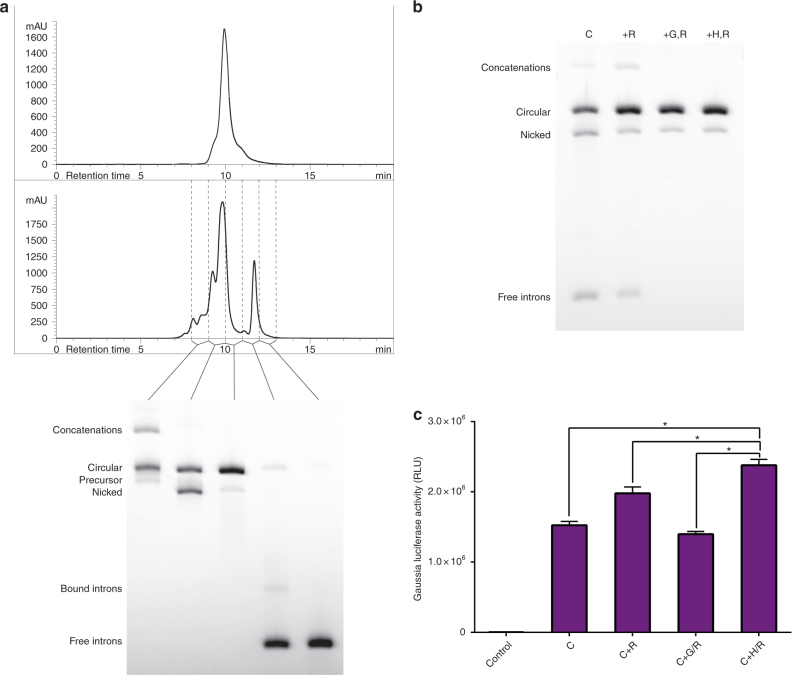
Messenger RNA (mRNA) has broad potential for application in biological systems. However, one fundamental limitation to its use is its relatively short half-life in biological systems. Here we develop exogenous circular RNA (circRNA) to extend the duration of protein expression from full-length RNA messages. First, we engineer a self-splicing intron to efficiently circularize a wide range of RNAs up to 5 kb in length in vitro by rationally designing ubiquitous accessory sequences that aid in splicing. We maximize translation of functional protein from these circRNAs in eukaryotic cells, and we find that engineered circRNA purified by high performance liquid chromatography displays exceptional protein production qualities in terms of both quantity of protein produced and stability of production. This study pioneers the use of exogenous circRNA for robust and stable protein expression in eukaryotic cells and demonstrates that circRNA is a promising alternative to linear mRNA.
Overview
CoChat Summary
## TL;DR
The paper engineers exogenous circular RNA (circRNA) systems that can circularize long RNAs up to 5 kb and drive robust protein expression in eukaryotic cells. Compared with linear mRNA, optimized circRNA showed longer-lasting protein production and, after HPLC purification, stronger protein output in the tested cell lines.
## Key findings
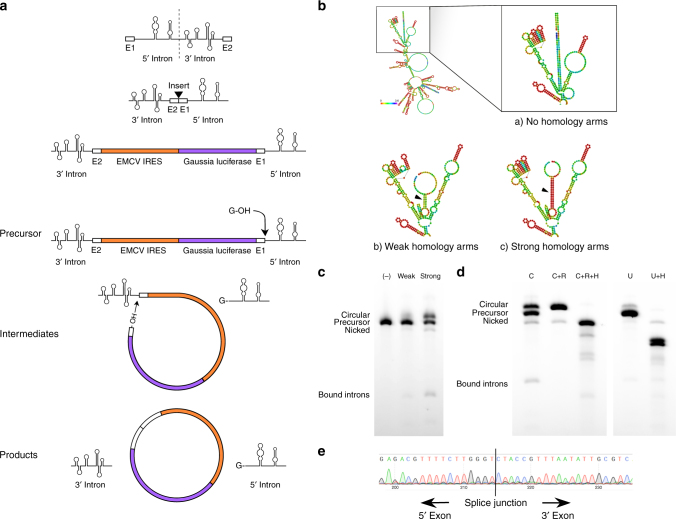
- Adding homology arms to the permuted intron-exon construct increased splicing efficiency from 0% to 16% with weak arms and to 48% with strong arms.
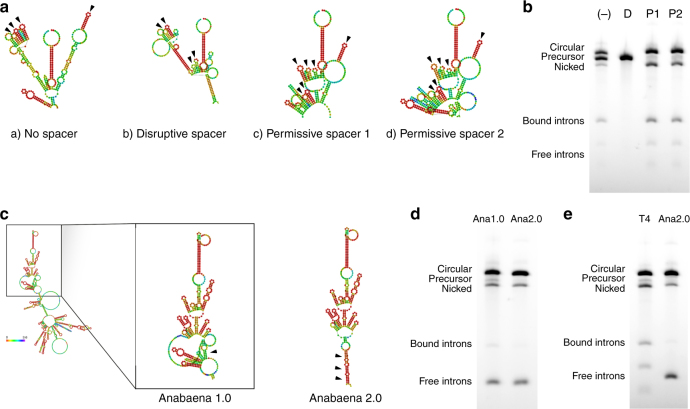
- Rationally designed spacer sequences improved splicing efficiency from 46% to 87%, and a disruptive spacer completely abrogated splicing.
- Using the engineered Anabaena catalytic intron increased splicing efficiency from 84% to 95% and reduced circRNA nicking by 37% relative to the T4 catalytic intron.
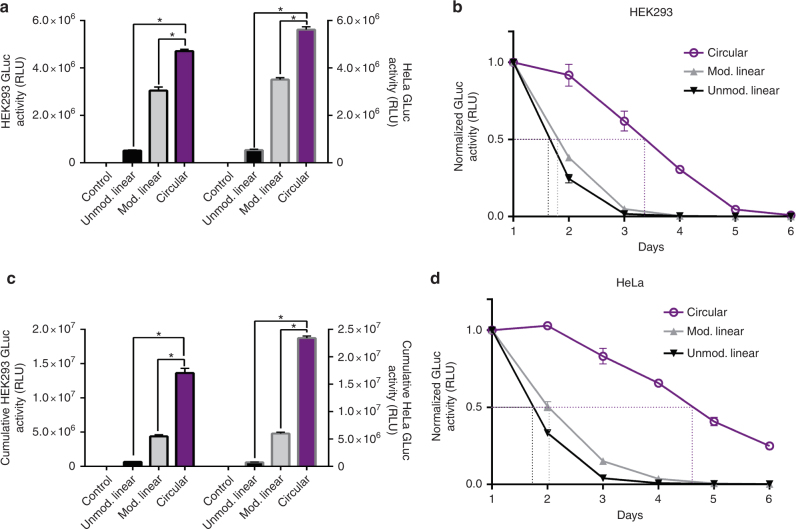
- In HEK293 cells, HPLC-purified circRNA produced 811.2% more protein than unmodified linear mRNA at 24 h and 54.5% more than modified linear mRNA; protein-production half-life was 80 h for circRNA versus approximately 43 h and 45 h for the unmodified and modified linear mRNAs, respectively.
- In HeLa cells, circRNA protein-production half-life was 116 h, compared with approximately 44 h and 49 h for the unmodified and modified linear mRNAs.
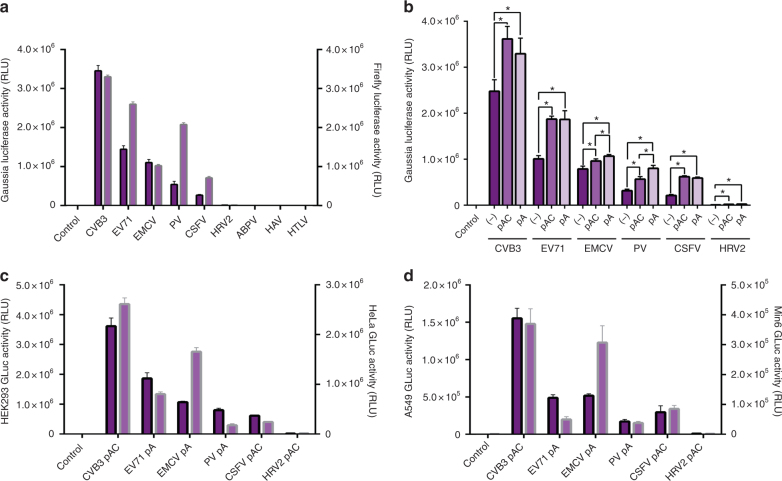
- The CVB3 IRES was 1.5-fold more effective than the EMCV IRES in HEK293 cells and remained superior across HeLa, A549, and Min6 cells tested.
## Methods
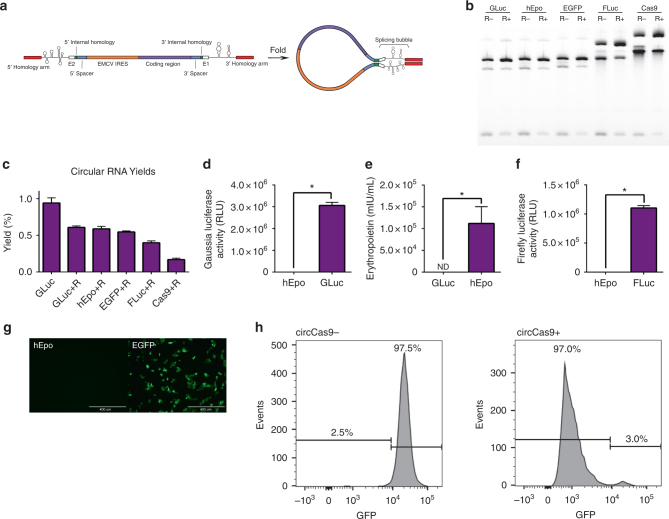
- Engineered circRNAs were built using permuted group I intron/PIE designs with homology arms, spacer sequences, and different IRES elements; constructs included coding regions for GLuc, Firefly luciferase, EGFP, human erythropoietin, and Cas9.
- RNAs were synthesized by in vitro transcription, circularized with GTP/Mg2+-dependent self-splicing, enriched with RNase R, and purified by gel extraction or size-exclusion HPLC; circularization was assessed by gel analysis, RNase H nicking analysis, and splice-junction sequencing.
- Functional testing used transfection into HEK293, HeLa, A549, HEK293-GFP, and Min6 cells, with readouts including luminescence, fluorescence, ELISA, flow cytometry, cytokine assays, and qPCR; statistics were by two-tailed unpaired Welch’s t-test.
## Limitations
- The paper states that longer circRNAs were more prone to nicking during production, which reduced yields and purity.
- The discussion says more work is needed to optimize translation from circRNA and to study translation efficiency and stability in other cell types and tissues.
- The paper notes that additional analysis of exogenous circRNA immunogenicity is required, and that suitable delivery vehicles in vitro and in vivo need thorough investigation.
Model-written summary. Check it against the paper before relying on it.
Integrity signals
Registry
Cites
Statistics
Figures
Verification
Claims the paper makes
9 Valid · 1 Not valid · 3 Not checked · 54 Own results and interpretations
Some cited sources support this claim and some don’t — read each source’s verdict below.
In the paper
“These strategies have yielded modest improvements in RNA stability10, 13–16, and thus alternative approaches to RNA stabilization, such as circularization, are desirable.”
§ Engineering circular RNA for potent and stable translation in eukaryotic cells > Introduction
What the sources say
- Disputedcites [10] Kaczmarek JC Kowalski PS Anderson DG Advances in the delivery of RNA therapeutics: from concept to clinical reality Genome Med. 2017 9 60 10.1186/s13073-017-0450-0 28655327 PMC5485616 sourceExperimental — accuracy not yet measured
In the “Protein overexpression—mRNA” section (page not provided), the paper says that cap analogs and poly(A) tails have markedly improved mRNA stability, contrary to the claim that previous strategies yielded only modest improvements. (LLM, conf=0.86)
Checked by a reasoning model — may be wrong.
- Disputedcites [13] Holtkamp S Modification of antigen-encoding RNA increases stability, translational efficacy, and T-cell stimulatory capacity of dendritic cells Blood 2006 108 4009 4017 10.1182/blood-2006-04-015024 16940422 sourceExperimental — accuracy not yet measured
In the section on combining poly(A)-tail and 3′ UTR modifications (page unavailable), the paper reports an approximately two-orders-of-magnitude improvement in RNA stability relative to standard IVT RNA. That result is contrary to describing the improvement reported by this source as modest. (LLM, conf=0.88)
Checked by a reasoning model — may be wrong.
- Supportedcites [14] Kuhn AN Phosphorothioate cap analogs increase stability and translational efficiency of RNA vaccines in immature dendritic cells and induce superior immune responses in vivo Gene Ther. 2010 17 961 971 10.1038/gt.2010.52 20410931 source
The RNA half-life results (Table 2) show a limited increase with the phosphorothioate cap in immature dendritic cells compared with conventional capping. The same results section explicitly says functional cap analogs had a modest effect on RNA stability in mature dendritic cells. (LLM, conf=0.84)
- Partly supportedcites [15] Presnyak V Codon optimality is a major determinant of mRNA stability Cell 2015 160 1111 1124 10.1016/j.cell.2015.02.029 25768907 PMC4359748 sourceExperimental — accuracy not yet measured
The Results section reports that reporters with optimal codons were about fourfold more stable than those with non-optimal codons, supporting an improvement in mRNA stability. The paper does not characterize that improvement as modest or establish that previous stabilization strategies generally yielded only modest gains. (LLM, conf=0.79)
- Could not verifycites [16] Kariko K Muramatsu H Ludwig J Weissman D Generating the optimal mRNA for therapy: HPLC purification eliminates immune activation and improves translation of nucleoside-modified, protein-encoding mRNA Nucleic Acids Res. 2011 39 e142 e142 10.1093/nar/gkr695 21890902 PMC3241667 sourceExperimental — accuracy not yet measured
The Introduction and Discussion describe reduced immune activation and improved translation with modified or HPLC-purified mRNA, but do not characterize improvements in RNA stability as modest. Searches for RNA stability, half-life, degradation, and circularization found no passage in our copy that establishes the claimed comparison. (LLM, conf=0.74)
plainstates a cause- Asserted: passes — The authors put it forward as true.
- Checkable: passes — It can be checked against evidence.
- Load-bearing: passes — The paper’s conclusions depend on it.
- Based: passes — The paper gives a reason why it holds.
- Disputed
The cited sources support only part of this claim — read each source’s verdict below.
In the paper
“Indeed, the intervening region between the 5′ and 3′ splice sites of native group I introns is on average 300–500 nucleotides long22, while the intervening region of the engineered RNA that we constructed was two to four-fold longer.”
§ Engineering circular RNA for potent and stable translation in eukaryotic cells > Results > Long RNA circularization is assisted by homology
What the sources say
- Partly supportedcites [22] Vicens Q Paukstelis PJ Westhof E Lambowitz AM Cech TR Toward predicting self-splicing and protein-facilitated splicing of group I introns RNA 2008 14 2013 2029 10.1261/rna.1027208 18768647 PMC2553746 sourceExperimental — accuracy not yet measured
The Results section reports that 12 group I introns tested were 183–421 nucleotides long, and Intron selection gives a range of 183–496 nucleotides for introns requested. Neither passage establishes a 300–500-nucleotide average for native group I introns generally. (LLM, conf=0.82)
plain- Asserted: passes — The authors put it forward as true.
- Checkable: passes — It can be checked against evidence.
- Load-bearing: passes — The paper’s conclusions depend on it.
- Based: passes — The paper gives a reason why it holds.
- Partly supported
A result the paper reports from its own data — it cites no other source for it, so there is none to check. The quote shows it is in the paper.
In the paper
“First, we engineer a self-splicing intron to efficiently circularize a wide range of RNAs up to 5 kb in length in vitro by rationally designing ubiquitous accessory sequences that aid in splicing.”
§ Engineering circular RNA for potent and stable translation in eukaryotic cells > Abstract
plainstates a cause- Asserted: passes — The authors put it forward as true.
- Checkable: passes — It can be checked against evidence.
- Load-bearing: passes — The paper’s conclusions depend on it.
- Based: passes — The paper gives a reason why it holds.
A result the paper reports from its own data — it cites no other source for it, so there is none to check. The quote shows it is in the paper.
In the paper
“In the case of EMCV and Poliovirus IRESs, polyA sequences improved expression beyond the improvement seen with an unstructured polyAC spacer.”
§ Engineering circular RNA for potent and stable translation in eukaryotic cells > Results > The CVB3 IRES is superior in the context of circRNA
plainstates a cause- Asserted: passes — The authors put it forward as true.
- Checkable: passes — It can be checked against evidence.
- Load-bearing: unclear — It is unclear whether the paper’s conclusions depend on it.
- Based: passes — The paper gives a reason why it holds.
A result the paper reports from its own data — it cites no other source for it, so there is none to check. The quote shows it is in the paper.
In the paper
“We found that the IRES from Coxsackievirus B3 (CVB3) was 1.5-fold more effective than the commonly adopted EMCV IRES in HEK293 cells (Fig. 4a).”
§ Engineering circular RNA for potent and stable translation in eukaryotic cells > Results > The CVB3 IRES is superior in the context of circRNA
plainstates a cause- Asserted: passes — The authors put it forward as true.
- Checkable: passes — It can be checked against evidence.
- Load-bearing: passes — The paper’s conclusions depend on it.
- Based: passes — The paper gives a reason why it holds.
34 more claims
Create a free account to see all 67 claims and every source verdict.
- It may state two separate claims as one. 25
- Probably not a substantial claim. 9
- The quote only partly states this claim. 2
Claims other papers make about this one
Each is checked against this paper’s own text: does it say what the citing paper says it does?
The source backs part of the claim, not all of it — or backs it for a different population, condition or comparison.
In the citing paper
“Similar to linear mRNA, the chemical modification of specific nucleotides and chromatographic purification can minimize immunogenicity of the RNA and increase translation.”
From Lipid nanoparticles for mRNA delivery (2021) · cites this paper as [245]
Experimental — accuracy not yet measuredThe cited source says what the claim attributes to it.
In the citing paper
“Circular RNA (circRNA) is a single-stranded RNA with a closed-loop structure.”
From Lipid nanoparticles for mRNA delivery (2021) · cites this paper as [245]
The cited source says what the claim attributes to it.
In the citing paper
“In addition, circular RNA (circRNA) can be synthesized to optimize mRNA properties245,246 (Box 2).”
From Lipid nanoparticles for mRNA delivery (2021) · cites this paper as [245]
In the citing paper
“Despite the lack of essential elements for cap-dependent translation, circRNA can be translated by adding the IRES element or m6A modification incorporated to its 5′ UTR region.223,224”
From Advances in COVID-19 mRNA vaccine development (2022) · cites this paper as [223]
In the citing paper
“Given its enhanced biostability compared with linear RNA due to the lack of terminals preventing degradation,49 circRNA could be a promising research avenue.”
From COVID-19 mRNA vaccines: Platforms and current developments (2022) · cites this paper as [49]
6 more claims about this paper
Create a free account to see every claim other papers make about this one.
Citations
Cites
Natural RNA circles function as efficient microRNA sponges
Hansen, T. B., Jensen, T. I., Clausen, B. H., Bramsen, J. B., Finsen, B., Damgaard, C. K., & Kjems, J. (2013) · Nature · doi:10.1038/nature11993 · Cited by 7,985
Exon-intron circular RNAs regulate transcription in the nucleus
Li, Z., Huang, C., Bao, C., Chen, L., Lin, M., Wang, X., Zhong, G., Yu, B., Hu, W., Dai, L., et al. (2015) · Nature Structural & Molecular Biology · doi:10.1038/nsmb.2959 · Cited by 2,905
Detecting and characterizing circular RNAs
Jeck, W. R., & Sharpless, N. E. (2014) · Nature Biotechnology · doi:10.1038/nbt.2890 · Cited by 2,702
Circ-ZNF609 is a circular RNA that can be translated and functions in myogenesis
Legnini, I., Di Timoteo, G., Rossi, F., Morlando, M., Briganti, F., Sthandier, O., Fatica, A., Santini, T., Andronache, A., Wade, M., et al. (2017) · Molecular Cell · doi:10.1016/j.molcel.2017.02.017 · Cited by 2,173
Regulation of circRNA biogenesis
Chen, L.-L., & Yang, L. (2015) · RNA Biology · doi:10.1080/15476286.2015.1020271 · Cited by 1,953
Pamudurti, N. R., Bartok, O., Jens, M., Ashwal-Fluss, R., Stottmeister, C., Ruhe, L., Hanan, M., Wyler, E., Perez-Hernandez, D., Ramberger, E., et al. (2017) · Molecular Cell · doi:10.1016/j.molcel.2017.02.021 · Cited by 1,810
Codon Optimality Is a Major Determinant of mRNA Stability
Presnyak, V., Alhusaini, N., Chen, Y.-H., Martin, S., Morris, N., Kline, N., Olson, S., Weinberg, D., Baker, K. E., Graveley, B. R., et al. (2015) · Cell · doi:10.1016/j.cell.2015.02.029 · Cited by 1,078
Karikó, K., Muramatsu, H., Ludwig, J., & Weissman, D. (2011) · Nucleic Acids Research · doi:10.1093/nar/gkr695 · Cited by 898
Circular RNAs: analysis, expression and potential functions
Barrett, S. P., & Salzman, J. (2016) · Development · doi:10.1242/dev.128074 · Cited by 859
Enuka, Y., Lauriola, M., Feldman, M. E., Sas-Chen, A., Ulitsky, I., & Yarden, Y. (2016) · Nucleic Acids Research · doi:10.1093/nar/gkv1367 · Cited by 757
Cited by
Items 301–400 of 804
Cai, Z., Wuri, Q., Song, Y., Qu, X., Hu, H., Cao, S., Wu, H. M., Wu, J., Wang, C., Yu, X., et al. (2025) · Cancer Immunology Immunotherapy · doi:10.1007/s00262-024-03924-x · Cited by 26
“Using circular RNA to load antigens is a promising method because, compared to linear mRNA, the inherent stability of circular RNA prolongs the duration of protein translation and increases the amount of protein production [6, 7].”
Chen, K., Xu, Y., Li, J., Gu, S., Wang, Z., Li, J., & Zhang, Y. (2025) · Molecular Therapy — Nucleic Acids · doi:10.1016/j.omtn.2025.102687 · Cited by 31
“113 These innovative design strategies have laid an important foundation for the clinical application of circRNAs.”
Promising diagnostic and therapeutic circRNAs for skeletal and chondral disorders
Chen, G., Tang, W., Wang, S., Long, C., He, X., Yang, D., & Peng, S. (2021) · International Journal of Biological Sciences · doi:10.7150/ijbs.57887 · Cited by 22
Non-Canonical Splicing and Its Implications in Brain Physiology and Cancer
Pitolli, C., Marini, A., Sette, C., & Pagliarini, V. (2022) · International Journal of Molecular Sciences · doi:10.3390/ijms23052811 · Cited by 28
mRNA delivery technologies: Toward clinical translation
Gómez-Aguado, I., Rodríguez-Castejón, J., Beraza-Millor, M., Rodríguez‐Gascón, A., del Pozo‐Rodríguez, A., & Solinís, M. Á. (2022) · International review of cytology · doi:10.1016/bs.ircmb.2022.04.010 · Cited by 25
The mRNA vaccine, a swift warhead against a moving infectious disease target
Mir, S., & Mir, M. A. (2024) · Expert Review of Vaccines · doi:10.1080/14760584.2024.2320327 · Cited by 32
“Strategies include inserting internal ribosomal entry sites (IRES) and the gene of interest between exon fragments E1 and E2 in a permutated intron – exon (PIE) structure [56].”
Study on the Characterization and Degradation Pattern of Circular RNA Vaccines Using an HPLC Method
Cheng, F., Li, J., Hu, C., Bai, Y., Liu, J., Liu, D., He, Q., Jin, Q., Mao, Q., Liang, Z., et al. (2024) · Chemosensors · doi:10.3390/chemosensors12070120 · Cited by 25
“For instance, RNase R digestion and SEP-HPLC can be used for the removal of linear precursors and intron fragments [14].”
BackgroundMethodLiu, X., Wang, S., Sun, Y., Liao, Y., Jiang, G., Sun, B., Yu, J., & Zhao, D. (2025) · EBioMedicine · doi:10.1016/j.ebiom.2025.105638 · Cited by 27
Using RNA therapeutics to promote healthy aging
Chen, S., Chen, Q., You, X., Zhou, Z., Kong, N., Ambrosio, F., Cao, Y., Abdi, R., & Tao, W. (2025) · Nature Aging · doi:10.1038/s43587-025-00895-1 · Cited by 25
“CircRNA structures also offer advantages by resisting exonuclease degradation and prolonging mRNA half-life, further expanding its therapeutic potential 129 .”
Current Understanding of Circular RNAs in Systemic Lupus Erythematosus
Liu, H., Zou, Y., Chen, C., Tang, Y., & Guo, J. (2021) · Frontiers in Immunology · doi:10.3389/fimmu.2021.628872 · Cited by 24
The landscape of circRNAs in gliomas temozolomide resistance: Insights into molecular pathways
Mafi, A., Hedayati, N., Kahkesh, S., Khoshayand, S., Alimohammadi, M., Farahani, N., & Hushmandi, K. (2024) · Non-coding RNA Research · doi:10.1016/j.ncrna.2024.05.010 · Cited by 24
“Recently, modified circRNA vectors have been used to identify a novel way to express protein [167].”
Evolutionary Patterns of Non-Coding RNA in Cardiovascular Biology
Gandhi, S., Rühle, F., & Stoll, M. (2019) · Non-Coding RNA · doi:10.3390/ncrna5010015 · Cited by 23
“This also suggests their potential as therapeutic vehicles [84].”
BackgroundGao, Q., Wang, T., Pan, L., Qian, C., Wang, J., Xin, Q., Liu, Y., Zhang, Z., Xu, Y., He, X., et al. (2021) · Journal of Cellular Physiology · doi:10.1002/jcp.30376 · Cited by 25
“CircRNA translation enables it to regulate protein expressions and participate in the disease progression, providing a new exploring direction of circRNA‐based protein engineering treatment (Wesselhoeft et al., 2018).”
BackgroundmRNA medicine: Recent progresses in chemical modification, design, and engineering
Hou, X., Shi, J., & Xiao, Y. (2024) · Nano Research · doi:10.1007/s12274-024-6978-6 · Cited by 28
Circular RNA lipid nanoparticle vaccine against SARS-CoV-2
Swingle, K. L., Hamilton, A. G., Han, X., Liao, K., Safford, H. C., Thatte, A. S., Geisler, H. C., Xu, J., Saw, T. Y., Wan, Y., et al. (2025) · Proceedings of the National Academy of Sciences · doi:10.1073/pnas.2505718122 · Cited by 28
Sharma, A. R., Banerjee, S., Bhattacharya, M., Saha, A., Lee, S., & Chakraborty, C. (2022) · International Journal of Oncology · doi:10.3892/ijo.2022.5346 · Cited by 20
Rahmani-Kukia, N., & Abbasi, A. (2022) · Molecular Therapy — Nucleic Acids · doi:10.1016/j.omtn.2022.08.012 · Cited by 23
Cap-Independent Circular mRNA Translation Efficiency
Deviatkin, A. A., Simonov, R. A., Trutneva, K. A., Maznina, A. A., Soroka, A. B., Kogan, A. A., Feoktistova, S. G., Khavina, E. M., Mityaeva, O. N., & Volchkov, P. (2023) · Vaccines · doi:10.3390/vaccines11020238 · Cited by 25
Rengganaten, V., Huang, C.-J., Wang, M., Chien, Y., Tsai, P., Lan, Y., Ong, H. T., Chiou, S., & Choo, K. (2023) · BMC Cancer · doi:10.1186/s12885-023-11571-1 · Cited by 21
“For over-expression (OE), an in vitro scheme of generating self-circularizing circular RNA using permutated T4 phage Td gene was used [22, 29].”
MethodCircular RNAs: Novel Players in Cancer Mechanisms and Therapeutic Strategies
Kim, J. (2024) · International Journal of Molecular Sciences · doi:10.3390/ijms251810121 · Cited by 23
“Wesselhoeft et al. demonstrated that this strategy allows for the successful RNA circularization of a wide range of RNAs up to 5 kb in length in vitro through self-splicing [102].”
BackgroundMethodLong Noncoding RNAs of the Arterial Wall as Therapeutic Agents and Targets in Atherosclerosis
Holdt, L. M., Kohlmaier, A., & Teupser, D. (2019) · Thrombosis and Haemostasis · doi:10.1055/s-0039-1692680 · Cited by 20
Therapeutic circRNA aptamer alleviates PKR-associated osteoarthritis
Guo, S.-K., Suo, J., Huang, Y., Yin, X., Wang, J., Li, L., Sun, S., Zou, W., & Chen, L. (2025) · Science Bulletin · doi:10.1016/j.scib.2025.02.027 · Cited by 21
Zhang, Z. D., Li, W., Ren, X., Luo, D., Yuan, X., Yu, L. Z., Wang, D., & Cao, Y. (2025) · Advanced Science · doi:10.1002/advs.202416629 · Cited by 27
Chemical circularization of in vitro transcribed RNA for exploring circular mRNA design
Wąsińska-Kałwa, M., Mamot, A., Czubak, K., Frankowska, K., Rajkiewicz, A. A., Śpiewla, T., Warmiński, M., Pilch, Z., Szulc-Gasiorowska, M., Siekan, K., et al. (2025) · Nature Communications · doi:10.1038/s41467-025-61775-1 · Cited by 33
“Previous studies utilized SEC for isolating circularization products from self-catalytic pre-cursors using permuted intron-exon (PIE) methodology 5,6,14 .”
InfluentialGene regulation by non-Coding RNAs in infertility: a mechanistic review
Borji, A., Aram, C., Ziyadloo, F., Zadeh, M. R., Rouzbahani, K. A., Kazemi, M., Barancheshmeh, M., Alishvandi, A., & Daraei, A. (2025) · Journal of Ovarian Research · doi:10.1186/s13048-025-01862-5 · Cited by 24
Past, Present and Future: The Relationship Between Circular RNA and Immunity
Gu, J., Su, C., Huang, F., Zhao, Y., & Li, J. (2022) · Frontiers in Immunology · doi:10.3389/fimmu.2022.894707 · Cited by 24
Zhao, B., Huang, C., Pan, J., Hu, H., Liu, X., Zhang, K., Zhou, F., Shi, X., Wu, J., Yu, B., et al. (2022) · Cell Death and Disease · doi:10.1038/s41419-022-05488-z · Cited by 22
“The results of the bioinformatics analysis were eventually visualized as a heatmap and a volcano plot.”
Wu, Q., Deng, Z., Zhang, W., et al. (2023) · Bioinformatics · doi:10.1093/bioinformatics/btad499 · Cited by 19
“With the development of sequencing technology and bioinformatics, circRNA have been discovered abundant in eukaryotic cells (Holdt et al. 2018, Wesselhoeft et al. 2018) with increasing diversity.”
CircYthdc2 generates polypeptides through two translation strategies to facilitate virus escape
Zheng, W., Wang, L., Geng, S., & Xu, T. (2024) · Cellular and Molecular Life Sciences · doi:10.1007/s00018-024-05148-9 · Cited by 20
Chen, W., Lin, J., Li, B., Cao, S., Li, H., Zhao, J., Liu, K., Li, Y., Yang, L., & Sun, S.-G. (2020) · Journal of Cellular and Molecular Medicine · doi:10.1111/jcmm.15150 · Cited by 19
Mester-Tonczar, J., Hašimbegović, E., Spannbauer, A., Traxler, D., Kastner, N., Zlabinger, K., Einzinger, P., Pávó, N., Goliasch, G., & Gyöngyösi, M. (2020) · Frontiers in Physiology · doi:10.3389/fphys.2020.580465 · Cited by 22
“MSCs not only have the ability to differentiate into cardiomyocytes, but can also recruit resident cardiac stem cells and secrete a variety of factors that could be useful in terms of cardiac regeneration (Williams and Hare, 2011).”
BackgroundIdentifying and characterizing virus-encoded circular RNAs
Tagawa, T., Kopardé, V. N., & Ziegelbauer, J. M. (2021) · Methods · doi:10.1016/j.ymeth.2021.03.004 · Cited by 18
The Functions and Mechanisms of Translatable Circular RNAs
Liu, C., Wu, X., Gokulnath, P., Li, G., & Xiao, J. (2022) · Journal of Pharmacology and Experimental Therapeutics · doi:10.1124/jpet.122.001085 · Cited by 18
Novel insights into noncanonical open reading frames in cancer
Liu, Y., Zeng, S., & Wu, M. (2022) · Biochimica et Biophysica Acta (BBA) - Reviews on Cancer · doi:10.1016/j.bbcan.2022.188755 · Cited by 22
Liu, J., Jiang, J., Deng, C., Huang, X., Huang, S., Liu, Z., Jiang, Y., Mo, J., Chen, H., Wang, J., et al. (2023) · Small · doi:10.1002/smll.202303088 · Cited by 21
Circular RNAs Variously Participate in Coronary Atherogenesis
Dergunova, L. V., Vinogradina, M. A., Filippenkov, I. B., Limborska, S. A., & Dergunov, A. D. (2023) · Current Issues in Molecular Biology · doi:10.3390/cimb45080422 · Cited by 18
Huang, K., Liu, X., Qin, H., Li, Y., Zhu, J., Yin, B., Zheng, Q., Zuo, C., Cao, H., Tong, Z., et al. (2024) · Biomaterials Science · doi:10.1039/d4bm00668b · Cited by 20
The Secret Garden of Neuronal circRNAs
Gasparini, S., Licursi, V., Presutti, C., & Mannironi, C. (2020) · Cells · doi:10.3390/cells9081815 · Cited by 18
Kim, Y., Kim, D.-H., An, D., Lim, Y., Seo, Y., Kim, H. K., & Kang, H.-Y. (2023) · Animal Cells and Systems · doi:10.1080/19768354.2023.2265165 · Cited by 18
“Previous studies reported decreased circularization e ffi ciency with longer precursors (Wesselhoeft et al. 2018).”
BackgroundMethodInfluentialJiang, Y., Chen, X., & Zhang, W. (2021) · Biochemical and Biophysical Research Communications · doi:10.1016/j.bbrc.2021.04.044 · Cited by 23
Erotic Figurines : The Cairo Museum Material
Martín, G. (1987) · Göttinger Miszellen: Beiträge zur ägyptologischen Diskussion · Cited by 24
Dain, L., & Zhu, G. (2023) · International Journal of Pharmaceutics · doi:10.1016/j.ijpharm.2023.122924 · Cited by 19
Predicting 3D RNA structure from the nucleotide sequence using Euclidean neural networks
Sha, C. M., Wang, J., & Dokholyan, N. V. (2023) · Biophysical Journal · doi:10.1016/j.bpj.2023.10.011 · Cited by 22
Zhou, D., Ye, C.-S., & Deng, Y. (2020) · PubMed · Cited by 16
Differentially expressed circular RNAs in air pollution–exposed rat embryos
Li, Z., Ma, J., Shen, J., Chan, M. T. V., Wu, W. K. K., & Wu, Z. (2019) · Environmental Science and Pollution Research · doi:10.1007/s11356-019-06489-w · Cited by 17
Qu, Y., Liu, R., Sun, D., & Dai, Z. (2024) · Materials Chemistry Frontiers · doi:10.1039/d4qm00479e · Cited by 22
Broset, E., Lampaya, V., Larraga, A., Navarro, V., López-Gavín, A., de Miguel, D., Peña, Á., Martínez-Oliván, J., & Casabona, D. (2025) · International Journal of Molecular Sciences · doi:10.3390/ijms26115138 · Cited by 22
“High-performance liquid chromatography has also been explored for its potential to remove impurities such as dsRNA [9].”
InfluentialLiu, Y., He, W., Li, X., Lu, X., Wu, C., Gao, Y. J., Fan, D., Dong, C., & Zhao, H. (2025) · Cell Communication and Signaling · doi:10.1186/s12964-025-02321-w · Cited by 19
“…the tumor immune microenvironment into immune activation, We constructed an RNA encoding CXCL9 and anti-PD1 scFv protein sequences, and cyclized the RNA using the permuted intron-exon (PIE) system, while internal ribosome entry site (IRES) elements were employed to initiate translation [27].”
Thrown for a (stem) loop: How RNA structure impacts circular RNA regulation and function
Busa, V. F., & Leung, A. K. L. (2021) · Methods · doi:10.1016/j.ymeth.2021.02.019 · Cited by 17
Circular RNA circBFAR promotes glioblastoma progression by regulating a miR‐548b/FoxM1 axis
Li, C., Guan, X., Jing, H., Xiao, X., Jin, H., Xiong, J., Ai, S., Wang, Y., Su, T., Sun, G., et al. (2022) · The FASEB Journal · doi:10.1096/fj.202101307r · Cited by 22
Zhang, C., & Yang, M. J. (2022) · International Journal of Molecular Sciences · doi:10.3390/ijms23116083 · Cited by 20
Mirazimi, Y., Aghayan, A. H., Keshtkar, A., Mottaghizadeh-Jazi, M., Davoudian, A., & Rafiee, M. (2023) · Cancer Cell International · doi:10.1186/s12935-023-03028-z · Cited by 20
Biomarkers of food intake and their relevance to metabolic syndrome
Cifuentes, M., Vahid, F., Devaux, Y., & Bohn, T. (2024) · Food & Function · doi:10.1039/d4fo00721b · Cited by 19
Guo, M. Z., Li, X., Tao, W., Teng, F., & Li, C. (2024) · PLoS Pathogens · doi:10.1371/journal.ppat.1012463 · Cited by 18
Circular mRNA Vaccine against SARS-COV-2 Variants Enabled by Degradable Lipid Nanoparticles
Huang, K., Li, N., Li, Y., Zhu, J., Fan, Q., Yang, J., Gao, Y., Liu, Y., Gao, S., Zhao, P., et al. (2025) · ACS Applied Materials & Interfaces · doi:10.1021/acsami.4c20770 · Cited by 33
RNA vaccines: The dawn of a new age for tuberculosis?
Li, J., Liu, D., Li, X., Wei, J., Du, W., Zhao, A., & Xu, M. (2025) · Human Vaccines & Immunotherapeutics · doi:10.1080/21645515.2025.2469333 · Cited by 25
“84 This positions circular RNA as a promising candidate in TB vaccine development.”
Circular RNAs in gynecological disease: promising biomarkers and diagnostic targets
Huang, J., Zhou, Q., & Li, Y. (2019) · Bioscience Reports · doi:10.1042/bsr20181641 · Cited by 18
RNA-binding proteins and long noncoding RNAs in intestinal epithelial autophagy and barrier function
Xiao, L., Rao, J. N., & Wang, J. (2021) · Tissue Barriers · doi:10.1080/21688370.2021.1895648 · Cited by 18
“Most circRNAs are believed to fulfill noncoding roles,(90) although some circRNAs endogenous to Drosophila and human encode proteins.(91) circRNAs harbor single or multiple miRNAbinding sites, and some harbor binding sites for multiple miRNAs.”
BackgroundFunction and Clinical Significance of Circular RNAs in Thyroid Cancer
Yao, X., & Zhang, Q. (2022) · Frontiers in Molecular Biosciences · doi:10.3389/fmolb.2022.925389 · Cited by 19
“In addition, researchers have designed engineering circRNAs and their regulators for potent and durable protein expression in vitro (Wesselhoeft et al., 2018; Qi et al., 2021a).”
BackgroundNon-Coding RNA Networks in ALK-Positive Anaplastic-Large Cell Lymphoma
Fuchs, S., Naderi, J., & Meggetto, F. (2019) · International Journal of Molecular Sciences · doi:10.3390/ijms20092150 · Cited by 16
“Circular RNA (circRNA), a not entirely novel branch of non-coding RNA, is currently undergoing a renaissance and is increasingly becoming a focus of investigators from cancer research to biotechnology [92].”
BackgroundBeyond the Code: Noncoding RNAs in Skin Wound Healing
Li, D., Niu, G., & Xu, N. (2022) · Cold Spring Harbor Perspectives in Biology · doi:10.1101/cshperspect.a041230 · Cited by 20
Advances in mRNA vaccine therapy for breast cancer research
Li, J., Jiang, R., Wang, J., & Wang, X. (2025) · Discover Oncology · doi:10.1007/s12672-025-02542-y · Cited by 18
“CircRNAs lack the terminal motifs required for degradation by exonucleases, rendering them more stable than linear mRNAs [75, 76].”
Mu, D., Han, B., Huang, H., Zheng, Y., Zhang, J., & Shi, Y. (2025) · Journal of Translational Medicine · doi:10.1186/s12967-025-06629-6 · Cited by 24
Progress in cancer vaccines enabled by nanotechnology
Kim, B., Abdelfattah, N. S., Hostetler, A., & Irvine, D. J. (2025) · Nature Nanotechnology · doi:10.1038/s41565-025-02021-z · Cited by 24
CircRNA: Unlocking new frontiers in therapeutic and vaccine development
Bahrulolum, H., Rouzbahani, F. N., Hoseini, Z. S., Chaharmahali, M., & Hosseini, S. M. (2025) · Molecular Therapy · doi:10.1016/j.ymthe.2025.10.038 · Cited by 20
Solodushko, V., & Fouty, B. (2023) · Gene Therapy · doi:10.1038/s41434-023-00391-4 · Cited by 20
“Such circular RNAs do not have free ends that are vulnerable to exonucleases and thus showed an increased stability that resulted in extended duration of protein expression [53].”
BackgroundMaking the Next Generation of Therapeutics: mRNA Meets Synthetic Biology
Hınçer, A., Ahan, R. E., Aras, E., & Şeker, U. Ö. Ş. (2023) · ACS Synthetic Biology · doi:10.1021/acssynbio.3c00253 · Cited by 16
Regulatory circular RNAs in viral diseases: applications in diagnosis and therapy
Wang, W. J., Sun, L., Huang, M.-T., Quan, Y., Jiang, T., Miao, Z., & Zhang, Q. (2023) · RNA Biology · doi:10.1080/15476286.2023.2272118 · Cited by 16
“Directions to improve the expression modules include RNA modifications [57,78], optimization of homologous arms [53,114], incorporation of IRES [57], utilization of aptamers [115] (Figure 4).”
BackgroundMethodInfluentialKim, T., Kim, Y. G., Jung, W. S., Jang, S., Ko, H., Park, C. H., Byun, J., & Kim, D. (2023) · Biomolecules · doi:10.3390/biom13111646 · Cited by 16
Chen, K., Liu, Z., Lu, J., Yang, S., Hu, X., & Liang, G. (2024) · Cardiovascular Drugs and Therapy · doi:10.1007/s10557-024-07557-1 · Cited by 17
“Thus, accurately predicting the optimal dosage and administration regimen poses a significant challenge [117].”
Transforming drug development with synthetic biology and AI
Hill, A. B., True, J. M., & Jones, C. H. (2024) · Trends in biotechnology · doi:10.1016/j.tibtech.2024.01.008 · Cited by 19
Potential therapeutic applications of circular RNA in acute kidney injury
Li, Z., & Xing, J. (2024) · Biomedicine & Pharmacotherapy · doi:10.1016/j.biopha.2024.116502 · Cited by 15
Purifying circular RNA by ultrafiltration
Guillen-Cuevas, K., Lu, X., Birtwistle, M. R., & Husson, S. M. (2025) · Separation and Purification Technology · doi:10.1016/j.seppur.2025.132809 · Cited by 15
Studies on the Role of circRNAs in Osteoarthritis
Wu, W., & Zou, J. (2021) · BioMed Research International · doi:10.1155/2021/8231414 · Cited by 17
Circular RNA: A novel and potential regulator in pathophysiology of schizophrenia
Singh, M., Dwibedy, S. L. L., Biswal, S. R., Muthuswamy, S., Kumar, A., & Kumar, S. (2022) · Metabolic Brain Disease · doi:10.1007/s11011-022-00978-7 · Cited by 15
RNA Epigenetics in Cancer: Current Knowledge and Therapeutic Implications
Huang, S., Li, Z., Lin, W., Xie, R., & Huang, H. (2025) · MedComm · doi:10.1002/mco2.70322 · Cited by 22
Circular RNA-based protein replacement therapy mitigates osteoarthritis in male mice
Suo, J., Li, L., Tan, W., Yin, X., Wang, J., Shao, R., Sun, S., Guo, S.-K., Feng, J., Gao, B., et al. (2025) · Nature Communications · doi:10.1038/s41467-025-63343-z · Cited by 19
Features and biomedical relevance of circular RNA biogenesis
Wang, X., & Shan, G. (2025) · Trends in Genetics · doi:10.1016/j.tig.2025.11.001 · Cited by 20
Advances in the Study of CircRNAs in Tumor Drug Resistance
Wang, S., Qian, L., Cao, T., Xu, L., Jin, Y., Hu, H., Fu, Q., Li, Q., Wang, Y., Wang, J., et al. (2022) · Frontiers in Oncology · doi:10.3389/fonc.2022.868363 · Cited by 17
Circular RNAs in hepatocellular carcinoma: Recent advances
Niu, Z.-S., & Wang, W. (2022) · World Journal of Gastrointestinal Oncology · doi:10.4251/wjgo.v14.i6.1067 · Cited by 15
Xu, G., Zhang, H., Shi, Y., & Yang, F. (2022) · Journal of bone oncology · doi:10.1016/j.jbo.2022.100453 · Cited by 14
“Recent studies have indicated that numerous of circRNAs were highly stable and abundantly expressed functional RNA molecules, which exhibited diverse fundamental biological activities [32].”
BackgroundmRNA biotherapeutics landscape for rare genetic disorders
Iyer, V. R., Praveen Reddy., P., Kaduskar, B., Moharir, S. C., & Mishra, R. K. (2024) · Journal of Biosciences · doi:10.1007/s12038-023-00415-6 · Cited by 19
“Circular-mRNA provides an alternative to the linear mRNA design and has been found to be immunologically silent and has a longer in vivo half-life than the linear counterpart (Wesselhoeft et al .”
Effective synthesis of circRNA via a thermostable T7 RNA polymerase variant as the catalyst
He, W., Zhang, X., Zou, Y., Li, J., Chang, L., He, Y.-C., Jin, Q., & Ye, J. (2024) · Frontiers in Bioengineering and Biotechnology · doi:10.3389/fbioe.2024.1356354 · Cited by 19
“The large amount of retained precursors is probably due to the low reaction temperature (Wesselhoeft et al., 2018).”
BackgroundMethodInfluentialÜnlü, I., Maguire, S., Guan, S., & Sun, Z. (2024) · Nucleic Acids Research · doi:10.1093/nar/gkae465 · Cited by 21
“A circRNA precursor that contains partial sequences of a group I catalytic intron was designed according to the principles in ( 16 ).”
BackgroundMethodNon-viral vectors for chimeric antigen receptor immunotherapy
Tretbar, S., Rurik, J. G., Rustad, E. H., Sürün, D., Koehl, U., Olweus, J., Buchholz, F., Ivics, Z., Fricke, S., & Blache, U. (2024) · Nature Reviews Methods Primers · doi:10.1038/s43586-024-00348-w · Cited by 16
“Another relative limitation of the SB system is delivery into the target cells; ex vivo electroporation is the current approach for delivering SB into cells, but is associated with significant levels of toxicity, especially in primary human lymphocytes.”
Chemical Synthesis of Circular RNAs with Phosphoramidate Linkages for Rolling‐Circle Translation
Nakamoto, K., & Abe, H. (2021) · Current Protocols · doi:10.1002/cpz1.43 · Cited by 13
The Emerging Functions of Circular RNAs in Bladder Cancer
Sun, K., Wang, D., Yang, B. B., & Ma, J. (2021) · Cancers · doi:10.3390/cancers13184618 · Cited by 14
Roles and mechanisms of CircRNAs in ovarian cancer
Liu, M., Cao, S., Guo, Z., Wu, Z., Meng, J., Wu, Y., Shao, Y., & Li, Y. (2022) · Frontiers in Cell and Developmental Biology · doi:10.3389/fcell.2022.1044897 · Cited by 14
“Current research on improving the in vitro synthesis method of circRNAs is in full swing since the first exogenous circRNAs was shown to translate protein in eukaryotic cells (Wesselhoeft et al., 2018).”
BackgroundNon-coding RNAs as new autophagy regulators in cancer progression
Lin, Q., Shi, Y., Liu, Z., Mehrpour, M., Hamaï, A., & Gong, C. (2021) · Biochimica et Biophysica Acta (BBA) - Molecular Basis of Disease · doi:10.1016/j.bbadis.2021.166293 · Cited by 14
OMEGA-guided DNA polymerases enable random mutagenesis in a tunable window
Liu, L.-H., Lei, W., Zhang, Z., Lai, S., Xu, B., Ge, Q., Luo, J., Yang, M., Zhang, Y., Chen, J., et al. (2025) · Trends in biotechnology · doi:10.1016/j.tibtech.2025.02.011 · Cited by 14
Circular RNA: From non-coding regulators to functional protein encoders
Zhang, X., Wu, H., Hong, X., Xiao, Y., & Zeng, X. (2025) · Pharmaceutical Science Advances · doi:10.1016/j.pscia.2025.100085 · Cited by 16
“This yielded circRNAs with > 90% purity, supporting both small-scale (gel recovery) and large-scale (HPLC) production, outperforming RNase R digestion alone [49].”
Liu, Q., Pan, T., Wang, L.-J., & Zhang, C. (2025) · Nucleic Acids Research · doi:10.1093/nar/gkaf1123 · Cited by 13
“Conventional methodologies for detecting circRNA include microarrays [ 25 , 26 ], RNA sequencing (RNA-seq) [ 27 , 28 ], northern blotting [ 29 , 30 ], reverse transcription-polymerase chain reaction (RT-PCR) [ 31 , 32 ], and electrochemical assay [ 33 , 34 ].”
Translation of Circular RNAs: Functions of Translated Products and Related Bioinformatics Approaches
Hwang, J. Y., Kook, T. L., Paulus, S. M., & Park, J. W. (2023) · Current Bioinformatics · doi:10.2174/1574893618666230505101059 · Cited by 15
“Although cap-independent translation is not as efficient as cap-dependent translation, it has been suggested that exogenous circRNA for robust and stable protein expression in eukaryotic cells by cap-independent translation could be a promising alternative to linear mRNA [34].”
BackgroundChang, S., Ren, D., Zhang, L., Liu, S., Yang, W., Cheng, H., Zhang, X., Hong, E., Geng, D., Wang, Y., et al. (2024) · Cancer Letters · doi:10.1016/j.canlet.2024.217120 · Cited by 15
Lighting up three-dimensional nanolantern for circular RNA imaging and precise gene therapy
Shi, Z., Hu, J., Hu, J., et al. (2025) · Biosensors and Bioelectronics · doi:10.1016/j.bios.2025.117273 · Cited by 13
A circular RNA Edis-Relish-castor axis regulates neuronal development in Drosophila
Liu, W., Liang, W., Xiong, X.-P., Li, J., & Zhou, R. (2022) · PLoS Genetics · doi:10.1371/journal.pgen.1010433 · Cited by 13
“Since circRNAs generally lack a 5’ cap and poly(A) tail, translation of circRNAs is mediated by cap-independent mechanisms, including internal ribosome entry site (IRES) or N6-methyladenosine (m6A) mediated ribosome recruitment [1,16,17,18].”
BackgroundYuan, P., Zhao, Y., Li, H., Li, S., Fan, S., Zhai, B., Li, Y., Han, R., Liu, X., Tian, Y., et al. (2022) · Genes · doi:10.3390/genes13111974 · Cited by 13
Zhu, F., Ma, S., Wen, H., Rao, M., Zhang, P., Peng, W., Cui, Y., Yang, H., Tan, C., Chen, J., et al. (2022) · Journal of Biomolecular Structure and Dynamics · doi:10.1080/07391102.2022.2154846 · Cited by 16
“…IRES, which is an entry target for the ribosome to mediate cap-independent translation, (4) spacer sequence to improve circulation efficiency (Wesselhoeft et al., 2018) (5) Kozak sequence to improve RNA stability and translation efficiency (Kim et al., 2022), (6) tPA sequence, (7) vaccine…”
BackgroundCircular RNAs in hepatocellular carcinoma: biogenesis, function, and pathology
Rao, G., Peng, X., Tian, Y., Fu, X., & Zhang, Y. (2023) · Frontiers in Genetics · doi:10.3389/fgene.2023.1106665 · Cited by 14
Large-scale manufacturing of base-edited chimeric antigen receptor T cells
Woodruff, R., Parekh, F., Lamb, K., Mekkaoui, L., Allen, C. G., Smetanova, K., Huang, J. L., Williams, A., Toledo, G. S., Lilova, K., et al. (2023) · Molecular Therapy — Methods & Clinical Development · doi:10.1016/j.omtm.2023.101123 · Cited by 16
“6.4 kb) can be ef fi ciently generated in vitro using the Anabaena PIE self-splicing pre-tRNA, 46 with a mean circularization ef fi ciency of 68.7%.”
BackgroundMethodInfluential
Metadata
- Authors
- Wesselhoeft, R. A., Kowalski, P. S., & Anderson, D. G.
- Affiliations
- Koch Institute for Integrative Cancer Research At MIT (US)
- Massachusetts Institute of Technology (US)
- Harvard University (US)
- Corresponding author
- Anderson, Daniel G.
- Venue
- Nature Communications
- Published
- 2018-07-06
- Volume
- 9
- Issue
- 1
- Pages
- 2629-2629
- ISSN
- 2041-1723 (ISSN-L)
- PMC
- PMC6035260
- OpenAlex
- W2811482166
- Semantic Scholar
- 1a4ee7ac0868ac371710e8c1019ff497f6d8b677
- Cited by
- 853
- References
- 28
- Citations by year
- 2026: 153 · 2025: 159 · 2024: 148 · 2023: 124 · 2022: 90 · 2021: 83 · 2020: 53 · 2019: 35 · 2018: 7
- FWCI
- 13.89
- Type
- journal article
- Language
- en
- Open access
- gold
- doi.org
- Licence
- cc-by
- creativecommons.org/licenses/by/4.0 (tdm)
- creativecommons.org/licenses/by/4.0 (vor)
- Locations
- Nature Communications (publishedVersion, cc-by)
- Europe PMC (PubMed Central) (publishedVersion, other-oa)
- PubMed Central (publishedVersion, cc-by)
- PubMed (publishedVersion)
- RePEc: Research Papers in Economics (submittedVersion)
- DOAJ (DOAJ: Directory of Open Access Journals) (submittedVersion, cc-by-sa)
- DOAJ (DOAJ: Directory of Open Access Journals) (submittedVersion)
- DSpace@MIT (Massachusetts Institute of Technology) (submittedVersion, cc-by-nc)
- Nature
- Funders
- DOD | Defense Advanced Research Projects Agency (W32P4Q-13-1-0011)
- Juvenile Diabetes Research Foundation (3-PDF-2017-383-A-N)
- Topics
- Life Sciences › Biochemistry, Genetics and Molecular Biology › Molecular Biology › Circular RNAs in diseases
- Life Sciences › Biochemistry, Genetics and Molecular Biology › Molecular Biology › RNA and protein synthesis mechanisms
- Life Sciences › Biochemistry, Genetics and Molecular Biology › Molecular Biology › RNA Research and Splicing
- Keywords
- circular RNA, self-splicing introns, mRNA stability, protein expression, eukaryotic translation, exogenous RNA
- MeSH terms
- Internal Ribosome Entry Sites, RNA, Circular, Base Sequence, Catalysis, Cell Line, Chromatography, High Pressure Liquid, Eukaryotic Cells, Exons, Genetic Engineering, Humans, Introns, RNA, RNA Splicing, RNA, Messenger, Sequence Homology, Nucleic Acid, Protein Biosynthesis, Open Reading Frames, Anabaena
About these checks
Registry, retraction, Cites and statistics results are computed, not judged, with one exception: a printed reference that no index lists is read once by a model before it counts as a citation error. Claims are extracted by a model and kept only when their quote appears verbatim in the text; each cited source is then checked, with a model’s help, for whether it says what the claim relies on. Those verdicts can be wrong — read the claim’s quote and the cited source before relying on one.
The claim verdicts this report counts are experimental: their accuracy is not yet measured.
A language model drew the claims from the paper on 2026-10-09, under version 3 of the claim definition (model deepseek-v4.1-flash, prompt extract-v3).
A second model labelled each claim on 2026-10-09 (model jev-1.13-20260917, definition revision gold-guideline-v0.2).
Cited sources are checked with a language model’s help (gpt-6-sol).
Statistics and arithmetic are recomputed, not judged.
Confidence bands are shown only for fields calibrated on our annotated test set. None is calibrated yet, so no band is shown.
What counts as a claim ›How we measure confidence ›How we check this ›
Are you an author, or do you see a problem with this page? Request a review
Data sources
Bibliographic data: Semantic Scholar, OpenAlex, Crossref.
Contains information from the Semantic Scholar Academic Graph Datasets, made available under the ODC Attribution License (ODC-BY 1.0).
Semantic Scholar’s data is described in: Kinney, R., et al. (2023). The Semantic Scholar Open Data Platform. arXiv:2301.10140.
