

Engineering circular RNA for potent and stable translation in eukaryotic cells
Open accessThe DOI matches its Crossref record; 28 of the 28 references it cites were found in a registry or an index; 16 of the 20 sources its claims cite were checked for support.
Abstract
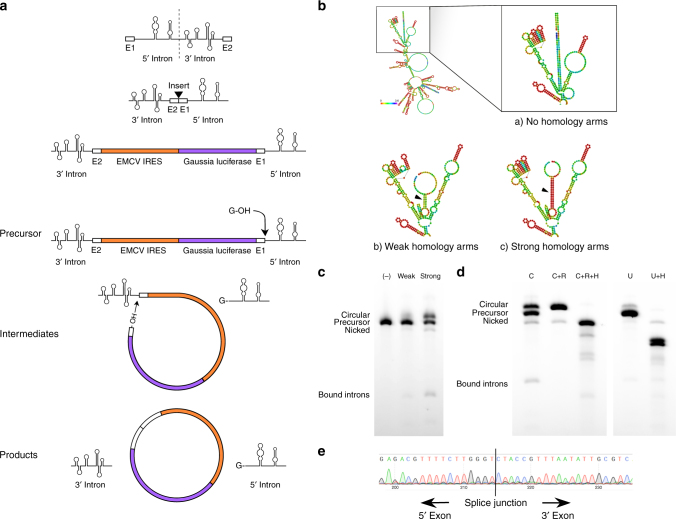
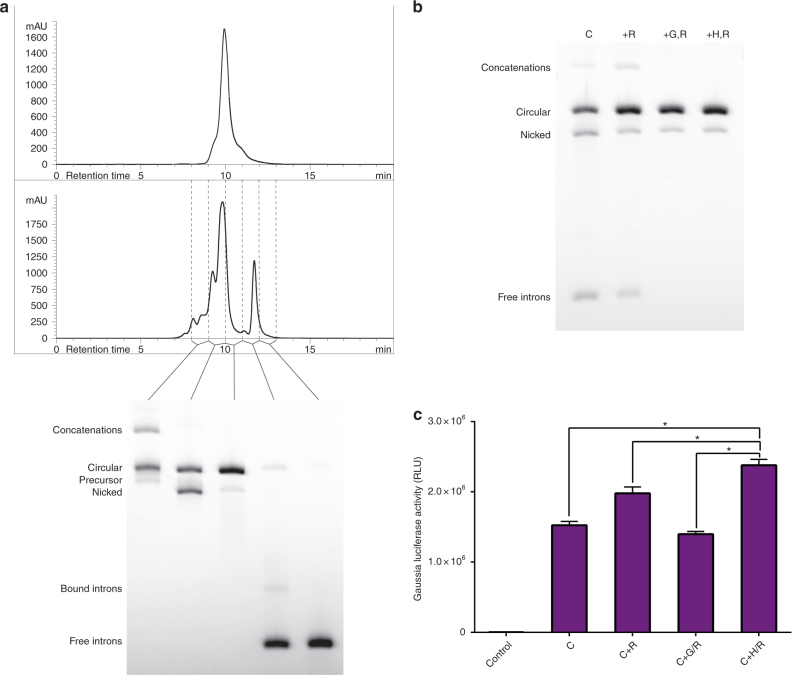
Messenger RNA (mRNA) has broad potential for application in biological systems. However, one fundamental limitation to its use is its relatively short half-life in biological systems. Here we develop exogenous circular RNA (circRNA) to extend the duration of protein expression from full-length RNA messages. First, we engineer a self-splicing intron to efficiently circularize a wide range of RNAs up to 5 kb in length in vitro by rationally designing ubiquitous accessory sequences that aid in splicing. We maximize translation of functional protein from these circRNAs in eukaryotic cells, and we find that engineered circRNA purified by high performance liquid chromatography displays exceptional protein production qualities in terms of both quantity of protein produced and stability of production. This study pioneers the use of exogenous circRNA for robust and stable protein expression in eukaryotic cells and demonstrates that circRNA is a promising alternative to linear mRNA.
Overview
CoChat Summary
## TL;DR
The paper engineers exogenous circular RNA (circRNA) systems that can circularize long RNAs up to 5 kb and drive robust protein expression in eukaryotic cells. Compared with linear mRNA, optimized circRNA showed longer-lasting protein production and, after HPLC purification, stronger protein output in the tested cell lines.
## Key findings
- Adding homology arms to the permuted intron-exon construct increased splicing efficiency from 0% to 16% with weak arms and to 48% with strong arms.
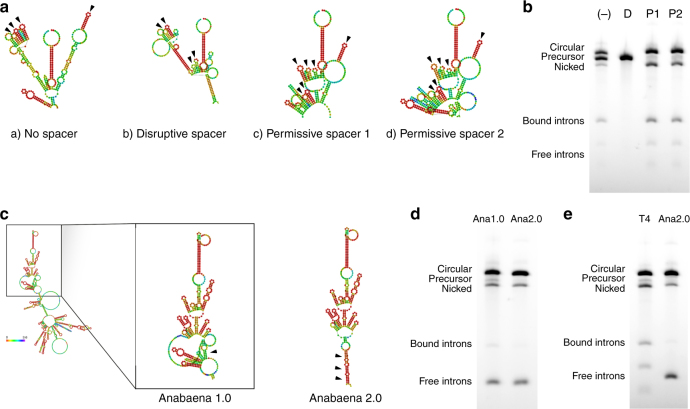
- Rationally designed spacer sequences improved splicing efficiency from 46% to 87%, and a disruptive spacer completely abrogated splicing.
- Using the engineered Anabaena catalytic intron increased splicing efficiency from 84% to 95% and reduced circRNA nicking by 37% relative to the T4 catalytic intron.
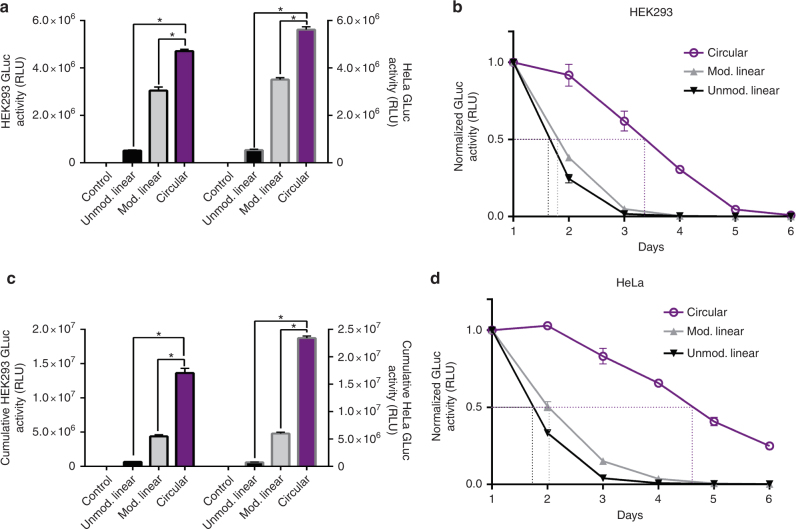
- In HEK293 cells, HPLC-purified circRNA produced 811.2% more protein than unmodified linear mRNA at 24 h and 54.5% more than modified linear mRNA; protein-production half-life was 80 h for circRNA versus approximately 43 h and 45 h for the unmodified and modified linear mRNAs, respectively.
- In HeLa cells, circRNA protein-production half-life was 116 h, compared with approximately 44 h and 49 h for the unmodified and modified linear mRNAs.
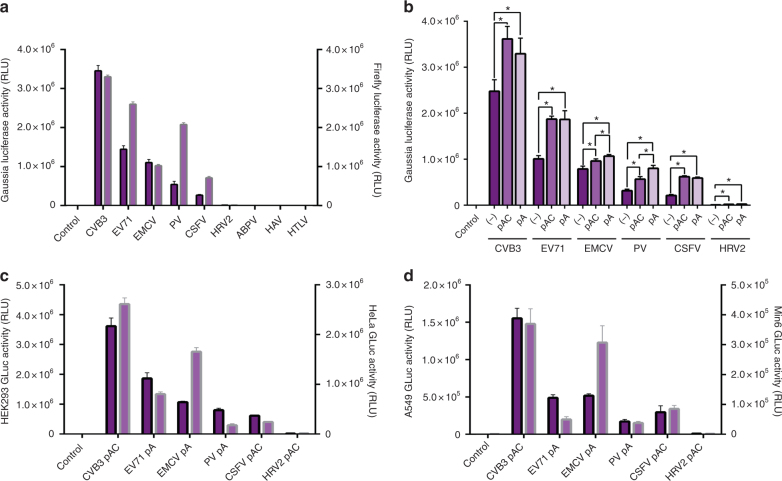
- The CVB3 IRES was 1.5-fold more effective than the EMCV IRES in HEK293 cells and remained superior across HeLa, A549, and Min6 cells tested.
## Methods
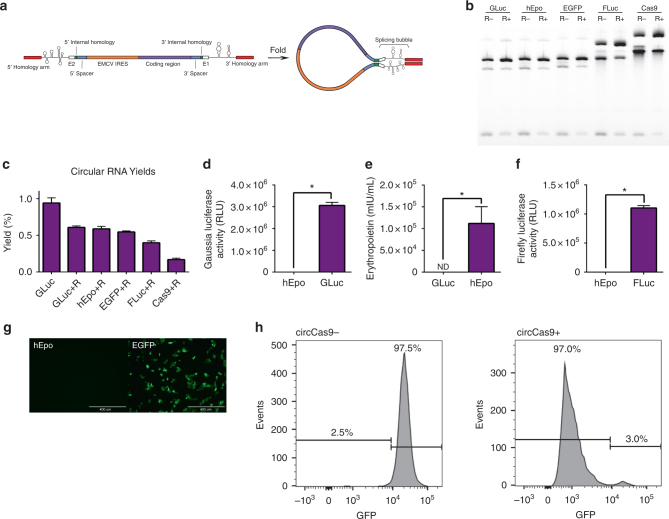
- Engineered circRNAs were built using permuted group I intron/PIE designs with homology arms, spacer sequences, and different IRES elements; constructs included coding regions for GLuc, Firefly luciferase, EGFP, human erythropoietin, and Cas9.
- RNAs were synthesized by in vitro transcription, circularized with GTP/Mg2+-dependent self-splicing, enriched with RNase R, and purified by gel extraction or size-exclusion HPLC; circularization was assessed by gel analysis, RNase H nicking analysis, and splice-junction sequencing.
- Functional testing used transfection into HEK293, HeLa, A549, HEK293-GFP, and Min6 cells, with readouts including luminescence, fluorescence, ELISA, flow cytometry, cytokine assays, and qPCR; statistics were by two-tailed unpaired Welch’s t-test.
## Limitations
- The paper states that longer circRNAs were more prone to nicking during production, which reduced yields and purity.
- The discussion says more work is needed to optimize translation from circRNA and to study translation efficiency and stability in other cell types and tissues.
- The paper notes that additional analysis of exogenous circRNA immunogenicity is required, and that suitable delivery vehicles in vitro and in vivo need thorough investigation.
Model-written summary. Check it against the paper before relying on it.
Integrity signals
Registry
Cites
Statistics
Figures
Verification
Claims the paper makes
9 Valid · 1 Not valid · 3 Not checked · 54 Own results and interpretations
Some cited sources support this claim and some don’t — read each source’s verdict below.
In the paper
“These strategies have yielded modest improvements in RNA stability10, 13–16, and thus alternative approaches to RNA stabilization, such as circularization, are desirable.”
§ Engineering circular RNA for potent and stable translation in eukaryotic cells > Introduction
What the sources say
- Disputedcites [10] Kaczmarek JC Kowalski PS Anderson DG Advances in the delivery of RNA therapeutics: from concept to clinical reality Genome Med. 2017 9 60 10.1186/s13073-017-0450-0 28655327 PMC5485616 sourceExperimental — accuracy not yet measured
In the “Protein overexpression—mRNA” section (page not provided), the paper says that cap analogs and poly(A) tails have markedly improved mRNA stability, contrary to the claim that previous strategies yielded only modest improvements. (LLM, conf=0.86)
Checked by a reasoning model — may be wrong.
- Disputedcites [13] Holtkamp S Modification of antigen-encoding RNA increases stability, translational efficacy, and T-cell stimulatory capacity of dendritic cells Blood 2006 108 4009 4017 10.1182/blood-2006-04-015024 16940422 sourceExperimental — accuracy not yet measured
In the section on combining poly(A)-tail and 3′ UTR modifications (page unavailable), the paper reports an approximately two-orders-of-magnitude improvement in RNA stability relative to standard IVT RNA. That result is contrary to describing the improvement reported by this source as modest. (LLM, conf=0.88)
Checked by a reasoning model — may be wrong.
- Supportedcites [14] Kuhn AN Phosphorothioate cap analogs increase stability and translational efficiency of RNA vaccines in immature dendritic cells and induce superior immune responses in vivo Gene Ther. 2010 17 961 971 10.1038/gt.2010.52 20410931 source
The RNA half-life results (Table 2) show a limited increase with the phosphorothioate cap in immature dendritic cells compared with conventional capping. The same results section explicitly says functional cap analogs had a modest effect on RNA stability in mature dendritic cells. (LLM, conf=0.84)
- Partly supportedcites [15] Presnyak V Codon optimality is a major determinant of mRNA stability Cell 2015 160 1111 1124 10.1016/j.cell.2015.02.029 25768907 PMC4359748 sourceExperimental — accuracy not yet measured
The Results section reports that reporters with optimal codons were about fourfold more stable than those with non-optimal codons, supporting an improvement in mRNA stability. The paper does not characterize that improvement as modest or establish that previous stabilization strategies generally yielded only modest gains. (LLM, conf=0.79)
- Could not verifycites [16] Kariko K Muramatsu H Ludwig J Weissman D Generating the optimal mRNA for therapy: HPLC purification eliminates immune activation and improves translation of nucleoside-modified, protein-encoding mRNA Nucleic Acids Res. 2011 39 e142 e142 10.1093/nar/gkr695 21890902 PMC3241667 sourceExperimental — accuracy not yet measured
The Introduction and Discussion describe reduced immune activation and improved translation with modified or HPLC-purified mRNA, but do not characterize improvements in RNA stability as modest. Searches for RNA stability, half-life, degradation, and circularization found no passage in our copy that establishes the claimed comparison. (LLM, conf=0.74)
plainstates a cause- Asserted: passes — The authors put it forward as true.
- Checkable: passes — It can be checked against evidence.
- Load-bearing: passes — The paper’s conclusions depend on it.
- Based: passes — The paper gives a reason why it holds.
- Disputed
The cited sources support only part of this claim — read each source’s verdict below.
In the paper
“Indeed, the intervening region between the 5′ and 3′ splice sites of native group I introns is on average 300–500 nucleotides long22, while the intervening region of the engineered RNA that we constructed was two to four-fold longer.”
§ Engineering circular RNA for potent and stable translation in eukaryotic cells > Results > Long RNA circularization is assisted by homology
What the sources say
- Partly supportedcites [22] Vicens Q Paukstelis PJ Westhof E Lambowitz AM Cech TR Toward predicting self-splicing and protein-facilitated splicing of group I introns RNA 2008 14 2013 2029 10.1261/rna.1027208 18768647 PMC2553746 sourceExperimental — accuracy not yet measured
The Results section reports that 12 group I introns tested were 183–421 nucleotides long, and Intron selection gives a range of 183–496 nucleotides for introns requested. Neither passage establishes a 300–500-nucleotide average for native group I introns generally. (LLM, conf=0.82)
plain- Asserted: passes — The authors put it forward as true.
- Checkable: passes — It can be checked against evidence.
- Load-bearing: passes — The paper’s conclusions depend on it.
- Based: passes — The paper gives a reason why it holds.
- Partly supported
A result the paper reports from its own data — it cites no other source for it, so there is none to check. The quote shows it is in the paper.
In the paper
“First, we engineer a self-splicing intron to efficiently circularize a wide range of RNAs up to 5 kb in length in vitro by rationally designing ubiquitous accessory sequences that aid in splicing.”
§ Engineering circular RNA for potent and stable translation in eukaryotic cells > Abstract
plainstates a cause- Asserted: passes — The authors put it forward as true.
- Checkable: passes — It can be checked against evidence.
- Load-bearing: passes — The paper’s conclusions depend on it.
- Based: passes — The paper gives a reason why it holds.
A result the paper reports from its own data — it cites no other source for it, so there is none to check. The quote shows it is in the paper.
In the paper
“In the case of EMCV and Poliovirus IRESs, polyA sequences improved expression beyond the improvement seen with an unstructured polyAC spacer.”
§ Engineering circular RNA for potent and stable translation in eukaryotic cells > Results > The CVB3 IRES is superior in the context of circRNA
plainstates a cause- Asserted: passes — The authors put it forward as true.
- Checkable: passes — It can be checked against evidence.
- Load-bearing: unclear — It is unclear whether the paper’s conclusions depend on it.
- Based: passes — The paper gives a reason why it holds.
A result the paper reports from its own data — it cites no other source for it, so there is none to check. The quote shows it is in the paper.
In the paper
“We found that the IRES from Coxsackievirus B3 (CVB3) was 1.5-fold more effective than the commonly adopted EMCV IRES in HEK293 cells (Fig. 4a).”
§ Engineering circular RNA for potent and stable translation in eukaryotic cells > Results > The CVB3 IRES is superior in the context of circRNA
plainstates a cause- Asserted: passes — The authors put it forward as true.
- Checkable: passes — It can be checked against evidence.
- Load-bearing: passes — The paper’s conclusions depend on it.
- Based: passes — The paper gives a reason why it holds.
34 more claims
Create a free account to see all 67 claims and every source verdict.
- It may state two separate claims as one. 25
- Probably not a substantial claim. 9
- The quote only partly states this claim. 2
Claims other papers make about this one
Each is checked against this paper’s own text: does it say what the citing paper says it does?
The source backs part of the claim, not all of it — or backs it for a different population, condition or comparison.
In the citing paper
“Similar to linear mRNA, the chemical modification of specific nucleotides and chromatographic purification can minimize immunogenicity of the RNA and increase translation.”
From Lipid nanoparticles for mRNA delivery (2021) · cites this paper as [245]
Experimental — accuracy not yet measuredThe cited source says what the claim attributes to it.
In the citing paper
“Circular RNA (circRNA) is a single-stranded RNA with a closed-loop structure.”
From Lipid nanoparticles for mRNA delivery (2021) · cites this paper as [245]
The cited source says what the claim attributes to it.
In the citing paper
“In addition, circular RNA (circRNA) can be synthesized to optimize mRNA properties245,246 (Box 2).”
From Lipid nanoparticles for mRNA delivery (2021) · cites this paper as [245]
In the citing paper
“Despite the lack of essential elements for cap-dependent translation, circRNA can be translated by adding the IRES element or m6A modification incorporated to its 5′ UTR region.223,224”
From Advances in COVID-19 mRNA vaccine development (2022) · cites this paper as [223]
In the citing paper
“Given its enhanced biostability compared with linear RNA due to the lack of terminals preventing degradation,49 circRNA could be a promising research avenue.”
From COVID-19 mRNA vaccines: Platforms and current developments (2022) · cites this paper as [49]
6 more claims about this paper
Create a free account to see every claim other papers make about this one.
Citations
Cites
Natural RNA circles function as efficient microRNA sponges
Hansen, T. B., Jensen, T. I., Clausen, B. H., Bramsen, J. B., Finsen, B., Damgaard, C. K., & Kjems, J. (2013) · Nature · doi:10.1038/nature11993 · Cited by 7,985
Exon-intron circular RNAs regulate transcription in the nucleus
Li, Z., Huang, C., Bao, C., Chen, L., Lin, M., Wang, X., Zhong, G., Yu, B., Hu, W., Dai, L., et al. (2015) · Nature Structural & Molecular Biology · doi:10.1038/nsmb.2959 · Cited by 2,905
Detecting and characterizing circular RNAs
Jeck, W. R., & Sharpless, N. E. (2014) · Nature Biotechnology · doi:10.1038/nbt.2890 · Cited by 2,702
Circ-ZNF609 is a circular RNA that can be translated and functions in myogenesis
Legnini, I., Di Timoteo, G., Rossi, F., Morlando, M., Briganti, F., Sthandier, O., Fatica, A., Santini, T., Andronache, A., Wade, M., et al. (2017) · Molecular Cell · doi:10.1016/j.molcel.2017.02.017 · Cited by 2,173
Regulation of circRNA biogenesis
Chen, L.-L., & Yang, L. (2015) · RNA Biology · doi:10.1080/15476286.2015.1020271 · Cited by 1,953
Pamudurti, N. R., Bartok, O., Jens, M., Ashwal-Fluss, R., Stottmeister, C., Ruhe, L., Hanan, M., Wyler, E., Perez-Hernandez, D., Ramberger, E., et al. (2017) · Molecular Cell · doi:10.1016/j.molcel.2017.02.021 · Cited by 1,810
Codon Optimality Is a Major Determinant of mRNA Stability
Presnyak, V., Alhusaini, N., Chen, Y.-H., Martin, S., Morris, N., Kline, N., Olson, S., Weinberg, D., Baker, K. E., Graveley, B. R., et al. (2015) · Cell · doi:10.1016/j.cell.2015.02.029 · Cited by 1,078
Karikó, K., Muramatsu, H., Ludwig, J., & Weissman, D. (2011) · Nucleic Acids Research · doi:10.1093/nar/gkr695 · Cited by 898
Circular RNAs: analysis, expression and potential functions
Barrett, S. P., & Salzman, J. (2016) · Development · doi:10.1242/dev.128074 · Cited by 859
Enuka, Y., Lauriola, M., Feldman, M. E., Sas-Chen, A., Ulitsky, I., & Yarden, Y. (2016) · Nucleic Acids Research · doi:10.1093/nar/gkv1367 · Cited by 757
Cited by
Items 601–700 of 804
Wei, L., Zhang, M., Zhang, H., Zhao, H., & Mei, Y. (2024) · bioRxiv (Cold Spring Harbor Laboratory) · doi:10.1101/2024.12.27.630476 · Cited by 3
A comprehensive analysis of the use of nucleoside analogues in RNA therapeutics
Kukushkina-Zvezdova, A. A., Zherebtsova, A. A., Telegina, D. V., Skvortsov, I. A., Ivanov, R. A., & Reshetnikov, V. V. (2026) · Journal of Translational Medicine · doi:10.1186/s12967-026-08083-4 · Cited by 3
“This nucleoside analog has demonstrated a dual capacity to both inhibit and facilitate translation depending on the experimental context [198, 205].”
Opportunities in Therapeutic mRNA Stabilization: Sequence, Structure, Adjuvants and Vectors
Choe, J. A., Burger, J. C., Jones, J. M., Panjla, A., & Murphy, W. L. (2025) · Advanced Therapeutics · doi:10.1002/adtp.202400537 · Cited by 4
Wang, Q., Li, Y., Yang, Z., Wang, Y., Liu, Y., Jin, L., Li, S., Shi, Q., Cai, Z., Ouyang, Y., et al. (2025) · Science China Life Sciences · doi:10.1007/s11427-024-2946-1 · Cited by 7
Cui, M., Li, S. P., Han, Y., Li, M., Han, Z., Qian, J., Xie, Z., & Sun, C. (2025) · RNA · doi:10.1261/rna.080733.125 · Cited by 3
LIPUS promotes osteogenesis via the mcirc_9393-miR-217/326-SIRT1 axis in porous Ti6Al4V scaffolds
Cao, H., Yu, Y., Wu, L., et al. (2025) · Bone · doi:10.1016/j.bone.2025.117647 · Cited by 2
Telomerase modRNA Offers a Novel RNA ‐Based Approach to Treat Human Pulmonary Fibrosis
Ye, J. L., Grieger, K. M., Lu, D., Brandenberger, C., Juchem, M., Jordan, M., Oehlsen, L., Zardo, P., Werlein, C., Hesse, C., et al. (2025) · Aging Cell · doi:10.1111/acel.70240 · Cited by 4
Niu, D., Zhang, S., Ma, X., Wu, Y., Zhu, J., Ran, J., Shan, M., Dai, X., Lu, L., Yang, M., et al. (2025) · Molecular Cancer Therapeutics · doi:10.1158/1535-7163.mct-25-0356 · Cited by 2
Emerging Nucleic Acid Cargos for Next-Generation RNA Vaccines and Therapeutics
Safford, H. C., Palanki, R., Ang, M. J. Y., & Mitchell, M. J. (2025) · Bioconjugate Chemistry · doi:10.1021/acs.bioconjchem.5c00476 · Cited by 2
Membranes: The only chance for the mRNA tortoise to win, economically
Neuman, T. G., Karla, S., Kilduff, J. E., Plawsky, J. L., & Belfort, G. (2025) · Biotechnology Advances · doi:10.1016/j.biotechadv.2025.108774 · Cited by 2
Circular nucleic acids at the host-virus interface: from immune modulation to therapeutic innovation
Lou, J., LIU, J., Zhang, D., & Hao, Y. (2026) · Frontiers in Immunology · doi:10.3389/fimmu.2026.1751068 · Cited by 2
Enhancing Circular RNA Translation Efficiency Through Dual Internal Ribosome Entry Sites
Sun, Y., Zhang, Y., Chen, W., CHEN, T., Zhang, Y., Zhang, S., & Lu, C. (2026) · Biology · doi:10.3390/biology15040317 · Cited by 4
“In addition, circRNA production avoids 5 ′ cap analogs, modified nucleotides such as pseudouridine ( Ψ ), and a defined poly(A) tail [9].”
Zheng, W., Liu, D., Chen, H., Zhao, J., & Zhang, S. (2026) · Journal of Chromatography A · doi:10.1016/j.chroma.2026.466809 · Cited by 2
Yu, H., Yang, Y., Lin, P., Liu, C., Wen, Y., Huang, Z., Fang, Z., Hu, Z., & St, H. (2026) · Nature Communications · doi:10.1038/s41467-026-69972-2 · Cited by 7
“Finally, IRES, such as our previously characterized EV-A IRES, can ef fi ciently drive cap-independent translation, effectively replacing the 5 ′ cap ’ s translational role 8,9 .”
Tian, B., Cai, Q., Xiao, Z., Cai, D., Ou, Y., Wang, M., Renyong, J., Chen, S., Zhu, D., Mafeng, L., et al. (2026) · International Journal of Biological Macromolecules · doi:10.1016/j.ijbiomac.2026.151095 · Cited by 3
Functions and mechanisms of circular RNAs in cancer stem cells and therapy resistance
Yuan, Y., Zhang, D., Wang, J., Jiang, X., & Duan, L. (2026) · Frontiers in Cell and Developmental Biology · doi:10.3389/fcell.2026.1809429 · Cited by 2
“CircRNAs can modulate protein stability by directly binding proteins or interfering with their degradation pathways (Wesselhoeft et al., 2018).”
In vitro transcribed circRNA as a therapeutic agent for cancer
Xu, S., Zhao, Y., Tang, Y., Fu, G., Qian, C., Li, F., Yang, Z., Cui, W., & Cai, W. (2026) · Acta Pharmaceutica Sinica B · doi:10.1016/j.apsb.2026.04.019 · Cited by 3
“Initially, type I intron self-splicing was employed to synthesize short RNA sequences ranging from 58 to 124 nt in vitro with circularization efficiency exceeding 80% 90 .”
Circular RNAs in animals: Biogenesis, function and cell fate control
Mohammad, R., Parfyonova, Y. V., & Сергеевич, С. Ю. (2026) · Biochimica et Biophysica Acta (BBA) - Gene Regulatory Mechanisms · doi:10.1016/j.bbagrm.2026.195154 · Cited by 2
Yadav, D., Yang, H., Lee, S., & McRae, E. K. S. (2026) · Nature Communications · doi:10.1038/s41467-026-72891-x · Cited by 5
“…relevant is the group I intron ribozyme, which is being repurposed for circular RNA production through permuted intron – exon (PIE) strategies 18,19 , These enzymes require precise tertiary organization to maintain catalytic activity 20 – 22 , yet they are typically restricted to unmodi fi ed…”
Tani, H. (2026) · IUBMB Life · doi:10.1002/iub.70122 · Cited by 2
“Circular RNAs exemplify extreme stabilisation : lacking free ends, they resist exonucleolytic decay [5] and represent the ‘maximum- half-life’ extreme, exchanging rapid regulation for sustained expression.”
Guo, F., Chen, D., Zong, Z., Wu, W., Mo, C., Zhou, Z. Y., Li, J., Zhang, X., & Xiong, D. (2023) · Journal of Clinical Laboratory Analysis · doi:10.1002/jcla.24836 · Cited by 2
The discovery and development of mRNA vaccines for the prevention of SARS-CoV-2 infection
Xue, V. W., Wong, S. C. C., Li, B., & Cho, W. C. S. (2023) · Expert Opinion on Drug Discovery · doi:10.1080/17460441.2023.2218083 · Cited by 2
“Through engineering modifications including coxsackievirus B3 internal ribosome entry site (IRES) [59] or the m6A modification located upstream of the open reading frame, circRNAs can achieve efficient protein transcription.”
BackgroundInfluentialCircECE1 promotes osteosarcoma progression through regulating RAB3D by sponging miR-588
Liang, Z., Shi, Y., & Guan, Z. (2023) · Journal of Orthopaedic Surgery and Research · doi:10.1186/s13018-023-04045-4 · Cited by 2
“CircR-NAs have been reported to function as sponges of certain microRNAs (miRNAs) [6, 7].”
BackgroundCircular RNAs in vascular diseases
Liu, Q., Wang, Y., Zhang, T., Fang, J., & Meng, S. (2023) · Frontiers in Cardiovascular Medicine · doi:10.3389/fcvm.2023.1247434 · Cited by 2
“However, recent advancements in RNA circularization techniques, such as the improved PIE (permuted intron exon) methods (113), have demonstrated high ef fi ciency and the ability to synthesize bulk circRNAs in vitro .”
MethodApplication of self-amplifying mRNA technology in the development of infectious disease vaccines
Li, X., Wang, X., & Zhang, B. (2023) · Chinese Science Bulletin (Chinese Version) · doi:10.1360/tb-2023-0902 · Cited by 3
Biogenesis and Function of circRNAs in Pulmonary Fibrosis
Zhang, S., Hu, W., Lv, C., & Song, X. (2024) · Current Gene Therapy · doi:10.2174/0115665232284076240207073542 · Cited by 3
Brennan, P. G., Mota, L., Aridi, T. G., Patel, N., Liang, P., & Ferran, C. J. (2024) · Annals of Vascular Surgery · doi:10.1016/j.avsg.2024.01.031 · Cited by 2
Li, H., Liu, Z., Chen, S., Cai, J., Wang, P., Chen, K., & Qiu, M. (2024) · Clinical and Translational Medicine · doi:10.1002/ctm2.1792 · Cited by 2
Expanded toolkits for RNA circularization
Wang, X., Huang, Y., & Chen, L. (2024) · Nature Biomedical Engineering · doi:10.1038/s41551-024-01262-y · Cited by 3
Yu, H.-C., Tseng, H.-Y. H., Huang, H., & Lu, M. (2024) · Arthritis Research & Therapy · doi:10.1186/s13075-024-03422-6 · Cited by 2
“The lack of free ends renders circRNAs highly stable, and makes them becoming a new and important research focus [11].”
BackgroundFunctional RNA mining using random high-throughput screening
Liu, L., Chen, J., Lai, S., Zhao, X., Yang, M., Wu, Y., Zhang, Z., & Jiang, A. (2024) · Nucleic Acids Research · doi:10.1093/nar/gkae1173 · Cited by 3
“This ribozyme can circularize exogenous RNA through self-splicing when flanked by an inserted fragment and then de-tach, leaving behind minimal nucleotides to form a stable co-valently closed circular RNA (circRNA) molecule ( 29 ,30 ).”
Zhu, J., Wang, M., Zhu, L., Liao, C., Li, Y., Duan, Z., Zhang, X., Zhang, Y., He, F., Nie, Z., et al. (2024) · Chemical Engineering Journal · doi:10.1016/j.cej.2024.159074 · Cited by 2
Advancing Protein‐Coding RNA Engineering: From Structural Refinement to Biomedical Implementation
Lu, X., Li, S., Chi, Y., Lin, S., Yuan, H., Lin, Z., Xiao, Y., Yin, H., Zuo, X., Cheng, R., et al. (2025) · Biotechnology Journal · doi:10.1002/biot.70038 · Cited by 2
Niu, D., Ma, X., Zhu, J., Sun, L., Zhang, S., Wu, Y., Shan, M., Dai, X., Liao, Y., Liu, D., et al. (2025) · Cell Reports Medicine · doi:10.1016/j.xcrm.2025.102413 · Cited by 6
Joint Association Analysis Method to Predict Genes Related to Liver Cancer
Yuan, L., & Shen, Z. (2021) · Lecture notes in computer science · doi:10.1007/978-3-030-84532-2_33 · Cited by 2
Hospital-Based RNA Therapeutics
Damase, T. R., Sukhovershin, R. A., Zhang, M., Kiss, D., & Cooke, J. P. (2022) · RNA technologies · doi:10.1007/978-3-031-08415-7_4 · Cited by 5
Noncoding RNAs regulate protein translation and disease occurrence
Wang, W., & Chen, Y. (2023) · Scientia Sinica Vitae · doi:10.1360/ssv-2023-0156 · Cited by 3
Ueno, D., Mikami, M., Yamasaki, S., Kaneko, M., Mukuta, T., Demura, T., & Kato, K. (2020) · Plant and Cell Physiology · doi:10.1093/pcp/pcaa147 · Cited by 3
Nanopore microscope identifies RNA isoforms with structural colorsPreprint
Bošković, F., & Keyser, U. F. (2021) · bioRxiv (Cold Spring Harbor Laboratory) · doi:10.1101/2021.10.16.464631 · Cited by 2
Hospital-based RNA TherapeuticsPreprint
Damase, T. R., Sukhovershin, R. A., Zhang, M., et al. (2022) · Preprints.org · doi:10.20944/preprints202201.0073.v1 · Cited by 2
“Their convincing findings show prolonged expression of different proteins from circRNAs in vivo (Wesselhoeft et al. 2018, 2019).”
BackgroundMethodInfluentialExtensive in vitro and in vivo protein translation via in situ circularized RNAsPreprint
Kumar, A., Palmer, N. D., Miyasaki, K. F., Finburgh, E. N., Xiang, Y., Portell, A. J., Dailamy, A., Suhardjo, A., Chew, W. L., Kwon, E. J., et al. (2022) · bioRxiv (Cold Spring Harbor Laboratory) · doi:10.1101/2022.02.11.480072 · Cited by 1
Dowaidar, M. (2021) · OSF Preprints (OSF Preprints) · doi:10.31219/osf.io/9vxrb · Cited by 2
Decoding the Sequence Requirements for Translation InitiationPreprint
Verhagen, B. M. P., Liedtke, D., Barbadilla-Martínez, L., Alvarado, C., Petrychenko, V., Świrski, M. I., Muller, M., Valen, E., Puglisi, J. D., de Ridder, J., et al. (2026) · bioRxiv (Cold Spring Harbor Laboratory) · doi:10.64898/2026.05.12.723742 · Cited by 2
Research progress on circular RNA in the regulation of drug resistance in genitourinary cancers
Hu, P.-C., Yao, J.-T., Wang, K., Ye, S.-Z., Meng, X.-Y., Chen, H., Yu, R., & Ma, Q. (2025) · Cellular and Molecular Life Sciences · doi:10.1007/s00018-025-05683-z · Cited by 1
“For example, recombinant technology can fuse tumor suppressor proteins with circRNAs, achieving high cyclization efficiency and optimized protein yields [106].”
Saw, P. E., & Song, E. (2025) · Springer eBooks · doi:10.1007/978-981-96-3041-7_27 · Cited by 1
The Internal Ribosome Entry Site in Circular RNAs
Fernandes, Q., Yoosuf, Z. S. K. M., Mestiri, S., Assami, L., Makni‐Maalej, K., Shahab Uddin, M. S., Merhi, M., & Dermime, S. (2025) · Advances in experimental medicine and biology · doi:10.1007/978-981-96-9428-0_9 · Cited by 1
Parikh, C. N., DeMarco, K. D., Bhalerao, N., Giwa, H. K., Kane, G. I., Dinnell, R. W., Ma, B., Mori, H., Brassil, M. L., Murphy, K. C., et al. (2026) · Nature Communications · doi:10.1038/s41467-026-74574-z · Cited by 5
“…as different doses and treatment schedules. mRNAs themselves could also be further modi fi ed to enhance stability and protein production through use of circularized 64,65 or self-amplifying 66 RNAs, as well as formulated in hydrogels 67 to facilitate their slow release and retention in the TME.”
Arsenic-induced circFNDC3B regulates apoptosis through dysregulation of NF-κB Signaling
Jiang, J., Ma, H., Liu, N., Li, S., Ma, Q., Li, S., He, Y., & Jiang, C. (2025) · Toxicology Research · doi:10.1093/toxres/tfaf152 · Cited by 2
Screening of short-chain IRES elements for enhanced circRNA translation efficiency
Tang, Y., Niu, Y., Wang, W., Wu, B., Jiang, J., Xu, Q., Zhang, Y., Xie, S., & Tan, W. (2025) · Science China Chemistry · doi:10.1007/s11426-025-3122-0 · Cited by 1
Situ, X., Wang, X. W., Liao, X., Zhang, X., Chen, S., Fang, F., Wei, L., Wu, P., Liu, Z., Chen, H., et al. (2025) · Molecular Cancer · doi:10.1186/s12943-025-02530-4 · Cited by 1
“CircRNAs have received increasing amounts of attention in the cancer treatment field because of their strong stability and high binding affinities for target proteins [17, 34, 35].”
Circular RNA biomarkers in acute myeloid leukemia
Gandomkar, H., Maghrebi-Ghojogh, E., Daneshdoust, D., Badraldin, S. Q., Al-Hussainy, A. F., Salih, R. M., Adil, M., & Moradi, S. (2025) · Clinica Chimica Acta · doi:10.1016/j.cca.2025.120781 · Cited by 1
Geng, X., Tang, S., Lv, J., Tu, F., Han, M., Li, S., Zhang, F., & Wang, Q. (2025) · Talanta · doi:10.1016/j.talanta.2025.129229 · Cited by 2
Yarovinsky, T. O., Ramgolam, V. S., Knezevic, I. R., Stachenfeld, N. S., & Bender, J. R. (2026) · Frontiers in Pharmacology · doi:10.3389/fphar.2025.1716863 · Cited by 1
“…can be synthetically designed to include internal ribosome entry sites (IRESs) or N6-methyladenosine (m6A) motifs that facilitate cap-independent translation, thereby enabling sustained and tunable protein production without the need for a canonical 5 ′ cap structure (Wesselhoeft et al., 2018).”
Li, A., Wang, S., Li, F., Xu, W., Liu, N., Xie, X., Yao, G., Liu, Z., Yan, M., & Yang, F. (2026) · iScience · doi:10.1016/j.isci.2026.114765 · Cited by 2
“5,6 Emerging evidence has challenged the traditional view of circRNAs as nonfunctional molecules, with studies demonstrating that specific circRNAs possess protein-coding capacity and play vital roles in both physiological and pathological processes.”
Meng, S., Sha, X., Zhang, G., Duan, B., Wang, J., Si, Y., Li, F., Wu, Q., Cheng, S., & Ding, W. (2026) · Cell Communication and Signaling · doi:10.1186/s12964-026-02726-1 · Cited by 2
“As previously described [27], a circular RNA encoding Cas9 protein was designed and constructed.”
Nucleic acid drug delivery in ophthalmology: Emerging trends and future perspectives
Yang, H., Zuo, J., Lv, S., Wei, X., Pan, M., Zhu, Z., Wang, Y., Jie, Y., Lu, Z., & Zhang, X. (2026) · Journal of Controlled Release · doi:10.1016/j.jconrel.2026.114729 · Cited by 1
A review on RNA technologies renaissance: a paradigm shift shaping the future of modern medicine
Singh, S. P., Mundlia, P., Sharma, A. M., Kaur, H., Chaubey, B., Khajuria, A., Chatterjee, M., Jaiswal, P. K., Ranawat, P., Singh, G., et al. (2026) · Next Bioengineering · doi:10.1016/j.nxbio.2026.100016 · Cited by 1
Nanobiomaterials and nucleic acids for CAR-T-based treatment of autoimmune diseases
Liu, C., Xu, N., Wang, Y., Lu, J., Liu, Z., Chen, Y., Yu, X., Liu, S., Sheng, X., Fu, X., et al. (2026) · Materials Today · doi:10.1016/j.mattod.2026.103258 · Cited by 1
Mitochondrial genome editing tools: prospects in animal breeding
Xu, Y., Chen, M., Yang, S., Guo, Y., Dai, Y., Chen, Y., Zhong, H., Ma, T., Zha, D., He, Y., et al. (2026) · Journal of genetics and genomics/Journal of Genetics and Genomics · doi:10.1016/j.jgg.2026.02.018 · Cited by 2
Strategies to Improve the Stability and Translation of Therapeutic mRNAs
Gao, B., He, S., & Sun, Q. (2026) · Annual Review of Chemical and Biomolecular Engineering · doi:10.1146/annurev-chembioeng-100724-084241 · Cited by 5
Tong, B., Song, Y., Li, Z., Cai, M., Qi, H., Su, K., & Xu, H. A. (2025) · Neural Regeneration Research · doi:10.4103/nrr.nrr-d-24-01599 · Cited by 1
“Furthermore, Wesselhoeft et al. (2018) demonstrate that engineered circRNA can be stably and efficiently expressed in eukaryotic cells.”
Lipid nanoparticle delivery of circle RNA vaccine induces potent immune responses
Yang, R., Jia, L., & Cui, J. (2026) · Scientific Reports · doi:10.1038/s41598-026-46871-6 · Cited by 2
Boettcher, S., Kalies, K., Knöpp, K., Koch, S., Pilowski, C., Hüttelmaier, S., & Sedding, D. (2026) · Scientific Reports · doi:10.1038/s41598-026-46870-7 · Cited by 1
Hall, T., Sang, R., Gulati, S., et al. (2026) · TrAC Trends in Analytical Chemistry · doi:10.1016/j.trac.2026.118875 · Cited by 1
The “cutting edge” of non-canonical RNA splicing
Guo, J. (2026) · Frontiers in Molecular Biosciences · doi:10.3389/fmolb.2026.1719817 · Cited by 1
Kisakova, L. A., Ilyicheva, S. A., & Рудометов, А. П. (2026) · Bulletin of Experimental Biology and Medicine · doi:10.1007/s10517-026-06645-6 · Cited by 1
“Historically considered byproducts of aberrant splicing with no protein-coding capacity, circRNAs have since been shown to encode proteins and undergo efficient translation [33]. circRNA differs from mRNA in several structural features.”
Zhang, Q., Niu, D., Jia, Y., Lu, L., Qu, C., Qu, C., Sun, Z., Li, S., Liu, Z., Lv, J., et al. (2026) · PLoS Pathogens · doi:10.1371/journal.ppat.1013741 · Cited by 1
“Wesselhoeft et al. pioneered in vitro synthesis of circRNA using a permuted intron-exon (PIE) splicing strategy, demonstrating their therapeutic potential through protein translation capabilities [29,30].”
Synthesis of scarless circular RNAs expressing long-acting GLP-1RAs for type 2 diabetes therapy
Lin, Y., Huang, Z., Xiao, Z., Wang, S., Liu, J. S., Chen, T., Zhang, W., Gu, S., Zhou, R., Yao, Z., et al. (2026) · Journal of Advanced Research · doi:10.1016/j.jare.2026.05.028 · Cited by 1
Challenges and opportunities in RNA-centered therapeutics
Song, Y. (2026) · Nature Chemical Biology · doi:10.1038/s41589-026-02227-9 · Cited by 1
Gill, S. I. (2026) · Advances in pharmacology · doi:10.1016/bs.apha.2026.05.003 · Cited by 1
Ahn, J.-H., Lee, N.-Y., Bae, H.-J., Kim, J., Kwak, J., Kwon, E., Roh, G., Bae, S., Lee, S., Hwang, I. K., et al. (2026) · Toxicology Letters · doi:10.1016/j.toxlet.2026.111941 · Cited by 3
Biomanufacturing of Synthetic circRNAs for Therapeutic Applications
Moon, S., Jang, I., & Lee, J. B. (2026) · Korean Journal of Chemical Engineering · doi:10.1007/s11814-026-00723-1 · Cited by 1
“Recent advances in synthetic vector engineering have enabled tissue-specific and tem - porally controlled expression of circRNAs in mammalian systems, facilitating sustained gene expression regulation or targeted immunomodulation in preclinical therapeutic models [19, 21].”
Wang, X., Pan, Q., Yin, J., Kou, H., Liao, X., Zhang, C., Wang, Y., She, S., Zhang, L., Wang, W., et al. (2026) · Nature Biomedical Engineering · doi:10.1038/s41551-026-01725-4 · Cited by 5
The emerging role of circular RNAs in neurodegenerative diseases and viral infections
Medina, F., & Bellizzi, A. (2026) · Journal of NeuroVirology · doi:10.1007/s13365-026-01324-8 · Cited by 2
“Compared with linear mRNA vaccines, circRNA vaccines offer enhanced stability, pro - longed antigen expression, and potentially reduced immunogenicity (Wesselhoeft et al. 2018, 2019 ; Liu et al. 2022b ).”
Circular RNAs as potential therapeutics and novel biomarkers for heart failure
Li, R., Su, X., Jiang, J., et al. (2026) · Vessel Plus · doi:10.20517/2574-1209.2025.165 · Cited by 1
Recent progress in the rational design of mRNA vaccines
Guo, Z., Fu, J., Ran, L., Bao, N., Wang, Y., Dong, H., Yang, X., & Jin, Y. (2026) · Molecular Therapy · doi:10.1016/j.ymthe.2026.07.020 · Cited by 2
Split intron-exon system for circular RNA synthesis
Wang, L., Zhai, Q., Dong, C., Zhang, W., Ma, X., Yang, K., Qi, S., Wu, Y., Yu, G., Wang, L., et al. (2026) · Nature Communications · doi:10.1038/s41467-026-75923-8 · Cited by 1
“Once the catalytic reaction is completed, the ribozyme isinactivated and cannot initiate new catalytic reactions like proteinaceous enzymes 31,33,40 .”
InfluentialFunctional atlas of vertebrate viral RNA elements that stabilize RNA and enhance translation
Seo, J. J., Lee, C., 임동빈, Jeong, M., Jung, S. J., & Kim, V. N. (2026) · Cell · doi:10.1016/j.cell.2026.07.038 · Cited by 1
‘Hit and run’ therapy averts macular degeneration
Bubeck, F., & Grimm, D. (2021) · Nature Biomedical Engineering · doi:10.1038/s41551-021-00690-4 · Cited by 1
Integrative analysis of circRNA networks in postoperative cognitive dysfunction
Tang, J., Tang, Y., Lin, P., et al. (2024) · International Journal of Neuroscience · doi:10.1080/00207454.2024.2309473 · Cited by 1
Directed Circularization of a Short RNA
Hansen, C. E., Springstubbe, D., Müller, S., & Petkovic, S. (2024) · Methods in molecular biology · doi:10.1007/978-1-0716-3678-7_12 · Cited by 2
Mao, M., Zhang, Z., Wei, H. Y., & Wang, Z. (2024) · Scientia Sinica Vitae · doi:10.1360/ssv-2023-0315 · Cited by 1
Ma, S., Qian, H., Zhou, Q., & Lei, C. (2024) · Cardiovascular Toxicology · doi:10.1007/s12012-024-09899-6 · Cited by 2
“Their structural properties bestow increased stability compared with traditional linear RNA cognates [11].”
A Manual for Genome and Transcriptome Engineering
Doctor, Y., Sanghvi, M., & Mali, P. (2024) · IEEE Reviews in Biomedical Engineering · doi:10.1109/rbme.2024.3494715 · Cited by 1
Min, J., Mao, J., Shi, H., et al. (2024) · Experimental Hematology and Oncology · doi:10.1186/s40164-024-00582-8 · Cited by 1
“Several studies have suggested that circRNAs may even have the ability to be translated into previously unknown protein isoforms [7–9].”
Codon Optimality Modulates Cellular Stress and Innate Immune Responses Triggered by Exogenous RNAs
Seephetdee, C., Bejar, N., Castillo, K., Chau, E. P., Nguyen, T. Y., Godin, B., & Kiss, D. (2026) · Journal of Molecular Biology · doi:10.1016/j.jmb.2026.169995 · Cited by 1
Engineering circular RNA with Tetrahymena group I intron ribozyme
Shi, H., Peng, S., Yang, M., & Huang, Y. (2025) · Chinese Chemical Letters · doi:10.1016/j.cclet.2025.111160 · Cited by 1
Circular CRISPR Edits Human Pluripotent Stem Cells for Disease Modeling
Bao, W., Fan, W., Zhang, Y., Lan, F., & Ma, S. (2025) · Stem Cell Reviews and Reports · doi:10.1007/s12015-025-10871-2 · Cited by 1
“We utilized the Group I intron self-splicing system to circularize gRNA and ABE8e-SpRY, followed by delivery of purified circular mRNA (ABE8e-SpRY and gRNA) into cells using stem cell transfection reagents [14, 15 ].”
Iftikhar, M., Khattak, A., Ahmad, N., Khan, A., & Ul‐Haq, Z. (2025) · In Silico Pharmacology · doi:10.1007/s40203-025-00362-0 · Cited by 1
“…translation is mediated by the ribosome’s entry target, Coxsackievirus B3 (CVB3) IRES [4 ], spacer sequence for better circulation efficiency [49, 5 ] Kozak sequence for translation efficiency and RNA stability [18, 6] tPA sequence [7], vaccine sequence [8], MITD and [9 ] stop codon (TAA)…”
Methods for Circular RNA AnalysisPreprint
Abe, B. T., Wesselhoeft, R. A., Chen, R., Anderson, D. G., & Chang, H. Y. (2021) · SSRN Electronic Journal · doi:10.2139/ssrn.3945021 · Cited by 1
Self-citationBroad neutralization of SARS-CoV-2 variants by circular mRNA producing VFLIP-X spike in micePreprint
Seephetdee, C., Bhukhai, K., Buasri, N., Leelukkanaveera, P., Lerdwattanasombat, P., Manopwisedjaroen, S., Phueakphud, N., Kuhaudomlarp, S., Olmedillas, E., Saphire, E. O., et al. (2022) · bioRxiv (Cold Spring Harbor Laboratory) · doi:10.1101/2022.03.17.484759 · Cited by 1
Ji, X., Sun, W., Lv, C., Huang, J., & Zhang, H. (2022) · Research Square · doi:10.21203/rs.3.rs-1493404/v1 · Cited by 1
Sha, C. M., Wang, J., & Dokholyan, N. V. (2022) · bioRxiv (Cold Spring Harbor Laboratory) · doi:10.1101/2022.05.16.492153 · Cited by 1
“Recently, researchers have started engineering RNAs to perform specific functions, from basic science applications, such as genome engineering (6) and protein labeling (7), to clinical applications, such as vaccines (8, 9), therapeutics (10), and diagnostics (11).”
BackgroundNot so giant steps on tuning protein production and diminished genomes
Finger‐Bou, M. (2023) · doi:10.18174/632756 · Cited by 1
A Short 63-Nucleotide Element Promotes Efficient circRNA TranslationPreprint
Biagi, M. C., Giuliani, A., Grandioso, A., Timoteo, G. D., & Bozzoni, I. (2025) · bioRxiv (Cold Spring Harbor Laboratory) · doi:10.1101/2025.05.13.653105 · Cited by 2
“In addition, long circRNAs are more prone to nicking 18 .”
Programmable Aptamer-Embedded Circular RNAs for Targeted Antigen-Presenting Cells ImmunotherapyPreprint
Zhang, Y., Wang, W., Qian, X., Chen, J., Ding, D., Gan, S., Yi, W., Li, Y., Deng, Y., Chen, Z., et al. (2025) · bioRxiv (Cold Spring Harbor Laboratory) · doi:10.1101/2025.09.28.679023 · Cited by 5
“Using an optimized permuted intron-exon (PIE)- based ribozyme system, we enable the efficient, scalable, and high-yield synthesis of Apt-circRNAs free of extraneous sequences (40-43) .”
Sychla, A., Bongrand, P., Yang, G., Krishnan, A., Rulison, J., Wesselhoeft, R. A., Bisaria, N., & Rouskin, S. (2026) · bioRxiv (Cold Spring Harbor Laboratory) · doi:10.64898/2026.05.19.726202 · Cited by 2
Self-citationNucleic Acid Architectures for Therapeutics, Diagnostics, Devices and Materials
Afonin, K. A. (2019) · MDPI eBooks · doi:10.3390/books978-3-03921-260-6 · Cited by 1
Gong, Z., Shen, P., Wang, H., et al. (2021) · Research Square · doi:10.21203/rs.3.rs-889437/v1
Amorim, A. R. (2021) · Digital Library of Theses and Dissertations (Universidade de São Paulo) · doi:10.11606/t.3.2021.tde-21032022-142918
Metadata
- Authors
- Wesselhoeft, R. A., Kowalski, P. S., & Anderson, D. G.
- Affiliations
- Koch Institute for Integrative Cancer Research At MIT (US)
- Massachusetts Institute of Technology (US)
- Harvard University (US)
- Corresponding author
- Anderson, Daniel G.
- Venue
- Nature Communications
- Published
- 2018-07-06
- Volume
- 9
- Issue
- 1
- Pages
- 2629-2629
- ISSN
- 2041-1723 (ISSN-L)
- PMC
- PMC6035260
- OpenAlex
- W2811482166
- Semantic Scholar
- 1a4ee7ac0868ac371710e8c1019ff497f6d8b677
- Cited by
- 853
- References
- 28
- Citations by year
- 2026: 153 · 2025: 159 · 2024: 148 · 2023: 124 · 2022: 90 · 2021: 83 · 2020: 53 · 2019: 35 · 2018: 7
- FWCI
- 13.89
- Type
- journal article
- Language
- en
- Open access
- gold
- doi.org
- Licence
- cc-by
- creativecommons.org/licenses/by/4.0 (tdm)
- creativecommons.org/licenses/by/4.0 (vor)
- Locations
- Nature Communications (publishedVersion, cc-by)
- Europe PMC (PubMed Central) (publishedVersion, other-oa)
- PubMed Central (publishedVersion, cc-by)
- PubMed (publishedVersion)
- RePEc: Research Papers in Economics (submittedVersion)
- DOAJ (DOAJ: Directory of Open Access Journals) (submittedVersion, cc-by-sa)
- DOAJ (DOAJ: Directory of Open Access Journals) (submittedVersion)
- DSpace@MIT (Massachusetts Institute of Technology) (submittedVersion, cc-by-nc)
- Nature
- Funders
- DOD | Defense Advanced Research Projects Agency (W32P4Q-13-1-0011)
- Juvenile Diabetes Research Foundation (3-PDF-2017-383-A-N)
- Topics
- Life Sciences › Biochemistry, Genetics and Molecular Biology › Molecular Biology › Circular RNAs in diseases
- Life Sciences › Biochemistry, Genetics and Molecular Biology › Molecular Biology › RNA and protein synthesis mechanisms
- Life Sciences › Biochemistry, Genetics and Molecular Biology › Molecular Biology › RNA Research and Splicing
- Keywords
- circular RNA, self-splicing introns, mRNA stability, protein expression, eukaryotic translation, exogenous RNA
- MeSH terms
- Internal Ribosome Entry Sites, RNA, Circular, Base Sequence, Catalysis, Cell Line, Chromatography, High Pressure Liquid, Eukaryotic Cells, Exons, Genetic Engineering, Humans, Introns, RNA, RNA Splicing, RNA, Messenger, Sequence Homology, Nucleic Acid, Protein Biosynthesis, Open Reading Frames, Anabaena
About these checks
Registry, retraction, Cites and statistics results are computed, not judged, with one exception: a printed reference that no index lists is read once by a model before it counts as a citation error. Claims are extracted by a model and kept only when their quote appears verbatim in the text; each cited source is then checked, with a model’s help, for whether it says what the claim relies on. Those verdicts can be wrong — read the claim’s quote and the cited source before relying on one.
The claim verdicts this report counts are experimental: their accuracy is not yet measured.
A language model drew the claims from the paper on 2026-10-09, under version 3 of the claim definition (model deepseek-v4.1-flash, prompt extract-v3).
A second model labelled each claim on 2026-10-09 (model jev-1.13-20260917, definition revision gold-guideline-v0.2).
Cited sources are checked with a language model’s help (gpt-6-sol).
Statistics and arithmetic are recomputed, not judged.
Confidence bands are shown only for fields calibrated on our annotated test set. None is calibrated yet, so no band is shown.
What counts as a claim ›How we measure confidence ›How we check this ›
Are you an author, or do you see a problem with this page? Request a review
Data sources
Bibliographic data: Semantic Scholar, OpenAlex, Crossref.
Contains information from the Semantic Scholar Academic Graph Datasets, made available under the ODC Attribution License (ODC-BY 1.0).
Semantic Scholar’s data is described in: Kinney, R., et al. (2023). The Semantic Scholar Open Data Platform. arXiv:2301.10140.
