

Engineering circular RNA for potent and stable translation in eukaryotic cells
Open accessThe DOI matches its Crossref record; 28 of the 28 references it cites were found in a registry or an index; 16 of the 20 sources its claims cite were checked for support.
Abstract
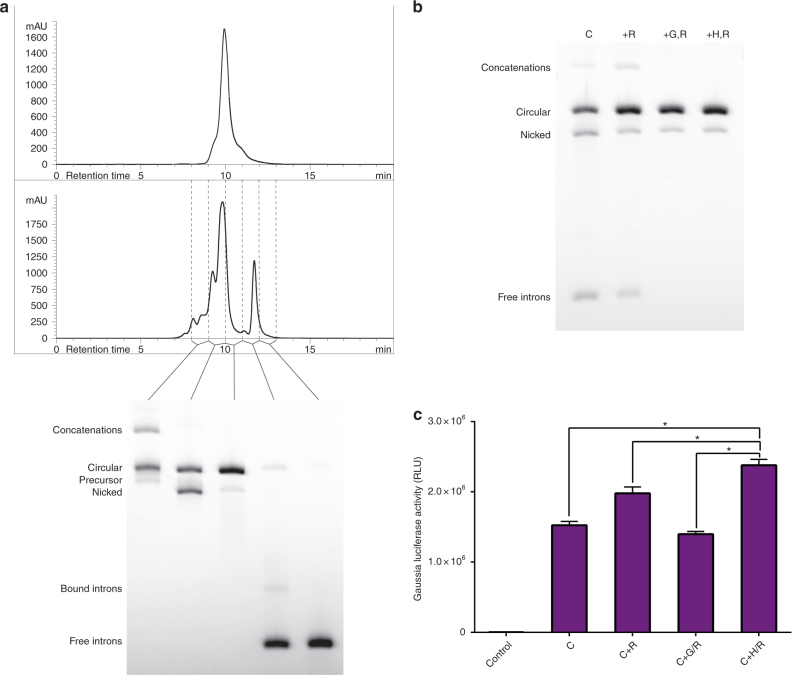
Messenger RNA (mRNA) has broad potential for application in biological systems. However, one fundamental limitation to its use is its relatively short half-life in biological systems. Here we develop exogenous circular RNA (circRNA) to extend the duration of protein expression from full-length RNA messages. First, we engineer a self-splicing intron to efficiently circularize a wide range of RNAs up to 5 kb in length in vitro by rationally designing ubiquitous accessory sequences that aid in splicing. We maximize translation of functional protein from these circRNAs in eukaryotic cells, and we find that engineered circRNA purified by high performance liquid chromatography displays exceptional protein production qualities in terms of both quantity of protein produced and stability of production. This study pioneers the use of exogenous circRNA for robust and stable protein expression in eukaryotic cells and demonstrates that circRNA is a promising alternative to linear mRNA.
Overview
CoChat Summary
## TL;DR
The paper engineers exogenous circular RNA (circRNA) systems that can circularize long RNAs up to 5 kb and drive robust protein expression in eukaryotic cells. Compared with linear mRNA, optimized circRNA showed longer-lasting protein production and, after HPLC purification, stronger protein output in the tested cell lines.
## Key findings
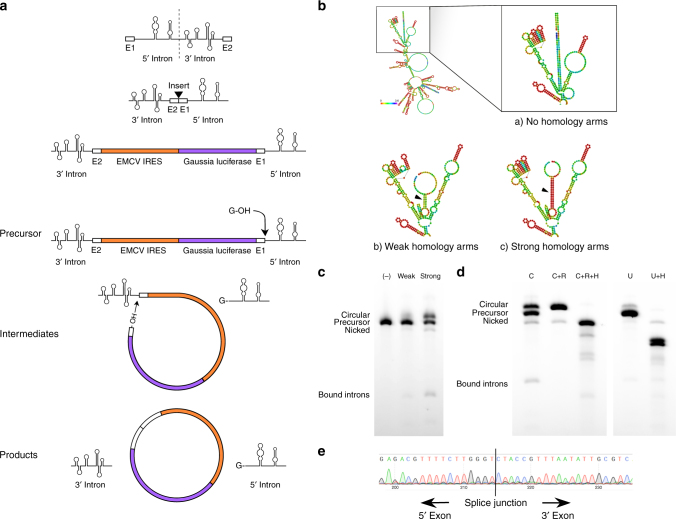
- Adding homology arms to the permuted intron-exon construct increased splicing efficiency from 0% to 16% with weak arms and to 48% with strong arms.
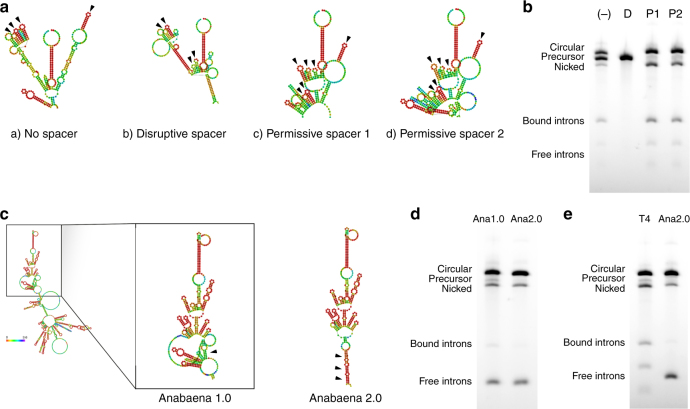
- Rationally designed spacer sequences improved splicing efficiency from 46% to 87%, and a disruptive spacer completely abrogated splicing.
- Using the engineered Anabaena catalytic intron increased splicing efficiency from 84% to 95% and reduced circRNA nicking by 37% relative to the T4 catalytic intron.
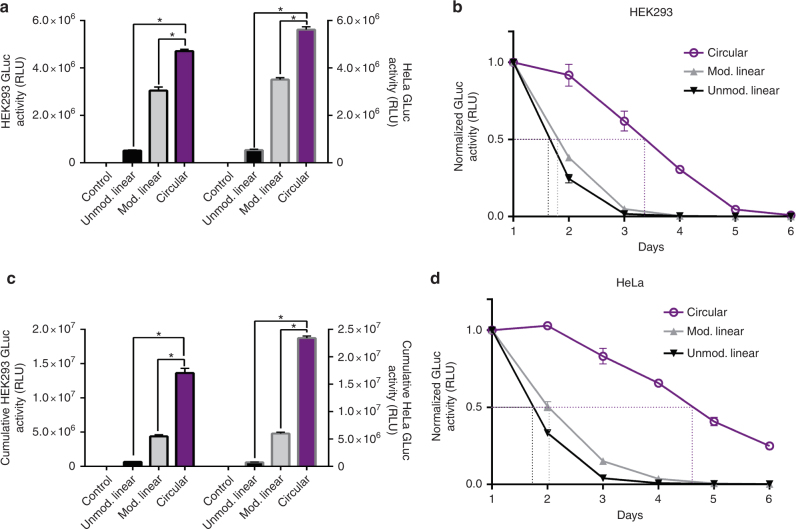
- In HEK293 cells, HPLC-purified circRNA produced 811.2% more protein than unmodified linear mRNA at 24 h and 54.5% more than modified linear mRNA; protein-production half-life was 80 h for circRNA versus approximately 43 h and 45 h for the unmodified and modified linear mRNAs, respectively.
- In HeLa cells, circRNA protein-production half-life was 116 h, compared with approximately 44 h and 49 h for the unmodified and modified linear mRNAs.
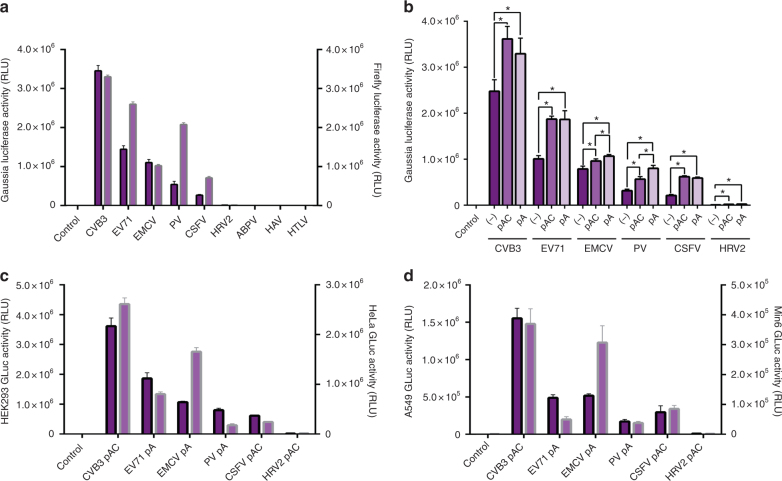
- The CVB3 IRES was 1.5-fold more effective than the EMCV IRES in HEK293 cells and remained superior across HeLa, A549, and Min6 cells tested.
## Methods
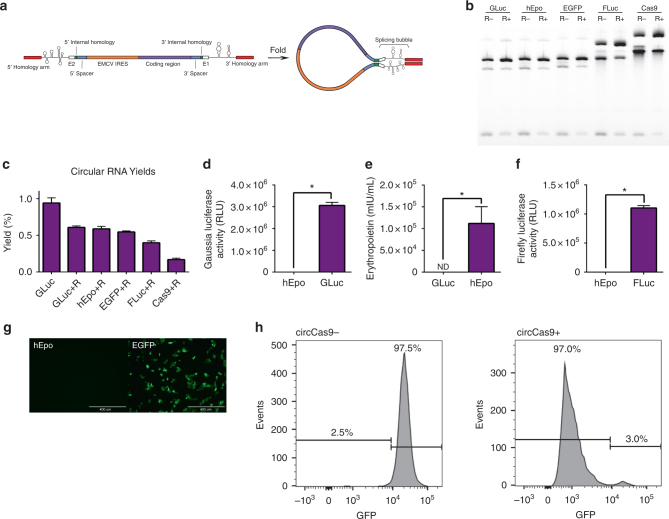
- Engineered circRNAs were built using permuted group I intron/PIE designs with homology arms, spacer sequences, and different IRES elements; constructs included coding regions for GLuc, Firefly luciferase, EGFP, human erythropoietin, and Cas9.
- RNAs were synthesized by in vitro transcription, circularized with GTP/Mg2+-dependent self-splicing, enriched with RNase R, and purified by gel extraction or size-exclusion HPLC; circularization was assessed by gel analysis, RNase H nicking analysis, and splice-junction sequencing.
- Functional testing used transfection into HEK293, HeLa, A549, HEK293-GFP, and Min6 cells, with readouts including luminescence, fluorescence, ELISA, flow cytometry, cytokine assays, and qPCR; statistics were by two-tailed unpaired Welch’s t-test.
## Limitations
- The paper states that longer circRNAs were more prone to nicking during production, which reduced yields and purity.
- The discussion says more work is needed to optimize translation from circRNA and to study translation efficiency and stability in other cell types and tissues.
- The paper notes that additional analysis of exogenous circRNA immunogenicity is required, and that suitable delivery vehicles in vitro and in vivo need thorough investigation.
Model-written summary. Check it against the paper before relying on it.
Integrity signals
Registry
Cites
Statistics
Figures
Verification
Claims the paper makes
9 Valid · 1 Not valid · 3 Not checked · 54 Own results and interpretations
Some cited sources support this claim and some don’t — read each source’s verdict below.
In the paper
“These strategies have yielded modest improvements in RNA stability10, 13–16, and thus alternative approaches to RNA stabilization, such as circularization, are desirable.”
§ Engineering circular RNA for potent and stable translation in eukaryotic cells > Introduction
What the sources say
- Disputedcites [10] Kaczmarek JC Kowalski PS Anderson DG Advances in the delivery of RNA therapeutics: from concept to clinical reality Genome Med. 2017 9 60 10.1186/s13073-017-0450-0 28655327 PMC5485616 sourceExperimental — accuracy not yet measured
In the “Protein overexpression—mRNA” section (page not provided), the paper says that cap analogs and poly(A) tails have markedly improved mRNA stability, contrary to the claim that previous strategies yielded only modest improvements. (LLM, conf=0.86)
Checked by a reasoning model — may be wrong.
- Disputedcites [13] Holtkamp S Modification of antigen-encoding RNA increases stability, translational efficacy, and T-cell stimulatory capacity of dendritic cells Blood 2006 108 4009 4017 10.1182/blood-2006-04-015024 16940422 sourceExperimental — accuracy not yet measured
In the section on combining poly(A)-tail and 3′ UTR modifications (page unavailable), the paper reports an approximately two-orders-of-magnitude improvement in RNA stability relative to standard IVT RNA. That result is contrary to describing the improvement reported by this source as modest. (LLM, conf=0.88)
Checked by a reasoning model — may be wrong.
- Supportedcites [14] Kuhn AN Phosphorothioate cap analogs increase stability and translational efficiency of RNA vaccines in immature dendritic cells and induce superior immune responses in vivo Gene Ther. 2010 17 961 971 10.1038/gt.2010.52 20410931 source
The RNA half-life results (Table 2) show a limited increase with the phosphorothioate cap in immature dendritic cells compared with conventional capping. The same results section explicitly says functional cap analogs had a modest effect on RNA stability in mature dendritic cells. (LLM, conf=0.84)
- Partly supportedcites [15] Presnyak V Codon optimality is a major determinant of mRNA stability Cell 2015 160 1111 1124 10.1016/j.cell.2015.02.029 25768907 PMC4359748 sourceExperimental — accuracy not yet measured
The Results section reports that reporters with optimal codons were about fourfold more stable than those with non-optimal codons, supporting an improvement in mRNA stability. The paper does not characterize that improvement as modest or establish that previous stabilization strategies generally yielded only modest gains. (LLM, conf=0.79)
- Could not verifycites [16] Kariko K Muramatsu H Ludwig J Weissman D Generating the optimal mRNA for therapy: HPLC purification eliminates immune activation and improves translation of nucleoside-modified, protein-encoding mRNA Nucleic Acids Res. 2011 39 e142 e142 10.1093/nar/gkr695 21890902 PMC3241667 sourceExperimental — accuracy not yet measured
The Introduction and Discussion describe reduced immune activation and improved translation with modified or HPLC-purified mRNA, but do not characterize improvements in RNA stability as modest. Searches for RNA stability, half-life, degradation, and circularization found no passage in our copy that establishes the claimed comparison. (LLM, conf=0.74)
plainstates a cause- Asserted: passes — The authors put it forward as true.
- Checkable: passes — It can be checked against evidence.
- Load-bearing: passes — The paper’s conclusions depend on it.
- Based: passes — The paper gives a reason why it holds.
- Disputed
The cited sources support only part of this claim — read each source’s verdict below.
In the paper
“Indeed, the intervening region between the 5′ and 3′ splice sites of native group I introns is on average 300–500 nucleotides long22, while the intervening region of the engineered RNA that we constructed was two to four-fold longer.”
§ Engineering circular RNA for potent and stable translation in eukaryotic cells > Results > Long RNA circularization is assisted by homology
What the sources say
- Partly supportedcites [22] Vicens Q Paukstelis PJ Westhof E Lambowitz AM Cech TR Toward predicting self-splicing and protein-facilitated splicing of group I introns RNA 2008 14 2013 2029 10.1261/rna.1027208 18768647 PMC2553746 sourceExperimental — accuracy not yet measured
The Results section reports that 12 group I introns tested were 183–421 nucleotides long, and Intron selection gives a range of 183–496 nucleotides for introns requested. Neither passage establishes a 300–500-nucleotide average for native group I introns generally. (LLM, conf=0.82)
plain- Asserted: passes — The authors put it forward as true.
- Checkable: passes — It can be checked against evidence.
- Load-bearing: passes — The paper’s conclusions depend on it.
- Based: passes — The paper gives a reason why it holds.
- Partly supported
A result the paper reports from its own data — it cites no other source for it, so there is none to check. The quote shows it is in the paper.
In the paper
“First, we engineer a self-splicing intron to efficiently circularize a wide range of RNAs up to 5 kb in length in vitro by rationally designing ubiquitous accessory sequences that aid in splicing.”
§ Engineering circular RNA for potent and stable translation in eukaryotic cells > Abstract
plainstates a cause- Asserted: passes — The authors put it forward as true.
- Checkable: passes — It can be checked against evidence.
- Load-bearing: passes — The paper’s conclusions depend on it.
- Based: passes — The paper gives a reason why it holds.
A result the paper reports from its own data — it cites no other source for it, so there is none to check. The quote shows it is in the paper.
In the paper
“In the case of EMCV and Poliovirus IRESs, polyA sequences improved expression beyond the improvement seen with an unstructured polyAC spacer.”
§ Engineering circular RNA for potent and stable translation in eukaryotic cells > Results > The CVB3 IRES is superior in the context of circRNA
plainstates a cause- Asserted: passes — The authors put it forward as true.
- Checkable: passes — It can be checked against evidence.
- Load-bearing: unclear — It is unclear whether the paper’s conclusions depend on it.
- Based: passes — The paper gives a reason why it holds.
A result the paper reports from its own data — it cites no other source for it, so there is none to check. The quote shows it is in the paper.
In the paper
“We found that the IRES from Coxsackievirus B3 (CVB3) was 1.5-fold more effective than the commonly adopted EMCV IRES in HEK293 cells (Fig. 4a).”
§ Engineering circular RNA for potent and stable translation in eukaryotic cells > Results > The CVB3 IRES is superior in the context of circRNA
plainstates a cause- Asserted: passes — The authors put it forward as true.
- Checkable: passes — It can be checked against evidence.
- Load-bearing: passes — The paper’s conclusions depend on it.
- Based: passes — The paper gives a reason why it holds.
34 more claims
Create a free account to see all 67 claims and every source verdict.
- It may state two separate claims as one. 25
- Probably not a substantial claim. 9
- The quote only partly states this claim. 2
Claims other papers make about this one
Each is checked against this paper’s own text: does it say what the citing paper says it does?
The source backs part of the claim, not all of it — or backs it for a different population, condition or comparison.
In the citing paper
“Similar to linear mRNA, the chemical modification of specific nucleotides and chromatographic purification can minimize immunogenicity of the RNA and increase translation.”
From Lipid nanoparticles for mRNA delivery (2021) · cites this paper as [245]
Experimental — accuracy not yet measuredThe cited source says what the claim attributes to it.
In the citing paper
“Circular RNA (circRNA) is a single-stranded RNA with a closed-loop structure.”
From Lipid nanoparticles for mRNA delivery (2021) · cites this paper as [245]
The cited source says what the claim attributes to it.
In the citing paper
“In addition, circular RNA (circRNA) can be synthesized to optimize mRNA properties245,246 (Box 2).”
From Lipid nanoparticles for mRNA delivery (2021) · cites this paper as [245]
In the citing paper
“Despite the lack of essential elements for cap-dependent translation, circRNA can be translated by adding the IRES element or m6A modification incorporated to its 5′ UTR region.223,224”
From Advances in COVID-19 mRNA vaccine development (2022) · cites this paper as [223]
In the citing paper
“Given its enhanced biostability compared with linear RNA due to the lack of terminals preventing degradation,49 circRNA could be a promising research avenue.”
From COVID-19 mRNA vaccines: Platforms and current developments (2022) · cites this paper as [49]
6 more claims about this paper
Create a free account to see every claim other papers make about this one.
Citations
Cites
Natural RNA circles function as efficient microRNA sponges
Hansen, T. B., Jensen, T. I., Clausen, B. H., Bramsen, J. B., Finsen, B., Damgaard, C. K., & Kjems, J. (2013) · Nature · doi:10.1038/nature11993 · Cited by 7,985
Exon-intron circular RNAs regulate transcription in the nucleus
Li, Z., Huang, C., Bao, C., Chen, L., Lin, M., Wang, X., Zhong, G., Yu, B., Hu, W., Dai, L., et al. (2015) · Nature Structural & Molecular Biology · doi:10.1038/nsmb.2959 · Cited by 2,905
Detecting and characterizing circular RNAs
Jeck, W. R., & Sharpless, N. E. (2014) · Nature Biotechnology · doi:10.1038/nbt.2890 · Cited by 2,702
Circ-ZNF609 is a circular RNA that can be translated and functions in myogenesis
Legnini, I., Di Timoteo, G., Rossi, F., Morlando, M., Briganti, F., Sthandier, O., Fatica, A., Santini, T., Andronache, A., Wade, M., et al. (2017) · Molecular Cell · doi:10.1016/j.molcel.2017.02.017 · Cited by 2,173
Regulation of circRNA biogenesis
Chen, L.-L., & Yang, L. (2015) · RNA Biology · doi:10.1080/15476286.2015.1020271 · Cited by 1,953
Pamudurti, N. R., Bartok, O., Jens, M., Ashwal-Fluss, R., Stottmeister, C., Ruhe, L., Hanan, M., Wyler, E., Perez-Hernandez, D., Ramberger, E., et al. (2017) · Molecular Cell · doi:10.1016/j.molcel.2017.02.021 · Cited by 1,810
Codon Optimality Is a Major Determinant of mRNA Stability
Presnyak, V., Alhusaini, N., Chen, Y.-H., Martin, S., Morris, N., Kline, N., Olson, S., Weinberg, D., Baker, K. E., Graveley, B. R., et al. (2015) · Cell · doi:10.1016/j.cell.2015.02.029 · Cited by 1,078
Karikó, K., Muramatsu, H., Ludwig, J., & Weissman, D. (2011) · Nucleic Acids Research · doi:10.1093/nar/gkr695 · Cited by 898
Circular RNAs: analysis, expression and potential functions
Barrett, S. P., & Salzman, J. (2016) · Development · doi:10.1242/dev.128074 · Cited by 859
Enuka, Y., Lauriola, M., Feldman, M. E., Sas-Chen, A., Ulitsky, I., & Yarden, Y. (2016) · Nucleic Acids Research · doi:10.1093/nar/gkv1367 · Cited by 757
Cited by
Items 401–500 of 804
Li, Z., Ren, Y., Lv, Z., Li, M., Li, Y., Fan, X., Xiong, Y., & Lü, Q. (2023) · Biomedicine & Pharmacotherapy · doi:10.1016/j.biopha.2023.115744 · Cited by 14
RetractedFernandes, L. D., & Ciandrini, L. (2019) · Physical review. E · doi:10.1103/physreve.99.052409 · Cited by 15
Research Progress on Circular RNA in Glioma
Chen, M., Yan, C., & Zhao, X. (2021) · Frontiers in Oncology · doi:10.3389/fonc.2021.705059 · Cited by 14
Ring-Structured DNA and RNA as Key Players In Vivo and In Vitro
Liang, X., Chen, H., Li, L., An, R., & Komiyama, M. (2020) · Bulletin of the Chemical Society of Japan · doi:10.1246/bcsj.20200235 · Cited by 14
Li, M., Chen, H., Xia, L., & Huang, P. (2021) · Aging · doi:10.18632/aging.203303 · Cited by 11
“1(+) vector [36].”
Gong, Z., Shen, P., Wang, H., Zhu, J., Wang, S., Wang, K., Mi, Y., Fan, S., Shen, S., 方向前, et al. (2023) · Aging · doi:10.18632/aging.204567 · Cited by 13
Circular RNAs as emerging regulators in COVID-19 pathogenesis and progression
Gao, X., Fang, D., Liang, Y., Deng, X., Chen, N., Min De, Z. E. N. G., & Luo, M. (2022) · Frontiers in Immunology · doi:10.3389/fimmu.2022.980231 · Cited by 15
circDesign Algorithm for Designing Synthetic Circular RNAPreprint
Xu, C., Pu, C., Chen, R., Wang, W., Jiang, F., Deng, C., Zhai, D., Chen, Y., Hu, W., Zhang, Y., et al. (2023) · bioRxiv (Cold Spring Harbor Laboratory) · doi:10.1101/2023.07.09.548293 · Cited by 18
“To synthesize the circRNA, circularization was facilitated by the self-cleaving permuted group I catalytic intron as previously reported, enabling two exon fragments (E1 and E2) to join through a pair of constitutive transesterification reactions 24 .”
Exploring the Potential and Advancements of Circular RNA Therapeutics
Wang, L., Wang, L., Dong, C., Liu, J., Cui, G., Gao, S., & Liu, Z. (2025) · Exploration · doi:10.1002/exp.20240044 · Cited by 21
“However, it is essential to note that the employment of the group I PIE system typically leads to the introduction of a scar sequence, which consists of a small number of nucleotides from the 5’ exon (E1) and 3’ exon (E2), into the final circRNA products [20].”
InfluentialChen, L., Song, L., Yang, J., Li, T., Ju, R., Sun, C., & Xie, Z. (2025) · Molecular Therapy — Nucleic Acids · doi:10.1016/j.omtn.2025.102587 · Cited by 14
“7 Building on this, we developed a “split-CVB3 Ana-PIE” (SCAP) approach, a scarless circRNA production system that merges the E1E2 sequences into the IRES-CVB3.”
Lai, Y., Wang, F., Guang, C., Li, Y., Weng, J., Cai, F., Cai, L., Cheng, N., Zhao, B., & Zeng, Y. (2025) · Frontiers in Immunology · doi:10.3389/fimmu.2025.1609165 · Cited by 17
“Wesselhoeft et al. (3)engineered exogenous circular RNAs utilizing self-splicing introns, which achieved robust and sustained protein expression in eukaryotic cells.”
Harnessing the Loop: The Perspective of Circular RNA in Modern Therapeutics
Zhao, Y.-Y., Zhu, F.-M., Zhang, Y.-J., & Wei, H. Y. (2025) · Vaccines · doi:10.3390/vaccines13080821 · Cited by 20
“IRES-mediated translation efficiency varies across different cellular contexts, necessitating a flexible selection approach based on the specific application [21].”
InfluentialIn Vivo CAR-T Therapies—A New Era of Programmable Immunity
Pierini, S., Qureshi, R., Pustylnikov, S., Bartosh, Z., & Akimova, T. (2026) · International Journal of Molecular Sciences · doi:10.3390/ijms27041737 · Cited by 16
“This structure confers resistance to exonuclease-mediated degradation, resulting in greater stability and prolonged intracellular half-life compared with linear mRNA [42].”
Fan, L., Yang, K., Yu, R., Hui, H., & Wu, W. (2022) · Arthritis Research & Therapy · doi:10.1186/s13075-022-02964-x · Cited by 11
“circRNAs are more stable than linear RNAs because they lack a free end for RNA enzyme-mediated degradation [11].”
BackgroundTherapeutic applications of cell engineering using mRNA technology
He, Y., Johnston, A. P. R., & Pouton, C. W. (2024) · Trends in biotechnology · doi:10.1016/j.tibtech.2024.07.012 · Cited by 14
Ototake, M., Inagaki, M., Kimura, S., Onda, K., Tada, M., Kawaguchi, D., Murase, H., Fukuchi, K., Gao, Y., Kokubo, K., et al. (2024) · Nucleic Acids Research · doi:10.1093/nar/gkae847 · Cited by 12
Song, W., Chen, X., Haiying, W., & Rahimian, N. (2024) · European journal of medical research · doi:10.1186/s40001-024-02230-7 · Cited by 14
Wei, Z., Zhang, S., Wang, X., Xue, Y., Dang, S., & Zhai, J. (2025) · Frontiers in Immunology · doi:10.3389/fimmu.2025.1524317 · Cited by 25
Circular RNAs modulate cancer drug resistance: advances and challenges
Hua, J., Wang, Z., Cheng, X., Dai, J., & Zhao, P. (2025) · Cancer Drug Resistance · doi:10.20517/cdr.2024.195 · Cited by 21
RETRACTED: Circularization enhances RNA aptamer binding and Stability: Evidence from in-cell NMR
Eladl, O. (2025) · Methods · doi:10.1016/j.ymeth.2025.07.006 · Cited by 11
RetractedCircular RNAs as Targets for Developing Anticancer Therapeutics
Jeoung, J., Kim, W., Jo, H., & Jeoung, D. (2025) · Cells · doi:10.3390/cells14141106 · Cited by 13
“The inclusion of poly(A) can enhance the translation of circRNA [128].”
Multiple novel functions of circular RNAs in diabetes mellitus
Tehrani, S. S., Goodarzi, G., Panahi, G., Maniati, M., & Meshkani, R. (2021) · Archives of Physiology and Biochemistry · doi:10.1080/13813455.2021.1933047 · Cited by 12
Regulation of Wnt signaling by non-coding RNAs during osteoblast differentiation
Saranya, I., Akshaya, R. L., & Selvamurugan, N. (2022) · Differentiation · doi:10.1016/j.diff.2022.10.003 · Cited by 11
Huang, X., Wang, Z., Song, M., et al. (2023) · Pharmacological Research · doi:10.1016/j.phrs.2023.106979 · Cited by 11
Research trends and hotspots of circular RNA in cardiovascular disease: A bibliometric analysis
Xu, Z., Guan, C., Cheng, Z., Zhou, H., Qin, W., Feng, J., Wan, M., Zhang, Y., Jia, C., Shao, S.-J., et al. (2024) · Non-coding RNA Research · doi:10.1016/j.ncrna.2024.04.002 · Cited by 12
“Prophylactic vaccines based on circRNA therapeutic approaches have shown broad prospects for further medical research and applications [92].”
BackgroundImproved yield of rhEPO in CHO cells with synthetic 5′ UTR
Costello, A., Lao, N. T., Barron, N., & CLYNES, M. M. (2018) · Biotechnology Letters · doi:10.1007/s10529-018-2632-2 · Cited by 15
“22 To date, apart from circularization of transcript mRNA (Wesselhoeft et al., 2018), efforts to improve 23 the stability of linear transgene mRNA have yielded modest returns (Ferizi et al., 2015; Holtkamp et 24 al., 2006).”
BackgroundTong, Y., Zhang, S., Riddle, S. R., Song, R., & Yue, D. (2023) · Biomolecules · doi:10.3390/biom13030533 · Cited by 11
Nucleic acid aptamers in orthopedic diseases: promising therapeutic agents for bone disorders
He, Z., Peng, Q., Bin, W., Zhao, L., Chen, Y., Zhang, Y., Yang, W., Yan, X., & Liu, H. (2025) · Bone Research · doi:10.1038/s41413-025-00447-8 · Cited by 13
Unlocking mRNA-driven CRISPR-Cas9 gene therapy via optimizing mRNA and the delivery vectors
Wang, S., Xu, X., Viitala, T., Shu, Y., & Zhang, H. (2025) · Molecular Therapy — Nucleic Acids · doi:10.1016/j.omtn.2025.102737 · Cited by 15
“121 Li et al. compared the translation differences between RNA D2GFP , M1 Ψ mRNA D2GFP (M1 Ψ :N1-methylpseudouridine), and circRNA D2GFP and found that circRNA D2GFP had greater stability and greater expression compared with other two groups.”
Bispecific antibodies and nanotechnology: a strategic alliance in cancer immunotherapy
Battistini, E., Lapuhs, P., Jiménez, A., Garrido-Areal, S., Rivas-Gómez, L., Zagorac, I., Álvarez‐Vallina, L., Alonso, M. J., & Sanjurjo, L. (2025) · Molecular Cancer · doi:10.1186/s12943-025-02501-9 · Cited by 12
“For instance, circRNA encoding luciferase has achieved expression half-lives exceeding 80 h, nearly double as compared to linear mRNA [98], thereby implying significant potential for improved pharmacokinetics of mRNA-encoded bsAbs.”
Lee, K. H., Song, J., Kim, S., Han, S. R., & Lee, S. (2023) · Frontiers in Molecular Biosciences · doi:10.3389/fmolb.2023.1229246 · Cited by 14
“For circRNA in general, 5′-capping is not necessary for translation and poly(A) is optional to improve expression mediated by internal ribosome entry site (IRES) possibly through polyadenylate binding proteins (Wesselhoeft et al., 2018).”
BackgroundBuilding RNA-Mediated Artificial Signaling Pathways between Endogenous Genes
Wu, R., Wu, C.-Q., Xie, F., et al. (2024) · Accounts of Chemical Research · doi:10.1021/acs.accounts.4c00070 · Cited by 10
Ma, Y., Mao, Y., Luo, S., Zuo, W., Gao, P., & Ying, B. (2025) · Molecular Therapy — Nucleic Acids · doi:10.1016/j.omtn.2025.102450 · Cited by 13
“15 The incorporation of miRNA-responsive elements, drawn from viral IRES mechanisms, into circRNA constructswouldpresentanovelstrategyforachievingthegoaloftissue-speci fi c, inducible gene expression.”
Circular RNA Telomerase Reverses Endothelial Senescence in Progeria
Qin, W., Castillo, K., Li, H., Nguyen, T. K. C., Kiss, D., Cooke, J. P., & Mojiri, A. (2025) · Aging Cell · doi:10.1111/acel.70021 · Cited by 15
“Earlier works have shown that a circular RNA (circRNA) is more stable and provides for longer-term protein expression (Wesselhoeft et al. 2018).”
InfluentialLiu, L., Lei, X., Wang, Z., Meng, J., & Song, B. (2025) · International Journal of Biological Macromolecules · doi:10.1016/j.ijbiomac.2025.141588 · Cited by 13
Singh, O. N., Berry, U., Joshi, G., Asuru, T. R., Chandrasekar, K., Narayanan, S., Srivastava, P., Tiwari, M., Chattopadhyay, S., Mehdi, F., et al. (2025) · iScience · doi:10.1016/j.isci.2025.113498 · Cited by 17
“9,22 Circ-RNA-based vaccines against the severe acute respiratory syndrome-coronavirus-2 (SARS-CoV-2) and Monkey pox has been shown to induce potent immune responses and protect the animals from challenge with the respective viruses.”
Circularized RNA as novel therapeutics in cancer
Peña-Paladines, J. J., Wong, C. H., & Chen, Y. (2023) · The International Journal of Biochemistry & Cell Biology · doi:10.1016/j.biocel.2023.106364 · Cited by 11
Molecular interplay between EIF4 family and circular RNAs in cancer: Mechanisms and therapeutics
Song, J., Ge, Y., Dong, M., Guan, Q., Ju, M., Song, X., Han, J., & Lin, Z. (2023) · European Journal of Pharmacology · doi:10.1016/j.ejphar.2023.175867 · Cited by 10
Protein-Based Systems for Translational Regulation of Synthetic mRNAs in Mammalian Cells
Nakanishi, H. (2021) · Life · doi:10.3390/life11111192 · Cited by 13
“To overcome the drawback, several methods have been developed, such as UTR optimization [85], mRNA circularization [86], and mRNA self-amplification [35,36].”
MethodZhang, Y., Jin, S., Zuo, Z., Liu, S., Xu, J., Yang, C., Wan, P., Xun, L., Luo, M., Yang, F., et al. (2025) · Vaccines · doi:10.3390/vaccines13060563 · Cited by 13
“Furthermore, recircularization technology—where primary ligation products undergo secondary cyclization—demonstrates potential to amplify production yields while facilitating industrial-scale manufacturing [27].”
InfluentialIRES-Mediated Translation: Expanding the Toolkits of RNA Therapy
Gao, X., & Wu, Z. (2025) · International Journal of Molecular Sciences · doi:10.3390/ijms262110542 · Cited by 12
The mRNA-Based Innovative Strategy: Progress and Challenges
Zhou, H., Wei, D., Chen, Z., Chen, H., Dong, C., Cai, W., Wang, J., Liu, X., Li, Y., Yang, Y., et al. (2026) · Nano-Micro Letters · doi:10.1007/s40820-025-01906-x · Cited by 25
“Although natural circRNA lacks cap-dependent translation initiation structures (e.g., 5 ′ cap and poly(A) tail), artificial addition of a cap-independent translation initiation structure is a solu-tion, such as internal ribosome entry sites (IRES) [97, 98].”
Baiddou, C., Knidiri, M., Ghazi, B., Obaid, A. A. A., Hamdi, S., & Errafii, K. (2026) · Non-coding RNA Research · doi:10.1016/j.ncrna.2025.12.005 · Cited by 13
“Mechanistically, circRNA vaccines induce antigen expression in host cells that is processed through both MHC-I and MHC-II pathways, generating robust CD8 + cytotoxic and CD4 + helper T-cell responses [153,155].”
At the nexus of science, engineering, and medicine: Pasteur's quadrant reconsidered
Pettigrew, R. I., & Cooke, J. P. (2022) · PNAS Nexus · doi:10.1093/pnasnexus/pgac092 · Cited by 11
“However, only recently was it made more practical for generating therapeutic mRNA when an efficient method was developed to generate circRNAs of sufficient size to hold the open reading frame of a desired protein (20).”
Saranya, I., Akshaya, R. L., Gomathi, K., Mohanapriya, R., He, Z., Partridge, N. C., & Selvamurugan, N. (2023) · Non-coding RNA Research · doi:10.1016/j.ncrna.2023.11.002 · Cited by 9
“CircRNAs are a unique type of lncRNAs that are generated by back splicing and have multiple roles, such as protein translation regulation, miRNA and protein sponging, and gene transcription regulation [24].”
BackgroundValidating the EMCV IRES Secondary Structure with Structure–Function Analysis
Maloney, A., & Joseph, S. (2023) · Biochemistry · doi:10.1021/acs.biochem.3c00579 · Cited by 11
Circular RNAs and their roles in idiopathic pulmonary fibrosis
Surendran, A. M., Huang, C., & Liu, L. (2024) · Respiratory Research · doi:10.1186/s12931-024-02716-2 · Cited by 14
Characterization of group I introns in generating circular RNAs as vaccines
Liao, K., Eshaghi, M., Hong, Z., Saw, T. Y., Lim, J., Han, J., Aw, J. G. A., Tan, K. Y., Yap, A., Gao, X., et al. (2025) · Nucleic Acids Research · doi:10.1093/nar/gkaf089 · Cited by 13
“Among these techniques, the utilization of auto-splicing group I intron ribozyme sequences in permuted intron–exon (PIE) systems appears to be an efficient strategy [ 8 , 19–21 ].”
Zhang, W., Wang, L., Chu, L., Ma, X., Gao, W., Wu, Y., Qiao, Y., Wang, X., Zhao, L., Hu, H., et al. (2025) · Frontiers in Immunology · doi:10.3389/fimmu.2025.1562865 · Cited by 11
“Subsequently, the genes were integrated into a vector constructed for the synthesis of circular RNA, as per the methodology established in previous research by Wesselhoeft et al. A comprehensive description of all these sequences is provided in the Supplementary Materials.”
InfluentialZhang, Q., Qiao, L., Li, D., et al. (2025) · Analytical Chemistry · doi:10.1021/acs.analchem.5c00527 · Cited by 9
Wang, J., Zhang, W., Li, S., Shi, W., Li, B., Zhang, J., Liang, Y., Teng, X., & Zhang, K. (2025) · Journal of the American Chemical Society · doi:10.1021/jacs.4c17920 · Cited by 11
CircGLIS3 Inhibits Intramuscular Adipogenesis and Alleviates Skeletal Muscle Fat Infiltration
Yu, S., Wang, J., Liu, H., Guo, J., Abebe, B. K., Pan, Y., Li, A., Mei, C., Cheng, G., & Zan, L. (2025) · Journal of Cachexia Sarcopenia and Muscle · doi:10.1002/jcsm.70009 · Cited by 9
“Their unique structure gives them a longer half-life and stronger adaptability to achieve unique biological functions [9].”
Promising Cancer Vaccine for Glioblastoma Therapy: A Focus on mRNA Vaccine
Barati, S., Ghoflchi, S., Hosseinzadeh, P., Pouramini, S., Hosseini, H., & Jalili‐Nik, M. (2025) · Cancer Medicine · doi:10.1002/cam4.71187 · Cited by 12
“There are additional technical challenges, such as creating effective circRNA that expresses proteins or peptides and attaining repeatable, large-scale production [251].”
Hints From the Cellular Functions to the Practical Outlook of Circular RNAs
Yesharim, L., Mojbafan, M., & Abiri, M. (2021) · Frontiers in Genetics · doi:10.3389/fgene.2021.679446 · Cited by 9
The role of circular RNA in tumor microenvironment and immunotherapy
He, Y. T., Huang, Q., Ge, Y., Liu, X., Tong, Y., Shang, H., Ding, X., Peng, E., Wu, J., Chen, Z., et al. (2023) · International Journal of Biological Macromolecules · doi:10.1016/j.ijbiomac.2023.124929 · Cited by 12
Engineering a Circular Riboregulator in Escherichia coli
Rostain, W., Shen, S., Cordero, T., et al. (2020) · BioDesign Research · doi:10.34133/2020/1916789 · Cited by 9
Identification and characterization of human cytomegalovirus-encoded circular RNAs
Deng, J., Wang, Q., Zhang, J., Ma, Y., Qi, Y., Liu, Z., Li, Y., Ruan, Q., & Huang, Y. (2022) · Frontiers in Cellular and Infection Microbiology · doi:10.3389/fcimb.2022.980974 · Cited by 9
Allchin, E. R., Rosch, J. C., Stoneman, A. D., Kim, H., & Lippmann, E. S. (2023) · ACS Sensors · doi:10.1021/acssensors.3c00388 · Cited by 8
Pan, H., Pan, J., Chen, P., et al. (2020) · Cancer Letters · doi:10.1016/j.canlet.2020.02.022 · Cited by 9
RetractedSynergically enhanced anti-tumor immunity of in vivo CAR by circRNA vaccine boostingPreprint
Wang, Y., Lin, L., Wang, X., Li, J., Yin, J., Gao, F., Liao, X., Zhang, C., Yin, Q., Zhao, C., et al. (2024) · bioRxiv (Cold Spring Harbor Laboratory) · doi:10.1101/2024.07.05.600312 · Cited by 9
“1a) 14,20 .”
Scarless circular mRNA-based CAR-T cell therapy elicits superior anti-tumor efficacyPreprint
Hu, Q., Zhao, H., Zhou, K., et al. (2024) · bioRxiv (Cold Spring Harbor Laboratory) · doi:10.1101/2024.08.05.606578 · Cited by 9
Xu, Y., Gao, Z., Sun, X., Li, J., Ozaki, T., Shi, D., Yu, M., & Zhu, Y. (2024) · Cancer and Metastasis Reviews · doi:10.1007/s10555-024-10182-x · Cited by 9
“…of expression frame fragments that can translate tumor suppressor proteins with circRNAs yields recombinant circRNAs that have been shown to achieve nearly 100% cyclization efficiency and optimized artificial circR-NAs that produce proteins comparable to the protein yield of mRNAs [150] (Fig.”
Nair, A., Loveday, K. A., Kenyon, C., Qu, J., & Kis, Z. (2024) · Methods in molecular biology · doi:10.1007/978-1-0716-3770-8_16 · Cited by 13
RNA therapeutics in cardiovascular medicine
Damase, T. R., & Cooke, J. P. (2025) · Current Opinion in Cardiology · doi:10.1097/hco.0000000000001210 · Cited by 9
“Although most endogenous circular RNA is non-coding therapeutic purposes represents an exciting advance, as circular RNA is resistant to exonucleases, and thus more stable than mRNA [27].”
Yang, L., Li, H., Tang, M. M., He, L., & Yang, L. (2025) · Frontiers in Immunology · doi:10.3389/fimmu.2025.1540768 · Cited by 12
“Innovations in nanocarriers (e.g., exosome-based delivery) or engineered circRNA may enhance local bioavailability (85, 88).”
Decoding circRNA translation: challenges and advances in computational method development
Zhang, J., Zhou, R., Zhang, H., Peng, Y., Meng, J., Xi, W., & Wei, Y. (2025) · Frontiers in Genetics · doi:10.3389/fgene.2025.1654305 · Cited by 10
Pulmonary delivery of small circular RNA vaccines for influenza prevention
Zhang, Y., Xu, Y., Tang, W. D., Zhou, S., Liu, X., Wang, Z. J., & Zhu, G. (2025) · Journal of Controlled Release · doi:10.1016/j.jconrel.2025.114198 · Cited by 10
Ugwu, O. P.-C., Okon, M. B., Ogenyi, F. C., Ugwu, J. N., & Ugwu, C. N. (2026) · Frontiers in Immunology · doi:10.3389/fimmu.2026.1758902 · Cited by 13
Circular RNAs as novel biomarkers in triple-negative breast cancer: a systematic review
Foruzandeh, Z., Ghavi, D., Sadeghi, F., Sehrig, F. Z., Zaefizadeh, M., Rahmati, Y., & Alivand, M. R. (2022) · Molecular Biology Reports · doi:10.1007/s11033-022-07502-1 · Cited by 9
“CircRNAs are more stable in front of RNases than linear RNAs, with no 50 caps or 30 poly (A) tail [30].”
BackgroundAdvancing in vivo reprogramming with synthetic biology
Islam, F., Lewis, M. R., Craig, J. D., Leyendecker, P. M., & Deans, T. L. (2024) · Current Opinion in Biotechnology · doi:10.1016/j.copbio.2024.103109 · Cited by 8
“Circular mRNA is another approach for prolonged protein expression because it is more stable than linear RNA, less prone to degradation, and is less likely to cause an immune response in vivo [58–60].”
BackgroundEngineering circular RNA for molecular and metabolic reprogramming
Sharma, N. K., Dwivedi, P., Bhushan, R., Maurya, P. K., Kumar, A., & Dakal, T. C. (2024) · Functional & Integrative Genomics · doi:10.1007/s10142-024-01394-z · Cited by 8
“Several challenges need to be addressed such as the effective circularization of lengthy in vitro transcribed RNA, cir-cRNA purification, and the successful production of protein (Wesselhoeft et al. 2018).”
InfluentialHuang, J., Hu, Y., Niu, Z., Hao, W., Ketema, H., Wang, Z., Xu, J., Le, S., Cai, Y., Yu, Z., et al. (2024) · Veterinary Sciences · doi:10.3390/vetsci11080373 · Cited by 10
“…utilized to drive the cap-independent protein synthesis, but an optimized Coxsackievirus B3 (CVB3) internal ribosome entry site (IRES) described previously [26] was engineered upstream of the start codon of the E2 gene to substitute the 5 ′ UTR and part of the Kozak sequence (Figure 1B). enzymes.”
MethodCellular functions and biomedical applications of circular RNAs
Zhang, Z., & Wang, Z. (2024) · Acta Biochimica et Biophysica Sinica · doi:10.3724/abbs.2024241 · Cited by 12
“As a result, the proteins translated from these circRNAs also persist for a longer duration in vivo[18].”
Unlock the sustained therapeutic efficacy of mRNA
Cao, D., Tian, M., Liu, Z., Guo, K., Peng, J., Ravichandra, A., Ferrell, C., & Dong, Y. (2025) · Journal of Controlled Release · doi:10.1016/j.jconrel.2025.113837 · Cited by 10
Fang, Y., Liu, D., Jiang, J., He, A., Zhu, R., & Tian, L. (2022) · Journal of Biological Chemistry · doi:10.1016/j.jbc.2022.101783 · Cited by 8
Internal Introns Promote Backsplicing to Generate Circular RNAs from Spinal Muscular Atrophy Gene
Luo, D., Singh, N. N., & Singh, R. N. (2022) · Genes · doi:10.3390/genes13071145 · Cited by 8
“CircRNAs can also code for proteins and regulate transcription [5,6].”
BackgroundLi, F., Lyu, J., Yang, Y., Yang, Q., Santos, C., & Yang, B. B. (2022) · Advanced Genetics · doi:10.1002/ggn2.202200019 · Cited by 8
Litke, J. L., & Jaffrey, S. R. (2021) · Methods · doi:10.1016/j.ymeth.2021.05.009 · Cited by 8
Kong, X., Xu, R., Wang, W., Zeng, M., Li, Y., Lin, M., Zhou, W., Fu, X., & Wu, H. (2021) · Frontiers in Molecular Biosciences · doi:10.3389/fmolb.2021.743417 · Cited by 10
“, 2015), and even coding sequences for peptides, indicating their potential as drug targets for cancer treatment (Wesselhoeft et al., 2018;Wu et al., 2020).”
BackgroundEngineering programmable RNA synthetic circuits in mammalian cells
Cella, F., Martino, I. D., Piro, F. R., & Siciliano, V. (2021) · Current Opinion in Systems Biology · doi:10.1016/j.coisb.2021.100395 · Cited by 8
Air Pollution and microRNAs: The Role of Association in Airway Inflammation
Furci, F., Allegra, A., Tonacci, A., Isola, S., Senna, G., Pioggia, G., & Gangemi, S. (2023) · Life · doi:10.3390/life13061375 · Cited by 8
“CircRNAs carry out their biological functions using a variety of mechanisms, such as RNA polymerase II-dependent transcriptional initiation stimulation, parental exon-skipping induction due to competition with linear splicing, direct physical inhibition of protein function, miRNA sponging, and 5′Cap-independent initia…”
BackgroundZhang, B., Zhang, H., Wang, Z., Cao, H., Zhang, N., Dai, Z., Liang, X., Peng, Y., Wen, J., Zhang, X., et al. (2023) · CNS Neuroscience & Therapeutics · doi:10.1111/cns.14500 · Cited by 6
Unleashing the potential of mRNA : Overcoming delivery challenges with nanoparticles
Chen, Q., Huo, K.-G., Ji, S., Pang, S., Sun, T., Niu, Y., Jiang, Z., Zhang, P., Han, S., & Li, J. (2024) · Bioengineering & Translational Medicine · doi:10.1002/btm2.10713 · Cited by 10
“44,52 Furthermore, circularization strongly reduces RIG-1 and Toll-like receptor recognition without using chemical substitu-tion.”
Liu, J., Wei, Z., Meng, L., Wu, L., Liu, F., Sang, M., Zhao, L., Gu, L., & Shan, B. (2024) · Cellular Signalling · doi:10.1016/j.cellsig.2024.111403 · Cited by 8
A Simple and Efficient One-Step Synthesis System for Flexible Production of Circular RNA in E. coli
Zhao, X., Liu, Y., Huang, H., Sun, Y., Wu, F., & Jin, W. (2024) · Biomolecules · doi:10.3390/biom14111416 · Cited by 8
The mechanisms of Chr.9p21.3 risk locus in coronary artery disease: where are we today?
Ruotsalainen, A., Kettunen, S., Suoranta, T., Kaikkonen, M. U., Ylä‐Herttuala, S., & Aherrahrou, R. (2024) · American Journal of Physiology-Heart and Circulatory Physiology · doi:10.1152/ajpheart.00580.2024 · Cited by 7
Ali, A., & Ali, S. L. (2025) · Viral Immunology · doi:10.1089/vim.2025.0004 · Cited by 13
Backsplicing of the HIV-1 transcript generates multiple circRNAs to promote viral replication
Mauer, C., Paz, S., & Caputi, M. (2025) · npj Viruses · doi:10.1038/s44298-025-00105-0 · Cited by 7
“…ribosome entry site (IRES) can be translated into short proteins, which are often found in metabolically active cells such as cancer cells 8,14 . circRNAs of viral origin have been identi fi ed in DNA viruses from the Herpesviridae family (Kaposi Sarcoma (KSHV) and Epstein Barr (EBV)) 15 –…”
Mechanistic insights into circularization via Anabaena group I intron-based scarless circular RNA
Fan, B., Liu, S., Xu, Y., Ma, X., Qi, W., Miao, L., Liu, L., Du, S., & Lin, J. (2025) · Molecular Therapy — Nucleic Acids · doi:10.1016/j.omtn.2025.102626 · Cited by 12
“14 Building on design 1, design 2 incorporated an additional feature.”
A foundation language model to decipher diverse regulation of RNAs
Zhou, H., Hu, Y., Zheng, Y., Li, J., Peng, J., Jiang, H., Yang, Y., Chen, W., Zhang, G., & Wang, Z. (2025) · Genome biology · doi:10.1186/s13059-025-03752-x · Cited by 17
“The circular RNAs (circRNAs) have been found to be able to be translated into functional protein in human cells [42, 43], and thus can serve as a new generation of mRNA therapy due to its high stability and low immunogenicity [44–46].”
Silica nanoparticles as advanced platforms for nucleic acid delivery
Fanárraga, M. L., & García‐Hevia, L. (2026) · Materials Today Bio · doi:10.1016/j.mtbio.2026.102921 · Cited by 10
Kim, S. S., Ham, S., Boo, S. H., Lee, D., Min, H., Kang, E., Haque, R., Lee, H., Jung, Y., Kwon, S., et al. (2026) · Molecular Cell · doi:10.1016/j.molcel.2026.01.031 · Cited by 8
Circular RNA as emerging precision therapeutics: from RNA regulation to peptide translation
Wu, N., Amalraj, J., & Yang, B. B. (2026) · Precision Clinical Medicine · doi:10.1093/pcmedi/pbag011 · Cited by 10
“The covalently closed structure of circRNAs results in longer intracellular persistence and more sustained protein expression than linear mRNAs [ 120 , 121 ].”
Engineering the Future: Strategic Advances in Extracellular Vesicle-Mediated Drug Delivery Systems
Zhang, X., & Zhang, X. (2026) · International Journal of Nanomedicine · doi:10.2147/ijn.s583242 · Cited by 14
Ikrar, T., Muchsin, W., & Sophian, A. (2026) · Journal of Controlled Release · doi:10.1016/j.jconrel.2026.115019 · Cited by 10
The emerging roles of circRNAs in traits associated with livestock breeding
Sun, P., Chen, M., Sooranna, S. R., Shi, D., Liu, Q., & Li, H. (2023) · Wiley Interdisciplinary Reviews - RNA · doi:10.1002/wrna.1775 · Cited by 8
“If a circRNA has a cORF and an IRES at the junction site and it can bind to a ribosome, this implies that it has translatable potential (Wesselhoeft et al., 2018).”
BackgroundEmerging roles of circular RNAs in cancer therapy-induced cardiotoxicity
Cheng, Z., Qin, W., Li, S., Shao, S.-J., & Liu, B. (2023) · Frontiers in Cardiovascular Medicine · doi:10.3389/fcvm.2023.1152436 · Cited by 8
“CircRNA-based therapeutic approaches have promising medical and research applications in therapeutic drugs and protein replacement therapies for prophylactic vaccines (73).”
BackgroundPurification technologies for induced pluripotent stem cell therapies
Generali, M., Fujita, Y., Kehl, D., Hirosawa, M., Emmert, M. Y., TAKAHASHI, J. C., Hoerstrup, S. P., & Saito, H. (2024) · Nature Reviews Bioengineering · doi:10.1038/s44222-024-00220-2 · Cited by 11
“Research is currently underway to engineer modified RNAs, self-amplifying RNA replicons and circular RNAs to boost protein expression and prolong expression duration 136–139 .”
Sheng, J., Zhang, X., Liang, W., Lyu, J., Zhang, B., Min, J., Xu, A., Xu, X., Li, J. W., Li, J., et al. (2025) · BMC Biology · doi:10.1186/s12915-025-02175-1 · Cited by 7
“While circRNAs were initially thought to be non-coding RNAs, recent findings suggest that select circRNAs have the potential to be translated into functional proteins [32, 33, 45, 46].”
Quan, W., Bello, K. E., Shueb, R. H., & Mustaffa, N. (2025) · Genes & Diseases · doi:10.1016/j.gendis.2025.101605 · Cited by 11
Metadata
- Authors
- Wesselhoeft, R. A., Kowalski, P. S., & Anderson, D. G.
- Affiliations
- Koch Institute for Integrative Cancer Research At MIT (US)
- Massachusetts Institute of Technology (US)
- Harvard University (US)
- Corresponding author
- Anderson, Daniel G.
- Venue
- Nature Communications
- Published
- 2018-07-06
- Volume
- 9
- Issue
- 1
- Pages
- 2629-2629
- ISSN
- 2041-1723 (ISSN-L)
- PMC
- PMC6035260
- OpenAlex
- W2811482166
- Semantic Scholar
- 1a4ee7ac0868ac371710e8c1019ff497f6d8b677
- Cited by
- 853
- References
- 28
- Citations by year
- 2026: 153 · 2025: 159 · 2024: 148 · 2023: 124 · 2022: 90 · 2021: 83 · 2020: 53 · 2019: 35 · 2018: 7
- FWCI
- 13.89
- Type
- journal article
- Language
- en
- Open access
- gold
- doi.org
- Licence
- cc-by
- creativecommons.org/licenses/by/4.0 (tdm)
- creativecommons.org/licenses/by/4.0 (vor)
- Locations
- Nature Communications (publishedVersion, cc-by)
- Europe PMC (PubMed Central) (publishedVersion, other-oa)
- PubMed Central (publishedVersion, cc-by)
- PubMed (publishedVersion)
- RePEc: Research Papers in Economics (submittedVersion)
- DOAJ (DOAJ: Directory of Open Access Journals) (submittedVersion, cc-by-sa)
- DOAJ (DOAJ: Directory of Open Access Journals) (submittedVersion)
- DSpace@MIT (Massachusetts Institute of Technology) (submittedVersion, cc-by-nc)
- Nature
- Funders
- DOD | Defense Advanced Research Projects Agency (W32P4Q-13-1-0011)
- Juvenile Diabetes Research Foundation (3-PDF-2017-383-A-N)
- Topics
- Life Sciences › Biochemistry, Genetics and Molecular Biology › Molecular Biology › Circular RNAs in diseases
- Life Sciences › Biochemistry, Genetics and Molecular Biology › Molecular Biology › RNA and protein synthesis mechanisms
- Life Sciences › Biochemistry, Genetics and Molecular Biology › Molecular Biology › RNA Research and Splicing
- Keywords
- circular RNA, self-splicing introns, mRNA stability, protein expression, eukaryotic translation, exogenous RNA
- MeSH terms
- Internal Ribosome Entry Sites, RNA, Circular, Base Sequence, Catalysis, Cell Line, Chromatography, High Pressure Liquid, Eukaryotic Cells, Exons, Genetic Engineering, Humans, Introns, RNA, RNA Splicing, RNA, Messenger, Sequence Homology, Nucleic Acid, Protein Biosynthesis, Open Reading Frames, Anabaena
About these checks
Registry, retraction, Cites and statistics results are computed, not judged, with one exception: a printed reference that no index lists is read once by a model before it counts as a citation error. Claims are extracted by a model and kept only when their quote appears verbatim in the text; each cited source is then checked, with a model’s help, for whether it says what the claim relies on. Those verdicts can be wrong — read the claim’s quote and the cited source before relying on one.
The claim verdicts this report counts are experimental: their accuracy is not yet measured.
A language model drew the claims from the paper on 2026-10-09, under version 3 of the claim definition (model deepseek-v4.1-flash, prompt extract-v3).
A second model labelled each claim on 2026-10-09 (model jev-1.13-20260917, definition revision gold-guideline-v0.2).
Cited sources are checked with a language model’s help (gpt-6-sol).
Statistics and arithmetic are recomputed, not judged.
Confidence bands are shown only for fields calibrated on our annotated test set. None is calibrated yet, so no band is shown.
What counts as a claim ›How we measure confidence ›How we check this ›
Are you an author, or do you see a problem with this page? Request a review
Data sources
Bibliographic data: Semantic Scholar, OpenAlex, Crossref.
Contains information from the Semantic Scholar Academic Graph Datasets, made available under the ODC Attribution License (ODC-BY 1.0).
Semantic Scholar’s data is described in: Kinney, R., et al. (2023). The Semantic Scholar Open Data Platform. arXiv:2301.10140.
