

Engineering circular RNA for potent and stable translation in eukaryotic cells
Open accessThe DOI matches its Crossref record; 28 of the 28 references it cites were found in a registry or an index; 16 of the 20 sources its claims cite were checked for support.
Abstract
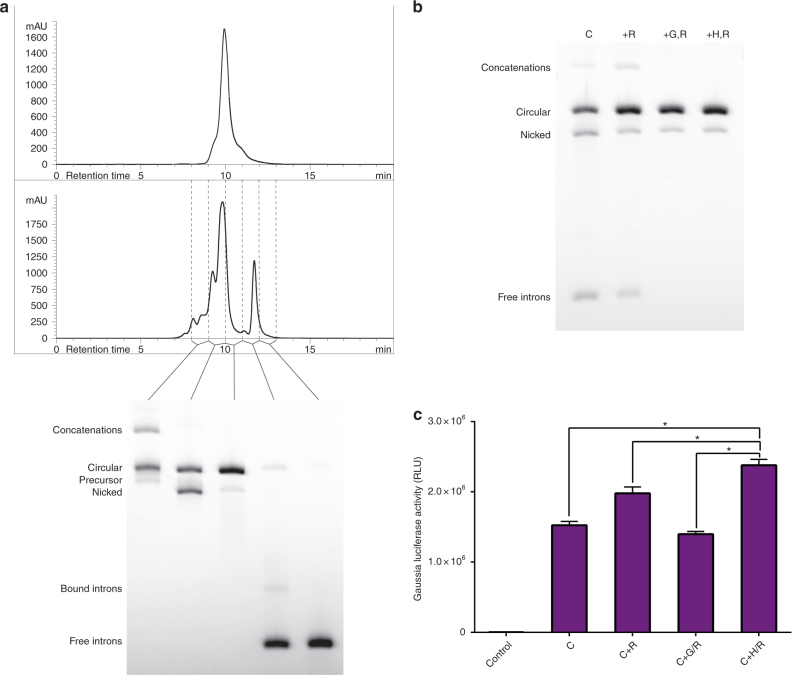
Messenger RNA (mRNA) has broad potential for application in biological systems. However, one fundamental limitation to its use is its relatively short half-life in biological systems. Here we develop exogenous circular RNA (circRNA) to extend the duration of protein expression from full-length RNA messages. First, we engineer a self-splicing intron to efficiently circularize a wide range of RNAs up to 5 kb in length in vitro by rationally designing ubiquitous accessory sequences that aid in splicing. We maximize translation of functional protein from these circRNAs in eukaryotic cells, and we find that engineered circRNA purified by high performance liquid chromatography displays exceptional protein production qualities in terms of both quantity of protein produced and stability of production. This study pioneers the use of exogenous circRNA for robust and stable protein expression in eukaryotic cells and demonstrates that circRNA is a promising alternative to linear mRNA.
Overview
CoChat Summary
## TL;DR
The paper engineers exogenous circular RNA (circRNA) systems that can circularize long RNAs up to 5 kb and drive robust protein expression in eukaryotic cells. Compared with linear mRNA, optimized circRNA showed longer-lasting protein production and, after HPLC purification, stronger protein output in the tested cell lines.
## Key findings
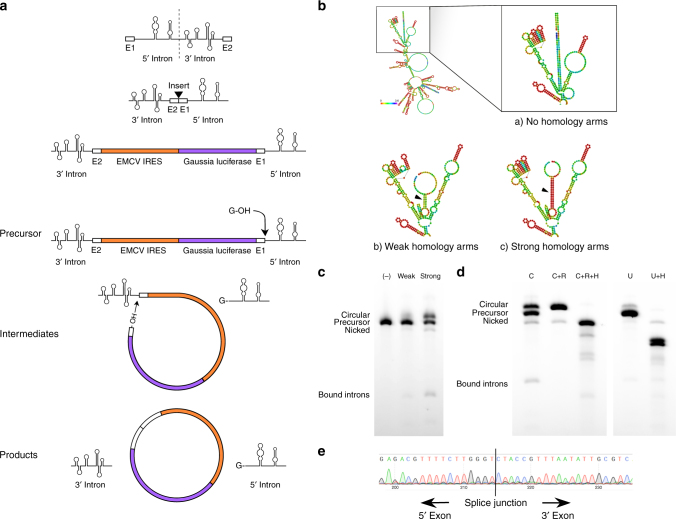
- Adding homology arms to the permuted intron-exon construct increased splicing efficiency from 0% to 16% with weak arms and to 48% with strong arms.
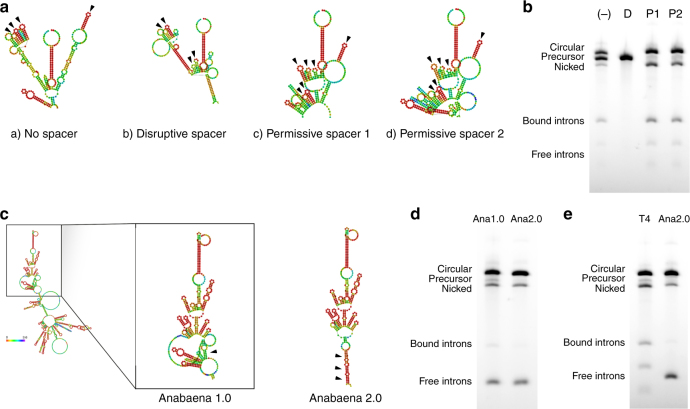
- Rationally designed spacer sequences improved splicing efficiency from 46% to 87%, and a disruptive spacer completely abrogated splicing.
- Using the engineered Anabaena catalytic intron increased splicing efficiency from 84% to 95% and reduced circRNA nicking by 37% relative to the T4 catalytic intron.
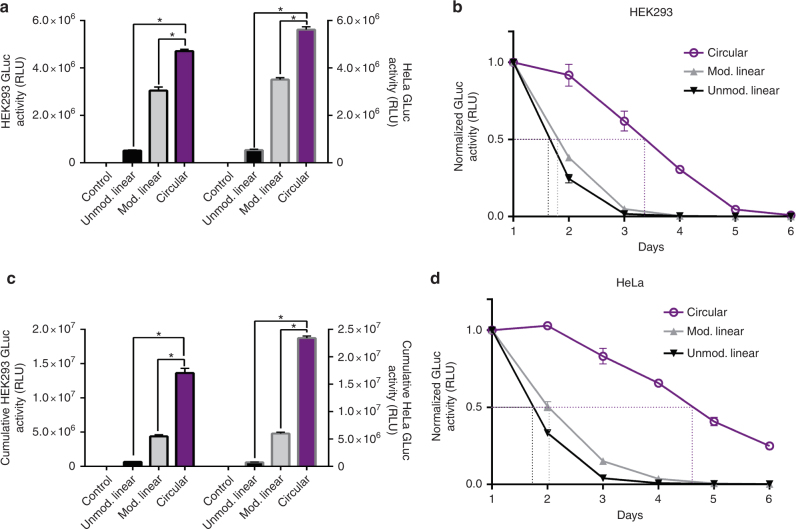
- In HEK293 cells, HPLC-purified circRNA produced 811.2% more protein than unmodified linear mRNA at 24 h and 54.5% more than modified linear mRNA; protein-production half-life was 80 h for circRNA versus approximately 43 h and 45 h for the unmodified and modified linear mRNAs, respectively.
- In HeLa cells, circRNA protein-production half-life was 116 h, compared with approximately 44 h and 49 h for the unmodified and modified linear mRNAs.
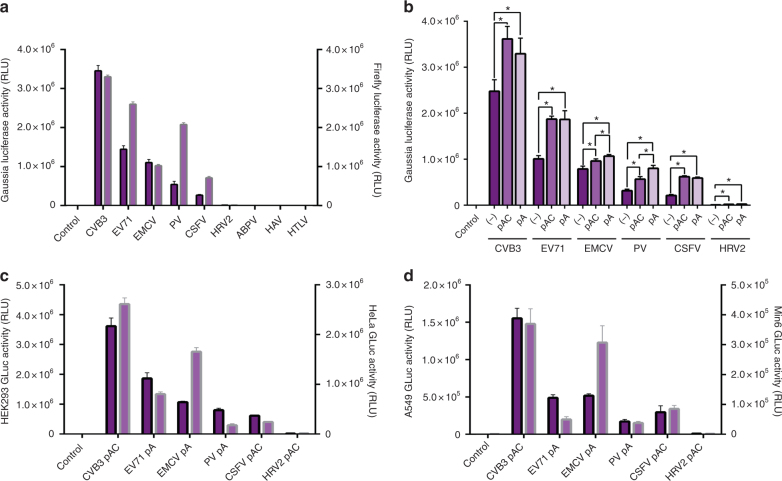
- The CVB3 IRES was 1.5-fold more effective than the EMCV IRES in HEK293 cells and remained superior across HeLa, A549, and Min6 cells tested.
## Methods
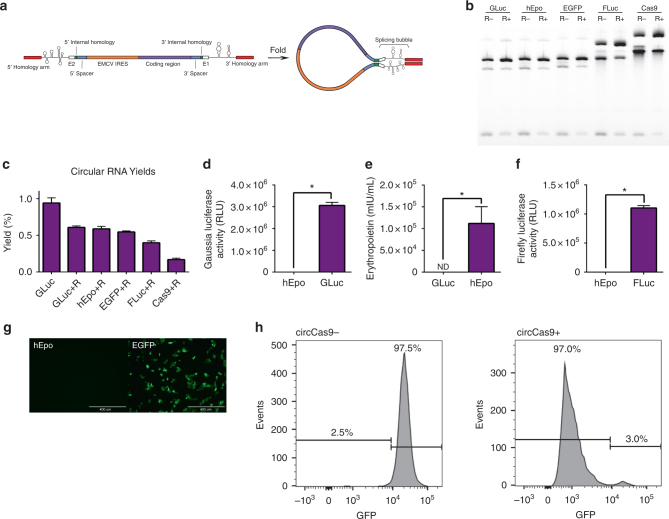
- Engineered circRNAs were built using permuted group I intron/PIE designs with homology arms, spacer sequences, and different IRES elements; constructs included coding regions for GLuc, Firefly luciferase, EGFP, human erythropoietin, and Cas9.
- RNAs were synthesized by in vitro transcription, circularized with GTP/Mg2+-dependent self-splicing, enriched with RNase R, and purified by gel extraction or size-exclusion HPLC; circularization was assessed by gel analysis, RNase H nicking analysis, and splice-junction sequencing.
- Functional testing used transfection into HEK293, HeLa, A549, HEK293-GFP, and Min6 cells, with readouts including luminescence, fluorescence, ELISA, flow cytometry, cytokine assays, and qPCR; statistics were by two-tailed unpaired Welch’s t-test.
## Limitations
- The paper states that longer circRNAs were more prone to nicking during production, which reduced yields and purity.
- The discussion says more work is needed to optimize translation from circRNA and to study translation efficiency and stability in other cell types and tissues.
- The paper notes that additional analysis of exogenous circRNA immunogenicity is required, and that suitable delivery vehicles in vitro and in vivo need thorough investigation.
Model-written summary. Check it against the paper before relying on it.
Integrity signals
Registry
Cites
Statistics
Figures
Verification
Claims the paper makes
9 Valid · 1 Not valid · 3 Not checked · 54 Own results and interpretations
Some cited sources support this claim and some don’t — read each source’s verdict below.
In the paper
“These strategies have yielded modest improvements in RNA stability10, 13–16, and thus alternative approaches to RNA stabilization, such as circularization, are desirable.”
§ Engineering circular RNA for potent and stable translation in eukaryotic cells > Introduction
What the sources say
- Disputedcites [10] Kaczmarek JC Kowalski PS Anderson DG Advances in the delivery of RNA therapeutics: from concept to clinical reality Genome Med. 2017 9 60 10.1186/s13073-017-0450-0 28655327 PMC5485616 sourceExperimental — accuracy not yet measured
In the “Protein overexpression—mRNA” section (page not provided), the paper says that cap analogs and poly(A) tails have markedly improved mRNA stability, contrary to the claim that previous strategies yielded only modest improvements. (LLM, conf=0.86)
Checked by a reasoning model — may be wrong.
- Disputedcites [13] Holtkamp S Modification of antigen-encoding RNA increases stability, translational efficacy, and T-cell stimulatory capacity of dendritic cells Blood 2006 108 4009 4017 10.1182/blood-2006-04-015024 16940422 sourceExperimental — accuracy not yet measured
In the section on combining poly(A)-tail and 3′ UTR modifications (page unavailable), the paper reports an approximately two-orders-of-magnitude improvement in RNA stability relative to standard IVT RNA. That result is contrary to describing the improvement reported by this source as modest. (LLM, conf=0.88)
Checked by a reasoning model — may be wrong.
- Supportedcites [14] Kuhn AN Phosphorothioate cap analogs increase stability and translational efficiency of RNA vaccines in immature dendritic cells and induce superior immune responses in vivo Gene Ther. 2010 17 961 971 10.1038/gt.2010.52 20410931 source
The RNA half-life results (Table 2) show a limited increase with the phosphorothioate cap in immature dendritic cells compared with conventional capping. The same results section explicitly says functional cap analogs had a modest effect on RNA stability in mature dendritic cells. (LLM, conf=0.84)
- Partly supportedcites [15] Presnyak V Codon optimality is a major determinant of mRNA stability Cell 2015 160 1111 1124 10.1016/j.cell.2015.02.029 25768907 PMC4359748 sourceExperimental — accuracy not yet measured
The Results section reports that reporters with optimal codons were about fourfold more stable than those with non-optimal codons, supporting an improvement in mRNA stability. The paper does not characterize that improvement as modest or establish that previous stabilization strategies generally yielded only modest gains. (LLM, conf=0.79)
- Could not verifycites [16] Kariko K Muramatsu H Ludwig J Weissman D Generating the optimal mRNA for therapy: HPLC purification eliminates immune activation and improves translation of nucleoside-modified, protein-encoding mRNA Nucleic Acids Res. 2011 39 e142 e142 10.1093/nar/gkr695 21890902 PMC3241667 sourceExperimental — accuracy not yet measured
The Introduction and Discussion describe reduced immune activation and improved translation with modified or HPLC-purified mRNA, but do not characterize improvements in RNA stability as modest. Searches for RNA stability, half-life, degradation, and circularization found no passage in our copy that establishes the claimed comparison. (LLM, conf=0.74)
plainstates a cause- Asserted: passes — The authors put it forward as true.
- Checkable: passes — It can be checked against evidence.
- Load-bearing: passes — The paper’s conclusions depend on it.
- Based: passes — The paper gives a reason why it holds.
- Disputed
The cited sources support only part of this claim — read each source’s verdict below.
In the paper
“Indeed, the intervening region between the 5′ and 3′ splice sites of native group I introns is on average 300–500 nucleotides long22, while the intervening region of the engineered RNA that we constructed was two to four-fold longer.”
§ Engineering circular RNA for potent and stable translation in eukaryotic cells > Results > Long RNA circularization is assisted by homology
What the sources say
- Partly supportedcites [22] Vicens Q Paukstelis PJ Westhof E Lambowitz AM Cech TR Toward predicting self-splicing and protein-facilitated splicing of group I introns RNA 2008 14 2013 2029 10.1261/rna.1027208 18768647 PMC2553746 sourceExperimental — accuracy not yet measured
The Results section reports that 12 group I introns tested were 183–421 nucleotides long, and Intron selection gives a range of 183–496 nucleotides for introns requested. Neither passage establishes a 300–500-nucleotide average for native group I introns generally. (LLM, conf=0.82)
plain- Asserted: passes — The authors put it forward as true.
- Checkable: passes — It can be checked against evidence.
- Load-bearing: passes — The paper’s conclusions depend on it.
- Based: passes — The paper gives a reason why it holds.
- Partly supported
A result the paper reports from its own data — it cites no other source for it, so there is none to check. The quote shows it is in the paper.
In the paper
“First, we engineer a self-splicing intron to efficiently circularize a wide range of RNAs up to 5 kb in length in vitro by rationally designing ubiquitous accessory sequences that aid in splicing.”
§ Engineering circular RNA for potent and stable translation in eukaryotic cells > Abstract
plainstates a cause- Asserted: passes — The authors put it forward as true.
- Checkable: passes — It can be checked against evidence.
- Load-bearing: passes — The paper’s conclusions depend on it.
- Based: passes — The paper gives a reason why it holds.
A result the paper reports from its own data — it cites no other source for it, so there is none to check. The quote shows it is in the paper.
In the paper
“In the case of EMCV and Poliovirus IRESs, polyA sequences improved expression beyond the improvement seen with an unstructured polyAC spacer.”
§ Engineering circular RNA for potent and stable translation in eukaryotic cells > Results > The CVB3 IRES is superior in the context of circRNA
plainstates a cause- Asserted: passes — The authors put it forward as true.
- Checkable: passes — It can be checked against evidence.
- Load-bearing: unclear — It is unclear whether the paper’s conclusions depend on it.
- Based: passes — The paper gives a reason why it holds.
A result the paper reports from its own data — it cites no other source for it, so there is none to check. The quote shows it is in the paper.
In the paper
“We found that the IRES from Coxsackievirus B3 (CVB3) was 1.5-fold more effective than the commonly adopted EMCV IRES in HEK293 cells (Fig. 4a).”
§ Engineering circular RNA for potent and stable translation in eukaryotic cells > Results > The CVB3 IRES is superior in the context of circRNA
plainstates a cause- Asserted: passes — The authors put it forward as true.
- Checkable: passes — It can be checked against evidence.
- Load-bearing: passes — The paper’s conclusions depend on it.
- Based: passes — The paper gives a reason why it holds.
34 more claims
Create a free account to see all 67 claims and every source verdict.
- It may state two separate claims as one. 25
- Probably not a substantial claim. 9
- The quote only partly states this claim. 2
Claims other papers make about this one
Each is checked against this paper’s own text: does it say what the citing paper says it does?
The source backs part of the claim, not all of it — or backs it for a different population, condition or comparison.
In the citing paper
“Similar to linear mRNA, the chemical modification of specific nucleotides and chromatographic purification can minimize immunogenicity of the RNA and increase translation.”
From Lipid nanoparticles for mRNA delivery (2021) · cites this paper as [245]
Experimental — accuracy not yet measuredThe cited source says what the claim attributes to it.
In the citing paper
“Circular RNA (circRNA) is a single-stranded RNA with a closed-loop structure.”
From Lipid nanoparticles for mRNA delivery (2021) · cites this paper as [245]
The cited source says what the claim attributes to it.
In the citing paper
“In addition, circular RNA (circRNA) can be synthesized to optimize mRNA properties245,246 (Box 2).”
From Lipid nanoparticles for mRNA delivery (2021) · cites this paper as [245]
In the citing paper
“Despite the lack of essential elements for cap-dependent translation, circRNA can be translated by adding the IRES element or m6A modification incorporated to its 5′ UTR region.223,224”
From Advances in COVID-19 mRNA vaccine development (2022) · cites this paper as [223]
In the citing paper
“Given its enhanced biostability compared with linear RNA due to the lack of terminals preventing degradation,49 circRNA could be a promising research avenue.”
From COVID-19 mRNA vaccines: Platforms and current developments (2022) · cites this paper as [49]
6 more claims about this paper
Create a free account to see every claim other papers make about this one.
Citations
Cites
Natural RNA circles function as efficient microRNA sponges
Hansen, T. B., Jensen, T. I., Clausen, B. H., Bramsen, J. B., Finsen, B., Damgaard, C. K., & Kjems, J. (2013) · Nature · doi:10.1038/nature11993 · Cited by 7,985
Exon-intron circular RNAs regulate transcription in the nucleus
Li, Z., Huang, C., Bao, C., Chen, L., Lin, M., Wang, X., Zhong, G., Yu, B., Hu, W., Dai, L., et al. (2015) · Nature Structural & Molecular Biology · doi:10.1038/nsmb.2959 · Cited by 2,905
Detecting and characterizing circular RNAs
Jeck, W. R., & Sharpless, N. E. (2014) · Nature Biotechnology · doi:10.1038/nbt.2890 · Cited by 2,702
Circ-ZNF609 is a circular RNA that can be translated and functions in myogenesis
Legnini, I., Di Timoteo, G., Rossi, F., Morlando, M., Briganti, F., Sthandier, O., Fatica, A., Santini, T., Andronache, A., Wade, M., et al. (2017) · Molecular Cell · doi:10.1016/j.molcel.2017.02.017 · Cited by 2,173
Regulation of circRNA biogenesis
Chen, L.-L., & Yang, L. (2015) · RNA Biology · doi:10.1080/15476286.2015.1020271 · Cited by 1,953
Pamudurti, N. R., Bartok, O., Jens, M., Ashwal-Fluss, R., Stottmeister, C., Ruhe, L., Hanan, M., Wyler, E., Perez-Hernandez, D., Ramberger, E., et al. (2017) · Molecular Cell · doi:10.1016/j.molcel.2017.02.021 · Cited by 1,810
Codon Optimality Is a Major Determinant of mRNA Stability
Presnyak, V., Alhusaini, N., Chen, Y.-H., Martin, S., Morris, N., Kline, N., Olson, S., Weinberg, D., Baker, K. E., Graveley, B. R., et al. (2015) · Cell · doi:10.1016/j.cell.2015.02.029 · Cited by 1,078
Karikó, K., Muramatsu, H., Ludwig, J., & Weissman, D. (2011) · Nucleic Acids Research · doi:10.1093/nar/gkr695 · Cited by 898
Circular RNAs: analysis, expression and potential functions
Barrett, S. P., & Salzman, J. (2016) · Development · doi:10.1242/dev.128074 · Cited by 859
Enuka, Y., Lauriola, M., Feldman, M. E., Sas-Chen, A., Ulitsky, I., & Yarden, Y. (2016) · Nucleic Acids Research · doi:10.1093/nar/gkv1367 · Cited by 757
Cited by
Lipid nanoparticles for mRNA delivery
Hou, X., Zaks, T., Langer, R., & Dong, Y. (2021) · Nature Reviews Materials · doi:10.1038/s41578-021-00358-0 · Cited by 4,076
The expanding regulatory mechanisms and cellular functions of circular RNAs
Chen, L.-L. (2020) · Nature Reviews Molecular Cell Biology · doi:10.1038/s41580-020-0243-y · Cited by 1,713
The emerging roles of circRNAs in cancer and oncology
Kristensen, L. S., Jakobsen, T., Hager, H., & Kjems, J. (2022) · Nature Reviews Clinical Oncology · doi:10.1038/s41571-021-00585-y · Cited by 1,256
Past, present, and future of circ RNA s
Patop, I. L., Wüst, S., & Kadener, S. (2019) · The EMBO Journal · doi:10.15252/embj.2018100836 · Cited by 1,225
“However, the magnitude of RIG-1 activation due to exogenous circRNA was challenged by later reports (Wesselhoeft et al , 2018, 2019).”
Delivering the Messenger: Advances in Technologies for Therapeutic mRNA Delivery
Kowalski, P. S., Rudra, A., Miao, L., & Anderson, D. G. (2019) · Molecular Therapy · doi:10.1016/j.ymthe.2019.02.012 · Cited by 1,127
Self-citationCircular RNAs: Characterization, cellular roles, and applications
Liu, C.-X., & Chen, L.-L. (2022) · Cell · doi:10.1016/j.cell.2022.04.021 · Cited by 1,065
Circular RNA-protein interactions: functions, mechanisms, and identification
Huang, A., Zheng, H., Wu, Z., Chen, M., & Huang, Y. (2020) · Theranostics · doi:10.7150/thno.42174 · Cited by 907
“Although the physiological functions of most of these proteins have not yet been identified, it is likely that they share some of the functional abilities of their full-length protein counterparts encoded by the linear forms of the transcripts [108].”
BackgroundZhang, M., Zhao, K., Xu, X., Yang, Y., Yan, S., Wei, P., Liu, H., Xu, J., Xiao, F., Zhou, H., et al. (2018) · Nature Communications · doi:10.1038/s41467-018-06862-2 · Cited by 740
Mendes, B. B., Conniot, J., Avital, A., Yao, D., Jiang, X., Zhou, X., Sharf-Pauker, N., Xiao, Y., Adir, O., Liang, H., et al. (2022) · Nature Reviews Methods Primers · doi:10.1038/s43586-022-00104-y · Cited by 719
Circular RNA Vaccines against SARS-CoV-2 and Emerging Variants
Qu, L., Yi, Z., Shen, Y., Lin, L., Chen, F., Xu, Y., Wu, Z., Tang, H., Zhang, X., Tian, F., et al. (2021) · doi:10.1101/2021.03.16.435594 · Cited by 636
“To produce high-purity circRNA, we first optimized the IVT reaction to generate circRNA (Figure S1A) without the extra step of GTP catalysis (Wesselhoeft et al., 2018).”
InfluentialUnlocking the promise of mRNA therapeutics
Rohner, E., Yang, R., Foo, K. S., Goedel, A., & Chien, K. R. (2022) · Nature Biotechnology · doi:10.1038/s41587-022-01491-z · Cited by 612
Advances in COVID-19 mRNA vaccine development
Fang, E., Liu, X., Li, M., Zhang, Z., Song, L., Zhu, B., Wu, X., Liu, J., Zhao, D., & Li, Y. (2022) · Signal Transduction and Targeted Therapy · doi:10.1038/s41392-022-00950-y · Cited by 601
“D Circular RNA (circRNA) is circularized by the autocatalytic Group I ribozyme.(223) The exon 2 is ligated upstream to exon 1, and a coding region is inserted between the exon-exon junction.”
BackgroundThe novel roles of circRNAs in human cancer
Shang, Q., Yang, Z., Jia, R., & Ge, S. (2019) · Molecular Cancer · doi:10.1186/s12943-018-0934-6 · Cited by 547
Emerging role of tumor-related functional peptides encoded by lncRNA and circRNA
Wu, P., Mo, Y., Peng, M., Tang, T., Zhong, Y., Deng, X., Xiong, F., Guo, C., Wu, X., Li, Y., et al. (2020) · Molecular Cancer · doi:10.1186/s12943-020-1147-3 · Cited by 540
“Moreover, the highly conserved ORFs in circRNAs encode functional peptides both in vivo and in vitro in a manner independent of the 5' cap structure, such as internal ribosome entry site (IRES) induction [61], promoting adenosine methylation (N6-methyladenosine; m6A) [62], rolling cycle amplification [63, 64], and oth…”
BackgroundThe landscape of mRNA nanomedicine
Huang, X., Kong, N., Zhang, X., Cao, Y., Langer, R., & Tao, W. (2022) · Nature Medicine · doi:10.1038/s41591-022-02061-1 · Cited by 511
mRNA-based cancer therapeutics
Liu, C., Shi, Q., Huang, X., Koo, S., Kong, N., & Tao, W. (2023) · Nature Reviews Cancer · doi:10.1038/s41568-023-00586-2 · Cited by 500
RNA Circularization Diminishes Immunogenicity and Can Extend Translation Duration In Vivo
Wesselhoeft, R. A., Kowalski, P. S., Parker-Hale, F. C., Huang, Y., Bisaria, N., & Anderson, D. G. (2019) · Molecular Cell · doi:10.1016/j.molcel.2019.02.015 · Cited by 482
Self-citationLipid Nanoparticle (LNP) Enables mRNA Delivery for Cancer Therapy
Zong, Y., Lin, Y., Wei, T., & Cheng, Q. (2023) · Advanced Materials · doi:10.1002/adma.202303261 · Cited by 477
Specific expression and functions of circular RNAs
Misir, S., Wu, N., & Yang, B. B. (2022) · Cell Death & Differentiation · doi:10.1038/s41418-022-00948-7 · Cited by 469
“Synthetic circRNAs have been engineered to contain more microRNA binding sites or pursue long-term and large-scale translation [137, 138].”
BackgroundYarnall, M. T. N., Ioannidi, E. I., Schmitt-Ulms, C., Krajeski, R. N., Lim, J., Villiger, L., Zhou, W., Jiang, K., Garushyants, S. K., Roberts, N., et al. (2023) · Nature Biotechnology · doi:10.1038/s41587-022-01527-4 · Cited by 469
Engineering circular RNA for enhanced protein production
Chen, R., Wang, S. K., Belk, J. A., Amaya, L., Li, Z., Cardenas, A., Abe, B. T., Chen, C.-K., Wender, P. A., & Chang, H. Y. (2023) · Nature Biotechnology · doi:10.1038/s41587-022-01393-0 · Cited by 455
The emerging roles and functions of circular RNAs and their generation
Yu, C.-Y., & Kuo, H.-C. (2019) · Journal of Biomedical Science · doi:10.1186/s12929-019-0523-z · Cited by 427
A Comparison of Plasmid DNA and mRNA as Vaccine Technologies
Liu, M. A. (2019) · Vaccines · doi:10.3390/vaccines7020037 · Cited by 427
“They can be exogenously constructed to produce proteins in cells [40].”
BackgroundCircular RNA: An emerging frontier in RNA therapeutic targets, RNA therapeutics, and mRNA vaccines
Liu, X., Zhang, Y., Zhou, S., Dain, L., Mei, L., & Zhu, G. (2022) · Journal of Controlled Release · doi:10.1016/j.jconrel.2022.05.043 · Cited by 366
Review on circular RNAs and new insights into their roles in cancer
Tang, X., Ren, H., Guo, M., Qian, J., Yang, Y., & Gu, C. (2021) · Computational and Structural Biotechnology Journal · doi:10.1016/j.csbj.2021.01.018 · Cited by 358
“However, circRNAs can be translated through N(6)methyladenosine modification or internal ribosome entry site (IRES) to promote direct binding of initial factors to the circRNAs, as demonstrated with engineered circRNAs [62,64-66].”
BackgroundThree decades of messenger RNA vaccine development
Verbeke, R., Lentacker, I., De Smedt, S. C., & Dewitte, H. (2019) · Nano Today · doi:10.1016/j.nantod.2019.100766 · Cited by 342
Biogenesis and Functions of Circular RNAs Come into Focus
Xiao, M.-S., Ai, Y., & Wilusz, J. E. (2020) · Trends in Cell Biology · doi:10.1016/j.tcb.2019.12.004 · Cited by 315
COVID-19 mRNA vaccines: Platforms and current developments
Szabó, G. T., Mahiny, A. J., & Vlatkovic, I. (2022) · Molecular Therapy · doi:10.1016/j.ymthe.2022.02.016 · Cited by 308
“stranded RNA that contains antigen sequence and an IRES that allows initiation of antigen translation.(49,59,60)”
Biogenesis and Regulatory Roles of Circular RNAs
Yang, L., Wilusz, J. E., & Chen, L.-L. (2022) · Annual Review of Cell and Developmental Biology · doi:10.1146/annurev-cellbio-120420-125117 · Cited by 299
Lipid nanoparticles for delivery of RNA therapeutics: Current status and the role of in vivo imaging
Jung, H. N., Lee, S.-Y., Lee, S., Youn, H., & Im, H.-J. (2022) · Theranostics · doi:10.7150/thno.77259 · Cited by 282
“It is stable from nuclease-mediated degradation due to the lack of a 5’-cap or 3’-poly(A) tail, and has no stop codon, enabling continuous and high-efficiency protein translation [117, 118].”
BackgroundCircular RNAs: A Novel Class of Functional RNA Molecules with a Therapeutic Perspective
Santer, L., Bär, C., & Thum, T. (2019) · Molecular Therapy · doi:10.1016/j.ymthe.2019.07.001 · Cited by 275
“strategies are needed, and nucleoside modifications may further improve the stability and suppress undesired immune responses.(121)”
BackgroundInfluentialCircular RNA vaccine in disease prevention and treatment
Niu, D., Wu, Y., & Lian, J. (2023) · Signal Transduction and Targeted Therapy · doi:10.1038/s41392-023-01561-x · Cited by 267
“32 33 – 35 (2) CircRNAs without any modi fi cation exhibit fewer side effects.”
BackgroundMethodInfluentialGenome Editing with mRNA Encoding ZFN, TALEN, and Cas9
Zhang, H.-X., Zhang, Y., & Yin, H. (2019) · Molecular Therapy · doi:10.1016/j.ymthe.2019.01.014 · Cited by 248
“As an alternative to linear mRNA, exogenous synthesized circular RNA (circRNA) has been developed for robust and stable protein expression.(88) In addition, protein expression kinetics also have contributed to the editing efficiency of mRNA encoding nucleases.”
BackgroundCircular RNA cancer vaccines drive immunity in hard-to-treat malignancies
Li, H., Peng, K., Yang, K., Ma, W., Qi, S., Yu, X., He, J., Lin, X., & Yu, G. (2022) · Theranostics · doi:10.7150/thno.77350 · Cited by 241
“As IRES-mediated translation is dependent on the availability of IRES trans-acting factors, which vary among cell and tissue types, different IRES elements or even the same IRES element initiate distinct translation efficiency [31, 34, 35].”
BackgroundMethodResultInfluentialThe molecular basis of translation initiation and its regulation in eukaryotes
Brito Querido, J., Díaz-López, I., & Ramakrishnan, V. (2024) · Nature Reviews Molecular Cell Biology · doi:10.1038/s41580-023-00624-9 · Cited by 233
“Recent studies indicate that some circRNAs can be translated 53–55 , 121– 123 .”
Biogenesis, functions and clinical significance of circRNAs in gastric cancer
Shan, C., Zhang, Y., Hao, X., Gao, J., Chen, X., & Wang, K. (2019) · Molecular Cancer · doi:10.1186/s12943-019-1069-0 · Cited by 233
“Unlike many linear mRNAs with a 5’ cap and a 3’ poly A tail, circRNAs lack efficient translation initiation structures, but can be translated once an internal ribosome entry site (IRES) is initiated [58].”
BackgroundmRNA vaccines for infectious diseases — advances, challenges and opportunities
Pardi, N., & Krammer, F. (2024) · Nature Reviews Drug Discovery · doi:10.1038/s41573-024-01042-y · Cited by 229
“CircRNA is a closed RNA without a 5′ cap and 3′ poly(A) tail and is thus not considered a type of mRNA 265,266 (Fig.”
Exosomal circRNA: emerging insights into cancer progression and clinical application potential
Zhang, F., Jiang, J., Qian, H., Yan, Y., & Xu, W. (2023) · Journal of Hematology & Oncology · doi:10.1186/s13045-023-01452-2 · Cited by 215
CircECE1 activates energy metabolism in osteosarcoma by stabilizing c-Myc
Shen, S., Yao, T., Xu, Y., Zhang, D., Fan, S., & Ma, J. (2020) · Molecular Cancer · doi:10.1186/s12943-020-01269-4 · Cited by 212
Extracellular vesicles: The next generation in gene therapy delivery
Cecchin, R., Troyer, Z., Witwer, K., & Morris, K. V. (2023) · Molecular Therapy · doi:10.1016/j.ymthe.2023.01.021 · Cited by 198
Functions and clinical significance of circular RNAs in glioma
Sun, J., Li, B., Shu, C., Ma, Q., & Wang, J. (2020) · Molecular Cancer · doi:10.1186/s12943-019-1121-0 · Cited by 196
Circular RNAs as Therapeutic Agents and Targets
Holdt, L. M., Kohlmaier, A., & Teupser, D. (2018) · Frontiers in Physiology · doi:10.3389/fphys.2018.01262 · Cited by 187
Identification of mecciRNAs and their roles in the mitochondrial entry of proteins
Liu, X., Wang, X., Li, J., Hu, S., Deng, Y., Yin, H., Bao, X., Zhang, Q. C., Wang, G., Wang, B., et al. (2020) · Science China Life Sciences · doi:10.1007/s11427-020-1631-9 · Cited by 186
Yi, Z., Qu, L., Tang, H., Liu, Z., Liu, Y., Tian, F., Wang, C., Zhang, X., Feng, Z., Yu, Y., et al. (2022) · Nature Biotechnology · doi:10.1038/s41587-021-01180-3 · Cited by 183
RNA circles with minimized immunogenicity as potent PKR inhibitors
Liu, C.-X., Guo, S.-K., Nan, F., Xu, Y.-F., Yang, L., & Chen, L.-L. (2022) · Molecular Cell · doi:10.1016/j.molcel.2021.11.019 · Cited by 180
Wang, Y.-S., Kumari, M., Chen, G.-H., Hong, M.-H., Yuan, J. P.-Y., Tsai, J.-L., & Wu, H.-C. (2023) · Journal of Biomedical Science · doi:10.1186/s12929-023-00977-5 · Cited by 173
“1B),otherwise, the IVT-generated RNA can be directly circularized upon processing by T4 RNA ligase [17, 37, 247].”
BackgroundMethodLiu, L., Gu, M., Ma, J., Wang, Y., Li, M., Wang, H., Yin, X., & Li, X. (2022) · Molecular Cancer · doi:10.1186/s12943-022-01619-4 · Cited by 174
Expression profiles, biological functions and clinical significance of circRNAs in bladder cancer
Yang, X., Ye, T., Liu, H., Lv, P., Duan, C., Wu, X., Jiang, K., Lu, H., Xia, D., Peng, E., et al. (2021) · Molecular Cancer · doi:10.1186/s12943-020-01300-8 · Cited by 167
Circular RNAs: Expression, localization, and therapeutic potentials
Yang, Q., Li, F., He, A. T., & Yang, B. B. (2021) · Molecular Therapy · doi:10.1016/j.ymthe.2021.01.018 · Cited by 167
The design and synthesis of circular RNAs
Obi, P., & Chen, Y. G. (2021) · Methods · doi:10.1016/j.ymeth.2021.02.020 · Cited by 168
“(2018) reported significant increases in circRNA yield when a luciferase sequence was transferred from a PIE construct with td introns to one containing Anabaena pre-tRNA introns [75], suggesting that choice of group I intron affects circularization efficiency.”
BackgroundMethodInfluentialRecent Advancement in mRNA Vaccine Development and Applications
Al Fayez, N., Nassar, M. S., Alshehri, A. A., Alnefaie, M. K., Almughem, F. A., Alshehri, B. Y., Alawad, A. O., & Tawfik, E. A. (2023) · Pharmaceutics · doi:10.3390/pharmaceutics15071972 · Cited by 167
Circular RNA vaccine induces potent T cell responses
Amaya, L., Grigoryan, L., Li, Z., Lee, A., Wender, P. A., Pulendran, B., & Chang, H. Y. (2023) · Proceedings of the National Academy of Sciences · doi:10.1073/pnas.2302191120 · Cited by 167
“Currently, up to 10 kb transcripts in length can circularize and express open-reading frames (13).”
Research Advances on the Stability of mRNA Vaccines
Cheng, F., Wang, Y., Bai, Y., Liang, Z., Mao, Q., Liu, D., Wu, X., & Xu, M. (2023) · Viruses · doi:10.3390/v15030668 · Cited by 162
“circRNA can be expressed consistently in cells for 5 to 7 days, whereas linear mRNA with the same sequence is reportedly only consistently expressed for 2 days [66,67].”
BackgroundLandscape of Noncoding RNA in Prostate Cancer
Hua, J. T., Chen, S., & He, H. H. (2019) · Trends in Genetics · doi:10.1016/j.tig.2019.08.004 · Cited by 166
Translation of noncoding RNAs and cancer
Zhou, B., Yang, H., Yang, C. H., Bao, Y., Yang, S., Liu, J., & Xiao, Y. (2020) · Cancer Letters · doi:10.1016/j.canlet.2020.10.002 · Cited by 154
Wang, X., Li, J., Bian, X., Wu, C., Hua, J., Chang, S., Yu, T., Li, H., Li, Y., Hu, S., et al. (2021) · Proceedings of the National Academy of Sciences · doi:10.1073/pnas.2012881118 · Cited by 187
“The synthesis of circRNAs in vitro was carried out as previously described with minor modification (64).”
MethodZhang, D., Ni, N., Wang, Y., Tang, Z., Gao, H., Ju, Y., Sun, N., He, X., Gu, P., & Fan, X. (2020) · Cell Death and Differentiation · doi:10.1038/s41418-020-0600-6 · Cited by 156
“cRNAs are more stable than linear RNAs because they lack a free end for RNA enzyme-mediated degradation [9].”
BackgroundCircular RNA, the Key for Translation
Prats, A., David, F., Diallo, L. H., Roussel, É., Tatin, F., Garmy-Susini, B. H., & Lacazette, É. (2020) · International Journal of Molecular Sciences · doi:10.3390/ijms21228591 · Cited by 149
“has pioneered the use of exogenous circRNA for robust and stable protein expression in eukaryotic cells [91].”
BackgroundTailor made: the art of therapeutic mRNA design
Metkar, M., Pepin, C. S., & Moore, M. J. (2023) · Nature Reviews Drug Discovery · doi:10.1038/s41573-023-00827-x · Cited by 180
“An initial small screen of viral IRESs in a circRNA context revealed CVB3 to be the most active among those tested 138 .”
CircRNAs in colorectal cancer: potential biomarkers and therapeutic targets
Zhang, Y., Luo, J., Yang, W., & Ye, W.-C. (2023) · Cell Death and Disease · doi:10.1038/s41419-023-05881-2 · Cited by 158
“In another application, engineered circRNA purified by highperformance liquid chromatography demonstrated outstanding protein production quality in both quantity and stability production in eukaryotic cells [123].”
BackgroundCircular RNA translation, a path to hidden proteome
Sinha, T., Panigrahi, C., Das, D., & Panda, A. C. (2021) · Wiley Interdisciplinary Reviews - RNA · doi:10.1002/wrna.1685 · Cited by 159
Nanomedicine-Based Approaches for mRNA Delivery
Uchida, S., Perche, F., Pichon, C., & Cabral, H. (2020) · Molecular Pharmaceutics · doi:10.1021/acs.molpharmaceut.0c00618 · Cited by 139
Anything but Ordinary – Emerging Splicing Mechanisms in Eukaryotic Gene Regulation
Gehring, N. H., & Roignant, J. (2020) · Trends in Genetics · doi:10.1016/j.tig.2020.10.008 · Cited by 164
Aptamer-Based Targeted Delivery of Functional Nucleic Acids
Xie, S., Sun, W., Fu, T., Liu, X., Chen, P., Qiu, L., Qu, F., & Tan, W. (2023) · Journal of the American Chemical Society · doi:10.1021/jacs.3c00841 · Cited by 137
Review: RNA-based diagnostic markers discovery and therapeutic targets development in cancer
Wang, H., Meng, Q., Qian, J., Li, M., Gu, C., & Yang, Y. (2022) · Pharmacology & Therapeutics · doi:10.1016/j.pharmthera.2022.108123 · Cited by 139
Chaudhary, N., Kasiewicz, L. N., Newby, A. N., Arral, M. L., Yerneni, S. S., Melamed, J. R., LoPresti, S. T., Fein, K. C., Strelkova Petersen, D. M., Kumar, S., et al. (2024) · Nature Biomedical Engineering · doi:10.1038/s41551-024-01256-w · Cited by 159
“…vaccines has bolstered LNPs as the preferred delivery sys-tem for prophylactic vaccines, and next-generation RNA platforms (for example, replicons 4,5 , circular RNA 6,7 and base editors 8 ) are under development for protein replacement 9 , gene editing 10 , immunotherapies 11 and cancer 12,13 .”
Circular RNA: A promising new star of vaccine
Xie, J., Ye, F., Deng, X., Tang, Y., Liang, J., Huang, X., Sun, Y., Tang, H., Lei, J., Zheng, S., et al. (2023) · Journal of Translational Internal Medicine · doi:10.2478/jtim-2023-0122 · Cited by 131
“First, because circRNAs can produce more significant amounts of proteins for a longer duration than linear RNAs, [69] circRNA vaccines probably have high translation efficiency.”
BackgroundInfluentialDirect in vivo CAR T cell engineering
Short, L., Holt, R. A., Cullis, P. R., & Evgin, L. (2024) · Trends in Pharmacological Sciences · doi:10.1016/j.tips.2024.03.004 · Cited by 155
Clinical delivery of circular RNA: Lessons learned from RNA drug development
Young, T. L., Wang, K. C., Varley, A., & Li, B. (2023) · Advanced Drug Delivery Reviews · doi:10.1016/j.addr.2023.114826 · Cited by 134
Branched chemically modified poly(A) tails enhance the translation capacity of mRNA
Chen, H., Liu, D., Guo, J., Aditham, A., Zhou, Y., Tian, J., Luo, S., Ren, J., Hsu, A., Huang, J., et al. (2025) · Nature Biotechnology · doi:10.1038/s41587-024-02174-7 · Cited by 125
In vivo chimeric antigen receptor (CAR)-T cell therapy
Bot, A., Scharenberg, A. M., Friedman, K. M., Guey, L. T., Hofmeister, R., Andorko, J. I., Klichinsky, M., Neumann, F., Shah, J. V., Swayer, A. J., et al. (2025) · Nature Reviews Drug Discovery · doi:10.1038/s41573-025-01291-5 · Cited by 218
“At launch in 2019, based on its foundational MIT technology, Orna had a focus on immune cell engineering using a tissue-specific internal ribosomal entry site within a circular RNA platform 144–146 .”
RNA therapeutics: updates and future potential
Zhang, C., & Zhang, B. (2022) · Science China Life Sciences · doi:10.1007/s11427-022-2171-2 · Cited by 132
“In addition, Wesselhoeft et al. (2018) demonstrated the robust protein expression of exogenous circRNAs for longer durations compared to unmodified and modified linear RNAs.”
BackgroundMethodKowalzik, F., Schreiner, D., Jensen, C., Teschner, D., Gehring, S., & Zepp, F. (2021) · Vaccines · doi:10.3390/vaccines9040390 · Cited by 149
Saaoud, F., Charles Drummer, I. V., Shao, Y., Sun, Y., Lu, Y., Xu, K., Ni, D., Jiang, X., Wang, H., & Yang, X. (2020) · Pharmacology & Therapeutics · doi:10.1016/j.pharmthera.2020.107715 · Cited by 130
New insight into circRNAs: characterization, strategies, and biomedical applications
Feng, X., Zhu, S.-X., Pu, K., Huang, H., Chen, Y., & Wang, W. (2023) · Experimental Hematology and Oncology · doi:10.1186/s40164-023-00451-w · Cited by 124
“Unlike ordinary mRNA, circRNA lacks a similar translational molecular structure, but it can utilize the N6-adenosine methylation (m6A) modification or internal ribosome entry site (IRES) translation to promote the direct binding of the initiation factors to the cyclic RNA [25, 32, 62–64] (Fig.”
BackgroundMethodInfluentialThe roles of circular RNAs in human development and diseases
Lee, E. C. S., Elhassan, S. A. M., Lim, G. P. L., Kok, W. H., Tan, S. W., Leong, E. N., Tan, S. H., Chan, E. W. L., Bhattamisra, S. K., Rajendran, R., et al. (2018) · Biomedicine & Pharmacotherapy · doi:10.1016/j.biopha.2018.12.052 · Cited by 116
The therapeutic potential of circular RNAs
O’Leary, E. T., Jiang, Y., Kristensen, L. S., Hansen, T. B., & Kjems, J. (2025) · Nature Reviews Genetics · doi:10.1038/s41576-024-00806-x · Cited by 143
“The reported size of biochemically prepared circRNAs using either method ranges from approximately ten nucleotides to more than 5,000 nucleotides 9,20,75–77 .”
InfluentialExosomes for mRNA delivery: a novel biotherapeutic strategy with hurdles and hope
Aslan, C., Kiaie, S. H., Zolbanin, N. M., Lotfinejad, P., Ramezani, R., Kashanchi, F., & Jafari, R. (2021) · BMC Biotechnology · doi:10.1186/s12896-021-00683-w · Cited by 107
“Recently, they have attracted rising interest because of their prevalence and variety of possible biological roles [43].”
BackgroundExpanding uncapped translation and emerging function of circular RNA in carcinomas and noncarcinomas
Wang, Y., Wu, C., Du, Y., Li, Z., Li, M., Hou, P., Shen, Z., Chu, S., Zheng, J., & Bai, J. (2022) · Molecular Cancer · doi:10.1186/s12943-021-01484-7 · Cited by 113
“Rolling translation is a novel mechanism driving circRNA translation to efficiently generate a large number of protein products beyond that of cognate mRNAs [146], offering the possibility to utilize circRNA-derived proteins for future gene therapy [146, 147].”
BackgroundEngineering synthetic RNA devices for cell control
Dykstra, P. B., Kaplan, M., & Smolke, C. D. (2022) · Nature Reviews Genetics · doi:10.1038/s41576-021-00436-7 · Cited by 137
Current landscape of mRNA technologies and delivery systems for new modality therapeutics
Lu, R., Hsu, H.-E., Perez, S. J. L. P., Kumari, M., Chen, G., Hong, M.-H., Lin, Y.-S., Liu, C.-H., Ko, S.-H., Concio, C. A. P., et al. (2024) · Journal of Biomedical Science · doi:10.1186/s12929-024-01080-z · Cited by 129
“Alternatively, linear IVT mRNAs may be ligated with T4 RNA ligase to generate a circular form [61–63].”
BackgroundNisar, S., Bhat, A. A., Singh, M. K., Karedath, T., Rizwan, A., Hashem, S., Bagga, P., Reddy, R. D., Jamal, F., Shahab Uddin, M. S., et al. (2021) · Frontiers in Cell and Developmental Biology · doi:10.3389/fcell.2021.617281 · Cited by 108
Recent developments of RNA-based vaccines in cancer immunotherapy
Faghfuri, E., Pourfarzi, F., Faghfouri, A. H., Shadbad, M. A., Hajiasgharzadeh, K., & Baradaran, B. (2020) · Expert Opinion on Biological Therapy · doi:10.1080/14712598.2020.1815704 · Cited by 105
“, the construction of circularengineered RNAs that are resistant to exonucleases [20].”
BackgroundCircular RNAs in renal cell carcinoma: implications for tumorigenesis, diagnosis, and therapy
Wang, Y., Zhang, Y., Wang, P., Fu, X., & Lin, W. (2020) · Molecular Cancer · doi:10.1186/s12943-020-01266-7 · Cited by 105
Advancements of in vitro transcribed mRNA (IVT mRNA) to enable translation into the clinics
Kang, D. D., Li, H., & Dong, Y. (2023) · Advanced Drug Delivery Reviews · doi:10.1016/j.addr.2023.114961 · Cited by 100
“This feature equips circRNAs to exhibit high biostability and therefore extended expression [130].”
Zhao, Z., Song, J., Tang, B., Fang, S., Zhang, D., Zheng, L., Wu, F., Gao, Y., Chen, C., Hu, X., et al. (2020) · Journal of Experimental & Clinical Cancer Research · doi:10.1186/s13046-020-01769-7 · Cited by 101
Extracellular vesicles versus lipid nanoparticles for the delivery of nucleic acids
Bader, J., Brigger, F., & Leroux, J. (2024) · Advanced Drug Delivery Reviews · doi:10.1016/j.addr.2024.115461 · Cited by 115
Circular RNAs: a rising star in respiratory diseases
Wang, J., Zhu, M., Pan, J., Chen, C., Xia, S., & Song, Y. (2019) · Respiratory Research · doi:10.1186/s12931-018-0962-1 · Cited by 94
“The possible therapeutic mechanism of circRNAs is considered to act as miRNAs sponge or be translated to functional proteins [75] .”
BackgroundYang, J., Zhu, J., Sun, J., Chen, Y., Du, Y., Tan, Y., Wu, L., Zhai, M., Wei, L., Li, N., et al. (2022) · Molecular Therapy — Nucleic Acids · doi:10.1016/j.omtn.2022.09.010 · Cited by 100
“In our study, circular mRNA was generated by a vector that consists of a T7 promoter, the PIE system, various IRES elements, and RNA spacers, which comprise the poly(AC) sequences described by Wesselhoeft.”
InfluentialChemical and topological design of multicapped mRNA and capped circular RNA to augment translation
Chen, H., Liu, D., Aditham, A. J., Guo, J., Huang, J., Kostas, F., Maher, K., Friedrich, M., Xavier, R. J., Zhang, F., et al. (2024) · Nature Biotechnology · doi:10.1038/s41587-024-02393-y · Cited by 113
“5c,d) 14 .”
Advancements in clinical RNA therapeutics: Present developments and prospective outlooks
Saw, P. E., & Song, E. (2024) · Cell Reports Medicine · doi:10.1016/j.xcrm.2024.101555 · Cited by 112
“118 121 Unmodified circRNAs manifest fewer side effects compared with mRNA vaccines, which can induce cytotoxicity and side effects attributed to their high immunogenicity.”
The function and mechanisms of action of circular RNAs in Urologic Cancer
Zhang, Z.-H., Wang, Y., Zhang, Y., Zheng, S., Feng, T., Tian, X., Abudurexiti, M., Wang, Z.-D., Zhu, W., Su, J., et al. (2023) · Molecular Cancer · doi:10.1186/s12943-023-01766-2 · Cited by 112
“Delivery of nano-formulations of circRNA containing IRES showed enhanced translational duration [85, 87].”
BackgroundDeep Insights in Circular RNAs: from biogenesis to therapeutics
Mumtaz, P. T., Taban, Q., Dar, M. A., Mir, S., Haq, Z. U., Zargar, S. M., Shah, R. A., & Ahmad, S. M. (2020) · Biological Procedures Online · doi:10.1186/s12575-020-00122-8 · Cited by 100
Circular RNAs in Muscle Function and Disease
Greco, S., Cardinali, B., Falcone, G., & Martelli, F. (2018) · International Journal of Molecular Sciences · doi:10.3390/ijms19113454 · Cited by 89
“Exogenous circRNAs can act as miRNA or RBP sponges, sequestering specific miRNAs/RBP [90] or can be engineered to allow a robust and stable protein expression [89].”
BackgroundEmerging Roles of Exosomal Circular RNAs in Cancer
Seimiya, T., Otsuka, M., Iwata, T., Shibata, C., Tanaka, E., Suzuki, T., & Koike, K. (2020) · Frontiers in Cell and Developmental Biology · doi:10.3389/fcell.2020.568366 · Cited by 95
Cao, J., Zhang, X., Xu, P., Wang, H., Wang, S., Zhang, L., Li, Z., Xie, L., Sun, G., Xia, Y., et al. (2021) · Journal of Experimental & Clinical Cancer Research · doi:10.1186/s13046-020-01791-9 · Cited by 101
McGee, J. E., Kirsch, J. R., Kenney, D., Cerbo, F., Chavez, E. C., Shih, T.-Y., Douam, F., Wong, W. W., & Grinstaff, M. W. (2025) · Nature Biotechnology · doi:10.1038/s41587-024-02306-z · Cited by 114
“Other emerging RNA formats, notably circular RNA, may benefit from similar endeavors to screen for compatible modified nucleotides 49–52 and may shed light on the compatibility and interactions of modified nucleotides with diverse RNA structures.”
BackgroundRise of the RNA machines – self-amplification in mRNA vaccine design
Comes, J. D. G., Pijlman, G. P., & Hick, T. A. H. (2023) · Trends in Biotechnology · doi:10.1016/j.tibtech.2023.05.007 · Cited by 87
“Furthermore, circRNA in eukaryotic cell lines led to increased protein expression levels and improved protein production half-life compared to the linear mRNA counterpart [102].”
Frameworks for transformational breakthroughs in RNA-based medicines
Androsavich, J. R. (2024) · Nature Reviews Drug Discovery · doi:10.1038/s41573-024-00943-2 · Cited by 108
“Major areas of focus include improving systemic delivery to non-liver tissues 49 , enhancing modifications to increase potency and safety 38,50 , and achieving longer and more durable expression at lower doses with multivalency through new mRNA formats 51,52 .”
RNA chemistry and therapeutics
Wang, S., Weissman, D., & Dong, Y. (2025) · Nature Reviews Drug Discovery · doi:10.1038/s41573-025-01237-x · Cited by 119
“The PIE-based approach has been used to produce circRNAs capable of circularizing sequences up to 5 kb in length 175 .”
Metadata
- Authors
- Wesselhoeft, R. A., Kowalski, P. S., & Anderson, D. G.
- Affiliations
- Koch Institute for Integrative Cancer Research At MIT (US)
- Massachusetts Institute of Technology (US)
- Harvard University (US)
- Corresponding author
- Anderson, Daniel G.
- Venue
- Nature Communications
- Published
- 2018-07-06
- Volume
- 9
- Issue
- 1
- Pages
- 2629-2629
- ISSN
- 2041-1723 (ISSN-L)
- PMC
- PMC6035260
- OpenAlex
- W2811482166
- Semantic Scholar
- 1a4ee7ac0868ac371710e8c1019ff497f6d8b677
- Cited by
- 853
- References
- 28
- Citations by year
- 2026: 153 · 2025: 159 · 2024: 148 · 2023: 124 · 2022: 90 · 2021: 83 · 2020: 53 · 2019: 35 · 2018: 7
- FWCI
- 13.89
- Type
- journal article
- Language
- en
- Open access
- gold
- doi.org
- Licence
- cc-by
- creativecommons.org/licenses/by/4.0 (tdm)
- creativecommons.org/licenses/by/4.0 (vor)
- Locations
- Nature Communications (publishedVersion, cc-by)
- Europe PMC (PubMed Central) (publishedVersion, other-oa)
- PubMed Central (publishedVersion, cc-by)
- PubMed (publishedVersion)
- RePEc: Research Papers in Economics (submittedVersion)
- DOAJ (DOAJ: Directory of Open Access Journals) (submittedVersion, cc-by-sa)
- DOAJ (DOAJ: Directory of Open Access Journals) (submittedVersion)
- DSpace@MIT (Massachusetts Institute of Technology) (submittedVersion, cc-by-nc)
- Nature
- Funders
- DOD | Defense Advanced Research Projects Agency (W32P4Q-13-1-0011)
- Juvenile Diabetes Research Foundation (3-PDF-2017-383-A-N)
- Topics
- Life Sciences › Biochemistry, Genetics and Molecular Biology › Molecular Biology › Circular RNAs in diseases
- Life Sciences › Biochemistry, Genetics and Molecular Biology › Molecular Biology › RNA and protein synthesis mechanisms
- Life Sciences › Biochemistry, Genetics and Molecular Biology › Molecular Biology › RNA Research and Splicing
- Keywords
- circular RNA, self-splicing introns, mRNA stability, protein expression, eukaryotic translation, exogenous RNA
- MeSH terms
- Internal Ribosome Entry Sites, RNA, Circular, Base Sequence, Catalysis, Cell Line, Chromatography, High Pressure Liquid, Eukaryotic Cells, Exons, Genetic Engineering, Humans, Introns, RNA, RNA Splicing, RNA, Messenger, Sequence Homology, Nucleic Acid, Protein Biosynthesis, Open Reading Frames, Anabaena
About these checks
Registry, retraction, Cites and statistics results are computed, not judged, with one exception: a printed reference that no index lists is read once by a model before it counts as a citation error. Claims are extracted by a model and kept only when their quote appears verbatim in the text; each cited source is then checked, with a model’s help, for whether it says what the claim relies on. Those verdicts can be wrong — read the claim’s quote and the cited source before relying on one.
The claim verdicts this report counts are experimental: their accuracy is not yet measured.
A language model drew the claims from the paper on 2026-10-09, under version 3 of the claim definition (model deepseek-v4.1-flash, prompt extract-v3).
A second model labelled each claim on 2026-10-09 (model jev-1.13-20260917, definition revision gold-guideline-v0.2).
Cited sources are checked with a language model’s help (gpt-6-sol).
Statistics and arithmetic are recomputed, not judged.
Confidence bands are shown only for fields calibrated on our annotated test set. None is calibrated yet, so no band is shown.
What counts as a claim ›How we measure confidence ›How we check this ›
Are you an author, or do you see a problem with this page? Request a review
Data sources
Bibliographic data: Semantic Scholar, OpenAlex, Crossref.
Contains information from the Semantic Scholar Academic Graph Datasets, made available under the ODC Attribution License (ODC-BY 1.0).
Semantic Scholar’s data is described in: Kinney, R., et al. (2023). The Semantic Scholar Open Data Platform. arXiv:2301.10140.
