

Engineering circular RNA for potent and stable translation in eukaryotic cells
Open accessThe DOI matches its Crossref record; 28 of the 28 references it cites were found in a registry or an index; 16 of the 20 sources its claims cite were checked for support.
Abstract
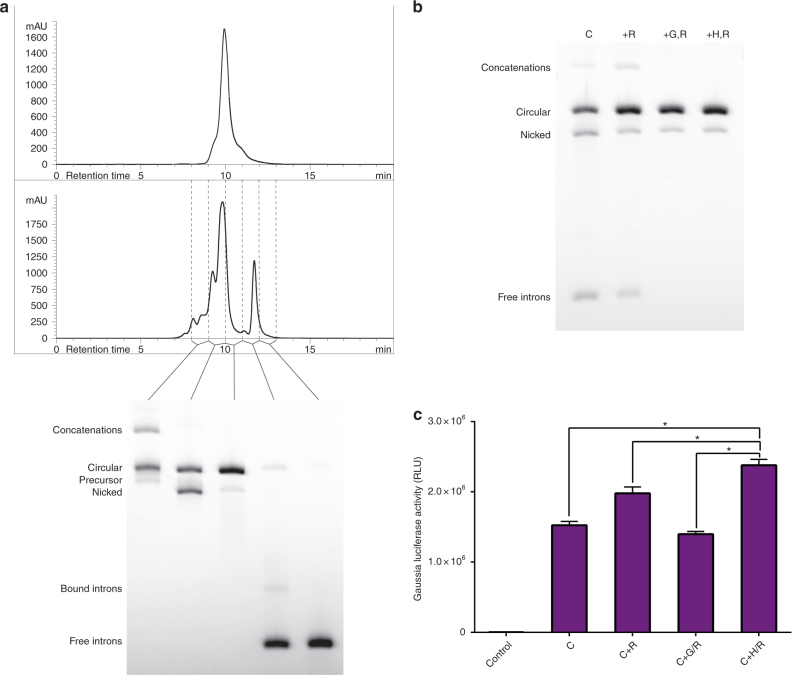
Messenger RNA (mRNA) has broad potential for application in biological systems. However, one fundamental limitation to its use is its relatively short half-life in biological systems. Here we develop exogenous circular RNA (circRNA) to extend the duration of protein expression from full-length RNA messages. First, we engineer a self-splicing intron to efficiently circularize a wide range of RNAs up to 5 kb in length in vitro by rationally designing ubiquitous accessory sequences that aid in splicing. We maximize translation of functional protein from these circRNAs in eukaryotic cells, and we find that engineered circRNA purified by high performance liquid chromatography displays exceptional protein production qualities in terms of both quantity of protein produced and stability of production. This study pioneers the use of exogenous circRNA for robust and stable protein expression in eukaryotic cells and demonstrates that circRNA is a promising alternative to linear mRNA.
Overview
CoChat Summary
## TL;DR
The paper engineers exogenous circular RNA (circRNA) systems that can circularize long RNAs up to 5 kb and drive robust protein expression in eukaryotic cells. Compared with linear mRNA, optimized circRNA showed longer-lasting protein production and, after HPLC purification, stronger protein output in the tested cell lines.
## Key findings
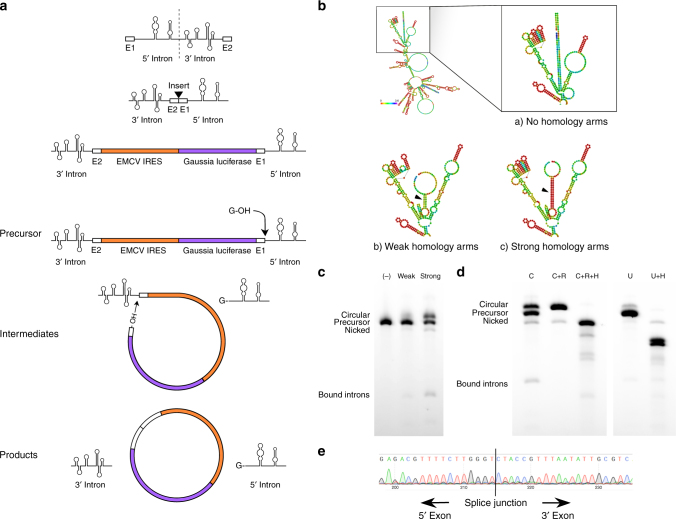
- Adding homology arms to the permuted intron-exon construct increased splicing efficiency from 0% to 16% with weak arms and to 48% with strong arms.
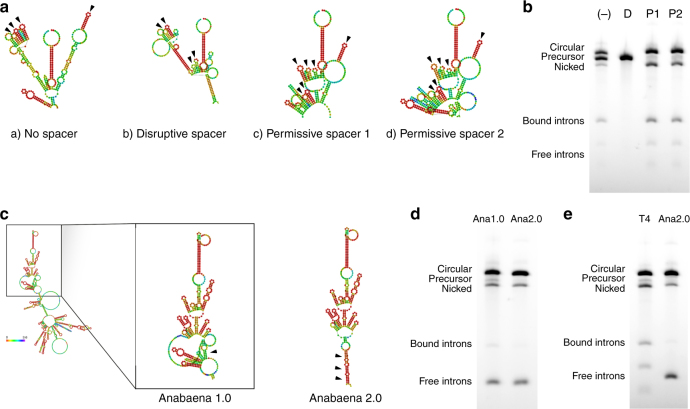
- Rationally designed spacer sequences improved splicing efficiency from 46% to 87%, and a disruptive spacer completely abrogated splicing.
- Using the engineered Anabaena catalytic intron increased splicing efficiency from 84% to 95% and reduced circRNA nicking by 37% relative to the T4 catalytic intron.
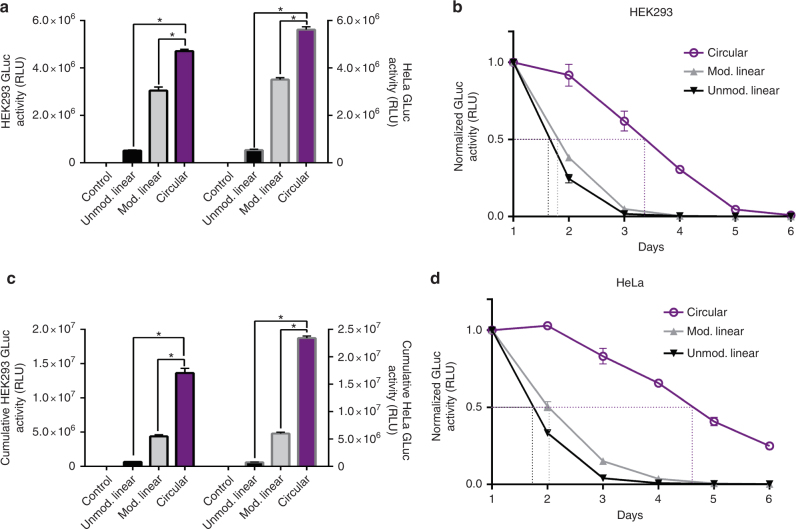
- In HEK293 cells, HPLC-purified circRNA produced 811.2% more protein than unmodified linear mRNA at 24 h and 54.5% more than modified linear mRNA; protein-production half-life was 80 h for circRNA versus approximately 43 h and 45 h for the unmodified and modified linear mRNAs, respectively.
- In HeLa cells, circRNA protein-production half-life was 116 h, compared with approximately 44 h and 49 h for the unmodified and modified linear mRNAs.
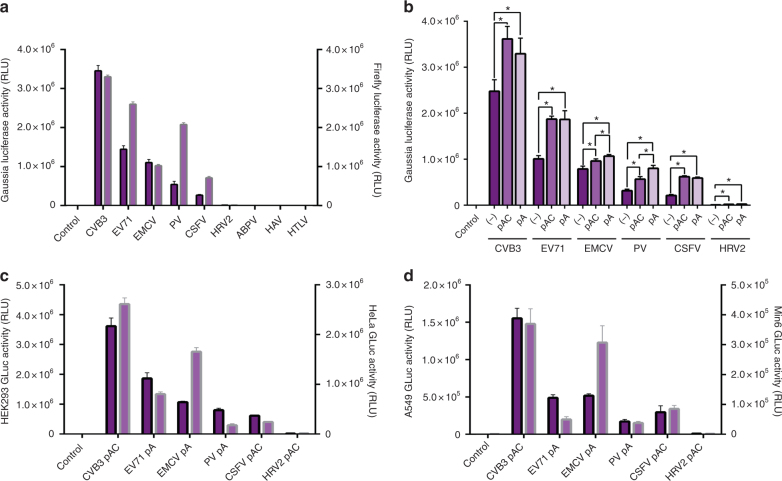
- The CVB3 IRES was 1.5-fold more effective than the EMCV IRES in HEK293 cells and remained superior across HeLa, A549, and Min6 cells tested.
## Methods
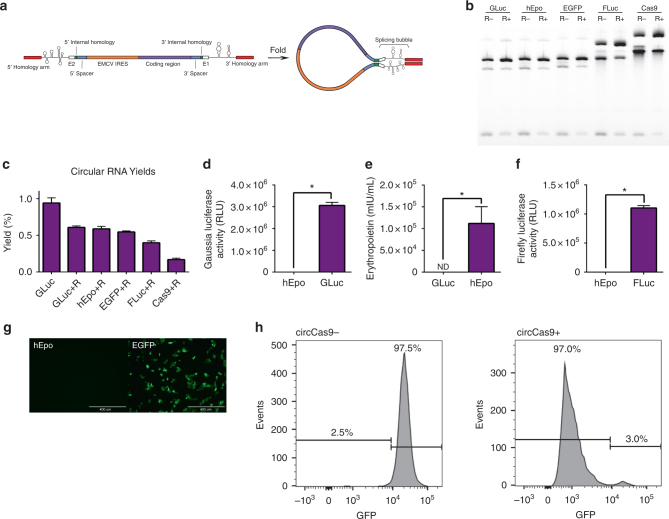
- Engineered circRNAs were built using permuted group I intron/PIE designs with homology arms, spacer sequences, and different IRES elements; constructs included coding regions for GLuc, Firefly luciferase, EGFP, human erythropoietin, and Cas9.
- RNAs were synthesized by in vitro transcription, circularized with GTP/Mg2+-dependent self-splicing, enriched with RNase R, and purified by gel extraction or size-exclusion HPLC; circularization was assessed by gel analysis, RNase H nicking analysis, and splice-junction sequencing.
- Functional testing used transfection into HEK293, HeLa, A549, HEK293-GFP, and Min6 cells, with readouts including luminescence, fluorescence, ELISA, flow cytometry, cytokine assays, and qPCR; statistics were by two-tailed unpaired Welch’s t-test.
## Limitations
- The paper states that longer circRNAs were more prone to nicking during production, which reduced yields and purity.
- The discussion says more work is needed to optimize translation from circRNA and to study translation efficiency and stability in other cell types and tissues.
- The paper notes that additional analysis of exogenous circRNA immunogenicity is required, and that suitable delivery vehicles in vitro and in vivo need thorough investigation.
Model-written summary. Check it against the paper before relying on it.
Integrity signals
Registry
Cites
Statistics
Figures
Verification
Claims the paper makes
9 Valid · 1 Not valid · 3 Not checked · 54 Own results and interpretations
Some cited sources support this claim and some don’t — read each source’s verdict below.
In the paper
“These strategies have yielded modest improvements in RNA stability10, 13–16, and thus alternative approaches to RNA stabilization, such as circularization, are desirable.”
§ Engineering circular RNA for potent and stable translation in eukaryotic cells > Introduction
What the sources say
- Disputedcites [10] Kaczmarek JC Kowalski PS Anderson DG Advances in the delivery of RNA therapeutics: from concept to clinical reality Genome Med. 2017 9 60 10.1186/s13073-017-0450-0 28655327 PMC5485616 sourceExperimental — accuracy not yet measured
In the “Protein overexpression—mRNA” section (page not provided), the paper says that cap analogs and poly(A) tails have markedly improved mRNA stability, contrary to the claim that previous strategies yielded only modest improvements. (LLM, conf=0.86)
Checked by a reasoning model — may be wrong.
- Disputedcites [13] Holtkamp S Modification of antigen-encoding RNA increases stability, translational efficacy, and T-cell stimulatory capacity of dendritic cells Blood 2006 108 4009 4017 10.1182/blood-2006-04-015024 16940422 sourceExperimental — accuracy not yet measured
In the section on combining poly(A)-tail and 3′ UTR modifications (page unavailable), the paper reports an approximately two-orders-of-magnitude improvement in RNA stability relative to standard IVT RNA. That result is contrary to describing the improvement reported by this source as modest. (LLM, conf=0.88)
Checked by a reasoning model — may be wrong.
- Supportedcites [14] Kuhn AN Phosphorothioate cap analogs increase stability and translational efficiency of RNA vaccines in immature dendritic cells and induce superior immune responses in vivo Gene Ther. 2010 17 961 971 10.1038/gt.2010.52 20410931 source
The RNA half-life results (Table 2) show a limited increase with the phosphorothioate cap in immature dendritic cells compared with conventional capping. The same results section explicitly says functional cap analogs had a modest effect on RNA stability in mature dendritic cells. (LLM, conf=0.84)
- Partly supportedcites [15] Presnyak V Codon optimality is a major determinant of mRNA stability Cell 2015 160 1111 1124 10.1016/j.cell.2015.02.029 25768907 PMC4359748 sourceExperimental — accuracy not yet measured
The Results section reports that reporters with optimal codons were about fourfold more stable than those with non-optimal codons, supporting an improvement in mRNA stability. The paper does not characterize that improvement as modest or establish that previous stabilization strategies generally yielded only modest gains. (LLM, conf=0.79)
- Could not verifycites [16] Kariko K Muramatsu H Ludwig J Weissman D Generating the optimal mRNA for therapy: HPLC purification eliminates immune activation and improves translation of nucleoside-modified, protein-encoding mRNA Nucleic Acids Res. 2011 39 e142 e142 10.1093/nar/gkr695 21890902 PMC3241667 sourceExperimental — accuracy not yet measured
The Introduction and Discussion describe reduced immune activation and improved translation with modified or HPLC-purified mRNA, but do not characterize improvements in RNA stability as modest. Searches for RNA stability, half-life, degradation, and circularization found no passage in our copy that establishes the claimed comparison. (LLM, conf=0.74)
plainstates a cause- Asserted: passes — The authors put it forward as true.
- Checkable: passes — It can be checked against evidence.
- Load-bearing: passes — The paper’s conclusions depend on it.
- Based: passes — The paper gives a reason why it holds.
- Disputed
The cited sources support only part of this claim — read each source’s verdict below.
In the paper
“Indeed, the intervening region between the 5′ and 3′ splice sites of native group I introns is on average 300–500 nucleotides long22, while the intervening region of the engineered RNA that we constructed was two to four-fold longer.”
§ Engineering circular RNA for potent and stable translation in eukaryotic cells > Results > Long RNA circularization is assisted by homology
What the sources say
- Partly supportedcites [22] Vicens Q Paukstelis PJ Westhof E Lambowitz AM Cech TR Toward predicting self-splicing and protein-facilitated splicing of group I introns RNA 2008 14 2013 2029 10.1261/rna.1027208 18768647 PMC2553746 sourceExperimental — accuracy not yet measured
The Results section reports that 12 group I introns tested were 183–421 nucleotides long, and Intron selection gives a range of 183–496 nucleotides for introns requested. Neither passage establishes a 300–500-nucleotide average for native group I introns generally. (LLM, conf=0.82)
plain- Asserted: passes — The authors put it forward as true.
- Checkable: passes — It can be checked against evidence.
- Load-bearing: passes — The paper’s conclusions depend on it.
- Based: passes — The paper gives a reason why it holds.
- Partly supported
A result the paper reports from its own data — it cites no other source for it, so there is none to check. The quote shows it is in the paper.
In the paper
“First, we engineer a self-splicing intron to efficiently circularize a wide range of RNAs up to 5 kb in length in vitro by rationally designing ubiquitous accessory sequences that aid in splicing.”
§ Engineering circular RNA for potent and stable translation in eukaryotic cells > Abstract
plainstates a cause- Asserted: passes — The authors put it forward as true.
- Checkable: passes — It can be checked against evidence.
- Load-bearing: passes — The paper’s conclusions depend on it.
- Based: passes — The paper gives a reason why it holds.
A result the paper reports from its own data — it cites no other source for it, so there is none to check. The quote shows it is in the paper.
In the paper
“In the case of EMCV and Poliovirus IRESs, polyA sequences improved expression beyond the improvement seen with an unstructured polyAC spacer.”
§ Engineering circular RNA for potent and stable translation in eukaryotic cells > Results > The CVB3 IRES is superior in the context of circRNA
plainstates a cause- Asserted: passes — The authors put it forward as true.
- Checkable: passes — It can be checked against evidence.
- Load-bearing: unclear — It is unclear whether the paper’s conclusions depend on it.
- Based: passes — The paper gives a reason why it holds.
A result the paper reports from its own data — it cites no other source for it, so there is none to check. The quote shows it is in the paper.
In the paper
“We found that the IRES from Coxsackievirus B3 (CVB3) was 1.5-fold more effective than the commonly adopted EMCV IRES in HEK293 cells (Fig. 4a).”
§ Engineering circular RNA for potent and stable translation in eukaryotic cells > Results > The CVB3 IRES is superior in the context of circRNA
plainstates a cause- Asserted: passes — The authors put it forward as true.
- Checkable: passes — It can be checked against evidence.
- Load-bearing: passes — The paper’s conclusions depend on it.
- Based: passes — The paper gives a reason why it holds.
34 more claims
Create a free account to see all 67 claims and every source verdict.
- It may state two separate claims as one. 25
- Probably not a substantial claim. 9
- The quote only partly states this claim. 2
Claims other papers make about this one
Each is checked against this paper’s own text: does it say what the citing paper says it does?
The source backs part of the claim, not all of it — or backs it for a different population, condition or comparison.
In the citing paper
“Similar to linear mRNA, the chemical modification of specific nucleotides and chromatographic purification can minimize immunogenicity of the RNA and increase translation.”
From Lipid nanoparticles for mRNA delivery (2021) · cites this paper as [245]
Experimental — accuracy not yet measuredThe cited source says what the claim attributes to it.
In the citing paper
“Circular RNA (circRNA) is a single-stranded RNA with a closed-loop structure.”
From Lipid nanoparticles for mRNA delivery (2021) · cites this paper as [245]
The cited source says what the claim attributes to it.
In the citing paper
“In addition, circular RNA (circRNA) can be synthesized to optimize mRNA properties245,246 (Box 2).”
From Lipid nanoparticles for mRNA delivery (2021) · cites this paper as [245]
In the citing paper
“Despite the lack of essential elements for cap-dependent translation, circRNA can be translated by adding the IRES element or m6A modification incorporated to its 5′ UTR region.223,224”
From Advances in COVID-19 mRNA vaccine development (2022) · cites this paper as [223]
In the citing paper
“Given its enhanced biostability compared with linear RNA due to the lack of terminals preventing degradation,49 circRNA could be a promising research avenue.”
From COVID-19 mRNA vaccines: Platforms and current developments (2022) · cites this paper as [49]
6 more claims about this paper
Create a free account to see every claim other papers make about this one.
Citations
Cites
Natural RNA circles function as efficient microRNA sponges
Hansen, T. B., Jensen, T. I., Clausen, B. H., Bramsen, J. B., Finsen, B., Damgaard, C. K., & Kjems, J. (2013) · Nature · doi:10.1038/nature11993 · Cited by 7,985
Exon-intron circular RNAs regulate transcription in the nucleus
Li, Z., Huang, C., Bao, C., Chen, L., Lin, M., Wang, X., Zhong, G., Yu, B., Hu, W., Dai, L., et al. (2015) · Nature Structural & Molecular Biology · doi:10.1038/nsmb.2959 · Cited by 2,905
Detecting and characterizing circular RNAs
Jeck, W. R., & Sharpless, N. E. (2014) · Nature Biotechnology · doi:10.1038/nbt.2890 · Cited by 2,702
Circ-ZNF609 is a circular RNA that can be translated and functions in myogenesis
Legnini, I., Di Timoteo, G., Rossi, F., Morlando, M., Briganti, F., Sthandier, O., Fatica, A., Santini, T., Andronache, A., Wade, M., et al. (2017) · Molecular Cell · doi:10.1016/j.molcel.2017.02.017 · Cited by 2,173
Regulation of circRNA biogenesis
Chen, L.-L., & Yang, L. (2015) · RNA Biology · doi:10.1080/15476286.2015.1020271 · Cited by 1,953
Pamudurti, N. R., Bartok, O., Jens, M., Ashwal-Fluss, R., Stottmeister, C., Ruhe, L., Hanan, M., Wyler, E., Perez-Hernandez, D., Ramberger, E., et al. (2017) · Molecular Cell · doi:10.1016/j.molcel.2017.02.021 · Cited by 1,810
Codon Optimality Is a Major Determinant of mRNA Stability
Presnyak, V., Alhusaini, N., Chen, Y.-H., Martin, S., Morris, N., Kline, N., Olson, S., Weinberg, D., Baker, K. E., Graveley, B. R., et al. (2015) · Cell · doi:10.1016/j.cell.2015.02.029 · Cited by 1,078
Karikó, K., Muramatsu, H., Ludwig, J., & Weissman, D. (2011) · Nucleic Acids Research · doi:10.1093/nar/gkr695 · Cited by 898
Circular RNAs: analysis, expression and potential functions
Barrett, S. P., & Salzman, J. (2016) · Development · doi:10.1242/dev.128074 · Cited by 859
Enuka, Y., Lauriola, M., Feldman, M. E., Sas-Chen, A., Ulitsky, I., & Yarden, Y. (2016) · Nucleic Acids Research · doi:10.1093/nar/gkv1367 · Cited by 757
Cited by
Items 101–200 of 804
Synthetic circular RNA switches and circuits that control protein expression in mammalian cells
Kameda, S., Ohno, H., & Saito, H. (2023) · Nucleic Acids Research · doi:10.1093/nar/gkac1252 · Cited by 95
“RNA purification from polyacrylamide gels removed most of the impurities as reported previously (3,16) (Supplementary Figure S1).”
BackgroundMethodResultInfluentialBest practices to ensure robust investigation of circular RNAs: pitfalls and tips
Dodbele, S., Mutlu, N., & Wilusz, J. E. (2021) · EMBO Reports · doi:10.15252/embr.202052072 · Cited by 95
“A number of approaches have been described, including ones based on ribozymes (Ford & Ares, 1994; Wesselhoeft et al , 2018; Litke & Jaffrey, 2019), splint ligation (Moore, 1999), and chemical methods (Petkovic & Muller, 2015; M € uller & Appel, 2017).”
Engineering highly efficient backsplicing and translation of synthetic circRNAs
Meganck, R. M., Liu, J., Hale, A., Simon, K. E., Fanous, M. M., Vincent, H. A., Wilusz, J. E., Moorman, N. J., Marzluff, W. F., & Asokan, A. (2021) · Molecular Therapy — Nucleic Acids · doi:10.1016/j.omtn.2021.01.003 · Cited by 92
“It is also noteworthy to compare the platform described here to other systems for expressing synthetic circRNAs such as the Tornado system, which relies on ribozyme cleavage and tRNA ligationmachinery,(26) and the use of permutated group I self-splicing introns.(27) Although each system has benefits and drawbacks, a b…”
BackgroundSmall circular RNAs as vaccines for cancer immunotherapy
Zhang, Y., Liu, X., Shen, T., Wang, Q., Zhou, S., Yang, S., Liao, S., Su, T., Mei, L., Zhang, B., et al. (2025) · Nature Biomedical Engineering · doi:10.1038/s41551-025-01344-5 · Cited by 103
How are circRNAs translated by non-canonical initiation mechanisms?
Diallo, L. H., Tatin, F., David, F., Godet, A.-C., Zamora, A., Prats, A., Garmy-Susini, B. H., & Lacazette, É. (2019) · Biochimie · doi:10.1016/j.biochi.2019.06.015 · Cited by 84
Wan, J., Wang, Z., Wang, L., Wu, L., Zhang, C., Zhou, M., Fu, Z. F., & Zhao, L. (2023) · mBio · doi:10.1128/mbio.01775-23 · Cited by 100
“Compared to linear mRNA, circRNA is highly stable due to its covalently closed ring structure, which protects it from exonuclease-mediated degradation (7).”
BackgroundMethodResultInfluentialUnderstanding nucleic acid sensing and its therapeutic applications
Kong, L.-Z., Kim, S., Wang, C., Lee, S. Y., Oh, S., Lee, S., Jo, S., & Kim, T. (2023) · Experimental & Molecular Medicine · doi:10.1038/s12276-023-01118-6 · Cited by 101
“Circular RNAs (circRNAs) reportedly exhibit low immunogenicity and high stability and can initiate stable translation via internal ribosome entry site elements 202,203 .”
BackgroundA comprehensive comparison of DNA and RNA vaccines
Wang, C., & Yuan, F. (2024) · Advanced Drug Delivery Reviews · doi:10.1016/j.addr.2024.115340 · Cited by 105
Circular RNA in colorectal cancer
Li, T., Wang, W. C., McAlister, V. C., Zhou, Q., & Zheng, X. (2021) · Journal of Cellular and Molecular Medicine · doi:10.1111/jcmm.16380 · Cited by 80
mRNA vaccines: the most recent clinical applications of synthetic mRNA
Kwon, S., Kwon, M., Im, S., Lee, K., & Lee, H. (2022) · Archives of Pharmacal Research · doi:10.1007/s12272-022-01381-7 · Cited by 94
“Inserting internal ribosomal entry site (IRES) and sequence of gene of interest have been conducted between exon fragment E1 and E2 present in permutated intron–exon (PIE) (Wesselhoeft et al.”
BackgroundMethodInfluentialStimuli‐Responsive Nanotechnology for RNA Delivery
Zhou, H., Chen, D. S., Hu, C. J., Hong, X., Shi, J., & Xiao, Y. (2023) · Advanced Science · doi:10.1002/advs.202303597 · Cited by 96
Wang, L., Zhou, J., Zhang, C., Chen, R., Sun, Q., Yang, P., Peng, C., Tan, Y., Jin, C., Wang, T., et al. (2021) · Clinical and Translational Medicine · doi:10.1002/ctm2.613 · Cited by 83
Therapeutic application of circular RNA aptamers in a mouse model of psoriasis
Guo, S.-K., Liu, C., Xu, Y.-F., Wang, X., Fang, N., Huang, Y., Li, S., Nan, S., Li, L., Kon, E., et al. (2024) · Nature Biotechnology · doi:10.1038/s41587-024-02204-4 · Cited by 82
“Physicochemical characterization of EPIC-LNPs resulted in an average size of 86 ± 13.5 nm, polydispersity index of 0.059 ± 0.063 and zeta potential of −1.32 ± 0.54 (Extended Data Fig.”
InfluentialTargeted lipid nanoparticles for RNA therapeutics and immunomodulation in leukocytes
Veiga, N., Diesendruck, Y., & Peer, D. (2020) · Advanced Drug Delivery Reviews · doi:10.1016/j.addr.2020.04.002 · Cited by 74
Design and application of circular RNAs with protein-sponge function
Schreiner, S., Didio, A., Hung, L.-H., & Bindereif, A. (2020) · Nucleic Acids Research · doi:10.1093/nar/gkaa1085 · Cited by 74
“For PIE-(permutedintron–exon) constructs, the PIE expression cassette, which relies on group I splicing-mediated in vitro circularization (30), was synthesized (Geneart, Invitrogen) and cloned between the HindIII and XbaI sites of pcDNA3.”
MethodInfluentialCircular RNA: Biosynthesis in vitro
Chen, X., & Lu, Y. (2021) · Frontiers in Bioengineering and Biotechnology · doi:10.3389/fbioe.2021.787881 · Cited by 85
“Although circRNAs lack the essential elements for cap-dependent translation, the discovery of internal ribosome entry sites (IRES) makes it possible for circRNAs to act as translation templates (Legnini et al., 2017; Pamudurti et al., 2017; Wesselhoeft et al., 2018).”
BackgroundThe mRNA Vaccine Revolution: COVID-19 Has Launched the Future of Vaccinology
Ye, Z., Harmon, J., Ni, W., Li, Y., Wich, D., & Xu, Q. (2023) · ACS Nano · doi:10.1021/acsnano.2c12584 · Cited by 75
CircRNA—Protein Interactions in Muscle Development and Diseases
Zheng, S., Zhang, X., Odame, E., Xu, X., Chen, Y., Ye, J., Zhou, H., Dai, D., Kyei, B., Zhan, S., et al. (2021) · International Journal of Molecular Sciences · doi:10.3390/ijms22063262 · Cited by 77
Deep generative models design mRNA sequences with enhanced translational capacity and stability
Zhang, H., Liu, H., Xu, Y., Huang, H., Liu, Y., Wang, J., Qin, Y., Wang, H., Ma, L., Xun, Z., et al. (2025) · Science · doi:10.1126/science.adr8470 · Cited by 119
Zhong, S., Ouyang, Q., Zhu, D., Huang, Q., Zhao, J., Fan, M., Cai, Y., & Yang, M. (2020) · Molecular Immunology · doi:10.1016/j.molimm.2020.07.004 · Cited by 75
Zheng, Z., Zeng, X., Zhu, Y., Leng, M.-X., Zhang, Z., Wang, Q., Liu, X., Zeng, S., Xiao, Y., Hu, C., et al. (2024) · Molecular Cancer · doi:10.1186/s12943-023-01912-w · Cited by 83
“A body of evidence revealed that circRNAs play critical biological functions in cancer progression, including gene transcription regulation, miRNAs sponges, RNA-binding protein interaction, and protein translation templates [12–15].”
BackgroundCircular RNAs and their roles in head and neck cancers
Guo, Y., Yang, J., Huang, Q., Hsueh, C., Zheng, J., Wu, C., Chen, H., & Zhou, L. F. (2019) · Molecular Cancer · doi:10.1186/s12943-019-1003-5 · Cited by 72
Seephetdee, C., Bhukhai, K., Buasri, N., Leelukkanaveera, P., Lerdwattanasombat, P., Manopwisedjaroen, S., Phueakphud, N., Kuhaudomlarp, S., Olmedillas, E., Saphire, E. O., et al. (2022) · Antiviral Research · doi:10.1016/j.antiviral.2022.105370 · Cited by 77
Nanomaterials for mRNA ‐based therapeutics: Challenges and opportunities
Li, D., Liu, Q., Yang, M., Xu, H., Zhu, M., Zhang, Y., Xu, J., Tian, C., Yao, J., Wang, L., et al. (2023) · Bioengineering & Translational Medicine · doi:10.1002/btm2.10492 · Cited by 82
“However, in contrast to typical linear mRNA, circular mRNA (circRNA) increases mRNA stability and has been found to contribute to robust and durable protein expression.(120) Therefore, the”
BackgroundLiu, J., Zhang, Y., Liu, C., Jiang, Y., Wang, Z., Guo, Z., & Li, X. (2024) · Journal of Controlled Release · doi:10.1016/j.jconrel.2024.07.018 · Cited by 78
Regulatory guidelines and preclinical tools to study the biodistribution of RNA therapeutics
Vervaeke, P., Borgos, S. E., Sanders, N. N., & Combes, F. (2022) · Advanced Drug Delivery Reviews · doi:10.1016/j.addr.2022.114236 · Cited by 70
“Newer RNA platforms, such as circular RNA have demonstrated in vitro and in vivo expression profiles of up to a week [39,40].”
mRNA therapeutics: New vaccination and beyond
Wei, H. Y., Zheng, L., & Wang, Z. (2023) · Fundamental Research · doi:10.1016/j.fmre.2023.02.022 · Cited by 81
“Moreover, the self-splicing procedure is relatively simple, only requiring GTPs and cationic ions in group I intron strategy [74–76] , and even no GTP in group II intron strategy [66 , 84] ( Fig.”
BackgroundMethodTang, X., Guo, M., Ding, P., Deng, Z., Ke, M., Yuan, Y., Zhou, Y., Lin, Z., Li, M., Gu, C., et al. (2021) · Signal Transduction and Targeted Therapy · doi:10.1038/s41392-021-00746-6 · Cited by 73
The potential of long noncoding RNA therapies
Mercer, T. R., Munro, T. P., & Mattick, J. S. (2022) · Trends in Pharmacological Sciences · doi:10.1016/j.tips.2022.01.008 · Cited by 76
Circular RNA migration in agarose gel electrophoresis
Abe, B. T., Wesselhoeft, R. A., Chen, R., Anderson, D. G., & Chang, H. Y. (2021) · Molecular Cell · doi:10.1016/j.molcel.2022.03.008 · Cited by 71
Self-citationFeng, Z., Zhang, X., Zhou, J., Li, Q., Chu, L., Di, G., Xu, Z., Chen, Q., Wang, M., Jiang, X., et al. (2023) · Nature Cancer · doi:10.1038/s43018-023-00650-8 · Cited by 74
Direct detection of circRNA in real samples using reverse transcription-rolling circle amplification
Liu, Y., Zhang, X., Liu, M., Xu, F., Zhang, Q., Zhang, Y., Weng, X., Liu, S., Du, Y., & Zhou, X. (2019) · Analytica Chimica Acta · doi:10.1016/j.aca.2019.12.027 · Cited by 65
Sharma, A. R., Bhattacharya, M., Bhakta, S., Saha, A., Lee, S., & Chakraborty, C. (2021) · Molecular Therapy — Nucleic Acids · doi:10.1016/j.omtn.2021.05.022 · Cited by 70
Template-jumping prime editing enables large insertion and exon rewriting in vivo
Zheng, C., Liu, B., Dong, X., Gaston, N., Sontheimer, E. J., & Xue, W. (2023) · Nature Communications · doi:10.1038/s41467-023-39137-6 · Cited by 75
Yang, F., Ma, Q., Huang, B., Wang, X., Pan, X., Yu, T., Ran, L., Jiang, S., Li, H., Chen, Y., et al. (2023) · Journal of Translational Medicine · doi:10.1186/s12967-023-04235-y · Cited by 82
“In addition, circRNAs can be engineered in vitro through ribozymatic methods using self-splicing introns [45, 46].”
MethodFunctions of Circular RNA in Human Diseases and Illnesses
Gu, A., Jaijyan, D. K., Yang, S., Zeng, M., Pei, S., & Zhu, H. (2023) · Non-Coding RNA · doi:10.3390/ncrna9040038 · Cited by 65
Zhou, J., Ye, T., Yang, Y., Li, E., Zhang, K., Wang, Y., Chen, S., Hu, J., Zhang, K., Liu, F., et al. (2024) · Molecular Therapy · doi:10.1016/j.ymthe.2024.04.028 · Cited by 71
Emerging Concepts and Challenges in Rheumatoid Arthritis Gene Therapy
Deviatkin, A. A., Vakulenko, Y. A., Akhmadishina, L. V., Tarasov, V. V., Beloukhova, M. I., Zamyatnin, A. A., & Lukashev, A. N. (2020) · Biomedicines · doi:10.3390/biomedicines8010009 · Cited by 66
“Thus, exogenous circRNA itself can be used as a vehicle for gene delivery, providing robust and stable protein expression in eukaryotic cells [106].”
BackgroundLee, K. H., Kim, S., Song, J., Han, S. R., Kim, J. H., & Lee, S. (2023) · Molecular Therapy — Nucleic Acids · doi:10.1016/j.omtn.2023.07.034 · Cited by 68
Highly efficient cellular expression of circular mRNA enables prolonged protein expression
Unti, M. J., & Jaffrey, S. R. (2023) · Cell chemical biology · doi:10.1016/j.chembiol.2023.09.015 · Cited by 72
“However, a recent study showed that the CVB3 IRES produces more protein than the EMCV IRES when used in the context of an in vitro-transcribed circular mRNA (Wesselhoeft et al., 2018).”
BackgroundMethodInfluentialLighting Up CircRNA Using a Linear DNA Nanostructure
Jiao, J., Xiang, Y., Duan, C., Liu, Y., Li, C., & Li, G. (2020) · Analytical Chemistry · doi:10.1021/acs.analchem.0c02146 · Cited by 60
Characterizing and circumventing sequence restrictions for synthesis of circular RNA in vitro
Rausch, J. W., Heinz, W. F., Payea, M. J., Sherpa, C., Gorospe, M., & Grice, S. F. J. L. (2020) · Nucleic Acids Research · doi:10.1093/nar/gkaa1256 · Cited by 62
“PIE transcription templates commonly utilized for in vitro circRNA synthesis employ group I intron sequences from either the Anabaena tRNALeu gene or the thymidylate synthase (td) gene of T4 bacteriophage, as both derivatives have been demonstrated to promote efficient RNA circularization (11,13).”
BackgroundMethodResultInfluentialCircular RNA‐based neoantigen vaccine for hepatocellular carcinoma immunotherapy
Wang, F., Guang, C., Wang, Y., Zhuang, Q., Cai, Z., Li, Y., Gao, S., Li, F., Zhang, C., Zhao, B., et al. (2024) · MedComm · doi:10.1002/mco2.667 · Cited by 76
“11,12 Therefore, given their exceptional stability and potential for encoding proteins„ circRNAs can be used as an excellent vector for immunogen production.”
BackgroundMethods for analysis of circular RNAs
Pandey, P. R., Munk, R. B., Kundu, G., De, S., Abdelmohsen, K., & Gorospe, M. (2019) · Wiley Interdisciplinary Reviews - RNA · doi:10.1002/wrna.1566 · Cited by 63
Breaking the mold with RNA—a “RNAissance” of life science
Jones, C. H., Androsavich, J. R., So, N., Jenkins, M. P., MacCormack, D., Prigodich, A. E., Welch, V., True, J. M., & Dolsten, M. (2024) · npj Genomic Medicine · doi:10.1038/s41525-023-00387-4 · Cited by 74
“Due to their closed-loop structure, circRNAs are inaccessible to exonucleases and resistant to mRNA turnover via CCR4-NOT1-or DCP-dependent decay 49,51 .”
Zhou, W., Jiang, L., Liao, S., Wu, F., Yang, G., Hou, L., Liu, L., Pan, X., Jia, W. W.-G., & Zhang, Y. (2023) · Viruses · doi:10.3390/v15081760 · Cited by 72
“Using the Anabaena skeleton, circRNAs up to 5000 nucleotides in length can be cyclized, while chemical and enzymatic linking strategies typically achieve cyclization of RNA molecules around 1000 nucleotides with a lower cyclization yield [42].”
MethodBraicu, C., Zimta, A.-A., Gulei, D., Olariu, A., & Berindan‐Neagoe, I. (2019) · Cellular and Molecular Life Sciences · doi:10.1007/s00018-019-03016-5 · Cited by 59
Progress and challenges towards CRISPR/Cas clinical translation
Rosenblum, D., Gutkin, A., Dammes, N., & Peer, D. (2020) · Advanced Drug Delivery Reviews · doi:10.1016/j.addr.2020.07.004 · Cited by 63
“These approaches include the use of modified nucleotides [85,90], circular mRNA [91], self-amplifying mRNA [92], etc.”
BackgroundNanopore microscope identifies RNA isoforms with structural colours
Bošković, F., & Keyser, U. F. (2022) · Nature Chemistry · doi:10.1038/s41557-022-01037-5 · Cited by 57
The Ongoing Quest to Crack the Genetic Code for Protein Production
Nieuwkoop, T., Finger‐Bou, M., John van der, O. O. S. T., & Claassens, N. J. (2020) · Molecular Cell · doi:10.1016/j.molcel.2020.09.014 · Cited by 52
Circular RNAs: Functions and Clinical Significance in Cardiovascular Disease
Zhang, L., Zhang, Y., Wang, Y., Zhao, Y., Ding, H., & Li, P. (2020) · Frontiers in Cell and Developmental Biology · doi:10.3389/fcell.2020.584051 · Cited by 60
Research progress on circular RNA vaccines
Bai, Y., Liu, D., He, Q., Liu, J., Mao, Q., & Liang, Z. (2023) · Frontiers in Immunology · doi:10.3389/fimmu.2022.1091797 · Cited by 64
“Therefore, the development of a recircularization process and the incorporation of such process into vaccine production can be attempted (58).”
BackgroundMethodInfluentialDelivering the next generation of cancer immunotherapies with RNA
Raimondo, T. M., Reed, K., Shi, D., Langer, R., & Anderson, D. G. (2023) · Cell · doi:10.1016/j.cell.2023.02.031 · Cited by 63
Self-citationChen, Z., Song, J., Xie, L., Xu, G., Zheng, C., Xia, X., Lu, F., Ma, X., Zou, F., Jiang, J., et al. (2023) · Cell Death and Differentiation · doi:10.1038/s41418-023-01190-5 · Cited by 69
“According to reports, some circRNAs in the cytoplasm serve as ceRNAs through interacting with miRNAs or as translational templates [13, 14, 25], while circRNAs located in the nucleus can bind to proteins or be a competitor of DNA in protein binding [26, 27].”
BackgroundCircular RNAs and human glioma
Jinglei, L., Zhao, K., Huang, N., & Zhang, N. (2019) · Cancer Biology and Medicine · doi:10.20892/j.issn.2095-3941.2018.0425 · Cited by 60
Current status and potential role of circular RNAs in neurological disorders
Lu, S., Yang, X. F., Wang, C., Chen, S., Lu, S., Yan, W., Xiong, K., Liu, F., & Yan, J. (2019) · Journal of Neurochemistry · doi:10.1111/jnc.14724 · Cited by 62
A flexible, efficient, and scalable platform to produce circular RNAs as new therapeuticsPreprint
Wei, H. Y., Chen, C., Zhang, K., Li, Z., Wei, T., Tang, C., Yang, Y., & Wang, Z. (2022) · bioRxiv (Cold Spring Harbor Laboratory) · doi:10.1101/2022.05.31.494115 · Cited by 69
Regulation of cancer progression by circRNA and functional proteins
Chen, J., Gu, J., Tang, M., Liao, Z., Tang, R., Zhou, L., Su, M., Jiang, J., Hu, Y., Chen, Y., et al. (2021) · Journal of Cellular Physiology · doi:10.1002/jcp.30608 · Cited by 61
“CircRNAs containing a complete open reading frame (ORF) driven by the IRES can translate functional proteins (Wesselhoeft et al., 2018; Yang et al., 2018) (Figure 3a).”
BackgroundCircular RNA in disease: Basic properties and biomedical relevance
Chen, X., Zhou, M., Yant, L. J., & Huang, C. (2022) · Wiley Interdisciplinary Reviews - RNA · doi:10.1002/wrna.1723 · Cited by 63
“These engineered translatable circRNAs might be delivered to pathological tissues to produce therapeutic proteins for continuous treatments (Wesselhoeft et al., 2018).”
BackgroundLipid Nanoparticles for Nucleic Acid Delivery to Endothelial Cells
Liu, G. W., Guzman, E. B., Menon, N., & Langer, R. (2023) · Pharmaceutical Research · doi:10.1007/s11095-023-03471-7 · Cited by 62
“In vitro, circRNA exhibited greater and longer luciferase activity compared to modified and unmodified linear mRNA [114], providing evidence for the enhanced stability of circRNA.”
BackgroundmRNA vaccines contribute to innate and adaptive immunity to enhance immune response in vivo
Cao, Q., Fang, H., & Tian, H. (2024) · Biomaterials · doi:10.1016/j.biomaterials.2024.122628 · Cited by 68
CircRNA as an Achilles heel of cancer: characterization, biomarker and therapeutic modalities
Zhang, J., Luo, Z., Yang, Z. K., Duan, M., Qiu, Z., & Huang, C. (2024) · Journal of Translational Medicine · doi:10.1186/s12967-024-05562-4 · Cited by 68
“Engineered circRNAs often exhibit consistently high levels of protein expression, resulting in prolonged antigen exposure, sustained T-cell activity, and durable immunological memory [123].”
BackgroundMakkar, S. K. (2025) · Frontiers in Genetics · doi:10.3389/fgene.2025.1675209 · Cited by 80
Huang, C., Duan, X., Wang, J., Tian, Q., Ren, Y., Chen, K., Zhang, Z., Li, Y., Feng, Y., Zhong, K., et al. (2022) · Advanced Science · doi:10.1002/advs.202205532 · Cited by 63
Liu, X., Li, Z., Li, X., Wu, W., Jiang, H., Zheng, Y., Zhou, J., Ye, X., Lu, J., Wang, W., et al. (2024) · Nature Communications · doi:10.1038/s41467-024-53242-0 · Cited by 66
“1) 36 .”
InfluentialTherapeutic mRNA Engineering from Head to Tail
Jia, L., & Qian, S. (2021) · Accounts of Chemical Research · doi:10.1021/acs.accounts.1c00541 · Cited by 63
An interaction between eIF4A3 and eIF3g drives the internal initiation of translation
Chang, J., Shin, M.-K., Park, J., Hwang, H. J., Locker, N., Ahn, J., Kim, D., Baek, D., Park, Y., Lee, Y., et al. (2023) · Nucleic Acids Research · doi:10.1093/nar/gkad763 · Cited by 55
“In vitro circularization was performed as previously described ( 44 ) .”
MethodNing, H., Liu, G., Li, L., Liu, Q., Huang, H., & Xie, Z. (2023) · Nature Communications · doi:10.1038/s41467-023-43065-w · Cited by 58
“Comparedwith linear mRNA, circular RNA (circRNA) exhibits superior stability and extended duration in mammalian cells due to higher resistance to RNase degradation and lower immunogenicity 4,5 .”
InfluentialmRNA vaccines in the prevention and treatment of diseases
Gu, Y., Duan, J., Yang, N., Yang, Y., & Zhao, X. (2022) · MedComm · doi:10.1002/mco2.167 · Cited by 58
Optimized circular RNA vaccines for superior cancer immunotherapy
Yu, H., Wen, Y., Yu, W., Lu, L., Yu, Y., Liu, C., Hu, Z., Fang, Z., & Huang, S. (2024) · Theranostics · doi:10.7150/thno.104698 · Cited by 57
“In 2018, Wesselhoeft et al. compared several viral and cellular IRES elements on circRNA and identified the CVB3 IRES as the most efficient [18].”
InfluentialZhang, Z., Ma, B., Li, B., Li, Z., Gao, M., Zhao, H., Peng, R., Hu, J., Wang, Y., You, W., et al. (2025) · Cell Reports Medicine · doi:10.1016/j.xcrm.2025.102209 · Cited by 55
Emerging roles of circular RNAs in colorectal cancer
Hao, S., Liang, C., Qu, R., Liu, R., Zhang, G., & Li, Y. (2019) · OncoTargets and Therapy · doi:10.2147/ott.s208235 · Cited by 52
“The Anderson group has recently shown that artificial circular RNAs provide up to a threefold increase in the half-life of proteins and potent expression thereof in vitro, as compared with linear mRNA.(110) Thus, we believe that synthetic circRNAs may be used for the treatment of CRC in the near future.”
BackgroundZhang, Y., Jia, D., Zhang, Y., Cheng, M.-D., Zhu, W., Li, P., & Zhang, Y. (2021) · International Journal of Biological Sciences · doi:10.7150/ijbs.55381 · Cited by 50
“found that high has-circ-0008274 expression increases PTC cell proliferation and invasion [52], and the has-circ-0008274/AMPK/mTOR axis may be a novel therapeutic candidate target for PTC.”
BackgroundEfficient circular RNA synthesis for potent rolling circle translation
Du, Y., Zuber, P. K., Xiao, H., Li, X., Gordiyenko, Y., & Ramakrishnan, V. (2024) · Nature Biomedical Engineering · doi:10.1038/s41551-024-01306-3 · Cited by 66
“We then asked whether potent viral IRESs could be used for RCT.”
InfluentialTang, X., Deng, Z., Ding, P., Qiang, W., Lu, Y., Gao, S., Hu, Y., Yang, Y., Du, J., & Gu, C. (2022) · Journal of Experimental & Clinical Cancer Research · doi:10.1186/s13046-022-02276-7 · Cited by 54
Why rings of RNA could be the next blockbuster drug
Dolgin, E. (2023) · Nature · doi:10.1038/d41586-023-03058-7 · Cited by 54
Nanoplatform‐Based In Vivo Gene Delivery Systems for Cancer Therapy
Luo, R., Le, H., Wu, Q., & Gong, C. (2024) · Small · doi:10.1002/smll.202312153 · Cited by 54
Plant Virology Delivers Diverse Toolsets for Biotechnology
Wang, M., Gao, S., Zeng, W., Yang, Y., Ma, J., & Wang, Y. (2020) · Viruses · doi:10.3390/v12111338 · Cited by 53
Advances in the design and delivery of RNA vaccines for infectious diseases
Lokras, A. G., Bobak, T. R., Baghel, S. S., Sebastiani, F., & Foged, C. (2024) · Advanced Drug Delivery Reviews · doi:10.1016/j.addr.2024.115419 · Cited by 56
Geng, X., Lin, X., Zhang, Y., Li, Q., Guo, Y., Fang, C., & Wang, H. (2020) · Oncology Letters · doi:10.3892/ol.2020.11449 · Cited by 67
“to permanently and efficiently express proteins in eukaryotic cells (117).”
BackgroundBiological functions and applications of circRNAs—next generation of RNA-based therapy
Sun, M., & Yang, Y. (2023) · Journal of Molecular Cell Biology · doi:10.1093/jmcb/mjad031 · Cited by 48
Messenger RNA-Based Therapeutics and Vaccines: What’s beyond COVID-19?
Li, D., Liu, C., Li, Y., Tenchov, R., Sasso, J. M., Zhang, D., Li, D., Zou, L., Wang, X., & Zhou, Q. A. (2023) · ACS Pharmacology & Translational Science · doi:10.1021/acsptsci.3c00047 · Cited by 53
Intranasal prime-boost RNA vaccination elicits potent T cell response for lung cancer therapy
Li, H., Hu, Y., Li, J., He, J., Yu, G., Wang, J., & Lin, X. (2025) · Signal Transduction and Targeted Therapy · doi:10.1038/s41392-025-02191-1 · Cited by 59
“29,30 CircRNAs were obtained through the back-splicing reaction followed by puri fi cation through liquid chromatography.”
Recent Development of Fluorescent Light-Up RNA Aptamers
Zhou, H., & Zhang, S. (2021) · Critical Reviews in Analytical Chemistry · doi:10.1080/10408347.2021.1907735 · Cited by 48
Hybrid extracellular vesicles-liposome incorporated advanced bioink to deliver microRNA
Elkhoury, K., Chen, M., Koçak, P., Enciso‐Martínez, E., Bassous, N. J., Lee, M. C., Byambaa, B., Rezaei, Z., Li, Y., Lopez, M. E. U., et al. (2022) · Biofabrication · doi:10.1088/1758-5090/ac8621 · Cited by 50
“A significant problem in the delivery of miRNAs is that free RNA has low cellular penetration, a brief half-life, and significant off-target effects [52, 53].”
Polyplex designs for improving the stability and safety of RNA therapeutics
Uchida, S., Lau, C. Y. J., Oba, M., & Miyata, K. (2023) · Advanced Drug Delivery Reviews · doi:10.1016/j.addr.2023.114972 · Cited by 53
Optimal design of synthetic circular RNAs
Choi, S.-W., & Nam, J. (2024) · Experimental & Molecular Medicine · doi:10.1038/s12276-024-01251-w · Cited by 48
“Wesselhoeft et al. reported that circRNAs produced 9-and 1.5-fold more proteins than unmodi fi ed and modi fi ed nucleoside linear RNAs, respectively, with 1.7-to 2.4-fold longer half-lives than linear RNAs in human cells 20 .”
BackgroundInfluentialRecent advances and perspectives on the development of circular RNA cancer vaccines
Gong, Z., Hu, W., Zhou, C., Guo, J., Yang, L., & Wang, B. (2025) · npj Vaccines · doi:10.1038/s41541-025-01097-x · Cited by 58
Emerging roles of circular RNAs in liver cancer
Louis, C., Leclerc, D., & Coulouarn, C. (2021) · JHEP Reports · doi:10.1016/j.jhepr.2021.100413 · Cited by 60
“In addition, it was demonstrated that exogenous circRNA can efficiently produce proteins in vitro.(109) Thus, circRNA carrying IRES could be specifically engineered to express tumour suppressor proteins.”
BackgroundChen, Q., Li, J., Shen, P., Yuan, H., Yin, J., Ge, W., Wang, W., Chen, G., Yang, T., Xiao, B., et al. (2022) · Cell & Bioscience · doi:10.1186/s13578-022-00833-3 · Cited by 48
“circle translation; (b) an ORF spanning the back-splicing junction (BSJ), different from the linear transcript; and (c) necessary regulation elements for translation initiation upstream of the ORF, such as the internal ribosome entry site (IRES) element or N6-methyladenosine (m6A) modifications [28].”
BackgroundLatowska-Lysiak, J., Grabowska, A., Zarębska, Ż., Kuczyński, K., Kuczyńska, B., & Rolle, K. (2020) · International Journal of Molecular Sciences · doi:10.3390/ijms21197001 · Cited by 50
Therapy Development by Genome Editing of Hematopoietic Stem Cells
Koniali, L., Lederer, C. W., & Kleanthous, M. (2021) · Cells · doi:10.3390/cells10061492 · Cited by 54
Research progress on the quality control of mRNA vaccines
Hu, C., Bai, Y., Liu, J., Wang, Y., He, Q., Zhang, X., Cheng, F., Xu, M., Mao, Q., & Liang, Z. (2024) · Expert Review of Vaccines · doi:10.1080/14760584.2024.2354251 · Cited by 51
“When RNA is circularized by self-splicing with group I or group II introns, higher degree of circularization not only result in higher circRNA yields but are also conducive to vaccine quality control [109].”
Precise modelling of mitochondrial diseases using optimized mitoBEs
Zhang, X., Zhang, X., Ren, J., Li, J., Wei, X., Yu, Y. F., Yi, Z., & Wei, W. (2025) · Nature · doi:10.1038/s41586-024-08469-8 · Cited by 52
“This enhanced performance is probably due to the greater stability of circRNA, allowing for more sustained protein expression 34,35 .”
The circRNA-miRNA/RBP regulatory network in myocardial infarction
Zhang, L., Zhang, Y., Yu, F., Li, X., Gao, H., & Li, P. (2022) · Frontiers in Pharmacology · doi:10.3389/fphar.2022.941123 · Cited by 48
“However, some special elements, such as the internal ribosome entry site and N-methyladenosine, can be used to facilitate translational initiation of ecRNAs (Wesselhoeft et al., 2018).”
BackgroundWelden, J. R., Margvelani, G., Maquera, K. A. A., Gudlavalleti, B., Sardón, S. C. M., Campos, A. R., Robil, N., Lee, D. C., Hernandez, A. G., Wang, W., et al. (2022) · Nucleic Acids Research · doi:10.1093/nar/gkac1129 · Cited by 49
“We used a previously described expression system where the RNA to be circularized is cloned as an intron be-tween inverted group I exons (46–48) (Figure 7A, B).”
MethodCircular RNAs in Cardiovascular Diseases: Regulation and Therapeutic Applications
Wang, L., Xu, G.-E., Spanos, M., Li, G., Lei, Z., Sluijter, J. P. G., & Xiao, J. (2023) · Research · doi:10.34133/research.0038 · Cited by 55
“Specifically, group I and II introns have been applied to construct circRNAs in in vitro cyclization systems, also known as the permuted intron–exon (PIE) method [57,59,60].”
MethodYue, X., Zhong, C., Cao, R., Liu, S., Qin, Z., Liu, L., Zhai, Y., Luo, W., Lian, Y., Zhang, M., et al. (2024) · npj Vaccines · doi:10.1038/s41541-024-00963-4 · Cited by 48
“CircRNA was fi nally column puri fi ed using the RNA puri fi cation kit (Magen Biotechnology Co., Ltd., Guangzhou, China) and storedat − 80 °C. Accordingtothepreviousstudy 23 ,thequalityandintegrity of circRNAs were assessed by 1.5% agarose gel electrophoresis at 160 V for 30 min.”
BackgroundMethodInfluentialHamdy, N. Μ., El-Sisi, M. G., Ibrahim, S. M., ElNokoudy, H., Hady, A. A., Abd-Ellatef, G. E. F., Sallam, A.-A. M., & Barakat, B. M. (2024) · Pathology - Research and Practice · doi:10.1016/j.prp.2024.155651 · Cited by 45
Exogenous RNA surveillance by proton-sensing TRIM25
Kim, M., Pyo, Y., Hyun, S., Jeong, M., Choi, Y., & Kim, V. N. (2025) · Science · doi:10.1126/science.ads4539 · Cited by 55
Metadata
- Authors
- Wesselhoeft, R. A., Kowalski, P. S., & Anderson, D. G.
- Affiliations
- Koch Institute for Integrative Cancer Research At MIT (US)
- Massachusetts Institute of Technology (US)
- Harvard University (US)
- Corresponding author
- Anderson, Daniel G.
- Venue
- Nature Communications
- Published
- 2018-07-06
- Volume
- 9
- Issue
- 1
- Pages
- 2629-2629
- ISSN
- 2041-1723 (ISSN-L)
- PMC
- PMC6035260
- OpenAlex
- W2811482166
- Semantic Scholar
- 1a4ee7ac0868ac371710e8c1019ff497f6d8b677
- Cited by
- 853
- References
- 28
- Citations by year
- 2026: 153 · 2025: 159 · 2024: 148 · 2023: 124 · 2022: 90 · 2021: 83 · 2020: 53 · 2019: 35 · 2018: 7
- FWCI
- 13.89
- Type
- journal article
- Language
- en
- Open access
- gold
- doi.org
- Licence
- cc-by
- creativecommons.org/licenses/by/4.0 (tdm)
- creativecommons.org/licenses/by/4.0 (vor)
- Locations
- Nature Communications (publishedVersion, cc-by)
- Europe PMC (PubMed Central) (publishedVersion, other-oa)
- PubMed Central (publishedVersion, cc-by)
- PubMed (publishedVersion)
- RePEc: Research Papers in Economics (submittedVersion)
- DOAJ (DOAJ: Directory of Open Access Journals) (submittedVersion, cc-by-sa)
- DOAJ (DOAJ: Directory of Open Access Journals) (submittedVersion)
- DSpace@MIT (Massachusetts Institute of Technology) (submittedVersion, cc-by-nc)
- Nature
- Funders
- DOD | Defense Advanced Research Projects Agency (W32P4Q-13-1-0011)
- Juvenile Diabetes Research Foundation (3-PDF-2017-383-A-N)
- Topics
- Life Sciences › Biochemistry, Genetics and Molecular Biology › Molecular Biology › Circular RNAs in diseases
- Life Sciences › Biochemistry, Genetics and Molecular Biology › Molecular Biology › RNA and protein synthesis mechanisms
- Life Sciences › Biochemistry, Genetics and Molecular Biology › Molecular Biology › RNA Research and Splicing
- Keywords
- circular RNA, self-splicing introns, mRNA stability, protein expression, eukaryotic translation, exogenous RNA
- MeSH terms
- Internal Ribosome Entry Sites, RNA, Circular, Base Sequence, Catalysis, Cell Line, Chromatography, High Pressure Liquid, Eukaryotic Cells, Exons, Genetic Engineering, Humans, Introns, RNA, RNA Splicing, RNA, Messenger, Sequence Homology, Nucleic Acid, Protein Biosynthesis, Open Reading Frames, Anabaena
About these checks
Registry, retraction, Cites and statistics results are computed, not judged, with one exception: a printed reference that no index lists is read once by a model before it counts as a citation error. Claims are extracted by a model and kept only when their quote appears verbatim in the text; each cited source is then checked, with a model’s help, for whether it says what the claim relies on. Those verdicts can be wrong — read the claim’s quote and the cited source before relying on one.
The claim verdicts this report counts are experimental: their accuracy is not yet measured.
A language model drew the claims from the paper on 2026-10-09, under version 3 of the claim definition (model deepseek-v4.1-flash, prompt extract-v3).
A second model labelled each claim on 2026-10-09 (model jev-1.13-20260917, definition revision gold-guideline-v0.2).
Cited sources are checked with a language model’s help (gpt-6-sol).
Statistics and arithmetic are recomputed, not judged.
Confidence bands are shown only for fields calibrated on our annotated test set. None is calibrated yet, so no band is shown.
What counts as a claim ›How we measure confidence ›How we check this ›
Are you an author, or do you see a problem with this page? Request a review
Data sources
Bibliographic data: Semantic Scholar, OpenAlex, Crossref.
Contains information from the Semantic Scholar Academic Graph Datasets, made available under the ODC Attribution License (ODC-BY 1.0).
Semantic Scholar’s data is described in: Kinney, R., et al. (2023). The Semantic Scholar Open Data Platform. arXiv:2301.10140.
