

Engineering circular RNA for potent and stable translation in eukaryotic cells
Open accessThe DOI matches its Crossref record; 28 of the 28 references it cites were found in a registry or an index; 16 of the 20 sources its claims cite were checked for support.
Abstract
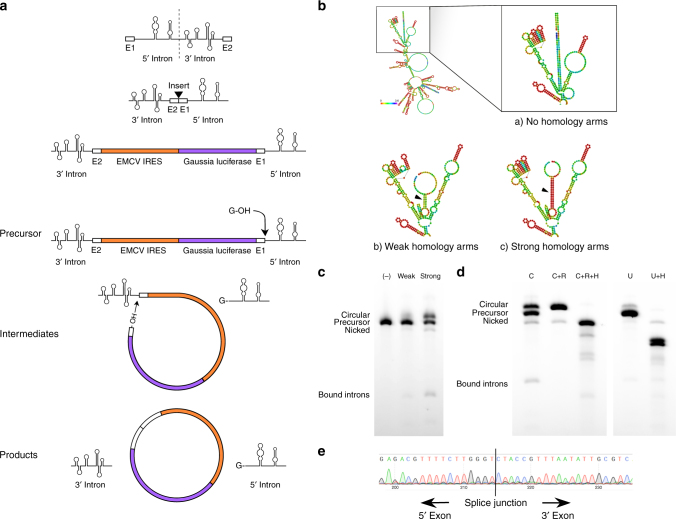
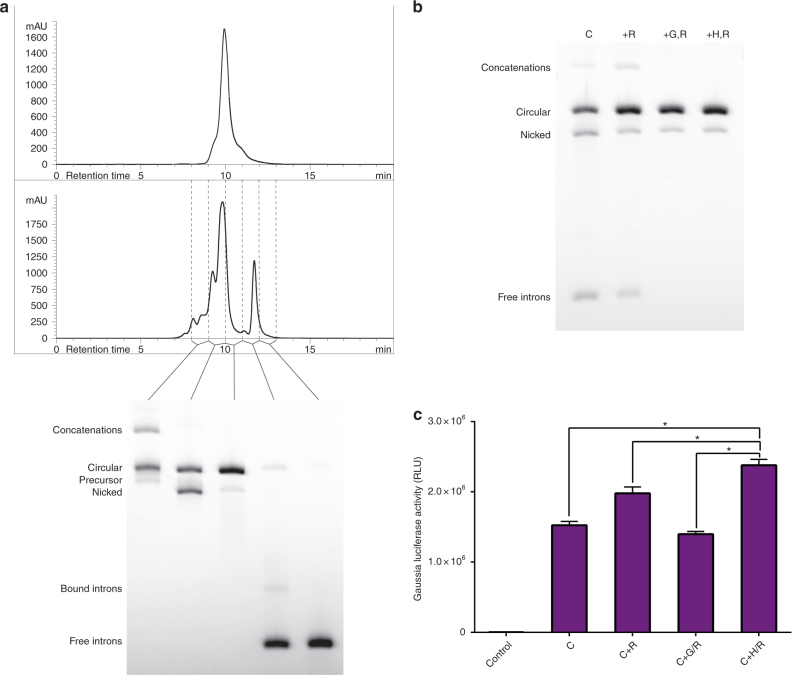
Messenger RNA (mRNA) has broad potential for application in biological systems. However, one fundamental limitation to its use is its relatively short half-life in biological systems. Here we develop exogenous circular RNA (circRNA) to extend the duration of protein expression from full-length RNA messages. First, we engineer a self-splicing intron to efficiently circularize a wide range of RNAs up to 5 kb in length in vitro by rationally designing ubiquitous accessory sequences that aid in splicing. We maximize translation of functional protein from these circRNAs in eukaryotic cells, and we find that engineered circRNA purified by high performance liquid chromatography displays exceptional protein production qualities in terms of both quantity of protein produced and stability of production. This study pioneers the use of exogenous circRNA for robust and stable protein expression in eukaryotic cells and demonstrates that circRNA is a promising alternative to linear mRNA.
Overview
CoChat Summary
## TL;DR
The paper engineers exogenous circular RNA (circRNA) systems that can circularize long RNAs up to 5 kb and drive robust protein expression in eukaryotic cells. Compared with linear mRNA, optimized circRNA showed longer-lasting protein production and, after HPLC purification, stronger protein output in the tested cell lines.
## Key findings
- Adding homology arms to the permuted intron-exon construct increased splicing efficiency from 0% to 16% with weak arms and to 48% with strong arms.
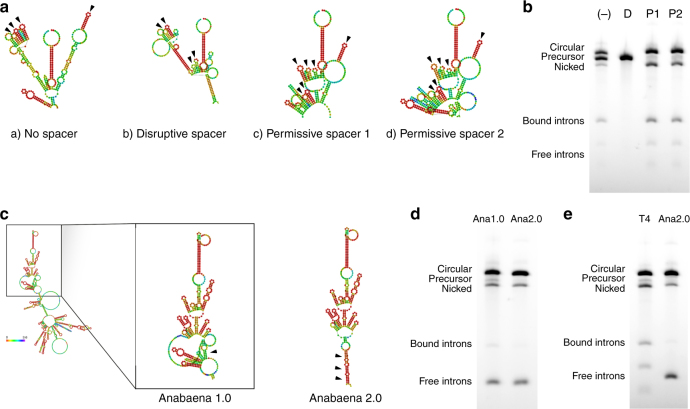
- Rationally designed spacer sequences improved splicing efficiency from 46% to 87%, and a disruptive spacer completely abrogated splicing.
- Using the engineered Anabaena catalytic intron increased splicing efficiency from 84% to 95% and reduced circRNA nicking by 37% relative to the T4 catalytic intron.
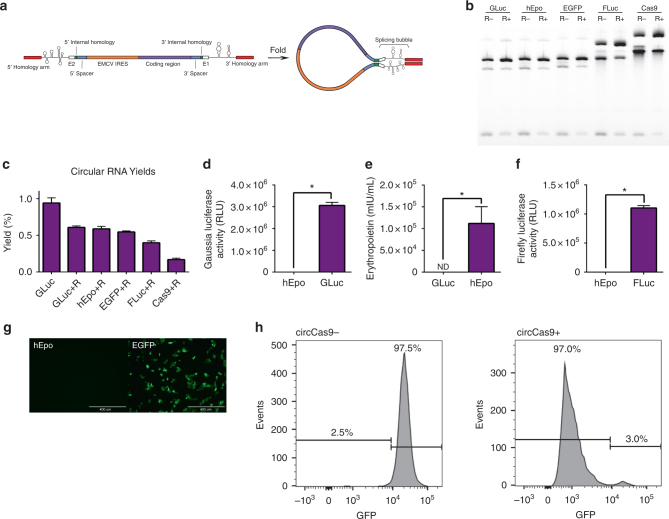
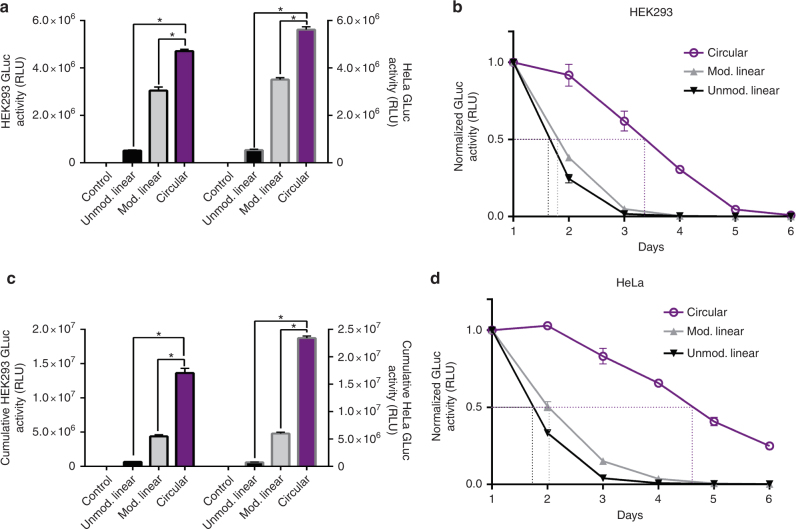
- In HEK293 cells, HPLC-purified circRNA produced 811.2% more protein than unmodified linear mRNA at 24 h and 54.5% more than modified linear mRNA; protein-production half-life was 80 h for circRNA versus approximately 43 h and 45 h for the unmodified and modified linear mRNAs, respectively.
- In HeLa cells, circRNA protein-production half-life was 116 h, compared with approximately 44 h and 49 h for the unmodified and modified linear mRNAs.
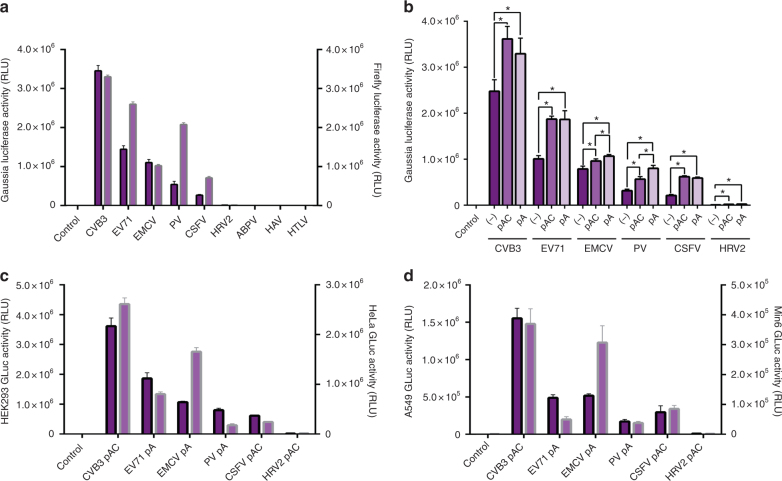
- The CVB3 IRES was 1.5-fold more effective than the EMCV IRES in HEK293 cells and remained superior across HeLa, A549, and Min6 cells tested.
## Methods
- Engineered circRNAs were built using permuted group I intron/PIE designs with homology arms, spacer sequences, and different IRES elements; constructs included coding regions for GLuc, Firefly luciferase, EGFP, human erythropoietin, and Cas9.
- RNAs were synthesized by in vitro transcription, circularized with GTP/Mg2+-dependent self-splicing, enriched with RNase R, and purified by gel extraction or size-exclusion HPLC; circularization was assessed by gel analysis, RNase H nicking analysis, and splice-junction sequencing.
- Functional testing used transfection into HEK293, HeLa, A549, HEK293-GFP, and Min6 cells, with readouts including luminescence, fluorescence, ELISA, flow cytometry, cytokine assays, and qPCR; statistics were by two-tailed unpaired Welch’s t-test.
## Limitations
- The paper states that longer circRNAs were more prone to nicking during production, which reduced yields and purity.
- The discussion says more work is needed to optimize translation from circRNA and to study translation efficiency and stability in other cell types and tissues.
- The paper notes that additional analysis of exogenous circRNA immunogenicity is required, and that suitable delivery vehicles in vitro and in vivo need thorough investigation.
Model-written summary. Check it against the paper before relying on it.
Integrity signals
Registry
Cites
Statistics
Figures
Verification
Claims the paper makes
9 Valid · 1 Not valid · 3 Not checked · 54 Own results and interpretations
Some cited sources support this claim and some don’t — read each source’s verdict below.
In the paper
“These strategies have yielded modest improvements in RNA stability10, 13–16, and thus alternative approaches to RNA stabilization, such as circularization, are desirable.”
§ Engineering circular RNA for potent and stable translation in eukaryotic cells > Introduction
What the sources say
- Disputedcites [10] Kaczmarek JC Kowalski PS Anderson DG Advances in the delivery of RNA therapeutics: from concept to clinical reality Genome Med. 2017 9 60 10.1186/s13073-017-0450-0 28655327 PMC5485616 sourceExperimental — accuracy not yet measured
In the “Protein overexpression—mRNA” section (page not provided), the paper says that cap analogs and poly(A) tails have markedly improved mRNA stability, contrary to the claim that previous strategies yielded only modest improvements. (LLM, conf=0.86)
Checked by a reasoning model — may be wrong.
- Disputedcites [13] Holtkamp S Modification of antigen-encoding RNA increases stability, translational efficacy, and T-cell stimulatory capacity of dendritic cells Blood 2006 108 4009 4017 10.1182/blood-2006-04-015024 16940422 sourceExperimental — accuracy not yet measured
In the section on combining poly(A)-tail and 3′ UTR modifications (page unavailable), the paper reports an approximately two-orders-of-magnitude improvement in RNA stability relative to standard IVT RNA. That result is contrary to describing the improvement reported by this source as modest. (LLM, conf=0.88)
Checked by a reasoning model — may be wrong.
- Supportedcites [14] Kuhn AN Phosphorothioate cap analogs increase stability and translational efficiency of RNA vaccines in immature dendritic cells and induce superior immune responses in vivo Gene Ther. 2010 17 961 971 10.1038/gt.2010.52 20410931 source
The RNA half-life results (Table 2) show a limited increase with the phosphorothioate cap in immature dendritic cells compared with conventional capping. The same results section explicitly says functional cap analogs had a modest effect on RNA stability in mature dendritic cells. (LLM, conf=0.84)
- Partly supportedcites [15] Presnyak V Codon optimality is a major determinant of mRNA stability Cell 2015 160 1111 1124 10.1016/j.cell.2015.02.029 25768907 PMC4359748 sourceExperimental — accuracy not yet measured
The Results section reports that reporters with optimal codons were about fourfold more stable than those with non-optimal codons, supporting an improvement in mRNA stability. The paper does not characterize that improvement as modest or establish that previous stabilization strategies generally yielded only modest gains. (LLM, conf=0.79)
- Could not verifycites [16] Kariko K Muramatsu H Ludwig J Weissman D Generating the optimal mRNA for therapy: HPLC purification eliminates immune activation and improves translation of nucleoside-modified, protein-encoding mRNA Nucleic Acids Res. 2011 39 e142 e142 10.1093/nar/gkr695 21890902 PMC3241667 sourceExperimental — accuracy not yet measured
The Introduction and Discussion describe reduced immune activation and improved translation with modified or HPLC-purified mRNA, but do not characterize improvements in RNA stability as modest. Searches for RNA stability, half-life, degradation, and circularization found no passage in our copy that establishes the claimed comparison. (LLM, conf=0.74)
plainstates a cause- Asserted: passes — The authors put it forward as true.
- Checkable: passes — It can be checked against evidence.
- Load-bearing: passes — The paper’s conclusions depend on it.
- Based: passes — The paper gives a reason why it holds.
- Disputed
The cited sources support only part of this claim — read each source’s verdict below.
In the paper
“Indeed, the intervening region between the 5′ and 3′ splice sites of native group I introns is on average 300–500 nucleotides long22, while the intervening region of the engineered RNA that we constructed was two to four-fold longer.”
§ Engineering circular RNA for potent and stable translation in eukaryotic cells > Results > Long RNA circularization is assisted by homology
What the sources say
- Partly supportedcites [22] Vicens Q Paukstelis PJ Westhof E Lambowitz AM Cech TR Toward predicting self-splicing and protein-facilitated splicing of group I introns RNA 2008 14 2013 2029 10.1261/rna.1027208 18768647 PMC2553746 sourceExperimental — accuracy not yet measured
The Results section reports that 12 group I introns tested were 183–421 nucleotides long, and Intron selection gives a range of 183–496 nucleotides for introns requested. Neither passage establishes a 300–500-nucleotide average for native group I introns generally. (LLM, conf=0.82)
plain- Asserted: passes — The authors put it forward as true.
- Checkable: passes — It can be checked against evidence.
- Load-bearing: passes — The paper’s conclusions depend on it.
- Based: passes — The paper gives a reason why it holds.
- Partly supported
A result the paper reports from its own data — it cites no other source for it, so there is none to check. The quote shows it is in the paper.
In the paper
“First, we engineer a self-splicing intron to efficiently circularize a wide range of RNAs up to 5 kb in length in vitro by rationally designing ubiquitous accessory sequences that aid in splicing.”
§ Engineering circular RNA for potent and stable translation in eukaryotic cells > Abstract
plainstates a cause- Asserted: passes — The authors put it forward as true.
- Checkable: passes — It can be checked against evidence.
- Load-bearing: passes — The paper’s conclusions depend on it.
- Based: passes — The paper gives a reason why it holds.
A result the paper reports from its own data — it cites no other source for it, so there is none to check. The quote shows it is in the paper.
In the paper
“In the case of EMCV and Poliovirus IRESs, polyA sequences improved expression beyond the improvement seen with an unstructured polyAC spacer.”
§ Engineering circular RNA for potent and stable translation in eukaryotic cells > Results > The CVB3 IRES is superior in the context of circRNA
plainstates a cause- Asserted: passes — The authors put it forward as true.
- Checkable: passes — It can be checked against evidence.
- Load-bearing: unclear — It is unclear whether the paper’s conclusions depend on it.
- Based: passes — The paper gives a reason why it holds.
A result the paper reports from its own data — it cites no other source for it, so there is none to check. The quote shows it is in the paper.
In the paper
“We found that the IRES from Coxsackievirus B3 (CVB3) was 1.5-fold more effective than the commonly adopted EMCV IRES in HEK293 cells (Fig. 4a).”
§ Engineering circular RNA for potent and stable translation in eukaryotic cells > Results > The CVB3 IRES is superior in the context of circRNA
plainstates a cause- Asserted: passes — The authors put it forward as true.
- Checkable: passes — It can be checked against evidence.
- Load-bearing: passes — The paper’s conclusions depend on it.
- Based: passes — The paper gives a reason why it holds.
34 more claims
Create a free account to see all 67 claims and every source verdict.
- It may state two separate claims as one. 25
- Probably not a substantial claim. 9
- The quote only partly states this claim. 2
Claims other papers make about this one
Each is checked against this paper’s own text: does it say what the citing paper says it does?
The source backs part of the claim, not all of it — or backs it for a different population, condition or comparison.
In the citing paper
“Similar to linear mRNA, the chemical modification of specific nucleotides and chromatographic purification can minimize immunogenicity of the RNA and increase translation.”
From Lipid nanoparticles for mRNA delivery (2021) · cites this paper as [245]
Experimental — accuracy not yet measuredThe cited source says what the claim attributes to it.
In the citing paper
“Circular RNA (circRNA) is a single-stranded RNA with a closed-loop structure.”
From Lipid nanoparticles for mRNA delivery (2021) · cites this paper as [245]
The cited source says what the claim attributes to it.
In the citing paper
“In addition, circular RNA (circRNA) can be synthesized to optimize mRNA properties245,246 (Box 2).”
From Lipid nanoparticles for mRNA delivery (2021) · cites this paper as [245]
In the citing paper
“Despite the lack of essential elements for cap-dependent translation, circRNA can be translated by adding the IRES element or m6A modification incorporated to its 5′ UTR region.223,224”
From Advances in COVID-19 mRNA vaccine development (2022) · cites this paper as [223]
In the citing paper
“Given its enhanced biostability compared with linear RNA due to the lack of terminals preventing degradation,49 circRNA could be a promising research avenue.”
From COVID-19 mRNA vaccines: Platforms and current developments (2022) · cites this paper as [49]
6 more claims about this paper
Create a free account to see every claim other papers make about this one.
Citations
Cites
Natural RNA circles function as efficient microRNA sponges
Hansen, T. B., Jensen, T. I., Clausen, B. H., Bramsen, J. B., Finsen, B., Damgaard, C. K., & Kjems, J. (2013) · Nature · doi:10.1038/nature11993 · Cited by 7,985
Exon-intron circular RNAs regulate transcription in the nucleus
Li, Z., Huang, C., Bao, C., Chen, L., Lin, M., Wang, X., Zhong, G., Yu, B., Hu, W., Dai, L., et al. (2015) · Nature Structural & Molecular Biology · doi:10.1038/nsmb.2959 · Cited by 2,905
Detecting and characterizing circular RNAs
Jeck, W. R., & Sharpless, N. E. (2014) · Nature Biotechnology · doi:10.1038/nbt.2890 · Cited by 2,702
Circ-ZNF609 is a circular RNA that can be translated and functions in myogenesis
Legnini, I., Di Timoteo, G., Rossi, F., Morlando, M., Briganti, F., Sthandier, O., Fatica, A., Santini, T., Andronache, A., Wade, M., et al. (2017) · Molecular Cell · doi:10.1016/j.molcel.2017.02.017 · Cited by 2,173
Regulation of circRNA biogenesis
Chen, L.-L., & Yang, L. (2015) · RNA Biology · doi:10.1080/15476286.2015.1020271 · Cited by 1,953
Pamudurti, N. R., Bartok, O., Jens, M., Ashwal-Fluss, R., Stottmeister, C., Ruhe, L., Hanan, M., Wyler, E., Perez-Hernandez, D., Ramberger, E., et al. (2017) · Molecular Cell · doi:10.1016/j.molcel.2017.02.021 · Cited by 1,810
Codon Optimality Is a Major Determinant of mRNA Stability
Presnyak, V., Alhusaini, N., Chen, Y.-H., Martin, S., Morris, N., Kline, N., Olson, S., Weinberg, D., Baker, K. E., Graveley, B. R., et al. (2015) · Cell · doi:10.1016/j.cell.2015.02.029 · Cited by 1,078
Karikó, K., Muramatsu, H., Ludwig, J., & Weissman, D. (2011) · Nucleic Acids Research · doi:10.1093/nar/gkr695 · Cited by 898
Circular RNAs: analysis, expression and potential functions
Barrett, S. P., & Salzman, J. (2016) · Development · doi:10.1242/dev.128074 · Cited by 859
Enuka, Y., Lauriola, M., Feldman, M. E., Sas-Chen, A., Ulitsky, I., & Yarden, Y. (2016) · Nucleic Acids Research · doi:10.1093/nar/gkv1367 · Cited by 757
Cited by
Items 701–800 of 804
Peer Review #1 of "Coding potential of circRNAs: new discoveries and challenges (v0.1)"
Miao, Q., Ni, B., & Tang, J. (2021) · PeerJ · doi:10.7287/peerj.10718v0.1/reviews/1
“They also considered that circRNA is a promising alternative to linear 285 mRNA(Wesselhoeft et al. 2018).”
BackgroundNovel Insights of Viroid Biology and Host Responses to Their Infection
Molins, J. M. (2022) · RiuNet (Universitat Politècnica de València) · doi:10.4995/thesis/10251/183479 · Cited by 1
SARS-COV-2 and Other mRNA Vaccines
Jackson, N. (2022) · RNA technologies · doi:10.1007/978-3-031-08415-7_6
Navarro, B. O. (2023) · RiuNet (Universitat Politècnica de València) · doi:10.4995/thesis/10251/192635
Shen, H. (2022) · Journal of Clinical and Medical Surgery · doi:10.52768/2833-5465/1062
“Accu - mulating evidence has confirmed the roles of circRNAs in regu - lating the proliferation, metastasis, stemness and resistance to therapy of GC [5-7].”
Modulating miRNA binding sites within circRNA for enhanced translation efficiency
Zhang, K., Shan, G., & Chen, L. (2023) · JUSTC · doi:10.52396/justc-2023-0048
Di-Trani, C. A. (. A. (2023) · Depósito Académico Digital Universidad de Navarra (University of Navarra) · doi:10.15581/10171/67876 · Cited by 1
Sun, Y., Khimani, A. H., Tong, Y., et al. (2024) · bioRxiv (Cold Spring Harbor Laboratory) · doi:10.1101/2024.03.25.586602
“Through rational design of precursor PIE construct by Wesselhoeft et.al (13), homology arms are strategically positioned at 5’, 3’ ends of the precursors with the aim of aligning splice site s into proximity of one another (blue, purple, and green boxes in Figure 1A ); The spacers (gray box in…”
Zhang, X., Wang, X., Lv, J., Huang, H., Wang, J., Ma, Z., Tan, Z., Huang, G., Liu, J., Liu, Y., et al. (2023) · Figshare · doi:10.6084/m9.figshare.23573597
Zhang, X., Wang, X., Lv, J., Huang, H., Wang, J., Ma, Z., Tan, Z., Huang, G., Liu, J., Liu, Y., et al. (2023) · Figshare · doi:10.6084/m9.figshare.23573594
Yang, F., Ma, Q., Huang, B., Wang, X., Pan, X., Yu, T., Ran, L., Jiang, S., Li, H., Chen, Y., et al. (2023) · Figshare · doi:10.6084/m9.figshare.23550416
Design and Synthesis of Circular RNA Expression Vectors
Frei, J., Jarzębska, N. T., Mellett, M., Kündig, T. M., Pascolo, S., & Reichmuth, A. M. (2024) · Methods in molecular biology · doi:10.1007/978-1-0716-3770-8_9 · Cited by 1
Interplay of microRNAs and circRNAs in Epithelial Ovarian Cancer
Schwarzenbach, H. (2024) · Non-Coding RNA · doi:10.3390/ncrna10050051 · Cited by 4
“They are transcribed and cyclized in vitro and can be delivered to specific tissue with adeno-associated virus (AAV) [177,178].”
BackgroundAn Approach to the Synthesis of Cyclic Photocleavable RNA for Photoactivatable CRISPR/Cas9 System
Ivanskaya, E. V., Meschaninova, M. I., Vorobyeva, M., Zharkov, D. O., & Новопашина, Д. С. (2024) · Russian Journal of Bioorganic Chemistry · doi:10.1134/s1068162024050327
Chemical circularization of in vitro transcribed RNA opens new avenues for circular mRNA designPreprint
Mamot, A., Wąsińska-Kałwa, M., Czubak, K., Frankowska, K., Śpiewla, T., Warmiński, M., Nowis, D., Gołąb, J., Kowalska, J., & Jemielity, J. (2024) · bioRxiv (Cold Spring Harbor Laboratory) · doi:10.1101/2024.10.10.617555
Systematic screen of RNA binding proteins that enhance circular RNA translation
Lu, Q.-Y., Wang, S., Ye, Y., Wei, T., Yang, Y., Wei, H. Y., & Wang, Z. (2026) · Nature Communications · doi:10.1101/2024.11.07.622558 · Cited by 2
The approach to the preparation of cyclic photocleavable RNA for photoactivatable CRISPR/Cas9 System
Ivanskaya, E. V., Meschaninova, M. I., Vorobyeva, M., Zharkov, D. O., & Новопашина, Д. С. (2024) · Биоорганическая химия · doi:10.31857/s0132342324050051
Circular RNA Therapeutics and Vaccines
Liu, X., & Zhu, G. (2024) · Wiley eBooks · doi:10.1002/9783527838394.ch5
Research Progress on mRNA Based Protein Replacement Therapy for Inborn Errors of Metabolism
李, 京. (2025) · Advances in Clinical Medicine · doi:10.12677/acm.2025.154899
CircRNA Networks in CAD: Multi-Cellular Mechanisms and Clinical Potential
Huan, C., Wu, X., Li, J., et al. (2025) · International Journal of General Medicine · doi:10.2147/ijgm.s524189
Chen, Z., Sun, Z., Cheng, J., Ren, S., He, Q., Xu, X., Ma, Q., & Weng, H. (2025) · International Journal of Biological Macromolecules · doi:10.1016/j.ijbiomac.2025.146218
CircRNA Based Bi-Antigen Vaccines Against Mpox Virus Induces Potent and Durable Protection in MicePreprint
Zhou, J., Wang, C., Wu, Y., Zhao, B., Yang, Y., Ye, T., Zhang, K., Li, F., Hu, J., Zhang, K., et al. (2025) · SSRN Electronic Journal · doi:10.2139/ssrn.5370492
Intracellular auto-circularizing RNA using human tRNA splicing elementsPreprint
Ma, Q., Tang, C., Wang, J., Liu, Y., Sun, X., & Zhao, S. (2025) · bioRxiv (Cold Spring Harbor Laboratory) · doi:10.1101/2025.07.28.667085
“Although the improved PIE strategy partially addresses this issue, circularization efficiency decreases significantly with increasing fragment length [16] .”
New modalities: Drugging the undruggable GPCR targets
Zawadzki, P., Graczyk, P. P., & Staroń, J. (2025) · Elsevier eBooks · doi:10.1016/b978-0-443-29808-0.00030-3
Challenges and Future Prospectives in Circular RNA Investigation
Hiam, D., Gedye, M. J., Wadley, G. D., & Bernardo, B. C. (2025) · Advances in experimental medicine and biology · doi:10.1007/978-981-96-9428-0_27 · Cited by 1
Nucleic acid-encoded antibody gene transfer-next generation of antibody therapies
Yu, K., Xiao, G., Chen, B., Xu, N., & Liu, W. (2025) · Drug Delivery · doi:10.1080/10717544.2025.2566782 · Cited by 1
“…intron that enables RNA cyclization up to 5 kb in vitro by rationally designing ubiquitous auxiliary sequences that facilitate splicing (wesselhoeft et al. 2018). the results showed that the optimized circRNA could produce a large amount of proteins and could be purified effectively by…”
Exploring the epigenetic role of the circular RNA ciR-01114 in porcine ovarian cell functions
Fabová, Z., Loncová, B., Harrath, A. H., Feriani, A., & Sirotkin, A. V. (2025) · Molecular Biology Reports · doi:10.1007/s11033-025-11126-6
“Additionally, fluorescence microscopy and RT‒qPCR analyses were employed to confirm the effi - ciency and reliability of the ciR-01114 transfection method, as described previously [32].”
Yu, H., Yang, Y., Lin, P., Liu, C., Wen, Y., Fang, Z., Hu, Z., & Huang, S. (2025) · bioRxiv (Cold Spring Harbor Laboratory) · doi:10.1101/2025.10.27.684966
Maresh, J. A., Radwan, T. E., Nofal, B. M., Eldakrory, A. S., Hassan, M. M., Hamdy, N. E., & Magar, R. W. (2025) · Cell Biochemistry and Biophysics · doi:10.1007/s12013-025-01925-w · Cited by 1
Synthetic biology and genetic engineering in pharmaceutical bioprospecting
Kant, S., Roy, S., & Sarkar, N. (2025) · Elsevier eBooks · doi:10.1016/b978-0-443-33032-2.00019-8
Scalable production of immune-silent circular RNAs for efficient protein expressionPreprint
Liu, X., Xiao, H., Whitehead, M., Varshney, D., & Du, Y. (2025) · bioRxiv (Cold Spring Harbor Laboratory) · doi:10.1101/2025.11.19.689249
“Poly (AC) and poly (A) sequences are known to enhance translation efficiency from circRNAs 11,12 .”
Tomar, M. (2025) · Premier Journal of Biomedical Science · doi:10.70389/pjs.100186
Circular RNAs as biomarkers and targets in ovarian cancer
Porwal, O., Visht, S., & Muhammed, R. A. (2025) · Clinica Chimica Acta · doi:10.1016/j.cca.2025.120802
Huang, C., Zeng, W., Zhong, K., Duan, X., Liu, Y., Tian, Q., Zhou, L., Wang, Y., Nie, C., & Tong, A. (2025) · Chinese Chemical Letters · doi:10.1016/j.cclet.2025.112322 · Cited by 2
Nanomaterials for Gene Therapy in Animal Health
Bathla, S. (2026) · Smart nanomaterials technology · doi:10.1007/978-981-95-4542-1_6
RNA Therapy in Muscle Diseases
Lu, D., & Li, J. (2026) · Physiology · doi:10.5772/intechopen.1014065 · Cited by 1
Li, H.-L., Xu, Y., Mo, J.-S., Zhao, X.-Y., Zhong, C.-L., Jia, Z.-W., Wang, X.-L., Zhao, B.-C., Chen, Y., Zheng, K., et al. (2026) · Journal of Controlled Release · doi:10.1016/j.jconrel.2026.114691
Asghari, M., Golalipour, M., Memarian, A., & Farazmandfar, T. (2026) · Journal of Virological Methods · doi:10.1016/j.jviromet.2026.115378
Wei, S.-H., Song, L.-L., Wang, R., et al. (2026) · Sensors and Actuators B Chemical · doi:10.1016/j.snb.2026.139772
Pre-splicing conformation and stepwise circularization of a group I intron in Azoarcus pre-tRNA
Hong, Y., Liu, J., Zhang, X., et al. (2026) · Nature Communications · doi:10.1038/s41467-026-70747-y
“Although the permuted intron-exon (PIE) system 41 – 44 is designed to promote exon circularization, the catalytic principles are shared with intron self-circularization.”
The roles of non-coding RNA-encoded functional peptides in gastrointestinal cancer
Mondal, J., Guha, D., Roy, S., Nandy, A., & Bagchi, A. (2026) · Elsevier eBooks · doi:10.1016/b978-0-443-27765-8.00017-5
mRNA therapeutics for inflammatory bone diseases: opportunity and challenge
Huang, Y., Huang, X.-H., Mao, H., & Zhang, L. (2026) · International Journal of Pharmaceutics · doi:10.1016/j.ijpharm.2026.126793
Lu, W., Li, W., Wang, P., Cong, P., Wang, Z., Gao, W., Sun, G., & Liu, M. (2026) · RNA Biology · doi:10.1080/15476286.2026.2638278 · Cited by 1
“Due to their unique structure, circRNAs have advantages in conservation and stability over linear non-coding RNAs, allowing them to persist long-term in human plasma, exosomes, and tissues [15,16].”
Circular RNAs Fifty Years After Their Discovery
Filippenkov, I. B., Tsareva, E. V., Mozgovoy, I. V., Sudarkina, O. Y., Dergunova, L. V., & Limborska, S. A. (2026) · Biochemistry (Moscow) · doi:10.1134/s0006297925603594 · Cited by 1
Wang, L., Xu, J., Zhang, W., Dang, Y., Luan, C., Wei, S., Qiao, Y., Hou, S., Gong, Y., Shuai, Q., et al. (2026) · Materials Today · doi:10.1016/j.mattod.2026.103326
Enabling and optimizing cell-free systems for synthetic biology applications
Batista, A. C. (2022) · theses.fr (ABES) · doi:10.70675/60aa7569zfd16z48ecz93b4z907df93453cf
Delivery routes and circular mRNA vaccine architecture synergistically shape in vivo immune profiles
Shu, Y., Shen, T., Niu, Y., Xu, Y., Kong, X., Su, M., Yang, X., Yuan, L., Xie, S., Wang, J., et al. (2026) · Journal of Controlled Release · doi:10.1016/j.jconrel.2026.114912 · Cited by 1
Peña, Á., Broset, E., Lucía, E. G., García-Latorre, L., Navarro, V., Matute, C., Gallego-Lleyda, A., Alejo, T., Romanos, E., García, A., et al. (2026) · Pharmaceutics · doi:10.3390/pharmaceutics18040472
Self-splicing and cyclization mechanisms of the full-length Anabaena pre-tRNA
Zhang, X., An, L., Yang, W., Yi, R., Liu, J., Li, S., & Zhang, K. (2026) · Nature Chemical Biology · doi:10.1038/s41589-026-02205-1
“Additionally, its permuted intron–exon (PIE) system has been widely used for the generation of circular RNAs (circRNAs), further emphasizing its importance in RNA research 17,24–27 .”
Horikawa, W., & Kiss, D. (2026) · bioRxiv (Cold Spring Harbor Laboratory) · doi:10.64898/2026.04.15.718802
“This specificity for linear RNAs has made RNase R a key tool in circRNA research [4-6].”
Engineering mRNA therapeutics for protein supplementation: Challenges and future horizons
Tao, Y., Zhao, Y., Su, Q., Pan, J., Yin, J., & Xu, C. (2024) · BME Horizon · doi:10.70401/bmeh.2026.0025 · Cited by 1
Weng, Y., Ren, X., Guo, F., Wu, W., Wang, B., & Li, C. (2026) · Lab on a Chip · doi:10.1039/d6lc00124f
Kumar, S. (2026) · Springer eBooks · doi:10.1007/978-981-95-7688-3_5
Extracellular Vesicles Enable CircRNA Delivery via in situ Biogenesis and SortingPreprint
Li, M., Pan, Y., Cui, M., Deng, J., Wang, F., Li, L., Zhang, R., Sun, C., & Li, Z. (2026) · bioRxiv (Cold Spring Harbor Laboratory) · doi:10.64898/2026.04.24.720573
Wang, Y., Hao, J., Huang, Y., et al. (2026) · Journal of Medical Entomology · doi:10.1093/jme/tjag068
Advances in RNA-Based Therapeutics in Oncology
Lopes-Cardoso, H., Panão-Costa, J., Amaral, A. T., Soares-Gonçalves, J., Neves, B. F., Voronovska, A., Batista, A., Biscaia-Caleiras, M., Fonseca, N. A., Simões, S., et al. (2026) · Springer handbooks · doi:10.1007/978-3-032-01636-2_19
A Divergent TaqMan RT-qPCR Strategy for Isoform-Resolved Detection of HIV-1 Circular RNAs
Mauer, C., Paz, S., & Caputi, M. (2026) · Methods and Protocols · doi:10.3390/mps9030077
“…circRNAs have been reported to regulate gene expression through several routes, including sequestration of microRNAs, modulation of RNA-binding protein activity, regulation of transcription, and, in some cases, translation from internal ribosome entry site-containing templates [1,9–14].”
Zhou, J., Wang, C., Wu, Y., Zhao, B., Yang, Y., Ye, T., Zhang, K., Li, F., Hu, J., Zhang, K., et al. (2026) · Molecular Biomedicine · doi:10.1186/s43556-026-00474-9
“The inherent stability of circRNA-based vaccines enables prolonged antigen expression over time, thereby may facilitating the formation of long-lasting immune memory [16, 29].”
RNA Therapeutics Targeting Skeletal Muscle: Emerging Antisense and Gene-Modifying Strategies
Kuroda, T., & Yokota, T. (2026) · Biomolecules · doi:10.3390/biom16060794 · Cited by 1
“Circular RNAs (circRNAs) have recently emerged as a stable RNA platform capable of long-lasting protein expression or regulatory functions, and synthetic circRNAs are now being developed as next-generation RNA therapeutics [35].”
Lin, J. (2026) · Scientia Sinica Vitae · doi:10.1360/ssv-2026-0120
mRNA delivery to the retina restores REP1 function in choroideremia
de Lemos, L., Antas, P., Carvalho, C., Castro, M., Bruno, D., Fonseca, A. F., Rakshit, S., & Seabra, M. C. (2026) · Molecular Therapy Advances · doi:10.1016/j.omta.2026.201768 · Cited by 2
“77,78 In summary, we provide a robust proof-of-concept that non-viral mRNA therapy for CHM, delivered via LNPs, can rapidly and efficiently restore REP1 function in CHM patient-derived hiPSC-RPE cells and achieve functional rescue in the Chm ± mouse model.”
Reinforcement learning-driven unified generative framework for multi-objective RNA codon designPreprint
Lin, S., Tan, H., Wang, K., Wang, R., Wang, H., Zhu, T., & Xiong, Y. (2026) · bioRxiv (Cold Spring Harbor Laboratory) · doi:10.64898/2026.06.12.732012
Martin, A. L., Cotterell, J., Buick, K. H., Bird, T. W., Kuang, J., Palmer, O. R., Mason, N. C., White, L. G., Draper, S. L., Foster, A. J., et al. (2026) · bioRxiv (Cold Spring Harbor Laboratory) · doi:10.64898/2026.06.11.731499
“Furthermore, circRNA lacks a 5′ cap and poly(A) tail, instead relying on cap-independent translation, typically driven by an internal ribosome entry site (IRES) 3,23 .”
InfluentialThe bench-to-bedside journey of circular RNAs in cancer: Status, challenges and future prospects
Lin, H., Tu, Y., Wang, P., Wang, T., & Long, F. (2026) · Biochimica et Biophysica Acta (BBA) - Reviews on Cancer · doi:10.1016/j.bbcan.2026.189639 · Cited by 1
HTLV-1 HBZ inhibits DHX9 to reprogram circRNA biogenesis in ATLL
Ladet, J., Bazire, M., Fontrodona, N., den Broeke, A. V., Marçais, A., Shallak, M., Forlani, G., Accolla, R. S., Bourgeois, C. F., & Mortreux, F. (2026) · Tumour Virus Research · doi:10.1016/j.tvr.2026.200347
“3A) [36].”
Pan, Q., Zhang, C., 王, X. G. 晓. W., Yin, J., She, S., Chen, X., Dong, R., Wu, Y., Liao, X., Wang, Y., et al. (2026) · Proceedings of the National Academy of Sciences · doi:10.1073/pnas.2529799123
“In a subcutaneous B16F10 - OVA tumor model, PEO - OVA inhib ited tumor growth to a degree comparable to that achieved by m1 ψ-modified mRNA, permuted intron - exon (PIE) - derived cir cRNA (59), or icRNA vaccines (Fig.”
Synthesis of Ultra-Large Fibrous Proteins from Bacteria via a Looped-Translation SystemPreprint
Xie, Q., Papa, L. J., Barybin, A. M., Xiong, M., Shoulders, M. D., & Fried, S. D. (2026) · bioRxiv (Cold Spring Harbor Laboratory) · doi:10.64898/2026.07.16.738376
“Following previous work by Wesselhoeft et al. 33 , we next “insulated” the intron machinery (Fig.”
Chen, S., Weng, L., Liu, X., Sun, Z., Bai, J., Wang, J., Chen, K., & Qiu, M. (2026) · Cancer Letters · doi:10.1016/j.canlet.2026.218743 · Cited by 1
Engineering of T7 DNA-dependent RNA polymerase with activity at elevated temperature
Hehn, S., Gutbrod, J., Gutjahr, M., & Marx, A. (2026) · PLoS ONE · doi:10.1371/journal.pone.0353775
“They could also facilitate one-pot transcription and cyclization reactions for circular RNA production, for example in protocols based on permuted introns and exons, which require elevated temperatures [12–14].”
A scalable platform for dumbbell siRNA production using engineered Td PIE in probiotic E. coli
Huang, Z., Wang, S., Liu, J., Lin, Y., Xiao, Z., Chen, T., Shi, B., Gu, S., Zhou, R., Yao, Z., et al. (2026) · Molecular Therapy — Nucleic Acids · doi:10.1016/j.omtn.2026.103030
“16–18 Traditional group I PIE method derived from the thymidylate synthase ( Td ) gene of the T4 phage or the pretRNA Leu of Anabaena can add 74 to 186 extra nucleotides after self-splicing.”
Dong, Q., Liu, Y., Chen, N., Han, Y., Wang, Y., Li, Y., Wang, P., Liu, Q., Guo, Y., & Zhang, S. (2026) · International Immunopharmacology · doi:10.1016/j.intimp.2026.117193
Niazi, S. K. (2026) · Pharmaceutics · doi:10.3390/pharmaceutics18080941
“Circular RNA is produced through the covalent ligation of its termini, thereby removing free ends that are susceptible to exonuclease activity, thus enhancing stability and extending translation duration compared to linear mRNA [87,88].”
Hirsch, S. M., Kreienberg, D., Song, Z., Larocque, A., Zuo, Y., Conover, R., Jaecklein, E., Gonzalez, K., Imchen, A., Franco, S., et al. (2026) · bioRxiv (Cold Spring Harbor Laboratory) · doi:10.64898/2026.07.31.742104
“…for advancing cell therapies by enabling complex cell engineering within a homeostatic environment; use of transient cargoes, such as circRNA 15–17 can drive profound biological responses without the genomic integration or sustained cellular stress characteristic of viral and DNA-based…”
Self-citationSafford, H. C., Geisler, H. C., Thatte, A. S., Liao, K., Poirier, A., Padilla, M. S., Yamagata, H. M., Agrawal, A., Murray, A. M., Hamilton, A. G., et al. (2026) · Nano Letters · doi:10.1021/acs.nanolett.6c01762
DNA Nanotechnology for Effective Cancer Immunotherapy
Zhang, C. Y., Nguyen, L., Gandavadi, D., Wang, X., & Dwivedy, A. (2026) · ACS Nano Medicine · doi:10.1021/acsnanomed.6c00099 · Cited by 1
In vivo CAR T cells on the highway: a roadmap for the next decade
Barden, M., Harrer, D. C., & Abken, H. (2026) · Expert Opinion on Biological Therapy · doi:10.1080/14712598.2026.2722287 · Cited by 1
“For RNA-based CAR expression, optimization of RNA phy-sico-chemistry by using modified nucleosides, as well as circular and self-amplifying RNA will extend CAR expression or require lower doses as shown for vaccination [93] while maintaining the benefit of non-integrating vectors.”
Xu, C., Jiang, F., Jiang, Y., Wang, W., Pu, C., Chen, R., Deng, C., Zhai, D., Chen, Y., Hu, W., et al. (2026) · Angewandte Chemie · doi:10.1002/ange.4782087 · Cited by 2
Xu, C., Jiang, F., Jiang, Y., Wang, W., Pu, C., Chen, R., Deng, C., Zhai, D., Chen, Y., Hu, W., et al. (2026) · Angewandte Chemie International Edition · doi:10.1002/anie.4782087
Noncoding RNA encoded peptides in tumors from discovery to mechanism and clinical translation
Zhou, D., Li, H., Yang, J., He, M., Yang, L., & Jian, L. (2026) · iScience · doi:10.1016/j.isci.2026.117235 · Cited by 2
Wen, Y., Jiang, J.-X., Dong, W.-Y., Guo, J., Hu, Q.-Y., Liu, X.-Y., Yang, Z., Huang, L.-F., Zhu, J.-N., Zhang, M., et al. (2026) · Acta Pharmacologica Sinica · doi:10.1038/s41401-026-01912-8 · Cited by 1
In vivo CAR‑T therapy: recent progress and future directions
Wang, W., Cai, Y., Yang, X., & Xu, H. (2026) · Immunity & Inflammation · doi:10.1007/s44466-026-00050-4
Clinical translation of mRNA-based cancer vaccines for solid tumors
AlKhafaje, Z., Malathi, H., Dash, A., Precilla Selvakumari, J., Singh, G., Sinha, A., Suliman, M., & Smerat, A. (2026) · Current Research in Translational Medicine · doi:10.1016/j.retram.2026.103606
Lee, K. H., Kim, S., Cha, J., & Lee, S. (2026) · Nucleic Acids Research · doi:10.1093/nar/gkag869
“The PIE method was performed as previously described [ 15 ].”
InfluentialNext-generation CAR therapies enabled by mRNA engineering and delivery
Zhao, Q., Wen, Q., Pu, P., Xu, C., Hu, Q., Zhou, Z., Hua, X., & Zhang, X. (2026) · Acta Pharmaceutica Sinica B · doi:10.1016/j.apsb.2026.09.001
Circular RNAs at the crossroads of oxidative stress: novel targets for precision therapeutics
Singh, V., Sinha, R., Das, J., Islam, A., Sridhar, S. B., Panigrahy, U. P., Mantry, S., Shahin, H., Adhikary, K., Pal, R., et al. (2026) · Genome Instability & Disease · doi:10.1007/s42764-026-00190-2
“Future work should test whether circRNA-encoded peptides can directly tune redox homeostasis (e.g., SIRT1/Nrf2 axes) in vivo, using rigorous controls for circularity, purity, and bio distribution (Chen et al., 2023, Wesselhoeft et al., 2018, Yang et al., 2017).”
Nair, A., & Kis, Z. (2026) · Biotechnology Advances · doi:10.1016/j.biotechadv.2026.109034
Lei, X., Chen, D., Zhang, K., Liu, X., Chen, Q., Zhang, Y., Ji, R., Zhu, J., Zhang, Q., Zhang, Y., et al. (2026) · Nature Biomedical Engineering · doi:10.1038/s41551-026-01787-4 · Cited by 1
Programmable in vivo mRNA circularization for enhanced gene expression in bacteria
Park, S., Kim, G., Kim, M. H., Han, Y. H., Park, G., Byun, G., Mun, H., Kim, H. J., & Seo, S. W. (2026) · Nucleic Acids Research · doi:10.1093/nar/gkag854 · Cited by 1
“RNA circularization offers a potential solution to this limitation by conferring structural resistance to RNases through a topological transformation that shields the transcript from exonuclease-mediated degradation [ 13 , 14 ].”
InfluentialMahlangu, J. N. (2026) · Expert Opinion on Pharmacotherapy · doi:10.1080/14656566.2026.2734120
The RNA structural code: orchestrating gene expression and enabling precision therapies
Fang, N.-N., & Zhu, Q.-B. (2026) · Acta Pharmacologica Sinica · doi:10.1038/s41401-026-01925-3
Cerato, L., de Fraipont, F., & Eymin, B. (2026) · Cancers · doi:10.3390/cancers18182989
“It has been shown that introducing IRESs is sufficient to achieve efficient translation in eukaryotic cells [43].”
Circular RNAs: from transcriptional noise to engineered therapeutics
Chack, A. C., & Pecot, C. V. (2026) · Frontiers in Epigenetics and Epigenomics · doi:10.3389/freae.2026.1894220
“…I introns and spacer sequences flanking the desired open reading frame (ORF) to be translated dramatically improved circularization rates and fidelity of the circularized products over complementary sequences in the introns (Cui J. et al., 2023; Meganck et al., 2021; Wesselhoeft et al., 2018).”
Sardar, N., & Manzoor, S. (2026) · Human Immunology · doi:10.1016/j.humimm.2026.112083
Mengistu, G. (2026) · Immunity Inflammation and Disease · doi:10.1002/iid3.70511
RNA therapeutics: current status and future directions
Yang, B., Sedano, M. J., Perez, K. L., Vijayaraghavan, M., Reid, V. A., Yallapu, M. M., Chauhan, S. C., Dhandayuthapani, S., Ramos, E., & Gadad, S. S. (2026) · Signal Transduction and Targeted Therapy · doi:10.1038/s41392-026-03032-5 · Cited by 1
“448,450 The above-mentioned vaccine against Zika virus was optimized by switching to the IRES of human rhinovirus B3 and including sequences of an RNA-binding motif for the 5 ′ UTR, an eIF4G-recruiting aptamer at the IRES, and the 3 ′ UTR of human α -globin 1 to enhance translation.”
A new capless self-amplifying RNA
Arbuthnot, P. B., Bloom, K. M., & Ely, A. (2026) · Molecular Therapy · doi:10.1016/j.ymthe.2026.09.011
Circular RNAs in cancer: from biomarkers to vaccine-based immunotherapy
Kumar, N., Saini, C., Soni, R., Baweja, B., Patidar, P., Jangir, K., Vats, P., Kumar, A., & Nema, R. (2026) · Frontiers in Pharmacology · doi:10.3389/fphar.2026.1930424
Walsh, K. E., & Wang, R. C. (2026) · JID Innovations · doi:10.1016/j.xjidi.2026.100547
Metadata
- Authors
- Wesselhoeft, R. A., Kowalski, P. S., & Anderson, D. G.
- Affiliations
- Koch Institute for Integrative Cancer Research At MIT (US)
- Massachusetts Institute of Technology (US)
- Harvard University (US)
- Corresponding author
- Anderson, Daniel G.
- Venue
- Nature Communications
- Published
- 2018-07-06
- Volume
- 9
- Issue
- 1
- Pages
- 2629-2629
- ISSN
- 2041-1723 (ISSN-L)
- PMC
- PMC6035260
- OpenAlex
- W2811482166
- Semantic Scholar
- 1a4ee7ac0868ac371710e8c1019ff497f6d8b677
- Cited by
- 853
- References
- 28
- Citations by year
- 2026: 153 · 2025: 159 · 2024: 148 · 2023: 124 · 2022: 90 · 2021: 83 · 2020: 53 · 2019: 35 · 2018: 7
- FWCI
- 13.89
- Type
- journal article
- Language
- en
- Open access
- gold
- doi.org
- Licence
- cc-by
- creativecommons.org/licenses/by/4.0 (tdm)
- creativecommons.org/licenses/by/4.0 (vor)
- Locations
- Nature Communications (publishedVersion, cc-by)
- Europe PMC (PubMed Central) (publishedVersion, other-oa)
- PubMed Central (publishedVersion, cc-by)
- PubMed (publishedVersion)
- RePEc: Research Papers in Economics (submittedVersion)
- DOAJ (DOAJ: Directory of Open Access Journals) (submittedVersion, cc-by-sa)
- DOAJ (DOAJ: Directory of Open Access Journals) (submittedVersion)
- DSpace@MIT (Massachusetts Institute of Technology) (submittedVersion, cc-by-nc)
- Nature
- Funders
- DOD | Defense Advanced Research Projects Agency (W32P4Q-13-1-0011)
- Juvenile Diabetes Research Foundation (3-PDF-2017-383-A-N)
- Topics
- Life Sciences › Biochemistry, Genetics and Molecular Biology › Molecular Biology › Circular RNAs in diseases
- Life Sciences › Biochemistry, Genetics and Molecular Biology › Molecular Biology › RNA and protein synthesis mechanisms
- Life Sciences › Biochemistry, Genetics and Molecular Biology › Molecular Biology › RNA Research and Splicing
- Keywords
- circular RNA, self-splicing introns, mRNA stability, protein expression, eukaryotic translation, exogenous RNA
- MeSH terms
- Internal Ribosome Entry Sites, RNA, Circular, Base Sequence, Catalysis, Cell Line, Chromatography, High Pressure Liquid, Eukaryotic Cells, Exons, Genetic Engineering, Humans, Introns, RNA, RNA Splicing, RNA, Messenger, Sequence Homology, Nucleic Acid, Protein Biosynthesis, Open Reading Frames, Anabaena
About these checks
Registry, retraction, Cites and statistics results are computed, not judged, with one exception: a printed reference that no index lists is read once by a model before it counts as a citation error. Claims are extracted by a model and kept only when their quote appears verbatim in the text; each cited source is then checked, with a model’s help, for whether it says what the claim relies on. Those verdicts can be wrong — read the claim’s quote and the cited source before relying on one.
The claim verdicts this report counts are experimental: their accuracy is not yet measured.
A language model drew the claims from the paper on 2026-10-09, under version 3 of the claim definition (model deepseek-v4.1-flash, prompt extract-v3).
A second model labelled each claim on 2026-10-09 (model jev-1.13-20260917, definition revision gold-guideline-v0.2).
Cited sources are checked with a language model’s help (gpt-6-sol).
Statistics and arithmetic are recomputed, not judged.
Confidence bands are shown only for fields calibrated on our annotated test set. None is calibrated yet, so no band is shown.
What counts as a claim ›How we measure confidence ›How we check this ›
Are you an author, or do you see a problem with this page? Request a review
Data sources
Bibliographic data: Semantic Scholar, OpenAlex, Crossref.
Contains information from the Semantic Scholar Academic Graph Datasets, made available under the ODC Attribution License (ODC-BY 1.0).
Semantic Scholar’s data is described in: Kinney, R., et al. (2023). The Semantic Scholar Open Data Platform. arXiv:2301.10140.
