

Physics-informed neural network for lithium-ion battery degradation stable modeling and prognosis
Open accessThe DOI matches its Crossref record; 55 of the 56 references it cites were found in a registry or an index.
Abstract
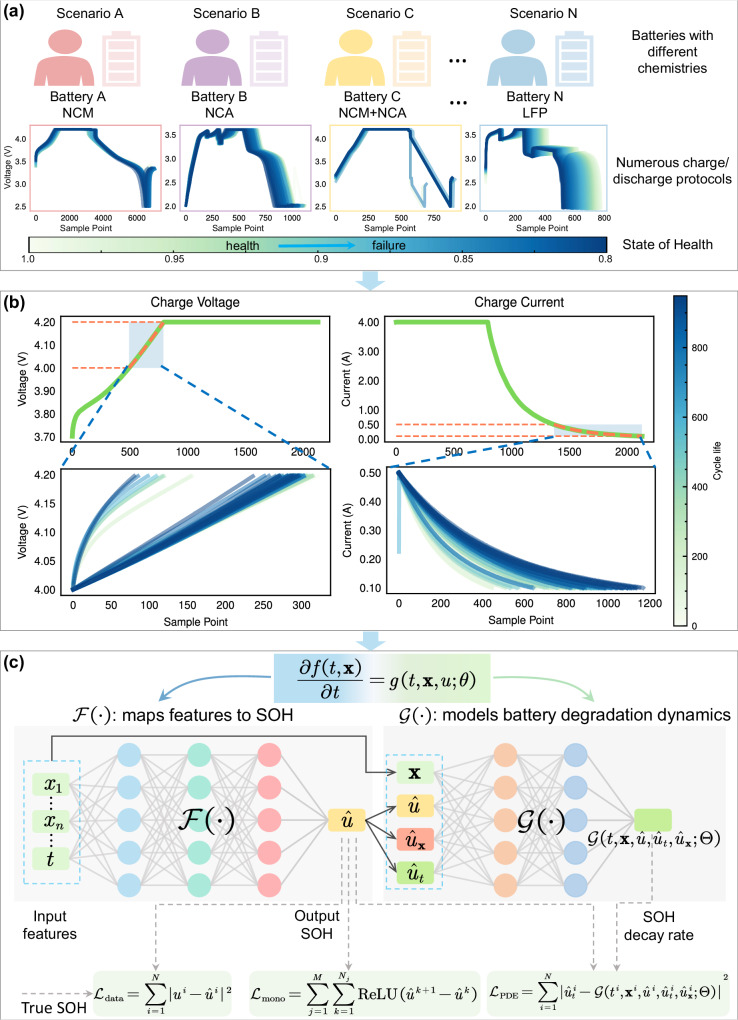
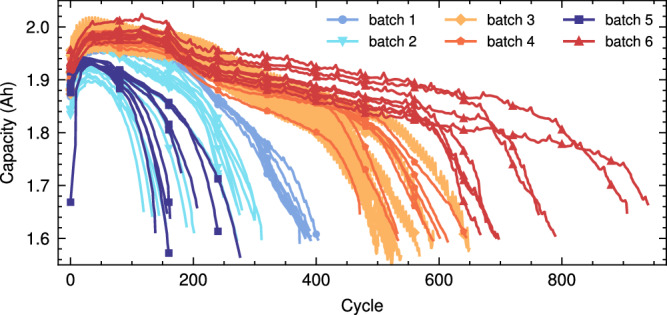
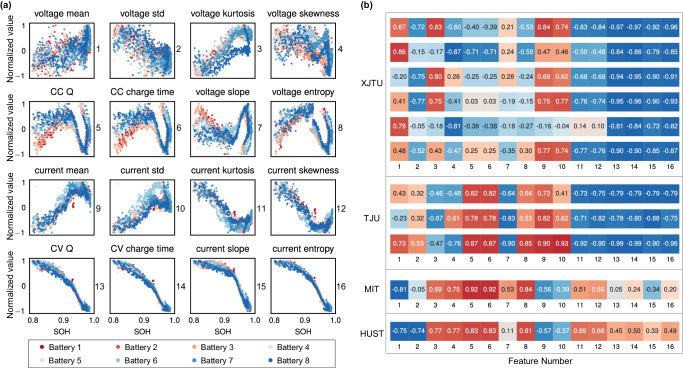
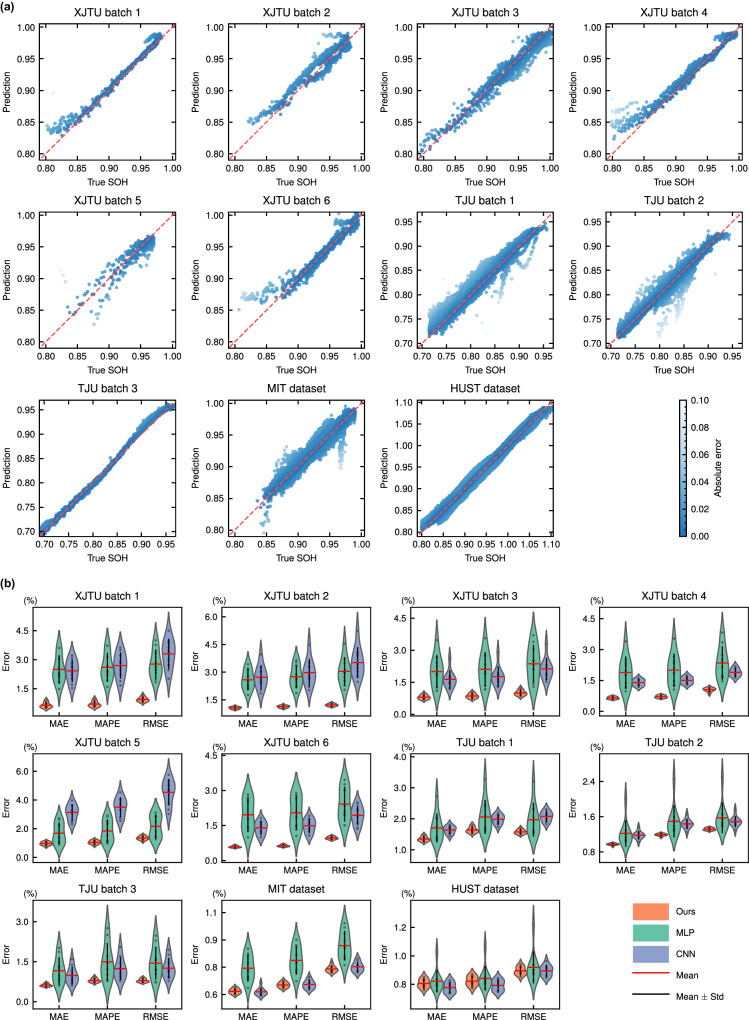
Accurate state-of-health (SOH) estimation is critical for reliable and safe operation of lithium-ion batteries. However, reliable and stable battery SOH estimation remains challenging due to diverse battery types and operating conditions. In this paper, we propose a physics-informed neural network (PINN) for accurate and stable estimation of battery SOH. Specifically, we model the attributes that affect the battery degradation from the perspective of empirical degradation and state space equations, and utilize neural networks to capture battery degradation dynamics. A general feature extraction method is designed to extract statistical features from a short period of data before the battery is fully charged, enabling our method applicable to different battery types and charge/discharge protocols. Additionally, we generate a comprehensive dataset consisting of 55 lithium-nickel-cobalt-manganese-oxide (NCM) batteries. Combined with three other datasets from different manufacturers, we use a total of 387 batteries with 310,705 samples to validate our method. The mean absolute percentage error (MAPE) is 0.87%. Our proposed PINN has demonstrated remarkable performance in regular experiments, small sample experiments, and transfer experiments when compared to alternative neural networks. This study highlights the promise of physics-informed machine learning for battery degradation modeling and SOH estimation.
Overview
The claims and statistics of this paper haven’t been checked yet.
Free: it reads the open-access text and checks the first 5 claims that cite a source we can check. Create a free account to check every claim.
Integrity signals
Registry
Cites
Statistics
Figures
Verification
Claims the paper makes
The claims and statistics of this paper haven’t been checked yet.
Free: it reads the open-access text and checks the first 5 claims that cite a source we can check. Create a free account to check every claim.
Claims other papers make about this one
Each is checked against this paper’s own text: does it say what the citing paper says it does?
The cited source says what the claim attributes to it.
In the citing paper
“Battery aging is a complex, multi-factor process involving the loss of active materials, lithium-ion depletion, increased internal resistance, and changes in the solid electrolyte interphase (SEI) layer [17-23]”
From The State of Health Estimation of Lithium-Ion Batteries: A Review of Health Indicators, Estimation Methods, Development Trends and Challenges (2025) · cites this paper as [17]
Self-check
Percentages, sums and reported differences re-computed from the paper’s own numbers.
The self-check needs the paper’s full text.
Citations
Cites
Raissi, M., Perdikaris, P., & Karniadakis, G. E. (2019) · Journal of Computational Physics · doi:10.1016/j.jcp.2018.10.045 · Cited by 20,384 · cited 2×
“Inspired by 54,55 , we propose to use a more generalized function approximator g 0 ð(cid:2)Þ with parameters θ 0 to represent the non-linear dynamics g ( ⋅ ).”
Physics-informed machine learning
Karniadakis, G. E., Kevrekidis, I. G., Lu, L., Perdikaris, P., Wang, S., & Yang, L. (2021) · Nature Reviews Physics · doi:10.1038/s42254-021-00314-5 · Cited by 8,718 · cited 2×
“The promising prospect of physics-informed neural network (PINN) 36,37 lies in amalgamating the strengths of physics-based and data-driven approaches, potentially addressing the aforementioned challenges.”
Recycling lithium-ion batteries from electric vehicles
Harper, G., Sommerville, R., Kendrick, E., Driscoll, L., Slater, P., Stolkin, R., Walton, A., Christensen, P., Heidrich, O., Lambert, S., et al. (2019) · Nature · doi:10.1038/s41586-019-1682-5 · Cited by 3,890 · cited 1×
“With the advantages of high energy density, low self-discharge rate, and long service life 1 , lithium-ion batteries have become the main energy storage devices in portable electronic devices, electric vehicles, aero-space, and many other fi elds 2 – 8 .”
Performance and cost of materials for lithium-based rechargeable automotive batteries
Schmuch, R., Wagner, R., Hörpel, G., Placke, T., & Winter, M. (2018) · Nature Energy · doi:10.1038/s41560-018-0107-2 · Cited by 3,233 · cited 1×
“With the advantages of high energy density, low self-discharge rate, and long service life 1 , lithium-ion batteries have become the main energy storage devices in portable electronic devices, electric vehicles, aero-space, and many other fi elds 2 – 8 .”
Data-driven prediction of battery cycle life before capacity degradation
Severson, K. A., Attia, P. M., Jin, N., Perkins, N., Jiang, B., Yang, Z., Chen, M. H., Aykol, M., Herring, P. K., Fraggedakis, D., et al. (2019) · Nature Energy · doi:10.1038/s41560-019-0356-8 · Cited by 3,228 · cited 3×
“For convenience, we refer to the four datasets as the XJTU battery dataset, TJU dataset 44 , HUST dataset 45 , and MIT dataset 25 .”
Simulation and Optimization of the Dual Lithium Ion Insertion Cell
Fuller, T. F., Doyle, M., & Newman, J. (1994) · Journal of The Electrochemical Society · doi:10.1149/1.2054684 · Cited by 2,057 · cited 1×
“Physics-based models are stable and accurate, but batteries with different chemical compositions require different model parameters, and the models have high computational costs 32 .”
Closed-loop optimization of fast-charging protocols for batteries with machine learning
Attia, P. M., Grover, A., Jin, N., Severson, K. A., Markov, T. M., Liao, Y.-H., Chen, M. H., Cheong, B., Perkins, N., Yang, Z., et al. (2020) · Nature · doi:10.1038/s41586-020-1994-5 · Cited by 1,180 · cited 1×
“Given the dif fi culty in establishing physical models and the dif fi - culty in obtaining complete discharge capacity, many studies have used data-driven methods 20 – 24 to estimate SOH based on current and voltage curves during charge and discharge.”
A review of rechargeable batteries for portable electronic devices
Liang, Y., Zhao, C., Yuan, H., Chen, Y., Zhang, W., Huang, J., Yu, D., Liu, Y., Titirici, M., Chueh, Y., et al. (2019) · InfoMat · doi:10.1002/inf2.12000 · Cited by 1,174
Modeling of Lithium-Ion Battery Degradation for Cell Life Assessment
Xu, B., Oudalov, A., Ulbig, A., Andersson, G., & Kirschen, D. S. (2018) · IEEE Transactions on Smart Grid · doi:10.1109/tsg.2016.2578950 · Cited by 1,162
Critical review of state of health estimation methods of Li-ion batteries for real applications
Berecibar, M., Gandiaga, I., Villarreal, I., Omar, N., Van Mierlo, J., & Van den Bossche, P. (2016) · Renewable and Sustainable Energy Reviews · doi:10.1016/j.rser.2015.11.042 · Cited by 1,126 · cited 1×
“In recent years, various SOH estimation methods of lithium-ion batterieshavebeenproposed,whichgreatlyadvancethedevelopment of this fi eld 12 – 15 .”
Research works printed but not linked: 1
- Raissi M Deep hidden physics models: deep learning of nonlinear partial differential equations J. Mach. Learn. Res. 2018 19 932 955
Cited by
Items 301–400 of 1,001
Tao, Z., & See, K. Y. (2026) · Journal of Power Sources · doi:10.1016/j.jpowsour.2026.240675 · Cited by 5
Physics‐Informed Artificial Intelligence for Battery Degradation, Aging, and Lifetime Prediction
Sulaima, M. F., Arora, S., Frischer, R., & Namazi, H. (2026) · Battery energy · doi:10.1002/bte2.70136 · Cited by 8
Zhu, S., Cui, B., Chen, Q., Duan, Y., Han, J., Tao, J., Xu, X., Liao, Y., Peng, Y., & Wang, Y. (2024) · Energy & Fuels · doi:10.1021/acs.energyfuels.4c03154 · Cited by 5
Luo, T., Bao, Z., He, Z., & Gao, M. (2025) · Journal of Energy Storage · doi:10.1016/j.est.2025.116994 · Cited by 6
Lu, K.-L. (2024) · arXiv (Cornell University) · doi:10.48550/arxiv.2408.11077 · Cited by 5
“On the other hand, in real complex scientific and engineering (e.g., physical, biochemical, medical) practices [CLS21, NTD + 23, WZZ + 24], data are often generated through expensive experiments or large-scale simulations, which are often sparse and noisy.”
BackgroundG-PGNN: A physics-guided generative neural network model for discrete spectrum prediction
Sun, L., Wang, J., Li, Z., Jiao, Z., & Ma, Y. (2025) · Ocean Engineering · doi:10.1016/j.oceaneng.2025.122411 · Cited by 4
Wang, Q., Xie, M., Wang, R., & Mo, H. (2025) · IEEE Transactions on Instrumentation and Measurement · doi:10.1109/tim.2025.3600722 · Cited by 12
“Restrictions apply. by Xi’an Jiaotong University [46], consisting of NCM batteries with a nominal capacity of 2.0 Ah, di ff ering in charging strategies.”
InfluentialHossini, A., Kloul, L., Guiraud, M., & Boulakia, B. C. (2025) · Reliability Engineering & System Safety · doi:10.1016/j.ress.2025.111613 · Cited by 4
Physics-Based Neural Network for Unsupervised Health Assessment of Lithium-Ion Batteries
Peng, Z., Zhang, H., Li, Q., Xiao, Y., & Ma, Y. (2025) · IEEE Transactions on Instrumentation and Measurement · doi:10.1109/tim.2025.3614808 · Cited by 5
“Compared with the algorithm described in [22], this method substitutes the feature extraction method with an unsupervised feature extraction network, denoted as Model-F, and incorporate a model-based trend layer into the HI construction network, denoted as Model-H, aiming to enhance the accuracy…”
Lyu, Y., Dong, S., & Guo, Z. (2025) · Energy storage materials · doi:10.1016/j.ensm.2025.104643 · Cited by 4
Evaluation of life-cycle state of health for solid-state lithium batteries using a hybrid LSTM model
Bai, H., Wang, X., Gan, Y., Zhao, X., Jin, H., Wang, G., Kang, G., & Chen, W. (2025) · International Journal of Fatigue · doi:10.1016/j.ijfatigue.2025.109323 · Cited by 4
Continuous Physics‐Informed Learning Expedited Battery Mechanism Decoupling
Ji, S., Yuan, J., Zhang, B., Sanin, A. O., Merker, L., Zhang, Z., Zhu, J., & Stein, H. S. (2025) · Advanced Science · doi:10.1002/advs.202506772 · Cited by 5
Chen, Y., Dong, J., Lu, Y., Yan, K., Guan, Y., Zhao, G., Li, B., Sun, R., Zhao, F., Zhang, Y., et al. (2025) · Chinese Chemical Letters · doi:10.1016/j.cclet.2025.112052 · Cited by 4
Ju, S., Li, P., Luo, Y., Wang, K., & Zhang, H. (2025) · Ionics · doi:10.1007/s11581-025-06785-1 · Cited by 5
Yang, H., Li, J., Cen, K., Yan, J., & Bo, Z. (2025) · Journal of Power Sources · doi:10.1016/j.jpowsour.2025.238918 · Cited by 4
Liu, S., Xu, D., Shen, C., Ye, Y., Zhang, C., & Wang, Y. (2025) · IEEE Transactions on Industrial Informatics · doi:10.1109/tii.2025.3640690 · Cited by 4
“For instance, Wang et al. [14] proposed a physics-informed neural network (PINN) for stable estimation of battery state of health (SOH).”
Beg, M., Alcock, K. M., Sam, V., Rakshit, S., Paul, S., Yu, H., & Goh, K. B. (2025) · Applied Thermal Engineering · doi:10.1016/j.applthermaleng.2025.129552 · Cited by 4
Gao, Z. J., Wang, X., Guo, X., & Duan, B. (2026) · Journal of The Electrochemical Society · doi:10.1149/1945-7111/ae32b5 · Cited by 5
Ren, Z., Ruichao, W. E. I., Huang, S., He, Y., Liang, S., Deng, Z., & Gao, J. (2026) · Journal of Energy Storage · doi:10.1016/j.est.2026.120562 · Cited by 4
Vykhodtsev, A. V., ShakeriHosseinabad, F., Jang, D., Wang, Q., Rosehart, W., & Zareipour, H. (2026) · Journal of Energy Storage · doi:10.1016/j.est.2026.120563 · Cited by 4
Battery aging assessment: from critical insights to enhanced diagnosis
Che, Y., Schaeffer, J., Rhyu, J., Wu, L., Asinger, P. A., Kim, M., Sass, J., Findeisen, R., Bazant, M. Z., Chueh, W. C., et al. (2026) · Energy & Environmental Science · doi:10.1039/d5ee06439b · Cited by 7
LiRUL: A physics-constrained and lightweight learning framework for edge-based RUL prediction
Pournazari, J., El‐Dalahmeh, M., Al‐Dubai, A., Liu, X., Park, D.-H., Marco, J., Dinh, T. Q., Ahn, J.-H., & Niri, M. F. (2026) · Results in Engineering · doi:10.1016/j.rineng.2026.109537 · Cited by 4
Jiang, Z., Zha, Z., & Li, Z. (2026) · Measurement Science and Technology · doi:10.1088/1361-6501/ae44be · Cited by 4
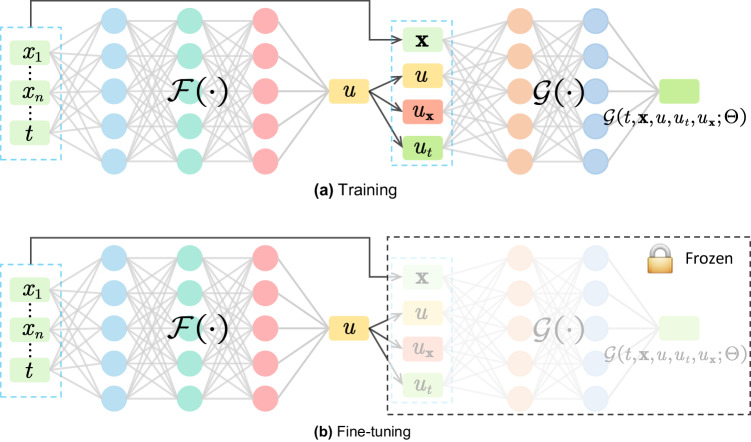
“Based on the above definitions, we can formulate a PINN for bearing degradation, denoted as R [47]: This residual measures the inconsistency between the time derivative produced by the predictor F and the time derivative suggested by the learned operator G .”
Cheng, W., Sun, S., Yin, H., Wang, Z., Cai, W. J., Li, C., & Ding, Y. (2026) · Journal of Energy Storage · doi:10.1016/j.est.2026.121000 · Cited by 4
Hu, H., Liang, C., Huang, X., Mo, H., Zou, C., & Tao, S. (2026) · Journal of Power Sources · doi:10.1016/j.jpowsour.2026.239592 · Cited by 5
Wang, Z., Siquan, Y. U. A. N., Cai, S., Huang, R., Liu, Y., Wei, M., Zhang, P., & Hu, J. (2026) · Energy & Fuels · doi:10.1021/acs.energyfuels.5c06133 · Cited by 4
Zhuang, Z., You, J., Li, Y., Xing, X., Ling, R., Yang, T., & Chen, Y. (2026) · IEEE Transactions on Transportation Electrification · doi:10.1109/tte.2026.3667124 · Cited by 4
“Based on the experience of [11], [16], and [17], we select nine HIs as shown in Fig.”
InfluentialJafari, S., & Son, S.-Y. (2026) · Journal of Energy Storage · doi:10.1016/j.est.2026.121364 · Cited by 5
Wang, C., Wu, J., Lei, Y., Zhang, H., & Mo, H. (2026) · Reliability Engineering & System Safety · doi:10.1016/j.ress.2026.112567 · Cited by 4
Wei, Y., Liu, K., Rui, J., & Zhao, Q. (2026) · Energy and AI · doi:10.1016/j.egyai.2026.100713 · Cited by 4
Wang, Y., Lier, S. K., Li, F., Maier, S., Oestreich, T., Breitner, M. H., & Schade, W. (2026) · Journal of Energy Storage · doi:10.1016/j.est.2026.121444 · Cited by 4
Physics informed virtual sensor modeling for wind power prediction
Liu, A., Zhang, K., Jia, M., Liu, Z., Yang, Q., & Liu, Y. (2026) · Energy · doi:10.1016/j.energy.2026.140691 · Cited by 4
Feedback, physics, and forecasts: The emerging paradigm of machine learning-driven battery research
Vangara, S., Nanda, J., & Tzeng, Y. (2026) · MRS Energy & Sustainability · doi:10.1557/s43581-026-00153-w · Cited by 4
Jiang, M., Liu, Y., Cui, H., Tian, X., Zheng, Q., Shen, Y., Xiong, Z., Li, N., Li, J., Feng, C., et al. (2026) · Energy and AI · doi:10.1016/j.egyai.2026.100725 · Cited by 4
Deng, Z., Fang, H., Song, S., & Wang, J. (2026) · Journal of Energy Storage · doi:10.1016/j.est.2026.121827 · Cited by 5
Lv, Z., Ou, S. S., Jing, H., Wu, G., & Shi, D. (2026) · Energy · doi:10.1016/j.energy.2026.141302 · Cited by 6
Qiao, Z., Yin, A., Xu, W., & Qiao, Y. (2026) · Reliability Engineering & System Safety · doi:10.1016/j.ress.2026.112985 · Cited by 4
Liu, S., Song, 吕. L., Huang, J., Zhao, J., & Zhang, H. (2026) · Renewable and Sustainable Energy Reviews · doi:10.1016/j.rser.2026.117149 · Cited by 5
Lithium-Ion Battery State of Health Prediction Using a Hybrid BiLSTM–Random Forest Framework
Mohamud, N. M., Ayob, S. M., Saimon, S. M., Nahhas, A. M., Arfeen, Z. A., Masud, M. I., & Aman, M. (2026) · Batteries · doi:10.3390/batteries12060210 · Cited by 4
“Empirical degradation laws and neural networks trained on large and diverse data with a mean absolute percentage error of 0.87% also showed good generalization/robustness in small-sample and transfer learning problems [22].”
InfluentialTang, R., Lj, W., Wang, Z., Zhu, L., Sun, A., Ru, Q., & Ju, B. (2026) · Digital twins and applications. · doi:10.1049/dgt2.70042 · Cited by 4
Toward Next Generation Lithium‐Ion Battery Recycling: From Metal Extraction to In Situ Cell Repair
Ouyang, C., Mo, W., Wang, J., Yu, W., Xu, S., & Yang, Y. (2026) · Advanced Energy Materials · doi:10.1002/aenm.71295 · Cited by 5
Rizanov, S. M., Stoynova, A. V., & Mihov, G. S. (2026) · Batteries · doi:10.3390/batteries12070255 · Cited by 7
“The main challenge to their utilization lies in balancing realism with tractability and calibration [27–34 Digital twins should be viewed not as an additional estimator class but as a systems architecture for integrating models, data, uncertainty, and operations.”
Physics-informed neural networks for quantum propagators in Wavepacket dynamics
Zeng, H., Kou, Y., & Sun, X. (2025) · Molecular Physics · doi:10.1080/00268976.2025.2501775 · Cited by 4
Data-Driven Versus Physics-Informed Neural Networks for Nonadiabatic Semiclassical Mapping Dynamics
Zeng, H., & Sun, X. (2025) · Communications in Computational Chemistry · doi:10.4208/cicc.2025.152.01 · Cited by 4
Singh, A., Sharma, D., & Kumari, P. (2025) · Engineering Computations · doi:10.1108/ec-10-2024-0975 · Cited by 4
Temperature-Compensated Battery Modeling Under Genetic Algorithm-Neural Network Joint Method
Tao, Z., Zhao, Z., Jie, H., Wang, C., Yang, M., & Yak, S. K. (2025) · IEEE International Electrical and Energy Conference (CIEEC) · doi:10.1109/cieec64805.2025.11116055 · Cited by 7
“While temperature was the primary focus, other factors like SOH and SOC should be considered in future work [23].”
Self-citationMSTAN-SelectiveMamba: A hybrid deep learning framework for precise battery life prediction
Li, K., Lei, Z., & Deng, C. (2025) · Journal of Energy Storage · doi:10.1016/j.est.2025.118018 · Cited by 4
Murgai, S., Bhagwat, H., Dandekar, R., Dandekar, R., & Panat, S. (2024) · arXiv (Cornell University) · doi:10.48550/arxiv.2410.14347 · Cited by 13
Yang, D., He, W., & He, X. (2025) · Energies · doi:10.3390/en18082105 · Cited by 3
Wang, Y., Chen, J., & Li, B. (2025) · Acta Physica Sinica · doi:10.7498/aps.74.20250422 · Cited by 4
Chen, L., Wang, Y., Sun, W. M., Dong, X., & Wang, B. (2025) · IEEE Transactions on Sustainable Energy · doi:10.1109/tste.2025.3581385 · Cited by 3
“However, studies have also reported the limitations of PINNs when dealing with complex partial differential equations under high iteration counts [30].”
Lyu, Y., Xiao, X., Fan, R., & Chen, C. (2025) · IEEE Transactions on Systems Man and Cybernetics Systems · doi:10.1109/tsmc.2025.3585260 · Cited by 6
“This study evaluates the proposed method using the MIT-Stanford-Toyota Research Center lithium battery dataset (MIT) [35] and the XJTU dataset [36].”
Di, Z., Ye, Z., Deng, W., Guo, X., Yi, N., & Wei, R. (2025) · Ionics · doi:10.1007/s11581-025-06700-8 · Cited by 3
“In the domain of deep learning, long short-term memory (LSTM) networks have demonstrated superior performance for RUL prediction, particularly due to their ability to model time-series data and capture long-term dependencies [30, 31].”
Gao, T., Cui, K., Liu, Z., Li, H., & Shi, D. (2025) · IEEE Transactions on Instrumentation and Measurement · doi:10.1109/tim.2025.3617390 · Cited by 4
Leveraging artificial intelligence for predictive health assessment of Lithium-Ion batteries
Alqaryuti, A., Moawad, K., & Mayyas, A. T. (2025) · Transportation Engineering · doi:10.1016/j.treng.2025.100391 · Cited by 4
Pang, B., zhang, H., & Hao, Z. (2025) · AIP Advances · doi:10.1063/5.0292276 · Cited by 3
Chen, Y., Chen, Z., Dai, S.-P., Xie, Y., Yao, S., & Lin, D. (2025) · Journal of Chromatography A · doi:10.1016/j.chroma.2025.466565 · Cited by 3
Han, Y., Zhuang, J., Li, M., & Liu, Y. (2025) · Nonlinear Dynamics · doi:10.1007/s11071-025-11901-x · Cited by 3
“In this section, the specific arrangement for descending order is [2,75,65,55,45,35,25,2], the uniform distribution is [2,55,55,55,55,55,55,2], and the ascending order is [2,25,35,45,55,65,75,2].”
Digital Twin for Capacity Estimation of Lithium-Ion Batteries With Large Language Models
Qin, D., & Yang, J. H. (2025) · IEEE Transactions on Transportation Electrification · doi:10.1109/tte.2025.3645866 · Cited by 4
“Wang et al. [10] developed a physics-constrained neural network (PINN), achieving an SOH prediction error as low as 0.87% across multiple battery datasets.”
InfluentialLiu, Y., Xu, Y., Liao, Z., Dai, D., Chen, H., & Yao, L. (2025) · Journal of Energy Storage · doi:10.1016/j.est.2025.119595 · Cited by 3
Kadem, O., & Kim, J. (2025) · IEEE Transactions on Transportation Electrification · doi:10.1109/tte.2025.3647214 · Cited by 7
“To estimate SoH, Wang et al. [15] introduced a physics-informed NN whose physical interpretability is constrained by empirical and state-space models.”
Guan, Q., Zhang, B., Fan, Y., Guan, Q., Zhao, Z., & Tan, X. (2026) · Journal of Energy Storage · doi:10.1016/j.est.2025.120300 · Cited by 3
Self-citationZhang, Z., Shang, Y., Li, X., & Cheng, Z. (2026) · Energy storage materials · doi:10.1016/j.ensm.2026.104892 · Cited by 3
Shen, X., Wei, Y., Lu, Q., & Du, L. (2026) · Journal of The Electrochemical Society · doi:10.1149/1945-7111/ae3e19 · Cited by 3
Long, Z., Chen, K., Tang, M., Zheng, X., Wang, H., Luo, Y., Li, Y., Nie, G., Zhang, X., Gao, G., et al. (2026) · International Journal of Green Energy · doi:10.1080/15435075.2026.2619449 · Cited by 9
“…equations (UDEs) show strong potential in parameter calibration and dynamics recovery from sparse data (Bai et al. 2024; Wang F et al. 2024; Wang Y et al. 2024; Chen L et al. 2025; Kuzhiyil et al. 2025), though most implementations remain at proof-of-concept level, with challenges in…”
Wang, X., Shen, B., Yang, W., Wang, X., Li, C., & Wu, H. (2026) · Journal of Nanobiotechnology · doi:10.1186/s12951-026-04023-y · Cited by 3
“PINNs have been applied to problems ranging from battery degradation [23] and geophysical inversion to fluid–structure interactions [24] and physiological signal reconstruction [25, 26], delivering state-of-the-art performance in settings where labeled data are scarce and physical priors are strong.”
Cai, S., Chen, J., Hu, J., Huang, R., Liao, J., Wei, M., & Zhang, P. (2026) · Energy storage materials · doi:10.1016/j.ensm.2026.104983 · Cited by 3
Probing Buried Interfaces in Batteries: Toward Operando Visibility and Quantitative Diagnosis
Li, Z., Omirkhan, A., Nicklin, C., & Ryan, M. P. (2026) · Chemistry of Materials · doi:10.1021/acs.chemmater.5c03241 · Cited by 3
Sensing meets physics-aware artificial intelligence for empowering smart batteries
Che, Y., Huang, J., Hu, X., & Braatz, R. D. (2026) · Nature Sensors · doi:10.1038/s44460-026-00032-4 · Cited by 3
Sun, L., Xiao, C., Zhao, J., Han, Y., Chen, S. W., & Chen, L. (2026) · Renewable and Sustainable Energy Reviews · doi:10.1016/j.rser.2026.116855 · Cited by 3
Sim, M.-S., Noh, J., & Yoon, Y.-J. (2026) · Energy and AI · doi:10.1016/j.egyai.2026.100712 · Cited by 4
Vafamand, A., Li, J., Borhan, H., & Shahbakhti, M. (2026) · Journal of Energy Storage · doi:10.1016/j.est.2026.121591 · Cited by 3
Lu, X., Liu, H., Du, G., Zou, Y., & Zhang, X. (2026) · Engineering Applications of Artificial Intelligence · doi:10.1016/j.engappai.2026.114544 · Cited by 3
Li, D., Xing, Y., & Li, X. (2026) · Journal of Energy Storage · doi:10.1016/j.est.2026.121823 · Cited by 7
Power battery state of health estimation for real vehicle data using a novel multimodal architecture
Wang, W., Dai, S., Huang, Z., Zhang, W., Zhang, T., & Xu, X. (2026) · Journal of Energy Storage · doi:10.1016/j.est.2026.122096 · Cited by 3
Wang, R., Yu, A., Sun, Q., Li, Z., & Qin, D. (2026) · Energy Conversion and Economics · doi:10.1049/enc2.70039 · Cited by 5
Ramirez, I., Alcibar, J., Gómez, J. P., Sanz, M., & Aizpurua, J. I. (2026) · Advanced Intelligent Systems · doi:10.1002/aisy.202501502 · Cited by 3
“The application of PINNs to prognostics has recently been explored in domains such as battery degradation modeling [16] and transformer aging based on heat diffusion physics [17].”
Chen, Z., Li, S., Zhu, J., Lu, S., Mao, L., & Wang, H. (2026) · Reliability Engineering & System Safety · doi:10.1016/j.ress.2026.112784 · Cited by 5
Assessing Lithium-Ion Battery Aging in Urban Electric Buses Through Rainflow-Based Cycle Counting
Ferreira, M. A. M., Pereirinha, P. G., & Trovão, J. P. F. (2026) · World Electric Vehicle Journal · doi:10.3390/wevj17050245 · Cited by 3
“Wang, F. et al. [37] This method achieved a Mean Absolute Percentage Error (MAPE) of 0.87% for SOH estimation across 387 batteries and performed well in regular, small sample, and transfer experiments.”
InfluentialYi, Y., He, X., Zhu, Y., Wang, J., Chen, Z., & Li, H. (2026) · Journal of Power Sources · doi:10.1016/j.jpowsour.2026.240212 · Cited by 5
Liu, P., Li, D., Zhu, J., Cheng, B., Wu, Y., Yang, Q., & Li, W. (2026) · Journal of Energy Storage · doi:10.1016/j.est.2026.122406 · Cited by 3
Zhao, Z., Feng, M., Yu, Q., Yuan, H., Wang, F., & Zhai, Z. (2026) · Journal of Energy Storage · doi:10.1016/j.est.2026.122408 · Cited by 6
Self-citationZhang, H., Gao, Y., Sun, J., Chen, Y., Zhang, J., & Zhao, S. (2026) · Neurocomputing · doi:10.1016/j.neucom.2026.134010 · Cited by 3
Battery Safety: Mechanisms, Monitoring, and Machine Intelligence
Jing, H., Ou, S. S., Lv, Z., Guo, H., Burke, A. F., & Zhao, J. (2026) · Advanced Energy Materials · doi:10.1002/aenm.71093 · Cited by 3
Qin, C., Wang, T., Yu, X., Bi, J., Wang, K., Zhou, Z., & Ai, W. (2026) · Coordination Chemistry Reviews · doi:10.1016/j.ccr.2026.218188 · Cited by 3
Liu, Z.-Y., Wu, T., Wang, Y., Wang, C.-C., Shi, S.-R., Fan, X.-Z., Zhang, J. C., & Kong, L. (2026) · Journal of Energy Chemistry · doi:10.1016/j.jechem.2026.07.029 · Cited by 3
Chan, J., Wang, H., Chen, Z., Pan, H., Wu, W., Wang, Z., Pan, E., Xie, M., & Xi, L. (2026) · Advanced Science · doi:10.1002/advs.77261 · Cited by 3
“At the corpus level, our analysis corroborates the conclusion of Wang et al. [ 48 ] that charge–discharge physical features are relatively insensitive to cycling protocols yet more strongly governed by the underlying chemistry.”
Lithium Battery Enhancement Through Electrical Characterization and Optimization Using Deep Learning
de Anda-Suárez, J., Pérez-Zúñiga, G., López-Ramírez, J. L., Herrera‐Pérez, G., González, I. Z., & Verde‐Gómez, Y. (2025) · World Electric Vehicle Journal · doi:10.3390/wevj16030167 · Cited by 5
Yang, J., & Dang, Y. (2025) · ACS Applied Energy Materials · doi:10.1021/acsaem.5c01927 · Cited by 3
Hemavathi, S., & Arumugam, T. (2025) · Proceedings of the Institution of Mechanical Engineers Part A Journal of Power and Energy · doi:10.1177/09576509251382717 · Cited by 3
“…limits; grey-box methods must incorporate uncertainty quanti fi cation and safety regu-larizes to avoid silent drift; and data-driven pipelines should emphasize domain adaptation and self-supervised pretraining, with strict physics-based gating before deployment in safety-critical contexts 123,124 .”
Global–Local Feature Fusion for Accurate Long-Term Battery State-of-Health Forecast
Tang, X., Liu, Z., Li, P., & Su, H. (2025) · IEEE Transactions on Transportation Electrification · doi:10.1109/tte.2025.3624468 · Cited by 3
“The second dataset was released by Xi’an Jiaotong University (XJTU) [19].”
Chen, K., Ding, C., Wang, B., Wang, J., Huang, W., & Zhu, Z. (2025) · IEEE Transactions on Instrumentation and Measurement · doi:10.1109/tim.2025.3566801 · Cited by 3
“For example, Wang et al. [21] developed a physics-informed neural network for accurately estimating battery state-of-health by embedding empirical degradation and state-space equations into the model.”
The AI Revolution in Chemistry: Shaping the Future of Materials and Biomedical SciencesPreprint
Baranwal, B. S., Jones, L. O., Maind, A., Balande, U., Khandare, D. G., Goyal, H., Diaz, L. M. L., Ivanov, J. M., & Zhou, Q. A. (2025) · ChemRxiv · doi:10.26434/chemrxiv-2025-8lrf0 · Cited by 4
Yang, P., Yan, W., Li, R., Chen, L., & Guo, L. (2025) · Computers, materials & continua/Computers, materials & continua (Print) · doi:10.32604/cmc.2025.064947 · Cited by 2
“…[14], a Physics-Informed Neural Network (PINN) was proposed to address the challenges in battery SOH estimation caused by diverse battery types and operating conditions, achieving a Mean Absolute Percentage Error (MAPE) of 0.87% through extensive experiments and feature extraction methods [14].”
InfluentialFang, B., Liu, Z., & Wu, Q. (2025) · International Symposium on System Security, Safety, and Reliability (ISSSR) · doi:10.1109/isssr65654.2025.00015 · Cited by 2
Li, Y., Fan, Y., Liang, Y., Wu, X., & He, S. (2025) · Ionics · doi:10.1007/s11581-025-06519-3 · Cited by 3
“Accurate SOC estimation has been demonstrated to prevent overcharging and over-discharging, prolong the battery lifespan, and inform BMS decision-making [5].”
Zhou, D., Sun, Y., Hu, Q., Shi, Y., Yu, J., & Zhang, J. (2025) · Sustainable Energy Technologies and Assessments · doi:10.1016/j.seta.2025.104526 · Cited by 5
Chen, D., Wu, X., Yin, T., Chen, Z., Chang, K., Hu, S., & Xu, X. (2025) · International Journal of Green Energy · doi:10.1080/15435075.2025.2560576 · Cited by 2
Wu, X., Li, P., Zhang, Y., Zhou, J., Xiang, S., Hou, J., Wang, G., & Dustdar, S. (2025) · Energy · doi:10.1016/j.energy.2025.138522 · Cited by 3
“Furthermore, to validate the necessity of the distillation methods, we also incorporated a lightweight network architecture, FITS [49], along with the SOTA physical predictor, PINN [50], to provide a comparative basis for model performance.”
Lin, H., Lyu, W., Guo, Q., Wang, C., & Deng, Z. (2025) · Journal of Energy Storage · doi:10.1016/j.est.2025.118754 · Cited by 4
Metadata
- Authors
- Wang, F., Zhai, Z., Zhao, Z., Di, Y., & Chen, X.
- Affiliations
- Xi'an Jiaotong University (CN)
- Corresponding author
- Zhao, Zhibin
- Chen, Xuefeng
- Venue
- Nature Communications
- Published
- 2024-05-21
- Volume
- 15
- Issue
- 1
- Pages
- 4332-4332
- ISSN
- 2041-1723 (ISSN-L)
- PMC
- PMC11109204
- OpenAlex
- W4398164319
- Cited by
- 897
- References
- 56
- Citations by year
- 2026: 532 · 2025: 322 · 2024: 43
- FWCI
- 96.71
- Type
- journal article
- Language
- en
- Open access
- gold
- doi.org
- Licence
- cc-by
- creativecommons.org/licenses/by/4.0 (tdm)
- creativecommons.org/licenses/by/4.0 (vor)
- Locations
- Nature Communications (publishedVersion, cc-by)
- PubMed Central (publishedVersion, cc-by)
- PubMed (publishedVersion)
- RePEc: Research Papers in Economics (submittedVersion)
- DOAJ (DOAJ: Directory of Open Access Journals) (submittedVersion, cc-by-sa)
- Funders
- Fundamental Research Funds for the Central Universities
- National Natural Science Foundation of China (52105113, U22B2013)
- China Postdoctoral Science Foundation (2021M692557, 2021TQ0263)
- Topics
- Physical Sciences › Engineering › Automotive Engineering › Battery Modeling and Management
- Physical Sciences › Engineering › Electrical and Electronic Engineering › Advancements in Battery Materials
- Physical Sciences › Engineering › Civil and Structural Engineering › Structural Health Monitoring Techniques
- Keywords
- lithium-ion batteries, state of health estimation, battery degradation modeling, physics-informed neural networks, NCM batteries, statistical feature extraction, transfer learning, small sample learning, battery datasets
About these checks
Registry, retraction, Cites and statistics results are computed, not judged, with one exception: a printed reference that no index lists is read once by a model before it counts as a citation error. Claims are extracted by a model and kept only when their quote appears verbatim in the text; each cited source is then checked, with a model’s help, for whether it says what the claim relies on. Those verdicts can be wrong — read the claim’s quote and the cited source before relying on one.
Statistics and arithmetic are recomputed, not judged.
Confidence bands are shown only for fields calibrated on our annotated test set. None is calibrated yet, so no band is shown.
What counts as a claim ›How we measure confidence ›How we check this ›
Are you an author, or do you see a problem with this page? Request a review
Data sources
Bibliographic data: Semantic Scholar, OpenAlex, Crossref.
Contains information from the Semantic Scholar Academic Graph Datasets, made available under the ODC Attribution License (ODC-BY 1.0).
Semantic Scholar’s data is described in: Kinney, R., et al. (2023). The Semantic Scholar Open Data Platform. arXiv:2301.10140.
