

Using social and behavioural science to support COVID-19 pandemic response
Open accessThe DOI matches its Crossref record; 257 of the 259 references it cites were found in a registry or an index; 24 of the 89 sources its claims cite were checked for support.
Abstract
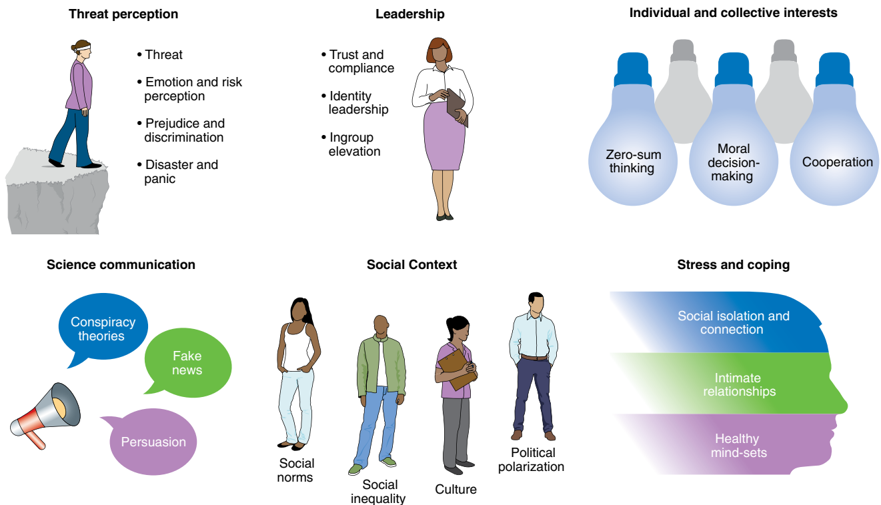
The COVID-19 pandemic represents a massive global health crisis. Because the crisis requires large-scale behaviour change and places significant psychological burdens on individuals, insights from the social and behavioural sciences can be used to help align human behaviour with the recommendations of epidemiologists and public health experts. Here we discuss evidence from a selection of research topics relevant to pandemics, including work on navigating threats, social and cultural influences on behaviour, science communication, moral decision-making, leadership, and stress and coping. In each section, we note the nature and quality of prior research, including uncertainty and unsettled issues. We identify several insights for effective response to the COVID-19 pandemic and highlight important gaps researchers should move quickly to fill in the coming weeks and months.
Overview
CoChat Summary
TL;DR
This perspective argues that social and behavioural science can help align public behaviour with COVID-19 public health recommendations across threat perception, social context, science communication, cooperation, leadership, and stress/coping. It synthesizes prior evidence and policy insights while cautioning that evidence is limited, often drawn from non-pandemic contexts, and in many areas unsettled.
Key findings
- The paper notes the scale of infectious disease threats: the bubonic plague killed approximately 25% of the European population, and by March 2020 COVID-19 had spread to more than 118,000 cases and caused 4,291 deaths in 114 countries. It also notes that 21 countries donated medical supplies to China in February, with China reciprocating widely.
- Fear appeals can change behaviour when people feel capable of dealing with the threat, but produce defensive reactions when people feel helpless; optimism bias can lead people to underestimate personal risk and ignore public health warnings.
- Social norms, inequality, culture, and political polarization shape pandemic behaviour: correcting misperceived norms can help when most people are already doing the desirable behaviour, but descriptive norms can backfire if the behaviour is undesirable unless paired with prescriptive norms.
- Effective communication and leadership may involve credible sources, messages that protect others or align with moral values, prebunking/inoculation against misinformation, accuracy nudges, shared social identity, and leaders modelling prosocial sacrifice; excessive national self-image concerns (“collective narcissism”) can backfire.
Methods
- Design: Perspective/narrative review; no primary data collection or sample. Topics were identified by the corresponding authors as potentially relevant to pandemic response and are explicitly not exhaustive.
- Evidence base: synthesizes prior social and behavioural research on threat perception, social context, science communication, moral decision-making, cooperation, leadership, and stress/coping, drawing on laboratory experiments, correlational studies, field experiments, meta-analyses, and preprints/forthcoming work.
- Analysis: narrative synthesis with policy implications and identified research gaps; no systematic search strategy or quantitative synthesis is reported.
Limitations
- Stated: due to space constraints, the paper provides only a brief summary of each topic; research on these topics is ongoing and in many cases far from settled; there is very little published social science research on the current pandemic, so discussion often draws from different circumstances and evidence quality varies substantially.
- Stated: insights and policy implications should be interpreted with caution.
- Evident: as a perspective rather than a systematic review or empirical study, it does not provide a comprehensive evidence appraisal, and its reliance on preprints and forthcoming sources limits certainty.
Model-written summary. Check it against the paper before relying on it.
Integrity signals
Registry
Cites
Statistics
Figures
Verification
Claims the paper makes
19 Valid · 5 Not valid · 37 Not checked · 13 Own results and interpretations
At least one cited source doesn’t support this claim or points to a different paper, and none confirmed it — see the verdicts below.
In the paper
“For instance, in hypothetical scenarios about deciding whether to go to work while sick, American and British participants reported they would be less willing to stay home when it was uncertain they would infect a co-worker.”
What the sources say
- Disputedcites [176] Kappes, A. et al. Uncertainty about the impact of social decisions increases prosocial behaviour. Nat. Hum. Behav. 2, 573–580 (2018). sourceExperimental — accuracy not yet measured
In the paper’s account of the infectious-disease scenario (Abstract; page not provided), participants facing uncertainty about how severely a co-worker might be affected were more likely to stay home than controls, not less. The paper distinguishes that impact uncertainty from uncertainty about whether a co-worker would be infected. Its Study 6 Methods (page not provided) describe recruitment through AMT, but do not establish the claimed American and British participant groups. (LLM, conf=0.88)
Checked by a reasoning model — may be wrong.
hedgedstates an association- Asserted: passes — The authors put it forward as true.
- Checkable: passes — It can be checked against evidence.
- Load-bearing: passes — The paper’s conclusions depend on it.
- Based: passes — The paper gives a reason why it holds.
- Disputed
The cited sources that could be checked couldn’t confirm or dispute this claim.
In the paper
“Moreover, there is mixed research regarding whether corrections may actually increase belief in the original misinformation 121,124-126 or in other misleading claims that fail to get corrected 127 .”
What the sources say
- Not checked — no full text of the sourcecites [121] Guess, A. & Coppock, A. Does counter-attitudinal information cause backlash? Results from three large survey experiments. Br. J. Polit. Sci. https://doi.org/10.1017/S0007123418000327 (2018). source
- Not matchedcites [124] Wittenberg, C. & Berinsky, A.J. Misinformation and its correction. in Social Media and Democracy: The State of the Field (eds Persily, N. & Tucker, J. A.) (Cambridge University Press, forthcoming).
Its entry has no title and year that we can search by.
- Not checked — no full text of the sourcecites [125] Swire, B. & Ecker, U.K.H. Misinformation and its correction: Cognitive mechanisms and recommendations for mass communication. in Misinformation and Mass Audiences (eds. Southwell, B. G., Thorson, E. A. & Sheble, L.) 195–2011 (University of Texas Press, 2018). source
- Not checked — no full text of the sourcecites [126] Wood, T. & Porter, E. The elusive backfire effect: mass attitudes’ steadfast factual adherence. Polit. Behav. 41, 135–163 (2018). source
- Could not verifycites [127] Pennycook, G., McPhetres, J., Zhang, Y. & Rand, D. Fighting COVID-19 misinformation on social media: Experimental evidence for a scalable accuracy nudge intervention. Preprint at PsyArXiv https://doi.org/10.31234/osf.io/uhbk9 (2020). sourceExperimental — accuracy not yet measured
Citation 127 is attached to the suggestion that corrections may increase belief in other misleading claims that go uncorrected. The Statement of Relevance and Discussion describe an accuracy nudge that improved sharing decisions, not corrections or their effects on belief in uncorrected claims. Searches for correction backfire and uncorrected misinformation found no passage addressing that point; page numbers were unavailable in our copy. (LLM, conf=0.76)
hedgedstates a possible cause- Asserted: passes — The authors put it forward as true.
- Checkable: passes — It can be checked against evidence.
- Load-bearing: passes — The paper’s conclusions depend on it.
- Based: passes — The paper gives a reason why it holds.
The sources with a verdict support this claim; the rest weren’t checked yet, have no full text we could read, or their verdicts aren’t rated yet.
In the paper
“Indeed, laboratory research has found that people prioritize local over global (or international) interests 185,186 .”
What the sources say
- Supportedcites [185] Milinski, M., Hilbe, C., Semmann, D., Sommerfeld, R. & Marotzke, J. Humans choose representatives who enforce cooperation in social dilemmas through extortion. Nat. Commun. 7, 10915 (2016). source
The Results section (‘Voters choose selfish representatives’; page unavailable) reports that participants preferentially re-elected representatives who contributed less to the shared climate account and elected candidates who pledged to contribute less than a fair share. In this simulated international dilemma, that supports the claim that participants favored their own group’s interests over the collective goal; it does not establish that everyone did so. (LLM, conf=0.85)
- Not checked — no full text of the sourcecites [186] Reinders Folmer, C. P. et al. One for all: what representing a group may do to us. J. Exp. Soc. Psychol. 48, 1047–1056 (2012). source
plain- Asserted: passes — The authors put it forward as true.
- Checkable: passes — It can be checked against evidence.
- Load-bearing: passes — The paper’s conclusions depend on it.
- Based: passes — The paper gives a reason why it holds.
- Supported
Every source the paper cites for this claim was checked and supports it.
In the paper
“However, when going to work risked infecting an elderly co-worker who would suffer a serious illness, participants reported they would be more willing to stay home 176 .”
What the sources say
- Supportedcites [176] Kappes, A. et al. Uncertainty about the impact of social decisions increases prosocial behaviour. Nat. Hum. Behav. 2, 573–580 (2018). source
The Study 6 Methods (page not provided) describe a scenario in which going to work could infect an older, vulnerable co-worker who would suffer severely, followed by a rating of willingness to go to work. The reported Study 6 findings (indexed under Abstract; page not provided) say participants given that risk information were significantly more likely to stay home than controls. (LLM, conf=0.92)
hedgedstates a cause- Asserted: passes — The authors put it forward as true.
- Checkable: passes — It can be checked against evidence.
- Load-bearing: passes — The paper’s conclusions depend on it.
- Based: passes — The paper gives a reason why it holds.
- Supported
The sources with a verdict support this claim; the rest weren’t checked yet, have no full text we could read, or their verdicts aren’t rated yet.
In the paper
“Several techniques, such as sanctioning defectors 187 or rewarding cooperators 188 , tend to increase cooperative behaviour in laboratory experiments using economic games.”
What the sources say
- Not checked — no full text of the sourcecites [187] Yamagishi, T. The provision of a sanctioning system as a public good. J. Pers. Soc. Psychol. 51, 110–116 (1986). source
- Supportedcites [188] Rand, D. G., Dreber, A., Ellingsen, T., Fudenberg, D. & Nowak, M. A. Positive interactions promote public cooperation. Science 325, 1272–1275 (2009). source
Citation 188 is attached to rewarding cooperators. The paper’s Abstract reports a laboratory comparison using repeated public goods games and finds that reward maintained public cooperation and, when both reward and punishment were available, increased contributions. (LLM, conf=0.93)
plainstates a cause- Asserted: passes — The authors put it forward as true.
- Checkable: passes — It can be checked against evidence.
- Load-bearing: unclear — It is unclear whether the paper’s conclusions depend on it.
- Based: passes — The paper gives a reason why it holds.
50 more claims · 13 with their cited sources checked
Create a free account to see all 74 claims and to verify the 2 references still open.
- It may state two separate claims as one. 13
- Probably not a substantial claim. 6
Claims other papers make about this one
Each is checked against this paper’s own text: does it say what the citing paper says it does?
The source backs part of the claim, not all of it — or backs it for a different population, condition or comparison.
In the citing paper
“COVID-19 is an international public health crisis, putting substantial burden on medical centers and increasing the psychological toll on health care workers (HCW).”
From Supporting the well-being of health care providers during the COVID-19 pandemic: The CopeColumbia response (2020) · cites this paper as [6]
Experimental — accuracy not yet measuredThe source backs part of the claim, not all of it — or backs it for a different population, condition or comparison.
In the citing paper
“these population-wide measures affected psychological well-being and mental health as well as increased social isolation [68] and loneliness.”
From Psychological correlates of perceived loneliness in college students before and during the COVID-19 stay-at-home period: a longitudinal study (2023) · cites this paper as [68]
Experimental — accuracy not yet measuredThe source backs part of the claim, not all of it — or backs it for a different population, condition or comparison.
In the citing paper
“they may eventually increase the social isolation of students and affect their psychological well-being and mental health [3].”
From Students under lockdown: Comparisons of students’ social networks and mental health before and during the COVID-19 crisis in Switzerland (2020) · cites this paper as [3]
Experimental — accuracy not yet measuredThe source backs part of the claim, not all of it — or backs it for a different population, condition or comparison.
In the citing paper
“effective interventions are hard to scale to a population level (12);”
From Psychological inoculation improves resilience against misinformation on social media (2022) · cites this paper as [12]
Experimental — accuracy not yet measuredThe source backs part of the claim, not all of it — or backs it for a different population, condition or comparison.
In the citing paper
“There is a shortage of studies that test anti-misinformation interventions in an ecologically valid manner, i.e., testing an intervention as consumers would interact with it in online environments (8, 12).”
From Psychological inoculation improves resilience against misinformation on social media (2022) · cites this paper as [12]
Experimental — accuracy not yet measured
6 more claims about this paper
Create a free account to see every claim other papers make about this one.
Citations
Cites
Granovetter, M. S. (1973) · American Journal of Sociology · doi:10.1086/225469 · Cited by 40,491
Zhou, F., Yu, T., Du, R., Fan, G., Liu, Y., Liu, Z., Xiang, J., Wang, Y., Song, B., Gu, X., et al. (2020) · The Lancet · doi:10.1016/s0140-6736(20)30566-3 · Cited by 27,263
The need to belong: Desire for interpersonal attachments as a fundamental human motivation.
Baumeister, R. F., & Leary, M. R. (1995) · Psychological Bulletin · doi:10.1037//0033-2909.117.3.497 · Cited by 23,245
Culture and the self: Implications for cognition, emotion, and motivation.
Markus, H. R., & Kitayama, S. (1991) · Psychological Review · doi:10.1037/0033-295x.98.2.224 · Cited by 21,995
Self-citationThe Psychological Impact of Quarantine and How to Reduce It: Rapid Review of the Evidence
Brooks, S. K., Webster, R. K., Smith, L. E., Woodland, L., Wessely, S., Greenberg, N., & Rubin, G. J. (2020) · doi:10.2139/ssrn.3532534 · Cited by 16,394
The psychological impact of quarantine and how to reduce it: Rapid review of the evidence
Brooks, S. K., Webster, R. K., Smith, L. E., Woodland, L., Wessely, S., Greenberg, N., & Rubin, G. J. (2020) · The Lancet · doi:10.1016/s0140-6736(20)30460-8 · Cited by 16,378
Nudge: improving decisions about health, wealth, and happiness
(2008) · Choice Reviews Online · doi:10.5860/choice.46-0977 · Cited by 11,572
Slovic, P. (1987) · Science · doi:10.1126/science.3563507 · Cited by 9,271
The Elaboration Likelihood Model of Persuasion
Petty, R. E., & Cacioppo, J. T. (1986) · Advances in Experimental Social Psychology · doi:10.1016/s0065-2601(08)60214-2 · Cited by 8,822
Self-citationThe emotional dog and its rational tail: A social intuitionist approach to moral judgment.
Haidt, J. (2001) · Psychological Review · doi:10.1037/0033-295x.108.4.814 · Cited by 8,048
Research works printed but not linked: 3
- Berkowitz, A.D. An overview of the social norms approach. in Changing the Culture of College Drinking: A Socially Situated Health Communication Campaign (eds. Stewart, L. & Lederman, L. C.) 193–214 (Hampton Press, 2005).
- Wittenberg, C. & Berinsky, A.J. Misinformation and its correction. in Social Media and Democracy: The State of the Field (eds Persily, N. & Tucker, J. A.) (Cambridge University Press, forthcoming).
- Ransohoff, K.J. Patients on the Trolley Track: The Moral Cognition of Medical Practitioners and Public Health Professionals. (Harvard Univ. Press, 2011).
Cited by
Items 2,201–2,300 of 5,015
Zhu, M. S., Chakravarti, D., & Ni, J. (2022) · Journal of the Association for Consumer Research · doi:10.1086/719268 · Cited by 8
COVID-19-Related Anxiety and Cognition in Middle-Aged and Older Adults: Examining Sex as a Moderator
Curtis, A. F., Schmiedeler, A., Musich, M. L., Connell, M., Miller, M. B., & McCrae, C. S. (2022) · Psychological Reports · doi:10.1177/00332941211064820 · Cited by 9
“COVID-19 led to an international pandemic that has negatively and severely impacted individual health, community health, and the medical community (Choi et al., 2020; Lima et al., 2020; Van Bavel et al., 2020).”
BackgroundThe Impact of the COVID-19 Pandemic on the General Public in Urban and Rural Areas in Southern Japan
Sasaki, K., & Ichinose, T. (2022) · Sustainability · doi:10.3390/su14042277 · Cited by 10
Small Islands, resilience and social control: how the Falkland Islands handled COVID-19
Matheson, K. (2022) · The Round Table · doi:10.1080/00358533.2022.2036027 · Cited by 8
“This ably demonstrates the numerous ways in which COVID-19 responses cannot be disentangled from social life, rather they are influenced by it and in turn an influence on it (see for example, Van Bavel et al. (2020) on some early considerations of the links between social sciences and COVID-19 responses).”
BackgroundSchwartz, S. E., Ross, S. G., Bryant, J. A., & Duncan, J. D. (2022) · Journal of American College Health · doi:10.1080/07448481.2022.2052074 · Cited by 11
“33 This research focuses on stress and coping as a framework for contextualizing patterns observed in mental and physical health among the study population.”
BackgroundEthical Reasoning During a Pandemic: Results of a Five Country European Study
Johnson, S. B., Lucivero, F., Zimmermann, B. M., Stendahl, E., Samuel, G. N., Phillips, A., & Hangel, N. (2022) · AJOB Empirical Bioethics · doi:10.1080/23294515.2022.2040645 · Cited by 8
Li, J., Zhou, L., HEIJDEN, B. I. J. M. V. D., Li, S., Tao, H., & Guo, Z. (2022) · Frontiers in Psychology · doi:10.3389/fpsyg.2022.778402 · Cited by 14
Feng, J., Li, J., Hu, W., & Li, G. (2022) · International Journal of Environmental Research and Public Health · doi:10.3390/ijerph19095502 · Cited by 9
Shahnawaz, M., Gupta, K., Kharshiing, K. D., Kashyap, D., Khursheed, M., Khan, N. H., Uniyal, R., & Rehman, U. (2022) · Current Psychology · doi:10.1007/s12144-022-03098-8 · Cited by 11
“Similarly, the role of the family as a collective unit has been given importance due to the heightened level of proximity brought by the restrictions of staying inside homes (Bavel et al., 2020) which in turn enhances the strength of emotional connections between the family members.”
BackgroundUsing Correlation to Explore the Impact of Corona Virus Disease on Socioeconomics
Fitriadi, F., Jiuhardi, J., Busari, A., Ulfah, Y., Hakim, Y. P., Erwin Kurniawan, A., & Darma, D. C. (2022) · Emerging Science Journal · doi:10.28991/esj-2022-sper-012 · Cited by 11
“This pandemic has created a new community culture to respond to the actualization of the lockdown [73, 74].”
BackgroundHadizadeh-Talasaz, F., Mohammadzadeh, F., & Noghabi, A. D. (2021) · Journal of preventive medicine and hygiene · doi:10.15167/2421-4248/jpmh2022.63.1.2228 · Cited by 10
“Fear is one of the first emotional reactions during an epidemic and acts as a defensive system in dealing with ecological threats [24, 25].”
BackgroundNot “My” crisis: Social identity and followers’ crisis responses to COVID‐19
Lau, V. W.-Y., Tse, D. C. K., Bligh, M. C., Hong, Y., Kakarika, M., Chan, H., & Chiu, C. P. (2022) · Analyses of Social Issues and Public Policy · doi:10.1111/asap.12316 · Cited by 13
Communication Mechanisms and Implications of the COVID-19 Risk Event in Chinese Online Communities
Li, P., Fangqi, Z., & Qianru, Z. (2022) · Frontiers in Public Health · doi:10.3389/fpubh.2022.809144 · Cited by 11
“(35) suggest that fear appeals are effective in motivating risk coping behaviors only when people are given a strong sense of efficacy (e.”
BackgroundKeys to well-being in older adults during the COVID-19 pandemic: personality, coping and meaning
Mau, M., Fabricius, A.-M., & Klausen, S. H. (2022) · International Journal of Qualitative Studies on Health and Well-Being · doi:10.1080/17482631.2022.2110669 · Cited by 14
“2010; Bruckner, 2009; Schroeder, 2015; Van der Deijl, 2017; Mitchell, 2018; Klausen, 2020; Klausen et. al.”
BackgroundThe impact of culture on the speed of pandemic control
HUANG, L., Yin, S. U. N., & Siyang, L. U. O. (2022) · Acta Psychologica Sinica · doi:10.3724/sp.j.1041.2022.00497 · Cited by 10
Han, Q., Zheng, B., Leander, N. P., Agostini, M., Gützkow, B., Kreienkamp, J., Kutlaca, M., Lemay, E. P., Stroebe, W., vanDellen, M. R., et al. (2022) · Social Psychological and Personality Science · doi:10.1177/19485506221127487 · Cited by 9
“A prevailing assumption is that xenophobia during the pandemic is a response to disease threat (i.e., concerns about risk of infection, Schaller & Neuberg, 2012; Van Bavel et al., 2020).”
BackgroundThe Impact of Deniers on Epidemics: A Temporal Network Model
Zino, L., Rizzo, A., & Porfiri, M. (2022) · IEEE Control Systems Letters · doi:10.1109/lcsys.2022.3219772 · Cited by 8
“Human behavior plays a crucial role in shaping the course of an epidemic outbreak, as the individuals’ response to the epidemic spreading may be quite diverse across a population [12].”
BackgroundMohan, K. P., Peungposop, N., & Kalra, P. (2022) · Applied Research in Quality of Life · doi:10.1007/s11482-022-10115-2 · Cited by 12
“…physical wellbeing, but also people’s psychological wellbeing (such as increasing stress, anxiety and mental health issues), social wellbeing (isolation), and financial wellbeing (monetary losses, job loss, etc.) (Bavel et al., 2020; Oosterhoff & Palmer, 2020; Roy et al., 2020; Shek, 2021).”
BackgroundInfluentialYunus, F. M., Livet, A., Mahmoud, A., Moore, M., Murphy, C. B., Nogueira‐Arjona, R., Thompson, K., Keough, M. T., Krank, M. D., Conrod, P., et al. (2022) · Psych · doi:10.3390/psych4040069 · Cited by 8
The moral source of collective irrationality during COVID-19 vaccination campaigns
Voinea, C., Marin, L., & Vică, C. (2023) · Philosophical Psychology · doi:10.1080/09515089.2022.2164264 · Cited by 8
“But cooperation, even in the face of existential threats, such as a pandemic, is not a piece of cake, as it requires individuals to bear a cost towards others’ benefit or to contribute to the common good (Bavel et al., 2020).”
BackgroundEffect of Infection Hubs in District-Based Network Epidemic Spread Model
Khorev, V. S., Kazantsev, V., & Hramov, A. E. (2023) · Applied Sciences · doi:10.3390/app13021194 · Cited by 9
Randall, J. G., Dalal, D. K., & Dowden, A. J. (2023) · Social Science & Medicine · doi:10.1016/j.socscimed.2023.115814 · Cited by 9
Horwood, S., Anglim, J., Bereznicki, H. G. K., & Wood, J. K. (2023) · Social and Personality Psychology Compass · doi:10.1111/spc3.12744 · Cited by 13
Fear of COVID-19 and Anxiety: Serial Mediation by Trust in the Government and Hope
Yang, Y., & Wang, H. (2023) · Psychology Research and Behavior Management · doi:10.2147/prbm.s399466 · Cited by 9
Liang, L.-L., Le, H., Wu, C.-Y., Sher, C.-Y., & McGuire, A. (2023) · Journal of Global Health · doi:10.7189/jogh.13.06009 · Cited by 9
National or local infodemic? The demand for news in Italy during COVID-19
Castriota, S., Delmastro, M., & Tonin, M. (2023) · International Journal of Health Economics and Management · doi:10.1007/s10754-023-09350-3 · Cited by 10
“The coronavirus crisis has also been defined as a communication crisis (Gollust et al., 2020), and the role of information is considered central in supporting pandemic response (Van Bavel et al., 2020).”
BackgroundExploration of college students' psychological problems based on online education under COVID‐19
Xu, C., Wang, X., & Zou, Y. (2023) · Psychology in the Schools · doi:10.1002/pits.22955 · Cited by 14
Rice‐farming areas report more anxiety across two years of the COVID‐19 pandemic in China
Zhang, X., English, A. S., Talhelm, T., Nam, B. H., & Wei, L. (2023) · Social and Personality Psychology Compass · doi:10.1111/spc3.12795 · Cited by 10
Attitudes towards COVID Vaccine and Vaccine Hesitancy in Dermatology: A Narrative Review
Tay, W. C., Bewley, A., Maul, J., & Oon, H. H. B. (2023) · Vaccines · doi:10.3390/vaccines11081365 · Cited by 9
Ruotolo, F., Ruggiero, G., Cattaneo, Z., Arioli, M., Candini, M., Frassinetti, F., Pazzaglia, F., Fornara, F., Bosco, A., & Iachini, T. (2023) · International Journal of Environmental Research and Public Health · doi:10.3390/ijerph20176679 · Cited by 14
Capuano, A. M., & Killu, K. (2020) · Behavioral Interventions · doi:10.1002/bin.1750 · Cited by 11
Weekly Emotional Changes Amidst Covid-19: Turkish Experience
Silahtaroğlu, G., Baykal, E., & Canbolat, Z. N. (2020) · Ekonomi İşletme ve Maliye Araştırmaları Dergisi · doi:10.38009/ekimad.825285 · Cited by 8
The role of affect, satisfaction and internal drive on personal moral norms during COVID‐19
Veseli, B., Koch, E., Soliman, M., et al. (2021) · ISBT Science Series · doi:10.1111/voxs.12626 · Cited by 8
Anson, S., Bertel, D., & Edwards, J. (2021) · Risk, systems and decisions · doi:10.1007/978-3-030-71587-8_13 · Cited by 10
Kesadaran Ekologis Pasca Pandemi: Sebuah Tinjauan Filosofis
Mahaswa, R. K., & Dharmayasa, P. P. L. (2021) · Jurnal Masyarakat dan Budaya · doi:10.14203/jmb.v23i1.1261 · Cited by 21
Pagnini, F., Bonalda, E., Montrasi, E., Toselli, E., & Antonietti, A. (2021) · Frontiers in Psychology · doi:10.3389/fpsyg.2021.566778 · Cited by 11
Villamar, J. A. G., McCampbell, M., Leeuwis, C., & Cecchi, F. (2021) · Sustainability · doi:10.3390/su13169370 · Cited by 8
Chasson, M., Ben‐Yaakov, O., & Ben‐Ari, O. T. –. (2021) · Child & Family Social Work · doi:10.1111/cfs.12883 · Cited by 8
Brain and behavior in health communication: The Canadian COVID-19 Experiences Project
Hall, P. A., Fong, G. T., Hitchman, S. C., Quah, A. C. K., Agar, T. K., Meng, G., Ayaz, H., Doré, B., Sakib, M. N., Hudson, A., et al. (2022) · Brain Behavior & Immunity - Health · doi:10.1016/j.bbih.2022.100467 · Cited by 11
“Critical determinants of vaccine uptake and mitigation behaviors include social norms, perceived risk, beliefs and intention strength (Chevallier et al., 2021; Habersaat et al., 2020; Hall et al., 2021; Van Bavel et al., 2020).”
Gupta, R., Dhamija, R. K., & Gaur, K. (2020) · medRxiv · doi:10.1101/2020.05.05.20092593 · Cited by 9
“Focus on using social and behavioral science techniques is essential to harness of benefits of such interventions.(32) Long term planning is crucial because the course of the epidemic cannot be predicted yet.”
COVID-19 Risk Perception Among U.S. Adults: Changes from February to May 2020Preprint
Malik, A. A., McFadden, S. M., Elharake, J. A., Aguolu, O. G., Shafiq, M., & Omer, S. B. (2020) · medRxiv · doi:10.1101/2020.08.20.20178822 · Cited by 9
Widmann, T. (2020) · SSRN Electronic Journal · doi:10.2139/ssrn.3679484 · Cited by 8
National or Local? The Demand for News in Italy During Covid-19Preprint
Castriota, S., Delmastro, M., & Tonin, M. (2020) · SSRN Electronic Journal · doi:10.2139/ssrn.3718185 · Cited by 13
Determinants of adherence to COVID-19 preventive behaviours in Canada: Results from the iCARE StudyPreprint
Lavoie, K., Boucher, V. G., Stojanovic, J., Voisard, B., Szczepanik, G., Boyle, J. A., Bélanger‐Gravel, A., Bacon, S., & for the iCARE Study Team (2021) · medRxiv · doi:10.1101/2021.06.09.21258634 · Cited by 8
“However, adhering to government policies involves making significant personal, social, and economic sacrifices which may undermine people’s motivation to engage in these behaviours.(3) For example, evidence indicates that adherence to policies that may come with”
BackgroundProbability Discounting and Adherence to Preventive Behaviors During the COVID-19 PandemicPreprint
Camargo, J., Passarelli, D. A., de Oliveira, M. A., et al. (2021) · doi:10.31234/osf.io/p4a76 · Cited by 8
Conspiracy Theories about Infectious Diseases: An Introduction
Hong, Y., Chan, H., & Douglas, K. M. (2021) · Journal of Pacific Rim Psychology · doi:10.1177/18344909211057657 · Cited by 12
“Psychological research can offer much to deepen our understanding of how people think, feel, and behave during disease outbreaks in general and the COVID-19 pandemic in particular (van Bavel et al., 2020).”
BackgroundSelf-citationSmart Distance Lab: A new methodology for assessing social distancing interventionsPreprint
Blanken, T. F., Tanis, C. C., Nauta, F. H., Dablander, F., Zijlstra, B. J. H., Bouten, R. R. M., Oostvogel, Q. H., Boersma, M. J., Steenhoven, M. V. V. D., van Harreveld, F., et al. (2020) · OSF Preprints (OSF Preprints) · doi:10.31219/osf.io/mjg2f · Cited by 7
Pärnamets, P., Alfano, M., Bavel, J. J. V., & Ross, R. M. (2022) · PsyArXiv (OSF Preprints) · doi:10.31234/osf.io/2ujra · Cited by 11
Self-citationKusano, K., Napier, J. L., & Jost, J. T. (2024) · PsyArXiv (OSF Preprints) · doi:10.31234/osf.io/9qe2k · Cited by 7
The price of prosociality in pandemic times
Santamaría-García, H., Burgaleta, M., Legaz, A., Flichtentrei, D., Córdoba-Delgado, M., Molina-Paredes, J., Linares-Puerta, J., Montealegre-Gómez, J., Castelblanco, S., Schulte, M., et al. (2022) · Humanities and Social Sciences Communications · doi:10.1057/s41599-021-01022-2 · Cited by 7
An (un)healthy social dilemma: a normative messaging field experiment with flu vaccinations
Mussio, I., & de Oliveira, A. C. M. (2022) · Health Economics Review · doi:10.1186/s13561-022-00385-9 · Cited by 14
Messanga, G. A., & Nzekaih, H. K. E. (2022) · Psychology and Behavioral Sciences · doi:10.11648/j.pbs.20221103.14 · Cited by 8
In the same storm, but on different boats: The social determination of mental health during COVID-19
Melo, C. D. F., Costa, Í. M., Pinheiro, A. L. V., Alves, R. S. F., & Seidl, E. M. F. (2024) · Estudos de Psicologia (Campinas) · doi:10.1590/1982-0275202441e210128 · Cited by 7
Armand, A., Augsburg, B., Bancalari, A., & Kameshwara, K. K. (2024) · Journal of Health Economics · doi:10.1016/j.jhealeco.2024.102883 · Cited by 9
Eom, K., & Choy, B. K. C. (2024) · Science Communication · doi:10.1177/10755470241277196 · Cited by 8
“…achieved through various approaches (Clayton et al., 2016; Constantino et al., 2022; Eom et al., 2019; Geiger & Brick, 2023; Pearson et al., 2016; Van Bavel et al., 2020), one effective way to promote positive change is to employ experts who can accurately and clearly communicate relevant…”
Older adults are relatively more susceptible to impulsive social influence than young adults
Su, Z., Garvert, M. M., Zhang, L., Manohar, S., Vogel, T. A., Thomas, L., Balsters, J. H., Husain, M., Apps, M. A. J., & Lockwood, P. L. (2024) · Communications Psychology · doi:10.1038/s44271-024-00134-0 · Cited by 12
Luo, Y., Yu, H., & Kuang, Y. (2024) · Healthcare · doi:10.3390/healthcare12222209 · Cited by 9
“The COVID-19 pandemic, which emerged in 2019, resulted in an unprecedented health crisis [3].”
Zaidan, E., Cochrane, L., & Belal, M. (2025) · Heliyon · doi:10.1016/j.heliyon.2025.e42046 · Cited by 12
Ju, C., & Wang, S. (2025) · Humanities and Social Sciences Communications · doi:10.1057/s41599-025-04662-w · Cited by 11
“Thus, we can argue that COVID-19 risk affects consumers ’ subjective norms (Bavel et al. 2020; Kim et al. 2020; Pandita et al. 2021).”
Public goods cooperation via group interaction with opponent selection
Han, J., Pi, B., Chen, X., & Szolnoki, A. (2025) · Chaos Solitons & Fractals · doi:10.1016/j.chaos.2025.116821 · Cited by 11
Southwell, B. G., Sheff, S. E., Squiers, L., Madson, G., Mitchell, B., Pechta, L., Sokler, L. A., & Mitchko, J. (2025) · Journal of Public Health Management and Practice · doi:10.1097/phh.0000000000002280 · Cited by 4
Network reciprocity turns cheap talk into a force for cooperation
Song, Z., Shen, C., & Han, T. A. (2025) · Journal of Theoretical Biology · doi:10.1016/j.jtbi.2025.112303 · Cited by 18
“Humans possess unique communication abilities that enable them to solve complex social problems through information exchange, from negotiating climate risks between nations to coordinating public health responses during epidemics, to resolving everyday conflicts through conversation [1, 2, 3].”
Epidemiology and the SIR Model: Historical Context to Modern Applications
Bernardi, F. (2021) · CODEE Journal · doi:10.5642/codee.202114.01.04 · Cited by 7
Climate Mobility and the Pandemic: Art-Science Lessons for Societal Resilience
Mach, K. J., Cortada, X., Mignanelli, N., Owley, J., & Wright, I. A. (2021) · World Art · doi:10.1080/21500894.2021.1911839 · Cited by 7
“At the same time, theymay deny unfolding problems, as seas rise and coronavirus infections spread (Figures 1–3; Klenert et al. 2020; Van Bavel et al. 2020).”
Álvarez, M. Á.-R., Etxebarrieta, G. R., & Santamaría, M. D. (2021) · Journal of Science Communication · doi:10.22323/2.20050205 · Cited by 10
Knapp, M. E., Partington, L. C., Hodge, R. T., Ugarte, E., & Hastings, P. D. (2021) · PLoS ONE · doi:10.1371/journal.pone.0260782 · Cited by 10
“Our findings expand upon the growing literature exploring the impact of prosocial, other-oriented appeals for public health compliance [23, 37], providing nuance in demonstrating reactance and pandemic-specific stressors as key processes underlying associations between message framing and health behavior.”
BackgroundThe Role of Psychology in Media During the COVID-19 Pandemic: A Cross-National Study
Caicedo‐Moreno, A., Correa‐Chica, A., López‐López, W., Castro‐Abril, P., Barreto, I., & Rodríguez-Romero, J. D. (2022) · Psychologica Belgica · doi:10.5334/pb.1054 · Cited by 10
Predictors of adherence to the COVID-19 pandemic control guidelines
Hildebrandt, F. M., Costa, Í. M., de Meneses, L. M. S., Neto, J. S. D. M., & Melo, C. D. F. (2022) · Estudos de Psicologia (Campinas) · doi:10.1590/1982-0275202239e200232 · Cited by 7
Using WhatsApp During the COVID-19 Pandemic and the Emotions and Perceptions of Users
Moawad, R. A. (2022) · Psychology Research and Behavior Management · doi:10.2147/prbm.s367724 · Cited by 9
“The problem here is that it can lead people to underestimate a situation and ignore public health warnings.(29) When COVID-19 reached Saudi Arabia, emotions were conveyed through comments and posts shared by the group members.”
BackgroundChen, Y., Hall, B. J., Li, W., Wu, J. H., Ma, J., Zhu, H., & Gan, Y. (2022) · Journal of Pacific Rim Psychology · doi:10.1177/18344909221089368 · Cited by 7
Zhu, Y., Beam, M. A., Ming, Y., Egbert, N., & Smith, T. C. (2022) · Vaccines · doi:10.3390/vaccines10111876 · Cited by 9
“health officials and healthcare providers also strongly influence health decision-making [25]; conversely, lack of trust in public health officials reduces utilization of health services [26].”
BackgroundRahimi, Z., Mohammadi, M. J., Araban, M., Shirali, G. A., & Cheraghian, B. (2022) · Frontiers in Public Health · doi:10.3389/fpubh.2022.921494 · Cited by 7
Innovative Nursing Care: Education and Research
Trifkovič, K. Č., Lorber, M., Reljić, N. M., Štiglic, G., & The University of Maribor (2022) · De Gruyter eBooks · doi:10.1515/9783110786088 · Cited by 9
Confidence in public institutions is critical in containing the COVID‐19 pandemic
Adamecz-Völgyi, A., & Szabó‐Morvai, Á. (2023) · World Medical & Health Policy · doi:10.1002/wmh3.568 · Cited by 8
Family Social Support and Children’s Mental Health Resilience during COVID-19—Case of Morocco
Kadiri, M. (2023) · Youth · doi:10.3390/youth3020037 · Cited by 12
“They may also make it difficult to obtain daily supplies and necessities, which may eventually result in abuse, neglect, and violence against children with mental illness [6,7].”
BackgroundCan prosocial values improve brain health?
Ibáñez, A. M., Matallana, D., & Miller, B. L. (2023) · Frontiers in Neurology · doi:10.3389/fneur.2023.1202173 · Cited by 11
“Prosocial activities are more likely to experience feelings of happiness, wellbeing, and social connectedness, which can help to reduce stress and anxiety (31).”
BackgroundSpreading dynamics in networks under context-dependent behavior
Burgio, G., Gómez, S., & Arenas, À. (2023) · Physical review. E · doi:10.1103/physreve.107.064304 · Cited by 12
Predictors of coping behavior during the COVID‐19 pandemic: Evidence from China
Zhu, W., Lu, S., Huang, P., Hu, X., & Wei, J. (2023) · Journal of Contingencies and Crisis Management · doi:10.1111/1468-5973.12481 · Cited by 8
Health Risks Related to COVID‐19, Psychological Distress and Perceived Productivity
Park, S., & Koch, M. (2023) · British Journal of Management · doi:10.1111/1467-8551.12751 · Cited by 9
Lombardo, C., Guo, L., Solomon, S., Crepaz‐Keay, D., McDaid, S., Thorpe, L. N., Martin, S., John, A. M., Morton, A., Davidson, G., et al. (2023) · BMC Public Health · doi:10.1186/s12889-023-16523-9 · Cited by 10
“Understanding the ways in which policymakers can balance physical health and psychological health while managing physical distancing has generated recent interest [49, 50].”
BackgroundLopes-Rafegas, I., Cox, H., Mora, T., & Sicuri, E. (2023) · Scientific Reports · doi:10.1038/s41598-023-43991-1 · Cited by 10
“The SARS-COV-2 pandemic has re-focused the attention of researchers on the relationship between preventive behaviour and risk perception 5–9 .”
BackgroundNaive skepticism scale: development and validation tests applied to the chilean population
Ferrer‐Urbina, R., Ramírez, Y., Mena‐Chamorro, P., Carmona-Halty, M. A., & Sepúlveda-Páez, G. L. (2024) · Psicologia Reflexão e Crítica · doi:10.1186/s41155-024-00288-0 · Cited by 12
“Spanish Version of the COVID-19 Vaccine Attitude Scale ( Campo-Arias et al., 2021 ) : This 8-item instrument measures favorable attitudes toward COVID-19 vaccines.”
BackgroundResultInfluentialLee, S. Y., Ham, J. H., Park, H., Jang, D. H., & Jang, W. M. (2024) · Risk Management and Healthcare Policy · doi:10.2147/rmhp.s463739 · Cited by 11
“60 Communicators should emphasize the benefits of government policies addressing the crisis 61 and underscore adherence to scientific norms.”
BackgroundDong, X., Tang, Z. R., & Wang, H. (2024) · Online Information Review · doi:10.1108/oir-02-2024-0074 · Cited by 12
Descriptive norms can “backfire” in hyper-polarized contexts
Rand, D. G., & Yoeli, E. (2024) · PNAS Nexus · doi:10.1093/pnasnexus/pgae303 · Cited by 11
“Theoretically, one reason for this is that descriptive norms can communicate information about the behaviors one is expected to comply with to avoid social sanctions (1, 2, 18, 20, 25, 26).”
BackgroundSelf-citationPredictors of the intention to maintain social distancing
Iwaya, G. H., Cardoso, J. G., Júnior, J. H. D. S., & Steil, A. V. (2020) · Revista de Administração Pública · doi:10.1590/0034-761220200177 · Cited by 30
Rewley, J. (2020) · Epidemiology · doi:10.1097/ede.0000000000001244 · Cited by 8
“FIQUE EM CASA”: A GESTÃO DE RISCOS EM CONTEXTOS DE INCERTEZA
Spink, M. J. P. (2020) · Psicologia & Sociedade · doi:10.1590/1807-0310/2020v32239826 · Cited by 20
Chaicoming, K., Preutthipan, A., Adirekkittikun, A., & Nugboon, M. (2020) · Pediatric Pulmonology · doi:10.1002/ppul.25123 · Cited by 7
“The COVID‐19 pandemic represents a massive global health crisis.(1) Recent evidence shows that this virus can also spread via airborne transmission.”
BackgroundIMPACT OF COVID-19 ON EDUCATION OF UNDERGRADUATE MEDICAL STUDENTS OF PAKISTAN.
Aziz, N., Waseem, M., Fatima, A., Anwar, A., Khalid, F., & Asghar, T. (2020) · Journal of University Medical & Dental College · doi:10.37723/jumdc.v11i4.448 · Cited by 7
Shi, B., Xing, Z., Yang, M., & Tang, C. (2021) · Frontiers in Psychology · doi:10.3389/fpsyg.2021.600810 · Cited by 10
Lazarus, J. V., Palayew, A., Rabin, K. H., Wyka, K., Hajo, S., Ratzan, S. C., Fielding, J. E., & El-Mohandes, A. A. E. (2021) · BMJ Open · doi:10.1136/bmjopen-2020-047310 · Cited by 9
SASI - BASED PROTECTION FOREST STRATEGY IN MALUKU (AMBON)
Tehupeiory, A. (2021) · International Journal of Research -GRANTHAALAYAH · doi:10.29121/granthaalayah.v9.i3.2021.3809 · Cited by 7
“The problem after the Covid-19 pandemic is not just a health problem but has had a widespread impact on various aspects of life, including economic, social, cultural and legal fields [12],[13].”
BackgroundPain during and after coronavirus disease 2019: Chinese perspectives
Jiang, F., Yang, W., Wang, J., Zhu, Z. H., Luo, C., Arendt‐Nielsen, L., & Song, X. (2021) · PAIN Reports · doi:10.1097/pr9.0000000000000931 · Cited by 7
“Those patients with COVID-19 who experience intense pain and distress during their stay in the intensive care unit (ICU) seem to be at a higher risk of developing chronic pain after discharge.32,39 Unfortunately, in the ICU, pain is often overlooked as being low priority and thus poorly managed, even in a well-staffed…”
BackgroundInfluentialBlisko czy na dystans? Psychologiczne aspekty relacji międzyludzkich
Bakiera, L. T., & Obrębska, M. (2021) · Człowiek i Społeczeństwo · doi:10.14746/cis.2021.51.1 · Cited by 13
A Game of Covid: Strategic Thoughts About a Ludified Pandemic
Raab, M. H., Carbon, C., & Döbler, N. A. (2021) · Frontiers in Psychology · doi:10.3389/fpsyg.2021.607309 · Cited by 6
Unearthing the response pattern of COVID-19 research in social sciences
Singh, V., & Verma, S. (2021) · International Journal of Sociology and Social Policy · doi:10.1108/ijssp-04-2021-0094 · Cited by 8
Rajala, K., Sorice, M. G., & DAVID, T. P. (2021) · Ecosphere · doi:10.1002/ecs2.3652 · Cited by 8
Social Representations of the Coronavirus at the Beginning of the Pandemic in Russia
Донцов, А. И., Zotova, O. Y., & Tarasova, L. V. (2021) · Вестник Российского университета дружбы народов. Серия: Психология и педагогика · doi:10.22363/2313-1683-2021-18-2-422-444 · Cited by 11
Navarro, M. D. F., Pascual‐Soler, M., Berríos-Riquelme, J., Gómez-Frías, R., & Caamaño-Rocha, L. (2021) · The Spanish Journal of Psychology · doi:10.1017/sjp.2021.39 · Cited by 8
Metadata
- Authors
- Bavel, J. J. V., Baicker, K., Boggio, P. S., Capraro, V., Cichocka, A., Cikara, M., Crockett, M. J., Crum, A. J., Douglas, K. M., Druckman, J. N., Drury, J., Dube, O., Ellemers, N., Finkel, E. J., Fowler, J. H., Gelfand, M., Han, S., Haslam, S. A., Jetten, J., Kitayama, S., Mobbs, D., Napper, L. E., Packer, D. J., Pennycook, G., Peters, E., Petty, R. E., Rand, D. G., Reicher, S. D., Schnall, S., Shariff, A., Skitka, L. J., Smith, S. S., Sunstein, C. R., Tabri, N., Tucker, J. A., Linden, S. V. D., Lange, P. V., Weeden, K. A., Wohl, M. J. A., Zaki, J., Zion, S. R., & Willer, R.
- Affiliations
- New York University (US)
- Universidade Presbiteriana Mackenzie (BR)
- Middlesex University London (GB)
- University of Kent (GB)
- Harvard University (US)
- Yale University (US)
- Stanford University (US)
- Northwestern University (US)
- University of Sussex (GB)
- University of Chicago (US)
- Utrecht University (NL)
- University of California San Diego (US)
- University of Maryland, College Park (US)
- Peking University (CN)
- The University of Queensland (AU)
- University of Michigan (US)
- California Institute of Technology (US)
- Lehigh University (US)
- University of Regina (CA)
- University of Oregon (US)
- The Ohio State University (US)
- Massachusetts Institute of Technology (US)
- University of St Andrews (GB)
- University of Cambridge (GB)
- University of British Columbia (CA)
- University of Illinois Chicago (US)
- University of California, Berkeley (US)
- Carleton University (CA)
- Cornell University (US)
- Corresponding author
- Bavel, Jay J. Van
- Willer, Robb
- ORCID
- Bavel, Jay J. Van
- Baicker, Katherine
- Boggio, Paulo S.
- Capraro, Valerio
- Cichocka, Aleksandra
- Cikara, Mina
- Crockett, Molly J.
- Crum, Alia J.
- Douglas, Karen M.
- Druckman, James N.
- Drury, John
- Ellemers, Naomi
- Finkel, Eli J.
- Fowler, James H.
- Gelfand, Michele
- Han, Shihui
- Haslam, S. Alexander
- Jetten, Jolanda
- Kitayama, Shinobu
- Mobbs, Dean
- Napper, Lucy E.
- Packer, Dominic J.
- Pennycook, Gordon
- Peters, Ellen
- Petty, Richard E.
- Rand, David G.
- Reicher, Stephen D.
- Schnall, Simone
- Shariff, Azim
- Skitka, Linda J.
- Sunstein, Cass R.
- Tabri, Nassim
- Tucker, Joshua A.
- Linden, Sander van der
- Weeden, Kim A.
- Wohl, Michael J. A.
- Zaki, Jamil
- Zion, Sean R.
- Willer, Robb
- Venue
- Nature Human Behaviour
- Published
- 2020-04-30
- Volume
- 4
- Issue
- 5
- Pages
- 460-471
- ISSN
- 2397-3374 (ISSN-L)
- OpenAlex
- W3016902371
- Semantic Scholar
- d81abcd7f053b136423f1e7f57928524e8b0e1a0
- Cited by
- 4,964
- References
- 259
- Citations by year
- 2026: 177 · 2025: 288 · 2024: 483 · 2023: 741 · 2022: 1094 · 2021: 1474 · 2020: 702
- FWCI
- 175.81
- Type
- journal article
- Language
- en
- Open access
- bronze
- doi.org
- Licence
- www.springernature.com/gp/researchers/text-and-data-mining (tdm)
- www.springernature.com/gp/researchers/text-and-data-mining (vor)
- Locations
- Nature Human Behaviour (publishedVersion)
- PubMed (publishedVersion)
- Middlesex University Research Repository (Middlesex University Of London) (acceptedVersion)
- Kent Academic Repository (University of Kent) (acceptedVersion)
- DSpace@MIT (Massachusetts Institute of Technology) (submittedVersion, cc-by-nc-sa)
- Sussex Research Online (University of Sussex) (submittedVersion)
- CaltechAUTHORS (California Institute of Technology) (submittedVersion)
- RePEc: Research Papers in Economics (submittedVersion)
- BOA (University of Milano-Bicocca) (submittedVersion)
- Carleton University's Institutional Repository (MacOdrum Library, Carleton University) (submittedVersion, other-oa)
- Utrecht University Repository (Utrecht University) (submittedVersion)
- Figshare (submittedVersion)
- VU Research Portal (submittedVersion, other-oa)
- Utrecht University Repository (Utrecht University) (submittedVersion, other-oa)
- Data Archiving and Networked Services (DANS) (submittedVersion, other-oa)
- Funders
- U.S. Department of Health and Human Services (2P50 MH094258)
- National Institute of Mental Health (P50MH094258)
- Topics
- Social Sciences › Sociology and Political Science › COVID-19 Prevention and Impact
- Social Sciences › Communication › Communication and COVID-19 Impact
- Physical Sciences › Mathematics › Modeling and Simulation › COVID-19 epidemiological studies
- Keywords
- COVID-19 pandemic, pandemic response, behavior change, science communication, ethical decision-making, leadership, stress coping, psychological burden, public health recommendations
- MeSH terms
- Betacoronavirus, COVID-19, SARS-CoV-2, Adaptation, Psychological, Communicable Disease Control, Decision Making, Humans, Human Activities, Health Knowledge, Attitudes, Practice, Leadership, Pneumonia, Viral, Public Health, Quarantine, Stress, Psychological, Global Health, Coronavirus, Coronavirus Infections, Pandemics, Social Media, Epidemiological Monitoring
About these checks
Registry, retraction, Cites and statistics results are computed, not judged, with one exception: a printed reference that no index lists is read once by a model before it counts as a citation error. Claims are extracted by a model and kept only when their quote appears verbatim in the text; each cited source is then checked, with a model’s help, for whether it says what the claim relies on. Those verdicts can be wrong — read the claim’s quote and the cited source before relying on one.
The claim verdicts this report counts are experimental: their accuracy is not yet measured.
A language model drew the claims from the paper on 2026-10-10, under version 3 of the claim definition (model deepseek-v4.1-flash, prompt extract-v3).
A second model labelled each claim on 2026-10-10 (model jev-1.13-20260917, definition revision gold-guideline-v0.2).
Cited sources are checked with a language model’s help (gpt-6-sol).
Statistics and arithmetic are recomputed, not judged.
Confidence bands are shown only for fields calibrated on our annotated test set. None is calibrated yet, so no band is shown.
What counts as a claim ›How we measure confidence ›How we check this ›
Are you an author, or do you see a problem with this page? Request a review
Data sources
Bibliographic data: Semantic Scholar, OpenAlex, Crossref.
Contains information from the Semantic Scholar Academic Graph Datasets, made available under the ODC Attribution License (ODC-BY 1.0).
Semantic Scholar’s data is described in: Kinney, R., et al. (2023). The Semantic Scholar Open Data Platform. arXiv:2301.10140.
