

Using social and behavioural science to support COVID-19 pandemic response
Open accessThe DOI matches its Crossref record; 257 of the 259 references it cites were found in a registry or an index; 24 of the 89 sources its claims cite were checked for support.
Abstract
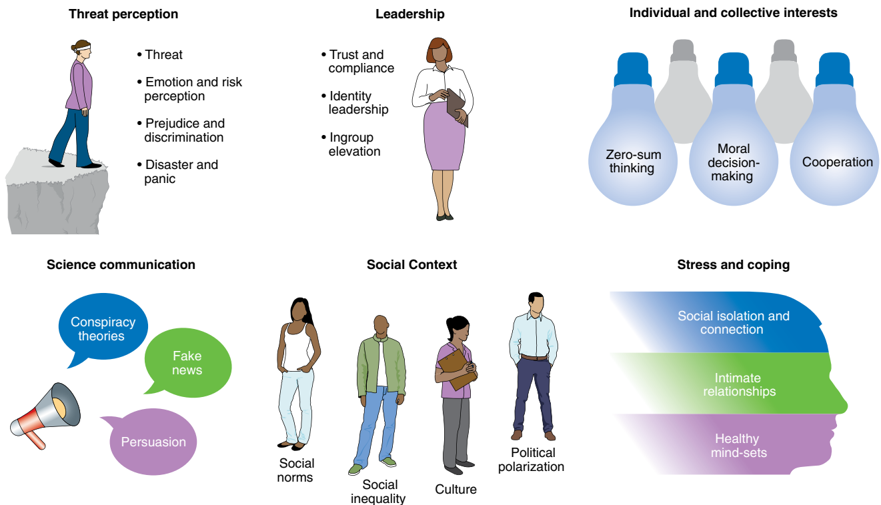
The COVID-19 pandemic represents a massive global health crisis. Because the crisis requires large-scale behaviour change and places significant psychological burdens on individuals, insights from the social and behavioural sciences can be used to help align human behaviour with the recommendations of epidemiologists and public health experts. Here we discuss evidence from a selection of research topics relevant to pandemics, including work on navigating threats, social and cultural influences on behaviour, science communication, moral decision-making, leadership, and stress and coping. In each section, we note the nature and quality of prior research, including uncertainty and unsettled issues. We identify several insights for effective response to the COVID-19 pandemic and highlight important gaps researchers should move quickly to fill in the coming weeks and months.
Overview
CoChat Summary
TL;DR
This perspective argues that social and behavioural science can help align public behaviour with COVID-19 public health recommendations across threat perception, social context, science communication, cooperation, leadership, and stress/coping. It synthesizes prior evidence and policy insights while cautioning that evidence is limited, often drawn from non-pandemic contexts, and in many areas unsettled.
Key findings
- The paper notes the scale of infectious disease threats: the bubonic plague killed approximately 25% of the European population, and by March 2020 COVID-19 had spread to more than 118,000 cases and caused 4,291 deaths in 114 countries. It also notes that 21 countries donated medical supplies to China in February, with China reciprocating widely.
- Fear appeals can change behaviour when people feel capable of dealing with the threat, but produce defensive reactions when people feel helpless; optimism bias can lead people to underestimate personal risk and ignore public health warnings.
- Social norms, inequality, culture, and political polarization shape pandemic behaviour: correcting misperceived norms can help when most people are already doing the desirable behaviour, but descriptive norms can backfire if the behaviour is undesirable unless paired with prescriptive norms.
- Effective communication and leadership may involve credible sources, messages that protect others or align with moral values, prebunking/inoculation against misinformation, accuracy nudges, shared social identity, and leaders modelling prosocial sacrifice; excessive national self-image concerns (“collective narcissism”) can backfire.
Methods
- Design: Perspective/narrative review; no primary data collection or sample. Topics were identified by the corresponding authors as potentially relevant to pandemic response and are explicitly not exhaustive.
- Evidence base: synthesizes prior social and behavioural research on threat perception, social context, science communication, moral decision-making, cooperation, leadership, and stress/coping, drawing on laboratory experiments, correlational studies, field experiments, meta-analyses, and preprints/forthcoming work.
- Analysis: narrative synthesis with policy implications and identified research gaps; no systematic search strategy or quantitative synthesis is reported.
Limitations
- Stated: due to space constraints, the paper provides only a brief summary of each topic; research on these topics is ongoing and in many cases far from settled; there is very little published social science research on the current pandemic, so discussion often draws from different circumstances and evidence quality varies substantially.
- Stated: insights and policy implications should be interpreted with caution.
- Evident: as a perspective rather than a systematic review or empirical study, it does not provide a comprehensive evidence appraisal, and its reliance on preprints and forthcoming sources limits certainty.
Model-written summary. Check it against the paper before relying on it.
Integrity signals
Registry
Cites
Statistics
Figures
Verification
Claims the paper makes
19 Valid · 5 Not valid · 37 Not checked · 13 Own results and interpretations
At least one cited source doesn’t support this claim or points to a different paper, and none confirmed it — see the verdicts below.
In the paper
“For instance, in hypothetical scenarios about deciding whether to go to work while sick, American and British participants reported they would be less willing to stay home when it was uncertain they would infect a co-worker.”
What the sources say
- Disputedcites [176] Kappes, A. et al. Uncertainty about the impact of social decisions increases prosocial behaviour. Nat. Hum. Behav. 2, 573–580 (2018). sourceExperimental — accuracy not yet measured
In the paper’s account of the infectious-disease scenario (Abstract; page not provided), participants facing uncertainty about how severely a co-worker might be affected were more likely to stay home than controls, not less. The paper distinguishes that impact uncertainty from uncertainty about whether a co-worker would be infected. Its Study 6 Methods (page not provided) describe recruitment through AMT, but do not establish the claimed American and British participant groups. (LLM, conf=0.88)
Checked by a reasoning model — may be wrong.
hedgedstates an association- Asserted: passes — The authors put it forward as true.
- Checkable: passes — It can be checked against evidence.
- Load-bearing: passes — The paper’s conclusions depend on it.
- Based: passes — The paper gives a reason why it holds.
- Disputed
The cited sources that could be checked couldn’t confirm or dispute this claim.
In the paper
“Moreover, there is mixed research regarding whether corrections may actually increase belief in the original misinformation 121,124-126 or in other misleading claims that fail to get corrected 127 .”
What the sources say
- Not checked — no full text of the sourcecites [121] Guess, A. & Coppock, A. Does counter-attitudinal information cause backlash? Results from three large survey experiments. Br. J. Polit. Sci. https://doi.org/10.1017/S0007123418000327 (2018). source
- Not matchedcites [124] Wittenberg, C. & Berinsky, A.J. Misinformation and its correction. in Social Media and Democracy: The State of the Field (eds Persily, N. & Tucker, J. A.) (Cambridge University Press, forthcoming).
Its entry has no title and year that we can search by.
- Not checked — no full text of the sourcecites [125] Swire, B. & Ecker, U.K.H. Misinformation and its correction: Cognitive mechanisms and recommendations for mass communication. in Misinformation and Mass Audiences (eds. Southwell, B. G., Thorson, E. A. & Sheble, L.) 195–2011 (University of Texas Press, 2018). source
- Not checked — no full text of the sourcecites [126] Wood, T. & Porter, E. The elusive backfire effect: mass attitudes’ steadfast factual adherence. Polit. Behav. 41, 135–163 (2018). source
- Could not verifycites [127] Pennycook, G., McPhetres, J., Zhang, Y. & Rand, D. Fighting COVID-19 misinformation on social media: Experimental evidence for a scalable accuracy nudge intervention. Preprint at PsyArXiv https://doi.org/10.31234/osf.io/uhbk9 (2020). sourceExperimental — accuracy not yet measured
Citation 127 is attached to the suggestion that corrections may increase belief in other misleading claims that go uncorrected. The Statement of Relevance and Discussion describe an accuracy nudge that improved sharing decisions, not corrections or their effects on belief in uncorrected claims. Searches for correction backfire and uncorrected misinformation found no passage addressing that point; page numbers were unavailable in our copy. (LLM, conf=0.76)
hedgedstates a possible cause- Asserted: passes — The authors put it forward as true.
- Checkable: passes — It can be checked against evidence.
- Load-bearing: passes — The paper’s conclusions depend on it.
- Based: passes — The paper gives a reason why it holds.
The sources with a verdict support this claim; the rest weren’t checked yet, have no full text we could read, or their verdicts aren’t rated yet.
In the paper
“Indeed, laboratory research has found that people prioritize local over global (or international) interests 185,186 .”
What the sources say
- Supportedcites [185] Milinski, M., Hilbe, C., Semmann, D., Sommerfeld, R. & Marotzke, J. Humans choose representatives who enforce cooperation in social dilemmas through extortion. Nat. Commun. 7, 10915 (2016). source
The Results section (‘Voters choose selfish representatives’; page unavailable) reports that participants preferentially re-elected representatives who contributed less to the shared climate account and elected candidates who pledged to contribute less than a fair share. In this simulated international dilemma, that supports the claim that participants favored their own group’s interests over the collective goal; it does not establish that everyone did so. (LLM, conf=0.85)
- Not checked — no full text of the sourcecites [186] Reinders Folmer, C. P. et al. One for all: what representing a group may do to us. J. Exp. Soc. Psychol. 48, 1047–1056 (2012). source
plain- Asserted: passes — The authors put it forward as true.
- Checkable: passes — It can be checked against evidence.
- Load-bearing: passes — The paper’s conclusions depend on it.
- Based: passes — The paper gives a reason why it holds.
- Supported
Every source the paper cites for this claim was checked and supports it.
In the paper
“However, when going to work risked infecting an elderly co-worker who would suffer a serious illness, participants reported they would be more willing to stay home 176 .”
What the sources say
- Supportedcites [176] Kappes, A. et al. Uncertainty about the impact of social decisions increases prosocial behaviour. Nat. Hum. Behav. 2, 573–580 (2018). source
The Study 6 Methods (page not provided) describe a scenario in which going to work could infect an older, vulnerable co-worker who would suffer severely, followed by a rating of willingness to go to work. The reported Study 6 findings (indexed under Abstract; page not provided) say participants given that risk information were significantly more likely to stay home than controls. (LLM, conf=0.92)
hedgedstates a cause- Asserted: passes — The authors put it forward as true.
- Checkable: passes — It can be checked against evidence.
- Load-bearing: passes — The paper’s conclusions depend on it.
- Based: passes — The paper gives a reason why it holds.
- Supported
The sources with a verdict support this claim; the rest weren’t checked yet, have no full text we could read, or their verdicts aren’t rated yet.
In the paper
“Several techniques, such as sanctioning defectors 187 or rewarding cooperators 188 , tend to increase cooperative behaviour in laboratory experiments using economic games.”
What the sources say
- Not checked — no full text of the sourcecites [187] Yamagishi, T. The provision of a sanctioning system as a public good. J. Pers. Soc. Psychol. 51, 110–116 (1986). source
- Supportedcites [188] Rand, D. G., Dreber, A., Ellingsen, T., Fudenberg, D. & Nowak, M. A. Positive interactions promote public cooperation. Science 325, 1272–1275 (2009). source
Citation 188 is attached to rewarding cooperators. The paper’s Abstract reports a laboratory comparison using repeated public goods games and finds that reward maintained public cooperation and, when both reward and punishment were available, increased contributions. (LLM, conf=0.93)
plainstates a cause- Asserted: passes — The authors put it forward as true.
- Checkable: passes — It can be checked against evidence.
- Load-bearing: unclear — It is unclear whether the paper’s conclusions depend on it.
- Based: passes — The paper gives a reason why it holds.
50 more claims · 13 with their cited sources checked
Create a free account to see all 74 claims and to verify the 2 references still open.
- It may state two separate claims as one. 13
- Probably not a substantial claim. 6
Claims other papers make about this one
Each is checked against this paper’s own text: does it say what the citing paper says it does?
The source backs part of the claim, not all of it — or backs it for a different population, condition or comparison.
In the citing paper
“COVID-19 is an international public health crisis, putting substantial burden on medical centers and increasing the psychological toll on health care workers (HCW).”
From Supporting the well-being of health care providers during the COVID-19 pandemic: The CopeColumbia response (2020) · cites this paper as [6]
Experimental — accuracy not yet measuredThe source backs part of the claim, not all of it — or backs it for a different population, condition or comparison.
In the citing paper
“these population-wide measures affected psychological well-being and mental health as well as increased social isolation [68] and loneliness.”
From Psychological correlates of perceived loneliness in college students before and during the COVID-19 stay-at-home period: a longitudinal study (2023) · cites this paper as [68]
Experimental — accuracy not yet measuredThe source backs part of the claim, not all of it — or backs it for a different population, condition or comparison.
In the citing paper
“they may eventually increase the social isolation of students and affect their psychological well-being and mental health [3].”
From Students under lockdown: Comparisons of students’ social networks and mental health before and during the COVID-19 crisis in Switzerland (2020) · cites this paper as [3]
Experimental — accuracy not yet measuredThe source backs part of the claim, not all of it — or backs it for a different population, condition or comparison.
In the citing paper
“effective interventions are hard to scale to a population level (12);”
From Psychological inoculation improves resilience against misinformation on social media (2022) · cites this paper as [12]
Experimental — accuracy not yet measuredThe source backs part of the claim, not all of it — or backs it for a different population, condition or comparison.
In the citing paper
“There is a shortage of studies that test anti-misinformation interventions in an ecologically valid manner, i.e., testing an intervention as consumers would interact with it in online environments (8, 12).”
From Psychological inoculation improves resilience against misinformation on social media (2022) · cites this paper as [12]
Experimental — accuracy not yet measured
6 more claims about this paper
Create a free account to see every claim other papers make about this one.
Citations
Cites
Granovetter, M. S. (1973) · American Journal of Sociology · doi:10.1086/225469 · Cited by 40,491
Zhou, F., Yu, T., Du, R., Fan, G., Liu, Y., Liu, Z., Xiang, J., Wang, Y., Song, B., Gu, X., et al. (2020) · The Lancet · doi:10.1016/s0140-6736(20)30566-3 · Cited by 27,263
The need to belong: Desire for interpersonal attachments as a fundamental human motivation.
Baumeister, R. F., & Leary, M. R. (1995) · Psychological Bulletin · doi:10.1037//0033-2909.117.3.497 · Cited by 23,245
Culture and the self: Implications for cognition, emotion, and motivation.
Markus, H. R., & Kitayama, S. (1991) · Psychological Review · doi:10.1037/0033-295x.98.2.224 · Cited by 21,995
Self-citationThe Psychological Impact of Quarantine and How to Reduce It: Rapid Review of the Evidence
Brooks, S. K., Webster, R. K., Smith, L. E., Woodland, L., Wessely, S., Greenberg, N., & Rubin, G. J. (2020) · doi:10.2139/ssrn.3532534 · Cited by 16,394
The psychological impact of quarantine and how to reduce it: Rapid review of the evidence
Brooks, S. K., Webster, R. K., Smith, L. E., Woodland, L., Wessely, S., Greenberg, N., & Rubin, G. J. (2020) · The Lancet · doi:10.1016/s0140-6736(20)30460-8 · Cited by 16,378
Nudge: improving decisions about health, wealth, and happiness
(2008) · Choice Reviews Online · doi:10.5860/choice.46-0977 · Cited by 11,572
Slovic, P. (1987) · Science · doi:10.1126/science.3563507 · Cited by 9,271
The Elaboration Likelihood Model of Persuasion
Petty, R. E., & Cacioppo, J. T. (1986) · Advances in Experimental Social Psychology · doi:10.1016/s0065-2601(08)60214-2 · Cited by 8,822
Self-citationThe emotional dog and its rational tail: A social intuitionist approach to moral judgment.
Haidt, J. (2001) · Psychological Review · doi:10.1037/0033-295x.108.4.814 · Cited by 8,048
Research works printed but not linked: 3
- Berkowitz, A.D. An overview of the social norms approach. in Changing the Culture of College Drinking: A Socially Situated Health Communication Campaign (eds. Stewart, L. & Lederman, L. C.) 193–214 (Hampton Press, 2005).
- Wittenberg, C. & Berinsky, A.J. Misinformation and its correction. in Social Media and Democracy: The State of the Field (eds Persily, N. & Tucker, J. A.) (Cambridge University Press, forthcoming).
- Ransohoff, K.J. Patients on the Trolley Track: The Moral Cognition of Medical Practitioners and Public Health Professionals. (Harvard Univ. Press, 2011).
Cited by
Items 1,801–1,900 of 5,015
Fouques, D., Castro, D., Mouret, M., Sweerts, S. J., & Romo, L. (2021) · Frontiers in Psychology · doi:10.3389/fpsyg.2021.668961 · Cited by 13
“At a clinical level, psychological interventions support stress and anxiety management, emotional regulation, and relationship reorganization (Bavel et al., 2020), through psychotherapy, virtual support groups, therapeutic education webinars, virtual wellness breaks, dissemination of wellness…”
BackgroundPredicting mental burnout among Israeli Home Front Command soldiers during the COVID-19 pandemic
Antonovsky, A., Danon, R., Schiff, M., & Shelef, L. (2021) · Health Promotion International · doi:10.1093/heapro/daab036 · Cited by 14
“Nevertheless, during the COVID-19 pandemic, indirect exposure, i.e. suspected exposure to the virus (Zhang et al., 2020a), and perceived loss of safety were also related to SOT (Huang et al., 2020; Pakpour and Griffiths, 2020; Van Bavel et al., 2020).”
BackgroundVarol, T., Crutzen, R., Schneider, F., Mesters, I., Ruiter, R. A. C., Kok, G., & ten Hoor, G. A. (2021) · Acta Psychologica · doi:10.1016/j.actpsy.2021.103400 · Cited by 12
Hoyt, D. L., Hiserodt, M., Gold, A. K., Milligan, M. A., & Otto, M. W. (2021) · The Journal of Nervous and Mental Disease · doi:10.1097/nmd.0000000000001434 · Cited by 15
Assessment of Self-medication Practices During COVID-19 Pandemic in Hyderabad and Karachi, Pakistan
Arain, M. I., Shahnaz, S., Anwar, R., & Anwar, K. (2021) · Sudan Journal of Medical Sciences · doi:10.18502/sjms.v16i3.9696 · Cited by 23
Luttenbacher, I., Breukel, J. S., & Adamson, M. M. (2021) · COVID · doi:10.3390/covid1020038 · Cited by 15
Daradkeh, M. K. (2021) · International Journal of Business Analytics · doi:10.4018/ijban.292056 · Cited by 21
“…public opinion responses not only influence the extent and speed of misinformation dissemination, but also trigger social anxiety, disrupt perceived risk and preparedness attitudes, and potentially lead to adverse decision outcomes (Bavel et al., 2020; Wang, Zhou, Zhang, Evans R, & C., 2020).”
BackgroundNarea, M., Asahi, K., Abufhele, A., Telias, A., Gildemeister, D., & Alarcón‐Arcos, S. (2022) · Clinical Psychological Science · doi:10.1177/21677026211068871 · Cited by 13
The Public Health Governance of the COVID-19 Pandemic: A Bibliometric Analysis
Yang, K., & Qi, H. (2022) · Healthcare · doi:10.3390/healthcare10020299 · Cited by 20
“The two most n table c re references in the orange cluster are Dong et al. (2020) and Bavel et al. (2020).”
BackgroundCoping with COVID-19: Insights from cognition and emotion research
Koole, S. L., & Rothermund, K. (2022) · Cognition & Emotion · doi:10.1080/02699931.2022.2027702 · Cited by 14
“This narrative process was considered by Vanaken et al. (2022) in the context of coping with the pandemic.”
BackgroundInfluentialCOVID-19 and Distance Education: Evaluation in the Context of Twenty-first Century Skills
BOZGÜN, K., Özaşkın-Arslan, A. G., & Sağır, Ş. U. (2022) · The Asia-Pacific Education Researcher · doi:10.1007/s40299-022-00663-4 · Cited by 25
Scutt, G., Cross, M., & Waxman, D. (2022) · Scientific Reports · doi:10.1038/s41598-022-12591-w · Cited by 15
The KIR2DL2/HLA-C1C1 Gene Pairing Is Associated With an Increased Risk of SARS-CoV-2 Infection
Hu, S., Shao, Z., Ni, W., Sun, P., Qiao, J., Wan, H., Huang, Y., Liu, X., Zhai, H., Xiao, M., et al. (2022) · Frontiers in Immunology · doi:10.3389/fimmu.2022.919110 · Cited by 12
“The virus is still circulating worldwide, and the new coronavirus disease caused by SARSCoV-2 is a public health crisis that requires an active response (3).”
BackgroundYang, W., Li, P., Huang, Y., Yang, X., Mu, W., Jing, W., Ma, X., & Zhang, X. (2022) · International Journal of Environmental Research and Public Health · doi:10.3390/ijerph19148624 · Cited by 14
“It has been illustrated that young people with higher levels of moral disengagement are less likely to engage in preventive behaviors in public crisis situations such as the COVID-19 pandemic [48,49].”
BackgroundDo masks affect social interaction?
Crandall, C. S., Bahns, A. J., & Gillath, O. (2022) · Journal of Applied Social Psychology · doi:10.1111/jasp.12918 · Cited by 15
“We thank Laura Van Berkel for useful discussions about this project.”
BackgroundBuilding the Culture of Public Health as a Positive Reflection from the COVID-19 Crisis
Alsaqqa, H. H. (2022) · Risk Management and Healthcare Policy · doi:10.2147/rmhp.s365233 · Cited by 15
“The research suggests that in the fight against COVID-19, quite diverse measures may be required in different cultural situations.(32)”
BackgroundBuvár, Á., Szilágyi, S. F., Balogh, E., & Zsila, Á. (2022) · PLoS ONE · doi:10.1371/journal.pone.0276143 · Cited by 16
Ahmed, G. K., Salman, S. A., Elbeh, K., Amer, Z. S., & Abbas, A. M. (2022) · Psychiatry Research · doi:10.1016/j.psychres.2022.114920 · Cited by 12
Bierre, S., & Howden‐Chapman, P. (2022) · International Journal of Housing Policy · doi:10.1080/19491247.2022.2133341 · Cited by 17
“Political rhetoric served to reinforce the appropriateness of kind action, where ‘a shared sense of identity or purpose can be encouraged by addressing the public in collective terms and by urging ‘us’ to act for the common good’ (Bavel et al., 2020 , p. 460).”
BackgroundSatherley, N., Zubielevitch, E., Greaves, L. M., Barlow, F. K., Osborne, D., & Sibley, C. G. (2022) · Frontiers in Psychology · doi:10.3389/fpsyg.2022.1041957 · Cited by 16
“This poses a barrier to pandemic mitigation, given the tension between the theorized benefits of rally effects to manage threats (Bavel et al., 2020) and the enduring nature of the COVID-19 pandemic (World Health Organization, 2020).”
BackgroundL’Yavanc, T., Gosset, D., Plathey, M., Jedrzejewski, T., Gazalet, P., Lasry, S., Pierre, N., Kachal, A., Frémondière, M., Ohayon, M., et al. (2022) · JAIDS Journal of Acquired Immune Deficiency Syndromes · doi:10.1097/qai.0000000000003153 · Cited by 12
Effects of High Temperature on COVID‐19 Deaths in U.S. Counties
Chu, B., Chen, R., Liu, Q., & Wang, H. (2023) · GeoHealth · doi:10.1029/2022gh000705 · Cited by 12
Addressing the challenges of implementing evidence-based prioritisation in global health
Hayman, D. T. S., Barraclough, R. K., Muglia, L. J., McGovern, V. P., Afolabi, M. O., N′jai, A. U., Ambe, J., Atim, C., McClelland, A., Paterson, B., et al. (2023) · BMJ Global Health · doi:10.1136/bmjgh-2023-012450 · Cited by 18
Social Integration: Conceptual Foundations and Open Questions. An Introduction to this Special Issue
Grunow, D., Sachweh, P., Schimank, U., & Traunmüller, R. (2023) · KZfSS Kölner Zeitschrift für Soziologie und Sozialpsychologie · doi:10.1007/s11577-023-00896-1 · Cited by 33
Brandt, M. J., Vallabha, S., & Turner-Zwinkels, F. M. (2023) · Personality and Social Psychology Bulletin · doi:10.1177/01461672231190233 · Cited by 18
“The onset of the COVID-19 pandemic threatened people’s lives, livelihoods, and sense of certainty as scientists and society scrambled to understand the virus and the best ways to con-trol and avoid it (Falk et al., 2021; Van Bavel et al., 2020; von Soest et al., 2022; Wadman et al., 2020).”
Bozeman, B. L., Lindsay, S., Nelson, J. P., & Bretschneider, S. I. (2023) · Public Management Review · doi:10.1080/14719037.2023.2252819 · Cited by 14
“During the past seven decades, public policy applications of social science research have been steadily accelerating with perhaps the biggest and most important example being the widespread use of social sciences during the COVID-19 pandemic (Van Bavel et al. 2020; Dowd et al. 2020; Bozeman, 2022.”
How cultural evolution can inform the science of science communication—and vice versa
Bendixen, T. (2020) · Humanities and Social Sciences Communications · doi:10.1057/s41599-020-00634-4 · Cited by 14
“3 For instance, “Big Pharma” is said to secretly spread diseases or suppress “natural” cures to serious diseases such as cancer or pandemics such as COVID-19.”
BackgroundInfluentialSesgos cognitivos en la comunicación y prevención de la COVID-19
Prieto, M. C. (2020) · Revista Latina de Comunicación Social · doi:10.4185/rlcs-2020-1483 · Cited by 22
Low Cost Design of Non-Contact Thermometry for Diagnosis and Monitoring
Yamanoor, N. S., Yamanoor, S., & Srivastava, K. (2020) · IEEE Global Humanitarian Technology Conference (GHTC) · doi:10.1109/ghtc46280.2020.9342853 · Cited by 12
An Analysis of Health Workers’ Quality of Life in Indonesia During COVID-19 Pandemic
Hadning, I., & Ainii, N. Q. (2021) · Advances in health sciences research/Advances in Health Sciences Research · doi:10.2991/ahsr.k.210115.085 · Cited by 24
“COVID-19 pandemic has an impact on social and behavioural, including the quality of life [16].”
BackgroundChen, J. H., Yu, E. W., Su, X., Tong, K. K., & Wu, A. M. S. (2021) · Current Psychology · doi:10.1007/s12144-021-01547-4 · Cited by 14
Vereen, R. N., Lazard, A. J., Frank, S. C., Pulido, M., Richter, A. P. C., Higgins, I. C. A., Shelus, V., Vandegrift, S. M., Hall, M. G., & Ribisl, K. M. (2021) · PLoS ONE · doi:10.1371/journal.pone.0251169 · Cited by 14
Shumway, S. G., Hopper, J. D., Tolman, E., Ferguson, D. G., Hubble, G., Patterson, D., & Jensen, J. L. (2021) · PLoS ONE · doi:10.1371/journal.pone.0252185 · Cited by 13
“Another study analyzes how different social norms including both impression of severity and personal responsibility affect compliance to precautionary guidelines, but this study didn’t involve surveys of any kind, thus, no instrument was developed [55].”
BackgroundSyropoulos, S., Puschett, E., & Leidner, B. (2021) · Political Psychology · doi:10.1111/pops.12773 · Cited by 15
Ma, M. Z., & Ye, S. S. (2021) · International Journal of Intercultural Relations · doi:10.1016/j.ijintrel.2021.07.010 · Cited by 12
Costa, A. D., Fernandes, A., Ferreira, S., Couto, B., Machado-Sousa, M., Moreira, P. S., Morgado, P. F., & Picó‐Pérez, M. (2022) · International Journal of Environmental Research and Public Health · doi:10.3390/ijerph19042243 · Cited by 12
“However, nowadays the threat perception seems to be guided by different emotions [26].”
BackgroundExplaining trip generation during the COVID-19 pandemic: A psychological perspective
Mehdizadeh, M., Zavareh, M. F., & Nordfjærn, T. (2022) · Journal of Transport & Health · doi:10.1016/j.jth.2022.101390 · Cited by 12
Coping and Anxiety During Lockdown in Spain: The Role of Perceived Impact and Information Sources
English, A. S., Torres‐Marín, J., & Navarro‐Carrillo, G. (2022) · Psychology Research and Behavior Management · doi:10.2147/prbm.s362849 · Cited by 12
“The data from the mediation model also fit well with the idea that even for individuals and households free from COVID-19, the outbreak still serves as a strong stressor and major life change that includes risks of anxiety and self-isolation; all of which have been highlighted in the theoretical framework of social an…”
Chaigneau, T., & Schill, C. (2022) · Current Opinion in Environmental Sustainability · doi:10.1016/j.cosust.2022.101201 · Cited by 14
Holt, L. J., Anselmi, D. L., & Gasataya, S. A. (2022) · American Journal of Health Education · doi:10.1080/19325037.2022.2048750 · Cited by 12
“getting vaccinated or engaging in other protective measures may be considered an obligation to protect others in their community, sometimes at the expense of their individual wishes.(33,35,36) Horizontal collectivism, a type of collectivism focused on a desire for collaboration and equality, was associated with lower…”
BackgroundA Survey on Data-driven COVID-19 and Future Pandemic Management
Tao, Y., Yang, C., Wang, T., Coltey, E., Jin, Y., Liu, Y., Jiang, R., Fan, Z., Song, X., Shibasaki, R., et al. (2022) · ACM Computing Surveys · doi:10.1145/3542818 · Cited by 17
“However, it is difficult to monitor massive volumes of information produced over social media and pre-print publications regarding COVID-19 and pandemics, and the requirement of professional knowledge makes it difficult to differentiate facts from questionable and wrong information [65].”
BackgroundBirney, M. E., Reicher, S. D., Haslam, S. A., Steffens, N. K., & Neville, F. (2022) · British Journal of Social Psychology · doi:10.1111/bjso.12603 · Cited by 12
“…months into the COVID-19 pandemic people may have been more conscious of the value of social science (e.g., as argued by Jetten et al., 2020; Van Bavel et al., 2020 and evidence that people displayed generally high levels of adherence to social policies regulating people's movement; Wright et…”
BackgroundSelf-citationThe COVID-19 Snapshot Monitoring in Denmark
BOHM, R. M., Lilleholt, L., Meineche, J. T., Strandsbjerg, C. F., Windfeld, A., Windfeld, F. C., & Zettler, I. (2020) · Samfundsøkonomen · doi:10.7146/samfundsokonomen.v0i4.123562 · Cited by 11
Hopkins, A., Foxen, S., Oliver, K. A., & Costigan, G. (2021) · doi:10.53289/gutw3567 · Cited by 14
Allons-nous vers une société plus responsable grâce à la pandémie de Covid-19 ?
Trespeuch, L., Robinot, É., Botti, L., Bousquet, J., Corne, A., de Ferran, F., Durif, F., Ertz, M., Fontan, J.-M., Giannelloni, J.-L., et al. (2021) · Natures Sciences Sociétés · doi:10.1051/nss/2022005 · Cited by 15
Eder, S. J., Steyrl, D., Stefańczyk, M., et al. (2020) · doi:10.31234/osf.io/wdmvh · Cited by 12
Ability to detect fake news predicts sub-national variation in COVID-19 vaccine uptake across the UKPreprint
Loomba, S., Maertens, R., Roozenbeek, J., Götz, F. M., van der Linden, S., & de Figueiredo, A. (2023) · medRxiv · doi:10.1101/2023.05.10.23289764 · Cited by 12
“Testing whether exposure to and belief in misinformation is associated with real-world behavior is of critical scientific as well as societal importance [1, 2].”
BackgroundSelf-citationContinued Influence of Misinformation and the Information Disorder
Tay, L. Q., & Ecker, U. K. H. (2025) · The Remaking of Memory in the Age of the Internet and Social Media · doi:10.1093/oso/9780197661260.003.0009 · Cited by 12
The vital role of health psychology in the response to COVID‐19
Arden, M. A., Byrne-Davis, L. M. T., Chater, A., Hart, J., McBride, E., & Chilcot, J. (2020) · British Journal of Health Psychology · doi:10.1111/bjhp.12484 · Cited by 10
“As we outlined in our previous editorial (Arden & Chilcot, 2020) and has been highlighted by a number of authors (Bavel et al., 2020; Holmes et al., 2020;Michie &West, 2020; O’Connor et al., 2020), health psychology research and practice is well placed to make an extremely important contribution to…”
BackgroundWidodo, A. (2020) · Jurnal Pendidikan Sosial Keberagaman · doi:10.29303/juridiksiam.v7i2.138 · Cited by 13
Individual-Level Heterogeneity in Mask Wearing during the COVID-19 Pandemic in Malaysia
Zhang, S. X., Looi, K. H., Li, N., et al. (2021) · American Journal of Tropical Medicine and Hygiene · doi:10.4269/ajtmh.21-0566 · Cited by 11
Silk, M. J., Carrignon, S., Bentley, R. A., & Fefferman, N. H. (2022) · BMC Public Health · doi:10.1186/s12889-021-12353-9 · Cited by 12
“In the case of COVID19, adoption of and adherence to behavioural interventions are therefore likely to be predicated on perception of two main features: a) individual attitudes and beliefs about personal risk of infection and its consequences [13], and b) the social norms around adherence in the individual’s community…”
Backgrounddel Fresno‐Díaz, Á., Estevan‐Reina, L., Sánchez‐Rodríguez, Á., Willis, G. B., & de Lemus, S. (2022) · Journal of Community & Applied Social Psychology · doi:10.1002/casp.2632 · Cited by 13
“COVID-19 threat may induce or exacerbate intergroup tensions and hostility (Bavel et al., 2020) but the perception of a shared or common identity with various social groups during the pandemic can prevent such tensions (Dovidio, Ikizer, Kunst, & Levy, 2020).”
BackgroundPolarized Citizen Preferences for the Ethical Allocation of Scarce Medical Resources in 20 Countries
Awad, E., Bagó, B., Bonnefon, J., Christakis, N. A., Rahwan, I., & Shariff, A. (2022) · MDM Policy & Practice · doi:10.1177/23814683221113573 · Cited by 12
“’’(11) If the metrics are perceived as biased or unfair, then trust and morale (among both providers and citizens) are likely to suffer even more.(5,12) In sum, to relieve clinicians of the practical and emotional burden of triage decisions, and to mitigate their liability risk, policy makers and their advisors must p…”
BackgroundSelf-citationGeorgiou, N., Delfabbro, P., & Balzan, R. P. (2022) · Journal of Experimental Psychopathology · doi:10.1177/20438087221125046 · Cited by 14
“Studies have examined how these beliefs often emerge during major events or crises such as the COVID-19 pandemic (Douglas, 2021; Van Bavel et al., 2020); the role of group belief systems (Cichoka et al., 2016; Douglas, 2021); and, importantly, what individual differences encourage greater acceptance and adoption of co…”
BackgroundInfluentialMatchanova, A., Woods, S. P., Neighbors, C., Medina, L. D., Podell, K., Beltran‐Najera, I., Alex, C., Babicz, M. A., & Thompson, J. L. (2023) · Current Psychology · doi:10.1007/s12144-023-04464-w · Cited by 13
“For example, Van Bavel et al. (2020) suggested that SNSs use this preventative approach by periodically asking users to rate the accuracy of randomly selected posts.”
Mechanisms behind COVID-19 scepticism among socially marginalised individuals in Europe
Nero, K., Orru, K., Nævestad, T., Olson, A. M., Airola, M., Savadori, L., Kažemekaitytė, A., Lovász, G., & Kajganovic, J. (2023) · Journal of Risk Research · doi:10.1080/13669877.2023.2208119 · Cited by 13
Al-Mahrouqi, T., Chan, M. F., Al-Mukhaini, M., Shehi, M. A., Al‐Huseini, S., Jahan, F., Al‐Balushi, N., Panchatcharam, S. M., & Al‐Alawi, M. (2023) · Scientific Reports · doi:10.1038/s41598-023-38975-0 · Cited by 13
Lu, L., Xu, J., Wei, J., Shults, F. L., & Feng, X. L. (2024) · Humanities and Social Sciences Communications · doi:10.1057/s41599-024-02744-9 · Cited by 14
Sun, Q., Qian, W., Yao, Y., Zhu, J., Xu, J., Zhang, L., Yao, C., Wang, L., & Ni, Y. (2024) · Current Psychology · doi:10.1007/s12144-024-06554-9 · Cited by 14
“Research indicates that a notable proportion of youth, outside the US, are experiencing mental health problems as a result of the uncertainty brought on by the global pandemic (Bavel et al., 2020 ; Huang, 2020 ).”
Medicine's New Rhythm: Harnessing Acoustic Sensing via the Internet of Audio Things for Healthcare
Pervez, F., Shoukat, M., Suresh, V., Farooq, M. U. B., Sandhu, M. M., Qayyum, A., Usama, M., Girardi, A. M., Latif, S., & Qadir, J. (2024) · IEEE Open Journal of the Computer Society · doi:10.1109/ojcs.2024.3462812 · Cited by 16
“Universal healthcare access is hindered by several challenges, including the lack of updated health information, variable care quality, limited infrastructure, financial and geographical barriers, and socio-economic disparities [56], [57], [58], [59].”
BackgroundHa, H., Knox, C., & Janenova, S. (2024) · Journal of Public Policy · doi:10.1017/s0143814x24000163 · Cited by 15
“Public trust is directly associated with compliance with government policy stringency measures (mask-wearing, social distancing, gatherings) during the pandemic and better public health outcomes (Bavel et al. 2020).”
Szollosi, A., Wang-Ly, N., & Newell, B. R. (2025) · Psychonomic Bulletin & Review · doi:10.3758/s13423-024-02613-1 · Cited by 17
“Such calls come not only from the academy (e.g., Bergquist et al., 2023; Van Bavel et al., 2020) but also from politicians (e.g., President Obama’s executive order encouraging the use of behavioural science 1 ), regulators (e.g., the Australian Securities and Investment Commission highlighting the…”
Ebrahimi, O. V., Sandbakken, E. M., Moss, S. M., Johnson, S. U., Hoffart, A., Bauermeister, S., Solbakken, O. A., Westlye, L. T., & Leonardsen, E. H. (2025) · BMC Medicine · doi:10.1186/s12916-025-03953-y · Cited by 16
“One strategy that has previously been identified as effective in building trust includes engaging with subgroups through community leaders [67–69], in addition to setting up arenas of dialog allowing for open discussion and addressal of raised concerns [68].”
Leveraging Natural Language Processing to Mine Issues on Twitter During the COVID-19 Pandemic
Agarwal, A., Salehundam, P., Padhee, S., Romine, W. L., & Banerjee, T. (2020) · IEEE International Conference on Big Data (BigData) · doi:10.1109/bigdata50022.2020.9378028 · Cited by 12
“Also, in the case of strong emotional reactions, media coverage of the pandemic may influence public sentiments [8].”
BackgroundWillingness to Bear Economic Costs in the Fight Against the COVID-19 Pandemic
Sokołowska, J., & Zaleśkiewicz, T. (2020) · Frontiers in Psychology · doi:10.3389/fpsyg.2020.588910 · Cited by 11
Michels, M., Glöckner, A., & Giersch, D. (2021) · Personality and Individual Differences · doi:10.1016/j.paid.2021.110676 · Cited by 11
“…closely monitor the psychological situation in the population and provided advice (e.g., to government officials) on how to impose and communicate measures to “ flatten the curve ” in a way that people actually comply (e.g., Betsch, 2020; Chater, 2020; Garfin et al., 2020; Van Bavel et al., 2020).”
BackgroundCovid-19 Pandemic: Psychological, Social and Economic Impacts on Saudi Society
Alkhamshi, S. S., Shalhoubm, H. A. B., Hammad, M. A., & Al-Shahrani, H. B. F. (2021) · Academic Journal of Interdisciplinary Studies · doi:10.36941/ajis-2021-0088 · Cited by 12
“In particular, it's a rapidly spreading pandemic, and there is no effective treatment so far, which increases those consequences and pressures (Buheji, 2020; Hafiz et al., 2020; Ho et al., 2020; Li et al., 2020; McKibbin & Fernando, 2020; McMillan, 2020; Nicola et al., 2020; Ozili & Arun, 2020; Shigemura et al., 2020;…”
BackgroundWho Complies and Who Defies? Personality and Public Health Compliance
Blais, J., Chen, P. G., & Pruysers, S. (2021) · Frontiers in Political Science · doi:10.3389/fpos.2021.660911 · Cited by 16
Senerat, A. M., Pope, Z., Rydell, S. A., Mullan, A. F., Roger, V. L., & Pereira, M. A. (2021) · Mayo Clinic Proceedings Innovations Quality & Outcomes · doi:10.1016/j.mayocpiqo.2021.08.014 · Cited by 15
“Published by Else access article under the CC BY-NC-ND license (http://creativecommons requiring engagement in SARS-CoV-2 transmission prevention behaviors (eg, physical distancing, mask wearing).(5-7) Although these mitigation strategies can help reduce COVID-19 infection rates, unintended negative consequences on em…”
Lo, A., Jun, B.-O., Shieh, V., Starlin, C. M., Sugahara, S., & Li, D. (2021) · Psychiatry Investigation · doi:10.30773/pi.2021.0220 · Cited by 11
Counselling Students’ Perception of Online Learning during COVID-19 in Malaysia
Nazilah, A. (2021) · The Electronic Journal of e-Learning · doi:10.34190/ejel.19.4.2445 · Cited by 15
Phillips, R., Taiyari, K., Torrens‐Burton, A., Cannings-John, R. L., Williams, D., Peddle, S., Campbell, S. E., Hughes, K., Gillespie, D., Sellars, P., et al. (2021) · PLoS ONE · doi:10.1371/journal.pone.0258484 · Cited by 10
“Based on research in previous pandemics, we anticipated that key demographic variables, such as age, gender, and education, were likely to be associated with the impact that the pandemic had on individuals and on their responses to the pandemic [3, 51, 52].”
BackgroundSun, Y., Li, Y., Wang, Y., & Li, F. (2021) · Frontiers in Psychology · doi:10.3389/fpsyg.2021.699180 · Cited by 13
Em Quem Confiam os Portugueses? A Gestão da Comunicação Governamental na Pandemia Covid-19
Gonçalves, G., Piñeiro-Naval, V., & Toniolo, B. P. (2021) · Comunicação e Sociedade · doi:10.17231/comsoc.40(2021).3251 · Cited by 35
The drivers and barriers of wearing a facemask during the SARS-CoV-2 pandemic in Switzerland
Bearth, A., & Siegrist, M. (2022) · Journal of Risk Research · doi:10.1080/13669877.2022.2038244 · Cited by 12
“These models combine various psychological factors and theories, such as emotions, stigma, or social norms, to predict the intention or actual behaviour (van der Linden and Savoie 2020; Pfattheicher et al. 2020; van Bavel et al. 2020; Kowalski and Black 2021).”
BackgroundPerubahan Pola Komunikasi dalam Proses Pembelajaran di Pondok Pesantren pada Masa Pandemi Covid-19
Zakaria, F., Mulyana, D., Rachmawati, T. S., Khadijah, U. L. S., Gemiharto, I., & Hafiar, H. (2022) · CoverAge Journal of Strategic Communication · doi:10.35814/coverage.v12i2.2349 · Cited by 13
Predicting health behaviors across Belgium and France during the first wave of COVID-19 pandemic
Schmitz, M., Wollast, R., Bigot, A., & Luminet, O. (2022) · Journal of Health Psychology · doi:10.1177/13591053221083819 · Cited by 13
“The identification of underlying psychological and contextual factors that may foster or hinder preventive health behaviors is vital to manage the pandemic (Van Bavel et al., 2020).”
BackgroundThe decrease in the physical activity levels during the COVID-19 social distancing period
de Santana, W. F., Tavares, G. H., Pires, L. C., Romano, F. S., de Oliveira, N. R. C., Lusby, C., & Uvinha, R. R. (2022) · Motriz Revista de Educação Física · doi:10.1590/s1980-657420220016521 · Cited by 13
Identification With All Humanity Predicts Prosocial and Political Action Intentions During COVID-19
Lantos, N. A., Engyel, M., Hadarics, M., Nyúl, B., Csaba, S., & Kende, A. (2022) · Frontiers in Political Science · doi:10.3389/fpos.2022.855148 · Cited by 15
Stigma in COVID-19: A barrier to seek medical care and family support
Asadi-Aliabadi, M., Tehrani‐Banihashemi, A., & Moradi‐Lakeh, M. (2020) · Medical Journal of the Islamic Republic of Iran · doi:10.47176/mjiri.34.98 · Cited by 11
Can vaccination intentions against COVID-19 be nudged?
Kantorowicz‐Reznichenko, E., Kantorowicz, J., & Wells, L. (2022) · Behavioural Public Policy · doi:10.1017/bpp.2022.20 · Cited by 13
“The social and behavioural sciences may be able to support policy initiatives to overcome vaccine hesitancy (Bavel et al. , 2020).”
Consumer Responses to COVID Policy Across the World: The Role of Community Resilience
Krasnikov, A. V., Shultz, C. J., & Ребязина, В. (2022) · Journal of International Marketing · doi:10.1177/1069031x221115371 · Cited by 13
“Vaughan and Tinker (2009) concluded that certain community groups’ low literacy, language barriers, or special needs require multiple modes of messaging (e.g., visual media and translation in various languages) and increased capacity of communication systems.”
BackgroundSuccess stories cause false beliefs about success
Lifchits, G., Anderson, A., Goldstein, D. G., Hofman, J. M., & Watts, D. J. (2021) · Judgment and Decision Making · doi:10.1017/s1930297500008494 · Cited by 16
“As has been demonstrated in other contexts (Bago et al., 2020; Pennycook & Rand, 2019; Van Bavel et al., 2020), respondents are less susceptible to false information when they are required to deliberate Although some analyses suggest that college education is correlated with entrepreneurial success…”
Community Trust in Translations of Official COVID-19 Communications in Australia
Pym, A., Hu, B., Karidakis, M., Hajek, J., Woodward‐Kron, R. E., & Amorati, R. (2022) · Routledge eBooks · doi:10.4324/9781003267843-10 · Cited by 23
Scandurra, C., Pizzo, R., Pinto, L. E., Cafasso, C., Pellegrini, R., Cafaggi, F., D’Anna, O., Muzii, B., Bochicchio, V., & Maldonato, M. N. (2022) · European Journal of Investigation in Health Psychology and Education · doi:10.3390/ejihpe12100109 · Cited by 17
“Immediately after the first news about COVID-19, conspiracy theories emerged on social media, becoming more widespread and persistent [1].”
BackgroundInfluentialCui, H., Xie, J., Zhu, M., Tian, X., & Wan, C. (2022) · Physica A Statistical Mechanics and its Applications · doi:10.1016/j.physa.2022.128284 · Cited by 11
“However, epidemic control in the post-epidemic era requires nonrug intervention in epidemic transmission from the perspectives of management science, transportation science, systems cience and social science [5,6].”
Computing and Modeling After COVID-19: More Responsible, Less Technical
Nabavi, E. (2022) · IEEE Transactions on Technology and Society · doi:10.1109/tts.2022.3218738 · Cited by 14
“Our knowledge about contextual factors — such as the impact of policy interventions in complex societies, and people’s behavior — are also very limited [56], [100].”
BackgroundPatitsa, C. D., Sotiropoulou, K., Giannakouli, V., Sahinidis, A. G., & Tsaknis, P. A. (2022) · Journal of Governance and Regulation · doi:10.22495/jgrv11i4art13 · Cited by 13
“Bavel et al. (2020) suggest that the social and behavioral characteristics of a person are important factors in combatting the COVID-19 pandemic.”
BackgroundResultInfluentialWong, C. Y., Tham, J. S., Foo, C. N., Ng, F. L., Shahar, S., Zahary, M. N., Ismail, M. N., Tan, C. S., Hoh, B., Subbiah, V. K., et al. (2022) · Biosafety and Health · doi:10.1016/j.bsheal.2022.12.005 · Cited by 15
Li, Z. (2023) · Frontiers in Public Health · doi:10.3389/fpubh.2023.1078115 · Cited by 10
“(1) Descriptive statistics were applied to the dissemination of preprints before and after COVID-19.”
BackgroundMethodValinejad, J., Guo, Z. Y., Cho, J.-H., & Chen, I.-R. (2022) · Journal of Social Computing · doi:10.23919/jsc.2022.0019 · Cited by 15
Zhang, K., Hong, X., Han, Y., et al. (2023) · Chaos Solitons & Fractals · doi:10.1016/j.chaos.2023.113293 · Cited by 11
Cocking, C., Vestergren, S., Ntontis, E., & Luzynska, K. (2023) · PLoS ONE · doi:10.1371/journal.pone.0283080 · Cited by 15
“Finally, in an overview of the potential role that social and behavioural sciences can play in COVID-19 response, it has been suggested that local cooperation can be explained from an evolutionary perspective that sees the concept of personal self-interest extending to looking after family members to increase genetic…”
BackgroundThe role of perceived minority-group status in the conspiracy beliefs of factual majority groups
Gundersen, A. B., van der Linden, S., Piksa, M., Morzy, M., Piasecki, J., Ryguła, R., Gwiaździński, P., Noworyta, K., & Kunst, J. R. (2023) · Royal Society Open Science · doi:10.1098/rsos.221036 · Cited by 12
“:221036 24 belonging to a minority group or otherwise feel marginalized and powerless, potentially via local community leaders [81].”
Self-citationKoban, D., Abroms, L. C., Napolitano, M. A., Simmens, S. J., & Broniatowski, D. A. (2023) · Journal of Communications In Healthcare · doi:10.1080/17538068.2023.2283308 · Cited by 10
“Conversely, if people distrust the CDC or FDA, then convincing people to vaccinate may require more time and e ff ort or alternative strategies such as incorporating locally trusted voices [9, 47].”
BackgroundPsychological Factors of Vaccination Intent among Healthcare Providers, Parents, and Laypeople
Damnjanović, K., Ilić, S., Kušić, M., Lazić, M., & Popovic, D. (2023) · Vaccines · doi:10.3390/vaccines11121816 · Cited by 12
“As stated, having vaccines and the support of health-care providers and scientists is insufficient, because this scientific consensus also needs to be communicated to the vaccine recipients, which turns out to be challenging [5,16], presumably due to differing views on vaccination.”
BackgroundGuo, M., Joanpere, M., Pulido, C., & Cuxart, M. P. (2020) · Sustainability · doi:10.3390/su12197949 · Cited by 13
“During a pandemic, optimism may result in a lack of precautions and false feelings of security [18,21,27], as well as denial of a potential threat [28].”
BackgroundHadjicharalambous, D., Athanasiadi-Charchanti, D., & Demetriou, L. (2020) · Social Education Research · doi:10.37256/ser.212021619 · Cited by 18
Dynamics and Quality of Platform Employment in the Era of Coronavirus: Challenges for Russia
Loktyukhina, N. V., & Chernykh, E. (2020) · Living Standards of the Population in the Regions of Russia · doi:10.19181/lsprr.2020.16.4.7 · Cited by 13
Metadata
- Authors
- Bavel, J. J. V., Baicker, K., Boggio, P. S., Capraro, V., Cichocka, A., Cikara, M., Crockett, M. J., Crum, A. J., Douglas, K. M., Druckman, J. N., Drury, J., Dube, O., Ellemers, N., Finkel, E. J., Fowler, J. H., Gelfand, M., Han, S., Haslam, S. A., Jetten, J., Kitayama, S., Mobbs, D., Napper, L. E., Packer, D. J., Pennycook, G., Peters, E., Petty, R. E., Rand, D. G., Reicher, S. D., Schnall, S., Shariff, A., Skitka, L. J., Smith, S. S., Sunstein, C. R., Tabri, N., Tucker, J. A., Linden, S. V. D., Lange, P. V., Weeden, K. A., Wohl, M. J. A., Zaki, J., Zion, S. R., & Willer, R.
- Affiliations
- New York University (US)
- Universidade Presbiteriana Mackenzie (BR)
- Middlesex University London (GB)
- University of Kent (GB)
- Harvard University (US)
- Yale University (US)
- Stanford University (US)
- Northwestern University (US)
- University of Sussex (GB)
- University of Chicago (US)
- Utrecht University (NL)
- University of California San Diego (US)
- University of Maryland, College Park (US)
- Peking University (CN)
- The University of Queensland (AU)
- University of Michigan (US)
- California Institute of Technology (US)
- Lehigh University (US)
- University of Regina (CA)
- University of Oregon (US)
- The Ohio State University (US)
- Massachusetts Institute of Technology (US)
- University of St Andrews (GB)
- University of Cambridge (GB)
- University of British Columbia (CA)
- University of Illinois Chicago (US)
- University of California, Berkeley (US)
- Carleton University (CA)
- Cornell University (US)
- Corresponding author
- Bavel, Jay J. Van
- Willer, Robb
- ORCID
- Bavel, Jay J. Van
- Baicker, Katherine
- Boggio, Paulo S.
- Capraro, Valerio
- Cichocka, Aleksandra
- Cikara, Mina
- Crockett, Molly J.
- Crum, Alia J.
- Douglas, Karen M.
- Druckman, James N.
- Drury, John
- Ellemers, Naomi
- Finkel, Eli J.
- Fowler, James H.
- Gelfand, Michele
- Han, Shihui
- Haslam, S. Alexander
- Jetten, Jolanda
- Kitayama, Shinobu
- Mobbs, Dean
- Napper, Lucy E.
- Packer, Dominic J.
- Pennycook, Gordon
- Peters, Ellen
- Petty, Richard E.
- Rand, David G.
- Reicher, Stephen D.
- Schnall, Simone
- Shariff, Azim
- Skitka, Linda J.
- Sunstein, Cass R.
- Tabri, Nassim
- Tucker, Joshua A.
- Linden, Sander van der
- Weeden, Kim A.
- Wohl, Michael J. A.
- Zaki, Jamil
- Zion, Sean R.
- Willer, Robb
- Venue
- Nature Human Behaviour
- Published
- 2020-04-30
- Volume
- 4
- Issue
- 5
- Pages
- 460-471
- ISSN
- 2397-3374 (ISSN-L)
- OpenAlex
- W3016902371
- Semantic Scholar
- d81abcd7f053b136423f1e7f57928524e8b0e1a0
- Cited by
- 4,964
- References
- 259
- Citations by year
- 2026: 177 · 2025: 288 · 2024: 483 · 2023: 741 · 2022: 1094 · 2021: 1474 · 2020: 702
- FWCI
- 175.81
- Type
- journal article
- Language
- en
- Open access
- bronze
- doi.org
- Licence
- www.springernature.com/gp/researchers/text-and-data-mining (tdm)
- www.springernature.com/gp/researchers/text-and-data-mining (vor)
- Locations
- Nature Human Behaviour (publishedVersion)
- PubMed (publishedVersion)
- Middlesex University Research Repository (Middlesex University Of London) (acceptedVersion)
- Kent Academic Repository (University of Kent) (acceptedVersion)
- DSpace@MIT (Massachusetts Institute of Technology) (submittedVersion, cc-by-nc-sa)
- Sussex Research Online (University of Sussex) (submittedVersion)
- CaltechAUTHORS (California Institute of Technology) (submittedVersion)
- RePEc: Research Papers in Economics (submittedVersion)
- BOA (University of Milano-Bicocca) (submittedVersion)
- Carleton University's Institutional Repository (MacOdrum Library, Carleton University) (submittedVersion, other-oa)
- Utrecht University Repository (Utrecht University) (submittedVersion)
- Figshare (submittedVersion)
- VU Research Portal (submittedVersion, other-oa)
- Utrecht University Repository (Utrecht University) (submittedVersion, other-oa)
- Data Archiving and Networked Services (DANS) (submittedVersion, other-oa)
- Funders
- U.S. Department of Health and Human Services (2P50 MH094258)
- National Institute of Mental Health (P50MH094258)
- Topics
- Social Sciences › Sociology and Political Science › COVID-19 Prevention and Impact
- Social Sciences › Communication › Communication and COVID-19 Impact
- Physical Sciences › Mathematics › Modeling and Simulation › COVID-19 epidemiological studies
- Keywords
- COVID-19 pandemic, pandemic response, behavior change, science communication, ethical decision-making, leadership, stress coping, psychological burden, public health recommendations
- MeSH terms
- Betacoronavirus, COVID-19, SARS-CoV-2, Adaptation, Psychological, Communicable Disease Control, Decision Making, Humans, Human Activities, Health Knowledge, Attitudes, Practice, Leadership, Pneumonia, Viral, Public Health, Quarantine, Stress, Psychological, Global Health, Coronavirus, Coronavirus Infections, Pandemics, Social Media, Epidemiological Monitoring
About these checks
Registry, retraction, Cites and statistics results are computed, not judged, with one exception: a printed reference that no index lists is read once by a model before it counts as a citation error. Claims are extracted by a model and kept only when their quote appears verbatim in the text; each cited source is then checked, with a model’s help, for whether it says what the claim relies on. Those verdicts can be wrong — read the claim’s quote and the cited source before relying on one.
The claim verdicts this report counts are experimental: their accuracy is not yet measured.
A language model drew the claims from the paper on 2026-10-10, under version 3 of the claim definition (model deepseek-v4.1-flash, prompt extract-v3).
A second model labelled each claim on 2026-10-10 (model jev-1.13-20260917, definition revision gold-guideline-v0.2).
Cited sources are checked with a language model’s help (gpt-6-sol).
Statistics and arithmetic are recomputed, not judged.
Confidence bands are shown only for fields calibrated on our annotated test set. None is calibrated yet, so no band is shown.
What counts as a claim ›How we measure confidence ›How we check this ›
Are you an author, or do you see a problem with this page? Request a review
Data sources
Bibliographic data: Semantic Scholar, OpenAlex, Crossref.
Contains information from the Semantic Scholar Academic Graph Datasets, made available under the ODC Attribution License (ODC-BY 1.0).
Semantic Scholar’s data is described in: Kinney, R., et al. (2023). The Semantic Scholar Open Data Platform. arXiv:2301.10140.
