

The UK Biobank resource with deep phenotyping and genomic data
Open accessThe DOI matches its Crossref record; 39 of the 41 references it cites were found in a registry or an index.
Abstract
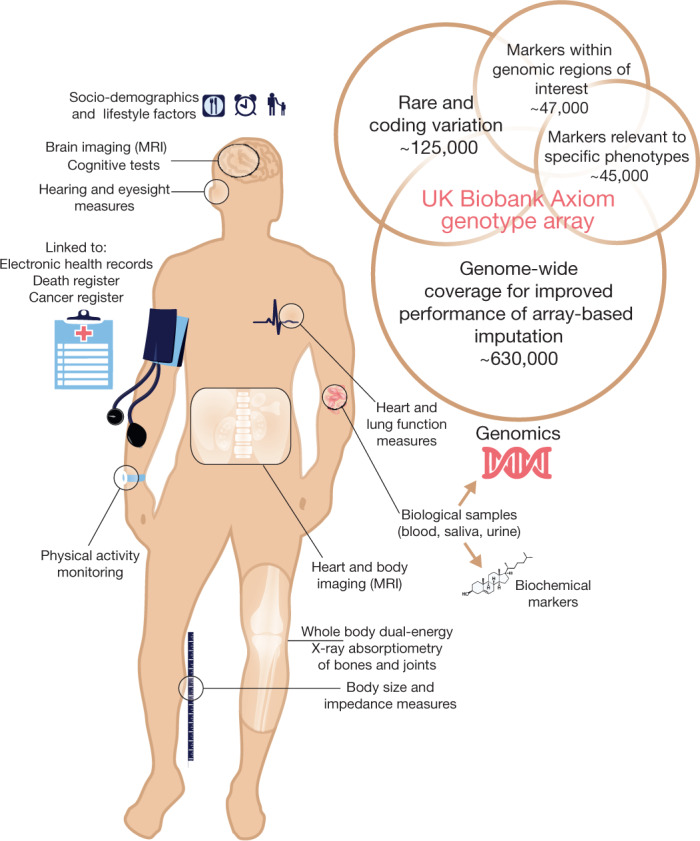
The UK Biobank project is a prospective cohort study with deep genetic and phenotypic data collected on approximately 500,000 individuals from across the United Kingdom, aged between 40 and 69 at recruitment. The open resource is unique in its size and scope. A rich variety of phenotypic and health-related information is available on each participant, including biological measurements, lifestyle indicators, biomarkers in blood and urine, and imaging of the body and brain. Follow-up information is provided by linking health and medical records. Genome-wide genotype data have been collected on all participants, providing many opportunities for the discovery of new genetic associations and the genetic bases of complex traits. Here we describe the centralized analysis of the genetic data, including genotype quality, properties of population structure and relatedness of the genetic data, and efficient phasing and genotype imputation that increases the number of testable variants to around 96 million. Classical allelic variation at 11 human leukocyte antigen genes was imputed, resulting in the recovery of signals with known associations between human leukocyte antigen alleles and many diseases.
Overview
The claims and statistics of this paper haven’t been checked yet.
Free: it reads the open-access text and checks the first 5 claims that cite a source we can check. Create a free account to check every claim.
Integrity signals
Registry
Cites
Statistics
Figures
Verification
Claims the paper makes
The claims and statistics of this paper haven’t been checked yet.
Free: it reads the open-access text and checks the first 5 claims that cite a source we can check. Create a free account to check every claim.
Claims other papers make about this one
Each is checked against this paper’s own text: does it say what the citing paper says it does?
The source backs part of the claim, not all of it — or backs it for a different population, condition or comparison.
In the citing paper
“The UKBB dataset provides information regarding more than 7000 phenotypes assessed in up to 500,000 participants from six ancestry groups [32].”
From Denisovan and Neanderthal archaic introgression differentially impacted the genetics of complex traits in modern populations (2022) · cites this paper as [32]
Experimental — accuracy not yet measuredThe source backs part of the claim, not all of it — or backs it for a different population, condition or comparison.
In the citing paper
“In the UK, the UK Biobank initiated enrollment in 2006, reaching a final participant count of over 500,000, and plans to follow participants for at least 30 years after enrollment 81 .”
From Multimodal biomedical AI (2022) · cites this paper as [81]
Experimental — accuracy not yet measuredThe source backs part of the claim, not all of it — or backs it for a different population, condition or comparison.
In the citing paper
“Approximately 9.2 million people living 25 miles (40 km) from one of 22 assessment centers across England, Wales and Scotland were invited to participate, with 5.5% participating in the baseline studies.”
From Plasma proteomic associations with genetics and health in the UK Biobank (2023) · cites this paper as Bycroft et al (Nature, 2018)
Experimental — accuracy not yet measuredThe cited source says what the claim attributes to it.
In the citing paper
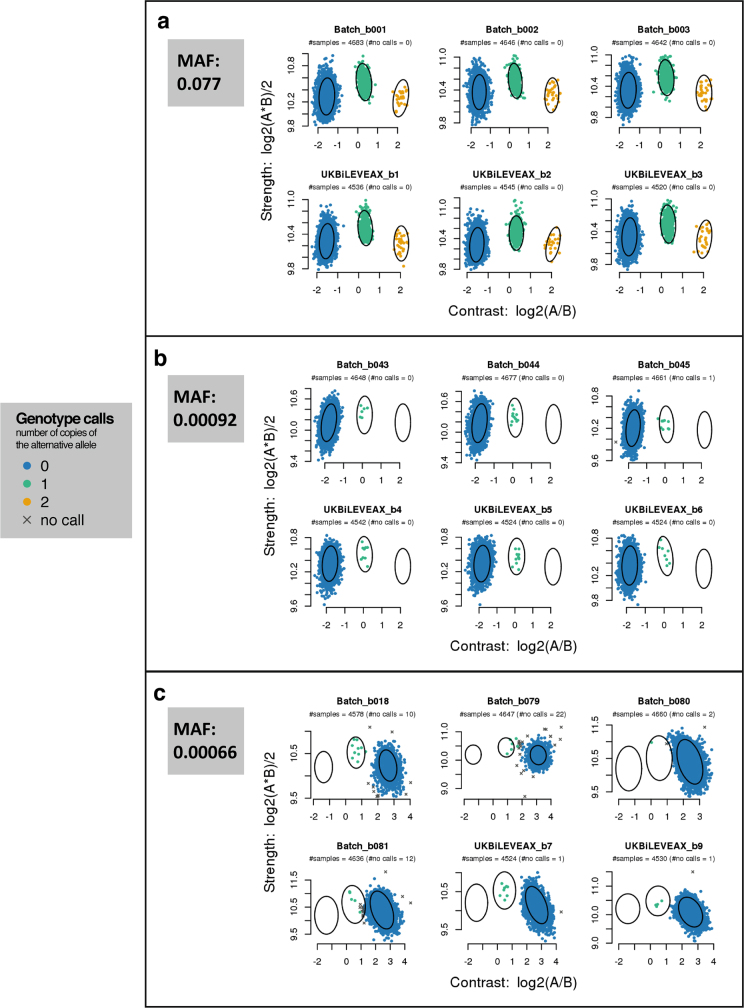
“Amongst the genetics community, it is generally well recognised that SNP-chips perform poorly for genotyping rare genetic variants [9-11] due to their reliance upon data clustering (Figure 1).”
From Assessing the analytical validity of SNP-chips for detecting very rare pathogenic variants: implications for direct-to-consumer genetic testing (2019) · cites this paper as [10]
The cited source says what the claim attributes to it.
In the citing paper
“The genetics community generally recognises that SNP chips perform poorly for genotyping rare genetic variants owing to their reliance on data clustering (fig 1).9 10 11”
From Use of SNP chips to detect rare pathogenic variants: retrospective, population based diagnostic evaluation (2021) · cites this paper as [10]
6 more claims about this paper
Create a free account to see every claim other papers make about this one.
Self-check
Percentages, sums and reported differences re-computed from the paper’s own numbers.
The self-check needs the paper’s full text.
Citations
Cites
A global reference for human genetic variation
The 1000 Genomes Project Consortium, authors, C., Auton, A., Abecasis, G. R., Steering committee, Altshuler, D. M., Durbin, R. M., Abecasis, G. R., Bentley, D. R., Chakravarti, A., et al. (2015) · Nature · doi:10.1038/nature15393 · Cited by 18,247
Self-citationSudlow, C., Gallacher, J., Allen, N., Beral, V., Burton, P., Danesh, J., Downey, P., Elliott, P., Green, J., Landray, M., et al. (2015) · PLOS Medicine · doi:10.1371/journal.pmed.1001779 · Cited by 12,728
Self-citationAnalysis of protein-coding genetic variation in 60,706 humans
Exome Aggregation Consortium, Lek, M., Karczewski, K. J., Minikel, E. V., Samocha, K. E., Banks, E., Fennell, T., O’Donnell-Luria, A. H., Ware, J. S., Hill, A. J., et al. (2016) · Nature · doi:10.1038/nature19057 · Cited by 9,587
A haplotype map of the human genome
The International HapMap Consortium (2005) · Nature · doi:10.1038/nature04226 · Cited by 5,858
Robust relationship inference in genome-wide association studies
Manichaikul, A., Mychaleckyj, J. C., Rich, S. S., Daly, K., Sale, M., & Chen, W.-M. (2010) · Bioinformatics · doi:10.1093/bioinformatics/btq559 · Cited by 3,541
A reference panel of 64,976 haplotypes for genotype imputation
the Haplotype Reference Consortium (2016) · Nature Genetics · doi:10.1038/ng.3643 · Cited by 2,836
Self-citationThe NHGRI GWAS Catalog, a curated resource of SNP-trait associations
Welter, D., MacArthur, J., Morales, J., Burdett, T., Hall, P., Junkins, H., Klemm, A., Flicek, P., Manolio, T., Hindorff, L., et al. (2014) · Nucleic Acids Research · doi:10.1093/nar/gkt1229 · Cited by 2,707
Genetic risk and a primary role for cell-mediated immune mechanisms in multiple sclerosis
The International Multiple Sclerosis Genetics Consortium & The Wellcome Trust Case Control Consortium 2 (2011) · Nature · doi:10.1038/nature10251 · Cited by 2,697
Self-citationMultimodal population brain imaging in the UK Biobank prospective epidemiological study
Miller, K. L., Alfaro-Almagro, F., Bangerter, N. K., Thomas, D. L., Yacoub, E., Xu, J., Bartsch, A. J., Jbabdi, S., Sotiropoulos, S. N., Andersson, J. L. R., et al. (2016) · Nature Neuroscience · doi:10.1038/nn.4393 · Cited by 2,020
The Electronic Medical Records and Genomics (eMERGE) Consortium, Wood, A. R., The MIGen Consortium, The PAGE Consortium, Study, T. L. C., Esko, T., Yang, J., Vedantam, S., Pers, T. H., Gustafsson, S., et al. (2014) · Nature Genetics · doi:10.1038/ng.3097 · Cited by 1,853
Self-citation
Cited by
Items 501–600 of 1,161
Shi, H., Gazal, S., Kanai, M., Koch, E. M., Schoech, A. P., Siewert, K. M., Kim, S. S., Luo, Y., Amariuta, T., Huang, H., et al. (2021) · Nature Communications · doi:10.1038/s41467-021-21286-1 · Cited by 119
Currant, H., Hysi, P. G., Fitzgerald, T. W., Gharahkhani, P., Bonnemaijer, P. W. M., Senabouth, A., Hewitt, A. W., Atan, D., Aung, T., Charng, J., et al. (2021) · PLoS Genetics · doi:10.1371/journal.pgen.1009497 · Cited by 133
“Individuals were then excluded if they were related to third degree or more, based on the kinship information provided as a UK Biobank variable [68].”
BackgroundKuppa, A., Tripathi, H., Al‐Darraji, A., Tarhuni, W. M., & Abdel‐Latif, A. (2023) · International Journal of Molecular Sciences · doi:10.3390/ijms24119129 · Cited by 136
“UKBB is the most extensive study to date and includes data from 343,524 participants for CRP [52].”
BackgroundMachine learning enables new insights into genetic contributions to liver fat accumulation
Haas, M. E., Pirruccello, J. P., Friedman, S. N., Wang, M., Emdin, C. A., Ajmera, V. H., Simon, T. G., Homburger, J. R., Guo, X., Budoff, M., et al. (2021) · Cell Genomics · doi:10.1016/j.xgen.2021.100066 · Cited by 118
“27 Phenotype transformation Because liver fat is not normally distributed and nor are its residuals with respect to clinical covariates, we transformed the input liver fat phenotype to a rank-based output for the GWAS and RVAS analyses.”
InfluentialGenetic analysis in European ancestry individuals identifies 517 loci associated with liver enzymes
Pazoki, R., Vujković, M., Elliott, J., Εvangelou, Ε., Gill, D., Ghanbari, M., van der Most, P. J., Pinto, R. C., Wielscher, M., Farlik, M., et al. (2021) · Nature Communications · doi:10.1038/s41467-021-22338-2 · Cited by 130
Association between metabolic syndrome and risk of incident dementia in UK Biobank
Qureshi, D., Collister, J. A., Allen, N. E., Kuźma, E., & Littlejohns, T. J. (2023) · Alzheimer s & Dementia · doi:10.1002/alz.13439 · Cited by 132
Self-citationHuang, L., Ruan, S., Decazes, P., & Denœux, T. (2024) · Information Fusion · doi:10.1016/j.inffus.2024.102648 · Cited by 142
Depression and Interleukin-6 Signaling: A Mendelian Randomization Study
Kelly, K. M., Smith, J. A., & Mezuk, B. (2021) · Brain, Behavior, and Immunity · doi:10.1016/j.bbi.2021.02.019 · Cited by 117
“Because the INTERVAL study was based in the UK, there is potential for overlap with UK Biobank, which has the potential to bias Mendelian Randomization analysis (Burgess et al., 2016).”
InfluentialPhenomeXcan: Mapping the genome to the phenome through the transcriptome
Pividori, M., Rajagopal, P. S., Barbeira, A., Liang, Y., Melia, O., Bastarache, L. A., Park, Y., Wen, X., & Im, H. K. (2020) · Science Advances · doi:10.1126/sciadv.aba2083 · Cited by 127
An atlas of mitochondrial DNA genotype–phenotype associations in the UK Biobank
Yonova-Doing, E., Calabrese, C., Gomez-Duran, A., Schon, K., Wei, W., Karthikeyan, S., Chinnery, P. F., & Howson, J. M. M. (2021) · Nature Genetics · doi:10.1038/s41588-021-00868-1 · Cited by 115
“The inclusion of 265 mtDNA variants on the Affymetrix genotyping arrays used in UK Biobank (UKBB) 12 , coupled with deep phenotypic data collected on half a million participants, provides an opportunity to address these issues and perform robust mtDNA genome-wide association studies (mtGWAS).”
Souilmi, Y., Lauterbur, M. E., Tobler, R., Huber, C. D., Johar, A., Moradi, S. V., Johnston, W. A., Krogan, N. J., Alexandrov, K. A., & Enard, D. (2021) · Current Biology · doi:10.1016/j.cub.2021.05.067 · Cited by 122
“aspx).(22,23) We further show that the inferred underlying causal mutations are situated near to regulatory variants active in lungs and other tissues impacted by COVID-19.”
Shen, X., Howard, D. M., Adams, M. J., Hill, W. D., Clarke, T.-K., Major Depressive Disorder Working Group of the Psychiatric Genomics Consortium, Adams, M. J., Clarke, T.-K., McIntosh, A. M., Deary, I. J., et al. (2020) · Nature Communications · doi:10.1038/s41467-020-16022-0 · Cited by 111
Self-citationGenetic Risk for Overall Cancer and the Benefit of Adherence to a Healthy Lifestyle
Zhu, M., Wang, T., Huang, Y., Zhao, X., Ding, Y., Zhu, M., Ji, M., Wang, C., Dai, J., Yin, R. H., et al. (2021) · Cancer Research · doi:10.1158/0008-5472.can-21-0836 · Cited by 124
“Genotyping and imputation Detailed information on genotyping process and DNA arrays used in the UKB study has been described elsewhere (14, 15).”
BackgroundMethodArtificial intelligence-enabled decision support in nephrology
Loftus, T. J., Shickel, B., Ozrazgat‐Baslanti, T., Ren, Y., Glicksberg, B. S., Cao, J., Singh, K., Chan, L., Nadkarni, G. N., & Bihorac, A. (2022) · Nature Reviews Nephrology · doi:10.1038/s41581-022-00562-3 · Cited by 129
“However, greater adoption of electronic health records (EHRs) 10 , genomic sequencing 11 and wearable devices 12 has led to broader availability of multimodal health-oriented data.”
BackgroundThe translational challenges of precision oncology
Pich, O., Bailey, C., Watkins, T. B. K., Zaccaria, S., Jamal‐Hanjani, M., & Swanton, C. (2022) · Cancer Cell · doi:10.1016/j.ccell.2022.04.002 · Cited by 122
Sanderson, E., Richardson, T. G., Hemani, G., & Davey Smith, G. (2021) · International Journal of Epidemiology · doi:10.1093/ije/dyaa288 · Cited by 115
“Data were collected based on clinical examinations, assays of biological samples, detailed information regarding self-reported health characteristics and genome-wide genotyping.(32) In total, 12 370 749 genetic variants in up to 463 005 individuals were available for analysis, as described previously.”
Method(2022) · doi:10.1016/j.biopsych.2022.06.034 · Cited by 115
Genome wide analysis for mouth ulcers identifies associations at immune regulatory loci
Dudding, T., Haworth, S., Lind, P. A., Sathirapongsasuti, J. F., 23andMe Research Team, Agee, M., Alipanahi, B., Auton, A., Bell, R. K., Bryc, K., et al. (2019) · Nature Communications · doi:10.1038/s41467-019-08923-6 · Cited by 110
Evaluating genotype imputation pipeline for ultra-low coverage ancient genomes
Hui, R., D’Atanasio, E., Cassidy, L. M., Scheib, C. L., & Kivisild, T. (2020) · Scientific Reports · doi:10.1038/s41598-020-75387-w · Cited by 121
Dementia is an age‐independent risk factor for severity and death in COVID‐19 inpatients
Tahira, A. C., Verjovski‐Almeida, S., & Ferreira, S. T. (2021) · Alzheimer s & Dementia · doi:10.1002/alz.12352 · Cited by 124
Jasso, G. J., Jaiswal, A., Varma, M., Laszewski, T., Grauel, A. L., Omar, A. S., Silva, N., Dranoff, G., Porter, J. A., Mansfield, K. G., et al. (2022) · PLoS Biology · doi:10.1371/journal.pbio.3001532 · Cited by 122
“Among these differentiation transition genes, Adamdec1 is unique in that it is a secreted metalloproteinase with no other paralogs [90,91], its expression is enriched in intestinal tissues [92], and a single nucleotide polymorphism (SNP) variant (8:24248756 T/C) in this gene locus is associated with rectal prolapse [9…”
BackgroundHo, J., Mak, C. C. H., Sharma, V., To, K., & Khan, W. S. (2022) · International Journal of Molecular Sciences · doi:10.3390/ijms231911906 · Cited by 122
“In studies utilizing the UK Biobank cohort [16,18,20–25,27,29,30,33–38], the causal effects represented only the selected European or White-British populations.”
MethodMa, Y., Deng, C., Zhou, Y., Zhang, Y., Qiu, F., Jiang, D., Zheng, G., Li, J., Shuai, J., Zhang, Y., et al. (2023) · Cell Genomics · doi:10.1016/j.xgen.2023.100383 · Cited by 144
Partners, C. M. A., Bào, Y., Zhang, Z., Zhao, W., Xiao, J., Song, S., He, S., Zhang, G., Li, Y., Zhao, G., et al. (2025) · Nucleic Acids Research · doi:10.1093/nar/gkaf1172 · Cited by 160
Bernstein, N., Spencer Chapman, M., Nyamondo, K., Chen, Z., Williams, N., Mitchell, E., Campbell, P. J., Cohen, R. L., & Nangalia, J. (2024) · Nature Genetics · doi:10.1038/s41588-024-01755-1 · Cited by 115
“The UK Biobank (UKBB) provides a large cohort with which to assess gene fitness effects and their associated health effects 30 .”
Pre-pandemic psychiatric disorders and risk of COVID-19: a UK Biobank cohort analysis
Yang, H., Chen, W., Hu, Y., Chen, Y., Zeng, Y., Sun, Y., Ying, Z., He, J., Qu, Y., Lu, D., et al. (2020) · The Lancet Healthy Longevity · doi:10.1016/s2666-7568(20)30013-1 · Cited by 114
Trinder, M., Wang, Y., Madsen, C. M., Ponomarev, T., Bohunek, L., Daisely, B. A., Kong, H. J., Blauw, L. L., Nordestgaard, B. G., Tybjærg‐Hansen, A., et al. (2020) · Circulation · doi:10.1161/circulationaha.120.048568 · Cited by 121
Shadrin, A. A., Kaufmann, T., van der Meer, D., Palmer, C. E., Makowski, C., Loughnan, R. J., Jernigan, T. L., Seibert, T. M., Hagler, D. J., Smeland, O. B., et al. (2021) · NeuroImage · doi:10.1016/j.neuroimage.2021.118603 · Cited by 120
Imputation of ancient human genomes
Sousa da Mota, B., Rubinacci, S., Cruz Dávalos, D. I., G. Amorim, C. E., Sikora, M., Johannsen, N. N., Szmyt, M. H., Włodarczak, P., Szczepanek, A., Przybyła, M. M., et al. (2023) · Nature Communications · doi:10.1038/s41467-023-39202-0 · Cited by 102
“The recent release of 200K whole-genome sequences in the UK Biobank 74 , which can be used as a reference panel for imputation, offers an opportunity to improve imputation performance in the case of low-coverage European genomes, including ancient genomes, especially at rare variants and lower depths of coverage 75 .”
Self-citationSakaue, S., Hirata, J., Kanai, M., Ken, S., Akiyama, M., Too, C. L., Arayssi, T., Hammoudeh, M., Emadi, S. A., Masri, B. K., et al. (2020) · Nature Communications · doi:10.1038/s41467-020-15194-z · Cited by 120
Hindy, G., Aragam, K. G., Ng, K., Chaffin, M., Lotta, L. A., Baras, A., Regeneron Genetics Center, Drake, I., Orho-Melander, M., Melander, O., et al. (2020) · Arteriosclerosis, Thrombosis, and Vascular Biology · doi:10.1161/atvbaha.120.314856 · Cited by 114
Peyrot, W. J., & Price, A. L. (2021) · Nature Genetics · doi:10.1038/s41588-021-00787-1 · Cited by 123
Malik, R., Georgakis, M. K., Vujković, M., Damrauer, S. M., Elliott, P., Karhunen, V., Giontella, A., Fava, C., Hellwege, J. N., Shuey, M. M., et al. (2021) · Hypertension · doi:10.1161/hypertensionaha.120.16534 · Cited by 125
Bhattacharya, R., Zekavat, S. M., Uddin, M. M., Pirruccello, J., Niroula, A., Gibson, C., Griffin, G. K., Libby, P., Ebert, B. L., Bick, A., et al. (2021) · JAMA Cardiology · doi:10.1001/jamacardio.2021.1678 · Cited by 109
The impact of age on genetic risk for common diseases
Jiang, X., Holmes, C., & McVean, G. (2021) · PLOS Genetics · doi:10.1371/journal.pgen.1009723 · Cited by 107
“We used the genotype data, individual information and Hospital Episode Statistics (HES) data from the UK Biobank dataset [20].”
MethodSelf-citationRepeat Measures of Lipoprotein(a) Molar Concentration and Cardiovascular Risk
Trinder, M., Paruchuri, K., Haidermota, S., Bernardo, R., Zekavat, S. M., Gilliland, T., Januzzi, J., & Natarajan, P. (2022) · Journal of the American College of Cardiology · doi:10.1016/j.jacc.2021.11.055 · Cited by 102
Clonal hematopoiesis, somatic mosaicism, and age-associated disease
Evans, M. A., & Walsh, K. X. (2022) · Physiological Reviews · doi:10.1152/physrev.00004.2022 · Cited by 117
Functional connectomics in depression: insights into therapies
Chai, Y., Sheline, Y. I., Oathes, D. J., Balderston, N. L., Rao, H., & Yu, M. (2023) · Trends in Cognitive Sciences · doi:10.1016/j.tics.2023.05.006 · Cited by 120
Advancements and Obstacles of CRISPR-Cas9 Technology in Translational Research
You, L., Tong, R., Li, M., Liu, Y., Xue, J., & Lü, Y. (2019) · Molecular Therapy — Methods & Clinical Development · doi:10.1016/j.omtm.2019.02.008 · Cited by 128
Systolic Blood Pressure and Risk of Valvular Heart Disease: A Mendelian Randomization Study
Nazarzadeh, M., Pinho-Gomes, A.-C., Smith Byrne, K., Canoy, D., Raimondi, F., Ayala Solares, J. R., Otto, C. M., & Rahimi, K. (2019) · JAMA Cardiology · doi:10.1001/jamacardio.2019.2202 · Cited by 107
Coffee Consumption and Kidney Function: A Mendelian Randomization Study
Kennedy, O. J., Pirastu, N., Poole, R., Fallowfield, J. A., Hayes, P. C., Grzeszkowiak, E. J., Taal, M. W., Wilson, J. F., Parkes, J., & Roderick, P. J. (2019) · American Journal of Kidney Diseases · doi:10.1053/j.ajkd.2019.08.025 · Cited by 121
A general dimension of genetic sharing across diverse cognitive traits inferred from molecular data
de la Fuente, J., Davies, G., Grotzinger, A. D., Tucker-Drob, E. M., & Deary, I. J. (2020) · Nature Human Behaviour · doi:10.1038/s41562-020-00936-2 · Cited by 105
Heianza, Y., Zhou, T., Sun, D., Hu, F. B., & Qi, L. (2021) · Clinical Nutrition · doi:10.1016/j.clnu.2021.06.018 · Cited by 121
Yang, J., Vamvini, M. T., Nigro, P., Ho, L., Galani, K., Alvarez, M., Tanigawa, Y., Renfro, A., Carbone, N. P., Laakso, M., et al. (2022) · Cell Metabolism · doi:10.1016/j.cmet.2022.09.004 · Cited by 130
“Briefly, we focused on meta-analyzed GWAS summary statistics on directly genotyped arrays (Bycroft et al., 2018) across a total of 451,354 individuals consisting of white British (n = 337,129), non-British white (n = 44,632), African (n = 6,497), South Asian (n = 7,831), East Asian (n = 1,704), semi-related (n = 44,63…”
MethodIdentifying modifiable factors and their joint effect on dementia risk in the UK Biobank
Zhang, Y., Chen, S.-D., Deng, Y., You, J., He, X., Wu, X., Wu, B., Liu, Y., Zhang, Y.-R., Kuo, K., et al. (2023) · Nature Human Behaviour · doi:10.1038/s41562-023-01585-x · Cited by 117
Zhu, K., Li, R., Yao, P., Yu, H., Pan, A., Manson, J. E., Rimm, E. B., Willett, W. C., & Liu, G. (2024) · Nature Food · doi:10.1038/s43016-024-01059-x · Cited by 118
“The UK Biobank is currently the largest cohort with extensive Olink proteomics data 30 .”
Screening Human Embryos for Polygenic Traits Has Limited Utility
Karavani, E., Zuk, O., Zeevi, D., Barzilai, N., Stefanis, N. C., Hatzimanolis, A., Smyrnis, N., Avramopoulos, D., Kruglyak, L., Atzmon, G., et al. (2019) · Cell · doi:10.1016/j.cell.2019.10.033 · Cited by 111
Kuo, C., Pilling, L. C., Kuchel, G. A., Ferrucci, L., & Melzer, D. (2019) · Aging Cell · doi:10.1111/acel.13017 · Cited by 107
“The study collected extensive genetic and phenotypic data at baseline (recruit‐ ment), and the follow‐up is conducted mainly through linkages to death certificates, cancer registries, and hospital records (Bycroft et al., 2018).”
BackgroundCheesman, R., Hunjan, A., Coleman, J. R. I., Ahmadzadeh, Y., Plomin, R., McAdams, T. A., Eley, T. C., & Breen, G. (2020) · Psychological Science · doi:10.1177/0956797620904450 · Cited by 110
“Genome-wide genetic data came from the full release of the UK Biobank data and were collected and processed according to the quality-control pipeline (Bycroft et al., 2018).”
Cross-cancer evaluation of polygenic risk scores for 16 cancer types in two large cohorts
Graff, R. E., Cavazos, T. B., Thai, K. K., Kachuri, L., Rashkin, S. R., Hoffman, J., Alexeeff, S., Blatchins, M. A., Meyers, T. J., Leong, L., et al. (2021) · Nature Communications · doi:10.1038/s41467-021-21288-z · Cited by 114
Symptom-level modelling unravels the shared genetic architecture of anxiety and depression
Thorp, J. G., Campos, A. I., Grotzinger, A. D., Gerring, Z. F., An, J., Ong, J., Wang, W., Shringarpure, S., Byrne, E. M., MacGregor, S., et al. (2021) · Nature Human Behaviour · doi:10.1038/s41562-021-01094-9 · Cited by 124
A genome-wide association analysis reveals new pathogenic pathways in gout
Major, T. J., Takei, R., Matsuo, H., Leask, M., Sumpter, N. A., Topless, R., Shirai, Y., Wang, W., Cadzow, M. J., Phipps‐Green, A. J., et al. (2024) · Nature Genetics · doi:10.1038/s41588-024-01921-5 · Cited by 123
Van Hout, C. V., Tachmazidou, I., Backman, J. D., Hoffman, J. X., Ye, B., Pandey, A. K., Gonzaga-Jauregui, C., Khalid, S., Liu, D., Banerjee, N., et al. (2019) · doi:10.1101/572347 · Cited by 110
Self-citationMallard, T. T., Savage, J. E., Johnson, E. C., Huang, Y., Edwards, A. C., Hottenga, J., Grotzinger, A. D., Gustavson, D. E., Jennings, M. V., Anokhin, A. P., et al. (2021) · American Journal of Psychiatry · doi:10.1176/appi.ajp.2020.20091390 · Cited by 118
Genetics of substance use disorders in the era of big data
Gelernter, J., & Polimanti, R. (2021) · Nature Reviews Genetics · doi:10.1038/s41576-021-00377-1 · Cited by 107
Assessment of Physical Activity in Adults Using Wrist Accelerometers
Liu, F., Wanigatunga, A. A., & Schrack, J. A. (2021) · Epidemiologic Reviews · doi:10.1093/epirev/mxab004 · Cited by 126
Population-Based Penetrance of Deleterious Clinical Variants
Forrest, I. S., Chaudhary, K., Vy, H. M. T., Petrazzini, B. O., Bafna, S., Jordan, D. M., Rocheleau, G., Loos, R. J. F., Nadkarni, G. N., Cho, J. H., et al. (2022) · JAMA · doi:10.1001/jama.2021.23686 · Cited by 118
Mallard, T. T., Linnér, R. K., Grotzinger, A. D., Sanchez‐Roige, S., Seidlitz, J., Okbay, A., de Vlaming, R., Meddens, S. F. W., Palmer, A. A., Davis, L. K., et al. (2022) · Cell Genomics · doi:10.1016/j.xgen.2022.100140 · Cited by 123
“If valid, this dimensional approach in non-clinical samples has the potential to accelerate genetic discovery via dramatic increases in sample size, as self-report survey measures of psychiatric symptoms can be administered at scale to large, genotyped population-based samples, such as UK Biobank.”
InfluentialIntegrative polygenic risk score improves the prediction accuracy of complex traits and diseases
Truong, B. M. T., Hull, L. E., Ruan, Y., Huang, Q., Hornsby, W., Martin, H. C., van Heel, D. A., Wang, Y., Martin, A. R., Lee, S., et al. (2024) · Cell Genomics · doi:10.1016/j.xgen.2024.100523 · Cited by 131
Jiang, R., Noble, S., Rosenblatt, M., Dai, W., Ye, J., Liu, S., Qi, S., Calhoun, V. D., Sui, J., & Scheinost, D. (2024) · Nature Communications · doi:10.1038/s41467-024-48827-8 · Cited by 123
“The UK Biobank is a population-based cohort study of over 500,000 participants aged 37 – 73 years 50 .”
The Alzheimer Precision Medicine Initiative
Hampel, H., ESCOTT-PRICEVal, A. P. M. I. (. A. F. (. B. B. B. B. L. (. A. B. L. W. (. B. B. C. C. C. C. C. A. (. C.-C. C. C. C. L. (. V. D. D. D., Vergallo, A., Perry, G., & Lista, S. (2019) · Journal of Alzheimer's Disease · doi:10.3233/jad-181121 · Cited by 103
Electronic health records and polygenic risk scores for predicting disease risk
Li, R., Chen, Y., Ritchie, M. D., & Moore, J. H. (2020) · Nature Reviews Genetics · doi:10.1038/s41576-020-0224-1 · Cited by 135
Creation and application of virtual patient cohorts of heart models
Niederer, S. A., Aboelkassem, Y., Cantwell, C. D., Corrado, C., Coveney, S., Cherry, E. M., Delhaas, T., Fenton, F. H., Panfilov, A. V., Pathmanathan, P., et al. (2020) · Philosophical Transactions of the Royal Society A: Mathematical, Physical and Engineering Sciences · doi:10.1098/rsta.2019.0558 · Cited by 103
“However, the increased availability of population databases, for example the UK biobank [44] and, in the future, the availability of virtual cohorts of cardiac models, will provide population-based priors for informing some non-personalized model parameters in individuals.”
BackgroundUnited Kingdom Biobank (UK Biobank)
Caleyachetty, R., Littlejohns, T. J., Lacey, B., Bešević, J., Conroy, M. C., Collins, R., & Allen, N. E. (2021) · Journal of the American College of Cardiology · doi:10.1016/j.jacc.2021.03.342 · Cited by 111
Self-citationBarbitoff, Y. A., Abasov, R., Tvorogova, V. E., Glotov, A. S., & Predeus, A. V. (2022) · BMC Genomics · doi:10.1186/s12864-022-08365-3 · Cited by 96
Friligkou, E., Løkhammer, S., Cabrera‐Mendoza, B., Shen, J., He, J., Deiana, G., Zanoaga, M. D., Asgel, Z., Pilcher, A., Lascio, L. D., et al. (2024) · Nature Genetics · doi:10.1038/s41588-024-01908-2 · Cited by 124
“UKB is a large population-based study that collected information regarding over 500,000 participants 34 .”
Polimanti, R., Peterson, R. E., Ong, J.-S., MacGregor, S., Edwards, A. C., Clarke, T.-K., Frank, J., Gerring, Z., Gillespie, N. A., Lind, P. A., et al. (2019) · Psychological Medicine · doi:10.1017/s0033291719000667 · Cited by 108
Chen, V. L., Oliveri, A., Miller, M. J., Wijarnpreecha, K., Du, X., Chen, Y., Cushing, K. C., Lok, A. S., & Speliotes, E. K. (2023) · Gastroenterology · doi:10.1053/j.gastro.2023.01.040 · Cited by 108
Cardiovascular and Kidney Outcomes Across the Glycemic Spectrum
Honigberg, M. C., Zekavat, S. M., Pirruccello, J. P., Natarajan, P., & Vaduganathan, M. (2021) · Journal of the American College of Cardiology · doi:10.1016/j.jacc.2021.05.004 · Cited by 108
Klimentidis, Y. C., Arora, A., Newell, M., Zhou, J. J., Ordovás, J. M., Renquist, B. J., & Wood, A. C. (2020) · Diabetes · doi:10.2337/db19-1134 · Cited by 112
“Details regarding imputation, principal components analysis, and quality control procedures are described elsewhere (20).”
MethodSaw, J., Yang, M.-L., Trinder, M., Tcheandjieu, C., Xu, C., Starovoytov, A., Birt, I., Mathis, M. R., Hunker, K. L., Schmidt, E. M., et al. (2020) · Nature Communications · doi:10.1038/s41467-020-17558-x · Cited by 105
Martin, S., Cule, M., Basty, N., Tyrrell, J., Beaumont, R. N., Wood, A. R., Frayling, T. M., Sorokin, E. P., Whitcher, B. J., Liu, Y., et al. (2021) · Diabetes · doi:10.2337/db21-0129 · Cited by 116
“GWAS of Imaging-Derived Phenotypes We used the UK Biobank Imputed Genotypes v3 (16), excluding single nucleotide polymorphisms with minor 1844 Types of Adiposity in Cardiometabolic Disease Diabetes Volume 70, August 2021”
MethodValidation of a Genome-Wide Polygenic Score for Coronary Artery Disease in South Asians
Wang, M., Menon, R., Mishra, S., Patel, A. P., Chaffin, M., Tanneeru, D., Deshmukh, M., Mathew, O., Apte, S., Devanboo, C. S., et al. (2020) · Journal of the American College of Cardiology · doi:10.1016/j.jacc.2020.06.024 · Cited by 103
Genetic mechanisms of HLA-I loss and immune escape in diffuse large B cell lymphoma
Fangazio, M., Ladewig, E., Gomez, K., Garcia‐Ibanez, L., Kumar, R., Teruya‐Feldstein, J., Rossi, D., Filip, I., Pan‐Hammarström, Q., Inghirami, G. G., et al. (2021) · Proceedings of the National Academy of Sciences · doi:10.1073/pnas.2104504118 · Cited by 117
“uk/); HLA alleles were imputed as the pair of alleles with maximum posterior probability from HLA*IMP:02, as described previously (54).”
Pan-ancestry exome-wide association analyses of COVID-19 outcomes in 586,157 individuals
Kosmicki, J. A., Horowitz, J. E., Banerjee, N., Lanche, R., Marcketta, A., Maxwell, E. K., Bai, X., Sun, D., Backman, J., Sharma, D., et al. (2021) · The American Journal of Human Genetics · doi:10.1016/j.ajhg.2021.05.017 · Cited by 118
Self-citationWang, C., Martins-Bach, A. B., Alfaro‐Almagro, F., Douaud, G., Klein, J. C., Llera, A., Fiscone, C., Bowtell, R. W., Elliott, L. T., Smith, S. M., et al. (2022) · Nature Neuroscience · doi:10.1038/s41593-022-01074-w · Cited by 114
Self-citationDysregulation of a long noncoding RNA reduces leptin leading to a leptin-responsive form of obesity
Dallner, O. S., Marinis, J. M., Lu, Y.-H., Birsoy, K., Werner, E., Fayzikhodjaeva, G., Dill, B. D., Molina, H., Moscati, A., Kutalik, Z., et al. (2019) · Nature Medicine · doi:10.1038/s41591-019-0370-1 · Cited by 106
Genomics of body fat percentage may contribute to sex bias in anorexia nervosa
Hübel, C., Gaspar, H. A., Coleman, J. R. I., Finucane, H., Purves, K. L., Hanscombe, K. B., Prokopenko, I., MAGIC investigators, Graff, M., Ngwa, J. S., et al. (2019) · American Journal of Medical Genetics Part B: Neuropsychiatric Genetics · doi:10.1002/ajmg.b.32709 · Cited by 116
GWAS of bone size yields twelve loci that also affect height, BMD, osteoarthritis or fractures
Styrkársdóttir, U., Stefánsson, Ó. A., Gunnarsdóttir, K., Þorleifsson, G., Lund, S. H., Stefánsdóttir, L., Juliusson, K., Agustsdottir, A. B., Zink, F., Halldorsson, G. H., et al. (2019) · Nature Communications · doi:10.1038/s41467-019-09860-0 · Cited by 123
Atrial fibrillation and kidney function: a bidirectional Mendelian randomization study
Park, S., Lee, S., Kim, Y., Lee, Y., Kang, M. W., Kim, K., Kim, Y. C., Han, S. S., Lee, H., Lee, J. P., et al. (2021) · European Heart Journal · doi:10.1093/eurheartj/ehab291 · Cited by 116
Genome-wide association meta-analysis yields 20 loci associated with gallstone disease
Ferkingstad, E., Oddsson, Á., Grétarsdóttir, S., Benónísdóttir, S., Þorleifsson, G., Deaton, A. M., Jonsson, S., Stefánsson, Ó. A., Norddahl, G. L., Zink, F., et al. (2018) · Nature Communications · doi:10.1038/s41467-018-07460-y · Cited by 109
Veldsman, M., Tai, X.-Y., Nichols, T. E., Smith, S. M., Peixoto, J. P. F., Manohar, S., & Husain, M. (2020) · Nature Communications · doi:10.1038/s41467-020-18201-5 · Cited by 114
Exposure to air pollution and risk of incident dementia in the UK Biobank
Parra, K., Alexander, G. E., Raichlen, D. A., Klimentidis, Y. C., & Furlong, M. (2022) · Environmental Research · doi:10.1016/j.envres.2022.112895 · Cited by 113
Saevarsdóttir, S., Stefánsdóttir, L., Sulem, P., Þorleifsson, G., Ferkingstad, E., Rutsdottir, G., Glintborg, B., Westerlind, H., Gröndal, G., Loft, I. C., et al. (2022) · Annals of the Rheumatic Diseases · doi:10.1136/annrheumdis-2021-221754 · Cited by 112
Physical Frailty, Genetic Predisposition, and Incident Parkinson Disease
Zheng, Z., Lv, Y., Rong, S., Sun, T., & Chen, L. (2023) · JAMA Neurology · doi:10.1001/jamaneurol.2023.0183 · Cited by 111
Sun, X., Chen, B., Qi, Y., Wei, M., Chen, W., Wu, X., Wang, Q., Li, J., Lei, X., & Luo, G. (2024) · The Journal of Headache and Pain · doi:10.1186/s10194-024-01828-w · Cited by 113
“Moreover, the replication cohort dataset was sourced from UK Biobank [22], including 26,052 cases and 487,214 controls.”
MethodInsights from complex trait fine-mapping across diverse populations
Kanai, M., Ulirsch, J. C., Karjalainen, J., Kurki, M., Karczewski, K. J., Fauman, E., Wang, Q. S., Jacobs, H., Aguet, F., Ardlie, K. G., et al. (2021) · medRxiv · doi:10.1101/2021.09.03.21262975 · Cited by 97
“The recent development of large-scale biobanks worldwide 4,6,7,23 provides an exciting opportunity for well-powered fine-mapping of multiple phenotypes in diverse populations of both European and non-European ancestries.”
Hill, W. D., Weiß, A., Liewald, D. C. M., Davies, G., Porteous, D. J., Hayward, C., McIntosh, A. M., Galé, C. R., & Deary, I. J. (2019) · Molecular Psychiatry · doi:10.1038/s41380-019-0387-3 · Cited by 114
“[25] by estimating the kinship coefficients for all pairs of samples using the soft-”
BackgroundMethodInfluentialMarnetto, D., Pärna, K., Läll, K., Molinaro, L., Montinaro, F., Haller, T., Metspalu, M., Mägi, R., Fischer, K., & Pagani, L. (2020) · Nature Communications · doi:10.1038/s41467-020-15464-w · Cited by 108
Sun, C., Kovacs, P. L., & Guiu‐Jurado, E. (2021) · Genes · doi:10.3390/genes12060841 · Cited by 115
“The largest genetic studies on fat distribution so far are based on UK Biobank data, a large-scale biomedical database and research resource, containing in-depth genetic and health information from half a million UK participants [68].”
BackgroundGoodrich, J. K., Singer-Berk, M., Son, R., Sveden, A., Wood, J., England, E., Cole, J. B., Weisburd, B., Watts, N., Caulkins, L., et al. (2021) · Nature Communications · doi:10.1038/s41467-021-23556-4 · Cited by 100
Demange, P., Hottenga, J., Abdellaoui, A., Eilertsen, E. M., Malanchini, M., Domingue, B. W., Armstrong‐Carter, E., de Zeeuw, E. L., Rimfeld, K., Boomsma, D. I., et al. (2022) · Nature Communications · doi:10.1038/s41467-022-32003-x · Cited by 117
Zhang, B. C., Biddanda, A., Gunnarsson, Á. F., Cooper, F., & Palamara, P. F. (2023) · Nature Genetics · doi:10.1038/s41588-023-01379-x · Cited by 112
Zhao, Y., Liu, Y., Sahakian, B. J., Langley, C., Zhang, W., Kuo, K., Li, Z., Gan, Y., Li, Y., Zhao, Y. W., et al. (2023) · Nature Mental Health · doi:10.1038/s44220-023-00120-1 · Cited by 115
Yang, S. Y., Castellani, C. A., Longchamps, R. J., Pillalamarri, V., O'Rourke, B. P., Güallar, E., & Arking, D. E. (2021) · Genome Research · doi:10.1101/gr.269381.120 · Cited by 111
“Fig 8). mtDNA-CN is associated with incident neurodegenerative disease in the UKBiobank To examine the association between mtDNA-CN and neurodegenerative disease risk, we used the UK Biobank (UKB) [46], a prospective cohort study with whole exome sequencing for ~50,000 individuals. mtDNA-CN was derived from whole exom…”
MethodInfluentialRalph, P. L., Thornton, K., & Kelleher, J. (2020) · Genetics · doi:10.1534/genetics.120.303253 · Cited by 107
“Computation is beginning to be a major problem: projects such as UK Biobank [Bycroft et al., 2018] and gnomAD [Karczewski et al., 2019] hold genetic data for hundreds of thousands of samples at tens to hundreds of millions of variant sites.”
BackgroundSanderson, E., Richardson, T. G., Morris, T. T., Tilling, K., & Davey Smith, G. (2022) · PLOS Genetics · doi:10.1371/journal.pgen.1010290 · Cited by 103
“[38,39] Between 2006 and 2010, the UK Biobank study enrolled 500,000 individuals aged between 40 and 69 at baseline across 22 assessment centres in the UK.”
BackgroundDavies, M. R., Kalsi, G., Armour, C., Jones, I. R., McIntosh, A. M., Smith, D. J., Walters, J. T. R., Bradley, J. R., Kingston, N., Ashford, S., et al. (2019) · Behaviour Research and Therapy · doi:10.1016/j.brat.2019.103503 · Cited by 94
“These items were adapted from the Australian Genetics of Depression Study questionnaire (Byrne et al., 2019).”
BackgroundMethodInfluentialSelf-citationPatel, A. P., Wang, M., Fahed, A. C., Mason-Suares, H., Brockman, D., Pelletier, R., Amr, S., Machini, K., Hawley, M., Witkowski, L., et al. (2020) · JAMA Network Open · doi:10.1001/jamanetworkopen.2020.3959 · Cited by 104
Hardcastle, A. J., Lišková, P., Bykhovskaya, Y., McComish, B. J., Davidson, A. E., Inglehearn, C. F., Li, X., Choquet, H., Habeeb, M., Lucas, S. E. M., et al. (2021) · Communications Biology · doi:10.1038/s42003-021-01784-0 · Cited by 110
Metadata
- Authors
- Bycroft, C., Freeman, C., Petkova, D., Band, G., Elliott, L. T., Sharp, K., Motyer, A., Vukcevic, D., Delaneau, O., O’Connell, J., Cortes, A., Welsh, S., Young, A., Effingham, M., McVean, G., Leslie, S., Allen, N., Donnelly, P., & Marchini, J.
- Affiliations
- Centre for Human Genetics (GB)
- University of Oxford (GB)
- The University of Melbourne (AU)
- University of Geneva (CH)
- Illumina (United Kingdom) (GB)
- UK Biobank (GB)
- Corresponding author
- Marchini, Jonathan
- ORCID
- Venue
- Nature
- Published
- 2018-10-10
- Volume
- 562
- Issue
- 7726
- Pages
- 203-209
- ISSN
- 0028-0836 (ISSN-L)
- 1476-4687
- PMC
- PMC6786975
- OpenAlex
- W2895486342
- Semantic Scholar
- a9cc79a5df0f7802145401b464e4bb30c23b8efa
- Cited by
- 8,876
- References
- 41
- Citations by year
- 2026: 1242 · 2025: 1612 · 2024: 1546 · 2023: 1331 · 2022: 1185 · 2021: 928 · 2020: 643 · 2019: 336 · 2018: 40
- FWCI
- 299.77
- Type
- journal article
- Language
- en
- Open access
- hybrid
- doi.org
- Licence
- cc-by
- creativecommons.org/licenses/by/4.0 (tdm)
- creativecommons.org/licenses/by/4.0 (vor)
- Locations
- Nature (publishedVersion, cc-by)
- PubMed Central (publishedVersion, cc-by)
- PubMed (publishedVersion)
- RePEc: Research Papers in Economics (submittedVersion)
- IRIS (submittedVersion, cc-by)
- Minerva Access (University of Melbourne) (submittedVersion, cc-by)
- SERVAL (Université de Lausanne) (submittedVersion, cc-by)
- Funders
- Wellcome Trust (095552/Z/11/Z, 203141/Z/16/Z, 10956/Z/13Z, 100308/Z/12/Z, 090532/Z/09/Z, 100956/Z/13/Z)
- National Institute for Health and Care Research
- British Heart Foundation
- Medical Research Council
- National Health and Medical Research Council (1053756)
- FP7 Ideas: European Research Council (617306)
- Topics
- Life Sciences › Biochemistry, Genetics and Molecular Biology › Genetics › Genetic Associations and Epidemiology
- Life Sciences › Biochemistry, Genetics and Molecular Biology › Genetics › Genetic and phenotypic traits in livestock
- Life Sciences › Biochemistry, Genetics and Molecular Biology › Genetics › Forensic and Genetic Research
- Keywords
- UK Biobank, prospective cohort, deep phenotyping, complex traits, population structure, relatedness, genotype phasing, genotype imputation, biomarkers
- MeSH terms
- Adult, Aged, Alleles, Body Height, Brain, Family, Female, United Kingdom, Haplotypes, Humans, Life Style, Major Histocompatibility Complex, Male, Middle Aged, Phenotype, Quality Control, Cohort Studies, Biomarkers, Databases, Factual, Genomics, Databases, Genetic, Racial Groups, Genome-Wide Association Study, Electronic Health Records
About these checks
Registry, retraction, Cites and statistics results are computed, not judged, with one exception: a printed reference that no index lists is read once by a model before it counts as a citation error. Claims are extracted by a model and kept only when their quote appears verbatim in the text; each cited source is then checked, with a model’s help, for whether it says what the claim relies on. Those verdicts can be wrong — read the claim’s quote and the cited source before relying on one.
Statistics and arithmetic are recomputed, not judged.
Confidence bands are shown only for fields calibrated on our annotated test set. None is calibrated yet, so no band is shown.
What counts as a claim ›How we measure confidence ›How we check this ›
Are you an author, or do you see a problem with this page? Request a review
Data sources
Bibliographic data: Semantic Scholar, OpenAlex, Crossref.
Contains information from the Semantic Scholar Academic Graph Datasets, made available under the ODC Attribution License (ODC-BY 1.0).
Semantic Scholar’s data is described in: Kinney, R., et al. (2023). The Semantic Scholar Open Data Platform. arXiv:2301.10140.
