

The UK Biobank resource with deep phenotyping and genomic data
Open accessThe DOI matches its Crossref record; 39 of the 41 references it cites were found in a registry or an index.
Abstract
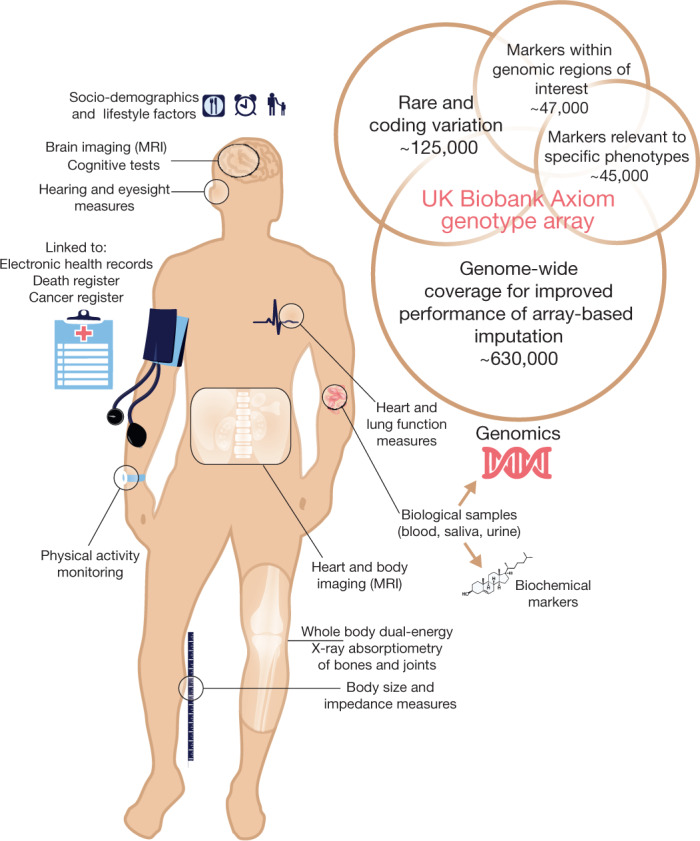
The UK Biobank project is a prospective cohort study with deep genetic and phenotypic data collected on approximately 500,000 individuals from across the United Kingdom, aged between 40 and 69 at recruitment. The open resource is unique in its size and scope. A rich variety of phenotypic and health-related information is available on each participant, including biological measurements, lifestyle indicators, biomarkers in blood and urine, and imaging of the body and brain. Follow-up information is provided by linking health and medical records. Genome-wide genotype data have been collected on all participants, providing many opportunities for the discovery of new genetic associations and the genetic bases of complex traits. Here we describe the centralized analysis of the genetic data, including genotype quality, properties of population structure and relatedness of the genetic data, and efficient phasing and genotype imputation that increases the number of testable variants to around 96 million. Classical allelic variation at 11 human leukocyte antigen genes was imputed, resulting in the recovery of signals with known associations between human leukocyte antigen alleles and many diseases.
Overview
The claims and statistics of this paper haven’t been checked yet.
Free: it reads the open-access text and checks the first 5 claims that cite a source we can check. Create a free account to check every claim.
Integrity signals
Registry
Cites
Statistics
Figures
Verification
Claims the paper makes
The claims and statistics of this paper haven’t been checked yet.
Free: it reads the open-access text and checks the first 5 claims that cite a source we can check. Create a free account to check every claim.
Claims other papers make about this one
Each is checked against this paper’s own text: does it say what the citing paper says it does?
The source backs part of the claim, not all of it — or backs it for a different population, condition or comparison.
In the citing paper
“The UKBB dataset provides information regarding more than 7000 phenotypes assessed in up to 500,000 participants from six ancestry groups [32].”
From Denisovan and Neanderthal archaic introgression differentially impacted the genetics of complex traits in modern populations (2022) · cites this paper as [32]
Experimental — accuracy not yet measuredThe source backs part of the claim, not all of it — or backs it for a different population, condition or comparison.
In the citing paper
“In the UK, the UK Biobank initiated enrollment in 2006, reaching a final participant count of over 500,000, and plans to follow participants for at least 30 years after enrollment 81 .”
From Multimodal biomedical AI (2022) · cites this paper as [81]
Experimental — accuracy not yet measuredThe source backs part of the claim, not all of it — or backs it for a different population, condition or comparison.
In the citing paper
“Approximately 9.2 million people living 25 miles (40 km) from one of 22 assessment centers across England, Wales and Scotland were invited to participate, with 5.5% participating in the baseline studies.”
From Plasma proteomic associations with genetics and health in the UK Biobank (2023) · cites this paper as Bycroft et al (Nature, 2018)
Experimental — accuracy not yet measuredThe cited source says what the claim attributes to it.
In the citing paper
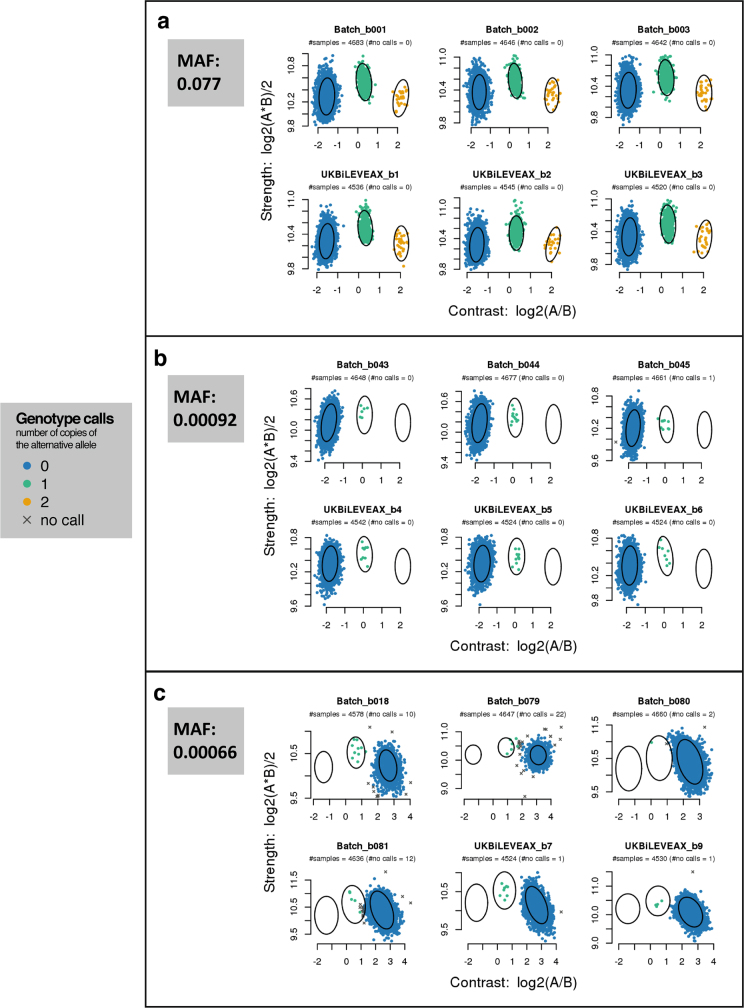
“Amongst the genetics community, it is generally well recognised that SNP-chips perform poorly for genotyping rare genetic variants [9-11] due to their reliance upon data clustering (Figure 1).”
From Assessing the analytical validity of SNP-chips for detecting very rare pathogenic variants: implications for direct-to-consumer genetic testing (2019) · cites this paper as [10]
The cited source says what the claim attributes to it.
In the citing paper
“The genetics community generally recognises that SNP chips perform poorly for genotyping rare genetic variants owing to their reliance on data clustering (fig 1).9 10 11”
From Use of SNP chips to detect rare pathogenic variants: retrospective, population based diagnostic evaluation (2021) · cites this paper as [10]
6 more claims about this paper
Create a free account to see every claim other papers make about this one.
Self-check
Percentages, sums and reported differences re-computed from the paper’s own numbers.
The self-check needs the paper’s full text.
Citations
Cites
A global reference for human genetic variation
The 1000 Genomes Project Consortium, authors, C., Auton, A., Abecasis, G. R., Steering committee, Altshuler, D. M., Durbin, R. M., Abecasis, G. R., Bentley, D. R., Chakravarti, A., et al. (2015) · Nature · doi:10.1038/nature15393 · Cited by 18,247
Self-citationSudlow, C., Gallacher, J., Allen, N., Beral, V., Burton, P., Danesh, J., Downey, P., Elliott, P., Green, J., Landray, M., et al. (2015) · PLOS Medicine · doi:10.1371/journal.pmed.1001779 · Cited by 12,728
Self-citationAnalysis of protein-coding genetic variation in 60,706 humans
Exome Aggregation Consortium, Lek, M., Karczewski, K. J., Minikel, E. V., Samocha, K. E., Banks, E., Fennell, T., O’Donnell-Luria, A. H., Ware, J. S., Hill, A. J., et al. (2016) · Nature · doi:10.1038/nature19057 · Cited by 9,587
A haplotype map of the human genome
The International HapMap Consortium (2005) · Nature · doi:10.1038/nature04226 · Cited by 5,858
Robust relationship inference in genome-wide association studies
Manichaikul, A., Mychaleckyj, J. C., Rich, S. S., Daly, K., Sale, M., & Chen, W.-M. (2010) · Bioinformatics · doi:10.1093/bioinformatics/btq559 · Cited by 3,541
A reference panel of 64,976 haplotypes for genotype imputation
the Haplotype Reference Consortium (2016) · Nature Genetics · doi:10.1038/ng.3643 · Cited by 2,836
Self-citationThe NHGRI GWAS Catalog, a curated resource of SNP-trait associations
Welter, D., MacArthur, J., Morales, J., Burdett, T., Hall, P., Junkins, H., Klemm, A., Flicek, P., Manolio, T., Hindorff, L., et al. (2014) · Nucleic Acids Research · doi:10.1093/nar/gkt1229 · Cited by 2,707
Genetic risk and a primary role for cell-mediated immune mechanisms in multiple sclerosis
The International Multiple Sclerosis Genetics Consortium & The Wellcome Trust Case Control Consortium 2 (2011) · Nature · doi:10.1038/nature10251 · Cited by 2,697
Self-citationMultimodal population brain imaging in the UK Biobank prospective epidemiological study
Miller, K. L., Alfaro-Almagro, F., Bangerter, N. K., Thomas, D. L., Yacoub, E., Xu, J., Bartsch, A. J., Jbabdi, S., Sotiropoulos, S. N., Andersson, J. L. R., et al. (2016) · Nature Neuroscience · doi:10.1038/nn.4393 · Cited by 2,020
The Electronic Medical Records and Genomics (eMERGE) Consortium, Wood, A. R., The MIGen Consortium, The PAGE Consortium, Study, T. L. C., Esko, T., Yang, J., Vedantam, S., Pers, T. H., Gustafsson, S., et al. (2014) · Nature Genetics · doi:10.1038/ng.3097 · Cited by 1,853
Self-citation
Cited by
Items 301–400 of 1,161
Therapeutic Targets for Heart Failure Identified Using Proteomics and Mendelian Randomization
Henry, A., Gordillo-Marañón, M., Finan, C., Schmidt, A. F., Ferreira, J. P., Karra, R., Sundström, J., Lind, L., Ärnlöv, J., Zannad, F., et al. (2022) · Circulation · doi:10.1161/circulationaha.121.056663 · Cited by 179
Malaria Genomic Epidemiology Network, Band, G., Le, Q. S., Clarke, G. M., Kivinen, K., Hubbart, C., Jeffreys, A. E., Rowlands, K., Leffler, E. M., Jallow, M., et al. (2019) · Nature Communications · doi:10.1038/s41467-019-13480-z · Cited by 189
Self-citationImproved genetic prediction of complex traits from individual-level data or summary statistics
Zhang, Q., Privé, F., Vilhjálmsson, B., & Speed, D. (2021) · Nature Communications · doi:10.1038/s41467-021-24485-y · Cited by 184
“In total, we construct PRS for 225 phenotypes from the UK Biobank 21,22 (Supplementary Data 1).”
MethodRamakrishnan, R., Doherty, A., Smith-Byrne, K., Rahimi, K., Bennett, D., Woodward, M., Walmsley, R., & Dwyer, T. (2021) · PLOS Medicine · doi:10.1371/journal.pmed.1003487 · Cited by 183
Forrest, I. S., Petrazzini, B. O., Duffy, Á., Park, J. K., Marquez-Luna, C., Jordan, D. M., Rocheleau, G., Cho, J. H., Rosenson, R. S., Narula, J., et al. (2023) · The Lancet · doi:10.1016/s0140-6736(22)02079-7 · Cited by 179
The landscape of tolerated genetic variation in humans and primates
Gao, H., Hamp, T., Ede, J., Schraiber, J. G., McRae, J., Singer-Berk, M., Yang, Y., Dietrich, A., Fiziev, P., Kuderna, L., et al. (2023) · doi:10.1101/2023.05.01.538953 · Cited by 183
The landscape of tolerated genetic variation in humans and primates
(2023) · doi:10.1126/science.abn8197 · Cited by 182
“Information about the six evaluation datasets (UKBB, DDD, ASD, CHD, ClinVar and DMS assays) is provided, including the number of patients and the number of variants, as well as evaluation methods.”
InfluentialDeep Learning of the Retina Enables Phenome- and Genome-Wide Analyses of the Microvasculature
Zekavat, S. M., Raghu, V. K., Trinder, M., Ye, Y., Koyama, S., Honigberg, M. C., Yu, Z., Pampana, A., Urbut, S., Haidermota, S., et al. (2022) · Circulation · doi:10.1161/circulationaha.121.057709 · Cited by 176
Combining SNP-to-gene linking strategies to identify disease genes and assess disease omnigenicity
Gazal, S., Weissbrod, O., Hormozdiari, F., Dey, K. K., Nasser, J., Jagadeesh, K. A., Weiner, D. J., Shi, H., Fulco, C. P., O’Connor, L. J., et al. (2022) · Nature Genetics · doi:10.1038/s41588-022-01087-y · Cited by 181
“In previous work, we showed that functionally informed fine-mapping under the PolyFun framework robustly identifies a large number of fine-mapped SNPs for 49 UK Biobank diseases/traits (using N = 337 K unrelated British samples 7,43 ) with well-calibrated posterior inclusion probabilities (PIPs) 7 .”
BackgroundClonal myelopoiesis in the UK Biobank cohort: ASXL1 mutations are strongly associated with smoking
Dawoud, A. A. Z., Tapper, W. J., & Cross, N. C. P. (2020) · Leukemia · doi:10.1038/s41375-020-0896-8 · Cited by 181
Evaluation of polygenic prediction methodology within a reference-standardized framework
Pain, O., Glanville, K. P., Hagenaars, S. P., Selzam, S., Fürtjes, A. E., Gaspar, H. A., Coleman, J. R. I., Rimfeld, K., Breen, G., Plomin, R., et al. (2021) · PLOS Genetics · doi:10.1371/journal.pgen.1009021 · Cited by 180
“This study retained individuals that were of European ancestry based on 4-means clustering on the first 2 principal components provided by the UKB (self-reported ancestry was not used), and removed related individuals (>3 degree relative) using relatedness kinship (KING) estimates provided by the UKB [23].”
MethodInfluentialUsing genetics for social science
Harden, K. P., & Koellinger, P. D. (2020) · Nature Human Behaviour · doi:10.1038/s41562-020-0862-5 · Cited by 180
Mass Cytometry Imaging for the Study of Human Diseases—Applications and Data Analysis Strategies
Baharlou, H., Canete, N. P., Cunningham, A. L., Harman, A. N., & Patrick, E. (2019) · Frontiers in Immunology · doi:10.3389/fimmu.2019.02657 · Cited by 177
“Furthermore, many studies can only be performed using small biopsies or precious post-mortem samples, as in brain and pancreatic tissues, with samples typically curated through biobank networks (39, 40).”
BackgroundMulti-ancestry study of the genetics of problematic alcohol use in over 1 million individuals
Zhou, H., Kember, R. L., Deak, J. D., Xu, H., Toikumo, S., Yuan, K., Lind, P. A., Farajzadeh, L., Wang, L., Hatoum, A. S., et al. (2023) · Nature Medicine · doi:10.1038/s41591-023-02653-5 · Cited by 179
“P—we collected data from newly genotyped individuals (most from the MVP 17,18 ) and previously published data from multiple cohorts (MVP, FinnGen 19 and UK Biobank (UKB) 20 , the only cohort that includes AUDIT–”
Genetic architecture of human plasma lipidome and its link to cardiovascular disease
Tabassum, R., Rämö, J. T., Ripatti, P., Koskela, J. T., Kurki, M., Karjalainen, J., Palta, P., Hassan, S., Nunez-Fontarnau, J., Kiiskinen, T. T. J., et al. (2019) · Nature Communications · doi:10.1038/s41467-019-11954-8 · Cited by 175
A Fast and Simple Method for Detecting Identity-by-Descent Segments in Large-Scale Data
Zhou, Y., Browning, S. R., & Browning, B. L. (2020) · The American Journal of Human Genetics · doi:10.1016/j.ajhg.2020.02.010 · Cited by 176
Brain Imaging Genomics: Integrated Analysis and Machine Learning
Shen, L., & Thompson, P. M. (2020) · Proceedings of the IEEE · doi:10.1109/jproc.2019.2947272 · Cited by 175
“It has a full genetic data release for ∼500 000 samples [10] and full brain imaging data release for ∼15 000 samples in six modalities [11].”
BackgroundUnderstanding the genetic determinants of the brain with MOSTest
van der Meer, D., Frei, O., Kaufmann, T., Shadrin, A. A., Devor, A., Smeland, O. B., Thompson, W. K., Fan, C. C., Holland, D., Westlye, L. T., et al. (2020) · Nature Communications · doi:10.1038/s41467-020-17368-1 · Cited by 173
Protein-coding repeat polymorphisms strongly shape diverse human phenotypes
Mukamel, R. E., Handsaker, R. E., Sherman, M. A., Barton, A. R., Zheng, Y., McCarroll, S. A., & Loh, P.-R. (2021) · Science · doi:10.1126/science.abg8289 · Cited by 178
A genome-wide association study of bitter and sweet beverage consumption
Zhong, V. W., Kuang, A., Danning, R. D., Kraft, P., van Dam, R. M., Chasman, D. I., & Cornelis, M. C. (2019) · Human Molecular Genetics · doi:10.1093/hmg/ddz061 · Cited by 178
Yin, X., Kim, K., Suetsugu, H., Bang, S.-Y., Wen, L., Koido, M., Ha, E., Liu, L., Sakamoto, Y., Jo, S., et al. (2021) · Annals of the Rheumatic Diseases · doi:10.1136/annrheumdis-2020-219209 · Cited by 172
McCormick, N., O’Connor, M. J., Yokose, C., Merriman, T. R., Mount, D. B., Leong, A., & Choi, H. K. (2021) · Arthritis & Rheumatology · doi:10.1002/art.41779 · Cited by 168
“Relatedness was determined according to Bycroft et al (14), in which individuals were considered related if they were thirddegree relatives or closer (kinship coefficient ≥1/2), using kinship coefficients provided by the UK Biobank.”
MethodUK Biobank: a globally important resource for cancer research
Conroy, M. C., Lacey, B., Bešević, J., Omiyale, W., Feng, Q., Effingham, M., Sellers, J., Sheard, S., Pancholi, M., Gregory, G., et al. (2023) · British Journal of Cancer · doi:10.1038/s41416-022-02053-5 · Cited by 168
“To date, cohort-wide data have beenmade available on: haematological and biochemistry assays [22] (including several biomarkers of relevance to cancer research, such as sex hormones and insulin-like growth factor-I); leukocyte telomere length; [23] and genome-wide genotyping using an Affymetrix array of ~850,000 varia…”
MethodSelf-citationGumuser, E. D., Schuermans, A., Cho, S. M. J., Sporn, Z. A., Uddin, M. M., Paruchuri, K., Nakao, T., Yu, Z., Haidermota, S., Hornsby, W., et al. (2023) · Journal of the American College of Cardiology · doi:10.1016/j.jacc.2023.03.401 · Cited by 165
Wang, A., Shen, J., Rodriguez, A. A., Saunders, E. J., Chen, F., Janivara, R., Darst, B. F., Sheng, X., Xu, Y., Chou, A., et al. (2023) · Nature Genetics · doi:10.1038/s41588-023-01534-4 · Cited by 194
“Of the 230 TWAS/PWAS genomic risk regions identified, 45 did not colocalize within 250 kb of the 451 genome-wide significant variants, suggesting that increasing GWAS sample sizes will continue to identify novel risk regions (Supplementary Table 11).”
BackgroundGenetic associations for two biological age measures point to distinct aging phenotypes
Kuo, C., Pilling, L. C., Liu, Z., Atkins, J. L., & Levine, M. E. (2021) · Aging Cell · doi:10.1111/acel.13376 · Cited by 173
“DNA was extracted from blood samples and was genotyped using Affymetrix UK BiLEVE Axiom array for the first ~50,000 participants and Affymetrix UK Biobank Axiom array for the remaining cohort – the two arrays have over 95% content overlap (Bycroft et al., 2018).”
BackgroundMethodDiscovery of 42 genome-wide significant loci associated with dyslexia
Doust, C., Fontanillas, P., Eising, E., Gordon, S. D., Wang, Z., Alagöz, G., Molz, B., Aslibekyan, S. W., Auton, A., Babalola, E., et al. (2022) · Nature Genetics · doi:10.1038/s41588-022-01192-y · Cited by 202
Self-citationEvaluating and improving heritability models using summary statistics
Speed, D., Holmes, J., & Balding, D. J. (2020) · Nature Genetics · doi:10.1038/s41588-020-0600-y · Cited by 177
Polygenic risk scores in cardiovascular risk prediction: A cohort study and modelling analyses
Sun, L., Pennells, L., Kaptoge, S., Nelson, C. P., Ritchie, S. C., Abraham, G., Arnold, M., Bell, S., Bolton, T., Burgess, S., et al. (2021) · PLOS Medicine · doi:10.1371/journal.pmed.1003498 · Cited by 161
“Imputation to approximately 96 million markers was subsequently carried out using the Haplotype Reference Consortium and UK10K/1000 Genomes reference panels [20].”
MethodGallagher, C. S., Mäkinen, N., Harris, H. R., Rahmioglu, N., Uimari, O., Cook, J. P., Shigesi, N., Ferreira, T., Velez-Edwards, D. R., Edwards, T. L., et al. (2019) · Nature Communications · doi:10.1038/s41467-019-12536-4 · Cited by 162
Malik, R., Georgakis, M. K., Neitzel, J., Rannikmäe, K., Ewers, M., Seshadri, S., Sudlow, C. L. M., & Dichgans, M. (2021) · Alzheimer's & Dementia · doi:10.1002/alz.12320 · Cited by 167
Impact of sleep duration on executive function and brain structure
Tai, X. Y., Chen, C., Manohar, S., & Husain, M. (2022) · Communications Biology · doi:10.1038/s42003-022-03123-3 · Cited by 148
Genome-wide polygenic score to predict chronic kidney disease across ancestries
Khan, A., Turchin, M. C., Patki, A., Srinivasasainagendra, V., Shang, N., Nadukuru, R., Jones, A. C., Malolepsza, E., Dikilitas, O., Kullo, I. J., et al. (2022) · Nature Medicine · doi:10.1038/s41591-022-01869-1 · Cited by 164
From real-world electronic health record data to real-world results using artificial intelligence
Knevel, R., & Liao, K. P. (2023) · Annals of the Rheumatic Diseases · doi:10.1136/ard-2022-222626 · Cited by 154
“46 In addition, biobanks linked with EHR data and samples for immuno and genotyping have further extended the reach and potential for translational research with RWD. 47 48 Using EHR for population health studies does require special attention and caution to ensure high quality results.”
BackgroundInfluentialTrinder, M., Uddin, M. M., Finneran, P., Aragam, K. G., & Natarajan, P. (2021) · JAMA Cardiology · doi:10.1001/jamacardio.2020.5398 · Cited by 165
Identification of 12 genetic loci associated with human healthspan
Zenin, A., Tsepilov, Y., Sharapov, S., Getmantsev, E., Menshikov, L. I., Fedichev, P. O., & Aulchenko, Y. (2019) · Communications Biology · doi:10.1038/s42003-019-0290-0 · Cited by 170
Wong, E. B., Olivier, S., Gunda, R., Koole, O., Surujdeen, A., Gareta, D., Munatsi, D., Modise, T. H., Dreyer, J., Nxumalo, S., et al. (2021) · The Lancet Global Health · doi:10.1016/s2214-109x(21)00176-5 · Cited by 158
TET2-mutant clonal hematopoiesis and risk of gout
Agrawal, M., Niroula, A., Cunin, P., McConkey, M., Shkolnik, V., Kim, P. G., Wong, W. J., Weeks, L. D., Lin, A. E., Miller, P. G., et al. (2022) · Blood · doi:10.1182/blood.2022015384 · Cited by 160
“19 Subjects with a diagnosis of any prevalent hematologic cancer prior to DNA collection were excluded.”
Privé, F., Luu, K., Blum, M. G. B., McGrath, J. J., & Vilhjálmsson, B. J. (2020) · Bioinformatics · doi:10.1093/bioinformatics/btaa520 · Cited by 162
Polygenic architecture of rare coding variation across 394,783 exomes
Weiner, D. J., Nadig, A., Jagadeesh, K. A., Dey, K. K., Neale, B. M., Robinson, E. B., Karczewski, K. J., & O’Connor, L. J. (2023) · Nature · doi:10.1038/s41586-022-05684-z · Cited by 165
Transcriptomic signatures across human tissues identify functional rare genetic variation
Ferraro, N. M., Strober, B. J., Einson, J., Abell, N. S., Aguet, F., Barbeira, A. N., Brandt, M., Bucan, M., Castel, S. E., Davis, J. R., et al. (2020) · Science · doi:10.1126/science.aaz5900 · Cited by 171
“We integrated these three transcriptomic signals across 49 tissues, along with diverse genomic annotations to prioritize high-impact RVs, and assessed their relationship to complex traits in the UK Biobank (UKBB) (12), the Million Veterans Program (MVP) (13), and the Jackson Heart Study (JHS) (14).”
BackgroundInfluentialGenotyping and population characteristics of the China Kadoorie Biobank
Walters, R. G., Millwood, I. Y., Lin, K., Schmidt Valle, D., McDonnell, P., Hacker, A., Avery, D., Edris, A., Fry, H., Cai, N., et al. (2023) · Cell Genomics · doi:10.1016/j.xgen.2023.100361 · Cited by 150
Self-citationJamialahmadi, O., Vincentis, A. D., Tavaglione, F., Malvestiti, F., Li‐Gao, R., Mancina, R. M., Alvarez, M., Gelev, K. Z., Maurotti, S., Gentilucci, U. V., et al. (2024) · Nature Medicine · doi:10.1038/s41591-024-03284-0 · Cited by 177
Understanding and Enhancing Sepsis Survivorship. Priorities for Research and Practice
Prescott, H. C., Iwashyna, T. J., Blackwood, B., Calandra, T., Chlan, L. L., Choong, K., Connolly, B., Dark, P., Ferrucci, L., Finfer, S., et al. (2019) · American Journal of Respiratory and Critical Care Medicine · doi:10.1164/rccm.201812-2383cp · Cited by 166
Jurgens, S. J., Choi, S. H., Morrill, V. N., Chaffin, M., Pirruccello, J. P., Halford, J. L., Weng, L.-C., Nauffal, V., Roselli, C., Hall, A. W., et al. (2022) · Nature Genetics · doi:10.1038/s41588-021-01011-w · Cited by 170
A prognostic risk score for development and spread of chronic pain
Tanguay-Sabourin, C., Fillingim, M., Guglietti, G. V., Zare, A., Parisien, M., Norman, J., Sweatman, H., Da‐ano, R., Heikkala, E., Breitner, J. C. S., et al. (2023) · Nature Medicine · doi:10.1038/s41591-023-02430-4 · Cited by 178
Enhancing the Polygenic Score Catalog with tools for score calculation and ancestry normalization
Lambert, S. A., Wingfield, B., Gibson, J. T., Gil, L., Ramachandran, S., Yvon, F., Saverimuttu, S. C. C., Tinsley, E., Lewis, E., Ritchie, S. C., et al. (2024) · Nature Genetics · doi:10.1038/s41588-024-01937-x · Cited by 188
The Genetics of Human Skin and Hair Pigmentation
Pavan, W. J., & Sturm, R. A. (2019) · Annual Review of Genomics and Human Genetics · doi:10.1146/annurev-genom-083118-015230 · Cited by 159
“Our understanding of the genetics of melanin formation and distribution within cutaneous and follicular tissues has recently greatly expanded through the power of genome-wide association studies (GWASs) using large databases such as those of the UK Biobank (22) and 23andMe (51).”
BackgroundInfluentialFabbri, C., Hagenaars, S. P., John, C., Williams, A. T., Shrine, N., Moles, L., Hanscombe, K. B., Serretti, A., Shepherd, D. J., Free, R. C., et al. (2021) · Molecular Psychiatry · doi:10.1038/s41380-021-01062-9 · Cited by 162
“genotype dosages; [33] phenotypes were residualised for six genetic ancestry principal components, assessment centre”
BackgroundKarczewski, K. J., Gupta, R., Kanai, M., Lu, W., Tsuo, K., Wang, Y., Walters, R. K., Turley, P., Callier, S., Shah, N. N., et al. (2024) · medRxiv · doi:10.1101/2024.03.13.24303864 · Cited by 165
“The UK Biobank (UKB) (Ben-Eghan et al. 2020; Bycroft et al. 2018) is one of the most impactful biobanks to date, due to its large number of participants, depth and breadth of phenotyping, consistency in data generation, and uniquely open and straightforward access model; despite this, analyses have…”
BackgroundDnmt3a -mutated clonal hematopoiesis promotes osteoporosis
Kim, P. G., Niroula, A., Shkolnik, V., McConkey, M., Lin, A. E., Słabicki, M., Kemp, J. P., Bick, A., Gibson, C. J., Griffin, G., et al. (2021) · Journal of Experimental Medicine · doi:10.1084/jem.20211872 · Cited by 164
“The UK Biobank project comprises >500,000 adult individuals from across the UK recruited between 2006 and 2010 and followed prospectively (Bycroft et al., 2018; Van Hout et al., 2019 Preprint ).”
Leong, A., Cole, J. B., Brenner, L. N., Meigs, J. B., Florez, J. C., & Mercader, J. M. (2021) · PLOS Medicine · doi:10.1371/journal.pmed.1003553 · Cited by 161
Inherited basis of visceral, abdominal subcutaneous and gluteofemoral fat depots
Agrawal, S., Wang, M., Klarqvist, M. D. R., Smith, K., Shin, J., Dashti, H., Diamant, N., Choi, S. H., Jurgens, S. J., Ellinor, P. T., et al. (2022) · Nature Communications · doi:10.1038/s41467-022-30931-2 · Cited by 156
Koller, D., Pathak, G. A., Wendt, F. R., Tylee, D. S., Levey, D. F., Overstreet, C., Gelernter, J., Taylor, H. S., & Polimanti, R. (2023) · JAMA Network Open · doi:10.1001/jamanetworkopen.2022.51214 · Cited by 129
Large-scale multitrait genome-wide association analyses identify hundreds of glaucoma risk loci
Han, X., Gharahkhani, P., Hamel, A. R., Ong, J., Rentería, M. E., Mehta, P. A., Dong, X., Pasutto, F., Hammond, C. J., Young, T. L., et al. (2023) · Nature Genetics · doi:10.1038/s41588-023-01428-5 · Cited by 176
Mitochondrial DNA variation across 56,434 individuals in gnomAD
Laricchia, K. M., Lake, N. J., Watts, N. A., Shand, M., Haessly, A., Gauthier, L., Benjamin, D., Banks, E., Soto, J., Garimella, K., et al. (2022) · Genome Research · doi:10.1101/gr.276013.121 · Cited by 148
“Consistent with recent observations in the UK Biobank and HelixMTdb, the AF_hom of m.14484T>C was greater than the maximum credible population AF reported by Bolze et al. (0.00053 vs. 0.00023), lending support to the suggestion that this variant alone may not cause LHON (Bolze et al. 2020).”
InfluentialPlasma lipids and risk of aortic valve stenosis: a Mendelian randomization study
Nazarzadeh, M., Pinho-Gomes, A.-C., Bidel, Z., Dehghan, A., Canoy, D., Hassaine, A., Ayala Solares, J. R., Salimi-Khorshidi, G., Smith, G. D., Otto, C. M., et al. (2020) · European Heart Journal · doi:10.1093/eurheartj/ehaa070 · Cited by 163
Integrated Polygenic Tool Substantially Enhances Coronary Artery Disease Prediction
Riveros-Mckay, F., Weale, M. E., Moore, R., Selzam, S., Krapohl, E., Sivley, R. M., Tarran, W. A., Sørensen, P., Lachapelle, A. S., Griffiths, J. A., et al. (2021) · Circulation: Genomic and Precision Medicine · doi:10.1161/circgen.120.003304 · Cited by 165
Self-citationSleep disturbance and psychiatric disorders: a bidirectional Mendelian randomisation study
Sun, X., Liu, B., Liu, S., Wu, D. J. H., Wang, J., Qian, Y., Ye, D., & Mao, Y. (2022) · Epidemiology and Psychiatric Sciences · doi:10.1017/s2045796021000810 · Cited by 176
“More detailed information on the UK Biobank has been described elsewhere (Bycroft et al., 2018; Jones et al., 2019).”
Gene–environment correlations across geographic regions affect genome-wide association studies
Abdellaoui, A., Dolan, C. V., Verweij, K. J. H., & Nivard, M. G. (2022) · Nature Genetics · doi:10.1038/s41588-022-01158-0 · Cited by 181
The metabolomics of human aging: Advances, challenges, and opportunities
Panyard, D. J., Yu, B., & Snyder, M. P. (2022) · Science Advances · doi:10.1126/sciadv.add6155 · Cited by 161
Genetic predictors of participation in optional components of UK Biobank
Tyrrell, J., Zheng, J., Beaumont, R., Hinton, K., Richardson, T. G., Wood, A. R., Davey Smith, G., Frayling, T. M., & Tilling, K. (2021) · Nature Communications · doi:10.1038/s41467-021-21073-y · Cited by 162
Sociology, Genetics, and the Coming of Age of Sociogenomics
Mills, M. C., & Tropf, F. C. (2020) · Annual Review of Sociology · doi:10.1146/annurev-soc-121919-054756 · Cited by 190
“F o r p er so n al u se o n ly . sources emerged, particularly as of 2017, namely the 500,000-sample UK Biobank (Bycroft et al. 2018), as well as participation in research by direct-to-consumer (DTC) genetic companies with large samples such as 23andMe.”
BackgroundInfluentialPrioritization of candidate causal genes for asthma in susceptibility loci derived from UK Biobank
Valette, K., Li, Z., Bon-Baret, V., Chignon, A., Bérubé, J.-C., Eslami, A., Lamothe, J., Gaudreault, N., Joubert, P., Obeidat, M., et al. (2021) · Communications Biology · doi:10.1038/s42003-021-02227-6 · Cited by 161
Elevated genetic risk for multiple sclerosis emerged in steppe pastoralist populations
Barrie, W., Yang, Y., Irving-Pease, E. K., Attfield, K. E., Scorrano, G., Jensen, L. T., Armen, A. P., Dimopoulos, E. A., Stern, A., Refoyo-Martinez, A., et al. (2024) · Nature · doi:10.1038/s41586-023-06618-z · Cited by 161
“From risk allele frequencies of individuals in the UK Biobank born in, and having a ‘typical ancestral background’ for, a specific country 11 , we found that the frequency of HLA-DRB1*15:01 was highest in modern populations from Finland, Sweden and Iceland and in ancient populations with a high proportion of steppe an…”
BackgroundInfluentialVidal-Pineiro, D., Wang, Y., Krogsrud, S. K., Amlien, I. K., Baaré, W. F., Bartres-Faz, D., Bertram, L., Brandmaier, A. M., Drevon, C. A., Düzel, S., et al. (2021) · eLife · doi:10.7554/elife.69995 · Cited by 160
TP53-mediated clonal hematopoiesis confers increased risk for incident atherosclerotic disease
Zekavat, S. M., Viana-Huete, V., Matesanz, N., Jorshery, S. D., Zuriaga, M. A., Uddin, M. M., Trinder, M., Paruchuri, K., Zorita, V., Ferrer-Pérez, A., et al. (2023) · Nature Cardiovascular Research · doi:10.1038/s44161-022-00206-6 · Cited by 146
Chen, Y., Hsiao, T., Lin, C., & Fann, Y. C. (2025) · Journal of Biomedical Science · doi:10.1186/s12929-024-01110-w · Cited by 192
Within family Mendelian randomization studies
Davies, N. M., Howe, L. J., Brumpton, B., Havdahl, A., Evans, D. M., & Davey Smith, G. (2019) · Human Molecular Genetics · doi:10.1093/hmg/ddz204 · Cited by 158
Richmond, R. C., Anderson, E. L., Dashti, H. S., Jones, S. E., Lane, J. M., Strand, L. B., Brumpton, B., Rutter, M. K., Wood, A. R., Straif, K., et al. (2019) · BMJ · doi:10.1136/bmj.l2327 · Cited by 149
Significant sparse polygenic risk scores across 813 traits in UK Biobank
Tanigawa, Y., Qian, J., Venkataraman, G., Justesen, J. M., Li, R., Tibshirani, R., Hastie, T., & Rivas, M. A. (2022) · PLOS Genetics · doi:10.1371/journal.pgen.1010105 · Cited by 138
“Here, we present significant sparse PRSs across 813 traits in the UK Biobank [18,19].”
BackgroundMethodInfluentialSpatially resolved mapping of cells associated with human complex traits
Song, L., Chen, W., Hou, J., Guo, M., & Yang, J. (2025) · Nature · doi:10.1038/s41586-025-08757-x · Cited by 179
“To validate the reliability of the identified associations between traits and spots, we simulated four different null scenarios with varying levels of heritability and polygenicity, based on real genotype data from 100,000 unrelated individuals of European ancestry from the UK Biobank 22 (Methods).”
InfluentialEthics for the majority world: AI and the question of violence at scale
Ricaurte, P. (2022) · Media, Culture & Society · doi:10.1177/01634437221099612 · Cited by 116
“AI technologies allow for a reformulation of social and labour relations as this surplus value is generated through reaching vital spheres never thought possible before (Couldry and Mejias, 2019; Zuboff, 2019) from genetic (Bycroft et al., 2018) to astronomic data (Lehuede, 2021).”
BackgroundCasanova, J., & Abel, L. (2022) · Cell · doi:10.1016/j.cell.2022.07.004 · Cited by 166
“This unbiased, population-based study was made possible by the data of the UK Biobank (Bycroft et al., 2018).”
Common variants contribute to intrinsic human brain functional networks
Zhao, B., Li, T., Smith, S. M., Xiong, D., Wang, X., Yang, Y., Luo, T., Zhu, Z., Shan, Y., Matoba, N., et al. (2022) · Nature Genetics · doi:10.1038/s41588-022-01039-6 · Cited by 165
An atlas of genetic scores to predict multi-omic traits
Xu, Y., Ritchie, S. C., Liang, Y., Timmers, P. R. H. J., Pietzner, M., Lannelongue, L., Lambert, S. A., Tahir, U. A., May-Wilson, S., Foguet, C., et al. (2023) · Nature · doi:10.1038/s41586-023-05844-9 · Cited by 144
Márquez-Luna, C., Gazal, S., Loh, P.-R., Kim, S. S., Furlotte, N., Auton, A., 23andMe Research Team, Agee, M., Alipanahi, B., Bell, R. K., et al. (2021) · Nature Communications · doi:10.1038/s41467-021-25171-9 · Cited by 146
Genetic variants of calcium and vitamin D metabolism in kidney stone disease
Howles, S., Wiberg, A., Goldsworthy, M. E., Bayliss, A. L., Gluck, A., Ng, M., Grout, E., Tanikawa, C., Kamatani, Y., Terao, C., et al. (2019) · Nature Communications · doi:10.1038/s41467-019-13145-x · Cited by 173
Chromosomal alterations among age-related haematopoietic clones in Japan
Terao, C., Suzuki, A., Momozawa, Y., Akiyama, M., Ishigaki, K., Yamamoto, K., Matsuda, K., Murakami, Y., McCarroll, S. A., Kubo, M., et al. (2020) · Nature · doi:10.1038/s41586-020-2426-2 · Cited by 154
Maina, J. G., Balkhiyarova, Z., Nouwen, A., Pupko, I., Ulrich, A., Boissel, M., Bonnefond, A., Froguel, P., Khamis, A., Prokopenko, I., et al. (2023) · Diabetes Care · doi:10.2337/dc22-2373 · Cited by 163
“The genetic data were imputed using the Haplotype Reference Consortium, the UK10K, and phase 3 of the 1000 Genomes Project (16), resulting in 90 million variants available for association testing.”
MethodTadaka, S., Hishinuma, E., Komaki, S., Motoike, I. N., Kawashima, J., Saigusa, D., Inoue, J., Takayama, J., Okamura, Y., Aoki, Y., et al. (2020) · Nucleic Acids Research · doi:10.1093/nar/gkaa1034 · Cited by 162
Sinnott-Armstrong, N., Naqvi, S., Rivas, M., & Pritchard, J. K. (2021) · eLife · doi:10.7554/elife.58615 · Cited by 154
Niazi, S. K. (2023) · Drug Design Development and Therapy · doi:10.2147/dddt.s424991 · Cited by 186
“175 ● Developing New Therapeutic Strategies: AI/ML can be used to understand complex disease mechanisms, leading to the development of novel therapeutic strategies involving small molecules.”
BackgroundZheng, Y., Liu, Y., Yang, J., Dong, L., Zhang, R., Tian, S., Yu, Y., Ren, L., Hou, W., Zhu, F., et al. (2023) · Nature Biotechnology · doi:10.1038/s41587-023-01934-1 · Cited by 179
SAIGE-GENE+ improves the efficiency and accuracy of set-based rare variant association tests
Zhou, W., Bi, W., Zhao, Z., Dey, K. K., Jagadeesh, K. A., Karczewski, K. J., Daly, M. J., Neale, B. M., & Lee, S. (2022) · Nature Genetics · doi:10.1038/s41588-022-01178-w · Cited by 150
“Three scenarios with different settings of proportions of causal variants and magnitudes of effect sizes for causal variants were used: (1) low proportion of causal variants and small effect sizes, (2) low proportion of causal variants and large effect sizes, and (3) high proportion of causal variants and large effect…”
Zhao, B., Zhang, J., Ibrahim, J. G., Luo, T., Santelli, R. C., Li, Y., Li, T., Shan, Y., Zhu, Z., Zhou, F., et al. (2021) · Molecular Psychiatry · doi:10.1038/s41380-019-0569-z · Cited by 151
Multivariate genomic scan implicates novel loci and haem metabolism in human ageing
Timmers, P. R. H. J., Wilson, J. F., Joshi, P. K., & Deelen, J. (2020) · Nature Communications · doi:10.1038/s41467-020-17312-3 · Cited by 143
Jiang, R., Westwater, M. L., Noble, S., Rosenblatt, M., Dai, W., Qi, S., Sui, J., Calhoun, V. D., & Scheinost, D. (2022) · BMC Medicine · doi:10.1186/s12916-022-02490-2 · Cited by 167
jMorp: Japanese Multi-Omics Reference Panel update report 2023
Tadaka, S., Kawashima, J., Hishinuma, E., Saito, S., Okamura, Y., Otsuki, A., Kojima, K., Komaki, S., Aoki, Y., Kanno, T., et al. (2023) · Nucleic Acids Research · doi:10.1093/nar/gkad978 · Cited by 161
Artificial intelligence for the electrocardiogram
Mincholé, A., & Rodríguez, B. (2019) · Nature Medicine · doi:10.1038/s41591-018-0306-1 · Cited by 170
Jamialahmadi, O., Mancina, R. M., Ciociola, E., Tavaglione, F., Luukkonen, P. K., Baselli, G., Malvestiti, F., Thuillier, D., Raverdy, V., Männistö, V., et al. (2021) · Gastroenterology · doi:10.1053/j.gastro.2020.12.023 · Cited by 148
Imprint of assortative mating on the human genome
Yengo, L., Robinson, M. R., Keller, M. C., Kemper, K. E., Yang, Y., Trzaskowski, M., Gratten, J., Turley, P., Cesarini, D., Benjamin, D. J., et al. (2018) · Nature Human Behaviour · doi:10.1038/s41562-018-0476-3 · Cited by 148
Genetic architecture of host proteins involved in SARS-CoV-2 infection
Pietzner, M., Wheeler, E., Carrasco-Zanini, J., Raffler, J., Kerrison, N. D., Oerton, E., Auyeung, V. P. W., Luan, J., Finan, C., Casas, J. P., et al. (2020) · Nature Communications · doi:10.1038/s41467-020-19996-z · Cited by 143
Genetic associations of protein-coding variants in human disease
Sun, B. B., Kurki, M. I., Foley, C. N., Mechakra, A., Chen, C.-Y., Marshall, E., Wilk, J. B., Biogen Biobank Team, Sun, B. B., Ghen, C.-Y., et al. (2022) · Nature · doi:10.1038/s41586-022-04394-w · Cited by 147
Polygenic prediction of preeclampsia and gestational hypertension
Honigberg, M. C., Truong, B. M. T., Khan, R. R., Xiao, B., Bhatta, L., Vy, H. M. T., Guerrero, R. F., Schuermans, A., Selvaraj, M. S., Patel, A. P., et al. (2023) · Nature Medicine · doi:10.1038/s41591-023-02374-9 · Cited by 169
Machine learning in the electrocardiogram
Mincholé, A., Camps, J., Lyon, A., & Rodríguez, B. (2019) · Journal of Electrocardiology · doi:10.1016/j.jelectrocard.2019.08.008 · Cited by 147
Premature Menopause, Clonal Hematopoiesis, and Coronary Artery Disease in Postmenopausal Women
Honigberg, M. C., Zekavat, S. M., Niroula, A., Griffin, G. K., Bick, A. G., Pirruccello, J. P., Nakao, T., Whitsel, E. A., Farland, L. V., Laurie, C., et al. (2021) · Circulation · doi:10.1161/circulationaha.120.051775 · Cited by 147
Mexican Biobank advances population and medical genomics of diverse ancestries
Sohail, M., Palma-Martínez, M. J., Chong, A. Y.-Y., Quinto-Cortés, C. D., Barberena-Jonas, C., Medina-Muñoz, S. G., Ragsdale, A. P., Delgado-Sánchez, G., Cruz‐Hervert, L. P., Ferreyra-Reyes, L. D., et al. (2023) · Nature · doi:10.1038/s41586-023-06560-0 · Cited by 170
“7–20).”
Methodvan de Vegte, Y. J., Said, M. A., Rienstra, M., van der Harst, P., & Verweij, N. (2020) · Nature Communications · doi:10.1038/s41467-020-15553-w · Cited by 166
Zeng, J., Xue, A., Jiang, L., Lloyd-Jones, L. R., Wu, Y., Wang, H., Zheng, Z., Yengo, L., Kemper, K. E., Goddard, M. E., et al. (2021) · Nature Communications · doi:10.1038/s41467-021-21446-3 · Cited by 144
Metadata
- Authors
- Bycroft, C., Freeman, C., Petkova, D., Band, G., Elliott, L. T., Sharp, K., Motyer, A., Vukcevic, D., Delaneau, O., O’Connell, J., Cortes, A., Welsh, S., Young, A., Effingham, M., McVean, G., Leslie, S., Allen, N., Donnelly, P., & Marchini, J.
- Affiliations
- Centre for Human Genetics (GB)
- University of Oxford (GB)
- The University of Melbourne (AU)
- University of Geneva (CH)
- Illumina (United Kingdom) (GB)
- UK Biobank (GB)
- Corresponding author
- Marchini, Jonathan
- ORCID
- Venue
- Nature
- Published
- 2018-10-10
- Volume
- 562
- Issue
- 7726
- Pages
- 203-209
- ISSN
- 0028-0836 (ISSN-L)
- 1476-4687
- PMC
- PMC6786975
- OpenAlex
- W2895486342
- Semantic Scholar
- a9cc79a5df0f7802145401b464e4bb30c23b8efa
- Cited by
- 8,876
- References
- 41
- Citations by year
- 2026: 1242 · 2025: 1612 · 2024: 1546 · 2023: 1331 · 2022: 1185 · 2021: 928 · 2020: 643 · 2019: 336 · 2018: 40
- FWCI
- 299.77
- Type
- journal article
- Language
- en
- Open access
- hybrid
- doi.org
- Licence
- cc-by
- creativecommons.org/licenses/by/4.0 (tdm)
- creativecommons.org/licenses/by/4.0 (vor)
- Locations
- Nature (publishedVersion, cc-by)
- PubMed Central (publishedVersion, cc-by)
- PubMed (publishedVersion)
- RePEc: Research Papers in Economics (submittedVersion)
- IRIS (submittedVersion, cc-by)
- Minerva Access (University of Melbourne) (submittedVersion, cc-by)
- SERVAL (Université de Lausanne) (submittedVersion, cc-by)
- Funders
- Wellcome Trust (095552/Z/11/Z, 203141/Z/16/Z, 10956/Z/13Z, 100308/Z/12/Z, 090532/Z/09/Z, 100956/Z/13/Z)
- National Institute for Health and Care Research
- British Heart Foundation
- Medical Research Council
- National Health and Medical Research Council (1053756)
- FP7 Ideas: European Research Council (617306)
- Topics
- Life Sciences › Biochemistry, Genetics and Molecular Biology › Genetics › Genetic Associations and Epidemiology
- Life Sciences › Biochemistry, Genetics and Molecular Biology › Genetics › Genetic and phenotypic traits in livestock
- Life Sciences › Biochemistry, Genetics and Molecular Biology › Genetics › Forensic and Genetic Research
- Keywords
- UK Biobank, prospective cohort, deep phenotyping, complex traits, population structure, relatedness, genotype phasing, genotype imputation, biomarkers
- MeSH terms
- Adult, Aged, Alleles, Body Height, Brain, Family, Female, United Kingdom, Haplotypes, Humans, Life Style, Major Histocompatibility Complex, Male, Middle Aged, Phenotype, Quality Control, Cohort Studies, Biomarkers, Databases, Factual, Genomics, Databases, Genetic, Racial Groups, Genome-Wide Association Study, Electronic Health Records
About these checks
Registry, retraction, Cites and statistics results are computed, not judged, with one exception: a printed reference that no index lists is read once by a model before it counts as a citation error. Claims are extracted by a model and kept only when their quote appears verbatim in the text; each cited source is then checked, with a model’s help, for whether it says what the claim relies on. Those verdicts can be wrong — read the claim’s quote and the cited source before relying on one.
Statistics and arithmetic are recomputed, not judged.
Confidence bands are shown only for fields calibrated on our annotated test set. None is calibrated yet, so no band is shown.
What counts as a claim ›How we measure confidence ›How we check this ›
Are you an author, or do you see a problem with this page? Request a review
Data sources
Bibliographic data: Semantic Scholar, OpenAlex, Crossref.
Contains information from the Semantic Scholar Academic Graph Datasets, made available under the ODC Attribution License (ODC-BY 1.0).
Semantic Scholar’s data is described in: Kinney, R., et al. (2023). The Semantic Scholar Open Data Platform. arXiv:2301.10140.
