

The UK Biobank resource with deep phenotyping and genomic data
Open accessThe DOI matches its Crossref record; 39 of the 41 references it cites were found in a registry or an index.
Abstract
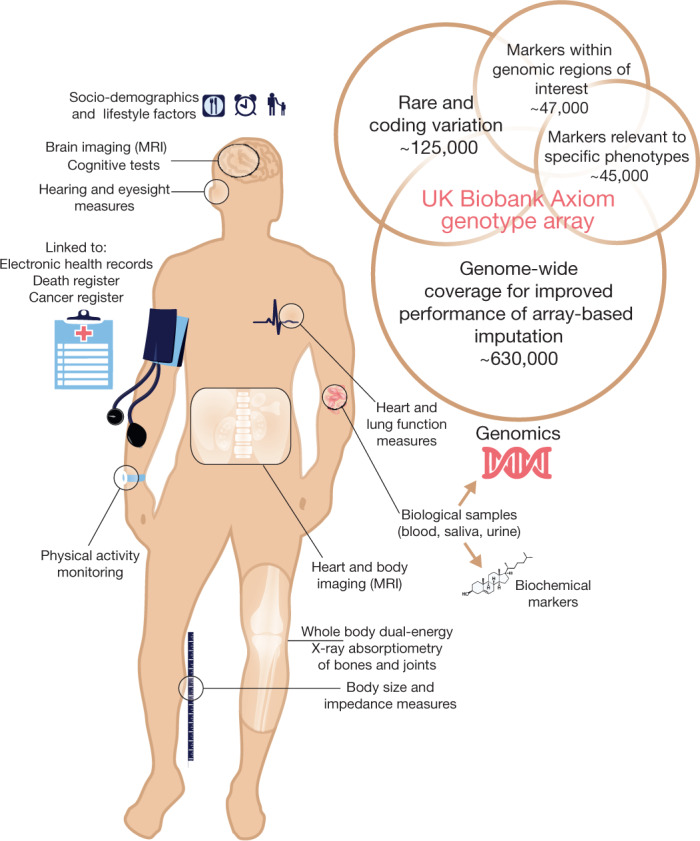
The UK Biobank project is a prospective cohort study with deep genetic and phenotypic data collected on approximately 500,000 individuals from across the United Kingdom, aged between 40 and 69 at recruitment. The open resource is unique in its size and scope. A rich variety of phenotypic and health-related information is available on each participant, including biological measurements, lifestyle indicators, biomarkers in blood and urine, and imaging of the body and brain. Follow-up information is provided by linking health and medical records. Genome-wide genotype data have been collected on all participants, providing many opportunities for the discovery of new genetic associations and the genetic bases of complex traits. Here we describe the centralized analysis of the genetic data, including genotype quality, properties of population structure and relatedness of the genetic data, and efficient phasing and genotype imputation that increases the number of testable variants to around 96 million. Classical allelic variation at 11 human leukocyte antigen genes was imputed, resulting in the recovery of signals with known associations between human leukocyte antigen alleles and many diseases.
Overview
The claims and statistics of this paper haven’t been checked yet.
Free: it reads the open-access text and checks the first 5 claims that cite a source we can check. Create a free account to check every claim.
Integrity signals
Registry
Cites
Statistics
Figures
Verification
Claims the paper makes
The claims and statistics of this paper haven’t been checked yet.
Free: it reads the open-access text and checks the first 5 claims that cite a source we can check. Create a free account to check every claim.
Claims other papers make about this one
Each is checked against this paper’s own text: does it say what the citing paper says it does?
The source backs part of the claim, not all of it — or backs it for a different population, condition or comparison.
In the citing paper
“The UKBB dataset provides information regarding more than 7000 phenotypes assessed in up to 500,000 participants from six ancestry groups [32].”
From Denisovan and Neanderthal archaic introgression differentially impacted the genetics of complex traits in modern populations (2022) · cites this paper as [32]
Experimental — accuracy not yet measuredThe source backs part of the claim, not all of it — or backs it for a different population, condition or comparison.
In the citing paper
“In the UK, the UK Biobank initiated enrollment in 2006, reaching a final participant count of over 500,000, and plans to follow participants for at least 30 years after enrollment 81 .”
From Multimodal biomedical AI (2022) · cites this paper as [81]
Experimental — accuracy not yet measuredThe source backs part of the claim, not all of it — or backs it for a different population, condition or comparison.
In the citing paper
“Approximately 9.2 million people living 25 miles (40 km) from one of 22 assessment centers across England, Wales and Scotland were invited to participate, with 5.5% participating in the baseline studies.”
From Plasma proteomic associations with genetics and health in the UK Biobank (2023) · cites this paper as Bycroft et al (Nature, 2018)
Experimental — accuracy not yet measuredThe cited source says what the claim attributes to it.
In the citing paper
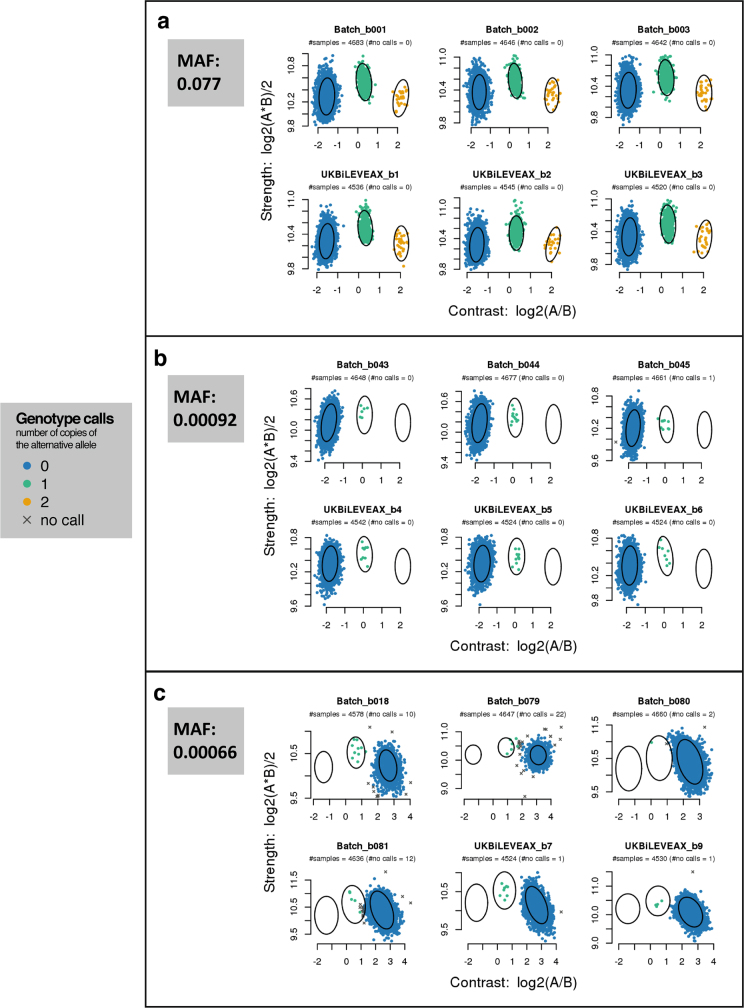
“Amongst the genetics community, it is generally well recognised that SNP-chips perform poorly for genotyping rare genetic variants [9-11] due to their reliance upon data clustering (Figure 1).”
From Assessing the analytical validity of SNP-chips for detecting very rare pathogenic variants: implications for direct-to-consumer genetic testing (2019) · cites this paper as [10]
The cited source says what the claim attributes to it.
In the citing paper
“The genetics community generally recognises that SNP chips perform poorly for genotyping rare genetic variants owing to their reliance on data clustering (fig 1).9 10 11”
From Use of SNP chips to detect rare pathogenic variants: retrospective, population based diagnostic evaluation (2021) · cites this paper as [10]
6 more claims about this paper
Create a free account to see every claim other papers make about this one.
Self-check
Percentages, sums and reported differences re-computed from the paper’s own numbers.
The self-check needs the paper’s full text.
Citations
Cites
A global reference for human genetic variation
The 1000 Genomes Project Consortium, authors, C., Auton, A., Abecasis, G. R., Steering committee, Altshuler, D. M., Durbin, R. M., Abecasis, G. R., Bentley, D. R., Chakravarti, A., et al. (2015) · Nature · doi:10.1038/nature15393 · Cited by 18,247
Self-citationSudlow, C., Gallacher, J., Allen, N., Beral, V., Burton, P., Danesh, J., Downey, P., Elliott, P., Green, J., Landray, M., et al. (2015) · PLOS Medicine · doi:10.1371/journal.pmed.1001779 · Cited by 12,728
Self-citationAnalysis of protein-coding genetic variation in 60,706 humans
Exome Aggregation Consortium, Lek, M., Karczewski, K. J., Minikel, E. V., Samocha, K. E., Banks, E., Fennell, T., O’Donnell-Luria, A. H., Ware, J. S., Hill, A. J., et al. (2016) · Nature · doi:10.1038/nature19057 · Cited by 9,587
A haplotype map of the human genome
The International HapMap Consortium (2005) · Nature · doi:10.1038/nature04226 · Cited by 5,858
Robust relationship inference in genome-wide association studies
Manichaikul, A., Mychaleckyj, J. C., Rich, S. S., Daly, K., Sale, M., & Chen, W.-M. (2010) · Bioinformatics · doi:10.1093/bioinformatics/btq559 · Cited by 3,541
A reference panel of 64,976 haplotypes for genotype imputation
the Haplotype Reference Consortium (2016) · Nature Genetics · doi:10.1038/ng.3643 · Cited by 2,836
Self-citationThe NHGRI GWAS Catalog, a curated resource of SNP-trait associations
Welter, D., MacArthur, J., Morales, J., Burdett, T., Hall, P., Junkins, H., Klemm, A., Flicek, P., Manolio, T., Hindorff, L., et al. (2014) · Nucleic Acids Research · doi:10.1093/nar/gkt1229 · Cited by 2,707
Genetic risk and a primary role for cell-mediated immune mechanisms in multiple sclerosis
The International Multiple Sclerosis Genetics Consortium & The Wellcome Trust Case Control Consortium 2 (2011) · Nature · doi:10.1038/nature10251 · Cited by 2,697
Self-citationMultimodal population brain imaging in the UK Biobank prospective epidemiological study
Miller, K. L., Alfaro-Almagro, F., Bangerter, N. K., Thomas, D. L., Yacoub, E., Xu, J., Bartsch, A. J., Jbabdi, S., Sotiropoulos, S. N., Andersson, J. L. R., et al. (2016) · Nature Neuroscience · doi:10.1038/nn.4393 · Cited by 2,020
The Electronic Medical Records and Genomics (eMERGE) Consortium, Wood, A. R., The MIGen Consortium, The PAGE Consortium, Study, T. L. C., Esko, T., Yang, J., Vedantam, S., Pers, T. H., Gustafsson, S., et al. (2014) · Nature Genetics · doi:10.1038/ng.3097 · Cited by 1,853
Self-citation
Cited by
Items 101–200 of 1,146
Polygenic basis and biomedical consequences of telomere length variation
Codd, V., Wang, Q., Allara, E., Musicha, C., Kaptoge, S., Stoma, S., Jiang, T., Hamby, S. E., Braund, P. S., Bountziouka, V., et al. (2021) · Nature Genetics · doi:10.1038/s41588-021-00944-6 · Cited by 379
Genetics of Parkinson's disease: An introspection of its journey towards precision medicine
Bandres-Ciga, S., Diez-Fairen, M., Kim, J. J., & Singleton, A. B. (2020) · Neurobiology of Disease · doi:10.1016/j.nbd.2020.104782 · Cited by 370
Melzer, D., Pilling, L. C., & Ferrucci, L. (2020) · Nature Reviews Genetics · doi:10.1038/s41576-019-0183-6 · Cited by 363
APOE e4 Genotype Predicts Severe COVID-19 in the UK Biobank Community Cohort
Kuo, C.-L., Pilling, L. C., Atkins, J. L., Masoli, J. A. H., Delgado, J., Kuchel, G. A., & Melzer, D. (2020) · The Journals of Gerontology: Series A · doi:10.1093/gerona/glaa131 · Cited by 388
Bianco, C., Jamialahmadi, O., Pelusi, S., Baselli, G., Dongiovanni, P., Zanoni, I., Santoro, L., Maier, S., Liguori, A., Meroni, M., et al. (2021) · Journal of Hepatology · doi:10.1016/j.jhep.2020.11.024 · Cited by 385
Within-sibship genome-wide association analyses decrease bias in estimates of direct genetic effects
Howe, L. J., Nivard, M. G., Morris, T. T., Hansen, A. F., Rasheed, H., Cho, Y., Chittoor, G., Ahlskog, R., Lind, P. A., Palviainen, T., et al. (2022) · Nature Genetics · doi:10.1038/s41588-022-01062-7 · Cited by 377
Kar, S. P., Quiros, P. M., Gu, M., Jiang, T., Mitchell, J., Langdon, R., Iyer, V., Barcena, C., Vijayabaskar, M. S., Fabre, M. A., et al. (2022) · Nature Genetics · doi:10.1038/s41588-022-01121-z · Cited by 377
Privé, F., Aschard, H., Carmi, S., Folkersen, L., Hoggart, C., O’Reilly, P. F., & Vilhjálmsson, B. J. (2022) · The American Journal of Human Genetics · doi:10.1016/j.ajhg.2021.11.008 · Cited by 375
Zhang, J., Dutta, D., Köttgen, A., Tin, A., Schlosser, P., Grams, M. E., Harvey, B., CKDGen Consortium, Yu, B., Boerwinkle, E., et al. (2022) · Nature Genetics · doi:10.1038/s41588-022-01051-w · Cited by 373
Genome-wide analysis of dental caries and periodontitis combining clinical and self-reported data
Shungin, D., Haworth, S., Divaris, K., Agler, C. S., Kamatani, Y., Keun Lee, M., Grinde, K., Hindy, G., Alaraudanjoki, V., Pesonen, P., et al. (2019) · Nature Communications · doi:10.1038/s41467-019-10630-1 · Cited by 364
Axes of a revolution: challenges and promises of big data in healthcare
Shilo, S., Rossman, H., & Segal, E. (2020) · Nature Medicine · doi:10.1038/s41591-019-0727-5 · Cited by 370
“Prominent examples of these include UKBiobank 50 , All of Us Research 33 , Kadoorie biobank 51 , Million Veteran program 49 and Mexico City study 52 , as well as others.”
BackgroundInfluentialPartners, C.-N. M. A., Bai, X., Bao, Y., Bei, S., Bu, C., Cao, R., Cao, Y., Cen, H., Chao, J., Chen, F., et al. (2024) · Nucleic Acids Research · doi:10.1093/nar/gkad1078 · Cited by 348
Functionally informed fine-mapping and polygenic localization of complex trait heritability
Weissbrod, O., Hormozdiari, F., Benner, C., Cui, R., Ulirsch, J., Gazal, S., Schoech, A. P., van de Geijn, B., Reshef, Y., Márquez-Luna, C., et al. (2020) · Nature Genetics · doi:10.1038/s41588-020-00735-5 · Cited by 364
“We evaluated PolyFun via simulations using real genotypes from 337,491 unrelated UK Biobank British samples 27 .”
MethodInfluentialPrecision medicine in the era of artificial intelligence: implications in chronic disease management
Subramanian, M., Wojtusciszyn, A., Favre, L., Boughorbel, S., Shan, J., Letaief, K. B., Pitteloud, N., & Chouchane, L. (2020) · Journal of Translational Medicine · doi:10.1186/s12967-020-02658-5 · Cited by 362
Prediction of Risk for Myeloid Malignancy in Clonal Hematopoiesis
Weeks, L. D., Niroula, A., Neuberg, D., Wong, W., Lindsley, R. C., Luskin, M. R., Berliner, N., Stone, R. M., DeAngelo, D. J., Soiffer, R. J., et al. (2023) · NEJM Evidence · doi:10.1056/evidoa2200310 · Cited by 346
Pividori, M., Schoettler, N., Nicolae, D. L., Ober, C., & Im, H. K. (2019) · The Lancet Respiratory Medicine · doi:10.1016/s2213-2600(19)30055-4 · Cited by 345
Immune complement and coagulation dysfunction in adverse outcomes of SARS-CoV-2 infection
Ramlall, V., Thangaraj, P. M., Meydan, C., Foox, J., Butler, D., Kim, J., May, B., De Freitas, J. K., Glicksberg, B. S., Mason, C. E., et al. (2020) · Nature Medicine · doi:10.1038/s41591-020-1021-2 · Cited by 351
Zhou, H., Sealock, J. M., Sanchez-Roige, S., Clarke, T.-K., Levey, D. F., Cheng, Z., Li, B., Polimanti, R., Kember, R. L., Smith, R. V., et al. (2020) · Nature Neuroscience · doi:10.1038/s41593-020-0643-5 · Cited by 359
“Identification Test–Problems (AUDIT-P; a measure of problematic drinking) scores from a UK Biobank sample (UKB) [7] that included 121,604 European participants [4].”
BackgroundMethodThe STARD-AI reporting guideline for diagnostic accuracy studies using artificial intelligence
Sounderajah, V., Guni, A., Liu, X., Collins, G. S., Karthikesalingam, A., Markar, S. R., Golub, R. M., Denniston, A. K., Shetty, S., Moher, D., et al. (2025) · Nature Medicine · doi:10.1038/s41591-025-03953-8 · Cited by 592
NEIGHBORHOOD consortium, Craig, J. E., UK Biobank Eye and Vision Consortium, Han, X., Qassim, A., Hassall, M., Cooke Bailey, J. N., Kinzy, T. G., Khawaja, A. P., An, J., et al. (2020) · Nature Genetics · doi:10.1038/s41588-019-0556-y · Cited by 342
Strategic vision for improving human health at The Forefront of Genomics
Green, E. D., Gunter, C., Biesecker, L. G., Di Francesco, V., Easter, C. L., Feingold, E. A., Felsenfeld, A. L., Kaufman, D. J., Ostrander, E. A., Pavan, W. J., et al. (2020) · Nature · doi:10.1038/s41586-020-2817-4 · Cited by 324
GA4GH: International policies and standards for data sharing across genomic research and healthcare
Rehm, H. L., Page, A. J. H., Smith, L., Adams, J. B., Alterovitz, G., Babb, L. J., Barkley, M. P., Baudis, M., Beauvais, M. J. S., Beck, T., et al. (2021) · Cell Genomics · doi:10.1016/j.xgen.2021.100029 · Cited by 311
Elhaik, E. (2022) · Scientific Reports · doi:10.1038/s41598-022-14395-4 · Cited by 293
Long-Term Cardiovascular Risk in Women With Hypertension During Pregnancy
Honigberg, M. C., Zekavat, S. M., Aragam, K., Klarin, D., Bhatt, D. L., Scott, N. S., Peloso, G. M., & Natarajan, P. (2019) · Journal of the American College of Cardiology · doi:10.1016/j.jacc.2019.09.052 · Cited by 319
“The UK Biobank is a prospective, observational, population-based cohort study that recruited >500,000 adult residents of the United Kingdom between 2006-2010 (20,21).”
BackgroundGenetic predisposition to mosaic Y chromosome loss in blood
International Lung Cancer Consortium (INTEGRAL-ILCCO), Thompson, D. J., The Breast Cancer Association Consortium, Consortium of Investigators of Modifiers of BRCA1/2, The Endometrial Cancer Association Consortium, The Ovarian Cancer Association Consortium, The Prostate Cancer Association Group to Investigate Cancer Associated Alterations in the Genome (PRACTICAL) Consortium, The Kidney Cancer GWAS Meta-Analysis Project, eQTLGen Consortium, Biobank-based Integrative Omics Study (BIOS) Consortium, et al. (2019) · Nature · doi:10.1038/s41586-019-1765-3 · Cited by 337
Common genetic associations between age-related diseases
Dönertaş, H. M., Fabian, D. K., Fuentealba, M., Partridge, L., & Thornton, J. M. (2021) · Nature Aging · doi:10.1038/s43587-021-00051-5 · Cited by 346
Integrating predicted transcriptome from multiple tissues improves association detection
Barbeira, A. N., Pividori, M., Zheng, J., Wheeler, H. E., Nicolae, D. L., & Im, H. K. (2019) · PLOS Genetics · doi:10.1371/journal.pgen.1007889 · Cited by 356
Minimal phenotyping yields genome-wide association signals of low specificity for major depression
MDD Working Group of the Psychiatric Genomics Consortium, Cai, N., Revez, J. A., Adams, M. J., Andlauer, T. F. M., Breen, G., Byrne, E. M., Clarke, T.-K., Forstner, A. J., Grabe, H. J., et al. (2020) · Nature Genetics · doi:10.1038/s41588-020-0594-5 · Cited by 344
Radimagenet: an open Radiologic deep learning research Dataset for effective transfer learning
Mei, X., Liu, Z., Robson, P. M., Marinelli, B., Huang, M., Doshi, A., Jacobi, A., Cao, C., Link, K. E., Yang, T., et al. (2022) · Radiology Artificial Intelligence · doi:10.1148/ryai.210315 · Cited by 341
“Biobank (4,5) contains multimodal images in more than 100 000 participants.”
BackgroundArtificial intelligence in clinical medicine: catalyzing a sustainable global healthcare paradigm
Krishnan, G., Singh, S., Pathania, M., Gosavi, S., Abhishek, S., Parchani, A., & Dhar, M. (2023) · Frontiers in Artificial Intelligence · doi:10.3389/frai.2023.1227091 · Cited by 296
“Data repositories have been created to facilitate the use of genomic data and deep phenotyping to aid in the practice of precision medicine (Nagai et al., 2017; Bycroft et al., 2018; Stark et al., 2019).”
Reduced signal for polygenic adaptation of height in UK Biobank
Berg, J. J., Harpak, A., Sinnott-Armstrong, N., Joergensen, A. M., Mostafavi, H., Field, Y., Boyle, E. A., Zhang, X., Racimo, F., Pritchard, J. K., et al. (2019) · eLife · doi:10.7554/elife.39725 · Cited by 339
Statistical methods for Mendelian randomization in genome-wide association studies: A review
Boehm, F. J., & Zhou, X. (2022) · Computational and Structural Biotechnology Journal · doi:10.1016/j.csbj.2022.05.015 · Cited by 318
“…review would benefit both methodology developers and applied analysts to further advance the development of MR meth-ods and aid in their applications towards large, biobank-scale data-sets, thus offering the possibility of discovering even more causal relationships among complex traits [154].”
BackgroundGenetic mapping of cell type specificity for complex traits
Watanabe, K., Umićević Mirkov, M., de Leeuw, C. A., van den Heuvel, M. P., & Posthuma, D. (2019) · Nature Communications · doi:10.1038/s41467-019-11181-1 · Cited by 339
The Consortium for Refractive Error and Myopia, Hysi, P. G., The UK Eye and Vision Consortium, 23andMe Inc., Choquet, H., Khawaja, A. P., Wojciechowski, R., Tedja, M. S., Yin, J., Simcoe, M. J., et al. (2020) · Nature Genetics · doi:10.1038/s41588-020-0599-0 · Cited by 329
Index and biological spectrum of human DNase I hypersensitive sites
Meuleman, W., Muratov, A., Rynes, E., Halow, J., Lee, K., Bates, D., Diegel, M., Dunn, D., Neri, F., Teodosiadis, A., et al. (2020) · Nature · doi:10.1038/s41586-020-2559-3 · Cited by 331
Polygenic scoring accuracy varies across the genetic ancestry continuum
Ding, Y., Hou, K., Xu, Z., Pimplaskar, A., Petter, E., Boulier, K., Privé, F., Vilhjálmsson, B. J., Olde Loohuis, L. M., & Pasaniuc, B. (2023) · Nature · doi:10.1038/s41586-023-06079-4 · Cited by 307
Scaling computational genomics to millions of individuals with GPUs
Taylor-Weiner, A., Aguet, F., Haradhvala, N. J., Gosai, S., Anand, S., Kim, J., Ardlie, K., Van Allen, E. M., & Getz, G. (2019) · Genome Biology · doi:10.1186/s13059-019-1836-7 · Cited by 298
A genome‐wide association study of the frailty index highlights brain pathways in ageing
Atkins, J. L., Jylhävä, J., Pedersen, N. L., Magnusson, P. K., Lu, Y., Wang, Y., Hägg, S., Melzer, D., Williams, D. M., & Pilling, L. C. (2021) · Aging Cell · doi:10.1111/acel.13459 · Cited by 319
“While both measures are related to adverse ageing outcomes, the two instruments are differently orientated and the underlying physiological and biological differences between the FP and FI are important (Cesari et al., 2014) (Cesari et al., 2017).”
BackgroundBarton, A. R., Sherman, M. A., Mukamel, R. E., & Loh, P.-R. (2021) · Nature Genetics · doi:10.1038/s41588-021-00892-1 · Cited by 330
Partners, C.-N. M. A., Xue, Y., Bao, Y., Zhang, Z., Zhao, W., Xiao, J., He, S., Zhang, G., Li, Y., Zhao, G., et al. (2023) · Nucleic Acids Research · doi:10.1093/nar/gkac1073 · Cited by 320
“…of the genetic basis of diseases, genetic epidemiology and public health (1–3) For example, UK Biobank collects a rich variety of genome-wide genotype data and enables population-based cohort studies on genetic and epidemiological associations for a broad range of health-related traits (1).”
BackgroundGut microbiome, big data and machine learning to promote precision medicine for cancer
Cammarota, G., Ianiro, G., Ahern, A., Carbone, C., Temko, A., Claesson, M. J., Gasbarrini, A., & Tortora, G. (2020) · Nature Reviews Gastroenterology & Hepatology · doi:10.1038/s41575-020-0327-3 · Cited by 324
A multi-ancestry polygenic risk score improves risk prediction for coronary artery disease
Patel, A. P., Wang, M., Ruan, Y., Koyama, S., Clarke, S. L., Yang, X., Tcheandjieu, C., Agrawal, S., Fahed, A. C., Ellinor, P. T., et al. (2023) · Nature Medicine · doi:10.1038/s41591-023-02429-x · Cited by 306
A White-Box Machine Learning Approach for Revealing Antibiotic Mechanisms of Action
Yang, J. H., Wright, S. N., Hamblin, M., McCloskey, D., Alcantar, M. A., Schrübbers, L., Lopatkin, A. J., Satish, S., Nili, A., Palsson, B. O., et al. (2019) · Cell · doi:10.1016/j.cell.2019.04.016 · Cited by 321
“Simulations may be performed on biological networks curated in databases such as BioGRID (Stark et al., 2006) to transform human data from repositories such as the UK Biobank (Bycroft et al., 2018) into gene regulatory, signaling or metabolic network states customized for each individual patient in a diverse populatio…”
Can the impact of childhood adiposity on disease risk be reversed? A Mendelian randomization study.
Richardson, T. G., Sanderson, E., Elsworth, B., Tilling, K., & Davey Smith, G. (2019) · doi:10.1101/19008011 · Cited by 321
Karlsson Linnér, R., Mallard, T. T., Barr, P. B., Sanchez-Roige, S., Madole, J. W., Driver, M. N., Poore, H. E., de Vlaming, R., Grotzinger, A. D., Tielbeek, J. J., et al. (2021) · Nature Neuroscience · doi:10.1038/s41593-021-00908-3 · Cited by 317
“We found that this parsimonious model specification fit the data the best across all tested specifications, and it closely approximated the observed genetic covariance matrix (χ2(12) = 390.”
MethodLumsden, A. L., Mulugeta, A., Zhou, A., & Hyppönen, E. (2020) · eBioMedicine · doi:10.1016/j.ebiom.2020.102954 · Cited by 317
“Our analyses were restricted to 337,484 unrelated white British individuals (established by self-report and genetic data) [6] who had consistent information between self-reported and genetic sex (appendix p 35 figure S2).”
MethodInfluentialDistinction of lymphoid and myeloid clonal hematopoiesis
Niroula, A., Sekar, A., Murakami, M. A., Trinder, M., Agrawal, M., Wong, W. J., Bick, A. G., Uddin, M. M., Gibson, C. J., Griffin, G. K., et al. (2021) · Nature Medicine · doi:10.1038/s41591-021-01521-4 · Cited by 307
“Biological specimens and health related information were collected at the time of recruitment and prospectively followed by linking the national health records 17 .”
RICOPILI: Rapid Imputation for COnsortias PIpeLIne
Lam, M., Awasthi, S., Watson, H. J., Goldstein, J., Panagiotaropoulou, G., Trubetskoy, V., Karlsson, R., Frei, O., Fan, C.-C., De Witte, W., et al. (2020) · Bioinformatics · doi:10.1093/bioinformatics/btz633 · Cited by 315
The ChinaMAP analytics of deep whole genome sequences in 10,588 individuals
The ChinaMAP Consortium, Cao, Y., Li, L., Xu, M., Feng, Z., Sun, X., Lu, J., Xu, Y., Du, P., Wang, T., et al. (2020) · Cell Research · doi:10.1038/s41422-020-0322-9 · Cited by 317
Exploiting the GTEx resources to decipher the mechanisms at GWAS loci
Barbeira, A. N., Bonazzola, R., Gamazon, E. R., Liang, Y., Park, Y., Kim-Hellmuth, S., Wang, G., Jiang, Z., Zhou, D., Hormozdiari, F., et al. (2021) · Genome Biology · doi:10.1186/s13059-020-02252-4 · Cited by 299
“To illustrate this point, we tested the colocalization of height with itself, using two large-scale studies of individuals of European-ancestry individuals: GIANT [26] and UK Biobank.”
InfluentialKarczewski, K. J., Gupta, R., Kanai, M., Lu, W., Tsuo, K., Wang, Y., Walters, R. K., Turley, P., Callier, S., Shah, N. N., et al. (2025) · Nature Genetics · doi:10.1038/s41588-025-02335-7 · Cited by 339
“Heterogeneous is defined as Cochran’s Q P 0.01, low INFO score is defined as INFO 0.9, and low quality is defined as failing quality filters from gnomAD or allele frequency significantly differing between gnomAD and Pan-UKB in at least one ancestry group (see Supplementary Note, QC of summary statistics).”
InfluentialInferring whole-genome histories in large population datasets
Kelleher, J., Wong, Y., Wohns, A. W., Fadil, C., Albers, P. K., & McVean, G. (2019) · Nature Genetics · doi:10.1038/s41588-019-0483-y · Cited by 313
“…2504 individuals across 26 worldwide populations 30 ; the Simons Genome Diversity Project (SGDP), consisting of high coverage sequencing data from 278 individuals from 142 worldwide populations 31 ; and the UK Biobank (UKB), consisting of SNP array data from 487,327 individuals within the UK 32 .”
BackgroundMethodInfluentialSelf-citationGenetic Architectures of Childhood- and Adult-Onset Asthma Are Partly Distinct
Ferreira, M. A. R., Mathur, R., Vonk, J. M., Szwajda, A., Brumpton, B., Granell, R., Brew, B. K., Ullemar, V., Lu, Y., Jiang, Y., et al. (2019) · The American Journal of Human Genetics · doi:10.1016/j.ajhg.2019.02.022 · Cited by 311
A reference human induced pluripotent stem cell line for large-scale collaborative studies
Pantazis, C. B., Yang, A., Lara, E., McDonough, J. A., Blauwendraat, C., Peng, L., Oguro, H., Kanaujiya, J., Zou, J., Sebesta, D., et al. (2022) · Cell Stem Cell · doi:10.1016/j.stem.2022.11.004 · Cited by 310
Discovery and prioritization of variants and genes for kidney function in >1.2 million individuals
Stanzick, K. J., Li, Y., Schlosser, P., Gorski, M., Wuttke, M., Thomas, L. F., Rasheed, H., Rowan, B. X., Graham, S. E., Vanderweff, B. R., et al. (2021) · Nature Communications · doi:10.1038/s41467-021-24491-0 · Cited by 302
Gao, X., Geng, T., Jiang, M., Huang, N., Zheng, Y., Belsky, D. W., & Huang, T. (2023) · Nature Communications · doi:10.1038/s41467-023-38013-7 · Cited by 306
Richardson, T. G., Leyden, G. M., Wang, Q., Bell, J. A., Elsworth, B., Davey Smith, G., & Holmes, M. V. (2022) · PLOS Biology · doi:10.1371/journal.pbio.3001547 · Cited by 304
High-definition likelihood inference of genetic correlations across human complex traits
Ning, Z., Pawitan, Y., & Shen, X. (2020) · Nature Genetics · doi:10.1038/s41588-020-0653-y · Cited by 288
Zhang, M. J., Hou, K., Dey, K. K., Sakaue, S., Jagadeesh, K. A., Weinand, K., Taychameekiatchai, A., Rao, P., Pisco, A. O., Zou, J., et al. (2022) · Nature Genetics · doi:10.1038/s41588-022-01167-z · Cited by 302
Graph-Based Deep Learning for Medical Diagnosis and Analysis: Past, Present and Future
Ahmedt-Aristizabal, D., Armin, M. A., Denman, S., Fookes, C., & Petersson, L. (2021) · Sensors · doi:10.3390/s21144758 · Cited by 272
“Arslan et al. [105] explored GCNs for the task of brain ROI identification in the gender classification of more than 5000 participants from the UK Biobank dataset [104].”
BackgroundInfluentialGenetic studies of accelerometer-based sleep measures yield new insights into human sleep behaviour
Jones, S. E., van Hees, V. T., Mazzotti, D. R., Marques-Vidal, P., Sabia, S., van der Spek, A., Dashti, H. S., Engmann, J., Kocevska, D., Tyrrell, J., et al. (2019) · Nature Communications · doi:10.1038/s41467-019-09576-1 · Cited by 300
Deconstructing a Syndrome: Genomic Insights Into PCOS Causal Mechanisms and Classification
Dapas, M., & Dunaif, A. (2022) · Endocrine Reviews · doi:10.1210/endrev/bnac001 · Cited by 300
Quantifying genetic effects on disease mediated by assayed gene expression levels
Yao, D. W., O’Connor, L. J., Price, A. L., & Gusev, A. (2020) · Nature Genetics · doi:10.1038/s41588-020-0625-2 · Cited by 298
“Analogous to previous studies 27,78 , we initially considered a set of 34 traits from publicly available sources and 55 traits from UK Biobank for which GWAS summary statistics had been computed using BOLT-LMM v2.”
InfluentialMolecular mechanisms of environmental exposures and human disease
Wu, H., Eckhardt, C. M., & Baccarelli, A. A. (2023) · Nature Reviews Genetics · doi:10.1038/s41576-022-00569-3 · Cited by 273
A compendium of genetic regulatory effects across pig tissues
Teng, J., Gao, Y., Yin, H., Bai, Z., Liu, S., Zeng, H., The PigGTEx Consortium, Bai, L., Cai, Z., Zhao, B., et al. (2024) · Nature Genetics · doi:10.1038/s41588-023-01585-7 · Cited by 266
“Genome-wide association studies (GWAS) reveal genomic variants associated with complex phenotypes at an unprecedented speed and scale in both plants 1 and animals 2 , but particularly in humans 3,4 .”
BackgroundGenome-wide association study of peripheral artery disease in the Million Veteran Program
Program, V. M. V., Klarin, D., Lynch, J., Aragam, K., Chaffin, M., Assimes, T. L., Huang, J., Lee, K. M., Shao, Q., Huffman, J. E., et al. (2019) · Nature Medicine · doi:10.1038/s41591-019-0492-5 · Cited by 289
Zhao, B., Luo, T., Li, T., Li, Y., Zhang, J., Shan, Y., Wang, X., Yang, L., Zhou, F., Zhu, Z., et al. (2019) · Nature Genetics · doi:10.1038/s41588-019-0516-6 · Cited by 295
Pan-cancer study detects genetic risk variants and shared genetic basis in two large cohorts
Rashkin, S. R., Graff, R. E., Kachuri, L., Thai, K. K., Alexeeff, S. E., Blatchins, M. A., Cavazos, T. B., Corley, D. A., Emami, N. C., Hoffman, J. D., et al. (2020) · Nature Communications · doi:10.1038/s41467-020-18246-6 · Cited by 289
The influence of evolutionary history on human health and disease
Benton, M. L., Abraham, A., LaBella, A. L., Abbot, P., Rokas, A., & Capra, J. A. (2021) · Nature Reviews Genetics · doi:10.1038/s41576-020-00305-9 · Cited by 291
Sleep Duration and Myocardial Infarction
Daghlas, I., Dashti, H. S., Lane, J., Aragam, K. G., Rutter, M. K., Saxena, R., & Vetter, C. (2019) · Journal of the American College of Cardiology · doi:10.1016/j.jacc.2019.07.022 · Cited by 281
“Generation of genetic instruments for sleep duration—Genotyping, quality control, and imputation procedures in the UKB are described elsewhere (25).”
MethodEffects of urban living environments on mental health in adults
Xu, J., Liu, N., Polemiti, E., Garcia-Mondragon, L., Tang, J., Liu, X., Lett, T., Yu, L., Nöthen, M. M., Feng, J., et al. (2023) · Nature Medicine · doi:10.1038/s41591-023-02365-w · Cited by 229
Self-citationKarczewski, K. J., Solomonson, M., Chao, K. R., Goodrich, J. K., Tiao, G., Lu, W., Riley-Gillis, B. M., Tsai, E. A., Kim, H. I., Zheng, X., et al. (2022) · Cell Genomics · doi:10.1016/j.xgen.2022.100168 · Cited by 284
Human gain-of-function MC4R variants show signaling bias and protect against obesity
Lotta, L. A., Mokrosiński, J., Mendes de Oliveira, E., Li, C., Sharp, S. J., Luan, J., Brouwers, B., Ayinampudi, V., Bowker, N., Kerrison, N., et al. (2019) · Cell · doi:10.1016/j.cell.2019.03.044 · Cited by 284
SLC25A39 is necessary for mitochondrial glutathione import in mammalian cells
Wang, Y., Yen, F. S., Zhu, X. G., Timson, R. C., Weber, R., Xing, C., Liu, Y., Allwein, B., Luo, H., Yeh, H.-W., et al. (2021) · Nature · doi:10.1038/s41586-021-04025-w · Cited by 261
Andreassen, O. A., Hindley, G. F. L., Frei, O., & Smeland, O. B. (2023) · World Psychiatry · doi:10.1002/wps.21034 · Cited by 243
The how and why of lncRNA function: An innate immune perspective
Robinson, E. K., Covarrubias, S., & Carpenter, S. (2020) · Biochimica et Biophysica Acta (BBA) - Gene Regulatory Mechanisms · doi:10.1016/j.bbagrm.2019.194419 · Cited by 285
Uncovering the structure of clinical EEG signals with self-supervised learning
Banville, H., Chehab, O., Hyvärinen, A., Engemann, D.-A., & Gramfort, A. (2021) · Journal of Neural Engineering · doi:10.1088/1741-2552/abca18 · Cited by 245
“…an overwhelmingly large part of all neuroscience research happens in the low-labeled data regime, including EEG research: clinical studies with a few hundred subjects are often considered to be big data, while large-scale studies are much rarer and usually originate from research consortia [18–21].”
Accurate, scalable cohort variant calls using DeepVariant and GLnexus
Yun, T., Li, H., Chang, P.-C., Lin, M. F., Carroll, A., & McLean, C. Y. (2021) · Bioinformatics · doi:10.1093/bioinformatics/btaa1081 · Cited by 269
Thompson, D. J., Wells, D., Selzam, S., Peneva, I., Moore, R., Sharp, K., Tarran, W. A., Beard, E. J., Riveros-Mckay, F., Giner-Delgado, C., et al. (2022) · doi:10.1101/2022.06.16.22276246 · Cited by 280
Self-citationRapid genotype imputation from sequence without reference panels
Davies, R. W., Flint, J., Myers, S., & Mott, R. (2016) · Nature Genetics · doi:10.1038/ng.3594 · Cited by 272
Sequencing of 640,000 exomes identifies GPR75 variants associated with protection from obesity
Akbari, P., Gilani, A., Sosina, O., Kosmicki, J. A., Khrimian, L., Fang, Y.-Y., Persaud, T., Garcia, V., Sun, D., Li, A., et al. (2021) · Science · doi:10.1126/science.abf8683 · Cited by 276
Self-citationGenetic architecture of 11 organ traits derived from abdominal MRI using deep learning
Liu, Y., Basty, N., Whitcher, B., Bell, J. D., Sorokin, E. P., van Bruggen, N., Thomas, E. L., & Cule, M. (2021) · eLife · doi:10.7554/elife.65554 · Cited by 274
Kowalski, M. H., Qian, H., Hou, Z., Rosen, J. D., Tapia, A. L., Shan, Y., Jain, D., Argos, M., Arnett, D. K., Avery, C., et al. (2019) · PLOS Genetics · doi:10.1371/journal.pgen.1008500 · Cited by 277
“Genotyping on custom Axiom arrays and subsequent quality control has been previously described [47].”
MethodDiversity and inclusion for the All of Us research program: A scoping review
Mapes, B. M., Foster, C. S., Kusnoor, S. V., Epelbaum, M. I., AuYoung, M., Jenkins, G., Lopez-Class, M., Richardson-Heron, D., Elmi, A., Surkan, K., et al. (2020) · PLOS ONE · doi:10.1371/journal.pone.0234962 · Cited by 273
“[12] Information was collected using publicly available sources including websites, datasets, and publications.”
BackgroundMethodWang, Y., Guo, J., Ni, G., Yang, J., Visscher, P. M., & Yengo, L. (2020) · Nature Communications · doi:10.1038/s41467-020-17719-y · Cited by 271
Miguel-Escalada, I., Bonàs-Guarch, S., Cebola, I., Ponsa-Cobas, J., Mendieta-Esteban, J., Atla, G., Javierre, B. M., Rolando, D. M. Y., Farabella, I., Morgan, C. C., et al. (2019) · Nature Genetics · doi:10.1038/s41588-019-0457-0 · Cited by 279
A population-based phenome-wide association study of cardiac and aortic structure and function
Bai, W., Suzuki, H., Huang, J., Francis, C., Wang, S., Tarroni, G., Guitton, F., Aung, N., Fung, K., Petersen, S. E., et al. (2020) · Nature Medicine · doi:10.1038/s41591-020-1009-y · Cited by 273
Extreme Polygenicity of Complex Traits Is Explained by Negative Selection
O'Connor, L. J., Schoech, A. P., Hormozdiari, F., Gazal, S., Patterson, N., & Price, A. L. (2019) · The American Journal of Human Genetics · doi:10.1016/j.ajhg.2019.07.003 · Cited by 268
Pirruccello, J. P., Bick, A., Wang, M., Chaffin, M., Friedman, S., Yao, J., Guo, X., Venkatesh, B. A., Taylor, K. D., Post, W. S., et al. (2020) · Nature Communications · doi:10.1038/s41467-020-15823-7 · Cited by 267
Samuel, R. M., Majd, H., Richter, M. N., Ghazizadeh, Z., Zekavat, S. M., Navickas, A., Ramirez, J. T., Asgharian, H., Simoneau, C. R., Bonser, L. R., et al. (2020) · Cell Stem Cell · doi:10.1016/j.stem.2020.11.009 · Cited by 261
Accurate rare variant phasing of whole-genome and whole-exome sequencing data in the UK Biobank
Hofmeister, R. J., Ribeiro, D. M., Rubinacci, S., & Delaneau, O. (2023) · Nature Genetics · doi:10.1038/s41588-023-01415-w · Cited by 233
“For a specific rare variant, these conditioning haplotypes are chosen so that (1) they belong to samples being locally identical-by-descent (IBD) with the target sample and (2) they are not monomorphic at the rare variant (i.”
BackgroundSelf-citationWhole-genome sequencing of 490,640 UK Biobank participants
Manuscript Writing Group, Carss, K., Halldórsson, B. V., Hou, L., Liu, J. Z., Wheeler, E., Lo, Y., Kundu, K., Huang, Z., Lacey, B., et al. (2025) · Nature · doi:10.1038/s41586-025-09272-9 · Cited by 315
Genomic Medicine–Progress, Pitfalls, and Promise
Shendure, J., Findlay, G. M., & Snyder, M. W. (2019) · Cell · doi:10.1016/j.cell.2019.02.003 · Cited by 254
“A uthor M anuscript A uthor M anuscript A uthor M anuscript A uthor M anuscript 2014 Achievement of the $1,000 genome 2018 Emergence of the UK Biobank, a population-scale cohort (Bycroft et al., 2018) 2018 Maturation of human genome-wide polygenic risk scores (Khera et al., 2018) Quadrant 2 (genomic medicine, selected…”
InfluentialGellert‐Kristensen, H., Richardson, T. G., Davey Smith, G., Nordestgaard, B. G., Tybjærg‐Hansen, A., & Stender, S. (2020) · Hepatology · doi:10.1002/hep.31238 · Cited by 252
“The quality control pipeline for these data have been explained in detail.(22) Briefly, the pipeline consisted of both marker-based and samplebased quality control steps, including checks for population substructure, missing rates, heterozygosity frequencies, and sex mismatch.”
MethodMarston, N. A., Giugliano, R. P., Melloni, G. E. M., Park, J.-G., Morrill, V., Blazing, M. A., Ference, B., Stein, E., Stroes, E. S., Braunwald, E., et al. (2022) · JAMA Cardiology · doi:10.1001/jamacardio.2021.5083 · Cited by 293
Weissbrod, O., Kanai, M., Shi, H., Gazal, S., Peyrot, W. J., Khera, A. V., Okada, Y., The Biobank Japan Project, Matsuda, K., Yamanashi, Y., et al. (2022) · Nature Genetics · doi:10.1038/s41588-022-01036-9 · Cited by 264
“We trained each method using 337,491 unrelated British-ancestry individuals 40 , and computed predictions in four target populations: non-British Europeans, South Asians, East Asians, and Africans.”
BackgroundMethodInfluentialGenetic correlates of social stratification in Great Britain
Abdellaoui, A., Hugh-Jones, D., Yengo, L., Kemper, K. E., Nivard, M. G., Veul, L., Holtz, Y., Zietsch, B. P., Frayling, T. M., Wray, N. R., et al. (2019) · Nature Human Behaviour · doi:10.1038/s41562-019-0757-5 · Cited by 261
Wei, C.-Y., Yang, J.-H., Yeh, E.-C., Tsai, M.-F., Kao, H.-J., Lo, C.-Z., Chang, L.-P., Lin, W.-J., Hsieh, F.-J., Belsare, S., et al. (2021) · npj Genomic Medicine · doi:10.1038/s41525-021-00178-9 · Cited by 252
Multiomics study of nonalcoholic fatty liver disease
Sveinbjornsson, G., Ulfarsson, M. O., Thorolfsdottir, R. B., Jonsson, B. A., Einarsson, E., Gunnlaugsson, G., Rognvaldsson, S., Arnar, D. O., Baldvinsson, M., Bjarnason, R. G., et al. (2022) · Nature Genetics · doi:10.1038/s41588-022-01199-5 · Cited by 236
Ultra-processed food consumption and type 2 diabetes incidence: A prospective cohort study
Levy, R. B., Rauber, F., Chang, K., Louzada, M. L. D. C., Monteiro, C. A., Millett, C., & Vamos, E. P. (2021) · Clinical Nutrition · doi:10.1016/j.clnu.2020.12.018 · Cited by 223
Metadata
- Authors
- Bycroft, C., Freeman, C., Petkova, D., Band, G., Elliott, L. T., Sharp, K., Motyer, A., Vukcevic, D., Delaneau, O., O’Connell, J., Cortes, A., Welsh, S., Young, A., Effingham, M., McVean, G., Leslie, S., Allen, N., Donnelly, P., & Marchini, J.
- Affiliations
- Centre for Human Genetics (GB)
- University of Oxford (GB)
- The University of Melbourne (AU)
- University of Geneva (CH)
- Illumina (United Kingdom) (GB)
- UK Biobank (GB)
- Corresponding author
- Marchini, Jonathan
- ORCID
- Venue
- Nature
- Published
- 2018-10-10
- Volume
- 562
- Issue
- 7726
- Pages
- 203-209
- ISSN
- 0028-0836 (ISSN-L)
- 1476-4687
- PMC
- PMC6786975
- OpenAlex
- W2895486342
- Semantic Scholar
- a9cc79a5df0f7802145401b464e4bb30c23b8efa
- Cited by
- 8,876
- References
- 41
- Citations by year
- 2026: 1242 · 2025: 1612 · 2024: 1546 · 2023: 1331 · 2022: 1185 · 2021: 928 · 2020: 643 · 2019: 336 · 2018: 40
- FWCI
- 299.77
- Type
- journal article
- Language
- en
- Open access
- hybrid
- doi.org
- Licence
- cc-by
- creativecommons.org/licenses/by/4.0 (tdm)
- creativecommons.org/licenses/by/4.0 (vor)
- Locations
- Nature (publishedVersion, cc-by)
- PubMed Central (publishedVersion, cc-by)
- PubMed (publishedVersion)
- RePEc: Research Papers in Economics (submittedVersion)
- IRIS (submittedVersion, cc-by)
- Minerva Access (University of Melbourne) (submittedVersion, cc-by)
- SERVAL (Université de Lausanne) (submittedVersion, cc-by)
- Funders
- Wellcome Trust (095552/Z/11/Z, 203141/Z/16/Z, 10956/Z/13Z, 100308/Z/12/Z, 090532/Z/09/Z, 100956/Z/13/Z)
- National Institute for Health and Care Research
- British Heart Foundation
- Medical Research Council
- National Health and Medical Research Council (1053756)
- FP7 Ideas: European Research Council (617306)
- Topics
- Life Sciences › Biochemistry, Genetics and Molecular Biology › Genetics › Genetic Associations and Epidemiology
- Life Sciences › Biochemistry, Genetics and Molecular Biology › Genetics › Genetic and phenotypic traits in livestock
- Life Sciences › Biochemistry, Genetics and Molecular Biology › Genetics › Forensic and Genetic Research
- Keywords
- UK Biobank, prospective cohort, deep phenotyping, complex traits, population structure, relatedness, genotype phasing, genotype imputation, biomarkers
- MeSH terms
- Adult, Aged, Alleles, Body Height, Brain, Family, Female, United Kingdom, Haplotypes, Humans, Life Style, Major Histocompatibility Complex, Male, Middle Aged, Phenotype, Quality Control, Cohort Studies, Biomarkers, Databases, Factual, Genomics, Databases, Genetic, Racial Groups, Genome-Wide Association Study, Electronic Health Records
About these checks
Registry, retraction, Cites and statistics results are computed, not judged, with one exception: a printed reference that no index lists is read once by a model before it counts as a citation error. Claims are extracted by a model and kept only when their quote appears verbatim in the text; each cited source is then checked, with a model’s help, for whether it says what the claim relies on. Those verdicts can be wrong — read the claim’s quote and the cited source before relying on one.
Statistics and arithmetic are recomputed, not judged.
Confidence bands are shown only for fields calibrated on our annotated test set. None is calibrated yet, so no band is shown.
What counts as a claim ›How we measure confidence ›How we check this ›
Are you an author, or do you see a problem with this page? Request a review
Data sources
Bibliographic data: Semantic Scholar, OpenAlex, Crossref.
Contains information from the Semantic Scholar Academic Graph Datasets, made available under the ODC Attribution License (ODC-BY 1.0).
Semantic Scholar’s data is described in: Kinney, R., et al. (2023). The Semantic Scholar Open Data Platform. arXiv:2301.10140.
