

The UK Biobank resource with deep phenotyping and genomic data
Open accessThe DOI matches its Crossref record; 39 of the 41 references it cites were found in a registry or an index.
Abstract
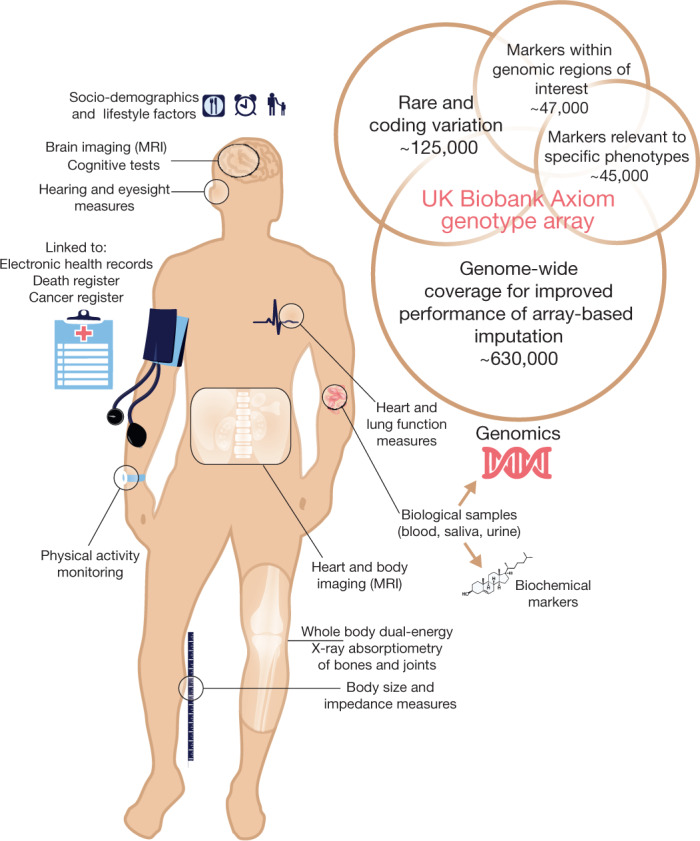
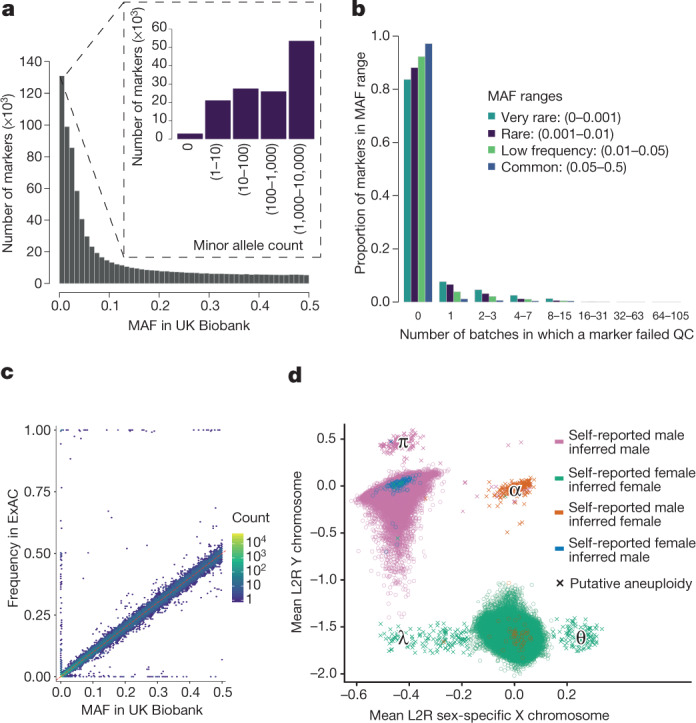
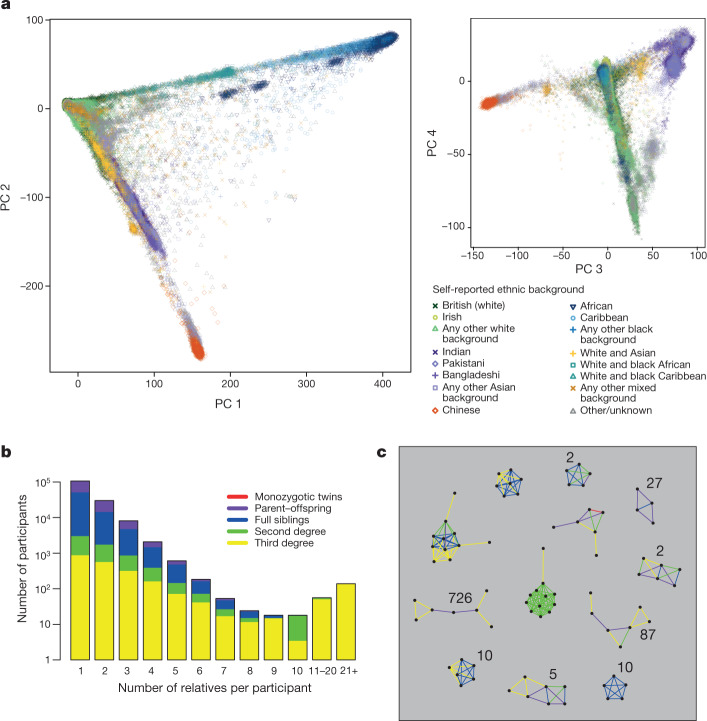
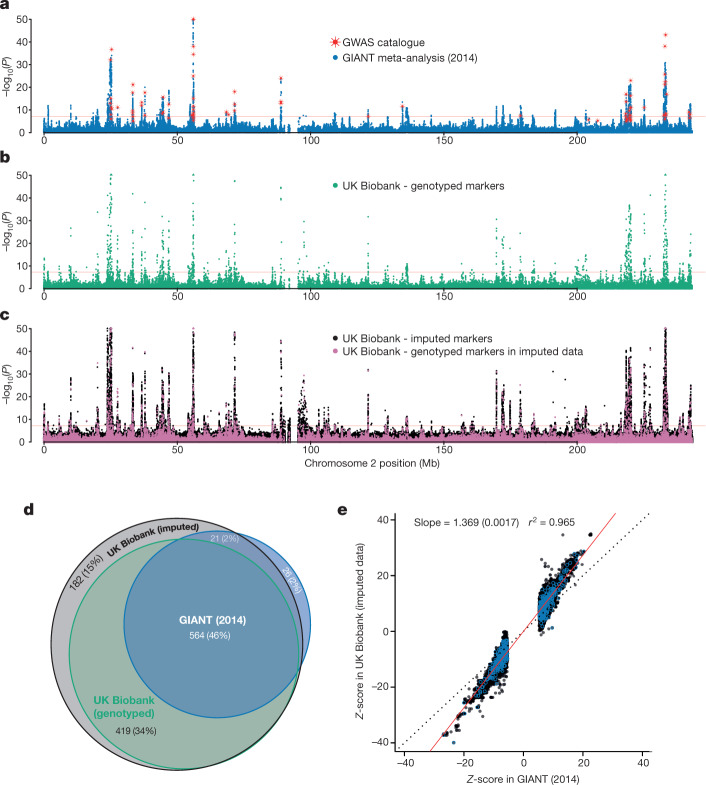
The UK Biobank project is a prospective cohort study with deep genetic and phenotypic data collected on approximately 500,000 individuals from across the United Kingdom, aged between 40 and 69 at recruitment. The open resource is unique in its size and scope. A rich variety of phenotypic and health-related information is available on each participant, including biological measurements, lifestyle indicators, biomarkers in blood and urine, and imaging of the body and brain. Follow-up information is provided by linking health and medical records. Genome-wide genotype data have been collected on all participants, providing many opportunities for the discovery of new genetic associations and the genetic bases of complex traits. Here we describe the centralized analysis of the genetic data, including genotype quality, properties of population structure and relatedness of the genetic data, and efficient phasing and genotype imputation that increases the number of testable variants to around 96 million. Classical allelic variation at 11 human leukocyte antigen genes was imputed, resulting in the recovery of signals with known associations between human leukocyte antigen alleles and many diseases.
Overview
The claims and statistics of this paper haven’t been checked yet.
Free: it reads the open-access text and checks the first 5 claims that cite a source we can check. Create a free account to check every claim.
Integrity signals
Registry
Cites
Statistics
Figures
Verification
Claims the paper makes
The claims and statistics of this paper haven’t been checked yet.
Free: it reads the open-access text and checks the first 5 claims that cite a source we can check. Create a free account to check every claim.
Claims other papers make about this one
Each is checked against this paper’s own text: does it say what the citing paper says it does?
The source backs part of the claim, not all of it — or backs it for a different population, condition or comparison.
In the citing paper
“The UKBB dataset provides information regarding more than 7000 phenotypes assessed in up to 500,000 participants from six ancestry groups [32].”
From Denisovan and Neanderthal archaic introgression differentially impacted the genetics of complex traits in modern populations (2022) · cites this paper as [32]
Experimental — accuracy not yet measuredThe source backs part of the claim, not all of it — or backs it for a different population, condition or comparison.
In the citing paper
“In the UK, the UK Biobank initiated enrollment in 2006, reaching a final participant count of over 500,000, and plans to follow participants for at least 30 years after enrollment 81 .”
From Multimodal biomedical AI (2022) · cites this paper as [81]
Experimental — accuracy not yet measuredThe source backs part of the claim, not all of it — or backs it for a different population, condition or comparison.
In the citing paper
“Approximately 9.2 million people living 25 miles (40 km) from one of 22 assessment centers across England, Wales and Scotland were invited to participate, with 5.5% participating in the baseline studies.”
From Plasma proteomic associations with genetics and health in the UK Biobank (2023) · cites this paper as Bycroft et al (Nature, 2018)
Experimental — accuracy not yet measuredThe cited source says what the claim attributes to it.
In the citing paper
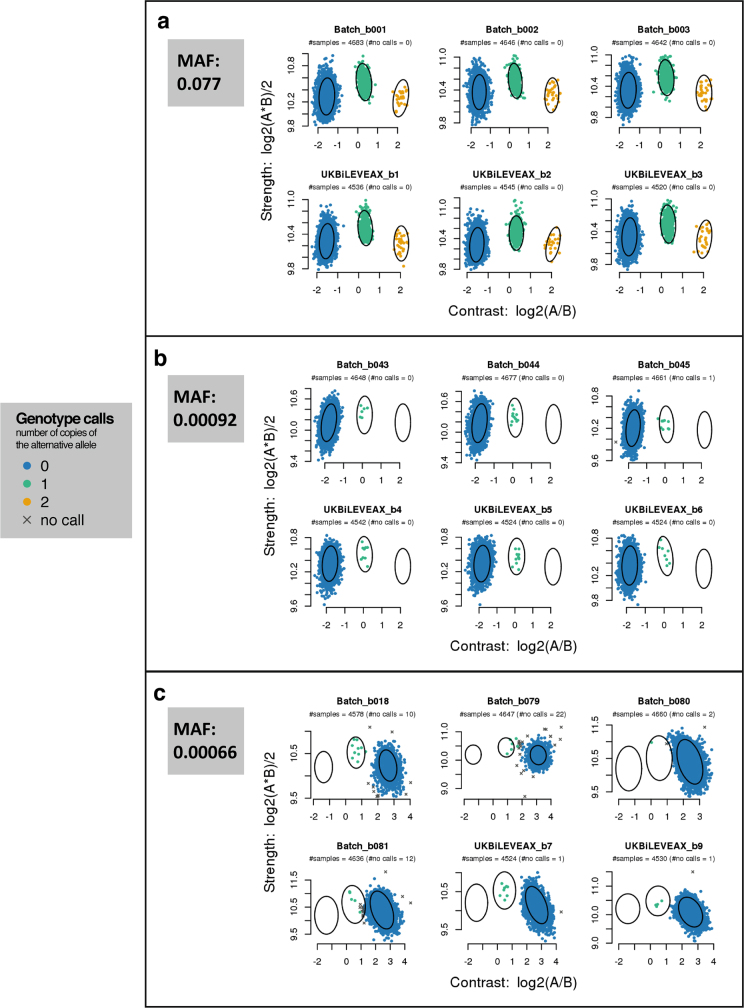
“Amongst the genetics community, it is generally well recognised that SNP-chips perform poorly for genotyping rare genetic variants [9-11] due to their reliance upon data clustering (Figure 1).”
From Assessing the analytical validity of SNP-chips for detecting very rare pathogenic variants: implications for direct-to-consumer genetic testing (2019) · cites this paper as [10]
The cited source says what the claim attributes to it.
In the citing paper
“The genetics community generally recognises that SNP chips perform poorly for genotyping rare genetic variants owing to their reliance on data clustering (fig 1).9 10 11”
From Use of SNP chips to detect rare pathogenic variants: retrospective, population based diagnostic evaluation (2021) · cites this paper as [10]
6 more claims about this paper
Create a free account to see every claim other papers make about this one.
Self-check
Percentages, sums and reported differences re-computed from the paper’s own numbers.
The self-check needs the paper’s full text.
Citations
Cites
A global reference for human genetic variation
The 1000 Genomes Project Consortium, authors, C., Auton, A., Abecasis, G. R., Steering committee, Altshuler, D. M., Durbin, R. M., Abecasis, G. R., Bentley, D. R., Chakravarti, A., et al. (2015) · Nature · doi:10.1038/nature15393 · Cited by 18,247
Self-citationSudlow, C., Gallacher, J., Allen, N., Beral, V., Burton, P., Danesh, J., Downey, P., Elliott, P., Green, J., Landray, M., et al. (2015) · PLOS Medicine · doi:10.1371/journal.pmed.1001779 · Cited by 12,728
Self-citationAnalysis of protein-coding genetic variation in 60,706 humans
Exome Aggregation Consortium, Lek, M., Karczewski, K. J., Minikel, E. V., Samocha, K. E., Banks, E., Fennell, T., O’Donnell-Luria, A. H., Ware, J. S., Hill, A. J., et al. (2016) · Nature · doi:10.1038/nature19057 · Cited by 9,587
A haplotype map of the human genome
The International HapMap Consortium (2005) · Nature · doi:10.1038/nature04226 · Cited by 5,858
Robust relationship inference in genome-wide association studies
Manichaikul, A., Mychaleckyj, J. C., Rich, S. S., Daly, K., Sale, M., & Chen, W.-M. (2010) · Bioinformatics · doi:10.1093/bioinformatics/btq559 · Cited by 3,541
A reference panel of 64,976 haplotypes for genotype imputation
the Haplotype Reference Consortium (2016) · Nature Genetics · doi:10.1038/ng.3643 · Cited by 2,836
Self-citationThe NHGRI GWAS Catalog, a curated resource of SNP-trait associations
Welter, D., MacArthur, J., Morales, J., Burdett, T., Hall, P., Junkins, H., Klemm, A., Flicek, P., Manolio, T., Hindorff, L., et al. (2014) · Nucleic Acids Research · doi:10.1093/nar/gkt1229 · Cited by 2,707
Genetic risk and a primary role for cell-mediated immune mechanisms in multiple sclerosis
The International Multiple Sclerosis Genetics Consortium & The Wellcome Trust Case Control Consortium 2 (2011) · Nature · doi:10.1038/nature10251 · Cited by 2,697
Self-citationMultimodal population brain imaging in the UK Biobank prospective epidemiological study
Miller, K. L., Alfaro-Almagro, F., Bangerter, N. K., Thomas, D. L., Yacoub, E., Xu, J., Bartsch, A. J., Jbabdi, S., Sotiropoulos, S. N., Andersson, J. L. R., et al. (2016) · Nature Neuroscience · doi:10.1038/nn.4393 · Cited by 2,020
The Electronic Medical Records and Genomics (eMERGE) Consortium, Wood, A. R., The MIGen Consortium, The PAGE Consortium, Study, T. L. C., Esko, T., Yang, J., Vedantam, S., Pers, T. H., Gustafsson, S., et al. (2014) · Nature Genetics · doi:10.1038/ng.3097 · Cited by 1,853
Self-citation
Cited by
Items 901–1,000 of 1,161
Longchamps, R. J., Yang, S. Y., Castellani, C. A., Shi, W., Lane, J., Grove, M. L., Bartz, T. M., Sarnowski, C., Liu, C., Burrows, K., et al. (2021) · Human Genetics · doi:10.1007/s00439-021-02394-w · Cited by 73
Richardson, T. G., Crouch, D. J. M., Power, G. M., Morales-Berstein, F., Hazelwood, E., Fang, S., Cho, Y., Inshaw, J. R. J., Robertson, C. C., Sidore, C., et al. (2022) · Nature Communications · doi:10.1038/s41467-022-29932-y · Cited by 65
Environmental and genetic predictors of human cardiovascular ageing
Shah, M., Inácio, M. H. D. A., Lu, C., Schiratti, P.-R., Zheng, S. L., Clement, A., de Marvao, A., Bai, W., King, A. P., Ware, J. S., et al. (2023) · Nature Communications · doi:10.1038/s41467-023-40566-6 · Cited by 72
“Genotyping of UK Biobank participants has been detailed previously 62 , and in brief, UK Biobank genotyping for 488,252 participants was performed on UK BiLEVE or UK Biobank Axiom arrays and imputation performed with the HaplotypeReference Consortium panel and the UK10K+1000GenomesProject panel.”
BackgroundMethodAustin-Zimmerman, I., Levey, D. F., Giannakopoulou, O., Deak, J. D., Galimberti, M., Adhikari, K., Zhou, H., Denaxas, S., Irizar, H., Kuchenbaecker, K. B., et al. (2023) · Nature Communications · doi:10.1038/s41467-023-41249-y · Cited by 75
“19.”
InfluentialLong-term association of ultra-short heart rate variability with cardiovascular events
Orini, M., van Duijvenboden, S., Young, W. J., Ramírez, J., Jones, A. R. C., Hughes, A. D., Tinker, A., Munroe, P. B., & Lambiase, P. D. (2023) · Scientific Reports · doi:10.1038/s41598-023-45988-2 · Cited by 70
Suhre, K. (2024) · Cell Genomics · doi:10.1016/j.xgen.2024.100506 · Cited by 74
Genetic architecture of the structural connectome
Wainberg, M., Forde, N. J., Mansour, S., Kerrebijn, I., Medland, S. E., Hawco, C. S., & Tripathy, S. J. (2024) · Nature Communications · doi:10.1038/s41467-024-46023-2 · Cited by 75
Inferring Gene-by-Environment Interactions with a Bayesian Whole-Genome Regression Model
Kerin, M., & Marchini, J. (2020) · The American Journal of Human Genetics · doi:10.1016/j.ajhg.2020.08.009 · Cited by 71
Self-citationLeroux, A., Xu, S., Kundu, P., Muschelli, J., Smirnova, E., Chatterjee, N., & Crainiceanu, C. (2021) · The Journals of Gerontology: Series A · doi:10.1093/gerona/glaa250 · Cited by 66
Zhou, J., Liu, C., Sun, Y., Francis, M., Ryu, M., Grider, A., & Ye, K. (2021) · Osteoarthritis and Cartilage · doi:10.1016/j.joca.2021.02.564 · Cited by 72
An automated framework for efficiently designing deep convolutional neural networks in genomics
Zhang, Z., Park, C. Y., Theesfeld, C. L., & Troyanskaya, O. G. (2021) · Nature Machine Intelligence · doi:10.1038/s42256-021-00316-z · Cited by 73
Gene-Environment Interactions in Multiple Sclerosis: A UK Biobank Study
Jacobs, B. M., Noyce, A. J., Bestwick, J. P., Belete, D., Giovannoni, G., & Dobson, R. (2021) · Neurology Neuroimmunology & Neuroinflammation · doi:10.1212/nxi.0000000000001007 · Cited by 68
Higher adiposity and mental health: causal inference using Mendelian randomization
Casanova, F., O’Loughlin, J., Martin, S., Beaumont, R. N., Wood, A. R., Watkins, E. R., Freathy, R. M., Hagenaars, S. P., Frayling, T. M., Yaghootkar, H., et al. (2021) · Human Molecular Genetics · doi:10.1093/hmg/ddab204 · Cited by 87
“The genetic data underwent extensive centralized quality control (30).”
BackgroundMadakkatel, I., Zhou, A., McDonnell, M. D., & Hyppönen, E. (2021) · Scientific Reports · doi:10.1038/s41598-021-02476-9 · Cited by 72
“Participants provided electronic informed consent to use their anonymized data and samples for health-related research, to be recontacted for further sub-studies and for the UK Biobank to access their health-related records 24 .”
MethodMichaud, V., Lasseaux, E., Green, D. J., Gerrard, D. T., Plaisant, C., Fitzgerald, T. W., Birney, E., Arveiler, B., Black, G. C. M., & Sergouniotis, P. I. (2022) · Nature Communications · doi:10.1038/s41467-022-31392-3 · Cited by 72
Xue, Z., Yuan, J., Chen, F., Yao, Y., Xing, S., Yu, X., Li, K., Wang, C., Bao, J., Qu, J., et al. (2022) · eBioMedicine · doi:10.1016/j.ebiom.2022.104161 · Cited by 66
Navigating bottlenecks and trade-offs in genomic data analysis
Berger, B., & Yu, Y. W. (2022) · Nature Reviews Genetics · doi:10.1038/s41576-022-00551-z · Cited by 81
Genomic analyses of hair from Ludwig van Beethoven
Begg, T. J. A., Schmidt, A., Kocher, A., Larmuseau, M., Runfeldt, G., Maier, P. A., Wilson, J. D., Barquera, R., Maj, C., Szolek, A., et al. (2023) · Current Biology · doi:10.1016/j.cub.2023.02.041 · Cited by 70
“For parameter optimization during polygenic risk scoring for complex diseases, we considered case-control data from the UK Biobank using respective ICD-10 codes for each condition.(163) Beethoven’s genome was filtered within accessible regions, with only genotype calls with a genotype qualityR 30 being included, after…”
Multi-modality cardiac image computing: A survey
Li, L., Ding, W., Huang, L., Zhuang, X., & Grau, V. (2023) · Medical Image Analysis · doi:10.1016/j.media.2023.102869 · Cited by 83
Connectomes for 40,000 UK Biobank participants: A multi-modal, multi-scale brain network resource
Sina Mansour, L., Biase, M. A. D., Smith, R. E., Zalesky, A., & Seguin, C. (2023) · NeuroImage · doi:10.1016/j.neuroimage.2023.120407 · Cited by 80
“Importantly, access to full health records (which are updated over time), and a wide range of longitudinal, long-term clinical, phenotypic, and genomic data is available to researchers [15].”
Dahl, A., Thompson, M., An, U., Krebs, M. D., Appadurai, V., Border, R., Bacanu, S., Werge, T. M., Flint, J., Schork, A. J., et al. (2023) · Nature Genetics · doi:10.1038/s41588-023-01559-9 · Cited by 78
“In this paper, we propose to bridge the shallow–deep gap by integrating information across hundreds of MDD-relevant phenotypes in UK Biobank 11,16 (Fig.”
BackgroundThe genetic architecture of multimodal human brain age
Wen, J., Zhao, B., Yang, Z., Erus, G., Skampardoni, I., Mamourian, E., Cui, Y., Hwang, G., Bao, J., Boquet-Pujadas, A., et al. (2024) · Nature Communications · doi:10.1038/s41467-024-46796-6 · Cited by 74
“Finally, we thank Dr. Yunpeng Wang for generously providing us with their GWAS summary statistics 20 during the revision.”
Tissue-specific enhancer–gene maps from multimodal single-cell data identify causal disease alleles
Sakaue, S., Weinand, K., Isaac, S., Dey, K. K., Jagadeesh, K. A., Kanai, M., Watts, G. F. M., Zhu, Z., Accelerating Medicines Partnership® RA/SLE Program and Network, Albrecht, J., et al. (2024) · Nature Genetics · doi:10.1038/s41588-024-01682-1 · Cited by 69
“79) upon registration and publicly available GWAS fine-mapping results in UK Biobank 80,115 .”
Genetic basis of early onset and progression of type 2 diabetes in South Asians
Hodgson, S., Williamson, A., Bigossi, M., Stow, D., Jacobs, B. M., Samuel, M., Gafton, J., Zöllner, J., Spreckley, M., Akhtar, S., et al. (2024) · Nature Medicine · doi:10.1038/s41591-024-03317-8 · Cited by 79
“Finally, it is possible that the Genes & Health study is subject to participant bias, as in the UK Biobank and other studies, with overrepresentation of wealthier, healthier and more educated individuals 34 .”
InfluentialThe comprehensive clinical benefits of digital phenotyping: from broad adoption to full impact
Zhang, Y., Wang, J., Zong, H., Singla, R. K., Ullah, A., Liu, X., Wu, R., Ren, S., & Shen, B. (2025) · npj Digital Medicine · doi:10.1038/s41746-025-01602-5 · Cited by 80
Biological markers and psychosocial factors predict chronic pain conditions
Fillingim, M., Tanguay-Sabourin, C., Parisien, M., Zare, A., Guglietti, G. V., Norman, J., Petre, B., Bortsov, A. V., Ware, M. A., Pérez, J., et al. (2025) · Nature Human Behaviour · doi:10.1038/s41562-025-02156-y · Cited by 71
“Baseline recruitment and data collection from 503,317 participants who consented to join the study took place between 2006 and 2010 in 22 assessment centres throughout Scotland, England and Wales 35 .”
Yang, Y., Wu, L., Shu, X., Lu, Y., Shu, X., Cai, Q., Beeghly-Fadiel, A. C., Li, B., Ye, F., Berchuck, A., et al. (2019) · Cancer Research · doi:10.1158/0008-5472.can-18-2726 · Cited by 69
“Associations of predicted methylation and EOC risk identified in theOCACdatawere further evaluated using the summary statistics of two GWAS studies of ovarian cancer in theUKBiobank (28).”
Genome-wide association study of breakfast skipping links clock regulation with food timing
Dashti, H. S., Merino, J., Lane, J. M., Song, Y., Smith, C. E., Tanaka, T., McKeown, N. M., Tucker, C., Sun, D., Bartz, T. M., et al. (2019) · American Journal of Clinical Nutrition · doi:10.1093/ajcn/nqz076 · Cited by 71
“To leverage the statistical power of the UK Biobank (23) [ n = 193,860; almost 100-fold that of the prior study (19)] to identify genetic variants related to breakfast skipping, our primary outcome for this research, we conducted a proxy-phenotype GWAS (24) based on the consumption of breakfast…”
InfluentialThorp, J. G., Marees, A. T., Ong, J., An, J., MacGregor, S., & Derks, E. M. (2019) · Psychological Medicine · doi:10.1017/s0033291719002526 · Cited by 71
“UKBB is a major health data resource containing phenotypic information on a wide range of health-related measures and characteristics in over 500 000 participants from the UK general population (Bycroft et al., 2018).”
BackgroundClifford, R. E., Maihofer, A. X., Stein, M. B., Ryan, A. F., & Nievergelt, C. M. (2020) · JAMA Otolaryngology–Head & Neck Surgery · doi:10.1001/jamaoto.2020.2920 · Cited by 63
Majara, L., Kalungi, A., Koen, N., Tsuo, K., Wang, Y., Gupta, R., Nkambule, L. L., Zar, H. J., Stein, D. J., Kinyanda, E., et al. (2023) · Human Genetics and Genomics Advances · doi:10.1016/j.xhgg.2023.100184 · Cited by 78
“UK Biobank The UK Biobank enrolled 500,000 people aged between 40 and 69 years in 2006–2010 from across the country, as described previously.(41) A more detailed description of the cohort is available on”
BackgroundClinical implications of recent advances in primary open-angle glaucoma genetics
Choquet, H., Wiggs, J. L., & Khawaja, A. P. (2019) · Eye · doi:10.1038/s41433-019-0632-7 · Cited by 68
Does Obesity Cause Thyroid Cancer? A Mendelian Randomization Study
Fussey, J. M., Beaumont, R. N., Wood, A. R., Vaidya, B., Smith, J. A., & Tyrrell, J. (2020) · The Journal of Clinical Endocrinology & Metabolism · doi:10.1210/clinem/dgaa250 · Cited by 72
Han, X., Ong, J., Hewitt, A. W., Gharahkhani, P., & MacGregor, S. (2020) · International Journal of Epidemiology · doi:10.1093/ije/dyaa178 · Cited by 78
“25 The sample collection and quality control procedures for serum lipid biomarkers were described in detail elsewhere (see: http://biobank.ctsu.ox.ac.uk/crystal/crystal/docs/bio marker_issues.pdf).”
MethodGill, D., Karhunen, V., Malik, R., Dichgans, M., & Sofat, N. (2021) · Osteoarthritis and Cartilage · doi:10.1016/j.joca.2020.12.015 · Cited by 79
“UK Biobank identification of OA was based on hospital-diagnosed 4 OA cases (8, 9).”
BackgroundMethodInfluentialGreen, H., Jones, A. G., Evans, J. P., Wood, A. R., Beaumont, R. N., Tyrrell, J., Frayling, T. M., Smith, C., & Weedon, M. N. (2021) · PLoS Genetics · doi:10.1371/journal.pgen.1009577 · Cited by 77
“Ethics approval for the UK Biobank study was obtained from the North West Centre for Research Ethics Committee (11/NW/0382)[13].”
MethodBenn, M., Marott, S. C. W., Tybjærg‐Hansen, A., & Nordestgaard, B. G. (2021) · Cardiovascular Research · doi:10.1093/cvr/cvab368 · Cited by 70
Gaziano, L., Sun, L., Arnold, M., Bell, S., Cho, K., Kaptoge, S. K., Song, R. J., Burgess, S., Posner, D. C., Mosconi, K., et al. (2022) · Circulation · doi:10.1161/circulationaha.122.060700 · Cited by 69
Park, S., Kim, S. G., Lee, S., Kim, Y., Cho, S., Kim, K., Kim, Y. C., Han, S. S., Lee, H., Lee, J. P., et al. (2023) · Journal of Cachexia Sarcopenia and Muscle · doi:10.1002/jcsm.13174 · Cited by 70
“jectively measured physical activity traits are available in the population scale.(11) The availability of large-scale ageing traits”
BackgroundResultReplicable brain–phenotype associations require large-scale neuroimaging data
Liu, S., Abdellaoui, A., Verweij, K. J. H., & van Wingen, G. A. (2023) · Nature Human Behaviour · doi:10.1038/s41562-023-01642-5 · Cited by 71
Novel insights into causal effects of serum lipids and lipid-modifying targets on cholelithiasis
Chen, L., Qiu, W., Sun, X., Gao, M., Zhao, Y., Li, M., Fan, Z., & Lv, G. (2023) · Gut · doi:10.1136/gutjnl-2023-330784 · Cited by 67
Zhang, R., Zhang, B., Shen, C., Sahakian, B. J., Li, Z., Zhang, W., Zhao, Y., Li, Y., Feng, J., & Cheng, W. (2024) · Nature Mental Health · doi:10.1038/s44220-024-00226-0 · Cited by 72
Calibrated prediction intervals for polygenic scores across diverse contexts
Hou, K., Xu, Z., Ding, Y., Mandla, R., Shi, Z., Boulier, K. M., Harpak, A., & Paşaniuc, B. (2024) · Nature Genetics · doi:10.1038/s41588-024-01792-w · Cited by 70
“We analyze data from two large-scale biobanks (UK Biobank 28 and All of Us 29 ) to find pervasive impact of context on PGS accuracy across a wide range of traits.”
Genetic links between ovarian ageing, cancer risk and de novo mutation rates
Stankovic, S., Shekari, S., Huang, Q. Q., Gardner, E. J., Ivarsdottir, E. V., Owens, N. D. L., Mavaddat, N., Azad, A., Hawkes, G., Kentistou, K. A., et al. (2024) · Nature · doi:10.1038/s41586-024-07931-x · Cited by 68
“All tested phenotypes were run as either continuous (age at menarche, telomere length and sex hormones) or binary traits (cancer) corrected by age, age 2 , sex, the first ten genetic principal components as calculated in Bycroft et al. 68 , and study participant ES batch as a categorical covariate (either 50k, 200k or…”
BackgroundInfluentialChaudhry, S. R., Lendvai, I. S., Muhammad, S., Westhofen, P., Kruppenbacher, J. P., Scheef, L., Boecker, H., Scheele, D., Hurlemann, R., & Kinfe, T. M. (2019) · Brain stimulation · doi:10.1016/j.brs.2019.01.008 · Cited by 68
“Ultimately, biobank-based system biological approaches are on the way and represent an appropriate roadmap to substantially provide insights in such complex molecular circuits and the possible implications for head pain therapy [38,39].”
BackgroundZhang, Y., Quick, C., Yu, K., Barbeira, A., Luca, F., Piqué-Regi, R., Im, H. K., & Wen, X. (2020) · Genome biology · doi:10.1186/s13059-020-02026-y · Cited by 80
Improved prediction of fracture risk leveraging a genome-wide polygenic risk score
Lu, T., Forgetta, V., Keller‐Baruch, J., Nethander, M., Bennett, D., Forest, M., Bhatnagar, S., Walters, R. G., Lin, K., Chen, Z., et al. (2021) · Genome Medicine · doi:10.1186/s13073-021-00838-6 · Cited by 70
Wainberg, M., Jones, S. E., Beaupre, L. M., Hill, S. L., Felsky, D., Rivas, M. A., Lim, A. S. P., Ollila, H. M., & Tripathy, S. J. (2021) · PLOS Medicine · doi:10.1371/journal.pmed.1003782 · Cited by 64
Cheng, Q., Yang, Y., Shi, X., Yeung, K.-F., Yang, C., Peng, H., & Liu, J. (2020) · NAR Genomics and Bioinformatics · doi:10.1093/nargab/lqaa028 · Cited by 62
“For CAD-CAD analysis, the selection dataset is myocardial infarction (MI) data from UK Biobank (UKB), the exposure data is obtained from the C4D Genetics Consortium [44], and the outcome data is obtained from the transatlantic Coronary ARtery DIsease Genome wide Replication and Meta-analysis (CARDIoGRAM) [45].”
MethodGleadall, N., Veldhuisen, B., Gollub, J., Butterworth, A. S., Ord, J., Penkett, C. J., Timmer, T. C., Sauer, C. M., van der Bolt, N., Brown, C. J., et al. (2020) · Blood Advances · doi:10.1182/bloodadvances.2020001894 · Cited by 68
“We also visually inspected genotype call plots of all newly added antigen-typing probe sets, per the original UKBB study methodology (supplemental Figure 2).(22) Data generated by any poorly performing probe sets were not used for further analysis (supplemental Table 2).”
MethodUnderstanding the Interplay Between Health Disparities and Epigenomics
Mancilla, V. J., Peeri, N. C., Silzer, T., Basha, R., Felini, M., Jones, H. P., Phillips, N., Tao, M.-H., Thyagarajan, S., & Vishwanatha, J. K. (2020) · Frontiers in Genetics · doi:10.3389/fgene.2020.00903 · Cited by 59
Nagar, S. D., Nápoles, A. M., Jordan, I. K., & Mariño‐Ramírez, L. (2021) · EClinicalMedicine · doi:10.1016/j.eclinm.2021.100960 · Cited by 71
Association between Sleep Traits and Lung Cancer: A Mendelian Randomization Study
Wang, J., Tang, H., Duan, Y., Yang, S., & An, J. (2021) · Journal of Immunology Research · doi:10.1155/2021/1893882 · Cited by 69
“Our exposure data were extracted from the UK Biobank, a large cohort study with deep genetic and phenotypic data collected on more than 500,000 individuals from across the United Kingdom [21].”
MethodHypertension genetics past, present and future applications
Olczak, K. J., Taylor‐Bateman, V., Nicholls, H., Traylor, M., Cabrera, C., & Munroe, P. B. (2021) · Journal of Internal Medicine · doi:10.1111/joim.13352 · Cited by 71
Si, S., Li, J., Tewara, M. A., & Xue, F. (2021) · Frontiers in Immunology · doi:10.3389/fimmu.2021.720876 · Cited by 74
“Genetic quality control was performed centrally by the UK Biobank (14).”
BackgroundEndothelial lipase mediates efficient lipolysis of triglyceride-rich lipoproteins
Khetarpal, S. A., Vitali, C., Levin, M. G., Klarin, D. M., Park, J., Pampana, A., Millar, J. S., Kuwano, T., Dhavamani, S., Subbaiah, P. V., et al. (2021) · PLoS Genetics · doi:10.1371/journal.pgen.1009802 · Cited by 68
Maihofer, A. X., Choi, K. W., Coleman, J. R. I., Daskalakis, N. P., Denckla, C. A., Ketema, E., Morey, R. A., Polimanti, R. A., Ratanatharathorn, A. D., Torres, K., et al. (2021) · Biological Psychiatry · doi:10.1016/j.biopsych.2021.09.020 · Cited by 71
“Our multivariate (36) analysis resulted in a 19% increase in the effective sample size by adding LTE count data from the UKBB and identi fi ed replicable loci and patterns of tissue expression not identi fi ed in a standard PTSD GWAS.”
MethodInfluentialCastro, V. M., Gainer, V. S., Wattanasin, N., Benoit, B., Cagan, A., Ghosh, B., Goryachev, S. D., Metta, R., Park, H., Wang, D., et al. (2021) · Journal of the American Medical Informatics Association · doi:10.1093/jamia/ocab264 · Cited by 69
Björnsdóttir, G., Stefánsdóttir, L., Þorleifsson, G., Sulem, P., Norland, K., Ferkingstad, E., Oddsson, Á., Zink, F., Lund, S. H., Nawaz, M. S., et al. (2022) · Nature Communications · doi:10.1038/s41467-022-28167-1 · Cited by 71
Wagner, S. K., Hughes, F., Cortina‐Borja, M., Pontikos, N., Struyven, R., Liu, X., Montgomery, H., Alexander, D. C., Topol, E. J., Petersen, S. E., et al. (2022) · BMJ Open · doi:10.1136/bmjopen-2021-058552 · Cited by 72
Sex steroid hormones and risk of breast cancer: a two-sample Mendelian randomization study
Nounu, A., Kar, S., Relton, C. L., & Richmond, R. C. (2022) · Breast Cancer Research · doi:10.1186/s13058-022-01553-9 · Cited by 72
“using UK Biobank data [27], which consists of phenotype and biological samples collected from around 500,000 individuals across Great Britain [30].”
MethodHamilton, F., Hughes, D. A., Spiller, W., Tilling, K. M., & Smith, G. D. (2024) · European Journal of Epidemiology · doi:10.1007/s10654-024-01113-9 · Cited by 68
“Pre-imputation QC, phasing and imputation are described elsewhere [30].”
MethodMarkus, M. R. P., Ittermann, T., Mariño, J., Schipf, S., Bahls, M., Könemann, S., Chamling, B., Völzke, H., Damasceno, N. R. T., Santos, R. D., et al. (2025) · European Heart Journal · doi:10.1093/eurheartj/ehaf281 · Cited by 65
Genetic susceptibility, plant-based dietary patterns, and risk of cardiovascular disease
Heianza, Y., Zhou, T., Sun, D., Hu, F. B., Manson, J. E., & Qi, L. (2020) · American Journal of Clinical Nutrition · doi:10.1093/ajcn/nqaa107 · Cited by 66
“In the UK Biobank, participants underwent a range of measurements during the period from 2006 to 2010 and provided various information on health and diseases (19).”
BackgroundWearable accelerometer-derived physical activity and incident disease
Khurshid, S., Weng, L.-C., Nauffal, V., Pirruccello, J. P., Venn, R. A., Al-Alusi, M. A., Benjamin, E. J., Ellinor, P. T., & Lubitz, S. A. (2022) · npj Digital Medicine · doi:10.1038/s41746-022-00676-9 · Cited by 63
Fast and robust ancestry prediction using principal component analysis
Zhang, D., Dey, R., & Lee, S. (2020) · Bioinformatics · doi:10.1093/bioinformatics/btaa152 · Cited by 63
Harrison, S., Davies, A. R., Dickson, M., Tyrrell, J., Green, M. J., Katikireddi, S. V., Campbell, D., Munafo, M. R., Dixon, P., Jones, H. E., et al. (2020) · International Journal of Epidemiology · doi:10.1093/ije/dyaa114 · Cited by 69
Timmins, I. R., Zaccardi, F., Nelson, C. P., Franks, P. W., Yates, T. E., & Dudbridge, F. (2020) · Communications Biology · doi:10.1038/s42003-020-01357-7 · Cited by 70
Richardson, T. G., Wang, Q., Sanderson, E., Mahajan, A., McCarthy, M. I., Frayling, T. M., Ala-Korpela, M., Sniderman, A., Davey Smith, G., & Holmes, M. V. (2021) · The Lancet Healthy Longevity · doi:10.1016/s2666-7568(21)00086-6 · Cited by 61
Genetic underpinnings of sociability in the general population
Bralten, J., Mota, N. R., Klemann, C. J. H. M., De Witte, W., Laing, E., Collier, D. A., de Kluiver, H., Bauduin, S. E. E. C., Arango, C., Ayuso-Mateos, J. L., et al. (2021) · Neuropsychopharmacology · doi:10.1038/s41386-021-01044-z · Cited by 60
“Sociability measure Valid data was available for 342,461 adult participants in the UKBB (mean age 56.61 (sd= 8.022), 53.8% female).”
BackgroundMethodInfluentialWesterlund, A. M., Hawe, J. S., Heinig, M., & Schunkert, H. (2021) · International Journal of Molecular Sciences · doi:10.3390/ijms221910291 · Cited by 77
Assessing the Causal Role of Sleep Traits on Glycated Hemoglobin: A Mendelian Randomization Study
Liu, J., Richmond, R. C., Bowden, J., Barry, C.-J. S., Dashti, H. S., Daghlas, I., Lane, J. M., Jones, S. E., Wood, A. R., Frayling, T. M., et al. (2022) · Diabetes Care · doi:10.2337/dc21-0089 · Cited by 70
“Two-stage least squares instrumental variable analyses were performed with adjustment for assessment center and 40 genetic principal components to minimize confounding by population stratification (21), as well as baseline age, sex, and genotyping chip to account for known confounders and reduce random variation (refe…”
MethodImproved analyses of GWAS summary statistics by reducing data heterogeneity and errors
Chen, W., Wu, Y., Zheng, Z., Qi, T., Visscher, P. M., Zhu, Z., & Yang, J. (2021) · Nature Communications · doi:10.1038/s41467-021-27438-7 · Cited by 76
“Imputation of the UKB data had been performed in a previous study 49 using the Haplotype Reference Consortium (HRC) 34 and UK10K reference panels 29,50 .”
MethodA spectrum of recessiveness among Mendelian disease variants in UK Biobank
Barton, A. R., Hujoel, M. L. A., Mukamel, R. E., Sherman, M. A., & Loh, P. (2022) · The American Journal of Human Genetics · doi:10.1016/j.ajhg.2022.05.008 · Cited by 65
Kim, Y. J., Moon, S., Hwang, M. Y., Han, S., Jang, H.-M., Kong, J., Shin, D. M., Yoon, K., Kim, S., Lee, J.-E., et al. (2022) · Nature Communications · doi:10.1038/s41467-022-34163-2 · Cited by 68
Liu, L., Khan, A., Sánchez, E., Zanoni, F., Li, Y., Steers, N. J., Balderes, O., Zhang, J. Y., Krithivasan, P., LeDesma, R. A., et al. (2022) · Nature Communications · doi:10.1038/s41467-022-34456-6 · Cited by 65
Penetrance of pathogenic genetic variants associated with premature ovarian insufficiency
Shekari, S., Stankovic, S., Gardner, E. J., Hawkes, G., Kentistou, K. A., Beaumont, R. N., Mörseburg, A., Wood, A. R., Prague, J., Mishra, G. D., et al. (2023) · Nature Medicine · doi:10.1038/s41591-023-02405-5 · Cited by 67
“Analyses were adjusted for age, age 2 , sex, the first ten genetic principal components as calculated in Bycroft et al. 53 and study participant exome sequencing batch as a categorical covariate (either 50k, 200k, or 450k).”
MethodLuo, S., Wong, I. C. K., Chui, C. S. L., Zheng, J., Huang, Y., Schooling, C. M., & Yeung, S. L. A. (2023) · The Lancet Healthy Longevity · doi:10.1016/s2666-7568(23)00085-5 · Cited by 74
He, W., Han, X., Ong, J., Wu, Y., Hewitt, A. W., Mackey, D. A., Gharahkhani, P., & MacGregor, S. (2023) · Ophthalmology · doi:10.1016/j.ophtha.2023.08.023 · Cited by 64
Genetic modifiers of rare variants in monogenic developmental disorder loci
Kingdom, R., Beaumont, R. N., Wood, A. R., Weedon, M. N., & Wright, C. F. (2024) · Nature Genetics · doi:10.1038/s41588-024-01710-0 · Cited by 64
Multi-ancestry genome-wide association study of kidney cancer identifies 63 susceptibility regions
Purdue, M. P., Dutta, D., Machiela, M. J., Gorman, B. R., Winter, T., Okuhara, D. Y., Cleland, S., Ferreiro-Iglesias, A., Scheet, P. A., Liu, A., et al. (2024) · Nature Genetics · doi:10.1038/s41588-024-01725-7 · Cited by 68
Examining the association between family status and depression in the UK Biobank
Giannelis, A., Palmos, A., Hagenaars, S. P., Breen, G. D., Lewis, C. M., & Mutz, J. (2020) · Journal of Affective Disorders · doi:10.1016/j.jad.2020.10.017 · Cited by 67
Promoting the genomic revolution in Africa through the Nigerian 100K Genome Project
Fatumo, S., Yakubu, A., Oyedele, O., Popoola, J., Attipoe, D. A., Eze-Echesi, G., Modibbo, F. Z., Ado-Wanka, N., 54gene Team, Osakwe, Y., et al. (2022) · Nature Genetics · doi:10.1038/s41588-022-01071-6 · Cited by 66
Genetic evidence for assortative mating on alcohol consumption in the UK Biobank
Howe, L. J., Lawson, D. J., Davies, N. M., St. Pourcain, B., Lewis, S. J., Davey Smith, G., & Hemani, G. (2019) · Nature Communications · doi:10.1038/s41467-019-12424-x · Cited by 63
The antagonistic pleiotropy of insulin-like growth factor 1
Zhang, W. B., Ye, K., Barzilai, N., & Milman, S. (2021) · Aging Cell · doi:10.1111/acel.13443 · Cited by 62
“The UK Biobank is a population- based study of roughly 500,000 individuals from the United Kingdom (Bycroft et al., 2018).”
BackgroundGenomic Evidence for Local Adaptation of Hunter-Gatherers to the African Rainforest
Lopez, M., Choin, J., Sikora, M., Siddle, K. J., Harmant, C., Costa, H. A., Silvert, M., Mouguiama-Daouda, P., Hombert, J.-M., Froment, A., et al. (2019) · Current Biology · doi:10.1016/j.cub.2019.07.013 · Cited by 66
Zhou, J., Liu, C., Sun, Y., Huang, W., & Ye, K. (2020) · Brain Behavior and Immunity · doi:10.1016/j.bbi.2020.10.019 · Cited by 68
Physical activity and COVID-19: an observational and Mendelian randomisation study
Zhang, X., Li, X., Sun, Z., He, Y., Xu, W., Campbell, H., Dunlop, M. G., Timofeeva, M., & Theodoratou, E. (2020) · Journal of Global Health · doi:10.7189/jogh.10.020514 · Cited by 60
Interpreting protein variant effects with computational predictors and deep mutational scanning
Livesey, B. J., & Marsh, J. A. (2022) · Disease Models & Mechanisms · doi:10.1242/dmm.049510 · Cited by 60
Akbari, P., Sosina, O. A., Bovijn, J., Landheer, K., Nielsen, J. B., Kim, M., Aykul, S., De, T., Haas, M. E., Hindy, G., et al. (2022) · Nature Communications · doi:10.1038/s41467-022-32398-7 · Cited by 68
Self-citationArdissino, M., Slob, E. A. W., Carter, P. R., Rogne, T., Girling, J., Burgess, S., & Ng, F. S. (2023) · Journal of the American Heart Association · doi:10.1161/jaha.122.027933 · Cited by 67
Chin, C.-S., Behera, S., Khalak, A., Sedlazeck, F. J., Sudmant, P. H., Wagner, J., & Zook, J. M. (2023) · Nature Methods · doi:10.1038/s41592-023-01914-y · Cited by 54
Bjornsdottir, G., Chalmer, M. A., Stefansdottir, L., Skuladottir, A. T., Einarsson, G., Andresdottir, M., Beyter, D., Ferkingstad, E., Gretarsdottir, S., Halldorsson, B. V., et al. (2023) · Nature Genetics · doi:10.1038/s41588-023-01538-0 · Cited by 61
“For burden testing, we used the UK Biobank whole-exome sequenced dataset, consisting of 400,912 whole-exome sequenced White British (individuals identified by PCA analyses) 88,89 who enrolled in the study between 2006 and 2010 throughout the UK and were aged 38–65 years at recruitment.”
MethodA robust cis-Mendelian randomization method with application to drug target discovery
Lin, Z., & Pan, W. (2024) · Nature Communications · doi:10.1038/s41467-024-50385-y · Cited by 70
Mollink, J., Smith, S. M., Elliott, L. T., Kleinnijenhuis, M., Hiemstra, M., Alfaro‐Almagro, F., Marchini, J., van Walsum, A. V. C., Jbabdi, S., & Miller, K. L. (2019) · Nature Neuroscience · doi:10.1038/s41593-019-0379-2 · Cited by 70
Self-citationNaseri, A., Liu, X., Tang, K., Zhang, S., & Zhi, D. (2019) · Genome biology · doi:10.1186/s13059-019-1754-8 · Cited by 73
How Natural Genetic Variation Shapes Behavior
Niepoth, N., & Bendesky, A. (2020) · Annual Review of Genomics and Human Genetics · doi:10.1146/annurev-genom-111219-080427 · Cited by 66
Using genetics to prioritize diagnoses for rheumatology outpatients with inflammatory arthritis
Knevel, R., le Cessie, S., Terao, C., Slowikowski, K., Cui, J., Huizinga, T. W. J., Costenbader, K. H., Liao, K. P., Karlson, E. W., & Raychaudhuri, S. (2020) · Science Translational Medicine · doi:10.1126/scitranslmed.aay1548 · Cited by 62
Xue, A., Jiang, L., Zhu, Z., Wray, N. R., Visscher, P. M., Zeng, J., & Yang, J. (2021) · Nature Communications · doi:10.1038/s41467-020-20237-6 · Cited by 65
Sadreev, I. I., Elsworth, B., Mitchell, R. E., Paternoster, L., Sanderson, E. C. M., Davies, N. M., Millard, L. A. C., Smith, G. D., Haycock, P., Bowden, J., et al. (2021) · medRxiv · doi:10.1101/2021.06.28.21259622 · Cited by 73
Metadata
- Authors
- Bycroft, C., Freeman, C., Petkova, D., Band, G., Elliott, L. T., Sharp, K., Motyer, A., Vukcevic, D., Delaneau, O., O’Connell, J., Cortes, A., Welsh, S., Young, A., Effingham, M., McVean, G., Leslie, S., Allen, N., Donnelly, P., & Marchini, J.
- Affiliations
- Centre for Human Genetics (GB)
- University of Oxford (GB)
- The University of Melbourne (AU)
- University of Geneva (CH)
- Illumina (United Kingdom) (GB)
- UK Biobank (GB)
- Corresponding author
- Marchini, Jonathan
- ORCID
- Venue
- Nature
- Published
- 2018-10-10
- Volume
- 562
- Issue
- 7726
- Pages
- 203-209
- ISSN
- 0028-0836 (ISSN-L)
- 1476-4687
- PMC
- PMC6786975
- OpenAlex
- W2895486342
- Semantic Scholar
- a9cc79a5df0f7802145401b464e4bb30c23b8efa
- Cited by
- 8,876
- References
- 41
- Citations by year
- 2026: 1242 · 2025: 1612 · 2024: 1546 · 2023: 1331 · 2022: 1185 · 2021: 928 · 2020: 643 · 2019: 336 · 2018: 40
- FWCI
- 299.77
- Type
- journal article
- Language
- en
- Open access
- hybrid
- doi.org
- Licence
- cc-by
- creativecommons.org/licenses/by/4.0 (tdm)
- creativecommons.org/licenses/by/4.0 (vor)
- Locations
- Nature (publishedVersion, cc-by)
- PubMed Central (publishedVersion, cc-by)
- PubMed (publishedVersion)
- RePEc: Research Papers in Economics (submittedVersion)
- IRIS (submittedVersion, cc-by)
- Minerva Access (University of Melbourne) (submittedVersion, cc-by)
- SERVAL (Université de Lausanne) (submittedVersion, cc-by)
- Funders
- Wellcome Trust (095552/Z/11/Z, 203141/Z/16/Z, 10956/Z/13Z, 100308/Z/12/Z, 090532/Z/09/Z, 100956/Z/13/Z)
- National Institute for Health and Care Research
- British Heart Foundation
- Medical Research Council
- National Health and Medical Research Council (1053756)
- FP7 Ideas: European Research Council (617306)
- Topics
- Life Sciences › Biochemistry, Genetics and Molecular Biology › Genetics › Genetic Associations and Epidemiology
- Life Sciences › Biochemistry, Genetics and Molecular Biology › Genetics › Genetic and phenotypic traits in livestock
- Life Sciences › Biochemistry, Genetics and Molecular Biology › Genetics › Forensic and Genetic Research
- Keywords
- UK Biobank, prospective cohort, deep phenotyping, complex traits, population structure, relatedness, genotype phasing, genotype imputation, biomarkers
- MeSH terms
- Adult, Aged, Alleles, Body Height, Brain, Family, Female, United Kingdom, Haplotypes, Humans, Life Style, Major Histocompatibility Complex, Male, Middle Aged, Phenotype, Quality Control, Cohort Studies, Biomarkers, Databases, Factual, Genomics, Databases, Genetic, Racial Groups, Genome-Wide Association Study, Electronic Health Records
About these checks
Registry, retraction, Cites and statistics results are computed, not judged, with one exception: a printed reference that no index lists is read once by a model before it counts as a citation error. Claims are extracted by a model and kept only when their quote appears verbatim in the text; each cited source is then checked, with a model’s help, for whether it says what the claim relies on. Those verdicts can be wrong — read the claim’s quote and the cited source before relying on one.
Statistics and arithmetic are recomputed, not judged.
Confidence bands are shown only for fields calibrated on our annotated test set. None is calibrated yet, so no band is shown.
What counts as a claim ›How we measure confidence ›How we check this ›
Are you an author, or do you see a problem with this page? Request a review
Data sources
Bibliographic data: Semantic Scholar, OpenAlex, Crossref.
Contains information from the Semantic Scholar Academic Graph Datasets, made available under the ODC Attribution License (ODC-BY 1.0).
Semantic Scholar’s data is described in: Kinney, R., et al. (2023). The Semantic Scholar Open Data Platform. arXiv:2301.10140.
