

The UK Biobank resource with deep phenotyping and genomic data
Open accessThe DOI matches its Crossref record; 39 of the 41 references it cites were found in a registry or an index.
Abstract
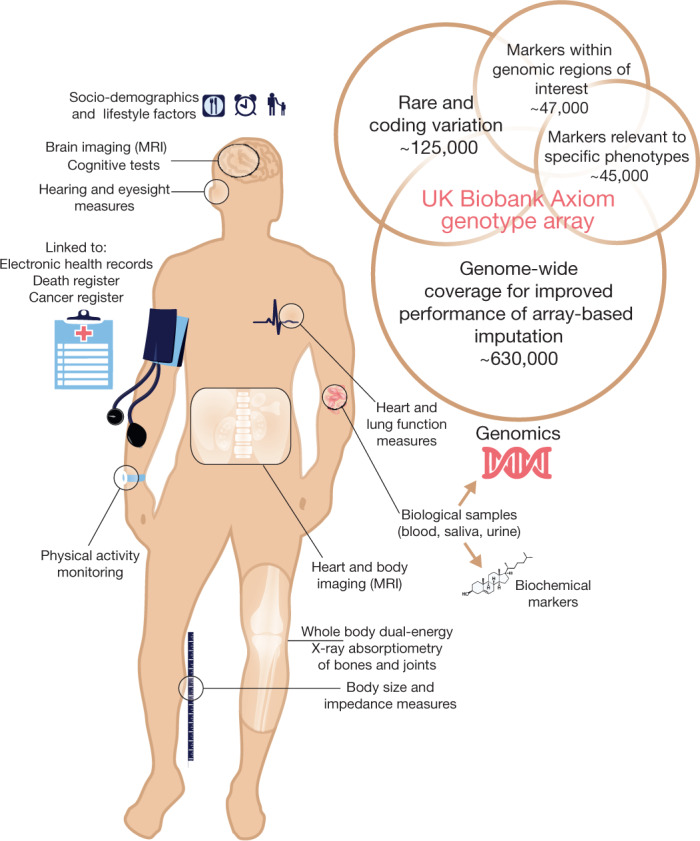
The UK Biobank project is a prospective cohort study with deep genetic and phenotypic data collected on approximately 500,000 individuals from across the United Kingdom, aged between 40 and 69 at recruitment. The open resource is unique in its size and scope. A rich variety of phenotypic and health-related information is available on each participant, including biological measurements, lifestyle indicators, biomarkers in blood and urine, and imaging of the body and brain. Follow-up information is provided by linking health and medical records. Genome-wide genotype data have been collected on all participants, providing many opportunities for the discovery of new genetic associations and the genetic bases of complex traits. Here we describe the centralized analysis of the genetic data, including genotype quality, properties of population structure and relatedness of the genetic data, and efficient phasing and genotype imputation that increases the number of testable variants to around 96 million. Classical allelic variation at 11 human leukocyte antigen genes was imputed, resulting in the recovery of signals with known associations between human leukocyte antigen alleles and many diseases.
Overview
The claims and statistics of this paper haven’t been checked yet.
Free: it reads the open-access text and checks the first 5 claims that cite a source we can check. Create a free account to check every claim.
Integrity signals
Registry
Cites
Statistics
Figures
Verification
Claims the paper makes
The claims and statistics of this paper haven’t been checked yet.
Free: it reads the open-access text and checks the first 5 claims that cite a source we can check. Create a free account to check every claim.
Claims other papers make about this one
Each is checked against this paper’s own text: does it say what the citing paper says it does?
The source backs part of the claim, not all of it — or backs it for a different population, condition or comparison.
In the citing paper
“The UKBB dataset provides information regarding more than 7000 phenotypes assessed in up to 500,000 participants from six ancestry groups [32].”
From Denisovan and Neanderthal archaic introgression differentially impacted the genetics of complex traits in modern populations (2022) · cites this paper as [32]
Experimental — accuracy not yet measuredThe source backs part of the claim, not all of it — or backs it for a different population, condition or comparison.
In the citing paper
“In the UK, the UK Biobank initiated enrollment in 2006, reaching a final participant count of over 500,000, and plans to follow participants for at least 30 years after enrollment 81 .”
From Multimodal biomedical AI (2022) · cites this paper as [81]
Experimental — accuracy not yet measuredThe source backs part of the claim, not all of it — or backs it for a different population, condition or comparison.
In the citing paper
“Approximately 9.2 million people living 25 miles (40 km) from one of 22 assessment centers across England, Wales and Scotland were invited to participate, with 5.5% participating in the baseline studies.”
From Plasma proteomic associations with genetics and health in the UK Biobank (2023) · cites this paper as Bycroft et al (Nature, 2018)
Experimental — accuracy not yet measuredThe cited source says what the claim attributes to it.
In the citing paper
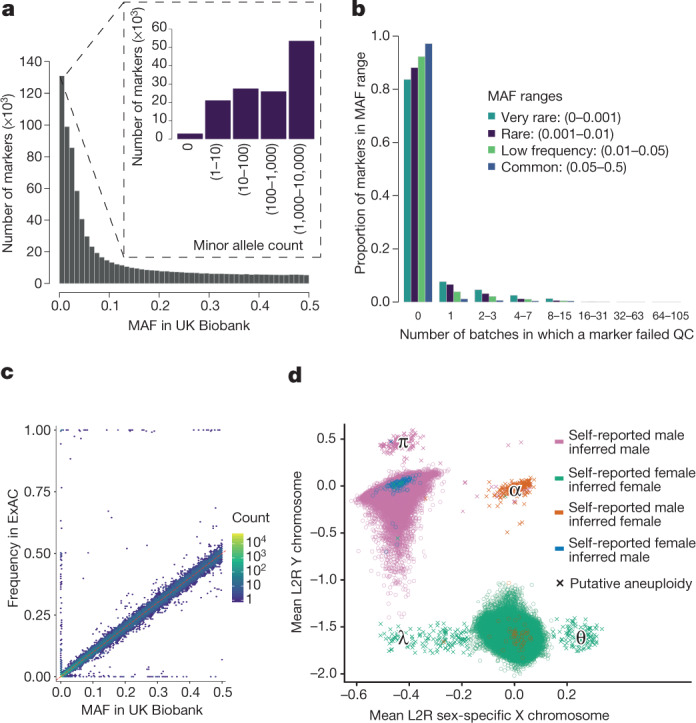
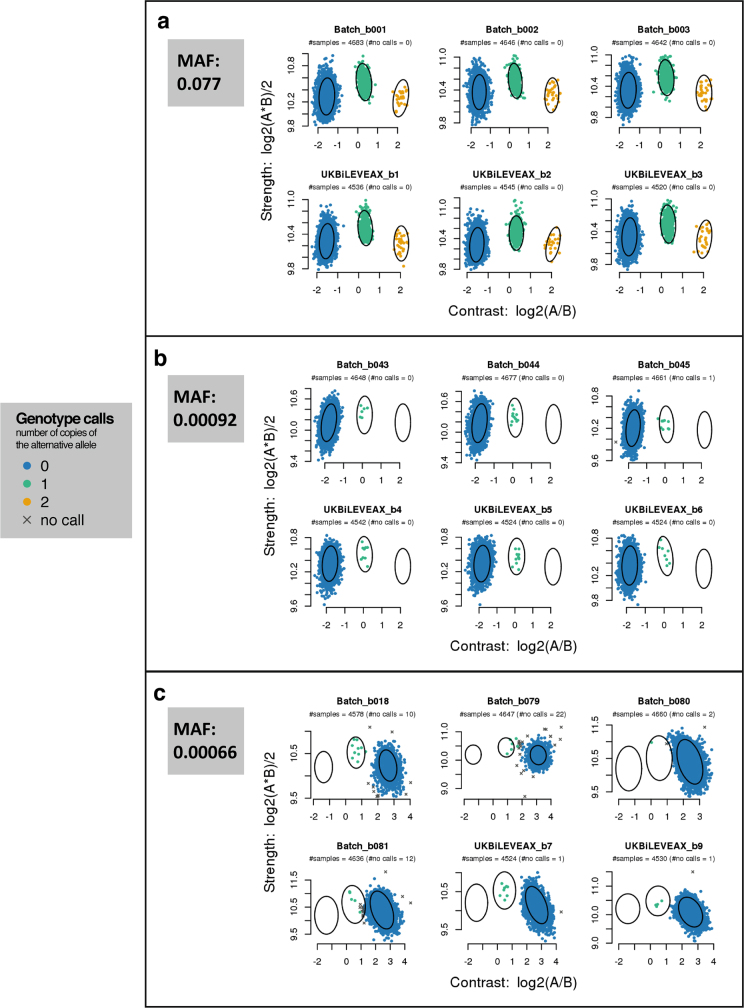
“Amongst the genetics community, it is generally well recognised that SNP-chips perform poorly for genotyping rare genetic variants [9-11] due to their reliance upon data clustering (Figure 1).”
From Assessing the analytical validity of SNP-chips for detecting very rare pathogenic variants: implications for direct-to-consumer genetic testing (2019) · cites this paper as [10]
The cited source says what the claim attributes to it.
In the citing paper
“The genetics community generally recognises that SNP chips perform poorly for genotyping rare genetic variants owing to their reliance on data clustering (fig 1).9 10 11”
From Use of SNP chips to detect rare pathogenic variants: retrospective, population based diagnostic evaluation (2021) · cites this paper as [10]
6 more claims about this paper
Create a free account to see every claim other papers make about this one.
Self-check
Percentages, sums and reported differences re-computed from the paper’s own numbers.
The self-check needs the paper’s full text.
Citations
Cites
A global reference for human genetic variation
The 1000 Genomes Project Consortium, authors, C., Auton, A., Abecasis, G. R., Steering committee, Altshuler, D. M., Durbin, R. M., Abecasis, G. R., Bentley, D. R., Chakravarti, A., et al. (2015) · Nature · doi:10.1038/nature15393 · Cited by 18,247
Self-citationSudlow, C., Gallacher, J., Allen, N., Beral, V., Burton, P., Danesh, J., Downey, P., Elliott, P., Green, J., Landray, M., et al. (2015) · PLOS Medicine · doi:10.1371/journal.pmed.1001779 · Cited by 12,728
Self-citationAnalysis of protein-coding genetic variation in 60,706 humans
Exome Aggregation Consortium, Lek, M., Karczewski, K. J., Minikel, E. V., Samocha, K. E., Banks, E., Fennell, T., O’Donnell-Luria, A. H., Ware, J. S., Hill, A. J., et al. (2016) · Nature · doi:10.1038/nature19057 · Cited by 9,587
A haplotype map of the human genome
The International HapMap Consortium (2005) · Nature · doi:10.1038/nature04226 · Cited by 5,858
Robust relationship inference in genome-wide association studies
Manichaikul, A., Mychaleckyj, J. C., Rich, S. S., Daly, K., Sale, M., & Chen, W.-M. (2010) · Bioinformatics · doi:10.1093/bioinformatics/btq559 · Cited by 3,541
A reference panel of 64,976 haplotypes for genotype imputation
the Haplotype Reference Consortium (2016) · Nature Genetics · doi:10.1038/ng.3643 · Cited by 2,836
Self-citationThe NHGRI GWAS Catalog, a curated resource of SNP-trait associations
Welter, D., MacArthur, J., Morales, J., Burdett, T., Hall, P., Junkins, H., Klemm, A., Flicek, P., Manolio, T., Hindorff, L., et al. (2014) · Nucleic Acids Research · doi:10.1093/nar/gkt1229 · Cited by 2,707
Genetic risk and a primary role for cell-mediated immune mechanisms in multiple sclerosis
The International Multiple Sclerosis Genetics Consortium & The Wellcome Trust Case Control Consortium 2 (2011) · Nature · doi:10.1038/nature10251 · Cited by 2,697
Self-citationMultimodal population brain imaging in the UK Biobank prospective epidemiological study
Miller, K. L., Alfaro-Almagro, F., Bangerter, N. K., Thomas, D. L., Yacoub, E., Xu, J., Bartsch, A. J., Jbabdi, S., Sotiropoulos, S. N., Andersson, J. L. R., et al. (2016) · Nature Neuroscience · doi:10.1038/nn.4393 · Cited by 2,020
The Electronic Medical Records and Genomics (eMERGE) Consortium, Wood, A. R., The MIGen Consortium, The PAGE Consortium, Study, T. L. C., Esko, T., Yang, J., Vedantam, S., Pers, T. H., Gustafsson, S., et al. (2014) · Nature Genetics · doi:10.1038/ng.3097 · Cited by 1,853
Self-citation
Cited by
Items 401–500 of 1,161
Mendelian imputation of parental genotypes improves estimates of direct genetic effects
Young, A. I., Nehzati, S. M., Benonisdottir, S., Okbay, A., Jayashankar, H., Lee, C., Cesarini, D., Benjamin, D. J., Turley, P., & Kong, A. (2022) · Nature Genetics · doi:10.1038/s41588-022-01085-0 · Cited by 144
Self-citationGene hunting with hidden Markov model knockoffs
Sesia, M., Sabatti, C., & Candès, E. J. (2018) · Biometrika · doi:10.1093/biomet/asy033 · Cited by 180
The genetic architecture of structural left–right asymmetry of the human brain
Sha, Z., Schijven, D., Carrión-Castillo, A., Joliot, M., Mazoyer, B. M., Fisher, S. E., Crivello, F., & Francks, C. (2021) · Nature Human Behaviour · doi:10.1038/s41562-021-01069-w · Cited by 156
MC3R links nutritional state to childhood growth and the timing of puberty
Lam, B. Y. H., Williamson, A., Finer, S., Day, F. R., Tadross, J. A., Gonçalves Soares, A., Wade, K., Sweeney, P., Bedenbaugh, M. N., Porter, D. T., et al. (2021) · Nature · doi:10.1038/s41586-021-04088-9 · Cited by 139
Barc, J., Tadros, R., Glinge, C., Chiang, D. Y.-E., Jouni, M., Simonet, F., Jurgens, S. J., Baudic, M., Nicastro, M., Potet, F., et al. (2022) · Nature Genetics · doi:10.1038/s41588-021-01007-6 · Cited by 154
Air pollutants, genetic susceptibility and risk of incident idiopathic pulmonary fibrosis
Cui, F., Sun, Y., Xie, J., Li, D., Wu, M., Song, L., Hu, Y., & Tian, Y. (2022) · European Respiratory Journal · doi:10.1183/13993003.00777-2022 · Cited by 150
Hamilton, F., Thomas, M., Arnold, D., Palmer, T., Moran, E., Mentzer, A. J., Maskell, N. A., Baillie, J. K., Summers, C., Hingorani, A. D., et al. (2023) · PLoS Medicine · doi:10.1371/journal.pmed.1004174 · Cited by 160
“For our main outcomes, we used UK Biobank, a large UK adult volunteer cohort described in detail elsewhere [24].”
MethodCross-trait assortative mating is widespread and inflates genetic correlation estimates
Border, R., Athanasiadis, G., Buil, A., Schork, A. J., Cai, N., Young, A. I., Werge, T., Flint, J., Kendler, K. S., Sankararaman, S., et al. (2022) · Science · doi:10.1126/science.abo2059 · Cited by 144
“We first i dentified 40,697 sp ousal pa irs within the UKB sample and randomly selected 373,283 mate pairs within the Danish sample and then estimated cross-mate correlations.”
BackgroundInfluentialSelf-citationYoung, A. I., Nehzati, S. M., Lee, C., Benonisdottir, S., Cesarini, D., Benjamin, D. J., Turley, P., & Kong, A. (2020) · doi:10.1101/2020.07.02.185199 · Cited by 143
Self-citationGenome-wide study of hair colour in UK Biobank explains most of the SNP heritability
Morgan, M. D., Pairo-Castineira, E., Rawlik, K., Canela-Xandri, O., Rees, J., Sims, D., Tenesa, A., & Jackson, I. J. (2018) · Nature Communications · doi:10.1038/s41467-018-07691-z · Cited by 138
Patel, A. P., Paranjpe, M. D., Kathiresan, N. P., Rivas, M. A., & Khera, A. V. (2020) · International Journal for Equity in Health · doi:10.1186/s12939-020-01227-y · Cited by 140
Butler‐Laporte, G., Kreuzer, D., Nakanishi, T., Harroud, A., Forgetta, V., & Richards, J. B. (2020) · Open Forum Infectious Diseases · doi:10.1093/ofid/ofaa450 · Cited by 156
“For the GWAS, we used the UKB Version 3 imputed genotype data set, with genome-wide genotyping data available for 488 000 UK Biobank participants.”
BackgroundMethodInfluentialWhy Is the Electronic Health Record So Challenging for Research and Clinical Care?
Holmes, J. H., Beinlich, J., Boland, M. R., Bowles, K. H., Chen, Y., Cook, T. S., Demiris, G., Draugelis, M., Fluharty, L., Gabriel, P. E., et al. (2021) · Methods of Information in Medicine · doi:10.1055/s-0041-1731784 · Cited by 117
“72 It seems that a powerful approach for precision medicine research in the future would include routinely conducting patient-reported surveys to supplement the EHR.”
BackgroundSha, Z., Pepe, A., Schijven, D., Carrión-Castillo, A., Roe, J. M., Westerhausen, R., Joliot, M., Fisher, S., Crivello, F., & Francks, C. (2021) · Proceedings of the National Academy of Sciences of the United States of America · doi:10.1073/pnas.2113095118 · Cited by 120
“The UK Biobank is a general adult population cohort (72, 73).”
BackgroundMethodDing, Y., Hou, K., Burch, K. S., Lapinska, S., Privé, F., Vilhjálmsson, B., Sankararaman, S., & Pasaniuc, B. (2022) · Nature Genetics · doi:10.1038/s41588-021-00961-5 · Cited by 136
The Estonian Biobank’s journey from biobanking to personalized medicine
Milani, L. A., Alver, M., Laur, S., Reisberg, S., Haller, T., Aasmets, O., Abner, E., Alavere, H., Allik, A., Annilo, T., et al. (2025) · Nature Communications · doi:10.1038/s41467-025-58465-3 · Cited by 157
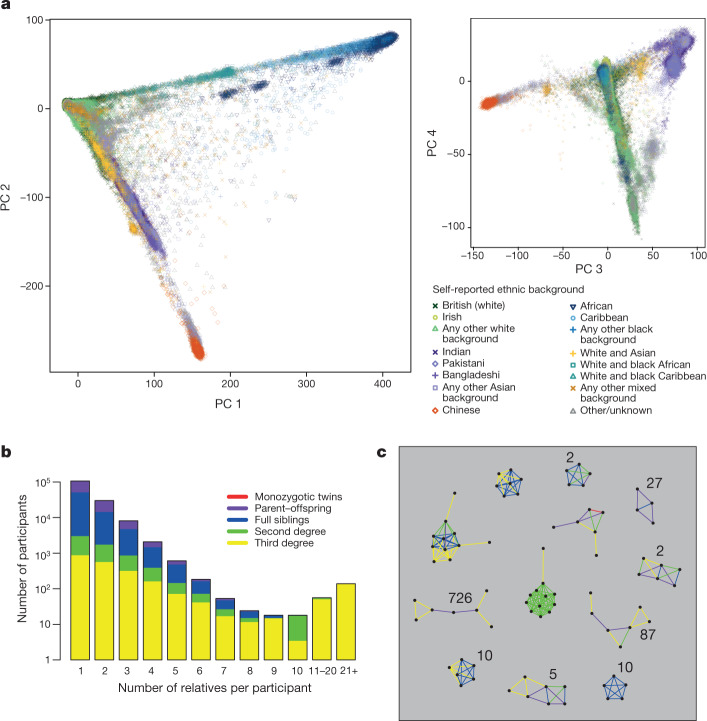
“For example, 90% of EstBB participants have third degree or closer relatives in the same biobank, while in UKBB and FinnGen, the numbers are 30% and 74%, respectively 98,99 .”
Toward a fine-scale population health monitoring system
Belbin, G. M., Cullina, S., Wenric, S., Soper, E. R., Glicksberg, B. S., Torre, D., Moscati, A., Wojcik, G. L., Shemirani, R., Beckmann, N. D., et al. (2021) · Cell · doi:10.1016/j.cell.2021.03.034 · Cited by 160
Massively parallel functional testing of MSH2 missense variants conferring Lynch syndrome risk
Jia, X., Burugula, B. B., Chen, V., Lemons, R. M., Jayakody, S., Maksutova, M., & Kitzman, J. O. (2021) · The American Journal of Human Genetics · doi:10.1016/j.ajhg.2020.12.003 · Cited by 133
Nakka, P., Smith, S. P., O’Donnell‐Luria, A., McManus, K. F., Agee, M., Auton, A., Bell, R. K., Bryc, K., Elson, S. L., Fontanillas, P., et al. (2019) · The American Journal of Human Genetics · doi:10.1016/j.ajhg.2019.09.016 · Cited by 160
“We also analyzed genotype data from 500,000 participants in the UK Biobank Project 25,26 (see Web Resources).”
GCKD Investigators, Schlosser, P., Li, Y., Sekula, P., Raffler, J., Grundner-Culemann, F., Pietzner, M., Cheng, Y., Wuttke, M., Steinbrenner, I., et al. (2020) · Nature Genetics · doi:10.1038/s41588-019-0567-8 · Cited by 137
Genetic and functional insights into the fractal structure of the heart
Meyer, H. V., Dawes, T. J. W., Serrani, M., Bai, W., Tokarczuk, P. F., Cai, J., de Marvao, A., Henry, A., Lumbers, R. T., Gierten, J., et al. (2020) · Nature · doi:10.1038/s41586-020-2635-8 · Cited by 150
International 22q11.2 Brain and Behavior Consortium, Davies, R. W., Fiksinski, A. M., Breetvelt, E. J., Williams, N. M., Hooper, S. R., Monfeuga, T., Bassett, A. S., Owen, M. J., Gur, R. E., et al. (2020) · Nature Medicine · doi:10.1038/s41591-020-1103-1 · Cited by 139
Inherited myeloproliferative neoplasm risk affects haematopoietic stem cells
Bao, E. L., Nandakumar, S. K., Liao, X., Bick, A. G., Karjalainen, J., Tabaka, M., Gan, O. I., Havulinna, A. S., Kiiskinen, T. T. J., Lareau, C. A., et al. (2020) · Nature · doi:10.1038/s41586-020-2786-7 · Cited by 141
Cannabinoid receptor 1 antagonist genistein attenuates marijuana-induced vascular inflammation
Wei, T.-T., Chandy, M., Nishiga, M., Zhang, A., Kumar, K. K., Thomas, D., Manhas, A., Rhee, S., Justesen, J. M., Chen, I. Y., et al. (2022) · Cell · doi:10.1016/j.cell.2022.04.005 · Cited by 144
Kim, M. S., Shim, I., Fahed, A. C., Do, R., Park, W.-Y., Natarajan, P., Khera, A. V., & Won, H. (2024) · Cell Metabolism · doi:10.1016/j.cmet.2024.06.004 · Cited by 152
“27 In brief, genotype calling was performed by either the Affymetrix UK BiLEVE Axiom or UK Biobank Axiom arrays, which have over 95% coverage and include 805,426 variants.”
Winkler, T. W., Grassmann, F., Brandl, C., Kiel, C., Günther, F., Strunz, T., Weidner, L., Zimmermann, M. E., Korb, C. A., Poplawski, A., et al. (2020) · BMC Medical Genomics · doi:10.1186/s12920-020-00760-7 · Cited by 138
“learning based AMD classification of UK Biobank fundus images (application number 33999; 342 56,699 individuals from baseline, 13,650 additional individuals from follow-up) (15,19) .”
BackgroundThe Need for a Human Pangenome Reference Sequence
Miga, K. H., & Wang, T. (2021) · Annual Review of Genomics and Human Genetics · doi:10.1146/annurev-genom-120120-081921 · Cited by 137
“Securing our genetic health: engendering trust in UK Biobank.”
BackgroundInfluentialCherubini, A., Ostadreza, M., Jamialahmadi, O., Pelusi, S., Rrapaj, E., Casirati, E., Passignani, G., Norouziesfahani, M., Sinopoli, E., Baselli, G., et al. (2023) · Nature Medicine · doi:10.1038/s41591-023-02553-8 · Cited by 136
“The UKBB study received ethical approval from the National Research Ethics Service Committee of North West Multi-Centre Haydock (reference no. 16/NW/0274) 63,64 .”
MethodHivert, V., Sidorenko, J., Rohart, F., Goddard, M. E., Yang, J., Wray, N. R., Yengo, L., & Visscher, P. M. (2021) · The American Journal of Human Genetics · doi:10.1016/j.ajhg.2021.02.014 · Cited by 136
Emdin, C. A., Haas, M., Ajmera, V., Simon, T. G., Homburger, J., Neben, C., Jiang, L., Wei, W.-Q., Feng, Q., Zhou, A., et al. (2021) · Gastroenterology · doi:10.1053/j.gastro.2020.12.011 · Cited by 129
Pleiotropy, epistasis and the genetic architecture of quantitative traits
Mackay, T. F. C., & Anholt, R. R. H. (2024) · Nature Reviews Genetics · doi:10.1038/s41576-024-00711-3 · Cited by 162
A metabolomic profile of biological aging in 250,341 individuals from the UK Biobank
Zhang, S., Wang, Z., Wang, Y., Zhu, Y., Zhou, Q., Jian, X., Zhao, G., Qiu, J., Xia, K., Tang, B., et al. (2024) · Nature Communications · doi:10.1038/s41467-024-52310-9 · Cited by 152
“The UK Biobank is one of the largest biomedical databases 89,90 and includes data from more than500,000 participants recruited between 2006 and 2010 at 22 centers across England, Scotland, and Wales.”
Lauschke, V. M., Zhou, Y., & Ingelman‐Sundberg, M. (2019) · Pharmacology & Therapeutics · doi:10.1016/j.pharmthera.2019.01.002 · Cited by 148
Meat consumption and risk of incident dementia: cohort study of 493,888 UK Biobank participants
Zhang, H., Greenwood, D. C., Risch, H. A., Bunce, D., Hardie, L. J., & Cade, J. E. (2021) · The American Journal of Clinical Nutrition · doi:10.1093/ajcn/nqab028 · Cited by 132
“Genotypes of nearly one-half million participants in the UK Biobank were assayed using 2 very similar genotyping arrays manufactured by Affymetrix: the BiLEVE Axiom array for ∼50,000 participants and the UK Biobank Axiom array for the remaining ∼450,000 participants; genotyping quality control was performed by UK Biob…”
MethodGarg, M., Karpiński, M., Matelska, D., Middleton, L., Burren, O. S., Hu, F., Wheeler, E., Smith, K. R., Fabre, M. A., Mitchell, J., et al. (2024) · Nature Genetics · doi:10.1038/s41588-024-01898-1 · Cited by 146
Ruderfer, D. M., Walsh, C. G., Aguirre, M. W., Tanigawa, Y., Ribeiro, J. D., Franklin, J. C., & Rivas, M. A. (2020) · Molecular Psychiatry · doi:10.1038/s41380-018-0326-8 · Cited by 134
“Genotyping and imputation procedures for the UK Biobank dataset have been previously described [24].”
MethodLunn, M. R., Lubensky, M. E., Hunt, C., Flentje, A., Capriotti, M. R., Sooksaman, C., Harnett, T., Currie, D., Neal, C., & Obedin‐Maliver, J. (2019) · Journal of the American Medical Informatics Association · doi:10.1093/jamia/ocz082 · Cited by 138
The advantages of UK Biobank's open‐access strategy for health research
Conroy, M., Sellors, J., Effingham, M., Littlejohns, T. J., Boultwood, C., Gillions, L., Sudlow, C. L. M., Collins, R., & Allen, N. E. (2019) · Journal of Internal Medicine · doi:10.1111/joim.12955 · Cited by 133
“This has included cohort-wide genotyping (with subsequent imputation to over 90 million variants) [5] and whole exome sequencing, making it one of the largest studies in the world with detailed data on genetics, lifestyle and health outcomes.”
BackgroundSelf-citationYoulten, S. E., Kemp, J. P., Logan, J. G., Ghirardello, E. J., Sergio, C. M., Dack, M. R. G., Guilfoyle, S. E., Leitch, V. D., Butterfield, N. C., Komla-Ebri, D., et al. (2021) · Nature Communications · doi:10.1038/s41467-021-22517-1 · Cited by 133
The Future of Precision Medicine in the Cure of Alzheimer’s Disease
Arafah, A., Khatoon, S., Rasool, I., Khan, A., Rather, M. A., Abujabal, K. A., Faqih, Y. A. H., Rashid, H., Rashid, S. M., Bilal Ahmad, S., et al. (2023) · Biomedicines · doi:10.3390/biomedicines11020335 · Cited by 133
Polygenic risk scores: a biased prediction?
De La Vega, F. M., & Bustamante, C. D. (2018) · Genome Medicine · doi:10.1186/s13073-018-0610-x · Cited by 126
Yuan, Z., Zhu, H., Zeng, P., Yang, S., Sun, S., Yang, C., Liu, J., & Zhou, X. (2020) · Nature Communications · doi:10.1038/s41467-020-17668-6 · Cited by 150
Butler‐Laporte, G., Nakanishi, T., Mooser, V., Morrison, D., Abdullah, T., Adeleye, O., Mamlouk, N., Kimchi, N., Afrasiabi, Z., Rezk, N., et al. (2021) · PLoS Medicine · doi:10.1371/journal.pmed.1003605 · Cited by 144
“Further, AU : Pleasecheckthattheeditstothesentence}Further; given:::}captureyourmeaning:Ifnot; pleaseprovidecorrectwording:given th large percen ag of individuals from the UKB shared betwe n the vitamin D exposure GWASs [28] and the severe COVID-19 phenotype GWASs, this analysis is close to a 1-sample MR, which would…”
MethodInfluentialChia, R., Sáez-Atiénzar, S., Murphy, N. A., Chiò, A., Blauwendraat, C., Roda, R. H., Tienari, P. J., Kaminski, H. J., Ricciardi, R., Guida, M., et al. (2022) · Proceedings of the National Academy of Sciences · doi:10.1073/pnas.2108672119 · Cited by 152
“The UK Biobank cohort was previously imputed using the Human Reference Consortium, UK10K, and 1000 Genomes reference panels (hg19) (34).”
MethodLife’s Essential 8, Genetic Susceptibility, and Incident Cardiovascular Disease: A Prospective Study
Li, X., Ma, H., Wang, X., Feng, H., & Qi, L. (2023) · Arteriosclerosis Thrombosis and Vascular Biology · doi:10.1161/atvbaha.123.319290 · Cited by 138
Mentzer, A. J., Brenner, N., Allen, N. E., Littlejohns, T. J., Chong, A. Y.-Y., Cortés, A., Almond, R., Hill, M., Sheard, S., McVean, G., et al. (2022) · Nature Communications · doi:10.1038/s41467-022-29307-3 · Cited by 141
“Details of the generation of the genotype data in UKB have been described elsewhere 47 and further details are provided in the Supplementary Methods.”
Self-citationEffects of the COVID-19 pandemic on life scientists
Korbel, J. O., & Stegle, O. (2020) · Genome biology · doi:10.1186/s13059-020-02031-1 · Cited by 132
“Additional activities include new global efforts that aim to sequence SARS-CoV-2 viral genomes along with patient-matched host genomes or to utilize existing cohorts such as the UK Biobank [7] , in order to dissect the role of host genetics in the COVID-19 disease course.”
Chong, M., Mohammadi‐Shemirani, P., Perrot, N., Nelson, W., Morton, R. W., Narula, S., Lali, R., Khan, I. I., Khan, M. D., Judge, C. S., et al. (2022) · eLife · doi:10.7554/elife.70382 · Cited by 135
Integrating multi-omics data with EHR for precision medicine using advanced artificial intelligence
Tong, L., Shi, W., Isgut, M., Zhong, Y., Lais, P., Gloster, L., Sun, J., Swain, A., Giuste, F., & Wang, M. D. (2024) · IEEE Reviews in Biomedical Engineering · doi:10.1109/rbme.2023.3324264 · Cited by 130
Kerner, G., Ramirez‐Alejo, N., Seeleuthner, Y., Yang, R., Ogishi, M., Cobat, A., Patin, É., Quintana‐Murci, L., Boisson‐Dupuis, S., Casanova, J., et al. (2019) · Proceedings of the National Academy of Sciences · doi:10.1073/pnas.1903561116 · Cited by 140
“The participants in the UK Biobank cohort have various ethnic origins, but most are of British European descent (27).”
BackgroundMonogenic and Polygenic Contributions to Atrial Fibrillation Risk: Results From a National Biobank
Choi, S. H., Jurgens, S. J., Weng, L.-C., Pirruccello, J. P., Roselli, C., Chaffin, M., Lee, C. J.-Y., Hall, A. W., Khera, A. V., Lunetta, K. L., et al. (2020) · Circulation Research · doi:10.1161/circresaha.119.315686 · Cited by 127
Wan, E. Y. F., Mathur, S., Zhang, R., Yan, V. K. C., Lai, F. T. T., Chui, C. S. L., Li, X., Wong, C. K. H., Chan, E. W., Yiu, K. H., et al. (2023) · Cardiovascular Research · doi:10.1093/cvr/cvac195 · Cited by 138
Ferrell, M., Wang, Z., Anderson, J. T., Li, X. S., Witkowski, M., DiDonato, J. A., Hilser, J. R., Hartiala, J., Haghikia, A., Čajka, T., et al. (2024) · Nature Medicine · doi:10.1038/s41591-023-02793-8 · Cited by 142
Genetic heterogeneity and subtypes of major depression
Nguyen, T.-D., Harder, A., Xiong, Y., Kowalec, K., Hägg, S., Cai, N., Kuja-Halkola, R., Dalman, C., Sullivan, P. F., & Lu, Y. (2022) · Molecular Psychiatry · doi:10.1038/s41380-021-01413-6 · Cited by 129
“The UKB data profile were available elsewhere [15] and briefly described in Supplementary Methods S1.”
BackgroundMethodInfluentialZhou, W., Brumpton, B., Kabil, O., Gudmundsson, J., Thorleifsson, G., Weinstock, J., Zawistowski, M., Nielsen, J. B., Chaker, L., Medici, M., et al. (2020) · Nature Communications · doi:10.1038/s41467-020-17718-z · Cited by 129
Trinder, M., Walley, K. R., Boyd, J. H., & Brunham, L. R. (2020) · Arteriosclerosis, Thrombosis, and Vascular Biology · doi:10.1161/atvbaha.119.313381 · Cited by 133
Predictive validity in drug discovery: what it is, why it matters and how to improve it
Scannell, J. W., Bosley, J., Hickman, J. A., Dawson, G. R., Truebel, H., Ferreira, G. S., Richards, D. B., & Treherne, J. M. (2022) · Nature Reviews Drug Discovery · doi:10.1038/s41573-022-00552-x · Cited by 144
100 ancient genomes show repeated population turnovers in Neolithic Denmark
Allentoft, M. E., Sikora, M., Fischer, A., Sjögren, K.-G., Ingason, A., Macleod, R., Rosengren, A., Paulsson, B. S., Jørkov, M. L. S., Novosolov, M., et al. (2024) · Nature · doi:10.1038/s41586-023-06862-3 · Cited by 140
“We predicted relative ‘genetic height’ using allelic effect estimates from 310 common autosomal SNPs with robustly genome-wide significant allelic effects ( P 10 −15 ) in a recent GWAS of height in the UK Biobank 84 .”
Self-citationIdentification of constrained sequence elements across 239 primate genomes
Kuderna, L. F. K., Ulirsch, J. C., Rashid, S., Ameen, M., Sundaram, L., Hickey, G., Cox, A. J., Gao, H., Kumar, A., Aguet, F., et al. (2024) · Nature · doi:10.1038/s41586-023-06798-8 · Cited by 129
A loss-of-function variant in ALOX15 protects against nasal polyps and chronic rhinosinusitis
Kristjansson, R. P., Benónísdóttir, S., Davidsson, O. B., Oddsson, Á., Tragante, V., Sigurdsson, J. K., Stefánsdóttir, L., Jonsson, S., Jensson, B. Ö., Arthur, J. G., et al. (2019) · Nature Genetics · doi:10.1038/s41588-018-0314-6 · Cited by 136
Ferreira, M. A. R., Gamazon, E. R., Al‐Ejeh, F., Aittomäki, K., Andrulis, I. L., Anton‐Culver, H., Arason, A., Arndt, V., Aronson, K. J., Arun, B., et al. (2019) · Nature Communications · doi:10.1038/s41467-018-08053-5 · Cited by 149
Zhang, J., Fang, X., Wu, J., Fan, Y., Leng, R., Liu, B., Lv, X.-J., Yan, Y.-L., Mao, C., & Ye, D. (2023) · Environmental Health Perspectives · doi:10.1289/ehp10710 · Cited by 132
Germline Mutations in CIDEB and Protection against Liver Disease
Verweij, N., Haas, M. E., Nielsen, J. B., Sosina, O. A., Kim, M., Akbari, P., De, T., Hindy, G., Bovijn, J., Persaud, T., et al. (2022) · New England Journal of Medicine · doi:10.1056/nejmoa2117872 · Cited by 127
Self-citationA deep catalogue of protein-coding variation in 983,578 individuals
Sun, K. Y., Bai, X., Chen, S., Bao, S., Zhang, C., Kapoor, M., Backman, J., Joseph, T., Maxwell, E., Mitra, G., et al. (2024) · Nature · doi:10.1038/s41586-024-07556-0 · Cited by 127
The landscape of host genetic factors involved in immune response to common viral infections
Kachuri, L., Francis, S. S., Morrison, M. L., Wendt, G. A., Bossé, Y., Cavazos, T. B., Rashkin, S. R., Ziv, E., & Witte, J. S. (2020) · Genome Medicine · doi:10.1186/s13073-020-00790-x · Cited by 136
“In this study we utilize data from the UK Biobank (UKB) cohort 15 to evaluate the relationship between host genetics and antibody response to 28 antigens for 16 viruses that have been linked to cancer and neurodegenerative diseases 16 , as well as SARS-CoV-2 test results in a separate subset of UKB participants.”
InfluentialGenetic variation in cervical preinvasive and invasive disease: a genome-wide association study
Bowden, S. J., Bodinier, B., Kalliala, I. E. J., Zuber, V., Vuckovic, D., Doulgeraki, T., Whitaker, M. D., Wielscher, M., Cartwright, R., Tsilidis, K. K., et al. (2021) · The Lancet Oncology · doi:10.1016/s1470-2045(21)00028-0 · Cited by 127
Tobacco Smoking and Risk for Pulmonary Fibrosis
Bellou, V., Belbasis, L., & Εvangelou, Ε. (2021) · CHEST Journal · doi:10.1016/j.chest.2021.04.035 · Cited by 136
GenNet framework: interpretable deep learning for predicting phenotypes from genetic data
van Hilten, A., Kushner, S. A., Kayser, M., Ikram, M. A., Adams, H. H. H., Klaver, C. C. W., Niessen, W. J., & Roshchupkin, G. V. (2021) · Communications Biology · doi:10.1038/s42003-021-02622-z · Cited by 112
“Motivated by the proof-of-concept and outcomes of the simulations, we applied the framework to data from multiple sources, including population-based data from the UK Biobank study 18 , the Rotterdam study 19 , and the Swedish Schizophrenia Exome Sequencing study 20 .”
MethodWang, L., Xie, J., Hu, Y., & Tian, Y. (2022) · EBioMedicine · doi:10.1016/j.ebiom.2022.103994 · Cited by 128
Jiang, R., Noble, S., Jing Sui (Beijing Normal University), my correct affiliation is beijing normal university, N. Q. U. O. S. A. T., Yoo, K., Rosenblatt, M., Horien, C. L., Qi, S., Liang, Q., Sun, H., Calhoun, V. D., et al. (2023) · The Lancet Digital Health · doi:10.1016/s2589-7500(23)00043-2 · Cited by 129
The selection landscape and genetic legacy of ancient Eurasians
Irving-Pease, E. K., Refoyo-Martínez, A., Barrie, W., Ingason, A., Pearson, A., Fischer, A., Sjögren, K.-G., Halgren, A. S., Macleod, R., Demeter, F., et al. (2024) · Nature · doi:10.1038/s41586-023-06705-1 · Cited by 126
“Finally, we used ancient genomes to infer local ancestry tracts in more than 400,000 present-day samples from the UK Biobank (UKB) 5 and calculated ancestry-specific polygenic risk scores for 35 complex traits.”
BackgroundMethodInfluentialErzurumluoglu, A. M., Liu, M., Jackson, V. E., Barnes, D. R., Datta, G., Melbourne, C., Young, R., Batini, C., Surendran, P., Jiang, T., et al. (2019) · Molecular Psychiatry · doi:10.1038/s41380-018-0313-0 · Cited by 138
“To avoid potential relatedness between discovery and replication samples, the replication samples were screened and individuals with relatedness closer than second degree with the discovery sample in the UK Biobank were removed [24].”
MethodParkinson’s disease determinants, prediction and gene–environment interactions in the UK Biobank
Jacobs, B. M., Belete, D., Bestwick, J., Blauwendraat, C., Bandres-Ciga, S., Heilbron, K., Dobson, R., Nalls, M. A., Singleton, A., Hardy, J., et al. (2020) · Journal of Neurology, Neurosurgery & Psychiatry · doi:10.1136/jnnp-2020-323646 · Cited by 120
Cavazos, T. B., & Witte, J. S. (2021) · Human Genetics and Genomics Advances · doi:10.1016/j.xhgg.2020.100017 · Cited by 120
“PRS performance was evaluated in an independent cohort using genotype and phenotype data for individuals of European ancestry and individuals of African ancestry (Table S1) from the UK Biobank, with imputation and quality control previously described.(22)We undertook extensive post-imputation quality control of the UK…”
MethodThe genetic architecture of human cortical folding
van der Meer, D., Kaufmann, T., Shadrin, A. A., Makowski, C., Frei, O., Roelfs, D., Sánchez, J. M., Linden, D. E. J., Rokicki, J., de Leeuw, C., et al. (2021) · Science Advances · doi:10.1126/sciadv.abj9446 · Cited by 134
Sequencing and characterizing short tandem repeats in the human genome
Tanudisastro, H. A., Deveson, I. W., Dashnow, H., & MacArthur, D. G. (2024) · Nature Reviews Genetics · doi:10.1038/s41576-024-00692-3 · Cited by 145
“Genome-wide STR characterization has been performed in the UK Biobank 81,137 and 1000 Genomes Project 2,4 , among other cohorts 138 .”
Cardiometabolic Traits, Sepsis, and Severe COVID-19: A Mendelian Randomization Investigation
Ponsford, M., Gkatzionis, A., Walker, V. M., Grant, A. J., Wootton, R. E., Moore, L. S. P., Fatumo, S., Mason, A. M., Zuber, V., Willer, C. J., et al. (2020) · Circulation · doi:10.1161/circulationaha.120.050753 · Cited by 139
Genetic and molecular architecture of complex traits
Lappalainen, T., Li, Y., Ramachandran, S., & Gusev, A. (2024) · Cell · doi:10.1016/j.cell.2024.01.023 · Cited by 138
Implications of Race Adjustment in Lung-Function Equations
Diao, J. A., He, Y., Khazanchi, R., Tiako, M. J. N., Witonsky, J. I., Pierson, E., Rajpurkar, P., Elhawary, J. R., Melas-Kyriazi, L., Yen, A., et al. (2024) · New England Journal of Medicine · doi:10.1056/nejmsa2311809 · Cited by 125
The female protective effect against autism spectrum disorder
Wigdor, E. M., Weiner, D. J., Grove, J., Fu, J. M., Thompson, W. K., Carey, C. E., Baya, N., van der Merwe, C., Walters, R. K., Satterstrom, F. K., et al. (2021) · doi:10.1101/2021.03.29.21253866 · Cited by 124
Dissection of genetic variation and evidence for pleiotropy in male pattern baldness
Yap, C. X., Sidorenko, J., Wu, Y., Kemper, K. E., Yang, J., Wray, N. R., Robinson, M. R., & Visscher, P. M. (2018) · Nature Communications · doi:10.1038/s41467-018-07862-y · Cited by 124
The female protective effect against autism spectrum disorder
Wigdor, E. M., Weiner, D. J., Grove, J., Fu, J. M., Thompson, W. K., Carey, C. E., Baya, N., van der Merwe, C., Walters, R. K., Satterstrom, F. K., et al. (2022) · Cell Genomics · doi:10.1016/j.xgen.2022.100134 · Cited by 124
“To estimate this increased risk, we integrated the SSC and SPARK data with a large general population cohort, the UK Biobank (UKB).(15) Using standard deviations (SD) on the UKB ASD PRS distribution as our scale, we then estimated the burden of common polygenic risk for ASD in all European ancestry parents in SPARK an…”
MethodKorean Genome Project: 1094 Korean personal genomes with clinical information
Jeon, S., Bhak, Y., Choi, Y., Jeon, Y., Kim, S., Jang, J., Jang, J., Blažytė, A., Kim, C., Kim, Y., et al. (2020) · Science Advances · doi:10.1126/sciadv.aaz7835 · Cited by 128
Polygenic Scores for Height in Admixed Populations
Bitarello, B. D., & Mathieson, I. (2020) · G3 Genes|Genomes|Genetics · doi:10.1534/g3.120.401658 · Cited by 125
Qian, J., Tanigawa, Y., Du, W., Aguirre, M., Chang, C. C., Tibshirani, R. J., Rivas, M. A., & Hastie, T. J. (2020) · PLoS Genetics · doi:10.1371/journal.pgen.1009141 · Cited by 144
Nait Saada, J., Kalantzis, G., Shyr, D., Cooper, F., Robinson, M., Gusev, A., & Palamara, P. F. (2020) · Nature Communications · doi:10.1038/s41467-020-19588-x · Cited by 125
The impact of non-additive genetic associations on age-related complex diseases
Guindo-Martínez, M., Amela, R., Bonàs‐Guarch, S., Puiggròs, M., Salvoro, C., Miguel-Escalada, I., Carey, C. E., Cole, J. B., Rüeger, S., Atkinson, E. G., et al. (2021) · Nature Communications · doi:10.1038/s41467-021-21952-4 · Cited by 134
“Integrating state-of-the-art tools with in-house code written in Java, bash, and R39, GUIDANCE efficiently performs large-scale GWAS, including (1) the pre-phasing of haplotypes, (2) the imputation of genotypes using multiple reference panels, (3) the association testing for different inheritance models and the integr…”
Methodde Marvao, A., McGurk, K. A., Zheng, S. L., Thanaj, M., Bai, W., Duan, J., Biffi, C., Mazzarotto, F., Statton, B., Dawes, T. J. W., et al. (2021) · Journal of the American College of Cardiology · doi:10.1016/j.jacc.2021.07.017 · Cited by 124
“Although UKBB participants have a higher degree of kinship than would be expected in a random sample (38), these results suggest that the penetrance of familial HCM is additionally driven by other genetic or environmental disease–modifying characteristics, shared within families but that overlap less commonly in the c…”
ResultThe Carbon Footprint of Bioinformatics
Grealey, J., Lannelongue, L., Saw, W.-Y., Marten, J., Méric, G., Ruiz-Carmona, S., & Inouye, M. (2022) · Molecular Biology and Evolution · doi:10.1093/molbev/msac034 · Cited by 114
“The growth of large biological databases, such as UK Biobank [10], All of Us Initiative [11], and Our Future Health [12], has substantially increased the need for computational resources to analyse these data and will continue to do so.”
BackgroundMethodInfluentialDemographic history mediates the effect of stratification on polygenic scores
Zaidi, A. A., & Mathieson, I. (2020) · eLife · doi:10.7554/elife.61548 · Cited by 122
“We calculated the proportion of individuals sampled from each region and used these as weights in our simulations to mimic the sampling distribution in the UKB.”
BackgroundInfluentialFinnGen, Sakaue, S., Kanai, M., Karjalainen, J. M., Akiyama, M., Kurki, M., Matoba, N., Takahashi, A., Hirata, M., Kubo, M., et al. (2020) · Nature Medicine · doi:10.1038/s41591-020-0785-8 · Cited by 133
Hindley, G., Frei, O., Shadrin, A. A., Cheng, W., O’Connell, K. S., Icick, R., Parker, N., Bahrami, S., Karadag, N., Roelfs, D., et al. (2022) · American Journal of Psychiatry · doi:10.1176/appi.ajp.21101051 · Cited by 119
Global Biobank analyses provide lessons for developing polygenic risk scores across diverse cohorts
Wang, Y., Namba, S., Lopera, E., Kerminen, S., Tsuo, K., Läll, K., Kanai, M., Zhou, W., Wu, K.-H., Favé, M.-J., et al. (2023) · Cell Genomics · doi:10.1016/j.xgen.2022.100241 · Cited by 118
“24 For example, when the optimal p value was determined in the UKBB-EUR subset, the less polygenic traits of ThC (106 variants) and AcApp (17 variants) showed the highest accuracy at p value thresholds of 5 3 10 (cid”
MethodInfluentialLiang, Y. Y., Chen, Y., Feng, H., Liu, X., Ai, Q. Y. H., Xue, H., Shu, X., Weng, F., He, Z., Ma, J., et al. (2023) · JACC Heart Failure · doi:10.1016/j.jchf.2022.11.028 · Cited by 133
“The detailed methods of genotyping, quality control, and imputation in the UK Biobank have been published elsewhere.(18) Briefly, restricting to the participants of White ethnicity, we selected the 12 independent genetic variants (single-nucleotide variation [SNV]) associated with HF risk reported by a previous genome…”
MethodVitamin D deficiency and C-reactive protein: a bidirectional Mendelian randomization study
Zhou, A., & Hyppönen, E. (2022) · International Journal of Epidemiology · doi:10.1093/ije/dyac087 · Cited by 129
Byun, J., Han, Y., Li, Y., Xia, J., Long, E., Choi, J., Xiao, X., Zhu, M., Zhou, W., Sun, R., et al. (2022) · Nature Genetics · doi:10.1038/s41588-022-01115-x · Cited by 133
Genome-wide meta-analysis of brain volume identifies genomic loci and genes shared with intelligence
Jansen, P. R., Nagel, M., Watanabe, K., Wei, Y., Savage, J. E., de Leeuw, C., van den Heuvel, M. P., van der Sluis, S., & Posthuma, D. (2020) · Nature Communications · doi:10.1038/s41467-020-19378-5 · Cited by 128
Mendelian Randomization Analysis as a Tool to Gain Insights into Causes of Diseases: A Primer
Tin, A., & Köttgen, A. (2021) · Journal of the American Society of Nephrology · doi:10.1681/asn.2020121760 · Cited by 137
Hou, K., Ding, Y., Xu, Z., Wu, Y., Bhattacharya, A., Mester, R., Belbin, G. M., Buyske, S. G., Conti, D. V., Darst, B. F., et al. (2023) · Nature Genetics · doi:10.1038/s41588-023-01338-6 · Cited by 138
Bovijn, J., Krebs, K., Chen, C.-Y., Boxall, R., Censin, J. C., Ferreira, T., Pulit, S. L., Glastonbury, C. A., Laber, S., Millwood, I. Y., et al. (2020) · Science Translational Medicine · doi:10.1126/scitranslmed.aay6570 · Cited by 119
Metadata
- Authors
- Bycroft, C., Freeman, C., Petkova, D., Band, G., Elliott, L. T., Sharp, K., Motyer, A., Vukcevic, D., Delaneau, O., O’Connell, J., Cortes, A., Welsh, S., Young, A., Effingham, M., McVean, G., Leslie, S., Allen, N., Donnelly, P., & Marchini, J.
- Affiliations
- Centre for Human Genetics (GB)
- University of Oxford (GB)
- The University of Melbourne (AU)
- University of Geneva (CH)
- Illumina (United Kingdom) (GB)
- UK Biobank (GB)
- Corresponding author
- Marchini, Jonathan
- ORCID
- Venue
- Nature
- Published
- 2018-10-10
- Volume
- 562
- Issue
- 7726
- Pages
- 203-209
- ISSN
- 0028-0836 (ISSN-L)
- 1476-4687
- PMC
- PMC6786975
- OpenAlex
- W2895486342
- Semantic Scholar
- a9cc79a5df0f7802145401b464e4bb30c23b8efa
- Cited by
- 8,876
- References
- 41
- Citations by year
- 2026: 1242 · 2025: 1612 · 2024: 1546 · 2023: 1331 · 2022: 1185 · 2021: 928 · 2020: 643 · 2019: 336 · 2018: 40
- FWCI
- 299.77
- Type
- journal article
- Language
- en
- Open access
- hybrid
- doi.org
- Licence
- cc-by
- creativecommons.org/licenses/by/4.0 (tdm)
- creativecommons.org/licenses/by/4.0 (vor)
- Locations
- Nature (publishedVersion, cc-by)
- PubMed Central (publishedVersion, cc-by)
- PubMed (publishedVersion)
- RePEc: Research Papers in Economics (submittedVersion)
- IRIS (submittedVersion, cc-by)
- Minerva Access (University of Melbourne) (submittedVersion, cc-by)
- SERVAL (Université de Lausanne) (submittedVersion, cc-by)
- Funders
- Wellcome Trust (095552/Z/11/Z, 203141/Z/16/Z, 10956/Z/13Z, 100308/Z/12/Z, 090532/Z/09/Z, 100956/Z/13/Z)
- National Institute for Health and Care Research
- British Heart Foundation
- Medical Research Council
- National Health and Medical Research Council (1053756)
- FP7 Ideas: European Research Council (617306)
- Topics
- Life Sciences › Biochemistry, Genetics and Molecular Biology › Genetics › Genetic Associations and Epidemiology
- Life Sciences › Biochemistry, Genetics and Molecular Biology › Genetics › Genetic and phenotypic traits in livestock
- Life Sciences › Biochemistry, Genetics and Molecular Biology › Genetics › Forensic and Genetic Research
- Keywords
- UK Biobank, prospective cohort, deep phenotyping, complex traits, population structure, relatedness, genotype phasing, genotype imputation, biomarkers
- MeSH terms
- Adult, Aged, Alleles, Body Height, Brain, Family, Female, United Kingdom, Haplotypes, Humans, Life Style, Major Histocompatibility Complex, Male, Middle Aged, Phenotype, Quality Control, Cohort Studies, Biomarkers, Databases, Factual, Genomics, Databases, Genetic, Racial Groups, Genome-Wide Association Study, Electronic Health Records
About these checks
Registry, retraction, Cites and statistics results are computed, not judged, with one exception: a printed reference that no index lists is read once by a model before it counts as a citation error. Claims are extracted by a model and kept only when their quote appears verbatim in the text; each cited source is then checked, with a model’s help, for whether it says what the claim relies on. Those verdicts can be wrong — read the claim’s quote and the cited source before relying on one.
Statistics and arithmetic are recomputed, not judged.
Confidence bands are shown only for fields calibrated on our annotated test set. None is calibrated yet, so no band is shown.
What counts as a claim ›How we measure confidence ›How we check this ›
Are you an author, or do you see a problem with this page? Request a review
Data sources
Bibliographic data: Semantic Scholar, OpenAlex, Crossref.
Contains information from the Semantic Scholar Academic Graph Datasets, made available under the ODC Attribution License (ODC-BY 1.0).
Semantic Scholar’s data is described in: Kinney, R., et al. (2023). The Semantic Scholar Open Data Platform. arXiv:2301.10140.
