

The UK Biobank resource with deep phenotyping and genomic data
Open accessThe DOI matches its Crossref record; 39 of the 41 references it cites were found in a registry or an index.
Abstract
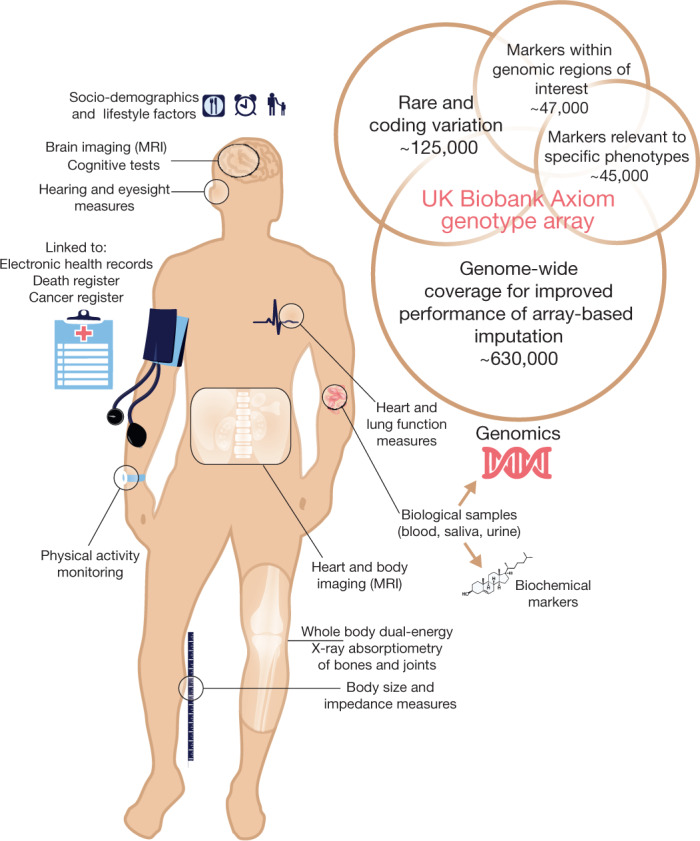
The UK Biobank project is a prospective cohort study with deep genetic and phenotypic data collected on approximately 500,000 individuals from across the United Kingdom, aged between 40 and 69 at recruitment. The open resource is unique in its size and scope. A rich variety of phenotypic and health-related information is available on each participant, including biological measurements, lifestyle indicators, biomarkers in blood and urine, and imaging of the body and brain. Follow-up information is provided by linking health and medical records. Genome-wide genotype data have been collected on all participants, providing many opportunities for the discovery of new genetic associations and the genetic bases of complex traits. Here we describe the centralized analysis of the genetic data, including genotype quality, properties of population structure and relatedness of the genetic data, and efficient phasing and genotype imputation that increases the number of testable variants to around 96 million. Classical allelic variation at 11 human leukocyte antigen genes was imputed, resulting in the recovery of signals with known associations between human leukocyte antigen alleles and many diseases.
Overview
The claims and statistics of this paper haven’t been checked yet.
Free: it reads the open-access text and checks the first 5 claims that cite a source we can check. Create a free account to check every claim.
Integrity signals
Registry
Cites
Statistics
Figures
Verification
Claims the paper makes
The claims and statistics of this paper haven’t been checked yet.
Free: it reads the open-access text and checks the first 5 claims that cite a source we can check. Create a free account to check every claim.
Claims other papers make about this one
Each is checked against this paper’s own text: does it say what the citing paper says it does?
The source backs part of the claim, not all of it — or backs it for a different population, condition or comparison.
In the citing paper
“The UKBB dataset provides information regarding more than 7000 phenotypes assessed in up to 500,000 participants from six ancestry groups [32].”
From Denisovan and Neanderthal archaic introgression differentially impacted the genetics of complex traits in modern populations (2022) · cites this paper as [32]
Experimental — accuracy not yet measuredThe source backs part of the claim, not all of it — or backs it for a different population, condition or comparison.
In the citing paper
“In the UK, the UK Biobank initiated enrollment in 2006, reaching a final participant count of over 500,000, and plans to follow participants for at least 30 years after enrollment 81 .”
From Multimodal biomedical AI (2022) · cites this paper as [81]
Experimental — accuracy not yet measuredThe source backs part of the claim, not all of it — or backs it for a different population, condition or comparison.
In the citing paper
“Approximately 9.2 million people living 25 miles (40 km) from one of 22 assessment centers across England, Wales and Scotland were invited to participate, with 5.5% participating in the baseline studies.”
From Plasma proteomic associations with genetics and health in the UK Biobank (2023) · cites this paper as Bycroft et al (Nature, 2018)
Experimental — accuracy not yet measuredThe cited source says what the claim attributes to it.
In the citing paper
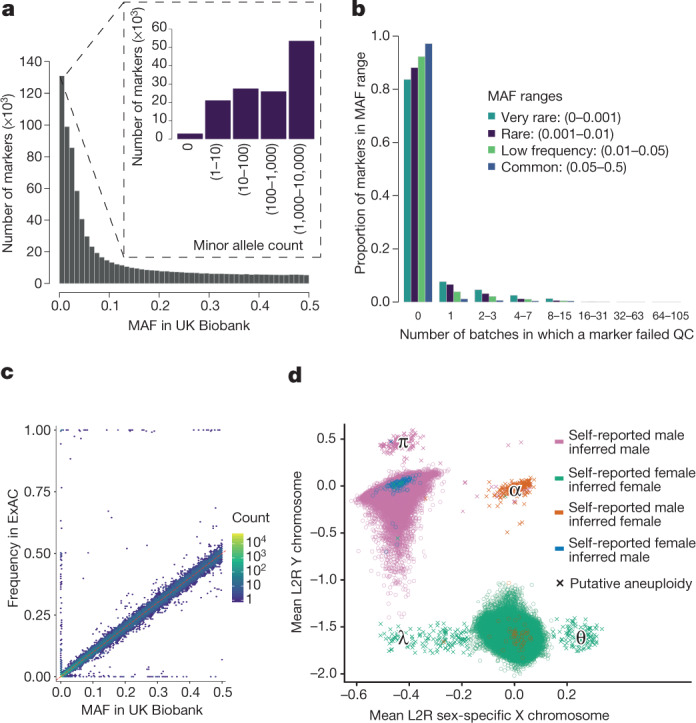
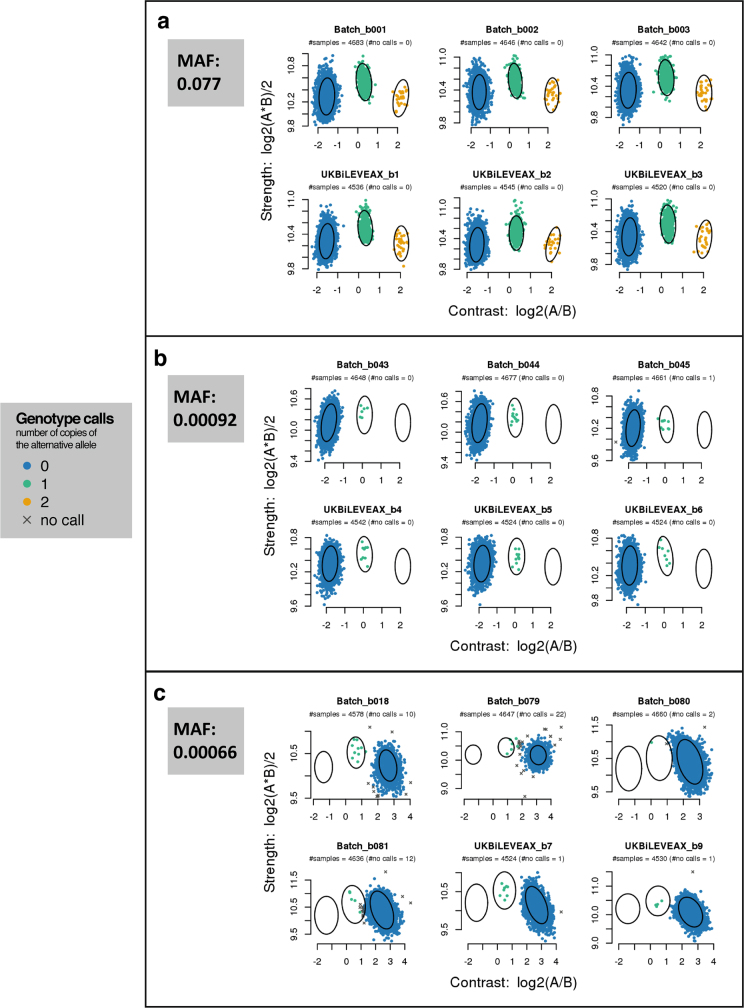
“Amongst the genetics community, it is generally well recognised that SNP-chips perform poorly for genotyping rare genetic variants [9-11] due to their reliance upon data clustering (Figure 1).”
From Assessing the analytical validity of SNP-chips for detecting very rare pathogenic variants: implications for direct-to-consumer genetic testing (2019) · cites this paper as [10]
The cited source says what the claim attributes to it.
In the citing paper
“The genetics community generally recognises that SNP chips perform poorly for genotyping rare genetic variants owing to their reliance on data clustering (fig 1).9 10 11”
From Use of SNP chips to detect rare pathogenic variants: retrospective, population based diagnostic evaluation (2021) · cites this paper as [10]
6 more claims about this paper
Create a free account to see every claim other papers make about this one.
Self-check
Percentages, sums and reported differences re-computed from the paper’s own numbers.
The self-check needs the paper’s full text.
Citations
Cites
A global reference for human genetic variation
The 1000 Genomes Project Consortium, authors, C., Auton, A., Abecasis, G. R., Steering committee, Altshuler, D. M., Durbin, R. M., Abecasis, G. R., Bentley, D. R., Chakravarti, A., et al. (2015) · Nature · doi:10.1038/nature15393 · Cited by 18,247
Self-citationSudlow, C., Gallacher, J., Allen, N., Beral, V., Burton, P., Danesh, J., Downey, P., Elliott, P., Green, J., Landray, M., et al. (2015) · PLOS Medicine · doi:10.1371/journal.pmed.1001779 · Cited by 12,728
Self-citationAnalysis of protein-coding genetic variation in 60,706 humans
Exome Aggregation Consortium, Lek, M., Karczewski, K. J., Minikel, E. V., Samocha, K. E., Banks, E., Fennell, T., O’Donnell-Luria, A. H., Ware, J. S., Hill, A. J., et al. (2016) · Nature · doi:10.1038/nature19057 · Cited by 9,587
A haplotype map of the human genome
The International HapMap Consortium (2005) · Nature · doi:10.1038/nature04226 · Cited by 5,858
Robust relationship inference in genome-wide association studies
Manichaikul, A., Mychaleckyj, J. C., Rich, S. S., Daly, K., Sale, M., & Chen, W.-M. (2010) · Bioinformatics · doi:10.1093/bioinformatics/btq559 · Cited by 3,541
A reference panel of 64,976 haplotypes for genotype imputation
the Haplotype Reference Consortium (2016) · Nature Genetics · doi:10.1038/ng.3643 · Cited by 2,836
Self-citationThe NHGRI GWAS Catalog, a curated resource of SNP-trait associations
Welter, D., MacArthur, J., Morales, J., Burdett, T., Hall, P., Junkins, H., Klemm, A., Flicek, P., Manolio, T., Hindorff, L., et al. (2014) · Nucleic Acids Research · doi:10.1093/nar/gkt1229 · Cited by 2,707
Genetic risk and a primary role for cell-mediated immune mechanisms in multiple sclerosis
The International Multiple Sclerosis Genetics Consortium & The Wellcome Trust Case Control Consortium 2 (2011) · Nature · doi:10.1038/nature10251 · Cited by 2,697
Self-citationMultimodal population brain imaging in the UK Biobank prospective epidemiological study
Miller, K. L., Alfaro-Almagro, F., Bangerter, N. K., Thomas, D. L., Yacoub, E., Xu, J., Bartsch, A. J., Jbabdi, S., Sotiropoulos, S. N., Andersson, J. L. R., et al. (2016) · Nature Neuroscience · doi:10.1038/nn.4393 · Cited by 2,020
The Electronic Medical Records and Genomics (eMERGE) Consortium, Wood, A. R., The MIGen Consortium, The PAGE Consortium, Study, T. L. C., Esko, T., Yang, J., Vedantam, S., Pers, T. H., Gustafsson, S., et al. (2014) · Nature Genetics · doi:10.1038/ng.3097 · Cited by 1,853
Self-citation
Cited by
The GTEx Consortium atlas of genetic regulatory effects across human tissues
The GTEx Consortium, Aguet, F., Anand, S., Ardlie, K. G., Gabriel, S., Getz, G. A., Graubert, A., Hadley, K., Handsaker, R. E., Huang, K. H., et al. (2020) · Science · doi:10.1126/science.aaz1776 · Cited by 5,547
FinnGen provides genetic insights from a well-phenotyped isolated population
Kurki, M. I., Karjalainen, J., Palta, P., Sipilä, T. P., Kristiansson, K., Donner, K. M., Reeve, M. P., Laivuori, H., Aavikko, M., Kaunisto, M. A., et al. (2023) · Nature · doi:10.1038/s41586-022-05473-8 · Cited by 4,233
Rives, A., Meier, J., Sercu, T., Goyal, S., Lin, Z., Liu, J., Guo, D., Ott, M., Zitnick, C. L., Ma, J., et al. (2021) · Proceedings of the National Academy of Sciences · doi:10.1073/pnas.2016239118 · Cited by 3,286
Mapping genomic loci implicates genes and synaptic biology in schizophrenia
Trubetskoy, V., Pardiñas, A. F., Qi, T., Panagiotaropoulou, G., Awasthi, S., Bigdeli, T. B., Bryois, J., Chen, C.-Y., Dennison, C. A., Hall, L. S., et al. (2022) · Nature · doi:10.1038/s41586-022-04434-5 · Cited by 2,964
A cross-population atlas of genetic associations for 220 human phenotypes
Sakaue, S., Kanai, M., Tanigawa, Y., Karjalainen, J., Kurki, M., Koshiba, S., Narita, A., Konuma, T., Yamamoto, K., Akiyama, M., et al. (2021) · Nature Genetics · doi:10.1038/s41588-021-00931-x · Cited by 2,316
Sanderson, E., Glymour, M. M., Holmes, M. V., Kang, H., Morrison, J., Munafò, M. R., Palmer, T., Schooling, C. M., Wallace, C., Zhao, Q., et al. (2022) · Nature Reviews Methods Primers · doi:10.1038/s43586-021-00092-5 · Cited by 2,229
Sequencing of 53,831 diverse genomes from the NHLBI TOPMed Program
Taliun, D., Harris, D. N., Kessler, M. D., Carlson, J., Szpiech, Z. A., Torres, R., Taliun, S. A. G., Corvelo, A., Gogarten, S. M., Kang, H. M., et al. (2021) · Nature · doi:10.1038/s41586-021-03205-y · Cited by 2,213
“Then, we tested for lower/higher average L and S in a GO term using bootstrapping (1,000,000 samples) with adjustment for protein-coding gene length (CDS): (1) sort all genes by their CDS length in ascending order and divide them into equal-size bins (1,000 genes each); (2) count how many genes from a GO term are i…”
BackgroundMethodSelf-citationAccurate proteome-wide missense variant effect prediction with AlphaMissense
Cheng, J., Novati, G., Pan, J., Bycroft, C., Žemgulytė, A., Applebaum, T., Pritzel, A., Wong, L. H., Zielinski, M., Sargeant, T., et al. (2023) · Science · doi:10.1126/science.adg7492 · Cited by 2,163
“2-fold, translating to ~7000 additional genes that would be testable in gene-level association analyses in large-scale cohorts such as UK Biobank (2) (cumulative allele count > 50 in UK Biobank; fig.”
BackgroundInfluentialSelf-citationPolygenic prediction via Bayesian regression and continuous shrinkage priors
Ge, T., Chen, C.-Y., Ni, Y., Feng, Y.-C. A., & Smoller, J. W. (2019) · Nature Communications · doi:10.1038/s41467-019-09718-5 · Cited by 1,922
Plasma proteomic associations with genetics and health in the UK Biobank
Sun, B. B., Chiou, J., Traylor, M., Benner, C., Hsu, Y.-H., Richardson, T. G., Surendran, P., Mahajan, A., Robins, C., Vasquez-Grinnell, S. G., et al. (2023) · Nature · doi:10.1038/s41586-023-06592-6 · Cited by 1,880
“The open-access framework 24 , deep phenotypic characterization 7 and long-term development 9,10 of population studies like the UKB offer a unique opportunity to expand proteogenomics to a massive scale, broaden research use of high-throughput proteomic data, build more extensive pQTL databases,…”
BackgroundMethodSelf-citationPrecision medicine, AI, and the future of personalized health care
Johnson, K. B., Wei, W., Weeraratne, D., Frisse, M. E., Misulis, K., Rhee, K., Zhao, J., & Snowdon, J. L. (2021) · Clinical and Translational Science · doi:10.1111/cts.12884 · Cited by 1,854
“…medicine by establishing data repositories is not restricted to the United States; examples from Biobanks in many countries, such as the UK Biobank, 37 BioBank Japan, 38 and Australian Genomics Health Alliance 39 demonstrate the power of changing attitudes toward precision medicine on a global…”
BackgroundGenome-wide association studies
Uffelmann, E., Huang, Q. Q., Munung, N. S., de Vries, J., Okada, Y., Martin, A. R., Martin, H. C., Lappalainen, T., & Posthuma, D. (2021) · Nature Reviews Methods Primers · doi:10.1038/s43586-021-00056-9 · Cited by 1,849
Genetic regulation of the human plasma proteome in 54,306 UK Biobank participants
Sun, B. B., Chiou, J., Traylor, M., Benner, C., Hsu, Y.-H., Richardson, T. G., Surendran, P., Mahajan, A., Robins, C., Vasquez-Grinnell, S. G., et al. (2022) · doi:10.1101/2022.06.17.496443 · Cited by 1,833
Self-citationBrain charts for the human lifespan
Bethlehem, R. A. I., Seidlitz, J., White, S. R., Vogel, J. W., Anderson, K. M., Adamson, C., Adler, S., Alexopoulos, G. S., Anagnostou, E., Areces-Gonzalez, A., et al. (2022) · Nature · doi:10.1038/s41586-022-04554-y · Cited by 1,794
Causal relationships among the gut microbiome, short-chain fatty acids and metabolic diseases
Sanna, S., van Zuydam, N. R., Mahajan, A., Kurilshikov, A., Vich Vila, A., Võsa, U., Mujagic, Z., Masclee, A. A. M., Jonkers, D. M. A. E., Oosting, M., et al. (2019) · Nature Genetics · doi:10.1038/s41588-019-0350-x · Cited by 1,539
Computationally efficient whole-genome regression for quantitative and binary traits
Mbatchou, J., Barnard, L., Backman, J., Marcketta, A., Kosmicki, J. A., Ziyatdinov, A., Benner, C., O’Dushlaine, C., Barber, M., Boutkov, B., et al. (2021) · Nature Genetics · doi:10.1038/s41588-021-00870-7 · Cited by 1,502
“This is similar to the approach implemented in the BGENIE software for single SNP linear regression analysis 17 .”
MethodSelf-citationAcosta, J. N., Falcone, G. J., Rajpurkar, P., & Topol, E. J. (2022) · Nature Medicine · doi:10.1038/s41591-022-01981-2 · Cited by 1,365
“In the UK, the UK Biobank initiated enrollment in 2006, reaching a final participant count of over 500,000, and plans to follow participants for at least 30 years after enrollment 81 .”
BackgroundA global overview of pleiotropy and genetic architecture in complex traits
Watanabe, K., Stringer, S., Frei, O., Umićević Mirkov, M., de Leeuw, C., Polderman, T. J. C., van der Sluis, S., Andreassen, O. A., Neale, B. M., & Posthuma, D. (2019) · Nature Genetics · doi:10.1038/s41588-019-0481-0 · Cited by 1,332
The genetic architecture of Parkinson's disease
Blauwendraat, C., Nalls, M. A., & Singleton, A. B. (2020) · The Lancet Neurology · doi:10.1016/s1474-4422(19)30287-x · Cited by 1,114
Martin, F. J., Amode, M. R., Aneja, A., Austine-Orimoloye, O., Azov, A. G., Barnes, I., Becker, A., Bennett, R., Berry, A., Bhai, J., et al. (2023) · Nucleic Acids Research · doi:10.1093/nar/gkac958 · Cited by 1,023
Analysis of polygenic risk score usage and performance in diverse human populations
Duncan, L., Shen, H., Gelaye, B., Meijsen, J., Ressler, K., Feldman, M., Peterson, R., & Domingue, B. (2019) · Nature Communications · doi:10.1038/s41467-019-11112-0 · Cited by 1,038
A foundation model for generalizable disease detection from retinal images
Zhou, Y., Chia, M. A., Wagner, S. K., Ayhan, M. S., Williamson, D. J., Struyven, R. R., Liu, T., Xu, M., Lozano, M. G., Woodward-Court, P., et al. (2023) · Nature · doi:10.1038/s41586-023-06555-x · Cited by 1,014
“The final category of tasks studies the 3-year prediction of systemic diseases, with a focus on cardiovascular and neurodegenerative dysfunctions, using the MEH-AlzEye and UK Biobank.”
MethodInfluentialSelf-citationExome sequencing and analysis of 454,787 UK Biobank participants
Backman, J. D., Li, A. H., Marcketta, A., Sun, D., Mbatchou, J., Kessler, M. D., Benner, C., Liu, D., Locke, A. E., Balasubramanian, S., et al. (2021) · Nature · doi:10.1038/s41586-021-04103-z · Cited by 976
Self-citationFast two-stage phasing of large-scale sequence data
Browning, B. L., Tian, X., Zhou, Y., & Browning, S. R. (2021) · The American Journal of Human Genetics · doi:10.1016/j.ajhg.2021.08.005 · Cited by 888
“The release of the UK Biobank SNP array data 31 motivated the development of a series of statistical phasing methods that advanced the state of the art, including Eagle1, 23 SHAPEIT3, 41 Eagle2, 28 Beagle 5.1, and SHAPEIT4.”
BackgroundMethodInfluentialShah, S., Henry, A., Roselli, C., Lin, H., Sveinbjörnsson, G., Fatemifar, G., Hedman, Å. K., Wilk, J. B., Morley, M. P., Chaffin, M. D., et al. (2020) · Nature Communications · doi:10.1038/s41467-019-13690-5 · Cited by 838
Richardson, T. G., Sanderson, E., Palmer, T. M., Ala-Korpela, M., Ference, B. A., Davey Smith, G., & Holmes, M. V. (2020) · PLOS Medicine · doi:10.1371/journal.pmed.1003062 · Cited by 843
“Further details on genotyping quality control, phasing, imputation, and association testing have been reported previously [36,37].”
Genome-wide association studies of brain imaging phenotypes in UK Biobank
Elliott, L. T., Sharp, K., Alfaro-Almagro, F., Shi, S., Miller, K. L., Douaud, G., Marchini, J., & Smith, S. M. (2018) · Nature · doi:10.1038/s41586-018-0571-7 · Cited by 834
Self-citationGenomic data in the all of us research program
The All of Us Research Program Genomics Investigators, Manuscript Writing Group, Bick, A. G., Metcalf, G. A., Mayo, K. R., Lichtenstein, L., Rura, S., Carroll, R. J., Musick, A., Linder, J. E., et al. (2024) · Nature · doi:10.1038/s41586-023-06957-x · Cited by 829
“The All of Us cohort is significantly more diverse than those of other large contemporary research studies generating WGS data 32,33 .”
ResultCollider bias undermines our understanding of COVID-19 disease risk and severity
Griffith, G. J., Morris, T. T., Tudball, M. J., Herbert, A., Mancano, G., Pike, L., Sharp, G. C., Sterne, J., Palmer, T. M., Davey Smith, G., et al. (2020) · Nature Communications · doi:10.1038/s41467-020-19478-2 · Cited by 826
A saturated map of common genetic variants associated with human height
Yengo, L., Vedantam, S., Marouli, E., Sidorenko, J., Bartell, E., Sakaue, S., Graff, M., Eliasen, A. U., Jiang, Y., Raghavan, S., et al. (2022) · Nature · doi:10.1038/s41586-022-05275-y · Cited by 825
Littlejohns, T. J., Holliday, J., Gibson, L. M., Garratt, S., Oesingmann, N., Alfaro-Almagro, F., Bell, J. D., Boultwood, C., Collins, R., Conroy, M. C., et al. (2020) · Nature Communications · doi:10.1038/s41467-020-15948-9 · Cited by 812
Self-citationPeterson, R. E., Kuchenbaecker, K., Walters, R. K., Chen, C.-Y., Popejoy, A. B., Periyasamy, S., Lam, M., Iyegbe, C., Strawbridge, R. J., Brick, L., et al. (2019) · Cell · doi:10.1016/j.cell.2019.08.051 · Cited by 797
“Although diverse ancestry groups only account for about 5% of this data, that fraction amounts to over 35,000 samples of non-European and admixed ancestry (Bycroft et al., 2018), and yet only 7.”
Polygenic Prediction of Weight and Obesity Trajectories from Birth to Adulthood
Khera, A. V., Chaffin, M., Wade, K. H., Zahid, S., Brancale, J., Xia, R., Distefano, M., Senol-Cosar, O., Haas, M. E., Bick, A., et al. (2019) · Cell · doi:10.1016/j.cell.2019.03.028 · Cited by 789
Genetics of 35 blood and urine biomarkers in the UK Biobank
Sinnott-Armstrong, N., Tanigawa, Y., Amar, D., Mars, N., Benner, C., Aguirre, M., Venkataraman, G. R., Wainberg, M., Ollila, H. M., Kiiskinen, T., et al. (2021) · Nature Genetics · doi:10.1038/s41588-020-00757-z · Cited by 744
A generalized linear mixed model association tool for biobank-scale data
Jiang, L., Zheng, Z., Fang, H., & Yang, J. (2021) · Nature Genetics · doi:10.1038/s41588-021-00954-4 · Cited by 706
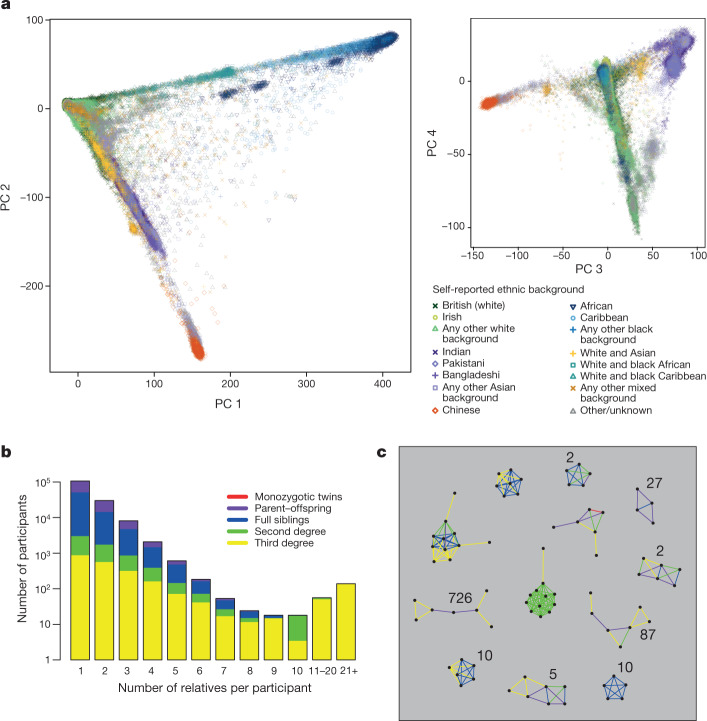
“As most of the large population-based cohorts rely on an assessment center-based recruitment strategy, the proportion of relatives in the cohorts tends to be high and will keep increasing in the future 1 .”
BackgroundMethodInfluentialThe Polygenic Score Catalog as an open database for reproducibility and systematic evaluation
Lambert, S. A., Gil, L., Jupp, S., Ritchie, S. C., Xu, Y., Buniello, A., McMahon, A., Abraham, G., Chapman, M., Parkinson, H., et al. (2021) · Nature Genetics · doi:10.1038/s41588-021-00783-5 · Cited by 705
LDpred2: better, faster, stronger
Privé, F., Arbel, J., & Vilhjálmsson, B. J. (2021) · Bioinformatics · doi:10.1093/bioinformatics/btaa1029 · Cited by 726
Fan, M., Sun, D., Zhou, T., Heianza, Y., Lv, J., Li, L., & Qi, L. (2020) · European Heart Journal · doi:10.1093/eurheartj/ehz849 · Cited by 702
“The genotyping process and arrays used in the UK Biobank study have been described elsewhere.(33) In the present study, we selected 74 independent single nucleotide polymorphisms (SNPs) and 10 SNPs that showed significant genome-wide association with CHD(34) and stroke(35) in recent published genome-wide associations…”
MethodUsing human genetics to understand the disease impacts of testosterone in men and women
The Endometrial Cancer Association Consortium, Ruth, K. S., Day, F. R., Tyrrell, J., Thompson, D. J., Wood, A. R., Mahajan, A., Beaumont, R. N., Wittemans, L., Martin, S., et al. (2020) · Nature Medicine · doi:10.1038/s41591-020-0751-5 · Cited by 720
Genomic and drug target evaluation of 90 cardiovascular proteins in 30,931 individuals
Folkersen, L., Gustafsson, S., Wang, Q., Hansen, D. H., Hedman, Å. K., Schork, A., Page, K., Zhernakova, D. V., Wu, Y., Peters, J., et al. (2020) · Nature Metabolism · doi:10.1038/s42255-020-00287-2 · Cited by 705
Mahajan, A., Spracklen, C. N., Zhang, W., Ng, M. C. Y., Petty, L. E., Kitajima, H., Yu, G. Z., Rüeger, S., Speidel, L., Kim, Y. J., et al. (2022) · Nature Genetics · doi:10.1038/s41588-022-01058-3 · Cited by 704
A brief history of human disease genetics
Claussnitzer, M., Cho, J. H., Collins, R., Cox, N. J., Dermitzakis, E. T., Hurles, M. E., Kathiresan, S., Kenny, E. E., Lindgren, C. M., MacArthur, D. G., et al. (2020) · Nature · doi:10.1038/s41586-019-1879-7 · Cited by 697
Chen, M.-H., Raffield, L. M., Mousas, A., Sakaue, S., Huffman, J. E., Moscati, A., Trivedi, B., Jiang, T., Akbari, P., Vuckovic, D., et al. (2020) · Cell · doi:10.1016/j.cell.2020.06.045 · Cited by 661
Mapping the proteo-genomic convergence of human diseases
Pietzner, M., Wheeler, E., Carrasco-Zanini, J., Cortes, A., Koprulu, M., Wörheide, M. A., Oerton, E., Cook, J., Stewart, I. D., Kerrison, N. D., et al. (2021) · Science · doi:10.1126/science.abj1541 · Cited by 657
Okbay, A., Wu, Y., Wang, N., Jayashankar, H., Bennett, M., Nehzati, S. M., Sidorenko, J., Kweon, H., Goldman, G., Gjorgjieva, T., et al. (2022) · Nature Genetics · doi:10.1038/s41588-022-01016-z · Cited by 654
“The data are from the UKB 3 , Generation Scotland (GS) 7 , and the Swedish Twin Registry (STR) 38 .”
Accurate, scalable and integrative haplotype estimation
Delaneau, O., Zagury, J.-F., Robinson, M. R., Marchini, J. L., & Dermitzakis, E. T. (2019) · Nature Communications · doi:10.1038/s41467-019-13225-y · Cited by 622
Self-citationDashti, H. S., Jones, S. E., Wood, A. R., Lane, J. M., van Hees, V. T., Wang, H., Rhodes, J. A., Song, Y., Patel, K., Anderson, S. G., et al. (2019) · Nature Communications · doi:10.1038/s41467-019-08917-4 · Cited by 609
Cano-Gamez, E., & Trynka, G. (2020) · Frontiers in Genetics · doi:10.3389/fgene.2020.00424 · Cited by 613
“Finally, the RolyPoly method models the polygenic architecture of complex traits to estimate SNP enrichment (Calderon et al., 2017).”
BackgroundMethodInfluentialSmall Effects: The Indispensable Foundation for a Cumulative Psychological Science
Götz, F. M., Gosling, S. D., & Rentfrow, P. J. (2022) · Perspectives on Psychological Science · doi:10.1177/1745691620984483 · Cited by 538
Rare variant contribution to human disease in 281,104 UK Biobank exomes
Wang, Q., Dhindsa, R. S., Carss, K., Harper, A. R., Nag, A., Tachmazidou, I., Vitsios, D., Deevi, S. V. V., Mackay, A., Muthas, D., et al. (2021) · Nature · doi:10.1038/s41586-021-03855-y · Cited by 604
Associations between blood type and COVID-19 infection, intubation, and death
Zietz, M., Zucker, J., & Tatonetti, N. P. (2020) · Nature Communications · doi:10.1038/s41467-020-19623-x · Cited by 581
15 years of GWAS discovery: Realizing the promise
Abdellaoui, A., Yengo, L., Verweij, K. J. H., & Visscher, P. M. (2023) · The American Journal of Human Genetics · doi:10.1016/j.ajhg.2022.12.011 · Cited by 547
An expanded set of genome-wide association studies of brain imaging phenotypes in UK Biobank
Smith, S. M., Douaud, G., Chen, W., Hanayik, T., Alfaro-Almagro, F., Sharp, K., & Elliott, L. T. (2021) · Nature Neuroscience · doi:10.1038/s41593-021-00826-4 · Cited by 558
“The new classes of IDPs, computed on behalf of UKB and released for general access, are: subnuclei volumes in amygdala, brainstem, hippocampus and thalamus, Brodmann area FreeSurfer metrics and FreeSurfer-derived white-grey intensity contrasts.”
InfluentialSelf-citationCommon brain disorders are associated with heritable patterns of apparent aging of the brain
Karolinska Schizophrenia Project (KaSP), Kaufmann, T., van der Meer, D., Doan, N. T., Schwarz, E., Lund, M. J., Agartz, I., Alnæs, D., Barch, D. M., Baur-Streubel, R., et al. (2019) · Nature Neuroscience · doi:10.1038/s41593-019-0471-7 · Cited by 563
Large-scale plasma proteomics comparisons through genetics and disease associations
Eldjarn, G. H., Ferkingstad, E., Lund, S. H., Helgason, H., Magnusson, O. T., Gunnarsdottir, K., Olafsdottir, T. A., Halldorsson, B. V., Olason, P. I., Zink, F., et al. (2023) · Nature · doi:10.1038/s41586-023-06563-x · Cited by 583
“After filtering, the sequence variants along with the phased SNP chip data by Bycroft et al. 57 were used to create a haplotype reference panel.”
Mountjoy, E., Schmidt, E. M., Carmona, M., Schwartzentruber, J., Peat, G., Miranda, A., Fumis, L., Hayhurst, J., Buniello, A., Karim, M. A., et al. (2021) · Nature Genetics · doi:10.1038/s41588-021-00945-5 · Cited by 581
Genetic determinants of daytime napping and effects on cardiometabolic health
Dashti, H. S., Daghlas, I., Lane, J. M., Huang, Y., Udler, M. S., Wang, H., Ollila, H. M., Jones, S. E., Kim, J., Wood, A. R., et al. (2021) · Nature Communications · doi:10.1038/s41467-020-20585-3 · Cited by 446
Self-citationAtlas of plasma NMR biomarkers for health and disease in 118,461 individuals from the UK Biobank
Julkunen, H., Cichońska, A., Tiainen, M., Koskela, H., Nybo, K., Mäkelä, V., Nokso-Koivisto, J., Kristiansson, K., Perola, M., Salomaa, V., et al. (2023) · Nature Communications · doi:10.1038/s41467-023-36231-7 · Cited by 536
Exome sequencing and characterization of 49,960 individuals in the UK Biobank
Van Hout, C. V., Tachmazidou, I., Backman, J. D., Hoffman, J. D., Liu, D., Pandey, A. K., Gonzaga-Jauregui, C., Khalid, S., Ye, B., Banerjee, N., et al. (2020) · Nature · doi:10.1038/s41586-020-2853-0 · Cited by 561
Self-citationWhole-genome sequencing of patients with rare diseases in a national health system
Turro, E., Astle, W. J., Megy, K., Gräf, S., Greene, D., Shamardina, O., Allen, H. L., Sanchis-Juan, A., Frontini, M., Thys, C., et al. (2020) · Nature · doi:10.1038/s41586-020-2434-2 · Cited by 554
A resource-efficient tool for mixed model association analysis of large-scale data
Jiang, L., Zheng, Z., Qi, T., Kemper, K. E., Wray, N. R., Visscher, P. M., & Yang, J. (2019) · Nature Genetics · doi:10.1038/s41588-019-0530-8 · Cited by 521
“Due to the substantial decrease in genotyping costs in recent years, sample sizes of GWAS have dramatically increased to 100,000s in single cohorts, such as the UK Biobank (UKB) 18 and the Biobank Japan Project 19 .”
BackgroundMethodInfluentialArtificial Intelligence and Personalized Medicine
Schork, N. J. (2019) · Cancer Treatment and Research · doi:10.1007/978-3-030-16391-4_11 · Cited by 488
“[60 , 61] These studies raise important questions about the ethics, legal and social implications of aggregating data on individual patients for the purposes of benefitting individuals who may need focused care going forward.”
BackgroundSingle-cell RNA-seq reveals cell type–specific molecular and genetic associations to lupus
Perez, R. K., Gordon, M. G., Subramaniam, M., Kim, M. C., Hartoularos, G. C., Targ, S., Sun, Y., Ogorodnikov, A., Bueno, R., Lu, A., et al. (2022) · Science · doi:10.1126/science.abf1970 · Cited by 513
“(F) Scatterplot of effect sizes on SLE status (y axis) versus effect sizes on monocyte (top) or lymphocyte (bottom) abundance (x axes) for genetic variants associated with both traits reported (4, 17).”
BackgroundMethodSchwartzentruber, J., Cooper, S., Liu, J. Z., Barrio-Hernandez, I., Bello, E., Kumasaka, N., Young, A. M. H., Franklin, R. J. M., Johnson, T., Estrada, K., et al. (2021) · Nature Genetics · doi:10.1038/s41588-020-00776-w · Cited by 532
Self-citationImproved polygenic prediction by Bayesian multiple regression on summary statistics
Lloyd-Jones, L. R., Zeng, J., Sidorenko, J., Yengo, L., Moser, G., Kemper, K. E., Wang, H., Zheng, Z., Magi, R., Esko, T., et al. (2019) · Nature Communications · doi:10.1038/s41467-019-12653-0 · Cited by 528
“Genotype data were imputed to the Haplotype Reference Consortium and UK10K panel, which was provided as part of the data release and described in Bycroft et al. 49 , and contained SNPs, short indels and large structural variants.”
BackgroundMethodInfluentialArtificial intelligence and machine learning in clinical development: a translational perspective
Shah, P., Kendall, F., Khozin, S., Goosen, R., Hu, J., Laramie, J., Ringel, M., & Schork, N. (2019) · npj Digital Medicine · doi:10.1038/s41746-019-0148-3 · Cited by 498
(2020) · doi:10.1101/2020.01.22.20018424 · Cited by 505
Genetic diversity fuels gene discovery for tobacco and alcohol use
Saunders, G. R. B., Wang, X., Chen, F., Jang, S.-K., Liu, M., Wang, C., Gao, S., Jiang, Y., Khunsriraksakul, C., Otto, J. M., et al. (2022) · Nature · doi:10.1038/s41586-022-05477-4 · Cited by 476
“An affinity propagation clustering algorithm 30 was used to aid interpretability by grouping UK Biobank phenotypes such that each of the five current phenotypes were exemplars (Supplementary Fig.”
InfluentialEfficient ancestry and mutation simulation with msprime 1.0
Baumdicker, F., Bisschop, G., Goldstein, D., Gower, G., Ragsdale, A. P., Tsambos, G., Zhu, S., Eldon, B., Ellerman, E. C., Galloway, J. G., et al. (2022) · Genetics · doi:10.1093/genetics/iyab229 · Cited by 442
“Human datasets like the UK Biobank (Bycroft et al. 2018) and gnomAD (Karczewski et al. 2020) now consist of hundreds of thousands of genomes and many other datasets on a similar scale are becoming available (Tanjo et al. 2021).”
BackgroundAssociation of Premature Natural and Surgical Menopause With Incident Cardiovascular Disease
Honigberg, M. C., Zekavat, S. M., Aragam, K., Finneran, P., Klarin, D., Bhatt, D. L., Januzzi, J. L., Scott, N. S., & Natarajan, P. (2019) · JAMA · doi:10.1001/jama.2019.19191 · Cited by 465
Elliott, J., Bodinier, B., Bond, T. A., Chadeau-Hyam, M., Evangelou, E., Moons, K. G. M., Dehghan, A., Muller, D. C., Elliott, P., & Tzoulaki, I. (2020) · JAMA · doi:10.1001/jama.2019.22241 · Cited by 476
Partners, C.-N. M. A., Bao, Y., Bai, X., Bu, C., Chen, H., Chen, H., Chen, K., Chen, M., Chen, M., Chen, M., et al. (2025) · Nucleic Acids Research · doi:10.1093/nar/gkae978 · Cited by 412
Efficient phasing and imputation of low-coverage sequencing data using large reference panels
Rubinacci, S., Ribeiro, D. M., Hofmeister, R. J., & Delaneau, O. (2021) · Nature Genetics · doi:10.1038/s41588-020-00756-0 · Cited by 465
Self-citationA method for genome-wide genealogy estimation for thousands of samples
Speidel, L., Forest, M., Shi, S., & Myers, S. R. (2019) · Nature Genetics · doi:10.1038/s41588-019-0484-x · Cited by 480
Genetics meets proteomics: perspectives for large population-based studies
Suhre, K., McCarthy, M. I., & Schwenk, J. M. (2021) · Nature Reviews Genetics · doi:10.1038/s41576-020-0268-2 · Cited by 478
Gharahkhani, P., Jorgenson, E., Hysi, P., Khawaja, A. P., Pendergrass, S., Han, X., Ong, J. S., Hewitt, A. W., Segrè, A. V., Rouhana, J. M., et al. (2021) · Nature Communications · doi:10.1038/s41467-020-20851-4 · Cited by 447
Deciphering osteoarthritis genetics across 826,690 individuals from 9 populations
Boer, C. G., Hatzikotoulas, K., Southam, L., Stefánsdóttir, L., Zhang, Y., Coutinho de Almeida, R., Wu, T. T., Zheng, J., Hartley, A., Teder-Laving, M., et al. (2021) · Cell · doi:10.1016/j.cell.2021.07.038 · Cited by 434
Bias correction for inverse variance weighting Mendelian randomization
Mounier, N., & Kutalik, Z. (2023) · Genetic Epidemiology · doi:10.1002/gepi.22522 · Cited by 435
“Similarly to what we did for simulations, a GWAS was performed for each sample (the exposure dataset and the five outcome datasets, one for each sample overlap) using BGENIE [30].”
MethodInfluentialPolygenic background modifies penetrance of monogenic variants for tier 1 genomic conditions
Fahed, A. C., Wang, M., Homburger, J. R., Patel, A. P., Bick, A. G., Neben, C. L., Lai, C., Brockman, D., Philippakis, A., Ellinor, P. T., et al. (2020) · Nature Communications · doi:10.1038/s41467-020-17374-3 · Cited by 455
Conti, D. V., Darst, B. F., Moss, L. C., Saunders, E. J., Sheng, X., Chou, A., Schumacher, F. R., Olama, A. A. A., Benlloch, S., Dadaev, T., et al. (2021) · Nature Genetics · doi:10.1038/s41588-020-00748-0 · Cited by 462
Thompson, D. J., Wells, D., Selzam, S., Peneva, I., Moore, R., Sharp, K., Tarran, W. A., Beard, E. J., Riveros-Mckay, F., Giner-Delgado, C., et al. (2024) · PLOS ONE · doi:10.1371/journal.pone.0307270 · Cited by 163
Self-citationVariable prediction accuracy of polygenic scores within an ancestry group
Mostafavi, H., Harpak, A., Agarwal, I., Conley, D., Pritchard, J. K., & Przeworski, M. (2020) · eLife · doi:10.7554/elife.48376 · Cited by 457
Identification of type 2 diabetes loci in 433,540 East Asian individuals
Spracklen, C. N., Horikoshi, M., Kim, Y. J., Lin, K., Bragg, F., Moon, S., Suzuki, K., Tam, C. H. T., Tabara, Y., Kwak, S.-H., et al. (2020) · Nature · doi:10.1038/s41586-020-2263-3 · Cited by 440
The sequences of 150,119 genomes in the UK Biobank
Halldorsson, B. V., Eggertsson, H. P., Moore, K. H. S., Hauswedell, H., Eiriksson, O., Ulfarsson, M. O., Palsson, G., Hardarson, M. T., Oddsson, A., Jensson, B. O., et al. (2022) · Nature · doi:10.1038/s41586-022-04965-x · Cited by 448
Genetic insights into biological mechanisms governing human ovarian ageing
Ruth, K. S., Day, F. R., Hussain, J., Martínez-Marchal, A., Aiken, C. E., Azad, A., Thompson, D. J., Knoblochova, L., Abe, H., Tarry-Adkins, J. L., et al. (2021) · Nature · doi:10.1038/s41586-021-03779-7 · Cited by 428
Global Biobank Meta-analysis Initiative: Powering genetic discovery across human disease
Zhou, W., Kanai, M., Wu, K.-H. H., Rasheed, H., Tsuo, K., Hirbo, J. B., Wang, Y., Bhattacharya, A., Zhao, H., Namba, S., et al. (2022) · Cell Genomics · doi:10.1016/j.xgen.2022.100192 · Cited by 432
Osteoclasts recycle via osteomorphs during RANKL-stimulated bone resorption
McDonald, M. M., Khoo, W. H., Ng, P. Y., Xiao, Y., Zamerli, J., Thatcher, P., Kyaw, W., Pathmanandavel, K., Grootveld, A. K., Moran, I., et al. (2021) · Cell · doi:10.1016/j.cell.2021.02.002 · Cited by 433
“To determine whether variants in human orthologs of osteomorph genes were enriched for genes associated with bone homeostasis in humans, we performed Multi-marker Analysis of GenoMic Annotation (MAGMA) competitive gene set analysis on 378,484 unrelated white European adults from the UK Biobank Study who had measures o…”
Genetic Interleukin 6 Signaling Deficiency Attenuates Cardiovascular Risk in Clonal Hematopoiesis
Bick, A. G., Pirruccello, J. P., Griffin, G. K., Gupta, N., Gabriel, S., Saleheen, D., Libby, P., Kathiresan, S., & Natarajan, P. (2020) · Circulation · doi:10.1161/circulationaha.119.044362 · Cited by 433
Fine-mapping from summary data with the “Sum of Single Effects” model
Zou, Y., Carbonetto, P., Wang, G., & Stephens, M. (2022) · PLOS Genetics · doi:10.1371/journal.pgen.1010299 · Cited by 429
“To systematically compare our new methods with existing methods for fine-mapping, we simulated fine-mapping data sets using the UK Biobank imputed genotypes [43].”
MethodPolygenic adaptation: a unifying framework to understand positive selection
Barghi, N., Hermisson, J., & Schlötterer, C. (2020) · Nature Reviews Genetics · doi:10.1038/s41576-020-0250-z · Cited by 425
Levey, D. F., Stein, M. B., Wendt, F. R., Pathak, G. A., Zhou, H., Aslan, M., Quaden, R., Harrington, K. M., Nuñez, Y. Z., Overstreet, C., et al. (2021) · Nature Neuroscience · doi:10.1038/s41593-021-00860-2 · Cited by 422
“…correlation with MDD-META; the most significantly genetically correlated brain imaging phenotype, using data provided from the Oxford Brain Imaging Genetics (BIG) project, 14 relative to MDD-META was left subcallosal cortex grey matter volume (BIG Field ID 0078) r g =0.205±0.061, p=9.00×10 -4 .”
InfluentialGenome-wide association study identifies 143 loci associated with 25 hydroxyvitamin D concentration
Revez, J. A., Lin, T., Qiao, Z., Xue, A., Holtz, Y., Zhu, Z., Zeng, J., Wang, H., Sidorenko, J., Kemper, K. E., et al. (2020) · Nature Communications · doi:10.1038/s41467-020-15421-7 · Cited by 415
Brain age prediction using deep learning uncovers associated sequence variants
Jonsson, B. A., Bjornsdottir, G., Thorgeirsson, T. E., Ellingsen, L. M., Walters, G. B., Gudbjartsson, D. F., Stefansson, H., Stefansson, K., & Ulfarsson, M. O. (2019) · Nature Communications · doi:10.1038/s41467-019-13163-9 · Cited by 392
“Roughly 10% of the subjects were genotyped using applied Biosystems UK BiLEVE Axiom Array by Affymetrix and the rest using the closely related Applied Biosystems UK Biobank Axiom Array 77 .”
MethodGWAS identifies 14 loci for device-measured physical activity and sleep duration
Doherty, A., Smith-Byrne, K., Ferreira, T., Holmes, M. V., Holmes, C., Pulit, S. L., & Lindgren, C. M. (2018) · Nature Communications · doi:10.1038/s41467-018-07743-4 · Cited by 408
Biological and clinical insights from genetics of insomnia symptoms
Sleep, H. A. I., Lane, J. M., Jones, S. E., Dashti, H. S., Wood, A. R., Aragam, K. G., van Hees, V. T., Strand, L. B., Winsvold, B. S., Wang, H., et al. (2019) · Nature Genetics · doi:10.1038/s41588-019-0361-7 · Cited by 397
Metabolomic profiles predict individual multidisease outcomes
Buergel, T., Steinfeldt, J., Ruyoga, G., Pietzner, M., Bizzarri, D., Vojinovic, D., Upmeier zu Belzen, J., Loock, L., Kittner, P., Christmann, L., et al. (2022) · Nature Medicine · doi:10.1038/s41591-022-01980-3 · Cited by 406
Rives, A., Meier, J., Sercu, T., Goyal, S., Lin, Z., Liu, J., Guo, D., Ott, M., Zitnick, C. L., Ma, J., et al. (2019) · doi:10.1101/622803 · Cited by 3,280
“The mutational fitness landscape provides deep insight into biology: determining protein activity (Fowler & Fields, 2014), linking genetic variation to human health (Lek et al., 2016; Bycroft et al., 2018; Karczewski et al., 2019), and enabling for rational protein engineering (Slaymaker et al.”
BackgroundLarge-scale GWAS reveals insights into the genetic architecture of same-sex sexual behavior
Ganna, A., Verweij, K. J. H., Nivard, M. G., Maier, R., Wedow, R., Busch, A. S., Abdellaoui, A., Guo, S., Sathirapongsasuti, J. F., 23andMe Research Team, et al. (2019) · Science · doi:10.1126/science.aat7693 · Cited by 406
Brumpton, B., Sanderson, E., Heilbron, K., Hartwig, F. P., Harrison, S., Vie, G. Å., Cho, Y., Howe, L. D., Hughes, A., Boomsma, D. I., et al. (2020) · Nature Communications · doi:10.1038/s41467-020-17117-4 · Cited by 402
Advancing human genetics research and drug discovery through exome sequencing of the UK Biobank
Szustakowski, J. D., Balasubramanian, S., Kvikstad, E., Khalid, S., Bronson, P. G., Sasson, A., Wong, E., Liu, D., Wade Davis, J., Haefliger, C., et al. (2021) · Nature Genetics · doi:10.1038/s41588-021-00885-0 · Cited by 401
Metadata
- Authors
- Bycroft, C., Freeman, C., Petkova, D., Band, G., Elliott, L. T., Sharp, K., Motyer, A., Vukcevic, D., Delaneau, O., O’Connell, J., Cortes, A., Welsh, S., Young, A., Effingham, M., McVean, G., Leslie, S., Allen, N., Donnelly, P., & Marchini, J.
- Affiliations
- Centre for Human Genetics (GB)
- University of Oxford (GB)
- The University of Melbourne (AU)
- University of Geneva (CH)
- Illumina (United Kingdom) (GB)
- UK Biobank (GB)
- Corresponding author
- Marchini, Jonathan
- ORCID
- Venue
- Nature
- Published
- 2018-10-10
- Volume
- 562
- Issue
- 7726
- Pages
- 203-209
- ISSN
- 0028-0836 (ISSN-L)
- 1476-4687
- PMC
- PMC6786975
- OpenAlex
- W2895486342
- Semantic Scholar
- a9cc79a5df0f7802145401b464e4bb30c23b8efa
- Cited by
- 8,876
- References
- 41
- Citations by year
- 2026: 1242 · 2025: 1612 · 2024: 1546 · 2023: 1331 · 2022: 1185 · 2021: 928 · 2020: 643 · 2019: 336 · 2018: 40
- FWCI
- 299.77
- Type
- journal article
- Language
- en
- Open access
- hybrid
- doi.org
- Licence
- cc-by
- creativecommons.org/licenses/by/4.0 (tdm)
- creativecommons.org/licenses/by/4.0 (vor)
- Locations
- Nature (publishedVersion, cc-by)
- PubMed Central (publishedVersion, cc-by)
- PubMed (publishedVersion)
- RePEc: Research Papers in Economics (submittedVersion)
- IRIS (submittedVersion, cc-by)
- Minerva Access (University of Melbourne) (submittedVersion, cc-by)
- SERVAL (Université de Lausanne) (submittedVersion, cc-by)
- Funders
- Wellcome Trust (095552/Z/11/Z, 203141/Z/16/Z, 10956/Z/13Z, 100308/Z/12/Z, 090532/Z/09/Z, 100956/Z/13/Z)
- National Institute for Health and Care Research
- British Heart Foundation
- Medical Research Council
- National Health and Medical Research Council (1053756)
- FP7 Ideas: European Research Council (617306)
- Topics
- Life Sciences › Biochemistry, Genetics and Molecular Biology › Genetics › Genetic Associations and Epidemiology
- Life Sciences › Biochemistry, Genetics and Molecular Biology › Genetics › Genetic and phenotypic traits in livestock
- Life Sciences › Biochemistry, Genetics and Molecular Biology › Genetics › Forensic and Genetic Research
- Keywords
- UK Biobank, prospective cohort, deep phenotyping, complex traits, population structure, relatedness, genotype phasing, genotype imputation, biomarkers
- MeSH terms
- Adult, Aged, Alleles, Body Height, Brain, Family, Female, United Kingdom, Haplotypes, Humans, Life Style, Major Histocompatibility Complex, Male, Middle Aged, Phenotype, Quality Control, Cohort Studies, Biomarkers, Databases, Factual, Genomics, Databases, Genetic, Racial Groups, Genome-Wide Association Study, Electronic Health Records
About these checks
Registry, retraction, Cites and statistics results are computed, not judged, with one exception: a printed reference that no index lists is read once by a model before it counts as a citation error. Claims are extracted by a model and kept only when their quote appears verbatim in the text; each cited source is then checked, with a model’s help, for whether it says what the claim relies on. Those verdicts can be wrong — read the claim’s quote and the cited source before relying on one.
Statistics and arithmetic are recomputed, not judged.
Confidence bands are shown only for fields calibrated on our annotated test set. None is calibrated yet, so no band is shown.
What counts as a claim ›How we measure confidence ›How we check this ›
Are you an author, or do you see a problem with this page? Request a review
Data sources
Bibliographic data: Semantic Scholar, OpenAlex, Crossref.
Contains information from the Semantic Scholar Academic Graph Datasets, made available under the ODC Attribution License (ODC-BY 1.0).
Semantic Scholar’s data is described in: Kinney, R., et al. (2023). The Semantic Scholar Open Data Platform. arXiv:2301.10140.
