

The UK Biobank resource with deep phenotyping and genomic data
Open accessThe DOI matches its Crossref record; 39 of the 41 references it cites were found in a registry or an index.
Abstract
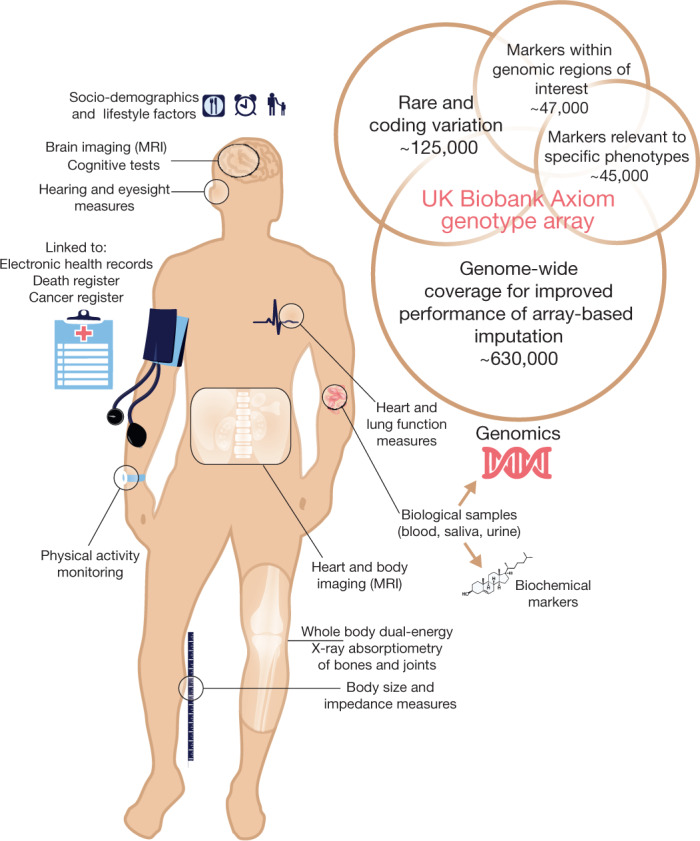
The UK Biobank project is a prospective cohort study with deep genetic and phenotypic data collected on approximately 500,000 individuals from across the United Kingdom, aged between 40 and 69 at recruitment. The open resource is unique in its size and scope. A rich variety of phenotypic and health-related information is available on each participant, including biological measurements, lifestyle indicators, biomarkers in blood and urine, and imaging of the body and brain. Follow-up information is provided by linking health and medical records. Genome-wide genotype data have been collected on all participants, providing many opportunities for the discovery of new genetic associations and the genetic bases of complex traits. Here we describe the centralized analysis of the genetic data, including genotype quality, properties of population structure and relatedness of the genetic data, and efficient phasing and genotype imputation that increases the number of testable variants to around 96 million. Classical allelic variation at 11 human leukocyte antigen genes was imputed, resulting in the recovery of signals with known associations between human leukocyte antigen alleles and many diseases.
Overview
The claims and statistics of this paper haven’t been checked yet.
Free: it reads the open-access text and checks the first 5 claims that cite a source we can check. Create a free account to check every claim.
Integrity signals
Registry
Cites
Statistics
Figures
Verification
Claims the paper makes
The claims and statistics of this paper haven’t been checked yet.
Free: it reads the open-access text and checks the first 5 claims that cite a source we can check. Create a free account to check every claim.
Claims other papers make about this one
Each is checked against this paper’s own text: does it say what the citing paper says it does?
The source backs part of the claim, not all of it — or backs it for a different population, condition or comparison.
In the citing paper
“The UKBB dataset provides information regarding more than 7000 phenotypes assessed in up to 500,000 participants from six ancestry groups [32].”
From Denisovan and Neanderthal archaic introgression differentially impacted the genetics of complex traits in modern populations (2022) · cites this paper as [32]
Experimental — accuracy not yet measuredThe source backs part of the claim, not all of it — or backs it for a different population, condition or comparison.
In the citing paper
“In the UK, the UK Biobank initiated enrollment in 2006, reaching a final participant count of over 500,000, and plans to follow participants for at least 30 years after enrollment 81 .”
From Multimodal biomedical AI (2022) · cites this paper as [81]
Experimental — accuracy not yet measuredThe source backs part of the claim, not all of it — or backs it for a different population, condition or comparison.
In the citing paper
“Approximately 9.2 million people living 25 miles (40 km) from one of 22 assessment centers across England, Wales and Scotland were invited to participate, with 5.5% participating in the baseline studies.”
From Plasma proteomic associations with genetics and health in the UK Biobank (2023) · cites this paper as Bycroft et al (Nature, 2018)
Experimental — accuracy not yet measuredThe cited source says what the claim attributes to it.
In the citing paper
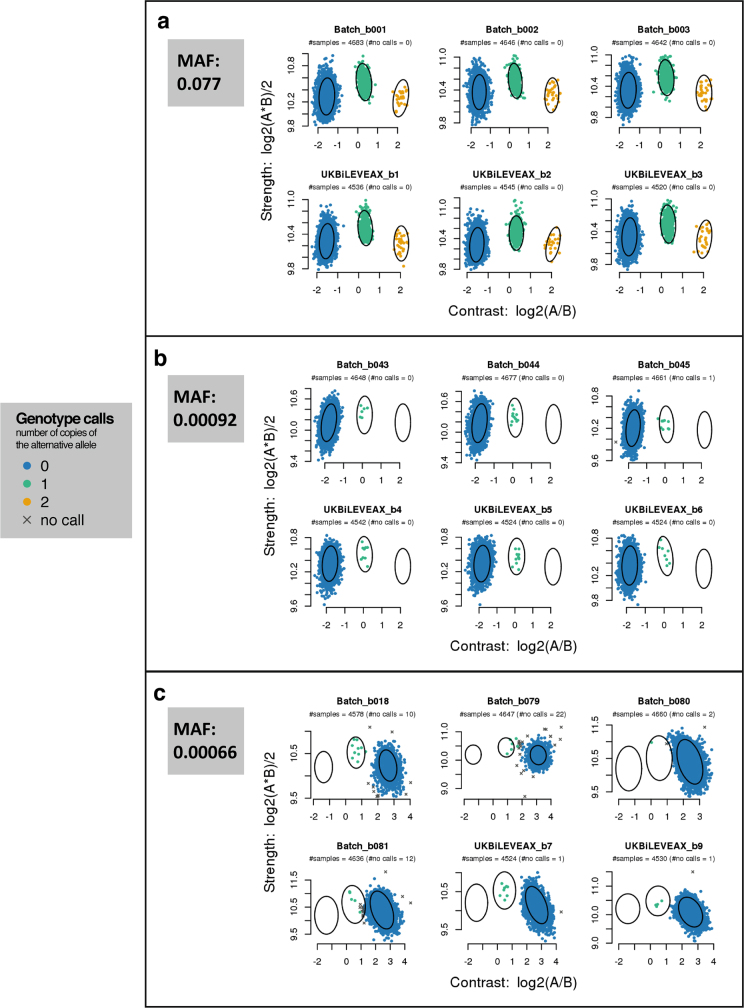
“Amongst the genetics community, it is generally well recognised that SNP-chips perform poorly for genotyping rare genetic variants [9-11] due to their reliance upon data clustering (Figure 1).”
From Assessing the analytical validity of SNP-chips for detecting very rare pathogenic variants: implications for direct-to-consumer genetic testing (2019) · cites this paper as [10]
The cited source says what the claim attributes to it.
In the citing paper
“The genetics community generally recognises that SNP chips perform poorly for genotyping rare genetic variants owing to their reliance on data clustering (fig 1).9 10 11”
From Use of SNP chips to detect rare pathogenic variants: retrospective, population based diagnostic evaluation (2021) · cites this paper as [10]
6 more claims about this paper
Create a free account to see every claim other papers make about this one.
Self-check
Percentages, sums and reported differences re-computed from the paper’s own numbers.
The self-check needs the paper’s full text.
Citations
Cites
A global reference for human genetic variation
The 1000 Genomes Project Consortium, authors, C., Auton, A., Abecasis, G. R., Steering committee, Altshuler, D. M., Durbin, R. M., Abecasis, G. R., Bentley, D. R., Chakravarti, A., et al. (2015) · Nature · doi:10.1038/nature15393 · Cited by 18,247
Self-citationSudlow, C., Gallacher, J., Allen, N., Beral, V., Burton, P., Danesh, J., Downey, P., Elliott, P., Green, J., Landray, M., et al. (2015) · PLOS Medicine · doi:10.1371/journal.pmed.1001779 · Cited by 12,728
Self-citationAnalysis of protein-coding genetic variation in 60,706 humans
Exome Aggregation Consortium, Lek, M., Karczewski, K. J., Minikel, E. V., Samocha, K. E., Banks, E., Fennell, T., O’Donnell-Luria, A. H., Ware, J. S., Hill, A. J., et al. (2016) · Nature · doi:10.1038/nature19057 · Cited by 9,587
A haplotype map of the human genome
The International HapMap Consortium (2005) · Nature · doi:10.1038/nature04226 · Cited by 5,858
Robust relationship inference in genome-wide association studies
Manichaikul, A., Mychaleckyj, J. C., Rich, S. S., Daly, K., Sale, M., & Chen, W.-M. (2010) · Bioinformatics · doi:10.1093/bioinformatics/btq559 · Cited by 3,541
A reference panel of 64,976 haplotypes for genotype imputation
the Haplotype Reference Consortium (2016) · Nature Genetics · doi:10.1038/ng.3643 · Cited by 2,836
Self-citationThe NHGRI GWAS Catalog, a curated resource of SNP-trait associations
Welter, D., MacArthur, J., Morales, J., Burdett, T., Hall, P., Junkins, H., Klemm, A., Flicek, P., Manolio, T., Hindorff, L., et al. (2014) · Nucleic Acids Research · doi:10.1093/nar/gkt1229 · Cited by 2,707
Genetic risk and a primary role for cell-mediated immune mechanisms in multiple sclerosis
The International Multiple Sclerosis Genetics Consortium & The Wellcome Trust Case Control Consortium 2 (2011) · Nature · doi:10.1038/nature10251 · Cited by 2,697
Self-citationMultimodal population brain imaging in the UK Biobank prospective epidemiological study
Miller, K. L., Alfaro-Almagro, F., Bangerter, N. K., Thomas, D. L., Yacoub, E., Xu, J., Bartsch, A. J., Jbabdi, S., Sotiropoulos, S. N., Andersson, J. L. R., et al. (2016) · Nature Neuroscience · doi:10.1038/nn.4393 · Cited by 2,020
The Electronic Medical Records and Genomics (eMERGE) Consortium, Wood, A. R., The MIGen Consortium, The PAGE Consortium, Study, T. L. C., Esko, T., Yang, J., Vedantam, S., Pers, T. H., Gustafsson, S., et al. (2014) · Nature Genetics · doi:10.1038/ng.3097 · Cited by 1,853
Self-citation
Cited by
Items 701–800 of 1,161
Neuronal FAM171A2 mediates α-synuclein fibril uptake and drives Parkinson’s disease
Wu, K., Xu, Q., Liu, Y., Feng, Y., Han, S., Zhang, Y.-R., Chen, S.-D., Guo, Y. X., Wu, B., Ma, L., et al. (2025) · Science · doi:10.1126/science.adp3645 · Cited by 96
Wang, Q. S., Kelley, D. R., Ulirsch, J., Kanai, M., Sadhuka, S., Cui, R., Albors, C., Cheng, N., Okada, Y., The Biobank Japan Project, et al. (2021) · Nature Communications · doi:10.1038/s41467-021-23134-8 · Cited by 87
He, Y., Lakhani, C. M., Rasooly, D., Manrai, A. K., Tzoulaki, I., & Patel, C. J. (2021) · Diabetes Care · doi:10.2337/dc20-2049 · Cited by 95
“resource, the UK10K panel, and the 1000 Genomes panel, increasing the number of testable variants to 96 million (12).”
BackgroundZhou, X., Wang, L., Xiao, J., Sun, J., Yu, L., Zhang, H., Meng, X., Yuan, S., Timofeeva, M. N., Law, P., et al. (2022) · International Journal of Cancer · doi:10.1002/ijc.33945 · Cited by 102
“The details of baseline information and biological samples collection can be found elsewhere.(32) To validate the MR estimates and test whether the effect of alcohol-related methylation on CRC was distinct by the expression and methylation levels of COLCA1/COLCA2 gene, we obtained the genotyping data of the eQTL SNP r…”
Genome interpretation using in silico predictors of variant impact
Katsonis, P., Wilhelm, K. O., Williams, A. M., & Lichtarge, O. (2022) · Human Genetics · doi:10.1007/s00439-022-02457-6 · Cited by 99
“Examples include the UK Biobank, which currently holds genetic data from about 500,000 individuals (Backman et al. 2021; Bycroft et al. 2018) (Wichmann et al. 2011).”
BackgroundIdentifying and correcting for misspecifications in GWAS summary statistics and polygenic scores
Privé, F., Arbel, J., Aschard, H., & Vilhjálmsson, B. J. (2022) · Human Genetics and Genomics Advances · doi:10.1016/j.xhgg.2022.100136 · Cited by 106
“We use the exact same data as in Privé et al. (2020); we use external summary statistics for eight case-control phenotypes and predict in the UK Biobank (UKBB) unrelated European data by keeping 10,000 individuals as validation set for tuning hyper-parameters and using the remaining 352,320 individuals as test set (By…”
BackgroundMethodInfluentialSubclassification of obesity for precision prediction of cardiometabolic diseases
Coral, D., Smit, F., Farzaneh, A., Gieswinkel, A., Tajes, J. F., Sparsø, T., Delfin, C., Bauvin, P., Wang, K., Temprosa, M. G., et al. (2024) · Nature Medicine · doi:10.1038/s41591-024-03299-7 · Cited by 100
Genetic correlations between pain phenotypes and depression and neuroticism
Meng, W., Adams, M. J., Reel, P. S., Rajendrakumar, A. L., Huang, Y. S., Deary, I. J., Palmer, C. N. A., McIntosh, A. M., & Smith, B. H. (2019) · European Journal of Human Genetics · doi:10.1038/s41431-019-0530-2 · Cited by 89
Hübel, C., Gaspar, H. A., Coleman, J. R. I., Hanscombe, K. B., Purves, K., Prokopenko, I., Graff, M., Ngwa, J. S., Workalemahu, T., ADHD Working Group of the Psychiatric Genomics Consortium, et al. (2019) · Nature Communications · doi:10.1038/s41467-019-13544-0 · Cited by 87
Xie, J., Prats‐Uribe, A., Feng, Q., Wang, Y., Gill, D., Paredes, R., & Prieto‐Alhambra, D. (2022) · JAMA Internal Medicine · doi:10.1001/jamainternmed.2022.3858 · Cited by 86
Li, F., Liao, J., Zhu, B., Li, X., Cheng, Z., Cheng, J., Mo, C., Wu, X., Li, Q., & Liang, F. (2022) · Liver International · doi:10.1111/liv.15416 · Cited by 87
Examining the role of common variants in rare neurodevelopmental conditions
Huang, Q. Q., Wigdor, E. M., Malawsky, D. S., Campbell, P. H., Samocha, K. E., Chundru, V. K., Danecek, P., Lindsay, S., Marchant, T., Koko, M., et al. (2024) · Nature · doi:10.1038/s41586-024-08217-y · Cited by 89
“Accord-ingly, rare damaging variants in constrained genes, which play a major role in risk of rare neurodevelopmental conditions, are also associated with increased risk of mental health conditions and reduced educational attainment and cognitive performance in UK Biobank 9–11 .”
InfluentialSelf-citationShen, C., Zhang, R., Yu, J., Sahakian, B. J., Cheng, W., & Feng, J. (2025) · Nature Human Behaviour · doi:10.1038/s41562-024-02078-1 · Cited by 94
“Two closely related arrays, the Applied Biosystems UK BiLEVE Axiom by Affymetrix (now part of Thermo Fisher Scientific) and the Applied Biosystems UK Biobank Axiom Array, were employed to genotype over 800,000 markers with good genome-wide coverage 80 .”
Elovainio, M., Lahti, J., Pirinen, M., Pulkki-Råback, L., Malmberg, A., Lipsanen, J., Virtanen, M., Kivimäki, M., & Hakulinen, C. (2022) · BMJ Open · doi:10.1136/bmjopen-2021-053936 · Cited by 85
Are Bigger Brains Smarter? Evidence From a Large-Scale Preregistered Study
Nave, G., Jung, W. H., Linnér, R. K., Kable, J. W., & Koellinger, P. (2018) · Psychological Science · doi:10.1177/0956797618808470 · Cited by 92
“Almost all participants (488,363) have been genotyped (Bycroft et al., 2018), and extensive batteries of lifestyle measures have already been collected.”
BackgroundPenetrance of Parkinson's Disease in LRRK2 p.G2019S Carriers Is Modified by a Polygenic Risk Score
Iwaki, H., Blauwendraat, C., Makarious, M. B., Bandrés‐Ciga, S., Leonard, H. L., Gibbs, J. R., Hernandez, D. G., Scholz, S. W., Faghri, F., International Parkinson's Disease Genomics Consortium (IPDGC), et al. (2020) · Movement Disorders · doi:10.1002/mds.27974 · Cited by 86
“The UK Biobank (UKBB) is a large, long-term biobank study in the UK that includes genetic data and a wide range of phenotypes of approximately 500,000 individuals.(18) PD case-control status was based on multiple field codes, including 41202, 41204, 40002, and 20002.”
BackgroundThe Genetic Makeup of the Electrocardiogram
Verweij, N., Benjamins, J. W., Morley, M. P., van de Vegte, Y. J., Teumer, A., Trenkwalder, T., Reinhard, W., Cappola, T. P., & van der Harst, P. (2020) · Cell Systems · doi:10.1016/j.cels.2020.08.005 · Cited by 88
Wang, L., Balmat, T. J., Antonia, A. L., Constantine, F. J., Henao, R., Burke, T. W., Ingham, A., McClain, M. T., Tsalik, E. L., Ko, E. R., et al. (2021) · Genome Medicine · doi:10.1186/s13073-021-00904-z · Cited by 85
“While GWAS now utilize even millions of subjects through leveraging electronic medical record data [2, 3], progress towards understanding how identified genetic variants alter cellular function and physiology remains elusive.”
Taub, M. A., Conomos, M. P., Keener, R., Iyer, K. R., Weinstock, J. S., Yanek, L. R., Lane, J., Miller‐Fleming, T. W., Brody, J. A., McHugh, C., et al. (2022) · Cell Genomics · doi:10.1016/j.xgen.2021.100084 · Cited by 93
Multi-omics research in sarcopenia: Current progress and future prospects
Liu, J., Dong, S., Shen, H., Yang, D.-Y., Chen, B., Ma, X., Peng, Y., Xiao, H., & Deng, H. (2022) · Ageing Research Reviews · doi:10.1016/j.arr.2022.101576 · Cited by 93
Assortative mating biases marker-based heritability estimators
Border, R., O’Rourke, S., de Candia, T., Goddard, M. E., Visscher, P. M., Yengo, L., Jones, M., & Keller, M. C. (2022) · Nature Communications · doi:10.1038/s41467-022-28294-9 · Cited by 88
Associations of “Weekend Warrior” Physical Activity With Incident Disease and Cardiometabolic Health
Kany, S., Al‐Alusi, M. A., Rämö, J. T., Pirruccello, J. P., Churchill, T. W., Lubitz, S. A., Maddah, M., Guseh, J. S., Ellinor, P. T., & Khurshid, S. S. (2024) · Circulation · doi:10.1161/circulationaha.124.068669 · Cited by 93
Hu, S., Ferreira, L. A. F., Shi, S., Hellenthal, G., Marchini, J., Lawson, D. J., & Myers, S. (2025) · Nature Genetics · doi:10.1038/s41588-024-02035-8 · Cited by 90
“We applied this pipeline to all 487,409 participating UK Biobank 25 (UKB) individuals.”
InfluentialSelf-citationNovel Parkinson’s Disease Genetic Risk Factors Within and Across European PopulationsPreprint
(GP2), T. G. P. G. P., & Leonard, H. L. (2025) · medRxiv · doi:10.1101/2025.03.14.24319455 · Cited by 113
“UKB quality control was performed previously by UKBiobank 19 , however, to keep ancestry prediction methods similar, the GenoTools ancestry prediction module was run on the UKB genotyped samples.”
Innes, H., Buch, S., Hutchinson, S., Guha, I. N., Morling, J. R., Barnes, E., Irving, W., Forrest, E., Pedergnana, V., Goldberg, D., et al. (2020) · Gastroenterology · doi:10.1053/j.gastro.2020.06.014 · Cited by 79
“1;[21] or ii) not of Caucasian British ancestry (defined by UKB according to field ID:22006).”
BackgroundBi, W., Fritsche, L. G., Mukherjee, B., Kim, S., & Lee, S. (2020) · The American Journal of Human Genetics · doi:10.1016/j.ajhg.2020.06.003 · Cited by 96
“To illustrate the performance in a real-data application, we applied SPACox to analyze UK Biobank.9,10 UK Biobank includes 408,961 white British samples.”
BackgroundMethodInfluentialConformalized survival analysis
Candès, E. J., Lei, L., & Ren, Z. (2023) · Journal of the Royal Statistical Society Series B (Statistical Methodology) · doi:10.1093/jrsssb/qkac004 · Cited by 154
“The validity and efficiency of our procedure are demonstrated on synthetic data and real COVID-19 data from the UK Biobank.”
BackgroundInfluentialGenome-wide risk prediction of common diseases across ancestries in one million people
Mars, N., Kerminen, S., Feng, Y. A., Kanai, M., Läll, K., Thomas, L. F., Skogholt, A. H., Parolo, P. D. B., Neale, B. M., Smoller, J. W., et al. (2022) · Cell Genomics · doi:10.1016/j.xgen.2022.100118 · Cited by 95
Zhao, Y., Li, Y., Zhuang, Z., Song, Z., Wang, W., Huang, N., Dong, X. Y., Xiao, W., Jia, J., Liu, Z., et al. (2022) · Diabetologia · doi:10.1007/s00125-022-05761-y · Cited by 91
“Calculation of genetic risk score The detailed genotyping process and arrays used in the UK Biobank have been described previously [32, 33].”
MethodScalable Functional Assays for the Interpretation of Human Genetic Variation
Tabet, D., Parikh, V., Mali, P., Roth, F. P., & Claussnitzer, M. (2022) · Annual Review of Genetics · doi:10.1146/annurev-genet-072920-032107 · Cited by 81
“Genotyping and sequencing of large population-scale cohorts [e.g., the UK Biobank (25), All of Us (6), and Biobank Japan (141)], together with individual health, demographic, and lifestyle information, have helped link thousands of genetic loci to human traits and diseases and continue to reveal genetic associations w…”
BackgroundGenetically adjusted PSA levels for prostate cancer screening
Kachuri, L., Hoffmann, T. J., Jiang, Y., Berndt, S. I., Shelley, J. P., Schaffer, K. R., Machiela, M. J., Freedman, N. D., Huang, W., Li, S. A., et al. (2023) · Nature Medicine · doi:10.1038/s41591-023-02277-9 · Cited by 90
Conventional and genetic evidence on the association between adiposity and CKD
Zhu, P., Herrington, W. G., Haynes, R., Emberson, J., Landray, M. J., Sudlow, C. L. M., Woodward, M., Baigent, C., Lewington, S., & Staplin, N. (2021) · Journal of the American Society of Nephrology · doi:10.1681/asn.2020050679 · Cited by 83
Protective and Regenerative Roles of T Cells in Central Nervous System Disorders
Evans, F., Dittmer, M., de la Fuente, A. G., & Fitzgerald, D. C. (2019) · Frontiers in Immunology · doi:10.3389/fimmu.2019.02171 · Cited by 94
Genomic influences on self-reported childhood maltreatment
Dalvie, S., Maihofer, A. X., Coleman, J. R. I., Bradley, B., Breen, G. D., Brick, L. A. D., Chen, C., Choi, K. W., Duncan, L. E., Guffanti, G., et al. (2020) · Translational Psychiatry · doi:10.1038/s41398-020-0706-0 · Cited by 91
Hepatobiliary phenotypes of adults with alpha-1 antitrypsin deficiency
Fromme, M., Schneider, C. V., Pereira, V. M., Hamesch, K., Pons, M., Reichert, M., Benini, F., Ellis, P., Thorhauge, K. H., Mandorfer, M., et al. (2021) · Gut · doi:10.1136/gutjnl-2020-323729 · Cited by 83
Wang, Q., Codd, V., Raisi‐Estabragh, Z., Musicha, C., Bountziouka, V., Kaptoge, S. K., Allara, E., Angelantonio, E. D., Butterworth, A. S., Wood, A., et al. (2021) · EBioMedicine · doi:10.1016/j.ebiom.2021.103485 · Cited by 87
“…characterised in detail using questionnaires, physical measurements, urinary and plasma biomarker measurements, genomic assays and longitudinal linkage with multiple health record systems, including Hospital Episode Statistics (HES) and Of fi ce for National Statistics (ONS) mortality data [16].”
CARMA is a new Bayesian model for fine-mapping in genome-wide association meta-analyses
Yang, Z., Wang, C., Liu, L., Khan, A., Lee, A., Vardarajan, B. N., Mayeux, R. P., Kiryluk, K., & Ionita‐Laza, I. (2023) · Nature Genetics · doi:10.1038/s41588-023-01392-0 · Cited by 95
Wainberg, M., Andrews, S. J., & Tripathy, S. J. (2023) · Alzheimer s Research & Therapy · doi:10.1186/s13195-023-01244-3 · Cited by 89
“To our knowledge, the only two instances of shared controls arise from the UK Biobank, used in the ADRD and PD GWAS (up to 338,440 shared UK Biobank controls, since the ADRD GWAS used 338,440 UK Biobank controls, and the PD GWAS used 436,419), and the Wellcome Trust Case Control Consortium (WTCCC) [108], used in the P…”
BackgroundInfluentialCasanova, F., O’Loughlin, J., Karageorgiou, V., Beaumont, R. N., Bowden, J., Wood, A. R., & Tyrrell, J. (2023) · BMC Medicine · doi:10.1186/s12916-023-03211-z · Cited by 88
“We used 451,025 individuals of European ancestry (defined through principal component analyses [26]) from the UKB study [27].”
MethodAir pollutants, genetic susceptibility, and abdominal aortic aneurysm risk: a prospective study
Ma, Y., Li, D., Cui, F., Wang, J., Tang, L., Yang, Y., Liu, R., & Tian, Y. (2024) · European Heart Journal · doi:10.1093/eurheartj/ehad886 · Cited by 87
Cross-modal autoencoder framework learns holistic representations of cardiovascular state
Radhakrishnan, A., Friedman, S. F., Khurshid, S., Ng, K., Batra, P., Lubitz, S. A., Philippakis, A. A., & Uhler, C. (2023) · Nature Communications · doi:10.1038/s41467-023-38125-0 · Cited by 82
Magnus, M. C., Guyatt, A. L., Lawn, R. B., Wyss, A. B., Trajanoska, K., Küpers, L. K., Rivadeneira, F., Tobin, M. D., London, S. J., Lawlor, D. A., et al. (2020) · BMC Medicine · doi:10.1186/s12916-020-01515-y · Cited by 86
“Quality control and imputation (to over 90 million SNPs, indels, and large structural variants) was performed by the Wellcome Trust Centre for Human Genetics [26, 27].”
MethodSpagnolo, D. M., Greer, P. J., Shelton, C. A., Mance, S., Ellison, M. A., Breze, C. R., Busby, B., Whitcomb, D. C., & Haupt, M. E. (2022) · Clinical and Translational Gastroenterology · doi:10.14309/ctg.0000000000000455 · Cited by 85
Roselli, C., Yu, M., Nauffal, V., Georges, A. B., Yang, Q., Love, K., Weng, L.-C. C., Delling, F. N., Maurya, S. R., Schrölkamp, M., et al. (2022) · European Heart Journal · doi:10.1093/eurheartj/ehac049 · Cited by 87
Forgetta, V., Li, R., Darmond-Zwaig, C., Bélisle, A., Balion, C. M., Roshandel, D., Wolfson, C. M., Lettre, G., Paré, G., Paterson, A. D., et al. (2022) · BMJ Open · doi:10.1136/bmjopen-2021-059021 · Cited by 92
Performance of routine risk scores for predicting cirrhosis-related morbidity in the community
Innes, H. A., Morling, J. R., Buch, S., Hamill, V., Stickel, F., & Guha, I. N. (2022) · Journal of Hepatology · doi:10.1016/j.jhep.2022.02.022 · Cited by 83
Arvanitis, M., Tayeb, K., Strober, B. J., & Battle, A. (2022) · The American Journal of Human Genetics · doi:10.1016/j.ajhg.2022.01.002 · Cited by 78
“We first evaluated 19 highly powered GWA studies of diverse traits from the UK Biobank.27 For each study, we performed colocalization by using CAFEH for all genome-wide significant loci.”
BackgroundMethodInfluentialPolygenic risk alters the penetrance of monogenic kidney disease
Khan, A., Shang, N., Nestor, J. G., Weng, C., Hripcsak, G. M., Harris, P. C., Gharavi, A. G., & Kiryluk, K. (2023) · Nature Communications · doi:10.1038/s41467-023-43878-9 · Cited by 86
Cui, F., Tang, L., Li, D., Ma, Y., Wang, J., Xie, J., Su, B., Tian, Y., & Zheng, X. (2024) · Science Advances · doi:10.1126/sciadv.adl3747 · Cited by 86
“Table S11 summarizes the single-nucleotide polymorphisms (SNPs) ( P < 5 × 10 − 8 and minor allele frequency > 0.05) used for constructing PRS of PhenoAge, KDM-BA, and TL. Detailed information regarding SNP genotyping, imputation, and quality control in the UK Biobank was described previously ( 54 ).”
InfluentialNightingale Health Biobank Collaborative Group, Barrett, J. C., Esko, T., Fischer, K., Jostins-Dean, L., Jousilahti, P., Julkunen, H., Jääskeläinen, T., Kangas, A. J., Kerimov, N., et al. (2024) · Nature Communications · doi:10.1038/s41467-024-54357-0 · Cited by 94
“The UK Biobank participant have been gen-otypedonAppliedBiosystemsUKBiobankAxiomArrayandUKBiLEVE Axiom Array, measuring over 800,000 variants and imputed using the Haplotype Reference Consortium and UK10K and 1000 Genomes reference panels outside of this study 29 .”
Ntalla, I., Kanoni, S., Zeng, L., Giannakopoulou, O., Danesh, J., Watkins, H., Samani, N. J., Deloukas, P., & Schunkert, H. (2019) · Journal of the American College of Cardiology · doi:10.1016/j.jacc.2019.03.512 · Cited by 78
“aneuploidy, and individuals who withdrew from the study, which resulted in 486,553 individuals (25).”
BackgroundSeifuddin, F., Singh, K., Suresh, A., Judy, J., Chen, Y.-C., Chaitankar, V., Tunc, I., Ruan, X., Li, P., Chen, Y., et al. (2020) · Scientific Data · doi:10.1038/s41597-020-00659-z · Cited by 83
The distribution of common-variant effect sizes
O’Connor, L. J. (2021) · Nature Genetics · doi:10.1038/s41588-021-00901-3 · Cited by 81
Brazel, D. M., Jiang, Y., Hughey, J. M., Turcot, V., Zhan, X., Gong, J., Batini, C., Weissenkampen, J. D., Liu, M., Barnes, D. R., et al. (2019) · Biological Psychiatry · doi:10.1016/j.biopsych.2018.11.024 · Cited by 79
The molecular genetics of hand preference revisited
de Kovel, C. G. F., & Francks, C. (2019) · Scientific Reports · doi:10.1038/s41598-019-42515-0 · Cited by 84
Hoekstra, M., Chen, H. Y., Rong, J., Dufresne, L., Yao, J., Guo, X., Tsai, M. Y., Tsimikas, S., Post, W. S., Vasan, R. S., et al. (2021) · Arteriosclerosis, Thrombosis, and Vascular Biology · doi:10.1161/atvbaha.120.314965 · Cited by 80
Ortiz‐Fernández, L., Saruhan‐Direskeneli, G., Alıbaz-Öner, F., Kaymaz‐Tahra, S., Coit, P., Kong, X., Kiprianos, A. P., Maughan, R. T., Aydın, S. Z., Aksu, K., et al. (2020) · The American Journal of Human Genetics · doi:10.1016/j.ajhg.2020.11.014 · Cited by 88
Baird, D. A., Liu, J. Z., Zheng, J., Sieberts, S. K., Perumal, T., Elsworth, B., Richardson, T. G., Chen, C.-Y., Carrasquillo, M. M., Allen, M., et al. (2021) · PLOS Genetics · doi:10.1371/journal.pgen.1009224 · Cited by 83
“We further excluded participants of non-European ancestry [55].”
Towards precision medicine in heart failure
Weldy, C. S., & Ashley, E. A. (2021) · Nature Reviews Cardiology · doi:10.1038/s41569-021-00566-9 · Cited by 90
A generative network model of neurodevelopmental diversity in structural brain organization
Akarca, D., Vértes, P. E., Bullmore, E. T., the CALM team, Baker, K., Gathercole, S. E., Holmes, J., Kievit, R., Manly, T., Bathelt, J., et al. (2021) · Nature Communications · doi:10.1038/s41467-021-24430-z · Cited by 95
Azevedo, T., Campbell, A., Romero-García, R., Passamonti, L., Bethlehem, R. A. I., Lió, P., & Toschi, N. (2022) · Medical Image Analysis · doi:10.1016/j.media.2022.102471 · Cited by 94
Biddinger, K. J., Jurgens, S. J., Maamari, D. J., Gaziano, L., Choi, S. H., Morrill, V. N., Halford, J. L., Khera, A. V., Lubitz, S. A., Ellinor, P. T., et al. (2022) · JAMA Cardiology · doi:10.1001/jamacardio.2022.1061 · Cited by 87
Long-term cardiovascular outcomes of gestational diabetes mellitus: a prospective UK Biobank study
Lee, S. M., Shivakumar, M., Park, J. W., Jung, Y. M., Choe, E. K., Kwak, S. H., Oh, S., Park, J. S., Jun, J. K., Kim, D., et al. (2022) · Cardiovascular Diabetology · doi:10.1186/s12933-022-01663-w · Cited by 86
“Data source The UK Biobank is a population-based prospective cohort study that recruited > 500,000 adult residents aged 40 to 69 years at enrollment between 2006 and 2010 with ongoing follow-up [25, 26].”
BackgroundVaidya, N., Marquand, A. F., Nees, F., Siehl, S., & Schumann, G. (2024) · Molecular Psychiatry · doi:10.1038/s41380-024-02556-y · Cited by 88
“In recent years, several large, well-phenotyped cohorts have emerged like IMAGEN [10], ABCD [11], cVEDA [12, 13], CHIMGEN [14], Generation R [15], ALSPAC [16, 17], UK Biobank [18], etc.”
BackgroundUnderstanding the genetic complexity of puberty timing across the allele frequency spectrum
Kentistou, K. A., Kaisinger, L. R., Stankovic, S., Vaudel, M., de Oliveira, E. M., Messina, A., Walters, R. G., Liu, X., Busch, A. S., Helgason, H., et al. (2024) · Nature Genetics · doi:10.1038/s41588-024-01798-4 · Cited by 85
“Second, strata-level results were meta-analyzed with data from UK Biobank 76 , using ‘first instance’ data for AAM (field 2714) and 23andMe.”
MethodAssociation of Hemochromatosis HFE p.C282Y Homozygosity With Hepatic Malignancy
Atkins, J. L., Pilling, L. C., Masoli, J. A. H., Kuo, C., Shearman, J. R., Adams, P. C., & Melzer, D. R. (2020) · JAMA · doi:10.1001/jama.2020.21566 · Cited by 89
Han, X., Steven, K., Qassim, A., Marshall, H. N., Bean, C., Tremeer, M., An, J., Siggs, O. M., Gharahkhani, P., Craig, J. E., et al. (2021) · The American Journal of Human Genetics · doi:10.1016/j.ajhg.2021.05.005 · Cited by 84
Dong, G., Feng, J., Sun, F., Chen, J., & Zhao, X. (2021) · Genome Medicine · doi:10.1186/s13073-021-00927-6 · Cited by 88
Abraham, G., Rutten‐Jacobs, L. C. A., & Inouye, M. (2021) · Stroke · doi:10.1161/strokeaha.120.032619 · Cited by 91
Topiwala, A., Wang, C., Ebmeier, K. P., Burgess, S., Bell, S., Levey, D. F., Zhou, H., McCracken, C., Roca‐Fernández, A., Petersen, S. E., et al. (2022) · PLoS Medicine · doi:10.1371/journal.pmed.1004039 · Cited by 88
“Participants were scanned as part of the UK Biobank (UKB) study [19], which recruited volunteers aged 40 to 69 years in 2006 to 2010.”
MethodZhu, J., Ge, F., Zeng, Y., Qu, Y., Chen, W., Yang, H., Yang, L., Fang, F., & Song, H. (2022) · Neurology · doi:10.1212/wnl.0000000000200701 · Cited by 88
“Data on medical diagnoses and survival status were derived by cross-linkage with multiple national health registers, including primary care, hospital inpatient, cancer, and death registers.(17)”
MethodLuo, M., Yu, C., Cruz, B. D. P., Chen, L., & Ding, D. (2023) · British Journal of Sports Medicine · doi:10.1136/bjsports-2022-106653 · Cited by 86
Cho, S. M. J., Koyama, S., Honigberg, M. C., Surakka, I. L., Haidermota, S., Ganesh, S., Patel, A. P., Bhattacharya, R., Lee, H., Kim, H. C., et al. (2023) · European Heart Journal · doi:10.1093/eurheartj/ehad380 · Cited by 83
“31 Between 2006 and 2010, participants underwent anthropometric measurement, biospecimen collection, and questionnaires on demographics, health behaviours, and medical histories (see Supplementary data online, Table S1 ).”
BackgroundThe genetic architecture and evolution of the human skeletal form
Kun, E., Javan, E. M., Smith, O. S., Gulamali, F. F., de la Fuente, J., Flynn, B. I., Vajrala, K., Trutner, Z. D., Jayakumar, P., Tucker–Drob, E. M., et al. (2023) · Science · doi:10.1126/science.adf8009 · Cited by 80
“All patient data, including electronic health record data, DXA images, and genotype data, were obtained from the UKB ( 37 ).”
MethodClinical use of polygenic risk scores: current status, barriers and future directions
Kullo, I. J. (2025) · Nature Reviews Genetics · doi:10.1038/s41576-025-00900-8 · Cited by 97
Sterenborg, R. B. T. M., Steinbrenner, I., Li, Y., Bujnis, M. N., Naito, T., Marouli, E., Galesloot, T. E., Babajide, O., Andreasen, L., Astrup, A., et al. (2024) · Nature Communications · doi:10.1038/s41467-024-44701-9 · Cited by 79
“HES is a database containing details of all admissions at NHS hospitals in England.”
MethodAdams, M. J., Hill, W. D., Howard, D. M., Dashti, H. S., Davis, K. A. S., Campbell, A., Clarke, T.-K., Deary, I. J., Hayward, C., Porteous, D., et al. (2020) · International Journal of Epidemiology · doi:10.1093/ije/dyz134 · Cited by 82
Shen, C., Luo, Q., Chamberlain, S. R., Morgan, S. E., Romero-García, R., Du, J., Zhao, X., Touchette, É., Montplaisir, J. Y., Vitaro, F., et al. (2020) · Biological Psychiatry · doi:10.1016/j.biopsych.2020.03.010 · Cited by 83
Identification of 22 susceptibility loci associated with testicular germ cell tumors
Pluta, J. B., Pyle, L. C., Nead, K. T., Wilf, R., Li, M., Mitra, N., Weathers, B., D'Andrea, K. P., Almstrup, K., Anson‐Cartwright, L., et al. (2021) · Nature Communications · doi:10.1038/s41467-021-24334-y · Cited by 86
Bountziouka, V., Musicha, C., Allara, E., Kaptoge, S. K., Wang, Q., Angelantonio, E. D., Butterworth, A. S., Thompson, J. R., Danesh, J. N., Wood, A., et al. (2022) · The Lancet Healthy Longevity · doi:10.1016/s2666-7568(22)00072-1 · Cited by 84
Genetic architecture of heart failure with preserved versus reduced ejection fraction
Joseph, J., Liu, C., Hui, Q., Aragam, K. G., Wang, Z., CHAREST, B. R., Huffman, J. E., Keaton, J. M., Edwards, T. L., Demissie, S., et al. (2022) · Nature Communications · doi:10.1038/s41467-022-35323-0 · Cited by 86
“Procedures for genotyping and genotype imputation in the UK Biobank have been described previously.(11) For genetic association testing, we included SNPs with minor allele frequency (MAF) > 1% available in the Haplotype Reference Consortium (HRC), and imputation quality (INFO) > 0.”
BackgroundMethodRare penetrant mutations confer severe risk of common diseases
Fiziev, P. P., McRae, J. F., Ulirsch, J. C., Dron, J. S., Hamp, T., Yang, Y., Wainschtein, P., Ni, Z., Schraiber, J. G., Gao, H., et al. (2023) · Science · doi:10.1126/science.abo1131 · Cited by 85
BrainSegFounder: Towards 3D foundation models for neuroimage segmentation
Cox, J., Liu, P., Stolte, S. E., Yang, Y., Liu, K., See, K. B., Ju, H., & Fang, R. (2024) · Medical Image Analysis · doi:10.1016/j.media.2024.103301 · Cited by 107
“Complementary to these pretraining modifications, there has been a recent push towards developing massive medical datasets ([19], [20], [21]) to Initially, the model is pretrained on the UKB dataset (Stage 1), followed by the downstream task dataset (Stage 2). b) This is succeeded by fine-tuning on…”
BackgroundMutz, J., Iniesta, R., & Lewis, C. M. (2024) · Science Advances · doi:10.1126/sciadv.adp3743 · Cited by 85
Phenome-wide Burden of Copy-Number Variation in the UK Biobank
Aguirre, M., Rivas, M. A., & Priest, J. (2019) · The American Journal of Human Genetics · doi:10.1016/j.ajhg.2019.07.001 · Cited by 79
Park, S., Lee, S., Kim, Y., Cho, S., Kim, K., Kim, Y. C., Han, S. S., Lee, H., Lee, J. P., Joo, K. W., et al. (2021) · Kidney International · doi:10.1016/j.kint.2021.06.041 · Cited by 83
Liang, Y., Pividori, M., Manichaikul, A., Palmer, A. A., Cox, N. J., Wheeler, H. E., & Im, H. K. (2022) · Genome Biology · doi:10.1186/s13059-021-02591-w · Cited by 75
“In this paper, we explore the properties of PTRS using the UK Biobank (UKB), which provides genotype and phenotype data in half a million individuals [13].”
MethodKim, H.-S., Xiao, X., Byun, J., Jun, G., DeSantis, S. M., Chen, H., Thrift, A. P., El-Serag, H. B., Kanwal, F., & Amos, C. I. (2022) · JAMA Network Open · doi:10.1001/jamanetworkopen.2022.34221 · Cited by 69
The genetic architecture of biological age in nine human organ systems
Wen, J., Tian, Y., Skampardoni, I., Yang, Z., Cui, Y., Anagnostakis, F., Mamourian, E., Zhao, B., Toga, A. W., Zalesky, A., et al. (2024) · Nature Aging · doi:10.1038/s43587-024-00662-8 · Cited by 85
“5b and Source Data File 14).”
InfluentialGenome-wide study on 72,298 individuals in Korean biobank data for 76 traits
Nam, K., Kim, J., & Lee, S. (2022) · Cell Genomics · doi:10.1016/j.xgen.2022.100189 · Cited by 77
Badini, I., Coleman, J. R. I., Hagenaars, S. P., Hotopf, M., Breen, G., Lewis, C. M., & Fabbri, C. (2022) · Psychological Medicine · doi:10.1017/s0033291720002342 · Cited by 75
“Genome-wide genetic data has been collected on all UKB participants (Bycroft et al., 2018), as detailed below.”
BackgroundMethodInfluentialPolygenic risk score association with multiple sclerosis susceptibility and phenotype in Europeans
Shams, H., Shao, X., Santaniello, A., Kirkish, G., Harroud, A., Ma, Q., Isobe, N., Alexander, J., Bove, R. M., Baranzini, S. E., et al. (2022) · Brain · doi:10.1093/brain/awac092 · Cited by 81
Pleiotropic genetic architecture and novel loci for C-reactive protein levels
Koskeridis, F., Εvangelou, Ε., Said, S., Boyle, J. J., Elliott, P., Dehghan, A., & Tzoulaki, I. (2022) · Nature Communications · doi:10.1038/s41467-022-34688-6 · Cited by 85
Mitchell, R. E., Hartley, A. E., Walker, V. M., Gkatzionis, A., Yarmolinsky, J. W., Bell, J. A., Chong, A., Paternoster, L., Tilling, K. M., & Smith, G. D. (2023) · PLoS Genetics · doi:10.1371/journal.pgen.1010596 · Cited by 85
“Pre-imputation QC, phasing, and imputation are described elsewhere (49).”
MethodWang, Y., Kanai, M., Tan, T., Kamariza, M., Tsuo, K., Yuan, K., Zhou, W., Okada, Y., The Biobank Japan Project, Huang, H., et al. (2023) · Cell Genomics · doi:10.1016/j.xgen.2023.100408 · Cited by 87
“This exploration involved large-scale population genetic simulations as well as the utilization of real genomic data from the BioBank Japan (BBJ) 26 and UK Biobank (UKBB) 27 across traits exhibiting distinct genetic architectures (Figure 1).”
MethodInterindividual variation in human cortical cell type abundance and expression
Johansen, N., Somasundaram, S., Travaglini, K. J., Yanny, A. M., Shumyatcher, M., Casper, T., Cobbs, C., Dee, N., Ellenbogen, R. G., Ferreira, M. L., et al. (2023) · Science · doi:10.1126/science.adf2359 · Cited by 81
UK Biobank Whole-Exome Sequence Binary Phenome Analysis with Robust Region-Based Rare-Variant Test
Zhao, Z., Bi, W., Zhou, W., VandeHaar, P., Fritsche, L. G., & Lee, S. (2019) · The American Journal of Human Genetics · doi:10.1016/j.ajhg.2019.11.012 · Cited by 83
Trinder, M., DeCastro, M. L., Azizi, H., Cermakova, L., Jackson, L. M., Frohlich, J., Mancini, G. B. J., Francis, G. A., & Brunham, L. R. (2020) · Journal of the American College of Cardiology · doi:10.1016/j.jacc.2020.03.065 · Cited by 76
Tanigawa, Y., Li, J., Justesen, J. M., Horn, H., Aguirre, M., DeBoever, C., Chang, C. C., Narasimhan, B., Lage, K., Hastie, T. J., et al. (2019) · Nature Communications · doi:10.1038/s41467-019-11953-9 · Cited by 89
An effector index to predict target genes at GWAS loci
Forgetta, V., Jiang, L., Vulpescu, N. A., Hogan, M. S., Chen, S., Morris, J. A., Grinek, S., Benner, C., Jang, D., Hoang, Q., et al. (2022) · Human Genetics · doi:10.1007/s00439-022-02434-z · Cited by 77
“First, we determined a set of lead SNVs by LD clumping genome-wide signi�cant SNVs using PLINK 1.9 (p < 5 x 10 -8 , r 2 < 0.01, distance 250 kilobases) to a reference panel of 50,000 randomly selected white British individuals (N=409,703) as determined by Bycroft et al. (2018) (Bycroft et al. 2018).”
MethodInfluential
Metadata
- Authors
- Bycroft, C., Freeman, C., Petkova, D., Band, G., Elliott, L. T., Sharp, K., Motyer, A., Vukcevic, D., Delaneau, O., O’Connell, J., Cortes, A., Welsh, S., Young, A., Effingham, M., McVean, G., Leslie, S., Allen, N., Donnelly, P., & Marchini, J.
- Affiliations
- Centre for Human Genetics (GB)
- University of Oxford (GB)
- The University of Melbourne (AU)
- University of Geneva (CH)
- Illumina (United Kingdom) (GB)
- UK Biobank (GB)
- Corresponding author
- Marchini, Jonathan
- ORCID
- Venue
- Nature
- Published
- 2018-10-10
- Volume
- 562
- Issue
- 7726
- Pages
- 203-209
- ISSN
- 0028-0836 (ISSN-L)
- 1476-4687
- PMC
- PMC6786975
- OpenAlex
- W2895486342
- Semantic Scholar
- a9cc79a5df0f7802145401b464e4bb30c23b8efa
- Cited by
- 8,876
- References
- 41
- Citations by year
- 2026: 1242 · 2025: 1612 · 2024: 1546 · 2023: 1331 · 2022: 1185 · 2021: 928 · 2020: 643 · 2019: 336 · 2018: 40
- FWCI
- 299.77
- Type
- journal article
- Language
- en
- Open access
- hybrid
- doi.org
- Licence
- cc-by
- creativecommons.org/licenses/by/4.0 (tdm)
- creativecommons.org/licenses/by/4.0 (vor)
- Locations
- Nature (publishedVersion, cc-by)
- PubMed Central (publishedVersion, cc-by)
- PubMed (publishedVersion)
- RePEc: Research Papers in Economics (submittedVersion)
- IRIS (submittedVersion, cc-by)
- Minerva Access (University of Melbourne) (submittedVersion, cc-by)
- SERVAL (Université de Lausanne) (submittedVersion, cc-by)
- Funders
- Wellcome Trust (095552/Z/11/Z, 203141/Z/16/Z, 10956/Z/13Z, 100308/Z/12/Z, 090532/Z/09/Z, 100956/Z/13/Z)
- National Institute for Health and Care Research
- British Heart Foundation
- Medical Research Council
- National Health and Medical Research Council (1053756)
- FP7 Ideas: European Research Council (617306)
- Topics
- Life Sciences › Biochemistry, Genetics and Molecular Biology › Genetics › Genetic Associations and Epidemiology
- Life Sciences › Biochemistry, Genetics and Molecular Biology › Genetics › Genetic and phenotypic traits in livestock
- Life Sciences › Biochemistry, Genetics and Molecular Biology › Genetics › Forensic and Genetic Research
- Keywords
- UK Biobank, prospective cohort, deep phenotyping, complex traits, population structure, relatedness, genotype phasing, genotype imputation, biomarkers
- MeSH terms
- Adult, Aged, Alleles, Body Height, Brain, Family, Female, United Kingdom, Haplotypes, Humans, Life Style, Major Histocompatibility Complex, Male, Middle Aged, Phenotype, Quality Control, Cohort Studies, Biomarkers, Databases, Factual, Genomics, Databases, Genetic, Racial Groups, Genome-Wide Association Study, Electronic Health Records
About these checks
Registry, retraction, Cites and statistics results are computed, not judged, with one exception: a printed reference that no index lists is read once by a model before it counts as a citation error. Claims are extracted by a model and kept only when their quote appears verbatim in the text; each cited source is then checked, with a model’s help, for whether it says what the claim relies on. Those verdicts can be wrong — read the claim’s quote and the cited source before relying on one.
Statistics and arithmetic are recomputed, not judged.
Confidence bands are shown only for fields calibrated on our annotated test set. None is calibrated yet, so no band is shown.
What counts as a claim ›How we measure confidence ›How we check this ›
Are you an author, or do you see a problem with this page? Request a review
Data sources
Bibliographic data: Semantic Scholar, OpenAlex, Crossref.
Contains information from the Semantic Scholar Academic Graph Datasets, made available under the ODC Attribution License (ODC-BY 1.0).
Semantic Scholar’s data is described in: Kinney, R., et al. (2023). The Semantic Scholar Open Data Platform. arXiv:2301.10140.
