

The UK Biobank resource with deep phenotyping and genomic data
Open accessThe DOI matches its Crossref record; 39 of the 41 references it cites were found in a registry or an index.
Abstract
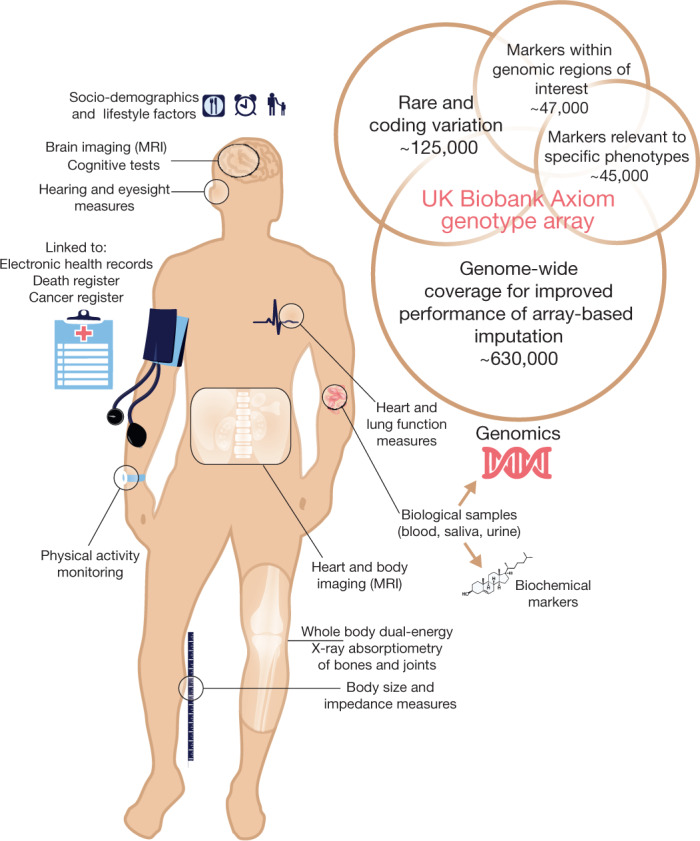
The UK Biobank project is a prospective cohort study with deep genetic and phenotypic data collected on approximately 500,000 individuals from across the United Kingdom, aged between 40 and 69 at recruitment. The open resource is unique in its size and scope. A rich variety of phenotypic and health-related information is available on each participant, including biological measurements, lifestyle indicators, biomarkers in blood and urine, and imaging of the body and brain. Follow-up information is provided by linking health and medical records. Genome-wide genotype data have been collected on all participants, providing many opportunities for the discovery of new genetic associations and the genetic bases of complex traits. Here we describe the centralized analysis of the genetic data, including genotype quality, properties of population structure and relatedness of the genetic data, and efficient phasing and genotype imputation that increases the number of testable variants to around 96 million. Classical allelic variation at 11 human leukocyte antigen genes was imputed, resulting in the recovery of signals with known associations between human leukocyte antigen alleles and many diseases.
Overview
The claims and statistics of this paper haven’t been checked yet.
Free: it reads the open-access text and checks the first 5 claims that cite a source we can check. Create a free account to check every claim.
Integrity signals
Registry
Cites
Statistics
Figures
Verification
Claims the paper makes
The claims and statistics of this paper haven’t been checked yet.
Free: it reads the open-access text and checks the first 5 claims that cite a source we can check. Create a free account to check every claim.
Claims other papers make about this one
Each is checked against this paper’s own text: does it say what the citing paper says it does?
The source backs part of the claim, not all of it — or backs it for a different population, condition or comparison.
In the citing paper
“The UKBB dataset provides information regarding more than 7000 phenotypes assessed in up to 500,000 participants from six ancestry groups [32].”
From Denisovan and Neanderthal archaic introgression differentially impacted the genetics of complex traits in modern populations (2022) · cites this paper as [32]
Experimental — accuracy not yet measuredThe source backs part of the claim, not all of it — or backs it for a different population, condition or comparison.
In the citing paper
“In the UK, the UK Biobank initiated enrollment in 2006, reaching a final participant count of over 500,000, and plans to follow participants for at least 30 years after enrollment 81 .”
From Multimodal biomedical AI (2022) · cites this paper as [81]
Experimental — accuracy not yet measuredThe source backs part of the claim, not all of it — or backs it for a different population, condition or comparison.
In the citing paper
“Approximately 9.2 million people living 25 miles (40 km) from one of 22 assessment centers across England, Wales and Scotland were invited to participate, with 5.5% participating in the baseline studies.”
From Plasma proteomic associations with genetics and health in the UK Biobank (2023) · cites this paper as Bycroft et al (Nature, 2018)
Experimental — accuracy not yet measuredThe cited source says what the claim attributes to it.
In the citing paper
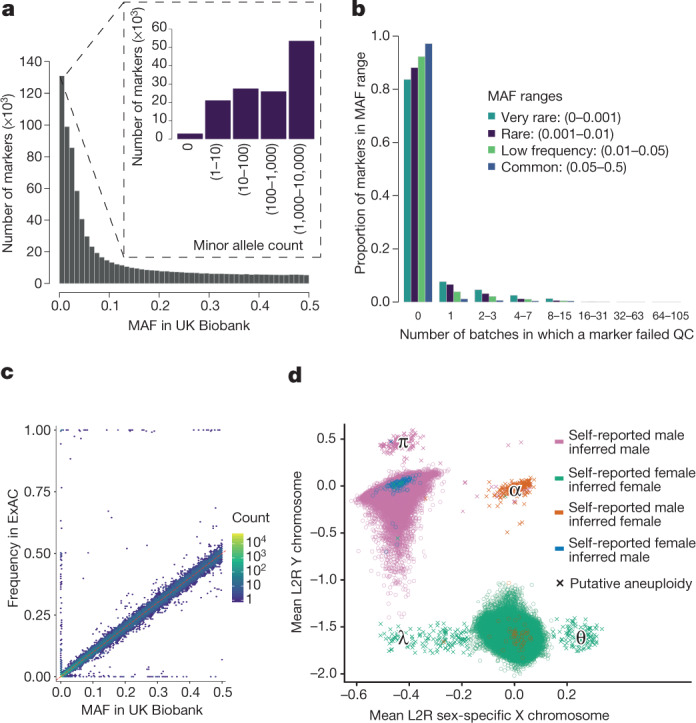
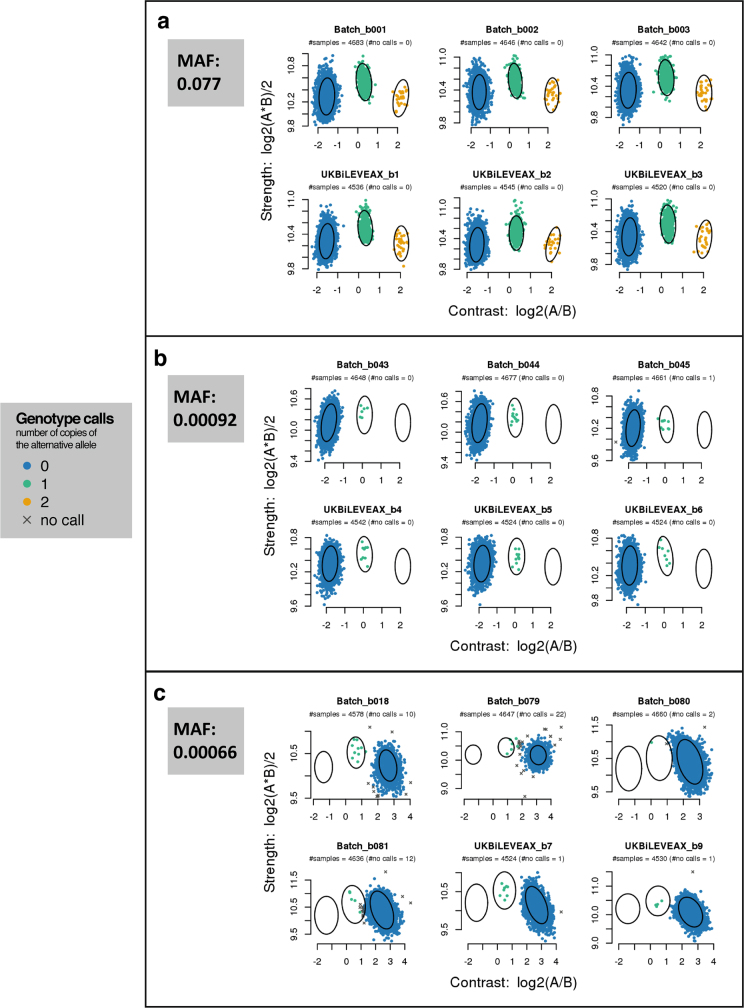
“Amongst the genetics community, it is generally well recognised that SNP-chips perform poorly for genotyping rare genetic variants [9-11] due to their reliance upon data clustering (Figure 1).”
From Assessing the analytical validity of SNP-chips for detecting very rare pathogenic variants: implications for direct-to-consumer genetic testing (2019) · cites this paper as [10]
The cited source says what the claim attributes to it.
In the citing paper
“The genetics community generally recognises that SNP chips perform poorly for genotyping rare genetic variants owing to their reliance on data clustering (fig 1).9 10 11”
From Use of SNP chips to detect rare pathogenic variants: retrospective, population based diagnostic evaluation (2021) · cites this paper as [10]
6 more claims about this paper
Create a free account to see every claim other papers make about this one.
Self-check
Percentages, sums and reported differences re-computed from the paper’s own numbers.
The self-check needs the paper’s full text.
Citations
Cites
A global reference for human genetic variation
The 1000 Genomes Project Consortium, authors, C., Auton, A., Abecasis, G. R., Steering committee, Altshuler, D. M., Durbin, R. M., Abecasis, G. R., Bentley, D. R., Chakravarti, A., et al. (2015) · Nature · doi:10.1038/nature15393 · Cited by 18,247
Self-citationSudlow, C., Gallacher, J., Allen, N., Beral, V., Burton, P., Danesh, J., Downey, P., Elliott, P., Green, J., Landray, M., et al. (2015) · PLOS Medicine · doi:10.1371/journal.pmed.1001779 · Cited by 12,728
Self-citationAnalysis of protein-coding genetic variation in 60,706 humans
Exome Aggregation Consortium, Lek, M., Karczewski, K. J., Minikel, E. V., Samocha, K. E., Banks, E., Fennell, T., O’Donnell-Luria, A. H., Ware, J. S., Hill, A. J., et al. (2016) · Nature · doi:10.1038/nature19057 · Cited by 9,587
A haplotype map of the human genome
The International HapMap Consortium (2005) · Nature · doi:10.1038/nature04226 · Cited by 5,858
Robust relationship inference in genome-wide association studies
Manichaikul, A., Mychaleckyj, J. C., Rich, S. S., Daly, K., Sale, M., & Chen, W.-M. (2010) · Bioinformatics · doi:10.1093/bioinformatics/btq559 · Cited by 3,541
A reference panel of 64,976 haplotypes for genotype imputation
the Haplotype Reference Consortium (2016) · Nature Genetics · doi:10.1038/ng.3643 · Cited by 2,836
Self-citationThe NHGRI GWAS Catalog, a curated resource of SNP-trait associations
Welter, D., MacArthur, J., Morales, J., Burdett, T., Hall, P., Junkins, H., Klemm, A., Flicek, P., Manolio, T., Hindorff, L., et al. (2014) · Nucleic Acids Research · doi:10.1093/nar/gkt1229 · Cited by 2,707
Genetic risk and a primary role for cell-mediated immune mechanisms in multiple sclerosis
The International Multiple Sclerosis Genetics Consortium & The Wellcome Trust Case Control Consortium 2 (2011) · Nature · doi:10.1038/nature10251 · Cited by 2,697
Self-citationMultimodal population brain imaging in the UK Biobank prospective epidemiological study
Miller, K. L., Alfaro-Almagro, F., Bangerter, N. K., Thomas, D. L., Yacoub, E., Xu, J., Bartsch, A. J., Jbabdi, S., Sotiropoulos, S. N., Andersson, J. L. R., et al. (2016) · Nature Neuroscience · doi:10.1038/nn.4393 · Cited by 2,020
The Electronic Medical Records and Genomics (eMERGE) Consortium, Wood, A. R., The MIGen Consortium, The PAGE Consortium, Study, T. L. C., Esko, T., Yang, J., Vedantam, S., Pers, T. H., Gustafsson, S., et al. (2014) · Nature Genetics · doi:10.1038/ng.3097 · Cited by 1,853
Self-citation
Cited by
Items 801–900 of 1,161
Liu, F., Xu, J., Guo, L., Qin, W., Liang, M., Schumann, G., & Yu, C. (2022) · Molecular Psychiatry · doi:10.1038/s41380-022-01669-6 · Cited by 82
“Though incomplete, such data have emerged in large-scale cohorts, such as the UK Biobank [58], the Chinese imaging genetics (CHIMGEN) study [59], the adolescent brain and cognitive development (ABCD) study [60], the consortium on vulnerability to externalizing disorders and addictions (cVEDA) [61], the IMAGEN study [6…”
BackgroundLiang, H., Zhou, X., Zhu, Y., Li, D., Jing, D., Su, X., Pan, P., Liu, H., & Zhang, Y. (2022) · Environmental Research · doi:10.1016/j.envres.2022.114996 · Cited by 83
From ‘Omics to Multi-omics Technologies: the Discovery of Novel Causal Mediators
Mohammadi‐Shemirani, P., Sood, T., & Paré, G. (2023) · Current Atherosclerosis Reports · doi:10.1007/s11883-022-01078-8 · Cited by 83
Genome-wide association and multi-omic analyses reveal ACTN2 as a gene linked to heart failure
Arvanitis, M., Tampakakis, E., Zhang, Y., Wang, W., Auton, A., Agee, M., Aslibekyan, S. W., Bell, R. K., Bryc, K., Clark, S., et al. (2020) · Nature Communications · doi:10.1038/s41467-020-14843-7 · Cited by 83
Self-citationKatori, M., Shi, S., Ode, K. L., Tomita, Y., & Ueda, H. R. (2022) · Proceedings of the National Academy of Sciences · doi:10.1073/pnas.2116729119 · Cited by 75
Ray, J. P., de Boer, C. G., Fulco, C. P., Lareau, C. A., Kanai, M., Ulirsch, J. C., Tewhey, R., Ludwig, L. S., Reilly, S. K., Bergman, D. T., et al. (2020) · Nature Communications · doi:10.1038/s41467-020-15022-4 · Cited by 78
Miao, Z., Alvarez, M., Ko, A., Bhagat, Y., Rahmani, E., Jew, B., Heinonen, S., Muñoz-Hernandez, L. L., Herrera-Hernandez, M., Aguilar-Salinas, C., et al. (2020) · PLOS Genetics · doi:10.1371/journal.pgen.1009018 · Cited by 70
“Since UKB has a larger sample size than METSIM, the IVs identified in UKB do not have genome-wide significant associations (p-value 5.0×10⁻⁸) with body fat percent in METSIM.”
MethodInfluentialPathogenic variants in actionable MODY genes are associated with type 2 diabetes
Bonnefond, A., Boissel, M., Bolze, A., Durand, E., Toussaint, B., Vaillant, E., Gaget, S., Graeve, F. D., Dechaume, A., Allegaert, F., et al. (2020) · Nature Metabolism · doi:10.1038/s42255-020-00294-3 · Cited by 80
Conservation machine learning: a case study of random forests
Sipper, M., & Moore, J. H. (2021) · Scientific Reports · doi:10.1038/s41598-021-83247-4 · Cited by 82
Hilser, J. R., Han, Y. Y., Biswas, S., Gukasyan, J., Cai, Z., Zhu, R., Tang, W. H. W., Deb, A., Lusis, A. J., Hartiala, J., et al. (2021) · Journal of Lipid Research · doi:10.1016/j.jlr.2021.100061 · Cited by 80
“00 Hypertension medication use 222 (20) 550 (16) 6.”
InfluentialZhou, G., & Zhao, H. (2021) · PLoS Genetics · doi:10.1371/journal.pgen.1009697 · Cited by 84
“Individuals in GWAS do not overlap with individuals in UK Biobank.”
InfluentialGrey and white matter microstructure is associated with polygenic risk for schizophrenia
Stauffer, E.-M., Bethlehem, R., Warrier, V., Murray, G., Romero-García, R., Seidlitz, J., & Bullmore, E. (2021) · Molecular Psychiatry · doi:10.1038/s41380-021-01260-5 · Cited by 73
“Genotyping and genetic quality control Genome-wide genotype data were available for N= 488,377 participants, with DNA acquisition, imputation, and quality control pipelines as described elsewhere [42].”
MethodThe genomic history of the Middle East
Almarri, M. A., Haber, M., Lootah, R. A., Hallast, P., Turki, S. H. A., Martin, H. C., Xue, Y., & Tyler‐Smith, C. (2021) · Cell · doi:10.1016/j.cell.2021.07.013 · Cited by 84
Analysis of genetic dominance in the UK Biobank
Palmer, D. S., Zhou, W., Abbott, L. E., Wigdor, E. M., Baya, N. A., Churchhouse, C. L., Seed, C., Poterba, T., King, D. A., Kanai, M., et al. (2023) · Science · doi:10.1126/science.abn8455 · Cited by 82
Multimodal LLMs for Health Grounded in Individual-Specific Data
Belyaeva, A., Cosentino, J., Hormozdiari, F., Eswaran, K., Shetty, S., Corrado, G. S., Carroll, A. W., McLean, C. Y., & Furlotte, N. A. (2023) · Lecture notes in computer science · doi:10.1007/978-3-031-47679-2_7 · Cited by 129
Temporally distinct 3D multi-omic dynamics in the developing human brain
Heffel, M. G., Zhou, J., Zhang, Y., Lee, D.-S., Hou, K., Pastor-Alonso, O., Abuhanna, K. D., Galasso, J., Kern, C., Tai, C., et al. (2024) · Nature · doi:10.1038/s41586-024-08030-7 · Cited by 77
“The genome-wide association study (GWAS) summary statistics included in this study were as follows: schizophrenia 40 , bipolar disorder 62 , major depressive disorder 63 , attention deficit hyperactivity disorder 64 , autism spectrum disorder 65 , Alzheimer’s disease 66 and height from the UK Biobank 67 (downloaded fr…”
Large language models in biomedicine and healthcare
Zhou, J., Li, H., Chen, S., Chen, Z., Han, Z., & Gao, X. (2025) · Yearbook of pediatric endocrinology · doi:10.1038/s44387-025-00047-1 · Cited by 77
Meng, W., Adams, M. J., Palmer, C. N. A., Agee, M., Alipanahi, B., Bell, R. K., Bryc, K., Elson, S. L., Fontanillas, P., Furlotte, N. A., et al. (2019) · Communications Biology · doi:10.1038/s42003-019-0568-2 · Cited by 75
Genetic aetiology of self-harm ideation and behaviour
Campos, A. I., Verweij, K. J. H., Statham, D. J., Madden, P. A. F., Maciejewski, D. F., Davis, K. A. S., John, A., Hotopf, M., Heath, A. C., Martin, N. G., et al. (2020) · Scientific Reports · doi:10.1038/s41598-020-66737-9 · Cited by 74
Jia, X., Yamamura, T., Gbadegesin, R., McNulty, M. T., Song, K., Nagano, C., Hitomi, Y., Lee, D., Aiba, Y., Khor, S., et al. (2020) · Kidney International · doi:10.1016/j.kint.2020.05.029 · Cited by 77
Balboni, E., Filippini, T., Crous‐Bou, M., Guxens, M., Erickson, L. D., & Vinceti, M. (2021) · Environmental Research · doi:10.1016/j.envres.2021.111976 · Cited by 77
From pharmacogenetics to pharmaco-omics: Milestones and future directions
Auwerx, C., Sadler, M. C., Reymond, A., & Kutalik, Z. (2022) · Human Genetics and Genomics Advances · doi:10.1016/j.xhgg.2022.100100 · Cited by 91
Emerging phenotyping strategies will advance our understanding of psychiatric genetics
Sanchez‐Roige, S., & Palmer, A. A. (2020) · Nature Neuroscience · doi:10.1038/s41593-020-0609-7 · Cited by 77
Cai, N., Gomez-Duran, A., Yonova-Doing, E., Kundu, K., Burgess, A. I., Golder, Z. J., Calabrese, C., Bonder, M. J., Camacho, M., Lawson, R. A., et al. (2021) · Nature Medicine · doi:10.1038/s41591-021-01441-3 · Cited by 73
Boocock, J., Leask, M., Okada, Y., Matsuo, H., Kawamura, Y., Shi, Y., Li, C., Mount, D. B., Mandal, A. K., Wang, W., et al. (2020) · Human Molecular Genetics · doi:10.1093/hmg/ddaa013 · Cited by 83
Children’s rare disease cohorts: an integrative research and clinical genomics initiative
Rockowitz, S., LeCompte, N., Carmack, M. M., Quitadamo, A., Wang, L., Park, M., Knight, D., Sexton, E. L., Smith, L. A., Sheidley, B. R., et al. (2020) · npj Genomic Medicine · doi:10.1038/s41525-020-0137-0 · Cited by 78
Kachuri, L., Jeon, S., DeWan, A. T., Metayer, C., Ma, X., Witte, J. S., Chiang, C. W. K., Wiemels, J. L., & de Smith, A. J. (2021) · The American Journal of Human Genetics · doi:10.1016/j.ajhg.2021.08.004 · Cited by 79
Ba, A. N. N., Lawrence, K. R., Rego‐Costa, A., Gopalakrishnan, S., Temko, D., Michor, F., & Desai, M. M. (2022) · eLife · doi:10.7554/elife.73983 · Cited by 81
Laver, T. W., Wakeling, M. N., Knox, O., Colclough, K., Wright, C. F., Ellard, S., Hattersley, A. T., Weedon, M. N., & Patel, K. (2022) · Diabetes · doi:10.2337/db21-0844 · Cited by 78
“with deep phenotyping data and genetic data for 500,000 individuals aged 40–70 years at recruitment (13,14).”
BackgroundWhole genome sequence analysis of blood lipid levels in >66,000 individuals
Selvaraj, M. S., Li, X., Li, Z., Pampana, A., Zhang, D. Y., Park, J., Aslibekyan, S., Bis, J. C., Brody, J. A., Cade, B. E., et al. (2022) · Nature Communications · doi:10.1038/s41467-022-33510-7 · Cited by 69
Self-citationGenetic Variants Associated With Hidradenitis Suppurativa
Sun, Q., Broadaway, K. A., Edmiston, S. N., Fajgenbaum, K., Miller‐Fleming, T. W., Westerkam, L., Melendez-Gonzalez, M. D. M., Bui, H., Blum, F. R., Levitt, B. E., et al. (2023) · JAMA Dermatology · doi:10.1001/jamadermatol.2023.2217 · Cited by 76
Beaumont, R. N., Flatley, C. J., Vaudel, M., Wu, X., Chen, J., Moen, G.-H., Skotte, L., Helgeland, Ø., Solé-Navais, P., Banasik, K., et al. (2023) · Nature Genetics · doi:10.1038/s41588-023-01520-w · Cited by 77
“The LD reference panel was made up of 344,241 individuals from the UK Biobank defined as having British ancestry 65 .”
BackgroundPolygenic prediction of body mass index and obesity through the life course and across ancestries
Smit, R. A. J., Wade, K. H., Hui, Q., Arias, J. D., Yin, X., Christiansen, M. R., Yengo, L., Preuss, M. H., Nakabuye, M., Rocheleau, G., et al. (2025) · Nature Medicine · doi:10.1038/s41591-025-03827-z · Cited by 80
“Given our inclusion of several variants with P values below this threshold (among the PGS variants: n = 154 for EUR, n = 12 for AMR), we reran PRS-CSx with Φ 1 × 10 −2 but did not observe markedly different results in PGS performance within the UKBB tuning populations (Supplementary Table 18).”
Efficient Implementation of Penalized Regression for Genetic Risk Prediction
Privé, F., Aschard, H., & Blum, M. G. B. (2019) · Genetics · doi:10.1534/genetics.119.302019 · Cited by 76
“This model can be used to build polygenic risk scores based on very large individual-level SNP datasets such as the UK biobank (Bycroft et al. 2018).”
BackgroundMethodInfluentialAssessing the Role of Rare Genetic Variation in Patients With Heart Failure
Povysil, G., Chazara, O., Carss, K. J., Deevi, S. V. V., Wang, Q., Armisen, J., Paul, D. S., Granger, C. B., Kjekshus, J., Aggarwal, V., et al. (2021) · JAMA Cardiology · doi:10.1001/jamacardio.2020.6500 · Cited by 73
Extreme inbreeding in a European ancestry sample from the contemporary UK population
Yengo, L., Wray, N. R., & Visscher, P. M. (2019) · Nature Communications · doi:10.1038/s41467-019-11724-6 · Cited by 67
Polygenic and multifactorial scores for pancreatic ductal adenocarcinoma risk prediction
Galeotti, A. A., Gentiluomo, M., Rizzato, C., Obazee, O. M., Neoptolemos, J. P., Pasquali, C., Nentwich, M. F., Cavestro, G. M., Pezzilli, R., Greenhalf, W., et al. (2020) · Journal of Medical Genetics · doi:10.1136/jmedgenet-2020-106961 · Cited by 75
The contribution of X-linked coding variation to severe developmental disorders
Martin, H. C., Gardner, E. J., Samocha, K. E., Kaplanis, J., Akawi, N. A., Sifrim, A., Eberhardt, R. Y., Tavares, A. L. T., Neville, M. D. C., Niemi, M., et al. (2021) · Nature Communications · doi:10.1038/s41467-020-20852-3 · Cited by 77
Investigating Pleiotropy Between Depression and Autoimmune Diseases Using the UK Biobank
Glanville, K. P., Coleman, J. R. I., O’Reilly, P. F., Galloway, J. B., & Lewis, C. M. (2021) · Biological Psychiatry Global Open Science · doi:10.1016/j.bpsgos.2021.03.002 · Cited by 85
Briggs, S., Law, P., East, J. E., Wordsworth, S., Dunlop, M. G., Houlston, R. S., Hippisley‐Cox, J., & Tomlinson, I. P. M. (2022) · BMJ · doi:10.1136/bmj-2022-071707 · Cited by 78
Genetic architecture of the white matter connectome of the human brain
Sha, Z., Schijven, D., Fisher, S. E., & Francks, C. (2023) · Science Advances · doi:10.1126/sciadv.add2870 · Cited by 79
Matalon, D. R., Zepeda‐Mendoza, C. J., Aarabi, M., Brown, K. M., Fullerton, S. M., Kaur, S., Quintero‐Rivera, F., & Vatta, M. (2023) · Genetics in Medicine · doi:10.1016/j.gim.2023.100812 · Cited by 75
The impact of rare protein coding genetic variation on adult cognitive function
Chen, C., Tian, R., Ge, T., Lam, M., Sánchez-Andrade, G., Singh, T., Urpa, L., Liu, J. Z., Sanderson, M., Rowley, C., et al. (2023) · Nature Genetics · doi:10.1038/s41588-023-01398-8 · Cited by 77
McGurk, K. A., Zhang, X., Theotokis, P. I., Thomson, K. L., Harper, A. R., Buchan, R. J., Mazaika, E., Ormondroyd, E., Wright, W. T., Macaya, D., et al. (2023) · The American Journal of Human Genetics · doi:10.1016/j.ajhg.2023.08.003 · Cited by 74
“Prevalence is underestimated when derived from national cohorts using coding systems such as ICD codes because of incomplete ascertainment through diagnostic and procedure coding.(47) We would therefore expect the most accurate estimates of the prevalence of CM to come from imaging studies in populations, where echoca…”
MethodMitra, S., Malik, R., Wong, W., Rahman, A., Hartemink, A. J., Pritykin, Y., Dey, K. K., & Leslie, C. S. (2024) · Nature Genetics · doi:10.1038/s41588-024-01689-8 · Cited by 78
“…probability (PIP) > 0.5) for the corresponding genes in the closest matched GTEx tissues 15 , and with respect to 17,769 statistically fine-mapped GWAS variants (PIP > 0.2) across 82 UK Biobank traits 16 (average, n = 334,803; Supplementary Table 3) in PBMC, pancreas and pituitary gland (Methods).”
InfluentialIntegration of a polygenic score into guideline-recommended prediction of cardiovascular disease
Li, L., Pang, S., Starnecker, F., Müller‐Myhsok, B., & Schunkert, H. (2024) · European Heart Journal · doi:10.1093/eurheartj/ehae048 · Cited by 78
Reduced reproductive success is associated with selective constraint on human genes
Gardner, E. J., Neville, M. D. C., Samocha, K. E., Barclay, K., Kolk, M., Niemi, M. E. K., Kirov, G., Martin, H. C., & Hurles, M. E. (2022) · Nature · doi:10.1038/s41586-022-04549-9 · Cited by 72
Schuermans, A., Pournamdari, A. B., Lee, J., Bhukar, R., Ganesh, S., Darosa, N., Small, A. M., Yu, Z., Hornsby, W., Koyama, S., et al. (2024) · Nature Cardiovascular Research · doi:10.1038/s44161-024-00567-0 · Cited by 71
“Anthropometric data, physical measurements and blood samples were obtained by trained study staff 42 .”
Korologou-Linden, R., Bhatta, L., Brumpton, B. M., Howe, L. D., Millard, L. A. C., Kolaric, K., Ben-Shlomo, Y., Williams, D. M., Smith, G. D., Anderson, E. L., et al. (2022) · Nature Communications · doi:10.1038/s41467-022-32183-6 · Cited by 71
Genetic association study of childhood aggression across raters, instruments, and age
Ip, H. F., van der Laan, C. M., Krapohl, E. M. L., Brikell, I., Sánchez-Mora, C., Nolte, I. M., St Pourcain, B., Bolhuis, K., Palviainen, T., Zafarmand, H., et al. (2021) · Translational Psychiatry · doi:10.1038/s41398-021-01480-x · Cited by 71
“These should be interpreted with some caution because of the design of the GWA studies: AGG was measured in children and young adolescents whereas testosterone levels were measured in adults in the UK Biobank 45, and genetic stability of testosterone levels might be low, at least for males 46.”
MethodCCR5-∆32 is deleterious in the homozygous state in humans
Wei, X., & Nielsen, R. (2019) · Nature Medicine · doi:10.1038/s41591-019-0459-6 · Cited by 75
Retractedqgg: an R package for large-scale quantitative genetic analyses
Rohde, P. D., Sørensen, I. F., & Sørensen, P. (2019) · Bioinformatics · doi:10.1093/bioinformatics/btz955 · Cited by 72
Multi-resolution localization of causal variants across the genome
Sesia, M., Katsevich, E., Bates, S., Candès, E., & Sabatti, C. (2020) · Nature Communications · doi:10.1038/s41467-020-14791-2 · Cited by 73
Large genome-wide association study identifies three novel risk variants for restless legs syndrome
Didriksen, M., Nawaz, M. S., Dowsett, J., Bell, S., Erikstrup, C., Pedersen, O. B., Sørensen, E., Jennum, P., Burgdorf, K. S., Burchell, B. J., et al. (2020) · Communications Biology · doi:10.1038/s42003-020-01430-1 · Cited by 75
Yu, Z., Jin, J., Tin, A., Köttgen, A., Yu, B., Chen, J., Surapaneni, A., Zhou, L., Ballantyne, C. M., Hoogeveen, R. C., et al. (2021) · Journal of the American Society of Nephrology · doi:10.1681/asn.2020111599 · Cited by 77
“Details of the UK Biobank cohort have been described elsewhere.(34) To ensure balance across different ethnic groups, the selection was conducted within each ethnic group that was available in the UK Biobank (Supplemental Figure 2).”
MethodShirai, Y., Nakanishi, Y., Suzuki, A., Konaka, H., Nishikawa, R., Sonehara, K., Namba, S., Tanaka, H., Masuda, T., Yaga, M., et al. (2022) · Annals of the Rheumatic Diseases · doi:10.1136/annrheumdis-2022-222460 · Cited by 74
Genetic risk factors have a substantial impact on healthy life years
Jukarainen, S., Kiiskinen, T., Kuitunen, S., Havulinna, A. S., Karjalainen, J. M., Cordioli, M., Rämö, J. T., Mars, N., FinnGen, Samocha, K. E., et al. (2022) · Nature Medicine · doi:10.1038/s41591-022-01957-2 · Cited by 75
Cheng, S., Xu, Z., Bian, S., Chen, X., Shi, Y., Li, Y., Duan, Y., Liu, Y., Lin, J., Jiang, Y., et al. (2023) · Cell Discovery · doi:10.1038/s41421-023-00582-8 · Cited by 76
Schneider, C. V., Schneider, K. M., Raptis, A. A., Huang, H. Y. R., Trautwein, C., & Loomba, R. S. (2024) · Alimentary Pharmacology & Therapeutics · doi:10.1111/apt.17958 · Cited by 80
“Studies suggest obesity and elevated liver enzymes are not a reliable screening tool for NAFLD in Asian patients, as a larger proportion of steatosis patients are non-obese (cut-off 25).”
BackgroundGenetic drivers and cellular selection of female mosaic X chromosome loss
Liu, A., Genovese, G., Zhao, Y., Pirinen, M., Zekavat, S. M., Kentistou, K. A., Yang, Z., Yu, K. F., Vlasschaert, C., Liu, X., et al. (2024) · Nature · doi:10.1038/s41586-024-07533-7 · Cited by 72
“…female participants from 8 biobanks worldwide, including European ancestry participants from FinnGen 22 , Estonian Biobank 23 (EBB), UK Biobank 24,25 (UKBB), Breast Cancer Association Consortium 26,27 (BCAC), Million Veteran Program 28,29 (MVP), Mass General Brigham Biobank 30,31 (MGB) and…”
BackgroundGenoTools: an open-source Python package for efficient genotype data quality control and analysis
Vitale, D., Koretsky, M. J., Kuznetsov, N., Hong, S., Martin, J., James, M., Makarious, M. B., Leonard, H. L., Iwaki, H., Faghri, F., et al. (2024) · G3 Genes Genomes Genetics · doi:10.1093/g3journal/jkae268 · Cited by 72
“In the UK Biobank 15 data, we found a 1526563.448 chi-square, 1e-16 p-value, 180 degrees of freedom, and 0.564 Cramér's V between predicted ancestry and self-reported race (Figure 9), suggesting strong relationships between predictions and self-report in both datasets.”
InfluentialDiscovery of genomic loci of the human cerebral cortex using genetically informed brain atlases
Makowski, C., van der Meer, D., Dong, W., Wang, H., Wu, Y., Zou, J., Liu, C., Rosenthal, S. B., Hagler, D. J., Fan, C. C., et al. (2022) · Science · doi:10.1126/science.abe8457 · Cited by 67
Common human genetic variants of APOE impact murine COVID-19 mortality
Ostendorf, B. N., Patel, M. A., Bilanovic, J., Hoffmann, H.-H., Carrasco, S. E., Rice, C. M., & Tavazoie, S. F. (2022) · Nature · doi:10.1038/s41586-022-05344-2 · Cited by 61
Zhou, R., Chen, H.-W., Li, F., Zhong, Q., Huang, Y., & Wu, X. (2023) · Journal of the American Medical Directors Association · doi:10.1016/j.jamda.2023.05.023 · Cited by 72
The transition from genomics to phenomics in personalized population health
Yurkovich, J. T., Evans, S. J., Rappaport, N., Boore, J. L., Lovejoy, J. C., Price, N. D., & Hood, L. (2023) · Nature Reviews Genetics · doi:10.1038/s41576-023-00674-x · Cited by 82
“UK Biobank personalized population health resource established in the UK with 500,000 participants 174 .”
Yang, S., Guo, J., Kong, Z., Deng, M., Da, J., Lin, X., Peng, S., Fu, J., Luo, T., Ma, J., et al. (2024) · Journal of Translational Medicine · doi:10.1186/s12967-023-04835-8 · Cited by 78
“For the primary outcome, we obtained sepsis data from the UK Biobank, a large-scale population-based cohort study of UK adults, as previously reported [29].”
MethodAhmed, A., Cule, M., Bell, J. D., Sattar, N. A., & Yaghootkar, H. (2024) · Journal of Hepatology · doi:10.1016/j.jhep.2024.06.030 · Cited by 71
Kibinge, N. K., Relton, C. L., Gaunt, T. R., & Richardson, T. G. (2020) · The American Journal of Human Genetics · doi:10.1016/j.ajhg.2020.04.007 · Cited by 71
“01 with a reference panel consisting of 10,000 unrelated individuals from the UK Biobank study who were of European descent.(31,32) This reference panel was selected because individuals from the ROS andMAP study were reported to be of European descent.”
BackgroundTrinder, M., Paquette, M., Cermakova, L., Ban, M. R., Hegele, R. A., Baass, A. W., & Brunham, L. R. (2020) · Circulation Genomic and Precision Medicine · doi:10.1161/circgen.120.002919 · Cited by 79
An open resource of structural variation for medical and population geneticsPreprint
Collins, R. L., Brand, H., Karczewski, K. J., Zhao, X., Alföldi, J., Francioli, L. C., Khera, A. V., Lowther, C., Gauthier, L. D., Wang, H., et al. (2019) · bioRxiv (Cold Spring Harbor Laboratory) · doi:10.1101/578674 · Cited by 77
Alzheimer’s and Parkinson’s Diseases Predict Different COVID-19 Outcomes: A UK Biobank Study
Yu, Y., Travaglio, M., Popovic, R., Leal, N. S., & Martins, L. M. (2021) · Geriatrics · doi:10.3390/geriatrics6010010 · Cited by 74
“Clinical data on neurodegenerative disorders and other comorbidities were cross validated by an algorithm from the UK Biobank, which took into consideration the UK Biobank baseline assessment data (verbal interview), linked hospital admissions data, and death register data [26].”
MethodGeorgakis, M. K., Malik, R., Li, X., Gill, D., Levin, M. G., Vy, H. M. T., Judy, R., Ritchie, M. D., Verma, S. S., Nadkarni, G. N., et al. (2021) · Circulation · doi:10.1161/circulationaha.120.052604 · Cited by 76
Polygenic risk modeling for prediction of epithelial ovarian cancer risk
Dareng, E., Tyrer, J. P., Barnes, D. R., Jones, M. R., Yang, X., Aben, K. K. H., Adank, M. A., Agata, S., Andrulis, I. L., Anton‐Culver, H., et al. (2022) · European Journal of Human Genetics · doi:10.1038/s41431-021-00987-7 · Cited by 78
“Samples were genotyped using either the Affymetrix UK BiLEVE Axiom Array or Affymetrix UK Biobank Axiom Array (which share 95% marker content), and then imputed to a combination of the Haplotype Reference Consortium, the 1000 Genomes phase 3 and the UK10K reference panels [13].”
MethodHeterozygous PRKN mutations are common but do not increase the risk of Parkinson’s disease
Zhu, W. Y., Huang, X., Yoon, E., Bandrés‐Ciga, S., Blauwendraat, C., Billingsley, K. J., Cade, J. H., Wu, B. P., Williams, V. H., Schindler, A. B., et al. (2022) · Brain · doi:10.1093/brain/awab456 · Cited by 72
Mapping and comparing fMRI connectivity networks across species
Pagani, M., Gutierrez‐Barragan, D., de Guzman, A. E., Xu, T., & Gozzi, A. (2023) · Communications Biology · doi:10.1038/s42003-023-05629-w · Cited by 74
“Similarly, large-scale imaging initiatives have linked genetic variation to network features both in healthy populations 19,20 as well as in carriers of genetic alterations associated with brain disorders 21 – 24 .”
BackgroundGao, B., & Zhou, X. (2024) · Nature Genetics · doi:10.1038/s41588-023-01604-7 · Cited by 77
“To do so, we obtained genotype data from 50,000 White British and 7,894 Black British samples in UK Biobank (UKBB) 23,24 and focused on a candidate genomic region on chromosome 1 (23.91–25.14 MB) with 1,495 SNPs.”
InfluentialHilser, J. R., Spencer, N. J., Afshari, K. M., Gilliland, F. D., Hu, H., Deb, A., Lusis, A. J., Tang, W. H. W., Hartiala, J., Hazen, S. L., et al. (2024) · Arteriosclerosis Thrombosis and Vascular Biology · doi:10.1161/atvbaha.124.321001 · Cited by 74
Roselli, C., Surakka, I. L., OLESEN, M. S., Sveinbjörnsson, G., Marston, N., Choi, S. H., Hólm, H., Chaffin, M. D., Gudbjartsson, D. F., Hill, M. C., et al. (2025) · Nature Genetics · doi:10.1038/s41588-024-02072-3 · Cited by 78
Bonder, M. J., Smail, C., Gloudemans, M. J., Frésard, L., Jakubosky, D., D’Antonio, M., Li, X., Ferraro, N. M., Carcamo-Orive, I., Mirauta, B., et al. (2021) · Nature Genetics · doi:10.1038/s41588-021-00800-7 · Cited by 76
Exploiting the GTEx resources to decipher the mechanisms at GWAS loci
Barbeira, A. N., Bonazzola, R., Gamazon, E. R., Liang, Y., Park, Y., Kim-Hellmuth, S., Wang, G., Jiang, Z., Zhou, D., Hormozdiari, F., et al. (2019) · bioRxiv (Cold Spring Harbor Laboratory) · doi:10.1101/814350 · Cited by 69
Devine, J., Aponte, J. D., Katz, D. C., Liu, W., Vercio, L. L., Forkert, N. D., Marcucio, R., Percival, C. J., & Hallgrímsson, B. (2020) · Evolutionary Biology · doi:10.1007/s11692-020-09508-8 · Cited by 74
Nakamura, R., Misawa, K., Tohnai, G., Nakatochi, M., Furuhashi, S., Atsuta, N., Hayashi, N., Yokoi, D., Watanabe, H., Watanabe, H., et al. (2020) · Communications Biology · doi:10.1038/s42003-020-01251-2 · Cited by 61
Leveraging phenotypic variability to identify genetic interactions in human phenotypes
Marderstein, A. R., Davenport, E., Kulm, S., Hout, C. V. V., Elemento, O., & Clark, A. G. (2020) · The American Journal of Human Genetics · doi:10.1016/j.ajhg.2020.11.016 · Cited by 72
Ahlberg, G., Andreasen, L., Ghouse, J., Bertelsen, L., Bundgaard, H., Haunsø, S., Svendsen, J. H., & OLESEN, M. S. (2021) · European Heart Journal · doi:10.1093/eurheartj/ehab466 · Cited by 71
Genome-wide association study of COVID-19 severity among the Chinese population
Li, Y., Ke, Y., Xia, X., Wang, Y., Cheng, F., Liu, X., Jin, X., Li, B., Xie, C., Liu, S. M., et al. (2021) · Cell Discovery · doi:10.1038/s41421-021-00318-6 · Cited by 77
High Blood Pressure and Intraocular Pressure: A Mendelian Randomization Study
Plotnikov, D., Huang, Y., Khawaja, A. P., Foster, P. J., Zhu, Z., Guggenheim, J. A., & He, M. (2022) · Investigative Ophthalmology & Visual Science · doi:10.1167/iovs.63.6.29 · Cited by 74
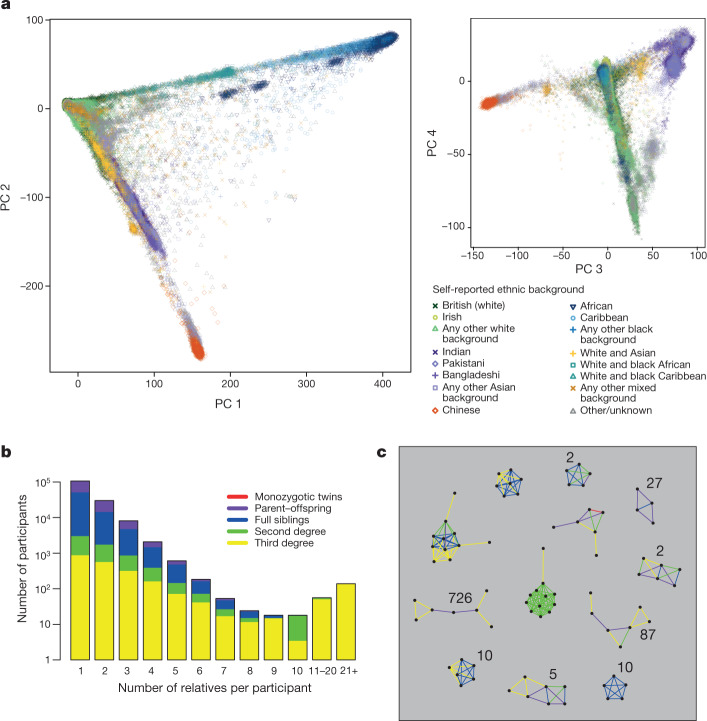
“15 To avoid spurious associations due to population stratification, individuals not in the set of white British ancestry individuals defined by Bycroft et al. 16 were excluded.”
BackgroundSaturation genome editing of DDX3X clarifies pathogenicity of germline and somatic variation
Radford, E. J., Tan, H.-K., Andersson, M. H. L., Stephenson, J. D., Gardner, E. J., Ironfield, H., Waters, A. J., Gitterman, D., Lindsay, S., Abascal, F., et al. (2023) · Nature Communications · doi:10.1038/s41467-023-43041-4 · Cited by 63
“All models were corrected for age, age 2 , sex, WES sequencing batch, and the fi rst ten genetic principal components as de fi ned in Bycroft et al. 63 We corrected for 9 tests (p <5.6×10⁻³) and found no signi fi cant associations.”
InfluentialRare genetic variation in fibronectin 1 (FN1) protects against APOEε4 in Alzheimer’s disease
Bhattarai, P., Gunasekaran, T. I., Belloy, M. E., Reyes‐Dumeyer, D., Jülich, D., Tayran, H., Yılmaz, E., Flaherty, D., Turgutalp, B., Sukumar, G., et al. (2024) · Acta Neuropathologica · doi:10.1007/s00401-024-02721-1 · Cited by 75
Capalbo, A., de Wert, G. M. W. R., Mertes, H., Klausner, L., Coonen, E., Spinella, F., de Velde, H. V., Viville, S., Sermon, K., Vermeulen, N., et al. (2024) · Human Reproduction Update · doi:10.1093/humupd/dmae012 · Cited by 75
“…pushed forward by large biobanks and research consortia that have aggregated genomic and phenotypic data from hundreds of thousands of individuals (Bycroft et al. , 2018; Ishigaki et al. , 2020; Mars et al. , 2020; Aragam et al. , 2022; Yengo et al. , 2022; Kurki et al. , 2023; Walters et al. ,…”
BackgroundScalable high resolution ancestry deconvolution for genomic data
Hilmarsson, H., Kumar, A., Barrabés, M., Rastogi, R., Bustamante, C. D., Montserrat, D. M., & Ioannidis, A. G. (2026) · Nature Communications · doi:10.1038/s41467-026-75391-0 · Cited by 76
“As biobanks consisting of hundreds of thousands of individuals are now common 23 – 26 , and wholegenome sequences ofthese biobanksare expanding, such limitations of LAI methods need to be addressed.”
A Multi-Omics Perspective of Quantitative Trait Loci in Precision Medicine
Ye, Y., Zhang, Z., Liu, Y., Diao, L., & Han, L. (2020) · Trends in Genetics · doi:10.1016/j.tig.2020.01.009 · Cited by 73
Cupido, A. J., Reeskamp, L. F., Hingorani, A. D., Finan, C., Asselbergs, F. W., Hovingh, G. K., & Schmidt, A. F. (2022) · JAMA Cardiology · doi:10.1001/jamacardio.2022.2333 · Cited by 68
Is the COVID‐19 thrombotic catastrophe complement‐connected?
Conway, E. M., & Pryzdial, E. L. G. (2020) · Journal of Thrombosis and Haemostasis · doi:10.1111/jth.15050 · Cited by 73
Allen, N. E., Arnold, M., Parish, S., Hill, M., Sheard, S., Callen, H., Fry, D., Moffat, S., Gordon, M., Welsh, S., et al. (2020) · Wellcome Open Research · doi:10.12688/wellcomeopenres.16171.2 · Cited by 70
Self-citationHamet, P., Pausová, Z., Attaoua, R., Hishmih, C., Haloui, M., Shin, J., Paus, T., Abrahamowicz, M., Gaudet, D., Santucci, L., et al. (2021) · American Journal of Hypertension · doi:10.1093/ajh/hpaa223 · Cited by 72
A variant-centric perspective on geographic patterns of human allele frequency variation
Biddanda, A., Rice, D. P., & Novembre, J. (2020) · eLife · doi:10.7554/elife.60107 · Cited by 74
“For example, the UK Biobank, while predominantly of European ancestry, has representation of individuals with ancestry from each of the five regions used here (Bycroft et al., 2018).”
BackgroundInvestigation of Autosomal Genetic Sex Differences in Parkinson's Disease
Blauwendraat, C., Iwaki, H., Makarious, M. B., Bandres‐Ciga, S., Leonard, H. L., Grenn, F. P., Lake, J., Krohn, L., Tan, M., Kim, J. J., et al. (2021) · Annals of Neurology · doi:10.1002/ana.26090 · Cited by 65
“Imputed UK Biobank (UKB) genotype data (v3) was downloaded (April 2018) under application number 33601 (Sudlow et al. 2015; Bycroft et al. 2018).”
MethodChildhood obesity and multiple sclerosis: A Mendelian randomization study
Harroud, A., Mitchell, R. E., Richardson, T. G., Morris, J. A., Forgetta, V., Smith, G. D., Baranzini, S. E., & Richards, J. B. (2021) · Multiple Sclerosis Journal · doi:10.1177/13524585211001781 · Cited by 77
“Genetic instruments for childhood and adult body size were obtained from our previous GWAS of 453,169 participants from the UKB.(20) Details have been described previously.”
MethodInfluentialRelationships between sleep traits and lung cancer risk: a prospective cohort study in UK Biobank
Xie, J., Zhu, M., Ji, M., Fan, J., Huang, Y., Wei, X., Jiang, X., Xu, J., Yin, R. H., Wang, Y., et al. (2021) · SLEEP · doi:10.1093/sleep/zsab089 · Cited by 70
Zhao, B., Shan, Y., Yang, Y., Yu, Z., Li, T., Wang, X., Luo, T., Zhu, Z., Sullivan, P. F., Zhao, H., et al. (2021) · Nature Communications · doi:10.1038/s41467-021-23130-y · Cited by 79
Metadata
- Authors
- Bycroft, C., Freeman, C., Petkova, D., Band, G., Elliott, L. T., Sharp, K., Motyer, A., Vukcevic, D., Delaneau, O., O’Connell, J., Cortes, A., Welsh, S., Young, A., Effingham, M., McVean, G., Leslie, S., Allen, N., Donnelly, P., & Marchini, J.
- Affiliations
- Centre for Human Genetics (GB)
- University of Oxford (GB)
- The University of Melbourne (AU)
- University of Geneva (CH)
- Illumina (United Kingdom) (GB)
- UK Biobank (GB)
- Corresponding author
- Marchini, Jonathan
- ORCID
- Venue
- Nature
- Published
- 2018-10-10
- Volume
- 562
- Issue
- 7726
- Pages
- 203-209
- ISSN
- 0028-0836 (ISSN-L)
- 1476-4687
- PMC
- PMC6786975
- OpenAlex
- W2895486342
- Semantic Scholar
- a9cc79a5df0f7802145401b464e4bb30c23b8efa
- Cited by
- 8,876
- References
- 41
- Citations by year
- 2026: 1242 · 2025: 1612 · 2024: 1546 · 2023: 1331 · 2022: 1185 · 2021: 928 · 2020: 643 · 2019: 336 · 2018: 40
- FWCI
- 299.77
- Type
- journal article
- Language
- en
- Open access
- hybrid
- doi.org
- Licence
- cc-by
- creativecommons.org/licenses/by/4.0 (tdm)
- creativecommons.org/licenses/by/4.0 (vor)
- Locations
- Nature (publishedVersion, cc-by)
- PubMed Central (publishedVersion, cc-by)
- PubMed (publishedVersion)
- RePEc: Research Papers in Economics (submittedVersion)
- IRIS (submittedVersion, cc-by)
- Minerva Access (University of Melbourne) (submittedVersion, cc-by)
- SERVAL (Université de Lausanne) (submittedVersion, cc-by)
- Funders
- Wellcome Trust (095552/Z/11/Z, 203141/Z/16/Z, 10956/Z/13Z, 100308/Z/12/Z, 090532/Z/09/Z, 100956/Z/13/Z)
- National Institute for Health and Care Research
- British Heart Foundation
- Medical Research Council
- National Health and Medical Research Council (1053756)
- FP7 Ideas: European Research Council (617306)
- Topics
- Life Sciences › Biochemistry, Genetics and Molecular Biology › Genetics › Genetic Associations and Epidemiology
- Life Sciences › Biochemistry, Genetics and Molecular Biology › Genetics › Genetic and phenotypic traits in livestock
- Life Sciences › Biochemistry, Genetics and Molecular Biology › Genetics › Forensic and Genetic Research
- Keywords
- UK Biobank, prospective cohort, deep phenotyping, complex traits, population structure, relatedness, genotype phasing, genotype imputation, biomarkers
- MeSH terms
- Adult, Aged, Alleles, Body Height, Brain, Family, Female, United Kingdom, Haplotypes, Humans, Life Style, Major Histocompatibility Complex, Male, Middle Aged, Phenotype, Quality Control, Cohort Studies, Biomarkers, Databases, Factual, Genomics, Databases, Genetic, Racial Groups, Genome-Wide Association Study, Electronic Health Records
About these checks
Registry, retraction, Cites and statistics results are computed, not judged, with one exception: a printed reference that no index lists is read once by a model before it counts as a citation error. Claims are extracted by a model and kept only when their quote appears verbatim in the text; each cited source is then checked, with a model’s help, for whether it says what the claim relies on. Those verdicts can be wrong — read the claim’s quote and the cited source before relying on one.
Statistics and arithmetic are recomputed, not judged.
Confidence bands are shown only for fields calibrated on our annotated test set. None is calibrated yet, so no band is shown.
What counts as a claim ›How we measure confidence ›How we check this ›
Are you an author, or do you see a problem with this page? Request a review
Data sources
Bibliographic data: Semantic Scholar, OpenAlex, Crossref.
Contains information from the Semantic Scholar Academic Graph Datasets, made available under the ODC Attribution License (ODC-BY 1.0).
Semantic Scholar’s data is described in: Kinney, R., et al. (2023). The Semantic Scholar Open Data Platform. arXiv:2301.10140.
