

The UK Biobank resource with deep phenotyping and genomic data
Open accessThe DOI matches its Crossref record; 39 of the 41 references it cites were found in a registry or an index.
Abstract
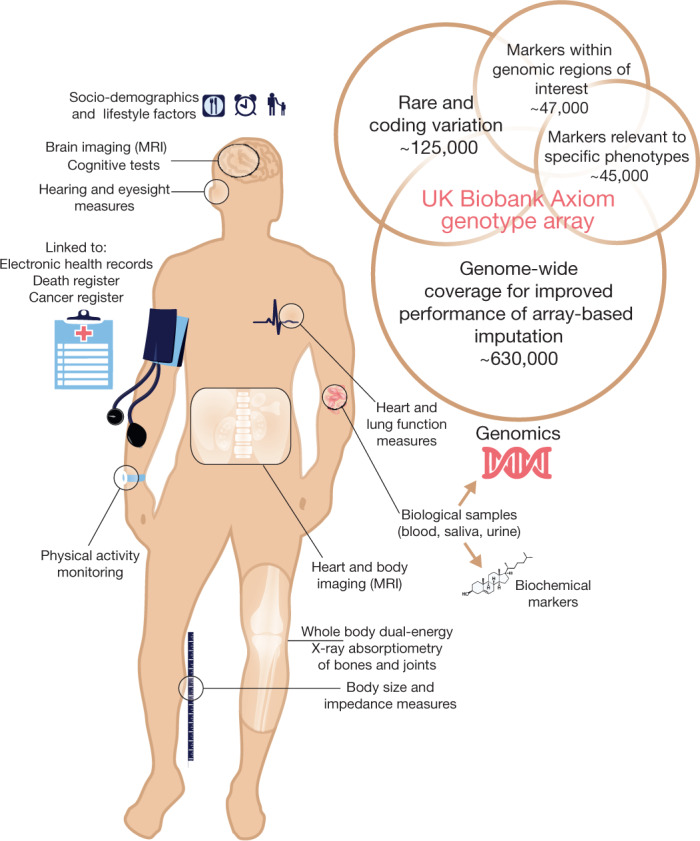
The UK Biobank project is a prospective cohort study with deep genetic and phenotypic data collected on approximately 500,000 individuals from across the United Kingdom, aged between 40 and 69 at recruitment. The open resource is unique in its size and scope. A rich variety of phenotypic and health-related information is available on each participant, including biological measurements, lifestyle indicators, biomarkers in blood and urine, and imaging of the body and brain. Follow-up information is provided by linking health and medical records. Genome-wide genotype data have been collected on all participants, providing many opportunities for the discovery of new genetic associations and the genetic bases of complex traits. Here we describe the centralized analysis of the genetic data, including genotype quality, properties of population structure and relatedness of the genetic data, and efficient phasing and genotype imputation that increases the number of testable variants to around 96 million. Classical allelic variation at 11 human leukocyte antigen genes was imputed, resulting in the recovery of signals with known associations between human leukocyte antigen alleles and many diseases.
Overview
The claims and statistics of this paper haven’t been checked yet.
Free: it reads the open-access text and checks the first 5 claims that cite a source we can check. Create a free account to check every claim.
Integrity signals
Registry
Cites
Statistics
Figures
Verification
Claims the paper makes
The claims and statistics of this paper haven’t been checked yet.
Free: it reads the open-access text and checks the first 5 claims that cite a source we can check. Create a free account to check every claim.
Claims other papers make about this one
Each is checked against this paper’s own text: does it say what the citing paper says it does?
The source backs part of the claim, not all of it — or backs it for a different population, condition or comparison.
In the citing paper
“The UKBB dataset provides information regarding more than 7000 phenotypes assessed in up to 500,000 participants from six ancestry groups [32].”
From Denisovan and Neanderthal archaic introgression differentially impacted the genetics of complex traits in modern populations (2022) · cites this paper as [32]
Experimental — accuracy not yet measuredThe source backs part of the claim, not all of it — or backs it for a different population, condition or comparison.
In the citing paper
“In the UK, the UK Biobank initiated enrollment in 2006, reaching a final participant count of over 500,000, and plans to follow participants for at least 30 years after enrollment 81 .”
From Multimodal biomedical AI (2022) · cites this paper as [81]
Experimental — accuracy not yet measuredThe source backs part of the claim, not all of it — or backs it for a different population, condition or comparison.
In the citing paper
“Approximately 9.2 million people living 25 miles (40 km) from one of 22 assessment centers across England, Wales and Scotland were invited to participate, with 5.5% participating in the baseline studies.”
From Plasma proteomic associations with genetics and health in the UK Biobank (2023) · cites this paper as Bycroft et al (Nature, 2018)
Experimental — accuracy not yet measuredThe cited source says what the claim attributes to it.
In the citing paper
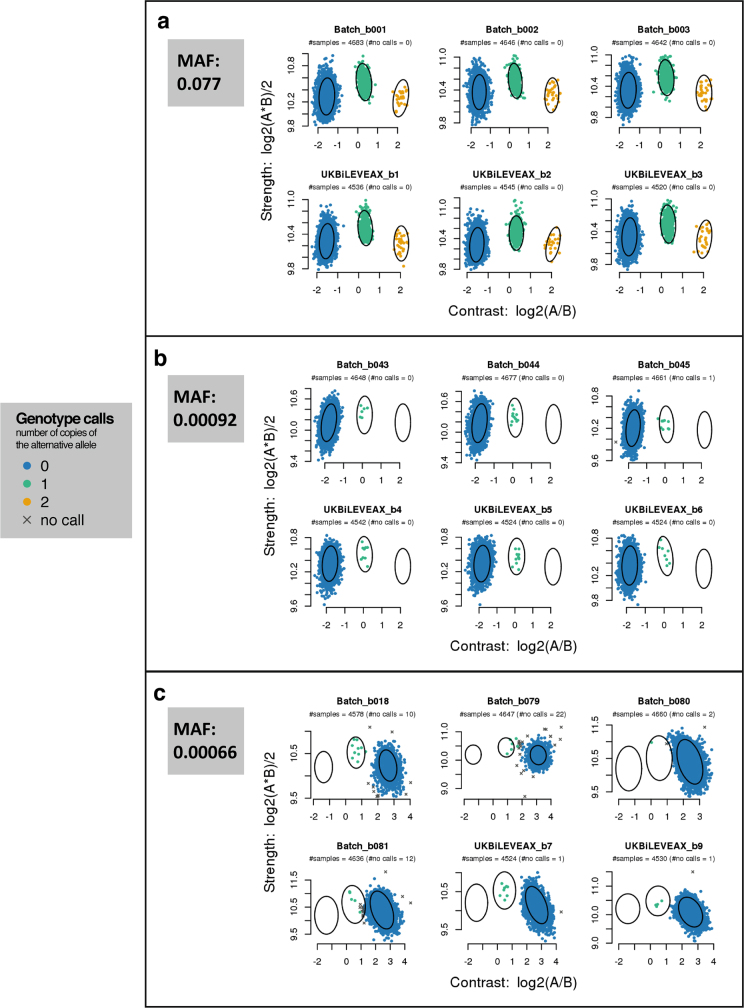
“Amongst the genetics community, it is generally well recognised that SNP-chips perform poorly for genotyping rare genetic variants [9-11] due to their reliance upon data clustering (Figure 1).”
From Assessing the analytical validity of SNP-chips for detecting very rare pathogenic variants: implications for direct-to-consumer genetic testing (2019) · cites this paper as [10]
The cited source says what the claim attributes to it.
In the citing paper
“The genetics community generally recognises that SNP chips perform poorly for genotyping rare genetic variants owing to their reliance on data clustering (fig 1).9 10 11”
From Use of SNP chips to detect rare pathogenic variants: retrospective, population based diagnostic evaluation (2021) · cites this paper as [10]
6 more claims about this paper
Create a free account to see every claim other papers make about this one.
Self-check
Percentages, sums and reported differences re-computed from the paper’s own numbers.
The self-check needs the paper’s full text.
Citations
Cites
A global reference for human genetic variation
The 1000 Genomes Project Consortium, authors, C., Auton, A., Abecasis, G. R., Steering committee, Altshuler, D. M., Durbin, R. M., Abecasis, G. R., Bentley, D. R., Chakravarti, A., et al. (2015) · Nature · doi:10.1038/nature15393 · Cited by 18,247
Self-citationSudlow, C., Gallacher, J., Allen, N., Beral, V., Burton, P., Danesh, J., Downey, P., Elliott, P., Green, J., Landray, M., et al. (2015) · PLOS Medicine · doi:10.1371/journal.pmed.1001779 · Cited by 12,728
Self-citationAnalysis of protein-coding genetic variation in 60,706 humans
Exome Aggregation Consortium, Lek, M., Karczewski, K. J., Minikel, E. V., Samocha, K. E., Banks, E., Fennell, T., O’Donnell-Luria, A. H., Ware, J. S., Hill, A. J., et al. (2016) · Nature · doi:10.1038/nature19057 · Cited by 9,587
A haplotype map of the human genome
The International HapMap Consortium (2005) · Nature · doi:10.1038/nature04226 · Cited by 5,858
Robust relationship inference in genome-wide association studies
Manichaikul, A., Mychaleckyj, J. C., Rich, S. S., Daly, K., Sale, M., & Chen, W.-M. (2010) · Bioinformatics · doi:10.1093/bioinformatics/btq559 · Cited by 3,541
A reference panel of 64,976 haplotypes for genotype imputation
the Haplotype Reference Consortium (2016) · Nature Genetics · doi:10.1038/ng.3643 · Cited by 2,836
Self-citationThe NHGRI GWAS Catalog, a curated resource of SNP-trait associations
Welter, D., MacArthur, J., Morales, J., Burdett, T., Hall, P., Junkins, H., Klemm, A., Flicek, P., Manolio, T., Hindorff, L., et al. (2014) · Nucleic Acids Research · doi:10.1093/nar/gkt1229 · Cited by 2,707
Genetic risk and a primary role for cell-mediated immune mechanisms in multiple sclerosis
The International Multiple Sclerosis Genetics Consortium & The Wellcome Trust Case Control Consortium 2 (2011) · Nature · doi:10.1038/nature10251 · Cited by 2,697
Self-citationMultimodal population brain imaging in the UK Biobank prospective epidemiological study
Miller, K. L., Alfaro-Almagro, F., Bangerter, N. K., Thomas, D. L., Yacoub, E., Xu, J., Bartsch, A. J., Jbabdi, S., Sotiropoulos, S. N., Andersson, J. L. R., et al. (2016) · Nature Neuroscience · doi:10.1038/nn.4393 · Cited by 2,020
The Electronic Medical Records and Genomics (eMERGE) Consortium, Wood, A. R., The MIGen Consortium, The PAGE Consortium, Study, T. L. C., Esko, T., Yang, J., Vedantam, S., Pers, T. H., Gustafsson, S., et al. (2014) · Nature Genetics · doi:10.1038/ng.3097 · Cited by 1,853
Self-citation
Cited by
Items 1,001–1,100 of 1,161
Hagenaars, S. P., Coleman, J. R. I., Choi, S. W., Gaspar, H., Adams, M. J., Howard, D. M., Hodgson, K., Traylor, M., Air, T. M., Andlauer, T. F. M., et al. (2020) · American Journal of Medical Genetics Part B: Neuropsychiatric Genetics · doi:10.1002/ajmg.b.32807 · Cited by 61
“Genotyping procedures have been described in the original analysis for each study (Bycroft et al., 2018; Nagy et al., 2017; Wray et al., 2018).”
BackgroundMethodGenome-wide association of polygenic risk extremes for Alzheimer's disease in the UK Biobank
Gouveia, C., Gibbons, E., Dehghani, N., Eapen, J., Guerreiro, R., & Bras, J. (2022) · Scientific Reports · doi:10.1038/s41598-022-12391-2 · Cited by 61
Zhang, Y., Cheng, Y., Jiang, W., Ye, Y., Lu, Q., & Zhao, H. (2021) · Briefings in Bioinformatics · doi:10.1093/bib/bbaa442 · Cited by 67
Steinfeldt, J., Buergel, T., Loock, L., Kittner, P., Ruyoga, G., zu Belzen, J. U., Sasse, S., Strangalies, H., Christmann, L., Hollmann, N., et al. (2022) · The Lancet Digital Health · doi:10.1016/s2589-7500(21)00249-1 · Cited by 56
A year of COVID-19 GWAS results from the GRASP portal reveals potential genetic risk factors
Thibord, F., Chan, M. V., Chen, M., & Johnson, A. D. (2022) · Human Genetics and Genomics Advances · doi:10.1016/j.xhgg.2022.100095 · Cited by 68
Marciniak, S., Bergey, C. M., Silva, A. M., Hałuszko, A., Furmanek, M., Veselka, B., Velemínský, P., Vercellotti, G., Wahl, J., Zariņa, G., et al. (2022) · Proceedings of the National Academy of Sciences · doi:10.1073/pnas.2106743119 · Cited by 67
“C. Bycroft et al., The UK Biobank resource with deep phenotyping and genomic data.”
MethodInfluentialPrevalence of Fabry disease-causing variants in the UK Biobank
Gilchrist, M., Casanova, F., Tyrrell, J., Cannon, S. J., Wood, A. R., Fife, N., Young, K., Oram, R. A., & Weedon, M. N. (2022) · Journal of Medical Genetics · doi:10.1136/jmg-2022-108523 · Cited by 64
“14 The age of participants favours later-onset variants and less severe phenotypes as individuals with classic disease-causing variants being less likely to survive to an age which would have permitted study entry.”
Sphingolipids accumulate in aged muscle, and their reduction counteracts sarcopenia
Laurila, P., Wohlwend, M., de Lima, T. I., Luan, P., Herzig, S., Zanou, N., Crisol, B., Sleiman, M. S. B., Porcu, E., Gallart‐Ayala, H., et al. (2022) · Nature Aging · doi:10.1038/s43587-022-00309-6 · Cited by 66
Shamji, M. H., Ollert, M. W., Adcock, I. M., Bennett, O., Favaro, A., Sarama, R., Riggioni, C., Annesi‐Maesano, I., Čustović, A., Fontanella, S., et al. (2023) · Allergy · doi:10.1111/all.15667 · Cited by 65
“3,4 The “All of Us” research program is ongoing and intends to recruit a million people across the United States with the plan to collect a similarly broad and powerful data set.”
BackgroundHack, R. J., Gravesteijn, G., Cerfontaine, M. N., Santcroos, M. A., Gatti, L., Kopczak, A., Bersano, A., Duering, M., Rutten, J. W., & Lesnik Oberstein, S. A. J. (2023) · Brain · doi:10.1093/brain/awac486 · Cited by 60
“In line with this, patients with an HR-EGFr 8, 11 and 26 variant had a similar burden of SVD imaging markers and clinical outcomes as patients with HR-EGFr 1–6 variants: nWMHv ( P = 0.27), PSMD ( P = 0.087), nLV ( P = 0.87), BPF ( P = 0.65), disability ( P = 0.26) and risk of stroke ( P = 0.75).”
InfluentialHernandez Cordero, A. I., Gonzales, N. M., Parker, C. C., Sokolof, G., Vandenbergh, D. J., Cheng, R., Abney, M., Sko, A., Douglas, A., Palmer, A. A., et al. (2019) · The American Journal of Human Genetics · doi:10.1016/j.ajhg.2019.10.014 · Cited by 59
Endosomal trafficking in metabolic homeostasis and diseases
Gilleron, J., & Zeigerer, A. (2023) · Nature Reviews Endocrinology · doi:10.1038/s41574-022-00737-9 · Cited by 57
Biological Aging Predicts Vulnerability to COVID-19 Severity in UK Biobank Participants
Kuo, C.-L., Pilling, L. C., Atkins, J. L., Masoli, J. A. H., Delgado, J., Tignanelli, C., Kuchel, G. A., Melzer, D., Beckman, K. B., & Levine, M. E. (2021) · The Journals of Gerontology: Series A · doi:10.1093/gerona/glab060 · Cited by 56
“UKB (16,17) is a volunteer community cohort, recruiting over 500 000 participants between the ages of 40 and 70 during 2006– 2010.”
Fang, S., Yarmolinsky, J., Gill, D., Bull, C. J., Perks, C. M., the PRACTICAL Consortium, Davey Smith, G., Gaunt, T. R., & Richardson, T. G. (2023) · PLOS Medicine · doi:10.1371/journal.pmed.1003988 · Cited by 55
“Given that genetic estimates on prostate cancer risk were derived using a male-only population, we repeated all analyses using male-stratified instruments identified by conducting a GWAS of LDL-c (ID: 30780) on 201,678 male participants of European ancestry in the UK Biobank study [34].”
MethodEfficient variance components analysis across millions of genomes
Pazokitoroudi, A., Wu, Y., Burch, K. S., Hou, K., Zhou, A., Pasaniuc, B., & Sankararaman, S. (2020) · Nature Communications · doi:10.1038/s41467-020-17576-9 · Cited by 55
“We restricted our study to self-reported British white ancestry individuals which are > 3 degree relatives that is defined as pairs of individuals with kinship coefficient < 1/2 [17].”
InfluentialApoE e2 and aging-related outcomes in 379,000 UK Biobank participants
Kuo, C.-L., Pilling, L. C., Atkins, J. L., Kuchel, G. A., & Melzer, D. (2020) · Aging · doi:10.18632/aging.103405 · Cited by 55
“A wide range of genetic and phenotypic data were collected at recruitment (baseline) and mortality and disease diagnoses were updated through linkages to death certificates, cancer registry and hospital admission records [24, 25].”
BackgroundMethodukbtools: An R package to manage and query UK Biobank data
Hanscombe, K. B., Coleman, J. R. I., Traylor, M., & Lewis, C. M. (2019) · PLOS ONE · doi:10.1371/journal.pone.0214311 · Cited by 54
“Ukbtools takes all the time-consuming effort out of preparing input data for PLINK (Chang C.C., 2015, http://www.cog-genomics.org/plink/1.9/) and BGENIE (Bycroft et al., 2017, https://jmarchini.org/bgenie/) analyses with a set of read (fam and sample files) and write (phenotype, covariate and exclusions files) functio…”
MethodInfluentialGenome-scale models in human metabologenomics
Mardinoglu, A., & Palsson, B. Ø. (2025) · Nature Reviews Genetics · doi:10.1038/s41576-024-00768-0 · Cited by 54
Effects of depression on employment and social outcomes: a Mendelian randomisation study
Campbell, D., Green, M. J., Davies, N., Demou, E., Howe, L. D., Harrison, S., Smith, D. J., Howard, D. M., McIntosh, A. M., Munafò, M., et al. (2022) · Journal of Epidemiology and Community Health · doi:10.1136/jech-2021-218074 · Cited by 51
MN, W., L, J., JW, H., KS, R., J, T., AT, H., & CF, W. (2021) · BMJ · doi:10.1136/bmj.n214 · Cited by 51
Social isolation is linked to classical risk factors of Alzheimer’s disease-related dementias
Shafighi, K., Villeneuve, S., Rosa Neto, P., Badhwar, A., Poirier, J., Sharma, V., Medina, Y. I., Silveira, P. P., Dube, L., Glahn, D., et al. (2023) · PLOS ONE · doi:10.1371/journal.pone.0280471 · Cited by 51
“Population cohort 1: United Kingdom Biobank The UK Biobank is a prospective epidemiological cohort that offers extensive behavioral and demographic assessments, medical and cognitive measures, as well as biological samples in 502,506 participants, which were recruited from across Great Britain.28 Our study involved th…”
BackgroundInfluentialLow LDL cholesterol by PCSK9 variation reduces cardiovascular mortality
Benn, M., Tybjærg-Hansen, A., & Nordestgaard, B. G. (2019) · Journal of the American College of Cardiology · doi:10.1016/j.jacc.2019.03.517 · Cited by 51
McGrath, B. P., Kundu, P., Daya, N., Coresh, J., Selvin, E., McEvoy, J. W., & Chatterjee, N. (2020) · Hypertension · doi:10.1161/hypertensionaha.120.15286 · Cited by 51
Haplotype-based inference of recent effective population size in modern and ancient DNA samples
Fournier, R., Tsangalidou, Z., Reich, D., & Palamara, P. F. (2023) · Nature Communications · doi:10.1038/s41467-023-43522-6 · Cited by 49
Deciphering the impact of genetic variation on human polyadenylation using APARENT2
Linder, J., Koplik, S. E., Kundaje, A., & Seelig, G. (2022) · Genome Biology · doi:10.1186/s13059-022-02799-4 · Cited by 49
“We first noticed that SNPs with a large posterior inclusion probability (PIP) from UK Biobank are enriched for disruptive APA variants (Additional file 1: Fig.”
MethodInfluentialThe lingering effects of Neanderthal introgression on human complex traits
Wei, X., Robles, C. R., Pazokitoroudi, A., Ganna, A., Gusev, A., Durvasula, A., Gazal, S., Loh, P.-R., Reich, D., & Sankararaman, S. (2023) · eLife · doi:10.7554/elife.80757 · Cited by 43
“To enable analyses of genomewide introgressed Neanderthal variants in large sample sizes, we selected and added SNPs that tag introgressed Neanderthal variants to the UK Biobank Axiom Array that was used to genotype the great majority of the approximately 500,000 individuals in the UK Biobank (UKBB) (Bycroft et al., 2…”
MethodMendelian Randomization analysis of the causal effect of adiposity on hospital costs
Dixon, P., Hollingworth, W., Harrison, S., Davies, N. M., & Davey Smith, G. (2020) · Journal of Health Economics · doi:10.1016/j.jhealeco.2020.102300 · Cited by 48
Howe, L. J., Tudball, M., Davey Smith, G., & Davies, N. M. (2022) · International Journal of Epidemiology · doi:10.1093/ije/dyab208 · Cited by 48
Family-GWAS reveals effects of environment and mating on genetic associations
Tan, T., Jayashankar, H., Guan, J., Nehzati, S. M., Mir, M., Bennett, M., Agerbo, E., Ahlskog, R., de Andrade Anapaz, V. P., Benonisdottir, S., et al. (2024) · doi:10.1101/2024.10.01.24314703 · Cited by 47
“For the UK Biobank prediction sample, we used the subsample identified as white British by UK Biobank 41 , and for the MCS prediction sample, we used the subsample identified as closest to the EUR superpopulation cluster from 1000 Genomes, as described in Guan et al. 20 .”
Self-citationParp mutations protect from mitochondrial toxicity in Alzheimer’s disease
Yu, Y., Fedele, G., Celardo, I., Loh, S. H. Y., & Martins, L. M. (2021) · Cell Death & Disease · doi:10.1038/s41419-021-03926-y · Cited by 46
Elevated C-reactive protein mediates the liver-brain axis: a preliminary study
Jiang, R., Wu, J., Rosenblatt, M., Dai, W., Rodriguez, R. X., Sui, J., Qi, S., Liang, Q., Xu, B., Meng, Q., et al. (2023) · eBioMedicine · doi:10.1016/j.ebiom.2023.104679 · Cited by 46
Evidence for the role of selection for reproductively advantageous alleles in human aging
Long, E., & Zhang, J. (2023) · Science Advances · doi:10.1126/sciadv.adh4990 · Cited by 46
“Participants provided a blood sample, from which DNAwas extracted and genotyped using the U. K. BiLEVE Axiom array or Affymetrix Axiom array ( 19 ).”
BackgroundMethodInfluentialHemochromatosis Mutations, Brain Iron Imaging, and Dementia in the UK Biobank Cohort
Atkins, J. L., Pilling, L. C., Heales, C. J., Savage, S., Kuo, C.-L., Kuchel, G. A., Steffens, D. C., & Melzer, D. (2021) · Journal of Alzheimer’s Disease · doi:10.3233/jad-201080 · Cited by 46
Deng, Y.-T., Li, Y.-Z., Huang, S.-Y., Ou, Y.-N., Zhang, W., Chen, S.-D., Zhang, Y.-R., Yang, L., Dong, Q., Feng, J.-F., et al. (2022) · Molecular Psychiatry · doi:10.1038/s41380-022-01604-9 · Cited by 45
“The UKB is a largescale cohort with over 500,000 participants aged 37 to 73 years at baseline (2006–2010) [27].”
BackgroundGao, X. R., Chiariglione, M., Qin, K., Nuytemans, K., Scharre, D. W., Li, Y.-J., & Martin, E. R. (2023) · Scientific Reports · doi:10.1038/s41598-023-27551-1 · Cited by 45
Wu, Y., Sun, Z., Zheng, Q., Miao, J., Dorn, S., Mukherjee, S., Fletcher, J. M., & Lu, Q. (2024) · Nature Genetics · doi:10.1038/s41588-024-01963-9 · Cited by 45
“First, we trained a LASSO regression model on whether a survey participant reported parental illnesses using a random subset of UKB samples and performed weighted GWAS on the remaining samples (Methods).”
InfluentialO’Loughlin, J., Casanova, F., Jones, S. E., Hagenaars, S. P., Beaumont, R. N., Freathy, R. M., Watkins, E. R., Vetter, C., Rutter, M. K., Cain, S. W., et al. (2021) · Molecular Psychiatry · doi:10.1038/s41380-021-01157-3 · Cited by 44
High-resolution functional mapping of RAD51C by saturation genome editing
Olvera-León, R., Zhang, F., Offord, V., Zhao, Y., Tan, H. K., Gupta, P., Pal, T., Robles-Espinoza, C. D., Arriaga-González, F. G., Matsuyama, L. S. A. S., et al. (2024) · Cell · doi:10.1016/j.cell.2024.08.039 · Cited by 44
“For all regression models, we included age, age ^ 2, sex, WES sequencing batch, and the first ten genetic principal components described by Bycroft et al. 57 (Data S1 Tables 3 and 4).”
Phenotypic covariance across the entire spectrum of relatedness for 86 billion pairs of individuals
Kemper, K. E., Yengo, L., Zheng, Z., Abdellaoui, A., Keller, M. C., Goddard, M. E., Wray, N. R., Yang, J., & Visscher, P. M. (2021) · Nature Communications · doi:10.1038/s41467-021-21283-4 · Cited by 43
Wang, Q. S., Hasegawa, T., Namkoong, H., Saiki, R., Edahiro, R., Sonehara, K., Tanaka, H., Azekawa, S., Chubachi, S., Takahashi, Y., et al. (2024) · Nature Genetics · doi:10.1038/s41588-024-01896-3 · Cited by 43
“We replicated these observations using the fine-mapping results for 96 traits in the UKB 38,43 , stratified according to trait categories, validating that protein-specific QTL enrichment is not simply driven by a specific biological trait (protein-specific QTL enrichment was greater; P < 0.05…”
InfluentialThe role of common genetic variation in presumed monogenic epilepsies
Campbell, C., Leu, C., Feng, Y.-C. A., Wolking, S., Moreau, C., Ellis, C., Ganesan, S., Martins, H., Oliver, K., Boothman, I., et al. (2022) · eBioMedicine · doi:10.1016/j.ebiom.2022.104098 · Cited by 42
Russell, A. E., Ford, T., Gunnell, D., Heron, J., Joinson, C., Moran, P., Relton, C., Suderman, M., Hemani, G., & Mars, B. (2020) · Brain, Behavior, and Immunity · doi:10.1016/j.bbi.2020.05.065 · Cited by 39
Said, M. A., Yeung, M. W., van de Vegte, Y. J., Benjamins, J. W., Dullaart, R. P. F., Ruotsalainen, S., Ripatti, S., Natarajan, P., Juarez-Orozco, L. E., Verweij, N., et al. (2021) · Arteriosclerosis, Thrombosis, and Vascular Biology · doi:10.1161/atvbaha.120.315300 · Cited by 39
Exposure to Air Pollution, Genetic Susceptibility, and Psoriasis Risk in the UK
Wu, J., Ma, Y., Yang, J., & Tian, Y. (2024) · JAMA Network Open · doi:10.1001/jamanetworkopen.2024.21665 · Cited by 38
In medicine, how do we machine learn anything real?
Ghassemi, M., & Nsoesie, E. O. (2022) · Patterns · doi:10.1016/j.patter.2021.100392 · Cited by 37
Cheng, Y., Schlosser, P., Hertel, J., Sekula, P., Oefner, P. J., Spiekerkoetter, U., Mielke, J., Freitag, D. F., Schmidts, M., GCKD Investigators, et al. (2021) · Nature Communications · doi:10.1038/s41467-020-20877-8 · Cited by 37
Kleeman, S. O., Thakir, T. M., Demestichas, B., Mourikis, N., Loiero, D., Ferrer, M., Bankier, S., Riazat-Kesh, Y. J. R. A., Lee, H., Chantzichristos, D., et al. (2023) · Cell Genomics · doi:10.1016/j.xgen.2023.100347 · Cited by 52
Human brain anatomy reflects separable genetic and environmental components of socioeconomic status
Kweon, H., Aydogan, G., Dagher, A., Bzdok, D., Ruff, C. C., Nave, G., Farah, M. J., & Koellinger, P. D. (2022) · Science Advances · doi:10.1126/sciadv.abm2923 · Cited by 36
Ding, J.-E., Thao, P. N. M., Peng, W.-C., Wang, J.-Z., Chug, C.-C., Hsieh, M.-C., Tseng, Y.-C., Chen, L., Luo, D., Wu, C., et al. (2024) · Scientific Reports · doi:10.1038/s41598-024-71020-2 · Cited by 36
“Numerous medical studies on LLMs face constraints arising from the restricted availability of corpus samples of clinical notes 17 , such as the MIMIC or UK Biobank dataset 18 , or from inherent imbalances possibly related to specific diseases 19 .”
Background50,000 years of evolutionary history of India: Impact on health and disease variation
Kerdoncuff, E., Skov, L., Patterson, N., Banerjee, J., Khobragade, P., Chakrabarti, S. S., Chakrawarty, A., Chatterjee, P., Dhar, M., Gupta, M., et al. (2025) · Cell · doi:10.1016/j.cell.2025.04.027 · Cited by 36
Human genetics uncovers MAP3K15 as an obesity-independent therapeutic target for diabetes
Nag, A., Dhindsa, R. S., Mitchell, J., Vasavda, C., Harper, A. R., Vitsios, D., Ahnmark, A., Bilican, B., Madeyski-Bengtson, K., Zarrouki, B., et al. (2022) · Science Advances · doi:10.1126/sciadv.add5430 · Cited by 36
“Discovery genetic association studies were performed using the 454,796 exomes available in the UKB cohort (50).”
Cell-subtype specific effects of genetic variation in the aging and Alzheimer cortex
Fujita, M., Gao, Z., Zeng, L., McCabe, C., White, C. C., Ng, B., Green, G. S., Rozenblatt-Rosen, O., Phillips, D., Amir-Zilberstein, L., et al. (2022) · doi:10.1101/2022.11.07.515446 · Cited by 36
Human brain anatomy reflects separable genetic and environmental components of socioeconomic status
(2021) · doi:10.1101/2021.07.28.454131 · Cited by 36
The CONSTANCES Cohort Biobank: An Open Tool for Research in Epidemiology and Prevention of Diseases
Henny, J., Nadif, R., Got, S. L., Lemonnier, S., Ozguler, A., Ruiz, F., Beaumont, K., Brault, D., Sandt, E., Goldberg, M., et al. (2020) · Frontiers in Public Health · doi:10.3389/fpubh.2020.605133 · Cited by 36
Systematic Review of Advanced AI Methods for Improving Healthcare Data Quality in Post COVID-19 Era
Isgut, M., Gloster, L., Choi, K., Venugopalan, J., & Wang, M. D. (2023) · IEEE Reviews in Biomedical Engineering · doi:10.1109/rbme.2022.3216531 · Cited by 35
Multi-Ancestry Meta-Analysis yields novel genetic discoveries and ancestry-specific associations
Turley, P., Martin, A. R., Goldman, G., Li, H., Kanai, M., Walters, R. K., Jala, J. B., Lin, K., Millwood, I. Y., Carey, C. E., et al. (2021) · doi:10.1101/2021.04.23.441003 · Cited by 35
Liu, R., Xiang, M., Pilling, L. C., Melzer, D., Wang, L., Manning, K. J., Steffens, D. C., Bowden, J., Fortinsky, R. H., Kuchel, G. A., et al. (2023) · Aging Cell · doi:10.1111/acel.13808 · Cited by 33
The Population-Specific Impact of Neandertal Introgression on Human Disease
Dannemann, M. (2021) · Genome Biology and Evolution · doi:10.1093/gbe/evaa250 · Cited by 33
Privé, F. (2022) · Bioinformatics · doi:10.1093/bioinformatics/btac348 · Cited by 33
Low Vitamin D Levels and Risk of Incident Delirium in 351,000 Older UK Biobank Participants
Pilling, L. C., Jones, L. C., Masoli, J. A. H., Delgado, J., Atkins, J. L., Bowden, J., Fortinsky, R. H., Kuchel, G. A., & Melzer, D. (2021) · Journal of the American Geriatrics Society · doi:10.1111/jgs.16853 · Cited by 33
Koller, D., Wendt, F. R., Pathak, G. A., De Lillo, A., De Angelis, F., Cabrera-Mendoza, B., Tucci, S., & Polimanti, R. (2022) · BMC Biology · doi:10.1186/s12915-022-01449-2 · Cited by 27
“Abbreviations AMR: Individuals of Admixed American ancestry; BBJ: Biobank Japan; CSA: Individuals of Central/South‑Asian ancestry; EAS: Individuals of East Asian descent; eMERGE: Electronic Medical Records and Genomics; EUR: Individu‑ als of European descent; ExAC: Exome Aggregation Consortium; FDR: False Discovery Ra…”
BackgroundMethodInfluentialJoint genotypic and phenotypic outcome modeling improves base editing variant effect quantification
Ryu, J., Barkal, S., Yu, T., Jankowiak, M., Zhou, Y., Francoeur, M., Phan, Q. V., Li, Z., Tognon, M., Brown, L., et al. (2023) · doi:10.1101/2023.09.08.23295253 · Cited by 32
Widen, E., Raben, T. G., Lello, L., & Hsu, S. D. H. (2021) · Genes · doi:10.3390/genes12070991 · Cited by 32
Tzoumas, N., Kavanagh, D., Cordell, H. J., Lotery, A. J., Patel, P. J., & Steel, D. H. (2022) · Human Molecular Genetics · doi:10.1093/hmg/ddac060 · Cited by 31
“The UK Biobank was a prospective community cohort study from 2006 to 2010 that collected biological data for over 500000 people aged 40–69 years and resident in the UK during recruitment (42).”
Bracher-Smith, M., Leonenko, G., Baker, E., Crawford, K., Graham, A. C., Salih, D. A., Howell, B. W., Hardy, J., & Escott-Price, V. (2022) · Neurobiology of Aging · doi:10.1016/j.neurobiolaging.2022.07.009 · Cited by 31
He, D., Liu, H., Wei, W., Zhao, Y., Cai, Q., Shi, S., Chu, X., Qin, X., Zhang, N., Xu, P., et al. (2023) · Osteoporosis International · doi:10.1007/s00198-023-06852-1 · Cited by 30
“A detailed description of the array design, genotyping, and quality control is available elsewhere [22].”
BackgroundAlzheimer’s disease transcriptional landscape in ex vivo human microglia
Kosoy, R., Fullard, J. F., Bendl, J., Kleopoulos, S. P., Shao, Z., Argyriou, S., Mathur, D., Psychogyiou, K., Malakates, P., Vicari, J., et al. (2025) · Nature Neuroscience · doi:10.1038/s41593-025-02020-2 · Cited by 30
Wang, S., Zhou, X., Li, C., Wang, S., Li, Y., Tan, T., & Zheng, H. (2025) · Research · doi:10.34133/research.1029 · Cited by 29
“Representative repositories such as UK Biobank [ 78 ] and TCIA [ 79 ] encompass diverse modalities (MRI, CT, ultrasound, PET, fundus) and tumor types, enabling image synthesis, modality translation, and anomaly simulation.”
Haworth, S., Kho, P. F., Holgerson, P. L., Hwang, L.-D., Timpson, N. J., Rentería, M. E., Johansson, I., & Cuellar-Partida, G. (2021) · European Journal of Human Genetics · doi:10.1038/s41431-020-00734-4 · Cited by 29
“Alternatively, the findings may also reflect complexity introduced by the scale and sampling frame of UK Biobank.”
BackgroundInfluentialClonal hematopoiesis of indeterminate potential and risk of neurodegenerative diseases
Liu, X., Xue, H., Wirdefeldt, K., Song, H., Smedby, K., Fang, F., & Liu, Q. (2024) · Journal of Internal Medicine · doi:10.1111/joim.20001 · Cited by 29
“The UKB is a prospective study that encompasses data of demographic characteristics, socioeconomic status, lifestyle factors, and clinical diagnoses as well as genetic sequencing from a community-based cohort of over 500,000 individuals, aged 40–69 years at the time of recruitment [11].”
Paz, V., Dashti, H. S., & Garfield, V. (2023) · Sleep Health · doi:10.1016/j.sleh.2023.05.002 · Cited by 29
Krissaane, I., De Niz, C., Gutiérrez-Sacristán, A., Korodi, G., Ede, N., Kumar, R., Lyons, J., Manrai, A., Patel, C., Kohane, I., et al. (2020) · Journal of the American Medical Informatics Association · doi:10.1093/jamia/ocaa068 · Cited by 28
Valid inference for machine learning-assisted genome-wide association studies
Miao, J., Wu, Y., Sun, Z., Miao, X., Lu, T., Zhao, J., & Lu, Q. (2024) · Nature Genetics · doi:10.1038/s41588-024-01934-0 · Cited by 28
“11 and 12).”
Valid inference for machine learning-assisted GWAS
Miao, J., Wu, Y., Sun, Z., Miao, X., Lu, T., Zhao, J., & Lu, Q. (2024) · doi:10.1101/2024.01.03.24300779 · Cited by 28
Westerman, K. E., Miao, J., Chasman, D. I., Florez, J. C., Chen, H., Manning, A. K., & Cole, J. B. (2021) · Human Molecular Genetics · doi:10.1093/hmg/ddab109 · Cited by 28
Exome-wide analysis implicates rare protein-altering variants in human handedness
Schijven, D., Soheili-Nezhad, S., Fisher, S. E., & Francks, C. (2024) · Nature Communications · doi:10.1038/s41467-024-46277-w · Cited by 27
“For pairs of related individuals inferred as third-degree relatives or closer (kinship coef fi - cient > 0.0442) based on common variant data 90 , we excluded one individual from each pair, prioritizing the removal of right-handed individuals and those present in multiple pairs, but otherwise…”
InfluentialExome-wide analysis implicates rare protein-altering variants in human handedness
Schijven, D., Soheili-Nezhad, S., Fisher, S. E., & Francks, C. (2023) · doi:10.1101/2023.05.31.543042 · Cited by 27
Luo, Q., Zhang, L., Huang, C.-C., Zheng, Y., Kanen, J. W., Zhao, Q., Yao, Y., Quinlan, E. B., Jia, T., Banaschewski, T., et al. (2020) · BMC Medicine · doi:10.1186/s12916-020-01743-2 · Cited by 26
Rare Genetic Variants in LDLR , APOB , and PCSK9 Are Associated With Aortic Stenosis
Rämö, J. T., Jurgens, S. J., Kany, S., Choi, S. H., Wang, X., Smirnov, A. N., Friedman, S. F., Maddah, M., Khurshid, S., Ellinor, P. T., et al. (2024) · Circulation · doi:10.1161/circulationaha.124.070982 · Cited by 26
“17 Phenotype data collected for UKB participants include baseline survey responses, prospective data from hospital inpatient admissions, and prospective data from death registries.”
Córdova-Palomera, A., Tcheandjieu, C., Fries, J. A., Varma, P., Chen, V. S., Fiterau, M., Xiao, K., Tejeda, H., Keavney, B. D., Cordell, H. J., et al. (2020) · Circulation: Genomic and Precision Medicine · doi:10.1161/circgen.120.003014 · Cited by 26
A selection pressure landscape for 870 human polygenic traits
Song, W., Shi, Y., Wang, W., Pan, W., Qian, W., Yu, S., Zhao, M., & Lin, G. N. (2021) · Nature Human Behaviour · doi:10.1038/s41562-021-01231-4 · Cited by 25
Shimelis, H., Oetjens, M. T., Walsh, L. K., Wain, K. E., Znidarsic, M., Myers, S. M., Finucane, B. M., Ledbetter, D. H., & Martin, C. L. (2023) · American Journal of Psychiatry · doi:10.1176/appi.ajp.22010062 · Cited by 25
Mekli, K., Lophatananon, A., Cant, R., Burns, A., Dobson, C. B., Itzhaki, R. F., & Muir, K. R. (2022) · PLOS ONE · doi:10.1371/journal.pone.0274872 · Cited by 25
“They also provided blood, urine and saliva samples [16].”
BackgroundFerguson, A. C., Tank, R., Lyall, L. M., Ward, J., Celis-Morales, C., Strawbridge, R., Ho, F., Whelan, C. D., Gill, J., Welsh, P., et al. (2020) · Journal of Alzheimer's Disease · doi:10.3233/jad-200338 · Cited by 25
New role of fat-free mass in cancer risk linked with genetic predisposition
Harris, B. H. L., Di Giovannantonio, M., Zhang, P., Harris, D. A., Lord, S. R., Allen, N. E., Maughan, T. S., Bryant, R. J., Harris, A. L., Bond, G. L., et al. (2024) · Scientific Reports · doi:10.1038/s41598-024-54291-7 · Cited by 24
“Imputation was performed using IMPUTE2 as described 37,38 .”
Self-citationWeedon, M. N., Jackson, L., Harrison, J. W., Ruth, K. S., Tyrrell, J., Hattersley, A. T., & Wright, C. F. (2019) · bioRxiv (Cold Spring Harbor Laboratory) · doi:10.1101/696799 · Cited by 19
Li, Z., Gaudreault, N., Arsenault, B. J., Mathieu, P., Bossé, Y., & Thériault, S. (2020) · Communications Biology · doi:10.1038/s42003-020-01210-x · Cited by 23
Dannemann, M., Milaneschi, Y., Yermakovich, D., Stiglbauer, V., Kariis, H. M., Krebs, K., Friese, M. A., Otte, C., Estonian Biobank Research Team, Esko, T., et al. (2022) · Translational Psychiatry · doi:10.1038/s41398-022-02196-2 · Cited by 23
“Taken together, these results indicate a robust enrichment of Neandertal variants associated with 5 groups of behavioral phenotypes in the UKBB: Alcohol consumption, smoking, mental health (specifically mood), chronotype/sleep, and pain.”
MethodInfluentialGut microbiota and sepsis and sepsis-related death: a Mendelian randomization investigation
Shang, W., Zhang, S., Qian, H., Huang, S., Li, H., Liu, J., & Chen, D. (2024) · Frontiers in Immunology · doi:10.3389/fimmu.2024.1266230 · Cited by 23
“The UK Biobank is an extensive cohort of UK adult participants; details were found in other sections (19).”
BackgroundGe, X., Wang, X., Yan, Y., Zhang, L., Yu, C., Lu, J., Xu, X., Gao, J., Liu, M., Jiang, T., et al. (2023) · Liver International · doi:10.1111/liv.15588 · Cited by 23
Cold shock domain-containing protein E1 is a posttranscriptional regulator of the LDL receptor
Smith, G. A., Padmanabhan, A., Lau, B. H., Pampana, A., Li, L., Lee, C. Y., Pelonero, A., Nishino, T., Sadagopan, N., Xia, V. Q., et al. (2022) · Science Translational Medicine · doi:10.1126/scitranslmed.abj8670 · Cited by 23
Daghlas, I., Richmond, R. C., Lane, J. M., Dashti, H. S., Ollila, H. M., Schernhammer, E. S., Smith, G. D., Rutter, M. K., Saxena, R., & Vetter, C. (2021) · International Journal of Epidemiology · doi:10.1093/ije/dyab031 · Cited by 23
Nag, A., Dhindsa, R. S., Middleton, L., Jiang, X., Vitsios, D., Wigmore, E., Allman, E. L., Reznichenko, A., Carss, K., Smith, K. R., et al. (2023) · The American Journal of Human Genetics · doi:10.1016/j.ajhg.2023.02.002 · Cited by 22
“blood biomarkers, imaging data, accelerometer data, and various other phenotypic endpoints.(21) All study participants provided informed consent.”
BackgroundKonuma, T., Ogawa, K., & Okada, Y. (2021) · Human Molecular Genetics · doi:10.1093/hmg/ddab049 · Cited by 22
“We applied Trans-Phar to the UK-Biobank GWAS summary statistics covering a broad range of human traits and diseases (17,18) and to large-scale European GWAS meta-analysis summary statistics.”
MethodWei, J., Shi, Z., Na, R., Wang, C.-H., Resurreccion, W. K., Zheng, S. L., Hulick, P. J., Cooney, K. A., Helfand, B. T., Isaacs, W. B., et al. (2020) · British Journal of Cancer · doi:10.1038/s41416-020-01036-8 · Cited by 22
DeForest, N., Kavitha, B., Hu, S., Isaac, R., Krohn, L., Wang, M., Du, X., De Arruda Saldanha, C., Gylys, J., Merli, E., et al. (2023) · Cell Genomics · doi:10.1016/j.xgen.2023.100339 · Cited by 21
“GOF HNF1A variants are carried in the general population and increase transcriptional activity in multiple cellular contexts To evaluate the human relevance of our deep mutational scan and assess if these putative GOF variants are present in people, we intersected our comprehensive dataset of HNF1A function scores wit…”
BackgroundYoung, W. J., Warren, H. R., Mook-Kanamori, D. O., Ramírez, J., van Duijvenboden, S., Orini, M., Tinker, A., van Heemst, D., Lambiase, P. D., Jukema, J. W., et al. (2021) · Circulation: Genomic and Precision Medicine · doi:10.1161/circgen.120.003231 · Cited by 21
Intergenerational monitoring in clinical trials of germline gene editing
Cwik, B. (2020) · Journal of Medical Ethics · doi:10.1136/medethics-2019-105620 · Cited by 20
Chu, X., Ye, J., Wen, Y., Li, P., Cheng, B., Cheng, S., Zhang, L., Liu, L., Qi, X., Ma, M., et al. (2021) · Journal of Psychiatric Research · doi:10.1016/j.jpsychires.2021.05.067 · Cited by 20
Social-Science Genomics: Progress, Challenges, and Future Directions
Benjamin, D., Cesarini, D., Turley, P., & Young, A. S. (2024) · doi:10.3386/w32404 · Cited by 20
Self-citation
Metadata
- Authors
- Bycroft, C., Freeman, C., Petkova, D., Band, G., Elliott, L. T., Sharp, K., Motyer, A., Vukcevic, D., Delaneau, O., O’Connell, J., Cortes, A., Welsh, S., Young, A., Effingham, M., McVean, G., Leslie, S., Allen, N., Donnelly, P., & Marchini, J.
- Affiliations
- Centre for Human Genetics (GB)
- University of Oxford (GB)
- The University of Melbourne (AU)
- University of Geneva (CH)
- Illumina (United Kingdom) (GB)
- UK Biobank (GB)
- Corresponding author
- Marchini, Jonathan
- ORCID
- Venue
- Nature
- Published
- 2018-10-10
- Volume
- 562
- Issue
- 7726
- Pages
- 203-209
- ISSN
- 0028-0836 (ISSN-L)
- 1476-4687
- PMC
- PMC6786975
- OpenAlex
- W2895486342
- Semantic Scholar
- a9cc79a5df0f7802145401b464e4bb30c23b8efa
- Cited by
- 8,876
- References
- 41
- Citations by year
- 2026: 1242 · 2025: 1612 · 2024: 1546 · 2023: 1331 · 2022: 1185 · 2021: 928 · 2020: 643 · 2019: 336 · 2018: 40
- FWCI
- 299.77
- Type
- journal article
- Language
- en
- Open access
- hybrid
- doi.org
- Licence
- cc-by
- creativecommons.org/licenses/by/4.0 (tdm)
- creativecommons.org/licenses/by/4.0 (vor)
- Locations
- Nature (publishedVersion, cc-by)
- PubMed Central (publishedVersion, cc-by)
- PubMed (publishedVersion)
- RePEc: Research Papers in Economics (submittedVersion)
- IRIS (submittedVersion, cc-by)
- Minerva Access (University of Melbourne) (submittedVersion, cc-by)
- SERVAL (Université de Lausanne) (submittedVersion, cc-by)
- Funders
- Wellcome Trust (095552/Z/11/Z, 203141/Z/16/Z, 10956/Z/13Z, 100308/Z/12/Z, 090532/Z/09/Z, 100956/Z/13/Z)
- National Institute for Health and Care Research
- British Heart Foundation
- Medical Research Council
- National Health and Medical Research Council (1053756)
- FP7 Ideas: European Research Council (617306)
- Topics
- Life Sciences › Biochemistry, Genetics and Molecular Biology › Genetics › Genetic Associations and Epidemiology
- Life Sciences › Biochemistry, Genetics and Molecular Biology › Genetics › Genetic and phenotypic traits in livestock
- Life Sciences › Biochemistry, Genetics and Molecular Biology › Genetics › Forensic and Genetic Research
- Keywords
- UK Biobank, prospective cohort, deep phenotyping, complex traits, population structure, relatedness, genotype phasing, genotype imputation, biomarkers
- MeSH terms
- Adult, Aged, Alleles, Body Height, Brain, Family, Female, United Kingdom, Haplotypes, Humans, Life Style, Major Histocompatibility Complex, Male, Middle Aged, Phenotype, Quality Control, Cohort Studies, Biomarkers, Databases, Factual, Genomics, Databases, Genetic, Racial Groups, Genome-Wide Association Study, Electronic Health Records
About these checks
Registry, retraction, Cites and statistics results are computed, not judged, with one exception: a printed reference that no index lists is read once by a model before it counts as a citation error. Claims are extracted by a model and kept only when their quote appears verbatim in the text; each cited source is then checked, with a model’s help, for whether it says what the claim relies on. Those verdicts can be wrong — read the claim’s quote and the cited source before relying on one.
Statistics and arithmetic are recomputed, not judged.
Confidence bands are shown only for fields calibrated on our annotated test set. None is calibrated yet, so no band is shown.
What counts as a claim ›How we measure confidence ›How we check this ›
Are you an author, or do you see a problem with this page? Request a review
Data sources
Bibliographic data: Semantic Scholar, OpenAlex, Crossref.
Contains information from the Semantic Scholar Academic Graph Datasets, made available under the ODC Attribution License (ODC-BY 1.0).
Semantic Scholar’s data is described in: Kinney, R., et al. (2023). The Semantic Scholar Open Data Platform. arXiv:2301.10140.
