

The UK Biobank resource with deep phenotyping and genomic data
Open accessThe DOI matches its Crossref record; 39 of the 41 references it cites were found in a registry or an index.
Abstract
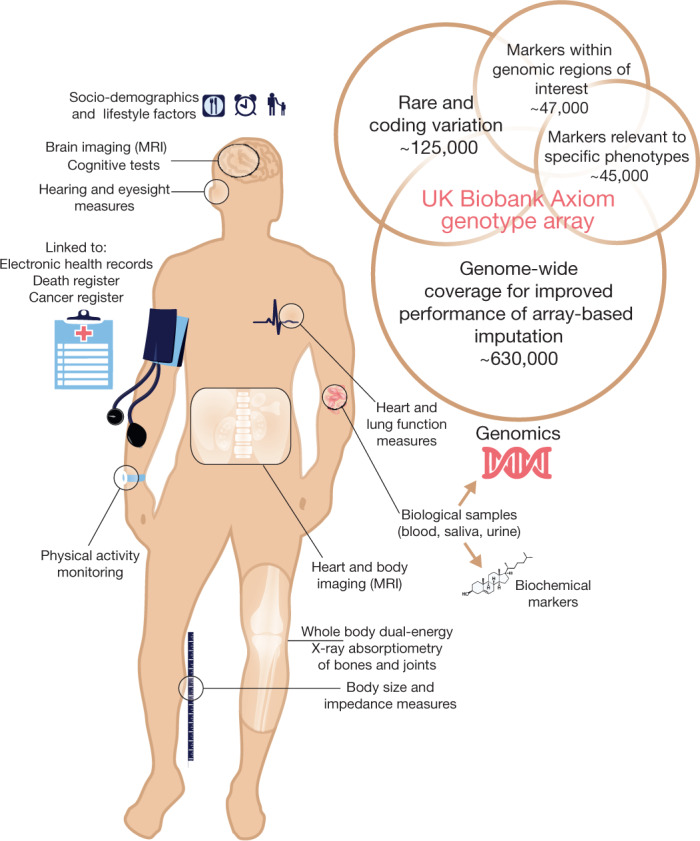
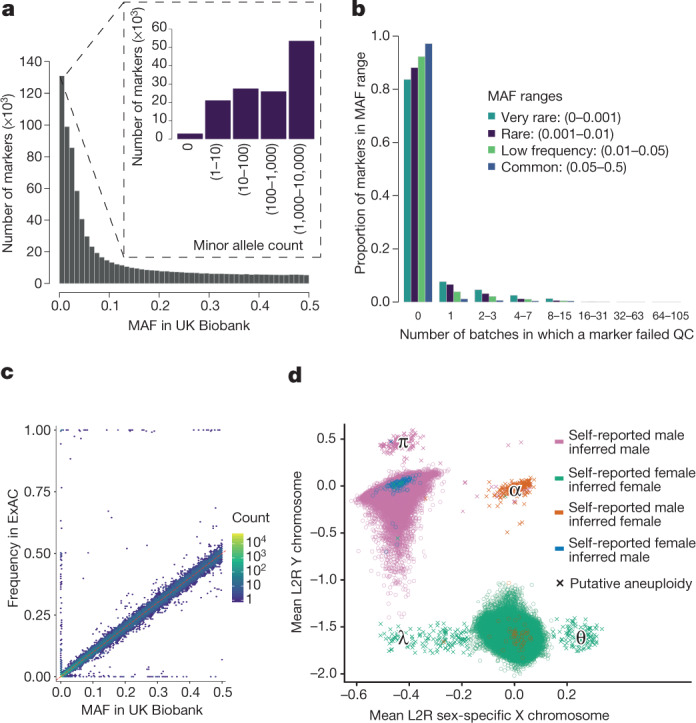
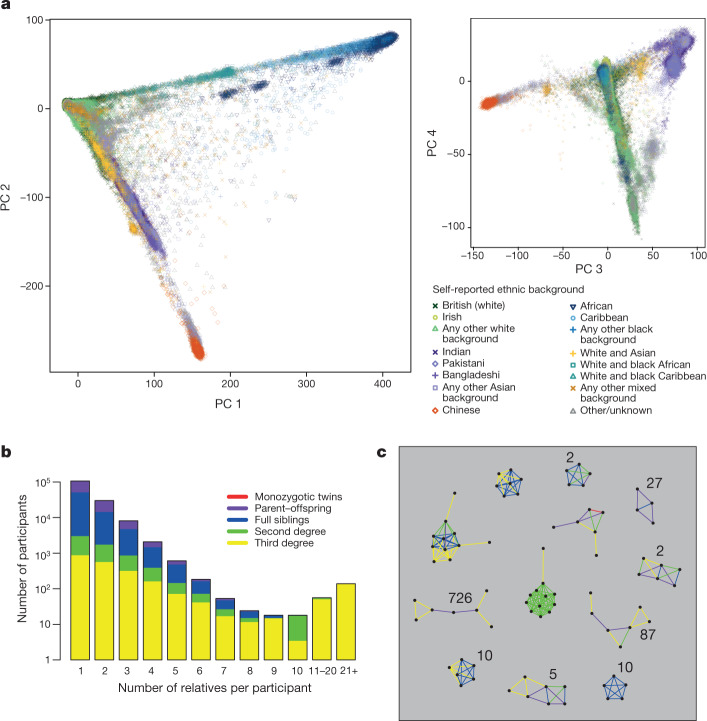
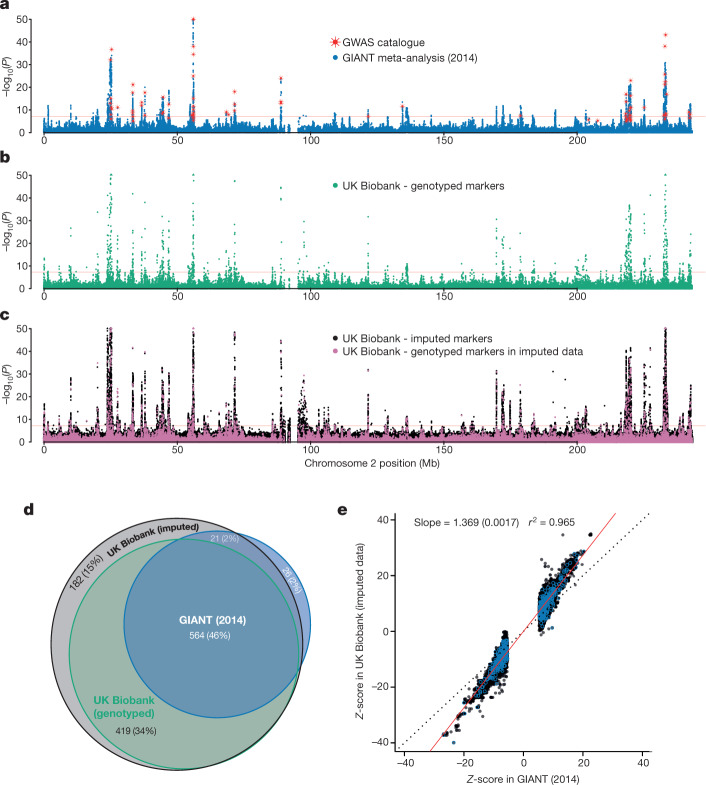
The UK Biobank project is a prospective cohort study with deep genetic and phenotypic data collected on approximately 500,000 individuals from across the United Kingdom, aged between 40 and 69 at recruitment. The open resource is unique in its size and scope. A rich variety of phenotypic and health-related information is available on each participant, including biological measurements, lifestyle indicators, biomarkers in blood and urine, and imaging of the body and brain. Follow-up information is provided by linking health and medical records. Genome-wide genotype data have been collected on all participants, providing many opportunities for the discovery of new genetic associations and the genetic bases of complex traits. Here we describe the centralized analysis of the genetic data, including genotype quality, properties of population structure and relatedness of the genetic data, and efficient phasing and genotype imputation that increases the number of testable variants to around 96 million. Classical allelic variation at 11 human leukocyte antigen genes was imputed, resulting in the recovery of signals with known associations between human leukocyte antigen alleles and many diseases.
Overview
The claims and statistics of this paper haven’t been checked yet.
Free: it reads the open-access text and checks the first 5 claims that cite a source we can check. Create a free account to check every claim.
Integrity signals
Registry
Cites
Statistics
Figures
Verification
Claims the paper makes
The claims and statistics of this paper haven’t been checked yet.
Free: it reads the open-access text and checks the first 5 claims that cite a source we can check. Create a free account to check every claim.
Claims other papers make about this one
Each is checked against this paper’s own text: does it say what the citing paper says it does?
The source backs part of the claim, not all of it — or backs it for a different population, condition or comparison.
In the citing paper
“The UKBB dataset provides information regarding more than 7000 phenotypes assessed in up to 500,000 participants from six ancestry groups [32].”
From Denisovan and Neanderthal archaic introgression differentially impacted the genetics of complex traits in modern populations (2022) · cites this paper as [32]
Experimental — accuracy not yet measuredThe source backs part of the claim, not all of it — or backs it for a different population, condition or comparison.
In the citing paper
“In the UK, the UK Biobank initiated enrollment in 2006, reaching a final participant count of over 500,000, and plans to follow participants for at least 30 years after enrollment 81 .”
From Multimodal biomedical AI (2022) · cites this paper as [81]
Experimental — accuracy not yet measuredThe source backs part of the claim, not all of it — or backs it for a different population, condition or comparison.
In the citing paper
“Approximately 9.2 million people living 25 miles (40 km) from one of 22 assessment centers across England, Wales and Scotland were invited to participate, with 5.5% participating in the baseline studies.”
From Plasma proteomic associations with genetics and health in the UK Biobank (2023) · cites this paper as Bycroft et al (Nature, 2018)
Experimental — accuracy not yet measuredThe cited source says what the claim attributes to it.
In the citing paper
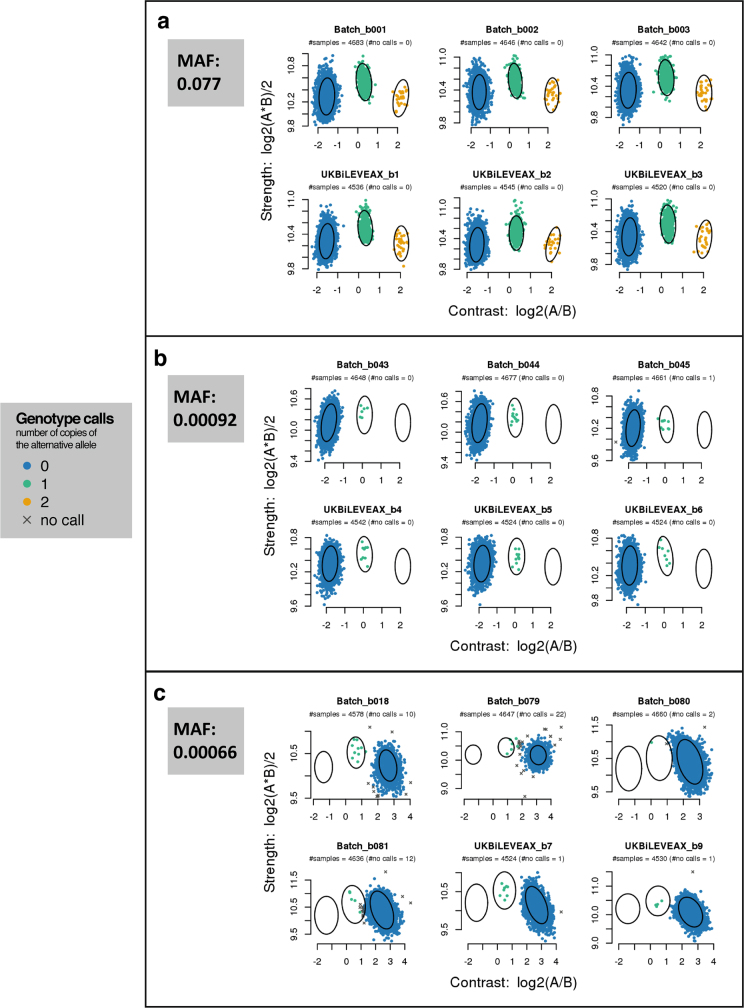
“Amongst the genetics community, it is generally well recognised that SNP-chips perform poorly for genotyping rare genetic variants [9-11] due to their reliance upon data clustering (Figure 1).”
From Assessing the analytical validity of SNP-chips for detecting very rare pathogenic variants: implications for direct-to-consumer genetic testing (2019) · cites this paper as [10]
The cited source says what the claim attributes to it.
In the citing paper
“The genetics community generally recognises that SNP chips perform poorly for genotyping rare genetic variants owing to their reliance on data clustering (fig 1).9 10 11”
From Use of SNP chips to detect rare pathogenic variants: retrospective, population based diagnostic evaluation (2021) · cites this paper as [10]
6 more claims about this paper
Create a free account to see every claim other papers make about this one.
Self-check
Percentages, sums and reported differences re-computed from the paper’s own numbers.
The self-check needs the paper’s full text.
Citations
Cites
A global reference for human genetic variation
The 1000 Genomes Project Consortium, authors, C., Auton, A., Abecasis, G. R., Steering committee, Altshuler, D. M., Durbin, R. M., Abecasis, G. R., Bentley, D. R., Chakravarti, A., et al. (2015) · Nature · doi:10.1038/nature15393 · Cited by 18,247
Self-citationSudlow, C., Gallacher, J., Allen, N., Beral, V., Burton, P., Danesh, J., Downey, P., Elliott, P., Green, J., Landray, M., et al. (2015) · PLOS Medicine · doi:10.1371/journal.pmed.1001779 · Cited by 12,728
Self-citationAnalysis of protein-coding genetic variation in 60,706 humans
Exome Aggregation Consortium, Lek, M., Karczewski, K. J., Minikel, E. V., Samocha, K. E., Banks, E., Fennell, T., O’Donnell-Luria, A. H., Ware, J. S., Hill, A. J., et al. (2016) · Nature · doi:10.1038/nature19057 · Cited by 9,587
A haplotype map of the human genome
The International HapMap Consortium (2005) · Nature · doi:10.1038/nature04226 · Cited by 5,858
Robust relationship inference in genome-wide association studies
Manichaikul, A., Mychaleckyj, J. C., Rich, S. S., Daly, K., Sale, M., & Chen, W.-M. (2010) · Bioinformatics · doi:10.1093/bioinformatics/btq559 · Cited by 3,541
A reference panel of 64,976 haplotypes for genotype imputation
the Haplotype Reference Consortium (2016) · Nature Genetics · doi:10.1038/ng.3643 · Cited by 2,836
Self-citationThe NHGRI GWAS Catalog, a curated resource of SNP-trait associations
Welter, D., MacArthur, J., Morales, J., Burdett, T., Hall, P., Junkins, H., Klemm, A., Flicek, P., Manolio, T., Hindorff, L., et al. (2014) · Nucleic Acids Research · doi:10.1093/nar/gkt1229 · Cited by 2,707
Genetic risk and a primary role for cell-mediated immune mechanisms in multiple sclerosis
The International Multiple Sclerosis Genetics Consortium & The Wellcome Trust Case Control Consortium 2 (2011) · Nature · doi:10.1038/nature10251 · Cited by 2,697
Self-citationMultimodal population brain imaging in the UK Biobank prospective epidemiological study
Miller, K. L., Alfaro-Almagro, F., Bangerter, N. K., Thomas, D. L., Yacoub, E., Xu, J., Bartsch, A. J., Jbabdi, S., Sotiropoulos, S. N., Andersson, J. L. R., et al. (2016) · Nature Neuroscience · doi:10.1038/nn.4393 · Cited by 2,020
The Electronic Medical Records and Genomics (eMERGE) Consortium, Wood, A. R., The MIGen Consortium, The PAGE Consortium, Study, T. L. C., Esko, T., Yang, J., Vedantam, S., Pers, T. H., Gustafsson, S., et al. (2014) · Nature Genetics · doi:10.1038/ng.3097 · Cited by 1,853
Self-citation
Cited by
Items 1,101–1,161 of 1,161
Prevalence of Dysbetalipoproteinemia in the UK Biobank According to Different Diagnostic Criteria
Paquette, M., Trinder, M., Guay, S.-P., Brunham, L. R., & Baass, A. (2025) · The Journal of Clinical Endocrinology & Metabolism · doi:10.1210/clinem/dgae259 · Cited by 19
Xiong, Y., Xia, Y., Zhang, X., Jiang, B., Zhang, Z., Xie, C., Miao, X., Lan, J., & Tao, J. (2025) · British Journal of Dermatology · doi:10.1093/bjd/ljae391 · Cited by 19
Mitchell, J., Camacho, N., Shea, P., Stopsack, K. H., Joseph, V., Burren, O. S., Dhindsa, R. S., Nag, A., Berchuck, J. E., O’Neill, A., et al. (2025) · Nature Communications · doi:10.1038/s41467-025-56944-1 · Cited by 19
“These cohorts comprised The UK Biobank (UKB) 16,17 , The Mexico City Prospective Study (MCPS) 18,19 , The 100,000 Genomes Project (100kGP) 20,21 , three cohorts within the New York-Boston-AstraZeneca (NYBAZ) prostate cancer study, and a collection of AstraZeneca clinical trial (AZCT) participants.”
Sun, J., Wang, W., Zhang, R., Duan, H., Tian, X., Xu, C., Li, X., & Zhang, D. (2022) · Translational Psychiatry · doi:10.1038/s41398-022-02074-x · Cited by 18
“Validation analysis To identify the cross-ethnicity generalizability and cross-ethnic associations, we validated the top variants in an independent UKB population, which is a population-based cohort of 488,377 individuals with genotypic data across the United Kingdom; more details of genotyping, quality control, and i…”
MethodShang, X., Roccati, E., Zhu, Z., Kiburg, K., Wang, W., Huang, Y., Zhang, X., Zhang, X., Liu, J., Tang, S., et al. (2023) · Alzheimer's Research & Therapy · doi:10.1186/s13195-022-01140-2 · Cited by 18
“Genetic data Affymetrix using a bespoke BiLEVE Axiom array or the UK Biobank Axiom array was used for genotyping [24].”
MethodGenetic variants predisposing to an increased risk of kidney stone disease
Lovegrove, C. E., Goldsworthy, M., Haley, J., Smelser, D., Gorvin, C., Hannan, F. M., Mahajan, A., Suri, M., Sadeghi-Alavijeh, O., Moochhala, S. H., et al. (2025) · Journal of Clinical Investigation · doi:10.1172/jci186915 · Cited by 18
“Genotype phasing and imputation in the UK Bio-bank study using UK-BiLEVE and UK-Biobank Axiom Arrays has been previously described (47).”
Kim, S., Kim, K., Hwang, M. Y., Ko, H., Jung, S.-H., Shim, I., Cha, S., Lee, H., Kim, B., Yoon, J., et al. (2022) · Nature Human Behaviour · doi:10.1038/s41562-022-01343-5 · Cited by 18
De Lillo, A., D'Antona, S., Pathak, G. A., Wendt, F. R., De Angelis, F., Fuciarelli, M., & Polimanti, R. (2021) · Human Molecular Genetics · doi:10.1093/hmg/ddab114 · Cited by 18
Su, C.-Y., van der Graaf, A., Zhang, W., Jang, D.-K., Selber-Hnatiw, S., Yang, T.-Y., Butler-Laporte, G., Liang, K. Y. H., Matsuda, F., Costanzo, M. C., et al. (2024) · doi:10.1101/2024.10.17.24315553 · Cited by 17
Integrating Transcriptomics, Genomics, and Imaging in Alzheimer's Disease: A Federated Model
Wu, J., Chen, Y., Wang, P., Caselli, R. J., Thompson, P. M., Wang, J., & Wang, Y. (2022) · Frontiers in Radiology · doi:10.3389/fradi.2021.777030 · Cited by 17
“Assessments include biological measures, blood- and urine-based biomarkers, body, and brain imaging scans, and lifestyle parameters (64, 65).”
BackgroundJohnson, R., Burch, K. S., Hou, K., Paciuc, M., Pasaniuc, B., & Sankararaman, S. (2021) · PLoS Computational Biology · doi:10.1371/journal.pcbi.1009483 · Cited by 16
“Here, the set of unrelated individuals is defined as pairs of individuals with kinship coefficient < 1 2 ð9=2Þ (greater than third-degree relatives) [23].”
BackgroundMethodInfluentialSystematic elucidation of genetic mechanisms underlying cholesterol uptake
Hamilton, M. C., Fife, J. D., Akinci, E., Yu, T., Khowpinitchai, B., Cha, M., Barkal, S., Thi, T. T., Yeo, G. H. T., Ramos Barroso, J. P., et al. (2023) · Cell Genomics · doi:10.1016/j.xgen.2023.100304 · Cited by 16
“Rare variant analysis reveals monogenic contributions to serum LDL-C levels We examined the effects of rare coding variants on serum LDL-C levels using exome sequencing data and patient LDL-C values from the UKB.(60) First, we analyzed the coding burden of rare putative loss of function (pLOF) and computationally pred…”
Hay, R., Cullen, B., Graham, N., Lyall, D. M., Aman, A., Pell, J. P., Ward, J., Smith, D. J., & Strawbridge, R. J. (2022) · European Journal of Human Genetics · doi:10.1038/s41431-022-01107-9 · Cited by 16
“A more thorough detailed description of the UKB data set can be found elsewhere in open-access reports 26,27 .”
DeepRisk: a deep learning approach for genome-wide assessment of common disease risk
Peng, J., Bao, Z., Li, J., Han, R., Wang, Y., Han, L., Peng, J., Wang, T., Hao, J., Wei, Z., et al. (2024) · Fundamental Research · doi:10.1016/j.fmre.2024.02.015 · Cited by 15
“To identify poor-quality markers, we used the SNP quality control information released by the UKB (Resource 1955) [29] and selected SNPs using the following criteria.”
BackgroundMethodBrown, B. C., & Knowles, D. A. (2021) · The American Journal of Human Genetics · doi:10.1016/j.ajhg.2021.10.006 · Cited by 15
Cancer-driving mutations are enriched in genic regions intolerant to germline variation
Vitsios, D., Dhindsa, R. S., Matelska, D., Mitchell, J., Zou, X., Armenia, J., Hu, F., Wang, Q., Sidders, B., Harper, A. R., et al. (2022) · Science Advances · doi:10.1126/sciadv.abo6371 · Cited by 14
Cancer-driving mutations are enriched in genic regions intolerant to germline variation
(2022) · doi:10.1101/2022.01.07.475416 · Cited by 14
Denisovan admixture facilitated environmental adaptation in Papua New Guinean populations
(2024) · doi:10.1101/2024.01.14.575483 · Cited by 13
Denisovan admixture facilitated environmental adaptation in Papua New Guinean populations
Yermakovich, D., André, M., Brucato, N., Kariwiga, J., Leavesley, M., Pankratov, V., Mondal, M., Ricaut, F.-X., & Dannemann, M. (2024) · Proceedings of the National Academy of Sciences · doi:10.1073/pnas.2405889121 · Cited by 12
García-González, J., Ramírez, J., Howard, D. M., Brennan, C. H., Munroe, P. B., & Keers, R. (2020) · Translational Psychiatry · doi:10.1038/s41398-020-01009-8 · Cited by 12
Pankratov, V., Mezzavilla, M., Aneli, S., Kuznetsov, I. A., Fusco, D., Wilson, J. F., Metspalu, M., Provero, P., Pagani, L., & Marnetto, D. (2024) · European Journal of Human Genetics · doi:10.1038/s41431-024-01678-9 · Cited by 10
“UKBB [2] donors were selected among those (a) identi fi ed as British of West-European descent (code 1) according to Data-Field 22006 (which includes self-identi fi cation and genetic grouping), (b) selected for the UKBB Principal Component Analysis (Data-Field 22020), which excludes extreme…”
Kheirkhah, A., Schachtl-Riess, J. F., Lamina, C., Di Maio, S., Koller, A., Schönherr, S., Coassin, S., Forer, L., Sekula, P., Gieger, C., et al. (2023) · Atherosclerosis · doi:10.1016/j.atherosclerosis.2023.117384 · Cited by 10
Wang, L., Fang, R., Zhu, M., Qin, N., Wang, Y., Fan, J., Sun, Q., Ji, M., Fan, X., Xie, J., et al. (2021) · Gene · doi:10.1016/j.gene.2020.145287 · Cited by 10
Enhancing Mitochondrial One-Carbon Metabolism Is Neuroprotective in Alzheimer’s Disease Models
Yu, Y., Chen, C. Z., Celardo, I., Tan, B. W. Z., Hurcomb, J. D., Leal, N. S., Popovic, R., Loh, S. H. Y., & Martins, L. M. (2024) · Cell Death & Disease · doi:10.1038/s41419-024-07179-3 · Cited by 10
Exploring the Genetic Heterogeneity of Alzheimer’s Disease: Evidence for Genetic Subtypes
Elman, J. A., Schork, N. J., Rangan, A. V., & Initiative, F. T. A. D. N. (2024) · Journal of Alzheimer’s Disease · doi:10.3233/jad-231252 · Cited by 9
Liang, X., Cheng, S., Ye, J., Chu, X., Wen, Y., Liu, L., Qi, X., Jia, Y., & Zhang, F. (2021) · Molecular Brain · doi:10.1186/s13041-020-00718-x · Cited by 9
Detecting fabrication in large-scale molecular omics data
Bradshaw, M. S., & Payne, S. H. (2021) · PLOS ONE · doi:10.1371/journal.pone.0260395 · Cited by 8
“Many diseases are now characterized in populations, with thousands of individuals 40 characterized for cancer [7], diabetes [8] , bone strength [9], and health care services for the 41 general populace [10].”
BackgroundAnalysis-ready VCF at Biobank scale using Zarr
(2025) · doi:10.1093/gigascience/giaf049 · Cited by 8
“…since the introduction of VCF as part of 1000 Genomes project [ 3 ], with Biobank-scale initiatives such as Genomics England [ 4 , 5 ], UK Biobank [ 6–9 ], Our Future Health [ 10 , 11 ], and the All of Us re-searc h pr ogr amme [ 12 ] collecting genome sequence data for millions of humans [ 13 ].”
Analysis-ready VCF at Biobank scale using Zarr
Czech, E., Millar, T. R., Tyler, W., White, T., Elsworth, B., Guez, J., Hancox, J., Jeffery, B., Karczewski, K. J., Miles, A., et al. (2024) · doi:10.1101/2024.06.11.598241 · Cited by 8
Genome mining yields putative disease-associated ROMK variants with distinct defects
(2023) · doi:10.1371/journal.pgen.1011051 · Cited by 7
Genome mining yields new disease-associated ROMK variants with distinct defects
Nguyen, N. H., Sarangi, S., McChesney, E. M., Sheng, S., Porter, A. W., Kleyman, T. R., Pitluk, Z. W., & Brodsky, J. L. (2023) · doi:10.1101/2023.05.05.539609 · Cited by 7
(2023) · doi:10.1371/journal.pgen.1010972 · Cited by 6
“In combination with ongoing efforts like the All of US research program and the UK biobank [56] that integrate genome sequence and detailed biomedical traits, the ability to stratify individuals by the level of their serine biosynthesis activity could enable the discovery of associations between this pathway and addit…”
Türkmen, D., Liang, X., Masoli, J. A. H., Gill, D., Pilling, L. C., & Bowden, J. (2025) · BMC Medicine · doi:10.1186/s12916-025-04228-2 · Cited by 6
“We studied 16 million genetic variants from the imputed data released by UKB (category 100,319, [34]), where the imputation quality was > 30% and minor allele frequencies (MAF) were > 0.1%.”
Influential(2023) · doi:10.1101/2023.08.04.551959 · Cited by 6
Xie, M. J., Cromie, G. A., Owens, K., Timour, M. S., Tang, M., Kutz, J. N., El-Hattab, A. W., McLaughlin, R. N., & Dudley, A. M. (2023) · doi:10.1101/2023.01.11.523651 · Cited by 6
Genome studies must account for history—Response
Ganna, A., Verweij, K. J. H., Nivard, M. G., Maier, R., Wedow, R., Busch, A. S., Abdellaoui, A., Guo, S., Sathirapongsasuti, J. F., 23andMe Research Team, et al. (2019) · Science · doi:10.1126/science.aaz8941 · Cited by 5
Wootton, O., Shadrin, A. A., Mohn, C., Susser, E., Ramesar, R., Gur, R. C., Andreassen, O. A., Stein, D. J., & Dalvie, S. (2023) · Molecular Psychiatry · doi:10.1038/s41380-023-02292-9 · Cited by 5
“Genotyping, imputation, and central quality control procedures for the UKB genotypes are described in detail elsewhere [26].”
MethodPower and Limitations of Inferring Genetic Ancestry
Bird, N., King, T., & Hellenthal, G. (2025) · Annals of Human Genetics · doi:10.1111/ahg.70007 · Cited by 5
Pathogenetic mechanisms of muscle-specific ribosomes in dilated cardiomyopathy
Murphy, M. R., Ganapathi, M., Lee, T. M., Fisher, J. M., Patel, M. V., Jayakar, P., Buchanan, A., Rippert, A. L., Ahrens-Nicklas, R. C., Nair, D., et al. (2025) · doi:10.1101/2025.01.02.630345 · Cited by 4
Yuan, H., Liu, Z., Chen, M., Xu, Q., Jiang, Y., Zhang, T., Suo, C., & Chen, X. (2024) · BMC Medicine · doi:10.1186/s12916-024-03466-0 · Cited by 3
“We conducted a genetic association study using WES and phenotypic data from the UK Biobank [11].”
MethodPlatform-dependent effects of genetic variants on plasma APOL1
(2026) · doi:10.1016/j.isci.2026.114953 · Cited by 3
Platform-dependent effects of genetic variants on plasma APOL1
Wang, Q. S., Huang, J., Chan, L., Haste, N., Olsson, N., Gaun, A., McAllister, F., Madhireddy, D., Baruch, A., Cardone, K. M., et al. (2025) · doi:10.1101/2025.01.30.635763 · Cited by 3
Yu, Y., Fedele, G., Celardo, I., Zhou, L., Zhi Tan, B. W., Loh, S. H. Y., & Martins, L. M. (2025) · doi:10.1101/2025.02.26.640405 · Cited by 3
Novel estimators for family-based genome-wide association studies increase power and robustness
Guan, J., Nehzati, S. M., Benjamin, D. J., & Young, A. I. (2022) · doi:10.1101/2022.10.24.513611 · Cited by 2
“ignores most of the genotyped sample in large-scale biobanks such as the UK Biobank, where only ∼10% of the sample have a genotyped first-degree relative[11].”
BackgroundSelf-citationCardiovascular health and outcomes in carriers with genetic variants of hypertrophic cardiomyopathy
Patel, N., Gaonkar, M., Pampana, A., Dhaliwal, J. S., Vekariya, N., Shetty, N. S., Li, P., Kalra, R., Arora, G., & Arora, P. (2026) · Mayo Clinic Proceedings · doi:10.1016/j.mayocp.2024.12.018 · Cited by 2
Li, V. O., Han, Y., Lam, J. C., & Downey, J. (2025) · doi:10.1101/2025.05.13.25327570 · Cited by 2
Connecting proteomics and genomics to identify causal biomarkers specific for aortic valve stenosis
Zamani, P., Houessou, U., Manikpurage, H. D., Dahmene, M., Li, Z., Gaudreault, N., Clavel, M.-A., Pibarot, P., Mathieu, P., Arsenault, B. J., et al. (2025) · medRxiv · doi:10.1101/2025.11.27.25339923
Wu, Q., Yang, F., An, Q., Liu, Y., Tian, H., Du, Y., Cai, W., Lei, M., Xu, J., Deng, L., et al. (2026) · Journal of the American Heart Association · doi:10.1161/jaha.126.049987
Li, J., Shringarpure, S., Wong, E., & Ho, A. (2026) · doi:10.64898/2026.06.29.735386 · Cited by 14
Choice of phenotype scale is critical in biobank-based G × E tests
Costantino, M., Fonseca, R., Liu, Z., Huang, Z., Sankararaman, S., Mathieson, I., & Dahl, A. (2026) · Cell Genomics · doi:10.1016/j.xgen.2026.101391
MR-MAS: an end-to-end multi-agent system for autonomous Mendelian randomization analysis
Wei, W., Fan, Y., Li, L., Le, T. D., Li, X., Cheng, D., & Feng, Z. (2026) · Bioinformatics · doi:10.1093/bioinformatics/btag722
“With the availability of large-scale genomic resources such as the UK Biobank (Bycroft et al. 2018), OpenGWAS (Elsworth et al. 2020), and the GWAS Catalog (Buniello et al. 2019), MR has been widely adopted to elucidate causal relationships, identify actionable risk factors and prioritize therapeutic targets.”
Zanoaga, M.-D., Cavinato, T., Latrille, T., Liska, O., Schoeler, T., Papp, B., & Kutalik, Z. (2026) · doi:10.64898/2026.10.16.759432
“Standard quality control procedures were applied as described by Bycroft et al. 45 , including filtering based on call rate, minor allele frequency, Hardy-Weinberg equilibrium, and imputation quality.”
A phenome-wide structural variant map from 467,152 UK Biobank genomes
Atanur, S. S., Hu, F., Lou, H., Li, X., Zou, X. Z., O’Dell, S., Deevi, S. V. V., Sawczuk, P., Megy, K., Fairhurst-Hunter, Z., et al. (2026) · Cell · doi:10.1016/j.cell.2026.09.035
Rivier, C. A., Diaz-Perez, S., Bories, G., Huo, S., Clocchiatti-Tuozzo, S., de Havenon, A., Debette, S., Sheth, K. N., Sansing, L. H., & Falcone, G. J. (2026) · Stroke · doi:10.1161/strokeaha.126.056508
Intrinsic capacity modifies the risk of depression and anxiety through metabolomic signature
Song, S., Suo, X., Guo, J., Li, C., Lu, S., Zhu, Y., Kou, G., & Bo, Y. (2026) · Psychological Medicine · doi:10.1017/s0033291726106047
Song, W., Shi, Y., & Lin, G. N. (2024) · eLife · doi:10.7554/elife.92574
Wang, J., & Zöllner, S. (2026) · Bioinformatics · doi:10.1093/bioinformatics/btag752
Li, J., Qiu, K., Rao, Y., Cheng, D., Song, Y., Shao, X., Jiang, C., Shu, T., Xu, W., Zhao, Y., et al. (2026) · European Archives of Oto-Rhino-Laryngology · doi:10.1007/s00405-026-10663-5
Gong, L., Tan, C., Zhang, J., Shu, R., Guo, S., Xiao, T., Shi, J., Wang, J., Ni, T., & Ding, R. (2026) · Nucleic Acids Research · doi:10.1093/nar/gkag1056
Cao, H., Fu, Y., Zhou, X., Duan, Y., Ip, F. C. F., Chen, Y., Hu, S., Liu, S. C., Kwok, T. C. Y., Mok, K. Y., et al. (2026) · Nature Neuroscience · doi:10.1038/s41593-026-02481-z
Polimanti, R., Peterson, R. E., Ong, J.-S., MacGregor, S., Edwards, A. C., Clarke, T.-K., Frank, J., Gerring, Z., Gillespie, N. A., Lind, P. A., et al. (2018) · doi:10.1101/412098 · Cited by 108
“Approximately 488 000 participants were genotyped and imputed using Haplotype Reference Consortium (HRC) and UK10 K haplotype resources (The UK10K Consortium et al., 2015; McCarthy et al., 2016; Bycroft et al., 2018).”
Method
Metadata
- Authors
- Bycroft, C., Freeman, C., Petkova, D., Band, G., Elliott, L. T., Sharp, K., Motyer, A., Vukcevic, D., Delaneau, O., O’Connell, J., Cortes, A., Welsh, S., Young, A., Effingham, M., McVean, G., Leslie, S., Allen, N., Donnelly, P., & Marchini, J.
- Affiliations
- Centre for Human Genetics (GB)
- University of Oxford (GB)
- The University of Melbourne (AU)
- University of Geneva (CH)
- Illumina (United Kingdom) (GB)
- UK Biobank (GB)
- Corresponding author
- Marchini, Jonathan
- ORCID
- Venue
- Nature
- Published
- 2018-10-10
- Volume
- 562
- Issue
- 7726
- Pages
- 203-209
- ISSN
- 0028-0836 (ISSN-L)
- 1476-4687
- PMC
- PMC6786975
- OpenAlex
- W2895486342
- Semantic Scholar
- a9cc79a5df0f7802145401b464e4bb30c23b8efa
- Cited by
- 8,876
- References
- 41
- Citations by year
- 2026: 1242 · 2025: 1612 · 2024: 1546 · 2023: 1331 · 2022: 1185 · 2021: 928 · 2020: 643 · 2019: 336 · 2018: 40
- FWCI
- 299.77
- Type
- journal article
- Language
- en
- Open access
- hybrid
- doi.org
- Licence
- cc-by
- creativecommons.org/licenses/by/4.0 (tdm)
- creativecommons.org/licenses/by/4.0 (vor)
- Locations
- Nature (publishedVersion, cc-by)
- PubMed Central (publishedVersion, cc-by)
- PubMed (publishedVersion)
- RePEc: Research Papers in Economics (submittedVersion)
- IRIS (submittedVersion, cc-by)
- Minerva Access (University of Melbourne) (submittedVersion, cc-by)
- SERVAL (Université de Lausanne) (submittedVersion, cc-by)
- Funders
- Wellcome Trust (095552/Z/11/Z, 203141/Z/16/Z, 10956/Z/13Z, 100308/Z/12/Z, 090532/Z/09/Z, 100956/Z/13/Z)
- National Institute for Health and Care Research
- British Heart Foundation
- Medical Research Council
- National Health and Medical Research Council (1053756)
- FP7 Ideas: European Research Council (617306)
- Topics
- Life Sciences › Biochemistry, Genetics and Molecular Biology › Genetics › Genetic Associations and Epidemiology
- Life Sciences › Biochemistry, Genetics and Molecular Biology › Genetics › Genetic and phenotypic traits in livestock
- Life Sciences › Biochemistry, Genetics and Molecular Biology › Genetics › Forensic and Genetic Research
- Keywords
- UK Biobank, prospective cohort, deep phenotyping, complex traits, population structure, relatedness, genotype phasing, genotype imputation, biomarkers
- MeSH terms
- Adult, Aged, Alleles, Body Height, Brain, Family, Female, United Kingdom, Haplotypes, Humans, Life Style, Major Histocompatibility Complex, Male, Middle Aged, Phenotype, Quality Control, Cohort Studies, Biomarkers, Databases, Factual, Genomics, Databases, Genetic, Racial Groups, Genome-Wide Association Study, Electronic Health Records
About these checks
Registry, retraction, Cites and statistics results are computed, not judged, with one exception: a printed reference that no index lists is read once by a model before it counts as a citation error. Claims are extracted by a model and kept only when their quote appears verbatim in the text; each cited source is then checked, with a model’s help, for whether it says what the claim relies on. Those verdicts can be wrong — read the claim’s quote and the cited source before relying on one.
Statistics and arithmetic are recomputed, not judged.
Confidence bands are shown only for fields calibrated on our annotated test set. None is calibrated yet, so no band is shown.
What counts as a claim ›How we measure confidence ›How we check this ›
Are you an author, or do you see a problem with this page? Request a review
Data sources
Bibliographic data: Semantic Scholar, OpenAlex, Crossref.
Contains information from the Semantic Scholar Academic Graph Datasets, made available under the ODC Attribution License (ODC-BY 1.0).
Semantic Scholar’s data is described in: Kinney, R., et al. (2023). The Semantic Scholar Open Data Platform. arXiv:2301.10140.
