

The DOI matches its Crossref record; 64 of the 64 references it cites were found in a registry or an index; none of the 35 sources its claims cite is checked for support yet.
Naturally enhanced neutralizing breadth against SARS-CoV-2 one year after infection
Open accessPublished version of a preprint
Abstract
More than one year after its inception, the coronavirus disease 2019 (COVID-19) pandemic caused by severe acute respiratory syndrome coronavirus 2 (SARS-CoV-2) remains difficult to control despite the availability of several working vaccines. Progress in controlling the pandemic is slowed by the emergence of variants that appear to be more transmissible and more resistant to antibodies 1,2 . Here we report on a cohort of 63 individuals who have recovered from COVID-19 assessed at 1.3, 6.2 and 12 months after SARS-CoV-2 infection, 41% of whom also received mRNA vaccines 3,4 . In the absence of vaccination, antibody reactivity to the receptor binding domain (RBD) of SARS-CoV-2, neutralizing activity and the number of RBD-specific memory B cells remain relatively stable between 6 and 12 months after infection. Vaccination increases all components of the humoral response and, as expected, results in serum neutralizing activities against variants of concern similar to or greater than the neutralizing activity against the original Wuhan Hu-1 strain achieved by vaccination of naive individuals 2,5–8 . The mechanism underlying these broad-based responses involves ongoing antibody somatic mutation, memory B cell clonal turnover and development of monoclonal antibodies that are exceptionally resistant to SARS-CoV-2 RBD mutations, including those found in the variants of concern 4,9 . In addition, B cell clones expressing broad and potent antibodies are selectively retained in the repertoire over time and expand markedly after vaccination. The data suggest that immunity in convalescent individuals will be very long lasting and that convalescent individuals who receive available mRNA vaccines will produce antibodies and memory B cells that should be protective against circulating SARS-CoV-2 variants.
Overview
AI snapshot
Written from the paper’s full text.
TL;DR
In a longitudinal cohort of 63 SARS-CoV-2 convalescent individuals, antibody reactivity, neutralizing activity, and RBD-specific memory B cells remained relatively stable between 6 and 12 months after infection in the absence of vaccination, while mRNA vaccination boosted humoral responses by roughly 30- to 50-fold. Over time, memory B cells continued to evolve through somatic mutation and clonal turnover, producing antibodies with increased potency and breadth against SARS-CoV-2 variants.
Key findings
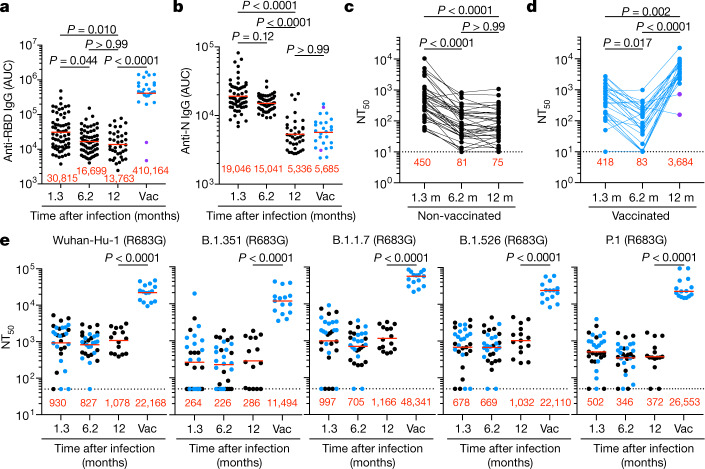
- Among unvaccinated convalescent individuals, anti-RBD IgM, IgG, and IgA titres were maintained at 103%, 82%, and 72% between 6 and 12 months, whereas anti-N titres decreased significantly; vaccination increased anti-RBD IgG titres nearly 30-fold.
- At 12 months, unvaccinated individuals had a geometric mean neutralizing titre (NT50) of 75, not significantly different from 6.2 months; vaccinated individuals had a geometric mean NT50 of 3,684, nearly 50-fold higher. After vaccination, geometric mean NT50 values against variants were 11,493 for B.1.351, 48,341 for B.1.1.7, 22,109 for B.1.526, and 26,553 for P.1.
- RBD-specific memory B cells were 1.35-fold lower at 12 versus 6.2 months in unvaccinated individuals (P = 0.027), but vaccinated individuals showed an average 8.6-fold increase. Among 89 clones detected at 12 months, 61% were not previously detected and 39% were present at an earlier time point.
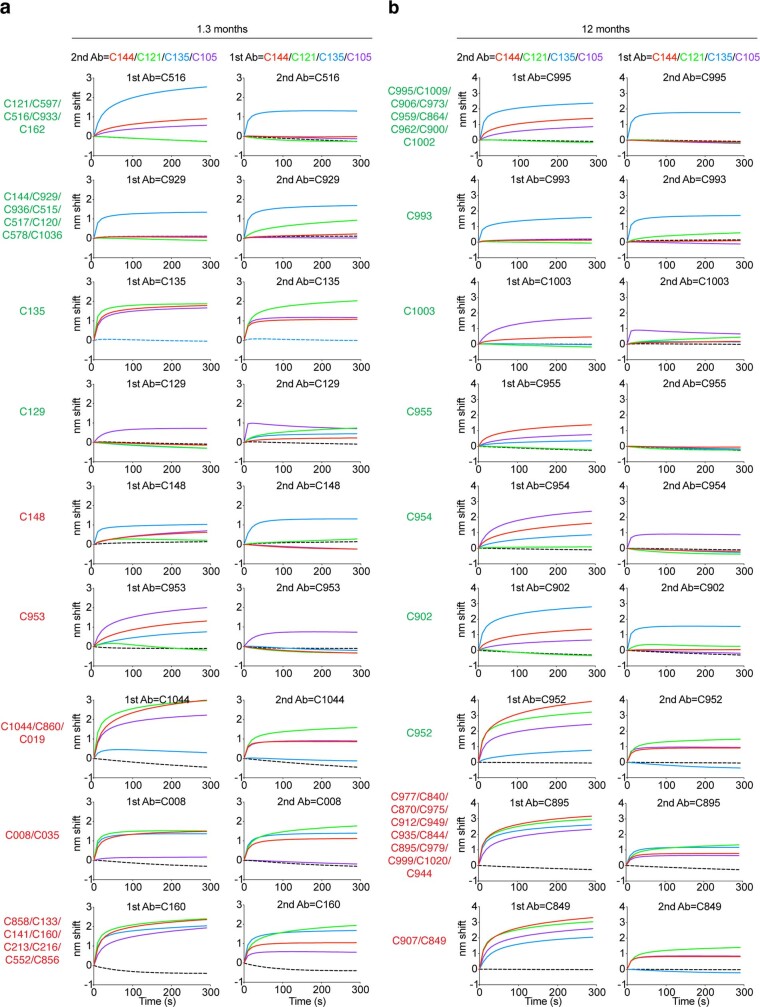
- Of 174 monoclonal antibodies tested at 12 months, 173 bound RBD; geometric mean ELISA EC50 was 2.6 ng ml−1, lower than at 6 months. Neutralizing IC50 improved from 171 ng ml−1 at 1.3 months to 116 ng ml−1 at 6 months to 79 ng ml−1 at 12 months. For matched clonal antibody pairs, 10 of 15 antibodies at 12 months neutralized all tested mutants versus 1 of 15 at 1.3 months, with IC50 values as low as 1 ng ml−1 against K417N/E484K/N501Y.
Methods
- Longitudinal cohort of 63 adults aged 26–73 years (median 47; 43% female; 10% hospitalized) assessed at 1.3, 6.2, and 12 months after SARS-CoV-2 infection; 26 participants (41%) had received at least one dose of Moderna mRNA-1273 or Pfizer-BioNTech BNT162b2, on average 40 days before the visit (range 2–82 days) and 311 days after illness onset (range 272–373 days). All tested negative for active infection by saliva PCR at 12 months.
- Plasma ELISAs measured RBD and N antibody binding; neutralizing activity was measured with HIV-1 pseudotyped with SARS-CoV-2 spike and with authentic SARS-CoV-2 WA1/2020 and B.1.351. Flow cytometry counted RBD-specific memory B cells; single-cell sorting, antibody sequencing, cloning, and expression generated monoclonal antibodies. Biolayer interferometry assessed epitope competition and affinity; computational analyses assessed clonal relationships, somatic hypermutation, and phylogenetics.
- Statistical comparisons used Kruskal–Wallis with Dunn’s multiple comparisons, Friedman, Mann–Whitney, Wilcoxon, and Spearman tests as indicated. The paper states that no statistical methods were used to predetermine sample size, experiments were not randomized, and investigators were not blinded.
Limitations
- Stated in the paper: no statistical methods were used to predetermine sample size; experiments were not randomized; investigators were not blinded to allocation during experiments and outcome assessment.
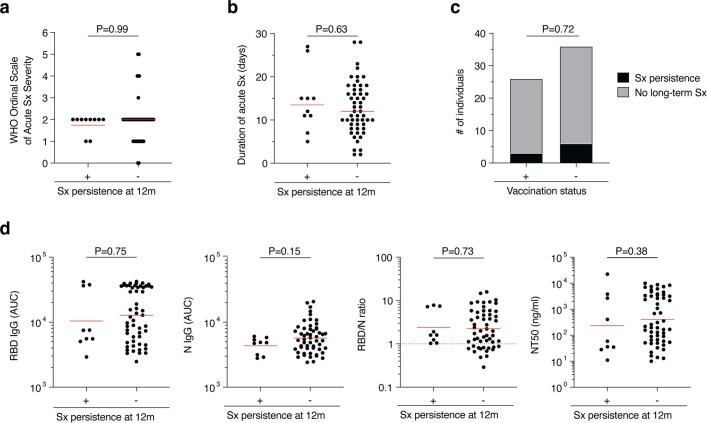
- Evident from the text: the cohort was small (n = 63), mostly had mild initial infections (only 10% hospitalized), and 41% had received mRNA vaccination, with vaccination occurring at variable times before the 12-month visit (range 2–82 days).
- Evident from the text: follow-up ends at 12 months, so conclusions about very long-lasting immunity and protection against future variants are inferred from this interval and from in vitro antibody measurements rather than direct clinical protection data.
Model-written summary. Check it against the paper before relying on it.
Integrity signals
Registry
Cites
Statistics
Figures
Verification
Claims the paper makes
22 Own result · 13 Not checked yet · 10 Own method · 9 Own interpretation
A result the paper reports from its own data — it cites no other source for it, so there is none to check. The quote shows it is in the paper.
In the paper
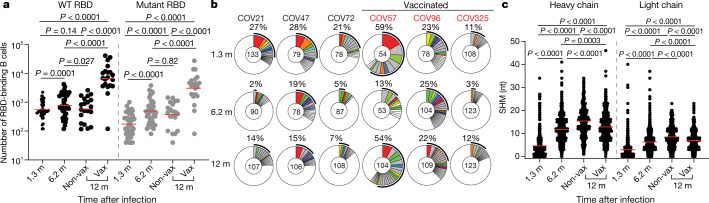
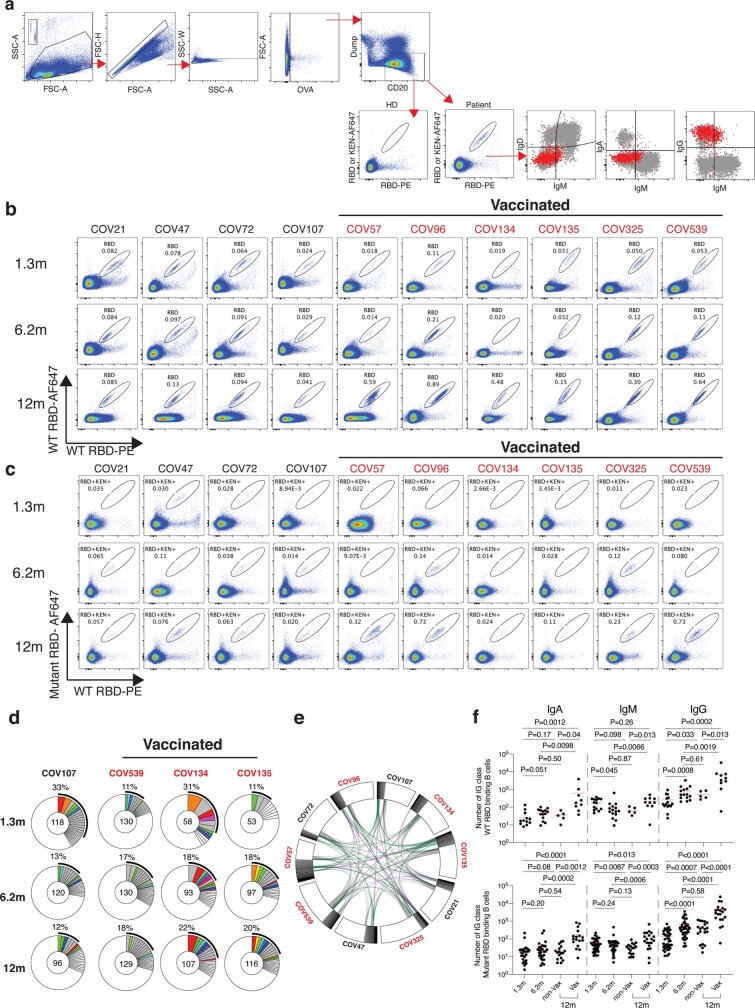
“Without vaccination, the number of RBD-specific memory B cells present 12 months after infection was 1.35-fold lower than the earlier 6.2-month time point (P = 0.027, Fig. 2a).”
§ Naturally enhanced neutralizing breadth against SARS-CoV-2 one year after infection > Memory B cells
plain- Asserted: passes — The authors put it forward as true.
- Checkable: passes — It can be checked against evidence.
- Load-bearing: unclear — It is unclear whether the paper’s conclusions depend on it.
- Based: passes — The paper gives a reason why it holds.
A result the paper reports from its own data — it cites no other source for it, so there is none to check. The quote shows it is in the paper.
In the paper
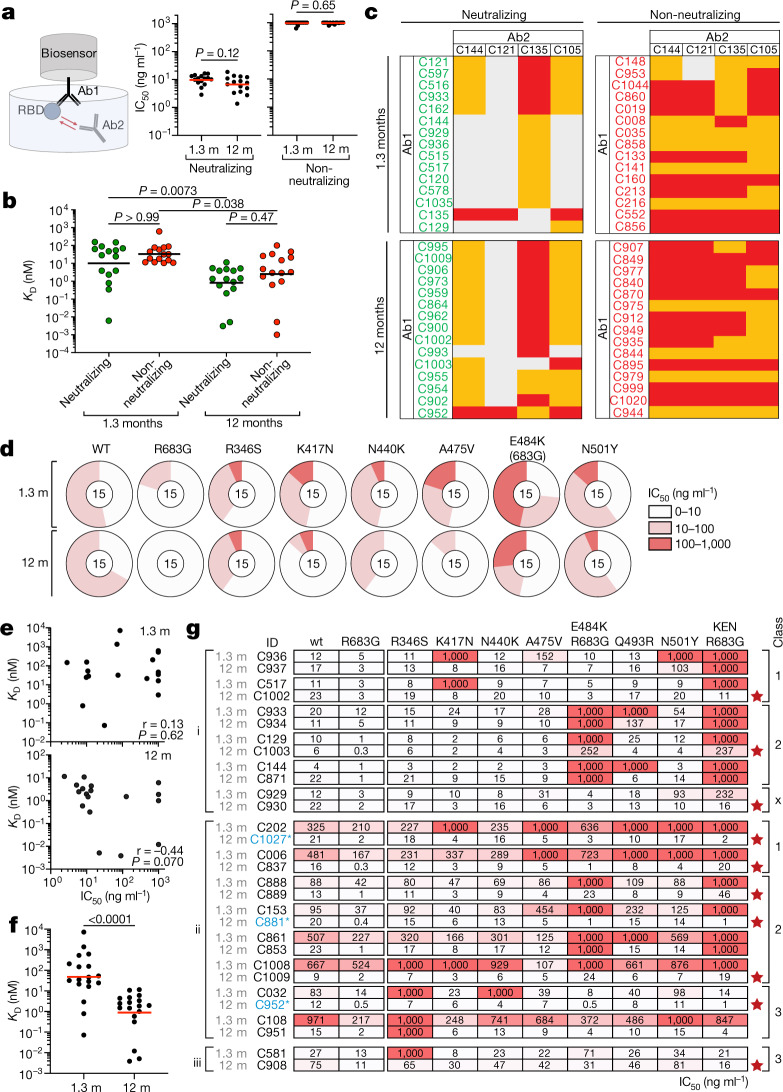
“However, neutralizing breadth increased between 1.3 and 12 months for all 15 pairs, even when neutralizing activity against the wild-type was unchanged or decreased (Fig. 4g, Supplementary Table 8).”
§ Naturally enhanced neutralizing breadth against SARS-CoV-2 one year after infection > Epitopes and breadth of neutralization
plaindirect- Asserted: passes — The authors put it forward as true.
- Checkable: passes — It can be checked against evidence.
- Load-bearing: passes — The paper’s conclusions depend on it.
- Based: passes — The paper gives a reason why it holds.
A result the paper reports from its own data — it cites no other source for it, so there is none to check. The quote shows it is in the paper.
In the paper
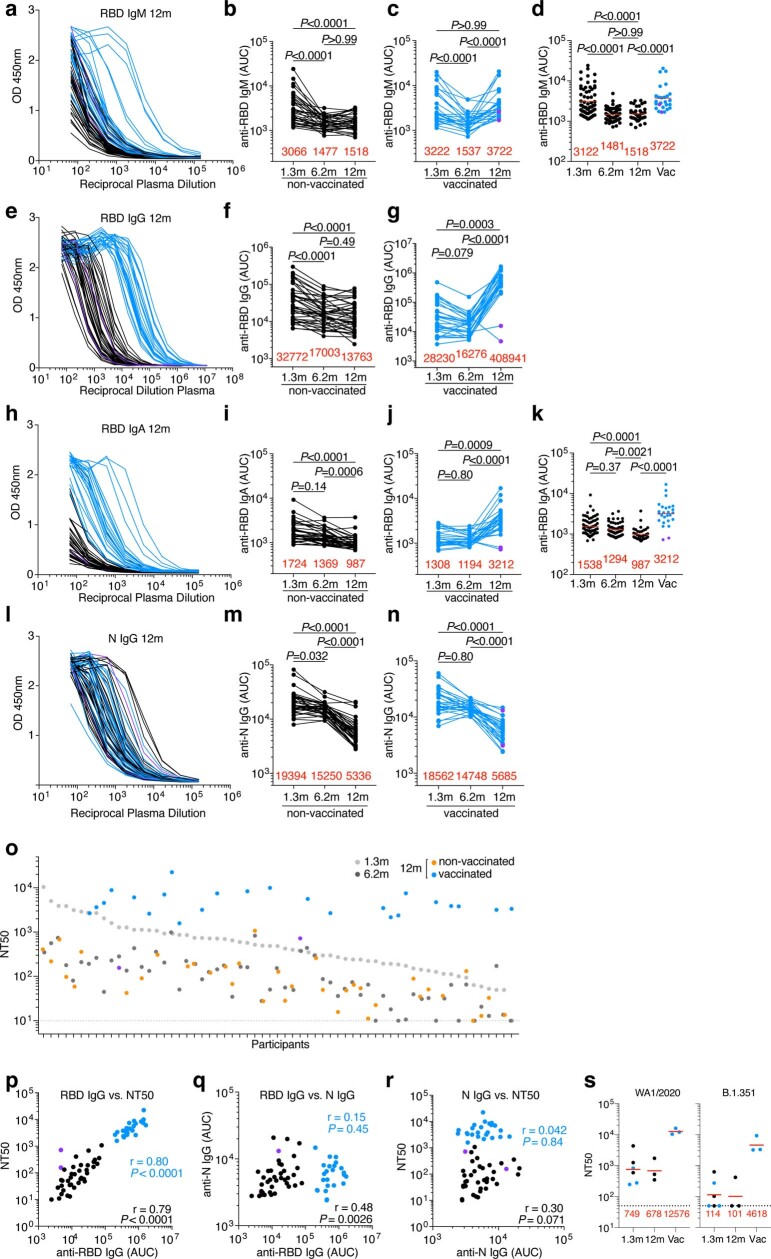
“After vaccination the geometric mean NT50 increased to 11,493, 48,341, 22,109 and 26,553 against B.1.351, B.1.1.7, B.1.526 and P.1, respectively.”
§ Naturally enhanced neutralizing breadth against SARS-CoV-2 one year after infection > Plasma SARS-CoV-2 antibody reactivity
plaindirect- Asserted: passes — The authors put it forward as true.
- Checkable: passes — It can be checked against evidence.
- Load-bearing: passes — The paper’s conclusions depend on it.
- Based: passes — The paper gives a reason why it holds.
A result the paper reports from its own data — it cites no other source for it, so there is none to check. The quote shows it is in the paper.
In the paper
“Increased activity was evident against K417N, N440K, A475V, E484K and N501Y (Fig. 4d, Supplementary Table 6).”
§ Naturally enhanced neutralizing breadth against SARS-CoV-2 one year after infection > Epitopes and breadth of neutralization
plain- Asserted: passes — The authors put it forward as true.
- Checkable: passes — It can be checked against evidence.
- Load-bearing: passes — The paper’s conclusions depend on it.
- Based: passes — The paper gives a reason why it holds.
None of the sources cited for this claim have been checked yet.
In the paper
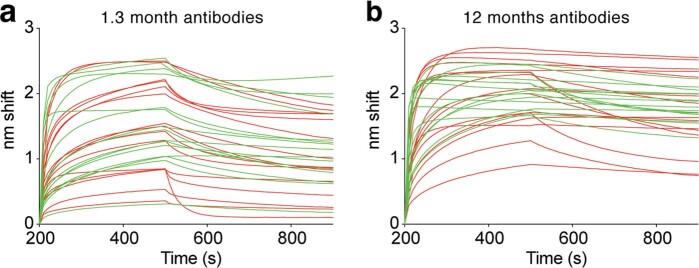
“In contrast to the earlier time point, 13 of 15 neutralizing antibodies obtained after 12 months interfered only with C121, a class 2 antibody3,23 (Fig. 4c, Extended Data Fig. 9).”
§ Naturally enhanced neutralizing breadth against SARS-CoV-2 one year after infection > Epitopes and breadth of neutralization
What the sources say
- Not checked yetcites [3] Robbiani, D. F. et al. Convergent antibody responses to SARS-CoV-2 in convalescent individuals. Nature 584, 437–442 (2020). source
- Not checked yetcites [23] Barnes, C. O. et al. SARS-CoV-2 neutralizing antibody structures inform therapeutic strategies. Nature 588, 682–687 (2020). source
plain- Asserted: passes — The authors put it forward as true.
- Checkable: passes — It can be checked against evidence.
- Load-bearing: passes — The paper’s conclusions depend on it.
- Based: passes — The paper gives a reason why it holds.
A result the paper reports from its own data — it cites no other source for it, so there is none to check. The quote shows it is in the paper.
In the paper
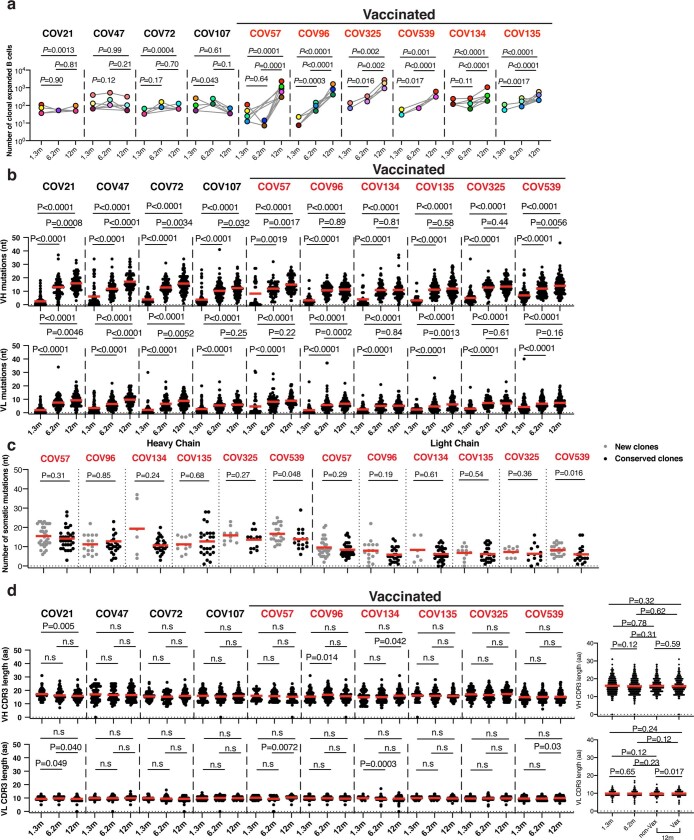
“Somatic hypermutation of antibody genes continued between 6 and 12 months after infection (Fig. 2c).”
§ Naturally enhanced neutralizing breadth against SARS-CoV-2 one year after infection > Memory B cells
plain- Asserted: passes — The authors put it forward as true.
- Checkable: passes — It can be checked against evidence.
- Load-bearing: passes — The paper’s conclusions depend on it.
- Based: passes — The paper gives a reason why it holds.
A result the paper reports from its own data — it cites no other source for it, so there is none to check. The quote shows it is in the paper.
In the paper
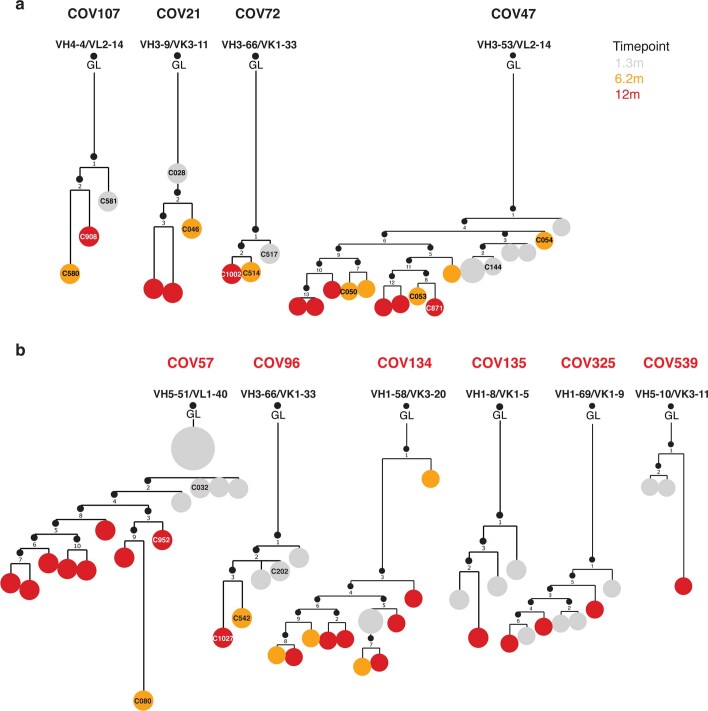
“All individuals assayed at 12 months showed expansion of RBD-binding memory cell clones that expressed closely related IGHV and IGLV genes (Fig. 2b, Extended Data Fig. 3d, e).”
§ Naturally enhanced neutralizing breadth against SARS-CoV-2 one year after infection > Memory B cells
plaincorrelational- Asserted: passes — The authors put it forward as true.
- Checkable: passes — It can be checked against evidence.
- Load-bearing: passes — The paper’s conclusions depend on it.
- Based: passes — The paper gives a reason why it holds.
A result the paper reports from its own data — it cites no other source for it, so there is none to check. The quote shows it is in the paper.
In the paper
“Thus, RBD-specific memory B cell clones were re-expanded upon vaccination in all six convalescent individuals examined (Fig. 2b, Extended Data Figs. 3d, 5a).”
§ Naturally enhanced neutralizing breadth against SARS-CoV-2 one year after infection > Memory B cells
plaindirectn = 6- Asserted: passes — The authors put it forward as true.
- Checkable: passes — It can be checked against evidence.
- Load-bearing: unclear — It is unclear whether the paper’s conclusions depend on it.
- Based: passes — The paper gives a reason why it holds.
A result the paper reports from its own data — it cites no other source for it, so there is none to check. The quote shows it is in the paper.
In the paper
“In contrast to anti-RBD antibody titres that were relatively stable, anti-N antibody titres decreased significantly between 6 and 12 months in this assay, independently of vaccination status (Fig. 1b, Extended Data Fig. 2l–n).”
§ Naturally enhanced neutralizing breadth against SARS-CoV-2 one year after infection > Plasma SARS-CoV-2 antibody reactivity
plaindirect- Asserted: passes — The authors put it forward as true.
- Checkable: passes — It can be checked against evidence.
- Load-bearing: unclear — It is unclear whether the paper’s conclusions depend on it.
- Based: passes — The paper gives a reason why it holds.
A result the paper reports from its own data — it cites no other source for it, so there is none to check. The quote shows it is in the paper.
In the paper
“Only 1 out of the 15 antibodies obtained after 1.3 months neutralized all the mutants tested (Fig. 4g).”
§ Naturally enhanced neutralizing breadth against SARS-CoV-2 one year after infection > Epitopes and breadth of neutralization
plain- Asserted: passes — The authors put it forward as true.
- Checkable: passes — It can be checked against evidence.
- Load-bearing: passes — The paper’s conclusions depend on it.
- Based: passes — The paper gives a reason why it holds.
- It may state two separate claims as one. 23
- Probably not a substantial claim. 11
A result the paper reports from its own data — it cites no other source for it, so there is none to check. The quote shows it is in the paper.
In the paper
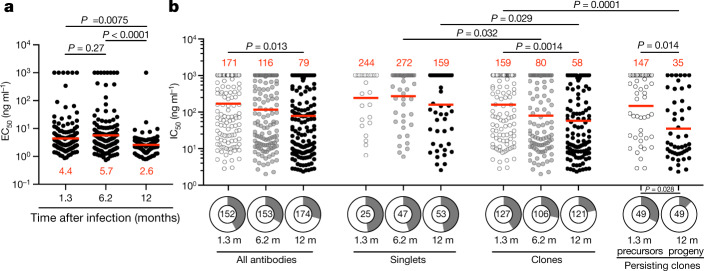
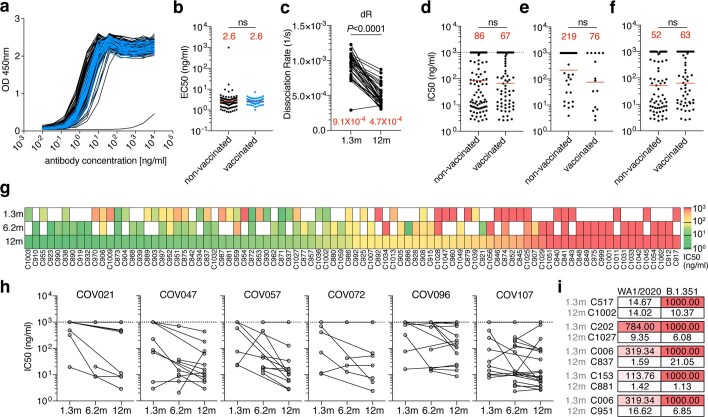
“When compared with the earlier time points from the same individuals, the geometric mean half-maximal inhibitory concentration (IC50) improved from 171 ng ml−1 (at 1.3 months) to 116 ng ml−1 (at 6 months) to 79 ng ml−1 (at 12 months), with no significant difference between vaccinated and non-vaccinated individuals (Fig. 3b, Extended Data Fig. 7d, Supplementary Table 4).”
§ Naturally enhanced neutralizing breadth against SARS-CoV-2 one year after infection > Neutralizing activity of monoclonal antibodies
plaincorrelational- Asserted: passes — The authors put it forward as true.
- Checkable: passes — It can be checked against evidence.
- Load-bearing: passes — The paper’s conclusions depend on it.
- Based: passes — The paper gives a reason why it holds.
It may state two separate claims as one.
A result the paper reports from its own data — it cites no other source for it, so there is none to check. The quote shows it is in the paper.
In the paper
“Twelve months after infection, neutralizing activity against the variants was generally lower than against wild-type SARS-CoV-2 virus in the same assay, with the greatest loss of activity against B.1.351 (Fig. 1e).”
§ Naturally enhanced neutralizing breadth against SARS-CoV-2 one year after infection > Plasma SARS-CoV-2 antibody reactivity
plain- Asserted: passes — The authors put it forward as true.
- Checkable: passes — It can be checked against evidence.
- Load-bearing: passes — The paper’s conclusions depend on it.
- Based: passes — The paper gives a reason why it holds.
It may state two separate claims as one.
A result the paper reports from its own data — it cites no other source for it, so there is none to check. The quote shows it is in the paper.
In the paper
“Neutralizing activity was directly correlated with IgG anti-RBD (Extended Data Fig. 2p) but not with anti-N titres (Extended Data Fig. 2q, r).”
§ Naturally enhanced neutralizing breadth against SARS-CoV-2 one year after infection > Plasma SARS-CoV-2 antibody reactivity
plaincorrelationaln = 63- Asserted: passes — The authors put it forward as true.
- Checkable: passes — It can be checked against evidence.
- Load-bearing: unclear — It is unclear whether the paper’s conclusions depend on it.
- Based: passes — The paper gives a reason why it holds.
It may state two separate claims as one.
A result the paper reports from its own data — it cites no other source for it, so there is none to check. The quote shows it is in the paper.
In the paper
“The number of B cells cross-reacting with variant RBD was directly proportional to and 1.6- to 3.2-fold lower than the number of B cells binding to wild-type RBD (Fig. 2a).”
§ Naturally enhanced neutralizing breadth against SARS-CoV-2 one year after infection > Memory B cells
plaincorrelational- Asserted: passes — The authors put it forward as true.
- Checkable: passes — It can be checked against evidence.
- Load-bearing: passes — The paper’s conclusions depend on it.
- Based: passes — The paper gives a reason why it holds.
It may state two separate claims as one.
A result the paper reports from its own data — it cites no other source for it, so there is none to check. The quote shows it is in the paper.
In the paper
“Twelve months after infection, the geometric mean half-maximal neutralizing titre (NT50) for the 37 individuals who had not been vaccinated was 75, which was not significantly different from the NT50 for the same individuals at 6.2 months after infection (Fig. 1c).”
§ Naturally enhanced neutralizing breadth against SARS-CoV-2 one year after infection > Plasma SARS-CoV-2 antibody reactivity
plainn = 37- Asserted: passes — The authors put it forward as true.
- Checkable: passes — It can be checked against evidence.
- Load-bearing: passes — The paper’s conclusions depend on it.
- Based: passes — The paper gives a reason why it holds.
It may state two separate claims as one.
A result the paper reports from its own data — it cites no other source for it, so there is none to check. The quote shows it is in the paper.
In the paper
“By contrast, 10 out of the 15 antibodies obtained from the same clones 12 months after infection neutralized all variants tested, with IC50 values as low as 1 ng ml−1 against the RBD triple mutant K417N/E484K/N501Y found in B.1.351 (Fig. 4g, Supplementary Table 8).”
§ Naturally enhanced neutralizing breadth against SARS-CoV-2 one year after infection > Epitopes and breadth of neutralization
plain- Asserted: passes — The authors put it forward as true.
- Checkable: passes — It can be checked against evidence.
- Load-bearing: passes — The paper’s conclusions depend on it.
- Based: passes — The paper gives a reason why it holds.
It may state two separate claims as one.
A result the paper reports from its own data — it cites no other source for it, so there is none to check. The quote shows it is in the paper.
In the paper
“The geometric mean ELISA half-maximal concentration (EC50) of the antibodies obtained 12 months after infection was 2.6 ng ml−1, which was significantly lower than after 6 months, independently of vaccination status and suggestive of an increase in affinity (Fig. 3a, Extended Data Fig. 7a, b, Supplementary Tables 4, 5).”
§ Naturally enhanced neutralizing breadth against SARS-CoV-2 one year after infection > Neutralizing activity of monoclonal antibodies
plaincorrelational- Asserted: passes — The authors put it forward as true.
- Checkable: passes — It can be checked against evidence.
- Load-bearing: passes — The paper’s conclusions depend on it.
- Based: passes — The paper gives a reason why it holds.
It may state two separate claims as one.
A result the paper reports from its own data — it cites no other source for it, so there is none to check. The quote shows it is in the paper.
In the paper
“Among the 89 clones found 12 months after infection, 61% were not previously detected and 39% were present at one of the earlier time points (Fig. 2b, Extended Data Fig. 3d).”
§ Naturally enhanced neutralizing breadth against SARS-CoV-2 one year after infection > Memory B cells
plain- Asserted: passes — The authors put it forward as true.
- Checkable: passes — It can be checked against evidence.
- Load-bearing: passes — The paper’s conclusions depend on it.
- Based: passes — The paper gives a reason why it holds.
It may state two separate claims as one.
None of the sources cited for this claim have been checked yet.
In the paper
“Consistent with previous reports5–8, vaccination increased the plasma RBD antibody levels, with IgG titres increasing by nearly 30-fold compared with unvaccinated individuals (Fig. 1a, right).”
§ Naturally enhanced neutralizing breadth against SARS-CoV-2 one year after infection > Plasma SARS-CoV-2 antibody reactivity
What the sources say
- Not checked yetcites [5] Goel, R. R. et al. Distinct antibody and memory B cell responses in SARS-CoV-2 naïve and recovered individuals following mRNA vaccination. Sci. Immunol. 6, eabi6950 (2021). 10 source
- Not checked yetcites [6] Saadat, S. et al. Binding and neutralization antibody titers after a single vaccine dose in health care workers previously infected with SARS-CoV-2. J. Am. Med. Assoc. 325, 1467–1469 (2021). source
- Not checked yetcites [7] Krammer, F. et al. Antibody responses in seropositive persons after a single dose of SARS-CoV-2 mRNA vaccine. N. Engl. J. Med. 384, 1372–1374 (2021). source
- Not checked yetcites [8] Reynolds, C. J. et al. Prior SARS-CoV-2 infection rescues B and T cell responses to variants after first vaccine dose. Science eabh1282 (2021).
plaindirect- Asserted: passes — The authors put it forward as true.
- Checkable: passes — It can be checked against evidence.
- Load-bearing: passes — The paper’s conclusions depend on it.
- Based: passes — The paper gives a reason why it holds.
It may state two separate claims as one.
A result the paper reports from its own data — it cites no other source for it, so there is none to check. The quote shows it is in the paper.
In the paper
“The overall increase in neutralizing activity among conserved clones was owing to accumulation of clones expressing antibodies with potent neutralizing activity and simultaneous loss of clones expressing antibodies with no measurable activity (P = 0.028) (Fig. 3b, bottom right).”
§ Naturally enhanced neutralizing breadth against SARS-CoV-2 one year after infection > Neutralizing activity of monoclonal antibodies
plaindirect- Asserted: passes — The authors put it forward as true.
- Checkable: passes — It can be checked against evidence.
- Load-bearing: passes — The paper’s conclusions depend on it.
- Based: passes — The paper gives a reason why it holds.
It may state two separate claims as one.
None of the sources cited for this claim have been checked yet.
In the paper
“The persistent clones expand without accumulating large numbers of additional mutations, indicating that clonal expansion of human memory B cells does not require re-entry into germinal centres and occurs in the activated B cell compartment17,27–31.”
§ Naturally enhanced neutralizing breadth against SARS-CoV-2 one year after infection > Discussion
What the sources say
- Not checked yetcites [17] Viant, C. et al. Antibody affinity shapes the choice between memory and germinal center B cell fates. Cell 183, 1298–1311 (2020). source
- Not checked yetcites [27] Elsner, R. A. & Shlomchik, M. J. Germinal center and extrafollicular b cell responses in vaccination, immunity, and autoimmunity. Immunity 53, 1136–1150 (2020). source
- Not checked yetcites [28] Lau, A. W. & Brink, R. Selection in the germinal center. Curr. Opin. Immunol. 63, 29–34 (2020). source
- Not checked yetcites [29] Victora, G. D. & Nussenzweig, M. C. Germinal centers. Annu. Rev. Immunol. 30, 429–457 (2012). source
- Not checked yetcites [30] Inoue, T., Moran, I., Shinnakasu, R., Phan, T. G. & Kurosaki, T. Generation of memory B cells and their reactivation. Immunol. Rev. 283, 138–149 (2018). source
- Not checked yetcites [31] Taylor, J. J., Pape, K. A., Steach, H. R. & Jenkins, M. K. Humoral immunity. Apoptosis and antigen affinity limit effector cell differentiation of a single naïve B cell. Science 347, 784–787 (2015 source
hedgeddirect- Asserted: passes — The authors put it forward as true.
- Checkable: passes — It can be checked against evidence.
- Load-bearing: passes — The paper’s conclusions depend on it.
- Based: passes — The paper gives a reason why it holds.
It may state two separate claims as one.
A conclusion the paper draws from its own results — it cites no other source for it, so there is none to check. The quote shows it is in the paper.
In the paper
“If memory responses evolve in a similar manner in naive individuals who receive vaccines, additional appropriately timed boosting with available vaccines should lead to protective immunity against circulating variants.”
§ Naturally enhanced neutralizing breadth against SARS-CoV-2 one year after infection > Discussion
hedgedconditional- Asserted: passes — The authors put it forward as true.
- Checkable: fails — It may be too vague to check against evidence.
- Load-bearing: passes — The paper’s conclusions depend on it.
- Based: fails — The paper may give no reason why it holds.
Probably not a substantial claim. It may be too vague to check against evidence. The paper may give no reason why it holds. It may state two separate claims as one.
- Rests on an assumption: The 63 convalescent participants are representative of the broader population of individuals who have recovered from COVID-19.
- Rests on an assumption: Neutralizing antibody titres are a correlate of protection against SARS-CoV-2 variants in vivo.
- Rests on an assumption: In vitro neutralization breadth measured with pseudotyped viruses predicts protection against authentic circulating SARS-CoV-2 variants.
A conclusion the paper draws from its own results — it cites no other source for it, so there is none to check. The quote shows it is in the paper.
In the paper
“In conclusion, continued clonal evolution of anti-SARS-CoV-2 antibodies over 12 months favours increasing potency and breadth, resulting in monoclonal antibodies with exceptional activity against a wide group of variants.”
§ Naturally enhanced neutralizing breadth against SARS-CoV-2 one year after infection > Epitopes and breadth of neutralization
plaindirect- Asserted: passes — The authors put it forward as true.
- Checkable: passes — It can be checked against evidence.
- Load-bearing: passes — The paper’s conclusions depend on it.
- Based: passes — The paper gives a reason why it holds.
It may state two separate claims as one.
What the paper did — it cites no source for this, so there is none to check. The quote shows it is in the paper.
In the paper
“Among the 174 antibodies tested, 173 bound to RBD, indicating that the flow cytometry method used to identify B cells expressing anti-RBD antibodies was efficient (Supplementary Tables 4, 5).”
§ Naturally enhanced neutralizing breadth against SARS-CoV-2 one year after infection > Neutralizing activity of monoclonal antibodies
hedgeddirect- Asserted: passes — The authors put it forward as true.
- Checkable: passes — It can be checked against evidence.
- Load-bearing: unclear — It is unclear whether the paper’s conclusions depend on it.
- Based: passes — The paper gives a reason why it holds.
It may state two separate claims as one.
A conclusion the paper draws from its own results — it cites no other source for it, so there is none to check. The quote shows it is in the paper.
In the paper
“SARS-CoV-2 infection produces a memory compartment that continues to evolve more than 12 months after infection with accumulation of somatic mutations, emergence of new clones and increasing affinity, all of which are consistent with long-term persistence of germinal centres.”
§ Naturally enhanced neutralizing breadth against SARS-CoV-2 one year after infection > Discussion
plaindirect- Asserted: passes — The authors put it forward as true.
- Checkable: passes — It can be checked against evidence.
- Load-bearing: passes — The paper’s conclusions depend on it.
- Based: passes — The paper gives a reason why it holds.
It may state two separate claims as one.
- Rests on an assumption: Antibody sequences obtained from 10 individuals are representative of the memory B cell repertoire.
A conclusion the paper draws from its own results — it cites no other source for it, so there is none to check. The quote shows it is in the paper.
In the paper
“We conclude that neutralizing antibodies are retained and non-neutralizing antibodies targeting RBD surfaces that do not interact with ACE2 are removed from the repertoire over time.”
§ Naturally enhanced neutralizing breadth against SARS-CoV-2 one year after infection > Epitopes and breadth of neutralization
plaindirect- Asserted: passes — The authors put it forward as true.
- Checkable: passes — It can be checked against evidence.
- Load-bearing: passes — The paper’s conclusions depend on it.
- Based: passes — The paper gives a reason why it holds.
It may state two separate claims as one.
None of the sources cited for this claim have been checked yet.
In the paper
“Although antibodies to the N-terminal domain and other parts of S can also be neutralizing, we limited our analysis to memory B cells that produce anti-RBD antibodies because they are the most numerous and potent18,19.”
§ Naturally enhanced neutralizing breadth against SARS-CoV-2 one year after infection > Memory B cells
What the sources say
- Not checked yetcites [18] Rogers, T. F. et al. Isolation of potent SARS-CoV-2 neutralizing antibodies and protection from disease in a small animal model. Science 369, 956–963 (2020). source
- Not checked yetcites [19] Kreer, C. et al. Longitudinal isolation of potent near-germline SARS-CoV-2-neutralizing antibodies from COVID-19 patients. Cell 182, 1663–1673 (2020). source
plain- Asserted: passes — The authors put it forward as true.
- Checkable: passes — It can be checked against evidence.
- Load-bearing: passes — The paper’s conclusions depend on it.
- Based: passes — The paper gives a reason why it holds.
Probably not a substantial claim. It may state two separate claims as one.
What the paper did — it cites no source for this, so there is none to check. The quote shows it is in the paper.
In the paper
“the investigators were not blinded to allocation during experiments and outcome assessment”
§ Naturally enhanced neutralizing breadth against SARS-CoV-2 one year after infection > Methods > Data reporting
plain- Asserted: passes — The authors put it forward as true.
- Checkable: passes — It can be checked against evidence.
- Load-bearing: fails — The paper’s conclusions may not depend on it.
- Based: passes — The paper gives a reason why it holds.
Probably not a substantial claim. The paper’s conclusions may not depend on it.
None of the sources cited for this claim have been checked yet.
In the paper
“Consistent with the longevity of bone marrow plasma cells, infection with SARS-CoV-2 leads to persistent anti-RBD antibodies in serum, and corresponding neutralizing responses.”
§ Naturally enhanced neutralizing breadth against SARS-CoV-2 one year after infection > Discussion
What the sources say
- Not checked yetcites [33] Petersen, M. S. et al. SARS-CoV-2 natural antibody response persists up to 12 months in a nationwide study from the Faroe Islands. Preprint at https://doi.org/10.1101/2021.04.19.21255720 (2021). source
- Not checked yetcites [34] Li, C. et al. Twelve-month specific IgG response to SARS-CoV-2 receptor-binding domain among COVID-19 convalescent plasma donors in Wuhan. Preprint at https://doi.org/10.1101/2021.04.05.437224 (2021). source
plaindirect- Asserted: passes — The authors put it forward as true.
- Checkable: passes — It can be checked against evidence.
- Load-bearing: passes — The paper’s conclusions depend on it.
- Based: passes — The paper gives a reason why it holds.
It may state two separate claims as one.
What the paper did — it cites no source for this, so there is none to check. The quote shows it is in the paper.
In the paper
“The experiments were not randomized”
§ Naturally enhanced neutralizing breadth against SARS-CoV-2 one year after infection > Methods > Data reporting
plain- Asserted: passes — The authors put it forward as true.
- Checkable: passes — It can be checked against evidence.
- Load-bearing: fails — The paper’s conclusions may not depend on it.
- Based: passes — The paper gives a reason why it holds.
Probably not a substantial claim. The paper’s conclusions may not depend on it.
In the paper
“Continued antibody evolution in germinal centres requires antigen, which can be retained in these structures over long periods of time29.”
§ Naturally enhanced neutralizing breadth against SARS-CoV-2 one year after infection > Discussion
What the sources say
- Not checked yetcites [29] Victora, G. D. & Nussenzweig, M. C. Germinal centers. Annu. Rev. Immunol. 30, 429–457 (2012). source
plaindirect- Asserted: passes — The authors put it forward as true.
- Checkable: passes — It can be checked against evidence.
- Load-bearing: passes — The paper’s conclusions depend on it.
- Based: passes — The paper gives a reason why it holds.
It may state two separate claims as one.
What the paper did — it cites no source for this, so there is none to check. The quote shows it is in the paper.
In the paper
“All experiments were performed at least in duplicate.”
§ Naturally enhanced neutralizing breadth against SARS-CoV-2 one year after infection > Plasma SARS-CoV-2 antibody reactivity
plain- Asserted: passes — The authors put it forward as true.
- Checkable: passes — It can be checked against evidence.
- Load-bearing: fails — The paper’s conclusions may not depend on it.
- Based: passes — The paper gives a reason why it holds.
Probably not a substantial claim. The paper’s conclusions may not depend on it.
What the paper did — it cites no source for this, so there is none to check. The quote shows it is in the paper.
In the paper
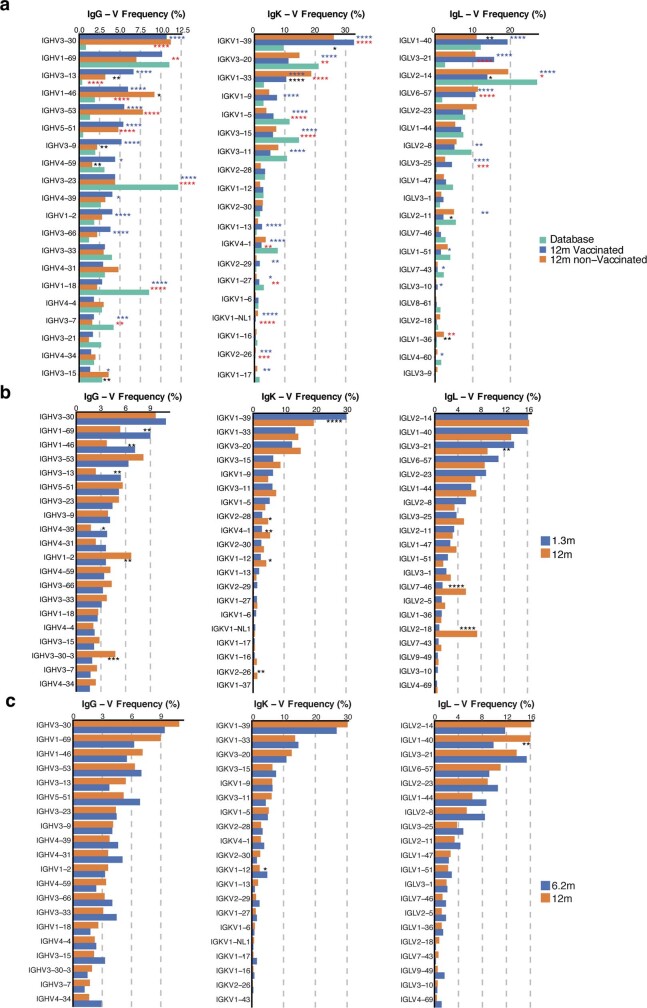
“We used the two-sided binomial test to check whether the number of sequences belonging to a specific IgHV or IgLV gene in the repertoire is different according to the frequency of the same IgV gene in the database. Adjusted P values were calculated using the false discovery rate (FDR) correction.”
§ Naturally enhanced neutralizing breadth against SARS-CoV-2 one year after infection > Methods > Computational analyses of antibody sequences
plainn = 10- Asserted: passes — The authors put it forward as true.
- Checkable: passes — It can be checked against evidence.
- Load-bearing: fails — The paper’s conclusions may not depend on it.
- Based: passes — The paper gives a reason why it holds.
Probably not a substantial claim. The paper’s conclusions may not depend on it. It may state two separate claims as one.
What the paper did — it cites no source for this, so there is none to check. The quote shows it is in the paper.
In the paper
“No statistical methods were used to predetermine sample size.”
§ Naturally enhanced neutralizing breadth against SARS-CoV-2 one year after infection > Methods > Data reporting
plain- Asserted: passes — The authors put it forward as true.
- Checkable: passes — It can be checked against evidence.
- Load-bearing: fails — The paper’s conclusions may not depend on it.
- Based: passes — The paper gives a reason why it holds.
Probably not a substantial claim. The paper’s conclusions may not depend on it.
None of the sources cited for this claim have been checked yet.
In the paper
“The memory B cell compartment accumulates mutations and undergoes clonal evolution over the initial six months after infection4,9,21,22.”
§ Naturally enhanced neutralizing breadth against SARS-CoV-2 one year after infection > Memory B cells
What the sources say
- Not checked yetcites [4] Gaebler, C. et al. Evolution of antibody immunity to SARS-CoV-2. Nature 591, 639–644 (2021). source
- Not checked yetcites [9] Muecksch, F. et al. Development of potency, breadth and resilience to viral escape mutations in SARS-CoV-2 neutralizing antibodies. Preprint at https://doi.org/10.1101/2021.03.07.434227 (2021). source
- Not checked yetcites [21] Sokal, A. et al. Maturation and persistence of the anti-SARS-CoV-2 memory B cell response. Cell 184, 1201–1213 (2021). source
- Not checked yetcites [22] Sakharkar, M. et al. Prolonged evolution of the human B cell response to SARS-CoV-2 infection. Sci. Immunol. 6, eabg6916 (2021). source
plaindirect- Asserted: passes — The authors put it forward as true.
- Checkable: passes — It can be checked against evidence.
- Load-bearing: passes — The paper’s conclusions depend on it.
- Based: passes — The paper gives a reason why it holds.
It may state two separate claims as one.
What the paper did — it cites no source for this, so there is none to check. The quote shows it is in the paper.
In the paper
“The obtained relative luminescence units were normalized to those derived from cells infected with SARS-CoV-2 pseudotyped virus in the absence of plasma or monoclonal antibodies.”
§ Naturally enhanced neutralizing breadth against SARS-CoV-2 one year after infection > Methods > Pseudotyped virus neutralization assay
plain- Asserted: passes — The authors put it forward as true.
- Checkable: passes — It can be checked against evidence.
- Load-bearing: passes — The paper’s conclusions depend on it.
- Based: passes — The paper gives a reason why it holds.
Probably not a substantial claim.
In the paper
“In addition, SARS-CoV-2 protein and nucleic acids have been reported to remain in the gut for at least two months after infection4.”
§ Naturally enhanced neutralizing breadth against SARS-CoV-2 one year after infection > Discussion
What the sources say
- Not checked yetcites [4] Gaebler, C. et al. Evolution of antibody immunity to SARS-CoV-2. Nature 591, 639–644 (2021). source
plain- Asserted: passes — The authors put it forward as true.
- Checkable: passes — It can be checked against evidence.
- Load-bearing: fails — The paper’s conclusions may not depend on it.
- Based: passes — The paper gives a reason why it holds.
Probably not a substantial claim. The paper’s conclusions may not depend on it.
What the paper did — it cites no source for this, so there is none to check. The quote shows it is in the paper.
In the paper
“a positive control (plasma from participant COV72, diluted 66.6-fold and seven additional threefold serial dilutions in PBS) was added to every assay plate for validation. The average of its signal was used for normalization of all of the other values on the same plate”
§ Naturally enhanced neutralizing breadth against SARS-CoV-2 one year after infection > Methods > ELISAs
plainSingle case- Asserted: passes — The authors put it forward as true.
- Checkable: passes — It can be checked against evidence.
- Load-bearing: fails — The paper’s conclusions may not depend on it.
- Based: passes — The paper gives a reason why it holds.
Probably not a substantial claim. The paper’s conclusions may not depend on it. It may state two separate claims as one.
What the paper did — it cites no source for this, so there is none to check. The quote shows it is in the paper.
In the paper
“Reverse-transcribed cDNA was amplified using primers and probes validated by the CDC or by Columbia University Personalized Medicine Genomics Laboratory, respectively and approved by the FDA under the Emergency Use Authorization.”
§ Naturally enhanced neutralizing breadth against SARS-CoV-2 one year after infection > Methods > SARS-CoV-2 molecular tests
plain- Asserted: passes — The authors put it forward as true.
- Checkable: passes — It can be checked against evidence.
- Load-bearing: fails — The paper’s conclusions may not depend on it.
- Based: passes — The paper gives a reason why it holds.
Probably not a substantial claim. The paper’s conclusions may not depend on it. It may state two separate claims as one.
The paper relies on this without support.
The 63 convalescent participants are representative of the broader population of individuals who have recovered from COVID-19.
“Here we report on a cohort of 63 individuals who have recovered from COVID-19 assessed at 1.3, 6.2 and 12 months after SARS-CoV-2 infection, 41% of whom also received mRNA vaccines3,4.”
The paper relies on this without support.
Neutralizing antibody titres are a correlate of protection against SARS-CoV-2 variants in vivo.
“The data suggest that immunity in convalescent individuals will be very long lasting and that convalescent individuals who receive available mRNA vaccines will produce antibodies and memory B cells that should be protective against circulating SARS-CoV-2 variants.”
The paper relies on this without support.
In vitro neutralization breadth measured with pseudotyped viruses predicts protection against authentic circulating SARS-CoV-2 variants.
“Plasma neutralizing activity in 63 participants was measured using a human immunodeficiency virus 1 (HIV-1) pseudotyped with the SARS-CoV-2 spike (S) protein3,4,13”
The paper relies on this without support.
The mRNA vaccines used (Moderna mRNA-1273 and Pfizer-BioNTech BNT162b2) are representative of available mRNA vaccines.
“26 (41%) had received at least one dose of either the Moderna (mRNA-1273) or Pfizer-BioNTech (BNT162b2) vaccines”
The paper relies on this without support.
Antibody sequences obtained from 10 individuals are representative of the memory B cell repertoire.
“we obtained 1,105 paired antibody heavy- and light-chain sequences from 10 individuals who were also assessed at the earlier time points, 6 of whom were vaccinated”
Claims other papers make about this one
Each is checked against this paper’s own text: does it say what the citing paper says it does?
The source backs part of the claim, not all of it — or backs it for a different population, condition or comparison.
In the citing paper
“In addition, the mRNA vaccines appear to often elicit memory B cells that undergo somatic hypermutation, which should broaden the response to viruses with variant spike proteins 239,240 .”
From The biological and clinical significance of emerging SARS-CoV-2 variants (2021) · cites this paper as [239]
Experimental — accuracy not yet measuredIn the citing paper
“As reported previously by our group and others, mRNA vaccines induced robust circulating antibody responses to the SARS-CoV-2 spike protein and spike RBD with distinct patterns of early response in SARS-CoV-2–naïve and –recovered individuals (Fig. 1B) (16, 34–36).”
From mRNA vaccines induce durable immune memory to SARS-CoV-2 and variants of concern (2021) · cites this paper as [36]
In the citing paper
“The levels of neutralizing mAbs elicited by the mRNA vaccines has been high and in most persons are likely to be maintained for many months above the levels required for protection against even the most resistant circulating variants 164,239,240 .”
From The biological and clinical significance of emerging SARS-CoV-2 variants (2021) · cites this paper as [239]
In the citing paper
“Convalescent individuals develop B cell lineages that mature over time, increasing their activity against SARS-CoV-2 variants (27).”
From Durability of mRNA-1273 vaccine–induced antibodies against SARS-CoV-2 variants (2021) · cites this paper as [27]
Self-check
Percentages, sums and reported differences re-computed from the paper’s own numbers.
Each contradiction between two passages listed here was confirmed by an independent check.
Rated minor: it would not touch a result — a value no result rests on, a p-value that stays on the same side of the significance level, or a conflict that is clerical, resolved elsewhere in the paper, or outside its own findings.
In the paper
§ Naturally enhanced neutralizing breadth against SARS-CoV-2 one year after infection > Neutralizing activity of monoclonal antibodies
“Among the 174 antibodies tested, 173 bound to RBD”
§ Naturally enhanced neutralizing breadth against SARS-CoV-2 one year after infection > Neutralizing activity of monoclonal antibodies
“All 174 RBD binding antibodies obtained from the 12-month time point were tested for neutralizing activity in a SARS-CoV-2 pseudotype-neutralization assay.”
Rated minor: it would not touch a result — a value no result rests on, a p-value that stays on the same side of the significance level, or a conflict that is clerical, resolved elsewhere in the paper, or outside its own findings.
In the paper
§ Naturally enhanced neutralizing breadth against SARS-CoV-2 one year after infection > Memory B cells
“individuals who recovered from COVID-19 and received mRNA vaccines showed an average increase of 8.6-fold in the number of circulating RBD-specific memory B cells”
§ Naturally enhanced neutralizing breadth against SARS-CoV-2 one year after infection > Discussion
“Vaccination after SARS-CoV-2 infection increases the number of RBD-binding memory cells by more than an order of magnitude”
Citations
Cites
Single-Step Method of RNA Isolation by Acid Guanidinium Thiocyanate–Phenol–Chloroform Extraction
Chomczynski, P., & Sacchi, N. (1987) · Analytical Biochemistry · doi:10.1006/abio.1987.9999 · Cited by 65,515
Hoffmann, M., Kleine-Weber, H., Schroeder, S., Krüger, N., Herrler, T., Erichsen, S., Schiergens, T. S., Herrler, G., Wu, N.-H., Nitsche, A., et al. (2020) · Cell · doi:10.1016/j.cell.2020.02.052 · Cited by 20,286
A new coronavirus associated with human respiratory disease in China
Wu, F., Zhao, S., Yu, B., Chen, Y.-M., Wang, W., Song, Z.-G., Hu, Y., Tao, Z.-W., Tian, J.-H., Pei, Y.-Y., et al. (2020) · Nature · doi:10.1038/s41586-020-2008-3 · Cited by 11,688
Grifoni, A., Weiskopf, D., Ramirez, S. I., Mateus, J., Dan, J. M., Moderbacher, C. R., Rawlings, S. A., Sutherland, A., Premkumar, L., Jadi, R. S., et al. (2020) · Cell · doi:10.1016/j.cell.2020.05.015 · Cited by 3,595
Estimated transmissibility and impact of SARS-CoV-2 lineage B.1.1.7 in England
Davies, N. G., Abbott, S., Barnard, R. C., Jarvis, C. I., Kucharski, A. J., Munday, J. D., Pearson, C. A. B., Russell, T. W., Tully, D. C., Washburne, A. D., et al. (2021) · Science · doi:10.1126/science.abg3055 · Cited by 2,581
Estimated transmissibility and impact of SARS-CoV-2 lineage B.1.1.7 in England
Davies, N. G., Abbott, S., Barnard, R. C., Jarvis, C. I., Kucharski, A. J., Munday, J. D., Pearson, C. A. B., Russell, T. W., Tully, D. C., Washburne, A. D., et al. (2020) · doi:10.1101/2020.12.24.20248822 · Cited by 2,557
Detection of a SARS-CoV-2 variant of concern in South Africa
Tegally, H., Wilkinson, E., Giovanetti, M., Iranzadeh, A., Fonseca, V., Giandhari, J., Doolabh, D., Pillay, S., San, E. J., Msomi, N., et al. (2021) · Nature · doi:10.1038/s41586-021-03402-9 · Cited by 2,510
Victora, G. D., & Nussenzweig, M. C. (2012) · Annual Review of Immunology · doi:10.1146/annurev-immunol-020711-075032 · Cited by 1,878
Self-citationConvergent Antibody Responses to SARS-CoV-2 in Convalescent Individuals
Robbiani, D. F., Gaebler, C., Muecksch, F., Lorenzi, J. C. C., Wang, Z., Cho, A., Agudelo, M., Barnes, C. O., Gazumyan, A., Finkin, S., et al. (2020) · Nature · doi:10.1038/s41586-020-2456-9 · Cited by 1,853
Self-citationA serological assay to detect SARS-CoV-2 seroconversion in humans
Amanat, F., Stadlbauer, D., Strohmeier, S., Nguyen, T. H. O., Chromikova, V., McMahon, M., Jiang, K., Arunkumar, G. A., Jurczyszak, D., Polanco, J., et al. (2020) · Nature Medicine · doi:10.1038/s41591-020-0913-5 · Cited by 1,769
Cited by
Sorted by citations
Items 101–200 of 800
An antibody class with a common CDRH3 motif broadly neutralizes sarbecoviruses
Liu, L., Iketani, S., Guo, Y., Reddem, E. R., Casner, R. G., Nair, M. S., Yu, J., Chan, J. F., Wang, M., Cerutti, G., et al. (2022) · Science Translational Medicine · doi:10.1126/scitranslmed.abn6859 · Cited by 51
Gazit, S., Shlezinger, R., Perez, G., Lotan, R., Peretz, A., Ben‐Tov, A., Herzel, E., Alapi, H., Cohen, D., Muhsen, K., et al. (2022) · Annals of Internal Medicine · doi:10.7326/m21-4130 · Cited by 55
B cell receptor repertoire kinetics after SARS-CoV-2 infection and vaccination
Kotagiri, P., Mescia, F., Rae, W. M., Bergamaschi, L., Tuong, Z. K., Turner, L., Hunter, K., Gerber, P. P., Hosmillo, M. D. T., Hess, C., et al. (2022) · Cell Reports · doi:10.1016/j.celrep.2022.110393 · Cited by 61
Imprinted antibody responses against SARS-CoV-2 Omicron sublineages
Park, Y.-J., Pinto, D., Walls, A. C., Liu, Z., De Marco, A., Benigni, F., Zatta, F., Silacci-Fregni, C., Bassi, J., Sprouse, K. R., et al. (2022) · doi:10.1101/2022.05.08.491108 · Cited by 251
Brasu, N., Elia, I., Russo, V., Montacchiesi, G., Stabile, S. A., Intinis, C. D., Fesi, F., Gizzi, K., Macagno, M., Montone, M., et al. (2022) · Nature Immunology · doi:10.1038/s41590-022-01313-z · Cited by 58
Autoantibodies in COVID‐19 correlate with antiviral humoral responses and distinct immune signatures
Taeschler, P., Cervia, C., Zurbuchen, Y., Hasler, S., Pou, C., Tan, Z., Adamo, S., Raeber, M. E., Bächli, E., Rudiger, A., et al. (2022) · Allergy · doi:10.1111/all.15302 · Cited by 64
Perceived risk and perceptions of COVID-19 vaccine: A survey among general public in Pakistan
Beg, B. M., Hussain, T. A., Ahmad, M., Areej, S., Majeed, A., Rasheed, M. A., Ahmad, M. M., Shoaib, Q.-U.-A., & Aroosa, S. (2022) · PLoS ONE · doi:10.1371/journal.pone.0266028 · Cited by 61
Assawakosri, S., Kanokudom, S., Suntronwong, N., Auphimai, C., Nilyanimit, P., Vichaiwattana, P., Thongmee, T., Duangchinda, T., Chantima, W., Pakchotanon, P., et al. (2022) · The Journal of Infectious Diseases · doi:10.1093/infdis/jiac092 · Cited by 60
Single-cell profiling of the antigen-specific response to BNT162b2 SARS-CoV-2 RNA vaccine
Kramer, K. J., Wilfong, E. M., Voss, K., Barone, S. M., Shiakolas, A. R., Raju, N., Roe, C. E., Suryadevara, N., Walker, L. M., Wall, S. C., et al. (2022) · Nature Communications · doi:10.1038/s41467-022-31142-5 · Cited by 59
The way of SARS-CoV-2 vaccine development: success and challenges
Dong, Y., Dai, T., Wang, B., Zhang, L., Zeng, L., Huang, J., Yan, H., Zhang, L., & Zhou, F. (2021) · Signal Transduction and Targeted Therapy · doi:10.1038/s41392-021-00796-w · Cited by 53
Assawakosri, S., Kanokudom, S., Suntronwong, N., et al. (2022) · medRxiv · doi:10.1101/2022.01.28.22269986 · Cited by 59
Human memory B cells show plasticity and adopt multiple fates upon recall response to SARS-CoV-2
Zurbuchen, Y., Michler, J., Taeschler, P., Adamo, S., Cervia, C., Raeber, M. E., Acar, İ. E., Nilsson, J., Warnatz, K., Soyka, M., et al. (2023) · Nature Immunology · doi:10.1038/s41590-023-01497-y · Cited by 54
Branche, A. R., Rouphael, N., Diemert, D. J., Falsey, A. R., Losada, C., Baden, L. R., Frey, S. E., Whitaker, J. A., Little, S. J., Anderson, E. J., et al. (2023) · Nature Medicine · doi:10.1038/s41591-023-02503-4 · Cited by 59
Barrière, J., Carlès, M., Audigier-Valette, C., Ré, D., Adjtoutah, Z., Seitz‐Polski, B., Gounant, V., Descamps, D., & Zalcman, G. (2021) · European Journal of Cancer · doi:10.1016/j.ejca.2021.12.011 · Cited by 56
Yewdell, W. T., Smolkin, R. M., Belcheva, K. T., Mendoza, A., Michaels, A. J., Cols, M., Angeletti, D., Yewdell, J. W., & Chaudhuri, J. (2021) · Cell Reports · doi:10.1016/j.celrep.2021.109961 · Cited by 52
Protective neutralizing epitopes in SARS‐CoV‐2
Liu, H., & Wilson, I. A. (2022) · Immunological Reviews · doi:10.1111/imr.13084 · Cited by 49
Affinity maturation of antibody responses is mediated by differential plasma cell proliferation
MacLean, A. J., Deimel, L. P., Zhou, P., ElTanbouly, M. A., Merkenschlager, J., Ramos, V., Santos, G. S. S., Hägglöf, T., Mayer, C. T., Hernandez, B., et al. (2024) · Science · doi:10.1126/science.adr6896 · Cited by 52
Self-citationAbebe, E. C., & Dejenie, T. A. (2023) · Frontiers in Immunology · doi:10.3389/fimmu.2023.1055457 · Cited by 58
Dysregulated Immune Responses in SARS-CoV-2-Infected Patients: A Comprehensive Overview
Kudryavtsev, I. V., Rubinstein, A., Головкин, А. С., Kalinina, O., Vasilyev, K., Георгиевна, Р. Л., & Isakova–Sivak, I. (2022) · Viruses · doi:10.3390/v14051082 · Cited by 47
Yang, L., Beek, M. V., Wang, Z., Muecksch, F., Canis, M., Hatziioannou, T., Bieniasz, P. D., Nussenzweig, M. C., & Chakraborty, A. K. (2023) · Cell Reports · doi:10.1016/j.celrep.2023.112256 · Cited by 50
Self-citationMaeda, R., Fujita, J., Konishi, Y., Kazuma, Y., Yamazaki, H., Anzai, I., Watanabe, T., Yamaguchi, K., Kasai, K., Nagata, K., et al. (2022) · Communications Biology · doi:10.1038/s42003-022-03630-3 · Cited by 47
Bruxvoort, K. J., Sy, L. S., Qian, L., et al. (2021) · SSRN Electronic Journal · doi:10.2139/ssrn.3916094 · Cited by 48
COVID ‐19 and plasma cells: Is there long‐lived protection?*
Nguyen, D. C., Lamothe, P. A., Woodruff, M. C., Saini, A. S., Faliti, C. E., Sanz, I., & Lee, F. E.-H. (2022) · Immunological Reviews · doi:10.1111/imr.13115 · Cited by 48
He, T., Zhou, Y., Xu, P., Ling, N., Chen, M., Huang, T., Zhang, B., Yang, Z., Ao, L., Li, H., et al. (2022) · Liver International · doi:10.1111/liv.15173 · Cited by 50
Self-citationBalachandran, H., Phetsouphanh, C., Agapiou, D., Adhikari, A., Rodrigo, C., Hammoud, M., Shrestha, L. B., Keoshkerian, E., Gupta, M., Turville, S. G., et al. (2022) · Cell Reports · doi:10.1016/j.celrep.2022.110345 · Cited by 45
Protection and waning of natural and hybrid COVID-19 immunityPreprint
Goldberg, Y., Mandel, M., Bar-On, Y. M., et al. (2021) · medRxiv · doi:10.1101/2021.12.04.21267114 · Cited by 49
Oseran, A. S., Song, Y., Xu, J., Dahabreh, I. J., Wadhera, R. K., de Lemos, J. A., Das, S. R., Sun, T., Yeh, R. W., & Kazi, D. S. (2023) · BMJ · doi:10.1136/bmj-2023-076222 · Cited by 44
Wang, K., Cao, Y., Zhou, Y., Wu, J., Jia, Z., Hu, Y., Yisimayi, A., Fu, W., Wang, L., Liu, P., et al. (2021) · medRxiv · doi:10.1101/2021.09.02.21261735 · Cited by 40
A long-term perspective on immunity to COVID
Radbruch, A., & Chang, H. (2021) · Nature · doi:10.1038/d41586-021-01557-z · Cited by 45
Are COVID-19 Vaccine Boosters Needed? The Science behind Boosters
Burckhardt, R. M., Dennehy, J. J., Poon, L. L. M., Saif, L. J., & Enquist, L. W. (2021) · Journal of Virology · doi:10.1128/jvi.01973-21 · Cited by 52
Mwimanzi, F. M., Lapointe, H. R., Cheung, P. K., Sang, Y., Yaseen, F., Umviligihozo, G., Kalikawe, R., Datwani, S., Omondi, F. H., Burns, L., et al. (2022) · The Journal of Infectious Diseases · doi:10.1093/infdis/jiac199 · Cited by 40
Hybrid Immunity Shifts the Fc-Effector Quality of SARS-CoV-2 mRNA Vaccine-Induced Immunity
Bowman, K. A., Stein, D., Shin, S. A., Ferbas, K. G., Tobin, N. H., Mann, C. J., Fischinger, S., Saphire, E. O., Lauffenburger, D. A., Rimoin, A. W., et al. (2022) · mBio · doi:10.1128/mbio.01647-22 · Cited by 49
Guo, L., Zhang, Q., Gu, X., Ren, L., Huang, T., Li, Y., Zhang, H., Liu, Y., Zhong, J., Wang, X., et al. (2023) · The Lancet Microbe · doi:10.1016/s2666-5247(23)00255-0 · Cited by 59
Self-citationPollet, J. B. K., Strych, U., Chen, W., Versteeg, L., Keegan, B. P., Zhan, B., Wei, J., Liu, Z., Lee, J., Kundu, R., et al. (2022) · Vaccine · doi:10.1016/j.vaccine.2022.05.007 · Cited by 42
Liu, Y., Wang, Z., Zhuang, X., Zhang, S., Chen, Z., Zou, Y., Sheng, J., Li, T., Tai, W., Yu, J., et al. (2023) · Nature Communications · doi:10.1038/s41467-023-37926-7 · Cited by 43
Self-citationFurukawa, K., Tjan, L. H., Kurahashi, Y., Sutandhio, S., Nishimura, M., Arii, J., & Mori, Y. (2022) · JAMA Network Open · doi:10.1001/jamanetworkopen.2022.10780 · Cited by 47
Chappert, P., Huetz, F., Espinasse, M., Chatonnet, F., Pannetier, L., Silva, L. D., Goetz, C., Megret, J., Sokal, A., Crickx, É., et al. (2022) · Immunity · doi:10.1016/j.immuni.2022.08.019 · Cited by 45
Increased Potency and Breadth of SARS-CoV-2 Neutralizing Antibodies After a Third mRNA Vaccine DosePreprint
Muecksch, F., Wang, Z., Cho, A., Gaebler, C., Tanfous, T. B., DaSilva, J., Bednarski, E., Ramos, V., Zong, S., Johnson, B. A., et al. (2022) · bioRxiv (Cold Spring Harbor Laboratory) · doi:10.1101/2022.02.14.480394 · Cited by 41
Self-citationSuperimmunity by pan-sarbecovirus nanobodies
Xiang, Y., Huang, W., Liu, H., Sang, Z., Nambulli, S., Tubiana, J., Williams, K. L., Duprex, W. P., Schneidman‐Duhovny, D., Wilson, I. A., et al. (2022) · Cell Reports · doi:10.1016/j.celrep.2022.111004 · Cited by 43
Muecksch, F., Wise, H. M., Templeton, K. E., Batchelor, B., Squires, M., McCance, K., JARVIS, L. M., Malloy, K., Furrie, E., Richardson, C., et al. (2022) · The Lancet Microbe · doi:10.1016/s2666-5247(22)00090-8 · Cited by 48
Self-citationSterilizing immunity: Understanding COVID-19
Wahl, I., & Wardemann, H. (2022) · Immunity · doi:10.1016/j.immuni.2022.10.017 · Cited by 45
Lee, H., Knabl, L., Moliva, J. I., Knabl, L., Werner, A. P., Boyoglu-Barnum, S., Kapferer, S., Pateter, B., Walter, M., Sullivan, N. J., et al. (2022) · Cell Reports · doi:10.1016/j.celrep.2022.110680 · Cited by 47
Nunez, F. A., de Castro, A. C. H., de Oliveira, V. L., Lima, A. C., Oliveira, J. R., de Medeiros, G. X., Sasahara, G. L., Santos, K. S., Lanfredi, A. J. C., & Alves, W. A. (2022) · ACS Biomaterials Science & Engineering · doi:10.1021/acsbiomaterials.2c00509 · Cited by 41
Weber, T., Dähling, S., Rose, S., Affeldt, P., Vanshylla, K., Ullrich, L., Gieselmann, L., Teipel, F., Gruell, H., Cristanziano, V. D., et al. (2023) · Science Immunology · doi:10.1126/sciimmunol.adk5845 · Cited by 36
SARS-CoV-2—The Role of Natural Immunity: A Narrative Review
Diani, S., Leonardi, E. A., Cavezzi, A., Ferrari, S., Iacono, O., Limoli, A., Bouslenko, Z., Natalini, D., Conti, S., Mantovani, M., et al. (2022) · Journal of Clinical Medicine · doi:10.3390/jcm11216272 · Cited by 44
Anderson, E. M., Li, S. H., Awofolaju, M., Eilola, T., Goodwin, E. C., Bolton, M. J., Gouma, S., Manzoni, T. B., Hicks, P. D., Goel, R. R., et al. (2022) · Cell Reports · doi:10.1016/j.celrep.2022.111496 · Cited by 37
Ying, B., Scheaffer, S. M., Whitener, B. M., Liang, C.-Y., Dmytrenko, O., Mackin, S., Wu, K., Lee, D. W., Avena, L. E., Chong, Z., et al. (2022) · bioRxiv (Cold Spring Harbor Laboratory) · doi:10.1101/2022.02.07.479419 · Cited by 35
Marconato, M., Abela, I. A., Hauser, A., Schwarzmüller, M., Katzensteiner, R., Braun, D. L., Epp, S., Audigé, A., Weber, J., Rusert, P., et al. (2022) · Journal of Clinical Investigation · doi:10.1172/jci158190 · Cited by 45
Jia, Z., Wang, K., Xie, M., Wu, J., Hu, Y., Zhou, Y., Yisimayi, A., Fu, W., Wang, L., Liu, P., et al. (2024) · Protein & Cell · doi:10.1093/procel/pwae033 · Cited by 41
SARS-CoV-2 spike glycosylation affects function and neutralization sensitivity
Zhang, F., Schmidt, F., Muecksch, F., Wang, Z., Gazumyan, A., Nussenzweig, M. C., Gaebler, C., Caskey, M. F., Hatziioannou, T., & Bieniasz, P. D. (2024) · mBio · doi:10.1128/mbio.01672-23 · Cited by 46
Self-citationMonteagudo, A. C., Ochoa-Azze, R., Climent-Ruíz, Y., Abraham, C. M., Rodríguez-Noda, L., Valenzuela‐Silva, C., Sánchez-Ramírez, B., Pérez-Nicado, R., Hernández-García, T., Orosa-Vázquez, I., et al. (2021) · The Lancet Regional Health - Americas · doi:10.1016/j.lana.2021.100079 · Cited by 51
Current strategies for detecting functional convergence across B-cell receptor repertoires
Raybould, M. I. J., Rees, A. R., & Deane, C. M. (2021) · mAbs · doi:10.1080/19420862.2021.1996732 · Cited by 36
Ebinger, J. E., Joung, S. Y., Liu, Y., Wu, M., Weber, B., Claggett, B. L., Botting, P. G., Sun, N., Driver, M. P., Kao, Y. H., et al. (2022) · BMJ Open · doi:10.1136/bmjopen-2021-059994 · Cited by 34
Vicenti, I., Basso, M., Gatti, F., Scaggiante, R., Boccuto, A., Zago, D., Modolo, E., Dragoni, F., Parisi, S. G., & Zazzi, M. (2021) · International Journal of Infectious Diseases · doi:10.1016/j.ijid.2021.08.052 · Cited by 38
Zhao, Z., Cui, T., Huang, M., Liu, S., Su, X., Li, G., Song, T., Li, W., Zhong, N., Xu, M., et al. (2022) · Emerging Microbes & Infections · doi:10.1080/22221751.2022.2048969 · Cited by 40
Self-citationCoillie, J. V., Pongrácz, T., Rahmöller, J., Chen, H., Geyer, C. E., van Vught, L. A., Buhre, J. S., Šuštić, T., van Osch, T. L. J., Steenhuis, M., et al. (2022) · EBioMedicine · doi:10.1016/j.ebiom.2022.104408 · Cited by 48
Impedimetric Nanobiosensor for the Detection of SARS-CoV-2 Antigens and Antibodies
Bojórquez, D. I. S., Janićijević, Ž., Romero, B. P., et al. (2023) · ACS Sensors · doi:10.1021/acssensors.2c01686 · Cited by 39
Kitchin, D., Richardson, S. I., van der Mescht, M. A., Motlou, T. P., Mzindle, N. B., Moyo-Gwete, T., Makhado, Z., Ayres, F., Manamela, N. P., Spencer, H., et al. (2022) · Cell Reports Medicine · doi:10.1016/j.xcrm.2022.100535 · Cited by 35
Insights on the mutational landscape of the SARS-CoV-2 Omicron variantPreprint
Miller, N. L., Clark, T., Raman, R., & Sasisekharan, R. (2021) · bioRxiv (Cold Spring Harbor Laboratory) · doi:10.1101/2021.12.06.471499 · Cited by 35
Voss, W. N., Mallory, M. L., Byrne, P. O., Marchioni, J., Knudson, S. A., Powers, J. M., Leist, S. R., Dadonaite, B., Townsend, D. R., Kain, J., et al. (2024) · Cell Reports Medicine · doi:10.1016/j.xcrm.2024.101668 · Cited by 44
Gristick, H. B., Hartweger, H., Loewe, M., van Schooten, J., Ramos, V., Oliveira, T. Y., Nishimura, Y., Koranda, N. S., Wall, A., Yao, K.-H., et al. (2023) · Science Immunology · doi:10.1126/sciimmunol.ade6364 · Cited by 30
Self-citationCOVID super-immunity: one of the pandemic’s great puzzles
Callaway, E. (2021) · Nature · doi:10.1038/d41586-021-02795-x · Cited by 31
Almendro-Vázquez, P., Chivite‐Lacaba, M., Utrero‐Rico, A., González‐Cuadrado, C., Laguna‐Goya, R., Moreno-Batanero, M., Sánchez-Paz, L., Luczkowiak, J., Labiod, N., Folgueira, M. D., et al. (2022) · Frontiers in Immunology · doi:10.3389/fimmu.2022.981350 · Cited by 37
Anti- SARS-CoV-2 Receptor Binding Domain Antibody Evolution after mRNA Vaccination
Cho, A., Muecksch, F., Schaefer-Babajew, D., Wang, Z., Finkin, S., Gaebler, C., Ramos, V., Cipolla, M., Mendoza, P., Agudelo, M., et al. (2021) · doi:10.1101/2021.07.29.454333 · Cited by 275
Self-citationKorenkov, M., Zehner, M., Cohen‐Dvashi, H., Borenstein-Katz, A., Kottege, L., Janicki, H., Vanshylla, K., Weber, T., Gruell, H., Koch, M., et al. (2023) · Immunity · doi:10.1016/j.immuni.2023.11.004 · Cited by 36
Yan, L., Liu, P., Li, X.-G., Zhou, S.-J., Li, H., Wang, Z.-Y., Shen, F., Lu, B., Long, Y., Xiao, X., et al. (2022) · Frontiers in Microbiology · doi:10.3389/fmicb.2021.803031 · Cited by 36
Self-citationLiu, Z., Xu, W., Chen, Z., Fu, W., Zhan, W., Gao, Y., Zhou, J., Zhou, Y., Wu, J., Wang, Q., et al. (2021) · Protein & Cell · doi:10.1007/s13238-021-00871-6 · Cited by 38
Broadly neutralizing antibodies to SARS-related viruses can be readily induced in rhesus macaques
He, W., Yuan, M., Callaghan, S., Musharrafieh, R. G., Song, G., Silva, M., Beutler, N., Lee, W.-H., Yong, P., Torres, J. L., et al. (2022) · Science Translational Medicine · doi:10.1126/scitranslmed.abl9605 · Cited by 32
Aiello, A., Fard, S. N., & Goletti, D. (2023) · Frontiers in Immunology · doi:10.3389/fimmu.2023.1244556 · Cited by 38
Menges, D., Zens, K. D., Ballouz, T., Caduff, N., Llanas-Cornejo, D., Aschmann, H. E., Domenghino, A., Pellaton, C., Perreau, M., Fenwick, C. W., et al. (2022) · Nature Communications · doi:10.1038/s41467-022-32573-w · Cited by 32
Long-Term Analysis of Antibodies Elicited by Sputnik V in Tucuman, Argentina
Chahla, R. E., Tomas‐Grau, R. H., Cazorla, S. I., Ploper, D., Pingitore, E. V., López, M. A., Aznar, P., Alcorta, M. E., Vélez, E. M. D. M., Stagnetto, A., et al. (2021) · The Lancet Regional Health - Americas · doi:10.1016/j.lana.2021.100123 · Cited by 37
Wang, M., Zhang, L., Li, Q., Wang, B., Liang, Z., Sun, Y., Nie, J., Wu, J., Su, X., Qu, X., et al. (2021) · Emerging Microbes & Infections · doi:10.1080/22221751.2021.2008775 · Cited by 33
T follicular helper cells in the humoral immune response to SARS-CoV-2 infection and vaccination
Koutsakos, M., Lee, W. S., Wheatley, A. K., Kent, S. J., & Juno, J. A. (2021) · Journal of Leukocyte Biology · doi:10.1002/jlb.5mr0821-464r · Cited by 37
Is one vaccine dose enough if you’ve had COVID? What the science says
Dolgin, E. (2021) · Nature · doi:10.1038/d41586-021-01609-4 · Cited by 27
Wang, Z., Yang, X., Mei, X., Zhou, Y., Tang, Z., Li, G., Zhong, J., Yu, M., Huang, M., Su, X., et al. (2022) · Signal Transduction and Targeted Therapy · doi:10.1038/s41392-022-00978-0 · Cited by 33
Self-citationPradenas, E., Trinité, B., Urrea, V., Marfil, S., Tarrés-Freixas, F., Ortiz, R., Rovirosa, C., Rodon, J., Vergara‐Alert, J., Segalés, J., et al. (2022) · Cell Reports Medicine · doi:10.1016/j.xcrm.2022.100523 · Cited by 29
Kapłonek, P., Deng, Y., Lee, J. S.-L., Zar, H. J., Zavadska, D., Johnson, M., Lauffenburger, D. A., Goldblatt, D., & Alter, G. (2023) · Cell Reports Medicine · doi:10.1016/j.xcrm.2023.101048 · Cited by 32
Plasma after both SARS-CoV-2 boosted vaccination and COVID-19 potently neutralizes BQ.1.1 and XBB.1
Sullivan, D. J., Franchini, M., Senefeld, J. W., Joyner, M. J., Casadevall, A., & Focosi, D. (2023) · Journal of General Virology · doi:10.1099/jgv.0.001854 · Cited by 41
YangYang, Gong, X., Yang, L., Li, J., Zhang, J., Wei, L., Ye, G., Tang, Y., Jiang, Y., Li, J., et al. (2022) · Journal of Infection · doi:10.1016/j.jinf.2022.01.004 · Cited by 29
Liu, H., Kaku, C. I., Song, G., Yuan, M., Andrabi, R., Burton, D. R., Walker, L. M., & Wilson, I. A. (2022) · Communications Biology · doi:10.1038/s42003-022-03700-6 · Cited by 32
Reyes, R. A., Clarke, K., Gonzales, S. J., Cantwell, A. M., Garza, R., Catano, G., Tragus, R. E., Patterson, T. F., Bol, S. M., & Bunnik, E. M. (2021) · PLoS ONE · doi:10.1371/journal.pone.0261656 · Cited by 33
Nakagama, Y., Candray, K., Kaku, N., Komase, Y., Rodriguez-Funes, M.-V., Domínguez, R., Tsuchida, T., Kunishima, H., Nagai, E., Adachi, E., et al. (2022) · The Journal of Infectious Diseases · doi:10.1093/infdis/jiac492 · Cited by 31
Vaquero, S. T., de Campos‐Mata, L., Ramada, J. M., Díaz, P., Navarro‐Barriuso, J., Ribas‐Llauradó, C., Melero, N. R., Carolis, C., Cerutti, A., Gimeno, R., et al. (2021) · Frontiers in Immunology · doi:10.3389/fimmu.2021.737083 · Cited by 34
Jacobsen, E., Fabricius, D., Class, M., Topfstedt, F., Lorenzetti, R., Janowska, I., Schmidt, F., Staniek, J., Zernickel, M., Stamminger, T., et al. (2022) · Nature Communications · doi:10.1038/s41467-022-35055-1 · Cited by 29
Self-citationPušnik, J., König, J., Mai, K., Richter, E., Zorn, J., Proksch, H., Schulte, B., Alter, G., & Streeck, H. (2022) · Journal of Virology · doi:10.1128/jvi.00760-22 · Cited by 29
Addetia, A., Piccoli, L., Case, J. B., Park, Y., Beltramello, M., Guarino, B., Dang, H. V., Pinto, D., Scheaffer, S. M., Sprouse, K. R., et al. (2023) · bioRxiv (Cold Spring Harbor Laboratory) · doi:10.1101/2023.01.17.523798 · Cited by 25
Maltseva, M., Keeshan, A., Cooper, C., & Langlois, M. (2024) · Human Vaccines & Immunotherapeutics · doi:10.1080/21645515.2024.2384192 · Cited by 34
Immune correlates of protection for SARS-CoV-2, Ebola and Nipah virus infection
Escudero-Pérez, B., Lawrence, P., & Castillo‐Olivares, J. (2023) · Frontiers in Immunology · doi:10.3389/fimmu.2023.1156758 · Cited by 37
He, B., Liu, S., Xu, M., Hu, Y., Lv, K., Wang, Y., Ma, Y., Zhai, Y., Yue, X., Liu, L., et al. (2022) · Emerging Microbes & Infections · doi:10.1080/22221751.2022.2105261 · Cited by 32
Ledesma, M. M. G. L., Sánchez, L., Ojeda, D. S., Rouco, S. O., Rossi, A. H., Varese, A., Mazzitelli, I. G., Pascuale, C. A., Miglietta, E. A., Rodríguez, P. E., et al. (2022) · mBio · doi:10.1128/mbio.03442-21 · Cited by 31
Anatomy of Omicron BA.1 and BA.2 neutralizing antibodies in COVID-19 mRNA vaccinees
Andreano, E., Paciello, I., Marchese, S., Donnici, L., Pierleoni, G., Piccini, G., Manganaro, N., Pantano, E., Abbiento, V., Pileri, P., et al. (2022) · Nature Communications · doi:10.1038/s41467-022-31115-8 · Cited by 30
SARS-CoV-2 antigen exposure history shapes phenotypes and specificity of memory CD8 T cellsPreprint
Minervina, A. A., Pogorelyy, M. V., Kirk, A. M., et al. (2021) · medRxiv · doi:10.1101/2021.07.12.21260227 · Cited by 30
Innate and adaptive immunity to SARS-CoV-2 and predisposing factors
Shen, J., Fan, J., Zhao, Y., Jiang, D., Niu, Z., Zhang, Z., & Cao, G. (2023) · Frontiers in Immunology · doi:10.3389/fimmu.2023.1159326 · Cited by 38
Application of Artificial Intelligence in COVID-19 Diagnosis and Therapeutics
Asada, K., Komatsu, M., Shimoyama, R., Takasawa, K., Shinkai, N., Sakai, A., Bolatkan, A., Yamada, M., Takahashi, S., Machino, H., et al. (2021) · Journal of Personalized Medicine · doi:10.3390/jpm11090886 · Cited by 30
SARS-CoV-2 Omicron (B.1.1.529) Variant: A Challenge with COVID-19
Afshar, Z. M., Pirzaman, A. T., Karim, B., Anaraki, S. R., Hosseinzadeh, R., Pireivatlou, E. S., Babazadeh, A., Hosseinzadeh, D., Miri, S. R., Sio, T. T. W., et al. (2023) · Diagnostics · doi:10.3390/diagnostics13030559 · Cited by 29
Grant, M. D., Bentley, K., Fielding, C. A., Hatfield, K. M., Ings, D. P., Harnum, D. O. A., Wang, E. C. Y., Stanton, R. J., & Holder, K. A. (2023) · JCI Insight · doi:10.1172/jci.insight.170681 · Cited by 29
COVID-19 Vaccines' Protection Over Time and the Need for Booster Doses; a Systematic Review.
Dadras, O., SeyedAlinaghi, S., Karimi, A., Shojaei, A., Amiri, A., Mahdiabadi, S., Fakhfouri, A., Razi, A., Mojdeganlou, H., Mojdeganlou, P., et al. (2022) · Archives of Academic Emergency Medicine · doi:10.22037/aaem.v10i1.1582 · Cited by 28
Impact of scaling up SARS-CoV-2 vaccination on COVID-19 hospitalizations in Spain
Barandalla, I., Alvarez-Domı́nguez, C., Barreiro, P., de Mendoza, C., Crespo, R. A. G., & Soriano, V. (2021) · International Journal of Infectious Diseases · doi:10.1016/j.ijid.2021.09.022 · Cited by 29
Ochoa-Azze, R., Monteagudo, A. C., Climent-Ruíz, Y., Abraham, C. M., Valenzuela‐Silva, C., García-García, M. D. L. Á., Jerez-Barceló, Y., Marrero, Y. T., Ruiz-Villegas, L., Rodríguez-Prieto, L. D., et al. (2022) · The Lancet Respiratory Medicine · doi:10.1016/s2213-2600(22)00100-x · Cited by 29
Scharf, L., Axelsson, H., Emmanouilidi, A., Mathew, N. R., Sheward, D. J., Leach, S., Isakson, P., Smirnov, I. V., Marklund, E., Miron, N., et al. (2022) · JCI Insight · doi:10.1172/jci.insight.165299 · Cited by 29
Metadata
- Authors
- Wang, Z., Muecksch, F., Schaefer-Babajew, D., Finkin, S., Viant, C., Gaebler, C., Hoffmann, H. H., Barnes, C. O., Cipolla, M., Ramos, V., Oliveira, T. Y., Cho, A., Schmidt, F., Da Silva, J., Bednarski, E., Aguado, L., Yee, J., Daga, M., Turroja, M., Millard, K. G., Jankovic, M., Gazumyan, A., Zhao, Z., Rice, C. M., Bieniasz, P. D., Caskey, M., Hatziioannou, T., & Nussenzweig, M. C.
- Affiliations
- Rockefeller University (US)
- California Institute of Technology (US)
- Weill Cornell Medicine (US)
- Howard Hughes Medical Institute (US)
- Corresponding author
- Bieniasz, Paul D.
- Caskey, Marina
- Nussenzweig, Michel C.
- ORCID
- Wang, Zijun
- Muecksch, Frauke
- Schaefer-Babajew, Dennis
- Finkin, Shlomo
- Viant, Charlotte
- Gaebler, Christian
- Barnes, Christopher O.
- Cipolla, Melissa
- Ramos, Victor
- Oliveira, Thiago Y.
- Cho, Alice
- Schmidt, Fabian
- Bednarski, Eva
- Aguado, Lauren
- Yee, Jim
- Daga, Mridushi
- Turroja, Martina
- Millard, Katrina G.
- Gazumyan, Anna
- Zhao, Zhen
- Rice, Charles M.
- Bieniasz, Paul D.
- Caskey, Marina
- Hatziioannou, Theodora
- Nussenzweig, Michel C.
- Venue
- Nature
- Published
- 2021-06-14
- Volume
- 595
- Issue
- 7867
- Pages
- 426-431
- ISSN
- 0028-0836 (ISSN-L)
- 1476-4687
- PMC
- PMC8277577
- OpenAlex
- W3167555428
- Semantic Scholar
- 0f7808971438f11ba057dd2209a3aa8f4c8d28c8
- Cited by
- 721
- References
- 63
- Citations by year
- 2026: 23 · 2025: 41 · 2024: 71 · 2023: 150 · 2022: 281 · 2021: 154
- FWCI
- 51.89
- Type
- journal article
- Language
- en
- Open access
- hybrid
- doi.org
- Locations
- Nature (publishedVersion, cc-by)
- bioRxiv (Cold Spring Harbor Laboratory) (acceptedVersion)
- PubMed Central (publishedVersion, cc-by)
- PubMed (publishedVersion)
- PubMed Central (submittedVersion)
- CaltechAUTHORS (California Institute of Technology) (submittedVersion, cc-by)
- RePEc: Research Papers in Economics (submittedVersion)
- Funders
- Howard Hughes Medical Institute (UL1TR001866)
- George Mason University (3 R01-AI091707-10S1)
- California Institute of Technology
- Wellcome Trust
- Fast Grants
- National Institutes of Health (P01-AI138398-S1, COVID-19, TR001866, UL1TR001866)
- Beckman Institute, California Institute of Technology
- National Institute of Allergy and Infectious Diseases (R01AI091707, R01AI078788, U19AI111825, R37AI064003)
- National Center for Advancing Translational Sciences (TR001866)
- Topics
- Health Sciences › Medicine › Infectious Diseases › SARS-CoV-2 and COVID-19 Research
- Life Sciences › Immunology and Microbiology › Immunology › Immune responses and vaccinations
- Life Sciences › Biochemistry, Genetics and Molecular Biology › Molecular Biology › vaccines and immunoinformatics approaches
- Keywords
- SARS-CoV-2, COVID-19 pandemic, natural immunity, convalescent patients, neutralizing antibodies, receptor binding domain, memory B cells, mRNA vaccines, variants of concern, monoclonal antibodies
About these checks
Registry, retraction, Cites and statistics results are computed, not judged, with one exception: a printed reference that no index lists is read once by a model before it counts as a citation error. Claims are extracted by a model and kept only when their quote appears verbatim in the text; each cited source is then checked, with a model’s help, for whether it says what the claim relies on. Those verdicts can be wrong — read the claim’s quote and the cited source before relying on one.
A language model drew the claims from the paper on 2026-10-06, under version 3 of the claim definition (model deepseek-v4.1-flash, prompt extract-v3).
A second model labelled each claim on 2026-10-06 (model jev-1.13-20260917, definition revision gold-guideline-v0.2).
Statistics and arithmetic are recomputed, not judged.
Confidence bands are shown only for fields calibrated on our annotated test set. None is calibrated yet, so no band is shown.
What counts as a claim ›How we measure confidence ›How we check this ›
Are you an author, or do you see a problem with this page? Request a review
