

Design of protein-binding proteins from the target structure alone
Open accessThe DOI matches its Crossref record; 80 of the 93 references it cites were found in a registry or an index, and 3 are not checked yet; 18 of the 49 sources its claims cite were checked for support.
Abstract
The design of proteins that bind to a specific site on the surface of a target protein using no information other than the three-dimensional structure of the target remains a challenge 1–5 . Here we describe a general solution to this problem that starts with a broad exploration of the vast space of possible binding modes to a selected region of a protein surface, and then intensifies the search in the vicinity of the most promising binding modes. We demonstrate the broad applicability of this approach through the de novo design of binding proteins to 12 diverse protein targets with different shapes and surface properties. Biophysical characterization shows that the binders, which are all smaller than 65 amino acids, are hyperstable and, following experimental optimization, bind their targets with nanomolar to picomolar affinities. We succeeded in solving crystal structures of five of the binder–target complexes, and all five closely match the corresponding computational design models. Experimental data on nearly half a million computational designs and hundreds of thousands of point mutants provide detailed feedback on the strengths and limitations of the method and of our current understanding of protein–protein interactions, and should guide improvements of both. Our approach enables the targeted design of binders to sites of interest on a wide variety of proteins for therapeutic and diagnostic applications.
Verified 2026-10-05 · 3 references not checked yet
Overview
CoChat Summary
TL;DR
The paper describes a two-stage computational pipeline that designs small protein binders from the target structure alone, without native complex or hotspot information. It validates the approach across 12 diverse protein targets, yielding optimized binders with 300 pM–900 nM affinities and crystal structures that closely match the design models.
Key findings
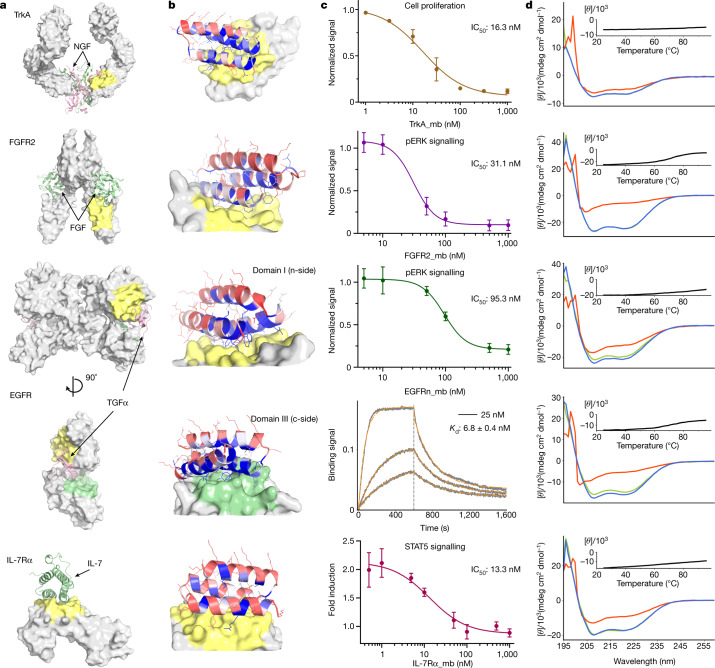
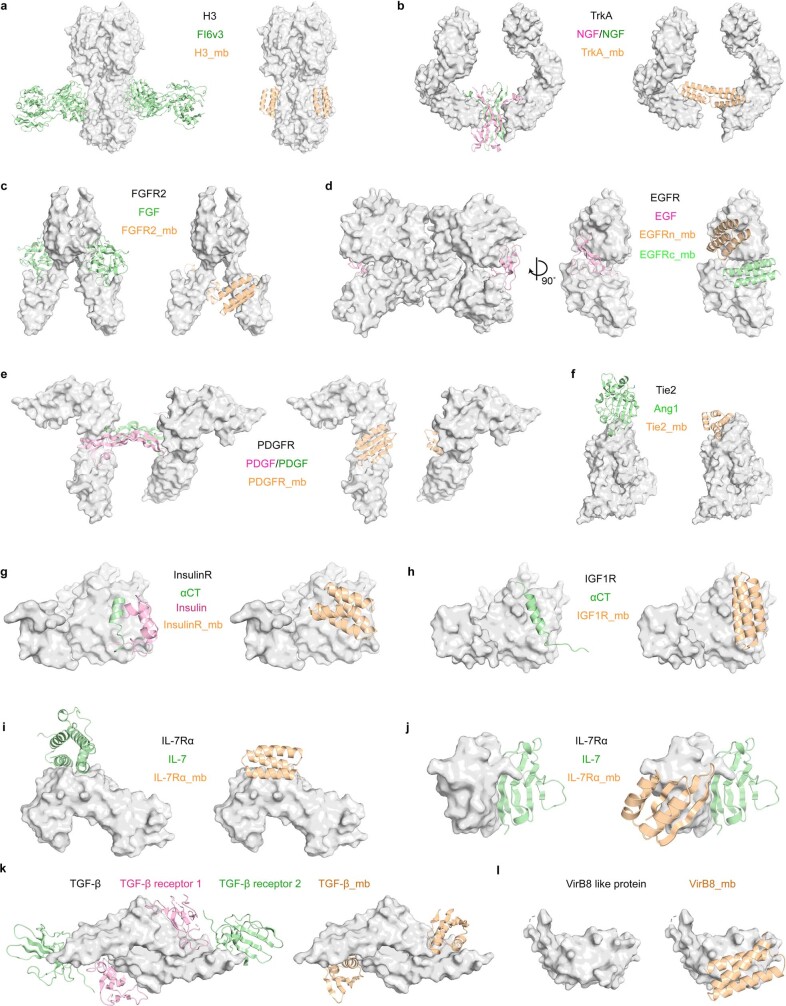
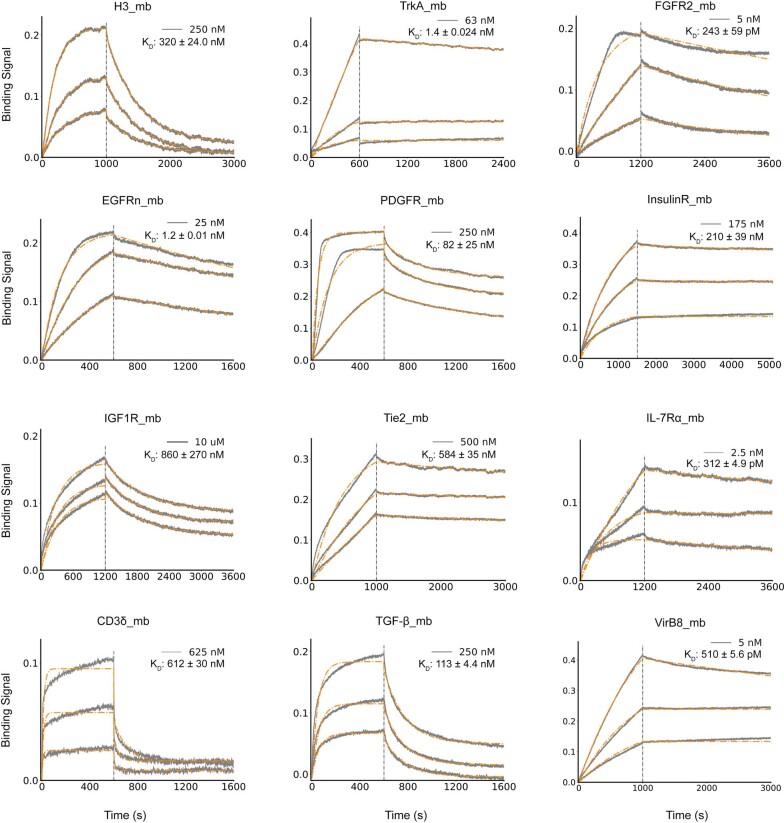
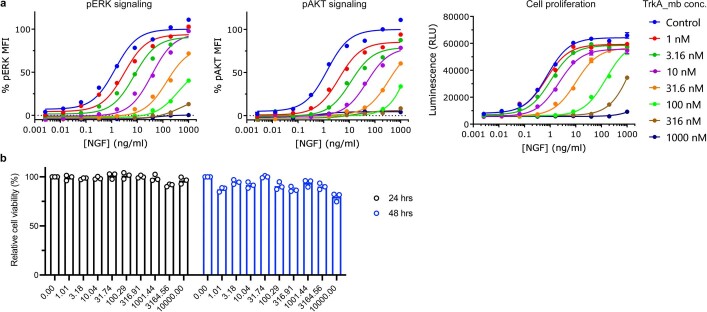
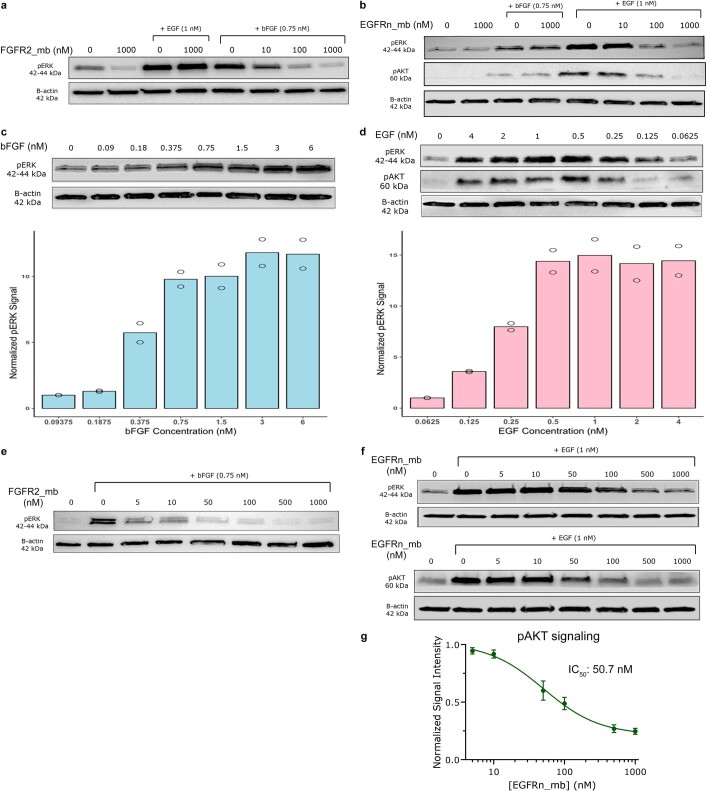
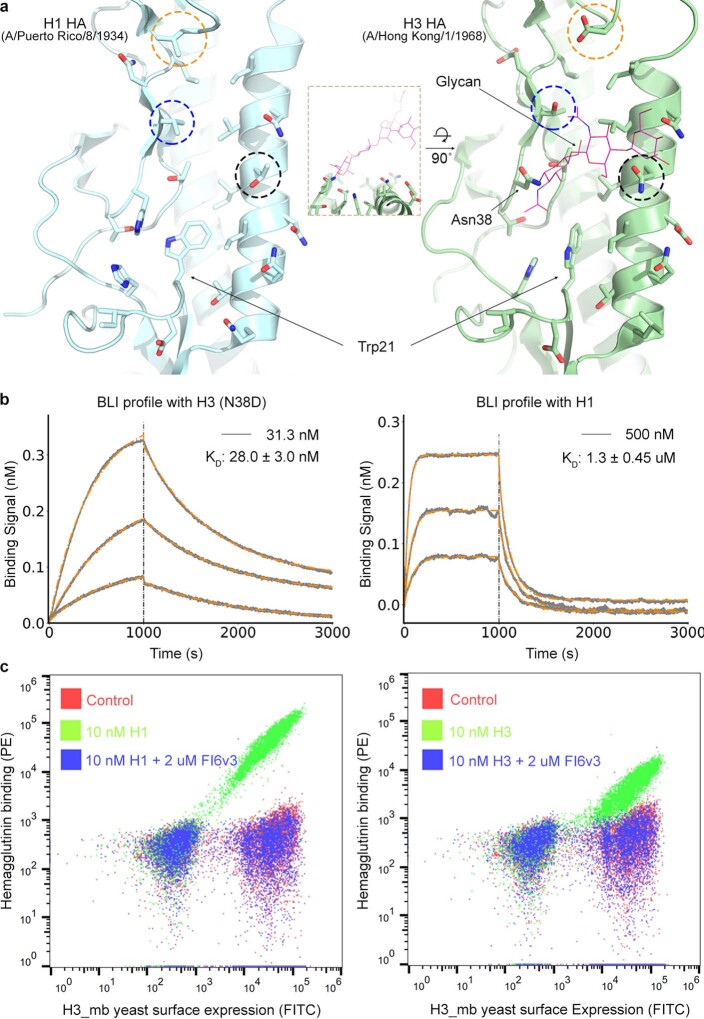
- De novo binders were designed to 12 diverse protein targets (13 target sites on 12 native proteins), all smaller than 65 amino acids; optimized affinities ranged from 300 pM to 900 nM (Table 1), with examples including IL-7Rα at 0.31 nM, VirB8 at 0.51 nM, TrkA at 1.4 nM, EGFRn at 1.2 nM, H3 at 320 nM and IGF1R at 860 nM.
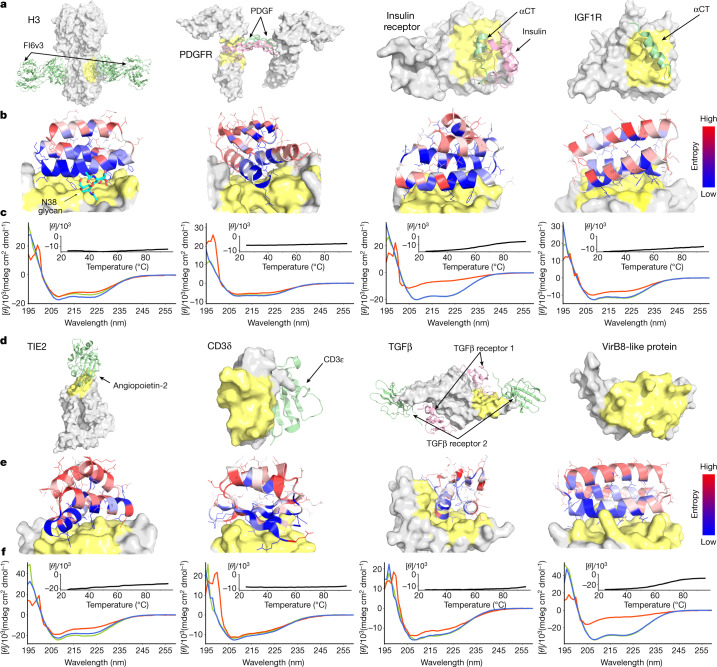
- Nine out of 13 designs were stable at 95 °C, and all expressed in the soluble fraction in *E. coli* and had circular dichroism spectra consistent with the design models.
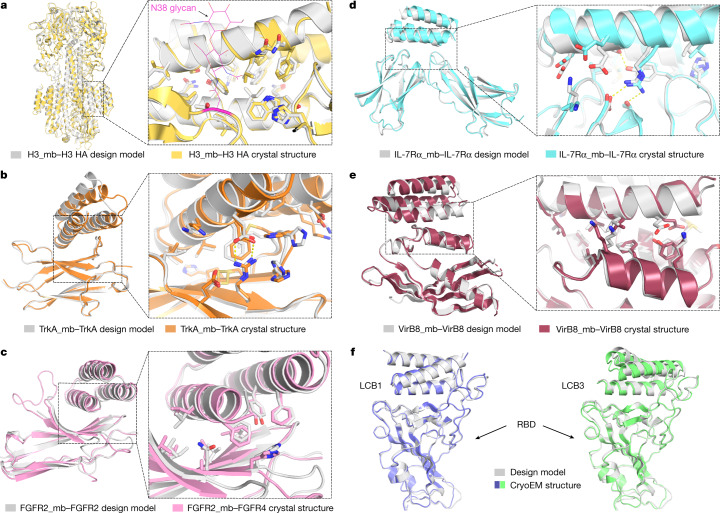
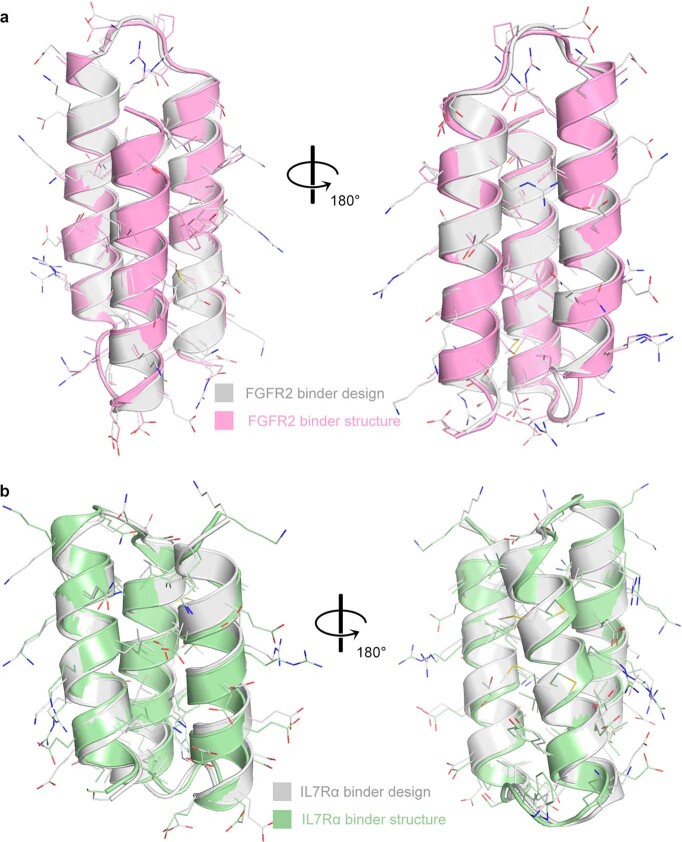
- Crystal structures of five binder–target complexes (H3, TrkA, FGFR2, IL-7Rα and VirB8) closely matched the computational design models; Cα r.m.s.d. values over the entire miniprotein binder were 1.91 Å (H3), 2.41 Å (TrkA), 1.33 Å over the FGFR2 complex, 2.2 Å (IL-7Rα) and 2.54 Å (VirB8). Cryo-EM structures of SARS-CoV-2 binders LCB1 and LCB3 also matched design models with Cα r.m.s.d. values of 1.27 Å and 1.9 Å.
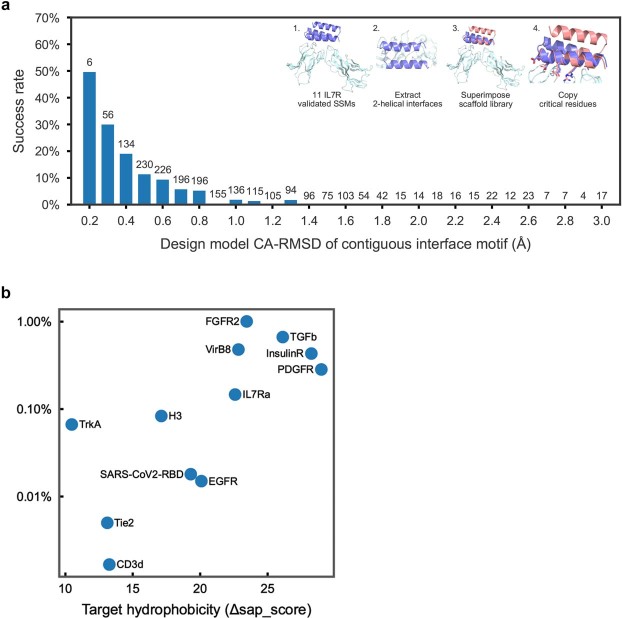
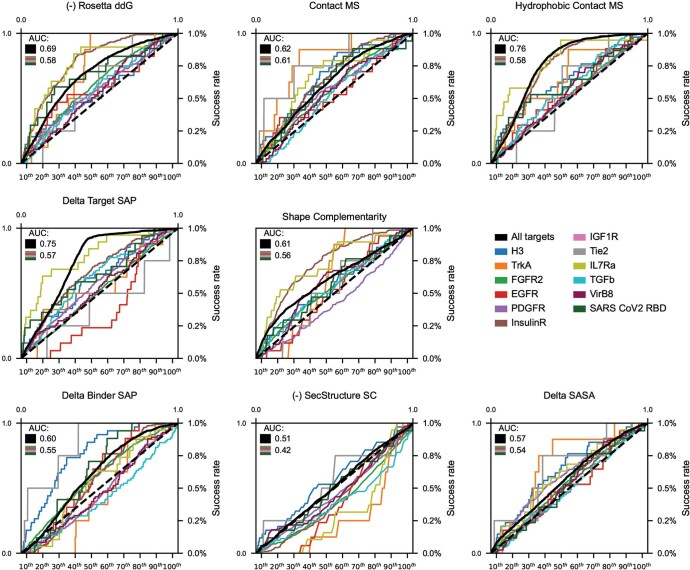
- Analysis of 810,000 binder designs and 240,000 single mutants showed design success varied by target; success correlated strongly with the hydrophobicity of the targeted region, and experimentally binding designs tended to have stronger predicted binding energy and larger contact molecular surfaces.
Methods
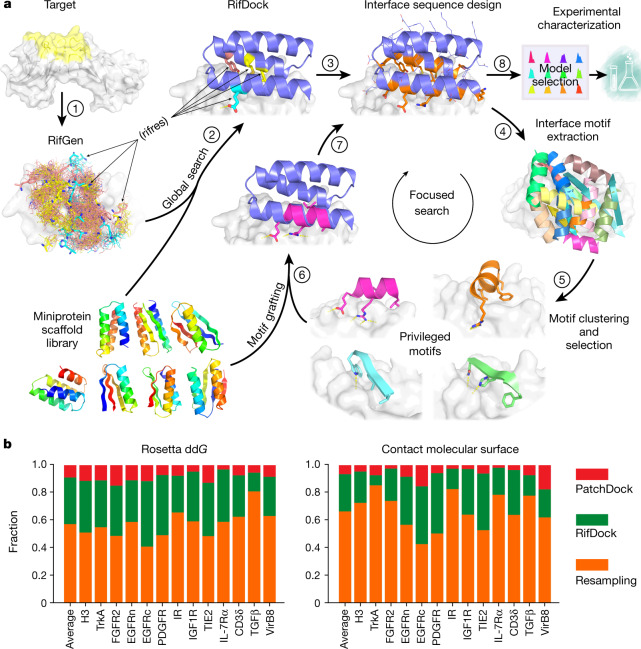
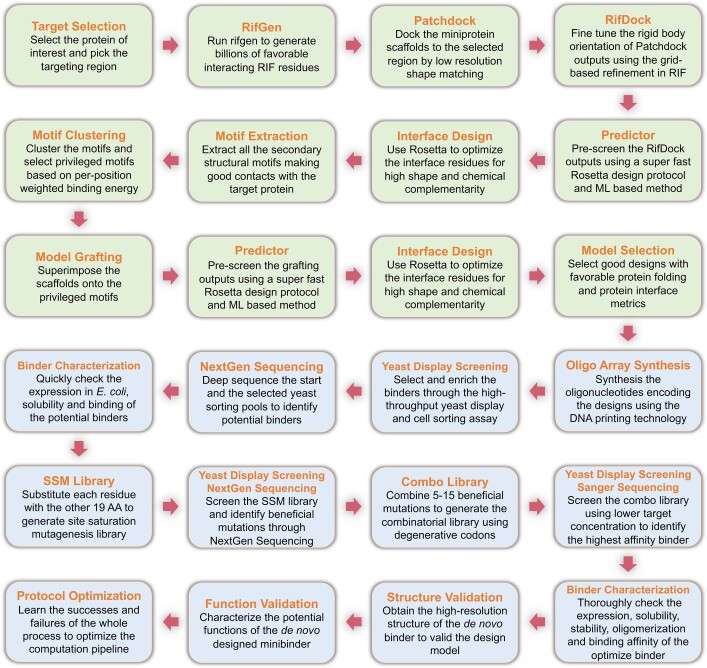
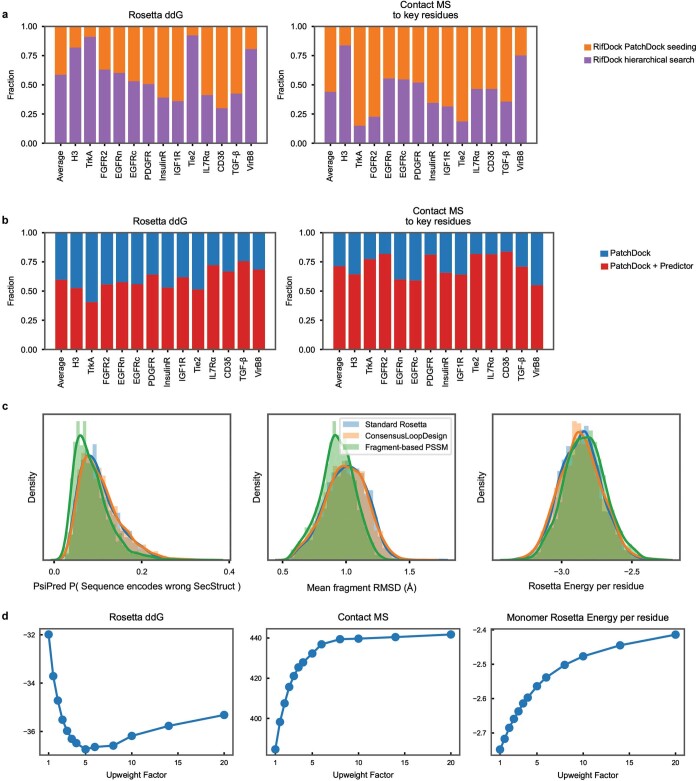
- Broad search: billions of disembodied amino acids were docked against selected target surface regions using RifGen/RIF; 84,690 miniprotein scaffolds (50–65 residues, 5 topologies) were encoded, and 34,507 were found stable; scaffolds were docked with PatchDock/RIFDock, followed by Rosetta sequence design and a rapid “Predictor” prescreen.
- Focused search: secondary-structure motifs making good target contacts were extracted and clustered, around 2,000 motifs per target were selected, and scaffolds were grafted onto these motifs for another round of docking and design.
- Experimental validation used yeast surface display with FACS and deep sequencing, site saturation mutagenesis libraries, *E. coli* expression, circular dichroism, biolayer interferometry, X-ray crystallography/cryo-EM, and cell signalling inhibition assays.
Limitations
- Stated in the paper: only a small fraction of designs bind, and in almost all cases the best binders required additional substitutions to achieve high-affinity binding; design of binders to highly polar target sites remains a considerable challenge, as all targeted sites here contained at least four hydrophobic residues.
- Stated in the paper: sampling of the enormous design space is necessarily incomplete, and many broad-search designs contained buried unsatisfied polar atoms and cavities; structures could not yet be solved for the remainder of the designs.
- Evident from the text: the SC50 fitting assumes equal yeast surface expression and 100% expression in the collection gate, assumptions the authors say are “probably false”; expression differences may cause SC50 fits to vary by up to fivefold, and doubly transformed yeast cells are described as a major source of error.
Model-written summary. Check it against the paper before relying on it.
Integrity signals
Registry
Cites
Statistics
Figures
Verification
Claims the paper makes
10 Valid · 4 Not valid · 21 Not checked · 118 Own results and interpretations
Every source the paper cites for this claim was checked and supports it.
In the paper
“Binders have been generated starting from several computationally identified hotspot residues, which were then used to guide the positioning of naturally occurring protein scaffolds5.”
§ Design of protein-binding proteins from the target structure alone > Main
What the sources say
- Supportedcites [5] Fleishman SJ Computational design of proteins targeting the conserved stem region of influenza hemagglutinin Science 2011 332 816 821 10.1126/science.1202617 21566186 PMC3164876 source
The Computational design method section (page not provided) describes computationally positioning hotspot residues against the target, then finding scaffold configurations that incorporate them. The Design of HA-binding proteins and Experimental and structural characterization sections confirm that the resulting scaffold-based designs produced HA-binding proteins. (LLM, conf=0.93)
plainstates a cause- Asserted: passes — The authors put it forward as true.
- Checkable: passes — It can be checked against evidence.
- Load-bearing: passes — The paper’s conclusions depend on it.
- Based: passes — The paper gives a reason why it holds.
- Supported
The cited sources support only part of this claim — read each source’s verdict below.
In the paper
“The design of proteins that bind to a specific site on the surface of a target protein using no information other than the three-dimensional structure of the target remains a challenge1–5.”
§ Design of protein-binding proteins from the target structure alone > Abstract
What the sources say
- Partly supportedcites [1] Chevalier A Massively parallel de novo protein design for targeted therapeutics Nature 2017 550 74 79 10.1038/nature23912 28953867 PMC5802399 sourceExperimental — accuracy not yet measured
The Abstract and Assessment of the computational model describe limitations in designing protein binders and a low initial success rate, supporting the claim that this remains challenging. But the High-throughput computational design section says the authors used binding motifs and hotspot residues from previously solved complexes, not just the target’s three-dimensional structure. The paper therefore does not establish the claim’s structure-only condition. (LLM, conf=0.83)
- Partly supportedcites [2] Strauch EM Computational design of trimeric influenza-neutralizing proteins targeting the hemagglutinin receptor binding site Nat. Biotechnol. 2017 35 667 671 10.1038/nbt.3907 28604661 PMC5512607 sourceExperimental — accuracy not yet measured
The paper describes designing proteins for a specific site on influenza hemagglutinin, but its design used the C05 antibody binding mode and an antibody–target co-crystal structure (design description and Methods > Computational Methods; page not provided). This is consistent with target-structure-only design being difficult, but the paper does not explicitly establish the broader claim that it remains a challenge. (LLM, conf=0.77)
- Partly supportedcites [3] Silva DA De novo design of potent and selective mimics of IL-2 and IL-15 Nature 2019 565 186 191 10.1038/s41586-018-0830-7 30626941 PMC6521699 sourceExperimental — accuracy not yet measured
The section on computational design of IL-2/IL-15 mimics distinguishes earlier designs for short linear epitopes from its approach to more complex binding interfaces, supporting the general point that designing targeted binders is challenging. But the Methods section says this design used the structure of IL-2 in complex with its receptor as a template; the paper does not establish the specific claim about designing binders with no information beyond the target’s three-dimensional structure. Page numbers are unavailable in our copy. (LLM, conf=0.78)
- Not checked yetcites [4] Baran D Principles for computational design of binding antibodies Proc. Natl Acad. Sci. USA 2017 114 10900 10905 10.1073/pnas.1707171114 28973872 PMC5642698 source
- Supportedcites [5] Fleishman SJ Computational design of proteins targeting the conserved stem region of influenza hemagglutinin Science 2011 332 816 821 10.1126/science.1202617 21566186 PMC3164876 source
The Introduction states that computational design could target specific patches on a protein surface, but that the capability to target an arbitrarily selected surface had remained elusive. This supports the citing sentence’s characterization of the task as a challenge, including the more restricted case where only the target’s three-dimensional structure is available. (LLM, conf=0.90)
plain- Asserted: passes — The authors put it forward as true.
- Checkable: passes — It can be checked against evidence.
- Load-bearing: passes — The paper’s conclusions depend on it.
- Based: passes — The paper gives a reason why it holds.
- Partly supported
The cited sources support only part of this claim — read each source’s verdict below.
In the paper
“Most current computational methods used to design proteins that bind to a target surface utilize information derived from structures of the native complex on specific side-chain interactions or protein backbone placements optimal for binding1–3.”
§ Design of protein-binding proteins from the target structure alone > Main
What the sources say
- Partly supportedcites [1] Chevalier A Massively parallel de novo protein design for targeted therapeutics Nature 2017 550 74 79 10.1038/nature23912 28953867 PMC5802399 sourceExperimental — accuracy not yet measured
The High-throughput computational design section describes using interface helices from previously solved target complexes to position scaffold backbones and seed interfaces with hotspot residues. This supports the described design strategy, but the paper does not establish that most current computational methods use it. (LLM, conf=0.83)
- Partly supportedcites [2] Strauch EM Computational design of trimeric influenza-neutralizing proteins targeting the hemagglutinin receptor binding site Nat. Biotechnol. 2017 35 667 671 10.1038/nbt.3907 28604661 PMC5512607 sourceExperimental — accuracy not yet measured
The paper’s design description (section labeled Abstract; page unavailable) says it used the C05–HA co-crystal structure to position the target and optimized key interface contacts and backbone alignment. It also compares the approach with earlier antibody-loop grafting. These passages support the described type of structure-guided design, but not the claim that most current protein-binder design methods use it. (LLM, conf=0.82)
- Partly supportedcites [3] Silva DA De novo design of potent and selective mimics of IL-2 and IL-15 Nature 2019 565 186 191 10.1038/s41586-018-0830-7 30626941 PMC6521699 sourceExperimental — accuracy not yet measured
The Methods section (page unavailable) says the authors used the structure of the native hIL-2–receptor complex as a design template, identified binding-site residues as hotspots, and built new backbones around its structural elements. This supports the described approach for this method, but the paper does not establish that most current computational methods use such information. (LLM, conf=0.84)
plain- Asserted: passes — The authors put it forward as true.
- Checkable: passes — It can be checked against evidence.
- Load-bearing: passes — The paper’s conclusions depend on it.
- Based: passes — The paper gives a reason why it holds.
- Partly supported
The cited sources support only part of this claim — read each source’s verdict below.
In the paper
“The most robust results were obtained using direct low-resolution shape matching11 followed by grid-based refinement of the rigid body orientation in the RIF (RIFDock).”
§ Design of protein-binding proteins from the target structure alone > Design method
What the sources say
- Partly supportedcites [11] Schneidman-Duhovny D Inbar Y Nussinov R Wolfson HJ PatchDock and SymmDock: servers for rigid and symmetric docking Nucleic Acids Res. 2005 33 W363 W367 10.1093/nar/gki481 15980490 PMC1160241 sourceExperimental — accuracy not yet measured
The PatchDock algorithm section describes matching complementary molecular-surface patches to generate docking orientations, supporting the shape-matching method cited here. It does not describe that matching as low-resolution. The citation is attached to shape matching, not to the sentence’s claims about robust results or subsequent RIFDock refinement. (LLM, conf=0.82)
plainstates a cause- Asserted: passes — The authors put it forward as true.
- Checkable: passes — It can be checked against evidence.
- Load-bearing: passes — The paper’s conclusions depend on it.
- Based: passes — The paper gives a reason why it holds.
- Partly supported
The cited sources support only part of this claim — read each source’s verdict below.
In the paper
“Neutralizing antibodies that target the stem region of group 2 HA have been identified through screens of large B cell libraries after vaccination or infection that neutralize both group 1 and group 2 influenza A viruses34,35.”
§ Design of protein-binding proteins from the target structure alone > Pathogen target proteins
What the sources say
- Not checked yetcites [34] Corti D A neutralizing antibody selected from plasma cells that binds to group 1 and group 2 influenza A hemagglutinins Science 2011 333 850 856 10.1126/science.1205669 21798894 source
- Partly supportedcites [35] Joyce MG Vaccine-induced antibodies that neutralize group 1 and group 2 influenza A viruses Cell 2016 166 609 623 10.1016/j.cell.2016.06.043 27453470 PMC4978566 sourceExperimental — accuracy not yet measured
The Introduction and Results report sorting cross-reactive memory B cells after vaccination, then identifying HA-stem-binding antibodies that neutralized both group 1 and group 2 influenza A viruses. The paper describes cell sorting and antibody sequencing, not screening a large B-cell library; the vaccination finding does not establish the infection alternative. (LLM, conf=0.82)
plainstates a cause- Asserted: passes — The authors put it forward as true.
- Checkable: passes — It can be checked against evidence.
- Load-bearing: unclear — It is unclear whether the paper’s conclusions depend on it.
- Based: passes — The paper gives a reason why it holds.
72 more claims · 1 with their cited sources checked
Create a free account to see all 153 claims and to verify the 31 references still open.
- It may state two separate claims as one. 50
- Probably not a substantial claim. 35
- The quote only partly states this claim. 2
Claims other papers make about this one
Each is checked against this paper’s own text: does it say what the citing paper says it does?
The source backs part of the claim, not all of it — or backs it for a different population, condition or comparison.
In the citing paper
“and the approach relied on prespecifying a particular set of protein scaffolds as the basis for the designs, inherently limiting the diversity and shape complementarity of possible solutions12”
From De novo design of protein structure and function with RFdiffusion (2023) · cites this paper as [12]
Experimental — accuracy not yet measuredThe cited source says what the claim attributes to it.
In the citing paper
“For binder design from target structural information alone, previous work required testing tens of thousands of sequences12.”
From De novo design of protein structure and function with RFdiffusion (2023) · cites this paper as [12]
The cited source says what the claim attributes to it.
In the citing paper
“A general method for de novo binder design from target structure information alone using the physically based Rosetta method was recently described12”
From De novo design of protein structure and function with RFdiffusion (2023) · cites this paper as [12]
The cited source says what the claim attributes to it.
In the citing paper
“However, experimental success rates were low, still requiring many thousands of designs to be screened for each design campaign12”
From De novo design of protein structure and function with RFdiffusion (2023) · cites this paper as [12]
Self-check
Percentages, sums and reported differences re-computed from the paper’s own numbers.
Each contradiction between two passages listed here was confirmed by an independent check.
Rated minor: it would not touch a result — a value no result rests on, a p-value that stays on the same side of the significance level, or a conflict that is clerical, resolved elsewhere in the paper, or outside its own findings.
In the paper
§ Design of protein-binding proteins from the target structure alone > Cell receptors involved in signalling
“the binding affinities of the optimized designs ranged from about 1 nM or better for TrkA and FGFR2 to 860 nM for IGF1R”
§ Design of protein-binding proteins from the target structure alone > Experimental testing
“| Kd (nM) | 320 ± 24.0 | 1.4 ± 0.02 | 243 ± 59.0 | 1.2 ± 0.01 |”
Rated minor: it would not touch a result — a value no result rests on, a p-value that stays on the same side of the significance level, or a conflict that is clerical, resolved elsewhere in the paper, or outside its own findings.
In the paper
§ Design of protein-binding proteins from the target structure alone > Pathogen target proteins
“Similar to FGFR2, IL-7Rα and VirB8, the method yielded picomolar binders”
§ Design of protein-binding proteins from the target structure alone > Experimental testing
“| Kd (nM) | 320 ± 24.0 | 1.4 ± 0.02 | 243 ± 59.0 | 1.2 ± 0.01 |”
Citations
Cites
Highly accurate protein structure prediction with AlphaFold
Jumper, J., Evans, R., Pritzel, A., Green, T., Figurnov, M., Ronneberger, O., Tunyasuvunakool, K., Bates, R., Žídek, A., Potapenko, A., et al. (2021) · Nature · doi:10.1038/s41586-021-03819-2 · Cited by 43,764
Berman, H. M. (2000) · Nucleic Acids Research · doi:10.1093/nar/28.1.235 · Cited by 40,196
[20] Processing of X-ray diffraction data collected in oscillation mode
Otwinowski, Z., & Minor, W. (1997) · Methods in Enzymology · doi:10.1016/s0076-6879(97)76066-x · Cited by 33,475
Coot : model-building tools for molecular graphics
Emsley, P., & Cowtan, K. (2004) · Acta Crystallographica Section D Biological Crystallography · doi:10.1107/s0907444904019158 · Cited by 30,571
Features and development of Coot
Emsley, P., Lohkamp, B., Scott, W. G., & Cowtan, K. (2010) · Acta Crystallographica Section D Biological Crystallography · doi:10.1107/s0907444910007493 · Cited by 29,915
PHENIX : a comprehensive Python-based system for macromolecular structure solution
Adams, P. D., Afonine, P. V., Bunkóczi, G., Chen, V. B., Davis, I. W., Echols, N., Headd, J. J., Hung, L.-W., Kapral, G. J., Grosse-Kunstleve, R. W., et al. (2010) · Acta Crystallographica Section D Biological Crystallography · doi:10.1107/s0907444909052925 · Cited by 23,716
Phaser crystallographic software
McCoy, A. J., Grosse-Kunstleve, R. W., Adams, P. D., Winn, M. D., Storoni, L. C., & Read, R. J. (2007) · Journal of Applied Crystallography · doi:10.1107/s0021889807021206 · Cited by 20,612
Overview of the CCP 4 suite and current developments
Winn, M. D., Ballard, C. C., Cowtan, K. D., Dodson, E. J., Emsley, P., Evans, P. R., Keegan, R. M., Krissinel, E. B., Leslie, A. G. W., McCoy, A., et al. (2011) · Acta Crystallographica Section D Biological Crystallography · doi:10.1107/s0907444910045749 · Cited by 12,353
Liebschner, D., Afonine, P. V., Baker, M. L., Bunkóczi, G., Chen, V. B., Croll, T. I., Hintze, B., Hung, L.-W., Jain, S., McCoy, A. J., et al. (2019) · Acta Crystallographica Section D Structural Biology · doi:10.1107/s2059798319011471 · Cited by 7,953
Cell Signaling by Receptor Tyrosine Kinases
Lemmon, M. A., & Schlessinger, J. (2010) · Cell · doi:10.1016/j.cell.2010.06.011 · Cited by 7,929
Self-citation
Cited by
Items 501–600 of 706
Discovery of SHANK1-PDZ Peptide-Fragment Inhibitors Using a Dynamic Ligation Screening Strategy
Li, Y., Giménez, D., Warriner, S. L., & Wilson, A. J. (2026) · Biochemistry · doi:10.1021/acs.biochem.5c00804 · Cited by 1
A Rapid Binder Discovery Workflow for Engineering Mini-Protein Degraders
Yang, J. K., Styles, M. J., Aphicho, K., Asada, H., Komatsu, S., Pineda, E., Hosseinibarkooie, S., Stein, B., Matsuzaki, J., Odunsi, K., et al. (2026) · Journal of the American Chemical Society · doi:10.1021/jacs.6c00146 · Cited by 1
Modular Input–Output Biosensor Design Using De Novo Protein Switches
Wang, J., Chen, J. Y.-H., Xi, C., Arteage-Organiz, E., & Yeh, A. H.-W. (2026) · ACS Sensors · doi:10.1021/acssensors.6c00882 · Cited by 1
Lozano-García, M., Codina, J.-R., Mascini, M., Dikici, E., Deo, S. K., Nichols, J. E., Azar, S. R., & Daunert, S. (2026) · Molecular Therapy · doi:10.1016/j.ymthe.2026.06.020 · Cited by 1
De novo grafted coiled-coil peptides as p53/ h DM2 inhibitors
Spain, F., Giménez, D., Acevedo‐Jake, A. M., Mylemans, B., Brooks, N. J., Korona, B., Huang, D. T. C., Edwards, T. A., Leney, A. C., Itzhaki, L. S., et al. (2026) · RSC Chemical Biology · doi:10.1039/d6cb00063k · Cited by 1
Advances in the application of artificial intelligencein protein design
Liu, S., Zhang, R., & Li, J. (2026) · Chinese Science Bulletin (Chinese Version) · doi:10.1360/csb-2026-0591 · Cited by 1
Rational design of immunological programs for functional regenerative niches
Zhuang, Z., Wang, P., Liu, Y., Song, L., Zhang, X., & Ouyang, H. (2026) · Materials Today Bio · doi:10.1016/j.mtbio.2026.103451 · Cited by 1
“This selective activation drives macrophages toward a pro-regenerative phenotype characterized by high expression of Arginase-1 and VEGF, while avoiding the fibrotic side effects associated with broad ERK activation [82].”
CatIF-RL: Activity-Oriented Enzyme Sequence Design by Steered Inverse Protein Folding
Li, Y., Xiong, J., Zhang, Y., Cai, T., Fu, C., Li, S., Xu, W., Lyu, R., Chen, Z., Guo, Z., et al. (2026) · Journal of Chemical Information and Modeling · doi:10.1021/acs.jcim.6c01587 · Cited by 1
De Novo-Designed Bifunctional Proteins for Targeted Protein Degradation
Mylemans, B., Korona, B., Acevedo‐Jake, A. M., MacRae, A., Edwards, T. A., Huang, D. T., Wilson, A. J., Itzhaki, L. S., & Woolfson, D. N. (2026) · Journal of the American Chemical Society · doi:10.1021/jacs.6c07593 · Cited by 1
Wang, Z., Sun, L., Li, Y., Yang, F., & Chang, Y. (2026) · Journal of Pharmaceutical Analysis · doi:10.1016/j.jpha.2026.101754 · Cited by 1
Zhang, M., Chang, Y., Shen, J., & Hu, Y. (2026) · Phytomedicine · doi:10.1016/j.phymed.2026.158759 · Cited by 1
Design of programmable molecular interfaces for synthetic biology and therapeutic applications
Nickel, L., Pyatova, E., & Correia, B. E. (2026) · Current Opinion in Chemical Biology · doi:10.1016/j.cbpa.2026.102759 · Cited by 1
De novo design of miniprotein drug conjugates targeting NECTIN-4 for cancer therapy
Wang, N., Xue, T., Li, N., Xiao, W., Ding, Y., Li, Y., Tang, G., Yang, Z., Zhao, Y., Pan, J., et al. (2026) · Acta Pharmaceutica Sinica B · doi:10.1016/j.apsb.2026.08.031 · Cited by 1
Self-citationDe novo design of miniprotein inhibitors of bacterial adhesins
Chazin-Gray, A. M., Thompson, T. R., Lopatto, E. D. B., Magala, P., Erickson, P. W., Hunt, A. C., Manchenko, A. A., Aprikian, P., Tchesnokova, V. L., Basova, I., et al. (2026) · Nature Communications · doi:10.1038/s41467-026-78123-6 · Cited by 2
Self-citationResolving new dimensions in cell architecture and dynamics
Shaib, A., Koerhuis, M., Schueder, F., Ramakrishna, P., Rahmani, A., Marty, A. M., van Tartwijk, F. W., Clark, M. S., & Kaminski, C. F. (2026) · Journal of Cell Science · doi:10.1242/jcs.265374 · Cited by 1
ScanNet uncovers binding motifs in protein structures with deep learning
(2022) · Nature Methods · doi:10.1038/s41592-022-01492-5 · Cited by 1
Proteomic Barcoding Platform for Macromolecular Screening and Delivery
Wang, N., McNeer, N. A., Eton, E. O., Fass, J., & Kentsis, A. (2024) · Journal of Proteome Research · doi:10.1021/acs.jproteome.4c00068 · Cited by 1
Inhibition of ACE2–S Protein Interaction by a Short Functional Peptide with a Boomerang Structure
Wei, Y., Liu, Z., Zhang, M., Zhu, X., & Niu, Q. (2024) · Molecules · doi:10.3390/molecules29133022 · Cited by 1
Prediction of Protein-DNA Binding Sites Based on Protein Language Model and Deep Learning
Shan, K., Zhang, X., & Song, C. (2024) · Lecture notes in computer science · doi:10.1007/978-981-97-5692-6_28 · Cited by 1
Syed, N. R., Masud, N. B., & Smith, C. A. (2024) · Magnetic Resonance · doi:10.5194/mr-5-103-2024 · Cited by 1
“…new class of proteins that size is that of computationally designed miniprotein binders, which are able to target therapeutically relevant proteins (Cao et al., 2022) and also are quite accessible to NMR characterization (Dudley et al., 2024) Larger proteins may bene-fit from a strategy analogous…”
Zhang, K., Duan, J., Li, C., Song, C., & Chen, Z. (2024) · Biochemistry · doi:10.1021/acs.biochem.4c00280 · Cited by 1
Evaluating the protein–protein binding via the fast pulling of ligand scheme
Nguyen, H. A., Vu, V. V., Truong, V. K., Huynh, L. K., Lenon, G. B., & Ngo, S. T. (2025) · Chemical Physics Letters · doi:10.1016/j.cplett.2025.142136 · Cited by 1
Peptide Discovery: Lead Generation
Angell, Y., Hartsock, W. J., Melo, H., & Reichart, T. M. (2025) · Wiley eBooks · doi:10.1002/9781119824701.ch06 · Cited by 1
Beyond Docking: Intelligent Modeling and the New Landscape of Drug-Protein Interactions
Taha, M. M., Tayel, A., & Shoeib, H. O. T. A. T. (2025) · Biomedical engineering · doi:10.5772/intechopen.1013595 · Cited by 1
Creating bottom-up RNA transfer vehicles from synthetic protein assemblies
Schuhmacher, M. K., Gruber, C., Lang, C. M. R., Ruijpers, R., Mazneykova, L., Beinsteiner, B., Krus, A., Tremmel, B., Reinhardt, F., Kadletz, K., et al. (2026) · Nature · doi:10.1038/s41586-026-10952-3 · Cited by 1
“We added computationally designed peptide binders against EGFR or IL-7Rα to STV-C8 particles 28 by fusing the binders to a signal peptide along with a transmembrane domain and expressed these constructs together with a blinded VSV-G (K63Q/R370Q) in STV-C8(EGFP)-producing cells.”
Designing novel protein structures using sequence generator and AlphaFold2Preprint
Agha, X., Fu, N., & Hu, J. (2022) · arXiv (Cornell University) · doi:10.48550/arxiv.2208.14526 · Cited by 1
“Our protein design process is distinct from the previously mentioned studies on novel protein design [3, 33, 17, 34, 22] by combining the ProteinSolver, a context-aware sequence generator and AlphaFold2, a protein structure predictor, which is related but different from the approach in [29].”
BackgroundMethodInfluentialExpanding the HDAC druggable landscape beyond enzymatic activityPreprint
Olivet, J., Choi, S. G., Sierra, S., O’Grady, T. M., Revenga, M. D. L. F., Laval, F., Botchkarev, V. V., Gorgulla, C., Coote, P. W., Blavier, J., et al. (2022) · bioRxiv (Cold Spring Harbor Laboratory) · doi:10.1101/2022.12.07.519454 · Cited by 1
Xiang, X., Qian, C., Yao, H., Li, P., Cheng, B., Wei, D., An, W., Lu, Y., Chu, M., Wei, L., et al. (2023) · bioRxiv (Cold Spring Harbor Laboratory) · doi:10.1101/2023.02.21.529454 · Cited by 1
“The structural information help design microproteins with 99 regulatory activity for a specific pair [39].”
BackgroundDe novo-designed minibinders expand the synthetic biology sensing repertoirePreprint
Weinberg, Z. Y., Soliman, S. S., Kim, M. S., Shah, D. H., Chen, I. P., Ott, M., Lim, W. A., & El‐Samad, H. (2024) · eLife · doi:10.7554/elife.96154 · Cited by 1
Protein Structure Description with ρ, θ and ϕ : A Case Study with Caenopore-5Preprint
Li, W. (2025) · bioRxiv (Cold Spring Harbor Laboratory) · doi:10.1101/2025.01.08.631847 · Cited by 1
De Novo Computational Design of VHH Nanobodies Against LGR5Preprint
Xu, C., Li, Y., Nguyen, T., Zhou, Y., Cong, L., Lee, T.-H., Lang, Y., Shek, R., Li, Y., & Greisen, P. J. (2025) · bioRxiv (Cold Spring Harbor Laboratory) · doi:10.64898/2025.12.02.691880 · Cited by 1
“These tools have enabled the design of protein binders, enzymes, and scaffolds with unprecedented accuracy, achieving experimental success rates exceeding 50% for some applications 13,14 .”
Full-Atom Peptide Design via Riemannian-Euclidean Bayesian Flow NetworksPreprint
Qian, H., Tu, S., & Xu, L. (2025) · AAAI Publications (The Association for the Advancement of Artificial Intelligence (AAAI)) · doi:10.48550/arxiv.2511.14516 · Cited by 1
“As experimental limitations persist, there is an increasing demand for computational approaches that enhance in silico peptide binder design (Bryant and Elofsson 2022; Swanson et al. 2022; Cao et al. 2022; Bhat et al. 2023; Chen et al. 2024).”
De novo design of protein binders as functional therapeutics
Huang, B. (2023) · ResearchWorks at the University of Washington (University of Washington) · Cited by 1
Self-citationApplications of Protein Engineering in Synthetic Biology and Bioproduction
Minami, S. A. (2023) · eScholarship (California Digital Library) · Cited by 1
Learning the Neighborhood: Contrast-Free Multimodal Self-Supervised Molecular Graph PretrainingPreprint
Ariguib, B., Niepert, M., & Manolache, A. (2025) · arXiv (Cornell University) · doi:10.48550/arxiv.2509.22468 · Cited by 1
“Since many molecular properties depend on multiple conformations and their probabilities (Cao et al., 2022), using multiple high-probability conformers alongside 2D topology helps capture this variability and improves predictive performance.”
Calman, I., Shaykhalishahi, H., Sangkhapreecha, P., & Bachas, S. T. (2025) · bioRxiv (Cold Spring Harbor Laboratory) · doi:10.64898/2025.12.27.696647 · Cited by 1
“However, most reported successes involve single-domain proteins or engineered constructs in which the epitope resides on a single polypeptide chain [1,2,5,6,10,11,13,15].”
Cross-Chirality Generalization by Axial Vectors for Hetero-Chiral Protein-Peptide Interaction DesignPreprint
Yang, Z., Tian, Z., Jia, Y., Zhang, T., Zheng, J., Wang, H., Su, Y., He, J., Liu, L., & Lan, Y. (2026) · arXiv (Cornell University) · doi:10.48550/arxiv.2602.20176 · Cited by 1
“…efforts on hetero-chiral binder design are mainly based on molecular mechanics, employing methods including the RifGen-RifDock-Rosetta pipeline (Cao et al., 2022; Sun et al., 2024) and fragments assembly approaches (Garton et al., 2018; Engel et al., 2021), which suffer from low success rates,…”
Geronimo, B. D., Zuson, J., Udženija, A., Chánique, A. M., Kourist, R., & Kamerlin, S. C. L. (2026) · bioRxiv (Cold Spring Harbor Laboratory) · doi:10.64898/2026.04.20.719482 · Cited by 1
DCFold: Efficient Protein Structure Generation with Single Forward Pass
Zhang, Z., Feng, Y., Song, Y., Qiu, K., Zhou, H., & Ma, W.-Y. (2026) · International Conference on Learning Representations · doi:10.48550/arxiv.2605.17899 · Cited by 1
“Data We adopt the six representative entries from Cao et al. (2022) as the design targets, namely IL2-R α , TrkA, H3, VirB8, ALK, and LTK.”
Grauvogel, L., Zollbrecht, E., Heymann, T., Brennsteiner, V., Pensl, C., Michaelis, A. C., & Mann, M. (2026) · bioRxiv (Cold Spring Harbor Laboratory) · doi:10.64898/2026.06.03.729763 · Cited by 1
De novo Design of Polymorph-Specific Binders Targeting α-Synuclein FibrilsPreprint
Sadek, A., Rey, N. L., Kunka, A., Harteveld, Z., Georgeon, S., Schmidt, J. H., Buell, A. K., Melki, R., Lashuel, H. A., & Correia, B. E. (2026) · bioRxiv (Cold Spring Harbor Laboratory) · doi:10.64898/2026.06.13.732066 · Cited by 1
“In parallel, protein engineering has emerged as a powerful strategy for developing site-specific binders against a wide range of molecular targets 44–48 , thus inspiring its application to identify novel fibril-binding proteins for diagnostic and therapeutic purposes.”
Scherlo, M., Wippermann, E., Fürtges, T. F., Künne, R., Yelboga, A., Ruetten, F., Boeckmann, M., Höweler, U., & Rudack, T. (2026) · bioRxiv (Cold Spring Harbor Laboratory) · doi:10.64898/2026.06.19.732925 · Cited by 1
“Biosensors link a binding event to an optical readout moiety, enzyme and protein design [7] reshape active sites and binding pockets [8][9], and advances in optogenetics and super-resolution microscopy rely on the precise tuning of chromophores [10][11].”
Chamaileon: Cross-Context Binder Design with Contextualized Modeling and Mixed SamplingPreprint
Cao, H., Cheng, S., Liu, M., Huang, W., Lu, Y., Cai, C., Zhang, Y., & Zhang, M. (2026) · arXiv (Cornell University) · doi:10.48550/arxiv.2607.23518 · Cited by 1
“De novo protein binder design seeks to generate protein sequences that bind specific interfaces on target proteins given structural information alone(Bennett et al., 2023; Chu et al., 2024; Winnifrith et al., 2024; Cao et al., 2022).”
Adebanjo, A. F., Simon, J. J., Mejia, F. B., Fowler, D. M., & Maly, D. J. (2026) · bioRxiv (Cold Spring Harbor Laboratory) · doi:10.64898/2026.09.30.755370 · Cited by 1
DiMOS: Doob-Guided Inference-Time Multi-Objective Search for Scientific DesignPreprint
Wang, Z., Zhu, Q., Wu, W., Ye, Z., Chen, M., Liu, H., & Ding, K. (2026) · arXiv (Cornell University) · doi:10.48550/arxiv.2610.05808 · Cited by 1
“Scientific sequence design is a central task in synthetic biology and therapeutic development (Zrimec et al., 2022; Cao et al., 2022).”
Aptamers as a sandbox for lab-in-the-loop agentic molecular discoveryPreprint
Cutts, Z., Coller, J., Chen, R., Tang, H., Bellaiche, M. M. J., Easterlin, R., Zverinski, D., Sirkovic, P., Hassidim, A., Matias, Y., et al. (2026) · arXiv (Cornell University) · doi:10.48550/arxiv.2610.24806 · Cited by 1
“…synthesized DNA pools partially mitigate this risk once paired with counter-selection: unlike protein screens where 60–80% of designs fail to express or fold in cells [15, 23], sequencing the input library alongside triplicate pulldowns verifies that every synthesized candidate that fails to…”
Semantic Representation for Agentic Self-Play in Automated LaboratoriesPreprint
Delley, Y., Coller, J., Cutts, Z., Daryin, A., Bellaiche, M. M. J., Kim, J. W., Donosa, O., Seshadri, S. B., Clary, T., Klemm, S., et al. (2026) · arXiv (Cornell University) · doi:10.48550/arxiv.2610.32755 · Cited by 1
“…top-ranked designs typically drop off when tested experimentally via yeast surface display or downstream soluble biophysical characterization (e.g., failing to express, misfolding, or showing avidity-driven false positives that fail in biolayer interferometry) [10], [11], [12], [15], [16].”
MoLRSI: A Recursive Self-Improving AI agent for Molecular DiscoveryPreprint
Zhang, Y., Cheng, X., Yuan, M., Zhang, Y., Shim, B., Krishnan, A., Rosen, D., Sun, K., Wang, Y., Deng, Z., et al. (2026) · arXiv (Cornell University) · doi:10.48550/arxiv.2610.39714 · Cited by 1
De novo design of ligases for programmable site-specific protein ubiquitylationPreprint
Salike, S., Gantz, M., Fottner, M., Flügel, T., Moroz, S. S., Hunt, A. C., Groll, M., Hilvert, D., Lang, K., & Baker, D. A. (2026) · bioRxiv (Cold Spring Harbor Laboratory) · doi:10.64898/2026.11.08.765184 · Cited by 1
Self-citationExamining the Interaction of Economic Business Strategies in the Context of Global Market Dynamics
Yusnita, I., Kadim, A., Lesmana, R., Sutarman, A., Yu, C., & Millah, S. (2024) · Startupreneur Business Digital (SABDA Journal) · doi:10.33050/sabda.v4i1.734
“The findings of this study are expected to contribute to both theoretical and practical discourses on corporate strategy and economic growth [20], [21].”
SOCIALIZATION AS A FUNCTION OF CLASSROOM HUMOR
Kuhlig, R. E. (1983) · OpenCommons at University of Connecticut (University of Connecticut)
Die antosianienpigmente van Vitis vinifera cv. Barlinka
Basson, D. S. (1964) · SUNScholar (Stellenbosch University)
Promising Developments in the Design of Protein Binders
Cruz, A. I., & Hosseinzadeh, P. (2022) · GEN Biotechnology · doi:10.1089/genbio.2022.29039.acr
PSL Chemical Biology Symposia Third Edition: A Branch of Science in its Explosive Phase
Baron, L., Hadjerci, J., Thoidingjam, L. K., Plays, M., Bucci, R., Morris, N., Müller, S., Sindikubwabo, F., Solier, S., Cañeque, T., et al. (2023) · ChemBioChem · doi:10.1002/cbic.202300093
Kim, C. M., Wallace, C., & Gatongi, M. (2024) · ASEE Annual Conference & Exposition · doi:10.18260/1-2--42754
(2024) · Magnetic Resonance · doi:10.5194/mr-2024-7-cc1
Multi-scale Global Consistency Residue Feature Enhancement based Protein Structure Analysis
Li, Q., Du, B. Q., Qin, X. L., Zhang, J., & Xu, S. B. (2023) · International Conference on Communication and Information Processing (ICCIP) · doi:10.1145/3638884.3638889
“Recent advancements have illuminated that, equipped with the appropriate instruments and utilization of the degree of protein structural information, position, and the neighboring nodes in a graph, protein-protein interactions (PPI) can succumb to the endeavors of medicinal chemists [16] [17].”
BackgroundProtein Manufacture: Protein Design Assisted by Machine Learning from Backbone to Sequence
Xu, M., Luo, Y., Jiang, J., Cui, Z., & Wu, H. (2024) · Lecture notes in computer science · doi:10.1007/978-981-97-5692-6_30
Xu, G., Yang, Y., Zhang, Y., Wang, Q., & Ma, J. (2024) · bioRxiv (Cold Spring Harbor Laboratory) · doi:10.1101/2024.08.20.608889
Why do we age? questions and answers in regenerative medicine
Sofra, X. (2024) · Journal of Diabetes Metabolic Disorders & Control · doi:10.15406/jdmdc.2024.11.00283
Nguyen, D., & Valdiviezo, J. (2025) · ChemRxiv · doi:10.26434/chemrxiv-2025-tm6js
Roy, A., Johnson, V., Das, P., Paul, S., Sahu, S., & Banerjee, R. (2025) · Proteins Structure Function and Bioinformatics · doi:10.1002/prot.26798
Protein Silencing with Self-Peptides
Philip, A., Gupta, M., Banerjee, S., Dey, A., Roy, D. S., Shrivastava, A., Das, D., Ainavarapu, S. R. K., & Maiti, S. (2025) · The Journal of Physical Chemistry B · doi:10.1021/acs.jpcb.4c08265
The diffusion model and its applications in bioinformatics
Wu, Z., Fu, Y., Chen, J., Ma, J., Wu, W., & Deng, M. (2025) · Scientia Sinica Mathematica · doi:10.1360/ssm-2024-0316
How To Predict The Winners Of The Nobel Prize For 2025Preprint
Fuoco, D. (2025) · SSRN Electronic Journal · doi:10.2139/ssrn.5254426
Ji, X., Jiang, H., & Hou, Z. (2025) · The Journal of Physical Chemistry B · doi:10.1021/acs.jpcb.5c05492
Computational Methods Applied to Drug Discovery of Protein–Protein Interaction Systems
Gu, Z., & Cheng, X. (2025) · Wiley eBooks · doi:10.1002/9783527845828.ch15
Design of TCR-mimicking binders for pHLA with high potencyPreprint
Xie, T., Fu, Y., Gong, S.-M., Burrato, D., & Zhou, R. (2025) · bioRxiv (Cold Spring Harbor Laboratory) · doi:10.1101/2025.10.03.680404
Matsubara, D. K., Park, P., Cuccovia, I. M., & Chaimovich, H. (2025) · bioRxiv (Cold Spring Harbor Laboratory) · doi:10.1101/2025.10.06.680738
“Ideally, hundreds of designs are needed to reliably identify high-affinity hits [33], [48], with fewer required when using diffusion-based backbone generation methods [77].”
InfluentialMolecular Docking in Biomedical Engineering and Computational Chemistry
Bhatia, R. (2025) · Biomedical engineering · doi:10.5772/intechopen.1009057
NanoBlocks: Creating Genetically Encoded Protein Switches Using Competitive Binding
Denis, S., Deuren, V. M. L. V., Frecot, D. I., Rothbauer, U., Ismail, S., Tebo, A. G., & Dedecker, P. (2026) · ACS Nano · doi:10.1101/2025.10.28.685015
Engineered Protein‐Based Ionic Conductors for Sustainable Energy Storage Applications
Cortés‐Ossa, J. D., Blesio, P., Castro, M. F., Almonte, L., Fernandez, M., Liutkus, M., Pandurangan, P., Sabater, C., Villaverde, A., Melle‐Franco, M., et al. (2025) · Advanced Materials · doi:10.1002/adma.202508838
Performance Impact of Containerized METADOCK 2 on Heterogeneous PlatformsPreprint
Banegas‐Luna, A. J., Tudela, B. I., Martínez-Cortés, C., Cecilia, J. M., & Pérez‐Sánchez, H. (2025) · arXiv (Cornell University) · doi:10.48550/arxiv.2506.06450
“First, VS often consists of analyzing millions of chemical compounds, each evaluated against specific criteria, such as its fit to a target protein’s binding site or its predicted biological activity [16, 17].”
Bioengineering hybrid artificial life
Sibanda, I., & Nitschke, G. (2025) · Frontiers in Bioinformatics · doi:10.3389/fbinf.2025.1676359
Regulating the orientation of homobivalent small binders through 3D domain-swapping design
Shiga, S., Watanabe, H., Makabe, K., & Honda, S. (2025) · Journal of Biological Chemistry · doi:10.1016/j.jbc.2025.111053
De novo design of protein competitors for small molecule immunosensingPreprint
de Stigter, Y., Godschalk, T., & Merkx, M. (2025) · bioRxiv (Cold Spring Harbor Laboratory) · doi:10.64898/2025.12.16.694474
“To promote competitive binding, binders were directed towards interacting residues or neighboring sites that are accessible and preferably hydrophobic as hydrophobic interactions are generally more tractable for computational design 15,21 .”
Computational design of autoinhibitory domains for a protease-activated PD-L1 inhibitor
Goudy, O. J. (2023) · Carolina Digital Repository (University of North Carolina at Chapel Hill) · doi:10.17615/gav8-6376
Computational Design of Proteins that Bind to TLR7 and FCyRIIa
Clarke, C. (2023) · ResearchWorks at the University of Washington (University of Washington)
Liang, Q. (2024) · eScholarship (California Digital Library)
Bifunctional ADAPTs: Opportunity for serological Half-life extension and Targeted therapy
Wisniewski, A. (2023) · KTH Publication Database DiVA (KTH Royal Institute of Technology)
Computational Design of Peptides and Proteins for Cyclic Peptide Applications
Said, M. Y. (2023) · ResearchWorks at the University of Washington (University of Washington)
Equivariant Autoregressive Models for Molecular Generation
Kim, S. E. (2025) · DSpace@MIT (Massachusetts Institute of Technology)
Engineered Polydopamine Nanocarriers for Biomedical Applications
Lingamgunta, S. (2024) · Apollo (University of Cambridge) · doi:10.17863/cam.121810
Generative design of antibody Fc interactions by deep mutational learningPreprint
Irvine, E. B., Stamkopoulos, E., Bikias, T., Kaempf, J., Frei, L., Schuermann, N., Thaqi, A., Schmid, H., Coukos, D., Yang, H., et al. (2025) · bioRxiv (Cold Spring Harbor Laboratory) · doi:10.1101/2025.10.10.681689
“State-of-the-art structure-based approaches for computational protein design such as RFDiffusion (Cao et al., 2022; Watson et al., 2023), RFAntibody (Bennett et al., 2025), and BindCraft (Pacesa et al., 2025), have reported success rates in the tens-of-percent range when optimizing for single…”
Miao, C., Hou, J., Wang, J., & Han, D. (2025) · 化学学报 · doi:10.6023/a25050165
Modelling Sequence and Structure Towards Functional Protein Design
Paul, S. B. (2024) · Digital Access to Scholarship at Harvard (DASH) (Harvard University)
Fernandes, L. A. (2023) · LA Referencia (Red Federada de Repositorios Institucionales de Publicaciones Científicas)
Desenvolvimento de peptídeo ligantes à proteína spike de sars-cov-2 para diagnóstico da covid-19.
Gomes, A. A. (2023) · LA Referencia (Red Federada de Repositorios Institucionales de Publicaciones Científicas)
Hussain, G., Keçili, R., & Hussain, C. G. (2026) · Comprehensive analytical chemistry · doi:10.1016/bs.coac.2025.10.004
Wei, Z., Wei, L., Wu, Z., Hu, Y. A., Fang, Y., Miaomiao, G., Xing, B., Weng, J., Liu, S., & Ming, K. (2026) · Research Square · doi:10.21203/rs.3.rs-8645836/v1
ProChoreo: de novo Binder Design from Conformational Ensembles with Generative Deep LearningPreprint
Ding, S.-S., & Zhang, Y. (2026) · bioRxiv · doi:10.64898/2026.01.23.701298
Mitchell, C. M., Tavana, S. Z., Peng, J., Wang, H., Shi, J., Zhang, C., Evgeniou, L., Domecillo, M., Wang, S., Estandian, D., et al. (2026) · bioRxiv (Cold Spring Harbor Laboratory) · doi:10.64898/2026.01.29.702630
Steinek, C., Pachmayr, I., Strauss, S., Honsa, M., Kwon, J., & Jungmann, R. (2026) · Angewandte Chemie · doi:10.1002/ange.202518685
Yuan, S., Chen, J., Cai, J., Xu, D., Li, X., Zhu, Z., & Ji, J. (2026) · arXiv (Cornell University) · doi:10.48550/arxiv.2602.04637
“By optimizing properties like binding affinity and thermostability under structural constraints, it serves as a cornerstone for drug discovery (Imrie et al., 2020; Ovchinnikov & Huang, 2021), enzyme engineering (Mazurenko et al., 2020), and synthetic biology (Yeh et al., 2023; Cao et al., 2022).”
Distinctive scaffoldin proteins in Ruminococcoides bili FMB-CY1 and their roles in amylosome
Kim, Y.-J., Jung, J.-H., Jung, D.-H., Woo, E., Yang, S.-K., Seo, D., & Park, C. (2026) · International Journal of Biological Macromolecules · doi:10.1016/j.ijbiomac.2026.150889
De novo designed bifunctional proteins for targeted protein degradationPreprint
Woolfson, D. N., Mylemans, B., Korona, B., Acevedo‐Jake, A. M., MacRae, A., Edwards, T. A., Huang, D., Wilson, A. J., & Itzhaki, L. S. (2026) · Research Square · doi:10.21203/rs.3.rs-8425103/v1
Deamidation and isomerization to elusive isoaspartate in a computationally designed miniprotein
Blejec, K. M., & Smith, C. A. (2026) · Protein Science · doi:10.1002/pro.70508
Metadata
- Authors
- Cao, L., Coventry, B., Goreshnik, I., Huang, B., Sheffler, W., Park, J. S., Jude, K. M., Marković, I., Kadam, R. U., Verschueren, K. H. G., Verstraete, K., Walsh, S. T. R., Bennett, N., Phal, A., Yang, A., Kozodoy, L., DeWitt, M., Picton, L., Miller, L., Strauch, E.-M., DeBouver, N. D., Pires, A., Bera, A. K., Halabiya, S., Hammerson, B., Yang, W., Bernard, S., Stewart, L., Wilson, I. A., Ruohola-Baker, H., Schlessinger, J., Lee, S., Savvides, S. N., Garcia, K. C., & Baker, D.
- Affiliations
- University of Washington (US)
- Yale University (US)
- Howard Hughes Medical Institute (US)
- Ghent University (BE)
- Scripps Research Institute (US)
- National Institutes of Health (US)
- University of Georgia (US)
- UCB Pharma (United States) (US)
- Corresponding author
- Baker, David
- ORCID
- Cao, Longxing
- Coventry, Brian
- Goreshnik, Inna
- Huang, Buwei
- Sheffler, William
- Park, Joon Sung
- Jude, Kevin M.
- Marković, Iva
- Kadam, Rameshwar U.
- Verschueren, Koen H. G.
- Verstraete, Kenneth
- Bennett, Nathaniel
- Phal, Ashish
- Yang, Aerin
- Picton, Lora
- Miller, Lauren
- Strauch, Eva-Maria
- DeBouver, Nicholas D.
- Bera, Asim K.
- Yang, Wei
- Bernard, Steffen
- Stewart, Lance
- Wilson, Ian A.
- Ruohola-Baker, Hannele
- Schlessinger, Joseph
- Lee, Sangwon
- Savvides, Savvas N.
- Garcia, K. Christopher
- Baker, David
- Venue
- Nature
- Published
- 2022-03-24
- Volume
- 605
- Issue
- 7910
- Pages
- 551-560
- ISSN
- 0028-0836 (ISSN-L)
- 1476-4687
- PMC
- PMC9117152
- OpenAlex
- W4220765272
- Cited by
- 577
- References
- 85
- Citations by year
- 2026: 139 · 2025: 176 · 2024: 131 · 2023: 81 · 2022: 48
- FWCI
- 35.58
- Type
- journal article
- Language
- en
- Open access
- hybrid
- doi.org
- Licence
- cc-by
- www.springernature.com/gp/researchers/text-and-data-mining (tdm)
- www.springernature.com/gp/researchers/text-and-data-mining (vor)
- Locations
- Nature (publishedVersion, cc-by)
- PubMed Central (publishedVersion, cc-by)
- PubMed (publishedVersion)
- RePEc: Research Papers in Economics (submittedVersion)
- Ghent University Academic Bibliography (Ghent University) (submittedVersion, cc-by)
- OSTI OAI (U.S. Department of Energy Office of Scientific and Technical Information) (submittedVersion)
- Funders
- Howard Hughes Medical Institute
- National Institutes of Health (1s10od012289-01a1, 5r01ai140245-05, 1s10od021527-01)
- Defense Advanced Research Projects Agency
- National Institute on Aging (R01AG063845)
- National Institute of General Medical Sciences (P41GM103393, P30GM138396, P30GM124165)
- National Institute of Allergy and Infectious Diseases (HHSN272201700059C, R01AI150855, R01AI150885, R37AI051321, R01-AI140245)
- Topics
- Life Sciences › Biochemistry, Genetics and Molecular Biology › Molecular Biology › Protein Structure and Dynamics
- Physical Sciences › Chemistry › Organic Chemistry › Chemical Synthesis and Analysis
- Life Sciences › Immunology and Microbiology › Immunology › Monoclonal and Polyclonal Antibodies Research
- Keywords
- de novo protein design, protein-protein interaction, protein surface, nanomolar affinity, point mutants
- MeSH terms
- Amino Acids, Binding Sites, Carrier Proteins, Protein Binding, Proteins
About these checks
Registry, retraction, Cites and statistics results are computed, not judged, with one exception: a printed reference that no index lists is read once by a model before it counts as a citation error. Claims are extracted by a model and kept only when their quote appears verbatim in the text; each cited source is then checked, with a model’s help, for whether it says what the claim relies on. Those verdicts can be wrong — read the claim’s quote and the cited source before relying on one.
The claim verdicts this report counts are experimental: their accuracy is not yet measured.
A language model drew the claims from the paper on 2026-10-05, under version 3 of the claim definition (model deepseek-v4.1-flash, prompt extract-v3).
A second model labelled each claim on 2026-10-05 (model jev-1.13-20260917, definition revision gold-guideline-v0.2).
Cited sources are checked with a language model’s help (gpt-6-sol).
Statistics and arithmetic are recomputed, not judged.
Confidence bands are shown only for fields calibrated on our annotated test set. None is calibrated yet, so no band is shown.
What counts as a claim ›How we measure confidence ›How we check this ›
Are you an author, or do you see a problem with this page? Request a review
Data sources
Bibliographic data: Semantic Scholar, OpenAlex, Crossref.
Contains information from the Semantic Scholar Academic Graph Datasets, made available under the ODC Attribution License (ODC-BY 1.0).
Semantic Scholar’s data is described in: Kinney, R., et al. (2023). The Semantic Scholar Open Data Platform. arXiv:2301.10140.
