

Design of protein-binding proteins from the target structure alone
Open accessThe DOI matches its Crossref record; 80 of the 93 references it cites were found in a registry or an index, and 3 are not checked yet; 18 of the 49 sources its claims cite were checked for support.
Abstract
The design of proteins that bind to a specific site on the surface of a target protein using no information other than the three-dimensional structure of the target remains a challenge 1–5 . Here we describe a general solution to this problem that starts with a broad exploration of the vast space of possible binding modes to a selected region of a protein surface, and then intensifies the search in the vicinity of the most promising binding modes. We demonstrate the broad applicability of this approach through the de novo design of binding proteins to 12 diverse protein targets with different shapes and surface properties. Biophysical characterization shows that the binders, which are all smaller than 65 amino acids, are hyperstable and, following experimental optimization, bind their targets with nanomolar to picomolar affinities. We succeeded in solving crystal structures of five of the binder–target complexes, and all five closely match the corresponding computational design models. Experimental data on nearly half a million computational designs and hundreds of thousands of point mutants provide detailed feedback on the strengths and limitations of the method and of our current understanding of protein–protein interactions, and should guide improvements of both. Our approach enables the targeted design of binders to sites of interest on a wide variety of proteins for therapeutic and diagnostic applications.
Verified 2026-10-05 · 3 references not checked yet
Overview
CoChat Summary
TL;DR
The paper describes a two-stage computational pipeline that designs small protein binders from the target structure alone, without native complex or hotspot information. It validates the approach across 12 diverse protein targets, yielding optimized binders with 300 pM–900 nM affinities and crystal structures that closely match the design models.
Key findings
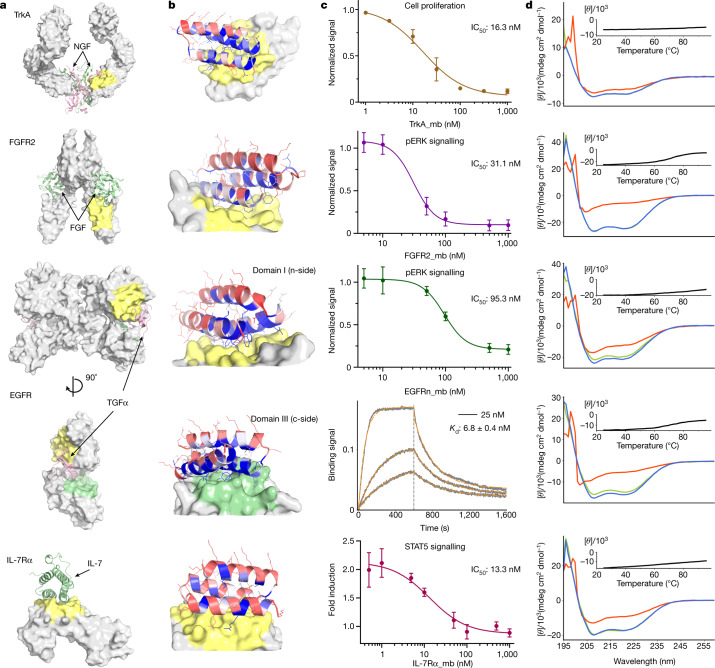
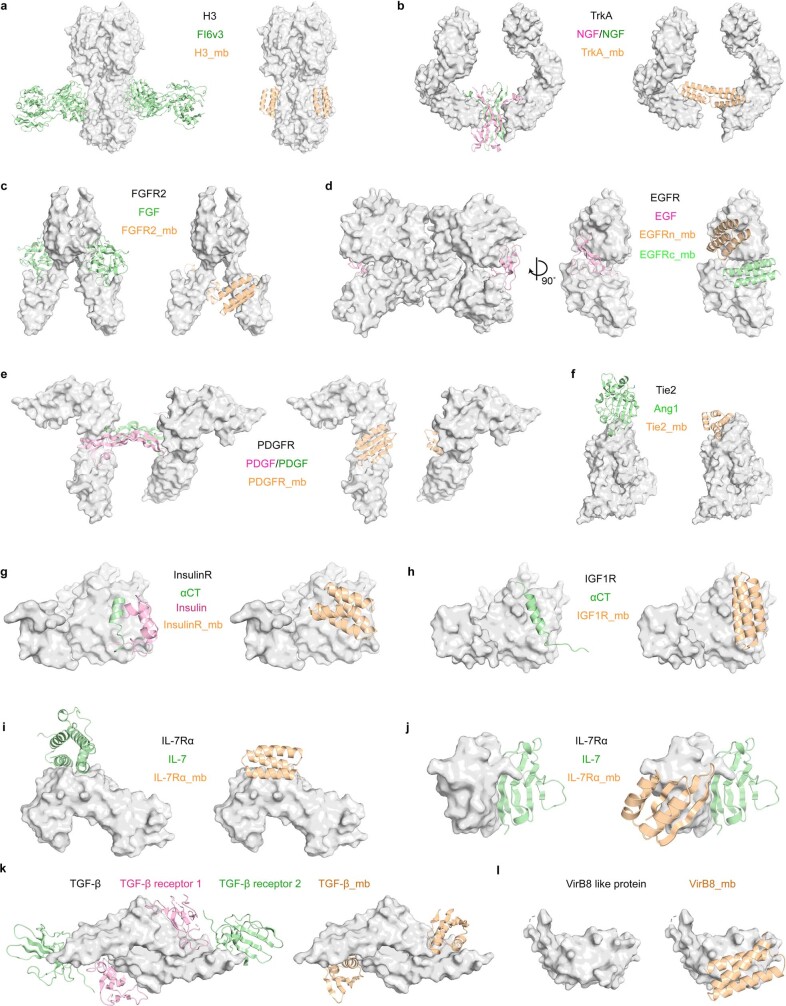
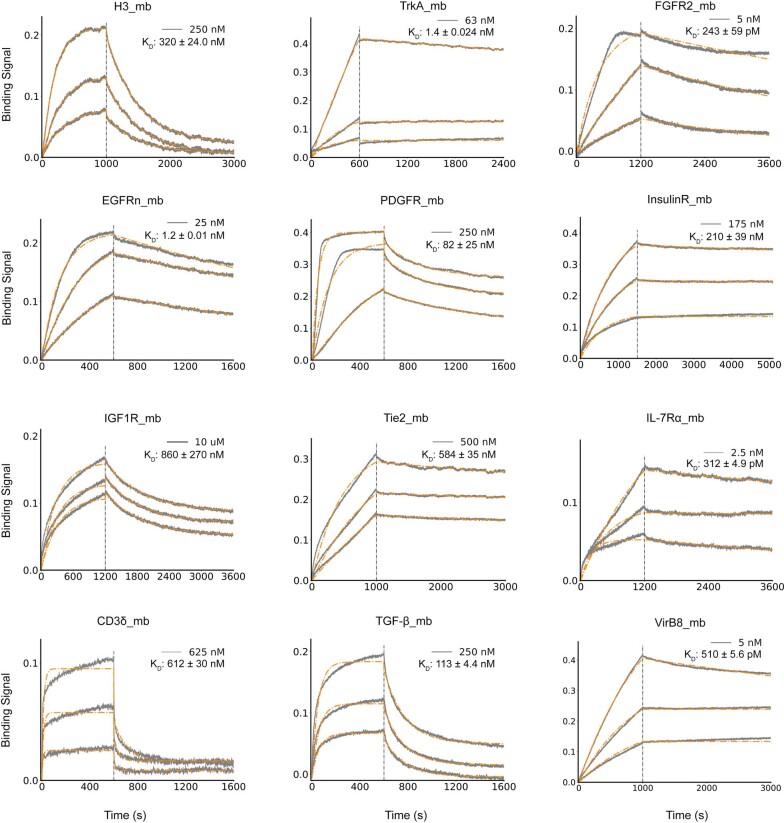
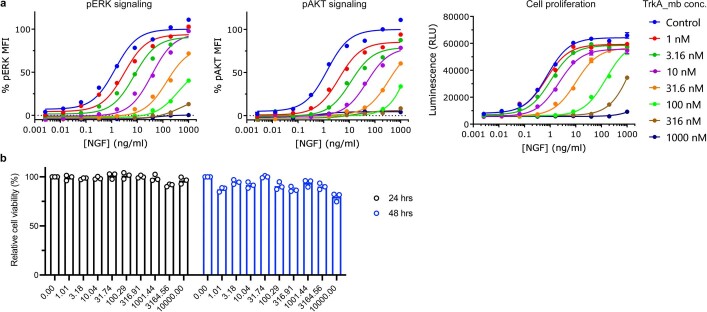
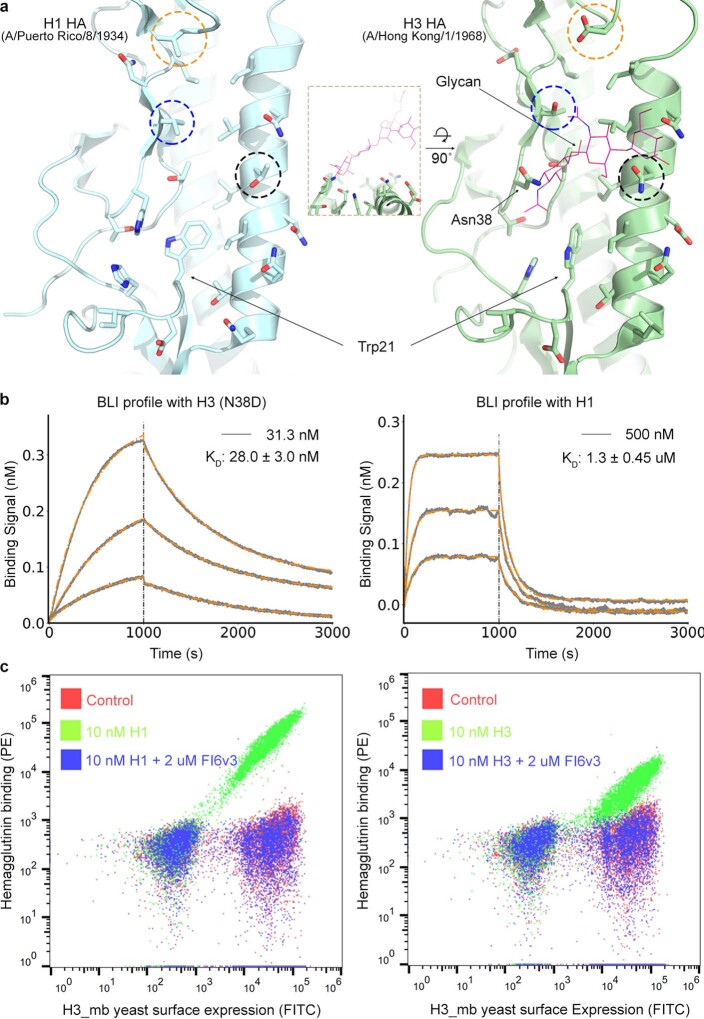
- De novo binders were designed to 12 diverse protein targets (13 target sites on 12 native proteins), all smaller than 65 amino acids; optimized affinities ranged from 300 pM to 900 nM (Table 1), with examples including IL-7Rα at 0.31 nM, VirB8 at 0.51 nM, TrkA at 1.4 nM, EGFRn at 1.2 nM, H3 at 320 nM and IGF1R at 860 nM.
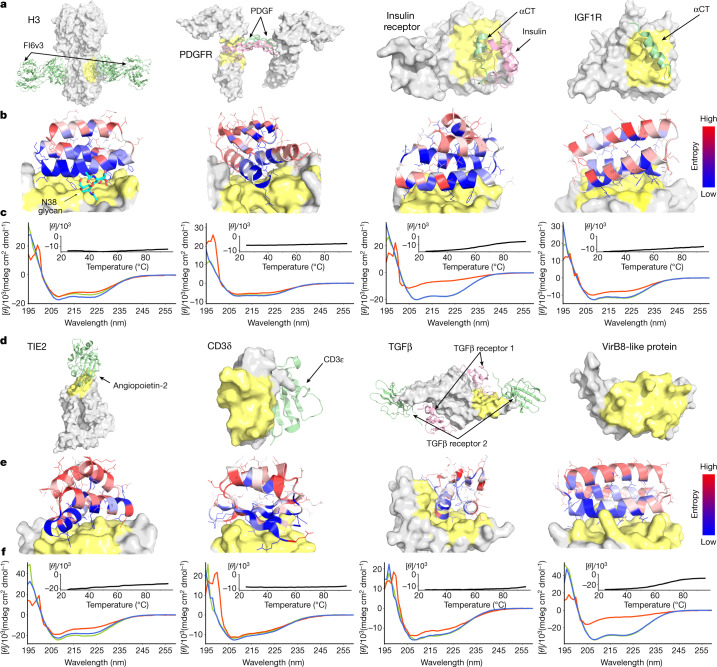
- Nine out of 13 designs were stable at 95 °C, and all expressed in the soluble fraction in *E. coli* and had circular dichroism spectra consistent with the design models.
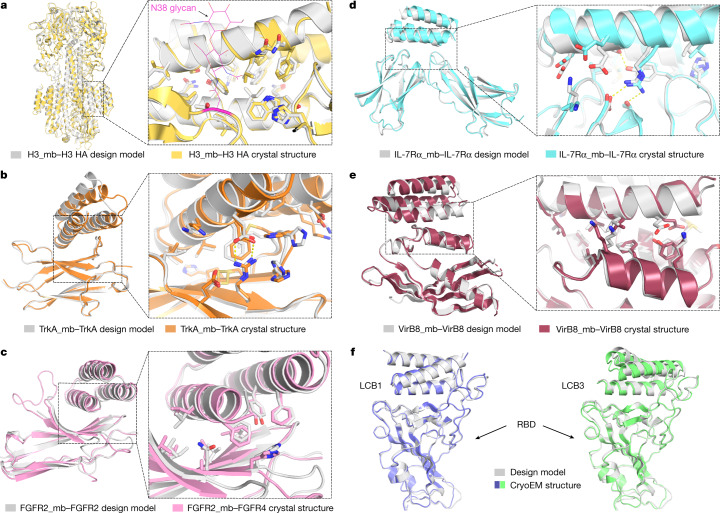
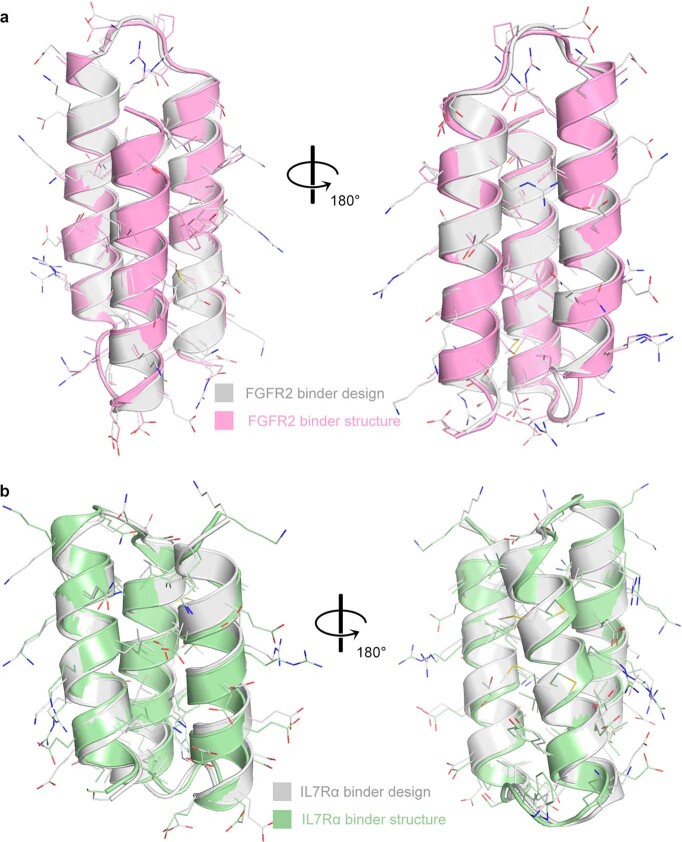
- Crystal structures of five binder–target complexes (H3, TrkA, FGFR2, IL-7Rα and VirB8) closely matched the computational design models; Cα r.m.s.d. values over the entire miniprotein binder were 1.91 Å (H3), 2.41 Å (TrkA), 1.33 Å over the FGFR2 complex, 2.2 Å (IL-7Rα) and 2.54 Å (VirB8). Cryo-EM structures of SARS-CoV-2 binders LCB1 and LCB3 also matched design models with Cα r.m.s.d. values of 1.27 Å and 1.9 Å.
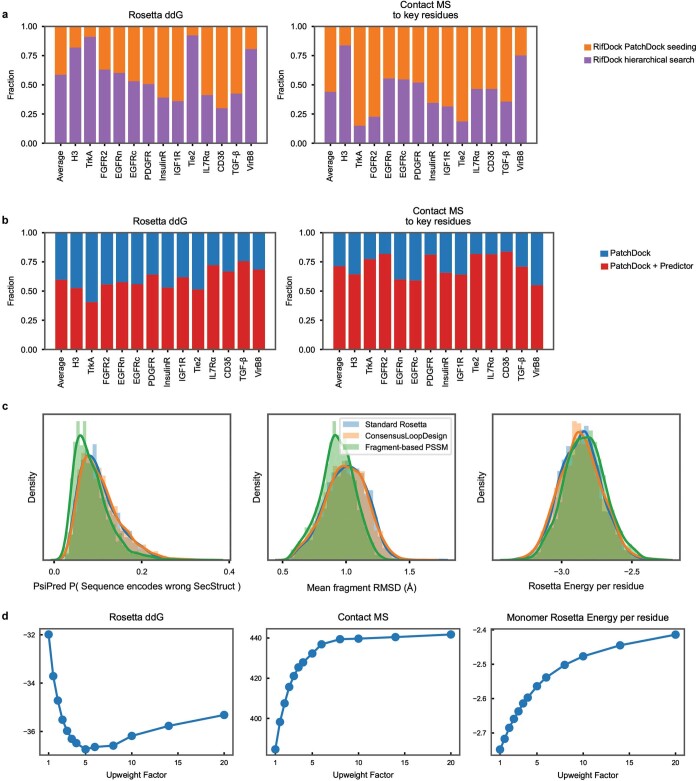
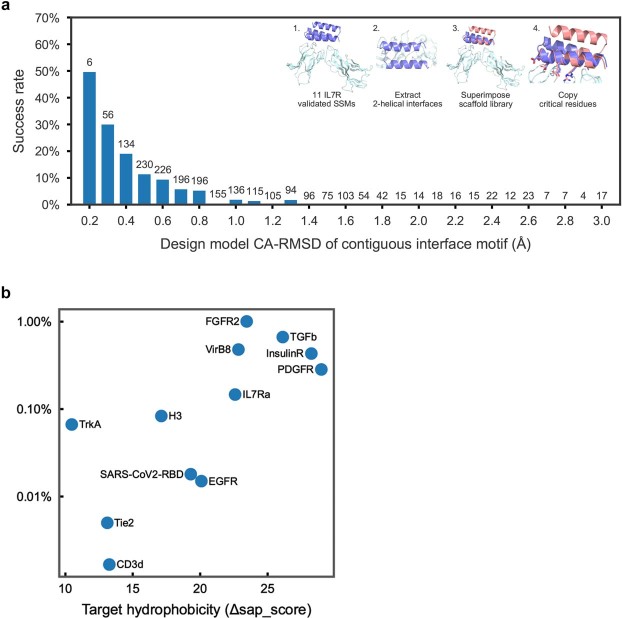
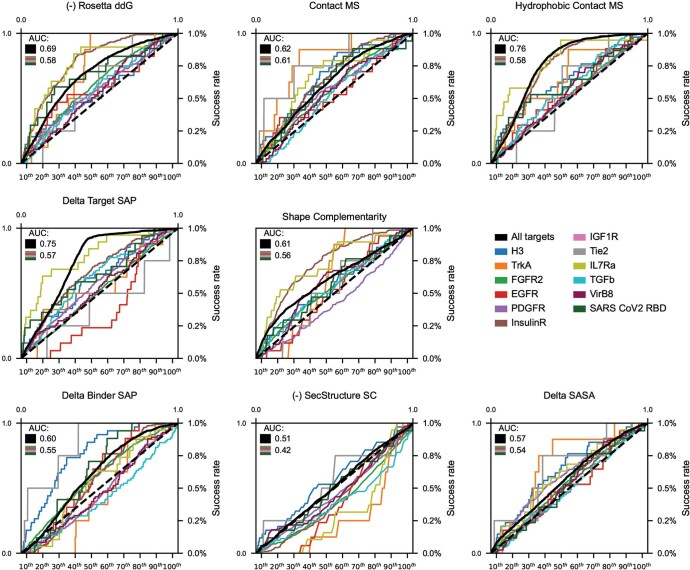
- Analysis of 810,000 binder designs and 240,000 single mutants showed design success varied by target; success correlated strongly with the hydrophobicity of the targeted region, and experimentally binding designs tended to have stronger predicted binding energy and larger contact molecular surfaces.
Methods
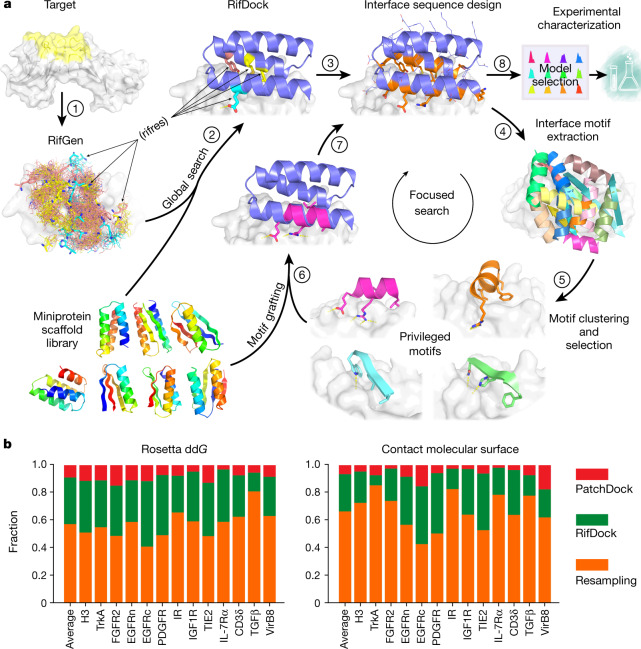
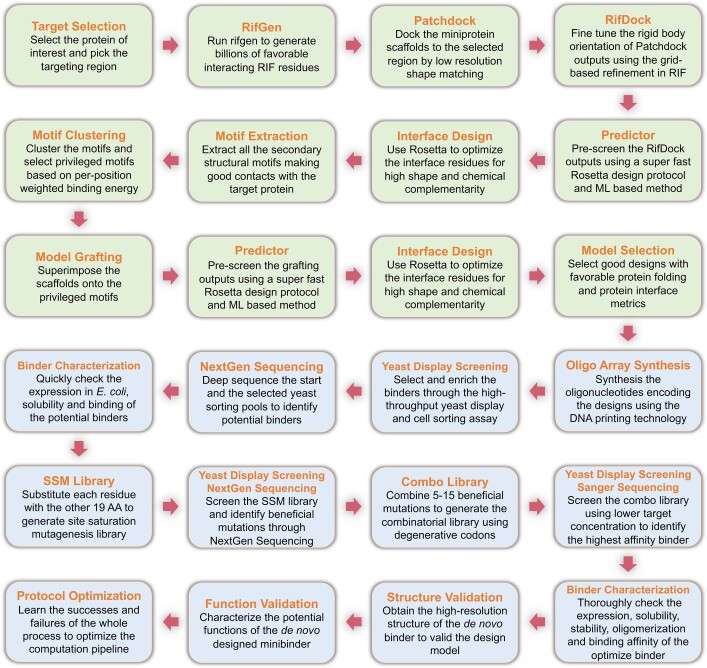
- Broad search: billions of disembodied amino acids were docked against selected target surface regions using RifGen/RIF; 84,690 miniprotein scaffolds (50–65 residues, 5 topologies) were encoded, and 34,507 were found stable; scaffolds were docked with PatchDock/RIFDock, followed by Rosetta sequence design and a rapid “Predictor” prescreen.
- Focused search: secondary-structure motifs making good target contacts were extracted and clustered, around 2,000 motifs per target were selected, and scaffolds were grafted onto these motifs for another round of docking and design.
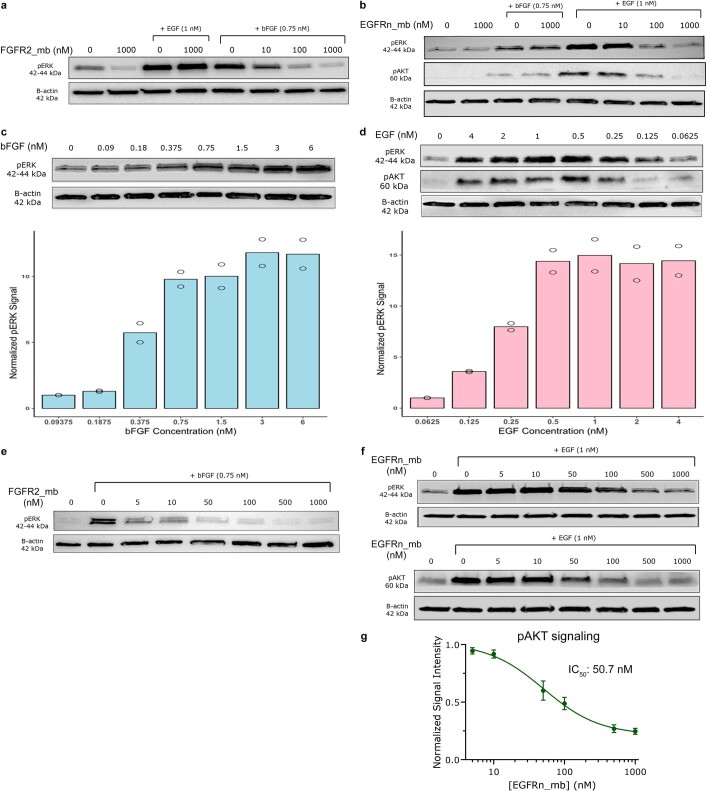
- Experimental validation used yeast surface display with FACS and deep sequencing, site saturation mutagenesis libraries, *E. coli* expression, circular dichroism, biolayer interferometry, X-ray crystallography/cryo-EM, and cell signalling inhibition assays.
Limitations
- Stated in the paper: only a small fraction of designs bind, and in almost all cases the best binders required additional substitutions to achieve high-affinity binding; design of binders to highly polar target sites remains a considerable challenge, as all targeted sites here contained at least four hydrophobic residues.
- Stated in the paper: sampling of the enormous design space is necessarily incomplete, and many broad-search designs contained buried unsatisfied polar atoms and cavities; structures could not yet be solved for the remainder of the designs.
- Evident from the text: the SC50 fitting assumes equal yeast surface expression and 100% expression in the collection gate, assumptions the authors say are “probably false”; expression differences may cause SC50 fits to vary by up to fivefold, and doubly transformed yeast cells are described as a major source of error.
Model-written summary. Check it against the paper before relying on it.
Integrity signals
Registry
Cites
Statistics
Figures
Verification
Claims the paper makes
10 Valid · 4 Not valid · 21 Not checked · 118 Own results and interpretations
Every source the paper cites for this claim was checked and supports it.
In the paper
“Binders have been generated starting from several computationally identified hotspot residues, which were then used to guide the positioning of naturally occurring protein scaffolds5.”
§ Design of protein-binding proteins from the target structure alone > Main
What the sources say
- Supportedcites [5] Fleishman SJ Computational design of proteins targeting the conserved stem region of influenza hemagglutinin Science 2011 332 816 821 10.1126/science.1202617 21566186 PMC3164876 source
The Computational design method section (page not provided) describes computationally positioning hotspot residues against the target, then finding scaffold configurations that incorporate them. The Design of HA-binding proteins and Experimental and structural characterization sections confirm that the resulting scaffold-based designs produced HA-binding proteins. (LLM, conf=0.93)
plainstates a cause- Asserted: passes — The authors put it forward as true.
- Checkable: passes — It can be checked against evidence.
- Load-bearing: passes — The paper’s conclusions depend on it.
- Based: passes — The paper gives a reason why it holds.
- Supported
The cited sources support only part of this claim — read each source’s verdict below.
In the paper
“The design of proteins that bind to a specific site on the surface of a target protein using no information other than the three-dimensional structure of the target remains a challenge1–5.”
§ Design of protein-binding proteins from the target structure alone > Abstract
What the sources say
- Partly supportedcites [1] Chevalier A Massively parallel de novo protein design for targeted therapeutics Nature 2017 550 74 79 10.1038/nature23912 28953867 PMC5802399 sourceExperimental — accuracy not yet measured
The Abstract and Assessment of the computational model describe limitations in designing protein binders and a low initial success rate, supporting the claim that this remains challenging. But the High-throughput computational design section says the authors used binding motifs and hotspot residues from previously solved complexes, not just the target’s three-dimensional structure. The paper therefore does not establish the claim’s structure-only condition. (LLM, conf=0.83)
- Partly supportedcites [2] Strauch EM Computational design of trimeric influenza-neutralizing proteins targeting the hemagglutinin receptor binding site Nat. Biotechnol. 2017 35 667 671 10.1038/nbt.3907 28604661 PMC5512607 sourceExperimental — accuracy not yet measured
The paper describes designing proteins for a specific site on influenza hemagglutinin, but its design used the C05 antibody binding mode and an antibody–target co-crystal structure (design description and Methods > Computational Methods; page not provided). This is consistent with target-structure-only design being difficult, but the paper does not explicitly establish the broader claim that it remains a challenge. (LLM, conf=0.77)
- Partly supportedcites [3] Silva DA De novo design of potent and selective mimics of IL-2 and IL-15 Nature 2019 565 186 191 10.1038/s41586-018-0830-7 30626941 PMC6521699 sourceExperimental — accuracy not yet measured
The section on computational design of IL-2/IL-15 mimics distinguishes earlier designs for short linear epitopes from its approach to more complex binding interfaces, supporting the general point that designing targeted binders is challenging. But the Methods section says this design used the structure of IL-2 in complex with its receptor as a template; the paper does not establish the specific claim about designing binders with no information beyond the target’s three-dimensional structure. Page numbers are unavailable in our copy. (LLM, conf=0.78)
- Not checked yetcites [4] Baran D Principles for computational design of binding antibodies Proc. Natl Acad. Sci. USA 2017 114 10900 10905 10.1073/pnas.1707171114 28973872 PMC5642698 source
- Supportedcites [5] Fleishman SJ Computational design of proteins targeting the conserved stem region of influenza hemagglutinin Science 2011 332 816 821 10.1126/science.1202617 21566186 PMC3164876 source
The Introduction states that computational design could target specific patches on a protein surface, but that the capability to target an arbitrarily selected surface had remained elusive. This supports the citing sentence’s characterization of the task as a challenge, including the more restricted case where only the target’s three-dimensional structure is available. (LLM, conf=0.90)
plain- Asserted: passes — The authors put it forward as true.
- Checkable: passes — It can be checked against evidence.
- Load-bearing: passes — The paper’s conclusions depend on it.
- Based: passes — The paper gives a reason why it holds.
- Partly supported
The cited sources support only part of this claim — read each source’s verdict below.
In the paper
“Most current computational methods used to design proteins that bind to a target surface utilize information derived from structures of the native complex on specific side-chain interactions or protein backbone placements optimal for binding1–3.”
§ Design of protein-binding proteins from the target structure alone > Main
What the sources say
- Partly supportedcites [1] Chevalier A Massively parallel de novo protein design for targeted therapeutics Nature 2017 550 74 79 10.1038/nature23912 28953867 PMC5802399 sourceExperimental — accuracy not yet measured
The High-throughput computational design section describes using interface helices from previously solved target complexes to position scaffold backbones and seed interfaces with hotspot residues. This supports the described design strategy, but the paper does not establish that most current computational methods use it. (LLM, conf=0.83)
- Partly supportedcites [2] Strauch EM Computational design of trimeric influenza-neutralizing proteins targeting the hemagglutinin receptor binding site Nat. Biotechnol. 2017 35 667 671 10.1038/nbt.3907 28604661 PMC5512607 sourceExperimental — accuracy not yet measured
The paper’s design description (section labeled Abstract; page unavailable) says it used the C05–HA co-crystal structure to position the target and optimized key interface contacts and backbone alignment. It also compares the approach with earlier antibody-loop grafting. These passages support the described type of structure-guided design, but not the claim that most current protein-binder design methods use it. (LLM, conf=0.82)
- Partly supportedcites [3] Silva DA De novo design of potent and selective mimics of IL-2 and IL-15 Nature 2019 565 186 191 10.1038/s41586-018-0830-7 30626941 PMC6521699 sourceExperimental — accuracy not yet measured
The Methods section (page unavailable) says the authors used the structure of the native hIL-2–receptor complex as a design template, identified binding-site residues as hotspots, and built new backbones around its structural elements. This supports the described approach for this method, but the paper does not establish that most current computational methods use such information. (LLM, conf=0.84)
plain- Asserted: passes — The authors put it forward as true.
- Checkable: passes — It can be checked against evidence.
- Load-bearing: passes — The paper’s conclusions depend on it.
- Based: passes — The paper gives a reason why it holds.
- Partly supported
The cited sources support only part of this claim — read each source’s verdict below.
In the paper
“The most robust results were obtained using direct low-resolution shape matching11 followed by grid-based refinement of the rigid body orientation in the RIF (RIFDock).”
§ Design of protein-binding proteins from the target structure alone > Design method
What the sources say
- Partly supportedcites [11] Schneidman-Duhovny D Inbar Y Nussinov R Wolfson HJ PatchDock and SymmDock: servers for rigid and symmetric docking Nucleic Acids Res. 2005 33 W363 W367 10.1093/nar/gki481 15980490 PMC1160241 sourceExperimental — accuracy not yet measured
The PatchDock algorithm section describes matching complementary molecular-surface patches to generate docking orientations, supporting the shape-matching method cited here. It does not describe that matching as low-resolution. The citation is attached to shape matching, not to the sentence’s claims about robust results or subsequent RIFDock refinement. (LLM, conf=0.82)
plainstates a cause- Asserted: passes — The authors put it forward as true.
- Checkable: passes — It can be checked against evidence.
- Load-bearing: passes — The paper’s conclusions depend on it.
- Based: passes — The paper gives a reason why it holds.
- Partly supported
The cited sources support only part of this claim — read each source’s verdict below.
In the paper
“Neutralizing antibodies that target the stem region of group 2 HA have been identified through screens of large B cell libraries after vaccination or infection that neutralize both group 1 and group 2 influenza A viruses34,35.”
§ Design of protein-binding proteins from the target structure alone > Pathogen target proteins
What the sources say
- Not checked yetcites [34] Corti D A neutralizing antibody selected from plasma cells that binds to group 1 and group 2 influenza A hemagglutinins Science 2011 333 850 856 10.1126/science.1205669 21798894 source
- Partly supportedcites [35] Joyce MG Vaccine-induced antibodies that neutralize group 1 and group 2 influenza A viruses Cell 2016 166 609 623 10.1016/j.cell.2016.06.043 27453470 PMC4978566 sourceExperimental — accuracy not yet measured
The Introduction and Results report sorting cross-reactive memory B cells after vaccination, then identifying HA-stem-binding antibodies that neutralized both group 1 and group 2 influenza A viruses. The paper describes cell sorting and antibody sequencing, not screening a large B-cell library; the vaccination finding does not establish the infection alternative. (LLM, conf=0.82)
plainstates a cause- Asserted: passes — The authors put it forward as true.
- Checkable: passes — It can be checked against evidence.
- Load-bearing: unclear — It is unclear whether the paper’s conclusions depend on it.
- Based: passes — The paper gives a reason why it holds.
72 more claims · 1 with their cited sources checked
Create a free account to see all 153 claims and to verify the 31 references still open.
- It may state two separate claims as one. 50
- Probably not a substantial claim. 35
- The quote only partly states this claim. 2
Claims other papers make about this one
Each is checked against this paper’s own text: does it say what the citing paper says it does?
The source backs part of the claim, not all of it — or backs it for a different population, condition or comparison.
In the citing paper
“and the approach relied on prespecifying a particular set of protein scaffolds as the basis for the designs, inherently limiting the diversity and shape complementarity of possible solutions12”
From De novo design of protein structure and function with RFdiffusion (2023) · cites this paper as [12]
Experimental — accuracy not yet measuredThe cited source says what the claim attributes to it.
In the citing paper
“For binder design from target structural information alone, previous work required testing tens of thousands of sequences12.”
From De novo design of protein structure and function with RFdiffusion (2023) · cites this paper as [12]
The cited source says what the claim attributes to it.
In the citing paper
“A general method for de novo binder design from target structure information alone using the physically based Rosetta method was recently described12”
From De novo design of protein structure and function with RFdiffusion (2023) · cites this paper as [12]
The cited source says what the claim attributes to it.
In the citing paper
“However, experimental success rates were low, still requiring many thousands of designs to be screened for each design campaign12”
From De novo design of protein structure and function with RFdiffusion (2023) · cites this paper as [12]
Self-check
Percentages, sums and reported differences re-computed from the paper’s own numbers.
Each contradiction between two passages listed here was confirmed by an independent check.
Rated minor: it would not touch a result — a value no result rests on, a p-value that stays on the same side of the significance level, or a conflict that is clerical, resolved elsewhere in the paper, or outside its own findings.
In the paper
§ Design of protein-binding proteins from the target structure alone > Cell receptors involved in signalling
“the binding affinities of the optimized designs ranged from about 1 nM or better for TrkA and FGFR2 to 860 nM for IGF1R”
§ Design of protein-binding proteins from the target structure alone > Experimental testing
“| Kd (nM) | 320 ± 24.0 | 1.4 ± 0.02 | 243 ± 59.0 | 1.2 ± 0.01 |”
Rated minor: it would not touch a result — a value no result rests on, a p-value that stays on the same side of the significance level, or a conflict that is clerical, resolved elsewhere in the paper, or outside its own findings.
In the paper
§ Design of protein-binding proteins from the target structure alone > Pathogen target proteins
“Similar to FGFR2, IL-7Rα and VirB8, the method yielded picomolar binders”
§ Design of protein-binding proteins from the target structure alone > Experimental testing
“| Kd (nM) | 320 ± 24.0 | 1.4 ± 0.02 | 243 ± 59.0 | 1.2 ± 0.01 |”
Citations
Cites
Highly accurate protein structure prediction with AlphaFold
Jumper, J., Evans, R., Pritzel, A., Green, T., Figurnov, M., Ronneberger, O., Tunyasuvunakool, K., Bates, R., Žídek, A., Potapenko, A., et al. (2021) · Nature · doi:10.1038/s41586-021-03819-2 · Cited by 43,764
Berman, H. M. (2000) · Nucleic Acids Research · doi:10.1093/nar/28.1.235 · Cited by 40,196
[20] Processing of X-ray diffraction data collected in oscillation mode
Otwinowski, Z., & Minor, W. (1997) · Methods in Enzymology · doi:10.1016/s0076-6879(97)76066-x · Cited by 33,475
Coot : model-building tools for molecular graphics
Emsley, P., & Cowtan, K. (2004) · Acta Crystallographica Section D Biological Crystallography · doi:10.1107/s0907444904019158 · Cited by 30,571
Features and development of Coot
Emsley, P., Lohkamp, B., Scott, W. G., & Cowtan, K. (2010) · Acta Crystallographica Section D Biological Crystallography · doi:10.1107/s0907444910007493 · Cited by 29,915
PHENIX : a comprehensive Python-based system for macromolecular structure solution
Adams, P. D., Afonine, P. V., Bunkóczi, G., Chen, V. B., Davis, I. W., Echols, N., Headd, J. J., Hung, L.-W., Kapral, G. J., Grosse-Kunstleve, R. W., et al. (2010) · Acta Crystallographica Section D Biological Crystallography · doi:10.1107/s0907444909052925 · Cited by 23,716
Phaser crystallographic software
McCoy, A. J., Grosse-Kunstleve, R. W., Adams, P. D., Winn, M. D., Storoni, L. C., & Read, R. J. (2007) · Journal of Applied Crystallography · doi:10.1107/s0021889807021206 · Cited by 20,612
Overview of the CCP 4 suite and current developments
Winn, M. D., Ballard, C. C., Cowtan, K. D., Dodson, E. J., Emsley, P., Evans, P. R., Keegan, R. M., Krissinel, E. B., Leslie, A. G. W., McCoy, A., et al. (2011) · Acta Crystallographica Section D Biological Crystallography · doi:10.1107/s0907444910045749 · Cited by 12,353
Liebschner, D., Afonine, P. V., Baker, M. L., Bunkóczi, G., Chen, V. B., Croll, T. I., Hintze, B., Hung, L.-W., Jain, S., McCoy, A. J., et al. (2019) · Acta Crystallographica Section D Structural Biology · doi:10.1107/s2059798319011471 · Cited by 7,953
Cell Signaling by Receptor Tyrosine Kinases
Lemmon, M. A., & Schlessinger, J. (2010) · Cell · doi:10.1016/j.cell.2010.06.011 · Cited by 7,929
Self-citation
Cited by
Items 201–300 of 706
Designing artificial pathways for improving chemical production
Tan, Z., Li, J., Hou, J., & González, R. (2023) · Biotechnology Advances · doi:10.1016/j.biotechadv.2023.108119 · Cited by 17
Design of pseudosymmetric protein hetero-oligomers
Kibler, R. D., Lee, S., Kennedy, M. A., Wicky, B. I. M., Lai, S. M., Kostelic, M. M., CARR, A., Li, X., Chow, C. M., Nguyen, T. K., et al. (2024) · Nature Communications · doi:10.1038/s41467-024-54913-8 · Cited by 16
Self-citationDe Novo Design of Integrin α5β1 Modulating Proteins to Enhance Biomaterial Properties
Wang, X., Guillem‐Marti, J., Kumar, S., Lee, D. S., Cabrerizo‐Aguado, D., Werther, R. A., Alamo, K. A. E., Zhao, Y. T., Nguyen, A., Kopyeva, I., et al. (2025) · Advanced Materials · doi:10.1002/adma.202500872 · Cited by 16
Self-citationEngineering de novo binder CAR-T cell therapies with generative AIPreprint
Mergen, M., Abele, D., Koleci, N., Fernandez, A. S., Sugden, M., Holzleitner, N., Carr, A., Rieger, L., Leone, V., Reichert, M., et al. (2024) · bioRxiv (Cold Spring Harbor Laboratory) · doi:10.1101/2024.11.25.625151 · Cited by 16
Hallucination of closed repeat proteins containing central pockets
An, L., Hicks, D. R., Zorine, D., Dauparas, J., Wicky, B. I. M., Milles, L. F., Courbet, A., Bera, A. K., Nguyen, H., Kang, A., et al. (2023) · Nature Structural & Molecular Biology · doi:10.1038/s41594-023-01112-6 · Cited by 15
“To guide the MCMC trajectories, we supplemented the closure score with AF2 confidence prediction metrics (see ‘Protein generation and sequence design pipeline’ in Methods).”
BackgroundMethodInfluentialSelf-citationBergman, M. T., Zhang, W., Liu, Y., Jang, H., & Nussinov, R. (2024) · The Journal of Physical Chemistry B · doi:10.1021/acs.jpcb.4c03243 · Cited by 15
NanoBinder: a machine learning assisted nanobody binding prediction tool using Rosetta energy scores
Shrestha, P., Talwar, C. S., Kandel, J., Park, K., Chong, K. T., Woo, E., & Tayara, H. (2025) · Journal of Cheminformatics · doi:10.1186/s13321-025-01040-1 · Cited by 16
“Recent advancements in artificial intelligence (AI) have led to the development of several innovative protein design tools, including ProteinMPNN [1], RFDiffusion [2], RifDock [3], Protein Hallucination [4, 5], AlphaFold3 [6], and RosettaFold All-Atom [7].”
Synthesis of Protein-Oligonucleotide Conjugates
Watson, E. E., & Winssinger, N. (2022) · Biomolecules · doi:10.3390/biom12101523 · Cited by 15
Alcala‐Torano, R., Islam, M., Cika, J., Lam, K. H., Jin, R., Ichtchenko, K., Shoemaker, C. B., & Deventer, J. A. V. (2022) · ACS Chemical Biology · doi:10.1021/acschembio.2c00574 · Cited by 15
End-to-End deep structure generative model for protein designPreprint
Lai, B., McPartlon, M., & Xu, J. (2022) · bioRxiv (Cold Spring Harbor Laboratory) · doi:10.1101/2022.07.09.499440 · Cited by 16
“In this regime, the most successful applications rely heavily on template-based fragment sampling and domain-expert specified topologies for backbone determination and energy minimization based sequence design (Courbet et al., 2022; Cao et al., 2022).”
MethodPDB-Struct: A Comprehensive Benchmark for Structure-based Protein DesignPreprint
Wang, C., Zhong, B., Zhang, Z., Chaudhary, N., Misra, S., & Tang, J. (2023) · arXiv (Cornell University) · doi:10.48550/arxiv.2312.00080 · Cited by 15
“This progress is evidenced by the creation of miniproteins specifically engineered to bind particular targets [Cao et al., 2022], enzymes fine-tuned for new substrates [Yeh et al., 2023], and innovative antibodies [Luo et al., 2022, Shi et al., 2022].”
BackgroundDesign of High Affinity Binders to Convex Protein Target SitesPreprint
Baker, D. A., Yang, W., Hicks, D. R., Ghosh, A., Schwartze, T. A., Coventry, B., Goreshnik, I., Allen, A., Halabiya, S. F., Kim, C., et al. (2024) · bioRxiv (Cold Spring Harbor Laboratory) · doi:10.1101/2024.05.01.592114 · Cited by 15
“There has been considerable recent progress in the design of small (50-65 residue) mini proteins to bind to targets of interest 2,3 , but since miniproteins in this size range are roughly spherical in shape and hence have convex binding surfaces, they are not well suited to bind to convex protein…”
Self-citationGong, C., Chen, X., Zhang, Y., Song, Y., Zhou, H., & Xiao, W. (2025) · arXiv (Cornell University) · doi:10.48550/arxiv.2507.11839 · Cited by 15
“This poses significant challenges in resource-constrained environments (e.g., high-throughput screening pipelines) or large-scale inference tasks [2].”
Hallucination of closed repeat proteins containing central pockets
An, L., Hicks, D. R., Zorine, D., Dauparas, J., Wicky, B. I. M., Milles, L. F., Courbet, A., Bera, A. K., Nguyen, H., Kang, A., et al. (2022) · doi:10.1101/2022.09.01.506251 · Cited by 15
Self-citationBarretto, A. J. B., Orda, M. A., Tsai, P., & Tayo, L. L. (2024) · Genes · doi:10.3390/genes15101248 · Cited by 15
“Ligand binding to EGFR can activate downstream signaling pathways that promote cell proliferation and survival, contributing to cancer progression [41].”
BackgroundXu, X., Jané, P., Taelman, V. F., Jané, E., Dumont, R. A., Garama, Y., Kim, F. H., Gomez, M., Gariani, K., & Walter, M. A. (2024) · Nature Communications · doi:10.1038/s41467-024-55291-x · Cited by 14
Tabatabaei, S. N., Keykhaee, Z., Nooraei, S., Ayati, M. A., Behzadmand, M., Azimi, S., Eskati, F., & Ahmadian, G. (2025) · Drugs and Drug Candidates · doi:10.3390/ddc4010005 · Cited by 15
Direct fibroblast reprogramming: an emerging strategy for treating organic fibrosis
Lin, H., Wang, X., Chung, M., Cai, S., & Pan, Y. (2025) · Journal of Translational Medicine · doi:10.1186/s12967-024-06060-3 · Cited by 14
“Notably, the rational redesign of small protein molecules based on the structure of the receptor subtype further improves their specificity, affinity, and stability [123, 124].”
Fundamental and Application of Co-assembly of Peptides and Proteins: Experiment and Computation
Ihoeghian, N. A., & Shao, Q. (2025) · Supramolecular Materials · doi:10.1016/j.supmat.2025.100103 · Cited by 14
Next-generation isoform-selective fibroblast growth factor receptor inhibitors
Chen, L. (2025) · Trends in Pharmacological Sciences · doi:10.1016/j.tips.2025.09.004 · Cited by 14
Validation and analysis of 12,000 AI-driven CAR-T designs in the Bits to Binders competition
Kosonocky, C. W., Abel, A. M., Feller, A. L., Rieffer, A. C., Woolley, P. R., Lála, J., Barth, D. S., Gardner, T., Competitors, B. T. B., Acosta, D., et al. (2026) · Molecular Systems Biology · doi:10.1038/s44320-026-00246-1 · Cited by 14
Randomized gates eliminate bias in sort‐seq assays
Trippe, B. L., Huang, B., DeBenedictis, E. A., Coventry, B., Bhattacharya, N., Yang, K., Baker, D. A., & Crawford, L. A. (2022) · Protein Science · doi:10.1002/pro.4401 · Cited by 14
Self-citationIsoform-specific inhibition of FGFR signaling achieved by a de-novo-designed mini-protein
Park, J. S., Choi, J., Cao, L., Mohanty, J., Suzuki, Y., Park, A., Baker, D. A., Schlessinger, J., & Lee, S. (2022) · Cell Reports · doi:10.1016/j.celrep.2022.111545 · Cited by 14
Self-citationComputational protein design with data‐driven approaches: Recent developments and perspectives
Liu, H., & Chen, Q. (2022) · Wiley Interdisciplinary Reviews Computational Molecular Science · doi:10.1002/wcms.1646 · Cited by 14
“54,55 The most critical component in the RosettaDesign toolkit is the Rosetta energy function, which is composed of a weighted summation of mainly physics-based energy terms (derived from molecular mechanics energy functions) combined with physics-inspired statistical energy terms (derived based on…”
BackgroundTaslim, T. H., Hussein, A. M., Keshri, R., Ishibashi, J. R., Chan, T. C., Nguyen, B. N., Liu, S., Brewer, D. K., Harper, S., Lyons, S., et al. (2022) · Stem Cell Reports · doi:10.1016/j.stemcr.2022.11.004 · Cited by 14
“perhaps utilizing AI-based protein design approach (Cao et al., 2022; Anishchenko et al., 2021).”
Self-citationBonadio, A., Wenig, B., Hockla, A., Radisky, E. S., & Shifman, J. M. (2022) · Journal of Molecular Biology · doi:10.1016/j.jmb.2023.168095 · Cited by 14
Reinforcement learning on structure-conditioned categorical diffusion for protein inverse foldingPreprint
Ektefaie, Y., Viessmann, O., Narayanan, S., Dresser, D., Kim, J., & Mkrtchyan, A. A. (2024) · arXiv (Cornell University) · doi:10.48550/arxiv.2410.17173 · Cited by 14
“…protein structure, also known as protein “inverse folding” (IF) Yue & Dill (1992); Ingraham et al. (2019), is a critical step for many protein design applications in areas such as therapeutics, biomaterials, and synthetic biology Ferruz et al. (2023); Cao et al. (2022); Dickopf et al. (2020).”
BackgroundHotspot-Driven Peptide Design via Multi-Fragment Autoregressive Extension
Li, J., Chen, T., Luo, S., Cheng, C., Guan, J., Guo, R., Wang, S., Liu, G., Peng, J., & Ma, J. (2025) · International Conference on Learning Representations · doi:10.48550/arxiv.2411.18463 · Cited by 14
“…phage/yeast display for screening mutagenesis libraries (Boder & Wittrup, 1997; Wu et al., 2016), or energy-based computational tools to score candidate peptides (Raveh et al., 2011; Lee et al., 2018; Cao et al., 2022), both of which face limitations due to the immense combinatorial design space.”
Bhat, S., Palepu, K., Hong, L., Mao, J., Ye, T., Iyer, R., Zhao, L., Chen, T., Vincoff, S., Watson, R., et al. (2023) · doi:10.1101/2023.06.26.546591 · Cited by 14
“13,14,16,17 21 Even more interestingly, early results suggest that sequence-based protein transformers can produce novel protein sequences with functional capability.”
Accurate single-domain scaffolding of three nonoverlapping protein epitopes using deep learning
Castro, K. M., Watson, J. L., Wang, J., Southern, J., Ayardulabi, R., Georgeon, S., Rosset, S., Baker, D., & Correia, B. E. (2026) · Nature Chemical Biology · doi:10.1038/s41589-025-02083-z · Cited by 13
“For testing, we filtered designs using the following metrics, which largely follow previous work 9,10,28”
Self-citationA general system for targeting MHC class II–antigen complex via a single adaptable loop
Du, H., Liu, J., Jude, K. M., Yang, X., Li, Y., Bell, B., Yang, H., Kassardjian, A., Blackson, W., Mobedi, A., et al. (2024) · Nature Biotechnology · doi:10.1038/s41587-024-02466-y · Cited by 13
“…advances in computational protein structure prediction and design have advanced our understanding and engineering capabilities of protein–protein interactions 32,33 , they have not contributed markedly to MHCII binder engineering due to the intricate structural complexity of TCR, peptide and MHCII.”
Self-citationDamsbo, A., Burlet, N. J., Fernández‐Quintero, M. L., Bénard-Valle, M., Overath, M. D., Guadarrama-Martínez, A., Vlamynck, A., Bisbo, I., Villalobos, C., Tulika, T., et al. (2025) · Communications Chemistry · doi:10.1038/s42004-025-01600-4 · Cited by 13
“Combined with MD, machine learning, and arti fi cial intelligence, these data can inform the designofbindingproteinswithdesiredlevelsofcross-reactivityinsilico 31 – 33 , enabling a more rational design of advanced biotherapeutics.”
De novo design of potent inhibitors of clostridial family toxins
Ragotte, R. J., Liang, H., Tam, J., Miletic, S., Berman, J. M., Palou, R., Weidle, C., Li, Z., Glögl, M., Beilhartz, G. L., et al. (2025) · Proceedings of the National Academy of Sciences · doi:10.1073/pnas.2509329122 · Cited by 13
“We began by targeting the TcdB Frizzled/TFPI binding interface using a design pipeline integrating Rosetta - and deep learning - based methods ( 16 , 22 ).”
InfluentialSelf-citationWang, Y., Ma, Y.-H., Chang, Y.-H., Yan, J., Zhang, J.-L., Cai, M.-N., & Wei, K. (2025) · Biology · doi:10.3390/biology14121665 · Cited by 11
“This success rate is substantially higher than previous computational design methods, which typically achieved success rates below 5% [181,182].”
Mészáros, B., Park, E., Malinverni, D., Sejdiu, B. I., Immadisetty, K., Sandhu, M., Lang, B., & Babu, M. M. (2023) · Current Opinion in Structural Biology · doi:10.1016/j.sbi.2023.102608 · Cited by 14
Recent advances in the structural biology of tyrosine kinases
Rygiel, K. A., & Elkins, J. M. (2023) · Current Opinion in Structural Biology · doi:10.1016/j.sbi.2023.102665 · Cited by 13
Hung, T. I., Hsieh, Y.-J., Lu, W.-L., Wu, K., & Chang, C. A. (2023) · Journal of Molecular Biology · doi:10.1016/j.jmb.2023.168337 · Cited by 13
De novo design of a protein binder against Staphylococcus enterotoxin B
Ming, K., Xing, B., Hu, Y., Mei, M., Huang, W., Hu, X., & Wei, Z. (2023) · International Journal of Biological Macromolecules · doi:10.1016/j.ijbiomac.2023.128666 · Cited by 13
MolMix: A Simple Yet Effective Baseline for Multimodal Molecular Representation LearningPreprint
Manolache, A., Tantaru, D., & Niepert, M. (2024) · arXiv (Cornell University) · doi:10.48550/arxiv.2410.07981 · Cited by 13
“Many molecular properties, such as solubility, toxicity, and binding affinity, are influenced by the range of conformations a molecule can adopt in nature [20].”
BackgroundDe novo design of Ras isoform selective binders
Zhang, J. Z., Li, X., Batingana, A. R., Liu, C., Jiang, H., Shannon, K., Huang, B. J., Wu, K., & Baker, D. (2026) · Cell Chemical Biology · doi:10.1016/j.chembiol.2026.02.008 · Cited by 12
“We obtained synthetic DNA encoding the selected RIB designs and identified binders using yeast display 16,17 (see STAR Methods for details, Figures S2A and S2B).”
Self-citationInutsuka, A., Maejima, S., Mizoguchi, H., Kaneko, R., Nomura, R., Takanami, K., Sakamoto, H., & Onaka, T. (2022) · Communications Biology · doi:10.1038/s42003-022-03944-2 · Cited by 12
De novo design of mini-binder proteins against IL-2 receptor β chain
Ming, K., Xing, B., Ren, X., Hu, Y., Wei, L., Wang, Z., Mei, M., Weng, J., & Wei, Z. (2024) · International Journal of Biological Macromolecules · doi:10.1016/j.ijbiomac.2024.133834 · Cited by 12
Controllable Protein Sequence Generation with LLM Preference Optimization
Liu, X., Liu, Y., Chen, S., & Hu, W. (2025) · Proceedings of the AAAI Conference on Artificial Intelligence · doi:10.1609/aaai.v39i1.32030 · Cited by 12
Li, H., Nithin, C., Kmiecik, S., & Huang, S. (2025) · Drug Discovery Today · doi:10.1016/j.drudis.2025.104382 · Cited by 12
Bai, L., Dan, T., Cheng, P., Yang, X., Xiang, H., Zhai, W., Chen, Y., Huang, R., Wang, Q., Li, K., et al. (2026) · Science Advances · doi:10.1126/sciadv.aeb7086 · Cited by 13
Sequence and structural determinants of efficacious de novo chimaeric antigen receptors
Chow, A., Chu, H., Li, R., Nalbant, B. N., Dozic, A. V., Kida, L. C., Tang, Z., Palmeri, J. R., & Lareau, C. A. (2026) · Nature Biomedical Engineering · doi:10.1038/s41551-026-01790-9 · Cited by 12
“AI-designed proteins offer several theoretical advantages over traditional antibody-derived domains, including rapid generation in silico 7–9 , enhanced stability through optimized folding 10–12 , small size (~60 amino acids) and prospective identification of the binding epitope 7,8,13 .”
Tubiana, J., Lifshits, L. A., Nissan, M., Gabay, M., Sher, I., Sova, M., Wolfson, H. J., & Gal, M. (2023) · PLoS Computational Biology · doi:10.1371/journal.pcbi.1010874 · Cited by 12
Computational design of BclxL inhibitors that target transmembrane domain interactions
Duart, G., Elazar, A., Weinstein, J. J., Gadea‐Salom, L., Ortiz‐Mateu, J., Fleishman, S. J., Mingarro, I., & Martínez‐Gil, L. (2023) · Proceedings of the National Academy of Sciences · doi:10.1073/pnas.2219648120 · Cited by 12
Systems Biology: Functional Strategies of Living Organisms
Konieczny, L., Roterman-Konieczna, I., & Spólnik, P. (2023) · Springer eBooks · doi:10.1007/978-3-031-31557-2 · Cited by 13
PROSCA: an online platform for humanized scaffold mining facilitating rational protein engineering
Wang, X., Zhang, Y., Li, Z., Duan, Z., Guo, M., Wang, Z., Zhu, F., & Xue, W. (2024) · Nucleic Acids Research · doi:10.1093/nar/gkae384 · Cited by 12
A high-performance protein preparation approach in a single column-free step
Huang, Y., Zhang, Y., Yang, X., & Lin, Z. (2024) · Trends in biotechnology · doi:10.1016/j.tibtech.2024.10.008 · Cited by 12
In silico design of stable single-domain antibodies with high affinity
Zhang, Z., van der Kant, R., Marković, I., Vizarraga, D., Garcia, T., Maragkou, K., Blanco, J. D., Cianferoni, D., Orlando, G., Cia, G., et al. (2026) · Structure · doi:10.1016/j.str.2025.12.010 · Cited by 12
Self-citationKi, M., Nguyen, T. K. M., Park, T.-I., Park, H.-M., & Pack, S. P. (2023) · Pharmaceutics · doi:10.3390/pharmaceutics15041061 · Cited by 12
“Based on the tertiary structure, molecular modeling helps identify the critical binding site required for protein–protein interactions, enabling the identification and design of local sites involved in protein–ligand interactions using the structure of the entire protein [3,4].”
BackgroundOrigin-1: a generative AI platform for de novo antibody design against novel epitopesPreprint
Levine, S., King, J. E., Stern, J., Grayson, D., Wang, R., Yin, R., Lupo, U., Kulytė, P., Brand, R. M., Bertin, T., et al. (2026) · bioRxiv (Cold Spring Harbor Laboratory) · doi:10.64898/2026.01.14.699389 · Cited by 12
Xu, X., Kao, W.-L., Wang, A. B., Lee, H.-J., Duan, R., Holmes, H., Gallazzi, F., Ji, J., Sun, H., Heng, X., et al. (2024) · PNAS Nexus · doi:10.1093/pnasnexus/pgae541 · Cited by 11
“They also successfully designed de novo miniprotein binders (50 – 65 amino acids) for diverse protein targets using a strategy combining both computational and experimental methods (15).”
Artificial Intelligence: A New Tool for Structure-Based G Protein-Coupled Receptor Drug Discovery
Chung, J., Hahn, H., Flores-Espinoza, E., & Thomsen, A. R. B. (2025) · Biomolecules · doi:10.3390/biom15030423 · Cited by 11
“…to being important for understanding their function in biological processes, protein 3D structures provide critical insights into the potential for designing compounds that can bind to and modulate their function, thus offering a way to regulate entire biological pathways and processes [2,3].”
Zhou, J., Gao, C., Ding, Y., Nie, Z., Xu, M., Fu, P., He, B., Wang, S., Xia, X., & Wang, K. (2025) · Nano Letters · doi:10.1021/acs.nanolett.5c01214 · Cited by 11
Zhou, H., Wu, H., Zhong, Z., Blasco, P., Zeng, J., Wang, J., Liu, H., & Li, X. (2025) · JACS Au · doi:10.1021/jacsau.5c01181 · Cited by 11
Liquid–liquid phase separation of peptides: a molecular foundation for next-generation biomaterials
Lu, L., & Wang, H. (2026) · Chemical Science · doi:10.1039/d5sc07607b · Cited by 11
“57,58 Additional challenges include parameterization and benchmarking, as inaccurate force elds can lead to overstabilized interactions or misrepresented solvent dynamics.”
Harnessing iron‑sulfur enzymes for synthetic biology
Shomar, H., & Bokinsky, G. (2024) · Biochimica et Biophysica Acta (BBA) - Molecular Cell Research · doi:10.1016/j.bbamcr.2024.119718 · Cited by 11
“New computational protein design tools such as the RoseTTAFold-based diffusion model, RFdiffusion, enables researchers to create proteins that show high affinity for a target of interest [146,147].”
Computational tools to predict context-specific protein complexes
Csikász‐Nagy, A., Fichó, E., Noto, S., & Reguly, I. Z. (2024) · Current Opinion in Structural Biology · doi:10.1016/j.sbi.2024.102883 · Cited by 10
Liang, Q., Yu, T., Kofman, E. R., Jagannatha, P., Rhine, K., Yee, B. A., Corbett, K. D., & Yeo, G. W.-M. (2024) · Nature Communications · doi:10.1038/s41467-024-50363-4 · Cited by 11
“We anticipate that the advancement of AI(arti fi cial intelligence)-designed nanobodies could alleviate this challenge 27 .”
Li, Y., Li, F., Duan, Z., Liu, R., Jiao, W., Wu, H., Zhu, F., & Xue, W. (2024) · Nucleic Acids Research · doi:10.1093/nar/gkae893 · Cited by 11
Intelligent Protein Design and Molecular Characterization Techniques: A Comprehensive Review
Wang, J., Chen, C., Yao, G., Ding, J., Wang, L., & Jiang, H. (2023) · Molecules · doi:10.3390/molecules28237865 · Cited by 11
Subramanian, A. M., Martinez, Z. A., Lourenço, A. L., Yuan, S. C., Liu, S., Wang, T.-Y., Chou, T., & Thomson, M. (2023) · bioRxiv (Cold Spring Harbor Laboratory) · doi:10.1101/2023.12.22.573145 · Cited by 11
Computational design of pH-sensitive bindersPreprint
Ahn, G., Coventry, B., Haefner, E., Sadre, S., Hu, J., Van, M., Huang, B., Sappington, I., Broerman, A. J., Lichtenstein, M. A., et al. (2025) · bioRxiv (Cold Spring Harbor Laboratory) · doi:10.1101/2025.09.29.678932 · Cited by 11
“The yeast surface display screening was performed as described 43 .”
Self-citationUsing Protein Design and Directed Evolution to Monomerize a Bright Near-Infrared Fluorescent Protein
Hu, X., Xu, Y., Yi, J., Wang, C., Zhu, Z., Yue, T., Zhang, H., Wang, X., Wu, F., Xue, L., et al. (2024) · ACS Synthetic Biology · doi:10.1021/acssynbio.3c00643 · Cited by 10
Artificial intelligence in therapeutic antibody design: Advances and future prospects
Park, S., Jeong, W., Kim, Y., Lee, C., & Seok, C. (2025) · Current Opinion in Structural Biology · doi:10.1016/j.sbi.2025.103084 · Cited by 10
Innovations in Yeast Synthetic Biology: Engineered Discovery Systems for Immunotherapy
Slaton, E. W., Clay, N., Phan, N., & Kimmel, B. R. (2025) · ACS Synthetic Biology · doi:10.1021/acssynbio.5c00321 · Cited by 10
Yang, W., Wang, Y., & Wang, Y. (2026) · Biophysics Reviews · doi:10.1063/5.0273394 · Cited by 11
Self-citationAscendancy of semi-synthetic biomaterials from design towards democratization
Speidel, A. T., Grigsby, C. L., & Stevens, M. M. (2022) · Nature Materials · doi:10.1038/s41563-022-01348-5 · Cited by 10
Ehnes, D. D., Alghadeer, A., Hanson-Drury, S., Zhao, Y. T., Tilmes, G., Mathieu, J., & Ruohola‐Baker, H. (2022) · Frontiers in Dental Medicine · doi:10.3389/fdmed.2022.887057 · Cited by 10
Self-citationWhat Can De Novo Protein Design Bring to the Treatment of Hematological Disorders?
Lu, H. J., Cheng, Z., Hu, Y., & Tang, L. V. (2023) · Biology · doi:10.3390/biology12020166 · Cited by 10
“Novel proteins generated by computational algorithms exhibit better stability and unique functions, which could solve the aforementioned challenges met in traditional protein therapeutics [23].”
BackgroundAbiotic Foldamer Quaternary Structures
Wang, S., Allmendinger, L., & Huc, I. (2024) · Angewandte Chemie International Edition · doi:10.1002/anie.202413252 · Cited by 10
Theoretical evaluation of the biological activity of hydrogen
Russell, G. (2025) · Medical Gas Research · doi:10.4103/mgr.medgasres-d-24-00083 · Cited by 10
IL-7 and IL-7R in health and disease: An update through COVID times
Fernandes, M. B., & Barata, J. T. (2022) · Advances in Biological Regulation · doi:10.1016/j.jbior.2022.100940 · Cited by 10
Rapid De Novo Antibody Design with GeoFlow-V3Preprint
BioGeometry Team, & Tang, J. (2025) · bioRxiv (Cold Spring Harbor Laboratory) · doi:10.1101/2025.10.20.682964 · Cited by 10
“…(Abram-son et al., 2024; Baek et al., 2023; Corley et al., 2025; Jumper et al., 2021) and in the de novo design of compact miniprotein binders (Cao et al., 2022; Pacesa et al., 2025; Ren et al., 2025; Watson et al., 2023; Zambaldi et al., 2024), de novo antibody discovery remains a…”
AF3Score: A Score-Only Adaptation of AlphaFold3 for Biomolecular Structure Evaluation
Liu, Y., Yu, Q., Wang, D., & Chen, M. (2025) · Journal of Chemical Information and Modeling · doi:10.1021/acs.jcim.5c00653 · Cited by 9
Molecular circuits for genomic recording of cellular events
Chen, W., & Choi, J. (2025) · Trends in Genetics · doi:10.1016/j.tig.2025.04.004 · Cited by 9
Sun, G., Li, X., Hu, J., Yang, T., Liu, C., Wang, Z., Li, D., & Xu, W. (2025) · Proceedings of the National Academy of Sciences · doi:10.1073/pnas.2505320122 · Cited by 9
“Various Rosetta filters (35) and Alphafold2 initial guess metrices ( SI Appendix , Fig.”
Wang, Y. X., Wang, F., Feng, L., Zhang, C., & Lai, L. (2025) · Protein Science · doi:10.1002/pro.70338 · Cited by 9
In vivo selection of synthetic nucleocapsids for tissue targeting
Olshefsky, A., Benasutti, H., Sylvestre, M., Butterfield, G. L., Rocklin, G. J., Richardson, C., Hicks, D. R., Lajoie, M. J., Song, K., Leaf, E. M., et al. (2023) · Proceedings of the National Academy of Sciences · doi:10.1073/pnas.2306129120 · Cited by 10
Self-citationControllable Protein Design by Prefix-Tuning Protein Language Models
Luo, J., Li, J., Liu, X., Zhang, Y., Chen, Q., & Chen, J. (2026) · Journal of Chemical Information and Modeling · doi:10.1021/acs.jcim.5c03186 · Cited by 9
Computational tools for plant genomics and breeding
Wang, H., Chen, M., Wei, X., Xia, R., Pei, D., Huang, X., & Han, B. (2024) · Science China Life Sciences · doi:10.1007/s11427-024-2578-6 · Cited by 9
“…et al., 2021; Pandi et al., 2023), luciferase (Hawkins-Hooker et al., 2021), recombinase (Schmitt et al., 2022), antibody (Hie et al., 2024), transposase (Zhou et al., 2023), and proteinous binders of target proteins (Cao et al., 2022; Gainza et al., 2023; Torres et al., 2024; Yang et al., 2023).”
Harnessing Deep Learning Methods for Voltage-Gated Ion Channel Drug Discovery
Mateos, D. L., Harris, B. J., González, A. H., Narang, K., & Yarov-Yarovoy, V. M. (2024) · Physiology · doi:10.1152/physiol.00029.2024 · Cited by 9
Bruun, T. U. J., Do, J., Weidenbacher, P. A. B., Utz, A., & Kim, P. S. (2024) · ACS Central Science · doi:10.1021/acscentsci.4c00722 · Cited by 9
“− 74 In this work, we demonstrated the feasibility of using Bis NHS-esters to cross-link and stabilize PEG-modified antigens.”
Kim, D., Kim, J.-S., Bai, X., Zhang, J., Park, M., Lee, U., Lee, J., Bahn, Y., Xu, Y., & Ha, N. (2025) · Journal of Microbiology and Biotechnology · doi:10.4014/jmb.2411.11076 · Cited by 9
“To develop protein binders, we employed miniproteins [21] as the foundational scaffolds.”
InfluentialBuchanan, A. G., Bennett, E. M., Croasdale-Wood, R., Evers, A., Fennell, B. J., Furtmann, N., Krawczyk, K., Kumar, S., LANGMEAD, C. J., Shahsavarian, M. A., et al. (2025) · mAbs · doi:10.1080/19420862.2025.2490790 · Cited by 9
“18,19 This approach could transform the field of reagent antibodies and address aspects of the reproducibility crisis.”
Grafted Coiled-Coil Peptides as Multivalent Scaffolds for Protein Recognition
Acevedo‐Jake, A. M., Mylemans, B., Kay, D. F., Zhang, P., Korona, B., Rhys, G. G., Leney, A. C., Huang, D. T. C., Edwards, T. A., Itzhaki, L. S., et al. (2025) · ACS Chemical Biology · doi:10.1021/acschembio.5c00137 · Cited by 9
Computational Design of Peptide-Based Binders to Therapeutic Targets
Mulligan, V. K., & Hosseinzadeh, P. (2022) · ACS symposium series · doi:10.1021/bk-2022-1417.ch003 · Cited by 9
Liu, J., Jiang, T., Zhao, J., Liu, M., Chen, F., Lin, L., He, H., Zuo, H., Huang, C. Z., & Mao, C. (2023) · Analytical Chemistry · doi:10.1021/acs.analchem.2c05777 · Cited by 9
Generative Artificial Intelligence-Assisted Protein Design Must Consider Repurposing Potential
Ekins, S., Brackmann, M., Invernizzi, C. F., & Lentzos, F. (2023) · GEN Biotechnology · doi:10.1089/genbio.2023.0025 · Cited by 9
“For example, we could design proteins 9 that specifically bind to other human proteins and inhibit them, or to bacterial or viral proteins 10 that neutralize them or break down pollutants.”
Park, S. Y., Sheridan, A., An, B., Jarvis, E., Lyudchik, J., Patton, W., Axup, J. Y., Chan, S., Damstra, H. G. J., Leible, D., et al. (2025) · bioRxiv (Cold Spring Harbor Laboratory) · doi:10.1101/2025.09.26.678648 · Cited by 9
Benchmarking and behavioral characterization of LLM agents for protein designPreprint
Kim, J., & Romero, P. A. (2026) · bioRxiv (Cold Spring Harbor Laboratory) · doi:10.64898/2026.05.06.723381 · Cited by 9
“…discarded candidates across all 836 task–condition observations), convergence with established protein design practice in the broader literature [16, 18, 19], where multi-metric filtering of thousands of candidates is standard, and a causal intervention (forced-depth) that improves agent…”
Latent generative search unlocks de novo design of untapped biomolecular interactions at scalePreprint
Didi, K., Reidenbach, D., Penner, M., Ravichandran, S., Case, M., Nichols, M., Swanson, E., Reis, A., Prescott, M., Qian, Y. H., et al. (2026) · bioRxiv (Cold Spring Harbor Laboratory) · doi:10.64898/2026.09.12.751118 · Cited by 9
“As a first case study, we chose two previously studied targets: PD-L1 [Cao et al., 2022, Watson et al., 2023] as well as the polar PDGFR [Fox et al., 2025], which in previous studies was targeted with specific approaches such as beta-strand pairing due to its polar nature [Sappington et al., 2026].”
De novo design of a fusion protein tool for GPCR research
(2025) · doi:10.1073/pnas.2422360122 · Cited by 8
Miniproteins may have a big impact: new therapeutics for autoimmune diseases and beyond
Asada, N., Krebs, C. F., & Panzer, U. (2024) · Signal Transduction and Targeted Therapy · doi:10.1038/s41392-024-02010-z · Cited by 8
Decoding the effects of mutation on protein interactions using machine learning
Wang, X., Li, A., Zhao, Y., & Peng, Y. (2025) · Biophysics Reviews · doi:10.1063/5.0249920 · Cited by 10
Siddiqui, F., Mishra, P., Khanam, S., Ranjan, S., Alam, P., Albalawi, T., Khan, S., & Mir, S. S. (2025) · European Journal of Neuroscience · doi:10.1111/ejn.70142 · Cited by 9
Alpkilic, G. G., Huang, B., Liu, A., Kreuk, L. S. M., Wang, Y., Adebomi, V., Bueso, Y. F., Bera, A. K., Kang, A., Gerben, S., et al. (2025) · Angewandte Chemie International Edition · doi:10.1002/anie.202516058 · Cited by 8
Self-citation
Metadata
- Authors
- Cao, L., Coventry, B., Goreshnik, I., Huang, B., Sheffler, W., Park, J. S., Jude, K. M., Marković, I., Kadam, R. U., Verschueren, K. H. G., Verstraete, K., Walsh, S. T. R., Bennett, N., Phal, A., Yang, A., Kozodoy, L., DeWitt, M., Picton, L., Miller, L., Strauch, E.-M., DeBouver, N. D., Pires, A., Bera, A. K., Halabiya, S., Hammerson, B., Yang, W., Bernard, S., Stewart, L., Wilson, I. A., Ruohola-Baker, H., Schlessinger, J., Lee, S., Savvides, S. N., Garcia, K. C., & Baker, D.
- Affiliations
- University of Washington (US)
- Yale University (US)
- Howard Hughes Medical Institute (US)
- Ghent University (BE)
- Scripps Research Institute (US)
- National Institutes of Health (US)
- University of Georgia (US)
- UCB Pharma (United States) (US)
- Corresponding author
- Baker, David
- ORCID
- Cao, Longxing
- Coventry, Brian
- Goreshnik, Inna
- Huang, Buwei
- Sheffler, William
- Park, Joon Sung
- Jude, Kevin M.
- Marković, Iva
- Kadam, Rameshwar U.
- Verschueren, Koen H. G.
- Verstraete, Kenneth
- Bennett, Nathaniel
- Phal, Ashish
- Yang, Aerin
- Picton, Lora
- Miller, Lauren
- Strauch, Eva-Maria
- DeBouver, Nicholas D.
- Bera, Asim K.
- Yang, Wei
- Bernard, Steffen
- Stewart, Lance
- Wilson, Ian A.
- Ruohola-Baker, Hannele
- Schlessinger, Joseph
- Lee, Sangwon
- Savvides, Savvas N.
- Garcia, K. Christopher
- Baker, David
- Venue
- Nature
- Published
- 2022-03-24
- Volume
- 605
- Issue
- 7910
- Pages
- 551-560
- ISSN
- 0028-0836 (ISSN-L)
- 1476-4687
- PMC
- PMC9117152
- OpenAlex
- W4220765272
- Cited by
- 577
- References
- 85
- Citations by year
- 2026: 139 · 2025: 176 · 2024: 131 · 2023: 81 · 2022: 48
- FWCI
- 35.58
- Type
- journal article
- Language
- en
- Open access
- hybrid
- doi.org
- Licence
- cc-by
- www.springernature.com/gp/researchers/text-and-data-mining (tdm)
- www.springernature.com/gp/researchers/text-and-data-mining (vor)
- Locations
- Nature (publishedVersion, cc-by)
- PubMed Central (publishedVersion, cc-by)
- PubMed (publishedVersion)
- RePEc: Research Papers in Economics (submittedVersion)
- Ghent University Academic Bibliography (Ghent University) (submittedVersion, cc-by)
- OSTI OAI (U.S. Department of Energy Office of Scientific and Technical Information) (submittedVersion)
- Funders
- Howard Hughes Medical Institute
- National Institutes of Health (1s10od012289-01a1, 5r01ai140245-05, 1s10od021527-01)
- Defense Advanced Research Projects Agency
- National Institute on Aging (R01AG063845)
- National Institute of General Medical Sciences (P41GM103393, P30GM138396, P30GM124165)
- National Institute of Allergy and Infectious Diseases (HHSN272201700059C, R01AI150855, R01AI150885, R37AI051321, R01-AI140245)
- Topics
- Life Sciences › Biochemistry, Genetics and Molecular Biology › Molecular Biology › Protein Structure and Dynamics
- Physical Sciences › Chemistry › Organic Chemistry › Chemical Synthesis and Analysis
- Life Sciences › Immunology and Microbiology › Immunology › Monoclonal and Polyclonal Antibodies Research
- Keywords
- de novo protein design, protein-protein interaction, protein surface, nanomolar affinity, point mutants
- MeSH terms
- Amino Acids, Binding Sites, Carrier Proteins, Protein Binding, Proteins
About these checks
Registry, retraction, Cites and statistics results are computed, not judged, with one exception: a printed reference that no index lists is read once by a model before it counts as a citation error. Claims are extracted by a model and kept only when their quote appears verbatim in the text; each cited source is then checked, with a model’s help, for whether it says what the claim relies on. Those verdicts can be wrong — read the claim’s quote and the cited source before relying on one.
The claim verdicts this report counts are experimental: their accuracy is not yet measured.
A language model drew the claims from the paper on 2026-10-05, under version 3 of the claim definition (model deepseek-v4.1-flash, prompt extract-v3).
A second model labelled each claim on 2026-10-05 (model jev-1.13-20260917, definition revision gold-guideline-v0.2).
Cited sources are checked with a language model’s help (gpt-6-sol).
Statistics and arithmetic are recomputed, not judged.
Confidence bands are shown only for fields calibrated on our annotated test set. None is calibrated yet, so no band is shown.
What counts as a claim ›How we measure confidence ›How we check this ›
Are you an author, or do you see a problem with this page? Request a review
Data sources
Bibliographic data: Semantic Scholar, OpenAlex, Crossref.
Contains information from the Semantic Scholar Academic Graph Datasets, made available under the ODC Attribution License (ODC-BY 1.0).
Semantic Scholar’s data is described in: Kinney, R., et al. (2023). The Semantic Scholar Open Data Platform. arXiv:2301.10140.
