

Design of protein-binding proteins from the target structure alone
Open accessThe DOI matches its Crossref record; 80 of the 93 references it cites were found in a registry or an index, and 3 are not checked yet; 18 of the 49 sources its claims cite were checked for support.
Abstract
The design of proteins that bind to a specific site on the surface of a target protein using no information other than the three-dimensional structure of the target remains a challenge 1–5 . Here we describe a general solution to this problem that starts with a broad exploration of the vast space of possible binding modes to a selected region of a protein surface, and then intensifies the search in the vicinity of the most promising binding modes. We demonstrate the broad applicability of this approach through the de novo design of binding proteins to 12 diverse protein targets with different shapes and surface properties. Biophysical characterization shows that the binders, which are all smaller than 65 amino acids, are hyperstable and, following experimental optimization, bind their targets with nanomolar to picomolar affinities. We succeeded in solving crystal structures of five of the binder–target complexes, and all five closely match the corresponding computational design models. Experimental data on nearly half a million computational designs and hundreds of thousands of point mutants provide detailed feedback on the strengths and limitations of the method and of our current understanding of protein–protein interactions, and should guide improvements of both. Our approach enables the targeted design of binders to sites of interest on a wide variety of proteins for therapeutic and diagnostic applications.
Verified 2026-10-05 · 3 references not checked yet
Overview
CoChat Summary
TL;DR
The paper describes a two-stage computational pipeline that designs small protein binders from the target structure alone, without native complex or hotspot information. It validates the approach across 12 diverse protein targets, yielding optimized binders with 300 pM–900 nM affinities and crystal structures that closely match the design models.
Key findings
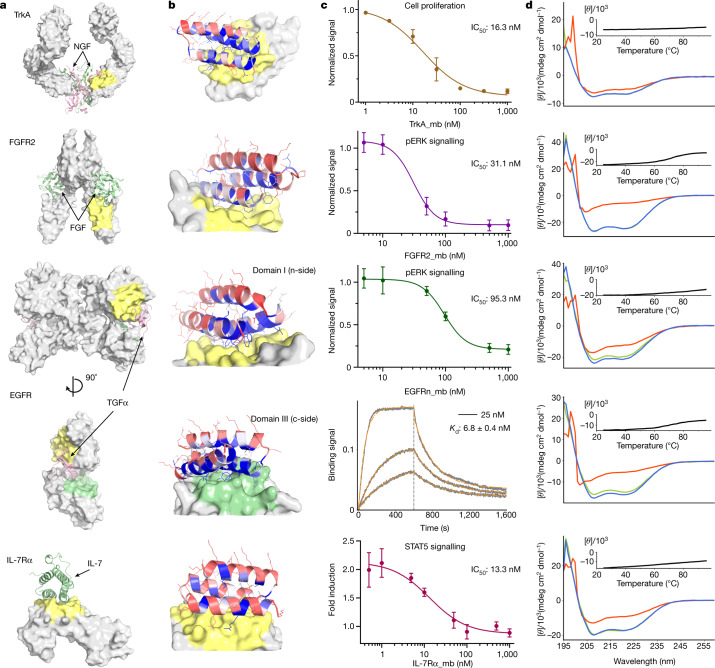
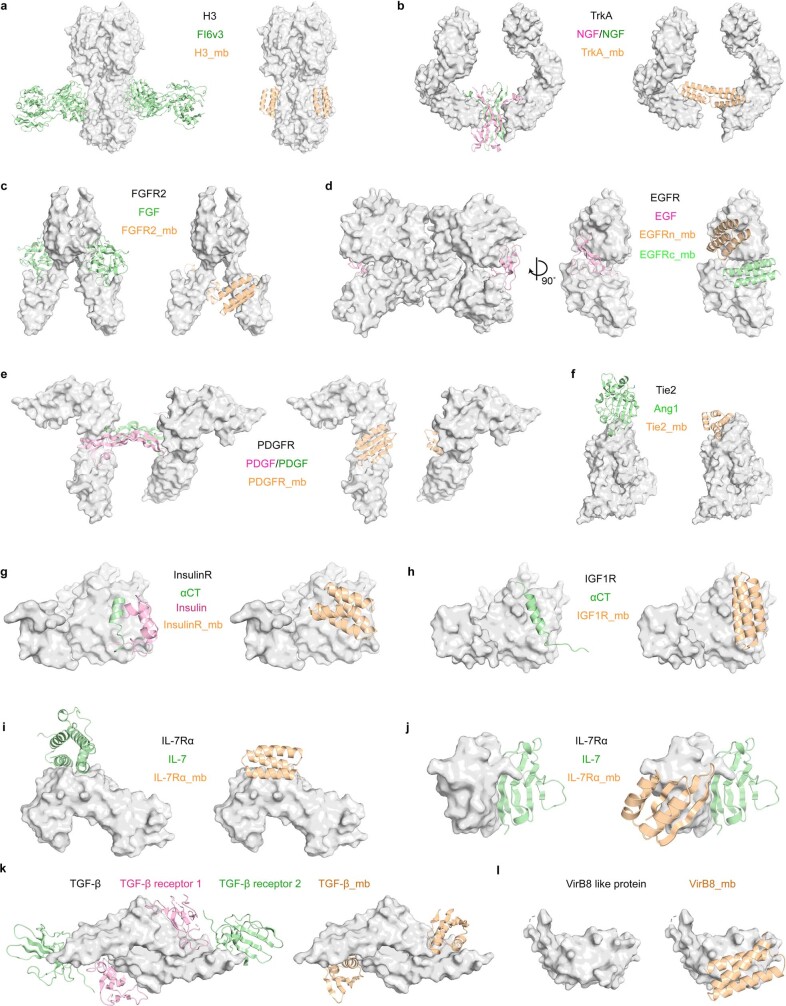
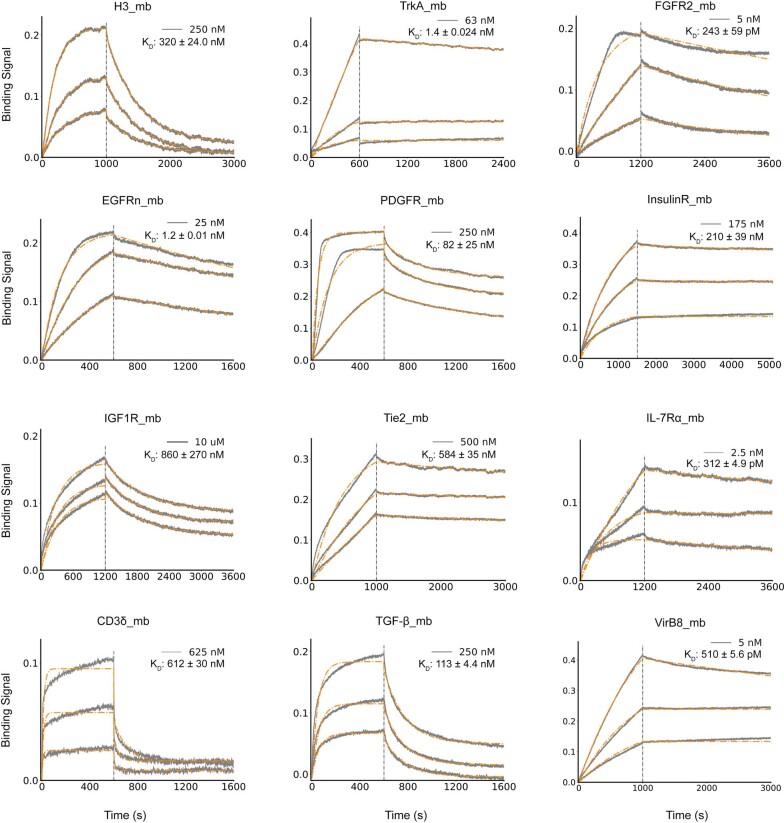
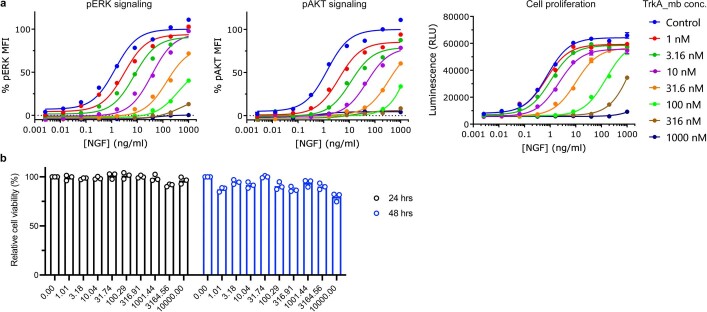
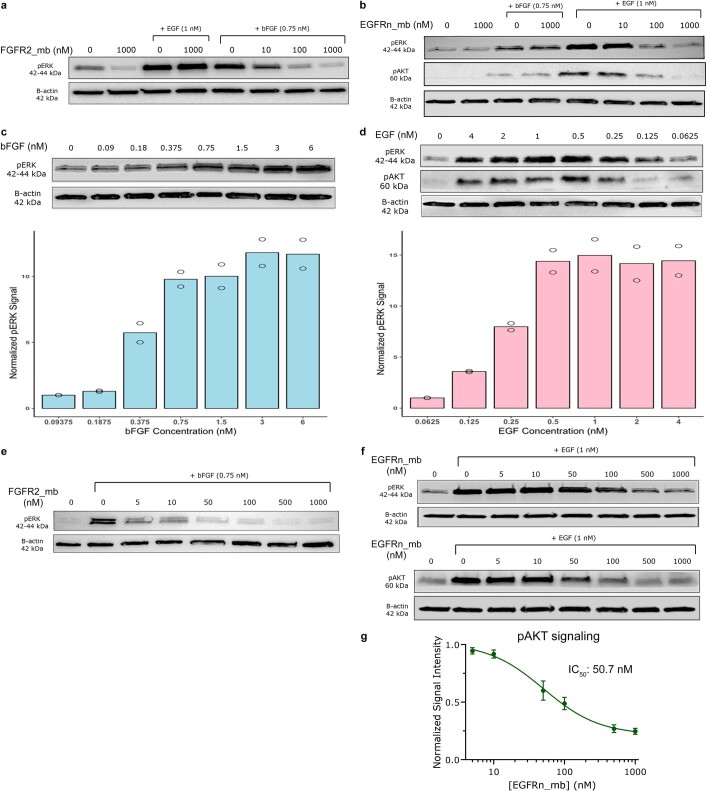
- De novo binders were designed to 12 diverse protein targets (13 target sites on 12 native proteins), all smaller than 65 amino acids; optimized affinities ranged from 300 pM to 900 nM (Table 1), with examples including IL-7Rα at 0.31 nM, VirB8 at 0.51 nM, TrkA at 1.4 nM, EGFRn at 1.2 nM, H3 at 320 nM and IGF1R at 860 nM.
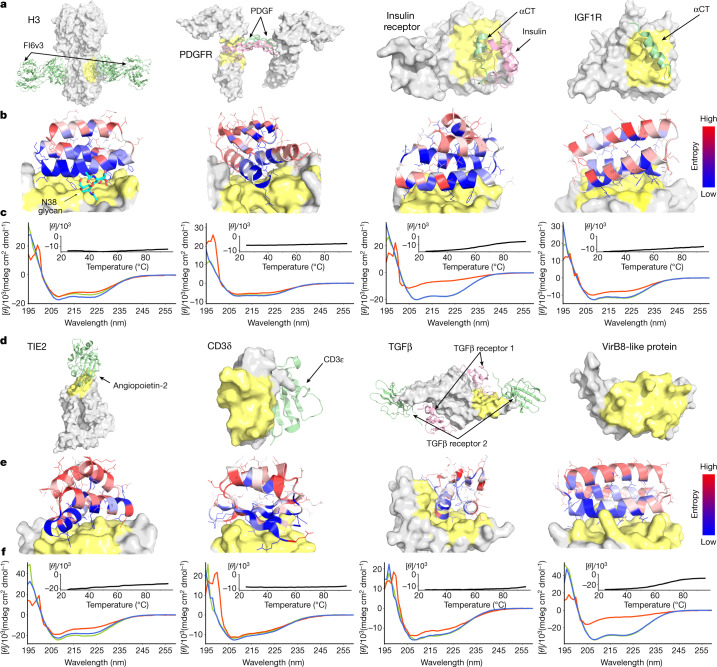
- Nine out of 13 designs were stable at 95 °C, and all expressed in the soluble fraction in *E. coli* and had circular dichroism spectra consistent with the design models.
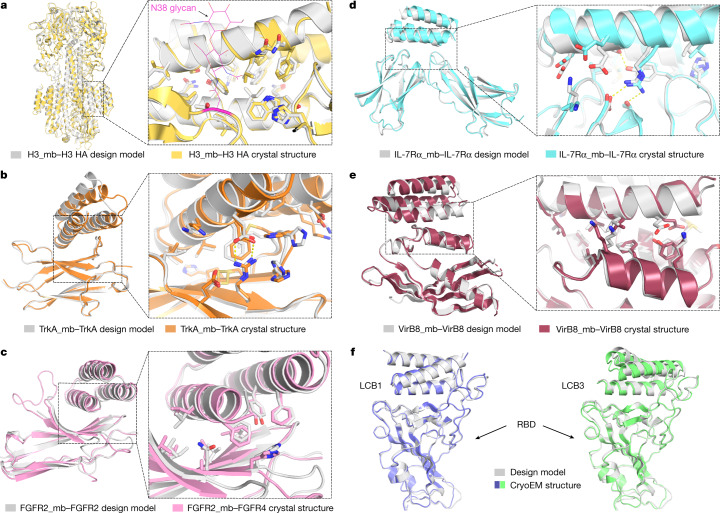
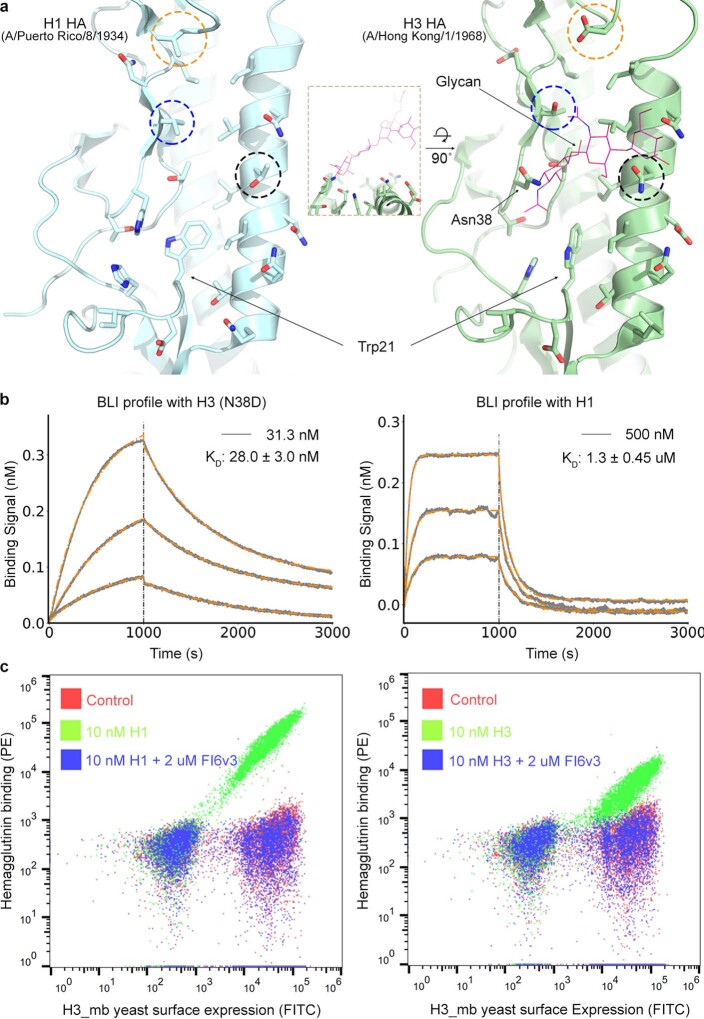
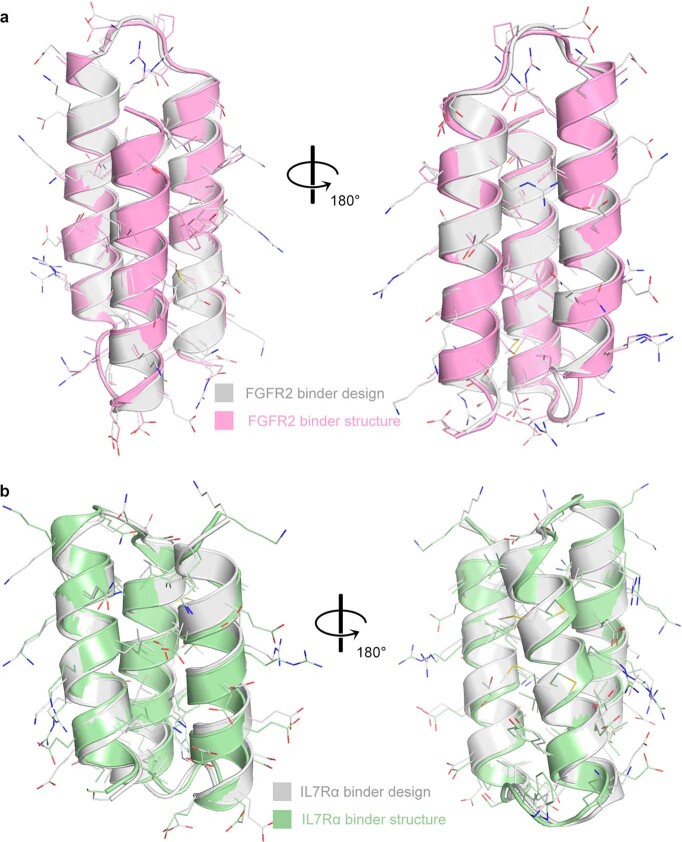
- Crystal structures of five binder–target complexes (H3, TrkA, FGFR2, IL-7Rα and VirB8) closely matched the computational design models; Cα r.m.s.d. values over the entire miniprotein binder were 1.91 Å (H3), 2.41 Å (TrkA), 1.33 Å over the FGFR2 complex, 2.2 Å (IL-7Rα) and 2.54 Å (VirB8). Cryo-EM structures of SARS-CoV-2 binders LCB1 and LCB3 also matched design models with Cα r.m.s.d. values of 1.27 Å and 1.9 Å.
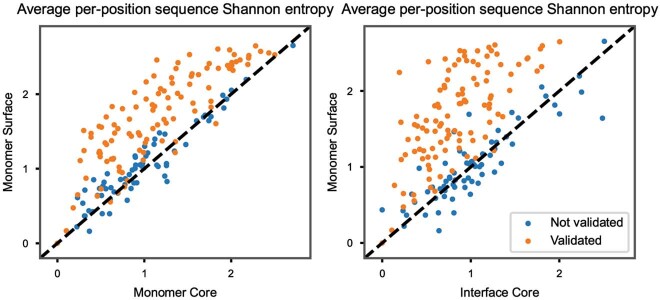
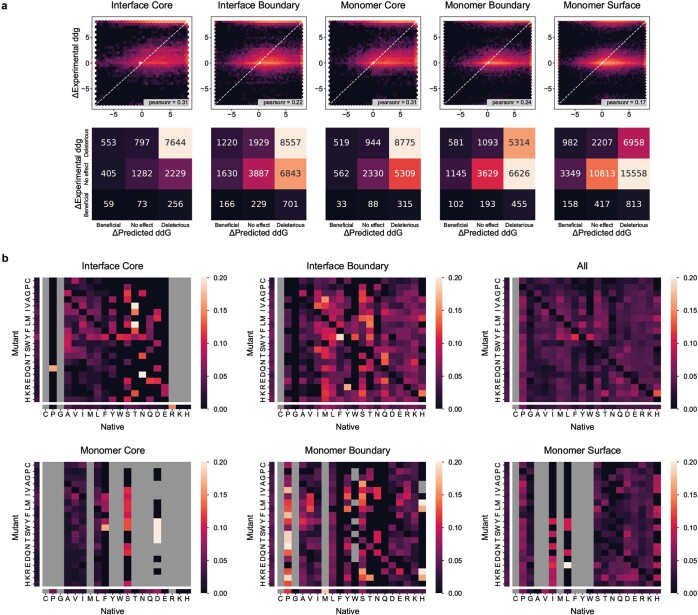
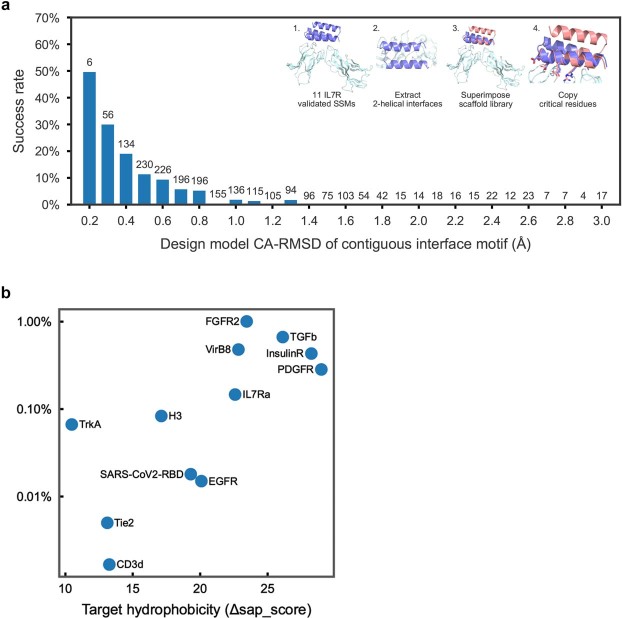
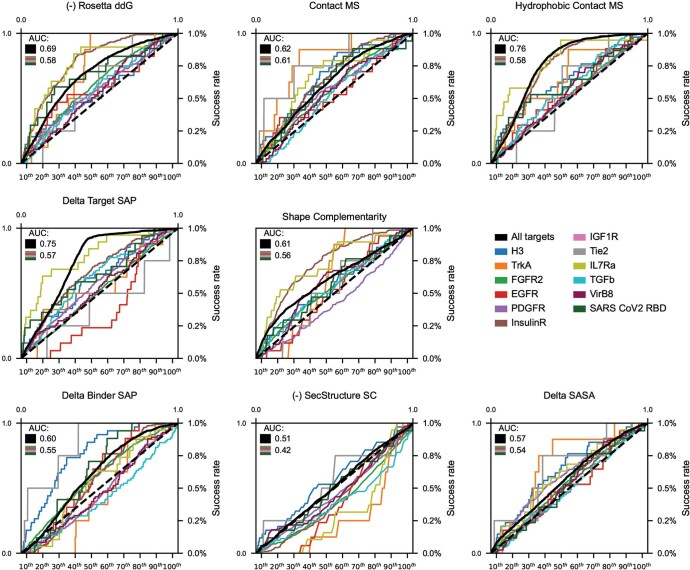
- Analysis of 810,000 binder designs and 240,000 single mutants showed design success varied by target; success correlated strongly with the hydrophobicity of the targeted region, and experimentally binding designs tended to have stronger predicted binding energy and larger contact molecular surfaces.
Methods
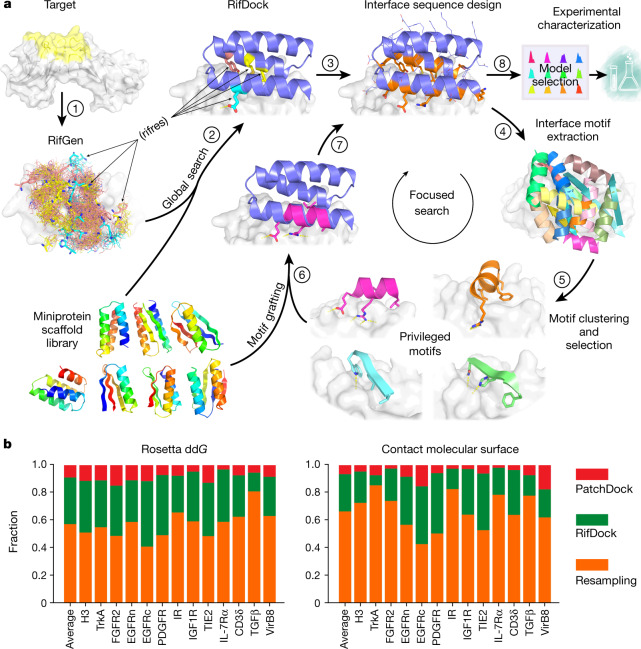
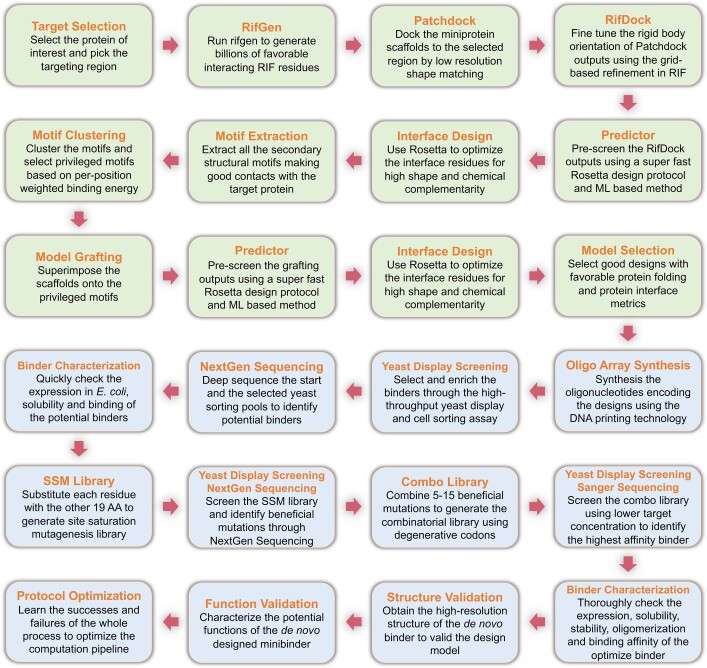
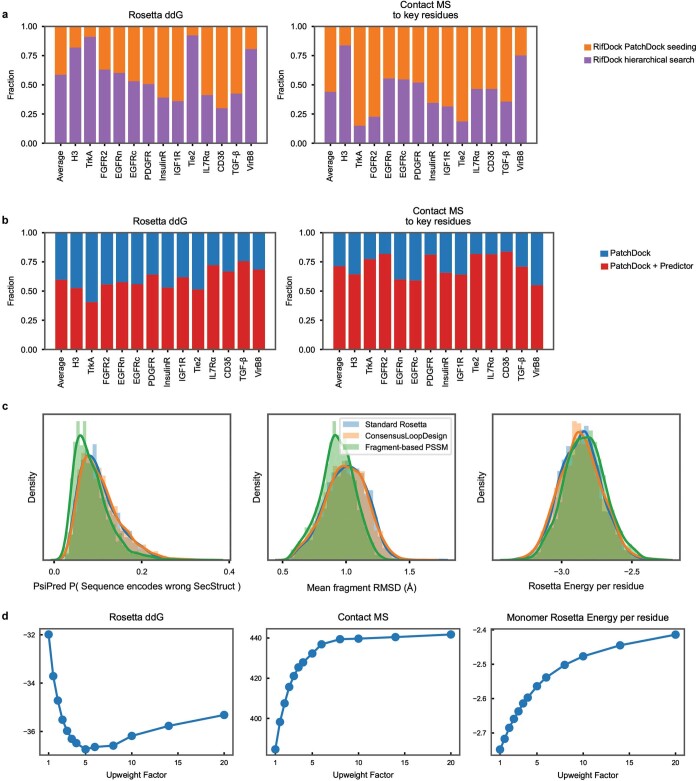
- Broad search: billions of disembodied amino acids were docked against selected target surface regions using RifGen/RIF; 84,690 miniprotein scaffolds (50–65 residues, 5 topologies) were encoded, and 34,507 were found stable; scaffolds were docked with PatchDock/RIFDock, followed by Rosetta sequence design and a rapid “Predictor” prescreen.
- Focused search: secondary-structure motifs making good target contacts were extracted and clustered, around 2,000 motifs per target were selected, and scaffolds were grafted onto these motifs for another round of docking and design.
- Experimental validation used yeast surface display with FACS and deep sequencing, site saturation mutagenesis libraries, *E. coli* expression, circular dichroism, biolayer interferometry, X-ray crystallography/cryo-EM, and cell signalling inhibition assays.
Limitations
- Stated in the paper: only a small fraction of designs bind, and in almost all cases the best binders required additional substitutions to achieve high-affinity binding; design of binders to highly polar target sites remains a considerable challenge, as all targeted sites here contained at least four hydrophobic residues.
- Stated in the paper: sampling of the enormous design space is necessarily incomplete, and many broad-search designs contained buried unsatisfied polar atoms and cavities; structures could not yet be solved for the remainder of the designs.
- Evident from the text: the SC50 fitting assumes equal yeast surface expression and 100% expression in the collection gate, assumptions the authors say are “probably false”; expression differences may cause SC50 fits to vary by up to fivefold, and doubly transformed yeast cells are described as a major source of error.
Model-written summary. Check it against the paper before relying on it.
Integrity signals
Registry
Cites
Statistics
Figures
Verification
Claims the paper makes
10 Valid · 4 Not valid · 21 Not checked · 118 Own results and interpretations
Every source the paper cites for this claim was checked and supports it.
In the paper
“Binders have been generated starting from several computationally identified hotspot residues, which were then used to guide the positioning of naturally occurring protein scaffolds5.”
§ Design of protein-binding proteins from the target structure alone > Main
What the sources say
- Supportedcites [5] Fleishman SJ Computational design of proteins targeting the conserved stem region of influenza hemagglutinin Science 2011 332 816 821 10.1126/science.1202617 21566186 PMC3164876 source
The Computational design method section (page not provided) describes computationally positioning hotspot residues against the target, then finding scaffold configurations that incorporate them. The Design of HA-binding proteins and Experimental and structural characterization sections confirm that the resulting scaffold-based designs produced HA-binding proteins. (LLM, conf=0.93)
plainstates a cause- Asserted: passes — The authors put it forward as true.
- Checkable: passes — It can be checked against evidence.
- Load-bearing: passes — The paper’s conclusions depend on it.
- Based: passes — The paper gives a reason why it holds.
- Supported
The cited sources support only part of this claim — read each source’s verdict below.
In the paper
“The design of proteins that bind to a specific site on the surface of a target protein using no information other than the three-dimensional structure of the target remains a challenge1–5.”
§ Design of protein-binding proteins from the target structure alone > Abstract
What the sources say
- Partly supportedcites [1] Chevalier A Massively parallel de novo protein design for targeted therapeutics Nature 2017 550 74 79 10.1038/nature23912 28953867 PMC5802399 sourceExperimental — accuracy not yet measured
The Abstract and Assessment of the computational model describe limitations in designing protein binders and a low initial success rate, supporting the claim that this remains challenging. But the High-throughput computational design section says the authors used binding motifs and hotspot residues from previously solved complexes, not just the target’s three-dimensional structure. The paper therefore does not establish the claim’s structure-only condition. (LLM, conf=0.83)
- Partly supportedcites [2] Strauch EM Computational design of trimeric influenza-neutralizing proteins targeting the hemagglutinin receptor binding site Nat. Biotechnol. 2017 35 667 671 10.1038/nbt.3907 28604661 PMC5512607 sourceExperimental — accuracy not yet measured
The paper describes designing proteins for a specific site on influenza hemagglutinin, but its design used the C05 antibody binding mode and an antibody–target co-crystal structure (design description and Methods > Computational Methods; page not provided). This is consistent with target-structure-only design being difficult, but the paper does not explicitly establish the broader claim that it remains a challenge. (LLM, conf=0.77)
- Partly supportedcites [3] Silva DA De novo design of potent and selective mimics of IL-2 and IL-15 Nature 2019 565 186 191 10.1038/s41586-018-0830-7 30626941 PMC6521699 sourceExperimental — accuracy not yet measured
The section on computational design of IL-2/IL-15 mimics distinguishes earlier designs for short linear epitopes from its approach to more complex binding interfaces, supporting the general point that designing targeted binders is challenging. But the Methods section says this design used the structure of IL-2 in complex with its receptor as a template; the paper does not establish the specific claim about designing binders with no information beyond the target’s three-dimensional structure. Page numbers are unavailable in our copy. (LLM, conf=0.78)
- Not checked yetcites [4] Baran D Principles for computational design of binding antibodies Proc. Natl Acad. Sci. USA 2017 114 10900 10905 10.1073/pnas.1707171114 28973872 PMC5642698 source
- Supportedcites [5] Fleishman SJ Computational design of proteins targeting the conserved stem region of influenza hemagglutinin Science 2011 332 816 821 10.1126/science.1202617 21566186 PMC3164876 source
The Introduction states that computational design could target specific patches on a protein surface, but that the capability to target an arbitrarily selected surface had remained elusive. This supports the citing sentence’s characterization of the task as a challenge, including the more restricted case where only the target’s three-dimensional structure is available. (LLM, conf=0.90)
plain- Asserted: passes — The authors put it forward as true.
- Checkable: passes — It can be checked against evidence.
- Load-bearing: passes — The paper’s conclusions depend on it.
- Based: passes — The paper gives a reason why it holds.
- Partly supported
The cited sources support only part of this claim — read each source’s verdict below.
In the paper
“Most current computational methods used to design proteins that bind to a target surface utilize information derived from structures of the native complex on specific side-chain interactions or protein backbone placements optimal for binding1–3.”
§ Design of protein-binding proteins from the target structure alone > Main
What the sources say
- Partly supportedcites [1] Chevalier A Massively parallel de novo protein design for targeted therapeutics Nature 2017 550 74 79 10.1038/nature23912 28953867 PMC5802399 sourceExperimental — accuracy not yet measured
The High-throughput computational design section describes using interface helices from previously solved target complexes to position scaffold backbones and seed interfaces with hotspot residues. This supports the described design strategy, but the paper does not establish that most current computational methods use it. (LLM, conf=0.83)
- Partly supportedcites [2] Strauch EM Computational design of trimeric influenza-neutralizing proteins targeting the hemagglutinin receptor binding site Nat. Biotechnol. 2017 35 667 671 10.1038/nbt.3907 28604661 PMC5512607 sourceExperimental — accuracy not yet measured
The paper’s design description (section labeled Abstract; page unavailable) says it used the C05–HA co-crystal structure to position the target and optimized key interface contacts and backbone alignment. It also compares the approach with earlier antibody-loop grafting. These passages support the described type of structure-guided design, but not the claim that most current protein-binder design methods use it. (LLM, conf=0.82)
- Partly supportedcites [3] Silva DA De novo design of potent and selective mimics of IL-2 and IL-15 Nature 2019 565 186 191 10.1038/s41586-018-0830-7 30626941 PMC6521699 sourceExperimental — accuracy not yet measured
The Methods section (page unavailable) says the authors used the structure of the native hIL-2–receptor complex as a design template, identified binding-site residues as hotspots, and built new backbones around its structural elements. This supports the described approach for this method, but the paper does not establish that most current computational methods use such information. (LLM, conf=0.84)
plain- Asserted: passes — The authors put it forward as true.
- Checkable: passes — It can be checked against evidence.
- Load-bearing: passes — The paper’s conclusions depend on it.
- Based: passes — The paper gives a reason why it holds.
- Partly supported
The cited sources support only part of this claim — read each source’s verdict below.
In the paper
“The most robust results were obtained using direct low-resolution shape matching11 followed by grid-based refinement of the rigid body orientation in the RIF (RIFDock).”
§ Design of protein-binding proteins from the target structure alone > Design method
What the sources say
- Partly supportedcites [11] Schneidman-Duhovny D Inbar Y Nussinov R Wolfson HJ PatchDock and SymmDock: servers for rigid and symmetric docking Nucleic Acids Res. 2005 33 W363 W367 10.1093/nar/gki481 15980490 PMC1160241 sourceExperimental — accuracy not yet measured
The PatchDock algorithm section describes matching complementary molecular-surface patches to generate docking orientations, supporting the shape-matching method cited here. It does not describe that matching as low-resolution. The citation is attached to shape matching, not to the sentence’s claims about robust results or subsequent RIFDock refinement. (LLM, conf=0.82)
plainstates a cause- Asserted: passes — The authors put it forward as true.
- Checkable: passes — It can be checked against evidence.
- Load-bearing: passes — The paper’s conclusions depend on it.
- Based: passes — The paper gives a reason why it holds.
- Partly supported
The cited sources support only part of this claim — read each source’s verdict below.
In the paper
“Neutralizing antibodies that target the stem region of group 2 HA have been identified through screens of large B cell libraries after vaccination or infection that neutralize both group 1 and group 2 influenza A viruses34,35.”
§ Design of protein-binding proteins from the target structure alone > Pathogen target proteins
What the sources say
- Not checked yetcites [34] Corti D A neutralizing antibody selected from plasma cells that binds to group 1 and group 2 influenza A hemagglutinins Science 2011 333 850 856 10.1126/science.1205669 21798894 source
- Partly supportedcites [35] Joyce MG Vaccine-induced antibodies that neutralize group 1 and group 2 influenza A viruses Cell 2016 166 609 623 10.1016/j.cell.2016.06.043 27453470 PMC4978566 sourceExperimental — accuracy not yet measured
The Introduction and Results report sorting cross-reactive memory B cells after vaccination, then identifying HA-stem-binding antibodies that neutralized both group 1 and group 2 influenza A viruses. The paper describes cell sorting and antibody sequencing, not screening a large B-cell library; the vaccination finding does not establish the infection alternative. (LLM, conf=0.82)
plainstates a cause- Asserted: passes — The authors put it forward as true.
- Checkable: passes — It can be checked against evidence.
- Load-bearing: unclear — It is unclear whether the paper’s conclusions depend on it.
- Based: passes — The paper gives a reason why it holds.
72 more claims · 1 with their cited sources checked
Create a free account to see all 153 claims and to verify the 31 references still open.
- It may state two separate claims as one. 50
- Probably not a substantial claim. 35
- The quote only partly states this claim. 2
Claims other papers make about this one
Each is checked against this paper’s own text: does it say what the citing paper says it does?
The source backs part of the claim, not all of it — or backs it for a different population, condition or comparison.
In the citing paper
“and the approach relied on prespecifying a particular set of protein scaffolds as the basis for the designs, inherently limiting the diversity and shape complementarity of possible solutions12”
From De novo design of protein structure and function with RFdiffusion (2023) · cites this paper as [12]
Experimental — accuracy not yet measuredThe cited source says what the claim attributes to it.
In the citing paper
“For binder design from target structural information alone, previous work required testing tens of thousands of sequences12.”
From De novo design of protein structure and function with RFdiffusion (2023) · cites this paper as [12]
The cited source says what the claim attributes to it.
In the citing paper
“A general method for de novo binder design from target structure information alone using the physically based Rosetta method was recently described12”
From De novo design of protein structure and function with RFdiffusion (2023) · cites this paper as [12]
The cited source says what the claim attributes to it.
In the citing paper
“However, experimental success rates were low, still requiring many thousands of designs to be screened for each design campaign12”
From De novo design of protein structure and function with RFdiffusion (2023) · cites this paper as [12]
Self-check
Percentages, sums and reported differences re-computed from the paper’s own numbers.
Each contradiction between two passages listed here was confirmed by an independent check.
Rated minor: it would not touch a result — a value no result rests on, a p-value that stays on the same side of the significance level, or a conflict that is clerical, resolved elsewhere in the paper, or outside its own findings.
In the paper
§ Design of protein-binding proteins from the target structure alone > Cell receptors involved in signalling
“the binding affinities of the optimized designs ranged from about 1 nM or better for TrkA and FGFR2 to 860 nM for IGF1R”
§ Design of protein-binding proteins from the target structure alone > Experimental testing
“| Kd (nM) | 320 ± 24.0 | 1.4 ± 0.02 | 243 ± 59.0 | 1.2 ± 0.01 |”
Rated minor: it would not touch a result — a value no result rests on, a p-value that stays on the same side of the significance level, or a conflict that is clerical, resolved elsewhere in the paper, or outside its own findings.
In the paper
§ Design of protein-binding proteins from the target structure alone > Pathogen target proteins
“Similar to FGFR2, IL-7Rα and VirB8, the method yielded picomolar binders”
§ Design of protein-binding proteins from the target structure alone > Experimental testing
“| Kd (nM) | 320 ± 24.0 | 1.4 ± 0.02 | 243 ± 59.0 | 1.2 ± 0.01 |”
Citations
Cites
Highly accurate protein structure prediction with AlphaFold
Jumper, J., Evans, R., Pritzel, A., Green, T., Figurnov, M., Ronneberger, O., Tunyasuvunakool, K., Bates, R., Žídek, A., Potapenko, A., et al. (2021) · Nature · doi:10.1038/s41586-021-03819-2 · Cited by 43,764
Berman, H. M. (2000) · Nucleic Acids Research · doi:10.1093/nar/28.1.235 · Cited by 40,196
[20] Processing of X-ray diffraction data collected in oscillation mode
Otwinowski, Z., & Minor, W. (1997) · Methods in Enzymology · doi:10.1016/s0076-6879(97)76066-x · Cited by 33,475
Coot : model-building tools for molecular graphics
Emsley, P., & Cowtan, K. (2004) · Acta Crystallographica Section D Biological Crystallography · doi:10.1107/s0907444904019158 · Cited by 30,571
Features and development of Coot
Emsley, P., Lohkamp, B., Scott, W. G., & Cowtan, K. (2010) · Acta Crystallographica Section D Biological Crystallography · doi:10.1107/s0907444910007493 · Cited by 29,915
PHENIX : a comprehensive Python-based system for macromolecular structure solution
Adams, P. D., Afonine, P. V., Bunkóczi, G., Chen, V. B., Davis, I. W., Echols, N., Headd, J. J., Hung, L.-W., Kapral, G. J., Grosse-Kunstleve, R. W., et al. (2010) · Acta Crystallographica Section D Biological Crystallography · doi:10.1107/s0907444909052925 · Cited by 23,716
Phaser crystallographic software
McCoy, A. J., Grosse-Kunstleve, R. W., Adams, P. D., Winn, M. D., Storoni, L. C., & Read, R. J. (2007) · Journal of Applied Crystallography · doi:10.1107/s0021889807021206 · Cited by 20,612
Overview of the CCP 4 suite and current developments
Winn, M. D., Ballard, C. C., Cowtan, K. D., Dodson, E. J., Emsley, P., Evans, P. R., Keegan, R. M., Krissinel, E. B., Leslie, A. G. W., McCoy, A., et al. (2011) · Acta Crystallographica Section D Biological Crystallography · doi:10.1107/s0907444910045749 · Cited by 12,353
Liebschner, D., Afonine, P. V., Baker, M. L., Bunkóczi, G., Chen, V. B., Croll, T. I., Hintze, B., Hung, L.-W., Jain, S., McCoy, A. J., et al. (2019) · Acta Crystallographica Section D Structural Biology · doi:10.1107/s2059798319011471 · Cited by 7,953
Cell Signaling by Receptor Tyrosine Kinases
Lemmon, M. A., & Schlessinger, J. (2010) · Cell · doi:10.1016/j.cell.2010.06.011 · Cited by 7,929
Self-citation
Cited by
Items 101–200 of 706
Microproteins in cancer: identification, biological functions, and clinical implications
Hofman, D. A., Prensner, J. R., & van Heesch, S. (2024) · Trends in Genetics · doi:10.1016/j.tig.2024.09.002 · Cited by 48
Applications of Artificial Intelligence in Biotech Drug Discovery and Product Development
Liu, Y., Zhang, L., Jiang, Z., Tian, X., Li, P., Wu, P., Du, W., Yuan, B., Xie, C., Bu, G., et al. (2025) · MedComm · doi:10.1002/mco2.70317 · Cited by 51
Peptide binder design with inverse folding and protein structure prediction
Bryant, P., & Elofsson, A. (2023) · Communications Chemistry · doi:10.1038/s42004-023-01029-7 · Cited by 49
“The resulting outcome of these classical methods is that 1/100,000 designed sequences bind to their target structures 3 .”
InfluentialDelaying pyroptosis with an AI-screened gasdermin D pore blocker mitigates inflammatory response
Sun, J., Yang, J. M., Tao, J., Yang, Y., Wang, R., Zhang, H., Liu, W., Zhao, S., Shao, R., He, Y., et al. (2025) · Nature Immunology · doi:10.1038/s41590-025-02280-x · Cited by 49
“Artificial intelligence (AI) has revolutionized protein design, leading to the development of numerous methods, such as RFDiffusion 23 , MaSIF 24 , RifDock 25 and SCUBA 26 , which enable the creation of high-affinity proteins.”
Towards rational computational peptide design
Chang, L., Mondal, A., & Pérez, A. (2022) · Frontiers in Bioinformatics · doi:10.3389/fbinf.2022.1046493 · Cited by 48
“, 2022), mini-proteins (Cao et al., 2022) and small molecule peptidomimetics (Rubin et al.”
BackgroundMethodAI-driven de novo enzyme design: Strategies, applications, and future prospects
Cui, X.-C., Zheng, Y., Liu, Y., Yuchi, Z., & Yuan, Y. (2025) · Biotechnology Advances · doi:10.1016/j.biotechadv.2025.108603 · Cited by 47
Full-Atom Peptide Design based on Multi-modal Flow Matching
Li, J., Cheng, C., Wu, Z., Guo, R., Luo, S., Ren, Z., Peng, J., & Ma, J. (2024) · International Conference on Machine Learning · doi:10.48550/arxiv.2406.00735 · Cited by 48
“Additionally, Riemannian Flow Matching (Chen & Lipman, 2023) extends CFM to general manifolds without the requirement for expensive simulations (Ben-Hamu et al., 2022; De Bortoli et al., 2022; Huang et al., 2022).”
An engineered AAV targeting integrin alpha V beta 6 presents improved myotropism across species
Hong, A. V., Suel, L., Petat, E., Dubois, A., Brun, P., Guerchet, N., Veron, P., Poupiot, J., & Richard, I. (2024) · Nature Communications · doi:10.1038/s41467-024-52002-4 · Cited by 48
“Inspiredbyone-sidedproteindesign 26,27 ,wecomputationally designed a previously developed liver-detargeting hybrid capsid between AAV9 and AAVrh74 (Cap9rh74) as an α V β 6 binder.”
BackgroundXia, Z., Jin, Q., Long, Z., He, Y., Liu, F., Sun, C., Liao, J., Wang, C., Wang, C., Zheng, J., et al. (2024) · Nature Biomedical Engineering · doi:10.1038/s41551-024-01258-8 · Cited by 45
Self-citationCrowdsourced Protein Design: Lessons From the Adaptyv EGFR Binder CompetitionPreprint
Cotet, T., Krawczuk, I., Stocco, F., Ferruz, N., Gitter, A., Kurumida, Y., Machado, L. D. A., Paesani, F., Calia, C. N., Challacombe, C. A., et al. (2025) · bioRxiv (Cold Spring Harbor Laboratory) · doi:10.1101/2025.04.17.648362 · Cited by 46
A combinatorially complete epistatic fitness landscape in an enzyme active site
Johnston, K. E., Almhjell, P. J., Watkins-Dulaney, E. J., Liu, G., Porter, N. J., Yang, J., & Arnold, F. H. (2024) · Proceedings of the National Academy of Sciences · doi:10.1073/pnas.2400439121 · Cited by 44
“The few existing 4 - site - saturation landscapes measure binding (25, 26), a simpler function than enzyme catalysis which has proven to be more difficult for design (27, 28).”
Leveraging deep learning to improve vaccine design
Hederman, A. P., & Ackerman, M. E. (2023) · Trends in Immunology · doi:10.1016/j.it.2023.03.002 · Cited by 45
Principles of deep immunohistochemistry for 3D histology
Yau, C. N., Lai, H. M., Lee, K., Kwok, A. J., Huang, J., & Ko, H. (2023) · Cell Reports Methods · doi:10.1016/j.crmeth.2023.100458 · Cited by 44
EvoBind: in silico directed evolution of peptide binders with AlphaFold
Bryant, P., & Elofsson, A. (2022) · bioRxiv (Cold Spring Harbor Laboratory) · doi:10.1101/2022.07.23.501214 · Cited by 29
“Previously, the state-of-the-art for computer-aided binder design[3] relied on docking scoring programs which are now significantly outperformed by AlphaFold [4–6].”
BackgroundMethodA combinatorially complete epistatic fitness landscape in an enzyme active site
Johnston, K. E., Almhjell, P. J., Watkins-Dulaney, E. J., Liu, G., Porter, N. J., Yang, J., & Arnold, F. H. (2024) · doi:10.1101/2024.06.23.600144 · Cited by 44
Accurate de novo design of heterochiral protein–protein interactions
Sun, K., Li, S., Zheng, B., Zhu, Y., Wang, T., Liang, M., Yao, Y., Zhang, K., Zhang, J., Li, H., et al. (2024) · Cell Research · doi:10.1038/s41422-024-01014-2 · Cited by 42
“D -protein binders ( D -Binder, blue) that bind to a selected surface region of the L -protein target ( L -Target, green) can be obtained through the high-throughput design and characterization of L -protein binders ( L -Binder, purple) that bind to the D -protein target ( D -Target, cyan) in…”
Self-citationSmall-molecule binding and sensing with a designed protein family
(2026) · doi:10.1038/s41467-026-70953-8 · Cited by 41
“AF2 metrics for the iden-ti fi ed hits revealed high con fi dence (pLDDTs ranging from 86.0 to 95.0) and accuracy (C α RMSDs less than 2.0 Å ), and Rosetta metrics indicated high chemical (target median ddG < − 30) and shape complementarity (target median CMS >240) (Supplementary Fig.”
InfluentialSelf-citationDe novo design of miniproteins targeting GPCRs
Muratspahić, E., Feldman, D., Kim, D. E., Qu, X., Bratovianu, A.-M., Rivera-Sánchez, P., Voss, J. H., Hertz, E. P. T., Jeppesen, M. G., Dimitri, F., et al. (2026) · Nature · doi:10.1038/s41586-026-10656-8 · Cited by 41
“The final sorting pools of the library were sequenced using Illumina NextSeq/MiSeq sequencing and binding affinity (SC 50 ) estimated for GLP1R and PAC1R from next-generation sequencing (NGS) read counts 8 .”
InfluentialSelf-citationSmall-molecule binding and sensing with a designed protein family
Lee, G. R., Pellock, S. J., Norn, C., Tischer, D., Dauparas, J., Anischenko, I., Mercer, J. A. M., Kang, A., Bera, A., Nguyen, H., et al. (2023) · doi:10.1101/2023.11.01.565201 · Cited by 41
Self-citationDesign of high-affinity binders to immune modulating receptors for cancer immunotherapy
Yang, W., Hicks, D. R., Ghosh, A., Schwartze, T. A., Conventry, B., Goreshnik, I., Allen, A., Halabiya, S. F., Kim, C. J., Hinck, C. S., et al. (2025) · Nature Communications · doi:10.1038/s41467-025-57192-z · Cited by 40
“We tested in parallel 67 5HCS based designs and 4310 designs based on the globular scaffolds used by Cao et al. for comparison to our previous approach.”
Self-citationMultispectral live-cell imaging with uncompromised spatiotemporal resolution
Kumar, A. A., McNally, K. E., Zhang, Y., Haslett-Saunders, A., Wang, X., Guillem‐Marti, J., Lee, D., Huang, B., Stallinga, S., Kay, R. R., et al. (2025) · Nature Photonics · doi:10.1038/s41566-025-01745-7 · Cited by 41
“Manuscripts describing the design of the BMPR2 and integrin α5β1 minibinders are currently in preparation.”
Self-citationImproved protein binder design using β-pairing targeted RFdiffusion
Sappington, I., Toul, M., Lee, D. S., Robinson, S. A., Goreshnik, I., McCurdy, C., Chan, T. C., Buchholz, N., Huang, B., Vafeados, D. K., et al. (2026) · Nature Communications · doi:10.1038/s41467-025-67866-3 · Cited by 41
“…targets could be useful for antagonizing native signaling, targeting drug conjugates and other therapeuticsto tumors, designing novel agonists 49 – 51 and targeted receptor degradation 52 , inhibitors 1 , triggering cargo endocytosis 52 , or target therapeutics towards particular cell types 53 .”
Self-citationODesign: A World Model for Biomolecular Interaction DesignPreprint
Zhang, O., Zhang, X., Lin, H., Tan, C., Wang, Q., Mo, Y., Feng, Q., Du, G., Yu, Y., Jin, Z., et al. (2025) · arXiv (Cornell University) · doi:10.48550/arxiv.2510.22304 · Cited by 39
“Eleven targets, including EGFR and CD3d, were selected from CaoData [14], a dataset derived from classical de novo protein design campaigns based on target structures.”
Advanced supramolecular self-assembly for lifecycle-optimized agrochemical delivery
Xiao, Y., Wu, C., Han, M., Chen, P., Zhou, L. Y., & Yin, Q. (2024) · Coordination Chemistry Reviews · doi:10.1016/j.ccr.2024.215953 · Cited by 37
Targeting peptide antigens using a multiallelic MHC I-binding system
Du, H., Mallik, L., Hwang, D. H., Sun, Y., Kaku, C. I., Hoces, D., Sun, S. M., Ghinnagow, R., Carro, S. D., Phan, H. A. T., et al. (2024) · Nature Biotechnology · doi:10.1038/s41587-024-02505-8 · Cited by 37
“36)), we used results from a low-resolution docking algorithm, Patchdock 37 , to seed the search trajectories of a high-resolution algo-rithm, RifDock 35 .”
InfluentialDe novo design of protein minibinder agonists of TLR3
Adams, C. S., Kim, H., Burtner, A. E., Lee, D. S., Dobbins, C., Criswell, C., Coventry, B., Tran-Pearson, A., Kim, H. M., & King, N. P. (2025) · Nature Communications · doi:10.1038/s41467-025-56369-w · Cited by 37
“Thecellswerelabeledwith anti-c-Myc fl uorescein isothiocyanate (FITC, Miltenyi Biotech) and streptavidin-phycoerythrin (SAPE, ThermoFisher).”
InfluentialSelf-citationSolubility-Aware Protein Binding Peptide Design Using AlphaFold
Kosugi, T., & Ohue, M. (2022) · Biomedicines · doi:10.3390/biomedicines10071626 · Cited by 31
“Moreover, a pipeline has been developed to design small proteins that bind to target proteins based on the results of many experiments [33,34].”
BackgroundYu, B., Liu, J., Cui, Z., Wang, C., Chen, P., Wang, C., Zhang, Y., Zhu, X., Zhang, Z., Li, S., et al. (2025) · Nature Chemistry · doi:10.1038/s41557-025-01929-2 · Cited by 35
“Subsequently, the disassembled AzoF amino acids were docked onto these modified scaffolds using the branch-and-bound search algorithm implemented by RifGen 17,36 .”
InfluentialSelf-citationRecent and future perspectives on engineering interferons and other cytokines as therapeutics
Aung, T., Grubbe, W. S., Nusbaum, R. J., & Mendoza, J. L. (2022) · Trends in Biochemical Sciences · doi:10.1016/j.tibs.2022.09.005 · Cited by 35
PXDesign: Fast, Modular, and Accurate De Novo Design of Protein BindersPreprint
Protenix Team, Ren, M., Sun, J., Guan, J., Liu, C., Gong, C., Wang, Y. X., Wang, L., Cai, Q., Ma, W., et al. (2025) · bioRxiv (Cold Spring Harbor Laboratory) · doi:10.1101/2025.08.15.670450 · Cited by 35
“• Filtering strategies : We construct and evaluate confidence-based filters from Protenix [12] and AlphaFold-based models [1, 27] using datasets including Cao data [11], RFdiffusion [54], EGFR [16] and SKEMPI [25, 34, 36].”
Engineering Hydrogels for Affinity-Based Release of Therapeutic Proteins
Teal, C. J., Lu, S. P., & Shoichet, M. S. (2024) · Chemistry of Materials · doi:10.1021/acs.chemmater.3c02242 · Cited by 33
Protein-Based Degraders: From Chemical Biology Tools to Neo-Therapeutics
Ou, L., Setegne, M. T., Elliot, J., Shen, F., & Dassama, L. M. K. (2025) · Chemical Reviews · doi:10.1021/acs.chemrev.4c00595 · Cited by 33
Zhang, D., He, T., Shi, T., Huang, K., & Peng, A. (2025) · Frontiers in Pharmacology · doi:10.3389/fphar.2025.1553853 · Cited by 33
Engineering brain-derived neurotrophic factor mRNA delivery for the treatment of Alzheimer’s disease
Li, H., Cao, Y., Ye, J., Yang, Z., Chen, Q., Liu, X., Zhang, B., Qiao, J., Tang, Q., Yang, H., et al. (2023) · Chemical Engineering Journal · doi:10.1016/j.cej.2023.143152 · Cited by 32
“Moreover, AI-predicted and assisted protein drug design has been established only recently [47 – 49].”
Efficient generation of protein pockets with PocketGen
Zhang, Z., Shen, W. X., Liu, Q., & Zitnik, M. (2024) · Nature Machine Intelligence · doi:10.1038/s42256-024-00920-9 · Cited by 32
“For example, a luciferase 8 was developed by integrating protein hallucination 36 , trRosetta structure prediction neural network 37 , hydrogen-bonding networks and RifDock 38 .”
SpyMask enables combinatorial assembly of bispecific binders
Driscoll, C. L., Keeble, A. H., & Howarth, M. R. (2024) · Nature Communications · doi:10.1038/s41467-024-46599-9 · Cited by 31
“A major effort is under way to generate recombinant binders to the entire human proteome 22 – 24 .”
How artificial intelligence is reengineering protein engineering
Listgarten, J., & Jiang, H. (2026) · Science · doi:10.1126/science.aec8444 · Cited by 31
Targeting high-risk multiple myeloma genotypes with optimized anti-CD70 CAR T cells
Kasap, C., Izgutdina, A., Patiño-Escobar, B., Kang, A. S., Chilakapati, N., Akagi, N., Manoj, A., Johnson, H. A., Rashid, T., Werner, J., et al. (2025) · Blood · doi:10.1182/blood.2024025536 · Cited by 31
Deep Learning for Flexible and Site-Specific Protein Docking and Design
McPartlon, M., & Xu, J. (2023) · bioRxiv (Cold Spring Harbor Laboratory) · doi:10.1101/2023.04.01.535079 · Cited by 20
Recent progress and future challenges in structure-based protein-protein interaction prediction
Yuan, R., Zhang, J., Zhou, J., & Cong, Q. (2025) · Molecular Therapy · doi:10.1016/j.ymthe.2025.04.003 · Cited by 31
“Traditional methods for binder design rely on extensive sampling coupled with energy-based computations to select favorable designs 189 ; this process requires rich experience and is not accessible to the broader scientific community.”
Evolution of nanobodies specific for BCL11A
Yin, M., Izadi, M., Tenglin, K., Viennet, T., Zhai, L., Zheng, G., Arthanari, H., Dassama, L. M. K., & Orkin, S. H. (2023) · Proceedings of the National Academy of Sciences · doi:10.1073/pnas.2218959120 · Cited by 30
“The Rosetta software suite addressing protein structure prediction and design (21) can be used for redesign of antigen-antibody interfaces starting from existing experimental or computational models (22, 23).”
MethodFrom beer to breadboards: yeast as a force for biological innovation
Gaikani, H. K., Stolar, M., Kriti, D., Nislow, C., & Giaever, G. N. (2024) · Genome biology · doi:10.1186/s13059-023-03156-9 · Cited by 31
Accelerating protein design by scaling experimental characterization
Qian, J., Milles, L. F., Wicky, B. I. M., Ragotte, R. J., Motmaen, A., Borst, A. J., Skotheim, R., Ols, S., Coventry, B., Li, X., et al. (2026) · Nature Communications · doi:10.1038/s41467-026-76740-9 · Cited by 31
“The concentration of the target that achieved 50% of the saturating signal was determined using published tools 20 .”
Self-citationMahling, R. W., Hegyi, B., Cullen, E. R., Cho, T. M., Rodriques, A., Fossier, L., Yehya, M., Yang, L., Chen, B.-X., Katchman, A. N., et al. (2025) · Cell · doi:10.1016/j.cell.2025.07.038 · Cited by 29
Peptide-based PROTACs: Current Challenges and Future Perspectives
Wang, H., Chen, M., Zhang, X., Xie, S., Qin, J., & Li, J. (2023) · Current Medicinal Chemistry · doi:10.2174/0929867330666230130121822 · Cited by 29
Pan, W., Hu, G., Li, S., Li, G., Feng, X., Wu, Z., Jin, H., Sun, G., Zhang, D., Qin, L., et al. (2023) · Science Bulletin · doi:10.1016/j.scib.2023.03.043 · Cited by 29
Evaluating BindCraft for Generative Design of High-Affinity Peptides
Filius, M., Patsos, T., Minnee, H., Turco, G., Chong, H. E., Liu, J., Gnatzy, M. T., Rooth, R. S. M., Liu, A., Ta, R. D. T., et al. (2025) · ACS Chemical Biology · doi:10.1021/acschembio.5c00774 · Cited by 28
De novo designed Hsp70 activator dissolves intracellular condensates
Zhang, J. Z., Greenwood, N. F., Hernandez, J., Cuperus, J. T., Huang, B., Ryder, B. D., Queitsch, C., Gestwicki, J. E., & Baker, D. A. (2025) · Cell chemical biology · doi:10.1016/j.chembiol.2025.01.006 · Cited by 27
Self-citationFarhadi, B., Beygisangchin, M., Ghamari, N., Jakmunee, J., & Tang, T. (2025) · Biological Cybernetics · doi:10.1007/s00422-025-01026-0 · Cited by 28
“…through antiviral drug development is hopeful. using techniques that involve the virtual rolling of a spherical probe (like the Lee-Richards algorithm or the Connolly algorithm), which simulates a water molecule, around a complete-atom protein model (Cao et al. 2022; Wang et al. 2022a, b, c).”
De novo design of buttressed loops for sculpting protein functions
Jiang, H., Jude, K. M., Wu, K., Fallas, J. A., Ueda, G., Brunette, T., Hicks, D. R., Pyles, H., Yang, A., Carter, L. P., et al. (2024) · Nature Chemical Biology · doi:10.1038/s41589-024-01632-2 · Cited by 27
Self-citationLv, X., Zhang, Y., Sun, K., Yang, Q., Luo, J., Tao, L., & Lu, P. (2024) · Nature Communications · doi:10.1038/s41467-024-52582-1 · Cited by 27
“Subsequently, 9606 mini-protein scaffolds 41 , across fi ve different folds (HHH, HHHH, EHEE, HEEH, HEEHE, where H indicates an α -helix and E represents a β - strand), were docked against the RBI-1 of TcdB1, guided by RIF.”
InfluentialAdvances in IL-7 Research on Tumour Therapy
Fu, C., Zhang, X., Zhang, X., Wang, D., Han, S., & Ma, Z. (2024) · Pharmaceuticals · doi:10.3390/ph17040415 · Cited by 26
“Gou et al. [99] found that IL-7 in combination with oxaliplatin inhibited the growth of metastatic tumours and enhanced the anti-tumour activity of oxaliplatin in a mouse model of lung and peritoneal metastases.”
BackgroundIlluminating the universe of enzyme catalysis in the era of artificial intelligence
Yang, J., Li, F.-Z., Long, Y., & Arnold, F. H. (2025) · Cell Systems · doi:10.1016/j.cels.2025.101372 · Cited by 27
Evers, A., Guarnera, E., Pekar, L., & Zielonka, S. (2025) · mAbs · doi:10.1080/19420862.2025.2583210 · Cited by 26
“While successful cases have been reported for the de novo design of miniproteins in literature, 106,107 de novo design of VHHs and classical antibodies is still in an early but rapidly advancing stage.”
Tu, G., Fu, T., Zheng, G., Xu, B., Gou, R., Luo, D., Wang, P., & Xue, W. (2024) · Journal of Chemical Information and Modeling · doi:10.1021/acs.jcim.3c01736 · Cited by 25
Structure‐based computational design of antibody mimetics: challenges and perspectives
Chaves, E. J. F., Coêlho, D. F., da Cruz, C. H. B., Moreira, E. G., Simões, J., Nascimento‐Filho, M. J., & Lins, R. D. (2024) · FEBS Open Bio · doi:10.1002/2211-5463.13855 · Cited by 26
Tuning insulin receptor signaling using de novo-designed agonists
Wang, X., Cardoso, S., Cai, K., Venkatesh, P., Hung, A., Ng, M., Hall, C., Coventry, B., Lee, D. S., Chowhan, R., et al. (2025) · Molecular Cell · doi:10.1016/j.molcel.2025.09.020 · Cited by 24
“26 Briefly, DNAs encoding the mini-binder sequences were transformed into EBY-100 yeast strains.”
InfluentialSelf-citationMultimeric protein interaction and complex prediction: Structure, dynamics and function
Lu, D., Yu, S., Huang, Y., & Gong, X. (2025) · Computational and Structural Biotechnology Journal · doi:10.1016/j.csbj.2025.05.009 · Cited by 26
“Nevertheless, accurate multimer prediction remains challenging due to factors like structural stability [35], binding affinity [36], and conformational flex-ibility [37], which are not adequately addressed in monomeric models.”
Surface ID: a geometry-aware system for protein molecular surface comparison
Riahi, S., Lee, J. H., Sorenson, T., Wei, S., Jäger, S., Olfati‐Saber, R., Zhou, Y., Park, A., Wendt, M., Minoux, H., et al. (2023) · Bioinformatics · doi:10.1093/bioinformatics/btad196 · Cited by 24
“However, with the recent advancement in protein engineering and design (Adolf-Bryfogle et al. 2018; Cao et al. 2022; Jin et al. 2022), we expect using grafted antibodies as starting templates for downstream antibody optimization and design.”
Unlocking the Gates: Therapeutic Agents for Noninvasive Drug Delivery Across the Blood-Brain Barrier
Culkins, C., Adomanis, R., Phan, N., Robinson, B., Slaton, E. W., Lothrop, E., Chen, Y., & Kimmel, B. R. (2024) · Molecular Pharmaceutics · doi:10.1021/acs.molpharmaceut.4c00604 · Cited by 25
A Model-Centric Review of Deep Learning for Protein DesignPreprint
Kyro, G. W., Qiu, T., & Batista, V. S. (2025) · arXiv (Cornell University) · doi:10.48550/arxiv.2502.19173 · Cited by 24
Designed miniproteins potently inhibit and protect against MERS-CoV
Ragotte, R. J., Tortorici, M. A., Catanzaro, N., Addetia, A., Coventry, B., Froggatt, H. M., Lee, J., Stewart, C., Brown, J. T., Goreshnik, I., et al. (2025) · Cell Reports · doi:10.1016/j.celrep.2025.115760 · Cited by 23
“The best interface motifs (according to ΔΔG) were grafted onto new backbones using MotifGraft 32 and designs that bound to the biotinylated MERS-CoV S EMC/2012 RBD via yeast-surface display were subsequently optimized using site-saturation mutagenesis to identify affinity-enhancing mutations (Fig 1C–”
InfluentialSelf-citationDe novo designed protein guiding targeted protein degradation
Li, Q., Qiao, G., Wang, X., Wang, M., Cheng, J., Hu, G., Li, X., Wu, J., Liu, J., Gao, C., et al. (2025) · Nature Communications · doi:10.1038/s41467-025-62050-z · Cited by 23
Design of a potent interleukin-21 mimic for cancer immunotherapy
Chun, J.-H., Lim, B. S., Roy, S., Walsh, M. J., Abhiraman, G. C., Zhangxu, K., Atajanova, T., Revach, O., Clark, E. C., Li, P., et al. (2025) · Science Immunology · doi:10.1126/sciimmunol.adx1582 · Cited by 23
Self-citationKim, T.-E., Tsuboyama, K., Houliston, S., Martell, C. M., Phoumyvong, C. M., Lemak, A., Haddox, H. K., Arrowsmith, C. H., & Rocklin, G. J. (2022) · Proceedings of the National Academy of Sciences · doi:10.1073/pnas.2122676119 · Cited by 25
Designing Multivalent and Multispecific Biologics
Kang, J. J., Ohoka, A., & Sarkar, C. A. (2023) · Annual Review of Chemical and Biomolecular Engineering · doi:10.1146/annurev-chembioeng-100722-112440 · Cited by 23
A miniprotein receptor electrochemical biosensor chip based on quantum dots
Zhao, Y., Han, J., Huang, J., Huang, Q., Tao, Y., Gu, R., Li, H., Zhang, Y., Zhang, H., & Liu, H. (2024) · Lab on a Chip · doi:10.1039/d3lc01100c · Cited by 23
De novo design of high-affinity protein binders to bioactive helical peptides
Vázquez Torres, S., Leung, P. J. Y., Lutz, I. D., Venkatesh, P., Watson, J. L., Hink, F., Huynh, H.-H., Yeh, A. H.-W., Juergens, D., Bennett, N. R., et al. (2022) · doi:10.1101/2022.12.10.519862 · Cited by 22
“There is considerable interest in their sensitive and specific quantification, which currently relies on antibodies that require substantial resources to generate, can be difficult to produce with high affinity, and often have less-than-desirable stability and reproducibility 5 .”
BackgroundSelf-citationLi, L.-L., Chen, J.-P., & Sun, Z.-T. (2024) · Trends in Microbiology · doi:10.1016/j.tim.2024.03.001 · Cited by 18
Toward deep learning sequence–structure co-generation for protein design
Wang, C., Alamdari, S., Domingo-Enrich, C., Amini, A. P., & Yang, K. (2025) · Current Opinion in Structural Biology · doi:10.1016/j.sbi.2025.103018 · Cited by 24
Latent-X: An Atom-level Frontier Model for De Novo Protein Binder DesignPreprint
Latent Labs Team, Bridgland, A., Crabbé, J., Kenlay, H., Pretorius, D., Schmon, S. M., Hilmkil, A., Bartke-Croughan, R., Rombach, R., Flashman, M., et al. (2025) · arXiv (Cornell University) · doi:10.48550/arxiv.2507.19375 · Cited by 23
“The presence and precision of these interactions represents a significant advance in protein binder design methodology that has been highly sought after in past efforts [9].”
InfluentialQuantifying Plant Biology with Fluorescent Biosensors
Rowe, J. H., Josse, M., Tang, B., & Jones, A. M. (2025) · Annual Review of Plant Biology · doi:10.1146/annurev-arplant-061824-090615 · Cited by 21
Artificial intelligence for nanomedicine
Song, X., Gao, X., Wang, H., Yu, F., Qin, M., Li, Y., Liu, Y., Feng, W., Zhou, C., Chukavin, N. N., et al. (2025) · Science China Chemistry · doi:10.1007/s11426-025-2942-5 · Cited by 21
Sampling of structure and sequence space of small protein folds
Linsky, T. W., Noble, K., Tobin, A. R., Crow, R., Carter, L. P., Urbauer, J. L., Baker, D. A., & Strauch, E. (2022) · Nature Communications · doi:10.1038/s41467-022-34937-8 · Cited by 21
“20 – 23) is the most predictive feature for the folding of a de novo designed protein, followed by the number of hydrophobic residues within the protein core.”
BackgroundInfluentialSelf-citationXue, W., Li, T., Gu, Y., Li, S., & Xia, N. (2023) · Expert Review of Vaccines · doi:10.1080/14760584.2023.2227699 · Cited by 19
“This technology can be used by researchers to design drugs for any site of interest [194].”
MethodProgrammable design of functional proteins from natural language
Dai, F., You, S., Zhu, Y., Gao, Y., Fu, L., Zhou, X., Su, J., Wang, C., Fan, Y., Tan, Q., et al. (2026) · Nature · doi:10.1038/s41586-026-11205-z · Cited by 21
Self-citationDeep learning of protein sequence design of protein–protein interactions
Syrlybaeva, R. R., & Strauch, E. (2022) · Bioinformatics · doi:10.1093/bioinformatics/btac733 · Cited by 21
Self-citationFast, accurate ranking of engineered proteins by target-binding propensity using structure modeling
Ding, X., Chen, X., Sullivan, E. E., Shay, T. F., & Gradinaru, V. (2024) · Molecular Therapy · doi:10.1016/j.ymthe.2024.04.003 · Cited by 20
“45 This ranking included all target receptors with a ligand-binding domain that is smaller than 250 aa in the Cao et al. study.”
How is the Amyloid Fold Built? Polymorphism and the Microscopic Mechanisms of Fibril Assembly
Aubrey, L. D., & Radford, S. E. (2025) · Journal of Molecular Biology · doi:10.1016/j.jmb.2025.169008 · Cited by 21
Rapid Generation of Therapeutic Nanoparticles Using Cell‐Free Expression Systems
Peruzzi, J. A., Vu, T. Q., Gunnels, T. F., & Kamat, N. P. (2023) · Small Methods · doi:10.1002/smtd.202201718 · Cited by 20
Generative design of therapeutics that bind and modulate protein states
Chen, T., Hong, L., Yudistyra, V., Vincoff, S., & Chatterjee, P. (2023) · Current Opinion in Biomedical Engineering · doi:10.1016/j.cobme.2023.100496 · Cited by 20
Tertiary motifs as building blocks for the design of protein‐binding peptides
Swanson, S., Sivaraman, V., Grigoryan, G., & Keating, A. E. (2022) · Protein Science · doi:10.1002/pro.4322 · Cited by 21
“This approach has a consistently low success rate and must be coupled with high-throughput experimental screening to identify leads and optimize affinity.(5,14,16) While it is difficult to diagnose all of the factors that contribute to the low success rates, it is likely that designed binders do not form sufficiently…”
BackgroundDeep Generative Design of Epitope-Specific Binding Proteins by Latent Conformation OptimizationPreprint
Eguchi, R. R., Choe, C. A., Parekh, U., Khalek, I. S., Ward, M. D., Vithani, N., Bowman, G. R., Jardine, J. G., & Huang, P. (2022) · bioRxiv (Cold Spring Harbor Laboratory) · doi:10.1101/2022.12.22.521698 · Cited by 21
“RifDock uses a hierarchical search scheme to dock rigid-body backbones into a rotamer interaction field [11] [24].”
MethodThe Binding Affinities of Serum Proteins to Nanoparticles
Stordy, B. P., Sepahi, Z., Patrón, G. D., Yang, W., Goodson, A., Blackadar, C., Tavares, A. J., Lin, G., Malekjahani, A., Ling, B., et al. (2025) · Journal of the American Chemical Society · doi:10.1021/jacs.5c02576 · Cited by 19
Self-citationPANCS-Binders: a rapid, high-throughput binder discovery platform
Styles, M. J., Pixley, J. A., Wei, T., Basile, C., Lu, S. S., & Dickinson, B. C. (2025) · Nature Methods · doi:10.1038/s41592-025-02740-0 · Cited by 19
“Finally, while improving, computational design approaches require substantial computing capacities, expertise and subsequent display-based selections, affinity maturation and/or screening 18,19 .”
Designing Protein-Based Nanoparticles for Therapeutic Applications
Cui, J., Wang, K., Wu, Z., Sun, W., Gao, T., Shen, X., Wang, W., Cao, Y., & Xue, B. (2025) · ACS Applied Materials & Interfaces · doi:10.1021/acsami.5c10918 · Cited by 19
Rational design of small‐molecule responsive protein switches
Shui, S., Buckley, S., Scheller, L., & Correia, B. E. (2023) · Protein Science · doi:10.1002/pro.4774 · Cited by 19
“For example, Cao et al. (2022) have designed site-specific de novo protein binders by docking billions of disembodied amino acid rotamers onto the target's site of interest to find suitable binding motifs.”
BackgroundUpstream open reading frames: new players in the landscape of cancer gene regulation
Dasgupta, A., & Prensner, J. R. (2024) · NAR Cancer · doi:10.1093/narcan/zcae023 · Cited by 19
“Since miniproteins represent a broad class of small protein scaffolds, one could use these short amino acid sequences to identify peptides with unique biological features for specific target engagement via direct protein binding ( 149– 151 ).”
BackgroundFan, Y., Ou, Y., Xiao, T., Wei, Z., Zhu, L., Zhu, C., Ma, Y., Qu, S., & Zhou, W. (2024) · Small · doi:10.1002/smll.202401056 · Cited by 19
Microbiome regulation for sustainable wastewater treatment
Shi, K., Xu, J., Cui, H., Cheng, H.-Y., Liang, B., & Wang, A. (2024) · Biotechnology Advances · doi:10.1016/j.biotechadv.2024.108458 · Cited by 19
A complete map of specificity encoding enables reprogramming of a protein interactionPreprint
Zarin, T., Hidalgo-Carcedo, C., & Lehner, B. (2024) · bioRxiv (Cold Spring Harbor Laboratory) · doi:10.1101/2024.04.25.591103 · Cited by 20
De Novo Design of High-Performance Cortisol Luminescent Biosensors
Chen, J. Y.-H., Peng, X., Xi, C., Lee, G. R., Baker, D. A., & Yeh, A. H.-W. (2025) · Journal of the American Chemical Society · doi:10.1021/jacs.5c05004 · Cited by 18
Self-citationProtein folding stability estimation with explicit consideration of unfolded states
Lee, H. C., Cho, Y., Yun, J., Steinegger, M., Kim, H. M., & Park, H. (2026) · Nature Communications · doi:10.1038/s41467-026-68637-4 · Cited by 20
“Hydro-phobicity was calculated by using SAP values following the protocol ( ‘ cao_2021_protocol_guide ’ ) from Cao et al. 51 .”
Applying Spatiotemporal Modeling of Cell Dynamics to Accelerate Drug Development
Chen, X., Xu, S., Chu, B., Guo, J., Zhang, H.-K., Sun, S.-Y., Song, L., & Feng, X. (2024) · ACS Nano · doi:10.1021/acsnano.4c12599 · Cited by 18
Conditional Protein Structure Generation with Protpardelle-1cPreprint
Lu, T., Shuai, R. W., Kouba, P., Li, Z., Chen, Y., Shirali, A., Kim, J., & Huang, P. (2025) · bioRxiv (Cold Spring Harbor Laboratory) · doi:10.1101/2025.08.18.670959 · Cited by 18
“Conditional sampling allows the motif to be present in all the generated samples, in contrast to the traditional method of searching for motifs in a scaffold library [1, 2, 3].”
Predicting mutational effects on protein binding from folding energy
Deng, A., Householder, K. D., Wu, F., Thrun, S., García, K. C., & Trippe, B. L. (2025) · International Conference on Machine Learning · doi:10.48550/arxiv.2507.05502 · Cited by 18
“…data and further fine-tuning on binding data, we compared S TA B-DD G zero-shot, Stability fine-tuned, and S TA B-DD G on site saturation mutagenesis data from Cao et al. (2022), which has been used to perform retrospective evaluation of DL-based binder de-sign methods (Bennett et al., 2023).”
Design of Peptide-Based Protein Degraders via Contrastive Deep Learning
Palepu, K., Ponnapati, M., Bhat, S., Tysinger, E., Stan, T., Brixi, G., Koseki, S. R. T., & Chatterjee, P. (2022) · doi:10.1101/2022.05.23.493169 · Cited by 17
De novo design of small molecule–regulated protein oligomers
Jin, Q., Wang, Y., Chen, D., Liao, J., Cui, Z., Fan, Y., Zeng, A., Xie, M., & Cao, L. (2026) · Science · doi:10.1126/science.ady6017 · Cited by 17
Self-citationDecoding CRISPR–Cas PAM recognition with UniDesign
Huang, X., Zhou, J., Yang, D., Zhang, J., Xia, X., Chen, Y. E., & Xu, J. (2023) · Briefings in Bioinformatics · doi:10.1093/bib/bbad133 · Cited by 17
Durojaye, O. A., Yekeen, A. A., Idris, M. O., Okoro, N. O., Odiba, A. S., & Nwanguma, B. C. (2024) · International Journal of Biological Macromolecules · doi:10.1016/j.ijbiomac.2024.131840 · Cited by 17
Metadata
- Authors
- Cao, L., Coventry, B., Goreshnik, I., Huang, B., Sheffler, W., Park, J. S., Jude, K. M., Marković, I., Kadam, R. U., Verschueren, K. H. G., Verstraete, K., Walsh, S. T. R., Bennett, N., Phal, A., Yang, A., Kozodoy, L., DeWitt, M., Picton, L., Miller, L., Strauch, E.-M., DeBouver, N. D., Pires, A., Bera, A. K., Halabiya, S., Hammerson, B., Yang, W., Bernard, S., Stewart, L., Wilson, I. A., Ruohola-Baker, H., Schlessinger, J., Lee, S., Savvides, S. N., Garcia, K. C., & Baker, D.
- Affiliations
- University of Washington (US)
- Yale University (US)
- Howard Hughes Medical Institute (US)
- Ghent University (BE)
- Scripps Research Institute (US)
- National Institutes of Health (US)
- University of Georgia (US)
- UCB Pharma (United States) (US)
- Corresponding author
- Baker, David
- ORCID
- Cao, Longxing
- Coventry, Brian
- Goreshnik, Inna
- Huang, Buwei
- Sheffler, William
- Park, Joon Sung
- Jude, Kevin M.
- Marković, Iva
- Kadam, Rameshwar U.
- Verschueren, Koen H. G.
- Verstraete, Kenneth
- Bennett, Nathaniel
- Phal, Ashish
- Yang, Aerin
- Picton, Lora
- Miller, Lauren
- Strauch, Eva-Maria
- DeBouver, Nicholas D.
- Bera, Asim K.
- Yang, Wei
- Bernard, Steffen
- Stewart, Lance
- Wilson, Ian A.
- Ruohola-Baker, Hannele
- Schlessinger, Joseph
- Lee, Sangwon
- Savvides, Savvas N.
- Garcia, K. Christopher
- Baker, David
- Venue
- Nature
- Published
- 2022-03-24
- Volume
- 605
- Issue
- 7910
- Pages
- 551-560
- ISSN
- 0028-0836 (ISSN-L)
- 1476-4687
- PMC
- PMC9117152
- OpenAlex
- W4220765272
- Cited by
- 577
- References
- 85
- Citations by year
- 2026: 139 · 2025: 176 · 2024: 131 · 2023: 81 · 2022: 48
- FWCI
- 35.58
- Type
- journal article
- Language
- en
- Open access
- hybrid
- doi.org
- Licence
- cc-by
- www.springernature.com/gp/researchers/text-and-data-mining (tdm)
- www.springernature.com/gp/researchers/text-and-data-mining (vor)
- Locations
- Nature (publishedVersion, cc-by)
- PubMed Central (publishedVersion, cc-by)
- PubMed (publishedVersion)
- RePEc: Research Papers in Economics (submittedVersion)
- Ghent University Academic Bibliography (Ghent University) (submittedVersion, cc-by)
- OSTI OAI (U.S. Department of Energy Office of Scientific and Technical Information) (submittedVersion)
- Funders
- Howard Hughes Medical Institute
- National Institutes of Health (1s10od012289-01a1, 5r01ai140245-05, 1s10od021527-01)
- Defense Advanced Research Projects Agency
- National Institute on Aging (R01AG063845)
- National Institute of General Medical Sciences (P41GM103393, P30GM138396, P30GM124165)
- National Institute of Allergy and Infectious Diseases (HHSN272201700059C, R01AI150855, R01AI150885, R37AI051321, R01-AI140245)
- Topics
- Life Sciences › Biochemistry, Genetics and Molecular Biology › Molecular Biology › Protein Structure and Dynamics
- Physical Sciences › Chemistry › Organic Chemistry › Chemical Synthesis and Analysis
- Life Sciences › Immunology and Microbiology › Immunology › Monoclonal and Polyclonal Antibodies Research
- Keywords
- de novo protein design, protein-protein interaction, protein surface, nanomolar affinity, point mutants
- MeSH terms
- Amino Acids, Binding Sites, Carrier Proteins, Protein Binding, Proteins
About these checks
Registry, retraction, Cites and statistics results are computed, not judged, with one exception: a printed reference that no index lists is read once by a model before it counts as a citation error. Claims are extracted by a model and kept only when their quote appears verbatim in the text; each cited source is then checked, with a model’s help, for whether it says what the claim relies on. Those verdicts can be wrong — read the claim’s quote and the cited source before relying on one.
The claim verdicts this report counts are experimental: their accuracy is not yet measured.
A language model drew the claims from the paper on 2026-10-05, under version 3 of the claim definition (model deepseek-v4.1-flash, prompt extract-v3).
A second model labelled each claim on 2026-10-05 (model jev-1.13-20260917, definition revision gold-guideline-v0.2).
Cited sources are checked with a language model’s help (gpt-6-sol).
Statistics and arithmetic are recomputed, not judged.
Confidence bands are shown only for fields calibrated on our annotated test set. None is calibrated yet, so no band is shown.
What counts as a claim ›How we measure confidence ›How we check this ›
Are you an author, or do you see a problem with this page? Request a review
Data sources
Bibliographic data: Semantic Scholar, OpenAlex, Crossref.
Contains information from the Semantic Scholar Academic Graph Datasets, made available under the ODC Attribution License (ODC-BY 1.0).
Semantic Scholar’s data is described in: Kinney, R., et al. (2023). The Semantic Scholar Open Data Platform. arXiv:2301.10140.
