

Design of protein-binding proteins from the target structure alone
Open accessThe DOI matches its Crossref record; 80 of the 93 references it cites were found in a registry or an index, and 3 are not checked yet; 18 of the 49 sources its claims cite were checked for support.
Abstract
The design of proteins that bind to a specific site on the surface of a target protein using no information other than the three-dimensional structure of the target remains a challenge 1–5 . Here we describe a general solution to this problem that starts with a broad exploration of the vast space of possible binding modes to a selected region of a protein surface, and then intensifies the search in the vicinity of the most promising binding modes. We demonstrate the broad applicability of this approach through the de novo design of binding proteins to 12 diverse protein targets with different shapes and surface properties. Biophysical characterization shows that the binders, which are all smaller than 65 amino acids, are hyperstable and, following experimental optimization, bind their targets with nanomolar to picomolar affinities. We succeeded in solving crystal structures of five of the binder–target complexes, and all five closely match the corresponding computational design models. Experimental data on nearly half a million computational designs and hundreds of thousands of point mutants provide detailed feedback on the strengths and limitations of the method and of our current understanding of protein–protein interactions, and should guide improvements of both. Our approach enables the targeted design of binders to sites of interest on a wide variety of proteins for therapeutic and diagnostic applications.
Verified 2026-10-05 · 3 references not checked yet
Overview
CoChat Summary
TL;DR
The paper describes a two-stage computational pipeline that designs small protein binders from the target structure alone, without native complex or hotspot information. It validates the approach across 12 diverse protein targets, yielding optimized binders with 300 pM–900 nM affinities and crystal structures that closely match the design models.
Key findings
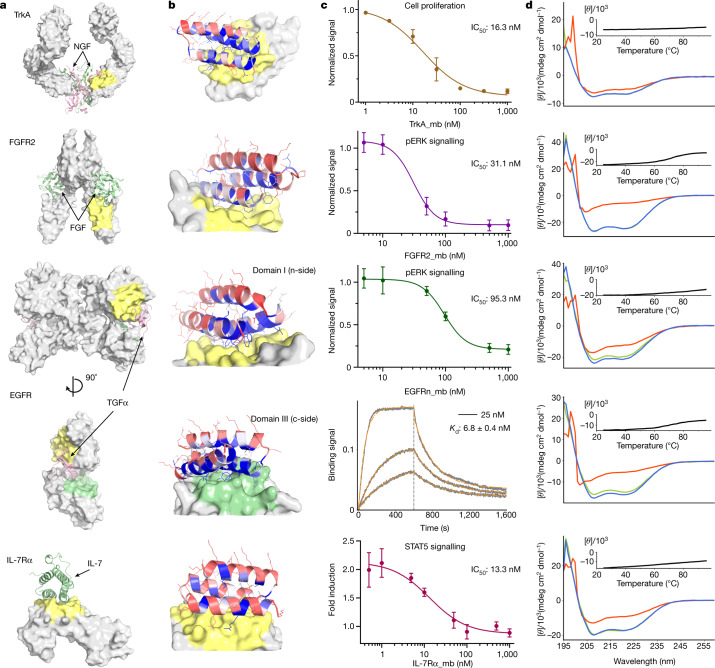
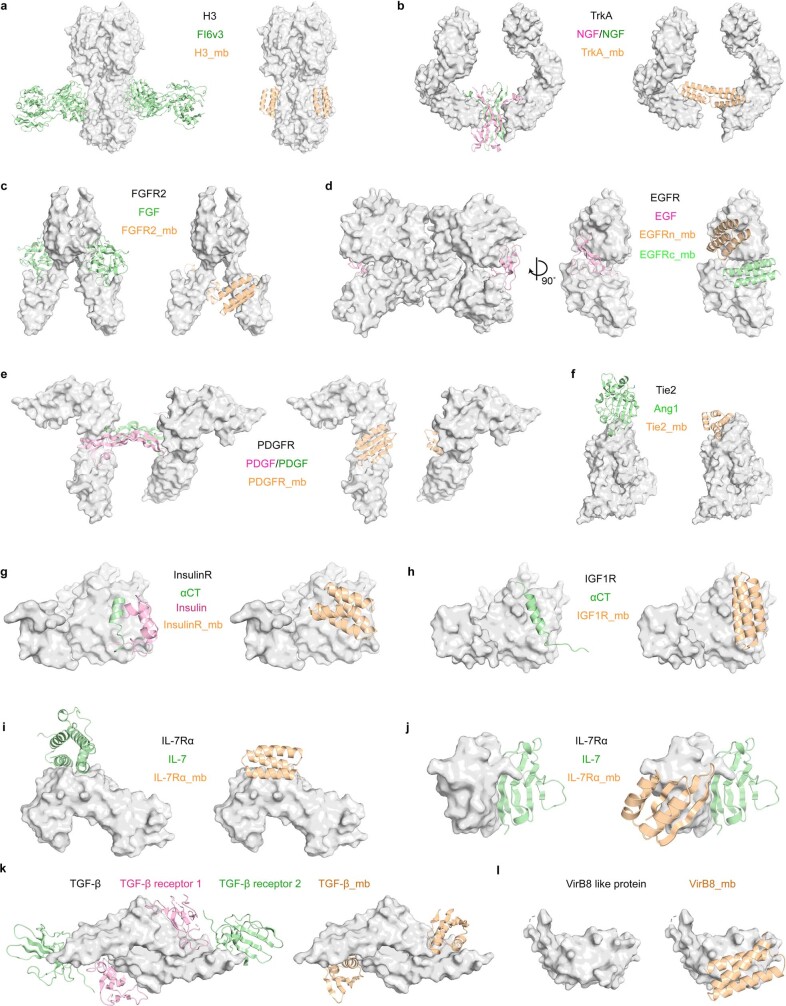
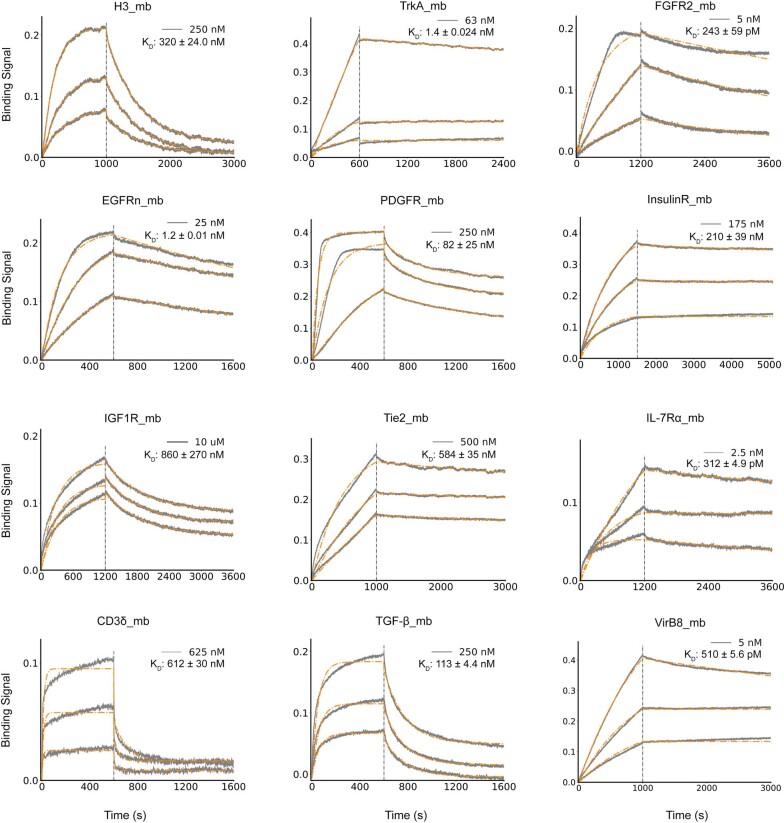
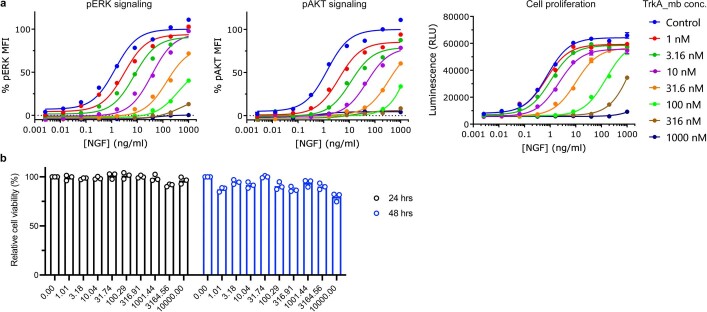
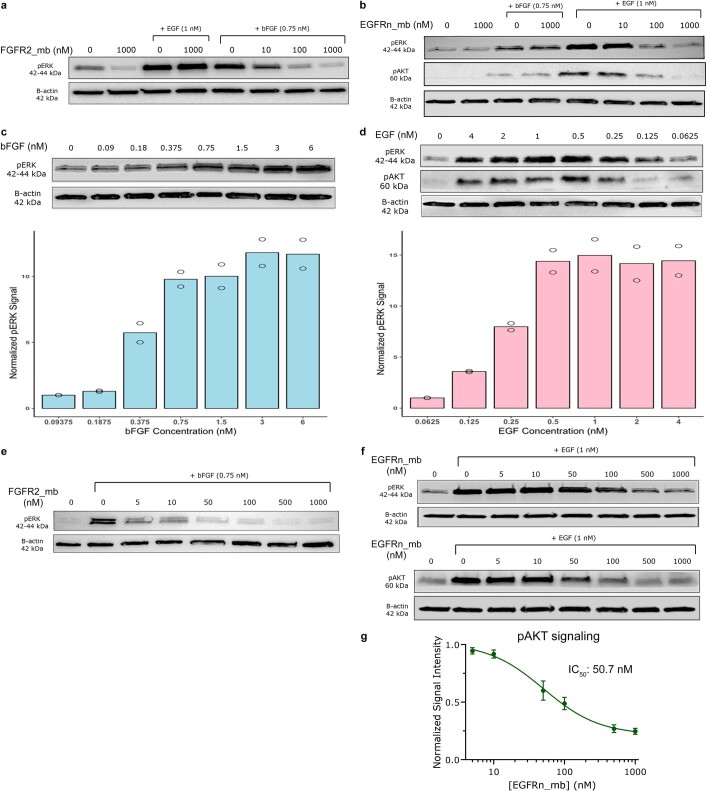
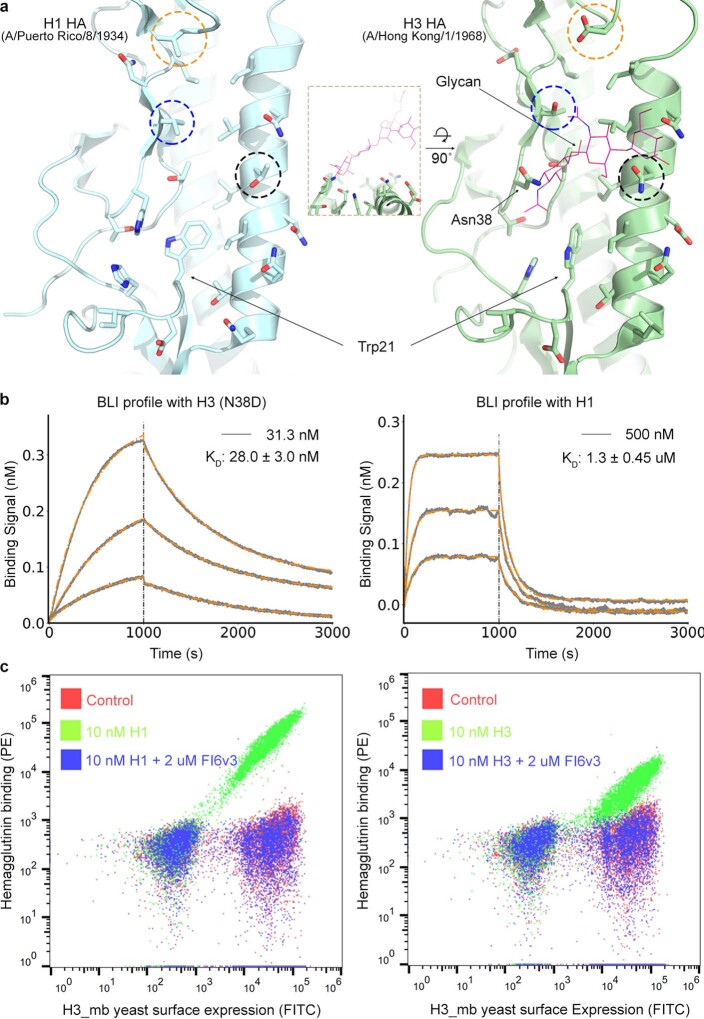
- De novo binders were designed to 12 diverse protein targets (13 target sites on 12 native proteins), all smaller than 65 amino acids; optimized affinities ranged from 300 pM to 900 nM (Table 1), with examples including IL-7Rα at 0.31 nM, VirB8 at 0.51 nM, TrkA at 1.4 nM, EGFRn at 1.2 nM, H3 at 320 nM and IGF1R at 860 nM.
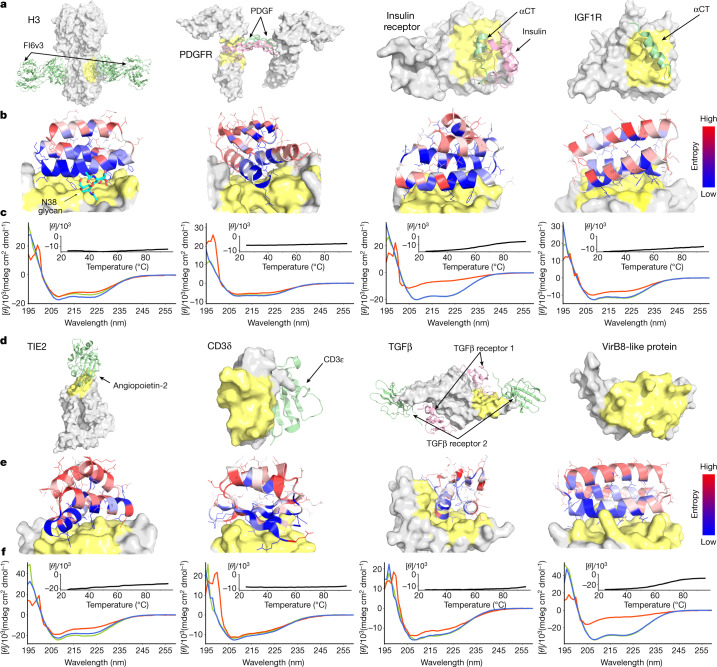
- Nine out of 13 designs were stable at 95 °C, and all expressed in the soluble fraction in *E. coli* and had circular dichroism spectra consistent with the design models.
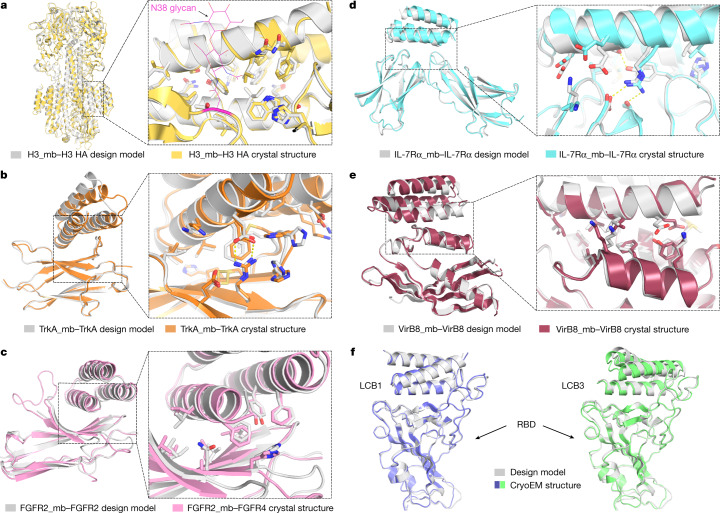
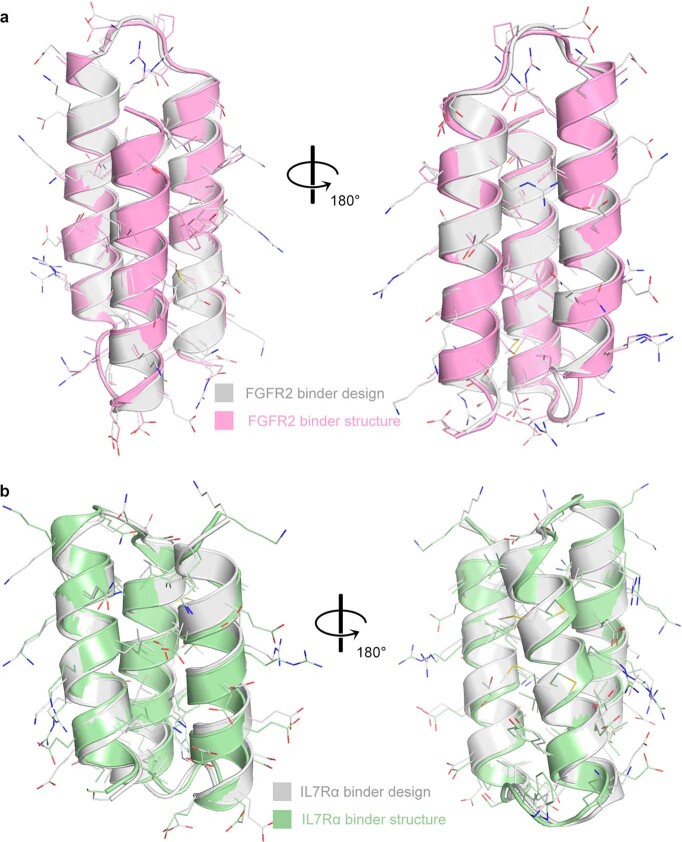
- Crystal structures of five binder–target complexes (H3, TrkA, FGFR2, IL-7Rα and VirB8) closely matched the computational design models; Cα r.m.s.d. values over the entire miniprotein binder were 1.91 Å (H3), 2.41 Å (TrkA), 1.33 Å over the FGFR2 complex, 2.2 Å (IL-7Rα) and 2.54 Å (VirB8). Cryo-EM structures of SARS-CoV-2 binders LCB1 and LCB3 also matched design models with Cα r.m.s.d. values of 1.27 Å and 1.9 Å.
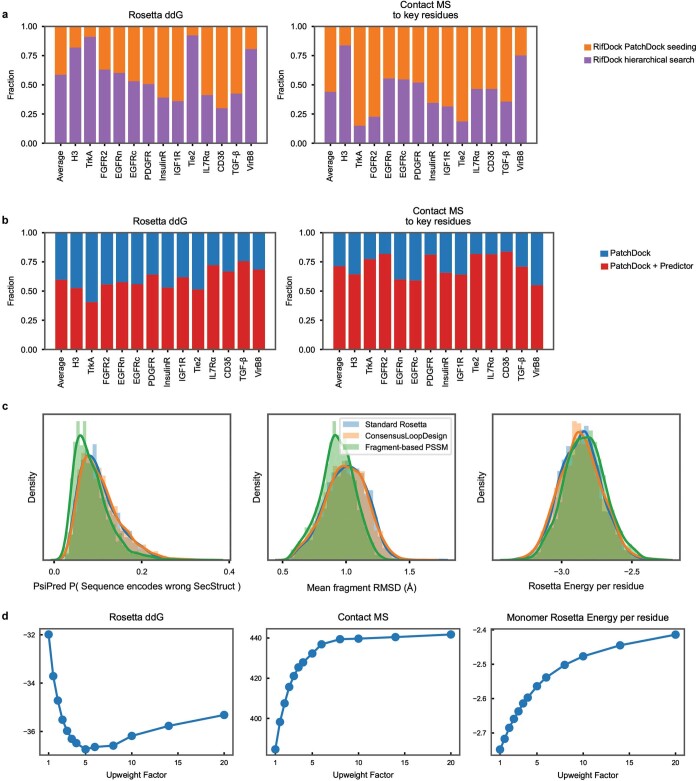
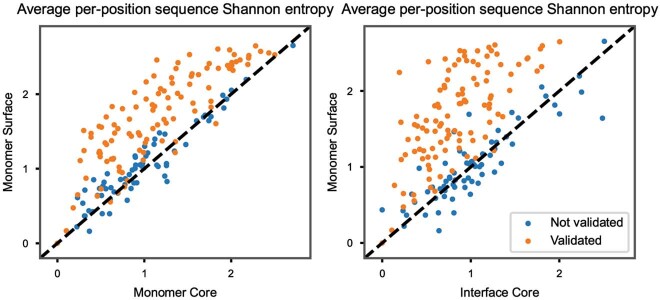
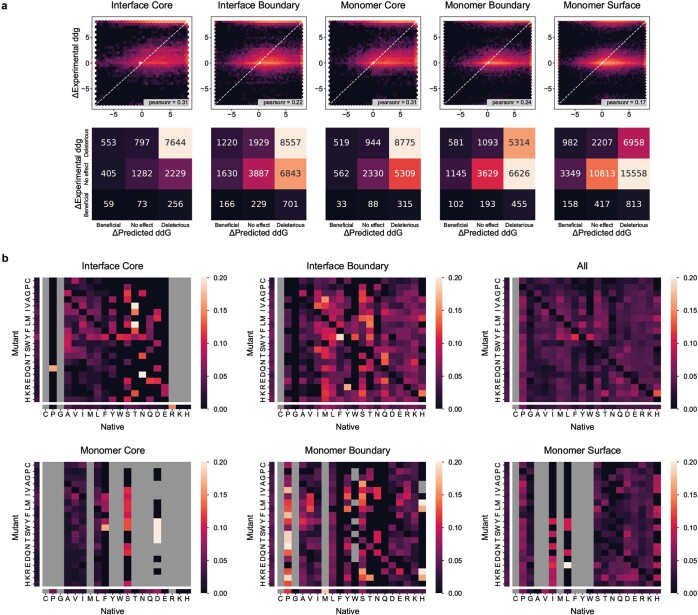
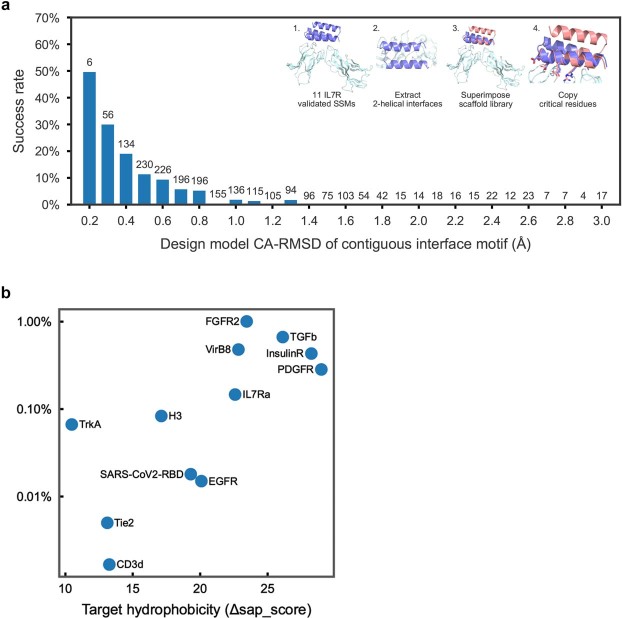
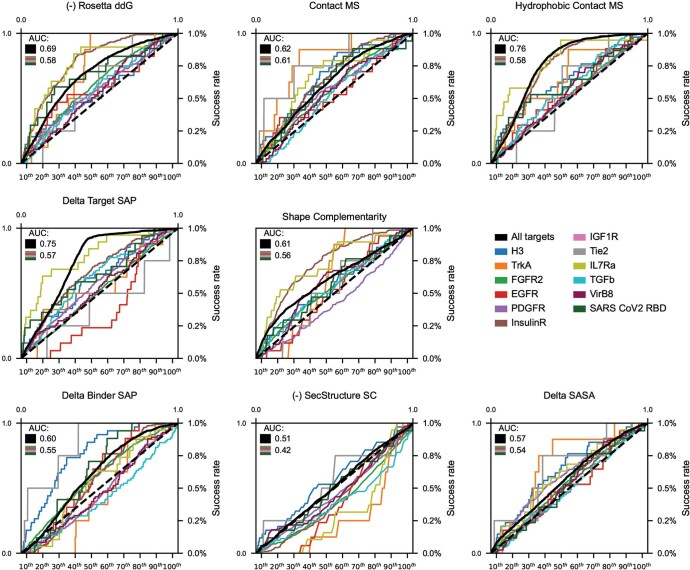
- Analysis of 810,000 binder designs and 240,000 single mutants showed design success varied by target; success correlated strongly with the hydrophobicity of the targeted region, and experimentally binding designs tended to have stronger predicted binding energy and larger contact molecular surfaces.
Methods
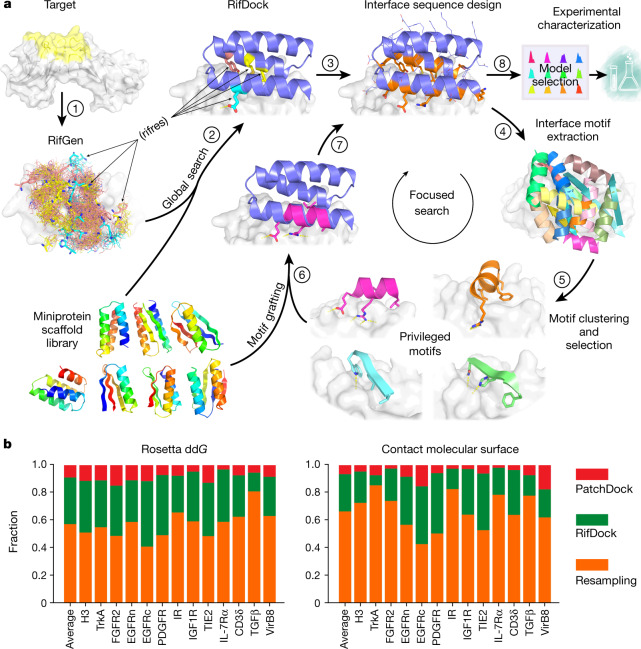
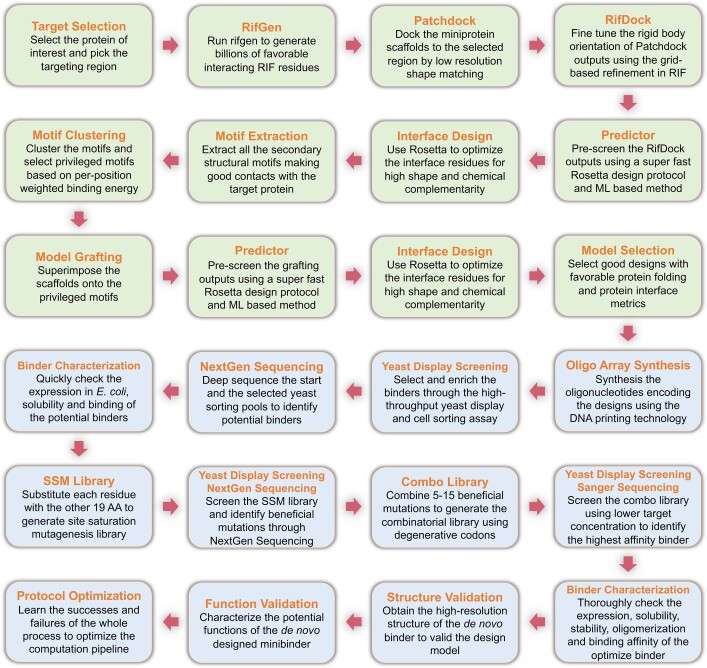
- Broad search: billions of disembodied amino acids were docked against selected target surface regions using RifGen/RIF; 84,690 miniprotein scaffolds (50–65 residues, 5 topologies) were encoded, and 34,507 were found stable; scaffolds were docked with PatchDock/RIFDock, followed by Rosetta sequence design and a rapid “Predictor” prescreen.
- Focused search: secondary-structure motifs making good target contacts were extracted and clustered, around 2,000 motifs per target were selected, and scaffolds were grafted onto these motifs for another round of docking and design.
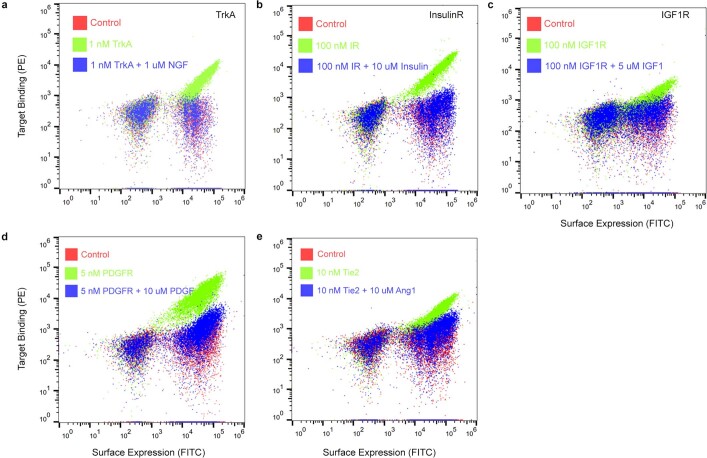
- Experimental validation used yeast surface display with FACS and deep sequencing, site saturation mutagenesis libraries, *E. coli* expression, circular dichroism, biolayer interferometry, X-ray crystallography/cryo-EM, and cell signalling inhibition assays.
Limitations
- Stated in the paper: only a small fraction of designs bind, and in almost all cases the best binders required additional substitutions to achieve high-affinity binding; design of binders to highly polar target sites remains a considerable challenge, as all targeted sites here contained at least four hydrophobic residues.
- Stated in the paper: sampling of the enormous design space is necessarily incomplete, and many broad-search designs contained buried unsatisfied polar atoms and cavities; structures could not yet be solved for the remainder of the designs.
- Evident from the text: the SC50 fitting assumes equal yeast surface expression and 100% expression in the collection gate, assumptions the authors say are “probably false”; expression differences may cause SC50 fits to vary by up to fivefold, and doubly transformed yeast cells are described as a major source of error.
Model-written summary. Check it against the paper before relying on it.
Integrity signals
Registry
Cites
Statistics
Figures
Verification
Claims the paper makes
10 Valid · 4 Not valid · 21 Not checked · 118 Own results and interpretations
Every source the paper cites for this claim was checked and supports it.
In the paper
“Binders have been generated starting from several computationally identified hotspot residues, which were then used to guide the positioning of naturally occurring protein scaffolds5.”
§ Design of protein-binding proteins from the target structure alone > Main
What the sources say
- Supportedcites [5] Fleishman SJ Computational design of proteins targeting the conserved stem region of influenza hemagglutinin Science 2011 332 816 821 10.1126/science.1202617 21566186 PMC3164876 source
The Computational design method section (page not provided) describes computationally positioning hotspot residues against the target, then finding scaffold configurations that incorporate them. The Design of HA-binding proteins and Experimental and structural characterization sections confirm that the resulting scaffold-based designs produced HA-binding proteins. (LLM, conf=0.93)
plainstates a cause- Asserted: passes — The authors put it forward as true.
- Checkable: passes — It can be checked against evidence.
- Load-bearing: passes — The paper’s conclusions depend on it.
- Based: passes — The paper gives a reason why it holds.
- Supported
The cited sources support only part of this claim — read each source’s verdict below.
In the paper
“The design of proteins that bind to a specific site on the surface of a target protein using no information other than the three-dimensional structure of the target remains a challenge1–5.”
§ Design of protein-binding proteins from the target structure alone > Abstract
What the sources say
- Partly supportedcites [1] Chevalier A Massively parallel de novo protein design for targeted therapeutics Nature 2017 550 74 79 10.1038/nature23912 28953867 PMC5802399 sourceExperimental — accuracy not yet measured
The Abstract and Assessment of the computational model describe limitations in designing protein binders and a low initial success rate, supporting the claim that this remains challenging. But the High-throughput computational design section says the authors used binding motifs and hotspot residues from previously solved complexes, not just the target’s three-dimensional structure. The paper therefore does not establish the claim’s structure-only condition. (LLM, conf=0.83)
- Partly supportedcites [2] Strauch EM Computational design of trimeric influenza-neutralizing proteins targeting the hemagglutinin receptor binding site Nat. Biotechnol. 2017 35 667 671 10.1038/nbt.3907 28604661 PMC5512607 sourceExperimental — accuracy not yet measured
The paper describes designing proteins for a specific site on influenza hemagglutinin, but its design used the C05 antibody binding mode and an antibody–target co-crystal structure (design description and Methods > Computational Methods; page not provided). This is consistent with target-structure-only design being difficult, but the paper does not explicitly establish the broader claim that it remains a challenge. (LLM, conf=0.77)
- Partly supportedcites [3] Silva DA De novo design of potent and selective mimics of IL-2 and IL-15 Nature 2019 565 186 191 10.1038/s41586-018-0830-7 30626941 PMC6521699 sourceExperimental — accuracy not yet measured
The section on computational design of IL-2/IL-15 mimics distinguishes earlier designs for short linear epitopes from its approach to more complex binding interfaces, supporting the general point that designing targeted binders is challenging. But the Methods section says this design used the structure of IL-2 in complex with its receptor as a template; the paper does not establish the specific claim about designing binders with no information beyond the target’s three-dimensional structure. Page numbers are unavailable in our copy. (LLM, conf=0.78)
- Not checked yetcites [4] Baran D Principles for computational design of binding antibodies Proc. Natl Acad. Sci. USA 2017 114 10900 10905 10.1073/pnas.1707171114 28973872 PMC5642698 source
- Supportedcites [5] Fleishman SJ Computational design of proteins targeting the conserved stem region of influenza hemagglutinin Science 2011 332 816 821 10.1126/science.1202617 21566186 PMC3164876 source
The Introduction states that computational design could target specific patches on a protein surface, but that the capability to target an arbitrarily selected surface had remained elusive. This supports the citing sentence’s characterization of the task as a challenge, including the more restricted case where only the target’s three-dimensional structure is available. (LLM, conf=0.90)
plain- Asserted: passes — The authors put it forward as true.
- Checkable: passes — It can be checked against evidence.
- Load-bearing: passes — The paper’s conclusions depend on it.
- Based: passes — The paper gives a reason why it holds.
- Partly supported
The cited sources support only part of this claim — read each source’s verdict below.
In the paper
“Most current computational methods used to design proteins that bind to a target surface utilize information derived from structures of the native complex on specific side-chain interactions or protein backbone placements optimal for binding1–3.”
§ Design of protein-binding proteins from the target structure alone > Main
What the sources say
- Partly supportedcites [1] Chevalier A Massively parallel de novo protein design for targeted therapeutics Nature 2017 550 74 79 10.1038/nature23912 28953867 PMC5802399 sourceExperimental — accuracy not yet measured
The High-throughput computational design section describes using interface helices from previously solved target complexes to position scaffold backbones and seed interfaces with hotspot residues. This supports the described design strategy, but the paper does not establish that most current computational methods use it. (LLM, conf=0.83)
- Partly supportedcites [2] Strauch EM Computational design of trimeric influenza-neutralizing proteins targeting the hemagglutinin receptor binding site Nat. Biotechnol. 2017 35 667 671 10.1038/nbt.3907 28604661 PMC5512607 sourceExperimental — accuracy not yet measured
The paper’s design description (section labeled Abstract; page unavailable) says it used the C05–HA co-crystal structure to position the target and optimized key interface contacts and backbone alignment. It also compares the approach with earlier antibody-loop grafting. These passages support the described type of structure-guided design, but not the claim that most current protein-binder design methods use it. (LLM, conf=0.82)
- Partly supportedcites [3] Silva DA De novo design of potent and selective mimics of IL-2 and IL-15 Nature 2019 565 186 191 10.1038/s41586-018-0830-7 30626941 PMC6521699 sourceExperimental — accuracy not yet measured
The Methods section (page unavailable) says the authors used the structure of the native hIL-2–receptor complex as a design template, identified binding-site residues as hotspots, and built new backbones around its structural elements. This supports the described approach for this method, but the paper does not establish that most current computational methods use such information. (LLM, conf=0.84)
plain- Asserted: passes — The authors put it forward as true.
- Checkable: passes — It can be checked against evidence.
- Load-bearing: passes — The paper’s conclusions depend on it.
- Based: passes — The paper gives a reason why it holds.
- Partly supported
The cited sources support only part of this claim — read each source’s verdict below.
In the paper
“The most robust results were obtained using direct low-resolution shape matching11 followed by grid-based refinement of the rigid body orientation in the RIF (RIFDock).”
§ Design of protein-binding proteins from the target structure alone > Design method
What the sources say
- Partly supportedcites [11] Schneidman-Duhovny D Inbar Y Nussinov R Wolfson HJ PatchDock and SymmDock: servers for rigid and symmetric docking Nucleic Acids Res. 2005 33 W363 W367 10.1093/nar/gki481 15980490 PMC1160241 sourceExperimental — accuracy not yet measured
The PatchDock algorithm section describes matching complementary molecular-surface patches to generate docking orientations, supporting the shape-matching method cited here. It does not describe that matching as low-resolution. The citation is attached to shape matching, not to the sentence’s claims about robust results or subsequent RIFDock refinement. (LLM, conf=0.82)
plainstates a cause- Asserted: passes — The authors put it forward as true.
- Checkable: passes — It can be checked against evidence.
- Load-bearing: passes — The paper’s conclusions depend on it.
- Based: passes — The paper gives a reason why it holds.
- Partly supported
The cited sources support only part of this claim — read each source’s verdict below.
In the paper
“Neutralizing antibodies that target the stem region of group 2 HA have been identified through screens of large B cell libraries after vaccination or infection that neutralize both group 1 and group 2 influenza A viruses34,35.”
§ Design of protein-binding proteins from the target structure alone > Pathogen target proteins
What the sources say
- Not checked yetcites [34] Corti D A neutralizing antibody selected from plasma cells that binds to group 1 and group 2 influenza A hemagglutinins Science 2011 333 850 856 10.1126/science.1205669 21798894 source
- Partly supportedcites [35] Joyce MG Vaccine-induced antibodies that neutralize group 1 and group 2 influenza A viruses Cell 2016 166 609 623 10.1016/j.cell.2016.06.043 27453470 PMC4978566 sourceExperimental — accuracy not yet measured
The Introduction and Results report sorting cross-reactive memory B cells after vaccination, then identifying HA-stem-binding antibodies that neutralized both group 1 and group 2 influenza A viruses. The paper describes cell sorting and antibody sequencing, not screening a large B-cell library; the vaccination finding does not establish the infection alternative. (LLM, conf=0.82)
plainstates a cause- Asserted: passes — The authors put it forward as true.
- Checkable: passes — It can be checked against evidence.
- Load-bearing: unclear — It is unclear whether the paper’s conclusions depend on it.
- Based: passes — The paper gives a reason why it holds.
72 more claims · 1 with their cited sources checked
Create a free account to see all 153 claims and to verify the 31 references still open.
- It may state two separate claims as one. 50
- Probably not a substantial claim. 35
- The quote only partly states this claim. 2
Claims other papers make about this one
Each is checked against this paper’s own text: does it say what the citing paper says it does?
The source backs part of the claim, not all of it — or backs it for a different population, condition or comparison.
In the citing paper
“and the approach relied on prespecifying a particular set of protein scaffolds as the basis for the designs, inherently limiting the diversity and shape complementarity of possible solutions12”
From De novo design of protein structure and function with RFdiffusion (2023) · cites this paper as [12]
Experimental — accuracy not yet measuredThe cited source says what the claim attributes to it.
In the citing paper
“For binder design from target structural information alone, previous work required testing tens of thousands of sequences12.”
From De novo design of protein structure and function with RFdiffusion (2023) · cites this paper as [12]
The cited source says what the claim attributes to it.
In the citing paper
“A general method for de novo binder design from target structure information alone using the physically based Rosetta method was recently described12”
From De novo design of protein structure and function with RFdiffusion (2023) · cites this paper as [12]
The cited source says what the claim attributes to it.
In the citing paper
“However, experimental success rates were low, still requiring many thousands of designs to be screened for each design campaign12”
From De novo design of protein structure and function with RFdiffusion (2023) · cites this paper as [12]
Self-check
Percentages, sums and reported differences re-computed from the paper’s own numbers.
Each contradiction between two passages listed here was confirmed by an independent check.
Rated minor: it would not touch a result — a value no result rests on, a p-value that stays on the same side of the significance level, or a conflict that is clerical, resolved elsewhere in the paper, or outside its own findings.
In the paper
§ Design of protein-binding proteins from the target structure alone > Cell receptors involved in signalling
“the binding affinities of the optimized designs ranged from about 1 nM or better for TrkA and FGFR2 to 860 nM for IGF1R”
§ Design of protein-binding proteins from the target structure alone > Experimental testing
“| Kd (nM) | 320 ± 24.0 | 1.4 ± 0.02 | 243 ± 59.0 | 1.2 ± 0.01 |”
Rated minor: it would not touch a result — a value no result rests on, a p-value that stays on the same side of the significance level, or a conflict that is clerical, resolved elsewhere in the paper, or outside its own findings.
In the paper
§ Design of protein-binding proteins from the target structure alone > Pathogen target proteins
“Similar to FGFR2, IL-7Rα and VirB8, the method yielded picomolar binders”
§ Design of protein-binding proteins from the target structure alone > Experimental testing
“| Kd (nM) | 320 ± 24.0 | 1.4 ± 0.02 | 243 ± 59.0 | 1.2 ± 0.01 |”
Citations
Cites
Highly accurate protein structure prediction with AlphaFold
Jumper, J., Evans, R., Pritzel, A., Green, T., Figurnov, M., Ronneberger, O., Tunyasuvunakool, K., Bates, R., Žídek, A., Potapenko, A., et al. (2021) · Nature · doi:10.1038/s41586-021-03819-2 · Cited by 43,764
Berman, H. M. (2000) · Nucleic Acids Research · doi:10.1093/nar/28.1.235 · Cited by 40,196
[20] Processing of X-ray diffraction data collected in oscillation mode
Otwinowski, Z., & Minor, W. (1997) · Methods in Enzymology · doi:10.1016/s0076-6879(97)76066-x · Cited by 33,475
Coot : model-building tools for molecular graphics
Emsley, P., & Cowtan, K. (2004) · Acta Crystallographica Section D Biological Crystallography · doi:10.1107/s0907444904019158 · Cited by 30,571
Features and development of Coot
Emsley, P., Lohkamp, B., Scott, W. G., & Cowtan, K. (2010) · Acta Crystallographica Section D Biological Crystallography · doi:10.1107/s0907444910007493 · Cited by 29,915
PHENIX : a comprehensive Python-based system for macromolecular structure solution
Adams, P. D., Afonine, P. V., Bunkóczi, G., Chen, V. B., Davis, I. W., Echols, N., Headd, J. J., Hung, L.-W., Kapral, G. J., Grosse-Kunstleve, R. W., et al. (2010) · Acta Crystallographica Section D Biological Crystallography · doi:10.1107/s0907444909052925 · Cited by 23,716
Phaser crystallographic software
McCoy, A. J., Grosse-Kunstleve, R. W., Adams, P. D., Winn, M. D., Storoni, L. C., & Read, R. J. (2007) · Journal of Applied Crystallography · doi:10.1107/s0021889807021206 · Cited by 20,612
Overview of the CCP 4 suite and current developments
Winn, M. D., Ballard, C. C., Cowtan, K. D., Dodson, E. J., Emsley, P., Evans, P. R., Keegan, R. M., Krissinel, E. B., Leslie, A. G. W., McCoy, A., et al. (2011) · Acta Crystallographica Section D Biological Crystallography · doi:10.1107/s0907444910045749 · Cited by 12,353
Liebschner, D., Afonine, P. V., Baker, M. L., Bunkóczi, G., Chen, V. B., Croll, T. I., Hintze, B., Hung, L.-W., Jain, S., McCoy, A. J., et al. (2019) · Acta Crystallographica Section D Structural Biology · doi:10.1107/s2059798319011471 · Cited by 7,953
Cell Signaling by Receptor Tyrosine Kinases
Lemmon, M. A., & Schlessinger, J. (2010) · Cell · doi:10.1016/j.cell.2010.06.011 · Cited by 7,929
Self-citation
Cited by
Watson, J. L., Juergens, D., Bennett, N. R., Trippe, B. L., Yim, J., Eisenach, H. E., Ahern, W., Borst, A. J., Ragotte, R. J., Milles, L. F., et al. (2022) · doi:10.1101/2022.12.09.519842 · Cited by 2,369
“The ability to design binders de novo using the physically based Rosetta method was recently described 40 , and subsequently, the utility of ProteinMPNN and AF2 for sequence design and design filtering respectively has improved design success rates 21 .”
Self-citationDe novo design of protein structure and function with RFdiffusion
Watson, J. L., Juergens, D., Bennett, N. R., Trippe, B. L., Yim, J., Eisenach, H. E., Ahern, W., Borst, A. J., Ragotte, R. J., Milles, L. F., et al. (2023) · Nature · doi:10.1038/s41586-023-06415-8 · Cited by 3,506
Self-citationRobust deep learning–based protein sequence design using ProteinMPNN
Dauparas, J., Anishchenko, I., Bennett, N., Bai, H., Ragotte, R. J., Milles, L. F., Wicky, B. I. M., Courbet, A., de Haas, R. J., Bethel, N., et al. (2022) · Science · doi:10.1126/science.add2187 · Cited by 2,210
“Second panel: helical bundle scaffolds were docked to the exposed face of the peptide using RIFDOCK (19), and Rosetta remodel was used to build loops connecting the peptide to the scaffolds.”
MethodSelf-citationRobust deep learning based protein sequence design using ProteinMPNN
Dauparas, J., Anishchenko, I., Bennett, N., Bai, H., Ragotte, R. J., Milles, L. F., Wicky, B. I. M., Courbet, A., de Haas, R. J., Bethel, N., et al. (2022) · doi:10.1101/2022.06.03.494563 · Cited by 2,107
Self-citationGeneralized biomolecular modeling and design with RoseTTAFold All-Atom
Krishna, R., Wang, J., Ahern, W., Sturmfels, P., Venkatesh, P., Kalvet, I., Lee, G. R., Morey-Burrows, F. S., Anishchenko, I., Humphreys, I. R., et al. (2024) · Science · doi:10.1126/science.adl2528 · Cited by 978
Self-citationScaffolding protein functional sites using deep learning
Wang, J., Lisanza, S., Juergens, D., Tischer, D., Watson, J. L., Castro, K. M., Ragotte, R., Saragovi, A., Milles, L. F., Baek, M., et al. (2022) · Science · doi:10.1126/science.abn2100 · Cited by 487
Self-citationAdvance in peptide-based drug development: delivery platforms, therapeutics and vaccines
Xiao, W., Jiang, W., Chen, Z., Huang, Y., Mao, J., Zheng, W., Hu, Y., & Shi, J. (2025) · Signal Transduction and Targeted Therapy · doi:10.1038/s41392-024-02107-5 · Cited by 449
Illuminating protein space with a programmable generative model
Ingraham, J. B., Baranov, M., Costello, Z., Barber, K. W., Wang, W., Ismail, A., Frappier, V., Lord, D. M., Ng-Thow-Hing, C., Van Vlack, E. R., et al. (2023) · Nature · doi:10.1038/s41586-023-06728-8 · Cited by 444
De novo design of luciferases using deep learning
Yeh, A. H.-W., Norn, C., Kipnis, Y., Tischer, D., Pellock, S. J., Evans, D., Ma, P., Lee, G. R., Zhang, J. Z., Anishchenko, I., et al. (2023) · Nature · doi:10.1038/s41586-023-05696-3 · Cited by 441
“Next, around each conformer, we used the RifGen method 29,30 to enumerate rotamer interaction fields (RIFs) on three-dimensional grids consisting of millions of placements of amino acid side chains making hydrogen-bonding and nonpolar interactions with DTZ (Fig.”
MethodSelf-citationImproving de novo protein binder design with deep learning
Bennett, N. R., Coventry, B., Goreshnik, I., Huang, B., Allen, A., Vafeados, D., Peng, Y. P., Dauparas, J., Baek, M., Stewart, L., et al. (2023) · Nature Communications · doi:10.1038/s41467-023-38328-5 · Cited by 402
“Recently,ageneralRosetta-basedapproachtodesigning binding proteins using only the structure of the target was developed and used to design binding proteins to 13 different target sites 13 .”
Self-citationImproving de novo Protein Binder Design with Deep Learning
(2022) · doi:10.1101/2022.06.15.495993 · Cited by 402
Engineering protein-based therapeutics through structural and chemical design
Ebrahimi, S. B., & Samanta, D. (2023) · Nature Communications · doi:10.1038/s41467-023-38039-x · Cited by 382
“Efforts in this area have led to the identi fi cation of potent mimics of cytokines interleukin-2 (IL-2) and IL-15 78 , programmed cell death protein-1 (PD-1) agonists 79 , and SARS-CoV-2 inhibitors 80 , among others 81,82 .”
De novo protein design—From new structures to programmable functions
Kortemme, T. (2024) · Cell · doi:10.1016/j.cell.2023.12.028 · Cited by 344
“( D ) Rotamer interaction field approach 65 .”
InfluentialAtomically accurate de novo design of antibodies with RFdiffusion
Bennett, N. R., Watson, J. L., Ragotte, R. J., Borst, A. J., See, D. L., Weidle, C., Biswas, R., Yu, Y., Shrock, E. L., Ault, R., et al. (2024) · doi:10.1101/2024.03.14.585103 · Cited by 324
“…de novo design of VHHs, there is considerable room for improvements, as the binding affinities are modest (although comparable to affinities of de novo miniprotein binders without experimental optimization when this challenge was first solved 11 ), and the success rates are still quite low.”
Self-citationAtomically accurate de novo design of antibodies with RFdiffusion
(2025) · doi:10.1038/s41586-025-09721-5 · Cited by 324
Self-citationAtomic context-conditioned protein sequence design using LigandMPNN
Dauparas, J., Lee, G. R., Pecoraro, R., An, L., Anishchenko, I., Glasscock, C., & Baker, D. (2025) · Nature Methods · doi:10.1038/s41592-025-02626-1 · Cited by 279
Self-citationMachine learning for functional protein design
Notin, P., Rollins, N., Gal, Y., Sander, C., & Marks, D. (2024) · Nature Biotechnology · doi:10.1038/s41587-024-02127-0 · Cited by 270
“While there have been breakthroughs in force-field design given a target alone, these have typically required thousands of constructs to be assayed 76 .”
InfluentialDiffusion models in bioinformatics and computational biology
Guo, Z., Liu, J., Wang, Y., Chen, M., Wang, D., Xu, D., & Cheng, J. (2023) · Nature Reviews Bioengineering · doi:10.1038/s44222-023-00114-9 · Cited by 139
“…discussed in this section, some proteins designed by RFdiffusion have not only been validated in silico, but also by biochemical and biophysical experiments 170,171 , making it one of the first generative artificial intelligence methods of protein design that have been experimentally validated.”
De novo design of high-affinity binders of bioactive helical peptides
Vázquez Torres, S., Leung, P. J. Y., Venkatesh, P., Lutz, I. D., Hink, F., Huynh, H.-H., Becker, J., Yeh, A. H.-W., Juergens, D., Bennett, N. R., et al. (2024) · Nature · doi:10.1038/s41586-023-06953-1 · Cited by 239
Self-citationOne-shot design of functional protein binders with BindCraft
Pacesa, M., Nickel, L., Schellhaas, C., Schmidt, J., Pyatova, E., Kissling, L., Barendse, P., Choudhury, J., Kapoor, S., Alcaraz-Serna, A., et al. (2025) · Nature · doi:10.1038/s41586-025-09429-6 · Cited by 236
“Filters were initially defined based on experimental observations from previous binder design studies 2–5 and refined over the course of this work.”
InfluentialDe novo design of protein interactions with learned surface fingerprints
Gainza, P., Wehrle, S., Van Hall-Beauvais, A., Marchand, A., Scheck, A., Harteveld, Z., Buckley, S., Ni, D., Tan, S., Sverrisson, F., et al. (2023) · Nature · doi:10.1038/s41586-023-05993-x · Cited by 236
BoltzGen: Toward Universal Binder DesignPreprint
Stark, H., Faltings, F., Choi, M., Xie, Y., Hur, E., O’Donnell, T. J., Bushuiev, A., Uçar, T., Passaro, S., Mao, W., et al. (2025) · bioRxiv (Cold Spring Harbor Laboratory) · doi:10.1101/2025.11.20.689494 · Cited by 227
Artificial Intelligence in Point-of-Care Biosensing: Challenges and Opportunities
Flynn, C. D., & Chang, D. (2024) · Diagnostics · doi:10.3390/diagnostics14111100 · Cited by 195
“High-affinity protein binders can be designed solely from the target sequence information [141], and are capable of binding diverse targets, including bioactive helical peptides [142], extended β -strand structures [143], amyloidogenic peptides [144], SARS-CoV-2 [145], and receptors for cytokines…”
BackgroundDe novo design of high-affinity protein binders with AlphaProteoPreprint
Zambaldi, V., La, D., Chu, A. E., Patani, H. H., Danson, A. E., Kwan, T. O. C., Frerix, T., Schneider, R. G., Saxton, D., Thillaisundaram, A., et al. (2024) · arXiv (Cornell University) · doi:10.48550/arxiv.2409.08022 · Cited by 189
Language models generalize beyond natural proteins
Verkuil, R., Kabeli, O., Du, Y., Wicky, B. I. M., Milles, L. F., Dauparas, J., Baker, D., Ovchinnikov, S., Sercu, T., & Rives, A. (2022) · doi:10.1101/2022.12.21.521521 · Cited by 181
Self-citationOpportunities and challenges in design and optimization of protein function
Listov, D., Goverde, C. A., Correia, B. E., & Fleishman, S. J. (2024) · Nature Reviews Molecular Cell Biology · doi:10.1038/s41580-024-00718-y · Cited by 180
“Similarly, a designed variant of the severe acute respiratory syndrome coronavirus 2 (SARS-CoV-2) Spike Evolutionary strategies Computational methods Fig.”
InfluentialDesigned endocytosis-inducing proteins degrade targets and amplify signals
Huang, B., Abedi, M., Ahn, G., Coventry, B., Sappington, I., Tang, C., Wang, R., Schlichthaerle, T., Zhang, J. Z., Wang, Y., et al. (2025) · Nature · doi:10.1038/s41586-024-07948-2 · Cited by 146
“2f and Extended Data Table 1).”
InfluentialSelf-citationThe JAK-STAT pathway: from structural biology to cytokine engineering
Lv, Y., Qi, J., Babon, J. J., Cao, L., Fan, G.-H., Lang, J., Zhang, J., Mi, P., Kobe, B., & Wang, F. (2024) · Signal Transduction and Targeted Therapy · doi:10.1038/s41392-024-01934-w · Cited by 178
“417 – 420 Protein design techniques have the potential to revolutionize the development of arti fi cial cytokines.”
BackgroundSelf-citationGame changers in science and technology - now and beyond
Betz, U. A. K., Arora, L., Assal, R. A., de Azevedo, H. F. Z., Baldwin, J., Becker, M. S., Bostock, S., Cheng, V. W. T., Egle, T., Ferrari, N., et al. (2023) · Technological Forecasting and Social Change · doi:10.1016/j.techfore.2023.122588 · Cited by 182
Integrated biotechnological and AI innovations for crop improvement
Li, G., An, L., Yang, W., Yang, L., Wei, T., Shi, J., Wang, J., Doonan, J. H., Xie, K., Fernie, A. R., et al. (2025) · Nature · doi:10.1038/s41586-025-09122-8 · Cited by 165
“There has been considerable recent success in generating de novo protein binders targeting proteins with structural information, using AI-based programs such as RFdiffusion and AlphaProteo 116,120,121 .”
Self-citationDe novo designed proteins neutralize lethal snake venom toxins
Vázquez Torres, S., Benard Valle, M., Mackessy, S. P., Menzies, S. K., Casewell, N. R., Ahmadi, S., Burlet, N. J., Muratspahić, E., Sappington, I., Overath, M. D., et al. (2025) · Nature · doi:10.1038/s41586-024-08393-x · Cited by 163
Self-citationTop-down design of protein architectures with reinforcement learning
Lutz, I. D., Wang, S., Norn, C., Courbet, A., Borst, A. J., Zhao, Y. T., Dosey, A., Cao, L., Xu, J., Leaf, E. M., et al. (2023) · Science · doi:10.1126/science.adf6591 · Cited by 124
Self-citationDevelopment of therapeutic antibodies for the treatment of diseases
Wang, Z., Wang, G., Lu, H., Li, H., Tang, M., & Tong, A. (2022) · Molecular Biomedicine · doi:10.1186/s43556-022-00100-4 · Cited by 157
Language Modeling Materializes a World Model of Protein BiologyPreprint
Candido, S., Hayes, T., Derry, A., Rao, R., Lin, Z., Verkuil, R., Wu, B. Z., Lee, J. S., Bruguera, E. S., Keval, J. A., et al. (2026) · bioRxiv (Cold Spring Harbor Laboratory) · doi:10.64898/2026.06.03.729735 · Cited by 159
De novo Design of All-atom Biomolecular Interactions with RFdiffusion3Preprint
Butcher, J., Krishna, R., Mitra, R., Brent, R. I., Li, Y., Corley, N., Kim, P. T., Funk, J., Mathis, S. V., Salike, S., et al. (2025) · bioRxiv (Cold Spring Harbor Laboratory) · doi:10.1101/2025.09.18.676967 · Cited by 153
“Deep learning methods have made impressive improvements in protein binder design, enabling identification of binders from screening fewer than 96 proteins [1, 27, 8, 28, 29].”
Self-citationSparks of function by de novo protein design
Chu, A. E., Lu, T., & Huang, P.-S. (2024) · Nature Biotechnology · doi:10.1038/s41587-024-02133-2 · Cited by 114
“2) 59,60 .”
BackgroundKoh, H. Y., Zheng, Y., Yang, M., Arora, R., Webb, G. I., Pan, S., Li, L., & Church, G. M. (2025) · Nature Reviews Bioengineering · doi:10.1038/s44222-025-00349-8 · Cited by 147
Winer, H. Y., Rodrigues, G. O. L., Hixon, J. A., Aiello, F. B., Hsu, T. C., Wachter, B. T., Li, W., & Durum, S. K. (2022) · Cytokine · doi:10.1016/j.cyto.2022.156049 · Cited by 143
A new age in protein design empowered by deep learning
Khakzad, H., Igashov, I., Schneuing, A., Goverde, C., Bronstein, M., & Correia, B. (2023) · Cell Systems · doi:10.1016/j.cels.2023.10.006 · Cited by 109
Protein language models learn evolutionary statistics of interacting sequence motifs
Zhang, Z., Wayment-Steele, H. K., Brixi, G., Wang, H., Kern, D., & Ovchinnikov, S. (2024) · Proceedings of the National Academy of Sciences · doi:10.1073/pnas.2406285121 · Cited by 140
Design of intrinsically disordered region binding proteins
Wu, K., Jiang, H., Hicks, D. R., Liu, C., Muratspahić, E., Ramelot, T. A., Liu, Y., McNally, K. E., Kenny, S., Mihut, A., et al. (2025) · Science · doi:10.1126/science.adr8063 · Cited by 141
Self-citationA tripartite rheostat controls self-regulated host plant resistance to insects
Guo, J., Wang, H., Guan, W., Guo, Q., Wang, J., Yang, J., Peng, Y., Shan, J., Gao, M., Shi, S., et al. (2023) · Nature · doi:10.1038/s41586-023-06197-z · Cited by 132
A survey of geometric graph neural networks: data structures, models and applications
Han, J., Cen, J., Wu, L., Li, Z., Kong, X., Jiao, R., Yu, Z., Xu, T., Wu, F., Wang, Z., et al. (2025) · Frontiers of Computer Science · doi:10.1007/s11704-025-41426-w · Cited by 132
“Methods: While conventional approaches rely on empirical energy functions to sample and optimize sequences and structures at the residue or the fragment level [20, 26], recent advances in geometric molecular design shed light on deep generative models.”
Binding and sensing diverse small molecules using shape-complementary pseudocycles
An, L., Said, M., Tran, L., Majumder, S., Goreshnik, I., Lee, G. R., Juergens, D., Dauparas, J., Anishchenko, I., Coventry, B., et al. (2024) · Science · doi:10.1126/science.adn3780 · Cited by 94
Self-citationAlbanese, K. I., Barbe, S., Tagami, S., Woolfson, D. N., & Schiex, T. (2025) · Nature Reviews Methods Primers · doi:10.1038/s43586-025-00383-1 · Cited by 119
Preclinical proof of principle for orally delivered Th17 antagonist miniproteins
Berger, S., Seeger, F., Yu, T.-Y., Aydin, M., Hui-lin, Y., Rosenblum, D., Guenin‐Macé, L., Glassman, C. R., Arguinchona, L., Sniezek, C. M., et al. (2024) · Cell · doi:10.1016/j.cell.2024.05.052 · Cited by 108
“23 We took a combined approach, using one native hotspot from IL-23p19 cytokine (W156) and additional computationally determined de novo hot-spots generated at the p19 interface to seed design.”
MethodSelf-citationBiolayer interferometry and its applications in drug discovery and development
Jug, A., Bratkovič, T., & Ilaš, J. (2024) · TrAC Trends in Analytical Chemistry · doi:10.1016/j.trac.2024.117741 · Cited by 107
AlphaFold two years on: Validation and impact
Kovalevskiy, O., Mateos-Garcia, J., & Tunyasuvunakool, K. (2024) · Proceedings of the National Academy of Sciences · doi:10.1073/pnas.2315002121 · Cited by 75
Cyclic peptide structure prediction and design using AlphaFold2
Rettie, S. A., Campbell, K. V., Bera, A. K., Kang, A., Kozlov, S., Bueso, Y. F., De La Cruz, J., Ahlrichs, M., Cheng, S., Gerben, S. R., et al. (2025) · Nature Communications · doi:10.1038/s41467-025-59940-7 · Cited by 102
Self-citationDesign of high-specificity binders for peptide–MHC-I complexes
Liu, B., Greenwood, N. F., Bonzanini, J. E., Motmaen, A., Meyerberg, J., Dao, T., Xiang, X., Ault, R., Sharp, J., Wang, C., et al. (2025) · Science · doi:10.1126/science.adv0185 · Cited by 103
Self-citationWang, S., Mao, X., Wang, F., Zuo, X., & Fan, C. (2023) · Advanced Materials · doi:10.1002/adma.202307499 · Cited by 103
Single-cell census of human tooth development enables generation of human enamel
Alghadeer, A., Hanson-Drury, S., Patni, A. P., Ehnes, D. D., Zhao, Y. T., Li, Z., Phal, A., Vincent, T., Lim, Y. C., O’Day, D. R., et al. (2023) · Developmental Cell · doi:10.1016/j.devcel.2023.07.013 · Cited by 101
Self-citationG-Quadruplex-Binding Proteins: Promising Targets for Drug Design
Shu, H., Zhang, R., Xiao, K., Yang, J., & Sun, X. S. (2022) · Biomolecules · doi:10.3390/biom12050648 · Cited by 99
Zero-shot antibody design in a 24-well platePreprint
Chai Discovery Team, Boitreaud, J., Dent, J., Geisz, D., McPartlon, M., Meier, J., Qiao, Z., Rogozhnikov, A., Rollins, N., Wollenhaupt, P., et al. (2025) · bioRxiv (Cold Spring Harbor Laboratory) · doi:10.1101/2025.07.05.663018 · Cited by 102
Targeting protein–ligand neosurfaces with a generalizable deep learning tool
Marchand, A., Buckley, S., Schneuing, A., Pačesa, M., Elia, M., Gaínza, P., Elizarova, E., Neeser, R. M., Lee, P., Reymond, L., et al. (2025) · Nature · doi:10.1038/s41586-024-08435-4 · Cited by 99
“To assess the effects of the different mutations over the designed ligand-dependent interaction, we computed the average enrichment score of each mutation when comparing binding versus non-binding populations on yeast display experiments, similar to other deep saturation mutagenesis studies 39,40 .”
Deep mutational scanning: A versatile tool in systematically mapping genotypes to phenotypes
Wei, H., & Li, X. (2023) · Frontiers in Genetics · doi:10.3389/fgene.2023.1087267 · Cited by 61
“In vitro display methods, such as phage display (Araya et al., 2012), yeast display (Klesmith et al., 2017; Starr et al., 2017; Cao et al., 2022), and mRNA display (Olson et al., 2014), detect frequency changes of genetic variants based on the binding af fi nity of the protein to its ligands.”
BackgroundDiffusion probabilistic modeling of protein backbones in 3D for the motif-scaffolding problem
Trippe, B. L., Yim, J., Tischer, D., Baker, D., Broderick, T., Barzilay, R., & Jaakkola, T. (2022) · arXiv · doi:10.48550/arxiv.2206.04119 · Cited by 92
“…native or prespecified protein fragments, but are limited to finding a suitable match in the Protein Data Bank (PDB) and cannot adapt the scaffold to compensate for slight structural mismatches (Cao et al., 2022; Silva et al., 2016; Yang et al., 2021; Sesterhenn et al., 2020; Linsky et al., 2020).”
Self-citationCD19 CAR antigen engagement mechanisms and affinity tuning
He, C., Mansilla‐Soto, J., Khanra, N., Hamieh, M., Bustos, V., Paquette, A. J., Angus, A. G., Shore, D. M., Rice, W. J., Khelashvili, G., et al. (2023) · Science Immunology · doi:10.1126/sciimmunol.adf1426 · Cited by 91
Design of stimulus-responsive two-state hinge proteins
Praetorius, F., Leung, P. J. Y., Tessmer, M. H., Broerman, A., Demakis, C., Dishman, A. F., Pillai, A., Idris, A., Juergens, D., Dauparas, J., et al. (2023) · Science · doi:10.1126/science.adg7731 · Cited by 90
Self-citationRecent advances in predicting and modeling protein–protein interactions
Durham, J., Zhang, J., Humphreys, I. R., Pei, J., & Cong, Q. (2023) · Trends in Biochemical Sciences · doi:10.1016/j.tibs.2023.03.003 · Cited by 89
Programmable synthetic receptors: the next-generation of cell and gene therapies
Teng, F., Cui, T., Zhou, L., Gao, Q., Zhou, Q., & Li, W. (2024) · Signal Transduction and Targeted Therapy · doi:10.1038/s41392-023-01680-5 · Cited by 89
Target-conditioned diffusion generates potent TNFR superfamily antagonists and agonists
Glögl, M., Krishnakumar, A., Ragotte, R. J., Goreshnik, I., Coventry, B., Bera, A. K., Kang, A., Joyce, E., Ahn, G., Huang, B., et al. (2024) · Science · doi:10.1126/science.adp1779 · Cited by 63
“( 3 ) met with little success.”
Self-citationAlphaFold2 Can Predict Single-Mutation Effects
McBride, J. M., Polev, K., Abdirasulov, A., Reinharz, V., Grzybowski, B. A., & Tlusty, T. (2023) · Physical Review Letters · doi:10.1103/physrevlett.131.218401 · Cited by 87
Guarra, F., & Colombo, G. (2023) · Journal of Chemical Theory and Computation · doi:10.1021/acs.jctc.3c00513 · Cited by 88
The role and future prospects of artificial intelligence algorithms in peptide drug development
Chen, Z., Wang, R., Guo, J., & Wang, X. (2024) · Biomedicine & Pharmacotherapy · doi:10.1016/j.biopha.2024.116709 · Cited by 87
AlphaFold2 can predict single-mutation effects
McBride, J. M., Polev, K., Abdirasulov, A., Reinharz, V., Grzybowski, B. A., & Tlusty, T. (2022) · doi:10.1101/2022.04.14.488301 · Cited by 87
“Understanding structural consequences of point mutations is important for drug design [8, 9] and could also accelerate optimization of enzymatic function via directed evolution [10, 11].”
BackgroundA critical evaluation of protein kinase regulation by activation loop autophosphorylation
Reinhardt, R., & Leonard, T. A. (2023) · eLife · doi:10.7554/elife.88210 · Cited by 84
Illuminating protein space with a programmable generative model
Ingraham, J., Baranov, M., Costello, Z., Frappier, V., Ismail, A., Tie, S., Wang, W., Xue, V., Obermeyer, F., Beam, A., et al. (2022) · doi:10.1101/2022.12.01.518682 · Cited by 83
Bhat, S., Palepu, K., Hong, L., Mao, J., Ye, T., Iyer, R., Zhao, L., Chen, T., Vincoff, S., Watson, R., et al. (2025) · Science Advances · doi:10.1126/sciadv.adr8638 · Cited by 82
Computer-Aided Drug Discovery for Undruggable Targets
Sun, Q., Wang, H., Xie, J., Wang, L., Mu, J., Li, J., Ren, Y., & Lai, L. (2025) · Chemical Reviews · doi:10.1021/acs.chemrev.4c00969 · Cited by 82
The past, present and future of de novo protein design
Yang, W., Wang, S., Lee, G. R., Zhang, J. Z., Courbet, A., Juergens, D., Wang, X., Schlichthaerle, T., Abedi, M. H., Ragotte, R. J., et al. (2026) · Nature · doi:10.1038/s41586-026-10328-7 · Cited by 86
Self-citationDiffusing protein binders to intrinsically disordered proteins
Liu, C., Wu, K., Choi, H., Han, H. L., Zhang, X., Watson, J. L., Ahn, G., Zhang, J. Z., Shijo, S., Good, L. L., et al. (2025) · Nature · doi:10.1038/s41586-025-09248-9 · Cited by 79
“The resulting binders were then further filtered based on criteria including contact_molecular_surface 53 , ddG 54 , SAP score 55 and the numbers of hydrogen bonds.”
Self-citationCombinatorial assembly and design of enzymes
Lipsh-Sokolik, R., Khersonsky, O., Schröder, S. P., de Boer, C., Hoch, S.-Y., Davies, G. J., Overkleeft, H. S., & Fleishman, S. J. (2023) · Science · doi:10.1126/science.ade9434 · Cited by 78
Marchand, A., Van Hall-Beauvais, A. K., & Correia, B. E. (2022) · Current Opinion in Structural Biology · doi:10.1016/j.sbi.2022.102370 · Cited by 65
Automated high-throughput DNA synthesis and assembly
Ma, Y., Zhang, Z., Jia, B., & Yuan, Y. (2024) · Heliyon · doi:10.1016/j.heliyon.2024.e26967 · Cited by 79
“Based on the SurePrint oligonucleotide library, Coventry et al. discovered biophysical properties that can predict how proteins will interact [36].”
MethodNext generation of multispecific antibody engineering
Kéri, D., Walker, M., Singh, I., Nishikawa, K. K., & Garcés, F. (2023) · Antibody Therapeutics · doi:10.1093/abt/tbad027 · Cited by 80
Rapidly determining the 3D structure of proteins by surface-enhanced Raman spectroscopy
Ma, H., Yan, S., Lu, X., Bao, Y., Liu, J., Liao, L., Dai, K., Cao, M., Zhao, X., Yan, H., et al. (2023) · Science Advances · doi:10.1126/sciadv.adh8362 · Cited by 76
Engineered Protein Hydrogels as Biomimetic Cellular Scaffolds
Liu, Y., Gilchrist, A. E., & Heilshorn, S. C. (2024) · Advanced Materials · doi:10.1002/adma.202407794 · Cited by 76
Kurki, S., Uvarov, P., Pospelov, A. S., Trontti, K., Huebner, A. K., Srinivasan, R., Watanabe, M., Hovatta, I., Hübner, C. A., Kaila, K., et al. (2022) · Cerebral Cortex · doi:10.1093/cercor/bhac470 · Cited by 70
“However, the very recent breakthroughs in de novo design of protein-binding proteins provide much hope for the next generation of both neuron-selective and neuron-sparing NKCC1-blockers in the foreseeable future (Jumper et al. 2021; Cao et al. 2022).”
Code to complex: AI-driven de novo binder design
Fox, D., Taveneau, C., Clement, J., Grinter, R., & Knott, G. J. (2025) · Structure · doi:10.1016/j.str.2025.08.007 · Cited by 71
Edman, N. I., Phal, A., Redler, R. L., Schlichthaerle, T., Srivatsan, S. R., Ehnes, D. D., Etemadi, A., An, S. J., Favor, A., Li, Z., et al. (2024) · Cell · doi:10.1016/j.cell.2024.05.025 · Cited by 62
Self-citationAn in silico method to assess antibody fragment polyreactivity
Harvey, E. P., Shin, J.-E., Skiba, M. A., Nemeth, G. R., Hurley, J. D., Wellner, A., Shaw, A. Y., Miranda, V. G., Min, J. K., Liu, C. C., et al. (2022) · Nature Communications · doi:10.1038/s41467-022-35276-4 · Cited by 56
“Notably, PSR binding correlates with poor pharmacokinetics, a liability that is often discovered in late-stage clinical development and attributed to high polyreactivity 2 , and is commonly employed to detect polyreactivity 23,38 – 41 .”
BackgroundProtenix-v1: Toward High-Accuracy Open-Source Biomolecular Structure PredictionPreprint
Protenix Team, Zhang, Y., Gong, C., Zhang, H., Ma, W., Liu, Z., Chen, X., Guan, J., Wang, L., Yang, Y., et al. (2026) · bioRxiv (Cold Spring Harbor Laboratory) · doi:10.64898/2026.02.05.703733 · Cited by 64
“Utilizing the empirical binder data released by Cao et al. [4], we validate that Protenix-v1 serves as a superior filter for identifying successful designs.”
Dewaker, V., Morya, V. K., Kim, Y. H., Park, S. T., Kim, H. S., & Koh, Y. H. (2025) · Biomarker Research · doi:10.1186/s40364-025-00764-4 · Cited by 63
Advances in developing ACE2 derivatives against SARS-CoV-2
Zhang, H., Lv, P., Jiang, J., Liu, Y., Yan, R., Shu, S., Hu, B., Xiao, H., Cai, K., Yuan, S., et al. (2023) · The Lancet Microbe · doi:10.1016/s2666-5247(23)00011-3 · Cited by 62
The design and engineering of synthetic genomes
James, J. S., Dai, J., Chew, W. L., & Cai, Y. (2024) · Nature Reviews Genetics · doi:10.1038/s41576-024-00786-y · Cited by 61
“In step with improvements in prediction, generative artificial intelligence models have received increasing traction across several areas of biological design, notably in the de novo generation of regulatory sequences 120–124 and novel proteins with designer functions 125–128 .”
Computational design of sequence-specific DNA-binding proteins
Glasscock, C. J., Pecoraro, R. J., McHugh, R., Doyle, L. A., Chen, W., Boivin, O., Lonnquist, B., Na, E., Politanska, Y., Haddox, H. K., et al. (2025) · Nature Structural & Molecular Biology · doi:10.1038/s41594-025-01669-4 · Cited by 58
“Motif grafting was performed as previously reported 6 .”
InfluentialSelf-citationWu, X., Lin, H., Bai, R., & Duan, H. (2024) · European Journal of Medicinal Chemistry · doi:10.1016/j.ejmech.2024.116262 · Cited by 59
De novo design of miniprotein antagonists of cytokine storm inducers
Huang, B., Coventry, B., Borowska, M. T., Arhontoulis, D. C., Expòsit, M., Abedi, M. H., Jude, K. M., Halabiya, S. F., Allen, A., Cordray, C., et al. (2024) · Nature Communications · doi:10.1038/s41467-024-50919-4 · Cited by 58
“Oligonucleotides encoding the amino acid sequences were by interfering with the IL-6/IL-6R complex binding to GP130 at site-II 16 . d IL-1R blockade design strategy by directly competing IL-1b binding to IL-1R at the inter-section of domain1 (D1) and doamin2 (D2) 19 . transformed into yeast and screened against the co…”
InfluentialSelf-citationArtificial Intelligence Technology Assists Enzyme Prediction and Rational Design
Wang, Y., Han, S., Wang, Y., Liang, Q., & Luo, W. (2025) · Journal of Agricultural and Food Chemistry · doi:10.1021/acs.jafc.4c13201 · Cited by 58
Design of linear and cyclic peptide binders from protein sequence information
Li, Q., Vlachos, E. N., & Bryant, P. (2025) · Communications Chemistry · doi:10.1038/s42004-025-01601-3 · Cited by 59
“Thisadversarialcheckdistinguishesourmethod frompreviousdesignstrategiesthatlackedsuchavalidationstep,which may explain their lower success rates 6,7,19 .”
Kolesnik, V. V., Nurtdinov, R. F., Oloruntimehin, E. S., Karabelsky, A. V., & Malogolovkin, A. S. (2024) · Clinical and Translational Medicine · doi:10.1002/ctm2.1607 · Cited by 59
“139,140 Until now, most of them represent nanobinders (antibody-like structures) to a specific region on a protein surface.”
BackgroundFragment-based computational design of antibodies targeting structured epitopes
Aguilar Rangel, M., Bedwell, A., Costanzi, E., Taylor, R. J., Russo, R., Bernardes, G. J. L., Ricagno, S., Frydman, J., Vendruscolo, M., & Sormanni, P. (2022) · Science Advances · doi:10.1126/sciadv.abp9540 · Cited by 55
Li, J., Kang, G., Wang, J., Yuan, H., Wu, Y., Meng, S., Wang, P., Zhang, M., Wang, Y., Feng, Y., et al. (2023) · International Journal of Biological Macromolecules · doi:10.1016/j.ijbiomac.2023.125733 · Cited by 55
In silico evolution of autoinhibitory domains for a PD-L1 antagonist using deep learning models
Goudy, O. J., Nallathambi, A., Kinjo, T., Randolph, N. Z., & Kuhlman, B. A. (2023) · Proceedings of the National Academy of Sciences · doi:10.1073/pnas.2307371120 · Cited by 55
Full-Atom Peptide Design with Geometric Latent Diffusion
Kong, X., Jia, Y., Huang, W., & Liu, Y. (2024) · neural information processing systems · doi:10.52202/079017-2379 · Cited by 58
“Conventional simulation or searching algorithms rely on frequent calculations of physical energy functions (Bhard-waj et al., 2016; Cao et al., 2022), which are inefficient and prone to poor local optimum.”
BackgroundOverath, M. D., Rygaard, A. M., Jacobsen, C. P., Brasas, V., Morell, O., Sormanni, P., & Jenkins, T. P. (2025) · bioRxiv (Cold Spring Harbor Laboratory) · doi:10.1101/2025.08.14.670059 · Cited by 55
“Notably, AF3 ipSAE_min AP did not correlate with interface hydrophobicity ( ∆ SAP), despite its known association with binder success (30).”
Ma, B., Liu, D., Wang, Z., Zhang, D., Jian, Y., Zhang, K., Zhou, T., Gao, Y., Fan, Y., Ma, J., et al. (2024) · Journal of Medicinal Chemistry · doi:10.1021/acs.jmedchem.4c00828 · Cited by 53
AI-generated MLH1 small binder improves prime editing efficiency
Park, J.-C., Uhm, H., Kim, Y. W., Oh, Y. E., Lee, J., Yang, J., Kim, K., & Bae, S. (2025) · Cell · doi:10.1016/j.cell.2025.07.010 · Cited by 53
Self-citationEfficient generation of epitope-targeted antibodies with Germinal
Mille, L. S., Driscoll, C. L., Wang, J. N., Dai, H., Widatalla, T., Zhang, J. L., Zhang, X., Rao, B., Feng, L., Hie, B., et al. (2026) · Nature Biotechnology · doi:10.1038/s41587-026-03187-0 · Cited by 53
Metadata
- Authors
- Cao, L., Coventry, B., Goreshnik, I., Huang, B., Sheffler, W., Park, J. S., Jude, K. M., Marković, I., Kadam, R. U., Verschueren, K. H. G., Verstraete, K., Walsh, S. T. R., Bennett, N., Phal, A., Yang, A., Kozodoy, L., DeWitt, M., Picton, L., Miller, L., Strauch, E.-M., DeBouver, N. D., Pires, A., Bera, A. K., Halabiya, S., Hammerson, B., Yang, W., Bernard, S., Stewart, L., Wilson, I. A., Ruohola-Baker, H., Schlessinger, J., Lee, S., Savvides, S. N., Garcia, K. C., & Baker, D.
- Affiliations
- University of Washington (US)
- Yale University (US)
- Howard Hughes Medical Institute (US)
- Ghent University (BE)
- Scripps Research Institute (US)
- National Institutes of Health (US)
- University of Georgia (US)
- UCB Pharma (United States) (US)
- Corresponding author
- Baker, David
- ORCID
- Cao, Longxing
- Coventry, Brian
- Goreshnik, Inna
- Huang, Buwei
- Sheffler, William
- Park, Joon Sung
- Jude, Kevin M.
- Marković, Iva
- Kadam, Rameshwar U.
- Verschueren, Koen H. G.
- Verstraete, Kenneth
- Bennett, Nathaniel
- Phal, Ashish
- Yang, Aerin
- Picton, Lora
- Miller, Lauren
- Strauch, Eva-Maria
- DeBouver, Nicholas D.
- Bera, Asim K.
- Yang, Wei
- Bernard, Steffen
- Stewart, Lance
- Wilson, Ian A.
- Ruohola-Baker, Hannele
- Schlessinger, Joseph
- Lee, Sangwon
- Savvides, Savvas N.
- Garcia, K. Christopher
- Baker, David
- Venue
- Nature
- Published
- 2022-03-24
- Volume
- 605
- Issue
- 7910
- Pages
- 551-560
- ISSN
- 0028-0836 (ISSN-L)
- 1476-4687
- PMC
- PMC9117152
- OpenAlex
- W4220765272
- Cited by
- 577
- References
- 85
- Citations by year
- 2026: 139 · 2025: 176 · 2024: 131 · 2023: 81 · 2022: 48
- FWCI
- 35.58
- Type
- journal article
- Language
- en
- Open access
- hybrid
- doi.org
- Licence
- cc-by
- www.springernature.com/gp/researchers/text-and-data-mining (tdm)
- www.springernature.com/gp/researchers/text-and-data-mining (vor)
- Locations
- Nature (publishedVersion, cc-by)
- PubMed Central (publishedVersion, cc-by)
- PubMed (publishedVersion)
- RePEc: Research Papers in Economics (submittedVersion)
- Ghent University Academic Bibliography (Ghent University) (submittedVersion, cc-by)
- OSTI OAI (U.S. Department of Energy Office of Scientific and Technical Information) (submittedVersion)
- Funders
- Howard Hughes Medical Institute
- National Institutes of Health (1s10od012289-01a1, 5r01ai140245-05, 1s10od021527-01)
- Defense Advanced Research Projects Agency
- National Institute on Aging (R01AG063845)
- National Institute of General Medical Sciences (P41GM103393, P30GM138396, P30GM124165)
- National Institute of Allergy and Infectious Diseases (HHSN272201700059C, R01AI150855, R01AI150885, R37AI051321, R01-AI140245)
- Topics
- Life Sciences › Biochemistry, Genetics and Molecular Biology › Molecular Biology › Protein Structure and Dynamics
- Physical Sciences › Chemistry › Organic Chemistry › Chemical Synthesis and Analysis
- Life Sciences › Immunology and Microbiology › Immunology › Monoclonal and Polyclonal Antibodies Research
- Keywords
- de novo protein design, protein-protein interaction, protein surface, nanomolar affinity, point mutants
- MeSH terms
- Amino Acids, Binding Sites, Carrier Proteins, Protein Binding, Proteins
About these checks
Registry, retraction, Cites and statistics results are computed, not judged, with one exception: a printed reference that no index lists is read once by a model before it counts as a citation error. Claims are extracted by a model and kept only when their quote appears verbatim in the text; each cited source is then checked, with a model’s help, for whether it says what the claim relies on. Those verdicts can be wrong — read the claim’s quote and the cited source before relying on one.
The claim verdicts this report counts are experimental: their accuracy is not yet measured.
A language model drew the claims from the paper on 2026-10-05, under version 3 of the claim definition (model deepseek-v4.1-flash, prompt extract-v3).
A second model labelled each claim on 2026-10-05 (model jev-1.13-20260917, definition revision gold-guideline-v0.2).
Cited sources are checked with a language model’s help (gpt-6-sol).
Statistics and arithmetic are recomputed, not judged.
Confidence bands are shown only for fields calibrated on our annotated test set. None is calibrated yet, so no band is shown.
What counts as a claim ›How we measure confidence ›How we check this ›
Are you an author, or do you see a problem with this page? Request a review
Data sources
Bibliographic data: Semantic Scholar, OpenAlex, Crossref.
Contains information from the Semantic Scholar Academic Graph Datasets, made available under the ODC Attribution License (ODC-BY 1.0).
Semantic Scholar’s data is described in: Kinney, R., et al. (2023). The Semantic Scholar Open Data Platform. arXiv:2301.10140.
