

Benchmarking single-cell RNA-sequencing protocols for cell atlas projects
Open accessPublished version of a preprint
The DOI matches its Crossref record; 68 of the 68 references it cites were found in a registry or an index.
Abstract
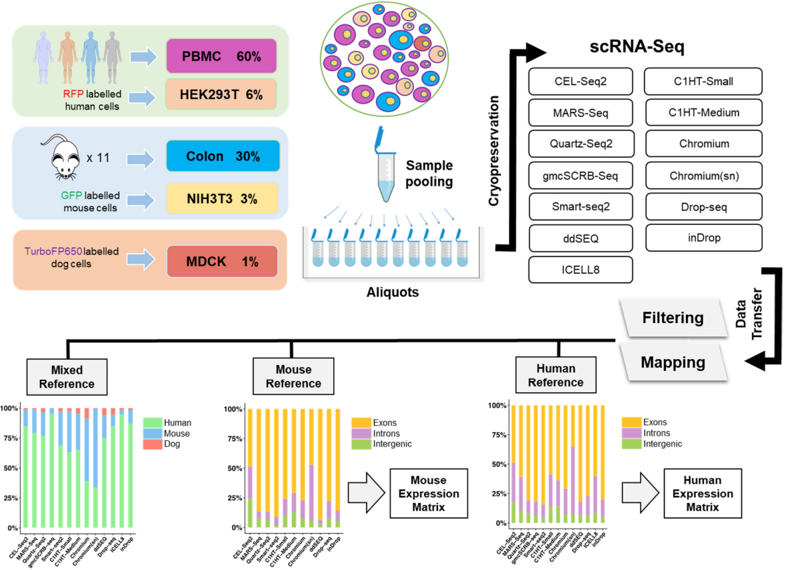
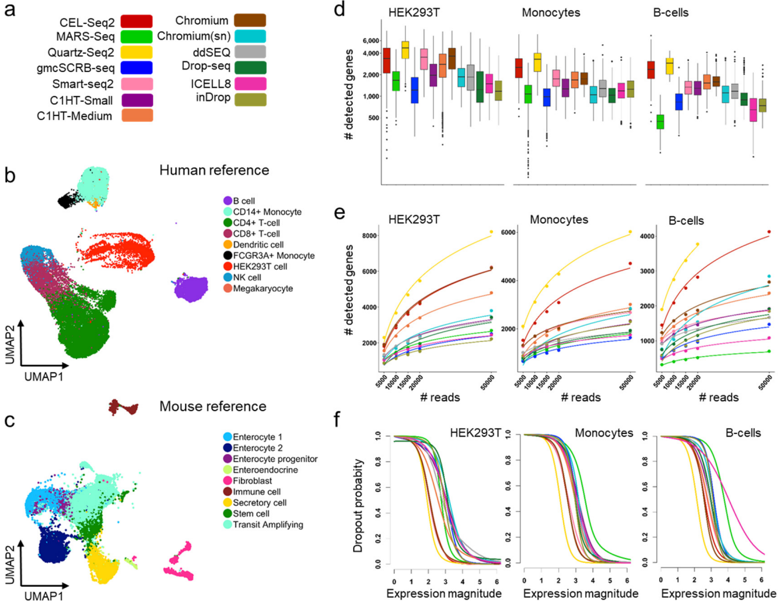
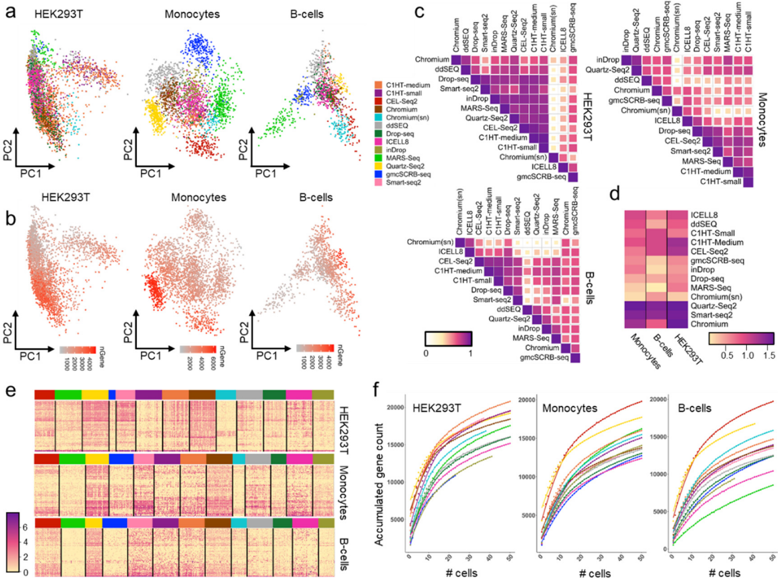
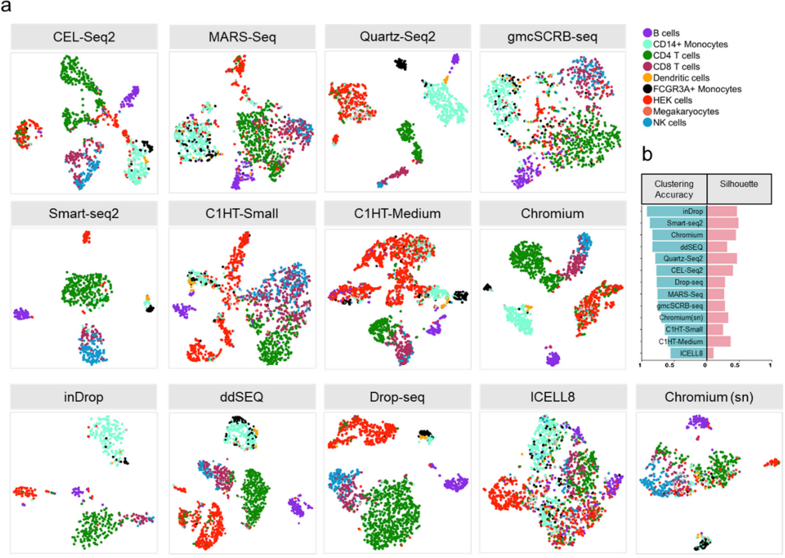
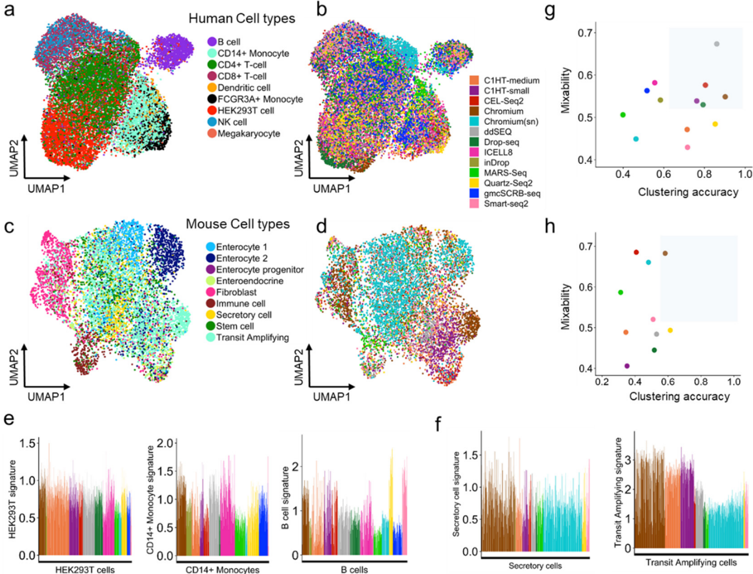
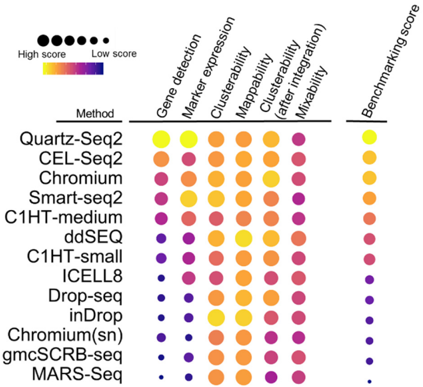
Single-cell RNA sequencing (scRNA-seq) is the leading technique for characterizing the transcriptomes of individual cells in a sample. The latest protocols are scalable to thousands of cells and are being used to compile cell atlases of tissues, organs and organisms. However, the protocols differ substantially with respect to their RNA capture efficiency, bias, scale and costs, and their relative advantages for different applications are unclear. In the present study, we generated benchmark datasets to systematically evaluate protocols in terms of their power to comprehensively describe cell types and states. We performed a multicenter study comparing 13 commonly used scRNA-seq and single-nucleus RNA-seq protocols applied to a heterogeneous reference sample resource. Comparative analysis revealed marked differences in protocol performance. The protocols differed in library complexity and their ability to detect cell-type markers, impacting their predictive value and suitability for integration into reference cell atlases. These results provide guidance both for individual researchers and for consortium projects such as the Human Cell Atlas.
Overview
The claims and statistics of this paper haven’t been checked yet.
Free: it reads the open-access text and checks the first 5 claims that cite a source we can check. Create a free account to check every claim.
Integrity signals
Registry
Cites
Statistics
Figures

Verification
Claims the paper makes
The claims and statistics of this paper haven’t been checked yet.
Free: it reads the open-access text and checks the first 5 claims that cite a source we can check. Create a free account to check every claim.
Claims other papers make about this one
Each is checked against this paper’s own text: does it say what the citing paper says it does?
The cited source says what the claim attributes to it.
In the citing paper
“Genetic differences may also be used to demultiplex 10x datasets generated on samples of mixed species origin [10].”
From Benchmarking of computational demultiplexing methods for single-nucleus RNA sequencing data (2025) · cites this paper as [10]
Self-check
Percentages, sums and reported differences re-computed from the paper’s own numbers.
The self-check needs the paper’s full text.
Citations
Cites
STAR: ultrafast universal RNA-seq aligner
Dobin, A., Davis, C. A., Schlesinger, F., Drenkow, J., Zaleski, C., Jha, S., Batut, P., Chaisson, M., & Gingeras, T. R. (2013) · Bioinformatics · doi:10.1093/bioinformatics/bts635 · Cited by 51,709
featureCounts: an efficient general purpose program for assigning sequence reads to genomic features
Liao, Y., Smyth, G. K., & Shi, W. (2014) · Bioinformatics · doi:10.1093/bioinformatics/btt656 · Cited by 27,219
Fast, sensitive and accurate integration of single-cell data with Harmony
Korsunsky, I., Millard, N., Fan, J., Slowikowski, K., Zhang, F., Wei, K., Baglaenko, Y., Brenner, M., Loh, P.-R., & Raychaudhuri, S. (2019) · Nature Methods · doi:10.1038/s41592-019-0619-0 · Cited by 10,488
Massively parallel digital transcriptional profiling of single cells
Zheng, G. X. Y., Terry, J. M., Belgrader, P., Ryvkin, P., Bent, Z. W., Wilson, R., Ziraldo, S. B., Wheeler, T. D., McDermott, G. P., Zhu, J., et al. (2017) · Nature Communications · doi:10.1038/ncomms14049 · Cited by 7,353
Highly parallel genome-wide expression profiling of individual cells using nanoliter droplets.
Macosko, E. Z., Basu, A., Satija, R., Nemesh, J., Shekhar, K., Goldman, M., Tirosh, I., Bialas, A. R., Kamitaki, N., Martersteck, E. M., et al. (2015) · Cell · doi:10.1016/j.cell.2015.05.002 · Cited by 7,110
Self-citationSpatial reconstruction of single-cell gene expression data
Satija, R., Farrell, J. A., Gennert, D., Schier, A. F., & Regev, A. (2015) · Nature Biotechnology · doi:10.1038/nbt.3192 · Cited by 7,055
Self-citationDroplet barcoding for single-cell transcriptomics applied to embryonic stem cells
Klein, A. M., Mazutis, L., Akartuna, I., Tallapragada, N., Veres, A., Li, V., Peshkin, L., Weitz, D. A., & Kirschner, M. W. (2015) · Cell · doi:10.1016/j.cell.2015.04.044 · Cited by 3,356
Single-cell transcriptomics of 20 mouse organs creates a Tabula Muris
The Tabula Muris Consortium, coordination, O., coordination, L., processing, O. C. A., sequencing, L. P. A., analysis, C. D., annotation, C. T., Writing group, Supplemental text writing group, & Principal investigators (2018) · Nature · doi:10.1038/s41586-018-0590-4 · Cited by 2,842
Snakemake—a scalable bioinformatics workflow engine
Köster, J., & Rahmann, S. (2012) · Bioinformatics · doi:10.1093/bioinformatics/bts480 · Cited by 2,780
Smart-seq2 for sensitive full-length transcriptome profiling in single cells
Picelli, S., Björklund, Å. K., Faridani, O. R., Sagasser, S., Winberg, G., & Sandberg, R. (2013) · Nature Methods · doi:10.1038/nmeth.2639 · Cited by 2,358
Self-citation
Cited by
Items 101–200 of 517
Mostly natural sequencing-by-synthesis for scRNA-seq using Ultima sequencing
Simmons, S. K., Lithwick-Yanai, G., Adiconis, X., Oberstrass, F., Iremadze, N., Geiger-Schuller, K., Thakore, P. I., Frangieh, C. J., Barad, O., Almogy, G., et al. (2023) · Nature Biotechnology · doi:10.1038/s41587-022-01452-6 · Cited by 50
Self-citationMultiplexed single-cell analysis of organoid signaling networks
Sufi, J., Qin, X., Rodriguez, F. C., Bu, Y. J., Vlckova, P., Zapatero, M. R., Nitz, M., & Tape, C. J. (2021) · Nature Protocols · doi:10.1038/s41596-021-00603-4 · Cited by 57
Negishi, R., Yamakawa, H., KOBAYASHI, T., Horikawa, M., Shimoyama, T., Koizumi, F., Sawada, T., Oboki, K., Omuro, Y., Funasaka, C., et al. (2022) · Communications Biology · doi:10.1038/s42003-021-02937-x · Cited by 65
Alysandratos, K., Garcia-de-Alba, C., Yao, C., Pessina, P., Huang, J., Villacorta-Martín, C., Hix, O. T., Minakin, K., Burgess, C. L., Bawa, P., et al. (2023) · JCI Insight · doi:10.1172/jci.insight.158937 · Cited by 55
“Using the Jaccard index (61, 62), we performed comparisons between the clusters identified in the current study and the KRT5–KRT17+ transitional cell cluster described in Habermann et al.”
Chen, L., He, Q., Zhai, Y., & Deng, M. (2020) · Bioinformatics · doi:10.1093/bioinformatics/btaa908 · Cited by 61
Gupta, A., Shamsi, F., Altemose, N., Dorlhiac, G., Cypess, A. M., White, A. P., Yosef, N., Patti, M., Tseng, Y.-H., & Streets, A. (2022) · Genome Research · doi:10.1101/gr.275509.121 · Cited by 56
“However, technical biases and differential transcript enrichment in snRNA-seq lead to significant batch effects between snRNA-seq and scRNA-seq experiments, thereby reducing cluster-ability of cells from these two protocols (Mereu et al. 2020).”
Applications of Single-Cell Omics in Tumor Immunology
Liu, J., Qu, S., Zhang, T., Gao, Y., Shi, H., Song, K., Chen, W., & Yin, W. (2021) · Frontiers in Immunology · doi:10.3389/fimmu.2021.697412 · Cited by 61
“Multiple scRNA-seq or sc-nucleus RNA-seq protocols were developed to enhance the scale, the sensitivity, or the accuracy of single-cell transcriptome quantification (22).”
MethodTAS-Seq is a robust and sensitive amplification method for bead-based scRNA-seq
Shichino, S., Ueha, S., Hashimoto, S., Ogawa, T., Aoki, H., Wu, B., Chen, C.-Y., Kitabatake, M., Ouji-Sageshima, N., Sawabata, N., et al. (2022) · Communications Biology · doi:10.1038/s42003-022-03536-0 · Cited by 47
Bassler, K. E., Fujii, W., Kapellos, T. S., Dudkin, E., Reusch, N., Horne, A., Reiz, B., Luecken, M. D., Osei-Sarpong, C., Warnat‐Herresthal, S., et al. (2022) · Frontiers in Immunology · doi:10.3389/fimmu.2022.917232 · Cited by 56
Abnormal signal pathways and tumor heterogeneity in osteosarcoma
Sun, Y., Zhang, C., Fang, Q., Zhang, W., & Liu, W. Y. (2023) · Journal of Translational Medicine · doi:10.1186/s12967-023-03961-7 · Cited by 55
“Single-cell RNA-sequencing (scRNA-seq) is a promising tool that can analyze the composition of heterogeneous cell populations and lineage hierarchies [14, 15].”
MethodLiu, Z., Wu, D., Zhai, W., & Ma, L. (2023) · Nature Communications · doi:10.1038/s41467-023-40458-9 · Cited by 58
“A number of computational algorithms, which designed speci fi - cally for deconvolution spatial transcriptomics with single-cell RNA sequencing data as references, has been recently proposed 13,14 .”
Associating growth factor secretions and transcriptomes of single cells in nanovials using SEC-seq
Udani, S., Langerman, J., Koo, D., Baghdasarian, S., Cheng, B., Kang, S., Soemardy, C., de Rutte, J. M., Plath, K., & Carlo, D. D. (2023) · Nature Nanotechnology · doi:10.1038/s41565-023-01560-7 · Cited by 54
Evaluating imputation methods for single-cell RNA-seq data
Yi, C. X., Ma, X., Yuan, L., Sun, Z., & Wang, P. (2023) · BMC Bioinformatics · doi:10.1186/s12859-023-05417-7 · Cited by 59
“Thus, to exclude the potential influence of dataset characteristics, another set of datasets, which were recently developed specifically for benchmarking [23], were also evaluated for the top three benchmarking protocols.”
MethodCellMixS: quantifying and visualizing batch effects in single-cell RNA-seq data
Lütge, A., Zyprych-Walczak, J., Brykczynska Kunzmann, U., Crowell, H. L., Calini, D., Malhotra, D., Soneson, C., & Robinson, M. D. (2021) · Life Science Alliance · doi:10.26508/lsa.202001004 · Cited by 58
Consensus clustering of single-cell RNA-seq data by enhancing network affinity
Cui, Y., Zhang, S., Liang, Y. J., Wang, X., Ferraro, T. N., & Chen, Y. (2021) · Briefings in Bioinformatics · doi:10.1093/bib/bbab236 · Cited by 53
“Dropout noise is usually produced by the low RNA capture rate, resulting in false zero counts of gene expression levels [27, 31–33].”
BackgroundGenerating and Using Transcriptomically Based Retinal Cell Atlases
Shekhar, K., & Sanes, J. R. (2021) · Annual Review of Vision Science · doi:10.1146/annurev-vision-032621-075200 · Cited by 54
Single-Cell RNA Sequencing in Parkinson’s Disease
Ma, S., & Lim, S. B. (2021) · Biomedicines · doi:10.3390/biomedicines9040368 · Cited by 62
scBaseCount: An AI agent-curated, standardized, auto-updated single-cell data repository
Youngblut, N. D., Carpenter, C., Nayebnazar, A., Adduri, A., Shah, R., Ricci-Tam, C., Prashar, J., Ilango, R., Teyssier, N., Konermann, S., et al. (2026) · Cell · doi:10.1016/j.cell.2026.08.025 · Cited by 56
Microfluidic single-cell transcriptomics: moving towards multimodal and spatiotemporal omics
Lin, S., Liu, Y., Zhang, M., Xu, X. J., Chen, Y., Zhang, H., & Yang, C. J. (2021) · Lab on a Chip · doi:10.1039/d1lc00607j · Cited by 52
Metalloproteomics for Biomedical Research: Methodology and Applications
Zhou, Y., Li, H., & Sun, H. (2022) · Annual Review of Biochemistry · doi:10.1146/annurev-biochem-040320-104628 · Cited by 59
The human placenta and its role in reproductive outcomes revisited
Aye, I. L. M. H., Tong, S., Charnock‐Jones, D. S., & Smith, G. C. S. (2025) · Physiological Reviews · doi:10.1152/physrev.00039.2024 · Cited by 58
Gao, C., Shen, X., Tan, Y., & Chen, S. (2022) · Journal of Neuroinflammation · doi:10.1186/s12974-022-02580-1 · Cited by 52
“Even the most sensitive scRNA-seq protocols detect only around 10% of the transcriptome [126, 127].”
BackgroundChen, L., Zhai, Y., He, Q., Wang, W., & Deng, M. (2020) · Genes · doi:10.3390/genes11070792 · Cited by 51
“The rapid development of single-cell RNA sequencing technologies allows us to study tissue heterogeneity at the cellular level [1,2].”
Revealing cell vulnerability in Alzheimer’s disease by single-cell transcriptomics
Saura, C. A., Deprada, A., Capilla-López, M. D., & Parra-Damas, A. (2023) · Seminars in Cell & Developmental Biology · doi:10.1016/j.semcdb.2022.05.007 · Cited by 48
Salcher, S., Heidegger, I. M., Untergasser, G., Fotakis, G., Scheiber, A., Martowicz, A., Noureen, A., Krogsdam, A., Schatz, C., Schäfer, G., et al. (2024) · Heliyon · doi:10.1016/j.heliyon.2024.e28358 · Cited by 50
Valyaeva, A. A., Zharikova, A. A., Kasianov, A. S., Vassetzky, Y. S., & Sheval, E. V. (2020) · Scientific Reports · doi:10.1038/s41598-020-74598-5 · Cited by 50
Hu, Y., Hu, Q., Ansari, M., Riemondy, K. A., Pineda, R., Sembrat, J., Leme, A. S., Ngo, K., Morgenthaler, O., Ha, K., et al. (2024) · European Respiratory Journal · doi:10.1183/13993003.02071-2023 · Cited by 48
“We next used matchSCore analysis to quantify shared marker genes in mouse and human ATII subpopulations (supplementary table S5) [48].”
Clustering ensemble in scRNA-seq data analysis: Methods, applications and challenges
Nie, X., Qin, D., Zhou, X., Duo, H., Hao, Y., Li, B., & Liang, G. (2023) · Computers in Biology and Medicine · doi:10.1016/j.compbiomed.2023.106939 · Cited by 48
Advances and challenges in single-cell RNA sequencing data analysis: a comprehensive review
Nesari, A. M., MotieGhader, H., & Ghorbian, . (2026) · Briefings in Bioinformatics · doi:10.1093/bib/bbaf723 · Cited by 58
“We place particular emphasis on how these innovations translate into clinical insights, such as identifying therapy-resistant tumor clones, profiling immune cell states in COVID-19, and mapping neuronal diversity in the human brain [18–25].”
Tracing colonic embryonic transcriptional profiles and their reactivation upon intestinal damage
Fazilaty, H., Brügger, M. D., Valenta, T., Szczerba, B. M., Berková, L., Doumpas, N., Hausmann, G., Scharl, M. M., & Basler, K. (2021) · Cell Reports · doi:10.1016/j.celrep.2021.109484 · Cited by 45
Resolution of the curse of dimensionality in single-cell RNA sequencing data analysis
Imoto, Y., Nakamura, T., Escolar, E. G., Yoshiwaki, M., Kojima, Y., Yabuta, Y., Katou, Y., Yamamoto, T., Hiraoka, Y., & Saitou, M. (2022) · Life Science Alliance · doi:10.26508/lsa.202201591 · Cited by 52
Tumor heterogeneity and tumor-microglia interactions in primary and recurrent IDH1-mutant gliomas
Blanco-Carmona, E., Narayanan, A., Hernandez, I., Nieto, J. C., Elosua-Bayés, M., Sun, X., Schmidt, C., Pamir, M. N., Özduman, K., Herold‐Mende, C. C., et al. (2023) · Cell Reports Medicine · doi:10.1016/j.xcrm.2023.101249 · Cited by 45
Self-citationTakada, H., Sasagawa, Y., Yoshimura, M., Tanaka, K. Y., Iwayama, Y., Hayashi, T., Isomura-Matoba, A., Nikaido, I., & Kurisaki, A. (2023) · Nature Communications · doi:10.1038/s41467-023-39113-0 · Cited by 43
“In this study, toidentify the signaling pathways directly regulating epithelial cell differentiation in corpus units, we employed Quartz-Seq2 24 ,whichisthemostprecisesingle-cellRNA-seqmethodamong13 single-cell RNA sequencing protocols according to a recent benchmarking study 25 .”
Self-citationDegradation and translation of maternal mRNA for embryogenesis
Yang, G., Xin, Q., & Dean, J. (2024) · Trends in Genetics · doi:10.1016/j.tig.2023.12.008 · Cited by 46
Comparative Analysis of Single-Cell RNA Sequencing Methods with and without Sample Multiplexing
Xie, Y., Chen, H., Chellamuthu, V. R., Lajam, A. B. M., Albani, S., Low, A. H. L., Petretto, E. G., & Behmoaras, J. V. (2024) · International Journal of Molecular Sciences · doi:10.3390/ijms25073828 · Cited by 42
“Potential biases in gene quantification could be related to three major factors: gene expression abundance, gene length and GC content [20,22,23].”
BackgroundMethodResultInfluentialscMRA: a robust deep learning method to annotate scRNA-seq data with multiple reference datasets
Yuan, M., Chen, L., & Deng, M. (2021) · Bioinformatics · doi:10.1093/bioinformatics/btab700 · Cited by 42
Bian, N., Chu, C., Rung, S., Huangphattarakul, V., Man, Y., Lin, J., & Hu, C. (2022) · Tissue Engineering and Regenerative Medicine · doi:10.1007/s13770-022-00491-z · Cited by 45
Wang, S., Liu, Y., Li, Y., Lv, M., Gao, K., He, Y., Wei, W., Zhu, Y., Dong, X., Xu, X., et al. (2021) · Analytical Chemistry · doi:10.1021/acs.analchem.1c03678 · Cited by 38
Xu, X., Hua, X., Han, M., Hu, S., & Song, J. (2023) · Basic Research in Cardiology · doi:10.1007/s00395-022-00972-1 · Cited by 42
“1A). sc /snRNA-seq platforms include plate or microwell-based, droplet-based, and microfluidic-based platforms [108, 122, 127].”
Durán, R. C., Wei, H., & Wu, J. (2024) · BMC Genomics · doi:10.1186/s12864-024-10364-5 · Cited by 43
“A prominent multicenter benchmarking study was performed to evaluate the performance of 13 commonly used scRNA-seq protocols including plate-based methods and micro-fluidic systems (droplets, nanowells, and IFC) [29].”
BackgroundMethodInfluentialTranscriptional bursts explain autosomal random monoallelic expression and affect allelic imbalance
Larsson, A. J. M., Ziegenhain, C., Hagemann-Jensen, M., Reinius, B., Jacob, T., Dalessandri, T., Hendriks, G., Kasper, M., & Sandberg, R. (2021) · PLoS Computational Biology · doi:10.1371/journal.pcbi.1008772 · Cited by 43
Self-citationGordon, W. E., Baek, S., Nguyen, H. P., Kuo, Y., Bradley, R., Fong, S., Kim, N., Galazyuk, A. V., Lee, I., Ingala, M. R., et al. (2024) · Nature Communications · doi:10.1038/s41467-023-44186-y · Cited by 37
Soraggi, S., Riera, M., Meyts, E. R., Schierup, M. H., & Almstrup, K. (2020) · Human Genetics · doi:10.1007/s00439-020-02116-8 · Cited by 38
“2019) and technical differences between batches can be mistakenly interpreted as biological effects (Wang et al. 2019; Mereu et al. 2019).”
BackgroundComparative analysis of multiplexed in situ gene expression profiling technologiesPreprint
Hartman, A., & Satija, R. (2024) · bioRxiv (Cold Spring Harbor Laboratory) · doi:10.1101/2024.01.11.575135 · Cited by 38
“Comparative benchmarking has been invaluable for researchers to select among competing single-cell RNA sequencing (scRNA-seq) technologies 30–32 , but similar efforts and benchmarking strategies are still in the process of being identified for imaging-based spatial technologies 33,34 .”
BackgroundResultThe Current State of Single‐Cell Proteomics Data Analysis
Vanderaa, C., & Gatto, L. (2023) · Current Protocols · doi:10.1002/cpz1.658 · Cited by 35
“To evaluate this, a community effort could replicate the mixture design using the different SCP protocols as already seen for scRNA-Seq [38].”
MethodCellular origin and clonal evolution of human dedifferentiated liposarcoma
Gruel, N., Quignot, C., Lesage, L., Zein, S. E., Bonvalot, S., Tzanis, D., Raïs, K. A., Quinquis, F., Manciot, B., Vibert, J., et al. (2024) · Nature Communications · doi:10.1038/s41467-024-52067-1 · Cited by 38
“It has been successfully applied to the characterization of several sarcoma subtypes 24 – 28 .”
Shima, Y., Skibbe, H., Sasagawa, Y., Fujimori, N., Iwayama, Y., Isomura-Matoba, A., Yano, M., Ichikawa, T., Nikaido, I., Hattori, N., et al. (2023) · Cell Reports · doi:10.1016/j.celrep.2023.113309 · Cited by 35
Self-citationShree, A., Pavan, M. K., & Zafar, H. (2023) · Nature Communications · doi:10.1038/s41467-023-43590-8 · Cited by 40
“…collaborative initiatives such as the Human Cell Atlas (HCA) and Human BioMolecular Atlas Program (HuBMAP) 4,5 have increased the complexity of single-cell datasets which can include samples contributed by different laboratories 6 , generated across tissue locations, time and conditions 7,8 .”
Chen, M., Yang, L. C., Zhou, P., Jin, S., Wu, Z. Q., Tan, Z., Xiao, W., Xu, S., Zhu, Y. N., Wang, M., et al. (2024) · Nature Communications · doi:10.1038/s41467-024-52946-7 · Cited by 36
Elucidating the cellular dynamics of the brain with single-cell RNA sequencing
Cardona-Alberich, A., Tourbez, M., Pearce, S. F., & Sibley, C. R. (2021) · RNA Biology · doi:10.1080/15476286.2020.1870362 · Cited by 32
Single cell RNA sequencing approaches to cardiac development and congenital heart disease
Samad, T., & Wu, S. M. (2021) · Seminars in Cell and Developmental Biology · doi:10.1016/j.semcdb.2021.04.023 · Cited by 34
Feature selection methods affect the performance of scRNA-seq data integration and querying
Zappia, L., Richter, S., Ramírez-Suástegui, C., Kfuri‐Rubens, R., Vornholz, L., Wang, W., Dietrich, O., Frishberg, A., Luecken, M. D., & Theis, F. J. (2025) · Nature Methods · doi:10.1038/s41592-025-02624-3 · Cited by 38
Microfluidics Facilitates the Development of Single-Cell RNA Sequencing
Pan, Y., Cao, W., Mu, Y., & Zhu, Q. (2022) · Biosensors · doi:10.3390/bios12070450 · Cited by 33
Scarf enables a highly memory-efficient analysis of large-scale single-cell genomics data
Dhapola, P., Rodhe, J., Olofzon, R., Bonald, T., Erlandsson, E., Soneji, S., & Karlsson, G. (2022) · Nature Communications · doi:10.1038/s41467-022-32097-3 · Cited by 34
Applications for single-cell and spatial transcriptomics in plant research
Sang, Q., & Kong, F. (2024) · New Crops · doi:10.1016/j.ncrops.2024.100025 · Cited by 32
Processing and Analysis of RNA-seq Data from Public Resources
Zoabi, Y., & Shomron, N. (2021) · Methods in molecular biology · doi:10.1007/978-1-0716-1103-6_4 · Cited by 34
McEntire, K. D., Gage, M. J., Gawne, R., Hadfield, M. G., Hulshof, C. M., Johnson, M. A., Levesque, D. L., Segura, J., & Pinter‐Wollman, N. (2021) · Integrative and Comparative Biology · doi:10.1093/icb/icab160 · Cited by 33
scCAN: single-cell clustering using autoencoder and network fusion
Tran, B., Tran, D., Nguyen, H., Ro, S., & Nguyen, T. (2022) · Scientific Reports · doi:10.1038/s41598-022-14218-6 · Cited by 43
A Single-Cell Tumor Immune Atlas for Precision Oncology
Nieto, P., Elosua-Bayes, M., Trincado, J. L., Marchese, D., Massoni-Badosa, R., Salvany, M., Henriques, A., Mereu, E., Moutinho, C., Ruiz, S., et al. (2020) · bioRxiv (Cold Spring Harbor Laboratory) · doi:10.1101/2020.10.26.354829 · Cited by 30
Self-citationSingle-cell and spatial transcriptomics: Bridging current technologies with long-read sequencing
Yuan, C. U., Quah, F. X., & Hemberg, M. (2024) · Molecular Aspects of Medicine · doi:10.1016/j.mam.2024.101255 · Cited by 32
Principled and interpretable alignability testing and integration of single-cell data
Ma, R., Sun, E., Donoho, D. L., & Zou, J. (2024) · Proceedings of the National Academy of Sciences · doi:10.1073/pnas.2313719121 · Cited by 38
“These methods have played an indispensable role in current single-cell studies such as generating large-scale reference atlases of human organs [17, 62, 22, 95, 76], inferring lineage differentiation trajectories and pseudotime reconstruction [83, 69, 79], and multi-omic characterization of COVID-19 pathogenesis and i…”
BAMboozle removes genetic variation from human sequence data for open data sharing
Ziegenhain, C., & Sandberg, R. (2021) · Nature Communications · doi:10.1038/s41467-021-26152-8 · Cited by 31
Self-citationValyaeva, A. A., Zharikova, A. A., & Sheval, E. V. (2022) · Cell Biology International · doi:10.1002/cbin.11928 · Cited by 32
Spatiotemporal multi-omics: exploring molecular landscapes in aging and regenerative medicine
Chu, L.-X., Wang, W.-J., Gu, X.-P., Wu, P., Gao, C., Zhang, Q., Wu, J., Jiang, D.-W., Huang, J.-Q., Ying, X.-W., et al. (2024) · Military Medical Research · doi:10.1186/s40779-024-00537-4 · Cited by 29
“The development of robust bioinformatic pipe-lines, machine learning algorithms, and statistical models assumes a crucial role in distilling meaningful insights from complex spatial omics data [288, 301–304].”
BackgroundImplications of Intratumor Heterogeneity on Consensus Molecular Subtype (CMS) in Colorectal Cancer
Chowdhury, S., Hofree, M., Lin, K., Maru, D. M., Kopetz, S., & Shen, J. P. (2021) · Cancers · doi:10.3390/cancers13194923 · Cited by 33
He, S., Wang, J., Huang, Y., Kong, F., Yang, R., Zhan, Y., Li, Z., Ye, C., Meng, L., Ren, Y., et al. (2023) · Clinical and Translational Medicine · doi:10.1002/ctm2.1193 · Cited by 31
Immunotherapy of cancer in single-cell RNA sequencing era: A precision medicine perspective
Erfanian, N., Derakhshani, A., Nasseri, S., Fereidouni, M., Baradaran, B., Tabrizi, N. J., Brunetti, O., Bernardini, R., Silvestris, N., & Safarpour, H. (2021) · Biomedicine & Pharmacotherapy · doi:10.1016/j.biopha.2021.112558 · Cited by 30
Triku: a feature selection method based on nearest neighbors for single-cell data
Ascensión, A. M., Ibáñez-Solé, O., Inza, I., Izeta, A., & Araúzo-Bravo, M. J. (2022) · GigaScience · doi:10.1093/gigascience/giac017 · Cited by 30
“Regarding biological datasets, 2 benchmarking datasets have been recently published by Mereu et al. [21] and Ding et al. [20].”
A parameter-free deep embedded clustering method for single-cell RNA-seq data
Zeng, Y., Wei, Z., Zhong, F., Pan, Z., Lu, Y., & Yang, Y. (2022) · Briefings in Bioinformatics · doi:10.1093/bib/bbac172 · Cited by 29
Diverse cell-specific patterns of alternative polyadenylation in Drosophila
Lee, S., Chen, Y., Gillen, A. E., Taliaferro, J. M., Deplancke, B., Li, H., & Lai, E. C. (2022) · Nature Communications · doi:10.1038/s41467-022-32305-0 · Cited by 31
Kong, S., Li, R., Tian, Y., Zhang, Y., Lu, Y., Ou, Q., Gao, P., Li, K., & Zhang, Y. (2023) · Frontiers in Genetics · doi:10.3389/fgene.2022.1100016 · Cited by 30
“Among 13 single-cell RNA sequencing methods, CEL-seq2, Quartz-seq2 and Smart-seq2 were found to have lowthroughput, but the 10 x Chromium performing well in highthroughput (Mereu et al., 2020).”
MethodA multi-center cross-platform single-cell RNA sequencing reference dataset
Chen, X., Yang, Z., Chen, W., Zhao, Y., Farmer, A. A., Tran, B. Q., Furtak, V. A., Moos, M. C., Xiao, W., & Wang, C. (2021) · Scientific Data · doi:10.1038/s41597-021-00809-x · Cited by 32
Wang, R., Hastings, W. J., Saliba, J. G., Bao, D., Huang, Y., Maity, S., Ahmad, O. M. K., Hu, L., Wang, S., Fan, J., et al. (2024) · ACS Nano · doi:10.1021/acsnano.4c11505 · Cited by 28
“59,60 Nanoscale droplets can also contain specific biological components to perform numerous parallel bio-chemical reactions within a small volume.”
Single-Cell Analysis of the Transcriptome and Epigenome
Mazan-Mamczarz, K., Ha, J., De, S., & Sen, P. (2022) · Methods in molecular biology · doi:10.1007/978-1-0716-1831-8_3 · Cited by 29
Practical Considerations for Single‐Cell Genomics
Regan, C., & Preall, J. B. (2022) · Current Protocols · doi:10.1002/cpz1.498 · Cited by 27
Perspectives on the Use of Toxicogenomics to Assess Environmental Risk
Portugal, J., Mansilla, S., & Piña, B. (2022) · Frontiers in Bioscience-Landmark · doi:10.31083/j.fbl2710294 · Cited by 29
Lu, H. X., Ping, J., Zhou, G., Zhao, Z., Gao, W., Jiang, Y., Quan, C., Lu, Y., & Zhou, G. (2022) · Computational and Structural Biotechnology Journal · doi:10.1016/j.csbj.2022.10.028 · Cited by 28
“Advances in next-generation sequencing and advent of single cell RNA sequencing (scRNA-seq) enable us to characterize the transcriptomic profiles in individual cells with high resolution and on a genome-wide scale [1].”
BackgroundAdvancing skeletal health and disease research with single-cell RNA sequencing
Lin, P., Gan, Y., He, J., Lin, S., Xu, J., Chang, L., Zhao, L., Zhu, J. J., Zhang, L., Huang, S., et al. (2024) · Military Medical Research · doi:10.1186/s40779-024-00538-3 · Cited by 34
“Smart-seq2 captures the whole transcriptome, while CEL-seq2 only retains the sequences from the 3’ end of mRNAs, thus it is also subject to limitations due to 3’ bias [58, 59].”
BackgroundSingle Cell Omics for Musculoskeletal Research
Rai, M. F., Wu, C., Capellini, T. D., Guilak, F., Dicks, A. R., Muthuirulan, P., Grandi, F. C., Bhutani, N., & Westendorf, J. J. (2021) · Current Osteoporosis Reports · doi:10.1007/s11914-021-00662-2 · Cited by 27
“scATAC-seq compared to say 10–45% of expressed genes detected in single cells from scRNA-seq data [25, 26], we anticipate that these issues would drastically reduce the num-”
BackgroundEvaluating microglial phenotypes using single-cell technologies
Sankowski, R., Monaco, G., & Prinz, M. (2021) · Trends in Neurosciences · doi:10.1016/j.tins.2021.11.001 · Cited by 26
Transcriptional Heterogeneity of Cellular Senescence in Cancer
Junaid, M., Lee, A., Kim, J., Park, T. J., & Lim, S. B. (2022) · Molecules and Cells · doi:10.14348/molcells.2022.0036 · Cited by 28
“There are currently many competing scRNA-seq protocols that offer specific advantages and disadvantages (Mereu et al., 2020; Ziegenhain et al., 2017).”
BackgroundApplication of single-cell multi-omics approaches in horticulture research
Zhang, J., Ahmad, M., & Gao, H. (2023) · Molecular Horticulture · doi:10.1186/s43897-023-00067-y · Cited by 25
“Comparative analyses have shown that snRNA-seq provides an alternative and effective means to identify different cell types, demonstrating conserved representation of the transcriptome in the cytoplasm and nucleus (Bakken et al. 2018; Ding et al. 2020; Farmer et al. 2021; Kulkarni et al. 2019; Mereu et al. 2020).”
BackgroundSingle-cell transcriptomics in tissue engineering and regenerative medicine
Ruta, A., Krishnan, K., & Elisseeff, J. H. (2023) · Nature Reviews Bioengineering · doi:10.1038/s44222-023-00132-7 · Cited by 29
“Considerations for protocol selection include expected RNA input quantity, library complexity and potential bias to specific cell types 13 .”
Application of Spatial Omics in the Cardiovascular System
Hu, Y., Jia, H., Cui, H., & Song, J. (2025) · Research · doi:10.34133/research.0628 · Cited by 33
“Furthermore, scRNA-seq and snRNA-seq typically provide limited insight into the tissue architecture or the physical relationships between cells [ 13 ].”
DEMOC: a deep embedded multi-omics learning approach for clustering single-cell CITE-seq data
Zou, G., Lin, Y., Han, T., & Ou-Yang, L. (2022) · Briefings in Bioinformatics · doi:10.1093/bib/bbac347 · Cited by 25
Wang, Y., Lian, B., Zhang, H., Zhong, Y., He, J. Y., Wu, F., Reinert, K., Shang, X., Yang, H., & Hu, J. (2023) · Bioinformatics · doi:10.1093/bioinformatics/btad005 · Cited by 25
Overview of single‐cell RNA sequencing analysis and its application to spermatogenesis research
Suzuki, T. (2023) · Reproductive Medicine and Biology · doi:10.1002/rmb2.12502 · Cited by 28
A systematic overview of single-cell transcriptomics databases, their use cases, and limitations
Gondal, M. N., Shah, S. U. R., Chinnaiyan, A. M., & Cieslik, M. P. (2024) · Frontiers in Bioinformatics · doi:10.3389/fbinf.2024.1417428 · Cited by 43
Southard-Smith, A. N., Simmons, A. J., Chen, B., Jones, A., Solano, M. A. R., Vega, P. N., Scurrah, C. R., Zhao, Y., Brenan, M. J., Xuan, J., et al. (2020) · BMC Genomics · doi:10.1186/s12864-020-06843-0 · Cited by 25
Emerging paradigms in metastasis research
Pari, A. A. A., Singhal, M., & Augustin, H. G. (2020) · The Journal of Experimental Medicine · doi:10.1084/jem.20190218 · Cited by 25
Comparative analysis of multiplexed in situ gene expression profiling technologiesPreprint
Hartman, A., & Satija, R. (2024) · eLife · doi:10.7554/elife.96949 · Cited by 35
Single‐cell RNA sequencing for traumatic spinal cord injury
Cao, Y., Zhu, S., Yu, B., & Yao, C. (2022) · The FASEB Journal · doi:10.1096/fj.202200943r · Cited by 26
Integrating multiple references for single-cell assignment
Duan, B., Chen, S., Chen, X., Zhu, C., Tang, C., Wang, S., Gao, Y., Fu, S., & Liu, Q. (2021) · Nucleic Acids Research · doi:10.1093/nar/gkab380 · Cited by 23
“The 12 datasets in ‘PBMC-Mereu’ (22) were from GSE133549, and the corresponding RData file can be downloaded in https://www.”
BackgroundMethodInfluentialComparative analysis of multiplexed in situ gene expression profiling technologiesPreprint
Hartman, A., & Satija, R. (2024) · eLife · doi:10.7554/elife.96949.1 · Cited by 23
Cellular heterogeneity and key subsets of tissue-resident memory T cells in cervical cancer
Wang, F., Yue, S., Huang, Q., Lei, T., Li, X., Wang, C., Yue, J., & Liu, C. (2024) · npj Precision Oncology · doi:10.1038/s41698-024-00637-3 · Cited by 22
“Compared with bulk RNA sequencing, scRNA-seq enables the study of individual cells, providing researchers with a measure of cellular heterogeneity within complex tissues or cell populations. scRNA-seq can identify rare cell types or states, which may otherwise be missed in a bulk RNA analysis 20 .”
BackgroundMelón-Ardanaz, E., Veny, M., Corraliza, A. M., Gudiño, V., Garrido-Trigo, A., Sanzo-Machuca, Á., Buendia, M., Esteller, M., Robbins, L., Rodrigo‐Calvo, M. T., et al. (2025) · Journal of Crohn s and Colitis · doi:10.1093/ecco-jcc/jjaf076 · Cited by 23
“3,7 In this context, a better understanding of the mechanisms driving refractoriness is crucial to implement evidence-based therapeutic decisions and to design alternative therapies.”
Single-cell RNA-sequencing of mammalian brain development: insights and future directions
Vinsland, E., & Linnarsson, S. (2022) · Development · doi:10.1242/dev.200180 · Cited by 21
Wispelaere, K. D., & Freson, K. (2022) · International Journal of Molecular Sciences · doi:10.3390/ijms23147647 · Cited by 24
“A more thorough review and benchmarking of the many existing scRNA-seq methods have been reported by others [83,84].”
MethodDecoding anterior-posterior axis emergence among mouse, monkey, and human embryos
Zhu, Q., Ge, J., Liu, Y., Xu, J.-W., Yan, S., & Zhou, F. (2023) · Developmental Cell · doi:10.1016/j.devcel.2022.12.004 · Cited by 22
Bayesian segmentation of spatially resolved transcriptomics data
Petukhov, V., Soldatov, R. A., Khodosevich, K., & Kharchenko, P. V. (2020) · bioRxiv (Cold Spring Harbor Laboratory) · doi:10.1101/2020.10.05.326777 · Cited by 19
Metadata
- Authors
- Mereu, E., Lafzi, A., Moutinho, C., Ziegenhain, C., McCarthy, D. J., Álvarez-Varela, A., Batlle, E., Sagar, Grün, D., Lau, J. K., Boutet, S. C., Sanada, C., Ooi, A., Jones, R. C., Kaihara, K., Brampton, C., Talaga, Y., Sasagawa, Y., Tanaka, K., Hayashi, T., Braeuning, C., Fischer, C., Sauer, S., Trefzer, T., Conrad, C., Adiconis, X., Nguyen, L. T., Regev, A., Levin, J. Z., Parekh, S., Janjic, A., Wange, L. E., Bagnoli, J. W., Enard, W., Gut, M., Sandberg, R., Nikaido, I., Gut, I., Stegle, O., & Heyn, H.
- Affiliations
- Barcelona Institute of Science and Technology (ES)
- Karolinska Institutet (SE)
- European Bioinformatics Institute (GB)
- Institute for Research in Biomedicine (ES)
- Institució Catalana de Recerca i Estudis Avançats (ES)
- Max Planck Institute of Immunobiology and Epigenetics (DE)
- 10X Genomics (United States) (US)
- Standard BioTools (United States) (US)
- Stanford University (US)
- Bio-Rad (United States) (US)
- RIKEN Center for Biosystems Dynamics Research (JP)
- Max Delbrück Center (DE)
- Berlin Institute of Health at Charité - Universitätsmedizin Berlin (DE)
- Broad Institute (US)
- Max Planck Institute for Biology of Ageing (DE)
- Ludwig-Maximilians-Universität München (DE)
- University of Tsukuba (JP)
- Universitat Pompeu Fabra (ES)
- Corresponding author
- Heyn, Holger
- ORCID
- Mereu, Elisabetta
- Lafzi, Atefeh
- Ziegenhain, Christoph
- McCarthy, Davis J.
- Álvarez-Varela, Adrián
- Batlle, Eduard
- Grün, Dominic
- Ooi, Aik
- Jones, Robert C.
- Kaihara, Kelly
- Sasagawa, Yohei
- Tanaka, Kaori
- Hayashi, Tetsutaro
- Braeuning, Caroline
- Fischer, Cornelius
- Sauer, Sascha
- Trefzer, Timo
- Conrad, Christian
- Adiconis, Xian
- Regev, Aviv
- Levin, Joshua Z.
- Parekh, Swati
- Janjic, Aleksandar
- Wange, Lucas E.
- Bagnoli, Johannes W.
- Enard, Wolfgang
- Sandberg, Rickard
- Nikaido, Itoshi
- Gut, Ivo
- Stegle, Oliver
- Heyn, Holger
- Venue
- Nature Biotechnology
- Published
- 2020-04-06
- Volume
- 38
- Issue
- 6
- Pages
- 747-755
- ISSN
- 0733-222X (ISSN-L)
- 1087-0156
- 1546-1696
- OpenAlex
- W2946232537
- Semantic Scholar
- 16427167f541cf06f9200dfc81ab78f168695559
- Cited by
- 499
- References
- 68
- Citations by year
- 2026: 52 · 2025: 66 · 2024: 87 · 2023: 86 · 2022: 72 · 2021: 82 · 2020: 49
- FWCI
- 23.93
- Type
- journal article
- Language
- en
- Open access
- green
- doi.org
- Licence
- cc-by-nd
- www.springer.com/tdm (tdm)
- www.springer.com/tdm (vor)
- Locations
- Nature Biotechnology (publishedVersion)
- bioRxiv (Cold Spring Harbor Laboratory) (acceptedVersion, cc-by-nd)
- PubMed (publishedVersion)
- Minerva Access (University of Melbourne) (submittedVersion)
- MDC Repository (Max-Delbrueck-Center for Molecular Medicine) (submittedVersion)
- MPG.PuRe (Max Planck Society) (submittedVersion)
- MPG.PuRe (Max Planck Society) (submittedVersion, other-oa)
- Repositori digital de la UPF (Universitat Pompeu Fabra) (submittedVersion)
- Funders
- Howard Hughes Medical Institute
- Silicon Valley Community Foundation (2018-182827)
- Ministerio de Ciencia, Innovación y Universidades (SAF2017-89109-P)
- Research Center Network for Realization of Regenerative Medicine
- European Commission (H2020-MSCA-ITN, 675752, HORIZON2020, H2020-MSCA ITN-2015, H2020, 810287, H2020-MSCA)
- Deutsche Forschungsgemeinschaft (SFB 1243, EN 1093/2-1)
- Agence Nationale de la Recherche (ANR-18-CE92-0005)
- Generalitat de Catalunya
- Max-Planck-Gesellschaft
- Science for Life Laboratory
- Horizon 2020 Framework Programme (H2020‐MSCA‐ITN‐2015, H2020-MSCA, H2020-MSCA-ITN, 810287)
- Klarman Cell Observatory, Broad Institute
- Instituto de Salud Carlos III (CP14/00229, H2020)
- Agencia Estatal de Investigación (H2020)
- National Institute of Allergy and Infectious Diseases (U24AI118672)
- Core Research for Evolutional Science and Technology (JPMJCR16G3)
- Topics
- Life Sciences › Biochemistry, Genetics and Molecular Biology › Molecular Biology › Single-cell and spatial transcriptomics
- Life Sciences › Biochemistry, Genetics and Molecular Biology › Molecular Biology › Genomics and Phylogenetic Studies
- Life Sciences › Biochemistry, Genetics and Molecular Biology › Molecular Biology › Gene expression and cancer classification
- Keywords
- single-cell RNA sequencing, protocol performance comparison, cell atlases, single-nucleus RNA sequencing, library complexity, Human Cell Atlas, multicenter comparison
- MeSH terms
- Animals, Cell Line, Humans, Sequence Analysis, RNA, Benchmarking, Genomics, Databases, Genetic, Mice, Single-Cell Analysis
About these checks
Registry, retraction, Cites and statistics results are computed, not judged, with one exception: a printed reference that no index lists is read once by a model before it counts as a citation error. Claims are extracted by a model and kept only when their quote appears verbatim in the text; each cited source is then checked, with a model’s help, for whether it says what the claim relies on. Those verdicts can be wrong — read the claim’s quote and the cited source before relying on one.
Statistics and arithmetic are recomputed, not judged.
Confidence bands are shown only for fields calibrated on our annotated test set. None is calibrated yet, so no band is shown.
What counts as a claim ›How we measure confidence ›How we check this ›
Are you an author, or do you see a problem with this page? Request a review
Data sources
Bibliographic data: Semantic Scholar, OpenAlex, Crossref.
Contains information from the Semantic Scholar Academic Graph Datasets, made available under the ODC Attribution License (ODC-BY 1.0).
Semantic Scholar’s data is described in: Kinney, R., et al. (2023). The Semantic Scholar Open Data Platform. arXiv:2301.10140.
