

Benchmarking single-cell RNA-sequencing protocols for cell atlas projects
Open accessPublished version of a preprint
The DOI matches its Crossref record; 68 of the 68 references it cites were found in a registry or an index.
Abstract
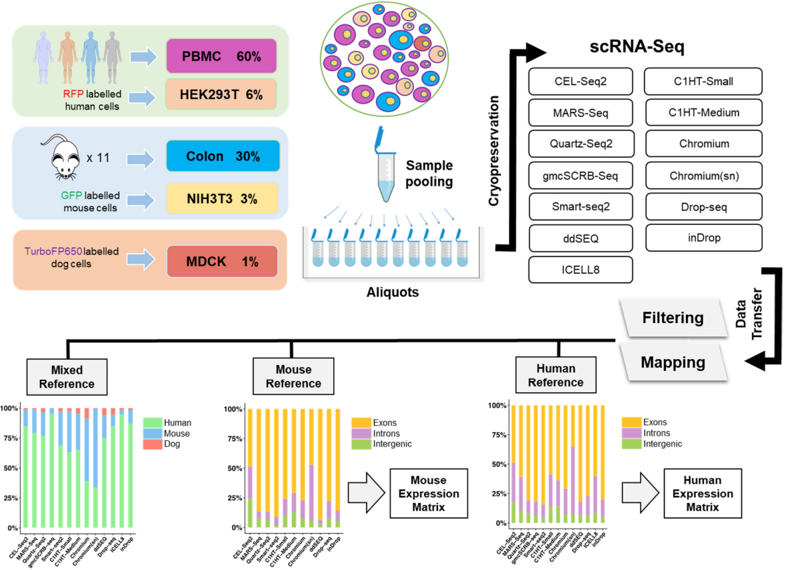
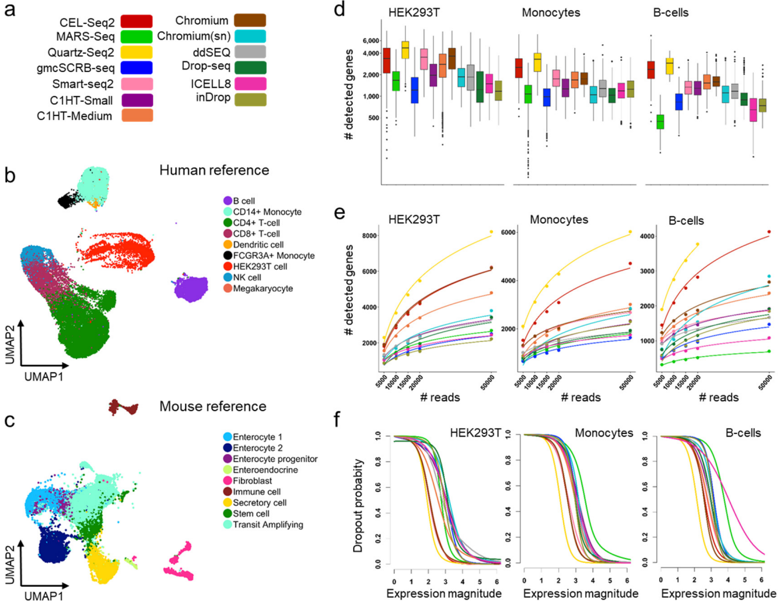
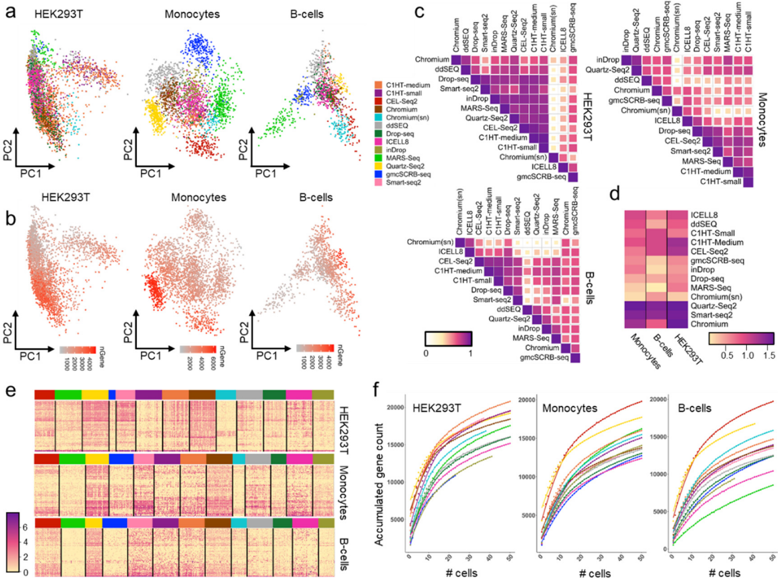
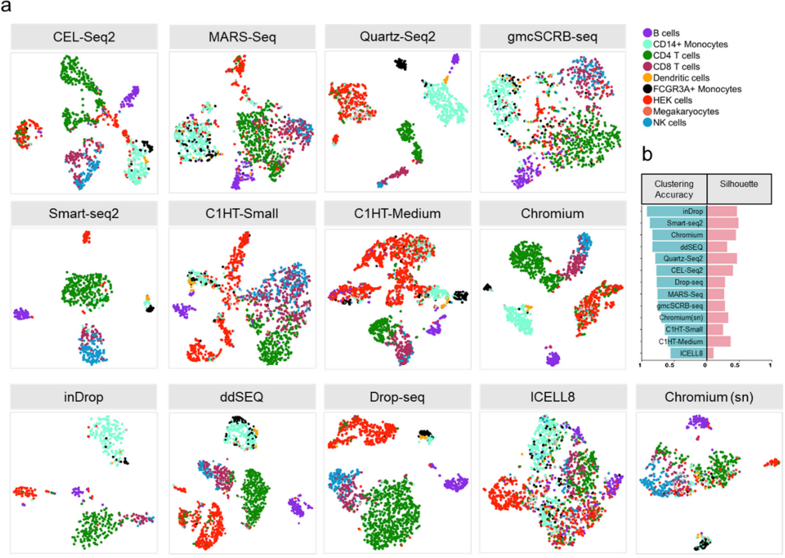
Single-cell RNA sequencing (scRNA-seq) is the leading technique for characterizing the transcriptomes of individual cells in a sample. The latest protocols are scalable to thousands of cells and are being used to compile cell atlases of tissues, organs and organisms. However, the protocols differ substantially with respect to their RNA capture efficiency, bias, scale and costs, and their relative advantages for different applications are unclear. In the present study, we generated benchmark datasets to systematically evaluate protocols in terms of their power to comprehensively describe cell types and states. We performed a multicenter study comparing 13 commonly used scRNA-seq and single-nucleus RNA-seq protocols applied to a heterogeneous reference sample resource. Comparative analysis revealed marked differences in protocol performance. The protocols differed in library complexity and their ability to detect cell-type markers, impacting their predictive value and suitability for integration into reference cell atlases. These results provide guidance both for individual researchers and for consortium projects such as the Human Cell Atlas.
Overview
The claims and statistics of this paper haven’t been checked yet.
Free: it reads the open-access text and checks the first 5 claims that cite a source we can check. Create a free account to check every claim.
Integrity signals
Registry
Cites
Statistics
Figures

Verification
Claims the paper makes
The claims and statistics of this paper haven’t been checked yet.
Free: it reads the open-access text and checks the first 5 claims that cite a source we can check. Create a free account to check every claim.
Claims other papers make about this one
Each is checked against this paper’s own text: does it say what the citing paper says it does?
The cited source says what the claim attributes to it.
In the citing paper
“Genetic differences may also be used to demultiplex 10x datasets generated on samples of mixed species origin [10].”
From Benchmarking of computational demultiplexing methods for single-nucleus RNA sequencing data (2025) · cites this paper as [10]
Self-check
Percentages, sums and reported differences re-computed from the paper’s own numbers.
The self-check needs the paper’s full text.
Citations
Cites
STAR: ultrafast universal RNA-seq aligner
Dobin, A., Davis, C. A., Schlesinger, F., Drenkow, J., Zaleski, C., Jha, S., Batut, P., Chaisson, M., & Gingeras, T. R. (2013) · Bioinformatics · doi:10.1093/bioinformatics/bts635 · Cited by 51,709
featureCounts: an efficient general purpose program for assigning sequence reads to genomic features
Liao, Y., Smyth, G. K., & Shi, W. (2014) · Bioinformatics · doi:10.1093/bioinformatics/btt656 · Cited by 27,219
Fast, sensitive and accurate integration of single-cell data with Harmony
Korsunsky, I., Millard, N., Fan, J., Slowikowski, K., Zhang, F., Wei, K., Baglaenko, Y., Brenner, M., Loh, P.-R., & Raychaudhuri, S. (2019) · Nature Methods · doi:10.1038/s41592-019-0619-0 · Cited by 10,488
Massively parallel digital transcriptional profiling of single cells
Zheng, G. X. Y., Terry, J. M., Belgrader, P., Ryvkin, P., Bent, Z. W., Wilson, R., Ziraldo, S. B., Wheeler, T. D., McDermott, G. P., Zhu, J., et al. (2017) · Nature Communications · doi:10.1038/ncomms14049 · Cited by 7,353
Highly parallel genome-wide expression profiling of individual cells using nanoliter droplets.
Macosko, E. Z., Basu, A., Satija, R., Nemesh, J., Shekhar, K., Goldman, M., Tirosh, I., Bialas, A. R., Kamitaki, N., Martersteck, E. M., et al. (2015) · Cell · doi:10.1016/j.cell.2015.05.002 · Cited by 7,110
Self-citationSpatial reconstruction of single-cell gene expression data
Satija, R., Farrell, J. A., Gennert, D., Schier, A. F., & Regev, A. (2015) · Nature Biotechnology · doi:10.1038/nbt.3192 · Cited by 7,055
Self-citationDroplet barcoding for single-cell transcriptomics applied to embryonic stem cells
Klein, A. M., Mazutis, L., Akartuna, I., Tallapragada, N., Veres, A., Li, V., Peshkin, L., Weitz, D. A., & Kirschner, M. W. (2015) · Cell · doi:10.1016/j.cell.2015.04.044 · Cited by 3,356
Single-cell transcriptomics of 20 mouse organs creates a Tabula Muris
The Tabula Muris Consortium, coordination, O., coordination, L., processing, O. C. A., sequencing, L. P. A., analysis, C. D., annotation, C. T., Writing group, Supplemental text writing group, & Principal investigators (2018) · Nature · doi:10.1038/s41586-018-0590-4 · Cited by 2,842
Snakemake—a scalable bioinformatics workflow engine
Köster, J., & Rahmann, S. (2012) · Bioinformatics · doi:10.1093/bioinformatics/bts480 · Cited by 2,780
Smart-seq2 for sensitive full-length transcriptome profiling in single cells
Picelli, S., Björklund, Å. K., Faridani, O. R., Sagasser, S., Winberg, G., & Sandberg, R. (2013) · Nature Methods · doi:10.1038/nmeth.2639 · Cited by 2,358
Self-citation
Cited by
Items 301–400 of 517
Multi-view clustering by CPS-merge analysis with application to multimodal single-cell data
Zhang, L., Lin, L., & Li, J. (2023) · PLoS Computational Biology · doi:10.1371/journal.pcbi.1011044 · Cited by 6
Arlt, C., Wachtmeister, T., Köhrer, K., & Stich, B. (2023) · Plant Biotechnology Journal · doi:10.1111/pbi.14126 · Cited by 6
“Alternatively, when analysing RNA sequencing data, the number of detected genes can be evaluated (Mereu et al ., 2020).”
BackgroundScalable integration of multiomic single-cell data using generative adversarial networks
Giansanti, V., Giannese, F., Botrugno, O. A., Gandolfi, G., Balestrieri, C., Antoniotti, M., Tonon, G., & Cittaro, D. (2024) · Bioinformatics · doi:10.1093/bioinformatics/btae300 · Cited by 8
“That requires the algorithm to model several confounders including technical noise due to different technologies (Mereu et al. 2020, Zhu et al. 2020), biological noise (Paszek 2014, Eling et al. 2019) and batch effects (Tran et al. 2020).”
Xu, H., Ye, Y., Duan, R., Gao, Y., Hu, Y., & Gao, L. (2024) · Advanced Science · doi:10.1002/advs.202306770 · Cited by 8
Ye, K., Chang, W., Xu, J., Guo, Y., Qin, Q., Dang, K., Han, X., Zhu, X., Ge, Q., Cui, Q., et al. (2024) · PLoS ONE · doi:10.1371/journal.pone.0305977 · Cited by 6
“For example, Smart-Seq2 (SS2), the gold standard in recent years, enables a much more in-depth transcriptome analysis with high sensitivity and single-cell resolution [43].”
BackgroundEvaluation of out-of-distribution detection methods for data shifts in single-cell transcriptomics
Theunissen, L., Mortier, T., Saeys, Y., & Waegeman, W. (2025) · Briefings in Bioinformatics · doi:10.1093/bib/bbaf239 · Cited by 6
“Protocols like 10X, SMART-Seq, and Drop-seq have varying sensitivities, i.e. detected genes per cell, and capture efficiency, leading to noticeable global data shifts captured by the Wasserstein distance metric in the reduced Principal Component Analysis (PCA) space [34, 35].”
Li, Q., Lu, M., Zhang, Z., & Zhang, R. (2021) · International Journal of General Medicine · doi:10.2147/ijgm.s318271 · Cited by 7
Proximal tubule responses to injury: interrogation by single-cell transcriptomics
Cippà, P. E., & McMahon, A. P. (2023) · Current Opinion in Nephrology & Hypertension · doi:10.1097/mnh.0000000000000893 · Cited by 6
Advancing toward a unified eosinophil signature from transcriptional profiling
Chhiba, K. D., & Kuang, F. L. (2024) · Journal of Leukocyte Biology · doi:10.1093/jleuko/qiae188 · Cited by 5
ENO1 promotes cancer metastasis via stimulating metabolism reprogramming in osteosarcoma
Huang, P., He, S., Qi, Z., Nijiati, Y., Wang, J., Lin, Z., Ma, Y., Dong, R., Chen, G., & Ning, B. (2025) · British Journal of Cancer · doi:10.1038/s41416-025-03182-3 · Cited by 7
“The single-cell suspension obtained from OS tissue samples post-digestion was processed using the 10X Chromium system (10X Genomics), adhering strictly to the manufacturer ’ s guidelines [14].”
Evaluation of Computational Methods for Single Cell Multi-Omics Integration
Wani, S. A., & Quadri, S. M. K. (2023) · Procedia Computer Science · doi:10.1016/j.procs.2023.01.246 · Cited by 5
Into the microscale: Low-input sequencing technologies and applications in medicine
Li, Y., Xu, F., Qiao, J., & Yuan, P. (2023) · The Innovation Medicine · doi:10.59717/j.xinn-med.2023.100041 · Cited by 5
Tang, H., Zhong, J.-Y., Yu, X., Chai, H., Liu, R., & Zeng, T. (2024) · iScience · doi:10.1016/j.isci.2024.111131 · Cited by 5
Live-cell omics with Raman spectroscopy
Kamei, K.-I. F., & Wakamoto, Y. (2025) · Microscopy · doi:10.1093/jmicro/dfaf020 · Cited by 6
“These issues would be partially resolved with more sensitive scRNA-seq methods such as Quartz-Seq2 [58,59], since they contribute to the detection of more genes and allow minimizing the cytoplasmic extraction volume.”
Triesch, S. S., Reichel-Deland, V., Valderrama‐Martín, J. M., Melzer, M., Schlüter, U., & Weber, A. P. M. (2025) · Journal of Experimental Botany · doi:10.1093/jxb/eraf245 · Cited by 6
Liu, Y., Zhang, Y., & Cui, J. (2020) · Reproductive Toxicology · doi:10.1016/j.reprotox.2020.11.006 · Cited by 5
Superscan: Supervised Single-Cell AnnotationPreprint
Shasha, C., Tian, Y., Mair, F., Miller, H. E. R., & Gottardo, R. (2021) · bioRxiv (Cold Spring Harbor Laboratory) · doi:10.1101/2021.05.20.445014 · Cited by 4
Guo, S., Liu, X., Cheng, X., Jiang, Y., Ji, S., Liang, Q., Koval, A., Li, Y., Owen, L. A., Kim, I. K., et al. (2024) · Genome Research · doi:10.1101/gr.278822.123 · Cited by 5
Critical view on oligo(dT)-based RNA-seq: bias arising, modeling, and mitigating
Su, Q., Wang, J., Kang, K., Niu, Y., Li, S., & Gou, D. (2023) · Genetics · doi:10.1093/genetics/iyad190 · Cited by 4
Li, B., Zhang, X., Fang, Y., Chen, M., Li, Q., Zeng, Y., Ren, C., Wang, C., Lv, Y., Lu, J., et al. (2025) · Cell Proliferation · doi:10.1111/cpr.70007 · Cited by 4
“6.1b) as described [35].”
scREPA: Predicting single-cell perturbation responses with cycle-consistent representation alignment
Wang, Y., Chen, X., Li, X., & Wong, K. (2025) · Computational Biology and Chemistry · doi:10.1016/j.compbiolchem.2025.108712 · Cited by 5
Kang, F., Yuan, H., Samarkhazan, H. S., & Tavakoli, F. (2026) · Cell Communication and Signaling · doi:10.1186/s12964-026-02734-1 · Cited by 5
“Past multicenter benchmarking studies demonstrate this is feasible and informative [151, 156].”
Benchmarking of single-cell ATAC sequencing tools
(2023) · Nature Biotechnology · doi:10.1038/s41587-023-01897-3 · Cited by 4
Exploring biomarkers for autophagy‐mediated macrophage pyroptosis in atherosclerosis
Yang, R., Wang, D., Ding, Y., & Liu, Q. (2023) · Cell Biology International · doi:10.1002/cbin.12080 · Cited by 4
“The single ‐ cell analysis of GSE159677 dataset was used for exploring the cell distribution of pyroptosis ‐ related DEIATG, according to the reference of nature biotechnology method (https://www.nature.com/articles/s41587-020-0469-4) ( Mereu et al., 2020).”
MethodSingle-Cell Analysis in Cerebrovascular Research: Primed for Breakthroughs and Clinical Impact
Albertson, A. J., Winkler, E. A., Yang, A. C., Buckwalter, M. S., Dingman, A., Fan, H., Herson, P. S., McCullough, L. D., Pérez‐Pinzón, M. A., Sansing, L. H., et al. (2024) · Stroke · doi:10.1161/strokeaha.124.049001 · Cited by 5
“35 Bulk RNA-seq studies have also helped elucidate mechanisms of protection in global cerebral ischemia by activating transcription factor 6, 36 the protease inhibitor ulinastatin, 37 and GABA B receptor activation.”
Macrophages and cardiac lesion in zebrafish: what can single-cell RNA sequencing reveal?
Luz, R. B. D. S., de Paula, A. G. P., Czaikovski, A. P., Nunes, B. S. F., de Lima, J. D., Paredes, L. C., Bastos, T. S. B., Richardson, R. J., & Braga, T. T. (2025) · Frontiers in Cardiovascular Medicine · doi:10.3389/fcvm.2025.1570582 · Cited by 5
Zambon, M., Mantica, F., Dias, M., Frazer, J., & Irimia, M. (2025) · Current Opinion in Genetics and Development · doi:10.1016/j.gde.2025.102387 · Cited by 2
Hamraoui, A., Onfroy, A., Sénamaud‐Beaufort, C., Coulpier, F., Lemoine, S., Jourdren, L., & Thomas‐Chollier, M. (2026) · NAR Genomics and Bioinformatics · doi:10.1093/nargab/lqag070 · Cited by 4
“This further supports recent findings [ 39 , 56 , 57 ] showing that short-read data are not free from bias, reinforcing the value of long-read approaches for transcriptomic profiling.”
Repapi, E., Agarwal, D., Napolitani, G., Sims, D., & Taylor, S. (2023) · F1000Research · doi:10.12688/f1000research.121829.3 · Cited by 4
Emerging toolkits for decoding the co-occurrence of modified histones and chromatin proteins
Pépin, A.-S., & Schneider, R. (2024) · EMBO Reports · doi:10.1038/s44319-024-00199-2 · Cited by 4
“Of note, these approaches have limited scalability and require robotics for high-throughput liquid-handling and processing of samples (Mereu et al, 2020).”
BackgroundMethodEvaluation of classification in single cell atac-seq data with machine learning methods
Guo, H., Yang, Z., Jiang, T., Liu, S., Wang, Y., & Cui, Z. (2022) · BMC Bioinformatics · doi:10.1186/s12859-022-04774-z · Cited by 4
“Due to the similarity of data structure and feature selection between scRNA-seq and scATAC-seq data, the procedures for analyzing the composition of cells in complex tissues from scRNA-seq [1] can also apply in scATAC-seq dataset.”
Methodnf-core/marsseq: systematic preprocessing pipeline for MARS-seq experiments
Proks, M., Herrera, J. A. R., Sedzinski, J., & Brickman, J. M. (2024) · Bioinformatics Advances · doi:10.1093/bioadv/vbaf089 · Cited by 4
“Popular approaches include cell isolation using microfluidic devices, plate-based techniques, and nanopore-based strategies (Mereu et al. 2020).”
Barrett, A., Varol, E., Weinreb, A., Taylor, S. R., McWhirter, R. M., Cros, C., Vidal, B., Basaravaju, M., Poff, A., Tipps, J. A., et al. (2026) · eLife · doi:10.7554/elife.106183 · Cited by 5
Cui, Y., Cui, Y., Wang, R., Zhu, Z., Zeng, X., Nakai, K., Cui, F., Zhang, Z., Shi, H. W., Chen, Y., et al. (2025) · bioRxiv (Cold Spring Harbor Laboratory) · doi:10.1101/2025.06.12.659243 · Cited by 9
“A major issue in spatial transcriptomics is the abundance of zero values in gene expression data, leading to data sparsity[16].”
scInterpreter: a knowledge-regularized generative model for interpretably integrating scRNA-seq data
Guo, Z., Wu, Y., Wang, S., Zhang, Q., Shi, J., Wang, Y., & Chen, Z. (2023) · BMC Bioinformatics · doi:10.1186/s12859-023-05579-4 · Cited by 4
HybriSeq: probe-based device-free single-cell RNA profiling
Foyt, D. A., Brown, D., Zhou, S., Moser, B., Zhu, Q., Gartner, Z. J., & Huang, B. (2025) · Communications Biology · doi:10.1038/s42003-025-08702-8 · Cited by 3
Hui, M., Zhang, H., Bajgai, J., Rahman, M. H., Pham, T. T., Mo, C., Cao, B., Choi, Y.-E., Kim, C.-S., & Lee, K. (2025) · Biomolecules · doi:10.3390/biom15121664 · Cited by 4
“The advent of deep sequencing technologies, particularly bulk RNA sequencing and single-cell RNA sequencing (scRNA-seq), has revolutionized our capacity to elucidate disease biology by facilitating high-resolution analysis of therapeutic targets and cellular heterogeneity [13,14].”
Tan, S., Qiao, H., Shentu, X., Xie, Z., Wang, Y., Liang, Q., Gong, X., & Dai, X. (2025) · TrAC Trends in Analytical Chemistry · doi:10.1016/j.trac.2025.118630 · Cited by 3
Liu, Y., Xia, Y., Yan, H., Shen, L.-C., Zhu, Y., Qiang, J.-P., & Wei, G. (2026) · PLoS Computational Biology · doi:10.1371/journal.pcbi.1013824 · Cited by 3
The transformative role of single-cell analysis in multifactorial disorders research
Wang, C., Ko, C.-C., Kumar, S., Xuan, D. T. M., Lin, H.-R., Lee, Y.-K., Nguyen, N. U. N., Pei-Ming, Y., & Solomon, D. D. (2026) · Methods · doi:10.1016/j.ymeth.2026.03.009 · Cited by 3
Optimized summary-statistic-based single-cell eQTL meta-analysis
Korshevniuk, M., Westra, H.-J., Oelen, R., van der Wijst, M. G. P., Franke, L., Bonder, M. J., Alquicira-Hernández, J., Kaptijn, D., Korshevniuk, M., Lee, J. T. H., et al. (2025) · Scientific Reports · doi:10.1038/s41598-025-08808-3 · Cited by 3
Self-citationGenomic Cytometry and New Modalities for Deep Single‐Cell Interrogation
Salomon, R., Martelotto, L. G., Valdés‐Mora, F., & Gallego‐Ortega, D. (2020) · Cytometry Part A · doi:10.1002/cyto.a.24209 · Cited by 3
“Although single-cell transcriptomic methods are not capable of amplifying every single mRNA, even relatively poorly performing methods are proving capable of accurately identifying many existing and novel cell populations (97).”
MethodSingle-cell sequencing: promises and challenges for human genetics
Sreenivasan, V. K. A., Henck, J., & Spielmann, M. (2022) · Medizinische Genetik · doi:10.1515/medgen-2022-2156 · Cited by 6
Scdrake: a reproducible and scalable pipeline for scRNA-seq data analysis
Kubovčiak, J., Kolář, M., & Novotný, J. (2023) · Bioinformatics Advances · doi:10.1093/bioadv/vbad089 · Cited by 4
Chen, R., Nie, P., Wang, J., & Wang, G. (2024) · Wiley Interdisciplinary Reviews - RNA · doi:10.1002/wrna.1865 · Cited by 4
Verstappe, B., & Scott, C. L. (2024) · Clinical & Experimental Immunology · doi:10.1093/cei/uxae077 · Cited by 3
“…the indicated timepoints following administration of PBS (control) or APAP (300 mg/kg) via oral gavage absent from nuclei and hence snRNA-seq datasets [10] while some cell type-and activation state-specific marker genes are also depleted from the nucleus, posing challenges for cluster annotation.”
BackgroundMethodResultYang, L., Kim, J., Chen, L., Wei, W., & Wang, J. (2024) · Analytical Chemistry · doi:10.1021/acs.analchem.4c04239 · Cited by 3
Human Developmental Cell Atlas: milestones achieved and the roadmap aheadPreprint
Haniffa, M. A., Taylor, D. M., Linnarsson, S., Aronow, B. J., Bader, G. D., Cámara, P. G., Camp, J. G., Chédotal, A., Copp, A. J., Etchevers, H., et al. (2020) · Research Square · doi:10.21203/rs.3.rs-73986/v1 · Cited by 3
Self-citationGupta, A., Shamsi, F., Altemose, N., Dorlhiac, G., Cypess, A. M., White, A. P., Patti, M., Tseng, Y., & Streets, A. (2021) · bioRxiv (Cold Spring Harbor Laboratory) · doi:10.1101/2021.03.24.435852 · Cited by 3
Manivannan, S., & Garg, V. (2021) · bioRxiv (Cold Spring Harbor Laboratory) · doi:10.1101/2021.06.17.448424 · Cited by 3
Chang, L., Zheng, Z., Zou, Q., Zhong, B., Chen, C., Cheng, X. W., Ni, Q., Che, T., Zhao, Z., Cao, C., et al. (2022) · bioRxiv (Cold Spring Harbor Laboratory) · doi:10.1101/2022.03.22.485251 · Cited by 4
Interpretable phenotype decoding from multicondition sequencing data with ALPINE
Lee, W.-H., Li, L., Dannenfelser, R., & Yao, V. (2025) · Genome Research · doi:10.1101/gr.280566.125 · Cited by 3
“The rise of single-cell technologies has fueled excitement for atlas-scale initiatives that capture cell-level diversity across numerous variables but has also highlighted the challenges of data harmonization and inter-pretability (Mereu et al. 2020; Rozenblatt-Rosen et al. 2021).”
Barrett, A., Varol, E., Weinreb, A., Taylor, S. R., McWhirter, R. M., Cros, C., Vidal, B., Basaravaju, M., Poff, A., Tipps, J. A., et al. (2026) · eLife · doi:10.7554/elife.106183.2 · Cited by 5
Benchmarking of computational demultiplexing methods for single-nucleus RNA sequencing data
Fu, Y., Youness, M., Virzì, A., Song, X., Tubeeckx, M. R. L., De Keulenaer, G. W., Heidbuchel, H., Segers, V. F. M., Sipido, K. R., Thienpont, B., et al. (2025) · Briefings in Bioinformatics · doi:10.1093/bib/bbaf371 · Cited by 5
“Genetic differences may also be used to demultiplex 10x datasets generated on samples of mixed species origin [10].”
Nussbaum, Y. I., Bryan, J. N., Li, G., Rodney, A. R., Culp, W. T. N., Dickinson, P. J., Koutoulas, A., Megquier, K., An, H., Kramer, S. T., et al. (2025) · Veterinary oncology. · doi:10.1186/s44356-025-00037-0 · Cited by 2
“Single-cell RNA sequencing (scRNA-seq) has emerged as a powerful tool to dissect cellular composition of tumors and, importantly, to identify which cell types represent high-value therapeutic targets [23, 24].”
Hilner, J. M., Turner, A., Vollmar-Zygarlenski, C., & Millet, L. J. (2025) · Biosensors · doi:10.3390/bios15110727 · Cited by 2
Wang, S., Feng, Y., Zhang, Q., Cui, Y., Qiao, Y., Huang, H., Pan, X., & Tu, J. (2026) · IET Nanobiotechnology · doi:10.1049/nbt2/9314222 · Cited by 2
“However, systematic comparative studies evaluating high-throughput scRNA-seq platforms remain relatively scarce, with most assessments relying on homogeneous cell cultures or arti fi cially mixed cell pools [24].”
scUnified: An AI-Ready Standardized Resource for Single-Cell RNA Sequencing Analysis
Xu, P., Wang, Z., Wang, Z., Li, P., Zhang, R., Li, G., Xie, H., Wang, J., Zhou, Y., & Wang, P. (2025) · IEEE ... International Conference on Data Mining workshops · doi:10.1109/icdmw69685.2025.00018 · Cited by 3
“Such data enable a wide array of computational analyses, including cell clustering, cell type annotation, trajectory inference, gene regulatory network reconstruction, and so on [6], [7].”
Mascarenhas, R. D. S., Duarte, M. J., Tanaka, P. P., de Oliveira, E. H. D., Monteiro, C. J., Vieira-Machado, M. C., Donadi, E. A., & Passos, G. A. S. (2026) · Journal of Leukocyte Biology · doi:10.1093/jleuko/qiag038 · Cited by 2
Immune regulation and therapeutic targets in sepsis: insights from single-cell transcriptomics
Zhang, R., Lou, X., Huang, H., Zhou, J., Dai, Q., & Zheng, Z. (2026) · Frontiers in Immunology · doi:10.3389/fimmu.2026.1839417 · Cited by 4
“Since the fi rst commercial platform was introduced in 2014 (12), rapid technological advances have expanded throughput and reduced cost, resulting in widespread adoption of scRNA-seq and the development of multiple high-throughput platforms (13, 14).”
Bentzur, A., Alon, S., & Shohat-Ophir, G. (2022) · International Journal of Molecular Sciences · doi:10.3390/ijms23073811 · Cited by 2
Hekselman, I., Vital, A., Ziv, M., Kerber, L., Yairi, I., & Yeger‐Lotem, E. (2024) · eLife · doi:10.7554/elife.84613 · Cited by 2
Li, C., Liao, J., Chen, B., & Wang, Q. (2025) · Critical Reviews in Oncology/Hematology · doi:10.1016/j.critrevonc.2025.104677 · Cited by 2
Enhancement and Imputation of Peak Signal Enables Accurate Cell-Type Classification in scATAC-seq
Cui, Z., Cui, Y., Gao, Y. P., Jiang, T., Zang, T., & Wang, Y. (2021) · Frontiers in Genetics · doi:10.3389/fgene.2021.658352 · Cited by 2
Isolation of Murine Articular Chondrocytes for Single-Cell RNA or Bulk RNA Sequencing Analysis
McCool, J. L., Hum, N. R., Sebastian, A., & Loots, G. G. (2022) · Methods in molecular biology · doi:10.1007/978-1-0716-2839-3_14 · Cited by 2
Verboom, K., Assefa, A. T., Yigit, N., Anckaert, J., Vandamme, N., Rombaut, D., Saeys, Y., Thas, O., Speleman, F., Durinck, K., et al. (2020) · bioRxiv (Cold Spring Harbor Laboratory) · doi:10.1101/2020.11.25.396523 · Cited by 2
MF-PENS: An Efficient and Versatile Nuclear Extraction Method for Plant Single-cell Sequencing
Du, L., Liu, Q., Zhou, H., Zhao, M., Liu, F., Cheng, T., Zhang, M., Yu, H., Liang, Z., & Kang, J. (2026) · Genomics Proteomics & Bioinformatics · doi:10.1101/2025.03.14.643295 · Cited by 2
Single-cell RNA-seq using UltraMarathonRT expands the known transcriptomePreprint
Chou, C.-L., Grinko, A., Guo, L., Leipold, A. M., Brunets, S. I., Rummel, T., Erhard, F., Pyle, A. M., & Saliba, A. (2025) · bioRxiv (Cold Spring Harbor Laboratory) · doi:10.1101/2025.10.06.680646 · Cited by 3
Benchmarking large-scale single-cell RNA-seq analysisPreprint
Billato, I., Pagès, H., Carey, V. J., Waldron, L., Sales, G., Romualdi, C., & Risso, D. (2025) · bioRxiv (Cold Spring Harbor Laboratory) · doi:10.1101/2025.10.28.681564 · Cited by 3
Statistics or biology: the zero-inflation controversy about scRNA-seq data
Jiang, R., Tianyi, S., Dongyuan, S., & Jessica Jingyi, L. (2020) · Zenodo (CERN European Organization for Nuclear Research) · doi:10.5281/zenodo.4393040 · Cited by 2
Pan-cancer tumor classification by a holistic tumor microenvironment atlasPreprint
Qin, S., Xiao, D., Li, J., Jiang, N., Diao, T., Bo, Y., Gao, Q., Zheng, L., Ling, X., Gao, Q., et al. (2025) · bioRxiv (Cold Spring Harbor Laboratory) · doi:10.64898/2025.12.27.696641 · Cited by 3
scQA: A dual-perspective cell type identification model for single cell transcriptome data
Li, D., Mei, Q., & Li, G. (2023) · Computational and Structural Biotechnology Journal · doi:10.1016/j.csbj.2023.12.021 · Cited by 2
Dong, J., Li, M., & Wang, F. (2023) · IEEE International Conference on Medical Artificial Intelligence (MedAI) · doi:10.1109/medai59581.2023.00022 · Cited by 2
Systematic benchmarking of omics computational tools
Kumar, S., Singh, M., Sharma, R. K., & Gupta, M. (2024) · Elsevier eBooks · doi:10.1016/b978-0-443-16092-9.00004-7 · Cited by 1
Gao, B.-H., Wang, Y., Zhang, Y., Chen, Z.-R., & Ming, G.-F. (2024) · Folia Biologica · doi:10.14712/fb2024070030166 · Cited by 1
Application of bioinformatic tools in cell type classification for single-cell RNA-seq data
Sujana, S. T. A., Shahjaman, M., & Singha, A. C. (2025) · Computational Biology and Chemistry · doi:10.1016/j.compbiolchem.2024.108332 · Cited by 2
Neutrophil-related IL1R2 gene predicts the occurrence and early progression of myocardial infarction
Tang, J., Tudi, X., Zhang, T., Zhu, J., & Shen, T. (2025) · Frontiers in Cardiovascular Medicine · doi:10.3389/fcvm.2025.1516043 · Cited by 1
“As a high-throughput technology, scRNA-seq analysis can quantify gene expression pro fi le of particular cell group at the level of single cell by RNA sequencing (44, 45).”
Single-cell RNA sequencing in wet lab
Buzdin, A. A., Li, X., Suntsova, M., & Belalov, I. (2025) · Elsevier eBooks · doi:10.1016/b978-0-443-19110-7.00009-4 · Cited by 1
Maluchenko, A., Avsievich, E. S., Zvorygina, I. S., Antysheva, Z., Maksimov, D. O., Boytsova, M. V., Tabakov, D., Бодунова, Н. А., Glazova, O., Tychinin, D. I., et al. (2025) · BMC Genomics · doi:10.1186/s12864-025-12355-6 · Cited by 1
“To date, there are several studies which have comprehensively compared droplet-based, microwell-based and combinatorial indexing technologies [20, 26, 30, 31], however, the assessment of recently emerged platforms from MobiDrop and SeekOne is lacking.”
Xiong, S., Liang, L., & Liu, T. (2025) · SLAS TECHNOLOGY · doi:10.1016/j.slast.2025.100377 · Cited by 2
Hsueh, Y.-W., & Chiang, P. (2025) · PLoS Biology · doi:10.1371/journal.pbio.3003537 · Cited by 1
Immune cells in circulation serve as living biomarkers for inflammatory diseases
(2026) · Nature Medicine · doi:10.1038/s41591-025-04136-1 · Cited by 1
Zheng, D., Gu, J., Nao, J., Sun, M., & Dong, X. (2026) · Journal of Neuroinflammation · doi:10.1186/s12974-026-03727-0 · Cited by 1
“Cell type classification was achieved by analyzing the DEGs and was manually verified against previously published investigations [9, 21].”
Tanaka, P. P., Cotta-de-Almeida, V., Donadi, E. A., Westerberg, L. S., & Passos, G. A. S. (2026) · Human Molecular Genetics · doi:10.1093/hmg/ddag004 · Cited by 1
From genomes to precision medicine: 25 years of breakthroughs in genetics and genomics
Hailu, S. G. (2026) · The Nucleus · doi:10.1007/s13237-025-00632-4 · Cited by 1
Chen, J., Yu, X., Li, J., Huang, H., Liu, Q., Zhang, D., & Sun, P. (2026) · Computational Biology and Chemistry · doi:10.1016/j.compbiolchem.2026.109247 · Cited by 1
Five trendy technologies: where are they now?
Madhusoodanan, J. (2021) · Nature · doi:10.1038/d41586-021-01684-7 · Cited by 1
ScSSC: Semi-supervised Single Cell Clustering Based on 2D Embedding
Shi, N., Wu, Y., Du, L., Liu, B., Wang, Y., & Li, J. (2021) · Lecture notes in computer science · doi:10.1007/978-3-030-84532-2_43 · Cited by 1
Repapi, E., Agarwal, D., Napolitani, G., Sims, D., & Taylor, S. (2022) · F1000Research · doi:10.12688/f1000research.121829.1 · Cited by 1
“Certain populations, such as CD4/CD8 T and CD8/NK cells are notoriously difficult to disentangle from the transcriptional data alone.(13,23,24) Using the anchors provided by Seurat, the cell annotations of CyTOF can be projected to the scRNA dataset to inform the cluster identification of the latter.”
BackgroundMarczyk, M., Kujawa, T., Papież, A., & Polańska, J. (2022) · Elsevier eBooks · doi:10.1016/b978-0-323-91810-7.00015-7 · Cited by 1
Single-Cell Sequencing in Cancer Research: Challenges and Opportunities
Prado‐Lòpez, S. (2023) · Springer eBooks · doi:10.1007/978-3-030-80962-1_143-1 · Cited by 1
SCBC: A Supervised Single-Cell Classification Method Based on Batch Correction for ATAC-Seq Data
Hai, J., Xie, Z., Liu, N., & Yuan, Y. (2024) · Lecture notes in computer science · doi:10.1007/978-981-96-0119-6_6 · Cited by 1
Saxena, N. (2026) · Computational Biology and Chemistry · doi:10.1016/j.compbiolchem.2026.109100 · Cited by 1
Jacob, H. K. C., Lavania, S., & Saluja, A. K. (2021) · Gastroenterology · doi:10.1053/j.gastro.2020.12.028 · Cited by 1
Single-Cell Proteomics Study of Immune Cell Diversity by Quantitating 465 ProteinsPreprint
Yang, L., Liu, J. J., Reddy, R., & Wang, J. (2022) · bioRxiv (Cold Spring Harbor Laboratory) · doi:10.1101/2022.01.07.475463 · Cited by 1
Zeng, F., Kong, X., Yang, F., Chen, T., & Han, J. (2023) · bioRxiv (Cold Spring Harbor Laboratory) · doi:10.1101/2023.03.04.531126 · Cited by 1
Defining cellular determinants of resistance to PD-1 pathway blockade in non-small-cell lung cancerPreprint
Liu, B., Feng, K., Yu, K., Gao, R., Hu, X., Qin, B., Wang, J., Xue, Z., Han, W., & Zhang, Z. (2024) · bioRxiv (Cold Spring Harbor Laboratory) · doi:10.1101/2024.06.06.597777 · Cited by 1
A graph-based practice of evaluating collective identities of cell clustersPreprint
Okano, Y., Kase, Y., & Okano, H. (2024) · bioRxiv (Cold Spring Harbor Laboratory) · doi:10.1101/2024.06.28.601289 · Cited by 1
Baptista, B. R., Toigo, M., Justeau, G., Atmeh, P. A., Castro, T. D. F., Zysman, M., de Ménonville, C. T., Audureau, É., Schnyder, K., Wang, H., et al. (2025) · bioRxiv (Cold Spring Harbor Laboratory) · doi:10.1101/2025.09.05.674489 · Cited by 1
CellDiffusion: a generative model to annotate single-cell and spatial RNA-seq using bulk referencesPreprint
Zhang, X., Mao, J., & Cao, K. L. (2025) · bioRxiv (Cold Spring Harbor Laboratory) · doi:10.1101/2025.10.27.684671 · Cited by 1
“However, the efficacy of this approach remains critically dependent on both the quality and biological relevance of the selected reference atlas [10].”
Metadata
- Authors
- Mereu, E., Lafzi, A., Moutinho, C., Ziegenhain, C., McCarthy, D. J., Álvarez-Varela, A., Batlle, E., Sagar, Grün, D., Lau, J. K., Boutet, S. C., Sanada, C., Ooi, A., Jones, R. C., Kaihara, K., Brampton, C., Talaga, Y., Sasagawa, Y., Tanaka, K., Hayashi, T., Braeuning, C., Fischer, C., Sauer, S., Trefzer, T., Conrad, C., Adiconis, X., Nguyen, L. T., Regev, A., Levin, J. Z., Parekh, S., Janjic, A., Wange, L. E., Bagnoli, J. W., Enard, W., Gut, M., Sandberg, R., Nikaido, I., Gut, I., Stegle, O., & Heyn, H.
- Affiliations
- Barcelona Institute of Science and Technology (ES)
- Karolinska Institutet (SE)
- European Bioinformatics Institute (GB)
- Institute for Research in Biomedicine (ES)
- Institució Catalana de Recerca i Estudis Avançats (ES)
- Max Planck Institute of Immunobiology and Epigenetics (DE)
- 10X Genomics (United States) (US)
- Standard BioTools (United States) (US)
- Stanford University (US)
- Bio-Rad (United States) (US)
- RIKEN Center for Biosystems Dynamics Research (JP)
- Max Delbrück Center (DE)
- Berlin Institute of Health at Charité - Universitätsmedizin Berlin (DE)
- Broad Institute (US)
- Max Planck Institute for Biology of Ageing (DE)
- Ludwig-Maximilians-Universität München (DE)
- University of Tsukuba (JP)
- Universitat Pompeu Fabra (ES)
- Corresponding author
- Heyn, Holger
- ORCID
- Mereu, Elisabetta
- Lafzi, Atefeh
- Ziegenhain, Christoph
- McCarthy, Davis J.
- Álvarez-Varela, Adrián
- Batlle, Eduard
- Grün, Dominic
- Ooi, Aik
- Jones, Robert C.
- Kaihara, Kelly
- Sasagawa, Yohei
- Tanaka, Kaori
- Hayashi, Tetsutaro
- Braeuning, Caroline
- Fischer, Cornelius
- Sauer, Sascha
- Trefzer, Timo
- Conrad, Christian
- Adiconis, Xian
- Regev, Aviv
- Levin, Joshua Z.
- Parekh, Swati
- Janjic, Aleksandar
- Wange, Lucas E.
- Bagnoli, Johannes W.
- Enard, Wolfgang
- Sandberg, Rickard
- Nikaido, Itoshi
- Gut, Ivo
- Stegle, Oliver
- Heyn, Holger
- Venue
- Nature Biotechnology
- Published
- 2020-04-06
- Volume
- 38
- Issue
- 6
- Pages
- 747-755
- ISSN
- 0733-222X (ISSN-L)
- 1087-0156
- 1546-1696
- OpenAlex
- W2946232537
- Semantic Scholar
- 16427167f541cf06f9200dfc81ab78f168695559
- Cited by
- 499
- References
- 68
- Citations by year
- 2026: 52 · 2025: 66 · 2024: 87 · 2023: 86 · 2022: 72 · 2021: 82 · 2020: 49
- FWCI
- 23.93
- Type
- journal article
- Language
- en
- Open access
- green
- doi.org
- Licence
- cc-by-nd
- www.springer.com/tdm (tdm)
- www.springer.com/tdm (vor)
- Locations
- Nature Biotechnology (publishedVersion)
- bioRxiv (Cold Spring Harbor Laboratory) (acceptedVersion, cc-by-nd)
- PubMed (publishedVersion)
- Minerva Access (University of Melbourne) (submittedVersion)
- MDC Repository (Max-Delbrueck-Center for Molecular Medicine) (submittedVersion)
- MPG.PuRe (Max Planck Society) (submittedVersion)
- MPG.PuRe (Max Planck Society) (submittedVersion, other-oa)
- Repositori digital de la UPF (Universitat Pompeu Fabra) (submittedVersion)
- Funders
- Howard Hughes Medical Institute
- Silicon Valley Community Foundation (2018-182827)
- Ministerio de Ciencia, Innovación y Universidades (SAF2017-89109-P)
- Research Center Network for Realization of Regenerative Medicine
- European Commission (H2020-MSCA-ITN, 675752, HORIZON2020, H2020-MSCA ITN-2015, H2020, 810287, H2020-MSCA)
- Deutsche Forschungsgemeinschaft (SFB 1243, EN 1093/2-1)
- Agence Nationale de la Recherche (ANR-18-CE92-0005)
- Generalitat de Catalunya
- Max-Planck-Gesellschaft
- Science for Life Laboratory
- Horizon 2020 Framework Programme (H2020‐MSCA‐ITN‐2015, H2020-MSCA, H2020-MSCA-ITN, 810287)
- Klarman Cell Observatory, Broad Institute
- Instituto de Salud Carlos III (CP14/00229, H2020)
- Agencia Estatal de Investigación (H2020)
- National Institute of Allergy and Infectious Diseases (U24AI118672)
- Core Research for Evolutional Science and Technology (JPMJCR16G3)
- Topics
- Life Sciences › Biochemistry, Genetics and Molecular Biology › Molecular Biology › Single-cell and spatial transcriptomics
- Life Sciences › Biochemistry, Genetics and Molecular Biology › Molecular Biology › Genomics and Phylogenetic Studies
- Life Sciences › Biochemistry, Genetics and Molecular Biology › Molecular Biology › Gene expression and cancer classification
- Keywords
- single-cell RNA sequencing, protocol performance comparison, cell atlases, single-nucleus RNA sequencing, library complexity, Human Cell Atlas, multicenter comparison
- MeSH terms
- Animals, Cell Line, Humans, Sequence Analysis, RNA, Benchmarking, Genomics, Databases, Genetic, Mice, Single-Cell Analysis
About these checks
Registry, retraction, Cites and statistics results are computed, not judged, with one exception: a printed reference that no index lists is read once by a model before it counts as a citation error. Claims are extracted by a model and kept only when their quote appears verbatim in the text; each cited source is then checked, with a model’s help, for whether it says what the claim relies on. Those verdicts can be wrong — read the claim’s quote and the cited source before relying on one.
Statistics and arithmetic are recomputed, not judged.
Confidence bands are shown only for fields calibrated on our annotated test set. None is calibrated yet, so no band is shown.
What counts as a claim ›How we measure confidence ›How we check this ›
Are you an author, or do you see a problem with this page? Request a review
Data sources
Bibliographic data: Semantic Scholar, OpenAlex, Crossref.
Contains information from the Semantic Scholar Academic Graph Datasets, made available under the ODC Attribution License (ODC-BY 1.0).
Semantic Scholar’s data is described in: Kinney, R., et al. (2023). The Semantic Scholar Open Data Platform. arXiv:2301.10140.
