

Benchmarking single-cell RNA-sequencing protocols for cell atlas projects
Open accessPublished version of a preprint
The DOI matches its Crossref record; 68 of the 68 references it cites were found in a registry or an index.
Abstract
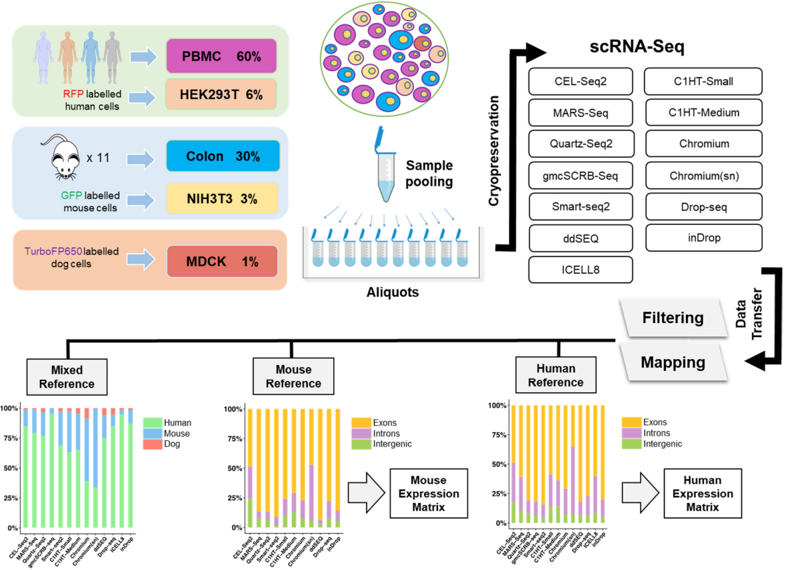
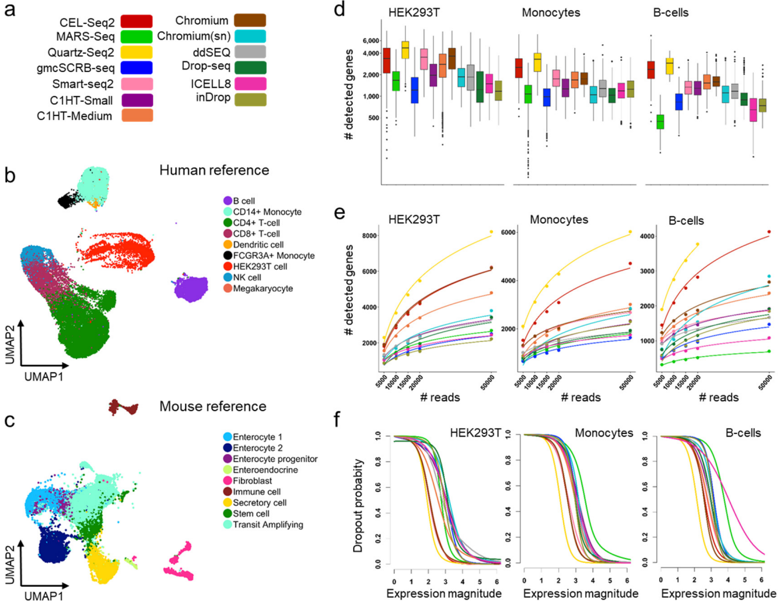
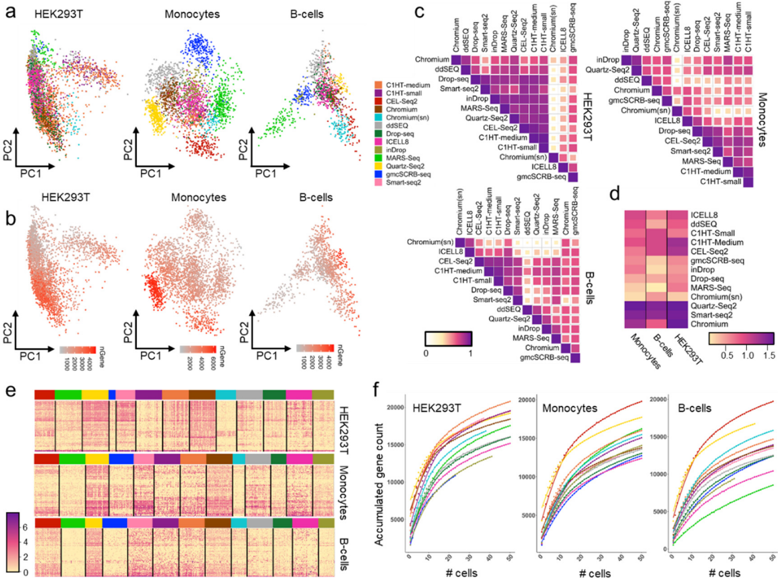
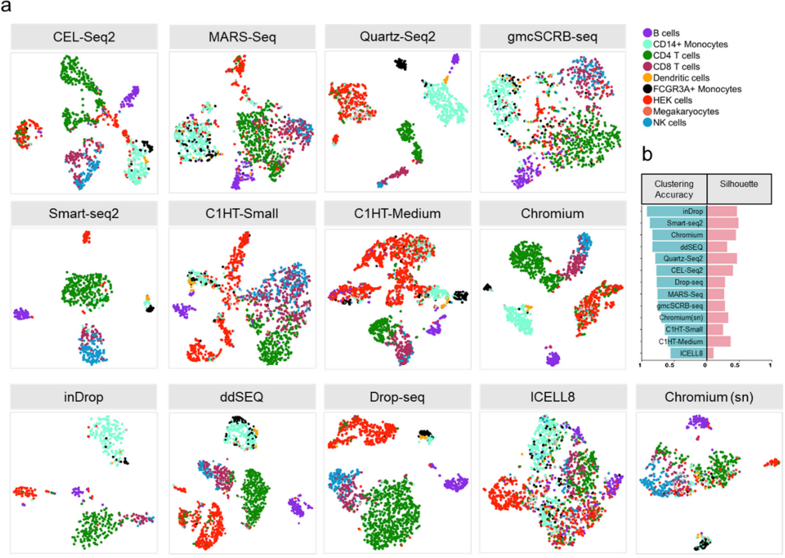
Single-cell RNA sequencing (scRNA-seq) is the leading technique for characterizing the transcriptomes of individual cells in a sample. The latest protocols are scalable to thousands of cells and are being used to compile cell atlases of tissues, organs and organisms. However, the protocols differ substantially with respect to their RNA capture efficiency, bias, scale and costs, and their relative advantages for different applications are unclear. In the present study, we generated benchmark datasets to systematically evaluate protocols in terms of their power to comprehensively describe cell types and states. We performed a multicenter study comparing 13 commonly used scRNA-seq and single-nucleus RNA-seq protocols applied to a heterogeneous reference sample resource. Comparative analysis revealed marked differences in protocol performance. The protocols differed in library complexity and their ability to detect cell-type markers, impacting their predictive value and suitability for integration into reference cell atlases. These results provide guidance both for individual researchers and for consortium projects such as the Human Cell Atlas.
Overview
The claims and statistics of this paper haven’t been checked yet.
Free: it reads the open-access text and checks the first 5 claims that cite a source we can check. Create a free account to check every claim.
Integrity signals
Registry
Cites
Statistics
Figures

Verification
Claims the paper makes
The claims and statistics of this paper haven’t been checked yet.
Free: it reads the open-access text and checks the first 5 claims that cite a source we can check. Create a free account to check every claim.
Claims other papers make about this one
Each is checked against this paper’s own text: does it say what the citing paper says it does?
The cited source says what the claim attributes to it.
In the citing paper
“Genetic differences may also be used to demultiplex 10x datasets generated on samples of mixed species origin [10].”
From Benchmarking of computational demultiplexing methods for single-nucleus RNA sequencing data (2025) · cites this paper as [10]
Self-check
Percentages, sums and reported differences re-computed from the paper’s own numbers.
The self-check needs the paper’s full text.
Citations
Cites
STAR: ultrafast universal RNA-seq aligner
Dobin, A., Davis, C. A., Schlesinger, F., Drenkow, J., Zaleski, C., Jha, S., Batut, P., Chaisson, M., & Gingeras, T. R. (2013) · Bioinformatics · doi:10.1093/bioinformatics/bts635 · Cited by 51,709
featureCounts: an efficient general purpose program for assigning sequence reads to genomic features
Liao, Y., Smyth, G. K., & Shi, W. (2014) · Bioinformatics · doi:10.1093/bioinformatics/btt656 · Cited by 27,219
Fast, sensitive and accurate integration of single-cell data with Harmony
Korsunsky, I., Millard, N., Fan, J., Slowikowski, K., Zhang, F., Wei, K., Baglaenko, Y., Brenner, M., Loh, P.-R., & Raychaudhuri, S. (2019) · Nature Methods · doi:10.1038/s41592-019-0619-0 · Cited by 10,488
Massively parallel digital transcriptional profiling of single cells
Zheng, G. X. Y., Terry, J. M., Belgrader, P., Ryvkin, P., Bent, Z. W., Wilson, R., Ziraldo, S. B., Wheeler, T. D., McDermott, G. P., Zhu, J., et al. (2017) · Nature Communications · doi:10.1038/ncomms14049 · Cited by 7,353
Highly parallel genome-wide expression profiling of individual cells using nanoliter droplets.
Macosko, E. Z., Basu, A., Satija, R., Nemesh, J., Shekhar, K., Goldman, M., Tirosh, I., Bialas, A. R., Kamitaki, N., Martersteck, E. M., et al. (2015) · Cell · doi:10.1016/j.cell.2015.05.002 · Cited by 7,110
Self-citationSpatial reconstruction of single-cell gene expression data
Satija, R., Farrell, J. A., Gennert, D., Schier, A. F., & Regev, A. (2015) · Nature Biotechnology · doi:10.1038/nbt.3192 · Cited by 7,055
Self-citationDroplet barcoding for single-cell transcriptomics applied to embryonic stem cells
Klein, A. M., Mazutis, L., Akartuna, I., Tallapragada, N., Veres, A., Li, V., Peshkin, L., Weitz, D. A., & Kirschner, M. W. (2015) · Cell · doi:10.1016/j.cell.2015.04.044 · Cited by 3,356
Single-cell transcriptomics of 20 mouse organs creates a Tabula Muris
The Tabula Muris Consortium, coordination, O., coordination, L., processing, O. C. A., sequencing, L. P. A., analysis, C. D., annotation, C. T., Writing group, Supplemental text writing group, & Principal investigators (2018) · Nature · doi:10.1038/s41586-018-0590-4 · Cited by 2,842
Snakemake—a scalable bioinformatics workflow engine
Köster, J., & Rahmann, S. (2012) · Bioinformatics · doi:10.1093/bioinformatics/bts480 · Cited by 2,780
Smart-seq2 for sensitive full-length transcriptome profiling in single cells
Picelli, S., Björklund, Å. K., Faridani, O. R., Sagasser, S., Winberg, G., & Sandberg, R. (2013) · Nature Methods · doi:10.1038/nmeth.2639 · Cited by 2,358
Self-citation
Cited by
Items 401–500 of 517
Xiong, R., Patel, J., Sztanka-Toth, T. R., Senel, E., Calara-Nielsen, K., Rajpurohit, Y. R., Altenburg, T., Greshock, J., Smirnov, D. A., & Javidi, A. (2026) · bioRxiv (Cold Spring Harbor Laboratory) · doi:10.64898/2026.01.16.699571 · Cited by 1
A hyperparameter benchmark of VAE-based methods for scRNA-seq batch integrationPreprint
Kassab, M., Maniero, L. H. D. S., & Beltrame, E. D. V. (2026) · bioRxiv (Cold Spring Harbor Laboratory) · doi:10.64898/2026.02.10.705093 · Cited by 1
“…of scRNA-seq chemistries and plat-forms—varying capture efficiency, read coverage, through-put, and workflows—introduces batch effects that can obscure biological signal [12–14] and drive clustering by run, chemistry, or laboratory without careful design and integra-Hyperparameter tion [15].”
Benchmarking gene expression reconstruction from single-cell latent representationsPreprint
Fu, X., Klein, D., Antipov, E., Palma, A., Tejada-Lapuerta, A., Bahrami, M., Kuemmerle, L. B., Lubetzki, M., Casale, F. P., Luecken, M. D., et al. (2026) · bioRxiv (Cold Spring Harbor Laboratory) · doi:10.64898/2026.06.15.731445 · Cited by 3
“…gene expression retains biologically meaningful information: existing benchmarks of latent representations have evaluated data integration 5,27,28 or perturbation prediction 17,29 , but reconstruction quality remains unaddressed across the full range of latent representation families and…”
Surveying the human single-cell landscape
Li, H., & Humphreys, B. D. (2020) · Kidney International · doi:10.1016/j.kint.2020.06.027
New protocols and computational tools for scRNAseq analysis
Tian, L. (2020) · Minerva Access (University of Melbourne)
Fuelling the fire : Immunometabolism of monocytes and macrophages in obesity & diabetes
van Dierendonck, X. A. M. H. (2021) · doi:10.18174/545884
Power of Transcriptomics in Lung Biology
Mdawar, M.-B. E., Pennycuick, A., & Lazarus, K. A. (2021) · Elsevier eBooks · doi:10.1016/b978-0-08-102723-3.00188-8
トマトにおける果実生長および光合成産物の転流の動態に対する環境作用 (第3報) 塩ストレスの影響
荒木, 卓., 北野, 雅., OKANO, K., 吉田, 敏., & 江口, 壽. (2001) · 生物環境調節
杨榕 (2012) · 福建艺术
Identifying Genes and Proteins of Interest
Carter, M. E., Essner, R. A., Goldstein, N., & Iyer, M. (2022) · Elsevier eBooks · doi:10.1016/b978-0-12-818646-6.00009-9
Zaugg, J. B. (2020) · Faculty Opinions – Post-Publication Peer Review of the Biomedical Literature · doi:10.3410/f.736924657.793574281
McLoughlin, A., & Huang, H. (2022) · Journal of Computational Biology · doi:10.1089/cmb.2021.0652 · Cited by 1
“However, the data often suffer from challenging levels of sparsity and noise (Brennecke et al., 2013; Ding et al., 2020; Mereu et al., 2020), making it difficult to uncover stable cell groups.”
Bioinformatic Methods for Identifying Differentially Abundant Subpopulations in scRNA-seq DataPreprint
Kleinberg, G., Shinde, A., Batchu, S., Diaz, M. J., Root, K. T., & Lucke-Wold, B. P. (2022) · Preprints.org · doi:10.20944/preprints202209.0327.v1
Attitudes and Expectations of Investigations and Evidence for Biological AttributionPreprint
Warmbrod, K. L., & Grönvall, G. K. (2022) · Preprints.org · doi:10.20944/preprints202210.0365.v1
Chen, D. J., & Shooshtari, P. (2023) · F1000Research · doi:10.12688/f1000research.125579.1
ノンコーディングRNA:生体内発現解析のための形態学的アプローチ
瀧澤, 俊., 野口, 隼., & 瀧澤, 敬. (2023) · Nihon Ika Daigaku Igakkai Zasshi · doi:10.1272/manms.19.90
Guo, S., Liu, X., Cheng, X., Jiang, Y., Ji, S., Liang, Q., Koval, A., Li, Y., Owen, L. A., Kim, I. K., et al. (2023) · bioRxiv (Cold Spring Harbor Laboratory) · doi:10.1101/2023.10.10.561733
“Because single-cell protocols can be biased toward retaining certain cell types 31 , hence changing the cell-type proportions, this special approach maximizes our chance that the matched sequencing data share approximately the same cell-type proportions.”
BackgroundLi, L., & Zhou, X. (2024) · Research Square · doi:10.21203/rs.3.rs-3897483/v1
Hekselman, I., Vital, A., Ziv, M., Kerber, L., Yairi, I., & Yeger‐Lotem, E. (2023) · eLife · doi:10.7554/elife.84613.sa2
Laurent, T. (2023) · theses.fr (ABES) · doi:10.70675/a1a01896z5409z4b66zbc59z4282087ea9e4 · Cited by 1
Cortal, A. (2020) · theses.fr (ABES) · doi:10.70675/4fdd96f5z20bbz4412za122z172e9faa9dba · Cited by 2
Characterization of inflammatory response in PBMCs using single-cell RNA sequencing
de Cevins, C. (2022) · theses.fr (ABES) · doi:10.70675/fbb352f1z61fdz46f8za8acz13b48482932f · Cited by 1
Additional file 2 of Abnormal signal pathways and tumor heterogeneity in osteosarcoma
Sun, Y., Zhang, C., Fang, Q., Zhang, W., & Liu, W. Y. (2023) · Figshare · doi:10.6084/m9.figshare.22598621
Additional file 1 of Feature selection revisited in the single-cell era
Yang, P., Huang, H., & Liu, C. (2021) · Figshare · doi:10.6084/m9.figshare.17104024
Additional file 6 of Abnormal signal pathways and tumor heterogeneity in osteosarcoma
Sun, Y., Zhang, C., Fang, Q., Zhang, W., & Liu, W. Y. (2023) · Figshare · doi:10.6084/m9.figshare.22598633
Additional file 5 of Abnormal signal pathways and tumor heterogeneity in osteosarcoma
Sun, Y., Zhang, C., Fang, Q., Zhang, W., & Liu, W. Y. (2023) · Figshare · doi:10.6084/m9.figshare.22598630
Additional file 3 of Abnormal signal pathways and tumor heterogeneity in osteosarcoma
Sun, Y., Zhang, C., Fang, Q., Zhang, W., & Liu, W. Y. (2023) · Figshare · doi:10.6084/m9.figshare.22598624
Additional file 4 of Abnormal signal pathways and tumor heterogeneity in osteosarcoma
Sun, Y., Zhang, C., Fang, Q., Zhang, W., & Liu, W. Y. (2023) · Figshare · doi:10.6084/m9.figshare.22598627
Tumor-infiltrating CD8+ T cell differentiation paths at the single-cell level
Gueguen, P. (2021) · theses.fr (ABES) · doi:10.70675/f5ff93afz75bcz401ez803bze0963ce949a4 · Cited by 1
Author response: Comparative analysis of multiplexed in situ gene expression profiling technologies
Hartman, A., & Satija, R. (2024) · eLife · doi:10.7554/elife.96949.1.sa3
Hartman, A., & Satija, R. (2024) · eLife · doi:10.7554/elife.96949.1.sa1
Hartman, A., & Satija, R. (2024) · eLife · doi:10.7554/elife.96949.1.sa0
VICTOR: Validation and inspection of cell type annotation through optimal regression
Chang, C.-J., Hsu, C., Liu, Q., & Shyr, Y. (2024) · Computational and Structural Biotechnology Journal · doi:10.1016/j.csbj.2024.08.028 · Cited by 1
“In contrast, other tools directly annotate individual cells without prior clustering [13 – 32].”
MethodResultJia, S., Tsunoda, T., & Sharma, A. K. (2024) · Lecture notes in computer science · doi:10.1007/978-981-96-0116-5_40
Research on the mechanism of DTL in the occurrence and development of cancer
Yue, S., & Fang, Y. (2024) · Theoretical and Natural Science · doi:10.54254/2753-8818/49/20241269
The Transcriptomics and Epigenomics of Hair Follicles
Durán, R. C., Martínez-Ledesma, E., Garcia-Garcia, M., Sarro-Ramírez, A., Gonzalez-Carrillo, C., Rodríguez-Sardin, D., & Cárdenas-Lopez, A. (2024) · Updates in clinical dermatology · doi:10.1007/978-3-031-74314-6_10
Automated Cell Type Annotation with Reference Cluster MappingPreprint
Galanti, V., Shi, L., Azizi, E., Liu, Y., & Blumberg, A. J. (2024) · bioRxiv (Cold Spring Harbor Laboratory) · doi:10.1101/2024.11.30.626130 · Cited by 1
Sserwadda, H., Lee, J. H., Lee, B. H., Jung, S.-Y., Bang, Y. J., Cho, B. K., Nam, H. J., Choi, S., Gong, J., Choi, H. S., et al. (2025) · Immunological Investigations · doi:10.1080/08820139.2025.2457039
“To further increase throughput while minimizing costs, processing multiple samples in a single run (multiplexing [Mereu et al., 2020]) is becoming a common practice in scRNA-seq experimentation.”
Disruption of circadian intraocular pressure fluctuations in mice by the Lyst beige-J mutation
McDowell, C. M., Dutca, L. M., Thompson, S., Riker, M. J., Hedberg‐Buenz, A., Meyer, K. J., & Anderson, M. G. (2025) · Experimental Eye Research · doi:10.1016/j.exer.2025.110266
STOMP-seq: early multiplexing for high-throughput SMART RNA-sequencingPreprint
Eder, M., & Stroustrup, N. (2025) · bioRxiv (Cold Spring Harbor Laboratory) · doi:10.1101/2025.03.28.645277
ALPINE: An Interpretable Approach for Decoding Phenotypes from Multi-condition Sequencing Data
Lee, W.-H., Li, L., Dannenfelser, R., & Yao, V. (2025) · Lecture notes in computer science · doi:10.1007/978-3-031-90252-9_47
Multiresolution Clustering of Genomic DataPreprint
Turfah, A., & Wen, X. (2025) · bioRxiv (Cold Spring Harbor Laboratory) · doi:10.1101/2025.06.13.659529
“Many existing methods and their benchmarking efforts overly emphasize identifying a flat partition and determining the “correct” number of clusters [10, 11, 12, 13, 14].”
The Artificial Intelligence-driven Revolution in Solid Tumor Drug Development
Li, Y., & Qin, J. (2025) · Oncology Advances · doi:10.14218/ona.2025.00009 · Cited by 2
Sasagawa, Y., Iwayama, Y., Yano, M., & Nikaido, I. (2025) · bioRxiv (Cold Spring Harbor Laboratory) · doi:10.1101/2025.08.19.670999
Self-citationA single-cell transcriptomic atlas of the pigtail macaque placenta in late gestation
Li, A., Li, R., Huang, H., Zhao, H. G., Rosario, B. M. D., Li, M., Li, E., Vo, A. E., Manuel, G., Cervantes, O., et al. (2026) · BMC Genomics · doi:10.1186/s12864-026-13095-x
“Further, we observed heterogeneity of gene expression across T/NK clusters, which is also true in human scRNA-Seq atlases that may require combinatorial scoring to identify some T cell subsets [59, 60].”
Ghamsari, M. R. E., de Graaf, C. A., Thijssen, R., You, Y., Lovell, N. H., Alinejad‐Rokny, H., & Ritchie, M. E. (2025) · bioRxiv (Cold Spring Harbor Laboratory) · doi:10.1101/2025.09.08.675012
“This observation is consistent with findings from previous studies (Santiago et al., 2023; Mereu et al., 2020).”
Ubiquitous and Brain Cell-Type-Specific Promoters and Enhancers in Lentiviral Vectors
Matsuzaki, Y., Konno, A., & Hirai, H. (2025) · Methods in molecular biology · doi:10.1007/978-1-0716-4807-0_7
Tamura, T., Yamane, Y., Okano, Y., Ishikawa, T., & Sakurada, K. (2026) · Computational and Structural Biotechnology Journal · doi:10.34133/csbj.0087
“#) to a putatively tissue-derived cell population in a mouse scRNA-seq data-set from a benchmark study [ 8 ] likewise identified an aggregation of shallowly observed cells in UMAP, suggesting that this is not a dataset-specific phenomenon (Fig.”
Additional file 2 of Feature selection revisited in the single-cell era
Yang, P., Huang, H., & Liu, C. (2021) · Figshare · doi:10.6084/m9.figshare.17104027
Additional file 3 of hadge: a comprehensive pipeline for donor deconvolution in single-cell studies
Curion, F., Wu, X., Heumos, L., André, M. M. G., Halle, L., Ozols, M., Grant‐Peters, M., Rich‐Griffin, C., Yeung, H.-Y., Dendrou, C. A., et al. (2024) · Figshare · doi:10.6084/m9.figshare.26713097
Additional file 1 of hadge: a comprehensive pipeline for donor deconvolution in single-cell studies
Curion, F., Wu, X., Heumos, L., André, M. M. G., Halle, L., Ozols, M., Grant‐Peters, M., Rich‐Griffin, C., Yeung, H.-Y., Dendrou, C. A., et al. (2024) · Figshare · doi:10.6084/m9.figshare.26713091
Additional file 1 of Over 1000 tools reveal trends in the single-cell RNA-seq analysis landscape
Zappia, L., & Theis, F. J. (2021) · Figshare · doi:10.6084/m9.figshare.16907369
Additional file 3 of The shaky foundations of simulating single-cell RNA sequencing data
Crowell, H. L., Leonardo, S. X. M., Soneson, C., & Robinson, M. D. (2023) · Figshare · doi:10.6084/m9.figshare.22622810
Additional file 2 of The shaky foundations of simulating single-cell RNA sequencing data
Crowell, H. L., Leonardo, S. X. M., Soneson, C., & Robinson, M. D. (2023) · Figshare · doi:10.6084/m9.figshare.22622807
Additional file 1 of The shaky foundations of simulating single-cell RNA sequencing data
Crowell, H. L., Leonardo, S. X. M., Soneson, C., & Robinson, M. D. (2023) · Figshare · doi:10.6084/m9.figshare.22622804
Additional file 1 of Nested Stochastic Block Models applied to the analysis of single cell data
Morelli, L., Giansanti, V., & Cittaro, D. (2021) · Figshare · doi:10.6084/m9.figshare.17104092
Additional file 2 of Over 1000 tools reveal trends in the single-cell RNA-seq analysis landscape
Zappia, L., & Theis, F. J. (2021) · Figshare · doi:10.6084/m9.figshare.16907372
Additional file 4 of hadge: a comprehensive pipeline for donor deconvolution in single-cell studies
Curion, F., Wu, X., Heumos, L., André, M. M. G., Halle, L., Ozols, M., Grant‐Peters, M., Rich‐Griffin, C., Yeung, H.-Y., Dendrou, C. A., et al. (2024) · Figshare · doi:10.6084/m9.figshare.26713103
Additional file 1 of Benchmarking full-length transcript single cell mRNA sequencing protocols
Probst, V., Simonyan, A., Pacheco, F., Guo, Y., Nielsen, F. C., & Bagger, F. O. (2024) · Figshare · doi:10.6084/m9.figshare.26558228
Additional file 2 of hadge: a comprehensive pipeline for donor deconvolution in single-cell studies
Curion, F., Wu, X., Heumos, L., André, M. M. G., Halle, L., Ozols, M., Grant‐Peters, M., Rich‐Griffin, C., Yeung, H.-Y., Dendrou, C. A., et al. (2024) · Figshare · doi:10.6084/m9.figshare.26713094
Celltyper: A Single-Cell Sequencing Marker Gene Tool Suite
Paisley, B. M. (2023) · Purdue University Indianapolis (Indiana University) · doi:10.7912/c2/3144
Guo, Z.-H., Wu, Y., Wang, S., Zhang, Q., Shi, J.-M., Wang, Y.-B., & Chen, Z.-H. (2023) · Figshare · doi:10.6084/m9.figshare.24847117
Additional file 1 of Abnormal signal pathways and tumor heterogeneity in osteosarcoma
Sun, Y., Zhang, C., Fang, Q., Zhang, W., & Liu, W. (2023) · Figshare · doi:10.6084/m9.figshare.22598618
Luca, A. D. (2024) · Repositori digital de la UPF (Universitat Pompeu Fabra)
Transcriptomic cellular diversity of the early human developing brain
Braun, E. (2023) · Open Archive (Karolinska Institutet)
Lavrenčič, E. (2024) · Repository of the University of Ljubljana (University of Ljubljana)
Single-Cell Sequencing in Cancer Research: Challenges and Opportunities
Prado‐Lòpez, S. (2025) · Springer eBooks · doi:10.1007/978-3-032-00763-6_143
Coutant, A., Muller, L., Dégletagne, C., Fauvet, F., Boudi, I. E., Chassot, C., Valladeau‐Guilemond, J., Bendriss‐Vermare, N., Morel, A., Ouzounova, M., et al. (2025) · bioRxiv (Cold Spring Harbor Laboratory) · doi:10.64898/2025.12.19.695441
“Yet, a key challenge remains: the molecular signatures used to infer cellular activities are typically derived from bulk data and are poorly adapted to the sparsity and variability of scRNA-seq (22, 23).”
Benchmarking of single nuclei RNA-seq methods on human post-mortem brain tissue
Nikouei, K., Lundin, E., Memic, F., Stockmeier, C. A., & Hjerling‐Leffler, J. (2025) · Genomics · doi:10.1016/j.ygeno.2025.111184
Yoshino, T., Sato, S., Kaha, M., KOBAYASHI, T., Negishi, R., Tanaka, T., Shimoyama, T., Sawada, T., Kanemasa, Y., & Koizumi, F. (2026) · Journal of Bioscience and Bioengineering · doi:10.1016/j.jbiosc.2025.12.007
CellCov: gene-body coverage profiling for single-cell RNA-seqPreprint
Chen, S., Zevnik, U., & Ziegenhain, C. (2026) · bioRxiv (Cold Spring Harbor Laboratory) · doi:10.64898/2026.01.30.702727
“Recent technological advances have extended its use from simple gene-level counting of RNA tags (3’ or 5’ ends) to full coverage of transcripts (Ziegenhain et al. 2017; Mereu et al. 2020; Kumari et al. 2024; Molla Desta and Birhanu 2025).”
Self-citationYang, S., Xu, Y., & Yang, C. (2025) · International Conference on Artificial Intelligence, Robotics, and Communication (ICAIRC) · doi:10.1109/icairc68035.2025.11385240
Wu, J., Dong, H., Xu, X., & Wang, M. (2026) · Leukemia & lymphoma/Leukemia and lymphoma · doi:10.1080/10428194.2026.2649879
“…damage the consistency of subpopulation annotations, and ultimately weaken the reproducibility and predictive value of downstream analyses [50,92]. in addition, workflows involving cell-type annotations or reference-based label transfer often rely on algorithms that are highly sensitive to…”
Peng, L., Wang, F., Wu, W., Peng, X., Xiong, W., Jiang, Y., Nie, L., & Chen, X. (2026) · Interdisciplinary Sciences Computational Life Sciences · doi:10.1007/s12539-026-00815-w
“[64 ].”
Single cell multi-OMICS analysis of Treg biology in cancer
Richer, W. (2021) · theses.fr (ABES) · doi:10.70675/97f429e9z2993z4b78z88dezf46fae0d3a30
CD8+ T cell differentiation towards exhaustion in human cancer
Metoikidou, C. (2022) · theses.fr (ABES) · doi:10.70675/a9c41d93z98c7z40e0z80eczc8c778ad87ac
Systems analysis of intercellular communication in the tumor microenvironment
Massenet-Regad, L. (2023) · theses.fr (ABES) · doi:10.70675/909b8153z00efz42f7za922z6b476829dbf2
Lu, P., Zhai, Y., Chen, X., Guo, S., Zhou, J., Guo, M., Lei, H., Ye, P., Wang, C., & Wu, J. (2026) · Discover Oncology · doi:10.1007/s12672-026-04947-9
GDSim: accurate simulation for single-cell transcriptomes based on the guided diffusion model
Wang, T., Dong, H., Zhao, H., Zhen, P., Wang, Y., Shang, X., Peng, J., Xiao, B., & Chen, J. Y. (2026) · Briefings in Bioinformatics · doi:10.1093/bib/bbag163
“Recent advances in single-cell RNA sequencing (scRNA-seq) technologies have revolutionized the study of cellular heterogeneity by enabling the profiling of gene expression at the resolution of individual cells [1, 2].”
ProtoCloud: A prototypical self-explaining model for single-cell analysis
Guo, K., & Ding, J. (2026) · Cell Genomics · doi:10.1016/j.xgen.2026.101217
“48,49 While specialized tools have been developed to mitigate these nuisance factors, 32,50 identifying which specific factors require correction in a given dataset remains challenging.”
Xiao, Y., Sun, J., Hao, Y., Xie, L., Duo, H., Zou, Y., Li, Y., Qin, D., Yang, Q., & Li, B. (2026) · TrAC Trends in Analytical Chemistry · doi:10.1016/j.trac.2026.118880
Integrating and mapping single-cell transcriptomics across the entire gene expression space
Ding, S., Zhai, X., Yu, Z., & Ming, J. (2026) · Briefings in Bioinformatics · doi:10.1093/bib/bbag204
Mosaic: Single-Cell Atlas of Stress
Monk, E. S., Shieu, B. M., Kumbhani, D., Fu, L., Lin, A., Taverna, J. A., Braden, C. J., Uribe-Lacy, C. J., Zhang, W., Sabbag, C. M., et al. (2026) · Cells · doi:10.3390/cells15090807
Single-Cell Analysis for Cancer
Ding, Z., & Shen, S. (2026) · Springer eBooks · doi:10.1007/978-981-95-9789-5_10
Cui, Y., Cui, Y., Wang, R., Zeng, X., Zhu, Z., Yi, D., Guo, R., Sakurai, T., Nakai, K., Ye, X., et al. (2026) · Advanced Intelligent Systems · doi:10.1002/aisy.70429
Trofimov, V., Utkina, M. V., Shcherbakova, A. S., Chechekhin, V. I., Novoselov, A. L., Plaksina, E. V., Urusova, L., Tyurin‐Kuzmin, P. A., Kulebyakin, K. Y., Yi, M., et al. (2026) · Scientific Reports · doi:10.1038/s41598-026-44117-z
The molecular asynchrony of single cellsPreprint
Fu, B., Tan, R., Cao, Z., Bai, X., Bai, D., Song, J., & Zhu, C. (2026) · bioRxiv (Cold Spring Harbor Laboratory) · doi:10.64898/2026.06.02.729594
“Micro fl uidics-based scRNA-seq assays frequently showed higher sensitivity than plate-based combinatorial barcoding 28 , possibly due to pre-ampli fi cation steps within microcompartments that reduced ampli fi cation bias, thereby increasing the recovery of low-abundance transcripts.”
Robust semi-supervised scRNA-seq integration from virtual adversarial learningPreprint
He, C., Filippidis, P., Xing, J., Kleinstein, S., & Guan, L. (2026) · bioRxiv (Cold Spring Harbor Laboratory) · doi:10.64898/2026.06.07.730754
“This limitation is particularly acute for immune lineages; for example, T cell subsets such as na¨ıve versus central memory states, effector states, and γδ T cells are difficult to differentiate. based solely on unsupervised clustering of transcriptomic data without additional guidance [9, 10].”
RepGene: Auditing Condition-Specific Fusion Biases for Multi-View Gene RepresentationsPreprint
Hou, H., Xia, T., Hu, L., Zhang, Y., Li, Y., Kang, Q., & Cao, L. (2026) · bioRxiv (Cold Spring Harbor Laboratory) · doi:10.64898/2026.06.11.731512
“Leakage-aware benchmarking motivates our outer-training-only fitting boundary (Luecken & Theis, 2019; Tran et al., 2020; Soneson & Robinson, 2018; Mereu et al., 2020; Hafemeister & Satija, 2019); Appendix 2 discusses the task-set accounting in detail.”
Zhao, C., Liu, M., Li, X., Li, D., Xu, Y., & Wang, Z. (2026) · bioRxiv (Cold Spring Harbor Laboratory) · doi:10.64898/2026.06.11.731519
“The scalability of droplet-based platforms has further established scRNA-seq as a central approach for constructing cellular atlases and studying complex biological systems [5, 6, 7].”
FOXP2+ Chief Cells and CXCL14+ Fibroblasts Drive Fibrotic Remodeling in Carotid Body Tumors
Cao, K., Yu, J., Ao, G., Zq, H., Wang, Z., Han, Y., & Wang, T. (2026) · International Journal of Molecular Sciences · doi:10.3390/ijms27135750
He, W., He, Z., Chen, Q., Lan, W., & Guo, Z. (2026) · Journal of Gastrointestinal Oncology · doi:10.21037/jgo-2025-1-1003
wang, H., Yang, X., Wang, S., Yang, Z., Yang, X., Yang, Y., Li, Z., Ren, Y., Zhang, Q., Zhao, B., et al. (2026) · iMeta · doi:10.1002/imt2.70146
Liu, Z., Li, Z., Wang, Y., Long, Y., Zhao, H., Qin, Y., Zhu, X., Guo, H., Jiang, K., & Zhai, J. (2026) · Nature Communications · doi:10.1038/s41467-026-76284-y · Cited by 1
“One major challenge is the standardization of experimental protocols and data analysis pipelines, as different studies may employ varying methods and technologies, making it dif fi cult to directly compare results across studies 39 .”
Single-cell transcriptomics reveals a multiphasic Wolbachia host infection trajectoryPreprint
Jacobs, J., Lum, A., Nykamp, J., Lagousis, C. R. M., & Russell, S. L. (2026) · bioRxiv (Cold Spring Harbor Laboratory) · doi:10.64898/2026.07.29.741357
“Most scRNA-seq platform benchmarking studies have been conducted on mammalian cell lines under standard culture conditions 28,29 , leaving a gap in the literature for non-model organism and host-pathogen applications where library complexity, cell stress, and non-polyadenylated transcript capture…”
Physiological Relevance of Engineered Brain Models
Servais, B., Collins, D. J., & Nisbet, D. R. (2026) · Organoids · doi:10.3390/organoids5030025
Metadata
- Authors
- Mereu, E., Lafzi, A., Moutinho, C., Ziegenhain, C., McCarthy, D. J., Álvarez-Varela, A., Batlle, E., Sagar, Grün, D., Lau, J. K., Boutet, S. C., Sanada, C., Ooi, A., Jones, R. C., Kaihara, K., Brampton, C., Talaga, Y., Sasagawa, Y., Tanaka, K., Hayashi, T., Braeuning, C., Fischer, C., Sauer, S., Trefzer, T., Conrad, C., Adiconis, X., Nguyen, L. T., Regev, A., Levin, J. Z., Parekh, S., Janjic, A., Wange, L. E., Bagnoli, J. W., Enard, W., Gut, M., Sandberg, R., Nikaido, I., Gut, I., Stegle, O., & Heyn, H.
- Affiliations
- Barcelona Institute of Science and Technology (ES)
- Karolinska Institutet (SE)
- European Bioinformatics Institute (GB)
- Institute for Research in Biomedicine (ES)
- Institució Catalana de Recerca i Estudis Avançats (ES)
- Max Planck Institute of Immunobiology and Epigenetics (DE)
- 10X Genomics (United States) (US)
- Standard BioTools (United States) (US)
- Stanford University (US)
- Bio-Rad (United States) (US)
- RIKEN Center for Biosystems Dynamics Research (JP)
- Max Delbrück Center (DE)
- Berlin Institute of Health at Charité - Universitätsmedizin Berlin (DE)
- Broad Institute (US)
- Max Planck Institute for Biology of Ageing (DE)
- Ludwig-Maximilians-Universität München (DE)
- University of Tsukuba (JP)
- Universitat Pompeu Fabra (ES)
- Corresponding author
- Heyn, Holger
- ORCID
- Mereu, Elisabetta
- Lafzi, Atefeh
- Ziegenhain, Christoph
- McCarthy, Davis J.
- Álvarez-Varela, Adrián
- Batlle, Eduard
- Grün, Dominic
- Ooi, Aik
- Jones, Robert C.
- Kaihara, Kelly
- Sasagawa, Yohei
- Tanaka, Kaori
- Hayashi, Tetsutaro
- Braeuning, Caroline
- Fischer, Cornelius
- Sauer, Sascha
- Trefzer, Timo
- Conrad, Christian
- Adiconis, Xian
- Regev, Aviv
- Levin, Joshua Z.
- Parekh, Swati
- Janjic, Aleksandar
- Wange, Lucas E.
- Bagnoli, Johannes W.
- Enard, Wolfgang
- Sandberg, Rickard
- Nikaido, Itoshi
- Gut, Ivo
- Stegle, Oliver
- Heyn, Holger
- Venue
- Nature Biotechnology
- Published
- 2020-04-06
- Volume
- 38
- Issue
- 6
- Pages
- 747-755
- ISSN
- 0733-222X (ISSN-L)
- 1087-0156
- 1546-1696
- OpenAlex
- W2946232537
- Semantic Scholar
- 16427167f541cf06f9200dfc81ab78f168695559
- Cited by
- 499
- References
- 68
- Citations by year
- 2026: 52 · 2025: 66 · 2024: 87 · 2023: 86 · 2022: 72 · 2021: 82 · 2020: 49
- FWCI
- 23.93
- Type
- journal article
- Language
- en
- Open access
- green
- doi.org
- Licence
- cc-by-nd
- www.springer.com/tdm (tdm)
- www.springer.com/tdm (vor)
- Locations
- Nature Biotechnology (publishedVersion)
- bioRxiv (Cold Spring Harbor Laboratory) (acceptedVersion, cc-by-nd)
- PubMed (publishedVersion)
- Minerva Access (University of Melbourne) (submittedVersion)
- MDC Repository (Max-Delbrueck-Center for Molecular Medicine) (submittedVersion)
- MPG.PuRe (Max Planck Society) (submittedVersion)
- MPG.PuRe (Max Planck Society) (submittedVersion, other-oa)
- Repositori digital de la UPF (Universitat Pompeu Fabra) (submittedVersion)
- Funders
- Howard Hughes Medical Institute
- Silicon Valley Community Foundation (2018-182827)
- Ministerio de Ciencia, Innovación y Universidades (SAF2017-89109-P)
- Research Center Network for Realization of Regenerative Medicine
- European Commission (H2020-MSCA-ITN, 675752, HORIZON2020, H2020-MSCA ITN-2015, H2020, 810287, H2020-MSCA)
- Deutsche Forschungsgemeinschaft (SFB 1243, EN 1093/2-1)
- Agence Nationale de la Recherche (ANR-18-CE92-0005)
- Generalitat de Catalunya
- Max-Planck-Gesellschaft
- Science for Life Laboratory
- Horizon 2020 Framework Programme (H2020‐MSCA‐ITN‐2015, H2020-MSCA, H2020-MSCA-ITN, 810287)
- Klarman Cell Observatory, Broad Institute
- Instituto de Salud Carlos III (CP14/00229, H2020)
- Agencia Estatal de Investigación (H2020)
- National Institute of Allergy and Infectious Diseases (U24AI118672)
- Core Research for Evolutional Science and Technology (JPMJCR16G3)
- Topics
- Life Sciences › Biochemistry, Genetics and Molecular Biology › Molecular Biology › Single-cell and spatial transcriptomics
- Life Sciences › Biochemistry, Genetics and Molecular Biology › Molecular Biology › Genomics and Phylogenetic Studies
- Life Sciences › Biochemistry, Genetics and Molecular Biology › Molecular Biology › Gene expression and cancer classification
- Keywords
- single-cell RNA sequencing, protocol performance comparison, cell atlases, single-nucleus RNA sequencing, library complexity, Human Cell Atlas, multicenter comparison
- MeSH terms
- Animals, Cell Line, Humans, Sequence Analysis, RNA, Benchmarking, Genomics, Databases, Genetic, Mice, Single-Cell Analysis
About these checks
Registry, retraction, Cites and statistics results are computed, not judged, with one exception: a printed reference that no index lists is read once by a model before it counts as a citation error. Claims are extracted by a model and kept only when their quote appears verbatim in the text; each cited source is then checked, with a model’s help, for whether it says what the claim relies on. Those verdicts can be wrong — read the claim’s quote and the cited source before relying on one.
Statistics and arithmetic are recomputed, not judged.
Confidence bands are shown only for fields calibrated on our annotated test set. None is calibrated yet, so no band is shown.
What counts as a claim ›How we measure confidence ›How we check this ›
Are you an author, or do you see a problem with this page? Request a review
Data sources
Bibliographic data: Semantic Scholar, OpenAlex, Crossref.
Contains information from the Semantic Scholar Academic Graph Datasets, made available under the ODC Attribution License (ODC-BY 1.0).
Semantic Scholar’s data is described in: Kinney, R., et al. (2023). The Semantic Scholar Open Data Platform. arXiv:2301.10140.
