

Benchmarking single-cell RNA-sequencing protocols for cell atlas projects
Open accessPublished version of a preprint
The DOI matches its Crossref record; 68 of the 68 references it cites were found in a registry or an index.
Abstract
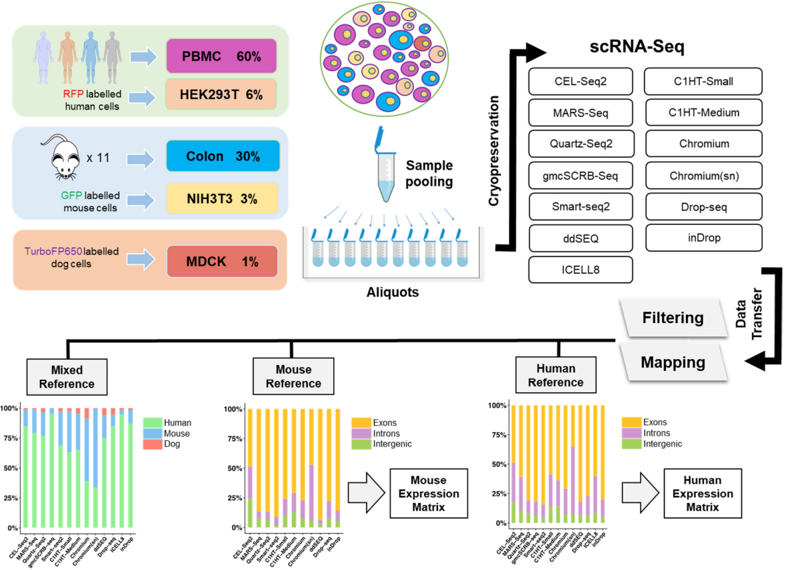
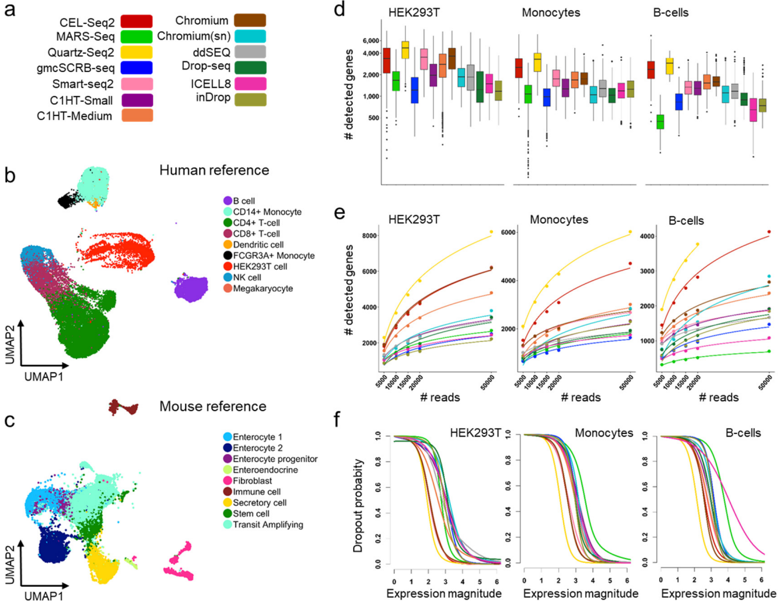
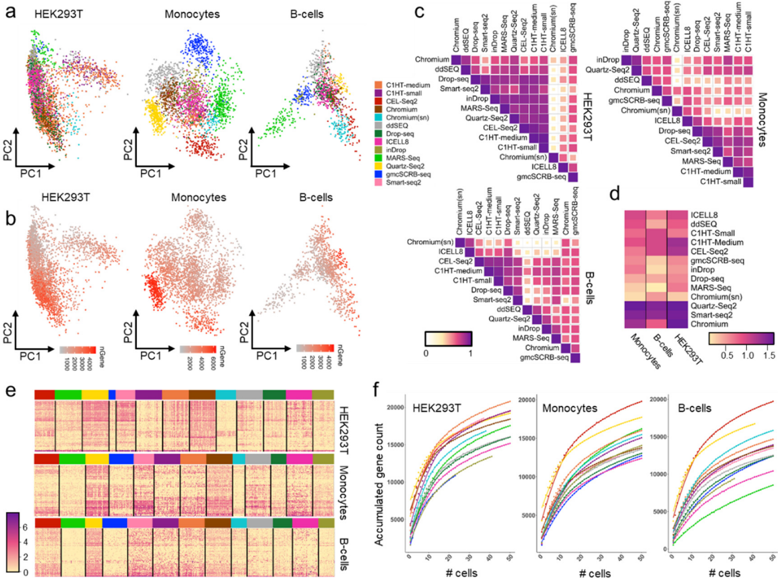
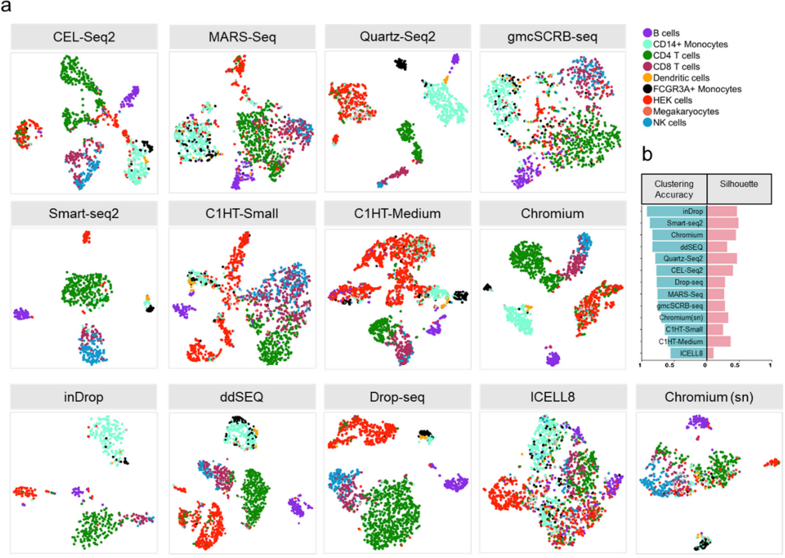
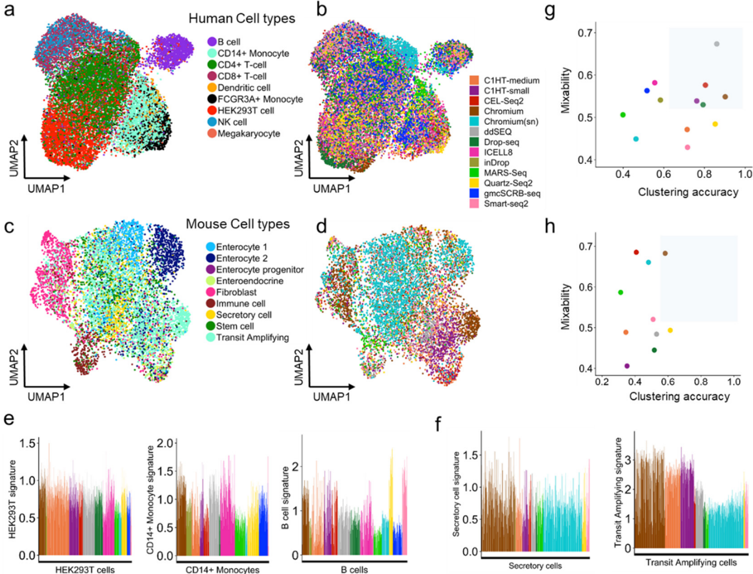
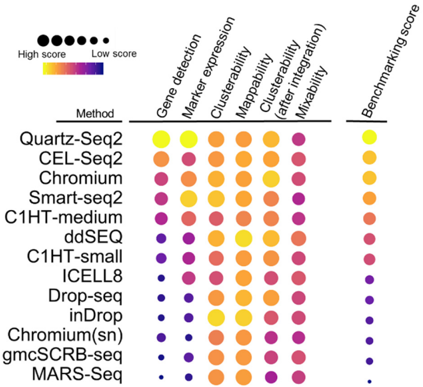
Single-cell RNA sequencing (scRNA-seq) is the leading technique for characterizing the transcriptomes of individual cells in a sample. The latest protocols are scalable to thousands of cells and are being used to compile cell atlases of tissues, organs and organisms. However, the protocols differ substantially with respect to their RNA capture efficiency, bias, scale and costs, and their relative advantages for different applications are unclear. In the present study, we generated benchmark datasets to systematically evaluate protocols in terms of their power to comprehensively describe cell types and states. We performed a multicenter study comparing 13 commonly used scRNA-seq and single-nucleus RNA-seq protocols applied to a heterogeneous reference sample resource. Comparative analysis revealed marked differences in protocol performance. The protocols differed in library complexity and their ability to detect cell-type markers, impacting their predictive value and suitability for integration into reference cell atlases. These results provide guidance both for individual researchers and for consortium projects such as the Human Cell Atlas.
Overview
The claims and statistics of this paper haven’t been checked yet.
Free: it reads the open-access text and checks the first 5 claims that cite a source we can check. Create a free account to check every claim.
Integrity signals
Registry
Cites
Statistics
Figures

Verification
Claims the paper makes
The claims and statistics of this paper haven’t been checked yet.
Free: it reads the open-access text and checks the first 5 claims that cite a source we can check. Create a free account to check every claim.
Claims other papers make about this one
Each is checked against this paper’s own text: does it say what the citing paper says it does?
The cited source says what the claim attributes to it.
In the citing paper
“Genetic differences may also be used to demultiplex 10x datasets generated on samples of mixed species origin [10].”
From Benchmarking of computational demultiplexing methods for single-nucleus RNA sequencing data (2025) · cites this paper as [10]
Self-check
Percentages, sums and reported differences re-computed from the paper’s own numbers.
The self-check needs the paper’s full text.
Citations
Cites
STAR: ultrafast universal RNA-seq aligner
Dobin, A., Davis, C. A., Schlesinger, F., Drenkow, J., Zaleski, C., Jha, S., Batut, P., Chaisson, M., & Gingeras, T. R. (2013) · Bioinformatics · doi:10.1093/bioinformatics/bts635 · Cited by 51,709
featureCounts: an efficient general purpose program for assigning sequence reads to genomic features
Liao, Y., Smyth, G. K., & Shi, W. (2014) · Bioinformatics · doi:10.1093/bioinformatics/btt656 · Cited by 27,219
Fast, sensitive and accurate integration of single-cell data with Harmony
Korsunsky, I., Millard, N., Fan, J., Slowikowski, K., Zhang, F., Wei, K., Baglaenko, Y., Brenner, M., Loh, P.-R., & Raychaudhuri, S. (2019) · Nature Methods · doi:10.1038/s41592-019-0619-0 · Cited by 10,488
Massively parallel digital transcriptional profiling of single cells
Zheng, G. X. Y., Terry, J. M., Belgrader, P., Ryvkin, P., Bent, Z. W., Wilson, R., Ziraldo, S. B., Wheeler, T. D., McDermott, G. P., Zhu, J., et al. (2017) · Nature Communications · doi:10.1038/ncomms14049 · Cited by 7,353
Highly parallel genome-wide expression profiling of individual cells using nanoliter droplets.
Macosko, E. Z., Basu, A., Satija, R., Nemesh, J., Shekhar, K., Goldman, M., Tirosh, I., Bialas, A. R., Kamitaki, N., Martersteck, E. M., et al. (2015) · Cell · doi:10.1016/j.cell.2015.05.002 · Cited by 7,110
Self-citationSpatial reconstruction of single-cell gene expression data
Satija, R., Farrell, J. A., Gennert, D., Schier, A. F., & Regev, A. (2015) · Nature Biotechnology · doi:10.1038/nbt.3192 · Cited by 7,055
Self-citationDroplet barcoding for single-cell transcriptomics applied to embryonic stem cells
Klein, A. M., Mazutis, L., Akartuna, I., Tallapragada, N., Veres, A., Li, V., Peshkin, L., Weitz, D. A., & Kirschner, M. W. (2015) · Cell · doi:10.1016/j.cell.2015.04.044 · Cited by 3,356
Single-cell transcriptomics of 20 mouse organs creates a Tabula Muris
The Tabula Muris Consortium, coordination, O., coordination, L., processing, O. C. A., sequencing, L. P. A., analysis, C. D., annotation, C. T., Writing group, Supplemental text writing group, & Principal investigators (2018) · Nature · doi:10.1038/s41586-018-0590-4 · Cited by 2,842
Snakemake—a scalable bioinformatics workflow engine
Köster, J., & Rahmann, S. (2012) · Bioinformatics · doi:10.1093/bioinformatics/bts480 · Cited by 2,780
Smart-seq2 for sensitive full-length transcriptome profiling in single cells
Picelli, S., Björklund, Å. K., Faridani, O. R., Sagasser, S., Winberg, G., & Sandberg, R. (2013) · Nature Methods · doi:10.1038/nmeth.2639 · Cited by 2,358
Self-citation
Cited by
Items 201–300 of 517
Identifying neuron types and circuit mechanisms in the auditory midbrain
Drotos, A. C., & Roberts, M. T. (2023) · Hearing Research · doi:10.1016/j.heares.2023.108938 · Cited by 22
Single-cell sequencing and organoids: applications in organ development and disease
Li, T., Yin, J., Hao, Y., Gao, W., Li, Q., Feng, Q., Tao, B., Hao, M., Liu, Y., Lin, C., et al. (2025) · Molecular Biomedicine · doi:10.1186/s43556-025-00364-6 · Cited by 21
Comparison of high-throughput single-cell RNA-seq methods for ex vivo drug screening
Gezelius, H., Enblad, A. P., Lundmark, A., Åberg, M., Blom, K., Rudfeldt, J., Raine, A., Harila‐Saari, A. H., Rendo, V., Heinäniemi, M., et al. (2024) · NAR Genomics and Bioinformatics · doi:10.1093/nargab/lqae001 · Cited by 23
Mukherjee, P., Park, S. H., Pathak, N., Patino, C. A., Bao, G., & Espinosa, H. D. (2022) · ACS Nano · doi:10.1021/acsnano.2c05494 · Cited by 21
“162,163 Data Analysis.”
Benchmarking full-length transcript single cell mRNA sequencing protocols
Probst, V., Simonyan, A., Pacheco, F., Guo, Y., Nielsen, F. C., & Bagger, F. O. (2022) · BMC Genomics · doi:10.1186/s12864-022-09014-5 · Cited by 19
Nakamura, T., Yoshihara, T., Tanegashima, C., Kadota, M., Kobayashi, Y. O., Honda, K., Ishiwata, M., Ueda, J., Hara, T., Nakanishi, M., et al. (2024) · Molecular Psychiatry · doi:10.1038/s41380-024-02479-8 · Cited by 21
“Among several different approaches for scRNA-seq, we employed Quartz-seq2, which showed the best overall score in a recent benchmark study comparing 13 methods [54].”
MethodBiomarker-informed care for patients with renal cell carcinoma
Mckinnon, M., Rini, B. I., & Haake, S. M. (2025) · Nature Cancer · doi:10.1038/s43018-025-00942-1 · Cited by 22
Single cell profiling of total RNA using Smart-seq-totalPreprint
Isakova, A., Neff, N. F., & Quake, S. R. (2020) · bioRxiv (Cold Spring Harbor Laboratory) · doi:10.1101/2020.06.02.131060 · Cited by 20
Chamberlin, J., Lee, Y., Marth, G., & Quinlan, A. R. (2024) · Genome Research · doi:10.1101/gr.278253.123 · Cited by 20
He, Z., Chen, Q., Wang, K., Lin, J., Peng, Y., Zhang, J., Yan, X., & Yan, J. (2024) · European Journal of Neuroscience · doi:10.1111/ejn.16242 · Cited by 17
“In practical terms, there are two prevalent methods for cell separation: droplet-based microfluidic approaches and plate-based physical sorting (Mereu et al., 2020).”
MethodHuang, L., Li, H., Zhang, C., Chen, Q., Liu, Z., Zhang, J., Luo, P., & Wei, T. (2024) · Clinical and Translational Medicine · doi:10.1002/ctm2.1620 · Cited by 20
“205–207 Therefore, the emergence of single-cell multiomics technologies is highly important for addressing these challenges.”
BackgroundJuzėnas, S., Goda, K., Kiseliovas, V., Žvirblytė, J., Quintanal-Villalonga, À., Siurkus, J., Nainys, J., & Mažutis, L. (2025) · Nucleic Acids Research · doi:10.1093/nar/gkae1312 · Cited by 18
The Known Unknowns of the Immune Response to Coccidioides
Ward, R., Thompson, G. R., Villani, A., Li, B., Mansour, M. K., Wüthrich, M., Tam, J. M., Klein, B. S., & Vyas, J. M. (2021) · Journal of Fungi · doi:10.3390/jof7050377 · Cited by 20
Understanding the Adult Mammalian Heart at Single-Cell RNA-Seq Resolution
Marín‐Sedeño, E., de Morentin, X. M., Pérez-Pomares, J. M., Gómez-Cabrero, D., & Ruiz‐Villalba, A. (2021) · Frontiers in Cell and Developmental Biology · doi:10.3389/fcell.2021.645276 · Cited by 19
“Gene expression profiling at single-cell RNA sequencing (scRNA-Seq) resolution is a revolutionary and robust high throughput technology that allows for the understanding of complex biological systems from the analysis of their components via the unbiased identification of new cell types, cell lineage progression, and…”
BackgroundscGAD: a new task and end-to-end framework for generalized cell type annotation and discovery
Zhai, Y., Chen, L., & Deng, M. (2023) · Briefings in Bioinformatics · doi:10.1093/bib/bbad045 · Cited by 20
Komatsu, J., Cico, A., Poncin, R., Bohec, M. L., Morf, J., Lipin, S., Graindorge, A., Eckert, H., Saffarian, A., Cathaly, L., et al. (2023) · Scientific Reports · doi:10.1038/s41598-023-31915-y · Cited by 22
Advanced technologies in genomic toxicology: Current trend and future directions
Capone, P., Chiarella, P., & Sisto, R. (2023) · Current Opinion in Toxicology · doi:10.1016/j.cotox.2023.100444 · Cited by 23
Cougnoux, A., Mahmoud, L., Johnsson, P. A., Eroğlu, A., Gsell, L., Rosenbauer, J., Sandberg, R., & Hausser, J. (2025) · Scientific Reports · doi:10.1038/s41598-024-83989-x · Cited by 17
“In addition, single-cell profiling of sorted cells by emulsion-based methods have limited RNA molecule recovery rate, typically capturing less than 10% of a cell’s transcriptome 26 .”
Self-citationPfisterer, U., Bräunig, J., Brattås, P. L., Heidenblad, M., Karlsson, G., & Fioretos, T. (2021) · Genes Chromosomes and Cancer · doi:10.1002/gcc.22944 · Cited by 18
PBX/Knotted 1 homeobox-2 (PKNOX2) is a novel regulator of myocardial fibrosis
Chen, L., Li, H., Liu, X., Zhang, N., Wang, K., Shi, A., Gao, H., Akdiş, D., Saguner, A. M., Xu, X., et al. (2024) · Signal Transduction and Targeted Therapy · doi:10.1038/s41392-024-01804-5 · Cited by 17
“43,45,46 With the optimized protocols and analysis pipelines, the number of detected genes in datasets compiled with snRNA-seq was comparable or even superior to that obtained by scRNA-seq.”
ResultApplication of single cell genomics to focal epilepsies: A call to action
Khoshkhoo, S., Lal, D., & Walsh, C. A. (2021) · Brain Pathology · doi:10.1111/bpa.12958 · Cited by 17
A flexible cross-platform single-cell data processing pipeline
Battenberg, K., Kelly, S. T., Ras, R. A., Hetherington, N. A., Hayashi, M., & Minoda, A. (2022) · Nature Communications · doi:10.1038/s41467-022-34681-z · Cited by 16
Chen, S., Duan, B., Zhu, C., Tang, C., Wang, S., Gao, Y., Fu, S., Fan, L., Yang, Q., & Liu, Q. (2022) · Science China Life Sciences · doi:10.1007/s11427-022-2224-4 · Cited by 19
“For “PBMC-Mereu” (Mereu et al., 2020), 12 datasets were used and Smart-seq2-based dataset was excluded, which was too small (Table S1 in Supporting Information).”
BackgroundMethodInfluentialEpigenomic Characterization of Lymphoid Neoplasms
Duran‐Ferrer, M., & Martín-Subero, J. I. (2023) · Annual Review of Pathology Mechanisms of Disease · doi:10.1146/annurev-pathmechdis-051122-100856 · Cited by 16
Single-Cell RNA Sequencing Procedures and Data Analysis
Wolfien, M., David, R., & Galow, A.-M. (2021) · Exon Publications eBooks · doi:10.36255/exonpublications.bioinformatics.2021.ch2 · Cited by 21
“Figure 1 is based on current benchmarking studies (18-20) and should serve as a rough orientation for decision-making between the different experimental techniques based on individual experimental demands.”
MethodŻyła, J., Papież, A., Zhao, J., Qu, R., Li, X., Kluger, Y., Polańska, J., Hatzis, C., Pusztai, L., & Marczyk, M. (2023) · Computational and Structural Biotechnology Journal · doi:10.1016/j.csbj.2023.09.035 · Cited by 17
“Additional challenges in the computational analysis of single-cell counts include high dimensionality of the data, greater measurement noise, and lower detection limits [7,8].”
BackgroundLieberman, B., Kusi, M., Hung, C., Chou, C., Ning, H., Ho, Y., Taverna, J. A., Huang, T. H. ‐., & Chen, C. (2020) · Journal of Translational Genetics and Genomics · doi:10.20517/jtgg.2020.51 · Cited by 20
“In a large-scale validation of 13 protocols by multi-centered collaboration effort using mixed human and murine cells, CEL-seq2, Quartz-seq2, SMAR-seq2, and Chromium platforms were superior in producing high-resolution transcriptomic profiles([74]).”
Single‐Cell RNA Sequencing Analysis of the Drosophila Larval Ventral Cord
Nguyen, T. H., Vicidomini, R., Choudhury, S. D., Coon, S. L., Iben, J., Brody, T., & Serpe, M. (2021) · Current Protocols · doi:10.1002/cpz1.38 · Cited by 16
Zheng, Z., Qiu, X., Wu, H., Chang, L., Tang, X., Zou, L., Li, J., Wu, Y., Zhou, J., Jiang, S., et al. (2021) · Briefings in Bioinformatics · doi:10.1093/bib/bbab124 · Cited by 16
“Additional data from scRNAseq libraries constructed using alternative methods were obtained from GSE133535, a benchmarking study of different library construction protocols [20].”
MethodLiu, D., Zinski, A. L., Mishra, A., Noh, H., Park, G.-H., Qin, Y., Olorife, O., Park, J. M., Abani, C. P., Park, J. S., et al. (2022) · Molecular Psychiatry · doi:10.1038/s41380-022-01654-z · Cited by 15
“scRNA-seq usually contains non-zero values for 10–50% expressed genes and low abundance genes can be under-represented [109, 110].”
BackgroundTost, J. (2022) · Advances in experimental medicine and biology · doi:10.1007/978-3-031-11454-0_16 · Cited by 16
Dong, J., Zhou, P., Wu, Y., wang, W., Chen, Y., Zhou, X., Xie, H., Gao, Y., Lu, J., Yang, J., et al. (2021) · Briefings in Bioinformatics · doi:10.1093/bib/bbab366 · Cited by 17
Ecotypes of triple-negative breast cancer in response to chemotherapy
Yan, Y., Lin, Y., Kumar, T., Bai, S., Thennavan, A., Li, J., Sei, E., Tran, T. M., Hu, M., Rao, M., et al. (2026) · Nature · doi:10.1038/s41586-026-10469-9 · Cited by 19
Which single-cell analysis tool is best? Scientists offer advice
Dance, A. (2022) · Nature · doi:10.1038/d41586-022-04426-5 · Cited by 14
Tissue niches and immunopathology through the lens of spatial tissue profiling techniques
Reguant, A. P., Kroh, S., & Hauser, A. E. (2023) · European Journal of Immunology · doi:10.1002/eji.202350484 · Cited by 16
“The previous development and explosion of NGS techniques has brought an expansion of biocomputational tools for data analysis [64, 65], and importantly, several benchmarking studies that have set best practice standards [66–70].”
MethodCellular nucleus image-based smarter microscope system for single cell analysis
Wang, W., Yang, L., Sun, H., Peng, X., Yuan, J., Zhong, W., Chen, J., He, X., Ye, L., Zeng, Y., et al. (2024) · Biosensors and Bioelectronics · doi:10.1016/j.bios.2024.116052 · Cited by 14
Identifying cell states in single-cell RNA-seq data at statistically maximal resolution
Grobecker, P., Sakoparnig, T., & van Nimwegen, E. (2024) · PLoS Computational Biology · doi:10.1371/journal.pcbi.1012224 · Cited by 16
Liao, X., Kang, L., Peng, Y., Chai, X., Xie, P., Lin, C., Ji, H., Jiao, Y., & Liu, J. (2024) · Nature Communications · doi:10.1038/s41467-024-55146-5 · Cited by 14
Biomaterial-mediated Cell Atlas: an insight from single-cell and spatial transcriptomics
Yang, X., Huang, M., Chen, H., Dai, J., Chen, J., Chen, K., Zhou, J., Li, A., & Li, P. (2025) · Bioactive Materials · doi:10.1016/j.bioactmat.2025.07.047 · Cited by 18
“The sophistication of techniques like scRNA-seq, which require specialized equipment, reagents, and extensive data processing capabilities, also contributes to their expense and technical challenge, potentially limiting their accessibility to research institutions with limited funding [232,233].”
Single nucleus transcriptomics data integration recapitulates the major cell types in human liver
Diamanti, K., Inda-Díaz, J. S., Raine, A., Pan, G., Wadelius, C., & Cavalli, M. (2020) · Hepatology Research · doi:10.1111/hepr.13585 · Cited by 28
“3,5,7 Selection of the suitable scRNA ‐ seq method should be primarily based on evaluation of the nature of the samples and the costs.”
Xing, Y., Zan, C., & Liu, L. (2023) · Frontiers in Neural Circuits · doi:10.3389/fncir.2023.1007755 · Cited by 17
“Transcriptomic data generated by different protocols display significant heterogeneity (Ziegenhain et al., 2017; Hwang et al., 2018; Mereu et al., 2020).”
BackgroundNested Stochastic Block Models applied to the analysis of single cell data
Morelli, L., Giansanti, V., & Cittaro, D. (2021) · BMC Bioinformatics · doi:10.1186/s12859-021-04489-7 · Cited by 16
Honda, M., Kimura, R., Harada, A., Maehara, K., Tanaka, K. Y., Ohkawa, Y., & Oki, S. (2022) · STAR Protocols · doi:10.1016/j.xpro.2022.101346 · Cited by 13
“Library synthesis, sequencing, and data analysis After photo-irradiation, library synthesis in PIC method is largely based on the workflow CEL-seq2 (Hashimshony et al., 2016), one of the most sensitive single-cell RNA-seq technologies.”
BackgroundSelf-citationDeep Batch Integration and Denoise of Single‐Cell RNA‐Seq Data
Lu, Q., Zhang, G., Zhang, S., & Chen, Y. (2024) · Advanced Science · doi:10.1002/advs.202308934 · Cited by 14
A systematic review of single-cell RNA sequencing applications and innovations
Rafi, F. R., Heya, N. R., Hafiz, M. S., Jim, J. R., Kabir, M. M., & Mridha, M. F. (2025) · Computational Biology and Chemistry · doi:10.1016/j.compbiolchem.2025.108362 · Cited by 18
The current landscape and emerging challenges of benchmarking single-cell methods
Cao, Y., Yu, L., Torkel, M., Kim, S., Lin, Y., Yang, P., Speed, T. P., Ghazanfar, S., & Yang, J. Y. H. (2025) · Briefings in Bioinformatics · doi:10.1093/bib/bbaf380 · Cited by 17
“…efforts to publish benchmark papers on various topics [3–7] but also through the emergence of community-focused initiatives, such as t he ‘Open Problems in Single-Cell Analysis’ (https://openproblems.bio/), a web portal for hosting various single-cell analysis tasks suc h as cell–cell…”
Divergent TDP43-regulated and TDP43-independent cryptic splicing in the cortex and spinal cord
Newton, D. F., Yang, R., Gutierrez, J., Hofmann, J. W., Chalasani, S., Yeh, F. L., Biever, A., & Friedman, B. A. (2026) · Molecular Neurodegeneration Advances · doi:10.1186/s44477-025-00013-w · Cited by 14
“Given the capture biases in droplet-based snRNAseq[48], rarity of cryptic splice junctions, and potential for dropout in snRNAseq, the absolute detection rates in Figure 4c should be regarded as an under-estimate.”
Automation enables high-throughput and reproducible single-cell transcriptomics library preparation
Kind, D., Baskaran, P., Ramírez, F., Giner, M., Hayes, M., Santacruz, D., Koss, C. K., Kasmi, K. C. E., Wijayawardena, B. K., & Viollet, C. (2022) · SLAS TECHNOLOGY · doi:10.1016/j.slast.2021.10.018 · Cited by 13
Multi-Omics Profiling of the Tumor Microenvironment
Oekelen, O. V., & Laganà, A. (2022) · Advances in experimental medicine and biology · doi:10.1007/978-3-030-91836-1_16 · Cited by 13
Lee, M., Ryu, H., Van, J. Y., Kim, M., Jeong, H. H., Jung, W., Jun, J. Y., & Lee, B. (2023) · International Journal of Molecular Sciences · doi:10.3390/ijms241411467 · Cited by 15
“Single-cell RNA sequencing (scRNA-seq) is used to quantify gene expression in specific cell populations by sequencing the entire transcriptome at the single-cell level [27,28].”
MethodCommunity-wide hackathons to identify central themes in single-cell multi-omics
Cao, K. L., Abadi, A. J., Davis-Marcisak, E. F., Hsu, L. L., Arora, A., Coullomb, A., Deshpande, A. M., Feng, Y., Jeganathan, P., Loth, M., et al. (2021) · Genome biology · doi:10.1186/s13059-021-02433-9 · Cited by 14
Barrett, A., Varol, E., Weinreb, A., Taylor, S. R., McWhirter, R. M., Cros, C., Vidal, B., Basavaraju, M., Poff, A., Tipps, J. A., et al. (2022) · bioRxiv (Cold Spring Harbor Laboratory) · doi:10.1101/2022.04.05.487209 · Cited by 13
Chen, X., Fang, L. T., Chen, Z., Chen, W., Zhu, B., Wu, H., Moos, M. C., Farmer, A. A., Zeng, F., Song, L., et al. (2025) · Precision Clinical Medicine · doi:10.1093/pcmedi/pbaf011 · Cited by 15
Single-Cell RNA-Seq Technologies and Computational Analysis Tools: Application in Cancer Research
Song, Q., & Liu, L. (2022) · Methods in molecular biology · doi:10.1007/978-1-0716-1896-7_23 · Cited by 13
Single-Cell Profiling in Multiple Myeloma: Insights, Problems, and Promises
Samur, M., Szalat, R. E., & Munshi, N. C. (2023) · Blood · doi:10.1182/blood.2022017145 · Cited by 21
Li, Q., Yuan, Z., Bahabayi, A., Zhang, Z., Zeng, X., Kang, R., Xu, Q., Guan, Z., Wang, P., & Liu, C. (2023) · International Immunopharmacology · doi:10.1016/j.intimp.2023.111231 · Cited by 12
Insect Insights at the Single-Cell Level: Technologies and Applications
Sun, C., Shao, Y., & Iqbal, J. (2023) · Cells · doi:10.3390/cells13010091 · Cited by 12
Chen, T., Cao, C., Zhang, J., Streets, A., Huang, Y., & Li, T. (2022) · PLoS Biology · doi:10.1371/journal.pbio.3001699 · Cited by 13
“Most techniques for single-cell genomic analysis require the dissociation of millimeter-scale biological samples into a single-cell suspension, before the extraction of genomic material, limiting the spatial resolution of these techniques to the size of the dissected tissue sections [3,4].”
Single-cell total-RNA profiling unveils regulatory hubs of transcription factors
Niu, Y., Luo, J., & Zong, C. C. (2024) · Nature Communications · doi:10.1038/s41467-024-50291-3 · Cited by 12
Mateos, M. A., Adiconis, X., Li, J.-K., Marchese, D., Caratù, G., Hon, C.-C., Tiwari, P., Kojima, M., Vieth, B., Murphy, M. A., et al. (2026) · Genome biology · doi:10.1186/s13059-026-04002-4 · Cited by 12
Self-citationLyu, J., & Chen, C. (2023) · Genome biology · doi:10.1186/s13059-023-03025-5 · Cited by 13
“Another scRNA-seq method, CEL-seq [4], offers a higher detection sensitivity than SMART-seq in certain applications [28].”
MethodResultDautle, M., Zhang, S., & Chen, Y. (2023) · International Journal of Molecular Sciences · doi:10.3390/ijms241713339 · Cited by 12
Chuang, H.-C., Li, R., Huang, H., Liu, S.-W., Wan, C., Chaudhuri, S., Yue, L., Wong, T. C., Dominical, V. M., Yen, R., et al. (2024) · BMC Genomics · doi:10.1186/s12864-024-11036-0 · Cited by 12
Single-Cell Analysis for Whole-Organism Datasets
Pisco, A. O., Tojo, B. M., & McGeever, A. (2021) · Annual Review of Biomedical Data Science · doi:10.1146/annurev-biodatasci-092820-031008 · Cited by 11
Cui, Y., Wang, R., Zeng, X., Cui, Y., Zhu, Z., Nakai, K., Ye, X., Sakurai, T., & Wei, L. (2024) · Research Square · doi:10.1101/2024.03.04.583438 · Cited by 12
Jiang, Y., Bei, W.-X., Li, W., Huang, Y., He, S., Zhu, X., Zheng, L., Xia, W., Dong, S., Liu, Q., et al. (2024) · Clinical and Translational Medicine · doi:10.1002/ctm2.70061 · Cited by 12
Zheng, S., Luo, M., Huang, H., Huang, X., Peng, Z., Zheng, S., & Tan, J. (2024) · Cell Communication and Signaling · doi:10.1186/s12964-024-01989-w · Cited by 12
“Traditional bulk-seq, which rely on bulk cell populations, often lack the necessary resolution to discern specific cell types and fail to capture the intricate intra-tumoral heterogeneity present in OSA [17].”
Liang, X., Cao, L., Chen, H., Wang, L., Wang, Y., Fu, L., Tan, X., Chen, E., Ding, Y., & Tang, J. (2023) · Briefings in Bioinformatics · doi:10.1093/bib/bbad497 · Cited by 12
“Since clustering algorithms are sensitive to sequencing platforms [32] and dropouts [33], the results of different clustering algorithms can also vary greatly.”
BackgroundXiong, Y.-X., & Zhang, X.-F. (2024) · Briefings in Bioinformatics · doi:10.1093/bib/bbae072 · Cited by 11
Nakajima, N., Hayashi, T., Fujiki, K., Shirahige, K., Akiyama, T., Akutsu, T., & Nakato, R. (2021) · Nucleic Acids Research · doi:10.1093/nar/gkab601 · Cited by 10
Self-citationOncogenic signaling pathways in pancreatic ductal adenocarcinoma
Agrawal, R., & Natarajan, K. N. (2023) · Advances in cancer research · doi:10.1016/bs.acr.2023.02.006 · Cited by 11
Cell activation-based screening of natively paired human T cell receptor repertoires
Fahad, A. S., Chung, C. Y., Acevedo, S. N. L., Boyle, N., Madan, B., Gutiérrez-González, M., Matus‐Nicodemos, R., Laflin, A. D., Ladi, R., Zhou, J. L., et al. (2023) · Scientific Reports · doi:10.1038/s41598-023-31858-4 · Cited by 10
hadge: a comprehensive pipeline for donor deconvolution in single-cell studies
Curion, F., Wu, X., Heumos, L., André, M. M. G., Halle, L., Ozols, M., Grant‐Peters, M., Rich‐Griffin, C., Yeung, H., Dendrou, C. A., et al. (2024) · Genome biology · doi:10.1186/s13059-024-03249-z · Cited by 10
“…strides made in cellular profiling methods, the application of scRNA-seq to biomedical studies and clinical applications, which often require complex multi-sample and multi-condition experiments, has been limited by sample throughput, cost, and susceptibility to technical variability [2].”
MethodHaematopoietic ageing through the lens of single-cell technologies
Strzelecka, P. M., & Damm, F. (2021) · Disease Models & Mechanisms · doi:10.1242/dmm.047340 · Cited by 10
Schaefer, N. K., Pavlovic, B. J., Schmitz, M. T., & Pollen, A. A. (2026) · Cell Genomics · doi:10.1016/j.xgen.2026.101275 · Cited by 12
“37 This technique lacks statistical rigor, can become prohibitively memory intensive, and (legend continued on next page) Cell Genomics 6 , 101275, July 8, 2026 CellBouncer’s species demultiplexing algorithm, demux_species, counts unique molecular identifier (UMI)-collapsed short subsequences ( k…”
Hara, Y., Kumamoto, T., Yoshizawa-Sugata, N., Hirai, K., Song, X., Kawaji, H., & Ohtaka‐Maruyama, C. (2025) · Scientific Reports · doi:10.1038/s41598-025-95496-8 · Cited by 9
Benchmarking deep learning methods for biologically conserved single-cell integration
Yi, C., Cheng, J., Chen, J., Liu, W., Liu, J., & Li, Y. (2025) · Genome biology · doi:10.1186/s13059-025-03869-z · Cited by 11
“One strategy is to identify the Mutual Nearest Neighbors (MNN) of single cells across datasets, including MNN [7], Scanorama [8], and Seurat V3 [9].”
Grégoire, S., Vanderaa, C., Ruys, S. P. D., Kune, C., Mazzucchelli, G., Vertommen, D., & Gatto, L. (2024) · Methods in molecular biology · doi:10.1007/978-1-0716-3934-4_14 · Cited by 13
Li, Y., Lac, L., Liu, Q., & Hu, P. (2024) · PLoS Computational Biology · doi:10.1371/journal.pcbi.1012254 · Cited by 10
Schneider, I., Cepela, J., Shetty, M., Wang, J., Nelson, A., Winterhoff, B. J. N., & Starr, T. K. (2020) · Journal of Translational Genetics and Genomics · doi:10.20517/jtgg.2020.48 · Cited by 12
“Third, gold standard gene expression patterns in purified cell types are not yet established, making it difficult to compare gene expression in single cells to biologically well-characterized gene expression datasets([4]).”
BackgroundLi, G., Yang, L. I., Duan, S., Chen, M., Zhang, Y., Liu, F., Wang, Y., Li, J., Xu, S., Wu, Z., et al. (2026) · Nature Communications · doi:10.1038/s41467-026-70153-4 · Cited by 11
Complementing Cell Taxonomies with a Multicellular Analysis of Tissues
Flores, R. O. R., Schäfer, P. S. L., Küchenhoff, L., & Sáez-Rodríguez, J. (2024) · Physiology · doi:10.1152/physiol.00001.2024 · Cited by 8
Liu, J., Ma, J., Wen, J., & Zhou, X. (2024) · Advanced Science · doi:10.1002/advs.202401815 · Cited by 9
Khan, S. A., Lehmann, R., Martinez‐de‐Morentin, X., Ruiz, A. M., Lagani, V., Kiani, N. A., Gómez-Cabrero, D., & Tegner, J. N. (2023) · PLoS ONE · doi:10.1371/journal.pone.0281315 · Cited by 10
“across different single-cell RNA sequencing protocols (Mereu et al., 2020).”
MethodHarada, K., Wada, E., Osuga, Y., Shimizu, K., Uenoyama, R., Hirai, M. Y., Maekawa, F., Miyazaki, M., Hayashi, Y. K., Nakamura, K., et al. (2024) · Molecular Metabolism · doi:10.1016/j.molmet.2024.102072 · Cited by 9
Ma, Y., Zhang, J., Liu, H., Li, D., Guo, S., Han, J., Wang, L., Yu, S., Su, X., Gao, Y., et al. (2025) · Protein & Cell · doi:10.1093/procel/pwaf042 · Cited by 8
Chen, H., Xu, A.-M., Qiu, H., Chao, J., & Zhao, S. (2025) · International Journal of Genomics · doi:10.1155/ijog/9902676 · Cited by 7
“While computational tools such as Harmony, LIGER, and Seurat ’ s integration modules mitigate some of these issues, annotation consistency across studies remains below 70%, especially for highly plastic or transitional cell states [148].”
Xu, H., Ma, J., Li, N., Xuan, H., Lin, S., Shen, Y., Yin, L., Wang, P., & Xu, Q. (2025) · npj Precision Oncology · doi:10.1038/s41698-025-00924-7 · Cited by 10
“Furthermore, single-cell genomic analysis in human tumors has opened new avenues for exploring intra-tumor heterogeneity 10,11 and deciphering complex cellular cross-talk within the tumor microenvironment 12,13 .”
Nedwed, A. S., Helbich, S. S., Braband, K. L., Volkmar, M., Delacher, M., & Marini, F. (2023) · Frontiers in Immunology · doi:10.3389/fimmu.2023.1241283 · Cited by 7
“Despite differences in technology and chemistry (benchmarked in (10)), single-cell sequencing experiments generally require four main steps (11).”
BackgroundGeneralized Cell Type Annotation and Discovery for Single-Cell RNA-Seq Data
Zhai, Y., Chen, L., & Deng, M. (2023) · Proceedings of the AAAI Conference on Artificial Intelligence · doi:10.1609/aaai.v37i4.25672 · Cited by 8
“These technologies exhibit superior performance over traditional machine learning algorithms in various learning scenarios (Mereu et al. 2020; Flores et al. 2022).”
BackgroundT Cell Clonal Analysis Using Single-cell RNA Sequencing and Reference Maps
Andreatta, M., Gueguen, P., Borcherding, N. C., & Carmona, S. J. (2023) · BIO-PROTOCOL · doi:10.21769/bioprotoc.4735 · Cited by 8
“Sequencing protocols differ in terms of library preparation, read alignment to a reference genome, and quantification of transcripts, as reviewed in multiple publications (Vieth et al., 2019; Mereu et al., 2020).”
BackgroundSingle Cell Sequencing Technology and Its Application in Alzheimer’s Disease
Han, Y., Huang, C., Pan, Y., & Gu, X. (2024) · Journal of Alzheimer s Disease · doi:10.3233/jad-230861 · Cited by 7
Cell fate decision in erythropoiesis: Insights from multiomics studies
Tur, S., Palii, C. G., & Brand, M. (2024) · Experimental Hematology · doi:10.1016/j.exphem.2024.104167 · Cited by 7
Phenotyping of Adaptive Immune Responses in Inflammatory Diseases
Humrich, J. Y., Bernardes, J. P., Ludwig, R. J., Klatzmann, D., & Scheffold, A. (2020) · Frontiers in Immunology · doi:10.3389/fimmu.2020.604464 · Cited by 7
“, time from acquiring sample to sample preparation is inversely correlated with sample quality and stability of expression data (50), different technologies and protocols may also acquire different cell proportions and gene counts (51).”
BackgroundBarrett, A., Varol, E., Weinreb, A., Taylor, S. R., McWhirter, R. M., Cros, C., Vidal, B., Basaravaju, M., Poff, A., Tipps, J. A., et al. (2025) · eLife · doi:10.7554/elife.106183.1 · Cited by 8
Chou, T.-F., Chiu, H., Gebreyesus, S. T., Chen, G.-F., Chen, Y., Velasquez, A. R. F., Lin, K., Chen, Y., & Tu, H. (2026) · Analytical Chemistry · doi:10.1021/acs.analchem.5c07275 · Cited by 6
Integration of Bulk and Single-Cell RNA Sequencing Analyses in Biomedicine
Golushko, N., & Buzdin, A. A. (2026) · International Journal of Molecular Sciences · doi:10.3390/ijms27073334 · Cited by 8
Guo, L., Grinko, A., Olson, S., Leipold, A. M., Graveley, B. R., Saliba, A., & Pyle, A. M. (2024) · RNA · doi:10.1261/rna.080032.124 · Cited by 8
“The 92 ERCC transcripts are designed to be 250 – 2000 nucleotides in length, mimicking natural eukaryotic mRNAs with concentrations spanning six orders of magnitude; the SIRV isoforms consist of 69 artificial transcript variants that mimic the splicing characteristics of seven human model gene loci, with length rangin…”
BackgroundInfluentialAuyeung, V. C., Steinberg, T. L., Olivier, A., Suzuki, L., Moreno, M. E., Khan, I. S., Downey, M. S., Thamsen, M., Guo, L., Maly, D. J., et al. (2025) · Journal of Clinical Investigation · doi:10.1172/jci184522 · Cited by 8
“Publicly available datasets were projected using the MapQuery function in Seurat, or independently reanalyzed and reclustered followed by comparison to the bleomycin dataset using matchScore2 (85).”
Gao, D., Ning, J., Liu, G., Sun, S., & Dang, X. (2022) · Frontiers in Genetics · doi:10.3389/fgene.2022.893522 · Cited by 6
Metadata
- Authors
- Mereu, E., Lafzi, A., Moutinho, C., Ziegenhain, C., McCarthy, D. J., Álvarez-Varela, A., Batlle, E., Sagar, Grün, D., Lau, J. K., Boutet, S. C., Sanada, C., Ooi, A., Jones, R. C., Kaihara, K., Brampton, C., Talaga, Y., Sasagawa, Y., Tanaka, K., Hayashi, T., Braeuning, C., Fischer, C., Sauer, S., Trefzer, T., Conrad, C., Adiconis, X., Nguyen, L. T., Regev, A., Levin, J. Z., Parekh, S., Janjic, A., Wange, L. E., Bagnoli, J. W., Enard, W., Gut, M., Sandberg, R., Nikaido, I., Gut, I., Stegle, O., & Heyn, H.
- Affiliations
- Barcelona Institute of Science and Technology (ES)
- Karolinska Institutet (SE)
- European Bioinformatics Institute (GB)
- Institute for Research in Biomedicine (ES)
- Institució Catalana de Recerca i Estudis Avançats (ES)
- Max Planck Institute of Immunobiology and Epigenetics (DE)
- 10X Genomics (United States) (US)
- Standard BioTools (United States) (US)
- Stanford University (US)
- Bio-Rad (United States) (US)
- RIKEN Center for Biosystems Dynamics Research (JP)
- Max Delbrück Center (DE)
- Berlin Institute of Health at Charité - Universitätsmedizin Berlin (DE)
- Broad Institute (US)
- Max Planck Institute for Biology of Ageing (DE)
- Ludwig-Maximilians-Universität München (DE)
- University of Tsukuba (JP)
- Universitat Pompeu Fabra (ES)
- Corresponding author
- Heyn, Holger
- ORCID
- Mereu, Elisabetta
- Lafzi, Atefeh
- Ziegenhain, Christoph
- McCarthy, Davis J.
- Álvarez-Varela, Adrián
- Batlle, Eduard
- Grün, Dominic
- Ooi, Aik
- Jones, Robert C.
- Kaihara, Kelly
- Sasagawa, Yohei
- Tanaka, Kaori
- Hayashi, Tetsutaro
- Braeuning, Caroline
- Fischer, Cornelius
- Sauer, Sascha
- Trefzer, Timo
- Conrad, Christian
- Adiconis, Xian
- Regev, Aviv
- Levin, Joshua Z.
- Parekh, Swati
- Janjic, Aleksandar
- Wange, Lucas E.
- Bagnoli, Johannes W.
- Enard, Wolfgang
- Sandberg, Rickard
- Nikaido, Itoshi
- Gut, Ivo
- Stegle, Oliver
- Heyn, Holger
- Venue
- Nature Biotechnology
- Published
- 2020-04-06
- Volume
- 38
- Issue
- 6
- Pages
- 747-755
- ISSN
- 0733-222X (ISSN-L)
- 1087-0156
- 1546-1696
- OpenAlex
- W2946232537
- Semantic Scholar
- 16427167f541cf06f9200dfc81ab78f168695559
- Cited by
- 499
- References
- 68
- Citations by year
- 2026: 52 · 2025: 66 · 2024: 87 · 2023: 86 · 2022: 72 · 2021: 82 · 2020: 49
- FWCI
- 23.93
- Type
- journal article
- Language
- en
- Open access
- green
- doi.org
- Licence
- cc-by-nd
- www.springer.com/tdm (tdm)
- www.springer.com/tdm (vor)
- Locations
- Nature Biotechnology (publishedVersion)
- bioRxiv (Cold Spring Harbor Laboratory) (acceptedVersion, cc-by-nd)
- PubMed (publishedVersion)
- Minerva Access (University of Melbourne) (submittedVersion)
- MDC Repository (Max-Delbrueck-Center for Molecular Medicine) (submittedVersion)
- MPG.PuRe (Max Planck Society) (submittedVersion)
- MPG.PuRe (Max Planck Society) (submittedVersion, other-oa)
- Repositori digital de la UPF (Universitat Pompeu Fabra) (submittedVersion)
- Funders
- Howard Hughes Medical Institute
- Silicon Valley Community Foundation (2018-182827)
- Ministerio de Ciencia, Innovación y Universidades (SAF2017-89109-P)
- Research Center Network for Realization of Regenerative Medicine
- European Commission (H2020-MSCA-ITN, 675752, HORIZON2020, H2020-MSCA ITN-2015, H2020, 810287, H2020-MSCA)
- Deutsche Forschungsgemeinschaft (SFB 1243, EN 1093/2-1)
- Agence Nationale de la Recherche (ANR-18-CE92-0005)
- Generalitat de Catalunya
- Max-Planck-Gesellschaft
- Science for Life Laboratory
- Horizon 2020 Framework Programme (H2020‐MSCA‐ITN‐2015, H2020-MSCA, H2020-MSCA-ITN, 810287)
- Klarman Cell Observatory, Broad Institute
- Instituto de Salud Carlos III (CP14/00229, H2020)
- Agencia Estatal de Investigación (H2020)
- National Institute of Allergy and Infectious Diseases (U24AI118672)
- Core Research for Evolutional Science and Technology (JPMJCR16G3)
- Topics
- Life Sciences › Biochemistry, Genetics and Molecular Biology › Molecular Biology › Single-cell and spatial transcriptomics
- Life Sciences › Biochemistry, Genetics and Molecular Biology › Molecular Biology › Genomics and Phylogenetic Studies
- Life Sciences › Biochemistry, Genetics and Molecular Biology › Molecular Biology › Gene expression and cancer classification
- Keywords
- single-cell RNA sequencing, protocol performance comparison, cell atlases, single-nucleus RNA sequencing, library complexity, Human Cell Atlas, multicenter comparison
- MeSH terms
- Animals, Cell Line, Humans, Sequence Analysis, RNA, Benchmarking, Genomics, Databases, Genetic, Mice, Single-Cell Analysis
About these checks
Registry, retraction, Cites and statistics results are computed, not judged, with one exception: a printed reference that no index lists is read once by a model before it counts as a citation error. Claims are extracted by a model and kept only when their quote appears verbatim in the text; each cited source is then checked, with a model’s help, for whether it says what the claim relies on. Those verdicts can be wrong — read the claim’s quote and the cited source before relying on one.
Statistics and arithmetic are recomputed, not judged.
Confidence bands are shown only for fields calibrated on our annotated test set. None is calibrated yet, so no band is shown.
What counts as a claim ›How we measure confidence ›How we check this ›
Are you an author, or do you see a problem with this page? Request a review
Data sources
Bibliographic data: Semantic Scholar, OpenAlex, Crossref.
Contains information from the Semantic Scholar Academic Graph Datasets, made available under the ODC Attribution License (ODC-BY 1.0).
Semantic Scholar’s data is described in: Kinney, R., et al. (2023). The Semantic Scholar Open Data Platform. arXiv:2301.10140.
