

Benchmarking single-cell RNA-sequencing protocols for cell atlas projects
Open accessPublished version of a preprint
The DOI matches its Crossref record; 68 of the 68 references it cites were found in a registry or an index.
Abstract
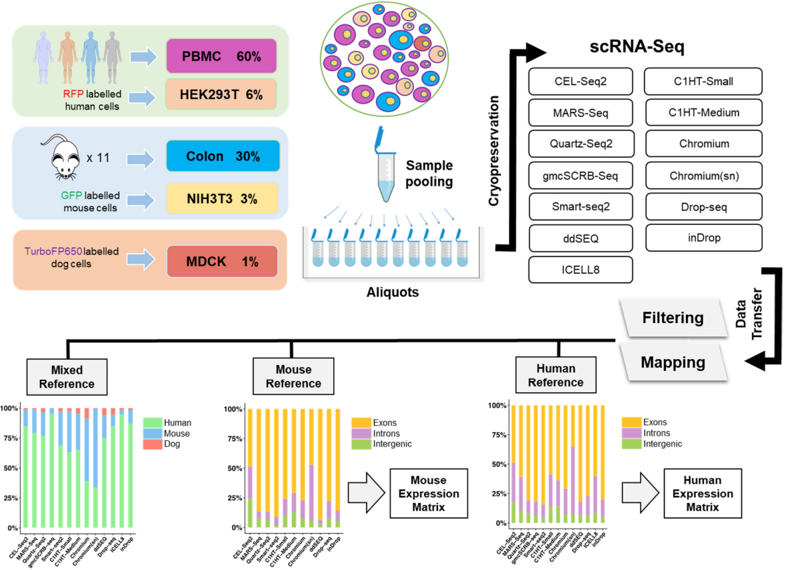
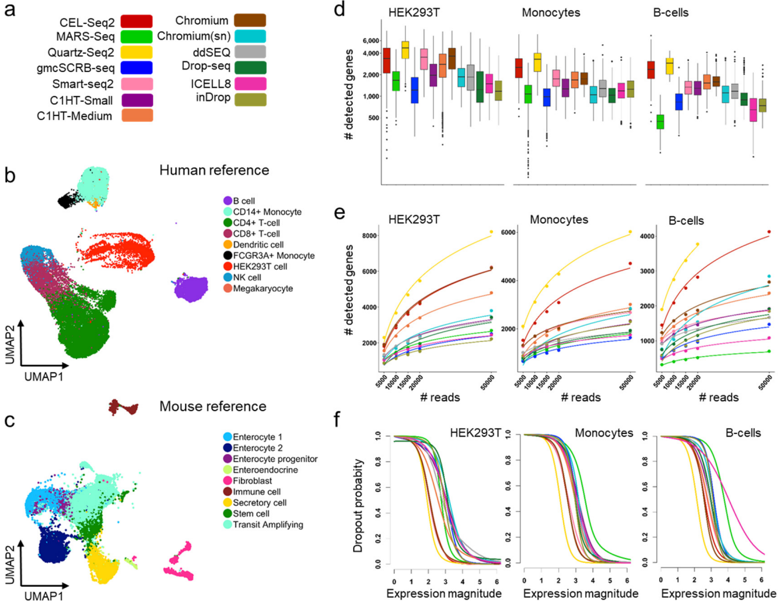
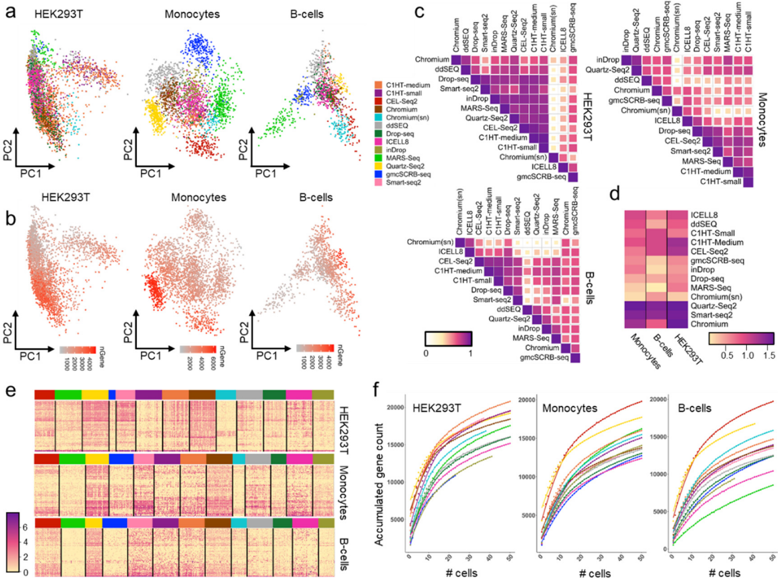
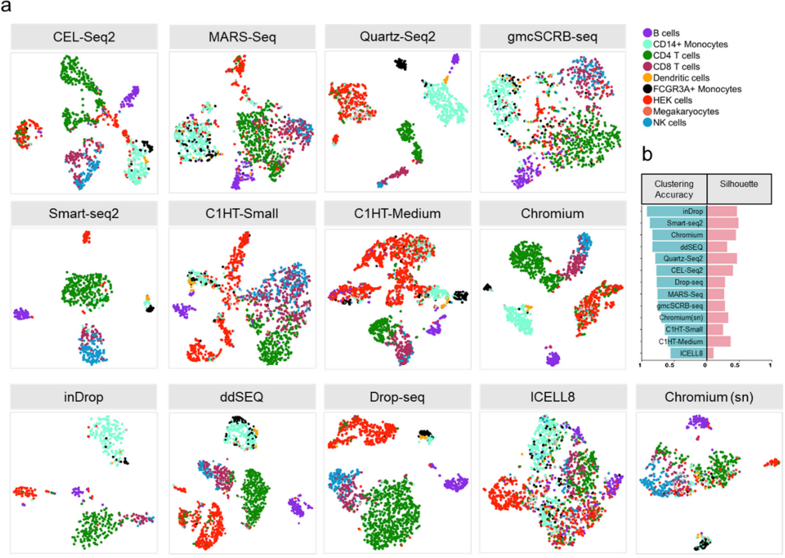
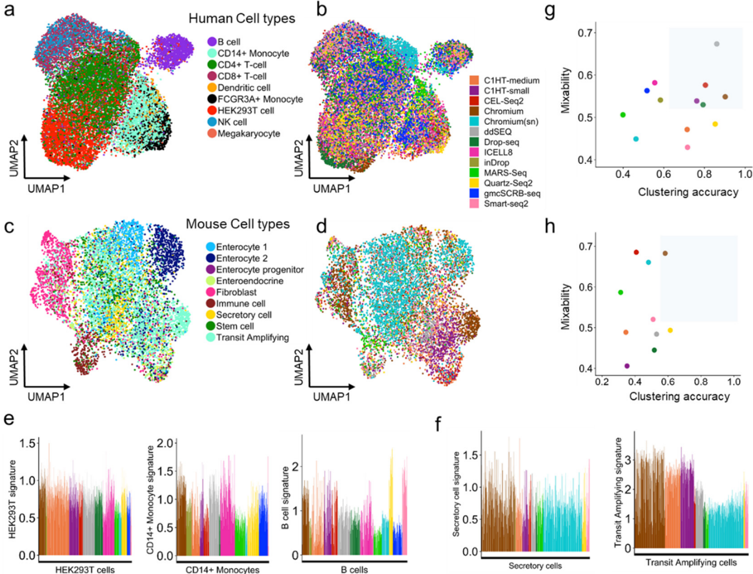
Single-cell RNA sequencing (scRNA-seq) is the leading technique for characterizing the transcriptomes of individual cells in a sample. The latest protocols are scalable to thousands of cells and are being used to compile cell atlases of tissues, organs and organisms. However, the protocols differ substantially with respect to their RNA capture efficiency, bias, scale and costs, and their relative advantages for different applications are unclear. In the present study, we generated benchmark datasets to systematically evaluate protocols in terms of their power to comprehensively describe cell types and states. We performed a multicenter study comparing 13 commonly used scRNA-seq and single-nucleus RNA-seq protocols applied to a heterogeneous reference sample resource. Comparative analysis revealed marked differences in protocol performance. The protocols differed in library complexity and their ability to detect cell-type markers, impacting their predictive value and suitability for integration into reference cell atlases. These results provide guidance both for individual researchers and for consortium projects such as the Human Cell Atlas.
Overview
The claims and statistics of this paper haven’t been checked yet.
Free: it reads the open-access text and checks the first 5 claims that cite a source we can check. Create a free account to check every claim.
Integrity signals
Registry
Cites
Statistics
Figures

Verification
Claims the paper makes
The claims and statistics of this paper haven’t been checked yet.
Free: it reads the open-access text and checks the first 5 claims that cite a source we can check. Create a free account to check every claim.
Claims other papers make about this one
Each is checked against this paper’s own text: does it say what the citing paper says it does?
The cited source says what the claim attributes to it.
In the citing paper
“Genetic differences may also be used to demultiplex 10x datasets generated on samples of mixed species origin [10].”
From Benchmarking of computational demultiplexing methods for single-nucleus RNA sequencing data (2025) · cites this paper as [10]
Self-check
Percentages, sums and reported differences re-computed from the paper’s own numbers.
The self-check needs the paper’s full text.
Citations
Cites
STAR: ultrafast universal RNA-seq aligner
Dobin, A., Davis, C. A., Schlesinger, F., Drenkow, J., Zaleski, C., Jha, S., Batut, P., Chaisson, M., & Gingeras, T. R. (2013) · Bioinformatics · doi:10.1093/bioinformatics/bts635 · Cited by 51,709
featureCounts: an efficient general purpose program for assigning sequence reads to genomic features
Liao, Y., Smyth, G. K., & Shi, W. (2014) · Bioinformatics · doi:10.1093/bioinformatics/btt656 · Cited by 27,219
Fast, sensitive and accurate integration of single-cell data with Harmony
Korsunsky, I., Millard, N., Fan, J., Slowikowski, K., Zhang, F., Wei, K., Baglaenko, Y., Brenner, M., Loh, P.-R., & Raychaudhuri, S. (2019) · Nature Methods · doi:10.1038/s41592-019-0619-0 · Cited by 10,488
Massively parallel digital transcriptional profiling of single cells
Zheng, G. X. Y., Terry, J. M., Belgrader, P., Ryvkin, P., Bent, Z. W., Wilson, R., Ziraldo, S. B., Wheeler, T. D., McDermott, G. P., Zhu, J., et al. (2017) · Nature Communications · doi:10.1038/ncomms14049 · Cited by 7,353
Highly parallel genome-wide expression profiling of individual cells using nanoliter droplets.
Macosko, E. Z., Basu, A., Satija, R., Nemesh, J., Shekhar, K., Goldman, M., Tirosh, I., Bialas, A. R., Kamitaki, N., Martersteck, E. M., et al. (2015) · Cell · doi:10.1016/j.cell.2015.05.002 · Cited by 7,110
Self-citationSpatial reconstruction of single-cell gene expression data
Satija, R., Farrell, J. A., Gennert, D., Schier, A. F., & Regev, A. (2015) · Nature Biotechnology · doi:10.1038/nbt.3192 · Cited by 7,055
Self-citationDroplet barcoding for single-cell transcriptomics applied to embryonic stem cells
Klein, A. M., Mazutis, L., Akartuna, I., Tallapragada, N., Veres, A., Li, V., Peshkin, L., Weitz, D. A., & Kirschner, M. W. (2015) · Cell · doi:10.1016/j.cell.2015.04.044 · Cited by 3,356
Single-cell transcriptomics of 20 mouse organs creates a Tabula Muris
The Tabula Muris Consortium, coordination, O., coordination, L., processing, O. C. A., sequencing, L. P. A., analysis, C. D., annotation, C. T., Writing group, Supplemental text writing group, & Principal investigators (2018) · Nature · doi:10.1038/s41586-018-0590-4 · Cited by 2,842
Snakemake—a scalable bioinformatics workflow engine
Köster, J., & Rahmann, S. (2012) · Bioinformatics · doi:10.1093/bioinformatics/bts480 · Cited by 2,780
Smart-seq2 for sensitive full-length transcriptome profiling in single cells
Picelli, S., Björklund, Å. K., Faridani, O. R., Sagasser, S., Winberg, G., & Sandberg, R. (2013) · Nature Methods · doi:10.1038/nmeth.2639 · Cited by 2,358
Self-citation
Cited by
Integrated analysis of multimodal single-cell data
Hao, Y., Hao, S., Andersen-Nissen, E., Mauck, W. M., Zheng, S., Butler, A., Lee, M. J., Wilk, A. J., Darby, C., Zagar, M., et al. (2020) · doi:10.1101/2020.10.12.335331 · Cited by 15,508
“Despite tremendous functional diversity, distinct populations of T cells such as effector, regulatory, gd, and mucosal associated invariant T (MAIT), often cannot be effectively separated by scRNA-seq alone, even when using the most sensitive and cutting-edge technologies (Ding et al., 2020; Mereu et al., 2020).”
BackgroundBenchmarking atlas-level data integration in single-cell genomics
Luecken, M. D., Büttner, M., Chaichoompu, K., Danese, A., Interlandi, M., Mueller, M. F., Strobl, D. C., Zappia, L., Dugas, M., Colomé-Tatché, M., et al. (2022) · Nature Methods · doi:10.1038/s41592-021-01336-8 · Cited by 1,438
Hu, C., Li, T., Xu, Y., Zhang, X., Li, F., Bai, J., Chen, J., Jiang, W., Yang, K., Ou, Q., et al. (2023) · Nucleic Acids Research · doi:10.1093/nar/gkac947 · Cited by 1,261
“In recent years, advances in tissue isolation and highthroughput sequencing at the single-cell level have enabled the generation of single-cell RNA-sequencing (scRNA-seq) datasets, which are increasingly entering the public domain (21).”
BackgroundBest practices for single-cell analysis across modalities
Heumos, L., Schaar, A. C., Lance, C., Litinetskaya, A., Drost, F., Zappia, L., Lücken, M. D., Strobl, D. C., Henao, J., Curion, F., et al. (2023) · Nature Reviews Genetics · doi:10.1038/s41576-023-00586-w · Cited by 1,051
The protein expression profile of ACE2 in human tissues
Hikmet, F., Méar, L., Edvinsson, Å., Micke, P., Uhlén, M., & Lindskog, C. (2020) · Molecular Systems Biology · doi:10.15252/msb.20209610 · Cited by 1,016
Elosua-Bayes, M., Nieto, P., Mereu, E., Gut, I., & Heyn, H. (2021) · Nucleic Acids Research · doi:10.1093/nar/gkab043 · Cited by 732
“To further stratify the cells into cell states, we re-clustered and annotated each of them comparing the cluster markers to well-characterized single-cell gene sets of the tumor microenvironment (27–29) by computing the Jaccard similarity index using matchSCore2 (15).”
Self-citationSingle-cell RNA counting at allele and isoform resolution using Smart-seq3
Hagemann-Jensen, M., Ziegenhain, C., Chen, P., Ramsköld, D., Hendriks, G.-J., Larsson, A. J. M., Faridani, O. R., & Sandberg, R. (2020) · Nature Biotechnology · doi:10.1038/s41587-020-0497-0 · Cited by 700
Self-citationZhou, Y., Yang, D., Yang, Q., Lv, X., Huang, W., Zhou, Z., Wang, Y., Zhang, Z., Yuan, T., Ding, X., et al. (2020) · Nature Communications · doi:10.1038/s41467-020-20059-6 · Cited by 672
Decontamination of ambient RNA in single-cell RNA-seq with DecontX
Yang, S., Corbett, S. E., Koga, Y., Wang, Z., Johnson, W. E., Yajima, M., & Campbell, J. D. (2020) · Genome Biology · doi:10.1186/s13059-020-1950-6 · Cited by 635
Comparison and evaluation of statistical error models for scRNA-seq
Choudhary, S., & Satija, R. (2022) · Genome Biology · doi:10.1186/s13059-021-02584-9 · Cited by 634
Regulation of immune responses by the airway epithelial cell landscape
Hewitt, R. J., & Lloyd, C. M. (2021) · Nature Reviews Immunology · doi:10.1038/s41577-020-00477-9 · Cited by 591
Natural killer cell immunotypes related to COVID-19 disease severity
Maucourant, C., Filipovic, I., Ponzetta, A., Aleman, S., Cornillet, M., Hertwig, L., Strunz, B., Lentini, A., Reinius, B., Brownlie, D., et al. (2020) · Science Immunology · doi:10.1126/sciimmunol.abd6832 · Cited by 484
“CD8 T cells were excluded from downstream NK cell analyses based on k-means clustering of CD8 and NK cell markers from the human cell atlas PBMC benchmarking dataset (57), followed by renormalization of the data.”
MethodThe emerging landscape of spatial profiling technologies
Moffitt, J. R., Lundberg, E., & Heyn, H. (2022) · Nature Reviews Genetics · doi:10.1038/s41576-022-00515-3 · Cited by 419
Self-citationCell segmentation in imaging-based spatial transcriptomics
Petukhov, V., Xu, R. J., Soldatov, R. A., Cadinu, P., Khodosevich, K., Moffitt, J. R., & Kharchenko, P. V. (2022) · Nature Biotechnology · doi:10.1038/s41587-021-01044-w · Cited by 412
“uring the last decade, single-cell transcriptomic technologies gained great popularity, with single-cell RNA-sequencing (scRNA-seq) becoming the preferred approach for characterizing the state of complex tissues 1–4 .”
BackgroundMethodSpaceM reveals metabolic states of single cells
Rappez, L., Stadler, M., Triana, S., Gathungu, R. M., Ovchinnikova, K., Phapale, P., Heikenwalder, M., & Alexandrov, T. (2021) · Nature Methods · doi:10.1038/s41592-021-01198-0 · Cited by 390
Shahan, R., Hsu, C.-W., Nolan, T. M., Cole, B. J., Taylor, I. W., Greenstreet, L., Zhang, S., Afanassiev, A., Vlot, A. H. C., Schiebinger, G., et al. (2022) · Developmental Cell · doi:10.1016/j.devcel.2022.01.008 · Cited by 363
Garrido-Trigo, A., Corraliza, A. M., Veny, M., Dotti, I., Melón-Ardanaz, E., Rill, A., Crowell, H. L., Corbí, Á., Gudiño, V., Esteller, M., et al. (2023) · Nature Communications · doi:10.1038/s41467-023-40156-6 · Cited by 324
Self-citationAssessment of computational methods for the analysis of single-cell ATAC-seq data
Chen, H., Lareau, C., Andreani, T., Vinyard, M. E., Garcia, S. P., Clement, K., Andrade-Navarro, M. A., Buenrostro, J. D., & Pinello, L. (2019) · Genome Biology · doi:10.1186/s13059-019-1854-5 · Cited by 332
“The low copy number re-sults in an inherent per-cell data sparsity, where only 1 – 10% of expected accessible peaks are detected in single cells from scATAC-seq data (Additional file 1: Figure S1), compared to 10 – 45% of expressed genes detected in single cells from scRNA-seq data [2, 3].”
ResultHolland, C. H., Tanevski, J., Perales-Patón, J., Gleixner, J., Kumar, M. P., Mereu, E., Joughin, B. A., Stegle, O., Lauffenburger, D. A., Heyn, H., et al. (2020) · Genome Biology · doi:10.1186/s13059-020-1949-z · Cited by 323
“In addition, we observed that TF and pathway matrices derived from Quartz-Seq2 protocol yielded for hierarchy level 2 in significantly better cluster purity than all other protocols, which is in agreement with the original study of the PBMC + HEK293T data (Additional file 1: Figure S12a and S13a) [22].”
InfluentialSelf-citationDirect Comparative Analyses of 10X Genomics Chromium and Smart-Seq2
Wang, X., He, Y., Zhang, Q., Ren, X., & Zhang, Z. (2021) · Genomics, Proteomics & Bioinformatics · doi:10.1016/j.gpb.2020.02.005 · Cited by 320
“However, the main results were concordant with other reports, regarding detection sensitivity, dropout ratio, and cell types detected [17,46,47].”
ResultGyllborg, D., Langseth, C. M., Qian, X., Choi, E., Salas, S. M., Hilscher, M. M., Lein, E. S., & Nilsson, M. (2020) · Nucleic Acids Research · doi:10.1093/nar/gkaa792 · Cited by 303
“In situ hybridization technologies have come a long way and large consortium efforts are realizing the importance of not only being able to define all the cell types within a human being but also giving them a spatial position in the form of a human cell atlas (10,11).”
BackgroundSingle-Cell Transcriptome Analysis in Plants: Advances and Challenges
Shaw, R., Tian, X., & Xu, J. (2021) · Molecular Plant · doi:10.1016/j.molp.2020.10.012 · Cited by 288
Human prostate cancer bone metastases have an actionable immunosuppressive microenvironment
Kfoury, Y., Baryawno, N., Severe, N., Mei, S., Gustafsson, K., Hirz, T., Brouse, T., Scadden, E. W., Igolkina, A. A., Kokkaliaris, K., et al. (2021) · Cancer Cell · doi:10.1016/j.ccell.2021.09.005 · Cited by 287
Live-seq enables temporal transcriptomic recording of single cells
Chen, W., Guillaume-Gentil, O., Rainer, P. Y., Gäbelein, C. G., Saelens, W., Gardeux, V., Klaeger, A., Dainese, R., Zachara, M., Zambelli, T., et al. (2022) · Nature · doi:10.1038/s41586-022-05046-9 · Cited by 246
Assessing and mitigating batch effects in large-scale omics studies
Yu, Y., Mai, Y., Zheng, Y., & Shi, L. (2024) · Genome Biology · doi:10.1186/s13059-024-03401-9 · Cited by 202
“Several publications have compared and reviewed scRNA-seq protocols in detail [70–72].”
BackgroundMacrophage functional diversity in NAFLD — more than inflammation
Barreby, E., Chen, P., & Aouadi, M. (2022) · Nature Reviews Endocrinology · doi:10.1038/s41574-022-00675-6 · Cited by 247
Automated methods for cell type annotation on scRNA-seq data
Pasquini, G., Rojo Arias, J. E., Schäfer, P., & Busskamp, V. (2021) · Computational and Structural Biotechnology Journal · doi:10.1016/j.csbj.2021.01.015 · Cited by 249
DSTG: deconvoluting spatial transcriptomics data through graph-based artificial intelligence
Song, Q., & Su, J. (2021) · Briefings in Bioinformatics · doi:10.1093/bib/bbaa414 · Cited by 227
Single-nucleus and in situ RNA-sequencing reveal cell topographies in the human pancreas
Tosti, L., Hang, Y., Debnath, O., Tiesmeyer, S., Trefzer, T., Steiger, K., Ten, F. W., Lukassen, S., Ballke, S., Kühl, A. A., et al. (2021) · Gastroenterology · doi:10.1053/j.gastro.2020.11.010 · Cited by 228
“Our results confirmed that independent sNuc-seq datasets could be merged and fully integrated with scRNA-seq data sets, despite the use of different starting material (nucleus versus whole cell) (Figure 1B-C) (Mereu et al., 2020).”
ResultSelf-citationMicroglia and Astrocytes in Disease: Dynamic Duo or Partners in Crime?
Liddelow, S. A., Marsh, S. E., & Stevens, B. (2020) · Trends in Immunology · doi:10.1016/j.it.2020.07.006 · Cited by 226
Guo, C., Cai, P., Jin, L., Sha, Q., Yu, Q., Zhang, W., Jiang, C., Liu, Q., Zong, D., Li, K., et al. (2021) · Cell Discovery · doi:10.1038/s41421-020-00236-z · Cited by 221
Advances in single-cell RNA sequencing and its applications in cancer research
Huang, D., Ma, N., Li, X., Gou, Y., Duan, Y., Liu, B., Xia, J., Zhao, X., Wang, X., Li, Q., et al. (2023) · Journal of Hematology & Oncology · doi:10.1186/s13045-023-01494-6 · Cited by 201
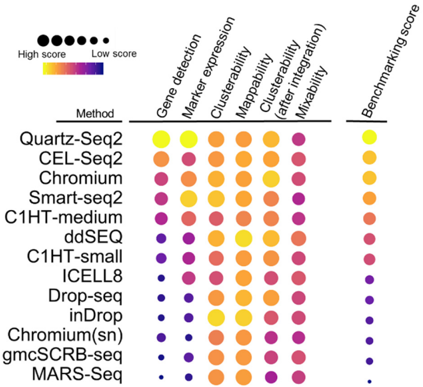
“The findings revealed that the Quartz Seq2 method outperformed other schemes, including 10 × Genomics and Smart-seq2, exhibiting the highest benchmarking score and thus demonstrating superior accuracy [63].”
MethodSystematic comparison of sequencing-based spatial transcriptomic methods
You, Y., Fu, Y., Li, L., Zhang, Z., Jia, S., Lu, S., Ren, W., Liu, Y., Xu, Y., Liu, X., et al. (2024) · Nature Methods · doi:10.1038/s41592-024-02325-3 · Cited by 220
“…with clear cell type and gene expression patterns, the position and ground truth become less obvious and limited by our understanding of reference tissues, unlike for scRNA-seq where one could use cell line mixtures or peripheral blood mononuclear cell samples to obtain consistent inputs 8,38,39 .”
Understanding tumour endothelial cell heterogeneity and function from single-cell omics
Zeng, Q., Mousa, M., Nadukkandy, A. S., Franssens, L., Alnaqbi, H., Alshamsi, F. Y., Safar, H. A., & Carmeliet, P. (2023) · Nature Reviews Cancer · doi:10.1038/s41568-023-00591-5 · Cited by 194
Immunometabolism in the Single-Cell Era
Artyomov, M. N., & Van den Bossche, J. (2020) · Cell Metabolism · doi:10.1016/j.cmet.2020.09.013 · Cited by 200
“In this approach one can isolate individual nuclei and profile corresponding transcripts (Mereu et al., 2020).”
BackgroundZernecke, A., Erhard, F., Weinberger, T., Schulz, C., Ley, K., Saliba, A.-E., & Cochain, C. (2023) · Cardiovascular Research · doi:10.1093/cvr/cvac161 · Cited by 191
“Besides increasing statistical power to balance patient and plaque heterogeneity, technical issues remain an additional important hurdle for single-cell analyses of clinical samples.(20) The human and mouse studies included here all employed enzymatic digestion of tissues, which leads to cell recovery that may not rep…”
BackgroundChen, Y., Davidson, N., Wan, Y. K., Yao, F., Su, Y., Gamaarachchi, H., Sim, A., Patel, H., Low, H. M., Hendra, C., et al. (2025) · Nature Methods · doi:10.1038/s41592-025-02623-4 · Cited by 235
The human cell count and size distribution
Hatton, I. A., Galbraith, E. D., Merleau, N. S. C., Miettinen, T. P., Smith, B. M., & Shander, J. A. (2023) · Proceedings of the National Academy of Sciences · doi:10.1073/pnas.2303077120 · Cited by 181
“particularly timely given the recent plan to build a Human Cell Atlas (21–23).”
Single-cell analyses of aging, inflammation and senescence
Uyar, B., Palmer, D., Kowald, A., Murua Escobar, H., Barrantes, I., Möller, S., Akalin, A., & Fuellen, G. (2020) · Ageing Research Reviews · doi:10.1016/j.arr.2020.101156 · Cited by 200
“Currently, a variety of competing single-cell RNA-seq protocols exist, each with its own advantages and trade-offs (Ding et al., 2019; Mereu et al., 2020; Svensson et al., 2017).”
Scalable single-cell RNA sequencing from full transcripts with Smart-seq3xpress
Hagemann-Jensen, M., Ziegenhain, C., & Sandberg, R. (2022) · Nature Biotechnology · doi:10.1038/s41587-022-01311-4 · Cited by 169
“Michael Hagemann-Jensen 1,2 , Christoph Ziegenhain 1,2 and Rickard Sandberg 1 ✉ Current single-cell RNA sequencing (scRNA-seq) methods with high cellular throughputs sacrifice full-transcript coverage and often sensitivity.”
BackgroundSelf-citationA roadmap for the Human Developmental Cell Atlas
Haniffa, M., Taylor, D., Linnarsson, S., Aronow, B. J., Bader, G. D., Barker, R. A., Camara, P. G., Camp, J. G., Chédotal, A., Copp, A., et al. (2021) · Nature · doi:10.1038/s41586-021-03620-1 · Cited by 181
Self-citationAn atlas of cells in the human tonsil
Massoni-Badosa, R., Aguilar-Fernández, S., Nieto, J. C., Soler-Vila, P., Elosua-Bayes, M., Marchese, D., Kulis, M., Vilas-Zornoza, A., Bühler, M. M., Rashmi, S., et al. (2024) · Immunity · doi:10.1016/j.immuni.2024.01.006 · Cited by 183
“Both the reference and the query can be profiled with single-cell or single-nuclei assays, even though transcriptomes largely differ between these cellular compartments (Mereu et al., 2020).”
BackgroundSelf-citationOver 1000 tools reveal trends in the single-cell RNA-seq analysis landscape
Zappia, L., & Theis, F. J. (2021) · Genome Biology · doi:10.1186/s13059-021-02519-4 · Cited by 174
A single-cell tumor immune atlas for precision oncology
Nieto, P., Elosua-Bayes, M., Trincado, J. L., Marchese, D., Massoni-Badosa, R., Salvany, M., Henriques, A., Nieto, J., Aguilar-Fernández, S., Mereu, E., et al. (2021) · Genome Research · doi:10.1101/gr.273300.120 · Cited by 169
“Following clustering of the query datasets, we projected either single cells or clusters onto the atlas using a reference-based projection (Butler et al. 2018) or cluster matching (Mereu et al. 2020) tools, respectively.”
BackgroundMethodSelf-citationA single cell atlas of the human liver tumor microenvironment
Massalha, H., Bahar Halpern, K., Abu‐Gazala, S., Jana, T., Massasa, E. E., Moor, A. E., Buchauer, L., Rozenberg, M., Pikarsky, E., Amit, I., et al. (2020) · Molecular Systems Biology · doi:10.15252/msb.20209682 · Cited by 174
Germain, P.-L., Sonrel, A., & Robinson, M. D. (2020) · Genome Biology · doi:10.1186/s13059-020-02136-7 · Cited by 147
A single-cell atlas of mouse lung development
Negretti, N. M., Plosa, E. J., Benjamin, J. T., Schuler, B. A., Habermann, A. C., Jetter, C. S., Gulleman, P. M., Bunn, C., Hackett, A. N., Ransom, M. A., et al. (2021) · Development · doi:10.1242/dev.199512 · Cited by 166
Single-cell network biology for resolving cellular heterogeneity in human diseases
Cha, J., & Lee, I. (2020) · Experimental & Molecular Medicine · doi:10.1038/s12276-020-00528-0 · Cited by 161
Fast and highly sensitive full-length single-cell RNA sequencing using FLASH-seq
Hahaut, V., Pavlinić, D., Carbone, W., Schuierer, S., Balmer, P., Quinodoz, M., Renner, M., Roma, G., Cowan, C. S., & Picelli, S. (2022) · Nature Biotechnology · doi:10.1038/s41587-022-01312-3 · Cited by 155
A transcriptomic taxonomy of Drosophila circadian neurons around the clock
Ma, D., Przybylski, D., Abruzzi, K. C., Schlichting, M., Li, Q., Long, X., & Rosbash, M. (2021) · eLife · doi:10.7554/elife.63056 · Cited by 160
“This approach detects more genes, especially weakly expressed genes, than many other methods (Mereu et al., 2020).”
Berrien-Elliott, M. M., Foltz, J. A., Russler‐Germain, D. A., Neal, C. C., Tran, J., Gang, M., Wong, P., Fisk, B. A., Cubitt, C. C., Marín, N. D., et al. (2022) · Science Translational Medicine · doi:10.1126/scitranslmed.abm1375 · Cited by 140
Sawada, T., Chater, T. E., Sasagawa, Y., Yoshimura, M., Fujimori-Tonou, N., Tanaka, K. Y., Benjamin, K. J., Paquola, A. C. M., Erwin, J. A., Goda, Y., et al. (2020) · Molecular Psychiatry · doi:10.1038/s41380-020-0844-z · Cited by 135
“Here, we applied Quartz-Seq2 [10], which showed outstanding performance among scRNA-seq methods by benchmarking [11], to iPSC-derived cerebral organoid models of psychosis.”
MethodSelf-citationGene function and cell surface protein association analysis based on single-cell multiomics data
Hu, H., Feng, Z., Lin, H., Cheng, J., Lyu, J., Zhang, Y., Zhao, J., Xu, F., Lin, T., Zhao, Q., et al. (2023) · Computers in Biology and Medicine · doi:10.1016/j.compbiomed.2023.106733 · Cited by 136
Zheng, H., Peng, X., Yang, S., Li, X., Huang, M., Wei, S., Zhang, S., He, G., Liu, J., Fan, Q., et al. (2023) · Cell Death Discovery · doi:10.1038/s41420-023-01356-7 · Cited by 135
“Single-cell RNA sequencing technology [35, 36] can be used to reveal the TAM type at the single-cell level, and spatial transcriptomics [37] can aid to visualize the different proteins or expressed genes, the combination of which can provide a more theoretical basis to support the application for targeted therapy.”
BackgroundscGCN is a graph convolutional networks algorithm for knowledge transfer in single cell omics
Song, Q., Su, J., & Zhang, W. (2021) · Nature Communications · doi:10.1038/s41467-021-24172-y · Cited by 118
A multicenter study benchmarking single-cell RNA sequencing technologies using reference samples
Chen, W., Zhao, Y., Chen, X., Yang, Z., Xu, X., Bi, Y., Chen, V., Li, J., Choi, H., Ernest, B., et al. (2021) · Nature Biotechnology · doi:10.1038/s41587-020-00748-9 · Cited by 114
miQC: An adaptive probabilistic framework for quality control of single-cell RNA-sequencing data
Hippen, A. A., Falco, M. M., Weber, L. M., Erkan, E. P., Zhang, K., Doherty, J. A., Vähärautio, A., Greene, C. S., & Hicks, S. C. (2021) · PLOS Computational Biology · doi:10.1371/journal.pcbi.1009290 · Cited by 105
“Other widely used QC metrics to identify compromised cells are the total number of sequencing reads or UMI counts in a sample and the number of unique genes that those reads or counts map to, also known as library complexity [18, 19].”
Brügger, M. D., Valenta, T., Fazilaty, H., Hausmann, G., & Basler, K. (2020) · PLoS Biology · doi:10.1371/journal.pbio.3001032 · Cited by 118
“In addition, using the R package matchSCore2 [29], we compared the murine mesenchymal populations with the human mesenchymal populations on the level of the entire transcriptome.”
Liu, W., Hu, H., Shao, Z., Lv, X., Zhang, Z., Deng, X., Song, Q., Han, Y. N., Guo, T., Xiong, L., et al. (2023) · Bone Research · doi:10.1038/s41413-022-00237-6 · Cited by 115
“The emergence of single-cell RNA-sequencing (scRNA-seq) technology has fundamentally changed the field of tumor biology and provided a strategy to demonstrate TME heterogeneity as well as intercellular communication at the single-cell level.(9,10) Zhou et al.”
BackgroundIsakova, A., Neff, N. F., & Quake, S. R. (2021) · Proceedings of the National Academy of Sciences · doi:10.1073/pnas.2113568118 · Cited by 107
“We retrieved Smart-seq2 data from Picelli et al. (19) (GSE49321).”
MethodInfluentialOmicVerse: a framework for bridging and deepening insights across bulk and single-cell sequencing
Zeng, Z., Ma, Y., Hu, L., Tan, B., Liu, P., Wang, Y., Xing, C., Xiong, Y., & Du, H. (2024) · Nature Communications · doi:10.1038/s41467-024-50194-3 · Cited by 102
“…example, the differentiation from hematopoietic cells (HPC) to podocytes was interrupted, and the fi ltering-induced absence of neutrophils, cardiomyocytes, neuronal cells, and megakaryocytes and the differentiation from neural intermediate progenitor cells (nIPC) to neurons was interrupted 20,21 .”
Selewa, A., Dohn, R., Eckart, H., Lozano, S., Xie, B., Gauchat, E., Elorbany, R., Rhodes, K., Burnett, J., Gilad, Y., et al. (2020) · Scientific Reports · doi:10.1038/s41598-020-58327-6 · Cited by 102
Transcriptional and anatomical diversity of medium spiny neurons in the primate striatum
He, J., Kleyman, M., Chen, J., Alikaya, A., Rothenhoefer, K. M., Öztürk, B. E., Wirthlin, M. E., Bostan, A. C., Fish, K. N., Byrne, L. C., et al. (2021) · Current Biology · doi:10.1016/j.cub.2021.10.015 · Cited by 109
Prime-seq, efficient and powerful bulk RNA sequencing
Janjic, A., Wange, L. E., Bagnoli, J., Geuder, J., Nguyen, P., Richter, D., Vieth, B., Vick, B., Jeremias, I., Ziegenhain, C., et al. (2022) · Genome biology · doi:10.1186/s13059-022-02660-8 · Cited by 104
Self-citationGeneration of human alveolar epithelial type I cells from pluripotent stem cells
Burgess, C. L., Huang, J., Bawa, P., Alysandratos, K., Minakin, K., Ayers, L. J., Morley, M. P., Babu, A., Villacorta-Martín, C., Yampolskaya, M., et al. (2024) · Cell stem cell · doi:10.1016/j.stem.2024.03.017 · Cited by 110
Translational opportunities of single-cell biology in atherosclerosis
de Winther, M. P. J., Bäck, M., Evans, P. C., Gomez, D. A., Gonçalves, I., Jørgensen, H. F., Koenen, R. R., Lutgens, E., Norata, G. D., Osto, E., et al. (2022) · European Heart Journal · doi:10.1093/eurheartj/ehac686 · Cited by 101
Systematic comparison of high-throughput single-cell RNA-seq methods for immune cell profiling
Yamawaki, T. M., Lu, D. R., Ellwanger, D. C., Bhatt, D., Manzanillo, P., Arias, V., Zhou, H., Yoon, O. K., Homann, O., Wang, S., et al. (2021) · BMC Genomics · doi:10.1186/s12864-020-07358-4 · Cited by 95
“[10], which is on par with our findings.”
BackgroundMethodResultInfluentialTargeting lymphoid-derived IL-17 signaling to delay skin aging
Solá, P., Mereu, E., Bonjoch, J., Casado-Peláez, M., Prats, N., Aguilera, M., Reina, Ó., Blanco, E., Esteller, M., Croce, L. D., et al. (2023) · Nature Aging · doi:10.1038/s43587-023-00431-z · Cited by 92
Self-citationZhang, J., Lü, T., Lu, S., Ma, S., Han, D., Zhang, K., Xu, C., Liu, S., Gan, L., Wu, X., et al. (2023) · Computational and Structural Biotechnology Journal · doi:10.1016/j.csbj.2022.12.049 · Cited by 94
Computational Methods for Single-Cell RNA Sequencing
Hie, B., Peters, J., Nyquist, S. K., Shalek, A. K., Berger, B., & Bryson, B. D. (2020) · Annual Review of Biomedical Data Science · doi:10.1146/annurev-biodatasci-012220-100601 · Cited by 89
Liu, C., Wu, T., Fan, F., Liu, Y., Wu, L., Junkin, M., Wang, Z., Yu, Y., Wang, W., Wei, W., et al. (2019) · bioRxiv (Cold Spring Harbor Laboratory) · doi:10.1101/818450 · Cited by 86
Microfluidics for Neuronal Cell and Circuit Engineering
Habibey, R., Rojo Arias, J. E., Striebel, J., & Busskamp, V. (2022) · Chemical Reviews · doi:10.1021/acs.chemrev.2c00212 · Cited by 85
Seyfferth, C., Eekhout, T., Shi, D., Neumann, M., Berg, L. S., Ke, Y., Shahan, R., Cox, K. L., Gómez-Cano, F., Nelissen, H., et al. (2024) · The Plant Cell · doi:10.1093/plcell/koae003 · Cited by 92
“Similar benchmark studies using human and mouse cell lines allowed practicality and financial comparisons of common methods, while also comparing cell capture rates and technical bias across cells with distinct cell properties (Mereu et al. 2020).”
Feature selection revisited in the single-cell era
Yang, P., Huang, H., & Liu, C. (2021) · Genome Biology · doi:10.1186/s13059-021-02544-3 · Cited by 83
“By far, the most widely applied single-cell omics technologies are single-cell transcriptomics [53] made popular by an array of scRNA-seq protocols [54].”
BackgroundOgura, N., Sasagawa, Y., Ito, T., Tameshige, T., Kawai, S., Sano, M., Doll, Y., Iwase, A., Kawamura, A., Suzuki, T., et al. (2023) · Science Advances · doi:10.1126/sciadv.adg6983 · Cited by 84
“Quartz-Seq2 outperformed other platforms in a benchmarking study using mammalian cells (27), yet it has not been applied for plant cells as far as we are aware of.”
BackgroundSelf-citationCross-tissue multicellular coordination and its rewiring in cancer
Shi, Q., Chen, Y., Li, Y., Qin, S., Yang, Y., Gao, Y., Zhu, L., Wang, D., & Zhang, Z. (2025) · Nature · doi:10.1038/s41586-025-09053-4 · Cited by 94
“These criteria were implemented to minimize batch effects across the datasets 49 .”
Benchmarking algorithms for pathway activity transformation of single-cell RNA-seq data
Zhang, Y., Ma, Y., Huang, Y., Zhang, Y., Jiang, Q., Zhou, M., & Su, J. (2020) · Computational and Structural Biotechnology Journal · doi:10.1016/j.csbj.2020.10.007 · Cited by 79
Tosoni, G., Ayyildiz, D., Bryois, J., Macnair, W., Fitzsimons, C. P., Lucassen, P. J., & Salta, E. (2023) · Neuron · doi:10.1016/j.neuron.2023.03.010 · Cited by 82
“The number of cell types identified in sc/snRNA-seq studies critically depends on the protocol used, 25 the number of cells sequenced (the term ‘‘cells’’ will be used from here on to collectively refer to the single observations in sc/snRNA-seq studies, i.e., cells or nuclei), the sequencing depth,…”
MethodPast, Present, and Future of Affinity-based Cell Separation Technologies
Bacon, K. B., Lavoie, R. A., Rao, B. M., Daniele, M. A.-A., & Menegatti, S. (2020) · Acta Biomaterialia · doi:10.1016/j.actbio.2020.05.004 · Cited by 88
Benchmarking UMI-based single-cell RNA-seq preprocessing workflows
You, Y., Tian, L., Su, S., Dong, X., Jabbari, J. S., Hickey, P. F., & Ritchie, M. E. (2021) · Genome biology · doi:10.1186/s13059-021-02552-3 · Cited by 84
“First, although there are other protocols such as InDrops, Drop-seq, and Sort-seq, and different protocols are known to influence downstream analysis [26, 68], our results are restricted to datasets from two protocols, CEL-Seq2 and 10x Chromium.”
MethodDefining and benchmarking open problems in single-cell analysis
Luecken, M. D., Gigante, S., Burkhardt, D. B., Cannoodt, R., Strobl, D. C., Markov, N. S., Zappia, L., Palla, G., Lewis, W., Dimitrov, D., et al. (2025) · Nature Biotechnology · doi:10.1038/s41587-025-02694-w · Cited by 106
Single-nucleus RNA-seq2 reveals functional crosstalk between liver zonation and ploidy
Richter, M. L., Deligiannis, I. K., Yin, K., Danese, A., Lleshi, E., Coupland, P., Vallejos, C. A., Matchett, K. P., Henderson, N. C., Colome-Tatche, M., et al. (2021) · Nature Communications · doi:10.1038/s41467-021-24543-5 · Cited by 75
Single nucleus multi-omics regulatory landscape of the murine pituitary
Ruf-Zamojski, F., Zhang, Z., Zamojski, M., Smith, G. R., Mendelev, N., Liu, H., Nudelman, G., Moriwaki, M., Pincas, H., Castanon, R. G., et al. (2021) · Nature Communications · doi:10.1038/s41467-021-22859-w · Cited by 77
Review: Implantation and placentation in ruminants
Davenport, K. M., Ortega, M. S., Johnson, G. A., Seo, H., & Spencer, T. E. (2023) · animal · doi:10.1016/j.animal.2023.100796 · Cited by 73
Considerations for building and using integrated single-cell atlases
Hrovatin, K., Sikkema, L., Shitov, V. A., Heimberg, G., Shulman, M., Oliver, A. J., Mueller, M. F., Ibarra, I. L., Wang, H., Ramírez-Suástegui, C., et al. (2024) · Nature Methods · doi:10.1038/s41592-024-02532-y · Cited by 76
“Datasets with lower cellular resolution, for example, due to low sequencing depth, have been shown to integrate more poorly with other datasets 48 (Box 2).”
Garcia-Diaz, C., Pöysti, A., Mereu, E., Clements, M., Brooks, L. J., Gálvez‐Cancino, F., Castillo, S. P., Tang, W., Beattie, G., Courtot, L., et al. (2023) · Cell Reports · doi:10.1016/j.celrep.2023.112472 · Cited by 76
Self-citationspinDrop: a droplet microfluidic platform to maximise single-cell sequencing information content
Jonghe, J. D., Kamiński, T. S., Morse, D. B., Tabaka, M., Ellermann, A. L., Kohler, T. N., Amadei, G., Handford, C. E., Findlay, G. M., Zernicka‐Goetz, M., et al. (2023) · Nature Communications · doi:10.1038/s41467-023-40322-w · Cited by 71
“For example, spinDrop uses in vitro transcription for cDNA ampli fi cation and 10x Chromium uses PCR for cDNA ampli fi cation, which has been reported to yield different gene capture 40 .”
Building a high-quality Human Cell Atlas
Human Cell Atlas Standards and Technology Working Group, Rozenblatt–Rosen, O., Shin, J. W., Rood, J., Hupalowska, A., Regev, A., & Heyn, H. (2021) · Nature Biotechnology · doi:10.1038/s41587-020-00812-4 · Cited by 72
Self-citationSingle-nuclei transcriptome analysis of the shoot apex vascular system differentiation in Populus
Conde, D., Triozzi, P. M., Pereira, W. J., Schmidt, H. W., Balmant, K. M., Knaack, S., Redondo-López, A., Roy, S., Dervinis, C., & Kirst, M. (2022) · Development · doi:10.1242/dev.200632 · Cited by 68
“Furthermore, a growing body of literature indicates that snRNA-seq achieves comparable results to scRNA-seq (Bakken et al., 2018; Wu et al., 2019), and the feasibility of integrating datasets from cells and nuclei (Mereu et al., 2020).”
BackgroundResultAutomatic cell type identification methods for single-cell RNA sequencing
Xie, B., Jiang, Q., Mora, A., & Li, X. (2021) · Computational and Structural Biotechnology Journal · doi:10.1016/j.csbj.2021.10.027 · Cited by 66
“However, the prior knowledge of these methods often comes from a single dataset, which may miss certain cell types due to the limitations of different sequencing platforms and experimental approaches [69,81].”
BackgroundAdaptive immune receptor repertoire analysis
Mhanna, V., Bashour, H., Quý, K. L., Barennes, P., Rawat, P., Greiff, V., & Mariotti‐Ferrandiz, E. (2024) · Nature Reviews Methods Primers · doi:10.1038/s43586-023-00284-1 · Cited by 84
Single-Cell RNA Sequencing Technology Landscape in 2023
Qu, H., Kao, C., & Hakonarson, H. H. (2023) · Stem Cells · doi:10.1093/stmcls/sxad077 · Cited by 73
Systematic benchmarking of single-cell ATAC-sequencing protocols
Rop, F. V. D., Hulselmans, G. J., Flerin, C., Soler-Vila, P., Rafels, A., Christiaens, V., González‐Blas, C. B., Marchese, D., Caratù, G., Poovathingal, S. K., et al. (2023) · Nature Biotechnology · doi:10.1038/s41587-023-01881-x · Cited by 75
Self-citationProbing infectious disease by single-cell RNA sequencing: Progresses and perspectives
Luo, G., Gao, Q., Zhang, S., & Yan, B. (2020) · Computational and Structural Biotechnology Journal · doi:10.1016/j.csbj.2020.10.016 · Cited by 66
“UMI counting has been incorporated in many scRNA-seq methods, including CEL-seq, CEL-seq2, MARS-seq, MARS-seq2, Drop-seq, inDrop, etc. [11,22–25].”
MethodSingle‐Cell Sequencing Methodologies: From Transcriptome to Multi‐Dimensional Measurement
Chen, Y., Song, J. T., Ruan, Q., Zeng, X., Wu, L., Cai, L., Wang, X., & Yang, C. J. (2021) · Small Methods · doi:10.1002/smtd.202100111 · Cited by 66
The shaky foundations of simulating single-cell RNA sequencing data
Crowell, H. L., Leonardo, S. X. M., Soneson, C., & Robinson, M. D. (2023) · Genome biology · doi:10.1186/s13059-023-02904-1 · Cited by 66
Optimizing Accuracy and Depth of Protein Quantification in Experiments Using Isobaric Carriers
Specht, H., & Slavov, N. (2021) · Journal of Proteome Research · doi:10.1021/acs.jproteome.0c00675 · Cited by 61
Single‐cell RNA sequencing in osteoarthritis
Gu, Y., Hu, Y., Zhang, H., Wang, S., Xu, K., & Su, J. (2023) · Cell Proliferation · doi:10.1111/cpr.13517 · Cited by 59
“21,22 All single-cell RNA-seq protocols share a common workflow 23 (Figure 1): (1) sample preparation; (2) single-cell isolation; (3) reverse transcription and amplification (including library preparation); (4) sequencing; (5) bioinformatic analysis.”
MethodA comprehensive analysis framework for evaluating commercial single-cell RNA sequencing technologies
Simone, M. C. D., Hoover, J., Lau, J., Bennett, H. M., Wu, B., Chen, C., Menon, H., Au‐Yeung, A., Lear, S. P., Vaidya, S., et al. (2024) · Nucleic Acids Research · doi:10.1093/nar/gkae1186 · Cited by 67
Self-citationVistain, L. F., Phan, H. V., Keisham, B., Jordi, C., Chen, M., Reddy, S. T., & Tay, S. (2022) · Nature Methods · doi:10.1038/s41592-022-01684-z · Cited by 58
Metadata
- Authors
- Mereu, E., Lafzi, A., Moutinho, C., Ziegenhain, C., McCarthy, D. J., Álvarez-Varela, A., Batlle, E., Sagar, Grün, D., Lau, J. K., Boutet, S. C., Sanada, C., Ooi, A., Jones, R. C., Kaihara, K., Brampton, C., Talaga, Y., Sasagawa, Y., Tanaka, K., Hayashi, T., Braeuning, C., Fischer, C., Sauer, S., Trefzer, T., Conrad, C., Adiconis, X., Nguyen, L. T., Regev, A., Levin, J. Z., Parekh, S., Janjic, A., Wange, L. E., Bagnoli, J. W., Enard, W., Gut, M., Sandberg, R., Nikaido, I., Gut, I., Stegle, O., & Heyn, H.
- Affiliations
- Barcelona Institute of Science and Technology (ES)
- Karolinska Institutet (SE)
- European Bioinformatics Institute (GB)
- Institute for Research in Biomedicine (ES)
- Institució Catalana de Recerca i Estudis Avançats (ES)
- Max Planck Institute of Immunobiology and Epigenetics (DE)
- 10X Genomics (United States) (US)
- Standard BioTools (United States) (US)
- Stanford University (US)
- Bio-Rad (United States) (US)
- RIKEN Center for Biosystems Dynamics Research (JP)
- Max Delbrück Center (DE)
- Berlin Institute of Health at Charité - Universitätsmedizin Berlin (DE)
- Broad Institute (US)
- Max Planck Institute for Biology of Ageing (DE)
- Ludwig-Maximilians-Universität München (DE)
- University of Tsukuba (JP)
- Universitat Pompeu Fabra (ES)
- Corresponding author
- Heyn, Holger
- ORCID
- Mereu, Elisabetta
- Lafzi, Atefeh
- Ziegenhain, Christoph
- McCarthy, Davis J.
- Álvarez-Varela, Adrián
- Batlle, Eduard
- Grün, Dominic
- Ooi, Aik
- Jones, Robert C.
- Kaihara, Kelly
- Sasagawa, Yohei
- Tanaka, Kaori
- Hayashi, Tetsutaro
- Braeuning, Caroline
- Fischer, Cornelius
- Sauer, Sascha
- Trefzer, Timo
- Conrad, Christian
- Adiconis, Xian
- Regev, Aviv
- Levin, Joshua Z.
- Parekh, Swati
- Janjic, Aleksandar
- Wange, Lucas E.
- Bagnoli, Johannes W.
- Enard, Wolfgang
- Sandberg, Rickard
- Nikaido, Itoshi
- Gut, Ivo
- Stegle, Oliver
- Heyn, Holger
- Venue
- Nature Biotechnology
- Published
- 2020-04-06
- Volume
- 38
- Issue
- 6
- Pages
- 747-755
- ISSN
- 0733-222X (ISSN-L)
- 1087-0156
- 1546-1696
- OpenAlex
- W2946232537
- Semantic Scholar
- 16427167f541cf06f9200dfc81ab78f168695559
- Cited by
- 499
- References
- 68
- Citations by year
- 2026: 52 · 2025: 66 · 2024: 87 · 2023: 86 · 2022: 72 · 2021: 82 · 2020: 49
- FWCI
- 23.93
- Type
- journal article
- Language
- en
- Open access
- green
- doi.org
- Licence
- cc-by-nd
- www.springer.com/tdm (tdm)
- www.springer.com/tdm (vor)
- Locations
- Nature Biotechnology (publishedVersion)
- bioRxiv (Cold Spring Harbor Laboratory) (acceptedVersion, cc-by-nd)
- PubMed (publishedVersion)
- Minerva Access (University of Melbourne) (submittedVersion)
- MDC Repository (Max-Delbrueck-Center for Molecular Medicine) (submittedVersion)
- MPG.PuRe (Max Planck Society) (submittedVersion)
- MPG.PuRe (Max Planck Society) (submittedVersion, other-oa)
- Repositori digital de la UPF (Universitat Pompeu Fabra) (submittedVersion)
- Funders
- Howard Hughes Medical Institute
- Silicon Valley Community Foundation (2018-182827)
- Ministerio de Ciencia, Innovación y Universidades (SAF2017-89109-P)
- Research Center Network for Realization of Regenerative Medicine
- European Commission (H2020-MSCA-ITN, 675752, HORIZON2020, H2020-MSCA ITN-2015, H2020, 810287, H2020-MSCA)
- Deutsche Forschungsgemeinschaft (SFB 1243, EN 1093/2-1)
- Agence Nationale de la Recherche (ANR-18-CE92-0005)
- Generalitat de Catalunya
- Max-Planck-Gesellschaft
- Science for Life Laboratory
- Horizon 2020 Framework Programme (H2020‐MSCA‐ITN‐2015, H2020-MSCA, H2020-MSCA-ITN, 810287)
- Klarman Cell Observatory, Broad Institute
- Instituto de Salud Carlos III (CP14/00229, H2020)
- Agencia Estatal de Investigación (H2020)
- National Institute of Allergy and Infectious Diseases (U24AI118672)
- Core Research for Evolutional Science and Technology (JPMJCR16G3)
- Topics
- Life Sciences › Biochemistry, Genetics and Molecular Biology › Molecular Biology › Single-cell and spatial transcriptomics
- Life Sciences › Biochemistry, Genetics and Molecular Biology › Molecular Biology › Genomics and Phylogenetic Studies
- Life Sciences › Biochemistry, Genetics and Molecular Biology › Molecular Biology › Gene expression and cancer classification
- Keywords
- single-cell RNA sequencing, protocol performance comparison, cell atlases, single-nucleus RNA sequencing, library complexity, Human Cell Atlas, multicenter comparison
- MeSH terms
- Animals, Cell Line, Humans, Sequence Analysis, RNA, Benchmarking, Genomics, Databases, Genetic, Mice, Single-Cell Analysis
About these checks
Registry, retraction, Cites and statistics results are computed, not judged, with one exception: a printed reference that no index lists is read once by a model before it counts as a citation error. Claims are extracted by a model and kept only when their quote appears verbatim in the text; each cited source is then checked, with a model’s help, for whether it says what the claim relies on. Those verdicts can be wrong — read the claim’s quote and the cited source before relying on one.
Statistics and arithmetic are recomputed, not judged.
Confidence bands are shown only for fields calibrated on our annotated test set. None is calibrated yet, so no band is shown.
What counts as a claim ›How we measure confidence ›How we check this ›
Are you an author, or do you see a problem with this page? Request a review
Data sources
Bibliographic data: Semantic Scholar, OpenAlex, Crossref.
Contains information from the Semantic Scholar Academic Graph Datasets, made available under the ODC Attribution License (ODC-BY 1.0).
Semantic Scholar’s data is described in: Kinney, R., et al. (2023). The Semantic Scholar Open Data Platform. arXiv:2301.10140.
