

Nanopore sequencing and the Shasta toolkit enable efficient de novo assembly of eleven human genomes
Open accessPublished version of a preprint
The DOI matches its Crossref record; 78 of the 78 references it cites were found in a registry or an index.
Abstract
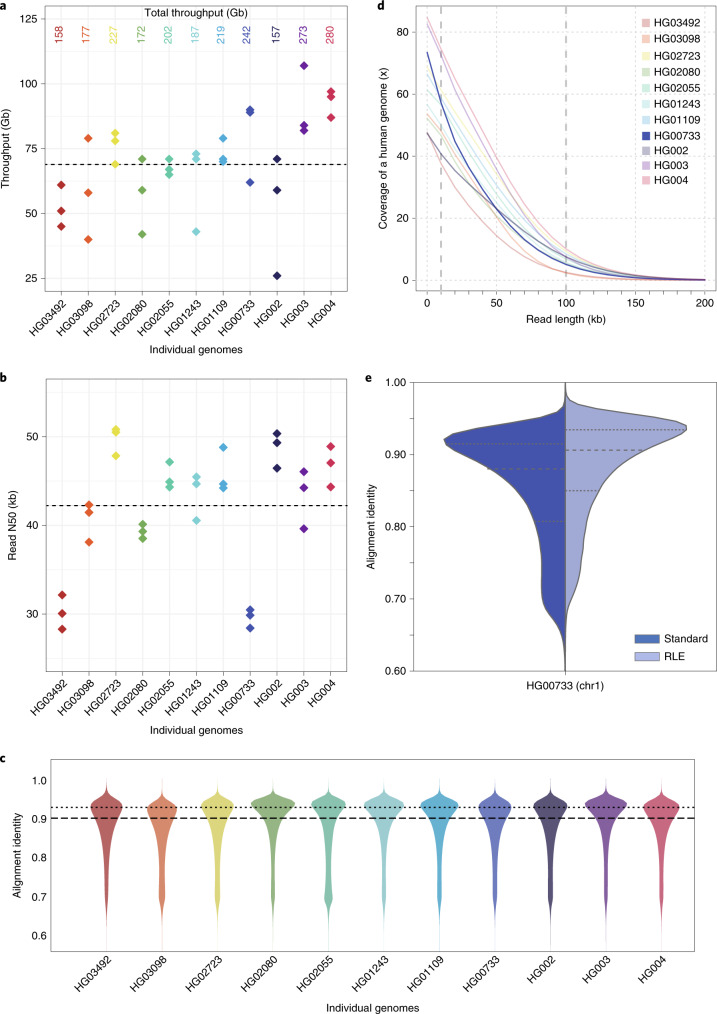
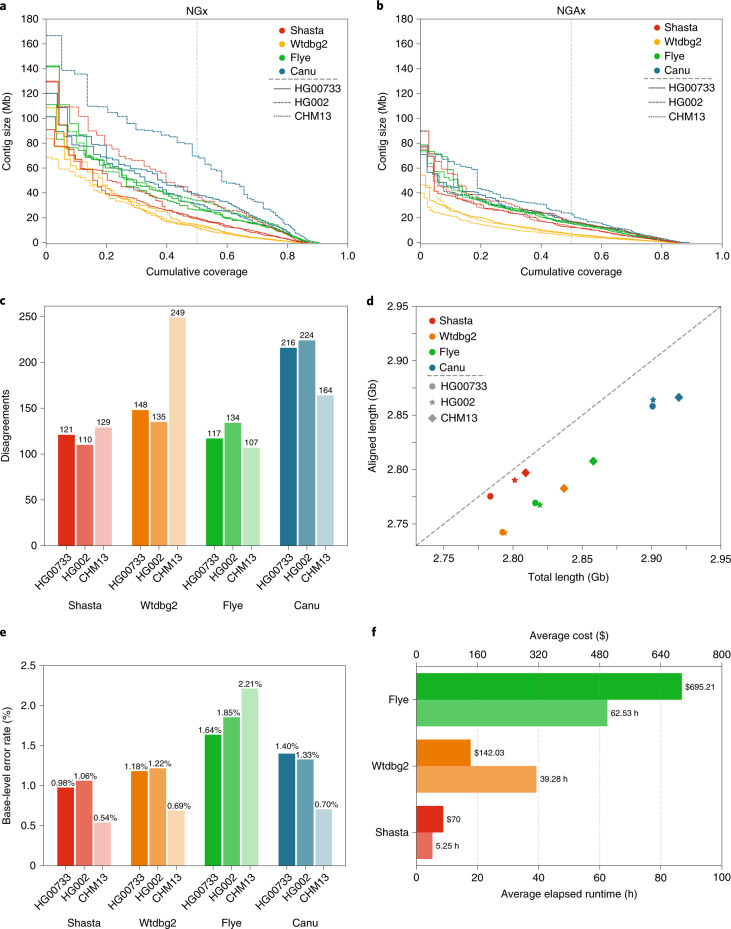
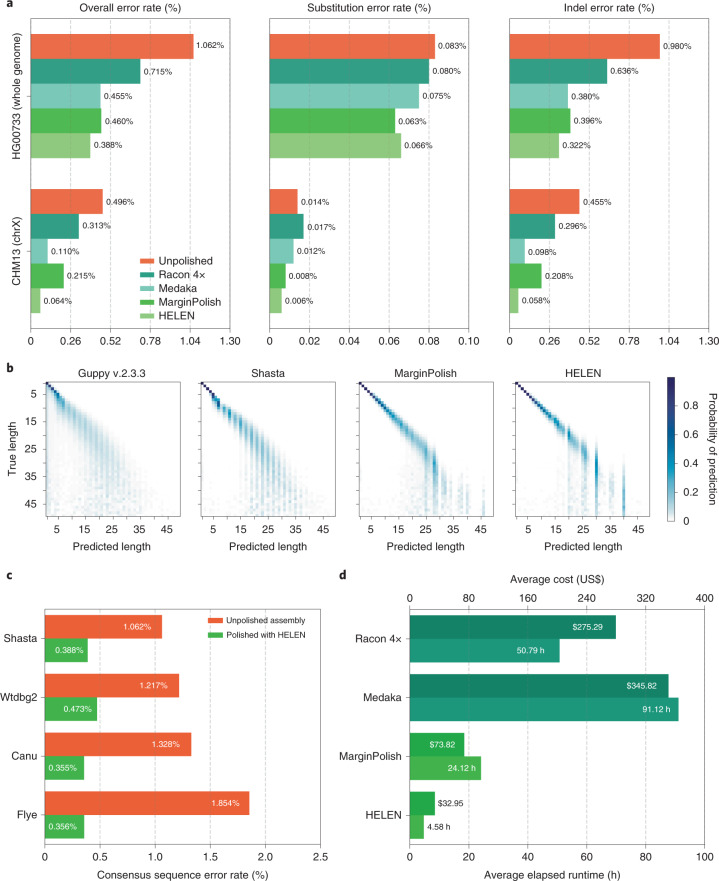
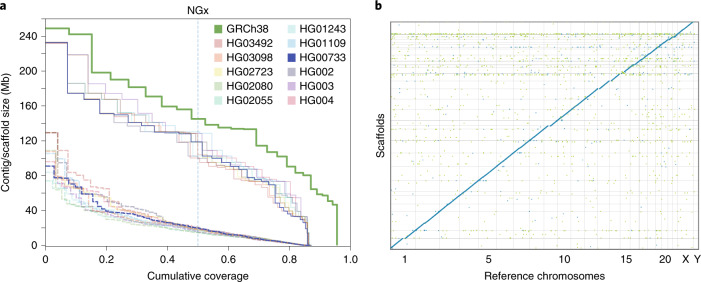
De novo assembly of a human genome using nanopore long-read sequences has been reported, but it used more than 150,000 CPU hours and weeks of wall-clock time. To enable rapid human genome assembly, we present Shasta, a de novo long-read assembler, and polishing algorithms named MarginPolish and HELEN. Using a single PromethION nanopore sequencer and our toolkit, we assembled 11 highly contiguous human genomes de novo in 9 d. We achieved roughly 63× coverage, 42-kb read N50 values and 6.5× coverage in reads >100 kb using three flow cells per sample. Shasta produced a complete haploid human genome assembly in under 6 h on a single commercial compute node. MarginPolish and HELEN polished haploid assemblies to more than 99.9% identity (Phred quality score QV = 30) with nanopore reads alone. Addition of proximity-ligation sequencing enabled near chromosome-level scaffolds for all 11 genomes. We compare our assembly performance to existing methods for diploid, haploid and trio-binned human samples and report superior accuracy and speed.
Overview
The claims and statistics of this paper haven’t been checked yet.
Free: it reads the open-access text and checks the first 5 claims that cite a source we can check. Create a free account to check every claim.
Integrity signals
Registry
Cites
Statistics
Figures

Verification
Claims the paper makes
The claims and statistics of this paper haven’t been checked yet.
Free: it reads the open-access text and checks the first 5 claims that cite a source we can check. Create a free account to check every claim.
Claims other papers make about this one
Each is checked against this paper’s own text: does it say what the citing paper says it does?
The source backs part of the claim, not all of it — or backs it for a different population, condition or comparison.
In the citing paper
“This provides a large set of fully phased human genome assemblies and outperforms earlier efforts on many levels of assembly quality5,16,60.”
From A draft human pangenome reference. (2023) · cites this paper as [16]
Experimental — accuracy not yet measuredThe source backs part of the claim, not all of it — or backs it for a different population, condition or comparison.
In the citing paper
“Similarly driven by technology improvements, sequencing efforts will increasingly produce multiple, phased de novo assemblies from different individuals in a population41.”
From Progressive Cactus is a multiple-genome aligner for the thousand-genome era (2020) · cites this paper as [41]
Experimental — accuracy not yet measuredThe cited source says what the claim attributes to it.
In the citing paper
“These assemblies include 29 samples with long and linked read sequencing data generated entirely by the HPRC and 18 samples sequenced by other efforts16–18.”
From A draft human pangenome reference. (2023) · cites this paper as [16]
The cited source says what the claim attributes to it.
In the citing paper
“These technological advancements also led to a new generation of genome alignment and assembly algorithms leveraging the new data types (84–89).”
From Topological Approaches in Animal Comparative Genomics (2026) · cites this paper as [86]
Self-check
Percentages, sums and reported differences re-computed from the paper’s own numbers.
The self-check needs the paper’s full text.
Citations
Cites
The Genome Analysis Toolkit: A MapReduce framework for analyzing next-generation DNA sequencing data
McKenna, A., Hanna, M., Banks, E., Sivachenko, A., Cibulskis, K., Kernytsky, A., Garimella, K., Altshuler, D., Gabriel, S., Daly, M., et al. (2010) · Genome Research · doi:10.1101/gr.107524.110 · Cited by 27,895
A global reference for human genetic variation
The 1000 Genomes Project Consortium, authors, C., Auton, A., Abecasis, G. R., Steering committee, Altshuler, D. M., Durbin, R. M., Abecasis, G. R., Bentley, D. R., Chakravarti, A., et al. (2015) · Nature · doi:10.1038/nature15393 · Cited by 18,247 · cited 1×
“To do this, we created a list of all low-passage lymphoblastoid cell lines that are part of a trio available from the 1,000 Genomes Project collection 54 (we selected trios to allow future addition of pedigree information, and low-passage line to minimize acquired variation).”
Self-citationMinimap2: Pairwise alignment for nucleotide sequences
Li, H. (2018) · Bioinformatics · doi:10.1093/bioinformatics/bty191 · Cited by 14,807
BUSCO: assessing genome assembly and annotation completeness with single-copy orthologs
Simão, F. A., Waterhouse, R. M., Ioannidis, P., Kriventseva, E. V., & Zdobnov, E. M. (2015) · Bioinformatics · doi:10.1093/bioinformatics/btv351 · Cited by 13,344
(2017) · Cited by 11,625
Walker, B. J., Abeel, T., Shea, T., Priest, M., Abouelliel, A., Sakthikumar, S., Cuomo, C. A., Zeng, Q., Wortman, J., Young, S. K., et al. (2014) · PLoS ONE · doi:10.1371/journal.pone.0112963 · Cited by 9,197
Double-slit photoelectron interference in strong-field ionization of the neon dimer
Kunitski, M., Eicke, N., Huber, P., Köhler, J., Zeller, S., Voigtsberger, J., Schlott, N., Henrichs, K., Sann, H., Trinter, F., et al. (2019) · Nature Communications · doi:10.1038/s41467-018-07882-8 · Cited by 8,162
Double-slit photoelectron interference in strong-field ionization of the neon dimer
Kunitski, M., Eicke, N., Huber, P., Köhler, J., Zeller, S., Voigtsberger, J., Schlott, N., Henrichs, K., Sann, H., Trinter, F., et al. (2019) · Institutional Repository of Leibniz Universität Hannover (Leibniz Universität Hannover) · doi:10.15488/5174 · Cited by 8,161
An integrated map of genetic variation from 1,092 human genomes
The 1000 Genomes Project Consortium (2012) · Nature · doi:10.1038/nature11632 · Cited by 7,711
Self-citationCanu: scalable and accurate long-read assembly via adaptive k -mer weighting and repeat separation
Koren, S., Walenz, B. P., Berlin, K., Miller, J. R., Bergman, N. H., & Phillippy, A. M. (2017) · Genome Research · doi:10.1101/gr.215087.116 · Cited by 7,304
Self-citation
Research works printed but not linked: 1
- Vollger MR Improved assembly and variant detection of a haploid human genome using single-molecule, high-fidelity long reads Ann. Hum. Genet. 2020 84 125 140 31711268 PMC7015760 · DOI · Paper page
Cited by
Haplotype-resolved de novo assembly using phased assembly graphs with hifiasm
Cheng, H., Concepcion, G. T., Feng, X., Zhang, H., & Li, H. (2021) · Nature Methods · doi:10.1038/s41592-020-01056-5 · Cited by 5,859
The complete sequence of a human genome
Nurk, S., Koren, S., Rhie, A., Rautiainen, M., Bzikadze, A. V., Mikheenko, A., Vollger, M. R., Altemose, N., Uralsky, L., Gershman, A., et al. (2022) · Science · doi:10.1126/science.abj6987 · Cited by 3,136
Self-citationTowards complete and error-free genome assemblies of all vertebrate species
Rhie, A., McCarthy, S. A., Fedrigo, O., Damas, J., Formenti, G., Koren, S., Uliano-Silva, M., Chow, W., Fungtammasan, A., Kim, J., et al. (2021) · Nature · doi:10.1038/s41586-021-03451-0 · Cited by 3,097
Self-citationTowards complete and error-free genome assemblies of all vertebrate species
Rhie, A., McCarthy, S. A., Fedrigo, O., Damas, J., Formenti, G., Koren, S., Uliano-Silva, M., Chow, W., Fungtammasan, A., Gedman, G. L., et al. (2020) · doi:10.1101/2020.05.22.110833 · Cited by 3,097
Self-citationOpportunities and challenges in long-read sequencing data analysis
Amarasinghe, S. L., Su, S., Dong, X., Zappia, L., Ritchie, M. E., & Gouil, Q. (2020) · Genome Biology · doi:10.1186/s13059-020-1935-5 · Cited by 2,530
Nanopore sequencing technology, bioinformatics and applications
Wang, Y., Zhao, Y., Bollas, A., Wang, Y., & Au, K. F. (2021) · Nature Biotechnology · doi:10.1038/s41587-021-01108-x · Cited by 1,753
“Only three PromethION flow cells were required to sequence the human genome, requiring <6 h for the computational assembly 164 .”
Long-read human genome sequencing and its applications
Logsdon, G. A., Vollger, M. R., & Eichler, E. E. (2020) · Nature Reviews Genetics · doi:10.1038/s41576-020-0236-x · Cited by 1,235
“Our findings are consistent with previous reports 34,36,56 .”
InfluentialSelf-citationA draft human pangenome reference.
Liao, W.-W., Asri, M., Ebler, J., Doerr, D., Haukness, M., Hickey, G., Lu, S., Lucas, J. K., Monlong, J., Abel, H. J., et al. (2023) · Nature · doi:10.1038/s41586-023-05896-x · Cited by 1,129
“This is the largest set of fully phased genome assemblies currently available, outperforming earlier efforts on many levels of assembly quality (Audano et al., 2019; Ebert et al., 2021; Shafin et al., 2020).”
BackgroundMethodSelf-citationNext-generation sequencing technologies: An overview
Hu, T., Chitnis, N., Monos, D., & Dinh, A. (2021) · Human Immunology · doi:10.1016/j.humimm.2021.02.012 · Cited by 949
Nurk, S., Walenz, B. P., Rhie, A., Vollger, M. R., Logsdon, G. A., Grothe, R., Miga, K. H., Eichler, E. E., Phillippy, A. M., & Koren, S. (2020) · Genome Research · doi:10.1101/gr.263566.120 · Cited by 741
“Although the resulting read lengths are modest by the modern long-read sequencing standards — PacBio CLR reads frequently exceed 50 kbp, and ultralong Oxford Nanopore Technologies (ONT) reads can exceed even 100 kbp (Jain et al. 2018b), HiFi is a major leap forward in terms of long-read read accuracy.”
BackgroundMethodResultInfluentialSelf-citationProgressive Cactus is a multiple-genome aligner for the thousand-genome era
Armstrong, J., Hickey, G., Diekhans, M., Fiddes, I. T., Novak, A. M., Deran, A., Fang, Q., Xie, D., Feng, S., Stiller, J., et al. (2020) · Nature · doi:10.1038/s41586-020-2871-y · Cited by 586
Self-citationSequencing DNA with nanopores: Troubles and biases
Delahaye, C., & Nicolas, J. (2021) · PLOS ONE · doi:10.1371/journal.pone.0257521 · Cited by 534
Detection of mosaic and population-level structural variants with Sniffles2
Smolka, M., Paulin, L. F., Grochowski, C. M., Horner, D. W., Mahmoud, M., Behera, S., Kalef-Ezra, E., Gandhi, M., Hong, K., Pehlivan, D., et al. (2024) · Nature Biotechnology · doi:10.1038/s41587-023-02024-y · Cited by 514
“Sniffles2 remains open source (MIT license) and is available at https://github.com/fritzsedlazeck/Sniffles.”
Self-citationTime- and memory-efficient genome assembly with Raven
Vaser, R., & Šikić, M. (2021) · Nature Computational Science · doi:10.1038/s43588-021-00073-4 · Cited by 522
“Details of the computational cost of each assembler are provided in Supplementary Table 1.”
BackgroundMethodInfluentialTang, A. D., Soulette, C. M., van Baren, M. J., Hart, K., Hrabeta-Robinson, E., Wu, C. J., & Brooks, A. N. (2020) · Nature Communications · doi:10.1038/s41467-020-15171-6 · Cited by 509
The complete sequence of a human Y chromosome
Rhie, A., Nurk, S., Cechova, M., Hoyt, S. J., Taylor, D. J., Altemose, N., Hook, P. W., Koren, S., Rautiainen, M., Alexandrov, I. A., et al. (2023) · Nature · doi:10.1038/s41586-023-06457-y · Cited by 471
“, having been generated using protocols from Shafin et al.(78) and Jain et al.”
MethodSelf-citationEfficient assembly of nanopore reads via highly accurate and intact error correction
Chen, Y., Nie, F., Xie, S.-Q., Zheng, Y.-F., Dai, Q., Bray, T., Wang, Y.-X., Xing, J.-F., Huang, Z.-J., Wang, D.-P., et al. (2021) · Nature Communications · doi:10.1038/s41467-020-20236-7 · Cited by 446
A complete reference genome improves analysis of human genetic variation
Aganezov, S., Yan, S. M., Soto, D. C., Kirsche, M., Zarate, S., Avdeyev, P., Taylor, D. J., Shafin, K., Shumate, A., Xiao, C., et al. (2022) · Science · doi:10.1126/science.abl3533 · Cited by 441
Self-citationNextDenovo: an efficient error correction and accurate assembly tool for noisy long reads
Hu, J., Wang, Z., Sun, Z., Hu, B., Ayoola, A. O., Liang, F., Li, J., Sandoval, J. R., Cooper, D. N., Ye, K., et al. (2024) · Genome Biology · doi:10.1186/s13059-024-03252-4 · Cited by 431
“Each individual contained approximately 12,615 (~ 0.49 × in coverage) ultra-long reads (> 100 kb), which enabled a contiguous assembly of complex regions in the human genome [7, 8, 10, 23].”
BackgroundInfluentialSymphonizing pileup and full-alignment for deep learning-based long-read variant calling
Zheng, Z., Li, S., Su, J., Leung, A. W.-S., Lam, T.-W., & Luo, R. (2022) · Nature Computational Science · doi:10.1038/s43588-022-00387-x · Cited by 405
Telomere-to-telomere assembly of diploid chromosomes with Verkko
Rautiainen, M., Nurk, S., Walenz, B. P., Logsdon, G. A., Porubsky, D., Rhie, A., Eichler, E. E., Phillippy, A. M., & Koren, S. (2023) · Nature Biotechnology · doi:10.1038/s41587-023-01662-6 · Cited by 409
Self-citationTowards population-scale long-read sequencing
De Coster, W., Weissensteiner, M. H., & Sedlazeck, F. J. (2021) · Nature Reviews Genetics · doi:10.1038/s41576-021-00367-3 · Cited by 323
“Multiple projects have integrated proximity-ligation or strand-specific short-read sequencing methods for substantial improvements of the contiguity of the assemblies 25,46 , but such approaches do not scale well to large populations.”
BackgroundMethodInfluentialSelf-citationLong walk to genomics: History and current approaches to genome sequencing and assembly
Giani, A. M., Gallo, G. R., Gianfranceschi, L., & Formenti, G. (2020) · Computational and Structural Biotechnology Journal · doi:10.1016/j.csbj.2019.11.002 · Cited by 304
Epigenetic patterns in a complete human genome
Gershman, A., Sauria, M. E. G., Guitart, X., Vollger, M. R., Hook, P. W., Hoyt, S. J., Jain, M., Shumate, A., Razaghi, R., Koren, S., et al. (2022) · Science · doi:10.1126/science.abj5089 · Cited by 297
Self-citationShafin, K., Pesout, T., Chang, P.-C., Nattestad, M., Kolesnikov, A., Goel, S., Baid, G., Kolmogorov, M., Eizenga, J. M., Miga, K. H., et al. (2021) · Nature Methods · doi:10.1038/s41592-021-01299-w · Cited by 311
“We used 3272116950 as the size of the genome to maintain consistency with previous work 13 .”
BackgroundMethodInfluentialSelf-citationBenchmarking of long-read assemblers for prokaryote whole genome sequencing
Wick, R. R., & Holt, K. E. (2021) · F1000Research · doi:10.12688/f1000research.21782.4 · Cited by 278
Targeted nanopore sequencing by real-time mapping of raw electrical signal with UNCALLED
Kovaka, S., Fan, Y., Ni, B., Timp, W., & Schatz, M. C. (2021) · Nature Biotechnology · doi:10.1038/s41587-020-0731-9 · Cited by 279
Long-read mapping to repetitive reference sequences using Winnowmap2
Jain, C., Rhie, A., Hansen, N. F., Koren, S., & Phillippy, A. M. (2022) · Nature Methods · doi:10.1038/s41592-022-01457-8 · Cited by 267
Self-citationGenome assembly in the telomere-to-telomere era
Li, H., & Durbin, R. (2024) · Nature Reviews Genetics · doi:10.1038/s41576-024-00718-w · Cited by 224
Fast and robust metagenomic sequence comparison through sparse chaining with skani
Shaw, J., & Yu, Y. W. (2023) · Nature Methods · doi:10.1038/s41592-023-02018-3 · Cited by 232
Curated variation benchmarks for challenging medically relevant autosomal genes
Wagner, J., Olson, N. D., Harris, L., McDaniel, J., Cheng, H., Fungtammasan, A., Hwang, Y.-C., Gupta, R., Wenger, A. M., Rowell, W. J., et al. (2022) · Nature Biotechnology · doi:10.1038/s41587-021-01158-1 · Cited by 241
“1 are still excluded from the CMRG benchmark (110 on GRCh37 and 100 on GRCh38) for multiple reasons detailed in Supplementary Data 7: When progressively categorizing excluded genes on GRCh38, (1) 20 genes were affected by gaps in the reference, (2) 38 genes had evidence of duplications in HG002 relative to GRCh38, (3)…”
BackgroundSelf-citationBenchmarking of long-read assemblers for prokaryote whole genome sequencing
Wick, R. R., & Holt, K. E. (2019) · F1000Research · doi:10.12688/f1000research.21782.1 · Cited by 230
SMARTdenovo: a de novo assembler using long noisy reads
Liu, H., Wu, S., Li, A., & Ruan, J. (2021) · Gigabyte · doi:10.46471/gigabyte.15 · Cited by 233
“For example, in developing SMARTdenovo, we introduced the first algorithm to use HPC-based k-mers, and this has now been incorporated into many other assemblers[10, 22, 23].”
MethodSemi-automated assembly of high-quality diploid human reference genomes
Jarvis, E. D., Formenti, G., Rhie, A., Guarracino, A., Yang, C., Wood, J., Tracey, A., Thibaud-Nissen, F., Vollger, M. R., Porubsky, D., et al. (2022) · Nature · doi:10.1038/s41586-022-05325-5 · Cited by 209
Self-citationAccurate long-read de novo assembly evaluation with Inspector
Chen, Y., Zhang, Y., Wang, A. Y., Gao, M., & Chong, Z. (2021) · Genome Biology · doi:10.1186/s13059-021-02527-4 · Cited by 199
“The Canu assembly of the Nanopore dataset was obtained from a previous publication [17].”
Weighted minimizer sampling improves long read mapping
Jain, C., Rhie, A., Zhang, H., Chu, C., Walenz, B. P., Koren, S., & Phillippy, A. M. (2020) · Bioinformatics · doi:10.1093/bioinformatics/btaa435 · Cited by 206
Self-citationHuman Genome Structural Variation Consortium, Porubsky, D., Ebert, P., Audano, P. A., Vollger, M. R., Harvey, W. T., Marijon, P., Ebler, J., Munson, K. M., Sorensen, M., et al. (2021) · Nature Biotechnology · doi:10.1038/s41587-020-0719-5 · Cited by 203
“We found that 154 of those breaks disrupt the Shasta assembly as well (Fig.”
BackgroundMethodInfluentialSelf-citationOlson, N. D., Wagner, J., McDaniel, J., Stephens, S. H., Westreich, S. T., Prasanna, A. G., Johanson, E., Boja, E., Maier, E. J., Serang, O., et al. (2022) · Cell Genomics · doi:10.1016/j.xgen.2022.100129 · Cited by 202
Self-citationBenchmarking challenging small variants with linked and long reads
Wagner, J., Olson, N. D., Harris, L., Khan, Z., Farek, J., Mahmoud, M., Stankovic, A., Kovacevic, V., Yoo, B., Miller, N., et al. (2022) · Cell Genomics · doi:10.1016/j.xgen.2022.100128 · Cited by 202
Self-citationAdvancements in long-read genome sequencing technologies and algorithms
Espinosa, E., Bautista, R., Larrosa, R., & Plata, O. (2024) · Genomics · doi:10.1016/j.ygeno.2024.110842 · Cited by 189
Assembling the perfect bacterial genome using Oxford Nanopore and Illumina sequencing
Wick, R. R., Judd, L. M., & Holt, K. E. (2023) · PLOS Computational Biology · doi:10.1371/journal.pcbi.1010905 · Cited by 179
“Another consideration is length: How long must the ONT reads be? N50 length, the lengthweighted median, is a commonly used metric [11].”
BackgroundLang, D., Zhang, S., Ren, P., Liang, F., Sun, Z., Meng, G., Tan, Y., Li, X., Lai, Q., Han, L., et al. (2020) · GigaScience · doi:10.1093/gigascience/giaa123 · Cited by 168
“4.0 [26],andNECAT[27],toassemblethe rice genome for both the ONT and PacBio dataset (Supplementary Table S1) and then selected the optimal assembly for each sequencing platform on the basis of contig N50 (Supplementary Table S2).”
InfluentialPlant pan-genomics and its applications
Shi, J., Tian, Z., Lai, J., & Huang, X. (2023) · Molecular Plant · doi:10.1016/j.molp.2022.12.009 · Cited by 160
Recurrent inversion polymorphisms in humans associate with genetic instability and genomic disorders
Porubsky, D., Höps, W., Ashraf, H., Hsieh, P., Rodriguez-Martin, B., Yilmaz, F., Ebler, J., Hallast, P., Maria Maggiolini, F. A., Harvey, W. T., et al. (2022) · Cell · doi:10.1016/j.cell.2022.04.017 · Cited by 156
Self-citationHuman-specific genetics: new tools to explore the molecular and cellular basis of human evolution
Pollen, A. A., Kilik, U., Lowe, C. B., & Camp, J. G. (2023) · Nature Reviews Genetics · doi:10.1038/s41576-022-00568-4 · Cited by 153
“…Pacific Biosciences and Oxford Nanopore Technologies) and optical identification of long-range structural changes (from Bionano Genomics), combined with reference-free assemblies and higher quality annotations for great ape genomes 46,48,80–83 can resolve complex human-specific genomic changes.”
Deshpande, A. S., Ulahannan, N., Pendleton, M., Dai, X., Ly, L., Behr, J. M., Schwenk, S., Liao, W., Augello, M. A., Tyer, C., et al. (2022) · Nature Biotechnology · doi:10.1038/s41587-022-01289-z · Cited by 179
“Application of the Shasta assembler 28 to WGS nanopore reads yielded an initial draft human genome assembly with 8,843 contigs and an NG50 (the length of the shortest scaffold in the assembly such that the length of all longer scaffolds is less than 50% of the reference genome length) of 7.2 Mb…”
MethodInfluentialVariant calling and benchmarking in an era of complete human genome sequences
Olson, N. D., Wagner, J., Dwarshuis, N. J., Miga, K. H., Sedlazeck, F. J., Salit, M., & Zook, J. M. (2023) · Nature Reviews Genetics · doi:10.1038/s41576-023-00590-0 · Cited by 181
“The lower sequence accuracy limited accuracy of calling small variants, but the longer read lengths substantially improved genome assembly and SV calling relative to short reads 52–55 .”
BackgroundSelf-citationHuang, Y., Liu, P., & Shih, P.-W. (2021) · Genome biology · doi:10.1186/s13059-021-02282-6 · Cited by 168
DeepConsensus improves the accuracy of sequences with a gap-aware sequence transformer
Baid, G., Cook, D. E., Shafin, K., Yun, T., Llinares-López, F., Berthet, Q., Belyaeva, A., Töpfer, A., Wenger, A. M., Rowell, W. J., et al. (2022) · Nature Biotechnology · doi:10.1038/s41587-022-01435-7 · Cited by 198
“Genome assembly polishing, which uses alignments of sequences from many molecules, is a similar application 11,13,33 .”
MethodSelf-citationKolmogorov, M., Billingsley, K. J., Mastoras, M., Meredith, M., Monlong, J., Lorig-Roach, R., Asri, M., Jerez, P. Á., Malik, L., Dewan, R., et al. (2023) · Nature Methods · doi:10.1038/s41592-023-01993-x · Cited by 158
“Our Shasta–Hapdup assemblies had mean substitution error rates of ~8 per 100 kb, an improvement over the previous ONT-based assemblies 19,29,30 , but higher than current contig assemblies produced with PacBio HiFi ( 1 per 100 kb) 25 .”
BackgroundInfluentialSelf-citationThe Need for a Human Pangenome Reference Sequence
Miga, K. H., & Wang, T. (2021) · Annual Review of Genomics and Human Genetics · doi:10.1146/annurev-genom-120120-081921 · Cited by 137
Self-citationComputational methods for chromosome-scale haplotype reconstruction
Garg, S. (2021) · Genome Biology · doi:10.1186/s13059-021-02328-9 · Cited by 116
Ekim, B., Berger, B., & Chikhi, R. (2021) · Cell Systems · doi:10.1016/j.cels.2021.08.009 · Cited by 147
Utility of long-read sequencing for All of Us
Mahmoud, M., Huang, Y., Garimella, K. V., Audano, P. A., Wan, W., Prasad, N., Handsaker, R. E., Hall, S., Pionzio, A., Schatz, M. C., et al. (2024) · Nature Communications · doi:10.1038/s41467-024-44804-3 · Cited by 140
“Over the past years, ONT also innovated de novo assemblies 30 and demonstrated scalability for SV detection 31 .”
Self-citationAhsan, M. U., Gouru, A., Chan, J., Zhou, W., & Wang, K. (2024) · Nature Communications · doi:10.1038/s41467-024-45778-y · Cited by 125
“4.1 dataset of HG003 and HG004 were obtained from Human Pangenome Reference Consortium 47 .”
InfluentialNanopore sequencing: flourishing in its teenage years
Zhang, T., Li, H., Jiang, M., Hou, H., Gao, Y., Li, Y., Wang, F., Wang, J., Peng, K., & Liu, Y. (2024) · Journal of genetics and genomics/Journal of Genetics and Genomics · doi:10.1016/j.jgg.2024.09.007 · Cited by 134
Accelerated identification of disease-causing variants with ultra-rapid nanopore genome sequencing
Goenka, S. D., Gorzynski, J. E., Shafin, K., Fisk, D. G., Pesout, T., Jensen, T. D., Monlong, J., Chang, P.-C., Baid, G., Bernstein, J. A., et al. (2022) · Nature Biotechnology · doi:10.1038/s41587-022-01221-5 · Cited by 116
Self-citationChu, C., Borges-Monroy, R., Viswanadham, V., Lee, S., Li, H., Lee, E. A., & Park, P. J. (2021) · Nature Communications · doi:10.1038/s41467-021-24041-8 · Cited by 128
lra: A long read aligner for sequences and contigs
Ren, J., & Chaisson, M. J. P. (2021) · PLOS Computational Biology · doi:10.1371/journal.pcbi.1009078 · Cited by 106
Fast nanopore sequencing data analysis with SLOW5
Gamaarachchi, H., Samarakoon, H., Jenner, S. P., Ferguson, J. M., Amos, T. G., Hammond, J. W., Saadat, H., Smith, M. A., Parameswaran, S., & Deveson, I. W. (2022) · Nature Biotechnology · doi:10.1038/s41587-021-01147-4 · Cited by 117
Straglr: discovering and genotyping tandem repeat expansions using whole genome long-read sequences
Chiu, R., Rajan‐Babu, I., Friedman, J. M., & Birol, İ. (2021) · Genome biology · doi:10.1186/s13059-021-02447-3 · Cited by 115
Ahsan, M. U., Liu, Q., Perdomo, J. E., Li, F., & Wang, K. (2023) · Nature Methods · doi:10.1038/s41592-023-01932-w · Cited by 113
“However, SyRI requires chromosome-level assemblies as input, which can be difficult to generate using long-read assembly alone; it has been estimated that constructing chromosome-scale assemblies requires at least 30-fold coverage of reads longer than 100 kbp 80 .”
MethodThe Role of Genome Sequencing in Neonatal Intensive Care Units
Kingsmore, S. F., & Cole, F. S. (2022) · Annual Review of Genomics and Human Genetics · doi:10.1146/annurev-genom-120921-103442 · Cited by 104
Plant genome sequence assembly in the era of long reads: Progress, challenges and future directions
Pucker, B., Irisarri, I., de Vries, J., & Xu, B. (2022) · Quantitative Plant Biology · doi:10.1017/qpb.2021.18 · Cited by 113
“There are efforts to optimise assemblers towards speed and reduced memory usage (Gatter et al., 2021; Haghshenas et al., 2020; Shafin et al., 2020).”
BackgroundRapid genotype imputation from sequence with reference panels
Davies, R. W., Kučka, M., Su, D., Shi, S., Flanagan, M., Cunniff, C. M., Chan, Y. F., & Myers, S. (2021) · Nature Genetics · doi:10.1038/s41588-021-00877-0 · Cited by 103
Applications of long-read sequencing to Mendelian genetics
Mastrorosa, F. K., Miller, D. E., & Eichler, E. E. (2023) · Genome Medicine · doi:10.1186/s13073-023-01194-3 · Cited by 104
“Recently, several genome assemblers have been developed for this purpose, such as HiCanu [33], Peregrine [81], wtdbg2 [82], Flye [83], Shasta [84], hifiasm [85, 86], and Verkko [87]—the latter is a hybrid assembly approach that combines the scaffolding potential of ONT with the high accuracy of…”
BackgroundSelf-citationGustafson, J. A., Gibson, S. B., Damaraju, N., Zalusky, M. P., Hoekzema, K., Twesigomwe, D., Yang, L., Snead, A. A., Richmond, P. A., Coster, W. D., et al. (2024) · Genome Research · doi:10.1101/gr.279273.124 · Cited by 155
“Overall, we found similar numbers of L1HS and full-length L1HS sequences compared to HG002 and HG005 from GIAB and the CHM13T2Tassembly(Supplemental Fig.”
InfluentialSelf-citationAhsan, M. U., Liu, Q., Li, F., & Wang, K. (2021) · Genome biology · doi:10.1186/s13059-021-02472-2 · Cited by 127
“Meanwhile, we also evaluate the SNP callings for the four methods on older benchmark and basecalled reads with older Nanopore basecallers for the Ashkenazim trio HG002-4, as shown in Supplementary Tables S5 and S6.”
Efficient hybrid de novo assembly of human genomes with WENGAN
Genova, A. D., Buena‐Atienza, E., Ossowski, S., & Sagot, M. (2020) · Nature Biotechnology · doi:10.1038/s41587-020-00747-w · Cited by 97
A diploid assembly-based benchmark for variants in the major histocompatibility complex
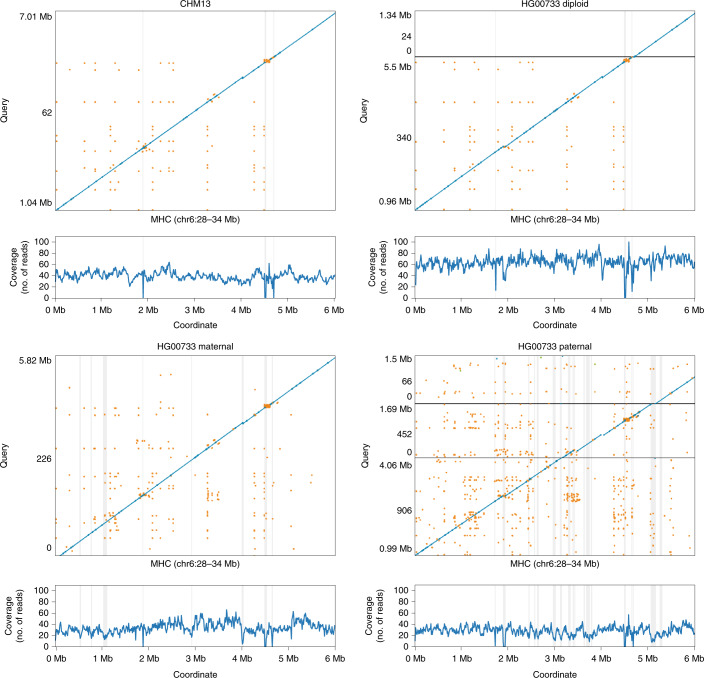
Chin, C.-S., Wagner, J., Zeng, Q., Garrison, E., Garg, S., Fungtammasan, A., Rautiainen, M., Aganezov, S., Kirsche, M., Zarate, S., et al. (2020) · Nature Communications · doi:10.1038/s41467-020-18564-9 · Cited by 82
Self-citationRatatosk: hybrid error correction of long reads enables accurate variant calling and assembly
Holley, G., Beyter, D., Ingimundardóttir, H., Møller, P. L., Kristmundsdóttir, S., Eggertsson, H. P., & Halldórsson, B. V. (2021) · Genome biology · doi:10.1186/s13059-020-02244-4 · Cited by 92
High-molecular weight DNA extraction, clean-up and size selection for long-read sequencing
Jones, A., Torkel, C., STANLEY, D. W., Nasim, J., Borevitz, J., & Schwessinger, B. (2021) · PLoS ONE · doi:10.1371/journal.pone.0253830 · Cited by 97
“unprecedented opportunities for de novo assembly of full length chromosomes and phasing of haplotypes [2,3].”
BackgroundTwelve quick steps for genome assembly and annotation in the classroom
Jung, H., Ventura, T., Chung, J. S., Kim, W., Nam, B., Kong, H. J., Kim, Y., Jeon, M., & Eyun, S. (2020) · PLoS Computational Biology · doi:10.1371/journal.pcbi.1008325 · Cited by 91
“The revolution in new sequencing technologies and computational developments has allowed researchers to drive advances in genome assembly and annotation to make the process better, faster, and cheaper with key model organisms [1,2].”
BackgroundTowards accurate and reliable resolution of structural variants for clinical diagnosis
Liu, Z., Roberts, R. A., Mercer, T. R., Xu, J., Sedlazeck, F. J., & Tong, W. (2022) · Genome biology · doi:10.1186/s13059-022-02636-8 · Cited by 100
“Shafin K, Pesout T, Lorig-Roach R, Haukness M, Olsen HE, Bosworth C, et al. Nanopore sequencing and the Shasta toolkit enable efficient de novo assembly of eleven human genomes.”
Self-citationOxford nanopore sequencing in clinical microbiology and infection diagnostics
Sheka, D., Alabi, N., & Gordon, P. M. K. (2021) · Briefings in Bioinformatics · doi:10.1093/bib/bbaa403 · Cited by 81
Leonard, A. S., Crysnanto, D., Fang, Z.-H., Heaton, M. P., Vander Ley, B. L., Herrera, C., Bollwein, H., Bickhart, D. M., Kuhn, K. L., Smith, T. P. L., et al. (2022) · Nature Communications · doi:10.1038/s41467-022-30680-2 · Cited by 80
“Shasta (Shafin et al., 2020) (version 0.7) assemblies were produced using the standard configuration file “Nanopore-Sep2020.conf”.”
InfluentialDeciphering the exact breakpoints of structural variations using long sequencing reads with DeBreak
Chen, Y., Wang, A. Y., Barkley, C. A., Zhang, Y., Zhao, X., Gao, M., Edmonds, M. D., & Chong, Z. (2023) · Nature Communications · doi:10.1038/s41467-023-35996-1 · Cited by 92
Oxford Nanopore sequencing: new opportunities for plant genomics?
Dumschott, K., Schmidt, M., Chawla, H. S., Snowdon, R. J., & Usadel, B. (2020) · Journal of Experimental Botany · doi:10.1093/jxb/eraa263 · Cited by 84
LongStitch: high-quality genome assembly correction and scaffolding using long reads
Coombe, L., Li, J. X., Lo, T., Wong, J., Nikolić, V., Warren, R. L., & Birol, İ. (2021) · BMC Bioinformatics · doi:10.1186/s12859-021-04451-7 · Cited by 102
The human ribosomal DNA array is composed of highly homogenized tandem clusters
Hori, Y., Shimamoto, A., & Kobayashi, T. (2021) · Genome Research · doi:10.1101/gr.275838.121 · Cited by 95
“com/human-pangenomics/), and our in-house Cas9-enriched rDNA reads from Epstein-Barr virus (EBV) transformed B cells (Shafin et al. 2020) and”
BackgroundTelomere-to-telomere assembly using HERRO-corrected Nanopore Simplex reads
Stanojević, D., Lin, D., Nurk, S., de Sessions, P. F., & Šikić, M. (2026) · Nature · doi:10.1038/s41586-026-10563-y · Cited by 88
“Overcorrection remained low even in complex regions such as centromeric satellites and segmental duplications (Supplementary Table 14).”
Lightweight compositional analysis of metagenomes with FracMinHash and minimum metagenome coversPreprint
Irber, L. C., Brooks, P., Reiter, T. E., Pierce‐Ward, N. T., Hera, M. R., Koslicki, D., & Brown, C. T. (2022) · bioRxiv (Cold Spring Harbor Laboratory) · doi:10.1101/2022.01.11.475838 · Cited by 81
Hassan, S., Bahar, R., Johan, M. F., Hashim, E. K. M., Abdullah, W. Z., Esa, E., Hamid, F. S. A., & Zulkafli, Z. B. (2023) · Diagnostics · doi:10.3390/diagnostics13030373 · Cited by 76
Charting the complexity of the activated sludge microbiome through a hybrid sequencing strategy
Liu, L., Wang, Y., Yu, Y., Wang, D., Cheng, S. H., Zheng, C., & Zhang, T. (2021) · Microbiome · doi:10.1186/s40168-021-01155-1 · Cited by 89
“prove the contiguity of genome assemblies [6, 7].”
Identifying and correcting repeat-calling errors in nanopore sequencing of telomeres
Tan, K., Slevin, M. K., Meyerson, M. M., & Li, H. (2022) · Genome biology · doi:10.1186/s13059-022-02751-6 · Cited by 74
“The nanopore dataset corresponds to 60x coverage of unsheared sequencing from 3 PromethION flow cells from Shafin et al [42].”
MethodPlastid Genome Assembly Using Long‐read data
Zhou, W., Armijos, C. E., Lee, C., Lu, R., Wang, J., Ruhlman, T. A., Jansen, R. K., Jones, A. M., & Jones, C. D. (2023) · Molecular Ecology Resources · doi:10.1111/1755-0998.13787 · Cited by 70
The evolution of two transmissible cancers in Tasmanian devils
Stammnitz, M. R., Gori, K. C., Kwon, Y. M., Harry, E. F., Martin, F. J., Billis, K., Cheng, Y., Baez‐Ortega, A., Chow, W., Comte, S., et al. (2023) · Science · doi:10.1126/science.abq6453 · Cited by 73
Long-Read Sequencing Reveals Rapid Evolution of Immunity- and Cancer-Related Genes in Bats
Scheben, A., Mendivil Ramos, O., Kramer, M., Goodwin, S., Oppenheim, S., Becker, D. J., Schatz, M. C., Simmons, N. B., Siepel, A., & McCombie, W. R. (2023) · Genome Biology and Evolution · doi:10.1093/gbe/evad148 · Cited by 59
A survey of mapping algorithms in the long-reads era
Sahlin, K., Baudeau, T., Cazaux, B., & Marchet, C. (2023) · Genome biology · doi:10.1186/s13059-023-02972-3 · Cited by 75
“Related to read mapping, it was used to perform genome-length sequences alignment-free mapping [34] and to find read-to-read overlaps in long-read assembly [70].”
MethodMartínez, P., Robledo, D., Taboada, X., Blanco, A., Moser, M., Maroso, F., Hermida, M., Gómez‐Tato, A., Álvarez-Blázquez, B., Cabaleiro, S., et al. (2021) · Genomics · doi:10.1016/j.ygeno.2021.04.007 · Cited by 93
“First stage used MarginPolish-HELEN pipeline [63] with nanopore read alignments.”
Overcoming uncollapsed haplotypes in long-read assemblies of non-model organisms
Guiglielmoni, N., Houtain, A., Derzelle, A., Doninck, K. V., & Flot, J. (2021) · BMC Bioinformatics · doi:10.1186/s12859-021-04118-3 · Cited by 68
Frei, D., Veeckman, E., Grogg, D., Stoffel-Studer, I., Morishima, A., Shimizu‐Inatsugi, R., Yates, S. A., Shimizu, K. K., Frey, J. E., Studer, B., et al. (2021) · Genome Biology and Evolution · doi:10.1093/gbe/evab159 · Cited by 70
Mycena genomes resolve the evolution of fungal bioluminescence
Ke, H., Lee, H., Lin, C. I., Liu, Y., Lu, M., Hsieh, J. A., Chang, C., Wu, P.-H., Lu, M. J., Li, J.-Y., et al. (2020) · Proceedings of the National Academy of Sciences · doi:10.1073/pnas.2010761117 · Cited by 67
Gaps and complex structurally variant loci in phased genome assemblies
Porubsky, D., Vollger, M. R., Harvey, W. T., Rozanski, A. N., Ebert, P., Hickey, G., Hasenfeld, P., Sanders, A. D., Stober, C., Human Pangenome Reference Consortium, et al. (2023) · Genome Research · doi:10.1101/gr.277334.122 · Cited by 58
“…that compete with short reads with respect to their accuracy (QV>30), whereas the Oxford Nanopore Technologies (ONT) platform now can routinely generate sequencing reads in excess of 100 kbp (so-called ultralong [UL] sequencing reads) (Nurk et al. 2020; Shafin et al. 2020; Logsdon et al. 2021).”
BackgroundSelf-citationLichman, B. R., Godden, G. T., & Buell, C. R. (2020) · Current Opinion in Plant Biology · doi:10.1016/j.pbi.2020.03.005 · Cited by 62
Pair consensus decoding improves accuracy of neural network basecallers for nanopore sequencing
Silvestre-Ryan, J., & Holmes, I. H. (2021) · Genome biology · doi:10.1186/s13059-020-02255-1 · Cited by 70
Strainberry: automated strain separation in low-complexity metagenomes using long reads
Vicedomini, R., Quince, C., Darling, A. E., & Chikhi, R. (2021) · Nature Communications · doi:10.1038/s41467-021-24515-9 · Cited by 60
Liu, Y. H., Luo, C., Golding, S. G. H., Ioffe, J. B., & Zhou, X. (2024) · Nature Communications · doi:10.1038/s41467-024-46614-z · Cited by 65
Olsen, N. S., & Riber, L. (2025) · Antibiotics · doi:10.3390/antibiotics14030296 · Cited by 71
The SAMBA tool uses long reads to improve the contiguity of genome assemblies
Zimin, A. V., & Salzberg, S. L. (2022) · PLoS Computational Biology · doi:10.1371/journal.pcbi.1009860 · Cited by 56
Metadata
- Authors
- Shafin, K., Pesout, T., Lorig-Roach, R., Haukness, M., Olsen, H. E., Bosworth, C., Armstrong, J., Tigyi, K., Maurer, N., Koren, S., Sedlazeck, F. J., Marschall, T., Mayes, S., Costa, V., Zook, J. M., Liu, K. J., Kilburn, D., Sorensen, M., Munson, K. M., Vollger, M. R., Monlong, J., Garrison, E., Eichler, E. E., Salama, S., Haussler, D., Green, R. E., Akeson, M., Phillippy, A., Miga, K. H., Carnevali, P., Jain, M., & Paten, B.
- Affiliations
- University of California, Santa Cruz (US)
- Howard Hughes Medical Institute (US)
- National Institutes of Health (US)
- Baylor College of Medicine (US)
- Max Planck Institute for Informatics (DE)
- Oxford Nanopore Technologies (United Kingdom) (GB)
- National Institute of Standards and Technology (US)
- Circulomics (United States) (US)
- University of Washington (US)
- Chan Zuckerberg Initiative (United States) (US)
- Corresponding author
- Carnevali, Paolo
- Jain, Miten
- Paten, Benedict
- ORCID
- Shafin, Kishwar
- Pesout, Trevor
- Lorig-Roach, Ryan
- Haukness, Marina
- Olsen, Hugh E.
- Bosworth, Colleen
- Armstrong, Joel
- Maurer, Nicholas
- Koren, Sergey
- Sedlazeck, Fritz J.
- Marschall, Tobias
- Zook, Justin M.
- Liu, Kelvin J.
- Kilburn, Duncan
- Sorensen, Melanie
- Munson, Katy M.
- Vollger, Mitchell R.
- Monlong, Jean
- Garrison, Erik
- Eichler, Evan E.
- Salama, Sofie
- Haussler, David
- Green, Richard E.
- Akeson, Mark
- Phillippy, Adam
- Miga, Karen H.
- Jain, Miten
- Paten, Benedict
- Venue
- Nature Biotechnology
- Published
- 2020-05-04
- Volume
- 38
- Issue
- 9
- Pages
- 1044-1053
- ISSN
- 0733-222X (ISSN-L)
- 1087-0156
- 1546-1696
- PMC
- PMC7483855
- OpenAlex
- W3022783334
- Semantic Scholar
- f9d407ce133ec096ab4321e6d98e8f0081f5bdcc
- Cited by
- 567
- References
- 74
- Citations by year
- 2026: 44 · 2025: 62 · 2024: 117 · 2023: 91 · 2022: 89 · 2021: 115 · 2020: 44
- FWCI
- 27.90
- Type
- journal article
- Language
- en
- Open access
- hybrid
- doi.org
- Licence
- cc-by
- creativecommons.org/licenses/by/4.0 (tdm)
- creativecommons.org/licenses/by/4.0 (vor)
- Locations
- Nature Biotechnology (publishedVersion, cc-by)
- bioRxiv (Cold Spring Harbor Laboratory) (acceptedVersion, cc-by)
- PubMed Central (publishedVersion, cc-by)
- PubMed (publishedVersion)
- HAL (submittedVersion)
- eScholarship (California Digital Library) (submittedVersion)
- MPG.PuRe (Max Planck Society) (submittedVersion, other-oa)
- Funders
- U.S. Department of Health & Human Services | NIH | National Heart, Lung, and Blood Institute (1U01HL137183)
- U.S. Department of Health & Human Services | National Institutes of Health (5U54HG007990, 5T32HG008345-04, 1U01HL137183, R01HG010053)
- U.S. Department of Health & Human Services | NIH | National Human Genome Research Institute (3U24HG009084-03S1, 2U41HG007234)
- Topics
- Life Sciences › Biochemistry, Genetics and Molecular Biology › Molecular Biology › Genomics and Phylogenetic Studies
- Life Sciences › Biochemistry, Genetics and Molecular Biology › Genetics › Genomic variations and chromosomal abnormalities
- Physical Sciences › Mathematics › Theoretical Computer Science › Algorithms and Data Compression
- Keywords
- nanopore sequencing, de novo genome assembly, Helen, human genome assembly, haploid genome assembly, long-read sequencing, chromosome-level scaffolding, assembly polishing
- MeSH terms
- Deep Learning, Nanopore Sequencing, Algorithms, Chromosomes, Human, Haploidy, HLA Antigens, Humans, Genome, Human, Sequence Analysis, DNA, Benchmarking, Genomics, High-Throughput Nucleotide Sequencing
About these checks
Registry, retraction, Cites and statistics results are computed, not judged, with one exception: a printed reference that no index lists is read once by a model before it counts as a citation error. Claims are extracted by a model and kept only when their quote appears verbatim in the text; each cited source is then checked, with a model’s help, for whether it says what the claim relies on. Those verdicts can be wrong — read the claim’s quote and the cited source before relying on one.
Statistics and arithmetic are recomputed, not judged.
Confidence bands are shown only for fields calibrated on our annotated test set. None is calibrated yet, so no band is shown.
What counts as a claim ›How we measure confidence ›How we check this ›
Are you an author, or do you see a problem with this page? Request a review
Data sources
Bibliographic data: Semantic Scholar, OpenAlex, Crossref.
Contains information from the Semantic Scholar Academic Graph Datasets, made available under the ODC Attribution License (ODC-BY 1.0).
Semantic Scholar’s data is described in: Kinney, R., et al. (2023). The Semantic Scholar Open Data Platform. arXiv:2301.10140.
