

The relationship between mindfulness and objective measures of body awareness: A meta-analysis
Open accessThe DOI matches its Crossref record; 93 of the 93 references it cites were found in a registry or an index.
Abstract
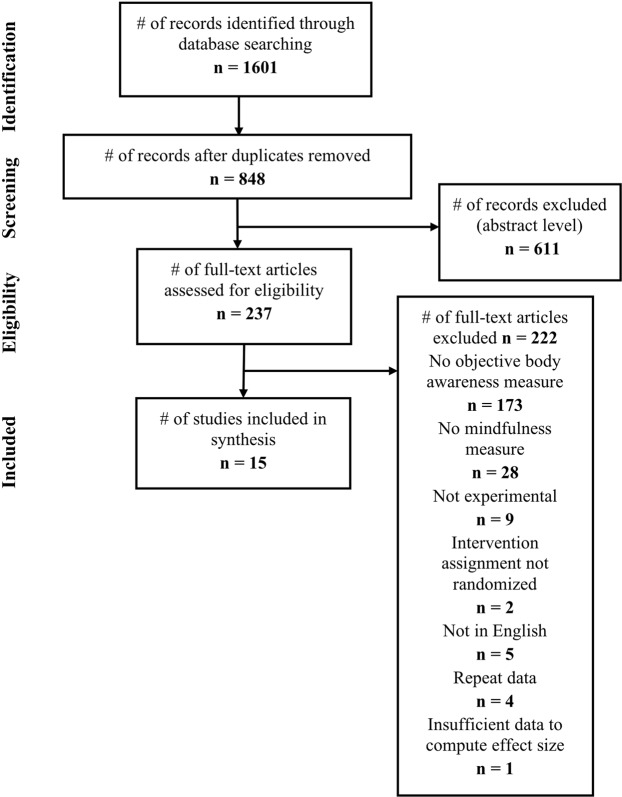
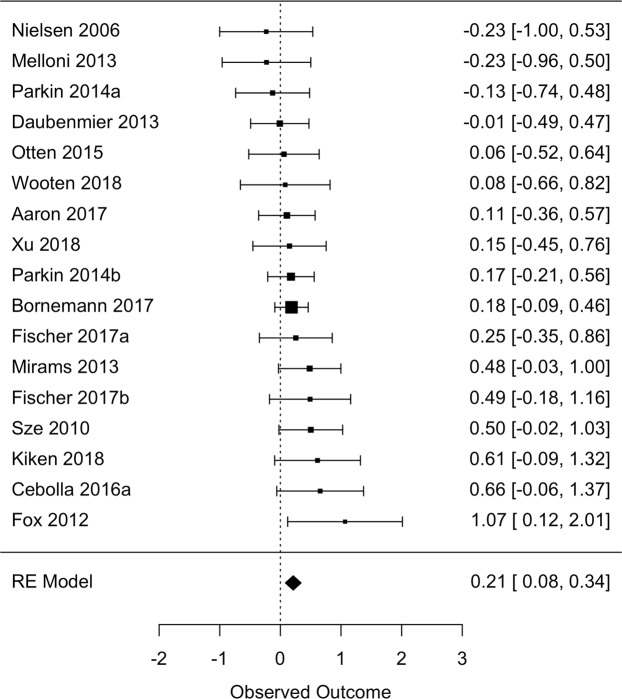
Although awareness of bodily sensations is a common mindfulness meditation technique, studies assessing the relationship between mindfulness and body awareness have provided mixed results. The current study sought to meta-analytically examine the relationship between mindfulness operationalized as a dispositional trait or a construct trained through short- (i.e., randomized controlled trials [RCTs]) or long-term mindfulness meditation practice with objective measures of body awareness accuracy. PubMed, Web of Science, PsycINFO, and Scopus were searched. Studies were eligible if they reported the association between mindfulness and body awareness, were published in English, and included adults. Across 15 studies (17 independent samples), a small effect was found linking mindfulness with greater body awareness accuracy ( g = 0.21 [0.08, 0.34], N = 879). When separated by study design, only RCTs continued to show a significant relationship ( g = 0.20, [0.02, 0.38], k = 7, n = 505). Heterogeneity of effects was low ( I 2 < 25%), although with wide confidence intervals. Effects were not moderated by study quality. Low fail-safe N estimates reduce confidence in the observed effects. Results suggest a small but potentially detectable relationship between mindfulness and body awareness accuracy. Future investigations could examine individual differences in body awareness as a mechanism within mindfulness interventions.
Overview
The claims and statistics of this paper haven’t been checked yet.
Free: it reads the open-access text and checks the first 5 claims that cite a source we can check. Create a free account to check every claim.
Integrity signals
Registry
Cites
Statistics
Figures
Verification
Claims the paper makes
The claims and statistics of this paper haven’t been checked yet.
Free: it reads the open-access text and checks the first 5 claims that cite a source we can check. Create a free account to check every claim.
Claims other papers make about this one
Each is checked against this paper’s own text: does it say what the citing paper says it does?
The cited source says what the claim attributes to it.
In the citing paper
“A meta-analysis of the effects of mindfulness training on body awareness has found a small, but significant, positive relationship between mindfulness and body awareness.”
From Brief structured respiration practices enhance mood and reduce physiological arousal (2023) · cites this paper as [48]
The cited source says what the claim attributes to it.
In the citing paper
“Numerous biological and behavioral mechanisms have been assessed for in-person MBIs (eg, changes in attention, body awareness, stress physiology) [126-128] and may be operant within mHealth MBIs.”
From Testing the efficacy of a multicomponent, self-guided, smartphone-based meditation app: Three-armed randomized controlled trial (2020) · cites this paper as [128]
In the citing paper
“Evidence for behavioral effects (for example, effects of MBIs on measures of attention91,92 and interoception93) is less robust (that is, the effects are smaller and less consistently statistically significant).”
From A common factors perspective on mindfulness-based interventions (2022) · cites this paper as [92]
Self-check
Percentages, sums and reported differences re-computed from the paper’s own numbers.
The self-check needs the paper’s full text.
Citations
Cites
Preferred Reporting Items for Systematic Reviews and Meta-Analyses: the PRISMA statement
Moher, D., Liberati, A., Tetzlaff, J., Altman, D. G., & for the PRISMA Group (2009) · BMJ · doi:10.1136/bmj.b2535 · Cited by 83,823
Measuring inconsistency in meta-analyses
Higgins, J. P. T., Thompson, S. G., Deeks, J. J., & Altman, D. G. (2003) · BMJ · doi:10.1136/bmj.327.7414.557 · Cited by 63,139
Preferred reporting items for systematic reviews and meta-analyses: the PRISMA Statement.
(2009) · PubMed Central · Cited by 44,859
Preferred reporting items for systematic reviews and meta-analyses: The PRISMA statement
Moher, D., Liberati, A., Tetzlaff, J., Altman, D. G., & the PRISMA Group* (2009) · Annals of Internal Medicine · doi:10.7326/0003-4819-151-4-200908180-00135 · Cited by 37,554
Assessing the quality of reports of randomized clinical trials: Is blinding necessary?
Jadad, A. R., Moore, R. A., Carroll, D., Jenkinson, C., Reynolds, D. J. M., Gavaghan, D. J., & McQuay, H. J. (1996) · Controlled Clinical Trials · doi:10.1016/0197-2456(95)00134-4 · Cited by 17,582
Borenstein, M., Hedges, L. V., Higgins, J. P. T., & Rothstein, H. R. (2009) · doi:10.1002/9780470743386 · Cited by 14,225
The benefits of being present: Mindfulness and its role in psychological well-being
Brown, K. W., & Ryan, R. M. (2003) · Journal of Personality and Social Psychology · doi:10.1037/0022-3514.84.4.822 · Cited by 13,448
The file drawer problem and tolerance for null results.
Rosenthal, R. (1979) · Psychological Bulletin · doi:10.1037/0033-2909.86.3.638 · Cited by 9,068
A new scale of social desirability independent of psychopathology.
Crowne, D. P., & Marlowe, D. (1960) · Journal of Consulting Psychology · doi:10.1037/h0047358 · Cited by 8,686
(2008) · Medical Entomology and Zoology · Cited by 7,477
The Development and Validation of a Scale to Measure Self-Compassion
NEFF, K. D. (2003) · Self and Identity · doi:10.1080/15298860309027 · Cited by 6,436
How do you feel? Interoception: The sense of the physiological condition of the body
Craig, A. D. (2002) · Nature Reviews Neuroscience · doi:10.1038/nrn894 · Cited by 6,006
The Handbook of Research Synthesis and Meta-Analysis
(2019) · doi:10.7758/9781610448864 · Cited by 4,553
Rubber hands ‘feel’ touch that eyes see
Botvinick, M., & Cohen, J. (1998) · Nature · doi:10.1038/35784 · Cited by 4,410
(2005) · Medical Entomology and Zoology · Cited by 3,197
Hölzel, B. K., Lazar, S. W., Gard, T., Schuman-Olivier, Z., Vago, D. R., & Ott, U. (2011) · Perspectives on Psychological Science · doi:10.1177/1745691611419671 · Cited by 3,024
Outlier and influence diagnostics for meta-analysis
Viechtbauer, W., & Cheung, M. W.-L. (2010) · Research Synthesis Methods · doi:10.1002/jrsm.11 · Cited by 2,949
Baer, R. A., Smith, G. T., Lykins, E., Button, D., Krietemeyer, J., Sauer, S., Walsh, E., Duggan, D., & Williams, J. M. G. (2008) · Assessment · doi:10.1177/1073191107313003 · Cited by 2,930
Meditation Programs for Psychological Stress and Well-being: A Systematic Review and Meta-analysis
Goyal, M., Singh, S., Sibinga, E. M. S., Gould, N. F., Rowland-Seymour, A., Sharma, R., Berger, Z., Sleicher, D., Maron, D. D., Shihab, H. M., et al. (2014) · JAMA Internal Medicine · doi:10.1001/jamainternmed.2013.13018 · Cited by 2,380
Mindfulness-based therapy: a comprehensive meta-analysis
Khoury, B., Lecomte, T., Fortin, G., Masse, M., Therien, P., Bouchard, V., Chapleau, M.-A., Paquin, K., & Hofmann, S. G. (2013) · Clinical Psychology Review · doi:10.1016/j.cpr.2013.05.005 · Cited by 2,003
Mindfulness practice leads to increases in regional brain gray matter density
Hölzel, B. K., Carmody, J., Vangel, M., Congleton, C., Yerramsetti, S. M., Gard, T., & Lazar, S. W. (2011) · Psychiatry Research: Neuroimaging · doi:10.1016/j.pscychresns.2010.08.006 · Cited by 1,914
Creswell, J. D. (2017) · Annual Review of Psychology · doi:10.1146/annurev-psych-042716-051139 · Cited by 1,702 · cited 4×
“Similarly, degree of experience within and between the LTM samples varied (although a post hoc analysis indicated that years of experience for LTM samples also did not moderate effect sizes, Q[1] = 0.”
BackgroundMethodInfluentialKnowing your own heart: Distinguishing interoceptive accuracy from interoceptive awareness
Garfinkel, S. N., Seth, A. K., Barrett, A. B., Suzuki, K., & Critchley, H. D. (2015) · Biological Psychology · doi:10.1016/j.biopsycho.2014.11.004 · Cited by 1,624
Mindfulness-based stress reduction for healthy individuals: A meta-analysis
Khoury, B., Sharma, M., Rush, S. E., & Fournier, C. (2015) · Journal of Psychosomatic Research · doi:10.1016/j.jpsychores.2015.03.009 · Cited by 1,617
The multidimensional assessment of interoceptive awareness (MAIA)
Mehling, W. E., Price, C., Daubenmier, J. J., Acree, M., Bartmess, E., & Stewart, A. (2012) · PLoS ONE · doi:10.1371/journal.pone.0048230 · Cited by 1,429
(1997) · Medical Entomology and Zoology · Cited by 1,407
Heart beat perception and emotional experience
Schandry, R. (1981) · Psychophysiology · doi:10.1111/j.1469-8986.1981.tb02486.x · Cited by 1,335
Mindfulness-based cognitive therapy for depression
(2006) · Buddhist Thought and Applied Psychological Research · doi:10.4324/9780203098899-33 · Cited by 1,324
Chiesa, A., Calati, R., & Serretti, A. (2011) · Clinical Psychology Review · doi:10.1016/j.cpr.2010.11.003 · Cited by 1,295
Rosenberg, M. S. (2005) · Evolution · doi:10.1111/j.0014-3820.2005.tb01004.x · Cited by 1,285
Mindfulness-based interventions for psychiatric disorders: A systematic review and meta-analysis
Goldberg, S. B., Tucker, R. P., Greene, P. A., Davidson, R. J., Wampold, B. E., Kearney, D. J., & Simpson, T. L. (2018) · Clinical Psychology Review · doi:10.1016/j.cpr.2017.10.011 · Cited by 1,145
Self-citationDisorders of Affect Regulation: Alexithymia in Medical and Psychiatric Illness
Taylor, G. J., Bagby, R. M., Parker, J. D. A., & Grotstein, J. (1997) · Cambridge University Press eBooks · doi:10.1017/cbo9780511526831 · Cited by 1,110
The Integrative Action of the Nervous System.
Freeman, F. N., & Sherrington, S. (1907) · The Journal of Philosophy, Psychology and Scientific Methods · doi:10.2307/2010953 · Cited by 898
Synthesizing standardized mean‐change measures
Becker, B. J. (1988) · British Journal of Mathematical and Statistical Psychology · doi:10.1111/j.2044-8317.1988.tb00901.x · Cited by 889
Kuyken, W., Warren, F. C., Taylor, R. S., Whalley, B., Crane, C., Bondolfi, G., Hayes, R., Huijbers, M., Ma, H., Schweizer, S., et al. (2016) · JAMA Psychiatry · doi:10.1001/jamapsychiatry.2016.0076 · Cited by 821
Garland, E. L., Farb, N. A., R. Goldin, P., & Fredrickson, B. L. (2015) · Psychological Inquiry · doi:10.1080/1047840x.2015.1064294 · Cited by 810
Piet, J., & Hougaard, E. (2011) · Clinical Psychology Review · doi:10.1016/j.cpr.2011.05.002 · Cited by 807
Some Reflections on the Origins of MBSR, Skillful Means, and the Trouble with Maps
Kabat-Zinn, J. (2011) · Contemporary Buddhism · doi:10.1080/14639947.2011.564844 · Cited by 800
What Do We Really Know About Mindfulness-Based Stress Reduction?
Bishop, S. R. (2002) · Psychosomatic Medicine · doi:10.1097/00006842-200201000-00010 · Cited by 748
(2004) · Cited by 673
Grossman, P. (2011) · Psychological Assessment · doi:10.1037/a0022713 · Cited by 666
Interoception, contemplative practice, and health
Farb, N., Daubenmier, J., Price, C. J., Gard, T., Kerr, C., Dunn, B. D., Klein, A. C., Paulus, M. P., & Mehling, W. E. (2015) · Frontiers in Psychology · doi:10.3389/fpsyg.2015.00763 · Cited by 650
Mindfulness, Big Five personality, and affect: A meta-analysis
Giluk, T. L. (2009) · Personality and Individual Differences · doi:10.1016/j.paid.2009.06.026 · Cited by 593
The role of anterior insular cortex in social emotions
Lamm, C., & Singer, T. (2010) · Brain Structure and Function · doi:10.1007/s00429-010-0251-3 · Cited by 566
Mindfulness meditation training alters cortical representations of interoceptive attention
Farb, N. A. S., Segal, Z. V., & Anderson, A. K. (2013) · Social Cognitive and Affective Neuroscience · doi:10.1093/scan/nss066 · Cited by 566
Listening to Your Heart: How Interoception Shapes Emotion Experience and Intuitive Decision Making
Dunn, B. D., Galton, H. C., Morgan, R., Evans, D., Oliver, C., Meyer, M., Cusack, R., Lawrence, A. D., & Dalgleish, T. (2010) · Psychological Science · doi:10.1177/0956797610389191 · Cited by 566
Attention training and attention state training
Tang, Y.-Y., & Posner, M. I. (2009) · Trends in Cognitive Sciences · doi:10.1016/j.tics.2009.01.009 · Cited by 541
On measuring mindfulness in psychosomatic and psychological research
Grossman, P. (2008) · Journal of Psychosomatic Research · doi:10.1016/j.jpsychores.2008.02.001 · Cited by 514
State Mindfulness Scale (SMS): Development and initial validation.
Tanay, G., & Bernstein, A. (2013) · Psychological Assessment · doi:10.1037/a0034044 · Cited by 481
Herbert, B. M., Herbert, C., & Pollatos, O. (2011) · Journal of Personality · doi:10.1111/j.1467-6494.2011.00717.x · Cited by 437
Feelings of Emotion and the Self
DAMASIO, A. (2003) · Annals of the New York Academy of Sciences · doi:10.1196/annals.1279.014 · Cited by 408
Can interoception improve the pragmatic search for biomarkers in psychiatry?
Khalsa, S. S., & Lapidus, R. C. (2016) · Frontiers in Psychiatry · doi:10.3389/fpsyt.2016.00121 · Cited by 366
Bornemann, B., Herbert, B. M., Mehling, W. E., & Singer, T. (2015) · Frontiers in Psychology · doi:10.3389/fpsyg.2014.01504 · Cited by 349
The body in the mind: On the relationship between interoception and embodiment
Herbert, B. M., & Pollatos, O. (2012) · Topics in Cognitive Science · doi:10.1111/j.1756-8765.2012.01189.x · Cited by 338
Towards a psychophysics of interoceptive processes: the measurement of heartbeat detection
Brener, J., & Ring, C. (2016) · Philosophical Transactions of the Royal Society B: Biological Sciences · doi:10.1098/rstb.2016.0015 · Cited by 307
The role of interoception in addiction: A critical review
Verdejo-Garcia, A., Clark, L., & Dunn, B. D. (2012) · Neuroscience & Biobehavioral Reviews · doi:10.1016/j.neubiorev.2012.05.007 · Cited by 270
Differentiating attention styles and regulatory aspects of self-reported interoceptive sensibility
Mehling, W. (2016) · Philosophical Transactions of the Royal Society B: Biological Sciences · doi:10.1098/rstb.2016.0013 · Cited by 261
de Vibe, M., Bjørndal, A., Tipton, E., Hammerstrøm, K., & Kowalski, K. (2012) · Campbell Systematic Reviews: Better Evidence for a Better World · doi:10.4073/csr.2012.3 · Cited by 253
Fassino, S., Pierò, A., Gramaglia, C., & Abbate-Daga, G. (2004) · Psychopathology · doi:10.1159/000079420 · Cited by 236
Dunn, B. D., Stefanovitch, I., Evans, D., Oliver, C., Hawkins, A., & Dalgleish, T. (2010) · Behaviour Research and Therapy · doi:10.1016/j.brat.2010.07.006 · Cited by 235
Coherence between emotional experience and physiology: Does body awareness training have an impact?
Sze, J. A., Gyurak, A., Yuan, J. W., & Levenson, R. W. (2010) · Emotion · doi:10.1037/a0020146 · Cited by 233
Measuring Dimensions of Body Connection: Body Awareness and Bodily Dissociation
Price, C. J., & Thompson, E. A. (2007) · The Journal of Alternative and Complementary Medicine · doi:10.1089/acm.2007.0537 · Cited by 229
Bornemann, B., & Singer, T. (2017) · Psychophysiology · doi:10.1111/psyp.12790 · Cited by 204
Awareness of subtle emotional feelings: a comparison of long-term meditators and nonmeditators
Nielsen, L., & Kaszniak, A. W. (2006) · Emotion · doi:10.1037/1528-3542.6.3.392 · Cited by 202 · cited 1×
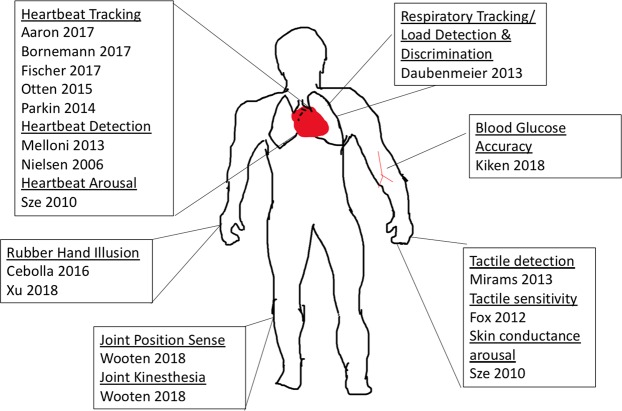
“Nielsen 2006 39, Melloni 2013*38 Heartbeat Tracking Participants count their heartbeats over a short period, and then report total at the end.”
Backgroundde Jong, M., Lazar, S. W., Hug, K., Mehling, W. E., Hölzel, B. K., Sack, A. T., Peeters, F., Ashih, H., Mischoulon, D., & Gard, T. (2016) · Frontiers in Psychology · doi:10.3389/fpsyg.2016.00967 · Cited by 201
deVibe, M., Bjørndal, A., Fattah, S., Dyrdal, G. M., Halland, E., & Tanner-Smith, E. E. (2017) · Campbell Systematic Reviews: Better Evidence for a Better World · doi:10.4073/csr.2017.11 · Cited by 198
Meditation experience predicts introspective accuracy.
Fox, K. C. R., Zakarauskas, P., Dixon, M., Ellamil, M., Thompson, E., & Christoff, K. (2012) · PLoS ONE · doi:10.1371/journal.pone.0045370 · Cited by 190 · cited 1×
“Fox 2012 37 Table 2.”
(2009) · Introduction to Meta‐Analysis · doi:10.1002/9780470743386.ch4 · Cited by 182
Hanley, A. W., Mehling, W. E., & Garland, E. L. (2017) · Journal of Psychosomatic Research · doi:10.1016/j.jpsychores.2017.05.014 · Cited by 180
Murphy, J., Brewer, R., Hobson, H., Catmur, C., & Bird, G. (2018) · Biological Psychology · doi:10.1016/j.biopsycho.2018.05.010 · Cited by 180
The integrative action of the nervous system.
Sherrington, C. S. (1911) · Yale University Press eBooks · doi:10.1037/13798-000 · Cited by 171
Cognitive effects of MBSR/MBCT: A systematic review of neuropsychological outcomes
Lao, S.-A., Kissane, D., & Meadows, G. (2016) · Consciousness and Cognition · doi:10.1016/j.concog.2016.08.017 · Cited by 160
Improvement of Interoceptive Processes after an 8-Week Body Scan Intervention
Fischer, D., Messner, M., & Pollatos, O. (2017) · Frontiers in Human Neuroscience · doi:10.3389/fnhum.2017.00452 · Cited by 159
Brief body-scan meditation practice improves somatosensory perceptual decision making
Mirams, L., Poliakoff, E., Brown, R. J., & Lloyd, D. M. (2013) · Consciousness and Cognition · doi:10.1016/j.concog.2012.07.009 · Cited by 157 · cited 1×
“Mirams 2013 31 Tactile Sensitivity Participants rate tactile sensitivity of their body parts.”
BackgroundFollow your breath: respiratory interoceptive accuracy in experienced meditators
Daubenmier, J., Sze, J., Kerr, C. E., Kemeny, M. E., & Mehling, W. (2013) · Psychophysiology · doi:10.1111/psyp.12057 · Cited by 148
Schaefer, M., Egloff, B., Gerlach, A. L., & Witthöft, M. (2014) · Biological Psychology · doi:10.1016/j.biopsycho.2014.05.012 · Cited by 130
Melloni, M., Sedeño, L., Couto, B., Reynoso, M., Gelormini, C., Favaloro, R., Canales-Johnson, A., Sigman, M., Manes, F., & Ibanez, A. (2013) · Behavioral and Brain Functions · doi:10.1186/1744-9081-9-47 · Cited by 127 · cited 1×
“Nielsen 2006 39, Melloni 2013*38 Heartbeat Tracking Participants count their heartbeats over a short period, and then report total at the end.”
BackgroundNew developments in the understanding and management of persistent pain
Flor, H. (2012) · Current Opinion in Psychiatry · doi:10.1097/yco.0b013e3283503510 · Cited by 125
Kerr, C. E., Shaw, J. R., Wasserman, R. H., Chen, V. W., Kanojia, A., Bayer, T. A., & Kelley, J. M. (2008) · Experimental Brain Research · doi:10.1007/s00221-008-1409-6 · Cited by 123
Exploring the relationship between mindfulness and cardiac perception
Parkin, L., Morgan, R., Rosselli, A., Howard, M., Sheppard, A., Evans, D., Hawkins, A., Martinelli, M., Golden, A.-M., Dalgleish, T., et al. (2014) · Mindfulness · doi:10.1007/s12671-012-0181-7 · Cited by 122
Effect size calculation in meta-analyses of psychotherapy outcome research
Hoyt, W. T., & Del Re, A. C. (2018) · Psychotherapy Research · doi:10.1080/10503307.2017.1405171 · Cited by 80
Sommerfeldt, S. L., Schaefer, S. M., Brauer, M., Ryff, C. D., & Davidson, R. J. (2019) · Psychological Science · doi:10.1177/0956797619849555 · Cited by 78
Self-citationThe practice of meditation is not associated with improved interoceptive awareness of the heartbeat
Khalsa, S. S., Rudrauf, D., Hassanpour, M. S., Davidson, R. J., & Tranel, D. (2020) · Psychophysiology · doi:10.1111/psyp.13479 · Cited by 71
Self-citationTreatment approaches for interoceptive dysfunctions in drug addiction
Paulus, M. P., Stewart, J. L., & Haase, L. (2013) · Frontiers in Psychiatry · doi:10.3389/fpsyt.2013.00137 · Cited by 69
Comparison of correlated correlations
Cohen, A. (1989) · Statistics in Medicine · doi:10.1002/sim.4780081208 · Cited by 67
Psychophysiology of duration estimation in experienced mindfulness meditators and matched controls
Otten, S., Schötz, E., Wittmann, M., Kohls, N., Schmidt, S., & Meissner, K. (2015) · Frontiers in Psychology · doi:10.3389/fpsyg.2015.01215 · Cited by 44
Wooten, S. V., Signorile, J. F., Desai, S. S., Paine, A. K., & Mooney, K. (2017) · Complementary Therapies in Medicine · doi:10.1016/j.ctim.2017.12.010 · Cited by 44
Body Intelligence Scale: Defining and Measuring the Intelligence of the Body.
Anderson, R. (2006) · The Humanistic Psychologist · doi:10.1207/s15473333thp3404_5 · Cited by 42
Embodiment and Body Awareness in Meditators
Cebolla, A., Miragall, M., Palomo, P., Llorens, R., Soler, J., Demarzo, M., García-Campayo, J., & Baños, R. M. (2016) · Mindfulness · doi:10.1007/s12671-016-0569-x · Cited by 42
Kiken, L. G., Shook, N. J., Robins, J. L. W., & Clore, J. N. (2017) · Complementary Therapies in Medicine · doi:10.1016/j.ctim.2017.12.003 · Cited by 19
Xu, A., Cullen, B. H., Penner, C., Zimmerman, C., Kerr, C. E., & Schmalzl, L. (2018) · Consciousness and Cognition · doi:10.1016/j.concog.2018.09.003 · Cited by 19
Enhanced tactile acuity through mental states
Philipp, S. T., Kalisch, T., Wächtler, T., & Dinse, H. R. (2015) · Scientific Reports · doi:10.1038/srep13549 · Cited by 18
Demystifying alexithymia: An empirical approach and roadmap for remediation
Aaron, R. V. (2016) · Cited by 1
Cited by
Goldberg, S. B., Riordan, K. M., Sun, S., & Davidson, R. J. (2022) · Perspectives on Psychological Science · doi:10.1177/1745691620968771 · Cited by 520
Self-citationBrief structured respiration practices enhance mood and reduce physiological arousal
Balban, M. Y., Neri, E., Kogon, M. M., Weed, L., Nouriani, B., Jo, B., Holl, G., Zeitzer, J. M., Spiegel, D., & Huberman, A. D. (2023) · Cell Reports Medicine · doi:10.1016/j.xcrm.2022.100895 · Cited by 284
“Including interoceptive measures in future studies can furthermore help discern what populations can most benefit from different breathing techniques.(48) Our study monitored subjects daily and collected daily physiological data remotely, a capability that was forced by the COVID restrictions but was enabled by the we…”
BackgroundThe Hitchhiker’s Guide to Neurophenomenology – The Case of Studying Self Boundaries With Meditators
Berkovich-Ohana, A., Dor-Ziderman, Y., Trautwein, F.-M., Schweitzer, Y., Nave, O., Fulder, S., & Ataria, Y. (2020) · Frontiers in Psychology · doi:10.3389/fpsyg.2020.01680 · Cited by 100
Goldberg, S. B., Imhoff-Smith, T., Bolt, D. M., Wilson-Mendenhall, C. D., Dahl, C. J., Davidson, R. J., & Rosenkranz, M. A. (2020) · JMIR Mental Health · doi:10.2196/23825 · Cited by 97
“Numerous biological and behavioral mechanisms have been assessed for in-person MBIs (eg, changes in attention, body awareness, stress physiology) [126-128] and may be operant within mHealth MBIs.”
BackgroundSelf-citationGoldberg, S. B., Imhoff-Smith, T., Bolt, D. M., Wilson-Mendenhall, C. D., Dahl, C. J., Davidson, R. J., & Rosenkranz, M. A. (2020) · doi:10.2196/preprints.23825 · Cited by 97
Self-citation
Metadata
- Authors
- Treves, I. N., Tello, L. Y., Davidson, R. J., & Goldberg, S. B.
- Affiliations
- Massachusetts Institute of Technology (US)
- University of California, Berkeley (US)
- University of Wisconsin–Madison (US)
- Corresponding author
- Goldberg, Simon B.
- Venue
- Scientific Reports
- Published
- 2019-11-22
- Volume
- 9
- Issue
- 1
- Pages
- 17386-17386
- ISSN
- 2045-2322 (ISSN-L)
- PMC
- PMC6874545
- OpenAlex
- W2990338100
- Cited by
- 114
- References
- 93
- Citations by year
- 2026: 6 · 2025: 22 · 2024: 21 · 2023: 28 · 2022: 19 · 2021: 11 · 2020: 7
- FWCI
- 1.46
- Type
- journal article
- Language
- en
- Open access
- gold
- doi.org
- Licence
- cc-by
- creativecommons.org/licenses/by/4.0 (tdm)
- creativecommons.org/licenses/by/4.0 (vor)
- Locations
- Scientific Reports (publishedVersion, cc-by)
- PubMed Central (publishedVersion, cc-by)
- PubMed (publishedVersion)
- DOAJ (DOAJ: Directory of Open Access Journals) (submittedVersion)
- Funders
- U.S. Department of Health & Human Services | NIH | National Center for Complementary and Integrative Health (P01AT004952)
- Topics
- Social Sciences › Psychology › Clinical Psychology › Mindfulness and Compassion Interventions
- Health Sciences › Medicine › Psychiatry and Mental health › Psychosomatic Disorders and Their Treatments
- Life Sciences › Neuroscience › Cognitive Neuroscience › Embodied and Extended Cognition
- Keywords
- mindfulness, body awareness, mindfulness meditation, trait mindfulness, mindfulness-based interventions, individual differences
- MeSH terms
- Adult, Awareness, Body Image, Humans, Middle Aged, Self Concept, Meditation, Young Adult, Mindfulness
About these checks
Registry, retraction, Cites and statistics results are computed, not judged, with one exception: a printed reference that no index lists is read once by a model before it counts as a citation error. Claims are extracted by a model and kept only when their quote appears verbatim in the text; each cited source is then checked, with a model’s help, for whether it says what the claim relies on. Those verdicts can be wrong — read the claim’s quote and the cited source before relying on one.
Statistics and arithmetic are recomputed, not judged.
Confidence bands are shown only for fields calibrated on our annotated test set. None is calibrated yet, so no band is shown.
What counts as a claim ›How we measure confidence ›How we check this ›
Are you an author, or do you see a problem with this page? Request a review
Data sources
Bibliographic data: Semantic Scholar, OpenAlex, Crossref.
Contains information from the Semantic Scholar Academic Graph Datasets, made available under the ODC Attribution License (ODC-BY 1.0).
Semantic Scholar’s data is described in: Kinney, R., et al. (2023). The Semantic Scholar Open Data Platform. arXiv:2301.10140.
