

A systematic review and meta-analysis of acceptance- and mindfulness-based interventions for DSM-5 anxiety disorders
Open accessThe DOI matches its Crossref record; 87 of the 89 references it cites were found in a registry or an index; 9 of the 32 sources its claims cite were checked for support.
Abstract
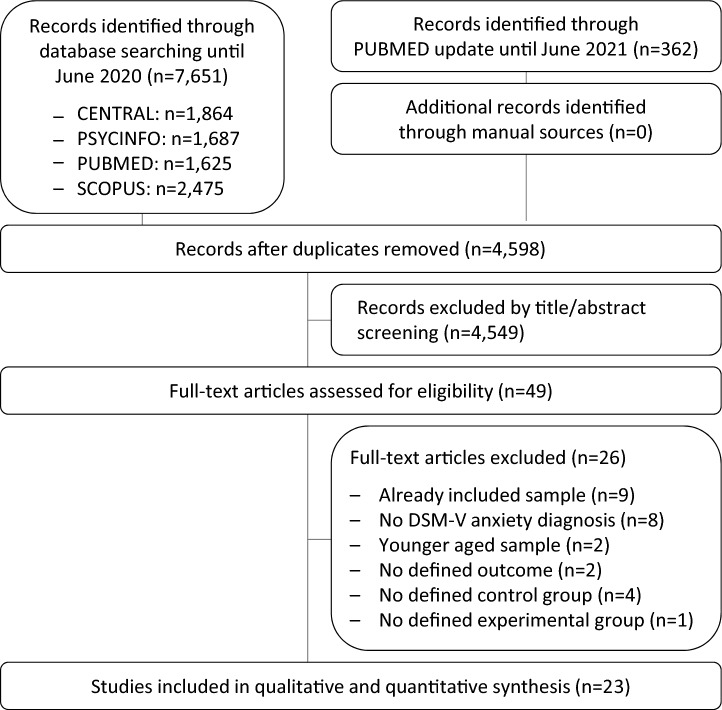
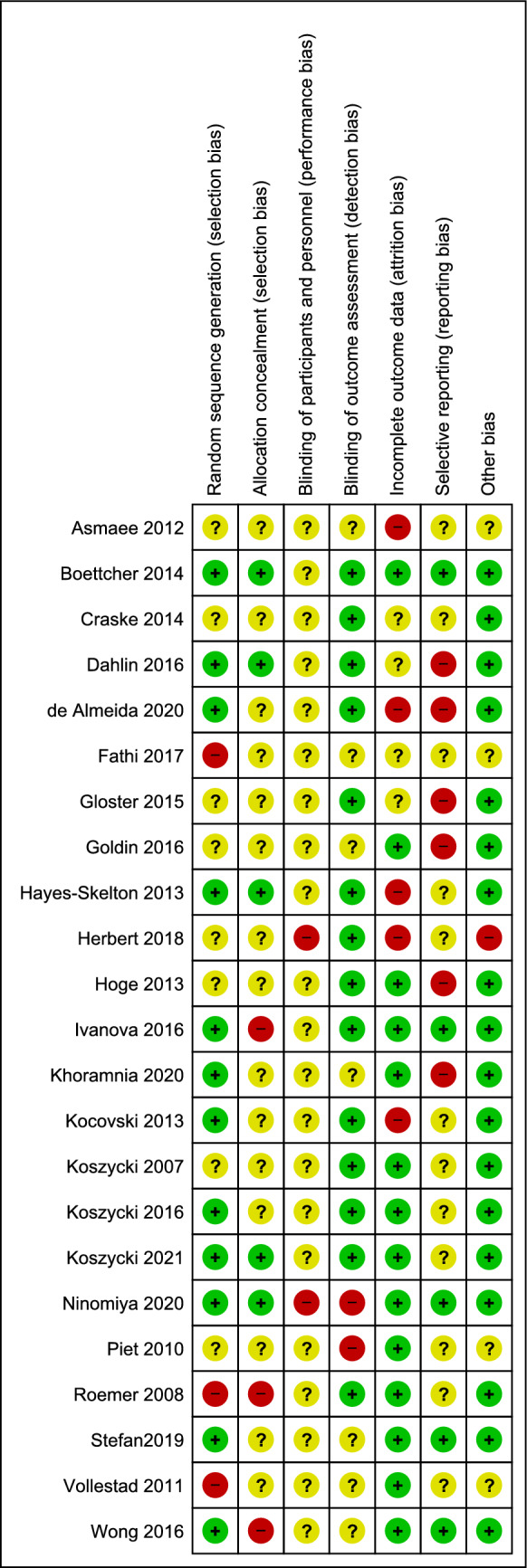
This meta-analysis systematically reviewed the evidence on standardized acceptance-/mindfulness-based interventions in DSM-5 anxiety disorders. Randomized controlled trials examining Acceptance and Commitment Therapy (ACT), Mindfulness-Based Cognitive Therapy (MBCT), and Mindfulness-Based Stress Reduction (MBSR) were searched via PubMed, Central, PsycInfo, and Scopus until June 2021. Standardized mean differences (SMD) and 95% confidence intervals (CI) were calculated for primary outcomes (anxiety) and secondary ones (depression and quality of life). Risk of bias was assessed using the Cochrane tool. We found 23 studies, mostly of unclear risk of bias, including 1815 adults with different DSM-5 anxiety disorders. ACT, MBCT and MBSR led to short-term effects on clinician- and patient-rated anxiety in addition to treatment as usual (TAU) versus TAU alone. In comparison to Cognitive Behavioral Therapy (CBT), ACT and MBCT showed comparable effects on both anxiety outcomes, while MBSR showed significantly lower effects. Analyses up to 6 and 12 months did not reveal significant differences compared to TAU or CBT. Effects on depression and quality of life showed similar trends. Statistical heterogeneity was moderate to considerable. Adverse events were reported insufficiently. The evidence suggests short-term anxiolytic effects of acceptance- and mindfulness-based interventions. Specific treatment effects exceeding those of placebo mechanisms remain unclear. Protocol registry: Registered at Prospero on November 3rd, 2017 (CRD42017076810). © 2021, The Author(s).
Overview
CoChat Summary
## TL;DR
This systematic review and meta-analysis included 23 RCTs with 1,815 adults and found short-term anxiolytic benefits of acceptance- and mindfulness-based interventions, especially versus treatment as usual (TAU). Comparisons with CBT were generally similar for ACT and MBCT, while MBSR showed lower effects on anxiety outcomes.
## Key findings
- The review included 23 RCTs (2007–2021) with 1,815 patients; intervention types were 12 ACT, 3 MBCT, and 8 MBSR trials.
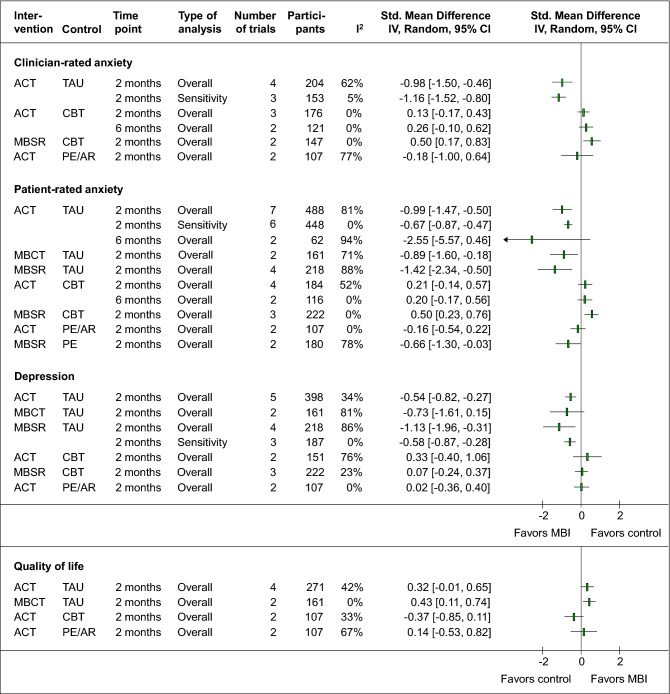
- ACT vs TAU improved clinician-rated anxiety short term in 4 RCTs (SMD = −0.98, 95% CI [−1.50, −0.46], I² = 62%, N = 204); after excluding one low-quality study, the effect was SMD = −1.16 with I² = 5%.
- Patient-rated anxiety also favored ACT vs TAU in 7 RCTs (SMD = −0.99, 95% CI [−1.47, −0.50], I² = 84%, N = 488), and after excluding one low-quality study the estimate was SMD = −0.67 with I² = 0%.
- MBCT vs TAU and MBSR vs TAU showed short-term benefit on anxiety: MBCT (SMD = −0.89, 95% CI [−1.60, −0.18], I² = 71%, N = 161) and MBSR (SMD = −1.42, 95% CI [−2.34, −0.50], I² = 88%, N = 218).
- Against CBT, ACT showed no significant differences on clinician-rated anxiety (SMD = 0.13, short term) or patient-rated anxiety (SMD = 0.21, short term), MBCT also did not differ significantly, while MBSR showed significantly lower short-term improvements on patient-rated anxiety (SMD = 0.50, 95% CI [0.23, 0.76], I² = 0%, N = 222).
- Safety reporting was incomplete: 14 RCTs reported no information on adverse events or reasons for withdrawal; one serious adverse event in an ACT group (bypass surgery) was judged highly likely unrelated to treatment.
## Methods
- Design: Systematic review and meta-analysis conducted per PRISMA and Cochrane guidance; protocol registered at PROSPERO (CRD42017076810).
- Sample/data: Searched PubMed, Central, PsycInfo, and Scopus from inception to June 22, 2020, with a PubMed update to June 14, 2021; included adult DSM-5 anxiety disorder samples from 23 randomized controlled trials.
- Analysis: Pairwise meta-analyses used random-effects models with Hedges’ correction; effects summarized as SMDs with 95% CIs; heterogeneity assessed with I²; risk of bias evaluated with the Cochrane tool.
## Limitations
- The paper states that it often could not pool data because of non-comparable controls, could only perform some sensitivity analyses with 2 RCTs, and could not run subgroup analyses by anxiety disorder, so it “does not allow to draw conclusions for a specific diagnosis.”
- The paper also states that publication bias could not be assessed, so effects might be overestimated by unpublished studies.
- Evident from the text: many comparisons had small numbers of trials, unclear/high risk of bias, and moderate to considerable heterogeneity, and adverse events were insufficiently reported.
Model-written summary. Check it against the paper before relying on it.
Integrity signals
Registry
Cites
Statistics
Figures
Verification
Claims the paper makes
5 Valid · 4 Not valid · 5 Not checked · 55 Own results and interpretations
Some cited sources support this claim and some don’t — read each source’s verdict below.
In the paper
“Minor AEs were equally distributed between experimental and control groups65,69,73–77,80.”
§ A systematic review and meta-analysis of acceptance- and mindfulness-based interventions for DSM-5 anxiety disorders > Results > Safety
What the sources say
- Disputedcites [65] Gloster AT Treating treatment-resistant patients with panic disorder and agoraphobia using psychotherapy: A randomized controlled switching trial Psychother. Psychosom. 2015 84 100 109 10.1159/000370162 25722042 sourceExperimental — accuracy not yet measured
The Adverse Events section reports that patients did not report any adverse events during treatment or the six-month follow-up. It therefore does not report minor adverse events distributed between the treatment and control groups. (LLM, conf=0.86)
Checked by a reasoning model — may be wrong.
- Supportedcites [69] Hoge EA Randomized controlled trial of mindfulness meditation for generalized anxiety disorder: effects on anxiety and stress reactivity J. Clin. Psychiatry 2013 74 786 792 10.4088/JCP.12m08083 23541163 PMC3772979 source
In III. Results, Study Population, the paper reports one adverse event in each group, or 2% for MBSR and 2% for the SME control. The reported events—muscle soreness and sleep disruption—support the description of minor adverse events equally distributed between groups. (LLM, conf=0.94)
- Not checked — no full text of the sourcecites [73] Koszycki D Benger M Shlik J Bradwejn J Randomized trial of a meditation-based stress reduction program and cognitive behavior therapy in generalized social anxiety disorder Behav. Res. Ther. 2007 45 2518 2526 10.1016/j.brat.2007.04.011 17572382 source
- Not checked — no full text of the sourcecites [74] Koszycki D Guérin E DiMillo J Bradwejn J Randomized trial of cognitive behaviour group therapy and a mindfulness-based intervention for social anxiety disorder: Preliminary findings Clin. Psychol. Psychother. 2021 28 200 218 10.1002/cpp.2502 32818325 source
- Not checked — no full text of the sourcecites [75] Koszycki D Preliminary Investigation of a Mindfulness-Based Intervention for Social Anxiety Disorder That Integrates Compassion Meditation and Mindful Exposure J. Alternat. Complement. Med. (New York, NY) 2016 22 363 374 10.1089/acm.2015.0108 27070853 source
- Not checked — no full text of the sourcecites [76] Ninomiya A Effectiveness of mindfulness-based cognitive therapy in patients with anxiety disorders in secondary-care settings: A randomized controlled trial Psychiatry Clin Neurosci 2020 74 132 139 10.1111/pcn.12960 31774604 source
- Not checked — no full text of the sourcecites [77] Piet J Hougaard E Hecksher MS Rosenberg NK A randomized pilot study of mindfulness-based cognitive therapy and group cognitive-behavioral therapy for young adults with social phobia Scand. J. Psychol. 2010 51 403 410 10.1111/j.1467-9450.2009.00801.x 20210911 source
- Not checked — no full text of the sourcecites [80] Vollestad J Sivertsen B Nielsen GH Mindfulness-based stress reduction for patients with anxiety disorders: Evaluation in a randomized controlled trial Behav. Res. Ther. 2011 49 281 288 10.1016/j.brat.2011.01.007 21320700 source
plain- Asserted: passes — The authors put it forward as true.
- Checkable: passes — It can be checked against evidence.
- Load-bearing: unclear — It is unclear whether the paper’s conclusions depend on it.
- Based: passes — The paper gives a reason why it holds.
- Disputed
The cited sources support only part of this claim — read each source’s verdict below.
In the paper
“Another treatment option with promising evidence for alleviating anxiety symptoms in non-psychiatric samples13–17 are mindfulness-based interventions such as Mindfulness-based Stress Reduction (MBSR), Mindfulness-Based Cognitive Therapy (MBCT), and Acceptance Commitment Therapy (ACT).”
§ A systematic review and meta-analysis of acceptance- and mindfulness-based interventions for DSM-5 anxiety disorders > Introduction
What the sources say
- Partly supportedcites [13] Gotink RA Standardised mindfulness-based interventions in healthcare: An overview of systematic reviews and meta-analyses of RCTs PLoS ONE 2015 10 e0124344 10.1371/journal.pone.0124344 25881019 PMC4400080 sourceExperimental — accuracy not yet measured
The Results (Mindfulness in Healthy Populations) report reduced anxiety among students receiving MBSR, and the Conclusions associate MBSR and MBCT with improved anxiety in chronic-care and other settings. The Methods (Inclusion and exclusion criteria) limit this review to MBSR and MBCT; it does not provide evidence for ACT. (LLM, conf=0.90)
- Not checked — no full text of the sourcecites [14] Guillaumie L Boiral O Champagne J A mixed-methods systematic review of the effects of mindfulness on nurses J. Adv. Nurs. 2017 73 1017 1034 10.1111/jan.13176 27706912 source
- Not checked yetcites [15] Haller H Mindfulness-based interventions for women with breast cancer: An updated systematic review and meta-analysis Acta Oncologica (Stockholm, Sweden) 2017 56 1665 1676 10.1080/0284186x.2017.1342862 28686520 source
Checked before — its earlier verdict is held back until a new check runs.
- Partly supportedcites [16] Kishita N Takei Y Stewart I A meta-analysis of third wave mindfulness-based cognitive behavioral therapies for older people Int. J. Geriatr. Psychiatry 2017 32 1352 1361 10.1002/gps.4621 27862293 sourceExperimental — accuracy not yet measured
The Synthesis of Results reports a significant overall effect on anxiety symptoms for ACT and MBCT in older adults, while the Abstract cautions that this finding may not be robust because of heterogeneity and publication bias. The paper does not evaluate MBSR or establish the claim for non-psychiatric samples specifically; its included studies span physical and psychological conditions. (LLM, conf=0.88)
- Not checked — no full text of the sourcecites [17] Schell LK Monsef I Wockel A Skoetz N Mindfulness-based stress reduction for women diagnosed with breast cancer Cochrane Database Syst. Rev. 2019 3 Cd011518 10.1002/14651858.CD011518.pub2 30916356 PMC6436161 source
plainstates a possible cause- Asserted: passes — The authors put it forward as true.
- Checkable: passes — It can be checked against evidence.
- Load-bearing: passes — The paper’s conclusions depend on it.
- Based: passes — The paper gives a reason why it holds.
- Partly supported
The cited sources support only part of this claim — read each source’s verdict below.
In the paper
“TAU, in addition, was also found to be a very heterogeneous control condition and anything but usual or standard care85,86.”
§ A systematic review and meta-analysis of acceptance- and mindfulness-based interventions for DSM-5 anxiety disorders > Discussion > Implications for further research
What the sources say
- Partly supportedcites [85] Cuijpers P Quero S Papola D Cristea IA Karyotaki E Care-as-usual control groups across different settings in randomized trials on psychotherapy for adult depression: a meta-analysis Psychol. Med. 2021 51 634 644 10.1017/s0033291719003581 31843031 sourceExperimental — accuracy not yet measured
The Discussion confirms that care-as-usual is a heterogeneous control condition, with categories ranging from no treatment to specialized mental health care. But the Introduction also describes it as care usually provided in a given setting; the paper does not establish that it is ‘anything but usual’ care in that sense. (LLM, conf=0.87)
- Not checked — no full text of the sourcecites [86] Watts SE Turnell A Kladnitski N Newby JM Andrews G Treatment-as-usual (TAU) is anything but usual: A meta-analysis of CBT versus TAU for anxiety and depression J. Affect. Disord. 2015 175 152 167 10.1016/j.jad.2014.12.025 25618002 source
plain- Asserted: passes — The authors put it forward as true.
- Checkable: passes — It can be checked against evidence.
- Load-bearing: passes — The paper’s conclusions depend on it.
- Based: passes — The paper gives a reason why it holds.
- Partly supported
A result the paper reports from its own data — it cites no other source for it, so there is none to check. The quote shows it is in the paper.
In the paper
“while as compared to CBT, MBSR showed significantly lower short-term improvements (2 RCTs, SMD = 0.50, 95%CI = [0.17, 0.83], I2 = 0%, N = 147) (Fig. 1).”
§ A systematic review and meta-analysis of acceptance- and mindfulness-based interventions for DSM-5 anxiety disorders > Results > Pooling of effects
plainstates a causen = 147- Asserted: passes — The authors put it forward as true.
- Checkable: passes — It can be checked against evidence.
- Load-bearing: unclear — It is unclear whether the paper’s conclusions depend on it.
- Based: passes — The paper gives a reason why it holds.
A result the paper reports from its own data — it cites no other source for it, so there is none to check. The quote shows it is in the paper.
In the paper
“Statistical heterogeneity was moderate to considerable.”
§ A systematic review and meta-analysis of acceptance- and mindfulness-based interventions for DSM-5 anxiety disorders > Abstract This meta-analysis systematically reviewed the evidence on standardized acceptance-/mindfulness-based interventions in DSM-5 anxiety disorders. Randomized controlled trials examining Acceptance and Commitment Therapy (ACT), Mindfulness-Based Cognitive Therapy (MBCT), and Mindfulness-Based Stress Reduction (MBSR) were searched via PubMed, Central, PsycInfo, and Scopus until June 2021. Standardized mean differences (SMD) and 95% confidence intervals (CI) were calculated for primary outcomes (anxiety) and secondary ones (depression and quality of life). Risk of bias was assessed using the Cochrane tool. We found 23 studies, mostly of unclear risk of bias, including 1815 adults with different DSM-5 anxiety disorders. ACT, MBCT and MBSR led to short-term effects on clinician- and patient-rated anxiety in addition to treatment as usual (TAU) versus TAU alone. In comparison to Cognitive Behavioral Therapy (CBT), ACT and MBCT showed comparable effects on both anxiety outcomes, while MBSR showed significantly lower effects. Analyses up to 6 and 12 months did not reveal significant differences compared to TAU or CBT. Effects on depression and quality of life showed similar trends. Statistical heterogeneity was moderate to considerable. Adverse events were reported insufficiently. The evidence suggests short-term anxiolytic effects of acceptance- and mindfulness-based interventions. Specific treatment effects exceeding those of placebo mechanisms remain unclear. Protocol registry: Registered at Prospero on November 3rd, 2017 (CRD42017076810).
plainn = 1,815- Asserted: passes — The authors put it forward as true.
- Checkable: passes — It can be checked against evidence.
- Load-bearing: unclear — It is unclear whether the paper’s conclusions depend on it.
- Based: passes — The paper gives a reason why it holds.
44 more claims
Create a free account to see all 69 claims and to verify the 4 references still open.
- Probably not a substantial claim. 8
- It may state two separate claims as one. 13
- Borderline: one of the tests for a substantial claim is unclear. 1
Claims other papers make about this one
Each is checked against this paper’s own text: does it say what the citing paper says it does?
The source backs part of the claim, not all of it — or backs it for a different population, condition or comparison.
In the citing paper
“the evidence suggests that these approaches hold potential to yield reductions in depression and anxiety and improve overall quality of life across various groups of individuals [28–30], including amongst college students [31–33].”
From An internet-delivered acceptance and commitment therapy program for anxious affect, depression, and wellbeing: A randomized, parallel, two-group, waitlist-controlled trial in a Middle Eastern sample of college students (2024) · cites this paper as [28]
Experimental — accuracy not yet measuredThe source backs part of the claim, not all of it — or backs it for a different population, condition or comparison.
In the citing paper
“Mindfulness has become central in psychotherapy due to its benefits for patients with various mental health issues (Gu et al., 2015; Haller et al., 2021; Khoury et al., 2013).”
From Mapping mindfulness in psychotherapy: a scoping review on conceptualization, applications, and research directions (2026) · cites this paper as Haller et al., 2021
Experimental — accuracy not yet measured
Self-check
Percentages, sums and reported differences re-computed from the paper’s own numbers.
Self-check results appear here once an independent check has confirmed them.
Cited works that were retracted
Works this paper cites that were later retracted, from the retraction notices publishers deposit. Major when the notice came out before this paper was published.
Rated major: it would touch a result — a value a result rests on, reported and recomputed p-values on opposite sides of the significance level, two passages that conflict with no sign which is right, or a cited work retracted before this paper was published.
In the paper
“Gotink, R. A. et al. Standardised mindfulness-based interventions in healthcare: An overview of systematic reviews and meta-analyses of RCTs. PLoS ONE 10, e0124344. https://doi.org/10.1371/journal.pone.0124344 (2015).”
Cited work 10.1371/journal.pone.0124344 · retracted 2019-04-12 · notice 10.1371/journal.pone.0215608 · this paper published 2021-10-14
Citations
Cites
1 retracted
Gotink, R. A., Chu, P., Busschbach, J. J. V., Benson, H., Fricchione, G. L., & Hunink, M. G. M. (2015) · PLOS ONE · doi:10.1371/journal.pone.0124344 · Cited by 539
RetractedDiagnostic and Statistical Manual of Mental Disorders
American Psychiatric Association (2013) · doi:10.1176/appi.books.9780890425596 · Cited by 116,369
Preferred Reporting Items for Systematic Reviews and Meta-Analyses: the PRISMA statement
Moher, D., Liberati, A., Tetzlaff, J., Altman, D. G., & for the PRISMA Group (2009) · BMJ · doi:10.1136/bmj.b2535 · Cited by 83,823
Measuring inconsistency in meta-analyses
Higgins, J. P. T., Thompson, S. G., Deeks, J. J., & Altman, D. G. (2003) · BMJ · doi:10.1136/bmj.327.7414.557 · Cited by 63,139
Bias in meta-analysis detected by a simple, graphical test
Egger, M., Smith, G. D., Schneider, M., & Minder, C. (1997) · BMJ · doi:10.1136/bmj.315.7109.629 · Cited by 56,722
Kessler, R. C., Berglund, P., Demler, O., Jin, R., Merikangas, K. R., & Walters, E. E. (2005) · Archives of General Psychiatry · doi:10.1001/archpsyc.62.6.593 · Cited by 20,391
CONSORT 2010 Statement: updated guidelines for reporting parallel group randomised trials
the CONSORT Group, Schulz, K. F., Altman, D. G., & Moher, D. (2010) · BMC Medicine · doi:10.1186/1741-7015-8-18 · Cited by 13,371
Preferred reporting items for systematic reviews and meta-analyses: The PRISMA statement
Moher, D., Liberati, A., Tetzlaff, J., & Altman, D. G. (2010) · International Journal of Surgery · doi:10.1016/j.ijsu.2010.02.007 · Cited by 12,156
Acceptance and commitment therapy: model, processes and outcomes
Hayes, S. C., Luoma, J. B., Bond, F. W., Masuda, A., & Lillis, J. (2006) · Behaviour Research and Therapy · doi:10.1016/j.brat.2005.06.006 · Cited by 6,587
Kabat-Zinn, J. (1982) · General Hospital Psychiatry · doi:10.1016/0163-8343(82)90026-3 · Cited by 4,255
The size and burden of mental disorders and other disorders of the brain in Europe 2010
Wittchen, H. U., Jacobi, F., Rehm, J., Gustavsson, A., Svensson, M., Jönsson, B., Olesen, J., Allgulander, C., Alonso, J., Faravelli, C., et al. (2011) · European Neuropsychopharmacology · doi:10.1016/j.euroneuro.2011.07.018 · Cited by 3,754
Prevention of relapse/recurrence in major depression by mindfulness-based cognitive therapy.
Teasdale, J. D., Segal, Z. V., Williams, J. M. G., Ridgeway, V. A., Soulsby, J. M., & Lau, M. A. (2000) · Journal of Consulting and Clinical Psychology · doi:10.1037/0022-006x.68.4.615 · Cited by 3,236
Ellis, P. D. (2010) · doi:10.1017/cbo9780511761676 · Cited by 2,461
CONSORT 2010 statement: updated guidelines for reporting parallel group randomised trials
Schulz, K. F., Altman, D. G., Moher, D., & for the CONSORT Group (2010) · PLoS Medicine · doi:10.1371/journal.pmed.1000251 · Cited by 2,296
Global prevalence of anxiety disorders: a systematic review and meta-regression
Baxter, A. J., Scott, K. M., Vos, T., & Whiteford, H. A. (2013) · Psychological Medicine · doi:10.1017/s003329171200147x · Cited by 1,537
Katzman, M. A., Bleau, P., Blier, P., Chokka, P., Kjernisted, K., Van Ameringen, M., & the Canadian Anxiety Guidelines Initiative Group on behalf of the Anxiety Disorders Association of Canada/Association Canadienne des troubles anxieux and McGill University (2014) · BMC Psychiatry · doi:10.1186/1471-244x-14-s1-s1 · Cited by 1,090
(2011) · Choice Reviews Online · doi:10.5860/choice.48-5742 · Cited by 626
Efficacy of treatments for anxiety disorders: a meta-analysis
Bandelow, B., Reitt, M., Röver, C., Michaelis, S., Görlich, Y., & Wedekind, D. (2015) · International Clinical Psychopharmacology · doi:10.1097/yic.0000000000000078 · Cited by 555
Roemer, L., Orsillo, S. M., & Salters-Pedneault, K. (2008) · Journal of Consulting and Clinical Psychology · doi:10.1037/a0012720 · Cited by 554
Furukawa, T. A., Noma, H., Caldwell, D. M., Honyashiki, M., Shinohara, K., Imai, H., Chen, P., Hunot, V., & Churchill, R. (2014) · Acta Psychiatrica Scandinavica · doi:10.1111/acps.12275 · Cited by 521
Hoge, E. A., Bui, E., Marques, L., Metcalf, C. A., Morris, L. K., Robinaugh, D. J., Worthington, J. J., Pollack, M. H., & Simon, N. M. (2013) · The Journal of Clinical Psychiatry · doi:10.4088/jcp.12m08083 · Cited by 511
Arch, J. J., Eifert, G. H., Davies, C., Vilardaga, J. C. P., Rose, R. D., & Craske, M. G. (2012) · Journal of Consulting and Clinical Psychology · doi:10.1037/a0028310 · Cited by 443
Vøllestad, J., Sivertsen, B., & Nielsen, G. H. (2011) · Behaviour Research and Therapy · doi:10.1016/j.brat.2011.01.007 · Cited by 361
The validation of an active control intervention for Mindfulness Based Stress Reduction (MBSR)
MacCoon, D. G., Imel, Z. E., Rosenkranz, M. A., Sheftel, J. G., Weng, H. Y., Sullivan, J. C., Bonus, K. A., Stoney, C. M., Salomons, T. V., Davidson, R. J., et al. (2012) · Behaviour Research and Therapy · doi:10.1016/j.brat.2011.10.011 · Cited by 335
Koszycki, D., Benger, M., Shlik, J., & Bradwejn, J. (2007) · Behaviour Research and Therapy · doi:10.1016/j.brat.2007.04.011 · Cited by 321
Prevalence and stability of mental disorders among young adults: findings from a longitudinal study
Gustavson, K., Knudsen, A. K., Nesvåg, R., Knudsen, G. P., Vollset, S. E., & Reichborn-Kjennerud, T. (2018) · BMC Psychiatry · doi:10.1186/s12888-018-1647-5 · Cited by 282
Haller, H., Winkler, M. M., Klose, P., Dobos, G., Kümmel, S., & Cramer, H. (2017) · Acta Oncologica · doi:10.1080/0284186x.2017.1342862 · Cited by 277
Self-citationThe prevalence and burden of subthreshold generalized anxiety disorder: a systematic review
Haller, H., Cramer, H., Lauche, R., Gass, F., & Dobos, G. J. (2014) · BMC Psychiatry · doi:10.1186/1471-244x-14-128 · Cited by 267
Self-citationInternet-based mindfulness treatment for anxiety disorders: a randomized controlled trial
Boettcher, J., Åström, V., Påhlsson, D., Schenström, O., Andersson, G., & Carlbring, P. (2014) · Behavior Therapy · doi:10.1016/j.beth.2013.11.003 · Cited by 245
Craske, M. G., Niles, A. N., Burklund, L. J., Wolitzky-Taylor, K. B., Vilardaga, J. C. P., Arch, J. J., Saxbe, D. E., & Lieberman, M. D. (2014) · Journal of Consulting and Clinical Psychology · doi:10.1037/a0037212 · Cited by 206
Group CBT versus MBSR for social anxiety disorder: A randomized controlled trial.
Goldin, P. R., Morrison, A., Jazaieri, H., Brozovich, F., Heimberg, R., & Gross, J. J. (2016) · Journal of Consulting and Clinical Psychology · doi:10.1037/ccp0000092 · Cited by 202
Hoge, E. A., Bui, E., Palitz, S. A., Schwarz, N. R., Owens, M. E., Johnston, J. M., Pollack, M. H., & Simon, N. M. (2018) · Psychiatry Research · doi:10.1016/j.psychres.2017.01.006 · Cited by 193
Navarro-Haro, M. V., Modrego-Alarcón, M., Hoffman, H. G., López-Montoyo, A., Navarro-Gil, M., Montero-Marin, J., García-Palacios, A., Borao, L., & García-Campayo, J. (2019) · Frontiers in Psychology · doi:10.3389/fpsyg.2019.00055 · Cited by 189
Watts, S. E., Turnell, A., Kladnitski, N., Newby, J. M., & Andrews, G. (2015) · Journal of Affective Disorders · doi:10.1016/j.jad.2014.12.025 · Cited by 188
Kocovski, N. L., Fleming, J. E., Hawley, L. L., Huta, V., & Antony, M. M. (2013) · Behaviour Research and Therapy · doi:10.1016/j.brat.2013.10.007 · Cited by 188
A mixed‐methods systematic review of the effects of mindfulness on nurses
Guillaumie, L., Boiral, O., & Champagne, J. (2017) · Journal of Advanced Nursing · doi:10.1111/jan.13176 · Cited by 186
Mindfulness-based stress reduction for women diagnosed with breast cancer
Schell, L. K., Monsef, I., Wöckel, A., & Skoetz, N. (2019) · Cochrane Database of Systematic Reviews · doi:10.1002/14651858.cd011518.pub2 · Cited by 168
Arch, J. J., Ayers, C. R., Baker, A., Almklov, E., Dean, D. J., & Craske, M. G. (2013) · Behaviour Research and Therapy · doi:10.1016/j.brat.2013.01.003 · Cited by 165
Ivanova, E., Lindner, P., Ly, K. H., Dahlin, M., Vernmark, K., Andersson, G., & Carlbring, P. (2016) · Journal of Anxiety Disorders · doi:10.1016/j.janxdis.2016.09.012 · Cited by 165
PIET, J., HOUGAARD, E., HECKSHER, M. S., & ROSENBERG, N. K. (2010) · Scandinavian Journal of Psychology · doi:10.1111/j.1467-9450.2009.00801.x · Cited by 161
Hayes-Skelton, S. A., Roemer, L., & Orsillo, S. M. (2013) · Journal of Consulting and Clinical Psychology · doi:10.1037/a0032871 · Cited by 153
Li, S. Y. H., & Bressington, D. (2019) · International Journal of Mental Health Nursing · doi:10.1111/inm.12568 · Cited by 142
Acceptance and Commitment Therapy in group format for anxiety and depression. A systematic review.
Coto-Lesmes, R., Fernández-Rodríguez, C., & González-Fernández, S. (2020) · Journal of Affective Disorders · doi:10.1016/j.jad.2019.11.154 · Cited by 141
Grenier, S., Payette, M., Gunther, B., Askari, S., Desjardins, F., Raymond, B., & Berbiche, D. (2018) · International Journal of Geriatric Psychiatry · doi:10.1002/gps.5035 · Cited by 137
Acceptance and Commitment Therapy modules: Differential impact on treatment processes and outcomes
Villatte, J. L., Vilardaga, R., Villatte, M., Plumb Vilardaga, J. C., Atkins, D. C., & Hayes, S. C. (2016) · Behaviour Research and Therapy · doi:10.1016/j.brat.2015.12.001 · Cited by 136
Goldin, P., Ziv, M., Jazaieri, H., & Gross, J. J. (2012) · Frontiers in Human Neuroscience · doi:10.3389/fnhum.2012.00295 · Cited by 128
'Third wave' cognitive and behavioural therapies versus other psychological therapies for depression
Hunot, V., Moore, T. H., Caldwell, D. M., Furukawa, T. A., Davies, P., Jones, H., Honyashiki, M., Chen, P., Lewis, G., & Churchill, R. (2013) · Cochrane Database of Systematic Reviews · doi:10.1002/14651858.cd008704.pub2 · Cited by 124
Nabi, H., Hall, M., Koskenvuo, M., Singh-Manoux, A., Oksanen, T., Suominen, S., Kivimäki, M., & Vahtera, J. (2010) · Biological Psychiatry · doi:10.1016/j.biopsych.2009.07.040 · Cited by 121
A systematic review of mindfulness and acceptance-based treatments for social anxiety disorder
Norton, A. R., Abbott, M. J., Norberg, M. M., & Hunt, C. (2015) · Journal of Clinical Psychology · doi:10.1002/jclp.22144 · Cited by 106
Wong, S. Y. S., Yip, B. H. K., Mak, W. W. S., Mercer, S., Cheung, E. Y. L., Ling, C. Y. M., Lui, W. W. S., Tang, W. K., Lo, H. H. M., Wu, J. C. Y., et al. (2016) · British Journal of Psychiatry · doi:10.1192/bjp.bp.115.166124 · Cited by 90
Gloster, A. T., Sonntag, R., Hoyer, J., Meyer, A. H., Heinze, S., Ströhle, A., Eifert, G., & Wittchen, H.-U. (2015) · Psychotherapy and Psychosomatics · doi:10.1159/000370162 · Cited by 88
Dahlin, M., Andersson, G., Magnusson, K., Johansson, T., Sjögren, J., Håkansson, A., Pettersson, M., Kadowaki, Å., Cuijpers, P., & Carlbring, P. (2016) · Behaviour Research and Therapy · doi:10.1016/j.brat.2015.12.007 · Cited by 86
de Abreu Costa, M., D’Alò de Oliveira, G. S., Tatton-Ramos, T., Manfro, G. G., & Salum, G. A. (2019) · Mindfulness · doi:10.1007/s12671-018-1058-1 · Cited by 85
Lang, A. J., Schnurr, P. P., Jain, S., He, F., Walser, R. D., Bolton, E., Benedek, D. M., Norman, S. B., Sylvers, P., Flashman, L., et al. (2017) · Psychological Trauma: Theory, Research, Practice, and Policy · doi:10.1037/tra0000127 · Cited by 83
Kladnitski, N., Smith, J., Uppal, S., James, M. A., Allen, A. R., Andrews, G., & Newby, J. M. (2020) · Internet Interventions · doi:10.1016/j.invent.2020.100310 · Cited by 77
The burden of generalized anxiety disorder in Canada
Pelletier, L., O’Donnell, S., McRae, L., & Grenier, J. (2017) · Health Promotion and Chronic Disease Prevention in Canada · doi:10.24095/hpcdp.37.2.04 · Cited by 71
Stefan, S., Cristea, I. A., Szentagotai Tatar, A., & David, D. (2019) · Journal of Clinical Psychology · doi:10.1002/jclp.22779 · Cited by 68
Finnes, A., Ghaderi, A., Dahl, J., Nager, A., & Enebrink, P. (2019) · Journal of Occupational Health Psychology · doi:10.1037/ocp0000097 · Cited by 67
Khoramnia, S., Bavafa, A., Jaberghaderi, N., Parvizifard, A., Foroughi, A., Ahmadi, M., & Amiri, S. (2020) · Trends in Psychiatry and Psychotherapy · doi:10.1590/2237-6089-2019-0003 · Cited by 65
Cuijpers, P., Quero, S., Papola, D., Cristea, I. A., & Karyotaki, E. (2021) · Psychological Medicine · doi:10.1017/s0033291719003581 · Cited by 62
A meta-analysis of third wave mindfulness-based cognitive behavioral therapies for older people
Kishita, N., Takei, Y., & Stewart, I. (2017) · International Journal of Geriatric Psychiatry · doi:10.1002/gps.4621 · Cited by 60
Koszycki, D., Thake, J., Mavounza, C., Daoust, J.-P., Taljaard, M., & Bradwejn, J. (2016) · The Journal of Alternative and Complementary Medicine · doi:10.1089/acm.2015.0108 · Cited by 57
(2014) · MADOC (University of Mannheim) · Cited by 56
Ghahari, S., Mohammadi-Hasel, K., Malakouti, S., & Roshanpajouh, M. (2020) · East Asian Archives of Psychiatry · doi:10.12809/eaap1885 · Cited by 55
Effect of mindfulness based stress management on reduction of generalized anxiety disorder.
Majid, S. A., Seghatoleslam, T., Homan, H., Akhvast, A., & Habil, H. (2012) · PubMed Central · Cited by 52
Ruiz, F. J., Peña-Vargas, A., Ramírez, E. S., Suárez-Falcón, J. C., García-Martín, M. B., García-Beltrán, D. M., Henao, Á. M., Monroy-Cifuentes, A., & Sánchez, P. D. (2020) · Psychotherapy · doi:10.1037/pst0000273 · Cited by 48
Gershkovich, M., Herbert, J. D., Forman, E. M., Schumacher, L. M., & Fischer, L. E. (2017) · Behavior Modification · doi:10.1177/0145445517694457 · Cited by 46
Sewart, A. R., Niles, A. N., Burklund, L. J., Saxbe, D. E., Lieberman, M. D., & Craske, M. G. (2019) · Behavior Therapy · doi:10.1016/j.beth.2019.07.001 · Cited by 46
Sleep quality and treatment of social anxiety disorder
Horenstein, A., Morrison, A. S., Goldin, P., ten Brink, M., Gross, J. J., & Heimberg, R. G. (2019) · Anxiety, Stress, & Coping · doi:10.1080/10615806.2019.1617854 · Cited by 45
Butler, R. M., Boden, M. T., Olino, T. M., Morrison, A. S., Goldin, P. R., Gross, J. J., & Heimberg, R. G. (2018) · Journal of Anxiety Disorders · doi:10.1016/j.janxdis.2018.03.003 · Cited by 43
Morrison, A. S., Mateen, M. A., Brozovich, F. A., Zaki, J., Goldin, P. R., Heimberg, R. G., & Gross, J. J. (2019) · Behavior Therapy · doi:10.1016/j.beth.2019.05.005 · Cited by 42
Ninomiya, A., Sado, M., Park, S., Fujisawa, D., Kosugi, T., Nakagawa, A., Shirahase, J., & Mimura, M. (2020) · Psychiatry and Clinical Neurosciences · doi:10.1111/pcn.12960 · Cited by 42
Self-views in social anxiety disorder: The impact of CBT versus MBSR
Thurston, M. D., Goldin, P., Heimberg, R., & Gross, J. J. (2017) · Journal of Anxiety Disorders · doi:10.1016/j.janxdis.2017.01.001 · Cited by 41
Herbert, J. D., Forman, E. M., Kaye, J. L., Gershkovich, M., Goetter, E., Yuen, E. K., Glassman, L., Goldstein, S., Hitchcock, P., Tronieri, J. S., et al. (2018) · Journal of Contextual Behavioral Science · doi:10.1016/j.jcbs.2018.07.008 · Cited by 36
Azadeh, S. M., Kazemi-Zahrani, H., & Besharat, M. A. (2015) · Global journal of health science · doi:10.5539/gjhs.v8n3p131 · Cited by 35
Millstein, D. J., Orsillo, S. M., Hayes-Skelton, S. A., & Roemer, L. (2015) · Cognitive Behaviour Therapy · doi:10.1080/16506073.2015.1060255 · Cited by 31
Ruiz‐Íñiguez, R., Santed Germán, M. Á., Burgos‐Julián, F. A., Díaz‐Silveira, C., & Carralero Montero, A. (2020) · Early Intervention in Psychiatry · doi:10.1111/eip.12849 · Cited by 29
Ritzert, T. R., Forsyth, J. P., Sheppard, S. C., Boswell, J. F., Berghoff, C. R., & Eifert, G. H. (2016) · Behavior Therapy · doi:10.1016/j.beth.2016.03.001 · Cited by 28
Costa, M. D. A., Gonçalves, F. G., Tatton-Ramos, T., Fonseca, N. K. D. O. D., Schwinn, J. K., Alves, S. G., Salum, G. A., & Manfro, G. G. (2021) · Psychotherapy and Psychosomatics · doi:10.1159/000511880 · Cited by 26
Alimehdi, M., Ehteshamzadeh, P., Naderi, F., Eftekharsaadi, Z., & Pasha, R. (2016) · Asian Social Science · doi:10.5539/ass.v12n4p179 · Cited by 25
Brown, L. A., Young, K. S., Goldin, P. R., Torre, J. B., Burklund, L. J., Davies, C. D., Niles, A. N., Lieberman, M. D., Saxbe, D. E., & Craske, M. G. (2019) · Psychiatry Research - Neuroimaging · doi:10.1016/j.pscychresns.2018.12.017 · Cited by 24
Koszycki, D., Guérin, E., DiMillo, J., & Bradwejn, J. (2021) · Clinical Psychology & Psychotherapy · doi:10.1002/cpp.2502 · Cited by 24
Efficacy of an acceptance-based group behavioral therapy for generalized anxiety disorder.
Almeida Sampaio, T. P., Jorge, R. C., Martins, D. S., Gandarela, L. M., Hayes‐Skelton, S., Bernik, M. A., & Lotufo‐Neto, F. (2020) · Depression and Anxiety · doi:10.1002/da.23021 · Cited by 23
The Role of Working Alliance in CBT and MBSR for Social Anxiety Disorder
Jazaieri, H., Goldin, P. R., & Gross, J. J. (2018) · Mindfulness · doi:10.1007/s12671-017-0877-9 · Cited by 21
Haddad, R., Lenze, E. J., Nicol, G. E., Miller, J. P., Yingling, M. D., & Wetherell, J. L. (2020) · International Journal of Geriatric Psychiatry · doi:10.1002/gps.5279 · Cited by 21
Fathi, R., Khodarahimi, S., & Rasti, A. (2017) · Canadian Journal of Counselling and Psychotherapy · Cited by 9
Sy, W., Wk, T., Mercer, S. W., Kung, K., Mak, W. W. S., Sm, G., & Tm, L. (2016) · PubMed · Cited by 3
Research works printed but not linked: 1
- National Institute for Health and Care Excellence (NICE). Generalised anxiety disorder and panic disorder in adults: management. (2019). https://www.nice.org.uk/guidance/cg113/resources/generalised-anxiety-disorder-and-panic-disorder-in-adults-management-pdf-35109387756997. 31961629
Cited by
Szuhany, K. L., & Simon, N. M. (2022) · JAMA · doi:10.1001/jama.2022.22744 · Cited by 541
Hoge, E. A., Bui, E., Mete, M., Dutton, M. A., Baker, A. W., & Simon, N. M. (2023) · JAMA Psychiatry · doi:10.1001/jamapsychiatry.2022.3679 · Cited by 182
Artificial Intelligence-Enabled Chatbots in Mental Health: A Systematic Review
Omarov, B., Narynov, S., & Zhumanov, Z. (2023) · Computers, Materials & Continua · doi:10.32604/cmc.2023.034655 · Cited by 83
Miller, M. L., & McGuire, J. F. (2023) · Journal of Affective Disorders · doi:10.1016/j.jad.2023.08.132 · Cited by 63
“These therapeutic interventions have demonstrated clinical benefit across randomized clinical trials (RCTs; Carl et al., 2019; Carpenter et al., 2018; Haller et al., 2021; Slee et al., 2019).”
Mainstreaming regenerative dynamics for sustainability
Fischer, J., Farny, S., Abson, D. J., Zeidler, V. Z., von Salisch, M., Schaltegger, S., Martín‐López, B., Temperton, V. M., & Kümmerer, K. (2024) · Nature Sustainability · doi:10.1038/s41893-024-01368-w · Cited by 77
“A recent meta-analysis over 23 randomized controlled trials showed that MBCT and MBSR led to short-term improvements of clinical anxiety when compared with treatment as usual 44 .”
Metadata
- Authors
- Haller, H., Breilmann, P., Schröter, M., Dobos, G., & Cramer, H.
- Affiliations
- Kliniken Essen-Mitte (DE)
- Corresponding author
- Haller, Heidemarie
- Venue
- Scientific Reports
- Published
- 2021-10-14
- Volume
- 11
- Issue
- 1
- Pages
- 20385-20385
- ISSN
- 2045-2322 (ISSN-L)
- PMC
- PMC8516851
- OpenAlex
- W3207333339
- Cited by
- 126
- References
- 89
- Citations by year
- 2026: 25 · 2025: 34 · 2024: 31 · 2023: 25 · 2022: 11
- FWCI
- 2.23
- Type
- journal article
- Language
- en
- Open access
- gold
- doi.org
- Licence
- cc-by
- creativecommons.org/licenses/by/4.0 (tdm)
- creativecommons.org/licenses/by/4.0 (vor)
- Locations
- Scientific Reports (publishedVersion, cc-by)
- PubMed Central (publishedVersion, cc-by)
- PubMed (publishedVersion)
- Universitätsbibliographie, Universität Duisburg-Essen (submittedVersion)
- DOAJ (DOAJ: Directory of Open Access Journals) (submittedVersion, cc-by-sa)
- DuEPublico (University of Duisburg-Essen) (submittedVersion, cc-by)
- Funders
- Erich Rothenfußer Foundation
- Universitätsklinikum Essen
- Topics
- Social Sciences › Psychology › Clinical Psychology › Mindfulness and Compassion Interventions
- Social Sciences › Psychology › Experimental and Cognitive Psychology › Anxiety, Depression, Psychometrics, Treatment, Cognitive Processes
- Social Sciences › Psychology › Applied Psychology › Digital Mental Health Interventions
- Keywords
- acceptance and commitment therapy, mindfulness-based cognitive therapy, mindfulness-based stress reduction, anxiety disorders, cognitive behavioral therapy, depression, quality of life, usual care, adverse events, placebo mechanisms
- MeSH terms
- Anxiety Disorders, Humans, Treatment Outcome, Diagnostic and Statistical Manual of Mental Disorders, Mindfulness, Acceptance and Commitment Therapy
About these checks
Registry, retraction, Cites and statistics results are computed, not judged, with one exception: a printed reference that no index lists is read once by a model before it counts as a citation error. Claims are extracted by a model and kept only when their quote appears verbatim in the text; each cited source is then checked, with a model’s help, for whether it says what the claim relies on. Those verdicts can be wrong — read the claim’s quote and the cited source before relying on one.
The claim verdicts this report counts are experimental: their accuracy is not yet measured.
A language model drew the claims from the paper on 2026-10-11, under version 3 of the claim definition (model deepseek-v4.1-flash, prompt extract-v3).
A second model labelled each claim on 2026-10-11 (model jev-1.13-20260917, definition revision gold-guideline-v0.2).
Cited sources are checked with a language model’s help (gpt-6-sol).
Statistics and arithmetic are recomputed, not judged.
Confidence bands are shown only for fields calibrated on our annotated test set. None is calibrated yet, so no band is shown.
What counts as a claim ›How we measure confidence ›How we check this ›
Are you an author, or do you see a problem with this page? Request a review
Data sources
Bibliographic data: Semantic Scholar, OpenAlex, Crossref.
Contains information from the Semantic Scholar Academic Graph Datasets, made available under the ODC Attribution License (ODC-BY 1.0).
Semantic Scholar’s data is described in: Kinney, R., et al. (2023). The Semantic Scholar Open Data Platform. arXiv:2301.10140.
