

Reliability of threshold determination using portable muscle oxygenation monitors during exercise testing: a systematic review and meta-analysis
Open accessThe DOI matches its Crossref record; 53 of the 56 references it cites were found in a registry or an index; 43 of the 74 sources its claims cite were checked for support.
Abstract
Over the last few years, portable Near-Infrared Spectroscopy (NIRS) technology has been suggested for determining metabolic/ventilator thresholds. This systematic review and meta-analysis aimed to assess the reliability of a portable muscle oxygenation monitor for determining thresholds during exercise testing. The proposed PICO question was: Is the exercise intensity of muscle oxygenation thresholds, using portable NIRS, reliable compared with lactate and ventilatory thresholds for exercise intensity determined in athletes? A search of Pubmed, Scopus and Web of Science was undertaken and the review was conducted following PRISMA guidelines. Fifteen articles were included. The domains which presented the highest biases were confounders (93% with moderate or high risk) and participant selection (100% with moderate or high risk). The intra-class correlation coefficient between exercise intensity of the first ventilatory or lactate threshold and the first muscle oxygenation threshold was 0.53 (obtained with data from only 3 studies), whereas the second threshold was 0.80. The present work shows that although a portable muscle oxygenation monitor has moderate to good reliability for determining the second ventilatory and lactate thresholds, further research is necessary to investigate the mathematical methods of detection, the capacity to detect the first threshold, the detection in multiple regions, and the effect of sex, performance level and adipose tissue in determining thresholds.
Overview
CoChat Summary
TL;DR
This systematic review and meta-analysis found that portable NIRS muscle oxygenation thresholds had moderate reliability for the first threshold and good reliability for the second threshold compared with lactate or ventilatory thresholds. The authors conclude that further research is needed on detection methods, first-threshold detection, multiple regions, and effects of sex, performance level, and adipose tissue.
Key findings
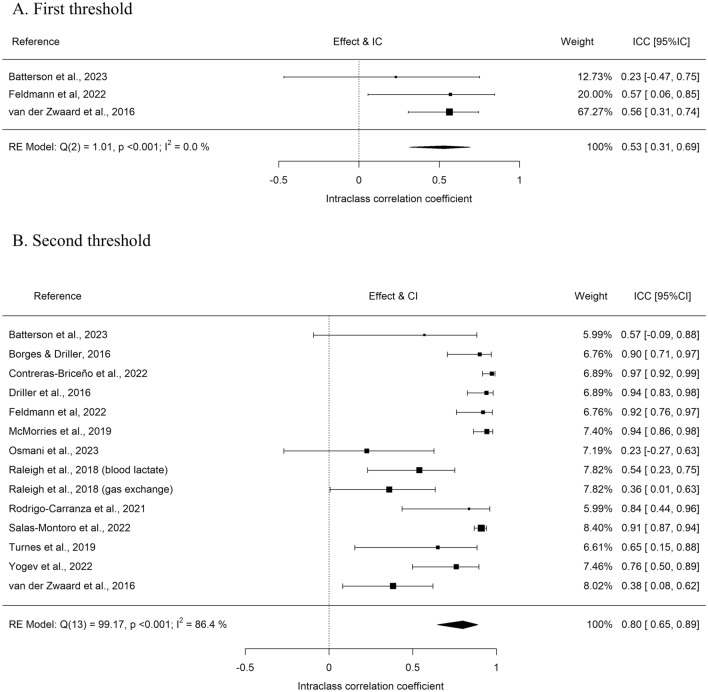
- Across 15 included articles (344 participants: 216 males and 128 females), the meta-analysis of 13 studies found an ICC of 0.53 (95% CI 0.31–0.69) for the first threshold, based on only 3 studies, and an ICC of 0.80 (95% CI 0.65–0.89) for the second threshold.
- Heterogeneity was low for the first threshold (Q(df = 2) = 1.01, p = 0.60; I² = 0%) and large for the second threshold (Q(df = 13) = 99.17, p < 0.001; I² = 86%); no moderator effect was observed for the second threshold (p = 0.94), and moderator testing was not performed for the first threshold due to the low number of studies.
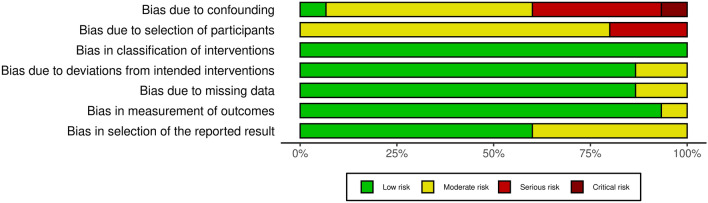
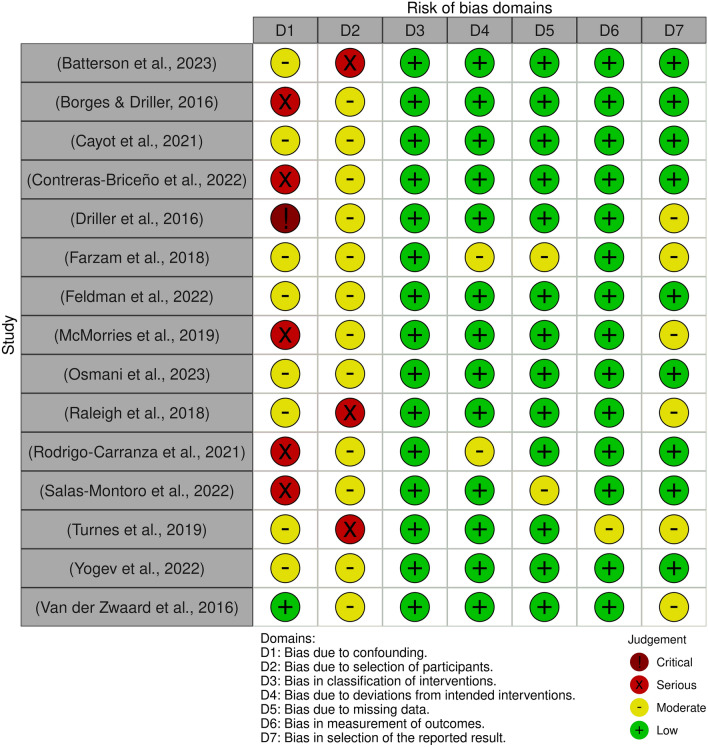
- Risk of bias was highest for confounding (93% moderate or high: 7% critical, 33% serious, 53% moderate) and participant selection (100% moderate or high: 20% serious, 80% moderate); selection of reported results had 40% moderate risk.
- The most used methods for determining muscle oxygenation thresholds were regression double linear (46%), wearable lactate threshold (20%), and visual identification (20%); second-threshold ICC values varied by sport and region, with cycling studies showing good ICC (0.91–0.94) and running studies showing fair, moderate, or good ICC (0.29–0.90).
Methods
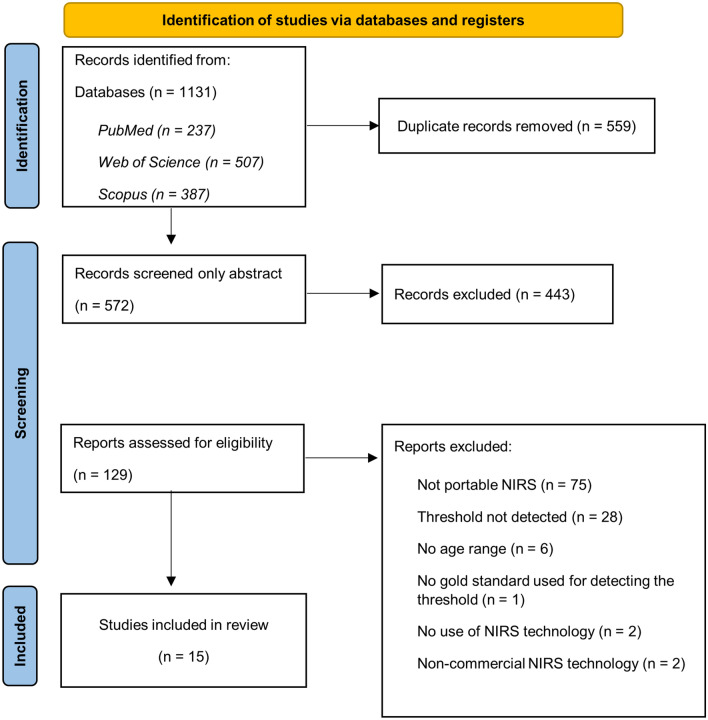
- Systematic review and meta-analysis conducted following PRISMA, with the PICO question asking whether exercise intensity of muscle oxygenation thresholds using portable NIRS is reliable compared with lactate and ventilatory thresholds in athletes; PubMed, Scopus, and Web of Science were searched on 15 June 2023.
- Inclusion criteria were studies in English, Spanish, or Portuguese; portable and commercial NIRS for muscle oxygenation threshold detection; a gold standard (gas exchange or blood lactate) in addition to muscle oxygenation; healthy participants aged 18–65 years; and experimental or quasi-experimental designs.
- From 1,131 records and 559 after duplicate removal, 129 full articles were reviewed and 15 were included; data were extracted by two reviewers and confirmed by a third, risk of bias was assessed with ROBINS-I, and meta-analysis used ICC values transformed to Fisher’s z scale with a random-effects model, Restricted Maximum Likelihood Estimation, Q and I² statistics, and trim-and-fill and Egger’s tests for publication bias.
Limitations
- The paper states that the main limitation is the small number of studies included in the meta-analysis (N = 13), along with high heterogeneity between studies; it also notes that the meta-analysis was limited to only one measure of reliability (ICC), and bias was not included due to the low number of studies reporting it and different units used.
- The paper states that two domains presented considerable risk of bias—confounders and selection of participants—and that missing data and measurement outcome biases were present in most studies; these may be sources of the high heterogeneity found.
- Evident from the text: the first-threshold meta-analysis was based on only 3 studies, all included studies used laboratory protocols because no field-test studies were available, and the included studies varied in NIRS regions, samples, sports, and threshold-determination methods, which may affect the results.
Model-written summary. Check it against the paper before relying on it.
Integrity signals
Registry
Cites
Statistics
Figures
Verification
Claims the paper makes
18 Valid · 1 Not valid · 8 Not checked · 48 Own results and interpretations
The cited sources support only part of this claim — read each source’s verdict below.
In the paper
“Moreover, a fair ICC in running was shown (ICC = 0.23–0.49)16,44.”
§ Reliability of threshold determination using portable muscle oxygenation monitors during exercise testing: a systematic review and meta-analysis > Discussion
What the sources say
- Partly supportedcites [16] Feldmann A Ammann L Gächter F Zibung M Erlacher D Muscle oxygen saturation breakpoints reflect ventilatory thresholds in both cycling and running J. Hum. Kinet. 2022 83 87 97 10.2478/hukin-2022-0054 36157967 PMC9465744 sourceExperimental — accuracy not yet measured
The Results report agreement between the first muscle-oxygen breakpoint (BP1) and VT1 in running, but give a mean bias of 1.8 ± 5.6 bpm, not an ICC of 0.23–0.49. The Methods describe Bland–Altman analysis of ventilatory thresholds; they do not report an ICC or assess LT1. Page numbers are unavailable in our copy. (LLM, conf=0.86)
- Not checked — no full text of the sourcecites [44] Batterson PM Kirby BS Hasselmann G Feldmann A Muscle oxygen saturation rates coincide with lactate-based exercise thresholds Eur. J. Appl. Physiol. 2023 10.1007/s00421-023-05238-9 37261552 source
plainstates an association- Asserted: passes — The authors put it forward as true.
- Checkable: passes — It can be checked against evidence.
- Load-bearing: passes — The paper’s conclusions depend on it.
- Based: passes — The paper gives a reason why it holds.
- Partly supported
The cited sources support only part of this claim — read each source’s verdict below.
In the paper
“The second threshold was determined using the blood lactate concentration and muscle oxygenation in different sports such as cycling16,17,46–48, running44,45,49 and rowing26.”
§ Reliability of threshold determination using portable muscle oxygenation monitors during exercise testing: a systematic review and meta-analysis > Discussion
What the sources say
- Partly supportedcites [16] Feldmann A Ammann L Gächter F Zibung M Erlacher D Muscle oxygen saturation breakpoints reflect ventilatory thresholds in both cycling and running J. Hum. Kinet. 2022 83 87 97 10.2478/hukin-2022-0054 36157967 PMC9465744 sourceExperimental — accuracy not yet measured
The Results report that muscle-oxygen-saturation breakpoint 2 showed moderate agreement with the second ventilatory threshold in cycling and running. The paper compared muscle oxygenation with pulmonary gas exchange, not blood lactate concentration, and did not test rowing; the citing sentence separately cites another source for rowing. (LLM, conf=0.88)
- Supportedcites [17] Salas-Montoro J-A Mateo-March M Sánchez-Muñoz C Zabala M Determination of second lactate threshold using near-infrared spectroscopy in elite cyclists Int. J. Sports Med. 2022 10.1055/a-1738-0252 35021246 source
The citation to this paper is attached to the cycling examples, not the running or rowing examples. The Abstract reports that 90 elite cyclists underwent testing in which blood lactate was sampled and muscle oxygenation was monitored to compare the second lactate threshold with the muscle-oxygenation breakpoint. (LLM, conf=0.91)
- Not checked — no full text of the sourcecites [46] Cayot TE Estimating the lactate threshold using wireless near-infrared spectroscopy and threshold detection analyses Int. J. Exerc. Sci. 2021 14 284 294 34055167 PMC8136573 source
- Not checked — no full text of the sourcecites [47] Driller M Borges N Plews D Evaluating a new wearable lactate threshold sensor in recreational to highly trained cyclists Sports Eng. 2016 19 229 235 10.1007/s12283-016-0198-6 source
- Supportedcites [48] Farzam P Starkweather Z Franceschini MA Validation of a novel wearable, wireless technology to estimate oxygen levels and lactate threshold power in the exercising muscle Physiol. Rep. 2018 6 e13664 10.14814/phy2.13664 29611324 PMC5880957 source
The Methods describe an incremental cycling test that measured blood lactate concentration and muscle oxygenation and defined lactate-threshold power at 4 mmol/L. The Results compare that blood-lactate threshold with an estimate from the muscle-oxygenation device. The citing sentence attaches this source to cycling; separate citations accompany running and rowing. (LLM, conf=0.87)
- Not checked — no full text of the sourcecites [44] Batterson PM Kirby BS Hasselmann G Feldmann A Muscle oxygen saturation rates coincide with lactate-based exercise thresholds Eur. J. Appl. Physiol. 2023 10.1007/s00421-023-05238-9 37261552 source
- Not checked yetcites [45] Borges NR Driller MW Wearable lactate threshold predicting device is valid and reliable in runners J. Strength Cond. Res. 2016 30 2212 2218 10.1519/JSC.0000000000001307 27457915 source
Checked before — its earlier verdict is held back until a new check runs.
- Supportedcites [49] McMorries RM Joubert DP Jones EJ Faries MD A validation study of a noninvasive lactate threshold device Int. J. Exerc. Sci. 2019 12 221 232 30761197 PMC6355126 source
The citation supports the running portion of the sentence. The Methods (page unavailable) describe a treadmill test that assessed lactate threshold using both a muscle-oxygenation device and blood lactate measurements; the cycling and rowing examples have separate citations. (LLM, conf=0.87)
- Not checked — no full text of the sourcecites [26] Turnes T Association between deoxygenated hemoglobin breaking point, anaerobic threshold, and rowing performance Int. J. Sports Physiol. Perform. 2019 14 1103 1109 10.1123/ijspp.2018-0675 30702376 source
plain- Asserted: passes — The authors put it forward as true.
- Checkable: passes — It can be checked against evidence.
- Load-bearing: unclear — It is unclear whether the paper’s conclusions depend on it.
- Based: passes — The paper gives a reason why it holds.
- Partly supported
The cited sources support only part of this claim — read each source’s verdict below.
In the paper
“These results are in line with other studies that determined thresholds with non-portable NIRS in cycling50.”
§ Reliability of threshold determination using portable muscle oxygenation monitors during exercise testing: a systematic review and meta-analysis > Discussion
What the sources say
- Partly supportedcites [50] Lin C-W Huang C-F Wang J-S Fu L-L Mao T-Y Detection of ventilatory thresholds using near-infrared spectroscopy with a polynomial regression model Saudi J. Biol. Sci. 2020 27 1637 1642 10.1016/j.sjbs.2020.03.005 32489305 PMC7254025 sourceExperimental — accuracy not yet measured
The Discussion and Conclusions report NIRS-derived ventilatory thresholds during cycling, and the paper finds a strong association between its NIRS and ventilatory VT1 measures. However, it reports Pearson correlations rather than ICC values, and the Methods identify the NIRS system without stating whether it was non-portable. The cited paper therefore supports the general comparison, but not those specific details. (LLM, conf=0.83)
plain- Asserted: passes — The authors put it forward as true.
- Checkable: passes — It can be checked against evidence.
- Load-bearing: passes — The paper’s conclusions depend on it.
- Based: passes — The paper gives a reason why it holds.
- Partly supported
The cited sources support only part of this claim — read each source’s verdict below.
In the paper
“The studies of Feldmann et al.16 and Van der Zwaard et al.42 compared the VT1 and LT1 with MOT1 in cycling and found ICC values (ICC = 0.56–0.65).”
§ Reliability of threshold determination using portable muscle oxygenation monitors during exercise testing: a systematic review and meta-analysis > Discussion
What the sources say
- Partly supportedcites [16] Feldmann A Ammann L Gächter F Zibung M Erlacher D Muscle oxygen saturation breakpoints reflect ventilatory thresholds in both cycling and running J. Hum. Kinet. 2022 83 87 97 10.2478/hukin-2022-0054 36157967 PMC9465744 sourceExperimental — accuracy not yet measured
The Methods and Results (page not specified) compare the first muscle oxygen saturation breakpoint (BP1) with VT1 during cycling. They report Bland–Altman mean bias, not ICC values of 0.56–0.65, and do not report a comparison with LT1. The cited paper therefore supports only the VT1–muscle-oxygenation comparison attributed to Feldmann et al. (LLM, conf=0.89)
- Partly supportedcites [42] Van Der Zwaard S Oxygenation threshold derived from near- Infrared spectroscopy: Reliability and its relationship with the first ventilatory threshold PLoS ONE 2016 11 e0162914 10.1371/journal.pone.0162914 27631607 PMC5025121 sourceExperimental — accuracy not yet measured
The Methods and Discussion describe a cycling study comparing the NIRS oxygenation breakpoint with VT1, but this study did not measure LT1. The Results (Reproducibility, Table 3) report ICCs of 0.80–0.99 for the measured thresholds, not 0.56–0.65; the reported relationships between the oxygenation breakpoint and ventilatory thresholds are Pearson correlations (r = 0.58–0.68). (LLM, conf=0.90)
plainstates an association- Asserted: passes — The authors put it forward as true.
- Checkable: passes — It can be checked against evidence.
- Load-bearing: passes — The paper’s conclusions depend on it.
- Based: passes — The paper gives a reason why it holds.
- Partly supported
The cited sources support only part of this claim — read each source’s verdict below.
In the paper
“The remaining studies also compared gas exchange with muscle oxygenation in the second threshold in cycling16,39,42,43 and running16,40.”
§ Reliability of threshold determination using portable muscle oxygenation monitors during exercise testing: a systematic review and meta-analysis > Discussion
What the sources say
- Supportedcites [16] Feldmann A Ammann L Gächter F Zibung M Erlacher D Muscle oxygen saturation breakpoints reflect ventilatory thresholds in both cycling and running J. Hum. Kinet. 2022 83 87 97 10.2478/hukin-2022-0054 36157967 PMC9465744 source
The Abstract reports that the study compared muscle oxygen saturation breakpoints with ventilatory thresholds measured by pulmonary gas exchange. It specifically reports agreement between breakpoint 2 and ventilatory threshold 2 in both cycling and running. (LLM, conf=0.94)
- Partly supportedcites [39] Contreras-Briceño F Determination of the respiratory compensation point by detecting changes in intercostal muscles oxygenation by using near-infrared spectroscopy Life 2022 12 444 10.3390/life12030444 35330195 PMC8954259 sourceExperimental — accuracy not yet measured
The Discussion reports a comparison between the gas-exchange method for determining the respiratory compensation point and intercostal-muscle oxygenation during cycling in competitive triathletes. The Methods describe a cycling test, not a running test, so this source does not support the running part attributed to it. (LLM, conf=0.88)
- Partly supportedcites [42] Van Der Zwaard S Oxygenation threshold derived from near- Infrared spectroscopy: Reliability and its relationship with the first ventilatory threshold PLoS ONE 2016 11 e0162914 10.1371/journal.pone.0162914 27631607 PMC5025121 sourceExperimental — accuracy not yet measured
The Methods describe maximal incremental cycling tests, and the Results (Critical exercise threshold; page unavailable) compare the muscle-oxygenation breakpoint with VT2. The paper does not report a running test, so it does not support the running part of the claim. (LLM, conf=0.89)
- Supportedcites [43] Yogev A Comparing the respiratory compensation point with muscle oxygen saturation in locomotor and non-locomotor muscles using wearable NIRS spectroscopy during whole-body exercise Front. Physiol. 2022 13 818733 10.3389/fphys.2022.818733 35431982 PMC9007235 source
The Discussion states that this study compared the respiratory compensation point, a gas-exchange threshold, with a muscle-oxygenation breakpoint during a bicycle-ergometer test. The cited paper therefore supports the cycling part of the sentence; the running part is attributed to other citations. (LLM, conf=0.92)
- Partly supportedcites [40] Osmani F Lago-Fuentes C Alemany-Iturriaga J Barcala-Furelos M The relationship of muscle oxygen saturation analyzer with other monitoring and quantification tools in a maximal incremental treadmill test Front. Physiol. 2023 10.3389/fphys.2023.1155037 37275231 PMC10232742 sourceExperimental — accuracy not yet measured
The Discussion describes a maximal treadmill test in runners that compared muscle oxygen saturation with a second-threshold estimate derived from lactate data. But the Devices section lists a muscle oxygenation analyzer and a lactate analyzer, not a gas-exchange analyzer. This paper supports the running and second-threshold aspects of the claim, but not a direct comparison with gas exchange. (LLM, conf=0.89)
plain- Asserted: passes — The authors put it forward as true.
- Checkable: passes — It can be checked against evidence.
- Load-bearing: unclear — It is unclear whether the paper’s conclusions depend on it.
- Based: passes — The paper gives a reason why it holds.
- Supported
15 more claims · 1 with their cited sources checked
Create a free account to see all 75 claims and to verify the 6 references still open.
- Probably not a substantial claim. 37
- It may state two separate claims as one. 27
Claims other papers make about this one
Each is checked against this paper’s own text: does it say what the citing paper says it does?
The source backs part of the claim, not all of it — or backs it for a different population, condition or comparison.
In the citing paper
“According to the literature data and recent investigations, NIRS measurements allow for both assessing maximal exercise capacity and determining training intensity zones from an incremental exercise test [22,23].”
From Transferability of Exercise Intensity Based on Muscle Oxygenation from Normoxia to Hypoxia in Ski-Mountaineering Athletes—Exploratory Study (2024) · cites this paper as [23]
Experimental — accuracy not yet measuredThe source backs part of the claim, not all of it — or backs it for a different population, condition or comparison.
In the citing paper
“Previous studies (Sendra‐Perez, Sanchez‐Jimenez et al., 2023; Venckunas et al., 2024) have reported a weak or non‐significant correlation between SmO2‐derived BPs and established physiological thresholds such as MLSS and CP.”
From Agreement between muscle saturation breakpoints and lactate thresholds: Muscles comparison and sex difference in world‐class Nordic skiers (2026) · cites this paper as Sendra‐Perez, Sanchez‐Jimenez et al., 2023
Experimental — accuracy not yet measuredThe source backs part of the claim, not all of it — or backs it for a different population, condition or comparison.
In the citing paper
“To date, conflicting findings have been reported in the literature. For instance, some studies (Possamai et al., 2024; Sendra‐Perez, Sanchez‐Jimenez et al., 2023) have reported weak or no significant correlation between SmO2‐derived BPs and traditional physiological thresholds such as the maximal lactate steady state (MLSS) and critical power (CP), highlighting potential NIRS limitations to deline”
From Agreement between muscle saturation breakpoints and lactate thresholds: Muscles comparison and sex difference in world‐class Nordic skiers (2026) · cites this paper as Sendra‐Perez, Sanchez‐Jimenez et al., 2023
Experimental — accuracy not yet measuredThe cited source says what the claim attributes to it.
In the citing paper
“The sample size of 26 participants was calculated based on an expected intra-class correlation coefficient (ICC) of 0.80 based on a previous meta-analysis (Sendra-Pérez et al., 2023), with a precision of ±0.1, a confidence level of 80%, two groups compared, and an expected dropout rate of the 10% (Arifin, 2023; Walter et al., 1998).”
From A comparative analysis of mathematical methods for detecting lactate thresholds using muscle oxygenation data during a graded cycling test (2023) · cites this paper as Sendra-Pérez et al., 2023
The cited source says what the claim attributes to it.
In the citing paper
“Furthermore, analyzing the dynamics of SmO2 changes during exercise enables the determination of individualized training zones and intensity thresholds [23].”
From Transferability of Exercise Intensity Based on Muscle Oxygenation from Normoxia to Hypoxia in Ski-Mountaineering Athletes—Exploratory Study (2024) · cites this paper as [23]
Statistics recomputed
Every reported test result, recomputed from its test statistic and degrees of freedom. A result shows as not adding up only once an independent check has confirmed it.
- ConsistentQ(13) = 99.17reported p < .001 · recomputed p < .001
“Q(13) = 99.17, p < .001”
Self-check
Percentages, sums and reported differences re-computed from the paper’s own numbers.
Each contradiction between two passages listed here was confirmed by an independent check.
Rated minor: it would not touch a result — a value no result rests on, a p-value that stays on the same side of the significance level, or a conflict that is clerical, resolved elsewhere in the paper, or outside its own findings.
In the paper
§ Reliability of threshold determination using portable muscle oxygenation monitors during exercise testing: a systematic review and meta-analysis > Results > Meta-analyses
“VT1 and VT2 were detected with a segmented regression analysis”
§ Reliability of threshold determination using portable muscle oxygenation monitors during exercise testing: a systematic review and meta-analysis > Results > Meta-analyses
“LT1 running: 0.49LT1 cycling: 0.65ICCmean: 0.57LT2 running: 0.92LT2 cycling: 0.92ICCmean: 0.92”
Rated minor: it would not touch a result — a value no result rests on, a p-value that stays on the same side of the significance level, or a conflict that is clerical, resolved elsewhere in the paper, or outside its own findings.
In the paper
§ Reliability of threshold determination using portable muscle oxygenation monitors during exercise testing: a systematic review and meta-analysis > Results > Meta-analyses
“The Q test was not significant (Q(df = 13) = 99.17, p < 0.001)”
§ Reliability of threshold determination using portable muscle oxygenation monitors during exercise testing: a systematic review and meta-analysis > Methods > Meta-analysis
“Statistical significance was established at p < 0.05.”
Rated minor: it would not touch a result — a value no result rests on, a p-value that stays on the same side of the significance level, or a conflict that is clerical, resolved elsewhere in the paper, or outside its own findings.
In the paper
“| Application Humon Beta | 2 | 7 | MOT2 | 48 |”
§ Reliability of threshold determination using portable muscle oxygenation monitors during exercise testing: a systematic review and meta-analysis > Results > Methods used for determining muscle oxygenation threshold
Reported 7 · recomputed 13.333333
Rated minor: it would not touch a result — a value no result rests on, a p-value that stays on the same side of the significance level, or a conflict that is clerical, resolved elsewhere in the paper, or outside its own findings.
In the paper
§ Reliability of threshold determination using portable muscle oxygenation monitors during exercise testing: a systematic review and meta-analysis > Results > Methods used for determining muscle oxygenation threshold
“Most of the studies used the regression double linear representing 42% and wearable lactate threshold (WLT) was used in 25% of the studies included in the systematic review. Together, these two methods represented 67% of the studies included in the systematic review. However, visual identification was also used in two studies (17%).”
§ Reliability of threshold determination using portable muscle oxygenation monitors during exercise testing: a systematic review and meta-analysis > Results > Methods used for determining muscle oxygenation threshold
“| Regression double linear | 7 | 46 | MOT1 & MOT2 | 16,26,39,41–44a | | Wearable lactate threshold (WLT) | 3 | 20 | MOT2 | 45,47,49 | | Visual identification (decrease of more than 15%) | 3 | 20 | MOT2 | 17,25,40b |”
Citations
Cites
The PRISMA 2020 statement: An updated guideline for reporting systematic reviews
Page, M. J., McKenzie, J. E., Bossuyt, P. M., Boutron, I., Hoffmann, T. C., Mulrow, C. D., Shamseer, L., Tetzlaff, J. M., Akl, E. A., Brennan, S. E., et al. (2021) · BMJ · doi:10.1136/bmj.n71 · Cited by 108,283
Conducting Meta-Analyses in R with the metafor Package
Viechtbauer, W. (2010) · Journal of Statistical Software · doi:10.18637/jss.v036.i03 · Cited by 20,464
Duval, S., & Tweedie, R. (2000) · Biometrics · doi:10.1111/j.0006-341x.2000.00455.x · Cited by 14,099 · cited 1×
“To assess the publication bias, funnel plot with Duval and Tweedie’s trim-and-fill method for imputing missing data and the Egger’s test were performed 34,35 .”
MethodFoundations of Clinical Research: Applications to Practice,
(2002) · Survey of Ophthalmology · doi:10.1016/s0039-6257(02)00362-4 · Cited by 9,489
McGuinness, L. A., & Higgins, J. P. T. (2021) · Research Synthesis Methods · doi:10.1002/jrsm.1411 · Cited by 5,579
Jöbsis, F. F. (1977) · Science · doi:10.1126/science.929199 · Cited by 3,899
Defining Training and Performance Caliber: A Participant Classification Framework
McKay, A. K. A., Stellingwerff, T., Smith, E. S., Martin, D. T., Mujika, I., Goosey-Tolfrey, V. L., Sheppard, J., & Burke, L. M. (2022) · International Journal of Sports Physiology and Performance · doi:10.1123/ijspp.2021-0451 · Cited by 3,093
Monitoring Training Load to Understand Fatigue in Athletes
Halson, S. L. (2014) · Sports Medicine · doi:10.1007/s40279-014-0253-z · Cited by 1,843
Intercoder Reliability and Validity of WebPlotDigitizer in Extracting Graphed Data
Drevon, D., Fursa, S. R., & Malcolm, A. L. (2017) · Behavior Modification · doi:10.1177/0145445516673998 · Cited by 1,006 · cited 2×
“For studies where it was possible to obtain more than one ICC value (e.g., because the intensity at the threshold was extracted using different automatic methods), these ICC values were averaged, using only one ICC value for each study to avoid statistical dependence 31,32 .”
MethodRegression Methods to Detect Publication and Other Bias in Meta‐Analysis
Sterne, J. A. C., & Egger, M. (2005) · Publication Bias in Meta‐Analysis · doi:10.1002/0470870168.ch6 · Cited by 826 · cited 1×
“To assess the publication bias, funnel plot with Duval and Tweedie’s trim-and-fill method for imputing missing data and the Egger’s test were performed 34,35 .”
MethodGuidelines to classify subject groups in sport-science research
Pauw, K. D., Roelands, B., Cheung, S. S., de Geus, B., Rietjens, G., & Meeusen, R. (2013) · International Journal of Sports Physiology and Performance · doi:10.1123/ijspp.8.2.111 · Cited by 680
Seiler, K. S., & Kjerland, G. Ø. (2006) · Scandinavian Journal of Medicine & Science in Sports · doi:10.1111/j.1600-0838.2004.00418.x · Cited by 643 · cited 2×
“26 N = 13 (M) Highly trained rowers (1) GXT 3-min (130 W) ↑30 W every 180 s//R 30′′ (2) 10-min W-Up + 5-rest 2000 m test *Rowing ergometer LT2 Portamon VL LT2 was moderately related to MOT2 during the rowing incremental test.”
MethodThe Transition from Aerobic to Anaerobic Metabolism
Skinner, J. S., & Mclellan, T. H. (1980) · Research Quarterly for Exercise and Sport · doi:10.1080/02701367.1980.10609285 · Cited by 594
Understanding near infrared spectroscopy and its application to skeletal muscle research
Barstow, T. J. (2019) · Journal of Applied Physiology · doi:10.1152/japplphysiol.00166.2018 · Cited by 470
An Examination and Critique of Current Methods to Determine Exercise Intensity
Jamnick, N. A., Pettitt, R. W., Granata, C., Pyne, D. B., & Bishop, D. J. (2020) · Sports Medicine · doi:10.1007/s40279-020-01322-8 · Cited by 424 · cited 1×
“Different methods were developed to determine the thresholds in blood lactate concentration and gas exchange, which are commonly combined by users to find the most optimal inflection point 51 .”
MethodBentley, D. J., Newell, J., & Bishop, D. (2007) · Sports Medicine · doi:10.2165/00007256-200737070-00002 · Cited by 404
Wearable sensors for monitoring the internal and external workload of the athlete
Seshadri, D. R., Li, R. T., Voos, J. E., Rowbottom, J. R., Alfes, C. M., Zorman, C. A., & Drummond, C. K. (2019) · npj Digital Medicine · doi:10.1038/s41746-019-0149-2 · Cited by 330
The anaerobic threshold: 50+ years of controversy
Poole, D. C., Rossiter, H. B., Brooks, G. A., & Gladden, L. B. (2021) · The Journal of Physiology · doi:10.1113/jp279963 · Cited by 312
In Vivo Near-Infrared Spectroscopy
Rolfe, P. (2000) · Annual Review of Biomedical Engineering · doi:10.1146/annurev.bioeng.2.1.715 · Cited by 273
Lactate in contemporary biology: a phoenix risen
Brooks, G. A., Arevalo, J. A., Osmond, A. D., Leija, R. G., Curl, C. C., & Tovar, A. P. (2022) · The Journal of Physiology · doi:10.1113/jp280955 · Cited by 269
Muscle Oximetry in Sports Science: A Systematic Review
Perrey, S., & Ferrari, M. (2018) · Sports Medicine · doi:10.1007/s40279-017-0820-1 · Cited by 220 · cited 1×
“NIRS technology in the sports field is being used to observe changes in the muscle metabolism of different muscles 19 .”
MethodFarzam, P., Starkweather, Z., & Franceschini, M. A. (2018) · Physiological Reports · doi:10.14814/phy2.13664 · Cited by 107
van der Zwaard, S., Jaspers, R. T., Blokland, I. J., Achterberg, C., Visser, J. M., den Uil, A. R., Hofmijster, M. J., Levels, K., Noordhof, D. A., de Haan, A., et al. (2016) · PLOS ONE · doi:10.1371/journal.pone.0162914 · Cited by 95
Intensity- and Duration-Based Options to Regulate Endurance Training
Hofmann, P., & Tschakert, G. (2017) · Frontiers in Physiology · doi:10.3389/fphys.2017.00337 · Cited by 94
Badenes-Ribera, L., Rubio-Aparicio, M., Sánchez-Meca, J., Fabris, M. A., & Longobardi, C. (2019) · Journal of Behavioral Addictions · doi:10.1556/2006.8.2019.44 · Cited by 80
Ferretti, G., Fagoni, N., Taboni, A., Vinetti, G., & di Prampero, P. E. (2022) · European Journal of Applied Physiology · doi:10.1007/s00421-022-04901-x · Cited by 73
Niemeijer, V. M., Jansen, J. P., van Dijk, T., Spee, R. F., Meijer, E. J., Kemps, H. M. C., & Wijn, P. F. F. (2017) · Physiological Measurement · doi:10.1088/1361-6579/aa5dd5 · Cited by 61
Applying the ROBINS-I tool to natural experiments: an example from public health
Thomson, H., Craig, P., Hilton-Boon, M., Campbell, M., & Katikireddi, S. V. (2018) · Systematic Reviews · doi:10.1186/s13643-017-0659-4 · Cited by 60
Wearable Lactate Threshold Predicting Device is Valid and Reliable in Runners
Borges, N. R., & Driller, M. W. (2016) · Journal of Strength and Conditioning Research · doi:10.1519/jsc.0000000000001307 · Cited by 59 · cited 4×
“The second threshold was determined using the blood lactate concentration and muscle oxygenation in different sports such as cycling 16,17,46–48 , running 44,45,49 and rowing 26 .”
BackgroundMethodInfluentialPsychometric inferences from a meta-analysis of reliability and internal consistency coefficients.
Botella, J., Suero, M., & Gambara, H. (2010) · Psychological Methods · doi:10.1037/a0019626 · Cited by 57
Iannetta, D., Qahtani, A., Mattioni Maturana, F., & Murias, J. M. (2017) · Journal of Science and Medicine in Sport · doi:10.1016/j.jsams.2017.01.237 · Cited by 48
Muscle oxygen saturation rates coincide with lactate-based exercise thresholds
Batterson, P. M., Kirby, B. S., Hasselmann, G., & Feldmann, A. (2023) · European Journal of Applied Physiology · doi:10.1007/s00421-023-05238-9 · Cited by 45 · cited 4×
“The second threshold was determined using the blood lactate concentration and muscle oxygenation in different sports such as cycling 16,17,46–48 , running 44,45,49 and rowing 26 .”
BackgroundMethodInfluentialWeltman, A., Snead, D., Seip, R., Schurrer, R., Levine, S., Rutt, R., Reilly, T., Weltman, J., & Rogol, A. (1987) · International Journal of Sports Medicine · doi:10.1055/s-2008-1025694 · Cited by 42
Caen, K., Bourgois, J. G., Stassijns, E., & Boone, J. (2022) · European Journal of Applied Physiology · doi:10.1007/s00421-022-04942-2 · Cited by 41
Muscle Oxygen Saturation Breakpoints Reflect Ventilatory Thresholds in Both Cycling and Running
Feldmann, A., Ammann, L., Gächter, F., Zibung, M., & Erlacher, D. (2022) · Journal of Human Kinetics · doi:10.2478/hukin-2022-0054 · Cited by 41
Yogev, A., Arnold, J., Clarke, D., Guenette, J. A., Sporer, B. C., & Koehle, M. S. (2022) · Frontiers in Physiology · doi:10.3389/fphys.2022.818733 · Cited by 35 · cited 1×
“The remaining studies also compared gas exchange with muscle oxygenation in the second threshold in cycling 16,39,42,43 and running 16,40 .”
BackgroundMuscle oxygen dynamics in elite climbers during finger-hang tests at varying intensities
Feldmann, A., Erlacher, D., Pfister, S., & Lehmann, R. (2020) · Scientific Reports · doi:10.1038/s41598-020-60029-y · Cited by 32
Ramp vs. step tests: valid alternatives to determine the maximal lactate steady-state intensity?
Caen, K., Pogliaghi, S., Lievens, M., Vermeire, K., Bourgois, J. G., & Boone, J. (2021) · European Journal of Applied Physiology · doi:10.1007/s00421-021-04620-9 · Cited by 31
Determination of Second Lactate Threshold Using Near-infrared Spectroscopy in Elite Cyclists
Salas-Montoro, J.-A., Mateo-March, M., Sánchez-Muñoz, C., & Zabala, M. (2022) · International Journal of Sports Medicine · doi:10.1055/a-1738-0252 · Cited by 27
Marostegan, A. B., Gobatto, C. A., Rasteiro, F. M., Hartz, C. S., Moreno, M. A., & Manchado-Gobatto, F. D. B. (2022) · Scientific Reports · doi:10.1038/s41598-022-14616-w · Cited by 27
Standardization of the Dmax Method for Calculating the Second Lactate Threshold
Chalmers, S., Esterman, A., Eston, R. G., & Norton, K. I. (2015) · International Journal of Sports Physiology and Performance · doi:10.1123/ijspp.2014-0537 · Cited by 25
Using a Portable Near-infrared Spectroscopy Device to Estimate The Second Ventilatory Threshold
Rodrigo-Carranza, V., González-Mohíno, F., Turner, A. P., Rodriguez-Barbero, S., & González-Ravé, J. M. (2021) · International Journal of Sports Medicine · doi:10.1055/a-1343-2127 · Cited by 24
Lin, C.-W., Huang, C.-F., Wang, J.-S., Fu, L.-L., & Mao, T.-Y. (2020) · Saudi Journal of Biological Sciences · doi:10.1016/j.sjbs.2020.03.005 · Cited by 20
Raleigh, C. J., Donne, B., & Fleming, N. (2018) · International Journal of Exercise Science · doi:10.70252/buct5185 · Cited by 19
Turnes, T., Penteado dos Santos, R., de Aguiar, R. A., Loch, T., Possamai, L. T., & Caputo, F. (2019) · International Journal of Sports Physiology and Performance · doi:10.1123/ijspp.2018-0675 · Cited by 19 · cited 6×
“…accurate for detecting the thresholds 17 but with associated human error, or complementary to the previous one as was performed by Turnes et al. 26 We recommend that future studies explore different methods to analyze thresholds using NIRS technology, to provide evidence on which are optimal,…”
BackgroundMethodInfluential(2021) · International Journal of Exercise Science · doi:10.70252/hbra1900 · Cited by 19 · cited 4×
“The second threshold was determined using the blood lactate concentration and muscle oxygenation in different sports such as cycling 16,17,46–48 , running 44,45,49 and rowing 26 .”
BackgroundMethodInfluentialMetabolic and ventilatory thresholds assessment in front crawl swimming.
Ribeiro, J., Figueiredo, P., Sousa, M., et al. (2016) · PubMed · Cited by 18
Contreras-Briceño, F., Espinosa-Ramirez, M., Keim-Bagnara, V., Carreño-Román, M., Rodríguez-Villagra, R., Villegas-Belmar, F., Viscor, G., Gabrielli, L., Andía, M. E., Araneda, O. F., et al. (2022) · Life · doi:10.3390/life12030444 · Cited by 17 · cited 4×
“The articles included in this systematic review use different methods for determining thresholds: BSX Insight (20%, N = 3) 45,47,49 , double linear regression (46%, N = 7) 16,26,39,41–44 , visual method 17,25,40 , Dmax or modified Dmax 46 and applications of devices Humon Beta 48 .”
BackgroundMethodResultInfluentialEvaluating a new wearable lactate threshold sensor in recreational to highly trained cyclists
Driller, M., Borges, N., & Plews, D. (2016) · Sports Engineering · doi:10.1007/s12283-016-0198-6 · Cited by 15
A Validation Study of a Noninvasive Lactate Threshold Device
McMorries, R. M., Joubert, D. P., Jones, E. J., & Faries, M. D. (2019) · International Journal of Exercise Science · doi:10.70252/loed6863 · Cited by 14
Spectral properties of muscle activation during incremental cycling test
Priego‐Quesada, J. I., Bini, R. R., Diefenthaeler, F., & Carpes, F. P. (2015) · Journal Of Science & Cycling · doi:10.28985/jsc.v4i1.160 · Cited by 12
Self-citationSecond Ventilatory Threshold Assessed by Heart Rate Variability in a Multiple Shuttle Run Test
Stergiopoulos, D. C., Kounalakis, S. N., Miliotis, P. G., & Geladas, N. D. (2020) · International Journal of Sports Medicine · doi:10.1055/a-1214-6309 · Cited by 11
Osmani, F., Lago-Fuentes, C., Alemany-Iturriaga, J., & Barcala-Furelos, M. (2023) · Frontiers in Physiology · doi:10.3389/fphys.2023.1155037 · Cited by 8 · cited 2×
“The articles included in this systematic review use different methods for determining thresholds: BSX Insight (20%, N = 3) 45,47,49 , double linear regression (46%, N = 7) 16,26,39,41–44 , visual method 17,25,40 , Dmax or modified Dmax 46 and applications of devices Humon Beta 48 .”
BackgroundMethod
Cited by
Muscle Oximetry in Sports Science: An Updated Systematic Review
Perrey, S., Quaresima, V., & Ferrari, M. (2024) · Sports Medicine · doi:10.1007/s40279-023-01987-x · Cited by 100
Song, J., Choi, Y.-S., Lee, S., Park, D., & Park, J. (2025) · Frontiers in Physiology · doi:10.3389/fphys.2025.1559893 · Cited by 19
Sendra-Pérez, C., Encarnacion-Martinez, A., Salvador-Palmer, R., Murias, J. M., & Priego-Quesada, J. I. (2025) · European Journal of Applied Physiology · doi:10.1007/s00421-024-05593-1 · Cited by 16
Self-citationStop the madness! An urgent call to standardize the assessment of exercise physiology thresholds
Chávez-Guevara, I. A., Helge, J. W., & Amaro‐Gahete, F. J. (2024) · The Journal of Physiology · doi:10.1113/jp287084 · Cited by 15
Estimation of ventilatory thresholds during exercise using respiratory wearable sensors
Briceño, F. A. C., Cancino, J., Espinosa‐Ramírez, M., Fernández, G., Johnson, V., & Hurtado, D. E. (2024) · npj Digital Medicine · doi:10.1038/s41746-024-01191-9 · Cited by 17
Metadata
- Authors
- Sendra-Pérez, C., Sanchez-Jimenez, J. L., Marzano-Felisatti, J. M., Encarnación-Martínez, A., Salvador-Palmer, R., & Priego-Quesada, J. I.
- ORCID
- Venue
- Scientific Reports
- Published
- 2023-08-04
- Volume
- 13
- Issue
- 1
- Pages
- 12649-12649
- ISSN
- 2045-2322 (ISSN-L)
- PMC
- PMC10403529
- OpenAlex
- W4385610942
- Semantic Scholar
- 27999754babd8ba78270ededeef6d6046d3d5dc2
- Cited by
- 52
- References
- 56
- Citations by year
- 2026: 14 · 2025: 24 · 2024: 12 · 2023: 2
- FWCI
- 1.59
- Type
- journal article
- Language
- en
- Open access
- gold
- doi.org
- Licence
- cc-by
- creativecommons.org/licenses/by/4.0 (tdm)
- creativecommons.org/licenses/by/4.0 (vor)
- Locations
- Scientific Reports (publishedVersion, cc-by)
- PubMed Central (publishedVersion, cc-by)
- PubMed (publishedVersion)
- Repository of Digital Objects for Teaching Research and Culture (University of Valencia) (submittedVersion, cc-by-nc)
- DOAJ (DOAJ: Directory of Open Access Journals) (submittedVersion, cc-by-sa)
- Funders
- Ministerio de Universidades (FPU20/01060)
- Topics
- Health Sciences › Medicine › Physiology (medical) › Cardiovascular and exercise physiology
- Health Sciences › Medicine › Orthopedics and Sports Medicine › Sports Performance and Training
- Health Sciences › Medicine › Radiology, Nuclear Medicine and Imaging › Optical Imaging and Spectroscopy Techniques
- Keywords
- near-infrared spectroscopy, ventilatory threshold, lactate threshold, exercise testing, athletes, intra-class correlation
- MeSH terms
- Adipose Tissue, Exercise Test, Humans, Oxygen Consumption, Reproducibility of Results, Exercise, Muscle, Skeletal, Lactic Acid
About these checks
Registry, retraction, Cites and statistics results are computed, not judged, with one exception: a printed reference that no index lists is read once by a model before it counts as a citation error. Claims are extracted by a model and kept only when their quote appears verbatim in the text; each cited source is then checked, with a model’s help, for whether it says what the claim relies on. Those verdicts can be wrong — read the claim’s quote and the cited source before relying on one.
The claim verdicts this report counts are experimental: their accuracy is not yet measured.
A language model drew the claims from the paper on 2026-10-13, under version 3 of the claim definition (model deepseek-v4.1-flash, prompt extract-v3).
A second model labelled each claim on 2026-10-13 (model jev-1.13-20260917, definition revision gold-guideline-v0.2).
Cited sources are checked with a language model’s help (gpt-6-sol).
Statistics and arithmetic are recomputed, not judged.
Confidence bands are shown only for fields calibrated on our annotated test set. None is calibrated yet, so no band is shown.
What counts as a claim ›How we measure confidence ›How we check this ›
Are you an author, or do you see a problem with this page? Request a review
Data sources
Bibliographic data: Semantic Scholar, OpenAlex, Crossref.
Contains information from the Semantic Scholar Academic Graph Datasets, made available under the ODC Attribution License (ODC-BY 1.0).
Semantic Scholar’s data is described in: Kinney, R., et al. (2023). The Semantic Scholar Open Data Platform. arXiv:2301.10140.
