

An overview of clinical decision support systems: benefits, risks, and strategies for success
Open accessThe DOI matches its Crossref record; 110 of the 112 references it cites were found in a registry or an index.
Abstract
Computerized clinical decision support systems, or CDSS, represent a paradigm shift in healthcare today. CDSS are used to augment clinicians in their complex decision-making processes. Since their first use in the 1980s, CDSS have seen a rapid evolution. They are now commonly administered through electronic medical records and other computerized clinical workflows, which has been facilitated by increasing global adoption of electronic medical records with advanced capabilities. Despite these advances, there remain unknowns regarding the effect CDSS have on the providers who use them, patient outcomes, and costs. There have been numerous published examples in the past decade(s) of CDSS success stories, but notable setbacks have also shown us that CDSS are not without risks. In this paper, we provide a state-of-the-art overview on the use of clinical decision support systems in medicine, including the different types, current use cases with proven efficacy, common pitfalls, and potential harms. We conclude with evidence-based recommendations for minimizing risk in CDSS design, implementation, evaluation, and maintenance.
Overview
The claims and statistics of this paper haven’t been checked yet.
Free: it reads the open-access text and checks the first 5 claims that cite a source we can check. Create a free account to check every claim.
Integrity signals
Registry
Cites
Statistics
Figures
Verification
Claims the paper makes
The claims and statistics of this paper haven’t been checked yet.
Free: it reads the open-access text and checks the first 5 claims that cite a source we can check. Create a free account to check every claim.
Claims other papers make about this one
Each is checked against this paper’s own text: does it say what the citing paper says it does?
The source backs part of the claim, not all of it — or backs it for a different population, condition or comparison.
In the citing paper
“However, there are many practical problems related to the speed of operation and implementation [106].”
From Survey of Explainable AI Techniques in Healthcare (2023) · cites this paper as [106]
Experimental — accuracy not yet measuredThe source backs part of the claim, not all of it — or backs it for a different population, condition or comparison.
In the citing paper
“These applications extend AI use beyond diagnosis to early warning and clinical decision support [18].”
From Artificial Intelligence in Clinical Decision-Making: A Comprehensive Review of Diagnostic, Prognostic, and Therapeutic Applications, Validation Gaps, Bias, and Deployment Challenges (2026) · cites this paper as [18]
Experimental — accuracy not yet measuredThe source backs part of the claim, not all of it — or backs it for a different population, condition or comparison.
In the citing paper
“Clinical decision support systems are limited by static rule based, and inflexible in responding to changing clinical evidence [2].”
From Multi-Agent Retrieval Augmented Generation for Clinical Decision Support: A Systematic Review and Integrative Conceptual Framework (2026) · cites this paper as [2]
Experimental — accuracy not yet measuredThe source backs part of the claim, not all of it — or backs it for a different population, condition or comparison.
In the citing paper
“Early CDSS implementations were largely rule-based, encoding expert knowledge into deterministic logic that operated within narrowly defined clinical domains [1].”
From Medical AI Agents for Clinical Decision Support: Viewpoint Using the Planning, Action, Reflection, and Memory (PARM) Analytical Lens (2026) · cites this paper as [1]
Experimental — accuracy not yet measuredThe source backs part of the claim, not all of it — or backs it for a different population, condition or comparison.
In the citing paper
“Second, the literature search of AI randomized controlled trials used terminology such as ‘artificial intelligence’, ‘machine learning’ and ‘deep learning’, but not terms such as ‘clinical decision support systems’ and ‘expert systems’, which were more commonly used in the 1990s for technologies underpinned by AI systems and share risks similar to those of recent examples50.”
From Guidelines for clinical trial protocols for interventions involving artificial intelligence: the SPIRIT-AI extension (2020) · cites this paper as [50]
Experimental — accuracy not yet measured
8 more claims about this paper
Create a free account to see every claim other papers make about this one.
Self-check
Percentages, sums and reported differences re-computed from the paper’s own numbers.
The self-check needs the paper’s full text.
Citations
Cites
Dermatologist-level classification of skin cancer with deep neural networks
Esteva, A., Kuprel, B., Novoa, R. A., Ko, J., Swetter, S. M., Blau, H. M., & Thrun, S. (2017) · Nature · doi:10.1038/nature21056 · Cited by 14,362
Gulshan, V., Peng, L., Coram, M., Stumpe, M. C., Wu, D., Narayanaswamy, A., Venugopalan, S., Widner, K., Madams, T., Cuadros, J., et al. (2016) · JAMA · doi:10.1001/jama.2016.17216 · Cited by 7,697 · cited 3×
“60 65 – 68 For example, Google ’ s team trained a deep convolutional neural network (CNN) to detect diabetic retinopathy (blood vessel damage in the eye) from a dataset of 130,000 retinal images with a very high sensitivity and speci fi city.”
BackgroundMethodWhy Don't Physicians Follow Clinical Practice Guidelines?: A Framework for Improvement
Cabana, M. D., Rand, C. S., Powe, N. R., Wu, A. W., Wilson, M. H., Abboud, P.-A. C., & Rubin, H. R. (1999) · JAMA · doi:10.1001/jama.282.15.1458 · Cited by 6,677 · cited 1×
“This is significant because traditional clinical guidelines and care pathways have been shown to be difficult to implement in practice with low clinician adherance.(31,32) The assumption that practitioners will read, internalize, and implement new guidelines has not held true.”
BackgroundDeo, R. C. (2015) · Circulation · doi:10.1161/circulationaha.115.001593 · Cited by 3,466 · cited 1×
“Nonknowledge based CDSS, although a rapidly growing use case for AI in medicine, are rife with challenges including problems understanding the logic that AI uses to produce recommendations (black boxes), and problems with data availability.(9) They have yet to reach widespread implementation.”
BackgroundHannun, A. Y., Rajpurkar, P., Haghpanahi, M., Tison, G. H., Bourn, C., Turakhia, M. P., & Ng, A. Y. (2019) · Nature Medicine · doi:10.1038/s41591-018-0268-3 · Cited by 3,148
Kawamoto, K., Houlihan, C. A., Balas, E. A., & Lobach, D. F. (2005) · BMJ · doi:10.1136/bmj.38398.500764.8f · Cited by 2,703
IBM computer usability satisfaction questionnaires: Psychometric evaluation and instructions for use
Lewis, J. R. (1995) · International Journal of Human-Computer Interaction · doi:10.1080/10447319509526110 · Cited by 2,429
The System Usability Scale: Past, Present, and Future
Lewis, J. R. (2018) · International Journal of Human–Computer Interaction · doi:10.1080/10447318.2018.1455307 · Cited by 1,958
Greenspan, H., van Ginneken, B., & Summers, R. M. (2016) · IEEE Transactions on Medical Imaging · doi:10.1109/tmi.2016.2553401 · Cited by 1,700 · cited 1×
“61 To do so, these technologies make use of advanced pixel recognition and image classi fi cation algorithms, most prominently: deep learning (DL).”
BackgroundA model of inexact reasoning in medicine
Shortliffe, E. H., & Buchanan, B. G. (1975) · Mathematical Biosciences · doi:10.1016/0025-5564(75)90047-4 · Cited by 1,447
Research works printed but not linked: 6
- Omididan Z Hadianfar A The role of clinical decision support systems in healthcare (1980-2010): a systematic review study Jentashapir Sci.-Res Q. 2011 2 125 134
- Turchin, A., Shubina, M. & Gandhi, T. NLP for patient safety: splenectomy and pneumovax. In Proc. AMIA 2010 Annual Symposium (2010).
- Berner Eta S. Clinical Decision Support Systems 2007 New York, NY Springer New York
- From Invisible to Visible: IBM Demos AI to Radiologists. https://www-03.ibm.com/press/us/en/pressrelease/51146.ws. Accessed Aug 2019 (2016).
- Ivan, D. Moving toward a blockchain-based method for the secure storage of patient records. ONC/NIST Use of Blockchain for Healthcare and Research Workshop. Gaithersburg, Maryland, United States: ONC/NIST (2016).
- Harper, B. D. & Norman, K. L. Improving User Satisfaction: The Questionnaire for User Interaction Satisfaction Version 5.5. Proceedings of the 1st Annual Mid-Atlantic Human Factors Conference, (pp. 224–228), Virginia Beach, VA. (1993).
Cited by
Items 901–1,000 of 1,024
Campos, M., Hagenlocker, B., Lascano, J. E., & Riley, L. E. (2023) · Annals of the American Thoracic Society · doi:10.1513/annalsats.202211-954oc · Cited by 8
Mirpanahi, N., Nabovati, E., Sharif, R., Amirazodi, S., & Karami, M. (2023) · Hospital Practice · doi:10.1080/21548331.2023.2203051 · Cited by 8
Pinto, A., Martinho, D., Matos, J., Greer, D., Vieira, A., Ramalho, A. L. C., Marreiros, G., & Freitas, A. (2023) · Expert Systems with Applications · doi:10.1016/j.eswa.2023.120726 · Cited by 10
Get out what you put in: optimising electronic medical record data
Stretton, B., Kovoor, J. G., Gupta, A. K., Hains, L. R., Bacchi, S., Wong, B., O’Callaghan, P. G., Barreto, S. G., Hugh, T. J., Murphy, E., et al. (2023) · ANZ Journal of Surgery · doi:10.1111/ans.18559 · Cited by 8
“Clinician engagement in EMR optimisation, using their inherent medical expertise and guided by evidence, can advocate for systems improvements in critical areas that might otherwise be forlorn by those without a clinical background including; transferability of data between medical systems (hospital networks and commu…”
BackgroundTrottet, C., Vogels, T., Keitel, K., Kulinkina, A. V., Tan, R., Cobuccio, L. G., Jaggi, M., & Hartley, M. (2023) · PLOS Digital Health · doi:10.1371/journal.pdig.0000108 · Cited by 13
“[1] However, it is impossible for any clinician to 4 memorise the increasingly complex, evolving and sometimes conflicting probabalistic 5 clinical guidelines [2], which has driven the need for Clinical Decision Support Systems 6 (CDSS) that summarise guidance into simple rule-based decision trees.”
BackgroundDhala, A. F., Fusaro, M. V., Uddin, F. S., TUAZON, D. M., Klahn, S., Schwartz, R. L., Sasangohar, F., Alegria, J., & Masud, F. N. (2023) · Methodist DeBakey Cardiovascular Journal · doi:10.14797/mdcvj.1247 · Cited by 9
Caring for Hospitalized Children in Foster Care: Provider Training, Preparedness, and Practice
Sleppy, R., Watson, B. D., Donohue, P., & Seltzer, R. R. (2023) · Hospital Pediatrics · doi:10.1542/hpeds.2023-007138 · Cited by 8
Bogaerts, C., Schoenmaekers, N., Haems, M., Storme, M. L., & Loof, H. D. (2023) · International Journal of Clinical Pharmacy · doi:10.1007/s11096-023-01648-z · Cited by 10
“Various studies have shown that CDSS implemented through computer software is superior in avoiding DRPs, as compared to non-comput-erized implementations [8, 24].”
Piga, I., L’Imperio, V., Capitoli, G., Denti, V., Smith, A. J., Magni, F., & Pagni, F. (2023) · Expert Review of Proteomics · doi:10.1080/14789450.2023.2288222 · Cited by 10
“…represents a modern approach to support decision making processes by providing automated diagnostic supplements in the context of digital pathology [137], integrating different sources of data available from the patient (i.e. demographics, clinical, imaging, and proteomic data), in order to assist…”
BackgroundZhang, S., Ding, S., Cui, W., Li, X., Wei, J. J., & Wu, Y. (2023) · PLoS ONE · doi:10.1371/journal.pone.0293950 · Cited by 11
Nirojini, P. S., Kanaga, K., Devika, S. V., & Pradeep, P. (2024) · Scholars Academic Journal of Pharmacy · doi:10.36347/sajp.2024.v13i02.003 · Cited by 14
Mortier, P., Amigo, F., Bhargav, M., Conde, S., Ferrer, M., Flygare, O., Kizilaslan, B., Moreno, L. L., Leis, Á., Mayer, M. Á., et al. (2024) · BMC Psychiatry · doi:10.1186/s12888-024-05659-6 · Cited by 15
“Clinical Decision Support Systems (CDSS) have shown the potential to enhance care processes in diverse clinical settings by boosting the precision of risk assessments and refining evidence-based treatment allocation based on risk stratification [45, 46].”
BackgroundAutomated Computation of Therapies Using Failure Mode and Effects Analysis in the Medical Domain
Luttermann, M., Baake, E., Bouchagiar, J., Gebel, B., Grüning, P., Manikwadura, D., Schollemann, F., Teifke, E., Rostalski, P., & Möller, R. (2024) · Künstliche Intell. · doi:10.1007/s13218-023-00810-z · Cited by 8
“Decision support systems (DSSs) are approved by many practitioners in the clinical routine for their support in finding the best action while including a growing amount of information and clinical data (“information overload”) [2, 6, 22, 27].”
Soames, J., & Pettigrew, L. M. (2024) · BMJ Open · doi:10.1136/bmjopen-2023-080546 · Cited by 8
“This review found few controlled experimental studies, most of which would be considered old given the rapidly changing digital landscape.”
BackgroundAggarwal, D., & Pallavi, K. (2024) · Cancer Research Statistics and Treatment · doi:10.4103/crst.crst_193_23 · Cited by 8
Tlili, N. E., Robert, L., Gerard, E., Lemaître, M., Vambergue, A., Beuscart, J., & Quindroit, P. (2024) · International Journal of Medical Informatics · doi:10.1016/j.ijmedinf.2024.105581 · Cited by 10
The “Magical Theory” of AI in Medicine: Thematic Narrative Analysis
Lorenzini, G., Ossa, L. A., Milford, S. R., Elger, B. S., Shaw, D., & Clercq, E. D. (2024) · JMIR AI · doi:10.2196/49795 · Cited by 9
“CDSSs are AI-based tools that provide diagnostic and treatment suggestions based on patient data and test results [2,3].”
BackgroundEnhanced ICD-10 code assignment of clinical texts: A summarization-based approach
Sun, Y., Sang, L., Wu, D., He, S., Chen, Y., Duan, H., Chen, H., & Lü, X. (2024) · Artificial Intelligence in Medicine · doi:10.1016/j.artmed.2024.102967 · Cited by 11
Grant, C. W., Marrero‐Polanco, J., Joyce, J. B., Barry, B. A., Stillwell, A., Kruger, K., Anderson, T., Talley, H., Hedges, M. S., Valery, J. R., et al. (2024) · Clinical and Translational Science · doi:10.1111/cts.70044 · Cited by 10
Berg, S. A., Rosa, S. L., Zhang, T., Pierorazio, P. M., Albiges, L. K., Beckermann, K. E., Campbell, M. T., Carlo, M. I., Coleman, K., George, D. J., et al. (2024) · Urologic Oncology Seminars and Original Investigations · doi:10.1016/j.urolonc.2024.10.022 · Cited by 11
Zhang, C., Li, X., Bai, W., Sangaiah, A. K., & Li, D. (2024) · IEEE Transactions on Consumer Electronics · doi:10.1109/tce.2024.3524248 · Cited by 9
“CDSSs utilize advanced computing technologies to collect, organize, classify and process relevant information, thus offering decision support in various aspects of clinical activities such as disease diagnosis, treatment and rational medication use [15].”
Chen, K., Canfield, S. L., Blackwell, J. A., Houmes, S., Jones, S. R., & Lindsley, J. P. (2020) · Journal of Managed Care & Specialty Pharmacy · doi:10.18553/jmcp.2020.26.8.1010 · Cited by 8
Trivedi, S., Gildersleeve, R., Franco, S., Kanter, A. S., & Chaudhry, A. (2020) · Journal of Healthcare Informatics Research · doi:10.1007/s41666-020-00079-z · Cited by 9
Toward an Automation of Functional Analysis Interpretation: A Proof of Concept
Cox, A. D., & Friedel, J. E. (2020) · Behavior Modification · doi:10.1177/0145445520969188 · Cited by 11
“Interested readers may consider reviewing Chai and Jiang (2011) or Sutton et al. (2020) for brief introductions and reviews of decision support systems.”
BackgroundThe pharmacist informatician: providing an innovative model of care during the COVID-19 crisis
Falconer, N., Monaghan, C., & Snoswell, C. L. (2020) · International Journal of Pharmacy Practice · doi:10.1093/ijpp/riaa017 · Cited by 10
“[21] With new technologies also comes the threat of cyber security.”
BackgroundPapakonstantinou, E., Mitsis, Τ., Dragoumani, K., Bacopoulou, F., Megalooikonomou, V., Chrousos, G. P., & Vlachakis, D. P. (2022) · EMBnet journal · doi:10.14806/ej.27.0.1005 · Cited by 12
“individual patient's characteristics are matched to a clinical knowledge database and patientspecific assessments or recommendations are given to the clinician for the betterment of her/his decision (Sutton et al., 2020).”
BackgroundSeiberth, S., Mannell, H., Birkenmaier, C., Neuerburg, C., Smolka, V., Andraschko, M., & Strobach, D. (2022) · Journal of Clinical Pharmacy and Therapeutics · doi:10.1111/jcpt.13697 · Cited by 10
“However, there is also evidence for alert fatigue due to too many or irrelevant warnings of the CDS-system and users distrust of CDS-system, leading to dismissal of the alerts regardless of its importance.(22,23) Moreover, basic CDS-systems normally show general alerts that need to be evaluated”
BackgroundMlakar, I., Smrke, U., Flis, V., Bergauer, A., Kobilica, N., Kampič, T., Horvat, S., Vidovič, D., Musil, B., & Plohl, N. (2022) · Digital Health · doi:10.1177/20552076221129068 · Cited by 10
Adaptation of Autoencoder for Sparsity Reduction From Clinical Notes Representation Learning
Le, T.-D., Noumeir, R., Rambaud, J., Sans, G., & Jouvet, P. A. (2023) · IEEE Journal of Translational Engineering in Health and Medicine · doi:10.1109/jtehm.2023.3241635 · Cited by 13
Harutyunyan, R., Jeffries, S. D., Ramírez-GarcíaLuna, J. L., & Hemmerling, T. M. (2023) · Anesthesia & Analgesia · doi:10.1213/ane.0000000000006500 · Cited by 9
“2 Over the past half century, the evolution of clinical decision support system (CDSS) has progressed tremendously and is heavily researched today to understand the best implementation methods for supporting patient management.”
BackgroundHurley, R., Jury, F., van Staa, T. P., Palin, V., & Armitage, C. J. (2023) · BMC Health Services Research · doi:10.1186/s12913-023-09239-4 · Cited by 9
“A Knowledge Support system (KS) is being implemented to fulfil this requirement as an eHealth programme combining medical knowledge and AI to support clinicians during consultations to make their own evidence-based decisions [11, 12]; see Supplementary file 1 for further information).”
MethodAhmed, A. S., & Salah, H. A. (2023) · Bulletin of Electrical Engineering and Informatics · doi:10.11591/eei.v12i5.4804 · Cited by 10
LGFat-RGCN: Faster Attention with Heterogeneous RGCN for Medical ICD Coding Generation
Chen, Z., Fu, C., Wu, R., Wang, Y., Tang, X., & Liang, X. (2023) · ACM International Conference on Multimedia (ACM MM) · doi:10.1145/3581783.3612564 · Cited by 14
“Automated International Classification of Diseases (ICD) coding, which involves assigning ICD codes to patient visits, has garnered considerable attention owing to its potential to reduce the time and labor required for billing [24, 21, 25].”
BackgroundKünstliche Intelligenz in der Kardiologie: Relevanz, aktuelle Anwendungen und nächste Schritte
Zippel‐Schultz, B., Schultz, C., Müller‐Wieland, D., Remppis, A., Stockburger, M. A., Perings, C., & Helms, T. M. (2021) · Herzschrittmachertherapie + Elektrophysiologie · doi:10.1007/s00399-020-00735-2 · Cited by 11
Development of a Clinical Decision Support System for Smart Algorithms in Emergency Medicine
Vogel, S., Reiswich, A., Ritter, Z., Schmucker, M., Fuchs, A., Pischek-Koch, K., Wache, S., Esslinger, K., Dietrich, M., Kesztyüs, T., et al. (2022) · Studies in health technology and informatics · doi:10.3233/shti210900 · Cited by 11
“Clinical decision support systems (CDSS) are one approach to relieve clinicians, to contribute to patient safety and to improve clinical outcomes [4, 5].”
BackgroundJin, Y., Weberpals, J. G., Wang, S. V., Desai, R. J., Merola, D., & Lin, K. J. (2023) · Clinical Pharmacology & Therapeutics · doi:10.1002/cpt.2901 · Cited by 9
Raszke, P., Giebel, G. D., Abels, C., Wasem, J., Adamzik, M., Nowak, H., Palmowski, L., Heinz, P., Mreyen, S., Timmesfeld, N., et al. (2025) · JMIR Research Protocols · doi:10.2196/62704 · Cited by 7
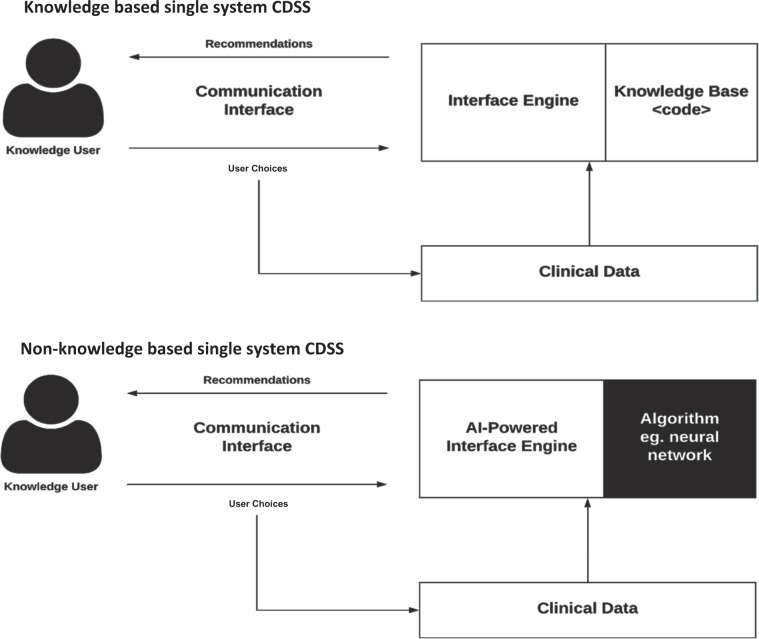
“Non–knowledge-based CDSS require a clinical data source and generate recommendations using artificial intelligence (AI) including machine learning or statistical pattern recognition [3,4].”
van Gils, A. M., Tolonen, A. J., van Harten, A. C., Vigneswaran, S., Barkhof, F., Visser, L. N. C., Koikkalainen, J. R., Herukka, S., Hasselbalch, S. G., Mecocci, P., et al. (2024) · Alzheimer s Research & Therapy · doi:10.1186/s13195-024-01614-5 · Cited by 8
“Another solution is the use of a computerized decision support system (CDSS), an application that analyzes and visualizes all data to help healthcare providers make decisions and enhance patient care [16].”
Cattin, M., Datchoua, A. M., Yakam, V. F., Kenfack, B., Petignat, P., Thiran, J., Schönenberger, K., & Schmidt, N. C. (2025) · JMIR Cancer · doi:10.2196/50124 · Cited by 9
“These barriers include the risk of workflow disruption, dependency on computer literacy, poor data quality, lack of transportability and interoperability (ie, system compatibility), and financial challenges [5].”
Kim, T. J., Suh, J., Park, S.-H., Kim, Y., & Ko, S.-B. (2025) · Neurocritical Care · doi:10.1007/s12028-025-02222-3 · Cited by 7
Tailored self-supervised pretraining improves brain MRI diagnostic models
Huang, X., Wang, Z. W., Zhou, W., Yang, K., Wen, K., Liu, H., Huang, S., & Lyu, M. (2025) · Computerized Medical Imaging and Graphics · doi:10.1016/j.compmedimag.2025.102560 · Cited by 11
Tokgöz, P., Albrecht, J., & Dockweiler, C. (2025) · Frontiers in Digital Health · doi:10.3389/fdgth.2025.1555042 · Cited by 8
Xia, Y., Li, J., Deng, B., Huang, Q., Cai, F., Xie, Y., Sun, X., Shi, Q., Dan, W., Zhan, Y., et al. (2025) · Journal of Medical Internet Research · doi:10.2196/66055 · Cited by 7
“Different from LLMs and routine deep learning systems [23,32-34], the H-SYSTEM is enhanced by a medical domain knowledge graph (called HKG), which means that it can efficiently output both explainable and elaborate clinical decisions (Multimedia Appendix 2).”
The impact of AI feedback on the accuracy of diagnosis, decision switching and trust in radiography
Rainey, C., Bond, R., McConnell, J., Gill, A., Hughes, C., Kumar, D., & McFadden, S. L. (2025) · PLoS ONE · doi:10.1371/journal.pone.0322051 · Cited by 11
Bienvenu, A., Ducrocq, J.-M., Augé-Caumon, M., & Baseilhac, É. (2025) · Journal of Hospital Infection · doi:10.1016/j.jhin.2025.05.001 · Cited by 8
Marceau, M., Dulgarian, S., Cambre, J., Garabedian, P. M., Amato, M. G., Seger, D. L., Volk, L. A., Jackson, G. P., Bates, D. W., Rozenblum, R., et al. (2025) · JMIR Medical Informatics · doi:10.2196/60191 · Cited by 9
“If implemented, some studies emphasized that alert systems apply customizable alert filtration schemes that tailor to the specific, clinically relevant needs of the clinician to limit the number of low-value alerts that contribute to alert fatigue [6-8, 28 , 29 ].”
InfluentialEvaluating the completeness of electronic health records in dental education: a big data study
Tiwari, T., Kondratenko, M., Maliq, N. N., Ong, T. C., Chandrasekaran, S., Kostbade, G., & Giano, Z. D. (2025) · Frontiers in Oral Health · doi:10.3389/froh.2025.1535164 · Cited by 7
O-manee, Y., Ismail, N. S. A., & Arbaoui, B. (2025) · International Journal of Information Technology · doi:10.1007/s41870-025-02591-0 · Cited by 7
Cobuccio, L. G., Faivre, V., Tan, R., Vonlanthen, A., Beynon, F., Barchichat, E., Fresco, A., Girard, Q., Ucak, S., Schaufelberger, S., et al. (2025) · BMC Medical Informatics and Decision Making · doi:10.1186/s12911-025-03077-6 · Cited by 9
“Dynamic algorithms: At present, medAL-suite supports the creation and deployment of knowledge-based CDSS that derive the decision based on a set of pre-defined rules, as opposed to non-knowledge based CDSS that model the decision based on available data [20].”
HELIOT: LLM-Based CDSS for adverse drug reaction management
Vito, G. D., Ferrucci, F., & Angelakis, A. (2025) · Knowledge-Based Systems · doi:10.1016/j.knosys.2025.114184 · Cited by 10
“CDSSs are pivotal in improving patient safety and clinical efficiency through integration with Electronic Medical Records [3].”
InfluentialThe Ideal Human Care in Green ICU: An integrated AI framework for future ICU care
Arabfard, M., Jeffery, A. D., Moradian, S. T., He, H. G., Pandian, V., & Vahedian‐Azimi, A. (2025) · Intensive and Critical Care Nursing · doi:10.1016/j.iccn.2025.104213 · Cited by 7
Comparative analysis of AI and expert evaluations in engineering design pedagogy
Coşkun, T. K., & Altan, E. B. (2025) · PLoS ONE · doi:10.1371/journal.pone.0332715 · Cited by 8
Sepsis Identification Tools: A Narrative Review
Seckel, M. A., & Lejnieks, J. D. (2025) · Critical Care Nurse · doi:10.4037/ccn2025240 · Cited by 7
Moosa, A. S., Seng, J. J. B., & Ng, C. J. (2025) · Journal of Medical Internet Research · doi:10.2196/75551 · Cited by 9
Lin, T.-H., Chung, H., Jian, M., Chang, C.-K., Perng, C., Chang, F., Chen, Y.-H., & Shang, H. (2025) · Implementation Science · doi:10.1186/s13012-025-01453-4 · Cited by 13
“Unlike previous studies, which primarily emphasized clinical outcomes [9, 25, 26], this study uniquely highlights the influence of military institutional policies and generational differences in technological fluency as key facilitators.”
Madzík, P., Falát, L., Jayaraman, R., Sony, M., Antony, J., Zimon, D., & Skýpalová, R. (2025) · Technovation · doi:10.1016/j.technovation.2025.103404 · Cited by 7
Clinical Decision Support Systems for cancer symptom management: A scoping review
Chi, J., Zhong, C., Tang, J., Guo, B., Zhang, Y., Deng, S., Guo, Z., & Wu, Y. (2025) · International Journal of Nursing Studies · doi:10.1016/j.ijnurstu.2025.105317 · Cited by 7
Galdiero, C., Marrapodi, R., Mele, S., Scaletti, A., & Martinez, M. (2025) · BMC Health Services Research · doi:10.1186/s12913-025-13473-3 · Cited by 13
“IT systems supporting processes, and in particular health information systems (HIS), are recognized as fundamental to improving both individual health and provider performance, resulting in improved quality, cost savings, and greater patient involvement in their own well-being [39].”
The role of artificial intelligence in sarcopenia: Advances, applications, and future directions
Yousaf, M. W., Nadeem, A. H., Nadeem, M. F., & Qaisar, R. (2026) · Computational Biology and Chemistry · doi:10.1016/j.compbiolchem.2026.108930 · Cited by 7
Gao, Q., Jin, Y., Sun, Y., Jin, M., Tang, L., Chen, Y., She, Y., & Li, M. (2026) · Diagnostics · doi:10.3390/diagnostics16050752 · Cited by 8
“Conversely, the most successfully adopted AI tools are those designed to implicitly augment, rather than explicitly interrupt, existing workflows [96].”
Explainable AI Applications in Healthcare: A Systematic Review
Eje, O. A., Azim, S. M., & Dehzangi, A. (2026) · Algorithms · doi:10.3390/a19060488 · Cited by 8
Artificial intelligence at the time of COVID-19: who does the lion’s share?
Negrini, D., Danese, E., Henry, B. M., Lippi, G., & Montagnana, M. (2022) · Clinical Chemistry and Laboratory Medicine (CCLM) · doi:10.1515/cclm-2022-0306 · Cited by 7
Evaluating a Prototype Clinical Decision Support Tool for Chronic Pain Treatment in Primary Care
Allen, K. S., Danielson, E. C., Downs, S. M., Mazurenko, O., Diiulio, J., Salloum, R. G., Mamlin, B. W., & Harle, C. A. (2022) · Applied Clinical Informatics · doi:10.1055/s-0042-1749332 · Cited by 7
Wang, G., Zheng, F., Zhang, G., Huang, Y., Ye, Q., Zhang, X., Li, X., Xu, Y., Zhang, X., Zhang, X., et al. (2022) · Pediatric Drugs · doi:10.1007/s40272-022-00521-2 · Cited by 10
“Electronic medical records (EMRs), electronic prescribing (ePrescribing) and associated CPOE, and computerized decision support systems (CDSS) are considered helpful in improving quality in the health system [19–21].”
Background(2022) · International journal of intelligent engineering and systems · doi:10.22266/ijies2022.1231.20 · Cited by 7
Prediction Model for Identifying Factors Associated with Epilepsy in Children with Cerebral Palsy
Bertoncelli, C. M., Dehan, N., Bertoncelli, D., Bagui, S. S., Bagui, S., Costantini, S., & Solla, F. (2022) · Children · doi:10.3390/children9121918 · Cited by 7
Kotyrba, M., Habiballa, H., Volná, E., Jarušek, R., Smolka, P., Prášek, M., Malina, M., Jaremová, V., Vantuch, J., Bar, M., et al. (2022) · Mathematics · doi:10.3390/math11010007 · Cited by 7
PsoPlus: An Integrated Practice Unit for Psoriasis
Hilhorst, N. T., Deprez, E., Roman, E., Borzée, J., Beule, D. D., Dullaers, C., Hoorens, I., & Lambert (2023) · Dermatology · doi:10.1159/000529398 · Cited by 10
EQRbot: A chatbot delivering EQR argument-based explanations
Castagna, F., Garton, A. E., McBurney, P., Parsons, S., Sassoon, I. K., & Sklar, E. I. (2023) · Frontiers in Artificial Intelligence · doi:10.3389/frai.2023.1045614 · Cited by 9
“(2020), is still required to be reliable by showing that its provenance is non-repudiable); and, finally, a substantial cost saving due to the partial automation and optimization (while preferring cheaper, but still effective, treatment options) of the workflow (Sutton et al., 2020).”
BackgroundMarcin, T., Hautz, S. C., Singh, H., Zwaan, L., Schwappach, D. L. B., Krummrey, G., Schauber, S. K., NENDAZ, M. R., Exadaktylos, A. K., Müller, M., et al. (2023) · BMJ Open · doi:10.1136/bmjopen-2023-072649 · Cited by 7
Alotaibi, Y. K., Alnowaiser, N., Harbi, T. J. A., Tourkmani, A. M., & Moharram, M. (2023) · BMJ Open Quality · doi:10.1136/bmjoq-2022-002037 · Cited by 9
Schmelzer, K. P., Liebetrau, D., Kämmerer, W., Meisinger, C., & Hyhlik-Dürr, A. (2023) · Medicina · doi:10.3390/medicina59040780 · Cited by 8
Kloka, J. A., Holtmann, S. C., Nürenberg‐Goloub, E., Piekarski, F., Zacharowski, K. D., & Friedrichson, B. (2023) · JMIR Formative Research · doi:10.2196/43896 · Cited by 9
Khanal, S., Schmidtke, K. A., Talat, U., Turner, A. M., & Vlaev, I. (2023) · Frontiers in Health Services · doi:10.3389/frhs.2023.1155523 · Cited by 7
“That said, as the capabilities of computerised software itself and the people who use that software expand, we suspect that preferences for computerised interventions are likely to remain stable or increase (29, 30).”
BackgroundMitigating cognitive bias with clinical decision support systems: an experimental study
Küper, A., Lodde, G. C., Livingstone, E., Schadendorf, D., & Krämer, N. C. (2023) · Journal of Decision System · doi:10.1080/12460125.2023.2245215 · Cited by 12
“The range of ways CDSS can support physicians is vast: including but not limited to support in form of alarm systems, disease management, prescription, drug control, and diagnostics (Sutton et al., 2020).”
Virtual twin for healthcare management
Polasek, T. M. (2023) · Frontiers in Digital Health · doi:10.3389/fdgth.2023.1246659 · Cited by 9
Sánchez, A. R. P., Grimberg, M. G., Hanssen, M. M. A., Aben, M. O., Jairth, E., Dhoeme, P., Tsang-A-Sjoe, M. W. P., Voskuyl, A. E., Jansen, H. J., & van Vollenhoven, R. (2023) · BMJ Health & Care Informatics · doi:10.1136/bmjhci-2023-100811 · Cited by 8
Ledger, T. S., Brooke-Cowden, K., & Coiera, E. W. (2023) · Journal of the American Medical Informatics Association · doi:10.1093/jamia/ocad193 · Cited by 11
Pereira, A. M., Jácome, C. I. O., Jacinto, T., Amaral, R., Pereira, M. S., Sá‐Sousa, A., Couto, M., Vieira‐Marques, P., Martinho, D., Vieira, A., et al. (2023) · Journal of Medical Internet Research · doi:10.2196/45364 · Cited by 9
“In a knowledge-based CDSS, rules can be made using literature-based, practice-based, or patient-directed evidence [15,70].”
InfluentialBamgboje‐Ayodele, A., McPhail, S., Brain, D., Taggart, R., Burger, M., Bruce, L., Holtby, C., Pradhan, M., Simpson, M., Shaw, T. J., et al. (2023) · BMJ Open · doi:10.1136/bmjopen-2023-075009 · Cited by 7
Nudging a Nation — The Danish NUDGE Trial Concept
Johansen, N. D., Vaduganathan, M., Bhatt, A. S., & Biering‐Sørensen, T. (2023) · NEJM Evidence · doi:10.1056/evidctw2300024 · Cited by 7
Kwon, H., & Lee, D. (2024) · BMJ Open · doi:10.1136/bmjopen-2023-080208 · Cited by 7
“25 Due to the rapid advancement of health information technologies in hospitals, 26 patient acuity score and healthcare professionals’ workload, which are key considerations in NPA, are automatically registered and processed in electronic medical records.”
BackgroundBenke, I., Knierim, M. T., Adam, M. T. P., Beigl, M., Dorner, V., Ebner‐Priemer, U., Herrmann, M., Klarmann, M., Maedche, A., Nafziger, J., et al. (2024) · Business & Information Systems Engineering · doi:10.1007/s12599-024-00861-y · Cited by 11
“…and Magee 2007), in ubiquitous computing (Cou-tinho et al. 2021), and in interactive systems with applications that range from clinical support (Sutton et al. 2020) and health and nursing care (Huter et al. 2020) to everyday assistance at home (Graf et al. 2009) and everyday activities at…”
BackgroundTowards XAI agnostic explainability to assess differential diagnosis for Meningitis diseases
Messai, A., Drif, A., Ouyahia, A., Guechi, M., Rais, M., Kaderali, L., & Cherifi, H. (2024) · Machine Learning Science and Technology · doi:10.1088/2632-2153/ad4a1f · Cited by 9
“However, non-knowledge-based systems face challenges, such as understanding AI’s logic (black boxes) and obtaining high-quality data due to fragmentation, inconsistent formats, and privacy concerns [11].”
BackgroundWang, J., Leung, L. B., JACKSON, N. J., McClean, M., Rose, D. E., Lee, M. L., & Stockdale, S. E. (2024) · BMC Family Practice · doi:10.1186/s12875-024-02410-8 · Cited by 7
“Another mechanism by which PHMTs may reduce provider burnout is by streamlining primary care workflow [45].”
BackgroundGupta, A., Tisdale, R. L., Calma, J., Stafford, R. S., Maron, D. J., Hernandez‐Boussard, T., Ambrosy, A. P., Heidenreich, P. A., & Sandhu, A. T. (2024) · Circulation Heart Failure · doi:10.1161/circheartfailure.123.010718 · Cited by 8
“34 The characteristics of more equitable clinician practices bear emphasizing.”
BackgroundAmici, L. D., van Pelt, M., Mylott, L., Langlieb, M. E., & Nanji, K. C. (2024) · Anesthesia & Analgesia · doi:10.1213/ane.0000000000007058 · Cited by 10
“16,17 Medication-related CDS targets each step of the medication use process to maximize safety.”
Zhang, Z., Cui, H., Xu, R., Xie, Y., Ho, J. C., & Yang, C. (2024) · ACM SIGKDD Conference on Knowledge Discovery and Data Mining (KDD) · doi:10.1145/3637528.3671594 · Cited by 19
“EHRs have played a crucial role in advancing healthcare applications, such as treatment decision support [63] and preventive care [35, 57].”
BackgroundDevi, A., Uttrani, S., Singla, A., Jha, S., Dasgupta, N., Natarajan, S., Punekar, R. S., Pickett, L. A., & Dutt, V. (2024) · International Conference on PErvasive Technologies Related to Assistive Environments (PETRA) · doi:10.1145/3652037.3663922 · Cited by 10
“This manual process is time-consuming, resource-intensive, and susceptible to human biases that can lead to unequal representation of various demographics in clinical research [2, 3].”
BackgroundSulek, R., Robertson, J., Goodall, E., Liew, A. W., Pillar, S. V., Upson, G. S., Whitehouse, A., Wicks, R., & Trembath, D. L. (2024) · Advances in Neurodevelopmental Disorders · doi:10.1007/s41252-024-00410-4 · Cited by 9
“…and artificial intelligence [AI]) have enabled these systems to leverage complex data sets in providing recommendations and clinical insight, with inbuilt logic able to analyse and connect seemingly disparate information to inform decision making (Lysaght et al., 2019; Sutton et al., 2020).”
InfluentialDeng, Z., Wang, Y., Li, G., & Evans, R. D. (2024) · IEEE Transactions on Engineering Management · doi:10.1109/tem.2024.3425438 · Cited by 8
Born, C., Wildmoser, J., Schwarz, R., Böttcher, T. P., Hein, A., & Krcmar, H. (2024) · Procedia Computer Science · doi:10.1016/j.procs.2024.06.348 · Cited by 11
PharmiTech: Addressing Polypharmacy Challenges through AI-Driven Solutions
Martins, A., Vitorino, J., Maia, E., & Praça, I. (2024) · Applied Sciences · doi:10.3390/app14198838 · Cited by 7
Funer, F., Tinnemeyer, S., Liedtke, W., & Salloch, S. (2024) · BMC Medical Ethics · doi:10.1186/s12910-024-01109-w · Cited by 11
“Expectations and requirements for the design of human-AI collaborations in health care contexts have been in the focus of philosophical and ethical publications for a few years now [3, 6, 23–28].”
BackgroundPenicillin Allergy Management in India and Sri Lanka: Current Challenges
Moitra, S., Liyanage, G., Tonkin-Crine, S. K., Powell, N., Jani, Y. H., Dasanayake, D., Badanasinghe, N., Haque, M. Z., Kudagammana, W., Kumar, R., et al. (2025) · Clinical & Experimental Allergy · doi:10.1111/cea.14624 · Cited by 9
Ng, I. K., Morgan, D. J., & Lim, T. K. (2025) · Journal of the Royal Society of Medicine · doi:10.1177/01410768251324822 · Cited by 8
Ansari, R., Rezayi, S., Safaei, A. A., Mollazadeh, R., Rezaei, E., Mafinejad, M. K., Namazi, S., & Mohammadi, K. (2025) · BMC Cardiovascular Disorders · doi:10.1186/s12872-025-04615-w · Cited by 8
“Any tool to support clinical decisions should be carefully evaluated, such as the rigorous evaluations of the development of new drugs and new medical methods [31, 32].”
Dullabh, P., Zott, C., Gauthreaux, N. A., Swiger, J., Lomotan, E. A., & Sittig, D. F. (2025) · Journal of Medical Internet Research · doi:10.2196/68674 · Cited by 8
“CDS developers commonly use the 5 rights [7] as a benchmark for what makes a successful intervention, and several recent assessments of the CDS field have been published [8-10].”
Gao, B. (2025) · Postgraduate Medical Journal · doi:10.1093/postmj/qgaf052 · Cited by 8
The Knowledge Connector decision support system for multiomics-based precision oncology
Hübschmann, D., Kreutzfeldt, S., Roth, B., Glocker, K., Schoop, J., Oeser, L., Hausmann, S., Koch, C., Uhrig, S., Hüllein, J., et al. (2026) · Nature Communications · doi:10.1038/s41467-026-68333-3 · Cited by 9
Metadata
- Authors
- Sutton, R. T., Pincock, D., Baumgart, D. C., Sadowski, D. C., Fedorak, R. N., & Kroeker, K. I.
- Affiliations
- University of Alberta (CA)
- Alberta Health Services (CA)
- Corresponding author
- Kroeker, Karen I.
- ORCID
- Venue
- npj Digital Medicine
- Published
- 2020-02-06
- Volume
- 3
- Issue
- 1
- Pages
- 17-17
- ISSN
- 2398-6352 (ISSN-L)
- PMC
- PMC7005290
- OpenAlex
- W3004612364
- Semantic Scholar
- 2419d6b5e83d6175d31772e40cedbac1936da541
- Cited by
- 3,019
- References
- 112
- Citations by year
- 2026: 632 · 2025: 697 · 2024: 585 · 2023: 534 · 2022: 318 · 2021: 196 · 2020: 54
- FWCI
- 42.03
- Type
- journal article
- Language
- en
- Open access
- gold
- doi.org
- Licence
- cc-by
- creativecommons.org/licenses/by/4.0 (tdm)
- creativecommons.org/licenses/by/4.0 (vor)
- Locations
- npj Digital Medicine (publishedVersion, cc-by)
- PubMed Central (publishedVersion, cc-by)
- PubMed (publishedVersion)
- DOAJ (DOAJ: Directory of Open Access Journals) (submittedVersion, cc-by-sa)
- DOAJ (DOAJ: Directory of Open Access Journals) (submittedVersion)
- Funders
- Canadian Institutes of Health Research
- Topics
- Health Sciences › Health Professions › Health Information Management › Electronic Health Records Systems
- Health Sciences › Medicine › Health Informatics › Artificial Intelligence in Healthcare and Education
- Health Sciences › Medicine › Public Health, Environmental and Occupational Health › Technology and Human Factors in Education and Health
- Keywords
- clinical decision support systems, electronic health records, clinical decision-making, patient outcomes, health care costs, clinical workflow
About these checks
Registry, retraction, Cites and statistics results are computed, not judged, with one exception: a printed reference that no index lists is read once by a model before it counts as a citation error. Claims are extracted by a model and kept only when their quote appears verbatim in the text; each cited source is then checked, with a model’s help, for whether it says what the claim relies on. Those verdicts can be wrong — read the claim’s quote and the cited source before relying on one.
Statistics and arithmetic are recomputed, not judged.
Confidence bands are shown only for fields calibrated on our annotated test set. None is calibrated yet, so no band is shown.
What counts as a claim ›How we measure confidence ›How we check this ›
Are you an author, or do you see a problem with this page? Request a review
Data sources
Bibliographic data: Semantic Scholar, OpenAlex, Crossref.
Contains information from the Semantic Scholar Academic Graph Datasets, made available under the ODC Attribution License (ODC-BY 1.0).
Semantic Scholar’s data is described in: Kinney, R., et al. (2023). The Semantic Scholar Open Data Platform. arXiv:2301.10140.
