

An overview of clinical decision support systems: benefits, risks, and strategies for success
Open accessThe DOI matches its Crossref record; 110 of the 112 references it cites were found in a registry or an index.
Abstract
Computerized clinical decision support systems, or CDSS, represent a paradigm shift in healthcare today. CDSS are used to augment clinicians in their complex decision-making processes. Since their first use in the 1980s, CDSS have seen a rapid evolution. They are now commonly administered through electronic medical records and other computerized clinical workflows, which has been facilitated by increasing global adoption of electronic medical records with advanced capabilities. Despite these advances, there remain unknowns regarding the effect CDSS have on the providers who use them, patient outcomes, and costs. There have been numerous published examples in the past decade(s) of CDSS success stories, but notable setbacks have also shown us that CDSS are not without risks. In this paper, we provide a state-of-the-art overview on the use of clinical decision support systems in medicine, including the different types, current use cases with proven efficacy, common pitfalls, and potential harms. We conclude with evidence-based recommendations for minimizing risk in CDSS design, implementation, evaluation, and maintenance.
Overview
The claims and statistics of this paper haven’t been checked yet.
Free: it reads the open-access text and checks the first 5 claims that cite a source we can check. Create a free account to check every claim.
Integrity signals
Registry
Cites
Statistics
Figures
Verification
Claims the paper makes
The claims and statistics of this paper haven’t been checked yet.
Free: it reads the open-access text and checks the first 5 claims that cite a source we can check. Create a free account to check every claim.
Claims other papers make about this one
Each is checked against this paper’s own text: does it say what the citing paper says it does?
The source backs part of the claim, not all of it — or backs it for a different population, condition or comparison.
In the citing paper
“However, there are many practical problems related to the speed of operation and implementation [106].”
From Survey of Explainable AI Techniques in Healthcare (2023) · cites this paper as [106]
Experimental — accuracy not yet measuredThe source backs part of the claim, not all of it — or backs it for a different population, condition or comparison.
In the citing paper
“These applications extend AI use beyond diagnosis to early warning and clinical decision support [18].”
From Artificial Intelligence in Clinical Decision-Making: A Comprehensive Review of Diagnostic, Prognostic, and Therapeutic Applications, Validation Gaps, Bias, and Deployment Challenges (2026) · cites this paper as [18]
Experimental — accuracy not yet measuredThe source backs part of the claim, not all of it — or backs it for a different population, condition or comparison.
In the citing paper
“Clinical decision support systems are limited by static rule based, and inflexible in responding to changing clinical evidence [2].”
From Multi-Agent Retrieval Augmented Generation for Clinical Decision Support: A Systematic Review and Integrative Conceptual Framework (2026) · cites this paper as [2]
Experimental — accuracy not yet measuredThe source backs part of the claim, not all of it — or backs it for a different population, condition or comparison.
In the citing paper
“Early CDSS implementations were largely rule-based, encoding expert knowledge into deterministic logic that operated within narrowly defined clinical domains [1].”
From Medical AI Agents for Clinical Decision Support: Viewpoint Using the Planning, Action, Reflection, and Memory (PARM) Analytical Lens (2026) · cites this paper as [1]
Experimental — accuracy not yet measuredThe source backs part of the claim, not all of it — or backs it for a different population, condition or comparison.
In the citing paper
“Second, the literature search of AI randomized controlled trials used terminology such as ‘artificial intelligence’, ‘machine learning’ and ‘deep learning’, but not terms such as ‘clinical decision support systems’ and ‘expert systems’, which were more commonly used in the 1990s for technologies underpinned by AI systems and share risks similar to those of recent examples50.”
From Guidelines for clinical trial protocols for interventions involving artificial intelligence: the SPIRIT-AI extension (2020) · cites this paper as [50]
Experimental — accuracy not yet measured
8 more claims about this paper
Create a free account to see every claim other papers make about this one.
Self-check
Percentages, sums and reported differences re-computed from the paper’s own numbers.
The self-check needs the paper’s full text.
Citations
Cites
Dermatologist-level classification of skin cancer with deep neural networks
Esteva, A., Kuprel, B., Novoa, R. A., Ko, J., Swetter, S. M., Blau, H. M., & Thrun, S. (2017) · Nature · doi:10.1038/nature21056 · Cited by 14,362
Gulshan, V., Peng, L., Coram, M., Stumpe, M. C., Wu, D., Narayanaswamy, A., Venugopalan, S., Widner, K., Madams, T., Cuadros, J., et al. (2016) · JAMA · doi:10.1001/jama.2016.17216 · Cited by 7,697 · cited 3×
“60 65 – 68 For example, Google ’ s team trained a deep convolutional neural network (CNN) to detect diabetic retinopathy (blood vessel damage in the eye) from a dataset of 130,000 retinal images with a very high sensitivity and speci fi city.”
BackgroundMethodWhy Don't Physicians Follow Clinical Practice Guidelines?: A Framework for Improvement
Cabana, M. D., Rand, C. S., Powe, N. R., Wu, A. W., Wilson, M. H., Abboud, P.-A. C., & Rubin, H. R. (1999) · JAMA · doi:10.1001/jama.282.15.1458 · Cited by 6,677 · cited 1×
“This is significant because traditional clinical guidelines and care pathways have been shown to be difficult to implement in practice with low clinician adherance.(31,32) The assumption that practitioners will read, internalize, and implement new guidelines has not held true.”
BackgroundDeo, R. C. (2015) · Circulation · doi:10.1161/circulationaha.115.001593 · Cited by 3,466 · cited 1×
“Nonknowledge based CDSS, although a rapidly growing use case for AI in medicine, are rife with challenges including problems understanding the logic that AI uses to produce recommendations (black boxes), and problems with data availability.(9) They have yet to reach widespread implementation.”
BackgroundHannun, A. Y., Rajpurkar, P., Haghpanahi, M., Tison, G. H., Bourn, C., Turakhia, M. P., & Ng, A. Y. (2019) · Nature Medicine · doi:10.1038/s41591-018-0268-3 · Cited by 3,148
Kawamoto, K., Houlihan, C. A., Balas, E. A., & Lobach, D. F. (2005) · BMJ · doi:10.1136/bmj.38398.500764.8f · Cited by 2,703
IBM computer usability satisfaction questionnaires: Psychometric evaluation and instructions for use
Lewis, J. R. (1995) · International Journal of Human-Computer Interaction · doi:10.1080/10447319509526110 · Cited by 2,429
The System Usability Scale: Past, Present, and Future
Lewis, J. R. (2018) · International Journal of Human–Computer Interaction · doi:10.1080/10447318.2018.1455307 · Cited by 1,958
Greenspan, H., van Ginneken, B., & Summers, R. M. (2016) · IEEE Transactions on Medical Imaging · doi:10.1109/tmi.2016.2553401 · Cited by 1,700 · cited 1×
“61 To do so, these technologies make use of advanced pixel recognition and image classi fi cation algorithms, most prominently: deep learning (DL).”
BackgroundA model of inexact reasoning in medicine
Shortliffe, E. H., & Buchanan, B. G. (1975) · Mathematical Biosciences · doi:10.1016/0025-5564(75)90047-4 · Cited by 1,447
Research works printed but not linked: 6
- Omididan Z Hadianfar A The role of clinical decision support systems in healthcare (1980-2010): a systematic review study Jentashapir Sci.-Res Q. 2011 2 125 134
- Turchin, A., Shubina, M. & Gandhi, T. NLP for patient safety: splenectomy and pneumovax. In Proc. AMIA 2010 Annual Symposium (2010).
- Berner Eta S. Clinical Decision Support Systems 2007 New York, NY Springer New York
- From Invisible to Visible: IBM Demos AI to Radiologists. https://www-03.ibm.com/press/us/en/pressrelease/51146.ws. Accessed Aug 2019 (2016).
- Ivan, D. Moving toward a blockchain-based method for the secure storage of patient records. ONC/NIST Use of Blockchain for Healthcare and Research Workshop. Gaithersburg, Maryland, United States: ONC/NIST (2016).
- Harper, B. D. & Norman, K. L. Improving User Satisfaction: The Questionnaire for User Interaction Satisfaction Version 5.5. Proceedings of the 1st Annual Mid-Atlantic Human Factors Conference, (pp. 224–228), Virginia Beach, VA. (1993).
Cited by
Items 101–200 of 1,024
Early Diagnosis of Cardiovascular Diseases in the Era of Artificial Intelligence: An In-Depth Review
Almansouri, N. E., Awe, M., Rajavelu, S., Jahnavi, K., Shastry, R., Hasan, A., Hasan, H., Lakkimsetti, M., AlAbbasi, R. K., Criollo-Gutiérrez, B. D., et al. (2024) · Cureus · doi:10.7759/cureus.55869 · Cited by 112
Finkelstein, J., Gabriel, A. S., Schmer, S., Truong, T., & Dunn, A. S. (2024) · Journal of Medical Systems · doi:10.1007/s10916-024-02104-9 · Cited by 94
“The widespread adoption of EHR systems has promoted the rise to prominence of CDS in healthcare delivery [7].”
BackgroundAckerhans, S., Huynh, T. V., Kaiser, C., & Schultz, C. (2024) · Implementation Science · doi:10.1186/s13012-024-01339-x · Cited by 85
“Health care organizations increasingly implement clinical decision support systems (CDSSs) due to rising treat-ment costs and health care professional staff shortages [1, 2].”
BackgroundInfluentialReal-World Impact of a Pharmacogenomics-Enriched Comprehensive Medication Management Program
Jarvis, J. P., Peter, A. P., Keogh, M., Baldasare, V., Beanland, G. M., Wilkerson, Z. T., Kradel, S., & Shaman, J. A. (2022) · Journal of Personalized Medicine · doi:10.3390/jpm12030421 · Cited by 75
“…empowered by a unifying clinical However, combining PGx testing and CMM services, empowered by a unifying clinical decision support system (CDSS) [28], promises to yield more valuable results by addressing individual patient needs in a more comprehensive fashion than either component can…”
BackgroundMachine learning-based clinical decision support systems for pregnancy care: A systematic review
Du, Y., McNestry, C., Wei, L., Antoniadi, A. M., McAuliffe, F. M., & Mooney, C. (2023) · International Journal of Medical Informatics · doi:10.1016/j.ijmedinf.2023.105040 · Cited by 73
Susanto, A. P., Lyell, D., Widyantoro, B., Berkovsky, S., & Magrabi, F. (2023) · Journal of the American Medical Informatics Association · doi:10.1093/jamia/ocad180 · Cited by 52
Decision-support tools via mobile devices to improve quality of care in primary healthcare settings
Agarwal, S., Glenton, C., Tamrat, T., Henschke, N., Maayan, N., Fønhus, M. S., Mehl, G. L., & Lewin, S. A. (2021) · Cochrane Database of Systematic Reviews · doi:10.1002/14651858.cd012944.pub2 · Cited by 105
“…were published in the 1990s or 2000s (Hunt 1998; Kaplan 2001; Kawamoto 2005), and were primarily focused on the use of CDSS in hospital-based settings (Bright 2012; Hunt 1998; Jaspers 2011; Kaplan 2001; Martínez-Pérez 2014; Sutton 2020; Varghese 2018) and high-income settings (Dreesens 2019).”
BackgroundInfluentialHadweh, P., Niset, A., Salvagno, M., Barajraji, M. A., Hadwe, S. E., Taccone, F. S., & Barrit, S. (2025) · Journal of Clinical Medicine · doi:10.3390/jcm14124026 · Cited by 86
“Achieving this requires a nuanced understanding of clinical processes, decision points, and user interface design tailored to urgent care settings [97,98].”
Knitza, J., Mohn, J., Bergmann, C., Kampylafka, E., Hagen, M., Bohr, D., Morf, H., Araujo, E., Englbrecht, M., Simon, D., et al. (2021) · Arthritis Research & Therapy · doi:10.1186/s13075-021-02498-8 · Cited by 68
“By automating triage decisions, SCs could additionally save money [12, 14] and accelerate the time to correct diagnosis [15], however may also lead to over-diagnosis and over-treatment [16].”
BackgroundAssessing the Usability of a Clinical Decision Support System: Heuristic Evaluation
Cho, H., Keenan, G. M., Madandola, O. O., Santos, F. C. D., Macieira, T. G. R., Bjarnadóttir, R. I., Priola, K., & Lopez, K. D. (2022) · JMIR Human Factors · doi:10.2196/31758 · Cited by 80
“When used as intended, CDSSs provide clinicians easy access to evidence-based information relevant to their decision-making process and can reduce their cognitive burden by minimizing the amount of information they must remember; these benefits enhance work efficiency, improve adherence to clinical guidelines, reduce…”
Chen, W., O’Bryan, C. M., Gorham, G., Howard, K., Balasubramanya, B., Coffey, P., Abeyaratne, A., & Cass, A. (2022) · Implementation Science Communications · doi:10.1186/s43058-022-00326-x · Cited by 74
“Modern computerised CDS systems are data-driven and utilise individual patient data from existing electronic health records (EHRs) [2].”
BackgroundThe Limits of Clinician Vigilance as an AI Safety Bulwark
Adler-Milstein, J., Redelmeier, D. A., & Wachter, R. M. (2024) · JAMA · doi:10.1001/jama.2024.3620 · Cited by 63
Liu, Y., Liu, C., Zheng, J., Xu, C., & Wang, D. (2025) · Journal of Medical Internet Research · doi:10.2196/73374 · Cited by 81
“When AI-CDSS are effectively embedded into doctors’ daily routines, clinicians can more efficiently access and use patient data, receive recommendations that better meet practical needs, and reduce the time spent on redundant data entry, allowing them to focus on clinical decision-making [20].”
Bajgain, B., Lorenzetti, D., Lee, J., & Sauro, K. (2023) · BMJ Open · doi:10.1136/bmjopen-2022-068373 · Cited by 57
Risk Management and Patient Safety in the Artificial Intelligence Era: A Systematic Review
Ferrara, M., Bertozzi, G., Fazio, N. D., Aquila, I., Fazio, A. D., Maiese, A., Volonnino, G., Frati, P., & Russa, R. L. (2024) · Healthcare · doi:10.3390/healthcare12050549 · Cited by 100
“This application is facilitated by increasing diffusion of electronic medical record (EMR) and computerized provider order entry (CPOE) systems [20].”
BackgroundHuang, W., Li, C., Zhou, H.-Y., Yang, H., Liu, J., Liang, Y., Zheng, H., Zhang, S., & Wang, S. (2024) · Nature Communications · doi:10.1038/s41467-024-51749-0 · Cited by 101
“However, extracting meaningful information from radiology reports remains a pressing issueduetotheirhighlysubjectiveandunstructurednature,whichcan vary depending on the individual style of the clinical physician.”
Karpov, O. E., Николаевна, П. Е., Kurkin, S., Александрович, М. В., Gusev, A. V., Shusharina, N. N., & Hramov, A. E. (2023) · International Journal of Environmental Research and Public Health · doi:10.3390/ijerph20075335 · Cited by 72
“We would now call it the clinical decision support system (CDSS) [22].”
BackgroundMedication review and reconciliation in older adults
Beuscart, J., Pelayo, S., Robert, L., Thevelin, S., Marien, S., & Dalleur, O. (2021) · European Geriatric Medicine · doi:10.1007/s41999-021-00449-9 · Cited by 70
A lightweight deep convolutional neural network model for skin cancer image classification
Tuncer, T., Barua, P. D., Tuncer, I., Doğan, Ş., & Acharya, U. R. (2024) · Applied Soft Computing · doi:10.1016/j.asoc.2024.111794 · Cited by 73
Tanguay-Sela, M., Benrimoh, D. A., Popescu, C., Pérez, T., Rollins, C. P. E., Snook, E., Lundrigan, E., Armstrong, C., Perlman, K., Fratila, R., et al. (2021) · Psychiatry Research · doi:10.1016/j.psychres.2021.114336 · Cited by 70
Short-, Mid-, and Long-term Strategies to Manage the Shortage of Iohexol
Grist, T. M., Canon, C. L., Fishman, E. K., Kohi, M. P., & Mossa‐Basha, M. (2022) · Radiology · doi:10.1148/radiol.221183 · Cited by 59
Παπανδρέου, Π., Gioxari, A., Daskalou, E., Grammatikopoulou, M. G., Skouroliakou, M., & Bogdanos, D. P. (2023) · Nutrients · doi:10.3390/nu15030676 · Cited by 76
Systematic AI Support for Decision-Making in the Healthcare Sector: Obstacles and Success Factors
Bertl, M., Ross, P., & Draheim, D. (2023) · Health Policy and Technology · doi:10.1016/j.hlpt.2023.100748 · Cited by 72
Rodrigues, D. A., Fiol-deRoque, M. A., Mateos-Campos, R., Figueiras, A., Herdeiro, M. T., & Roque, F. (2024) · Digital Health · doi:10.1177/20552076231225133 · Cited by 74
“80 Therefore, investment should be directed towards reducing these barriers and enhancing the facilitators when developing tools and with interventions adapted to cultural and sociodemographic differences.”
BackgroundInfluentialSantos, C. S., & Amorim-Lopes, M. (2025) · BMC Medical Research Methodology · doi:10.1186/s12874-025-02463-y · Cited by 49
Machine learning and artificial intelligence: applications in healthcare epidemiology
Hamilton, A. J., Strauss, A. T., Martinez, D. A., Hinson, J. S., Levin, S., Lin, G., & Klein, E. Y. (2021) · Antimicrobial Stewardship & Healthcare Epidemiology · doi:10.1017/ash.2021.192 · Cited by 58
“53,54 To date, ML has proven to be a helpful tool in increasing patient safety, improving the efficiency of clinical management, and reducing healthcare costs.”
BackgroundOng, J. C. L., Jin, L., Elangovan, K., Lim, G. Y. S., Lim, D. Y. Z., Sng, G. G. R., Ke, Y. H., Tung, J. Y. M., Zhong, R. J., Koh, C. M. Y., et al. (2025) · Cell Reports Medicine · doi:10.1016/j.xcrm.2025.102323 · Cited by 58
Salloch, S., & Eriksen, A. (2024) · The American Journal of Bioethics · doi:10.1080/15265161.2024.2353800 · Cited by 51
“The potential pitfalls identified relate to, among other things, the context of patient safety, the fragmentation of clinical workflows, negative impact on user skills (“de-skilling” of physicians) or lack of interoperability (Sutton et al. 2020).”
Sarno, L. D., Caroselli, A., Tonin, G., Graglia, B., Pansini, V., Causio, F. A., Gatto, A., & Chiaretti, A. (2024) · Biomedicines · doi:10.3390/biomedicines12061220 · Cited by 67
“Compared to traditional rule-based CDS systems, AI-implemented CDS do not rely on statistical algorithms and are occasionally defined as a “non-knowledge”-based CDS [67]. statistical algorithms and are occasionally defined as a “non-knowledge”-based [67].”
Mansoor, M. A., & Ibrahim, A. (2025) · Journal of Clinical Medicine · doi:10.3390/jcm14082698 · Cited by 68
“Risk stratification tools powered by AI are increasingly being integrated into clinical decision support systems, providing real-time guidance during patient consultations [26].”
Akbar, S., Lyell, D., & Magrabi, F. (2021) · Journal of the American Medical Informatics Association · doi:10.1093/jamia/ocab123 · Cited by 71
Nong, P., Williamson, A. K., Anthony, D. L., Platt, J. E., & Kardia, S. L. R. (2022) · SSM - Population Health · doi:10.1016/j.ssmph.2022.101092 · Cited by 65
Bakker, T., Klopotowska, J. E., Dongelmans, D. A., Eslami, S., Vermeijden, W., Hendriks, S. H. A., Cate, J. T. M. H. T., Karakus, A., Purmer, I. M., van Bree, S. H. W., et al. (2024) · The Lancet · doi:10.1016/s0140-6736(23)02465-0 · Cited by 64
The Effect of Artificial Intelligence on Patient-Physician Trust: Cross-Sectional Vignette Study
Zondag, A. G. M., Rozestraten, R., Grimmelikhuijsen, S., Jongsma, K. R., van Solinge, W. W., Bots, M. L., Vernooij, R. W. M., & Haitjema, S. (2024) · Journal of Medical Internet Research · doi:10.2196/50853 · Cited by 77
“Non–knowledge-based CDSSs use AI techniques, such as machine learning, for decision support and prediction [7].”
Survivorship after adolescent and young adult cancer: models of care, disparities, and opportunities
Berkman, A. M., Betts, A. C., Beauchemin, M., Parsons, S. K., Freyer, D. R., & Roth, M. E. (2024) · JNCI Journal of the National Cancer Institute · doi:10.1093/jnci/djae119 · Cited by 60
The Heart of Transformation: Exploring Artificial Intelligence in Cardiovascular Disease
Chowdhury, M. A., Rizk, R., Chiu, C., Zhang, J., Scholl, J. L., Bosch, T. J., Singh, A. P., Baugh, L. A., McGough, J. S., Santosh, K., et al. (2025) · Biomedicines · doi:10.3390/biomedicines13020427 · Cited by 67
“…and make predictions from data without explicit programming (Figure Together, AI and ML have demonstrated significant capabilities in biomedical applications, ranging from medical imaging analysis [13] and genomic sequencing [14] to drug discovery [15] and clinical decision support systems [16].”
Corona Hernández, H., Corcoran, C., Achim, A. M., de Boer, J. N., Boerma, T., Brederoo, S. G., Cecchi, G. A., Ciampelli, S., Elvevåg, B., Fusaroli, R., et al. (2023) · Schizophrenia Bulletin · doi:10.1093/schbul/sbac215 · Cited by 56
“Furthermore, along with accessibility to and acceptance of candidate markers by clinicians and patients, 25 any CDSS incorporating NLP markers should achieve expected standards of transparency, trust, and efficient and safe functioning 26 for regulatory approvals before widespread clinical use.”
BackgroundDaley, B. J., Ni’Man, M., Neves, M. R., Huda, M. S. B., Marsh, W., Fenton, N., Hitman, G. A., & McLachlan, S. (2021) · Diabetic Medicine · doi:10.1111/dme.14735 · Cited by 62
Grubov, V., Nazarikov, S. I., Kurkin, S., Павлович, У. Н., Andrikov, D. A., Karpov, O. E., & Hramov, A. E. (2024) · IEEE Access · doi:10.1109/access.2024.3453039 · Cited by 66
“Hence, there is a pressing need for automated tools in epilepsy diagnostics, such as Clinical Decision Support Systems (CDSS) [11], capable of detecting suspicious ‘‘seizure-like’’ episodes [12].”
MethodHealth Care Professionals’ Experience of Using AI: Systematic Review With Narrative Synthesis
Ayorinde, A., Mensah, D. O., Walsh, J., Ghosh, I., Ibrahim, S. A., Hogg, J., Peek, N., & Griffiths, F. (2024) · Journal of Medical Internet Research · doi:10.2196/55766 · Cited by 55
McLamore, E. S., Alocilja, E. C., Gomes, C. L., Gunasekaran, S., Jenkins, D. M., Datta, S., Li, Y., Mao, Y., Nugen, S. R., Reyes-De-Corcuera, J. I., et al. (2021) · Biosensors and Bioelectronics · doi:10.1016/j.bios.2021.113011 · Cited by 62
Choi, A., Choi, S. Y., Chung, K., Chung, H. S., Song, T., Choi, B., & Kim, J. H. (2023) · Scientific Reports · doi:10.1038/s41598-023-35617-3 · Cited by 47
Rh, R. (2021) · Australasian anaesthesia · doi:10.60115/11055/1113 · Cited by 55
Efficiency and Quality of Generative AI–Assisted Radiograph Reporting
Huang, J., Wittbrodt, M. T., Teague, C. N., Karl, E., Galal, G., Thompson, M., Chapa, A. R., Chiu, M.-L., Herynk, B. A., Linchangco, R., et al. (2025) · JAMA Network Open · doi:10.1001/jamanetworkopen.2025.13921 · Cited by 72
Tentori, C. A., Gregorio, C., Robin, M., Gagelmann, N., Gurnari, C., Ball, S., Berrocal, J. C. C., Lanino, L., D’Amico, S., Spreafico, M., et al. (2024) · Journal of Clinical Oncology · doi:10.1200/jco.23.02175 · Cited by 61
Artificial Intelligence in Malnutrition: A Systematic Literature Review
Janssen, S. M. W., Bouzembrak, Y., & Tekinerdoğan, B. (2024) · Advances in Nutrition · doi:10.1016/j.advnut.2024.100264 · Cited by 71
“Some studies included in this review have already started to identify practical steps that allow for deployment of these models [15,68,69].”
BackgroundMethodTsai, M., Chen, K., & Chen, P. (2025) · Journal of the American Heart Association · doi:10.1161/jaha.124.036946 · Cited by 88
“80,95 The ongoing refinement of AI technologies and methodologies will be crucial in realizing the full potential of these tools to improve patient outcomes and overall health care delivery.”
InfluentialMunroe, E. S., Spicer, A. B., Castellví-Font, A., Zalucky, A. A., Dianti, J., Linck, E. J. G., Talisa, V. B., Urner, M., Angus, D. C., Kassis, E. B., et al. (2025) · The Lancet Respiratory Medicine · doi:10.1016/s2213-2600(25)00054-2 · Cited by 64
Levivien, C., Cavagna, P., Grah, A., Buronfosse, A., Courseau, R., Bézie, Y., & Corny, J. (2022) · International Journal of Clinical Pharmacy · doi:10.1007/s11096-021-01366-4 · Cited by 58
“As suggested in a review study of the use of CDSS, a solution to reduce potential harm of CDSS would be to have a CDSS with a programmed algorithm including concomitant medication, laboratory values, patient demographics, administration times that could be as specific as possible [18].”
BackgroundA clinical decision-support system for dengue based on fuzzy cognitive maps
Hoyos, W., Aguilar, J., & Toro, M. (2022) · Health Care Management Science · doi:10.1007/s10729-022-09611-6 · Cited by 57
“[6], these problems could be addressed with the use of clinical decision-support systems (CDSS) based on * Jose Aguilar aguilar@ula.”
BackgroundEvaluating ChatGPT-4’s Diagnostic Accuracy: Impact of Visual Data Integration
Hirosawa, T., Harada, Y., Tokumasu, K., Ito, T., Suzuki, T., & Shimizu, T. (2024) · JMIR Medical Informatics · doi:10.2196/55627 · Cited by 59
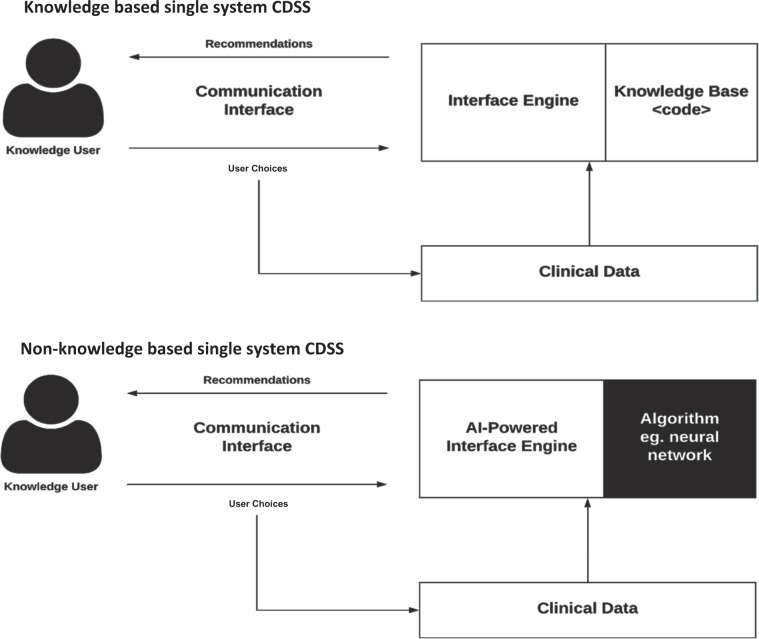
“CDSSs are broadly categorized into 2 types [3]: knowledge-based systems, which are grounded in medical guidelines and expert knowledge; and non–knowledge-based systems, using artificial intelligence (AI) or statistical pattern recognition for clinical data analysis.”
BackgroundInfluence of AI behavior on human moral decisions, agency, and responsibility
Salatino, A., Prével, A., Caspar, É. A., & Bue, S. L. (2025) · Scientific Reports · doi:10.1038/s41598-025-95587-6 · Cited by 83
Liao, X., Yao, C., Jin, F., Zhang, J., & Liu, L. (2024) · BMJ Open · doi:10.1136/bmjopen-2024-084398 · Cited by 50
Performance of multimodal artificial intelligence chatbots evaluated on clinical oncology cases
Chen, D., Huang, R. S., Jomy, J., Wong, P., Yan, M., Croke, J., Tong, D., Hope, A., Eng, L., & Raman, S. (2024) · JAMA Network Open · doi:10.1001/jamanetworkopen.2024.37711 · Cited by 49
Chandler, C., Foltz, P. W., & Elvevåg, B. (2022) · Schizophrenia Bulletin · doi:10.1093/schbul/sbac038 · Cited by 46
Chavez‐Yenter, D., Goodman, M. S., Chen, Y., Chu, X., Bradshaw, R. L., Chambers, R. L., Chan, P. A., Daly, B. M., Flynn, M. C., Gammon, A., et al. (2022) · JAMA Network Open · doi:10.1001/jamanetworkopen.2022.34574 · Cited by 57
Kneyber, M. C. J., Khemani, R. G., Bhalla, A. K., Blokpoel, R. G. T., Pablo Cruces, R., Dahmer, M. K., Émériaud, G., Grunwell, J. R., Ilia, S., Katira, B. H., et al. (2022) · The Lancet Respiratory Medicine · doi:10.1016/s2213-2600(22)00483-0 · Cited by 74
Armando, L. G., Miglio, G., de Cosmo, P., & Cena, C. (2023) · BMJ Health & Care Informatics · doi:10.1136/bmjhci-2022-100683 · Cited by 70
AI-Enhanced Teaching Materials for Education: A Shift Towards Digitalization
Syahrizal, S., Yasmi, F., & Mary, T. (2024) · International Journal of Religion · doi:10.61707/j6sa1w36 · Cited by 64
Comorbidity of patients with noncommunicable diseases in general practice. Eurasian guidelines
Drapkina, O. M., Васильевна, К. А., Калинина, А. М., Avdeev, S. N., Викторович, А. М., Алексеева, Л. И., Almazova, I. I., Andreenko, Е. Y., Antipushina, D. N., Balanova, Y. А., et al. (2024) · CARDIOVASCULAR THERAPY AND PREVENTION · doi:10.15829/1728-8800-2024-3996 · Cited by 65
Lukkien, D., Stolwijk, N. E., Askari, S. I., Hofstede, B. M., Nap, H. H., Boon, W., Peine, A., Moors, E. H. M., & Minkman, M. M. N. (2024) · JMIR Nursing · doi:10.2196/55962 · Cited by 69
“AI-DSSs refer to information systems that acquire relevant data about care needs or processes; present relevant data to users, such as nurses; and possibly translate raw data into actionable information, such as alerts, risk assessments, or recommendations about care strategies [15,19-21].”
BackgroundResultInfluentialLenhof, K., Eckhart, L., Rolli, L.-M., & Lenhof, H. (2024) · Briefings in Bioinformatics · doi:10.1093/bib/bbae379 · Cited by 59
Kovalchuk, S. V., Kopanitsa, G., Derevitskii, I. V., Matveev, G. A., & Savitskaya, D. A. (2022) · Journal of Biomedical Informatics · doi:10.1016/j.jbi.2022.104013 · Cited by 60
“Clinical professionals who use CDSSes often over-rely on system suggestions - even if the suggestions are wrong [2].”
BackgroundneuroGPT-X: toward a clinic-ready large language model
Guo, E., Gupta, M., Sinha, S., Rössler, K., Tatagiba, M. S., Akagami, R., Al‐Mefty, O., Sugiyama, T., Stieg, P. E., Pickett, G. E., et al. (2023) · Journal of neurosurgery · doi:10.3171/2023.7.jns23573 · Cited by 54
Tung, J. Y. M., Gill, S. R., Sng, G. G. R., Lim, D. Y. Z., Ke, Y., Tan, T. F., Jin, L., Elangovan, K., Ong, J. C. L., Abdullah, H. R., et al. (2024) · Journal of Medical Internet Research · doi:10.2196/57721 · Cited by 59
Du, Y., Antoniadi, A. M., McNestry, C., McAuliffe, F. M., & Mooney, C. (2022) · Applied Sciences · doi:10.3390/app122010323 · Cited by 47
Zhan, Y., Ahmad, S. F., Irshad, M., Al‐Razgan, M., Awwad, E. M., Ali, Y. A., & Ahmad, A. Y. A. B. (2023) · Heliyon · doi:10.1016/j.heliyon.2023.e22947 · Cited by 55
“These systems are usually connected to the Internet of Things, the Internet, etc., and have remote access capability [5,6].”
BackgroundRetractedOniani, D., Wu, X., Visweswaran, S., Kapoor, S., Kooragayalu, S., Polanska, K., & Wang, Y. (2024) · IEEE International Conference on Healthcare Informatics (ICHI) · doi:10.1109/ichi61247.2024.00111 · Cited by 87
“Clinical Decision Support (CDS) supports healthcare decision-making by enabling the timely delivery of evidence-based guidelines at the point of care [16, 17].”
BackgroundGiebel, G. D., Raszke, P., Nowak, H., Palmowski, L., Adamzik, M., Heinz, P., Tokic, M. C., Timmesfeld, N., Brunkhorst, F., Wasem, J., et al. (2025) · Journal of Medical Internet Research · doi:10.2196/63377 · Cited by 57
“For example, Sutton et al [7] described the following problem areas in the context of CDSSs: “fragmented workflows,” “alert fatigue and inappropriate alerts,” “impact on user skill,” “dependence on computer literacy,” “system and content maintenance,” “operational impact of poor data quality and…”
Bayor, A. A., Li, J., Yang, I. A., & Varnfield, M. (2025) · Journal of Medical Internet Research · doi:10.2196/63733 · Cited by 46
“For instance, integrating CDSS with personal health record (PHR) systems would allow direct retrieval of patient records, while AI-enabled CDSS could access data from these integrated systems for training, predictive modeling, and decision support [2,95].”
InfluentialDeep Learning Application to Clinical Decision Support System in Sleep Stage Classification
Kim, D., Lee, J., Woo, Y., Jeong, J., Kim, C., & Kim, D. (2022) · Journal of Personalized Medicine · doi:10.3390/jpm12020136 · Cited by 52
Dullabh, P., Sandberg, S. F., Heaney-Huls, K., Hovey, L. S., Lobach, D. F., Boxwala, A. A., Desai, P. J., Berliner, E., Dymek, C., Harrison, M. I., et al. (2022) · Journal of the American Medical Informatics Association · doi:10.1093/jamia/ocac059 · Cited by 52
“Furthermore, we identified limited PC CDS research focused on conditions (eg, behavioral health conditions, pain management) where guidelines emphasized selecting treatments that meet patient’s individual needs and preferences.(12,13) Notably, these conditions lend themselves to SDM, a process where a patient and prov…”
A Systematic Review of Electronic Medical Record Driven Quality Measurement and Feedback Systems
Donnelly, C., Janssen, A. L., Vinod, S. K., Stone, E. C. A., Harnett, P. R., & Shaw, T. J. (2022) · International Journal of Environmental Research and Public Health · doi:10.3390/ijerph20010200 · Cited by 59
Dalvi‐Esfahani, M., Mosharaf‐Dehkordi, M., Leong, L. W., Ramayah, T., & Kanaan-Jebna, A. M. J. (2023) · Technological Forecasting and Social Change · doi:10.1016/j.techfore.2023.122768 · Cited by 53
Perumal, M. K. K., Renuka, R. R., Kumar, S. S., & Natarajan, P. M. (2025) · Frontiers in Oral Health · doi:10.3389/froh.2025.1592428 · Cited by 73
Bakker, T., Abu–Hanna, A., Dongelmans, D. A., Vermeijden, W., Bosman, R. J., de Lange, D. W., Klopotowska, J. E., de Keizer, N. F., Hendriks, S. A., Cate, J. T. M. H. T., et al. (2020) · Journal of Critical Care · doi:10.1016/j.jcrc.2020.11.020 · Cited by 48
“This contextual information could be considered by a CDSS, or presented within the DDI alert [22].”
Murthi, S., Martini, N. D., Falconer, N., & Scahill, S. L. (2024) · Journal of Medical Systems · doi:10.1007/s10916-024-02097-5 · Cited by 62
“This approach also improves clinical decision making and helps shape future health policies by providing information on the benefits and challenges of integrating digital technologies with EHRs, which in turn provides a better framework to address medication harm [24, 25, 27].”
BackgroundInfluentialChoi, A., Lee, K., Hyun, H., Kim, K. J., Ahn, B. E., Lee, K. H., Hahn, S., Choi, S. Y., & Kim, J. H. (2024) · Scientific Reports · doi:10.1038/s41598-024-80268-7 · Cited by 51
A systematic review of clinicians’ acceptance and use of clinical decision support systems over time
Newton, N., Bamgboje‐Ayodele, A., Forsyth, R., Tariq, A., & Baysari, M. T. (2025) · npj Digital Medicine · doi:10.1038/s41746-025-01662-7 · Cited by 62
Virtual Multidisciplinary Tumor Boards: A Narrative Review Focused on Lung Cancer
Gebbia, V., Guarini, A., Piazza, D., Bertani, A., Spada, M., Verderame, F., Sergi, C., Potenza, E., Fazio, I., Blasi, L., et al. (2021) · Pulmonary Therapy · doi:10.1007/s41030-021-00163-8 · Cited by 45
“ical progress and an integral component of today’s health information technologies [39].”
Damiani, G., Altamura, G., Zedda, M., Nurchis, M. C., Aulino, G., Heidar Alizadeh, A., Cazzato, F., Della Morte, G., Caputo, M., Grassi, S., et al. (2023) · BMJ Open · doi:10.1136/bmjopen-2022-065301 · Cited by 44
Implementation costs of hospital-based computerised decision support systems: a systematic review
Donovan, T., Abell, B., Fernando, M., McPhail, S., & Carter, H. E. (2023) · Implementation Science · doi:10.1186/s13012-023-01261-8 · Cited by 55
“CDSS can be knowledge based which involves predetermined rules based on literature, clinical practice or patients, or non-knowledge based which utilises advanced statistical pattern recognition, including artificial intelligence and machine learning, to produce an action or output from the data [2].”
BackgroundGrechuta, K., Shokouh, P., Alhussein, A., Müller‐Wieland, D., Meyerhoff, J., Gilbert, J. D., Purushotham, S., & Rolland, C. (2024) · Interactive Journal of Medical Research · doi:10.2196/58036 · Cited by 60
Popescu, C., Golden, G. M., Benrimoh, D. A., Tanguay-Sela, M., Slowey, D., Lundrigan, E., Williams, J. D., Desormeau, B., Kardani, D., Pérez, T., et al. (2021) · JMIR Formative Research · doi:10.2196/31862 · Cited by 46
“Artificial intelligence (AI) algorithms are increasingly being integrated into CDSSs, permitting predictive analytics to be used by clinicians as part of routine practice [3].”
BackgroundClinical deployment environments: Five pillars of translational machine learning for health
Harris, S. K., Bonnici, T., Keen, T., Lilaonitkul, W., White, M. J., & Swanepoel, N. (2022) · Frontiers in Digital Health · doi:10.3389/fdgth.2022.939292 · Cited by 54
“These include usability analyses, considerations of how well the ML4H/CDSS is integrated into the overall system and implementation studies to identify how best to optimize end-user adoption and engagement (57).”
MethodGholamzadeh, M., Abtahi, H., & Safdari, R. (2023) · Journal of Healthcare Engineering · doi:10.1155/2023/8550905 · Cited by 56
“In the knowledge-based database of CDSS, all of the embedded knowledge is available in the form of IF-Ten rules [2, 14].”
BackgroundMethodInfluentialComparative Evaluation of Diagnostic Accuracy Between Google Bard and Physicians
Hirosawa, T., Mizuta, K., Harada, Y., & Shimizu, T. (2023) · The American Journal of Medicine · doi:10.1016/j.amjmed.2023.08.003 · Cited by 41
AI-Enhanced Healthcare: Not a new Paradigm for Informed Consent
Pruski, M. (2024) · Journal of Bioethical Inquiry · doi:10.1007/s11673-023-10320-0 · Cited by 52
Griffa, D., Natale, A., Merli, Y., Starace, M. V. R., Curti, N., Mussi, M., Castellani, G., Melandri, D., Piraccini, B. M., & Zengarini, C. (2024) · BioMedInformatics · doi:10.3390/biomedinformatics4040126 · Cited by 49
Tsopra, R., Peiffer-Smadja, N., Charlier, C., Campeotto, F., Lemogne, C., Ruszniewski, P., Vivien, B., & Burgun, A. (2023) · International Journal of Medical Informatics · doi:10.1016/j.ijmedinf.2022.104980 · Cited by 42
Applications of Artificial Intelligence in Dental Medicine: A Critical Review
Sitaras, S., Tsolakis, I. A., Gelsini, M., Tsolakis, A. I., Schwendicke, F., Wolf, T. G., & Perlea, P. (2025) · International Dental Journal · doi:10.1016/j.identj.2024.11.009 · Cited by 42
Rainey, C., O'Regan, T., Matthew, J., Skelton, E., Woznitza, N., Chu, K.-Y., Goodman, S., McConnell, J., Hughes, C., Bond, R., et al. (2022) · Radiography · doi:10.1016/j.radi.2022.06.006 · Cited by 41
Chow, R., So, O. W., Im, J. H. B., Chapman, K. R., Orchanian‐Cheff, A., Gershon, A. S., & Wu, R. C. (2023) · International Journal of COPD · doi:10.2147/copd.s418295 · Cited by 53
The Role of Artificial Intelligence in Mental Health: A Review
Shimada, K. (2023) · Science Insights · doi:10.15354/si.23.re820 · Cited by 58
“Furthermore, it is imperative to prioritize the precision and dependability of predictive models in order to mitigate the occurrence of erroneous alerts or over-looked instances (18).”
BackgroundGenerative Artificial Intelligence in Pathology and Medicine: A Deeper Dive
Rashidi, H. H., Pantanowitz, J., Chamanzar, A., Fennell, B. D., Wang, Y., Gullapalli, R. R., Tafti, A. P., Deebajah, M., Albahra, S., Glassy, E. F., et al. (2024) · Modern Pathology · doi:10.1016/j.modpat.2024.100687 · Cited by 57
Gani, I., Litchfield, I. J., Shukla, D., Delanerolle, G., Cockburn, N., & Pathmanathan, A. (2025) · Journal of Medical Internet Research · doi:10.2196/62763 · Cited by 60
“The need for systemwide coordination and collaboration in introducing CRs into primary care, as described in the review’s findings [59,63,66], has also been recognized in other health care settings [104-106].”
Cross-validation of predictive models for functional recovery after post-stroke rehabilitation
Campagnini, S., Liuzzi, P., Mannini, A., Basagni, B., Macchi, C., Carrozza, M. C., & Cecchi, F. (2022) · Journal of NeuroEngineering and Rehabilitation · doi:10.1186/s12984-022-01075-7 · Cited by 47
“…tendency toward evidence-based medicine and data-driven rehabilitation promoted further interest in Clinical Decision Support Systems (CDSS) [6], showing among their functions and advantages the possibility to contain costs, bolster clinical workflow and efficacy, favour patients’ safety,…”
BackgroundMorone, G., De Angelis, L., Martino Cinnera, A., Carbonetti, R., Bisirri, A., Ciancarelli, I., Iosa, M., Negrini, S., Kiekens, C., & Negrini, F. (2025) · Frontiers in Digital Health · doi:10.3389/fdgth.2025.1550731 · Cited by 41
Hu, R., Li, H., Horng, H., Thomasian, N. M., Jiao, Z., Zhu, C., Zou, B., & Bai, H. X. (2022) · Scientific Reports · doi:10.1038/s41598-022-11997-w · Cited by 45
Lee, K. H., Choi, G. H., Yun, J., Choi, J., Goh, M. J., Sinn, D. H., Jin, Y. J., Kim, M. A., Yu, S. J., Jang, S., et al. (2024) · npj Digital Medicine · doi:10.1038/s41746-023-00976-8 · Cited by 53
“A clinical decision support system (CDSS) is an information system designed to improve healthcare delivery by enhancing medical decisions with targeted clinical knowledge, patient information, and other health information 7 – 9 .”
Metadata
- Authors
- Sutton, R. T., Pincock, D., Baumgart, D. C., Sadowski, D. C., Fedorak, R. N., & Kroeker, K. I.
- Affiliations
- University of Alberta (CA)
- Alberta Health Services (CA)
- Corresponding author
- Kroeker, Karen I.
- ORCID
- Venue
- npj Digital Medicine
- Published
- 2020-02-06
- Volume
- 3
- Issue
- 1
- Pages
- 17-17
- ISSN
- 2398-6352 (ISSN-L)
- PMC
- PMC7005290
- OpenAlex
- W3004612364
- Semantic Scholar
- 2419d6b5e83d6175d31772e40cedbac1936da541
- Cited by
- 3,019
- References
- 112
- Citations by year
- 2026: 632 · 2025: 697 · 2024: 585 · 2023: 534 · 2022: 318 · 2021: 196 · 2020: 54
- FWCI
- 42.03
- Type
- journal article
- Language
- en
- Open access
- gold
- doi.org
- Licence
- cc-by
- creativecommons.org/licenses/by/4.0 (tdm)
- creativecommons.org/licenses/by/4.0 (vor)
- Locations
- npj Digital Medicine (publishedVersion, cc-by)
- PubMed Central (publishedVersion, cc-by)
- PubMed (publishedVersion)
- DOAJ (DOAJ: Directory of Open Access Journals) (submittedVersion, cc-by-sa)
- DOAJ (DOAJ: Directory of Open Access Journals) (submittedVersion)
- Funders
- Canadian Institutes of Health Research
- Topics
- Health Sciences › Health Professions › Health Information Management › Electronic Health Records Systems
- Health Sciences › Medicine › Health Informatics › Artificial Intelligence in Healthcare and Education
- Health Sciences › Medicine › Public Health, Environmental and Occupational Health › Technology and Human Factors in Education and Health
- Keywords
- clinical decision support systems, electronic health records, clinical decision-making, patient outcomes, health care costs, clinical workflow
About these checks
Registry, retraction, Cites and statistics results are computed, not judged, with one exception: a printed reference that no index lists is read once by a model before it counts as a citation error. Claims are extracted by a model and kept only when their quote appears verbatim in the text; each cited source is then checked, with a model’s help, for whether it says what the claim relies on. Those verdicts can be wrong — read the claim’s quote and the cited source before relying on one.
Statistics and arithmetic are recomputed, not judged.
Confidence bands are shown only for fields calibrated on our annotated test set. None is calibrated yet, so no band is shown.
What counts as a claim ›How we measure confidence ›How we check this ›
Are you an author, or do you see a problem with this page? Request a review
Data sources
Bibliographic data: Semantic Scholar, OpenAlex, Crossref.
Contains information from the Semantic Scholar Academic Graph Datasets, made available under the ODC Attribution License (ODC-BY 1.0).
Semantic Scholar’s data is described in: Kinney, R., et al. (2023). The Semantic Scholar Open Data Platform. arXiv:2301.10140.
