

An overview of clinical decision support systems: benefits, risks, and strategies for success
Open accessThe DOI matches its Crossref record; 110 of the 112 references it cites were found in a registry or an index.
Abstract
Computerized clinical decision support systems, or CDSS, represent a paradigm shift in healthcare today. CDSS are used to augment clinicians in their complex decision-making processes. Since their first use in the 1980s, CDSS have seen a rapid evolution. They are now commonly administered through electronic medical records and other computerized clinical workflows, which has been facilitated by increasing global adoption of electronic medical records with advanced capabilities. Despite these advances, there remain unknowns regarding the effect CDSS have on the providers who use them, patient outcomes, and costs. There have been numerous published examples in the past decade(s) of CDSS success stories, but notable setbacks have also shown us that CDSS are not without risks. In this paper, we provide a state-of-the-art overview on the use of clinical decision support systems in medicine, including the different types, current use cases with proven efficacy, common pitfalls, and potential harms. We conclude with evidence-based recommendations for minimizing risk in CDSS design, implementation, evaluation, and maintenance.
Overview
The claims and statistics of this paper haven’t been checked yet.
Free: it reads the open-access text and checks the first 5 claims that cite a source we can check. Create a free account to check every claim.
Integrity signals
Registry
Cites
Statistics
Figures
Verification
Claims the paper makes
The claims and statistics of this paper haven’t been checked yet.
Free: it reads the open-access text and checks the first 5 claims that cite a source we can check. Create a free account to check every claim.
Claims other papers make about this one
Each is checked against this paper’s own text: does it say what the citing paper says it does?
The source backs part of the claim, not all of it — or backs it for a different population, condition or comparison.
In the citing paper
“However, there are many practical problems related to the speed of operation and implementation [106].”
From Survey of Explainable AI Techniques in Healthcare (2023) · cites this paper as [106]
Experimental — accuracy not yet measuredThe source backs part of the claim, not all of it — or backs it for a different population, condition or comparison.
In the citing paper
“These applications extend AI use beyond diagnosis to early warning and clinical decision support [18].”
From Artificial Intelligence in Clinical Decision-Making: A Comprehensive Review of Diagnostic, Prognostic, and Therapeutic Applications, Validation Gaps, Bias, and Deployment Challenges (2026) · cites this paper as [18]
Experimental — accuracy not yet measuredThe source backs part of the claim, not all of it — or backs it for a different population, condition or comparison.
In the citing paper
“Clinical decision support systems are limited by static rule based, and inflexible in responding to changing clinical evidence [2].”
From Multi-Agent Retrieval Augmented Generation for Clinical Decision Support: A Systematic Review and Integrative Conceptual Framework (2026) · cites this paper as [2]
Experimental — accuracy not yet measuredThe source backs part of the claim, not all of it — or backs it for a different population, condition or comparison.
In the citing paper
“Early CDSS implementations were largely rule-based, encoding expert knowledge into deterministic logic that operated within narrowly defined clinical domains [1].”
From Medical AI Agents for Clinical Decision Support: Viewpoint Using the Planning, Action, Reflection, and Memory (PARM) Analytical Lens (2026) · cites this paper as [1]
Experimental — accuracy not yet measuredThe source backs part of the claim, not all of it — or backs it for a different population, condition or comparison.
In the citing paper
“Second, the literature search of AI randomized controlled trials used terminology such as ‘artificial intelligence’, ‘machine learning’ and ‘deep learning’, but not terms such as ‘clinical decision support systems’ and ‘expert systems’, which were more commonly used in the 1990s for technologies underpinned by AI systems and share risks similar to those of recent examples50.”
From Guidelines for clinical trial protocols for interventions involving artificial intelligence: the SPIRIT-AI extension (2020) · cites this paper as [50]
Experimental — accuracy not yet measured
8 more claims about this paper
Create a free account to see every claim other papers make about this one.
Self-check
Percentages, sums and reported differences re-computed from the paper’s own numbers.
The self-check needs the paper’s full text.
Citations
Cites
Dermatologist-level classification of skin cancer with deep neural networks
Esteva, A., Kuprel, B., Novoa, R. A., Ko, J., Swetter, S. M., Blau, H. M., & Thrun, S. (2017) · Nature · doi:10.1038/nature21056 · Cited by 14,362
Gulshan, V., Peng, L., Coram, M., Stumpe, M. C., Wu, D., Narayanaswamy, A., Venugopalan, S., Widner, K., Madams, T., Cuadros, J., et al. (2016) · JAMA · doi:10.1001/jama.2016.17216 · Cited by 7,697 · cited 3×
“60 65 – 68 For example, Google ’ s team trained a deep convolutional neural network (CNN) to detect diabetic retinopathy (blood vessel damage in the eye) from a dataset of 130,000 retinal images with a very high sensitivity and speci fi city.”
BackgroundMethodWhy Don't Physicians Follow Clinical Practice Guidelines?: A Framework for Improvement
Cabana, M. D., Rand, C. S., Powe, N. R., Wu, A. W., Wilson, M. H., Abboud, P.-A. C., & Rubin, H. R. (1999) · JAMA · doi:10.1001/jama.282.15.1458 · Cited by 6,677 · cited 1×
“This is significant because traditional clinical guidelines and care pathways have been shown to be difficult to implement in practice with low clinician adherance.(31,32) The assumption that practitioners will read, internalize, and implement new guidelines has not held true.”
BackgroundDeo, R. C. (2015) · Circulation · doi:10.1161/circulationaha.115.001593 · Cited by 3,466 · cited 1×
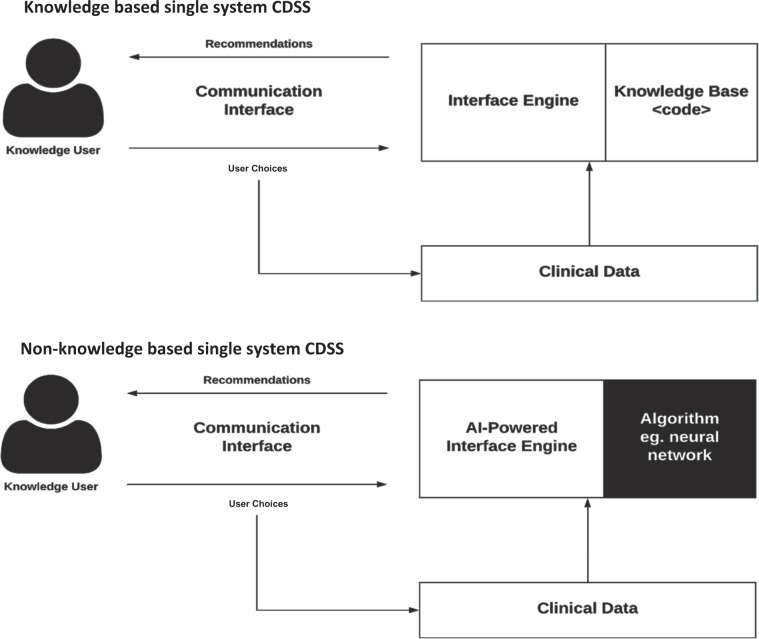
“Nonknowledge based CDSS, although a rapidly growing use case for AI in medicine, are rife with challenges including problems understanding the logic that AI uses to produce recommendations (black boxes), and problems with data availability.(9) They have yet to reach widespread implementation.”
BackgroundHannun, A. Y., Rajpurkar, P., Haghpanahi, M., Tison, G. H., Bourn, C., Turakhia, M. P., & Ng, A. Y. (2019) · Nature Medicine · doi:10.1038/s41591-018-0268-3 · Cited by 3,148
Kawamoto, K., Houlihan, C. A., Balas, E. A., & Lobach, D. F. (2005) · BMJ · doi:10.1136/bmj.38398.500764.8f · Cited by 2,703
IBM computer usability satisfaction questionnaires: Psychometric evaluation and instructions for use
Lewis, J. R. (1995) · International Journal of Human-Computer Interaction · doi:10.1080/10447319509526110 · Cited by 2,429
The System Usability Scale: Past, Present, and Future
Lewis, J. R. (2018) · International Journal of Human–Computer Interaction · doi:10.1080/10447318.2018.1455307 · Cited by 1,958
Greenspan, H., van Ginneken, B., & Summers, R. M. (2016) · IEEE Transactions on Medical Imaging · doi:10.1109/tmi.2016.2553401 · Cited by 1,700 · cited 1×
“61 To do so, these technologies make use of advanced pixel recognition and image classi fi cation algorithms, most prominently: deep learning (DL).”
BackgroundA model of inexact reasoning in medicine
Shortliffe, E. H., & Buchanan, B. G. (1975) · Mathematical Biosciences · doi:10.1016/0025-5564(75)90047-4 · Cited by 1,447
Research works printed but not linked: 6
- Omididan Z Hadianfar A The role of clinical decision support systems in healthcare (1980-2010): a systematic review study Jentashapir Sci.-Res Q. 2011 2 125 134
- Turchin, A., Shubina, M. & Gandhi, T. NLP for patient safety: splenectomy and pneumovax. In Proc. AMIA 2010 Annual Symposium (2010).
- Berner Eta S. Clinical Decision Support Systems 2007 New York, NY Springer New York
- From Invisible to Visible: IBM Demos AI to Radiologists. https://www-03.ibm.com/press/us/en/pressrelease/51146.ws. Accessed Aug 2019 (2016).
- Ivan, D. Moving toward a blockchain-based method for the secure storage of patient records. ONC/NIST Use of Blockchain for Healthcare and Research Workshop. Gaithersburg, Maryland, United States: ONC/NIST (2016).
- Harper, B. D. & Norman, K. L. Improving User Satisfaction: The Questionnaire for User Interaction Satisfaction Version 5.5. Proceedings of the 1st Annual Mid-Atlantic Human Factors Conference, (pp. 224–228), Virginia Beach, VA. (1993).
Cited by
Items 1,001–1,024 of 1,024
Mastrianni, A., Kim, M. S., Sullivan, T. M., Sippel, G. J., Burd, R. S., Gajos, K. Z., & Sarcevic, A. (2025) · Proceedings of the ACM on Human-Computer Interaction · doi:10.1145/3757512 · Cited by 6
Toward Safer Diagnoses: A SEIPS-Based Narrative Review of Diagnostic Errors
Yen, C., Epling, J. W., Rockwell, M., & Vaughn-Cooke, M. (2026) · Diagnostics · doi:10.3390/diagnostics16020347 · Cited by 6
“The goal of the system is not to replace clinicians but to aid them in complex data and scenarios by combining clinical knowledge and technologies, thereby securing diagnostic performance and delivering optimized care [212,213].”
Tokgöz, P., Hafner, J., & Dockweiler, C. (2023) · Das Gesundheitswesen · doi:10.1055/a-2098-3108 · Cited by 5
“Übereinstimmend mit bereits durchgeführten Arbeiten in diesem Bereich [25, 26] wurden die Kompatibilität mit bestehenden Systemen und die Usability, die sich in einer übersichtlichen Benutzeroberfläche und einer einfachen Navigation ausdrückt, als hilfreiche Eigenschaften eines KI-basierten EUS zur Antibiotikavorhersa…”
InfluentialFang, S., Hong, S., Li, Q., Li, P., Coats, T., Zou, B., & Kong, G. (2025) · International Journal of Medical Informatics · doi:10.1016/j.ijmedinf.2024.105680 · Cited by 5
Nabelsi, V., & Plouffe, V. (2024) · JMIR Formative Research · doi:10.2196/60222 · Cited by 5
“Overall, the flow of information, both within and between health care facilities, is deficient, and patients constantly have to repeat their information or undergo unnecessary tests or examinations simply because the information is inaccessible [59-64].”
A Systematic Review and Meta-analysis of Externally Validated Epic Clinical Decision Support Tools
Patel, H., Crusco, S., Hansen, D., Morales, J., Patale, T., Chiuzan, C., Sands, M., Naidich, J., Myers, K., Davidson, K. W., et al. (2026) · Journal of General Internal Medicine · doi:10.1007/s11606-026-10381-y · Cited by 4
Chen, J., Cutrona, S. L., Dharod, A., Bunch, S. C., Foley, K. L., Ostasiewski, B., Hale, E. R., Bridges, A., Moses, A., Donny, E. C., et al. (2023) · JMIR Medical Informatics · doi:10.2196/43097 · Cited by 4
“Third, EHRs have been adopted by most US hospitals [47], and EHR-embedded CDS tools are frequently used to support health care quality improvement [1-6].”
BackgroundData-Informed Case Formulation with the Trier Treatment Navigator
Moggia, D., Schaffrath, J., Bommer, J., Weinmann-Lutz, B., & Lutz, W. (2022) · Revista de Psicoterapia · doi:10.33898/rdp.v33i123.35971 · Cited by 4
“…are designed to be direct aid to clinical decision-making, in which the characteristics of an individual patient are matched to a computerised clinical knowledge database, and patient-specific assessments or recommendations are then presented to the clinician for a decision (Sutton et al., 2020).”
BackgroundMugambiwa, T., & Ndlovu, B. (2026) · Journal of Applied Informatics and Computing · doi:10.30871/jaic.v10i1.11900 · Cited by 4
“Clinical decision support systems are limited by static rule based, and inflexible in responding to changing clinical evidence [2].”
Zhu, Y., Sui, D., Wang, Z., Hu, X., Gu, L., Qi, Y., Wu, T., Wang, L., Wei, Y., Tang, W., et al. (2026) · Proceedings of the 2026 CHI Conference on Human Factors in Computing Systems · doi:10.1145/3772318.3791458 · Cited by 3
“Historically, Clinical Decision Support Systems (CDSS) often functioned as rule-based alert systems, providing reminders or flagging potential drug interactions [6, 45, 61].”
Chen, J., Cutrona, S. L., Dharod, A., Moses, A., Bridges, A., Ostasiewski, B., Foley, K. L., Houston, T. K., iDAPT (Implementation & Informatics Developing Adaptable Processes and Technologies for Cancer Control) Implementation Science Center for Cancer Control, Chen, J., et al. (2025) · JAMIA Open · doi:10.1093/jamiaopen/ooaf050 · Cited by 5
Mixed methods evaluation of a clinical decision support system to reduce variation in healthcare
Pak, A., Robertson, S. T., Nguyen, B. H., Hodgson, T., Sullivan, C., & Burton-Jones, A. (2025) · npj Digital Medicine · doi:10.1038/s41746-025-02141-9 · Cited by 3
“Such mixed results likely re fl ect, in part, the various socio-technical challenges related to integration into work fl ows, clinician buy-in, and training 16 – 18 .”
Dinc, R., & Ardic, N. (2026) · JMIR Medical Informatics · doi:10.2196/92584 · Cited by 2
“Early CDSS implementations were largely rule-based, encoding expert knowledge into deterministic logic that operated within narrowly defined clinical domains [1].”
Lajmi, N., Patel, M., Obery, G., Dorge, A., Sharma, A., Halligan, J., & Lo, E. (2026) · JCO Clinical Cancer Informatics · doi:10.1200/cci-25-00244 · Cited by 2
ClinicalAgents: Multi-Agent Orchestration for Clinical Decision Making with Dual-Memory
Ge, Z., Li, H., Wang, Y., Hu, N., Zhang, C. J., & Li, Q. (2026) · Proceedings of the 32nd ACM SIGKDD Conference on Knowledge Discovery and Data Mining V.2 · doi:10.1145/3770855.3818931 · Cited by 2
“…collect information based on patients’ symptoms in a highly uncertain environment and comprehensively process multimodal data, including electronic health records (EHRs), medical imaging, and laboratory tests, dynamically update differential diagnoses, and align with medical guidelines [36, 38].”
Johnson, D. S. (2025) · arXiv · doi:10.48550/arxiv.2503.03529 · Cited by 2
“Artificial Intelligence (AI) is increasingly being used in high-stakes domains, such as medicine [8, 20, 35] and affective computing [17, 21,28],withtheaimofenhancingdecision-makingthroughHuman-AIcollaboration[18].”
Newton, N., Bamgboje-Ayodele, A., Forsyth, R., Bruce, L., McPhail, S. M., Shaw, T., Naicker, S., Tariq, A., & Baysari, M. T. (2025) · Applied Clinical Informatics · doi:10.1055/a-2581-6236 · Cited by 2
Johnson, D. S. (2026) · Proceedings of the 34th ACM Conference on User Modeling, Adaptation and Personalization · doi:10.1145/3774935.3806657 · Cited by 2
Barrientos, K. M., Castano-Villegas, N., Zea, J., & Velásquez, L. (2026) · doi:10.21203/rs.3.rs-10241865/v1 · Cited by 1
Decision Support System for Early Diagnosis of Heart Diseases
Ahmed, R. W. (2023) · VFAST Transactions on Software Engineering · doi:10.21015/vtse.v11i2.1470 · Cited by 1
Patil, S. S., Jha, G. K., Mohsin, N., Patel, P., Ralte, L., & Shukla, A. K. (2026) · Cureus · doi:10.7759/cureus.109905
“These applications extend AI use beyond diagnosis to early warning and clinical decision support [18].”
EXAIM: Explainable AI Middleware for Real-Time Multi-Agent Clinical Decision Support
Woldesenbet, A. K., & Behrens, A. (2026) · 2026 IEEE 14th International Conference on Healthcare Informatics (ICHI) · doi:10.1109/ichi69079.2026.00109
“Separately, CDSS adoption is sensitive to workflow fit and interruption burden, including alert fatigue [4] and other implementation barriers observed in qualitative syntheses [5].”
Ferro, D. F., Tobias, M., Carr, L. H., Wentz, P., Rodriguez, M., Pitts, C., Kane, E., & Shelov, E. (2026) · Applied Clinical Informatics · doi:10.1055/a-2793-0977
Multimorbidity Measurement Strategies for Predicting Hospital Visits
Neves, B., Moreira, J. M., Gonçalves, S., Cerejo, J., Mota, I., Silva, N. A., Leite, F., & Silva, M. J. (2025) · doi:10.21203/rs.3.rs-6515465/v1
Metadata
- Authors
- Sutton, R. T., Pincock, D., Baumgart, D. C., Sadowski, D. C., Fedorak, R. N., & Kroeker, K. I.
- Affiliations
- University of Alberta (CA)
- Alberta Health Services (CA)
- Corresponding author
- Kroeker, Karen I.
- ORCID
- Venue
- npj Digital Medicine
- Published
- 2020-02-06
- Volume
- 3
- Issue
- 1
- Pages
- 17-17
- ISSN
- 2398-6352 (ISSN-L)
- PMC
- PMC7005290
- OpenAlex
- W3004612364
- Semantic Scholar
- 2419d6b5e83d6175d31772e40cedbac1936da541
- Cited by
- 3,019
- References
- 112
- Citations by year
- 2026: 632 · 2025: 697 · 2024: 585 · 2023: 534 · 2022: 318 · 2021: 196 · 2020: 54
- FWCI
- 42.03
- Type
- journal article
- Language
- en
- Open access
- gold
- doi.org
- Licence
- cc-by
- creativecommons.org/licenses/by/4.0 (tdm)
- creativecommons.org/licenses/by/4.0 (vor)
- Locations
- npj Digital Medicine (publishedVersion, cc-by)
- PubMed Central (publishedVersion, cc-by)
- PubMed (publishedVersion)
- DOAJ (DOAJ: Directory of Open Access Journals) (submittedVersion, cc-by-sa)
- DOAJ (DOAJ: Directory of Open Access Journals) (submittedVersion)
- Funders
- Canadian Institutes of Health Research
- Topics
- Health Sciences › Health Professions › Health Information Management › Electronic Health Records Systems
- Health Sciences › Medicine › Health Informatics › Artificial Intelligence in Healthcare and Education
- Health Sciences › Medicine › Public Health, Environmental and Occupational Health › Technology and Human Factors in Education and Health
- Keywords
- clinical decision support systems, electronic health records, clinical decision-making, patient outcomes, health care costs, clinical workflow
About these checks
Registry, retraction, Cites and statistics results are computed, not judged, with one exception: a printed reference that no index lists is read once by a model before it counts as a citation error. Claims are extracted by a model and kept only when their quote appears verbatim in the text; each cited source is then checked, with a model’s help, for whether it says what the claim relies on. Those verdicts can be wrong — read the claim’s quote and the cited source before relying on one.
Statistics and arithmetic are recomputed, not judged.
Confidence bands are shown only for fields calibrated on our annotated test set. None is calibrated yet, so no band is shown.
What counts as a claim ›How we measure confidence ›How we check this ›
Are you an author, or do you see a problem with this page? Request a review
Data sources
Bibliographic data: Semantic Scholar, OpenAlex, Crossref.
Contains information from the Semantic Scholar Academic Graph Datasets, made available under the ODC Attribution License (ODC-BY 1.0).
Semantic Scholar’s data is described in: Kinney, R., et al. (2023). The Semantic Scholar Open Data Platform. arXiv:2301.10140.
