

An overview of clinical decision support systems: benefits, risks, and strategies for success
Open accessThe DOI matches its Crossref record; 110 of the 112 references it cites were found in a registry or an index.
Abstract
Computerized clinical decision support systems, or CDSS, represent a paradigm shift in healthcare today. CDSS are used to augment clinicians in their complex decision-making processes. Since their first use in the 1980s, CDSS have seen a rapid evolution. They are now commonly administered through electronic medical records and other computerized clinical workflows, which has been facilitated by increasing global adoption of electronic medical records with advanced capabilities. Despite these advances, there remain unknowns regarding the effect CDSS have on the providers who use them, patient outcomes, and costs. There have been numerous published examples in the past decade(s) of CDSS success stories, but notable setbacks have also shown us that CDSS are not without risks. In this paper, we provide a state-of-the-art overview on the use of clinical decision support systems in medicine, including the different types, current use cases with proven efficacy, common pitfalls, and potential harms. We conclude with evidence-based recommendations for minimizing risk in CDSS design, implementation, evaluation, and maintenance.
Overview
The claims and statistics of this paper haven’t been checked yet.
Free: it reads the open-access text and checks the first 5 claims that cite a source we can check. Create a free account to check every claim.
Integrity signals
Registry
Cites
Statistics
Figures
Verification
Claims the paper makes
The claims and statistics of this paper haven’t been checked yet.
Free: it reads the open-access text and checks the first 5 claims that cite a source we can check. Create a free account to check every claim.
Claims other papers make about this one
Each is checked against this paper’s own text: does it say what the citing paper says it does?
The source backs part of the claim, not all of it — or backs it for a different population, condition or comparison.
In the citing paper
“However, there are many practical problems related to the speed of operation and implementation [106].”
From Survey of Explainable AI Techniques in Healthcare (2023) · cites this paper as [106]
Experimental — accuracy not yet measuredThe source backs part of the claim, not all of it — or backs it for a different population, condition or comparison.
In the citing paper
“These applications extend AI use beyond diagnosis to early warning and clinical decision support [18].”
From Artificial Intelligence in Clinical Decision-Making: A Comprehensive Review of Diagnostic, Prognostic, and Therapeutic Applications, Validation Gaps, Bias, and Deployment Challenges (2026) · cites this paper as [18]
Experimental — accuracy not yet measuredThe source backs part of the claim, not all of it — or backs it for a different population, condition or comparison.
In the citing paper
“Clinical decision support systems are limited by static rule based, and inflexible in responding to changing clinical evidence [2].”
From Multi-Agent Retrieval Augmented Generation for Clinical Decision Support: A Systematic Review and Integrative Conceptual Framework (2026) · cites this paper as [2]
Experimental — accuracy not yet measuredThe source backs part of the claim, not all of it — or backs it for a different population, condition or comparison.
In the citing paper
“Early CDSS implementations were largely rule-based, encoding expert knowledge into deterministic logic that operated within narrowly defined clinical domains [1].”
From Medical AI Agents for Clinical Decision Support: Viewpoint Using the Planning, Action, Reflection, and Memory (PARM) Analytical Lens (2026) · cites this paper as [1]
Experimental — accuracy not yet measuredThe source backs part of the claim, not all of it — or backs it for a different population, condition or comparison.
In the citing paper
“Second, the literature search of AI randomized controlled trials used terminology such as ‘artificial intelligence’, ‘machine learning’ and ‘deep learning’, but not terms such as ‘clinical decision support systems’ and ‘expert systems’, which were more commonly used in the 1990s for technologies underpinned by AI systems and share risks similar to those of recent examples50.”
From Guidelines for clinical trial protocols for interventions involving artificial intelligence: the SPIRIT-AI extension (2020) · cites this paper as [50]
Experimental — accuracy not yet measured
8 more claims about this paper
Create a free account to see every claim other papers make about this one.
Self-check
Percentages, sums and reported differences re-computed from the paper’s own numbers.
The self-check needs the paper’s full text.
Citations
Cites
Dermatologist-level classification of skin cancer with deep neural networks
Esteva, A., Kuprel, B., Novoa, R. A., Ko, J., Swetter, S. M., Blau, H. M., & Thrun, S. (2017) · Nature · doi:10.1038/nature21056 · Cited by 14,362
Gulshan, V., Peng, L., Coram, M., Stumpe, M. C., Wu, D., Narayanaswamy, A., Venugopalan, S., Widner, K., Madams, T., Cuadros, J., et al. (2016) · JAMA · doi:10.1001/jama.2016.17216 · Cited by 7,697 · cited 3×
“60 65 – 68 For example, Google ’ s team trained a deep convolutional neural network (CNN) to detect diabetic retinopathy (blood vessel damage in the eye) from a dataset of 130,000 retinal images with a very high sensitivity and speci fi city.”
BackgroundMethodWhy Don't Physicians Follow Clinical Practice Guidelines?: A Framework for Improvement
Cabana, M. D., Rand, C. S., Powe, N. R., Wu, A. W., Wilson, M. H., Abboud, P.-A. C., & Rubin, H. R. (1999) · JAMA · doi:10.1001/jama.282.15.1458 · Cited by 6,677 · cited 1×
“This is significant because traditional clinical guidelines and care pathways have been shown to be difficult to implement in practice with low clinician adherance.(31,32) The assumption that practitioners will read, internalize, and implement new guidelines has not held true.”
BackgroundDeo, R. C. (2015) · Circulation · doi:10.1161/circulationaha.115.001593 · Cited by 3,466 · cited 1×
“Nonknowledge based CDSS, although a rapidly growing use case for AI in medicine, are rife with challenges including problems understanding the logic that AI uses to produce recommendations (black boxes), and problems with data availability.(9) They have yet to reach widespread implementation.”
BackgroundHannun, A. Y., Rajpurkar, P., Haghpanahi, M., Tison, G. H., Bourn, C., Turakhia, M. P., & Ng, A. Y. (2019) · Nature Medicine · doi:10.1038/s41591-018-0268-3 · Cited by 3,148
Kawamoto, K., Houlihan, C. A., Balas, E. A., & Lobach, D. F. (2005) · BMJ · doi:10.1136/bmj.38398.500764.8f · Cited by 2,703
IBM computer usability satisfaction questionnaires: Psychometric evaluation and instructions for use
Lewis, J. R. (1995) · International Journal of Human-Computer Interaction · doi:10.1080/10447319509526110 · Cited by 2,429
The System Usability Scale: Past, Present, and Future
Lewis, J. R. (2018) · International Journal of Human–Computer Interaction · doi:10.1080/10447318.2018.1455307 · Cited by 1,958
Greenspan, H., van Ginneken, B., & Summers, R. M. (2016) · IEEE Transactions on Medical Imaging · doi:10.1109/tmi.2016.2553401 · Cited by 1,700 · cited 1×
“61 To do so, these technologies make use of advanced pixel recognition and image classi fi cation algorithms, most prominently: deep learning (DL).”
BackgroundA model of inexact reasoning in medicine
Shortliffe, E. H., & Buchanan, B. G. (1975) · Mathematical Biosciences · doi:10.1016/0025-5564(75)90047-4 · Cited by 1,447
Research works printed but not linked: 6
- Omididan Z Hadianfar A The role of clinical decision support systems in healthcare (1980-2010): a systematic review study Jentashapir Sci.-Res Q. 2011 2 125 134
- Turchin, A., Shubina, M. & Gandhi, T. NLP for patient safety: splenectomy and pneumovax. In Proc. AMIA 2010 Annual Symposium (2010).
- Berner Eta S. Clinical Decision Support Systems 2007 New York, NY Springer New York
- From Invisible to Visible: IBM Demos AI to Radiologists. https://www-03.ibm.com/press/us/en/pressrelease/51146.ws. Accessed Aug 2019 (2016).
- Ivan, D. Moving toward a blockchain-based method for the secure storage of patient records. ONC/NIST Use of Blockchain for Healthcare and Research Workshop. Gaithersburg, Maryland, United States: ONC/NIST (2016).
- Harper, B. D. & Norman, K. L. Improving User Satisfaction: The Questionnaire for User Interaction Satisfaction Version 5.5. Proceedings of the 1st Annual Mid-Atlantic Human Factors Conference, (pp. 224–228), Virginia Beach, VA. (1993).
Cited by
Items 201–300 of 1,024
Piran, N., Farhadian, M., Soltanian, A. R., & Borzouei, S. (2024) · Scientific Reports · doi:10.1038/s41598-023-47576-w · Cited by 53
Clinical Information Retrieval: A Literature Review
Sivarajkumar, S., Mohammad, H. A., Oniani, D., Roberts, K. E., Hersh, W., Liu, H., He, D., Visweswaran, S., & Wang, Y. (2024) · Journal of Healthcare Informatics Research · doi:10.1007/s41666-024-00159-4 · Cited by 67
An accurate fuzzy rule-based classification systems for heart disease diagnosis
Bahani, K., Moujabbir, M., & Ramdani, M. (2021) · Scientific African · doi:10.1016/j.sciaf.2021.e01019 · Cited by 57
Liuzzi, P., Magliacano, A., Bellis, F. D., Mannini, A., & Estraneo, A. (2022) · Scientific Reports · doi:10.1038/s41598-022-17561-w · Cited by 47
“Such knowledge may result from machine learning (ML)-based methods, trained on patients’ clinical and instrumental data 25 .”
BackgroundMethodSmartphone video nystagmography using convolutional neural networks: ConVNG
Friedrich, M. U., Schneider, E., Bürklein, M., Taeger, J., Hartig, J., Volkmann, J., Peach, R. L., & Zeller, D. (2022) · Journal of Neurology · doi:10.1007/s00415-022-11493-1 · Cited by 46
White, N. M., Carter, H. E., Kularatna, S., Borg, D. N., Brain, D., Tariq, A., Abell, B., Blythe, R. D., & McPhail, S. (2023) · Journal of the American Medical Informatics Association · doi:10.1093/jamia/ocad040 · Cited by 49
“Reported heterogeneity is likely influenced by several factors related to the design and integration of CDSS into clinical workflows, including alert fatigue, administrative workarounds, and overreliance on recommendations.(2,8,16) Contextual factors affecting uptake and engagement with CDSS, and the impact of decisio…”
BackgroundEbirim, G. U., Unigwe, I. F., Oshioste, E. E., Ndubuisi, N. L., Odonkor, B., & Asuzu, O. F. (2024) · International Journal of Science and Research Archive · doi:10.30574/ijsra.2024.11.1.0134 · Cited by 53
“This proactive approach to decision-making empowers accountants to navigate complex financial landscapes with greater foresight and agility (Settembre-Blundo, et. al., 2021, Sutton, et. al., 2020).”
Calisto, F. M., Abrantes, J. M., Santiago, C., Nunes, N. J., & Nascimento, J. C. (2025) · International Journal of Human-Computer Studies · doi:10.1016/j.ijhcs.2025.103444 · Cited by 40
Dramburg, S., Fernández, M. M., Potapova, E., & Matricardi, P. M. (2020) · Frontiers in Immunology · doi:10.3389/fimmu.2020.02116 · Cited by 45
“Apart from technical challenges like an optimal human-computer interface there are particular aspects to be addressed within different methodologies (1).”
BackgroundHeyen, N. B., & Salloch, S. (2021) · BMC Medical Ethics · doi:10.1186/s12910-021-00679-3 · Cited by 48
Treatment Personalization and Precision Mental Health Care: Where are we and where do we want to go?
Moggia, D., Lutz, W., Brakemeier, E., & Bickman, L. (2024) · Administration and Policy in Mental Health and Mental Health Services Research · doi:10.1007/s10488-024-01407-w · Cited by 58
“To achieve the goals of precision mental healthcare, algorithms should be integrated into clinical decision support systems that are user-friendly and accessible to clinicians (Sutton et al., 2020).”
BackgroundChen, W., Howard, K., Gorham, G., O’Bryan, C. M., Coffey, P., Balasubramanya, B., Abeyaratne, A., & Cass, A. (2022) · Journal of the American Medical Informatics Association · doi:10.1093/jamia/ocac110 · Cited by 51
“Full economic evaluations are notoriously scarce in the CDS literature.(3,48,49) Our economic review results are consistent with previous publications that describe inconclusive evidence for costeffectiveness of CDS interventions.”
BackgroundMethodResultMachine learning-based prediction of clinical outcomes after first-ever ischemic stroke
Fast, L., Temuulen, U., Villringer, K., Kufner, A., Ali, H. F., Siebert, E., Huo, S., Piper, S. K., Sperber, P. S., Liman, T., et al. (2023) · Frontiers in Neurology · doi:10.3389/fneur.2023.1114360 · Cited by 43
Amasya, H., Jaju, P. P., Ezhov, M., Gusarev, M., Atakan, C., Sanders, A., Manulius, D., Golitskya, M., Shrivastava, K., Singh, A., et al. (2023) · International Journal of Imaging Systems and Technology · doi:10.1002/ima.22973 · Cited by 43
“45 48 CNN models developed with deep learning have the potential for superior success in image processing.”
BackgroundApplications of Clinical Decision Support Systems in Diabetes Care: Scoping Review
Huang, S., Liang, Y., Li, J., & Li, X. (2023) · Journal of Medical Internet Research · doi:10.2196/51024 · Cited by 43
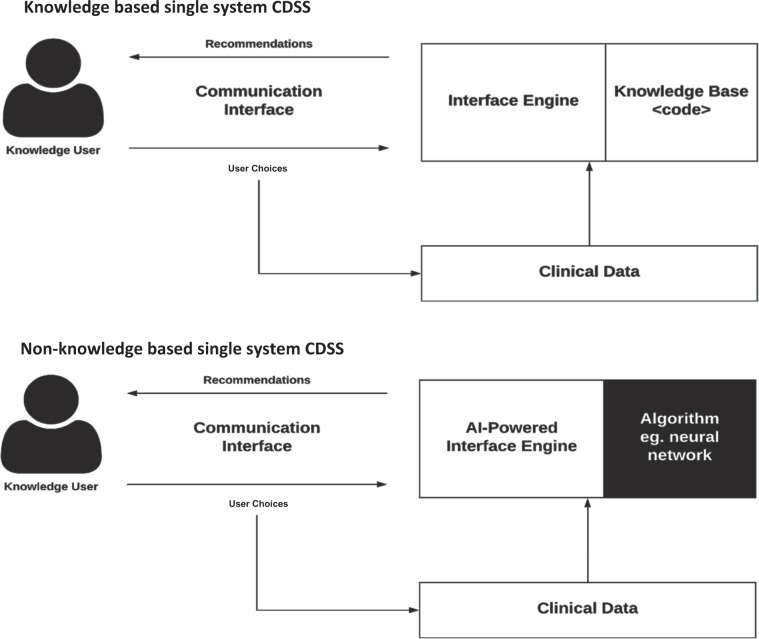
“…CDSSs is based on explicit, predetermined knowledge rules or guidelines [13], whereas non-knowledge-based CDSSs use artificial intelligence (AI) or machine learning (ML) algorithms to transform large-scale health care data into meaningful information for users to make decisions [12,14] .”
Aymar, E. S., Cruz, A., Serra‐Burriel, M., di Lollo, X., Gonçalves, A. Q., Vila, L. C., Monclús-González, M. M., Revuelta‐Muñoz, E. M., Busquet‐Solé, N., Sarriegui‐Domínguez, S., et al. (2021) · Journal of Travel Medicine · doi:10.1093/jtm/taab100 · Cited by 43
“The decrease in test duplication at primary care supports the cost effectiveness of implementing CDSS in screening.(24) ,25 Evidence on infections remains low, with some studies suggesting in an increased screening of hepatitis C by 5-fold.”
BackgroundClinical Decision Support Systems
Teufel, A., & Binder, H. (2021) · Visceral Medicine · doi:10.1159/000519420 · Cited by 50
“This could be further developed up to a closed loop system in which administered medication and identifying by means of barcodes and cross-checking with the available patient information on the prescription is linked [49].”
BackgroundCampagnini, S., Liuzzi, P., Mannini, A., Riener, R., & Carrozza, M. C. (2022) · Journal of NeuroEngineering and Rehabilitation · doi:10.1186/s12984-022-01031-5 · Cited by 48
“This, viewed through the iron triangle framework of healthcare systems, could bolster accessibility, improving quality while cutting costs [1, 2].”
BackgroundLaka, M., Carter, D., Milazzo, A., & Merlin, T. (2022) · Health Policy and Technology · doi:10.1016/j.hlpt.2022.100652 · Cited by 41
Digital health interventions for osteoporosis and post-fragility fracture care
Gupta, A., Maslen, C., Vindlacheruvu, M., Abel, R. L., Bhattacharya, P., Bromiley, P. A., Clark, E., Compston, J. E., Crabtree, N. J., Gregory, J. S., et al. (2022) · Therapeutic Advances in Musculoskeletal Disease · doi:10.1177/1759720x221083523 · Cited by 43
“40 Key limitations to CDSS adoption include the difficulty of integration with legacy and established EHRs and cost-effectiveness.”
BackgroundEgermark, M., Blasiak, A., Remus, A., Sapanel, Y., & Ho, D. (2022) · Advanced Intelligent Systems · doi:10.1002/aisy.202200056 · Cited by 38
Ben‐Assuli, O., Heart, T., Klempfner, R., & Padman, R. (2023) · Decision Support Systems · doi:10.1016/j.dss.2023.113982 · Cited by 43
Bekker, H., Winterbottom, A., Gavaruzzi, T., Finderup, J., & Mooney, A. F. (2023) · Clinical Kidney Journal · doi:10.1093/ckj/sfad172 · Cited by 49
Hirosawa, T., Harada, Y., Mizuta, K., Sakamoto, T., Tokumasu, K., & Shimizu, T. (2024) · JMIR Formative Research · doi:10.2196/59267 · Cited by 38
“CDSSs are categorized into 2 main types: knowledge-based and nonknowledge-based systems [10].”
BackgroundCai, Z., Zhou, K.-Q., & Liao, Z. (2025) · Computers, materials & continua/Computers, materials & continua (Print) · doi:10.32604/cmc.2025.067994 · Cited by 68
Knitza, J., Tascilar, K., Gruber, E., Kaletta, H., Hagen, M., Liphardt, A.-M., Schenker, H., Krusche, M., Wacker, J., Kleyer, A., et al. (2021) · Arthritis Research & Therapy · doi:10.1186/s13075-021-02616-6 · Cited by 38
Asmar, M. L. E., Dharmayat, K., Vallejo‐Vaz, A. J., Irwin, R., & Mastellos, N. (2021) · BMJ Open · doi:10.1136/bmjopen-2021-054659 · Cited by 42
Automated prediction of low ferritin concentrations using a machine learning algorithm
Kurstjens, S., de Bel, T., van der Horst, A., Kusters, R., Krabbe, J. G., & van Balveren, J. A. (2022) · Clinical Chemistry and Laboratory Medicine (CCLM) · doi:10.1515/cclm-2021-1194 · Cited by 41
Lyu, K., Tian, Y., Shang, Y., Zhou, T., Yang, Z., Liu, Q., Yao, X., Zhang, P., Chen, J., & Li, J. (2023) · Journal of Biomedical Informatics · doi:10.1016/j.jbi.2023.104298 · Cited by 48
Responsible cognitive digital clones as decision-makers: a design science research study
Golovianko, M., Gryshko, S., Terziyan, V., & Tuunanen, T. (2023) · European Journal of Information Systems · doi:10.1080/0960085x.2022.2073278 · Cited by 36
“…the workload because of fragmentation of workflows, excessive/unimportant alerts, dependence on the technological proficiency of users, the need for permanent maintenance, the operational impact of poor data quality and information incorrectness, and interoperability issues (Sutton et al., 2020).”
BackgroundRevolutionary Potential of ChatGPT in Constructing Intelligent Clinical Decision Support Systems
Liao, Z., Wang, J., Shi, Z., Lu, L., & Tabata, H. (2023) · Annals of Biomedical Engineering · doi:10.1007/s10439-023-03288-w · Cited by 42
Ng, H. J. H., Kansal, A., Abdul Naseer, J. F., Hing, W. C., Goh, C. J. M., Poh, H., D’souza, J. L. A., Lim, E. L., & Tan, G. (2023) · JAMIA Open · doi:10.1093/jamiaopen/ooad056 · Cited by 37
“One important component of the EMR and CPOE systems is the clinical decision support (CDS).(1) CDS comes in the form of computerized alerts, and is provided in various ways, such as interruptive “pop-up” alerts, information displays, links and targeted highlighting of relevant data.”
SemEval-2023 Task 7: Multi-Evidence Natural Language Inference for Clinical Trial Data
Jullien, M., Valentino, M., Frost, H., O’Regan, P., Landers, D., & Freitas, A. (2023) · International Workshop on Semantic Evaluation (SemEval) · doi:10.18653/v1/2023.semeval-1.307 · Cited by 91
Innovating Personalized Nephrology Care: Exploring the Potential Utilization of ChatGPT
Miao, J., Thongprayoon, C., Suppadungsuk, S., Garcia Valencia, O. A., Qureshi, F., & Cheungpasitporn, W. (2023) · Journal of Personalized Medicine · doi:10.3390/jpm13121681 · Cited by 36
Mooney, K. H., Gullatte, M. M., Iacob, E., Alekhina, N., Nicholson, B. L., Sloss, E. A., Lloyd, J. L. E., Moraitis, A. M., & Donaldson, G. W. (2024) · JAMA Network Open · doi:10.1001/jamanetworkopen.2024.33153 · Cited by 43
Ratta, R., Sodhi, J., & Saxana, U. (2025) · Electronic Journal of Knowledge Management · doi:10.34190/ejkm.23.1.3499 · Cited by 43
Laere, S. V., Muylle, K. M., & Cornu, P. (2021) · International Journal of Health Policy and Management · doi:10.34172/ijhpm.2021.144 · Cited by 38
Hughes, J. E., Russo, V., Walsh, C. A., Menditto, E., Bennett, K., & Cahir, C. (2021) · Drugs & Aging · doi:10.1007/s40266-021-00898-8 · Cited by 37
“However, this technology often has varying sensitivity and specificity [48], which results in multiple alerts, and consequently ‘alert fatigue’ [49].”
BackgroundPharmacogenomic Clinical Decision Support: A Scoping Review
Smith, D. M., Wake, D. T., & Dunnenberger, H. M. (2022) · Clinical Pharmacology & Therapeutics · doi:10.1002/cpt.2711 · Cited by 45
Zha, H., Liu, K., Tang, T., Yin, Y., Dou, B., Jiang, L., Yan, H., Tian, X., Wang, R., & Xie, W. (2022) · BMC Medical Informatics and Decision Making · doi:10.1186/s12911-022-01958-8 · Cited by 44
“It is believed that the use of CDSS is dependent on computer literacy and lack of technical proficiency can be hindering [18].”
BackgroundInfluentialDeveloping learning health systems in the UK: Priorities for action
Hardie, T., Horton, T., Thornton-Lee, N., Home, J., & Pereira, P. (2022) · doi:10.37829/hf-2022-i06 · Cited by 49
Yang, Z., Yao, Z., Tasmin, M., Vashisht, P., Jang, W. S., Ouyang, F., Wang, B., Berlowitz, D., & Yu, H. (2023) · medRxiv · doi:10.1101/2023.10.26.23297629 · Cited by 36
Baron, R., & Haick, H. (2024) · ACS Sensors · doi:10.1021/acssensors.4c00636 · Cited by 41
Kabir, M. S., Kurkin, S., Portnova, G. V., Martynova, O., Wang, Z., & Hramov, A. E. (2024) · Chaos Solitons & Fractals · doi:10.1016/j.chaos.2024.115123 · Cited by 43
Tay, Y. X., Foley, S. J., Killeen, R. P., Ong, M. E. H., Chen, R. C., Chan, L. P., Mak, M. S., & McNulty, J. P. (2024) · European Radiology · doi:10.1007/s00330-024-10938-7 · Cited by 44
“The results of our review were consistent with Sutton et al [56] comprehensive study looking at the utilisation of CDSS in the fi eld of medicine.”
Baron, J. M., Huang, R., McEvoy, D. S., & Dighe, A. S. (2021) · JAMIA Open · doi:10.1093/jamiaopen/ooab006 · Cited by 42
Ackermann, K., Baker, J., Green, M., Fullick, M., Varinli, H., Westbrook, J. I., & Li, L. (2022) · Journal of Medical Internet Research · doi:10.2196/31083 · Cited by 42
“…past 10 years, CCDS technology has rapidly expanded, with two distinct approaches emerging: knowledge-based CCDS systems programmed with predefined rules derived from established clinical knowledge and adaptive CCDS systems using artificial intelligence and machine learning techniques [21,23,24].”
Dhaarani, R., & Reddy, M. K. (2025) · Intelligence-Based Medicine · doi:10.1016/j.ibmed.2025.100251 · Cited by 46
AI-Supported Shared Decision-Making (AI-SDM): Conceptual Framework
As’ad, M., Faran, N., & Joharji, H. (2025) · JMIR AI · doi:10.2196/75866 · Cited by 50
“Historically, clinical decision-making relied on human cognition, later supplemented by early rule-based or probabilistic clinical decision support systems offering limited reasoning capabilities [4,11].”
Kriegová, E., Kudělka, M., Radvanský, M., & Gallo, J. (2021) · Journal of Translational Medicine · doi:10.1186/s12967-021-02714-8 · Cited by 39
Multi-Disease Detection in Retinal Imaging Based on Ensembling Heterogeneous Deep Learning Models
Müller, D., Soto‐Rey, I., & Krämer, F. (2021) · Studies in health technology and informatics · doi:10.3233/shti210537 · Cited by 43
Vijayakumar, S., Lee, V. V., Leong, Q. Y., Hong, S. J., Blasiak, A., & Ho, D. (2023) · JMIR Human Factors · doi:10.2196/48476 · Cited by 34
“Administered through electronic medical records and other computerized workflows, a CDSS has been established to improve clinical practices [1].”
Harmonizing the post-analytical phase: focus on the laboratory report
Plebani, M. (2024) · Clinical Chemistry and Laboratory Medicine (CCLM) · doi:10.1515/cclm-2023-1402 · Cited by 41
Waheed, M. A., & Liu, L. (2024) · JMIR AI · doi:10.2196/40781 · Cited by 43
“Moreover, these systems helps physicians to adhere to clinical guidelines, order and interpret laboratory results, issue prompts and alerts for abnormal results, suggest follow-up actions, render treatment reminders and provide support for clinical and diagnostic coding [32].”
BackgroundUnveiling GPT-4V's hidden challenges behind high accuracy on USMLE questions: Observational Study
Yang, Z., Yao, Z., Tasmin, M., Vashisht, P., Jang, W. S., Ouyang, F., Wang, B., McManus, D. D., Berlowitz, D. R., & Yu, H. Q. (2025) · Journal of Medical Internet Research · doi:10.2196/65146 · Cited by 51
“Computer-assisted clinical diagnostic support systems (CDSSs) endeavor to enhance clinicians’ decisions with patient information and clinical knowledge [2].”
Objective score from initial interview identifies patients with probable dissociative seizures
Kerr, W. T., Janio, E. A., Chau, A. M., Braesch, C. T., Le, J. M., Hori, J. M., Patel, A. B., Gallardo, N. L., Allas, C. H., Karimi, A. H., et al. (2020) · Epilepsy & Behavior · doi:10.1016/j.yebeh.2020.107525 · Cited by 38
“We favor the RFE model because it minimizes user-fatigue through minimizing the number of entries in the DSLS [46].”
MethodEvaluation of a clinical decision support system for rare diseases: a qualitative study
Schaaf, J., Sedlmayr, M., Sedlmayr, B., Prokosch, H.-U., & Storf, H. (2021) · BMC Medical Informatics and Decision Making · doi:10.1186/s12911-021-01435-8 · Cited by 41
Machine learning in deep brain stimulation: A systematic review
Peralta, M., Jannin, P., & Baxter, J. S. H. (2021) · Artificial Intelligence in Medicine · doi:10.1016/j.artmed.2021.102198 · Cited by 45
Heuristics in the delivery room
Singh, M. (2021) · Science · doi:10.1126/science.abc9818 · Cited by 42
Rushlow, D. R., Croghan, I. T., Inselman, J. W., Thacher, T. D., Friedman, P. A., Yao, X., Pellikka, P. A., Lopez-Jimenez, F., Bernard, M. E., Barry, B. A., et al. (2022) · Mayo Clinic Proceedings · doi:10.1016/j.mayocp.2022.04.008 · Cited by 33
“In general, computer literacy is an important predictor in the successful adoption of clinical decision support tools and AI-enabled tools may require even higher technical proficiency.(25,26) We hypothesized that early adopters would be younger and have less complex patient panels.”
BackgroundTanya, S. M., Nguyen, A. X.-L., Buchanan, S., & Jackman, C. S. (2022) · Ophthalmology Science · doi:10.1016/j.xops.2022.100231 · Cited by 40
“it through a standardized system of rules—such as a decision tree algorithm—to produce an 99 output that may be used to augment clinical decisions.(8) 100 Within the Canadian healthcare system, cloud-based CDSS represent an opportunity to 101 enhance communication between referring providers and ophthalmologists.”
BackgroundMethodFrisinger, A., & Papachristou, P. (2023) · BMC Family Practice · doi:10.1186/s12875-023-02024-6 · Cited by 43
“However, the lack of understanding how AI comes to its decision [24], the need of additional training [25], new equipment [26], and other costs [25] constitute barriers for clinical adoption of AI based CDSS.”
BackgroundChen, C., Chen, Y.-L., Scholl, J., Yang, H., & Li, Y. (2023) · Computer Methods and Programs in Biomedicine · doi:10.1016/j.cmpb.2023.107869 · Cited by 41
Azadi, A., & García‐Peñalvo, F. J. (2025) · JMIR Human Factors · doi:10.2196/69333 · Cited by 46
“Although the gradual formation and evolution of CDSS technology began in 1990 [14], HCI elements have gained significant attention in medical settings since the 1990s, with increasing emphasis on usability, UX, and interface design in health care technology [86].”
Large language models for clinical decision support in gastroenterology and hepatology
Wiest, I. C., Bhat, M., Clusmann, J., Schneider, C. V., Jiang, X., & Kather, J. N. (2025) · Nature Reviews Gastroenterology & Hepatology · doi:10.1038/s41575-025-01108-1 · Cited by 50
“They struggled to support the dynamic decision making in gastroenterology and hepatology and to integrate patient-specific context 12,13 .”
Mittermaier, M., Raza, M., & Kvedar, J. C. (2023) · npj Digital Medicine · doi:10.1038/s41746-023-00889-6 · Cited by 32
Levin, D. R., Steller, J., Anderson, A., Lemery, J., Easter, B., Hilmers, D. C., & Lehnhardt, K. R. (2023) · IEEE Open Journal of Engineering in Medicine and Biology · doi:10.1109/ojemb.2023.3255513 · Cited by 30
“Such tools are already integrated into many terrestrial electronic medical records for similar reasons [30], [31].”
BackgroundPumplun, L., Peters, F., Gawlitza, J. F., & Buxmann, P. (2023) · Journal of the Association for Information Systems · doi:10.17705/1jais.00820 · Cited by 60
TiWS-iForest: Isolation forest in weakly supervised and tiny ML scenarios
Barbariol, T., & Susto, G. A. (2022) · Information Sciences · doi:10.1016/j.ins.2022.07.129 · Cited by 34
Hurvitz, N., & Ilan, Y. (2023) · Clinics and Practice · doi:10.3390/clinpract13040089 · Cited by 37
Huang, Z., George, M. M., Tan, Y.-R., Natarajan, K., Devasagayam, E., Tay, E., Manesh, A., Varghese, G. M., Abraham, O. C., Zachariah, A., et al. (2023) · Journal of Global Antimicrobial Resistance · doi:10.1016/j.jgar.2023.08.016 · Cited by 43
“I’m afraid I can’t let you do that, Doctor”: meaningful disagreements with AI in medical contexts
Kempt, H., Heilinger, J.-C., & Nagel, S. K. (2023) · AI & SOCIETY · doi:10.1007/s00146-022-01418-x · Cited by 31
“Specifying this distinction for diagnostic contexts, examples for C-AI may be a chatbot guiding the anamnesis of patients, or an algorithm helping to take and sort the relevant medical images of a patient, which we call knowledge-based evidence (Sutton et al 2020).”
BackgroundMissing-modality enabled multi-modal fusion architecture for medical data
Wang, M., Fan, S., Li, Y., Xie, Z., & Chen, H. (2025) · Journal of Biomedical Informatics · doi:10.1016/j.jbi.2025.104796 · Cited by 31
Kim, Y. K., Seo, W.-D., Lee, S. J., Koo, J. H., Kim, G. C., Song, H. S., & Lee, M. (2024) · Journal of Medical Internet Research · doi:10.2196/62890 · Cited by 37
“To enhance the quality and speed of medical services, CA prediction and warning systems have been developed for use in intensive care units (ICUs) within the field of CDSSs [6].”
BackgroundMethodInfluentialContext factors in clinical decision-making: a scoping review
Schuler, K., Jung, I.-C., Zerlik, M., Hahn, W., Sedlmayr, M., & Sedlmayr, B. (2025) · BMC Medical Informatics and Decision Making · doi:10.1186/s12911-025-02965-1 · Cited by 42
“However, the effectiveness can vary considerably if the systems are not tailored to the specific context of use [4].”
InfluentialDerksen, C., Walter, F. M., Akbar, A. B., Parmar, A. V. E., Saunders, T. S., Round, T., Rubin, G. P., & Scott, S. E. (2025) · Implementation Science · doi:10.1186/s13012-025-01445-4 · Cited by 40
Howard, A., Reza, N., Green, P. L., Mo, Y., Duffy, E. M., Mwandumba, H. C., Gerada, A., & Hope, W. W. (2025) · The Lancet Infectious Diseases · doi:10.1016/s1473-3099(25)00313-5 · Cited by 41
Effects of Ionizing Radiation on Flora Ten Years after the Fukushima Dai-ichi Disaster
Ludovici, G. M., Chierici, A., de Souza, S. O., d’Errico, F., Iannotti, A., & Malizia, A. (2022) · Plants · doi:10.3390/plants11020222 · Cited by 35
A survey on AI and decision support systems in psychiatry – Uncovering a dilemma
Bertl, M., Ross, P., & Draheim, D. (2022) · Expert Systems with Applications · doi:10.1016/j.eswa.2022.117464 · Cited by 39
Bartels, R., Dudink, J., Haitjema, S., Oberski, D. L., & Veen, A. V. '. (2022) · Frontiers in Digital Health · doi:10.3389/fdgth.2022.942588 · Cited by 36
von Wedel, P., Hagist, C., Liebe, J.-D., Esdar, M., Hübner, U., & Pross, C. M. (2022) · Journal of Medical Internet Research · doi:10.2196/40124 · Cited by 39
“However, the adoption of promising HIT, such as electronic health records (EHRs), computerized clinical decision support systems, or telemedical tools, continues to lag expectations, particularly in Western Europe [5-7].”
Zhdanovich, Y., Ackermann, J., Wild, P. J., Köllermann, J. W., Bankov, K., Döring, C., Flinner, N., Reis, H., Wenzel, M., Hoeh, B., et al. (2023) · BMC Bioinformatics · doi:10.1186/s12859-022-05124-9 · Cited by 33
“Clinical decision support systems aim to assist physicians and other specialists in the analysis of patient’s data and diagnosis of diseases [5].”
BackgroundWeidener, L., & Fischer, M. (2024) · JMIR AI · doi:10.2196/51204 · Cited by 39
“This can lead to disparities in diagnostic accuracy and effectiveness, potentially harming certain groups of patients [16,27].”
BackgroundInfluentialGillner, S. (2024) · Social Science & Medicine · doi:10.1016/j.socscimed.2023.116442 · Cited by 30
Bankuoru Egala, S., & Liang, D. (2024) · European Journal of Information Systems · doi:10.1080/0960085x.2023.2251927 · Cited by 30
“Whereas these applications present an array of benefits for medical professionals and patients, studies have shown how mCDS applications pose some challenges to clinical decision-making (Chopdar et al., 2018; Festic, 2020; Festic et al., 2021; Grote & Berens, 2020; Sutton et al., 2020).”
Gholamzadeh, M., Abtahi, H., & Safdari, R. (2022) · BMC Medical Research Methodology · doi:10.1186/s12874-022-01823-2 · Cited by 32
“Implementing clinical decision support tools (CDSS) based on developed ML models could support healthcare providers to deliver optimal care to patients [53].”
BackgroundDesign and Simulation of an Edge Compute Architecture for IoT-Based Clinical Decision Support System
Kumar, R. H., & Rajaram, B. (2024) · IEEE Access · doi:10.1109/access.2024.3380906 · Cited by 34
“…and wearable sensor-based touch-free sensor-based RF signal-based With regards to the decision-making algorithms used in CDSS, Sutton et al. [1] classified CDSS into two types : knowledge-based CDSS, which uses if-then-else rules based on expert knowledge AI-based CDSS, which is known as…”
BackgroundMethodVakili, S. T., Haywood, D., Kirk, D., Abdou, A. M., Gopalakrishnan, R., Sadeghi, S., Guedes, H., Tan, C. J., Thamm, C., Bernard, R., et al. (2024) · JCO Clinical Cancer Informatics · doi:10.1200/cci.24.00119 · Cited by 43
Madandola, O. O., Bjarnadóttir, R. I., Yao, Y., Ansell, M., Santos, F. C. D., Cho, H., Lopez, K. D., Macieira, T. G. R., & Keenan, G. M. (2023) · Journal of the American Medical Informatics Association · doi:10.1093/jamia/ocad188 · Cited by 37
Clinical decision support systems in orthodontics: A narrative review of data science approaches
Turkestani, N. N. A., Bianchi, J., Deleat‐Besson, R., Le, C., Li, T., Prieto, J. C., Gurgel, M., Ruellas, A. C. O., Massaro, C. D. S., Castillo, A. A.-D., et al. (2021) · Orthodontics and Craniofacial Research · doi:10.1111/ocr.12492 · Cited by 44
“Artificial neural networks and genetic algorithms compose the main types of non-knowledge-based CDSSs. 13,14”
BackgroundUmaMaheswaran, S. K., Kaur, G., Pankajam, A., Firos, A., Vashistha, P., Tripathi, V., & Mohammed, H. S. (2022) · Journal of Food Quality · doi:10.1155/2022/1447326 · Cited by 36
RetractedSchütze, D., Holtz, S., Neff, M. C., Köhler, S. M., Schaaf, J., Frischen, L. S., Sedlmayr, B., & Müller, B. S. (2023) · BMC Medical Informatics and Decision Making · doi:10.1186/s12911-023-02245-w · Cited by 29
“Sutton et al., for example, argue that CDSS can disrupt workflows if used as stand-alone systems and that poor system integration requiring manual data entry is an important obstacle to the implementation of diagnostic decision support systems [18].”
BackgroundTorres‐Martos, Á., Anguita‐Ruiz, A., Bustos‐Aibar, M., Ramírez‐Mena, A., Arteaga, M., Bueno, G., Leis, R., Aguilera, C. M., Alcalá, R., & Alcalá‐Fdez, J. (2024) · Artificial Intelligence in Medicine · doi:10.1016/j.artmed.2024.102962 · Cited by 32
DECIDE-Twin: A Framework for AI-Enabled Digital Twins in Clinical Decision-Making
Rahimi, S. A., Baradaran, A., Khameneifar, F., Gore, G. C., & Issa, A. M. (2024) · IEEE Journal of Biomedical and Health Informatics · doi:10.1109/jbhi.2024.3521717 · Cited by 46
Comprehensive overview of artificial intelligence in surgery: a systematic review and perspectives
Chevalier, O., Dubey, G., Benkabbou, A., Majbar, M. A., & Souadka, A. (2025) · Pflügers Archiv - European Journal of Physiology · doi:10.1007/s00424-025-03076-6 · Cited by 42
“While machine learning models rely on historical data, their deterministic nature struggles to account for biological variability and unexpected intraoperative situations [37].”
InfluentialGiebel, G. D., Raszke, P., Nowak, H., Palmowski, L., Adamzik, M., Heinz, P., Tokic, M. C., Timmesfeld, N., Brunkhorst, F. M., Wasem, J., et al. (2025) · JMIR Medical Informatics · doi:10.2196/69688 · Cited by 39
Health economic benefits through the use of diagnostic support systems and expert knowledge
Willmen, T., Völkel, L., Ronicke, S., Hirsch, M. C., Kaufeld, J. K., Rychlik, R. P. T., & Wagner, A. D. (2021) · BMC Health Services Research · doi:10.1186/s12913-021-06926-y · Cited by 37
Volpe, I., Brien, R., Grigg, J., Tzanetis, S., Crawford, S., Lyons, T., Lee, N., McKinnon, G., Hughes, C., Eade, A., et al. (2023) · Harm Reduction Journal · doi:10.1186/s12954-022-00716-3 · Cited by 33
“An integrated alert system that is sophisticated enough to provide these kinds of tailored alerts would involve significant change to AOD service infrastructures, on par with other health service infrastructures that support healthcare workers in their decision-making (for an overview of existing clinical decision sup…”
BackgroundStagg, B. C., Stein, J. D., Medeiros, F. A., Wirostko, B. M., Crandall, A. S., Hartnett, M. E., Cummins, M. R., Morris, A. H., Hess, R., & Kawamoto, K. (2020) · Ophthalmology Glaucoma · doi:10.1016/j.ogla.2020.08.006 · Cited by 32
“27,28 These systems have been successfully employed for many non-ocular conditions, including diabetes, 29 cancer, 30 sepsis, 31 acute respiratory distress syndrome, 32 hyperglycemia, 33 and neonatal hyperbilirubinemia.”
Metadata
- Authors
- Sutton, R. T., Pincock, D., Baumgart, D. C., Sadowski, D. C., Fedorak, R. N., & Kroeker, K. I.
- Affiliations
- University of Alberta (CA)
- Alberta Health Services (CA)
- Corresponding author
- Kroeker, Karen I.
- ORCID
- Venue
- npj Digital Medicine
- Published
- 2020-02-06
- Volume
- 3
- Issue
- 1
- Pages
- 17-17
- ISSN
- 2398-6352 (ISSN-L)
- PMC
- PMC7005290
- OpenAlex
- W3004612364
- Semantic Scholar
- 2419d6b5e83d6175d31772e40cedbac1936da541
- Cited by
- 3,019
- References
- 112
- Citations by year
- 2026: 632 · 2025: 697 · 2024: 585 · 2023: 534 · 2022: 318 · 2021: 196 · 2020: 54
- FWCI
- 42.03
- Type
- journal article
- Language
- en
- Open access
- gold
- doi.org
- Licence
- cc-by
- creativecommons.org/licenses/by/4.0 (tdm)
- creativecommons.org/licenses/by/4.0 (vor)
- Locations
- npj Digital Medicine (publishedVersion, cc-by)
- PubMed Central (publishedVersion, cc-by)
- PubMed (publishedVersion)
- DOAJ (DOAJ: Directory of Open Access Journals) (submittedVersion, cc-by-sa)
- DOAJ (DOAJ: Directory of Open Access Journals) (submittedVersion)
- Funders
- Canadian Institutes of Health Research
- Topics
- Health Sciences › Health Professions › Health Information Management › Electronic Health Records Systems
- Health Sciences › Medicine › Health Informatics › Artificial Intelligence in Healthcare and Education
- Health Sciences › Medicine › Public Health, Environmental and Occupational Health › Technology and Human Factors in Education and Health
- Keywords
- clinical decision support systems, electronic health records, clinical decision-making, patient outcomes, health care costs, clinical workflow
About these checks
Registry, retraction, Cites and statistics results are computed, not judged, with one exception: a printed reference that no index lists is read once by a model before it counts as a citation error. Claims are extracted by a model and kept only when their quote appears verbatim in the text; each cited source is then checked, with a model’s help, for whether it says what the claim relies on. Those verdicts can be wrong — read the claim’s quote and the cited source before relying on one.
Statistics and arithmetic are recomputed, not judged.
Confidence bands are shown only for fields calibrated on our annotated test set. None is calibrated yet, so no band is shown.
What counts as a claim ›How we measure confidence ›How we check this ›
Are you an author, or do you see a problem with this page? Request a review
Data sources
Bibliographic data: Semantic Scholar, OpenAlex, Crossref.
Contains information from the Semantic Scholar Academic Graph Datasets, made available under the ODC Attribution License (ODC-BY 1.0).
Semantic Scholar’s data is described in: Kinney, R., et al. (2023). The Semantic Scholar Open Data Platform. arXiv:2301.10140.
