

A flexible organic reflectance oximeter array
Open accessThe DOI matches its Crossref record; 38 of the 38 references it cites were found in a registry or an index.
Abstract
Significance: The optical method to determine oxygen saturation in blood is limited to only tissues that can be transilluminated. The status quo provides a single-point measurement and lacks 2D oxygenation mapping capability. We use organic printed optoelectronics in a flexible array configuration that senses reflected light from tissue. Our reflectance oximeter is used beyond conventional sensing locations and accurately measures oxygen saturation on the forehead. In a full system implementation, coupled with a mathematical model, we create 2D oxygenation maps of adult forearms under pressure-cuff–induced ischemia. Our skin-like flexible sensor system has the potential to transform oxygenation monitoring of tissues, wounds, skin grafts, and transplanted organs.
Overview
The claims and statistics of this paper haven’t been checked yet.
Free: it reads the open-access text and checks the first 5 claims that cite a source we can check. Create a free account to check every claim.
Integrity signals
Registry
Cites
Statistics
Figures


Verification
Claims the paper makes
The claims and statistics of this paper haven’t been checked yet.
Free: it reads the open-access text and checks the first 5 claims that cite a source we can check. Create a free account to check every claim.
Claims other papers make about this one
Each is checked against this paper’s own text: does it say what the citing paper says it does?
The source backs part of the claim, not all of it — or backs it for a different population, condition or comparison.
In the citing paper
“A racial discrepancy has been established in pulse oximeters, which rely on transmission PPG, a slightly different form of the technology.”
From Accuracy of heart rate measurement with wrist-worn wearable devices in various skin tones: a systematic review (2023) · cites this paper as [5]
Experimental — accuracy not yet measuredThe source backs part of the claim, not all of it — or backs it for a different population, condition or comparison.
In the citing paper
“The first presented device (Figure 1c) is an ultra-thin flexible oximeter array with silicon-integrated circuits that can monitor a pulsatile arterial blood signal [14].”
From The Current State of Optical Sensors in Medical Wearables (2022) · cites this paper as [14]
Experimental — accuracy not yet measuredThe cited source says what the claim attributes to it.
In the citing paper
“PPG uses optical differences between the vascular and other tissues or oxygenated and deoxygenated hemoglobin to measure heart rate,[263] blood oxygen,[267] and other in-depth cardiovascular information.[268]”
From Flexible Electronics and Devices as Human–Machine Interfaces for Medical Robotics (2022) · cites this paper as [267]
In the citing paper
“Instead of photodetectors measuring reflected light, they measure LED light that shines through the tissue to the opposite side, restricting it to locations that can be transilluminated, such as the earlobes and fingers [5].”
From Accuracy of heart rate measurement with wrist-worn wearable devices in various skin tones: a systematic review (2023) · cites this paper as [5]
Self-check
Percentages, sums and reported differences re-computed from the paper’s own numbers.
The self-check needs the paper’s full text.
Citations
Cites
Fully integrated wearable sensor arrays for multiplexed in situ perspiration analysis
Gao, W., Emaminejad, S., Nyein, H. Y. Y., Challa, S., Chen, K., Peck, A., Fahad, H. M., Ota, H., Shiraki, H., Kiriya, D., et al. (2016) · Nature · doi:10.1038/nature16521 · Cited by 5,087
Trung, T. Q., & Lee, N. (2016) · Advanced Materials · doi:10.1002/adma.201504244 · Cited by 2,160
The rise of plastic bioelectronics
Someya, T., Bao, Z., & Malliaras, G. G. (2016) · Nature · doi:10.1038/nature21004 · Cited by 1,884 · cited 2×
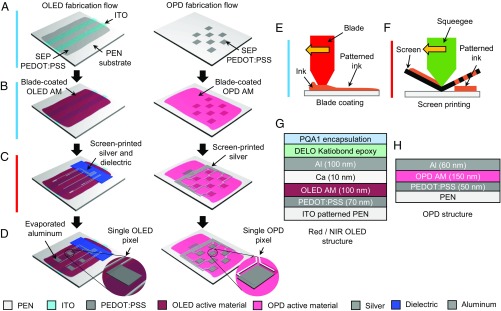
“(A) Three layers of optoelectronics - (1) OPD array layer, (2) NIR OLED array layer, and (3) Red OLED array layer are fabricated on separate substrates.”
BackgroundRecent Advances in Flexible and Stretchable Bio‐Electronic Devices Integrated with Nanomaterials
Choi, S., Lee, H., Ghaffari, R., Hyeon, T., & Kim, D. (2016) · Advanced Materials · doi:10.1002/adma.201504150 · Cited by 1,104 · cited 1×
“(B) Similar to A, stationary (dc) signal magnitude for red (4) and NIR ( ) channels.”
BackgroundUltraflexible organic photonic skin
Yokota, T., Zalar, P., Kaltenbrunner, M., Jinno, H., Matsuhisa, N., Kitanosako, H., Tachibana, Y., Yukita, W., Koizumi, M., & Someya, T. (2016) · Science Advances · doi:10.1126/sciadv.1501856 · Cited by 1,024 · cited 1×
“(13) demonstrated SpO 2 on the fingertips using an ultraflexible photonic skin.”
BackgroundA skin-inspired organic digital mechanoreceptor
Tee, B. C.-K., Chortos, A., Berndt, A., Nguyen, A. K., Tom, A., McGuire, A., Lin, Z. C., Tien, K., Bae, W.-G., Wang, H., et al. (2015) · Science · doi:10.1126/science.aaa9306 · Cited by 882
All-organic optoelectronic sensor for pulse oximetry
Lochner, C. M., Khan, Y., Pierre, A., & Arias, A. C. (2014) · Nature Communications · doi:10.1038/ncomms6745 · Cited by 726 · cited 1×
“(17) demonstrated SpO t 2 on the finger using an all-organic optoelectronic sensor.”
MethodSelf-citationWound healing essentials: Let there be oxygen
Sen, C. K. (2009) · Wound Repair and Regeneration · doi:10.1111/j.1524-475x.2008.00436.x · Cited by 713
Graphene Electronic Tattoo Sensors
Kabiri Ameri, S., Ho, R., Jang, H., Tao, L., Wang, Y., Wang, L., Schnyer, D. M., Akinwande, D., & Lu, N. (2017) · ACS Nano · doi:10.1021/acsnano.7b02182 · Cited by 669
Duncan, A., Meek, J. H., Clemence, M., Elwell, C. E., Tyszczuk, L., Cope, M., & Delpy, D. (1995) · Physics in Medicine and Biology · doi:10.1088/0031-9155/40/2/007 · Cited by 649 · cited 2×
“5, the molar extinction coefficients and DPF (λ) can be obtained from the literature (1, 24).”
MethodResultHeart Rate Assessment Immediately after Birth
Phillipos, E., Solevåg, A. L., Pichler, G., Aziz, K., van Os, S., O''Reilly, M., Cheung, P.-Y., & Schmölzer, G. M. (2016) · Neonatology · doi:10.1159/000441940 · Cited by 531
2019 IEEE International Symposium on Circuits and Systems (ISCAS)
(2019) · doi:10.1109/iscas43240.2019 · Cited by 497
(1997) · Institute of Physics eBooks · doi:10.1887/0750304677 · Cited by 453
Battery-free, stretchable optoelectronic systems for wireless optical characterization of the skin
Kim, J., Salvatore, G. A., Araki, H., Chiarelli, A. M., Xie, Z., Banks, A., Sheng, X., Liu, Y., Lee, J. W., Jang, K.-I., et al. (2016) · Science Advances · doi:10.1126/sciadv.1600418 · Cited by 403 · cited 1×
“(12) used a wireless optoelectronic system to monitor blood flow and tissue oxygenation.”
Method(2018) · Springer eBooks · doi:10.1007/978-981-13-0110-0 · Cited by 391
(1997) · Series in Medical Physics and Biomedical Engineering · doi:10.1201/9781420050790 · Cited by 351 · cited 5×
“(A) Three layers of optoelectronics - (1) OPD array layer, (2) NIR OLED array layer, and (3) Red OLED array layer are fabricated on separate substrates.”
BackgroundMethodInfluentialMiniaturized Battery‐Free Wireless Systems for Wearable Pulse Oximetry
Kim, J., Gutruf, P., Chiarelli, A. M., Heo, S. Y., Cho, K., Xie, Z., Banks, A., Han, S., Jang, K., Lee, J. W., et al. (2017) · Advanced Functional Materials · doi:10.1002/adfm.201604373 · Cited by 334
Near infrared monitoring of human skeletal muscle oxygenation during forearm ischemia
Hampson, N. B., & Piantadosi, C. A. (1988) · Journal of Applied Physiology · doi:10.1152/jappl.1988.64.6.2449 · Cited by 300 · cited 1×
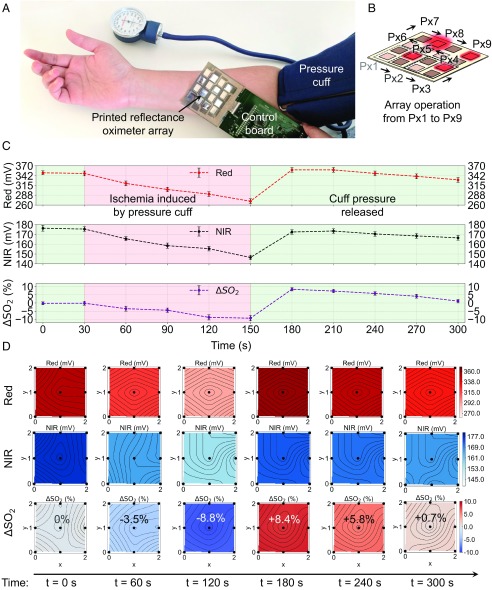
“The results obtained in these tests agree with the studies reported in the literature on pressure-cuff–induced ischemia (20, 24, 30, 31).”
ResultFang, H., Yu, K. J., Gloschat, C., Yang, Z., Song, E., Chiang, C.-H., Zhao, J., Won, S. M., Xu, S., Trumpis, M., et al. (2017) · Nature Biomedical Engineering · doi:10.1038/s41551-017-0038 · Cited by 278
All‐Printed Flexible Organic Transistors Enabled by Surface Tension‐Guided Blade Coating
Pierre, A., Sadeghi, M., Payne, M. M., Facchetti, A., Anthony, J. E., & Arias, A. C. (2014) · Advanced Materials · doi:10.1002/adma.201401520 · Cited by 234
Self-citationFlexible and stretchable nanowire-coated fibers for optoelectronic probing of spinal cord circuits
Lu, C., Park, S., Richner, T. J., Derry, A., Brown, I., Hou, C., Rao, S., Kang, J., Moritz, C. T., Fink, Y., et al. (2017) · Science Advances · doi:10.1126/sciadv.1600955 · Cited by 223
2015 Computing in Cardiology Conference (CinC)
(2015) · doi:10.1109/cinc36752.2015 · Cited by 217
High Detectivity All‐Printed Organic Photodiodes
Pierre, A., Deckman, I., Lechêne, P. B., & Arias, A. C. (2015) · Advanced Materials · doi:10.1002/adma.201502238 · Cited by 212
Self-citationWearable Organic Optoelectronic Sensors for Medicine
Bansal, A. K., Hou, S., Kulyk, O., Bowman, E. M., & Samuel, I. D. W. (2015) · Advanced Materials · doi:10.1002/adma.201403560 · Cited by 205
Soft, thin skin-mounted power management systems and their use in wireless thermography
Lee, J. W., Xu, R., Lee, S., Jang, K.-I., Yang, Y., Banks, A., Yu, K. J., Kim, J., Xu, S., Ma, S., et al. (2016) · Proceedings of the National Academy of Sciences · doi:10.1073/pnas.1605720113 · Cited by 162
Haemoglobin oxygen saturation as a biomarker: the problem and a solution
Boas, D. A., & Franceschini, M. A. (2011) · Philosophical Transactions of the Royal Society A Mathematical Physical and Engineering Sciences · doi:10.1098/rsta.2011.0250 · Cited by 134 · cited 1×
“The results obtained in these tests agree with the studies reported in the literature on pressure-cuff–induced ischemia (20, 24, 30, 31).”
ResultAssessing diabetic foot ulcer development risk with hyperspectral tissue oximetry
Yudovsky, D., Pilon, L., Nouvong, A., & Schomacker, K. (2011) · Journal of Biomedical Optics · doi:10.1117/1.3535592 · Cited by 108
Flexible Blade‐Coated Multicolor Polymer Light‐Emitting Diodes for Optoelectronic Sensors
Han, D., Khan, Y., Ting, J., King, S. M., Yaacobi‐Gross, N., Humphries, M. J., Newsome, C. J., & Arias, A. C. (2017) · Advanced Materials · doi:10.1002/adma.201606206 · Cited by 106 · cited 1×
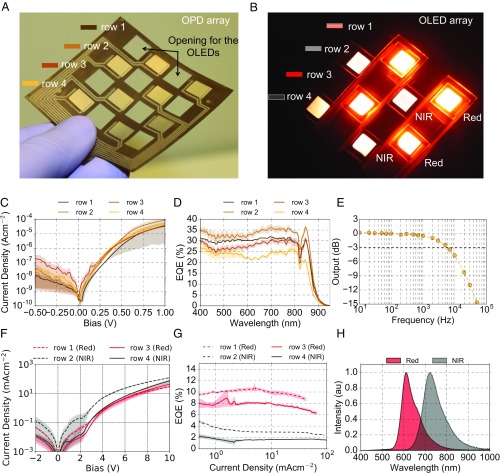
“The OLEDs demonstrate a change in performance parameters, depending on the row position due to the decrease in active layer thickness in the blade-coating direction; this variability can be mitigated by continuously feeding ink in front of the blade coater (15, 28).”
BackgroundSelf-citationMoin, A., Zhou, A., Rahimi, A., Benatti, S., Menon, A., Tamakloe, S., Ting, J., Yamamoto, N., Khan, Y., Burghardt, F., et al. (2018) · 2018 IEEE International Symposium on Circuits and Systems (ISCAS) · doi:10.1109/iscas.2018.8351613 · Cited by 106
Self-citationAn Electronic Patch for Wearable Health Monitoring by Reflectance Pulse Oximetry
Haahr, R. G., Duun, S. B., Toft, M. H., Belhage, B., Larsen, J., Birkelund, K., & Thomsen, E. V. (2012) · IEEE Transactions on Biomedical Circuits and Systems · doi:10.1109/tbcas.2011.2164247 · Cited by 100
Shin, S.-C., Yang, M., Guo, L. J., & Youn, H. (2013) · Small · doi:10.1002/smll.201300382 · Cited by 50 · cited 1×
“The OLEDs demonstrate a change in performance parameters, depending on the row position due to the decrease in active layer thickness in the blade-coating direction; this variability can be mitigated by continuously feeding ink in front of the blade coater (15, 28).”
BackgroundA modular NIRS system for clinical measurement of impaired skeletal muscle oxygenation
Wariar, R., Gaffke, J. N., Haller, R. G., & Bertocci, L. A. (2000) · Journal of Applied Physiology · doi:10.1152/jappl.2000.88.1.315 · Cited by 45 · cited 1×
“The results obtained in these tests agree with the studies reported in the literature on pressure-cuff–induced ischemia (20, 24, 30, 31).”
ResultA Wearable Flexible Hybrid Electronics ECG Monitor
Poliks, M. D., Turner, J. N., Ghose, K., Jin, Z., Garg, M., Gui, Q., Arias, A. C., Kahn, Y., Schadt, M. J., & Egitto, F. D. (2016) · IEEE Electronic Components and Technology Conference (ECTC) · doi:10.1109/ectc.2016.395 · Cited by 41
Self-citationImplantable sensor for blood flow monitoring after transplant surgery
Ericson, M. N., Wilson, M. A., Coté, G. L., Baba, J. S., Xu, W., Bobrek, M., Britton, C. L., Hileman, M. S., Moore, M. R., Emery, M. S., et al. (2004) · Minimally Invasive Therapy & Allied Technologies · doi:10.1080/13645700410027866 · Cited by 33
[New pulsed-type earpiece oximeter (author's transl)].
Nakajimi, S., Hirai, H., Takase, H., Kuze, A., & Aoyagi, S. (1975) · PubMed · Cited by 25
Hu, G., Zhang, Q., Ivković, V., & Strangman, G. E. (2016) · Journal of Biomedical Optics · doi:10.1117/1.jbo.21.9.091314 · Cited by 25
Atchley, D. W. (1930) · JAMA · doi:10.1001/jama.1930.02720060003002 · Cited by 23
Difference in Pulse Arrival Time at Forehead and at Finger as a Surrogate of Pulse Transit Time
Lázaro, J. M., Bailón, R., Laguna, P., Marozas, V., Rapalis, A., & Gil, E. (2016) · Computing in cardiology · doi:10.22489/cinc.2016.079-432 · Cited by 8 · cited 1×
“The pulse arrival times at the forehead and the fingers are different; the delay is on the order of 50 ms (29), which may slightly affect the pulse oxygenation calculations.”
Background
Cited by
Bio-Integrated Wearable Systems: A Comprehensive Review
Ray, T. R., Choi, J., Bandodkar, A. J., Krishnan, S., Gutruf, P., Tian, L., Ghaffari, R., & Rogers, J. A. (2019) · Chemical Reviews · doi:10.1021/acs.chemrev.8b00573 · Cited by 1,350
Lim, H., Kim, H. S., Qazi, R., Kwon, Y., Jeong, J., & Yeo, W. (2020) · Advanced Materials · doi:10.1002/adma.201901924 · Cited by 1,002
A New Frontier of Printed Electronics: Flexible Hybrid Electronics
Khan, Y., Thielens, A., Muin, S., Ting, J., Baumbauer, C., & Arias, A. C. (2020) · Advanced Materials · doi:10.1002/adma.201905279 · Cited by 891
Self-citationOrganic Photodetectors for Next‐Generation Wearable Electronics
Chow, P. C. Y., & Someya, T. (2020) · Advanced Materials · doi:10.1002/adma.201902045 · Cited by 779
A wearable biosensing system with in-sensor adaptive machine learning for hand gesture recognition
Moin, A., Zhou, A., Rahimi, A., Menon, A., Benatti, S., Alexandrov, G., Tamakloe, S., Ting, J., Yamamoto, N., Khan, Y., et al. (2020) · Nature Electronics · doi:10.1038/s41928-020-00510-8 · Cited by 680
Self-citation
Metadata
- Authors
- Khan, Y., Han, D., Pierre, A., Ting, J., Wang, X., Lochner, C. M., Bovo, G., Yaacobi-Gross, N., Newsome, C., Wilson, R., & Arias, A. C.
- Affiliations
- University of California, Berkeley (US)
- Cambridge Display Technology (United Kingdom) (GB)
- Cambridge Display Technology Limited, Godmanchester, Cambridgeshire, PE29 2XG, United Kingdom
- Corresponding author
- Khan, Yasser
- Arias, Ana C.
- Venue
- Proceedings of the National Academy of Sciences
- Publisher
- National Academy of Sciences
- Published
- 2018-11-07
- Volume
- 115
- Issue
- 47
- Pages
- E11015-E11024
- ISSN
- 0027-8424 (ISSN-L)
- 1091-6490
- PMC
- PMC6255203
- OpenAlex
- W2899609120
- Cited by
- 278
- References
- 38
- Citations by year
- 2026: 18 · 2025: 29 · 2024: 33 · 2023: 38 · 2022: 44 · 2021: 52 · 2020: 39 · 2019: 25
- FWCI
- 11.59
- Type
- journal article
- Language
- en
- Open access
- hybrid
- doi.org
- Licence
- Locations
- Proceedings of the National Academy of Sciences (publishedVersion, cc-by-nc-nd)
- Europe PMC (PubMed Central) (publishedVersion, cc-by-nc-nd)
- PubMed Central (publishedVersion, cc-by-nc-nd)
- PubMed (publishedVersion)
- eScholarship (California Digital Library) (submittedVersion)
- eScholarship (California Digital Library) (submittedVersion, cc-by-nc-nd)
- Funders
- Intel Corporation (Semiconductor Research Corporation Grant No. 2014-IN-2571)
- Topics
- Physical Sciences › Engineering › Biomedical Engineering › Non-Invasive Vital Sign Monitoring
- Physical Sciences › Chemistry › Analytical Chemistry › Analytical Chemistry and Sensors
- Health Sciences › Medicine › Radiology, Nuclear Medicine and Imaging › Optical Imaging and Spectroscopy Techniques
- Keywords
- pulse oximetry, organic light-emitting diodes, organic photodiodes, flexible sensors, oxygen saturation, ischemia, arterial pulsation, tissue oxygenation
- MeSH terms
- Adult, Equipment Design, Forearm, Forehead, Humans, Ischemia, Models, Theoretical, Oximetry, Oxygen, Oxyhemoglobins
About these checks
Registry, retraction, Cites and statistics results are computed, not judged, with one exception: a printed reference that no index lists is read once by a model before it counts as a citation error. Claims are extracted by a model and kept only when their quote appears verbatim in the text; each cited source is then checked, with a model’s help, for whether it says what the claim relies on. Those verdicts can be wrong — read the claim’s quote and the cited source before relying on one.
Statistics and arithmetic are recomputed, not judged.
Confidence bands are shown only for fields calibrated on our annotated test set. None is calibrated yet, so no band is shown.
What counts as a claim ›How we measure confidence ›How we check this ›
Are you an author, or do you see a problem with this page? Request a review
Data sources
Bibliographic data: Semantic Scholar, OpenAlex, Crossref.
Contains information from the Semantic Scholar Academic Graph Datasets, made available under the ODC Attribution License (ODC-BY 1.0).
Semantic Scholar’s data is described in: Kinney, R., et al. (2023). The Semantic Scholar Open Data Platform. arXiv:2301.10140.
