

Active learning narrows achievement gaps for underrepresented students in undergraduate science, technology, engineering, and math
Open accessThe DOI matches its Crossref record; 72 of the 75 references it cites were found in a registry or an index, and 3 are not checked yet; 19 of the 44 sources its claims cite were checked for support.
Abstract
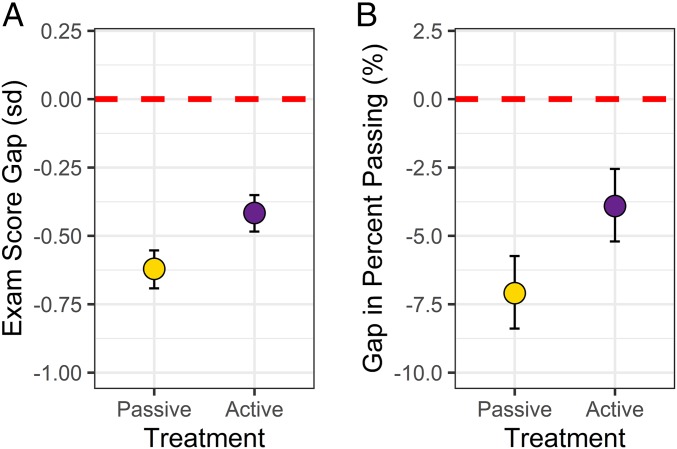
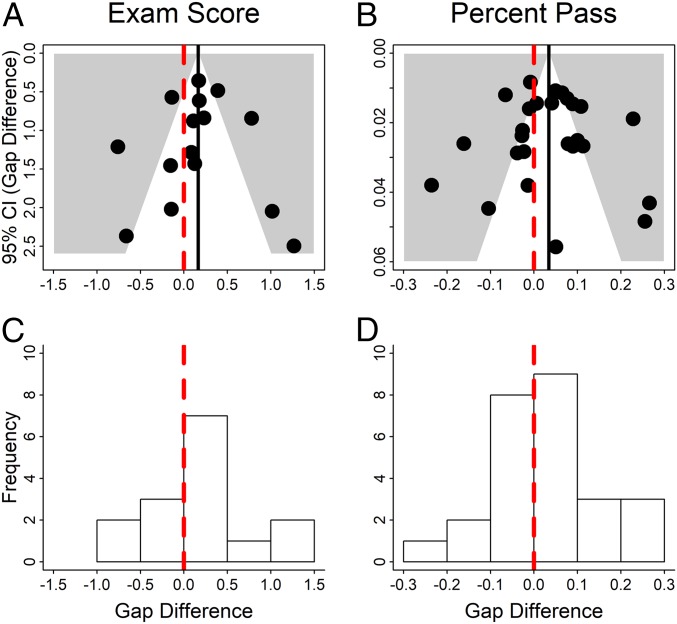
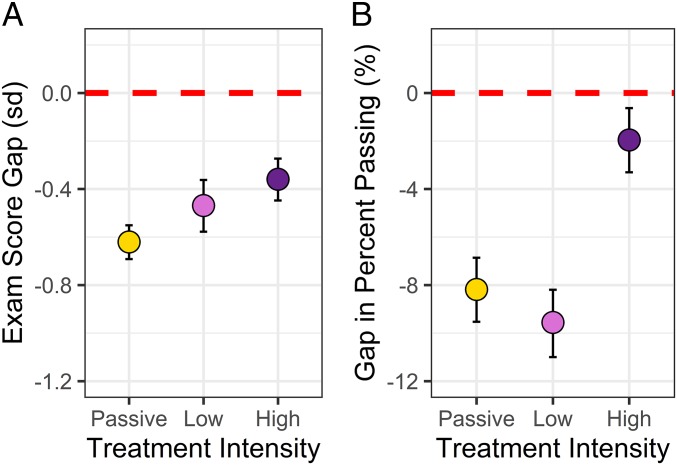
We tested the hypothesis that underrepresented students in active-learning classrooms experience narrower achievement gaps than underrepresented students in traditional lecturing classrooms, averaged across all science, technology, engineering, and mathematics (STEM) fields and courses. We conducted a comprehensive search for both published and unpublished studies that compared the performance of underrepresented students to their overrepresented classmates in active-learning and traditional-lecturing treatments. This search resulted in data on student examination scores from 15 studies (9,238 total students) and data on student failure rates from 26 studies (44,606 total students). Bayesian regression analyses showed that on average, active learning reduced achievement gaps in examination scores by 33% and narrowed gaps in passing rates by 45%. The reported proportion of time that students spend on in-class activities was important, as only classes that implemented high-intensity active learning narrowed achievement gaps. Sensitivity analyses showed that the conclusions are robust to sampling bias and other issues. To explain the extensive variation in efficacy observed among studies, we propose the heads-and-hearts hypothesis, which holds that meaningful reductions in achievement gaps only occur when course designs combine deliberate practice with inclusive teaching. Our results support calls to replace traditional lecturing with evidence-based, active-learning course designs across the STEM disciplines and suggest that innovations in instructional strategies can increase equity in higher education.
Verified 2026-11-22 · 3 references not checked yet
Overview
CoChat Summary
TL;DR
This systematic review and individual-participant-data meta-analysis found that active learning reduced achievement gaps for underrepresented/minoritized students in undergraduate STEM courses. Across the analyzed studies, gaps in exam scores and passing rates were smaller in active-learning than in traditional lecturing, with the largest gap reductions seen in high-intensity active learning.
Key findings
- In identical or formally equivalent exams, the standardized achievement gap between MGS and non-MGS students was −0.62 SDs in traditional lecturing and −0.42 SDs with active learning, a 33% reduction in the gap.
- For passing rates, the gap was −7.1% with traditional lecturing and −3.9% with active learning, a 45% reduction in the gap.
- Gap reductions were stronger with high-intensity active learning: exam-score gaps were −0.48 SDs for low-intensity vs −0.36 SDs for high-intensity; passing-rate gaps were −9.6% for low-intensity vs −2.0% for high-intensity.
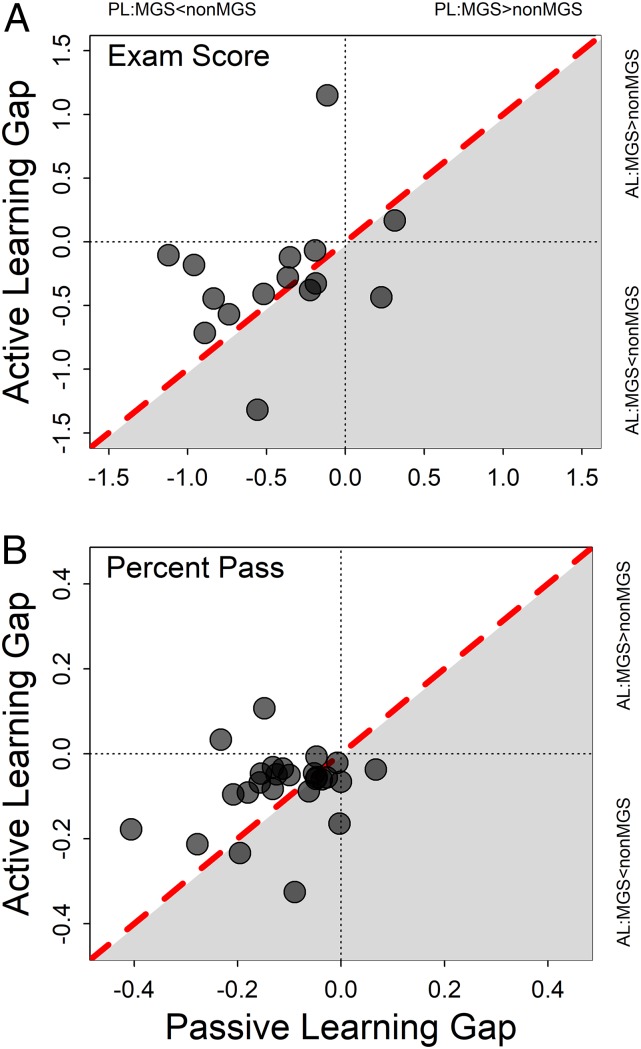
- In the study-level breakdown, 10 of 15 studies with exam-score data showed disproportionate gains for MGS students under active learning, and 15 of 26 studies with failure-rate data showed disproportionate reductions in failure rates for MGS students.
Methods
- Systematic review plus individual-participant-data (IPD) meta-analysis comparing undergraduate STEM courses taught with traditional lecturing vs active learning in the same course and institution.
- Literature search covered studies published or completed from January 1, 2010 to June 30, 2016; the final analysis included 41 studies with disaggregated data by MGS status.
- Final datasets: 9,238 student records from 15 studies for exam scores and 44,606 student records from 26 studies for failure rates; analyses used hierarchical Bayesian multilevel models with section random effects and sensitivity analyses.
Limitations
- The paper states that the conclusions are “tempered by the limitations of the study’s sample size”: only 41 studies had data for students from MGS, which also made moderator analyses hard to interpret.
- The paper says data on the type of active learning were “poorly resolved” because studies often did not report quantitative details of course interventions.
- The paper notes possible sampling bias in instructor/institution type, overrepresentation of research-intensive institutions, and underrepresentation of teaching-intensive institutions and community colleges.
- Evident from the text: the meta-analysis depends on studies that met specific coding and data-sharing criteria, so the findings may not generalize to STEM courses or settings not represented in the included studies.
Model-written summary. Check it against the paper before relying on it.
Integrity signals
Registry
Cites
Statistics
Figures
Verification
Claims the paper makes
16 Valid · 1 Not valid · 10 Not checked · 59 Own results and interpretations
The cited sources support only part of this claim — read each source’s verdict below.
In the paper
“Course grades in most STEM courses are largely driven by performance on examinations, even in active-learning courses that offer many nonexam points (39).”
§ Active learning narrows achievement gaps for underrepresented students in undergraduate science, technology, engineering, and math > Discussion
What the sources say
- Partly supportedcites [39] Freeman S., Haak D., Wenderoth M. P., Increased course structure improves performance in introductory biology. CBE Life Sci. Educ. 10, 175– 186 (2011). 21633066 PMC3105924 sourceExperimental — accuracy not yet measured
The Methods section (“Exam Impact on Final Course Grade”; page unavailable) says the authors intended exams to remain the primary determinant of grades even when many nonexam points were available. Table 4 in the Results shows that exam points strongly predicted final grades across the introductory biology sections studied. The paper does not establish that this holds in most STEM courses. (LLM, conf=0.88)
plainstates an association- Asserted: passes — The authors put it forward as true.
- Checkable: passes — It can be checked against evidence.
- Load-bearing: passes — The paper’s conclusions depend on it.
- Based: passes — The paper gives a reason why it holds.
- Partly supported
The cited sources support only part of this claim — read each source’s verdict below.
In the paper
“All students benefit from classroom cultures that promote self-efficacy, identity as a scientist, and sense of belonging in STEM (58)”
§ Active learning narrows achievement gaps for underrepresented students in undergraduate science, technology, engineering, and math > Discussion
What the sources say
- Partly supportedcites [58] Trujillo G., Tanner K. D., Considering the role of affect in learning: Monitoring students’ self-efficacy, sense of belonging, and science identity. CBE Life Sci. Educ. 13, 6– 15 (2014). 24591497 PMC3940464 sourceExperimental — accuracy not yet measured
The paper’s sections on self-efficacy, sense of belonging, and science identity link each to student learning or persistence, and its discussion of teaching considers how classroom experiences shape these factors. Its focus is undergraduate biology, however; it does not establish that all students benefit from such classroom cultures across STEM. The indexed passages provide section labels but no page numbers. (LLM, conf=0.82)
plainstates a cause- Asserted: passes — The authors put it forward as true.
- Checkable: passes — It can be checked against evidence.
- Load-bearing: unclear — It is unclear whether the paper’s conclusions depend on it.
- Based: passes — The paper gives a reason why it holds.
- Partly supported
The cited sources support only part of this claim — read each source’s verdict below.
In the paper
“students in active-learning course designs that reduced or eliminated achievement gaps have reported an increased sense of community and self-efficacy compared to their peers in the lecture-intensive version of the same course (22, 23).”
§ Active learning narrows achievement gaps for underrepresented students in undergraduate science, technology, engineering, and math > Discussion
What the sources say
- Partly supportedcites [22] Eddy S. L., Hogan K. A., Getting under the hood: How and for whom does increasing course structure work? CBE Life Sci. Educ. 13, 453– 468 (2014). 25185229 PMC4152207 sourceExperimental — accuracy not yet measured
In Methods and Results (Study 3, Factor 2; page unavailable), students in the moderate-structure course were twice as likely to report a stronger sense of classroom community than those in the low-structure course. The Introduction mentions self-reported self-efficacy in prior active-learning research, but says that research did not compare students in versions of the same course. This paper therefore does not support the claimed same-course self-efficacy comparison. (LLM, conf=0.88)
- Not matchedcites [23] Ballen C. J., Wieman C., Salehi S., Searle J. B., Zamudio K. R., Enhancing diversity in undergraduate science: Self-efficacy drives performance gains with active learning. CBE Life Sci. Ed. 16, ar56 (2017). PMC5749958 29054921
We don’t have this paper’s reference list.
plainstates an association- Asserted: passes — The authors put it forward as true.
- Checkable: passes — It can be checked against evidence.
- Load-bearing: unclear — It is unclear whether the paper’s conclusions depend on it.
- Based: passes — The paper gives a reason why it holds.
- Partly supported
Every source the paper cites for this claim was checked and supports it.
In the paper
“Our data on type of active learning are also poorly resolved, because publications still routinely fail to report quantitative data on the nature of course interventions, such as records from classroom observation tools (e.g., ref. 61 and SI Appendix, Table S12).”
§ Active learning narrows achievement gaps for underrepresented students in undergraduate science, technology, engineering, and math > Discussion
What the sources say
- Supportedcites [61] Eddy S. L., Converse M., Wenderoth M. P., PORTAAL: A classroom observation tool assessing evidence-based teaching practices for active learning in large science, technology, engineering, and mathematics classes. CBE Life Sci. Educ. 14, ar23 (2015). PMC4477739 26033871 source
The citation appears as an example of a classroom observation tool, not as evidence that publications routinely omit quantitative intervention data. The Abstract identifies PORTAAL as a classroom observation tool for assessing active-learning practices, which supports that use of the citation. (LLM, conf=0.91)
plainstates a cause- Asserted: passes — The authors put it forward as true.
- Checkable: passes — It can be checked against evidence.
- Load-bearing: unclear — It is unclear whether the paper’s conclusions depend on it.
- Based: passes — The paper gives a reason why it holds.
- Supported
Every source the paper cites for this claim was checked and supports it.
In the paper
“larger gaps are correlated with faculty who have a fixed mindset, which interprets intelligence as innate and immutable and is therefore exclusion or selection-oriented (44).”
§ Active learning narrows achievement gaps for underrepresented students in undergraduate science, technology, engineering, and math > Discussion
What the sources say
- Supportedcites [44] Canning E. A., Muenks K., Green D. J., Murphy M. C., STEM faculty who believe ability is fixed have larger achievement racial achievement gaps and inspire less student motivation in their classes. Sci. Adv. 5, eaau4734 (2019). 30793027 PMC6377274 source
The Results report that racial achievement gaps in STEM courses were nearly twice as large with fixed- versus growth-mindset faculty. The Introduction defines a fixed mindset as treating intelligence and ability as innate and largely unchangeable, and describes judging students as low-ability and encouraging them to drop difficult courses—supporting the paraphrase 'exclusion or selection-oriented.' (LLM, conf=0.88)
plainstates an association- Asserted: passes — The authors put it forward as true.
- Checkable: passes — It can be checked against evidence.
- Load-bearing: unclear — It is unclear whether the paper’s conclusions depend on it.
- Based: passes — The paper gives a reason why it holds.
- Supported
30 more claims
Create a free account to see all 86 claims and every source verdict.
- It may state two separate claims as one. 30
- Probably not a substantial claim. 36
Claims other papers make about this one
Each is checked against this paper’s own text: does it say what the citing paper says it does?
The source backs part of the claim, not all of it — or backs it for a different population, condition or comparison.
In the citing paper
“These perceptions, along with a likely reduction in stress and anxiety (see Figure 4), could benefit students from underrepresented groups and may thus reduce the achievement gap among underrepresented minorities”
From Two-Stage Final Exams: An Assessment Strategy for Enhanced Collaborative Learning and Reduced Student Stress (2026) · cites this paper as Theobald et al., 2020
Experimental — accuracy not yet measured
Citations
Cites
Preferred Reporting Items for Systematic Reviews and Meta-Analyses: the PRISMA statement
Moher, D., Liberati, A., Tetzlaff, J., Altman, D. G., & for the PRISMA Group (2009) · BMJ · doi:10.1136/bmj.b2535 · Cited by 83,823
Preferred reporting items for systematic reviews and meta-analyses: the PRISMA Statement.
(2009) · PubMed Central · Cited by 44,859
Preferred reporting items for systematic reviews and meta-analyses: The PRISMA statement
Moher, D., Liberati, A., Tetzlaff, J., Altman, D. G., & the PRISMA Group* (2009) · Annals of Internal Medicine · doi:10.7326/0003-4819-151-4-200908180-00135 · Cited by 37,554
PRISMA-P Group, Moher, D., Shamseer, L., Clarke, M., Ghersi, D., Liberati, A., Petticrew, M., Shekelle, P., & Stewart, L. A. (2015) · Systematic Reviews · doi:10.1186/2046-4053-4-1 · Cited by 26,223 · cited 2×
“The protocol for this study, presented in the PRISMA-P format (66) and including annotations regarding modifications that occurred during the course of the research, is available in SI Appendix, SI Materials and Methods.”
Capital in the Twenty-First Century
Piketty, T. (2014) · doi:10.4159/9780674369542 · Cited by 14,437
Data Analysis Using Regression and Multilevel/Hierarchical Models
Gelman, A., & Hill, J. (2006) · doi:10.1017/cbo9780511790942 · Cited by 13,597
Active learning increases student performance in science, engineering, and mathematics
Freeman, S., Eddy, S. L., McDonough, M., Smith, M. K., Okoroafor, N., Jordt, H., & Wenderoth, M. P. (2014) · Proceedings of the National Academy of Sciences · doi:10.1073/pnas.1319030111 · Cited by 9,787 · cited 6×
“Can interventions in courses themselves—meaning, changes in how science is taught—reduce achievement gaps and promote retention in STEM? A recent metaanalysis concluded that, on average, active learning in STEM leads to higher examination scores and lower failure rates for all students, compared to all students in the…”
InfluentialSelf-citation(2000) · Cited by 9,198
A threat in the air: How stereotypes shape intellectual identity and performance
Steele, C. M. (1997) · American Psychologist · doi:10.1037/0003-066x.52.6.613 · Cited by 6,770 · cited 1×
“Equally important, inclusive teaching emphasizes treating students with dignity and respect (52), communicating confidence in students’ ability to meet high standards (53), and demonstrating a genuine interest in students’ intellectual and personal growth and success (54, 55).”
BackgroundGeneral methods for monitoring convergence of iterative simulations
Brooks, S. P., & Gelman, A. (1998) · Journal of Computational and Graphical Statistics · doi:10.1080/10618600.1998.10474787 · Cited by 6,045
Research works printed but not linked: 9
- Reardon S. F., “The widening achievement gap between the rich and the poor: New evidence and possible explanations” in Whither Opportunity? Duncan G. J., Murnane R. J., Eds. (Russell Sage Foundation, New York, 2011), pp. 91– 115.
- National Student Clearinghouse Research Center, High School Benchmarks 2019: National College Progression Rates (National Student Clearinghouse, Herndon, VA, 2019).
- Chen X., STEM Attrition: College Students’ Paths Into and Out of STEM Fields (National Center for Education Statistics, Washington, DC, 2013).
- Vygotsky L. S., Mind in Society (Harvard University Press, Cambridge, MA, 1978).
- Kaufmann E., Reips U.-D., Merki K. M., Avoiding methodological biases in meta-analysis. Z. Psychol. 224, 157– 167 (2016).
- Ginder S. A., Kelly-Reid J. E., Mann F. B., Enrollment and Employees in Postsecondary Institutions, Fall 2015 (National Center for Education Statistics, Washington, DC, 2017).
- Reed J. G., Baxter P. M., Using Reference Databases. The Handbook of Research Synthesis and Meta-Analysis, Cooper H., Hedges L. V., Valentine J. C., Eds. (Russell Sage Foundation, New York, 2009), pp. 73– 101.
- Rothstein H., Hopewell S., Grey Literature. The Handbook of Research Synthesis and Meta-Analysis, Cooper H., Hedges L. V., Valentine J. C., Eds. (Russell Sage Foundation, New York, 2009), pp. 103– 125.
- White H. D., Scientific Communication and Literature Retrieval. The Handbook of Research Synthesis and Meta-Analysis, Cooper H., Hedges L. V., Valentine J. C., Eds. (Russell Sage Foundation, New York, 2009), pp. 51– 71.
Cited by
Castelli, F. R., & Sarvary, M. A. (2021) · Ecology and Evolution · doi:10.1002/ece3.7123 · Cited by 451
Algorithmic fairness in education
Kizilcec, R. F., & Lee, H. (2022) · The Ethics of Artificial Intelligence in Education · doi:10.4324/9780429329067-10 · Cited by 193
Instructor strategies to aid implementation of active learning: a systematic literature review
Nguyen, K. A., Borrego, M., Finelli, C. J., DeMonbrun, M., Crockett, C., Tharayil, S., Shekhar, P., Waters, C., & Rosenberg, R. (2021) · International Journal of STEM Education · doi:10.1186/s40594-021-00270-7 · Cited by 193
Harris, R. B., Mack, M. R., Bryant, J., Theobald, E. J., & Freeman, S. (2020) · Science Advances · doi:10.1126/sciadv.aaz5687 · Cited by 183
“More specifically, the hypothesis is that courses would better support underrepresented students if they encouraged belonging, science identity, and self-efficacy; emphasized active learning approaches that engage all students and increase exam scores and lower failure rates; and deemphasized inauthentic assessments s…”
BackgroundSelf-citationTo Flip or Not to Flip? A Meta-Analysis of the Efficacy of Flipped Learning in Higher Education
Bredow, C. A., Roehling, P. V., Knorp, A. J., & Sweet, A. M. (2021) · Review of Educational Research · doi:10.3102/00346543211019122 · Cited by 162
Instructor Strategies to Alleviate Stress and Anxiety among College and University STEM Students
Hsu, J. L., & Goldsmith, G. R. (2021) · CBE—Life Sciences Education · doi:10.1187/cbe.20-08-0189 · Cited by 158
Systemic racism in higher education
Barber, P. H., Hayes, T. B., Johnson, T., Márquez-Magaña, L. M., & 10, 2. S. (2020) · Science · doi:10.1126/science.abd7140 · Cited by 171
AI and formative assessment: The train has left the station
Zhai, X., & Nehm, R. H. (2023) · Journal of Research in Science Teaching · doi:10.1002/tea.21885 · Cited by 125
The Cambridge Handbook of the Learning Sciences
(2022) · doi:10.1017/9781108888295 · Cited by 122
Do introductory courses disproportionately drive minoritized students out of STEM pathways?
Hatfield, N. J., Brown, N. P., & Topaz, C. M. (2022) · PNAS Nexus · doi:10.1093/pnasnexus/pgac167 · Cited by 168
“…steps are challenging because the classroom experience involves numerous factors: pedagogy, e.g. traditional lecture versus active learning methods (30); class size; assessment, e.g. high-stakes final exams versus mastery grading; course prerequisites and placement; curriculum; and instructor…”
BackgroundDemystifying the Meaning of Active Learning in Postsecondary Biology Education
Driessen, E. P., Knight, J., Smith, M. K., & Ballen, C. J. (2020) · CBE—Life Sciences Education · doi:10.1187/cbe.20-04-0068 · Cited by 148
“Additionally, a meta-analysis conducted by Theobald et al. (2020) demonstrated that active learning narrows achievement gaps for underrepresented students in undergraduate STEM disciplines.”
BackgroundHarris, B. N., McCarthy, P. C., Wright, A. M., Schutz, H., Boersma, K. S., Shepherd, S. L., Manning, L. A., Malisch, J. L., & Ellington, R. (2020) · Ecology and Evolution · doi:10.1002/ece3.6915 · Cited by 167
“Importantly, individual accommodations for students are not the purpose of UDL; rather the focus is to design a course to be accessible to all so that accommodations are unnecessary (Tobin & Behling, 2018).”
BackgroundApkarian, N., Henderson, C., Stains, M., Raker, J. R., Johnson, E., & Dancy, M. (2021) · PLoS ONE · doi:10.1371/journal.pone.0247544 · Cited by 152
“In the broadest sense, active learning refers to classroom strategies that move away from a transmission or “telling” model (the classic “didactic lecture”) toward a model where students actively engage in problem-solving and knowledge creation [5,6].”
BackgroundDefining Active Learning: A Restricted Systemic Review
Doolittle, P., Wojdak, K., & Walters, A. (2023) · Teaching and Learning Inquiry · doi:10.20343/teachlearninqu.11.25 · Cited by 115
“Similarly, Theobald et al. (2020) conducted a meta-analysis of 41 studies focused on exam performance and course failure rates of students from underrepresented groups in STEM-related fields, comparing the impact of lecture versus active learning instructional approaches.”
InfluentialEquitable and Inclusive Practices Designed to Reduce Equity Gaps in Undergraduate Chemistry Courses
White, K. N., Vincent-Layton, K., & Villarreal, B. J. (2020) · Journal of Chemical Education · doi:10.1021/acs.jchemed.0c01094 · Cited by 123
Examining the critical role of evaluation and adaptation in self-regulated learning
Raković, M., Bernacki, M. L., Greene, J. A., Plumley, R. D., Hogan, K. A., Gates, K. M., & Panter, A. T. (2022) · Contemporary Educational Psychology · doi:10.1016/j.cedpsych.2021.102027 · Cited by 114
Active learning: “Hands-on” meets “minds-on”
Yannier, N., Hudson, S. E., Koedinger, K. R., Hirsh‐Pasek, K., Golinkoff, R. M., Munakata, Y., Doebel, S., Schwartz, D. L., Deslauriers, L., McCarty, L. S., et al. (2021) · Science · doi:10.1126/science.abj9957 · Cited by 161
Self-citationPandita, A., & Kiran, R. (2023) · Sustainability · doi:10.3390/su15107923 · Cited by 240
Anti-racist interventions to transform ecology, evolution and conservation biology departments
Cronin, M. R., Alonzo, S. H., Adamczak, S. K., Baker, D. N., Beltran, R. S., Borker, A. L., Favilla, A. B., Gatins, R., Goetz, L. C., Hack, N. L., et al. (2021) · Nature Ecology & Evolution · doi:10.1038/s41559-021-01522-z · Cited by 118
Promoting student interaction, engagement, and success in an online environment
Cavinato, A. G., Hunter, R. A., Ott, L. S., & Robinson, J. K. (2021) · Analytical and Bioanalytical Chemistry · doi:10.1007/s00216-021-03178-x · Cited by 140
Lugosi, E., & Uribe, G. (2020) · International Journal of Mathematical Education in Science and Technology · doi:10.1080/0020739x.2020.1773555 · Cited by 150
Predicting achievement and providing support before STEM majors begin to fail
Bernacki, M. L., Chavez, M. M., & Uesbeck, P. M. (2020) · Computers & Education · doi:10.1016/j.compedu.2020.103999 · Cited by 88
Assessment of the effectiveness of BOPPPS-based hybrid teaching model in physiology education
Liu, X.-Y., Lu, C., Zhu, H., Wang, X., Jia, S., Zhang, Y., Wen, H., & Wang, Y.-F. (2022) · BMC Medical Education · doi:10.1186/s12909-022-03269-y · Cited by 86
“TESOT was created based on our identification of the learning obstacles and teaching style preferences of international medical students [17], which serve as a critical reference for designing a teaching modality to resolve these problems by using the components of active-learning classrooms [28] and online guidance […”
MethodGin, L. E., Guerrero, F. A., Cooper, K. M., & Brownell, S. E. (2020) · CBE—Life Sciences Education · doi:10.1187/cbe.20-03-0049 · Cited by 113
“…have been shown to have a positive impact on student learning (Freeman et al., 2014), and there is some evidence that active learning may decrease achievement gaps between students in minority and majority groups (Haak et al., 2011; Eddy and Hogan, 2014; Ballen et al., 2017; Theobald et al., 2020).”
BackgroundAchieving STEM diversity: Fix the classrooms
Handelsman, J., Elgin, S., Estrada, M., Hays, S., Johnson, T., Miller, S., Mingo, V., Shaffer, C., & Williams, J. (2022) · Science · doi:10.1126/science.abn9515 · Cited by 82
Hood, S., Barrickman, N. L., Djerdjian, N. T., Farr, M., Magner, S., Roychowdhury, H. S., Gerrits, R., Lawford, H. L., Ott, B., Ross, K. T., et al. (2021) · CBE—Life Sciences Education · doi:10.1187/cbe.19-12-0271 · Cited by 116
“, 2014; Honicke and Broadbent, 2016), and fosters a more inclusive and equitable learning environment (Snyder et al., 2016; Harris et al., 2020; Theobald et al., 2020), lecture still predominates in STEM classrooms across North America (Stains et al.”
BackgroundInclusive and active pedagogies reduce academic outcome gaps and improve long-term performance
Dewsbury, B. M., Swanson, H. J., Moseman‐Valtierra, S. M., & Caulkins, J. L. (2022) · PLoS ONE · doi:10.1371/journal.pone.0268620 · Cited by 112
Rodriguez, J.-M. G., Hunter, K. H., Scharlott, L. J., & Becker, N. M. (2020) · Journal of Chemical Education · doi:10.1021/acs.jchemed.0c00355 · Cited by 105
Reinholz, D. L., Johnson, E., Andrews-Larson, C., Stone-Johnstone, A., Smith, J., Mullins, B., Fortune, N., Keene, K. A., & Shah, N. (2022) · Journal for Research in Mathematics Education · doi:10.5951/jresematheduc-2020-0143 · Cited by 109
Hudley, A. H. C., Mallinson, C., & Bucholtz, M. (2024) · doi:10.1093/oso/9780197755303.001.0001 · Cited by 94
Active Student Engagement in Online STEM Classes: Approaches and Recommendations
Prince, M. J., Felder, R. M., & Brent, R. (2020) · Bucknell Digital Commons (Bucknell University) · Cited by 115
Inclusion and Belonging in Higher Education: A Scoping Study of Contexts, Barriers, and Facilitators
Taff, S. D., & Clifton, M. (2022) · Higher Education Studies · doi:10.5539/hes.v12n3p122 · Cited by 114
“Social engagement was noted to be the most salient of these in terms of a fundamental requisite for belonging, a finding supported by other research studies (Baumeister & Leary, 1995; Thomas, 2012).”
BackgroundResultA Systematic Review of AI-Driven Educational Assessment in STEM Education
Ouyang, F., Dinh, T. A., & Xu, W. (2023) · Journal for STEM Education Research · doi:10.1007/s41979-023-00112-x · Cited by 111
“…STEM education, it usually faces challenges during the instructional and learning processes, such as tracking students’ learning processes and attitudes (Vennix et al., 2018), designing authentic, productive STEM problems (Theobald et al. 2020), and assessing their performances (Jiao et al., 2022).”
Strategies for enhancing remote student engagement through active learning
Venton, B. J., & Pompano, R. R. (2021) · Analytical and Bioanalytical Chemistry · doi:10.1007/s00216-021-03159-0 · Cited by 101
McNeish, D. (2026) · Psychological Methods · doi:10.1037/met0000620 · Cited by 66
Active learning-based STEM education for in-person and online learning
Sandrone, S., Scott, G., Anderson, W. J., & Musunuru, K. (2021) · Cell · doi:10.1016/j.cell.2021.01.045 · Cited by 90
Tiny Earth: A Big Idea for STEM Education and Antibiotic Discovery
Hurley, A. I., Chevrette, M. G., Acharya, D. D., Lozano, G. L., Garavito, M. F., Heinritz, J., Balderrama, L., Beebe, M., DenHartog, M. L., Corinaldi, K., et al. (2021) · mBio · doi:10.1128/mbio.03432-20 · Cited by 83
Russo‐Tait, T. (2022) · Journal of Research in Science Teaching · doi:10.1002/tea.21775 · Cited by 76
Kuchynka, S. L., Eaton, A. A., & Rivera, L. M. (2022) · Social Issues and Policy Review · doi:10.1111/sipr.12087 · Cited by 92
“Drawing on interdisciplinary evidence, positive educational climates characterized by cooperation close achievement gaps between URG and non-URG students in STEM, because they provide dignity, collaboration, and support (Theobald et al., 2020).”
Wang, Y., Rocabado, G. A., Lewis, J. E., & Lewis, S. E. (2021) · Journal of Chemical Education · doi:10.1021/acs.jchemed.0c01497 · Cited by 72
More than fun in the sun: The pedagogy of field trips improves student learning in higher education
Jones, J. C., & Washko, S. E. (2021) · Journal of Geoscience Education · doi:10.1080/10899995.2021.1984176 · Cited by 91
Perspectives on Active Learning: Challenges for Equitable Active Learning Implementation
Nardo, J. E., Chapman, N. C., Shi, E. Y., Wieman, C., & Salehi, S. (2022) · Journal of Chemical Education · doi:10.1021/acs.jchemed.1c01233 · Cited by 68
Clements, T. P., Friedman, K. L., Johnson, H. J., Meier, C. J., Watkins, J., Brockman, A. J., & Brame, C. J. (2022) · CBE—Life Sciences Education · doi:10.1187/cbe.21-09-0287 · Cited by 77
“, 2019) and that increase use of active-learning approaches (Smith et al., 2011; Tsaushu et al., 2012; Theobald et al., 2020).”
BackgroundResultInfluentialClass Size Effects in Higher Education: Differences Across Stem and Non-Stem Fields
Kara, E., Tonin, M., & Vlassopoulos, M. (2020) · Economics of Education Review · doi:10.1016/j.econedurev.2021.102104 · Cited by 85
The neuroscience of active learning and direct instruction
Dubinsky, J. M., & Hamid, A. (2024) · Neuroscience & Biobehavioral Reviews · doi:10.1016/j.neubiorev.2024.105737 · Cited by 155
Reframing Educational Outcomes: Moving beyond Achievement Gaps
Shukla, S. Y., Theobald, E. J., Abraham, J. K., & Price, R. (2022) · CBE—Life Sciences Education · doi:10.1187/cbe.21-05-0130 · Cited by 78
“…Seah et al., 2021), growth mindset (Canning et al., 2019), or increased course structure (Eddy and Hogan, 2014), with evidence-based practices for teaching content (Freeman et al., 2014; Theobald et al., 2020) has garnered recent attention as a way to create a powerful ethic of care in classrooms.”
BackgroundMethodSelf-citationSurvey of the Undergraduate Analytical Chemistry Curriculum
Kovarik, M. L., Galarreta, B. C., Mahon, P. J., McCurry, D. A., Gerdon, A. E., Collier, S. M., & Squires, M. E. (2022) · Journal of Chemical Education · doi:10.1021/acs.jchemed.2c00090 · Cited by 54
Bowman, N. A., Logel, C. R., LaCosse, J., Jarratt, L., Canning, E. A., Emerson, K. T. U., & Murphy, M. C. (2022) · Journal of Research in Science Teaching · doi:10.1002/tea.21778 · Cited by 77
“For instance, active and collaborative learning approaches appear to be more effective at promoting learning and academic achievement for college students from underrepresented and marginalized groups (Bowman & Culver, 2018; Theobald et al., 2020).”
BackgroundPfeifer, M. A., Cordero, J. J., & Stanton, J. D. (2022) · CBE—Life Sciences Education · doi:10.1187/cbe.21-12-0329 · Cited by 83
The Case for Pragmatic Evidence-Based Higher Education: A Useful Way Forward?
Newton, P. M., Da Silva, A., & Berry, S. (2020) · Frontiers in Education · doi:10.3389/feduc.2020.583157 · Cited by 50
“, 2014), in particular students from underrepresented groups (Theobald et al., 2020), but appears to be, initially, more poorly evaluated in feedback from students, who prefer didactic lectures and report that they feel they have learnedmore from didactic lectures compared to Active Learning (Deslauriers et al.”
BackgroundCharacterizing college science instruction: The Three-Dimensional Learning Observation Protocol
Bain, K., Bender, L., Bergeron, P. D. O., Caballero, M. D., Carmel, J. H., Duffy, E. M., Ebert‐May, D., Fata-Hartley, C. L., Herrington, D. G., Laverty, J. T., et al. (2020) · PLoS ONE · doi:10.1371/journal.pone.0234640 · Cited by 61
“Teaching strategies that support student engagement can lead to improved student performance and retention in STEM courses compared to outcomes for students in traditional course settings [7,8].”
BackgroundInfluentialTen simple rules for supporting historically underrepresented students in science
Arif, S., Massey, M. D. B., Klinard, N. V., Charbonneau, J. A., Jabre, L. J., Martins, A. P. B., Gaitor, D., Kirton, R., Albury, C., & Nanglu, K. (2021) · PLoS Computational Biology · doi:10.1371/journal.pcbi.1009313 · Cited by 67
“Active learning strategies are linked to increased GPAs of historically underrepresented students in science, which, in turn, lead to higher retention rates [35].”
BackgroundA Review of Research on the Teaching and Learning of Chemical Bonding
Hunter, K. H., Rodriguez, J.-M. G., & Becker, N. M. (2022) · Journal of Chemical Education · doi:10.1021/acs.jchemed.2c00034 · Cited by 80
The Value of Using Tests in Education as Tools for Learning—Not Just for Assessment
Murphy, D. H., Little, J. L., & Bjork, E. L. (2023) · Educational Psychology Review · doi:10.1007/s10648-023-09808-3 · Cited by 105
“Among other reasons, there is growing evidence that tasks involving active learning—of which we believe testing is one—can serve as an equalizer for our students (e.g., Haak et al., 2011; Theobald et al., 2020).”
BackgroundYik, B. J., Raker, J. R., Apkarian, N., Stains, M., Henderson, C., Dancy, M., & Johnson, E. (2022) · International Journal of STEM Education · doi:10.1186/s40594-022-00333-3 · Cited by 69
“…or underrepresented minorities) in STEM (Kogan & Laursen, 2014; Lorenzo *Correspondence: jraker@usf.edu 1 Department of Chemistry, University of South Florida, Tampa, FL 33620-5250, USA Full list of author information is available at the end of the article et al., 2006; Theobald et al., 2020).”
BackgroundInfluentialScience faculty conceptions of equity and their association to teaching practices
Russo‐Tait, T. (2022) · Science Education · doi:10.1002/sce.21781 · Cited by 53
Variation in Incoming Academic Preparation: Consequences for Minority and First-Generation Students
Salehi, S., Cotner, S. H., & Ballen, C. J. (2020) · Frontiers in Education · doi:10.3389/feduc.2020.552364 · Cited by 60
Alvarez, K. S. (2021) · Journal of Microbiology and Biology Education · doi:10.1128/jmbe.v22i1.2503 · Cited by 61
“Furthermore, active learning decreases learning gaps, thus increasing student achievement (4).”
BackgroundEffectiveness of Using Voice Assistants in Learning: A Study at the Time of COVID-19
Sáiz-Manzanares, M. C., Marticorena-Sánchez, R., & Ochoa-Orihuel, J. (2020) · International Journal of Environmental Research and Public Health · doi:10.3390/ijerph17155618 · Cited by 47
“Their advantages are that they encourage personalization in learning [30,31] and in therapeutic”
BackgroundChristianity as a Concealable Stigmatized Identity (CSI) among Biology Graduate Students
Barnes, M. E., Maas, S. A., Roberts, J. A., & Brownell, S. E. (2021) · CBE—Life Sciences Education · doi:10.1187/cbe.20-09-0213 · Cited by 76
“Currently, biology education researchers who study underrepresented groups often focus on racial/ethnic identity (Eddy et al., 2015; Jordt et al., 2017; Cooper et al., 2018b; Metzger et al., 2018; Rodriguez et al., 2018; Sbeglia and Nehm, 2018; Estrada et al., 2019; Meaders et al., 2019; Theobald et al., 2020), gender…”
BackgroundInfluentialStudent Perceptions of Instructor Supportiveness: What Characteristics Make a Difference?
Schussler, E. E., Weatherton, M., Musgrove, M. M. C., Brigati, J. R., & England, B. J. (2021) · CBE—Life Sciences Education · doi:10.1187/cbe.20-10-0238 · Cited by 54
Supriya, K., Mead, C., Anbar, A. D., Caulkins, J. L., Collins, J. P., Cooper, K. M., LePore, P. C., Lewis, T., Pate, A., Scott, R. A., et al. (2021) · Frontiers in Education · doi:10.3389/feduc.2021.759624 · Cited by 62
“…internet connection and lack of a quiet or safe space to study made it more difficult for students to complete their assignments and succeed during remote instruction (Means and Neisler, 2020; Ramachandran and Rodriguez, 2020; Tigaa and Sonawane, 2020; Villanueva et al., 2020; Barber et al., 2021).”
BackgroundKleinschmit, A. J., Rosenwald, A., Ryder, E. F., Donovan, S. S., Murdoch, B., Grandgenett, N. F., Pauley, M., Triplett, E. W., Tapprich, W. E., & Morgan, W. R. (2023) · International Journal of STEM Education · doi:10.1186/s40594-023-00405-y · Cited by 60
“In particular, the adoption of active learning practices in STEM classrooms has been demonstrated to improve student learning in general (Freeman et al., 2014) and the outcomes for underrepresented minorities in particular (Austin, 2011; Fairweather, 2008; Theobald et al., 2020).”
BackgroundReinvigorating electrochemistry education
Kempler, P. A., Boettcher, S. W., & Ardo, S. (2021) · iScience · doi:10.1016/j.isci.2021.102481 · Cited by 48
“Flipped classrooms, where students participate in lectures on their own time and work through problems in class, are often found to increase student engagement with the textbook (Weaver and Sturtevant, 2015).”
BackgroundTalking About Leaving Revisited: Persistence, Relocation, and Loss in Undergraduate STEM Education
Gallegos, I. J. (2020) · Harvard Educational Review · doi:10.17763/1943-5045-90.4.673 · Cited by 44
Innovative teaching knowledge stays with users
Lane, A. K., McAlpin, J. D., Earl, B., Feola, S., Lewis, J. E., Mertens, K., Shadle, S. E., Skvoretz, J. V., Ziker, J. P., Couch, B. A., et al. (2020) · Proceedings of the National Academy of Sciences · doi:10.1073/pnas.2012372117 · Cited by 45
Ing, M. M., Burnette, J. M., Azzam, T., & Wessler, S. R. (2020) · Educational Researcher · doi:10.3102/0013189x20968097 · Cited by 48
Overcoming the Challenges of Remote Instruction: Using Mobile Technology to Promote Active Learning
Baldock, B. L., Fernandez, A. L., Franco, J., Provencher, B. A., & McCoy, M. R. (2021) · Journal of Chemical Education · doi:10.1021/acs.jchemed.0c00992 · Cited by 52
Biswas, S., Benabentos, R., Brewe, E. T., Potvin, G., Edward, J. K., Kravec, M. E., & Kramer, L. (2022) · International Journal of STEM Education · doi:10.1186/s40594-022-00353-z · Cited by 64
“We included these variables, because they have been documented to be common predictors of students’ course performance, attributed to systemic and structural biases experienced by those groups (Allensworth & Clark, 2020; Eddy & Brownell, 2016; Lakin & Elliott, 2016; Theobald et al., 2020).”
BackgroundMethodUndergraduate neuroscience education: Meeting the challenges of the 21st century
Ramirez, J. J. (2020) · Neuroscience Letters · doi:10.1016/j.neulet.2020.135418 · Cited by 45
Wang, C., Cavanagh, A. J., Bauer, M., Reeves, P. M., Gill, J. C., Chen, X., Hanauer, D. I., & Graham, M. J. (2021) · CBE—Life Sciences Education · doi:10.1187/cbe.20-08-0185 · Cited by 47
“, 2014), and particularly for members of traditionally underrepresented groups in the sciences (Gross et al., 2015; Theobald et al., 2020).”
BackgroundUdu, D. A., & Nmadu, J. (2023) · Chemistry Education Research and Practice · doi:10.1039/d2rp00148a · Cited by 76
Active Learning Among Health Professions’ Educators: Perceptions, Barriers, and Use
Heck, A. J., Cross, C. E., Tatum, V. Y., & Chase, A. J. (2023) · Medical Science Educator · doi:10.1007/s40670-023-01793-0 · Cited by 52
Hilpert, J. C., Greene, J. A., & Bernacki, M. (2023) · British Journal of Educational Technology · doi:10.1111/bjet.13340 · Cited by 41
Costello, R. A., Salehi, S., Ballen, C. J., & Burkholder, E. W. (2023) · International Journal of STEM Education · doi:10.1186/s40594-023-00436-5 · Cited by 55
Collaborative Learning in Chemistry: Impact of COVID-19
Gemmel, P. M., Goetz, M. K., James, N. M., Jesse, K. A., & Ratliff, B. J. (2020) · Journal of Chemical Education · doi:10.1021/acs.jchemed.0c00713 · Cited by 40
Getting started with team-based learning (TBL): An introduction
Ruder, P. J., Maier, M., & Simkins, S. (2021) · The Journal of Economic Education · doi:10.1080/00220485.2021.1925187 · Cited by 50
“…classes improve the overall learning of students (Freeman et al. 2014; Wieman 2014) while disproportionately benefiting students from underrepresented groups (Beichner et al. 2007; Horwitz et al. 2009; Freeman, Haak, and Wenderoth 2011; Haak et al. 2011; Eddy and Hogan 2014; Theobald et al. 2020).”
BackgroundStudent Perceptions of an Online Ungraded Course
Guberman, D. (2021) · Teaching & Learning Inquiry · doi:10.20343/teachlearninqu.9.1.8 · Cited by 39
Timmis, K. N., Hallsworth, J. E., McGenity, T. J., Armstrong, R., Colom, M. F., Karahan, Z. C., Chavarría, M., Bernal, P., Boyd, E. S., Ramos, J. L., et al. (2024) · Microbial Biotechnology · doi:10.1111/1751-7915.14456 · Cited by 60
“A conscious effort to promote active learning (Bean & Melzer, 2021; McGenity et al., 2020; Theobald et al., 2020; Yannier et al., 2021), critical thinking and informed decision-making lies at the heart of the curriculum's ethos.”
BackgroundBayer, A., Bruich, G. A., Chetty, R., & Housiaux, A. (2020) · The Journal of Economic Education · doi:10.1080/00220485.2020.1804511 · Cited by 60
A Longitudinal Evaluation of a Best Practices CS1
Salguero, A., McAuley, J., Simon, B., & Porter, L. (2020) · ACM Conference on International Computing Education Research (ICER) · doi:10.1145/3372782.3406274 · Cited by 42
“Underrepresented Groups: A recent meta-analysis of pedagogy in STEM found that active learning causes the achievement gap for underrepresented groups (relative to represented groups) to be narrowed [46].”
BackgroundMead, C., Supriya, K., Zheng, Y., Anbar, A. D., Collins, J. P., LePore, P. C., & Brownell, S. E. (2020) · PLoS ONE · doi:10.1371/journal.pone.0243916 · Cited by 42
Nickerson, L. A., & Shea, K. M. (2020) · Journal of Chemical Education · doi:10.1021/acs.jchemed.0c00674 · Cited by 45
STEM education: A tale of two paradigms
Felder, R. M. (2021) · Journal of Food Science Education · doi:10.1111/1541-4329.12219 · Cited by 54
Biosensors Show Promise as a Measure of Student Engagement in a Large Introductory Biology Course
McNeal, K. S., Zhong, M., Soltis, N., Doukopoulos, L., Johnson, E. T., Courtney, S. L., Alwan, A., & Porch, M. (2020) · CBE—Life Sciences Education · doi:10.1187/cbe.19-08-0158 · Cited by 36
“As such, the active-learning class section made strides to close the content knowledge gap and “level the playing field,” an outcome also noted with such teaching approaches in similar studies (Derting and Ebert-May, 2010; Deslauriers et al., 2011; Wick et al., 2013; Freeman et al., 2014; Theobald et al., 2020).”
BackgroundResultInfluentialHernandez, D., Jacomino, G., Swamy, U., Donis, K., & Eddy, S. L. (2021) · International Journal of STEM Education · doi:10.1186/s40594-021-00286-z · Cited by 44
“…that, on average, the use of active learning methods increases undergraduate achievement over traditional lecture courses across the STEM disciplines (Freeman et al. 2014) and reduces performance disparities between students from marginalized groups and their peers (Theobald et al. 2020).”
BackgroundChierichetti, M., & Backer, P. R. (2021) · Education Sciences · doi:10.3390/educsci11080419 · Cited by 45
“[39] also performed a meta-analysis, but it was focused on comparing the achievement levels of underrepresented students and majority students in STEM classes; they analyzed student examination data from 15 studies and student failure rates from 25 studies (a total of 53,844 students).”
MethodNehm, R. H., Finch, S. J., & Sbeglia, G. C. (2022) · BioScience · doi:10.1093/biosci/biac073 · Cited by 40
Toward “Inclusifying” the Underrepresented Minority in STEM Education Research
Bhatti, H. A. (2021) · Journal of Microbiology and Biology Education · doi:10.1128/jmbe.00202-21 · Cited by 49
Recasting the agreements to re-humanize STEM education
Imad, M., Reder, M., & Rose, M. (2023) · Frontiers in Education · doi:10.3389/feduc.2023.1193477 · Cited by 47
Reid, J. W., Kırbulut, Z. D., Fateh, S., Fatima, A., Macrie-Shuck, M., Nennig, H. T., Quintanilla, F., States, N. E., Syed, A., Cole, R. S., et al. (2022) · Chemistry Education Research and Practice · doi:10.1039/d1rp00227a · Cited by 47
Kuchynka, S. L., Reifsteck, T. V., Gates, A. E., & Rivera, L. M. (2021) · Frontiers in Education · doi:10.3389/feduc.2021.668239 · Cited by 44
Andrews, T. C., Speer, N. M., & Shultz, G. V. (2022) · International Journal of STEM Education · doi:10.1186/s40594-022-00380-w · Cited by 43
“Introduction Evidence-based teaching can improve outcomes for all students in undergraduate STEM (science, technology, engineering, and mathematics) and can disproportionately benefit students from historically underrepresented groups (e.g., Freeman et al., 2014; Laursen et al., 2014; Theobald et al., 2020).”
BackgroundAraghi, T., Busch, C. A., & Cooper, K. M. (2023) · CBE—Life Sciences Education · doi:10.1187/cbe.22-10-0199 · Cited by 33
“…courses from traditional lecture to active learning, because on average students learn more and fail less in active learning (President’s Council of Advisors on Science and Technology, 2012; Freeman et al., 2014; American Association for the Advancement of Science, 2015; Theobald et al., 2020).”
BackgroundInfluentialAlon, L., Sung, S., Cho, J., & Kizilcec, R. F. (2023) · Computers & Education · doi:10.1016/j.compedu.2023.104870 · Cited by 42
“This can provide them with a better starting point in their academic studies (Theobald et al., 2020).”
BackgroundEffectiveness of the flipped classroom on self-efficacy among students: A meta-analysis
Sun, Y., Zhao, X., Li, X., & Yu, F. (2023) · Cogent Education · doi:10.1080/2331186x.2023.2287886 · Cited by 69
“LBL traditionally follows the teacher-centered approach where students passively absorb information during the teaching process, and the teacher schedules lectures (Freeman et al., 2014; Theobald et al., 2020).”
BackgroundCamacho-Sánchez, R., Serna, J., Rillo-Albert, A., & Burgués, P. L. (2023) · Interactive Learning Environments · doi:10.1080/10494820.2023.2294762 · Cited by 55
“To address this issue, it is necessary to adapt to new demands and develop strategies that enhance motivation and active learning (Theobald et al., 2020).”
Jahnke, I., Meinke-Kroll, M., Todd, M., & Nolte, A. (2020) · Technology Knowledge and Learning · doi:10.1007/s10758-020-09473-3 · Cited by 46
Meta-analysis of Gender Performance Gaps in Undergraduate Natural Science Courses
Odom, S., Boso, H., Bowling, S., Brownell, S. E., Cotner, S. H., Creech, C., Drake, A. G., Eddy, S. L., Fagbodun, S., Hebert, S. L., et al. (2021) · CBE—Life Sciences Education · doi:10.1187/cbe.20-11-0260 · Cited by 38
“…et al., 2014), and it may offer disproportional benefits for other groups often underrepresented in STEM, such as underrepresented minority students (Eddy and Hogan, 2014; Ballen et al., 2017b; Casper et al., 2019; Theobald et al., 2020) and first-generation students (Eddy and Hogan, 2014).”
BackgroundHuang, X., Bernacki, M. L., Kim, D., & Hong, W. (2022) · Learning and Instruction · doi:10.1016/j.learninstruc.2021.101577 · Cited by 41
Metadata
- Authors
- Theobald, E. J., Hill, M. J., Tran, E., Agrawal, S., Arroyo, E. N., Behling, S., Chambwe, N., Cintrón, D. L., Cooper, J. D., Dunster, G., Grummer, J. A., Hennessey, K., Hsiao, J., Iranon, N., Jones, L., Jordt, H., Keller, M., Lacey, M. E., Littlefield, C. E., Lowe, A., Newman, S., Okolo, V., Olroyd, S., Peecook, B. R., Pickett, S. B., Slager, D. L., Caviedes-Solis, I. W., Stanchak, K. E., Sundaravardan, V., Valdebenito, C., Williams, C. R., Zinsli, K., & Freeman, S.
- Affiliations
- University of Washington (US)
- Institute for Systems Biology (US)
- Shoreline Community College (US)
- Corresponding author
- Theobald, Elli J.
- Freeman, Scott
- ORCID
- Theobald, Elli J.
- Agrawal, Sweta
- Behling, Shawn
- Chambwe, Nyasha
- Cintrón, Dianne Laboy
- Cooper, Jacob D.
- Dunster, Gideon
- Grummer, Jared A.
- Hennessey, Kelly
- Hsiao, Jennifer
- Jones, Leonard
- Jordt, Hannah
- Littlefield, Caitlin E.
- Lowe, Alexander
- Olroyd, Savannah
- Peecook, Brandon R.
- Pickett, Sarah B.
- Slager, David L.
- Caviedes-Solis, Itzue W.
- Stanchak, Kathryn E.
- Williams, Claire R.
- Zinsli, Kaitlin
- Freeman, Scott
- Venue
- Proceedings of the National Academy of Sciences
- Publisher
- National Academy of Sciences
- Published
- 2020-03-09
- Volume
- 117
- Issue
- 12
- Pages
- 6476-6483
- ISSN
- 0027-8424 (ISSN-L)
- 1091-6490
- PMC
- PMC7104254
- OpenAlex
- W3009483010
- Cited by
- 1,387
- References
- 75
- Citations by year
- 2026: 210 · 2025: 222 · 2024: 272 · 2023: 236 · 2022: 233 · 2021: 154 · 2020: 60
- FWCI
- 258.89
- Type
- journal article
- Language
- en
- Open access
- hybrid
- doi.org
- Licence
- Locations
- Proceedings of the National Academy of Sciences (publishedVersion, cc-by-nc-nd)
- Europe PMC (PubMed Central) (publishedVersion, cc-by-nc-nd)
- PubMed Central (publishedVersion, cc-by-nc-nd)
- PubMed (publishedVersion)
- Funders
- University of Washington College of Arts and Sciences (NA)
- Topics
- Social Sciences › Education › Innovative Teaching Methods
- Social Sciences › Education › Higher Education Research Studies
- Social Sciences › Psychology › Developmental and Educational Psychology › Innovative Teaching and Learning Methods
- Keywords
- active learning, achievement gap, underrepresented students, STEM education, traditional lecturing, course design, student failure rates, test scores, higher education equity, inclusive pedagogy, deliberate practice
- MeSH terms
- Achievement, Educational Measurement, Engineering, Humans, Mathematics, Minority Groups, Science, Students, Technology, United States, Universities, Problem-Based Learning
About these checks
Registry, retraction, Cites and statistics results are computed, not judged, with one exception: a printed reference that no index lists is read once by a model before it counts as a citation error. Claims are extracted by a model and kept only when their quote appears verbatim in the text; each cited source is then checked, with a model’s help, for whether it says what the claim relies on. Those verdicts can be wrong — read the claim’s quote and the cited source before relying on one.
The claim verdicts this report counts are experimental: their accuracy is not yet measured.
A language model drew the claims from the paper on 2026-10-10, under version 3 of the claim definition (model deepseek-v4.1-flash, prompt extract-v3).
A second model labelled each claim on 2026-10-10 (model jev-1.13-20260917, definition revision gold-guideline-v0.2).
Cited sources are checked with a language model’s help (gpt-6-sol).
Statistics and arithmetic are recomputed, not judged.
Confidence bands are shown only for fields calibrated on our annotated test set. None is calibrated yet, so no band is shown.
What counts as a claim ›How we measure confidence ›How we check this ›
Are you an author, or do you see a problem with this page? Request a review
Data sources
Bibliographic data: Semantic Scholar, OpenAlex, Crossref.
Contains information from the Semantic Scholar Academic Graph Datasets, made available under the ODC Attribution License (ODC-BY 1.0).
Semantic Scholar’s data is described in: Kinney, R., et al. (2023). The Semantic Scholar Open Data Platform. arXiv:2301.10140.
